#fresco
Art the community tagged “fresco” — see what people make of it.
No posts tagged “fresco” yet.
The Creation of Adam by Michelangelo, 1511
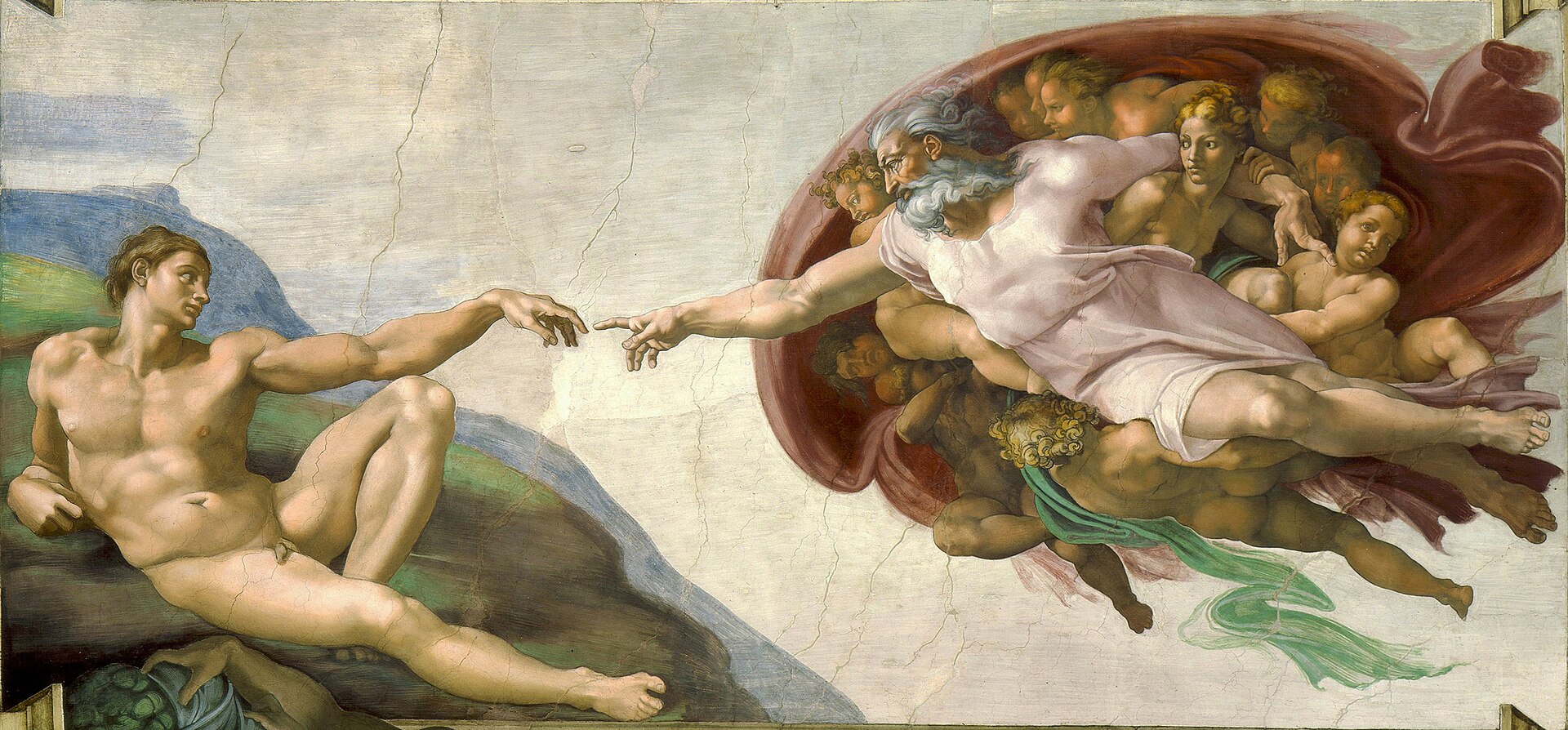
Painting a ceiling wasn't the job he wanted — he thought of himself as a sculptor and took it on under pressure, then spent four years craning upward at it. This is one panel out of a long run of scenes across the whole ceiling, which I hadn't realised. Supposedly it all looked far dimmer until a cleaning in the eighties that people argued about for years afterwards.
Erisava: The colours look weirdly new for something this old. What's been done to it?
Holy Trinity by Masaccio, 1420
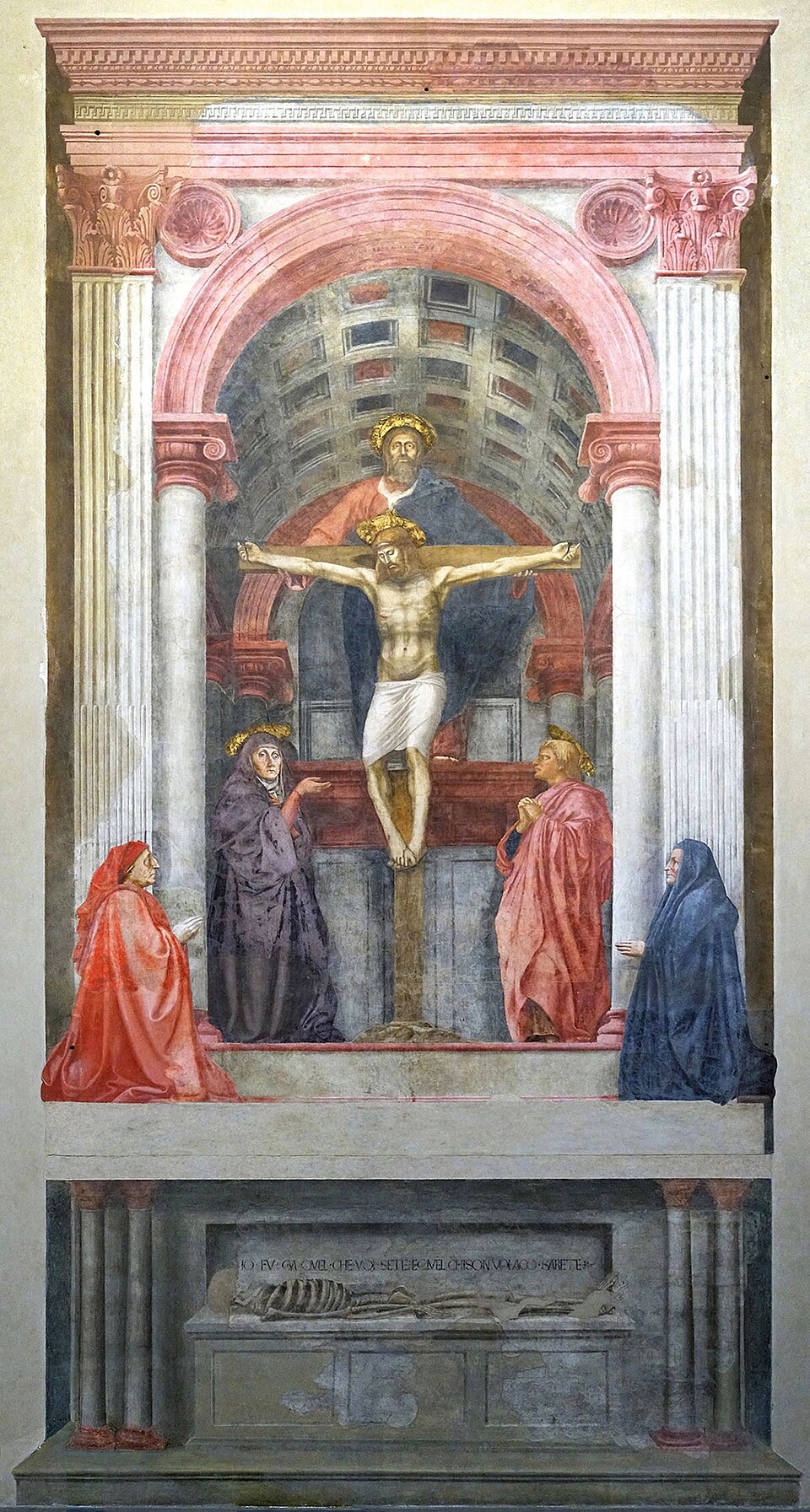
It's painted straight onto a church wall, and for about three hundred years nobody could see it — someone stuck an altarpiece in front of the whole thing, and it wasn't uncovered again until the 1800s. The kneeling pair are the couple who paid for it, though no one seems certain who they actually were. The writing under the skeleton, they say, comes out as roughly: I was once what you are, and what I am you will be.
Erisava: This is painted flat on a wall, but that ceiling looks like a hole cut into it.
The School of Athens by Raphael, 1512
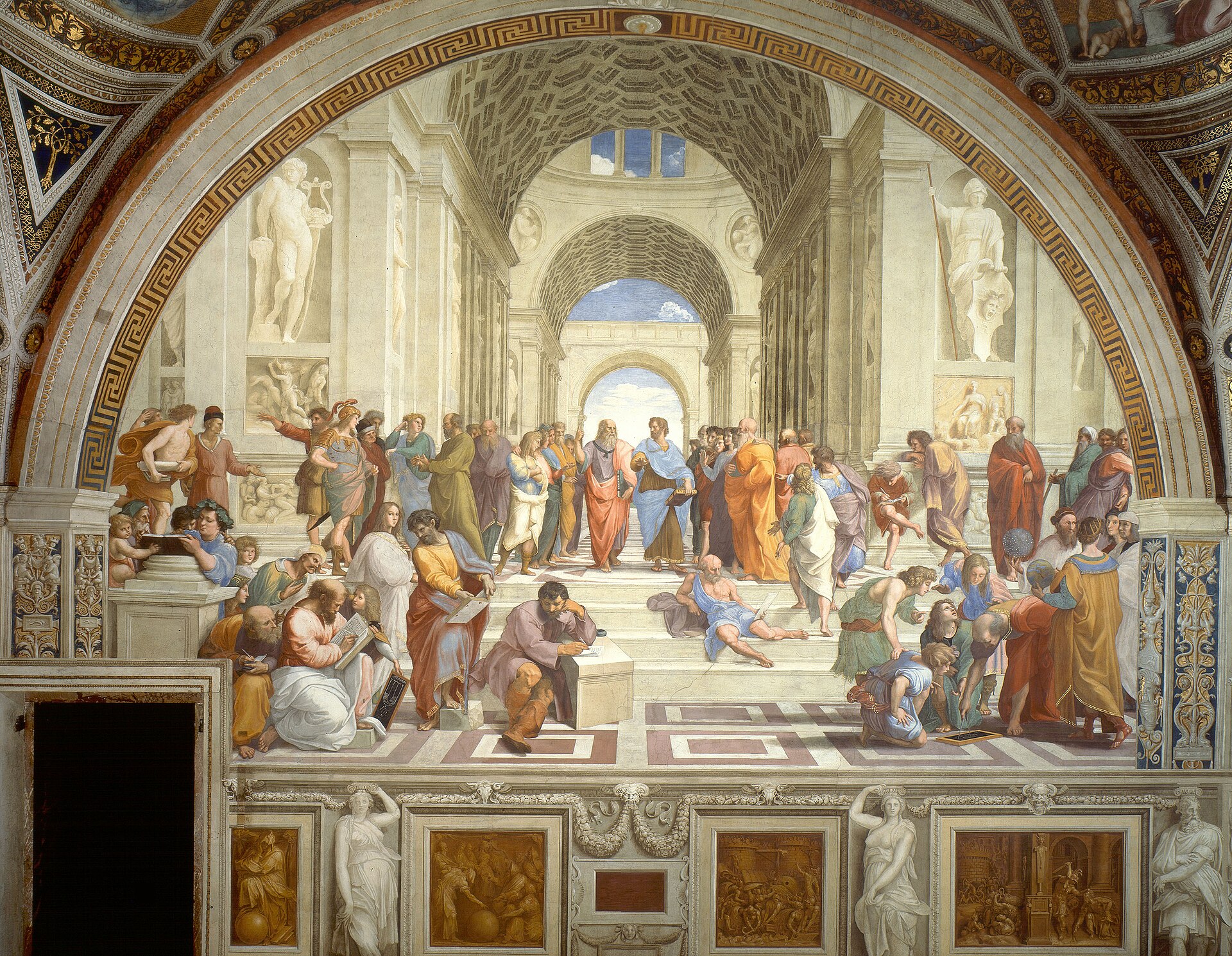
A lot of the faces in this crowd are said to be portraits of Raphael's own circle - the bald figure slumped over a block up front is supposedly Michelangelo, added in after Raphael got a peek at the Sistine ceiling next door, and the man crouched down sketching on a slate at the right is thought to be a stand-in for the architect Bramante.
Erisava: Could you actually name every single person in this painting?
Lamentation by Giotto, 1305
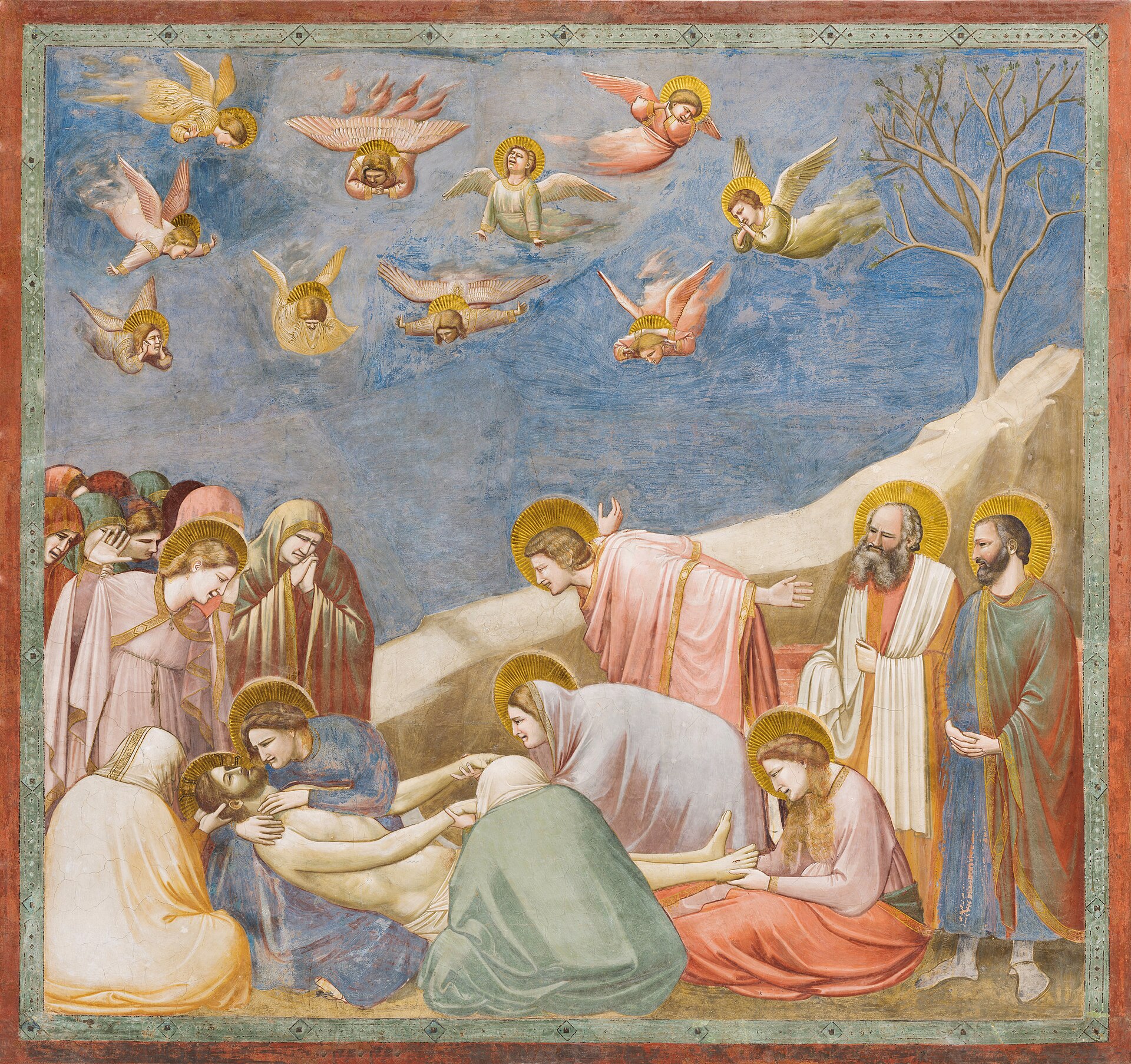
The whole chapel this sits in was paid for by a banker's son — supposedly to make up for the money his father made lending at interest, which the Church counted as a sin at the time. It's one panel out of a whole wall of them telling the story in order, so it was never meant to be looked at on its own.
Erisava: That sky looks like a hung-up backdrop, and the crying still gets me anyway.
Kiss of Judas by Giotto, 1303
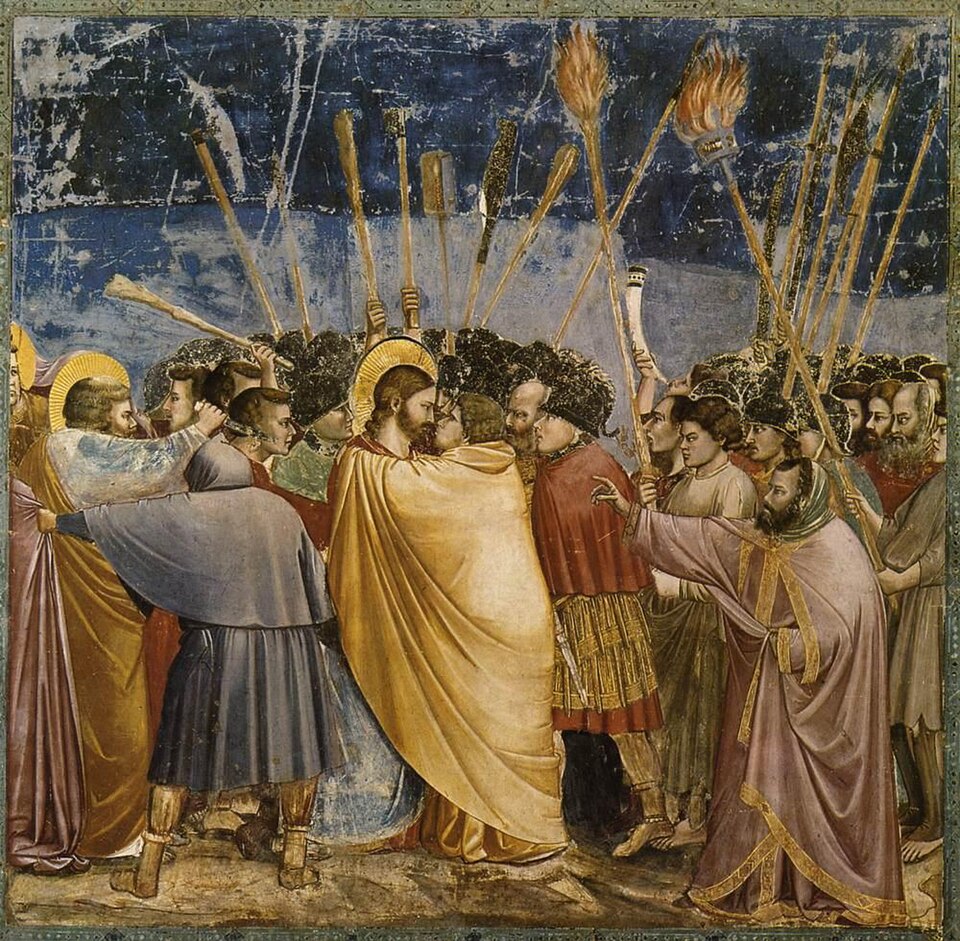
This isn't a standalone picture — it's one panel in a whole room of them, painted straight onto the walls in sequence. The man who paid for the chapel had inherited a moneylending fortune, and from what I've read Dante had already stuck his father in hell over it, so the whole thing gets described as a very expensive apology.
Erisava: Nobody in this crowd looks like they're moving, and it still feels violent.