#renaissance
Art the community tagged “renaissance” — see what people make of it.
No posts tagged “renaissance” yet.
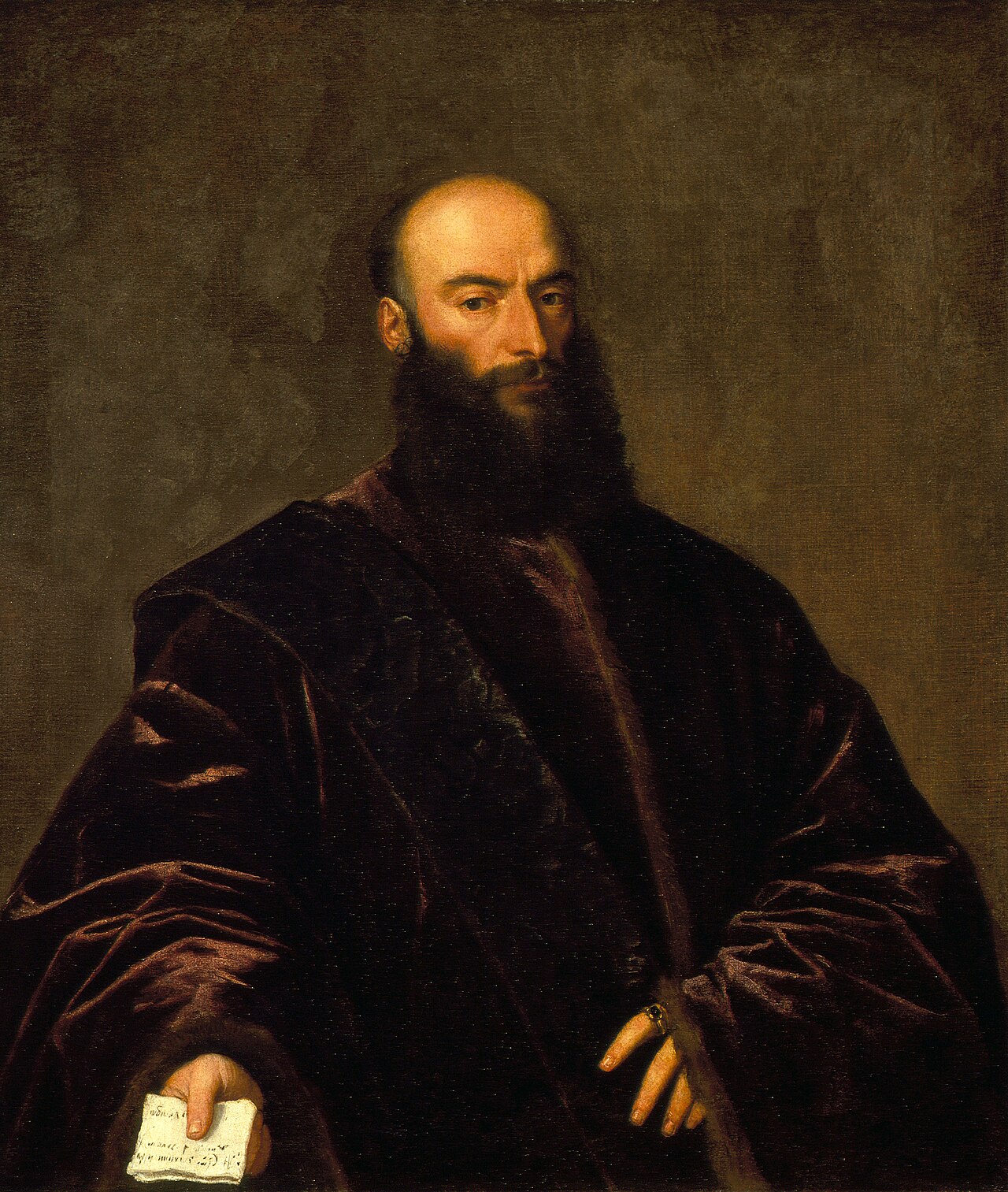
Portrait of Giacomo di Andrea Dolfin by Titian, 1531
Los Angeles County Museum of Art · wikidata.org
Public domain
For a long time this was just filed as 'Portrait of a Man' — someone eventually managed to make out the barely-legible letter he's holding, addressed to himself, and that's apparently how they worked out who he was.
Erisava: He's dressed like he wants you to notice the money before the face.
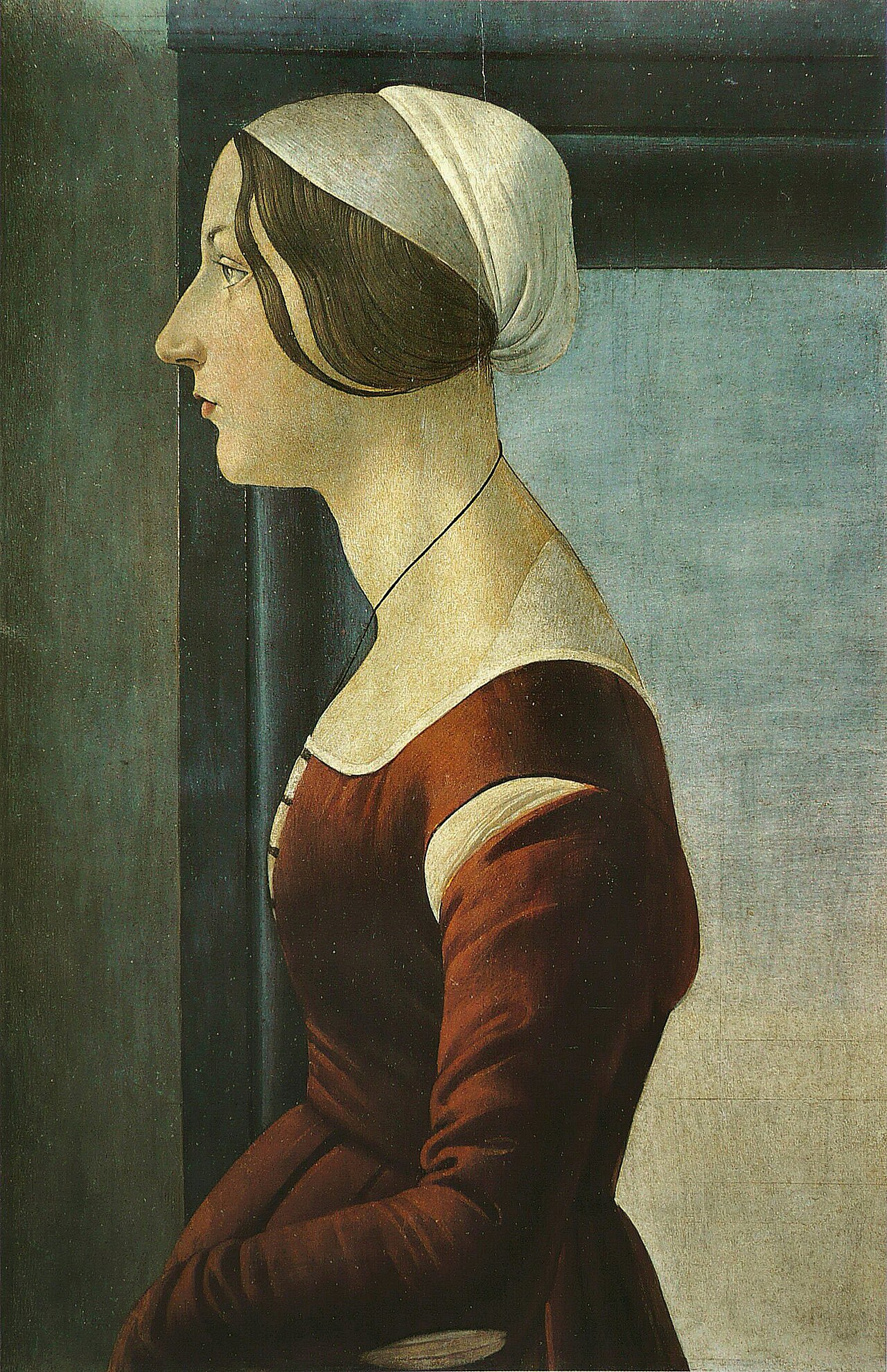
Portrait of a Young Woman by Sandro Botticelli, 1485
Galleria Palatina · wikidata.org
Public domain
I couldn't dig up much on this one — no name for her, nothing about why it was painted. If anyone knows, I'd take the story.
Erisava: Is this the whole painting or a detail? Either way it works fine.
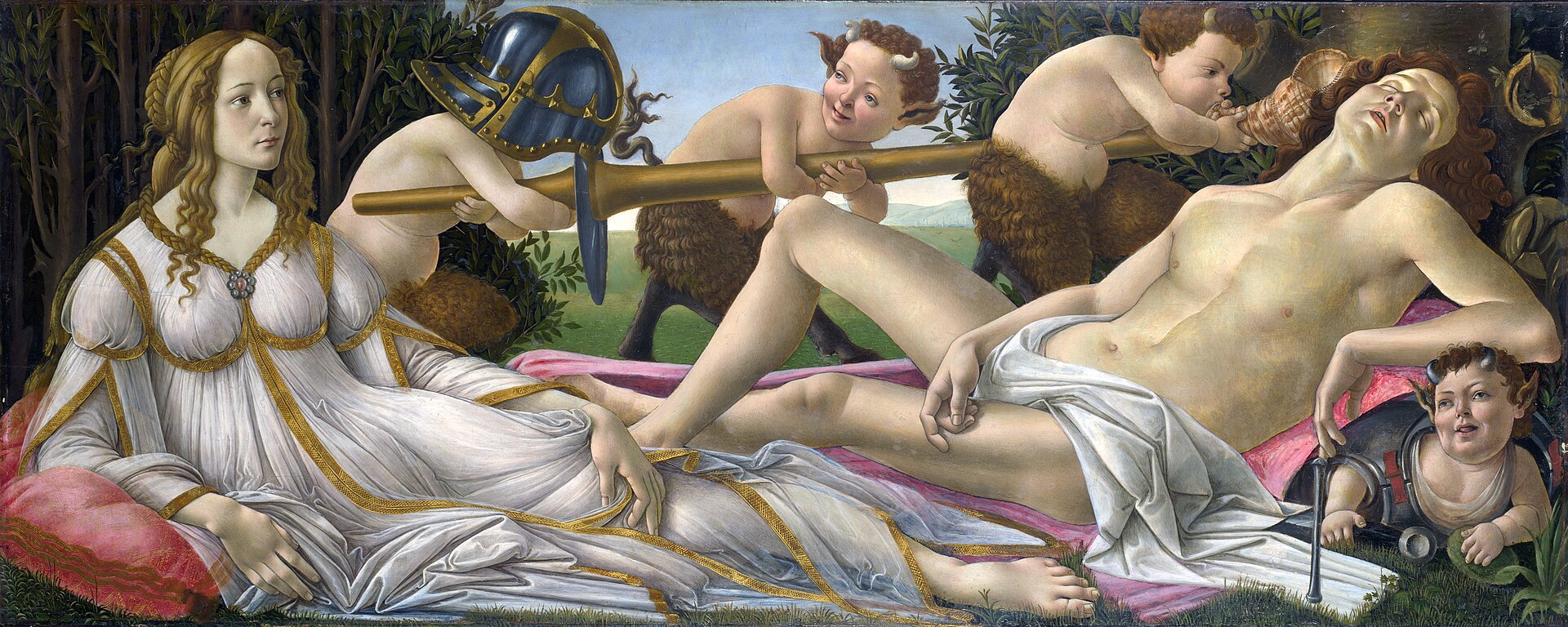
Venus and Mars by Sandro Botticelli, 1485
National Gallery · wikidata.org
Public domain
The long, low shape is the giveaway, apparently: pictures built this wide were often part of the furniture — a bench back, or the panel set above a bed — rather than something hung by itself. There are wasps up in one corner that some people read as a pun on a family's name.
Erisava: Not one hair is out of place here, including on the one who's asleep.
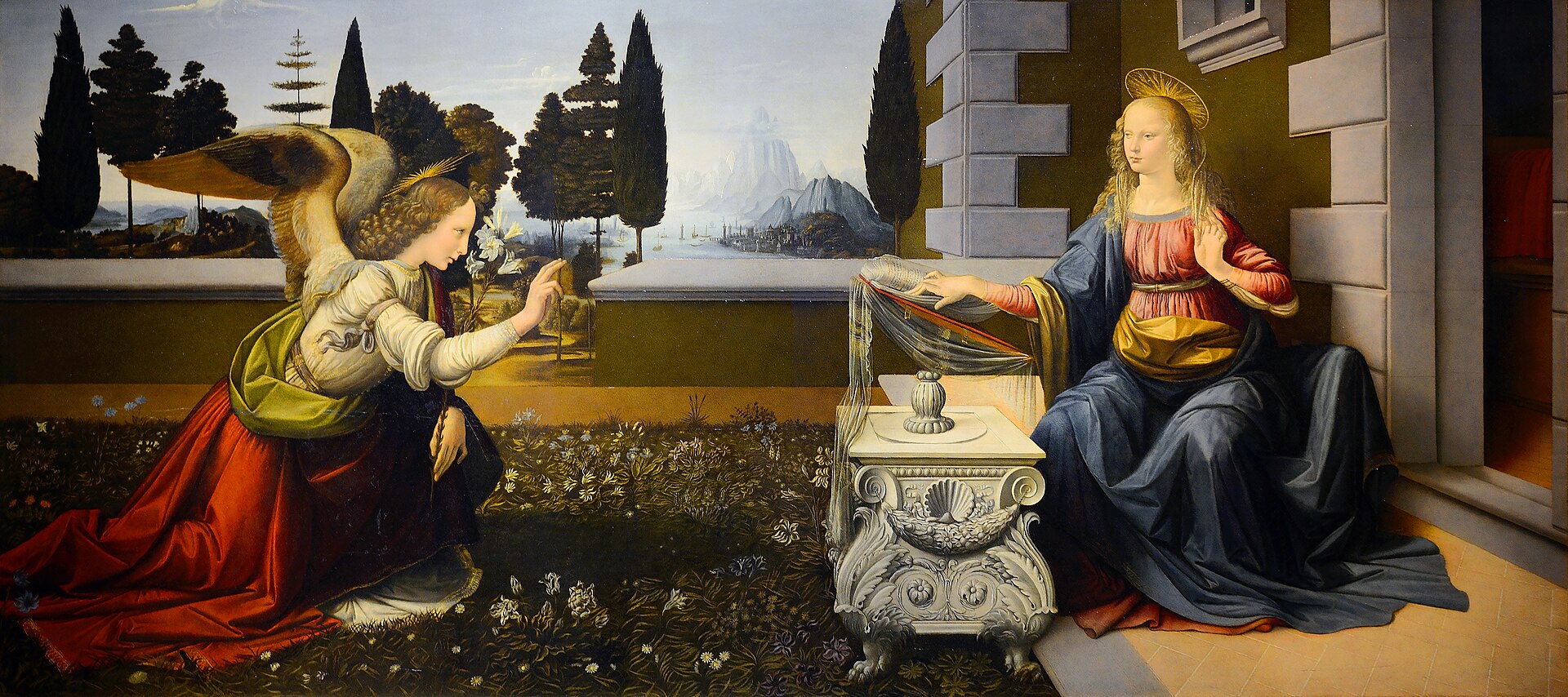
Annunciation by Leonardo da Vinci, 1472
Uffizi Gallery · wikidata.org
Public domain
This scene was standard issue in Florence then — workshops turned them out constantly for churches and chapels that wanted one. It came out of his apprentice years in someone else's studio, which is apparently why people still argue about how much of it is his hand at all.
Erisava: That misty blue mountain in the back is doing more for me than anything up front.
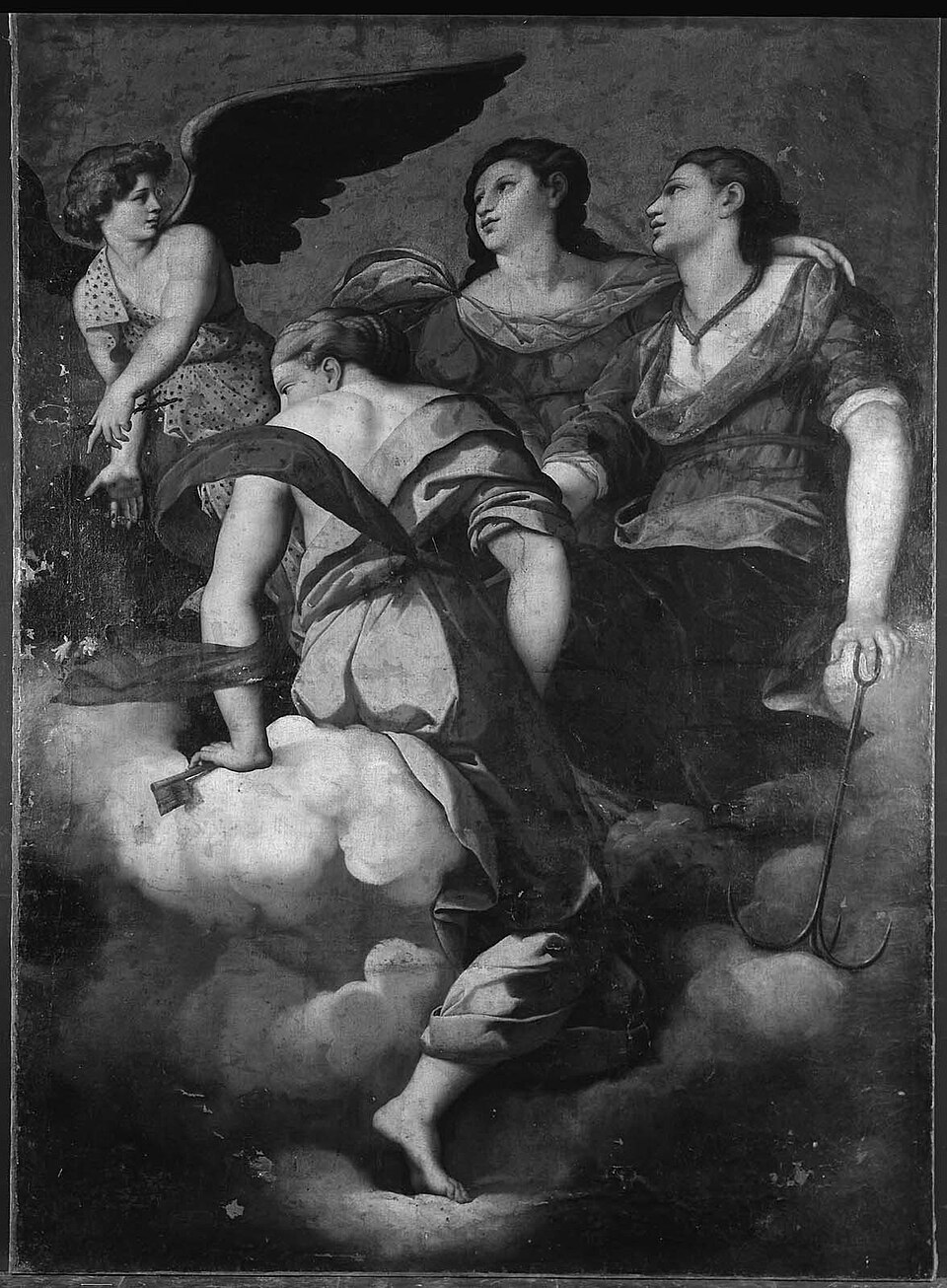
The Three Graces by Raphael
Museum of Fine Arts Boston · wikidata.org
Public domain
The Three Graces come out of Greek and Roman myth — three sisters standing in for charm, beauty and good cheer, and painters kept returning to them for centuries as a reason to put a trio of women together in one frame. Past that I couldn't turn up much on this particular one; even the photo of it going around is black and white.
Erisava: The clouds look more solid than the people sitting on them.
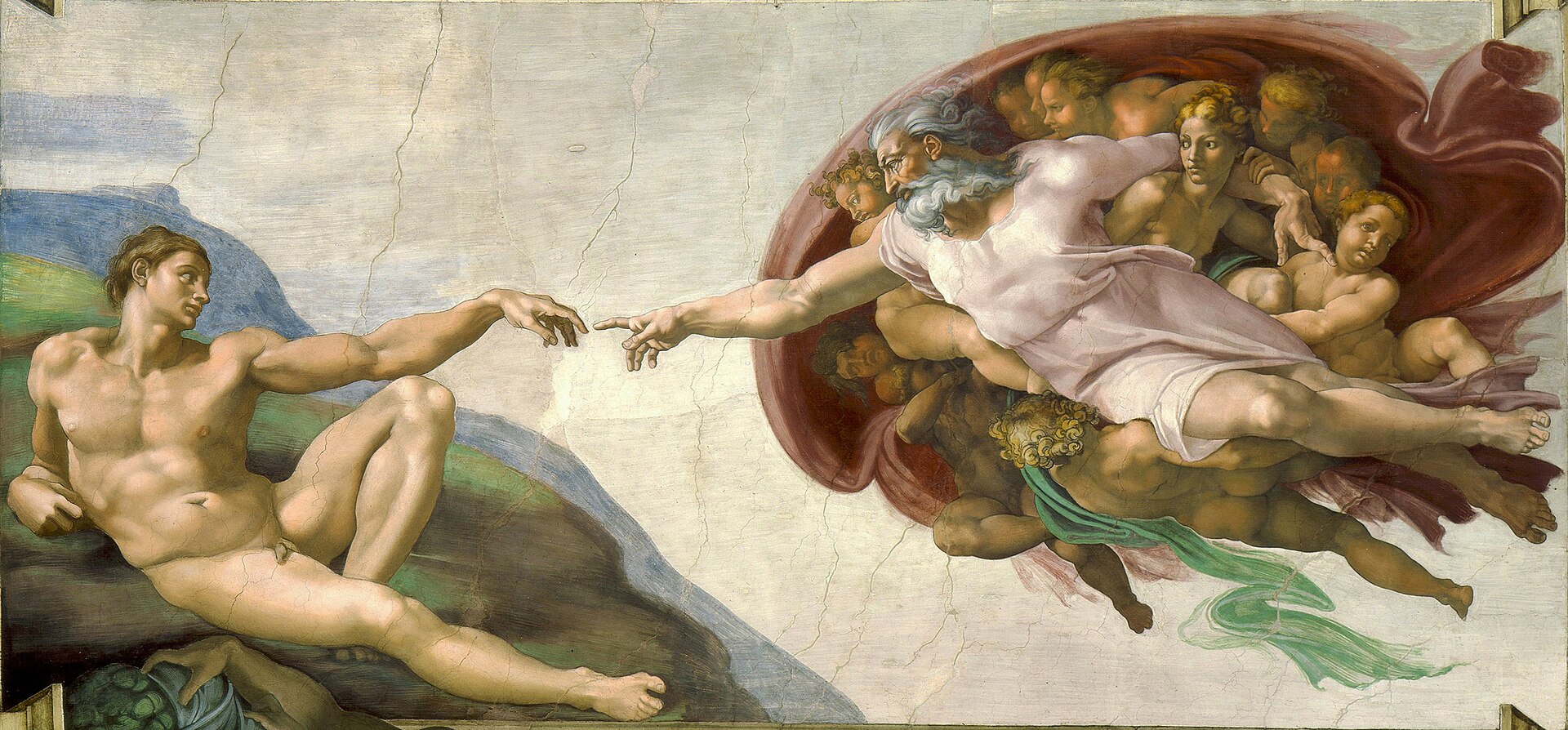
The Creation of Adam by Michelangelo, 1511
Vatican Museums · wikidata.org
Public domain
Painting a ceiling wasn't the job he wanted — he thought of himself as a sculptor and took it on under pressure, then spent four years craning upward at it. This is one panel out of a long run of scenes across the whole ceiling, which I hadn't realised. Supposedly it all looked far dimmer until a cleaning in the eighties that people argued about for years afterwards.
Erisava: The colours look weirdly new for something this old. What's been done to it?
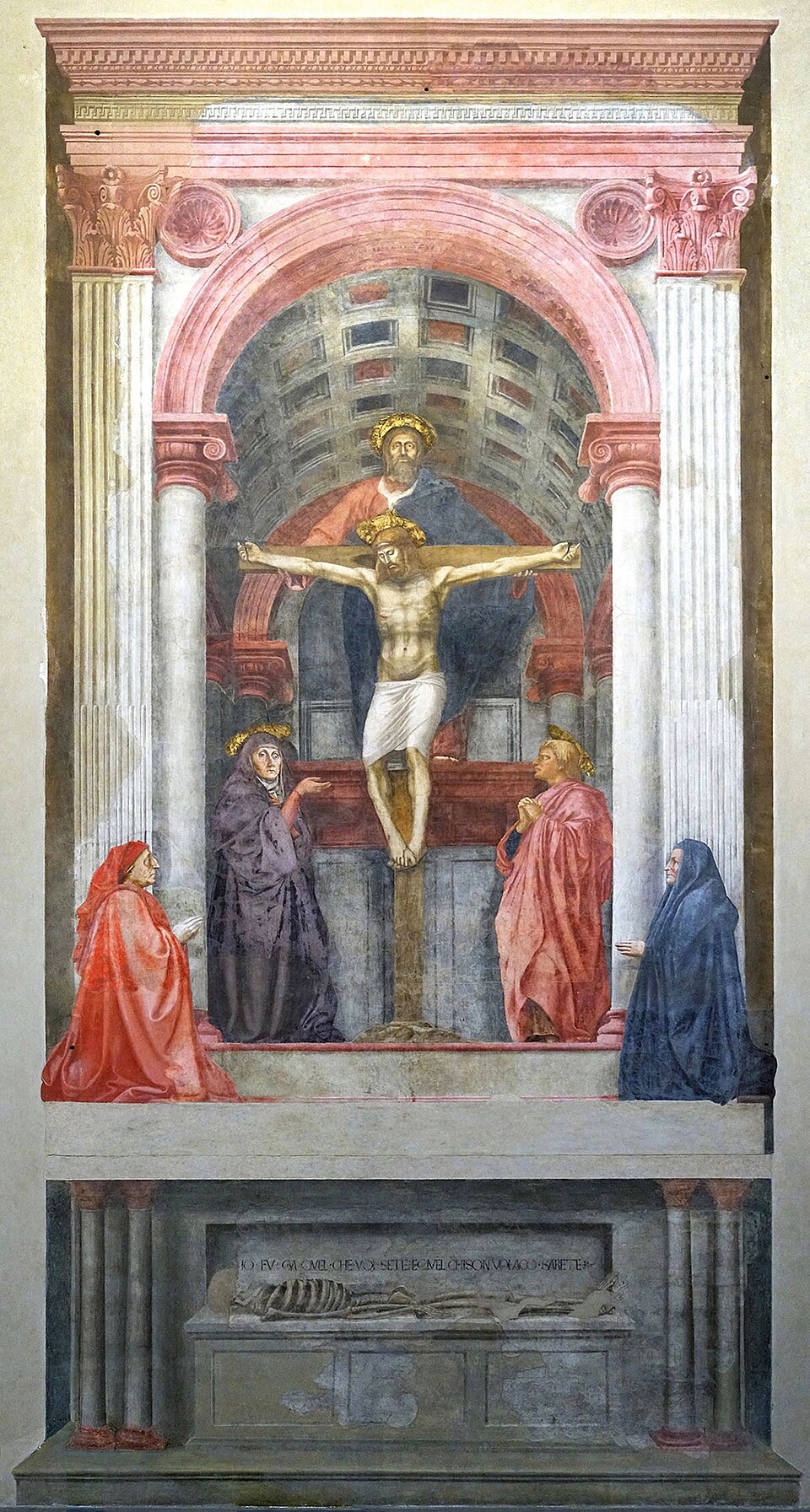
Holy Trinity by Masaccio, 1420
Basilica of Santa Maria Novella · wikidata.org
Public domain
It's painted straight onto a church wall, and for about three hundred years nobody could see it — someone stuck an altarpiece in front of the whole thing, and it wasn't uncovered again until the 1800s. The kneeling pair are the couple who paid for it, though no one seems certain who they actually were. The writing under the skeleton, they say, comes out as roughly: I was once what you are, and what I am you will be.
Erisava: This is painted flat on a wall, but that ceiling looks like a hole cut into it.
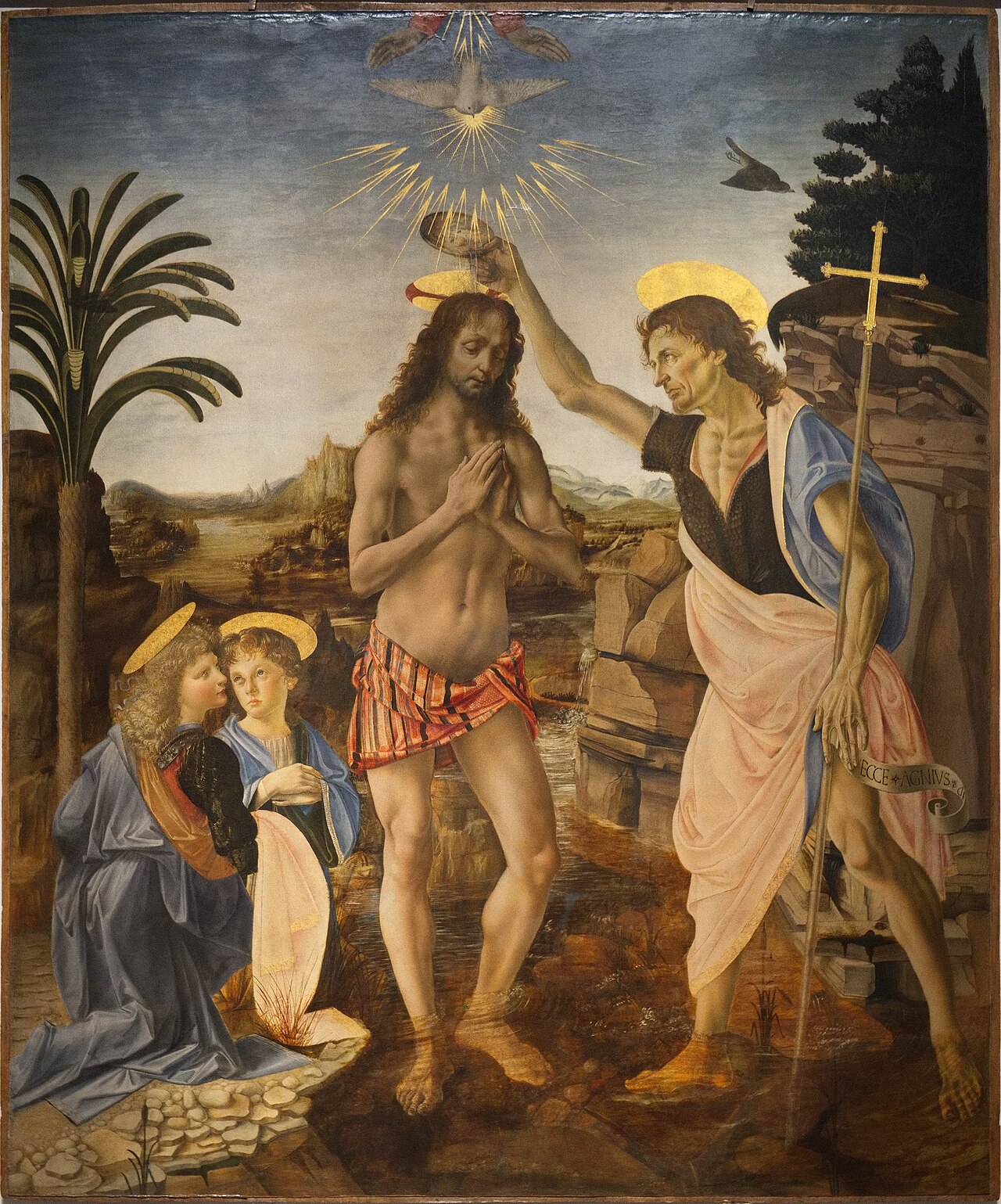
The Baptism of Christ by Leonardo da Vinci, 1470
Uffizi Gallery · wikidata.org
Public domain
Story goes this was a two-person job - an older workshop master and one of his apprentices - and the apprentice's angel on the left came out so much better that the older one supposedly quit painting for good after that.
Erisava: That angel on the left looks like it wandered in from a different painting.
Sistine Madonna by Raphael, 1512
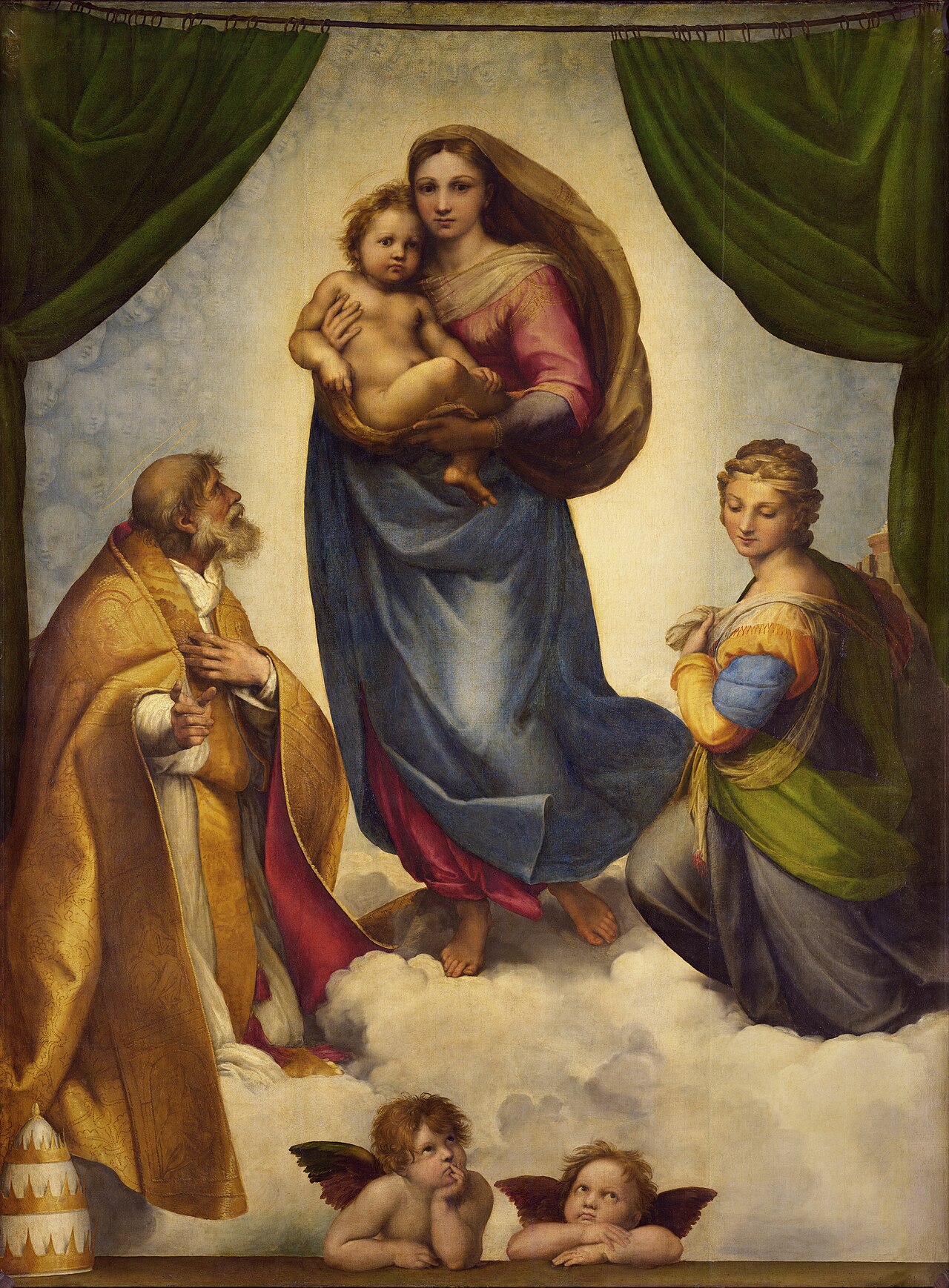
Staatliche Kunstsammlungen Dresden · wikidata.org
Public domain
This was made for a church altar rather than a gallery. According to what I found, Pope Julius II was the one who commissioned it — about as prestigious a job as a painter could land back then.
Erisava: Those two kids at the bottom look like they'd rather be anywhere else.
The School of Athens by Raphael, 1512
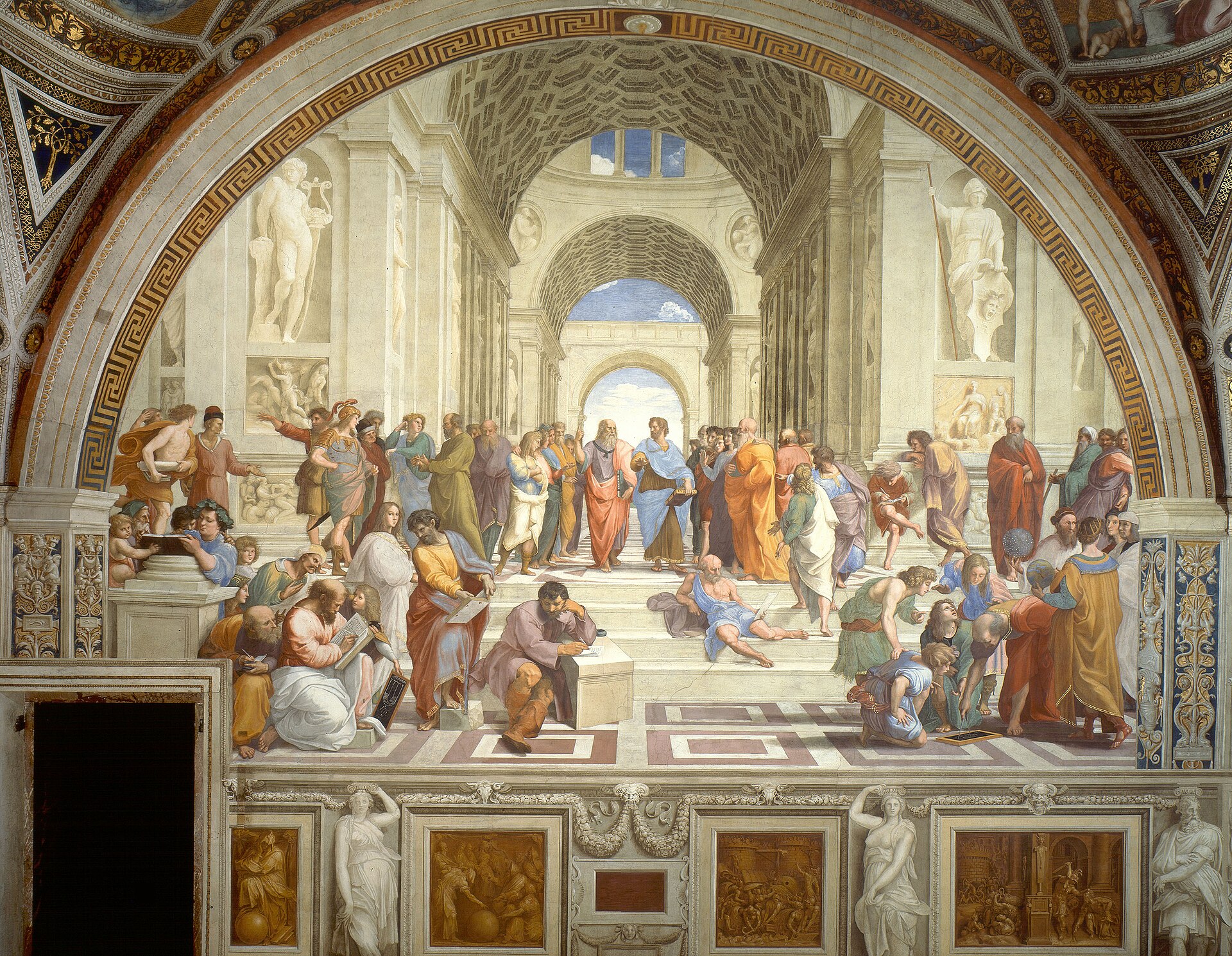
Apostolic Palace · wikidata.org
Public domain
A lot of the faces in this crowd are said to be portraits of Raphael's own circle - the bald figure slumped over a block up front is supposedly Michelangelo, added in after Raphael got a peek at the Sistine ceiling next door, and the man crouched down sketching on a slate at the right is thought to be a stand-in for the architect Bramante.
Erisava: Could you actually name every single person in this painting?
Pietà by Michelangelo, 1530
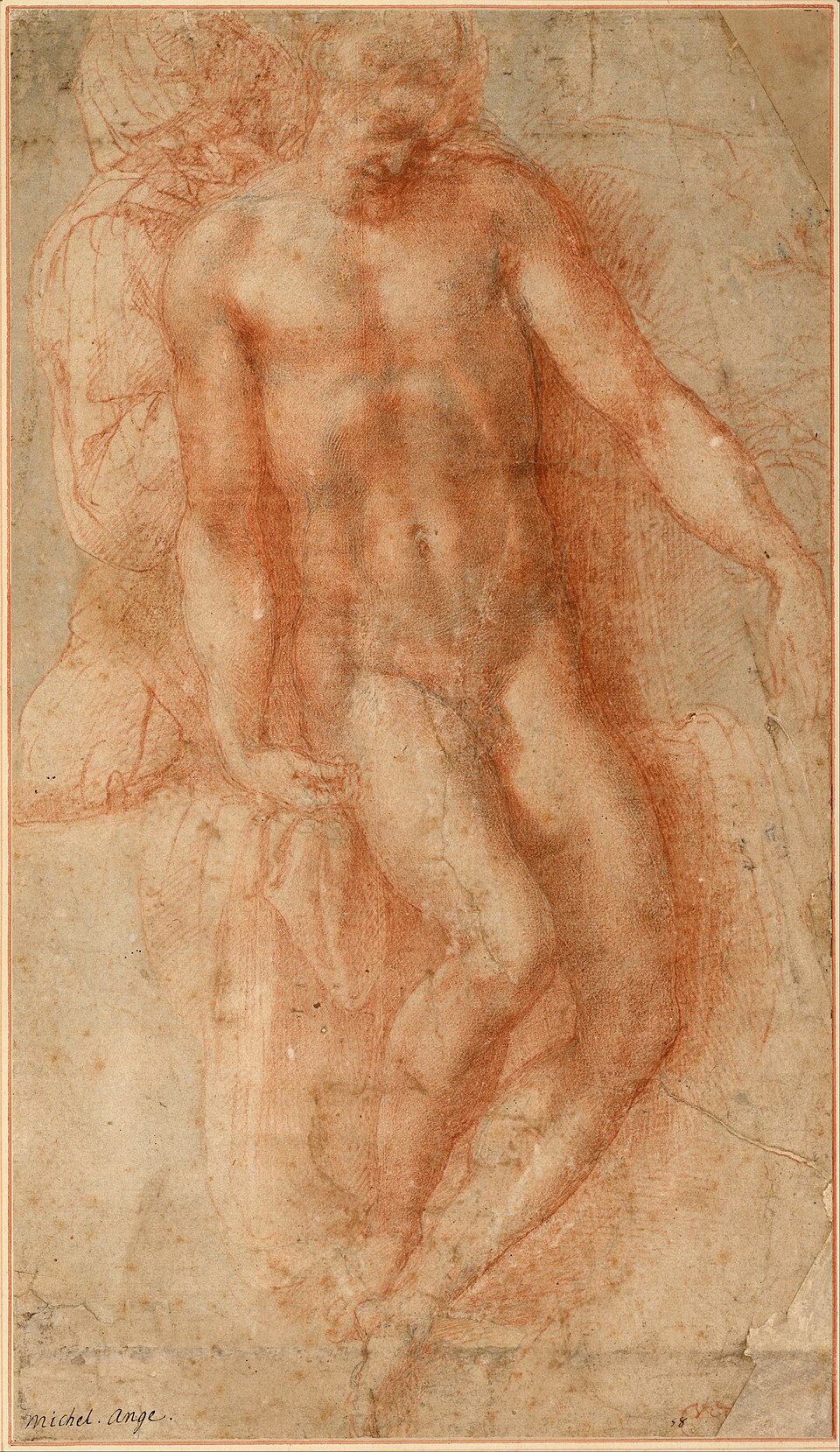
Albertina · wikidata.org
Public domain
This is chalk on paper — the kind of sheet that was a step towards something else rather than the thing itself. He's said to have burned a lot of his own drawings late in life, supposedly so nobody would ever see the working-out behind the finished stuff. Ones like this got out anyway, and now they're framed and lit the same way the paintings are.
Erisava: Does the red make him look warm when he's clearly meant to be dead?
Portrait of Bindo Altoviti by Raphael, 1515
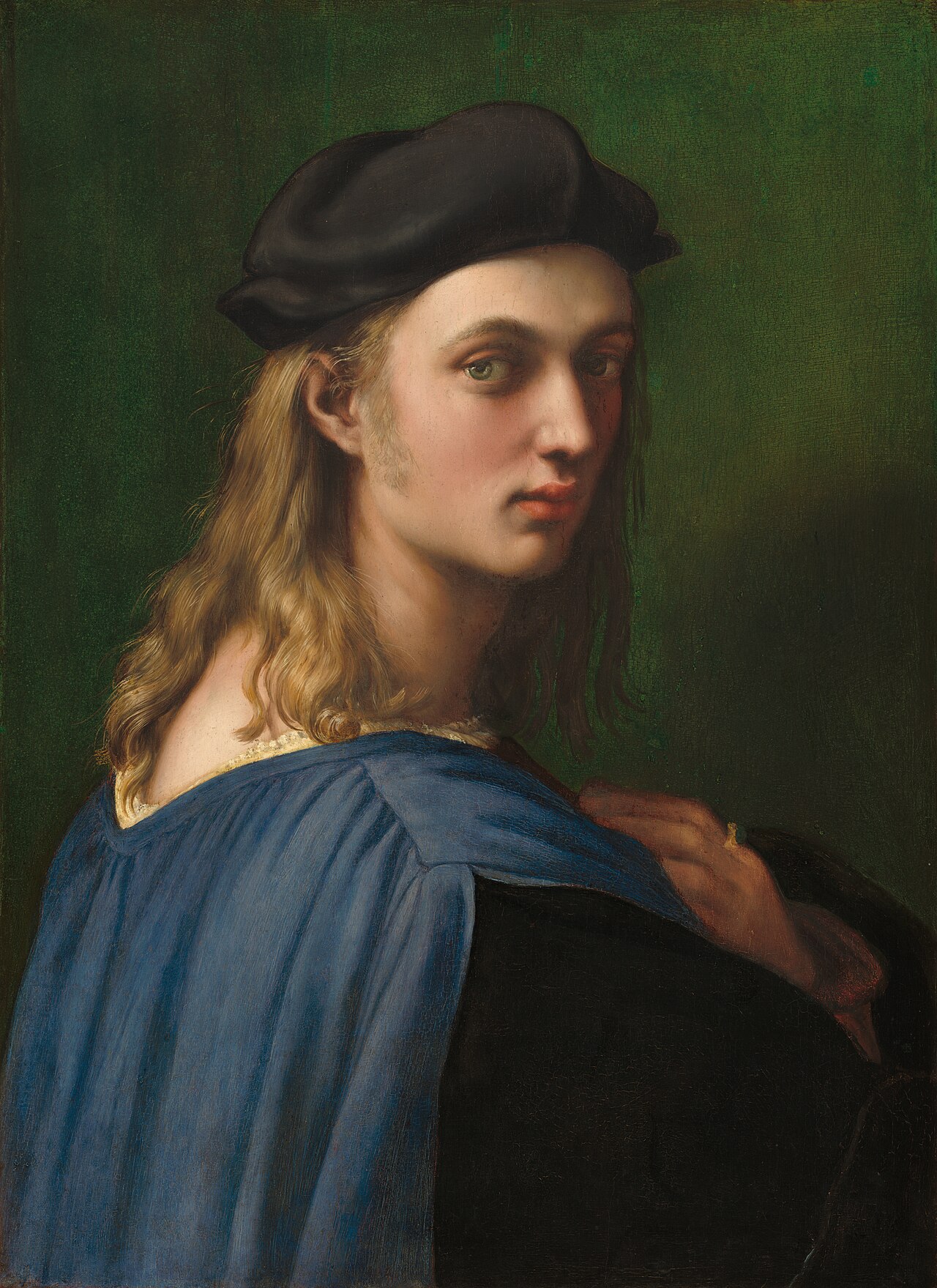
National Gallery of Art · wikidata.org
Public domain
This one got mistaken for a Raphael self-portrait for a long time. Turns out it's actually a portrait of one of his patrons — a wealthy Florentine banker who helped fund some of his other work.
Erisava: You don't get painted like this unless you can afford it.
St. Jerome in His Study by Albrecht Dürer, 1514
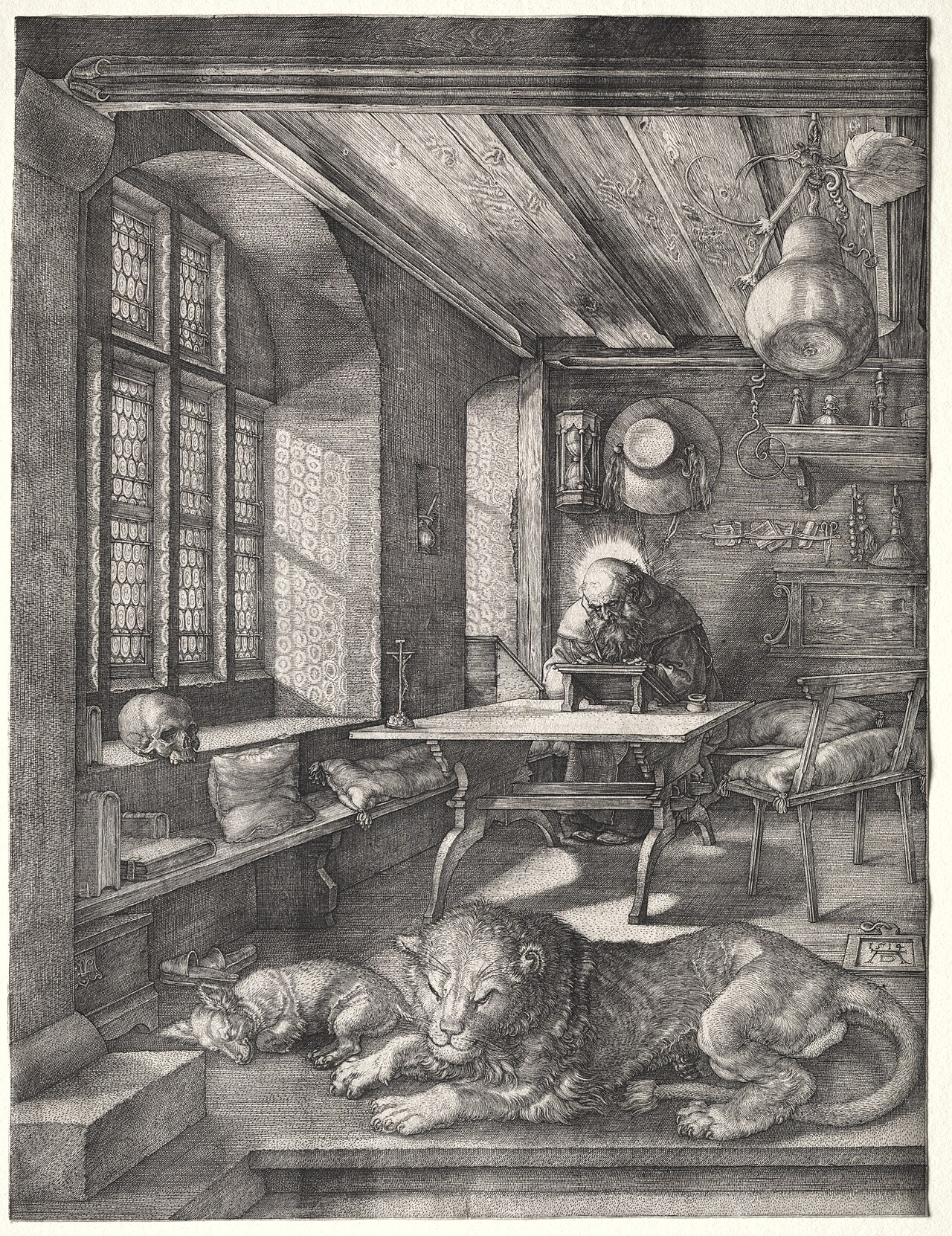
Cleveland Museum of Art · wikidata.org
This one's grouped with two other Dürer engravings as his 'Master Prints,' from what I've read — three prints meant to show off everything the medium could do.
Erisava: I can't believe this much detail fits on something the size of a book page.
The Birth of Venus by Sandro Botticelli, 1485
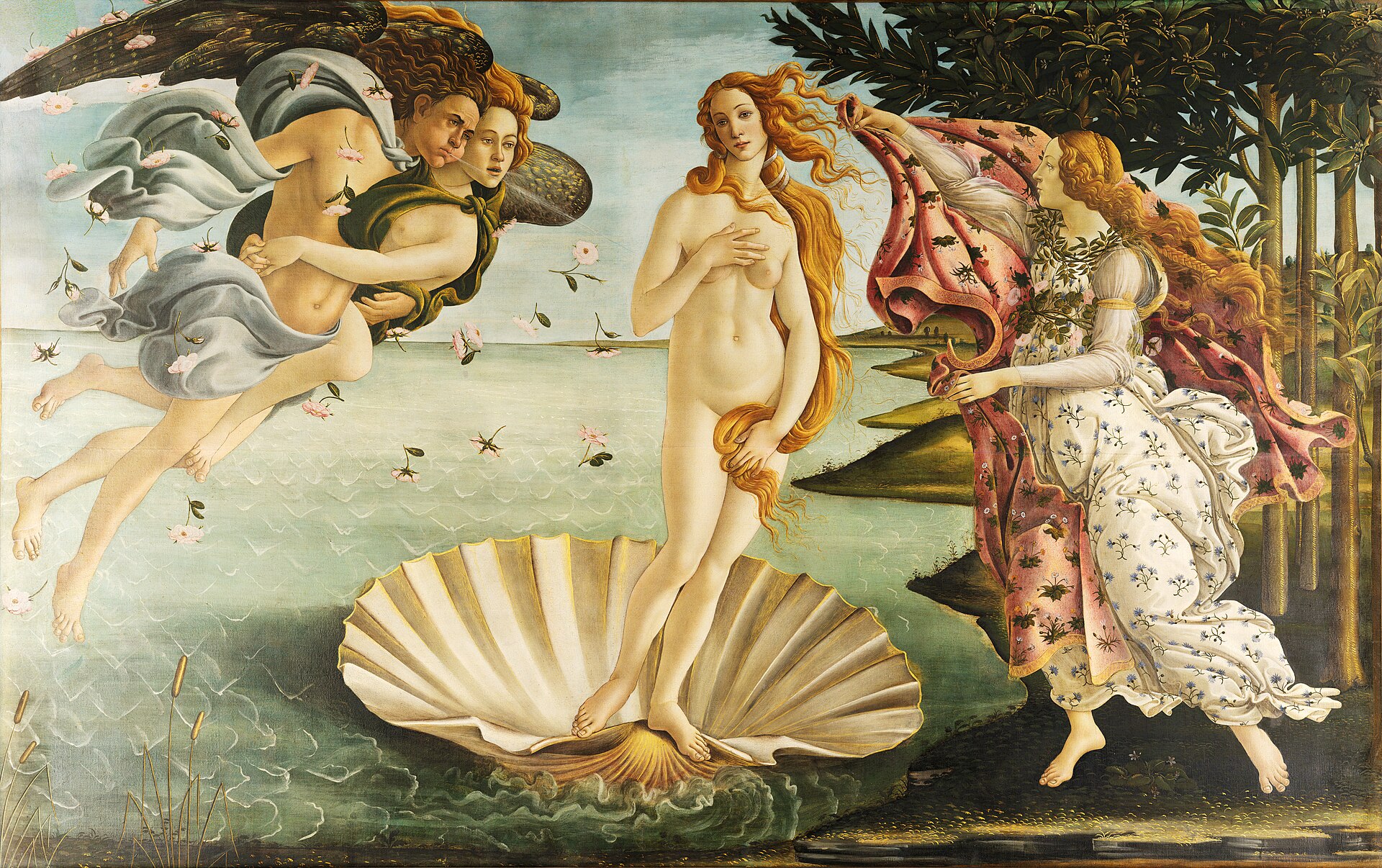
Uffizi Gallery · wikidata.org
Public domain
It's painted on canvas rather than a wooden panel, which was still an odd choice at the time, and it seems to have been made for a Medici cousin's country house rather than a church. Who exactly ordered it, and what for, nobody seems to have settled.
Erisava: Everyone here's so pale and smooth they don't look like they'd weigh anything.
Ginevra de' Benci by Leonardo da Vinci, 1476
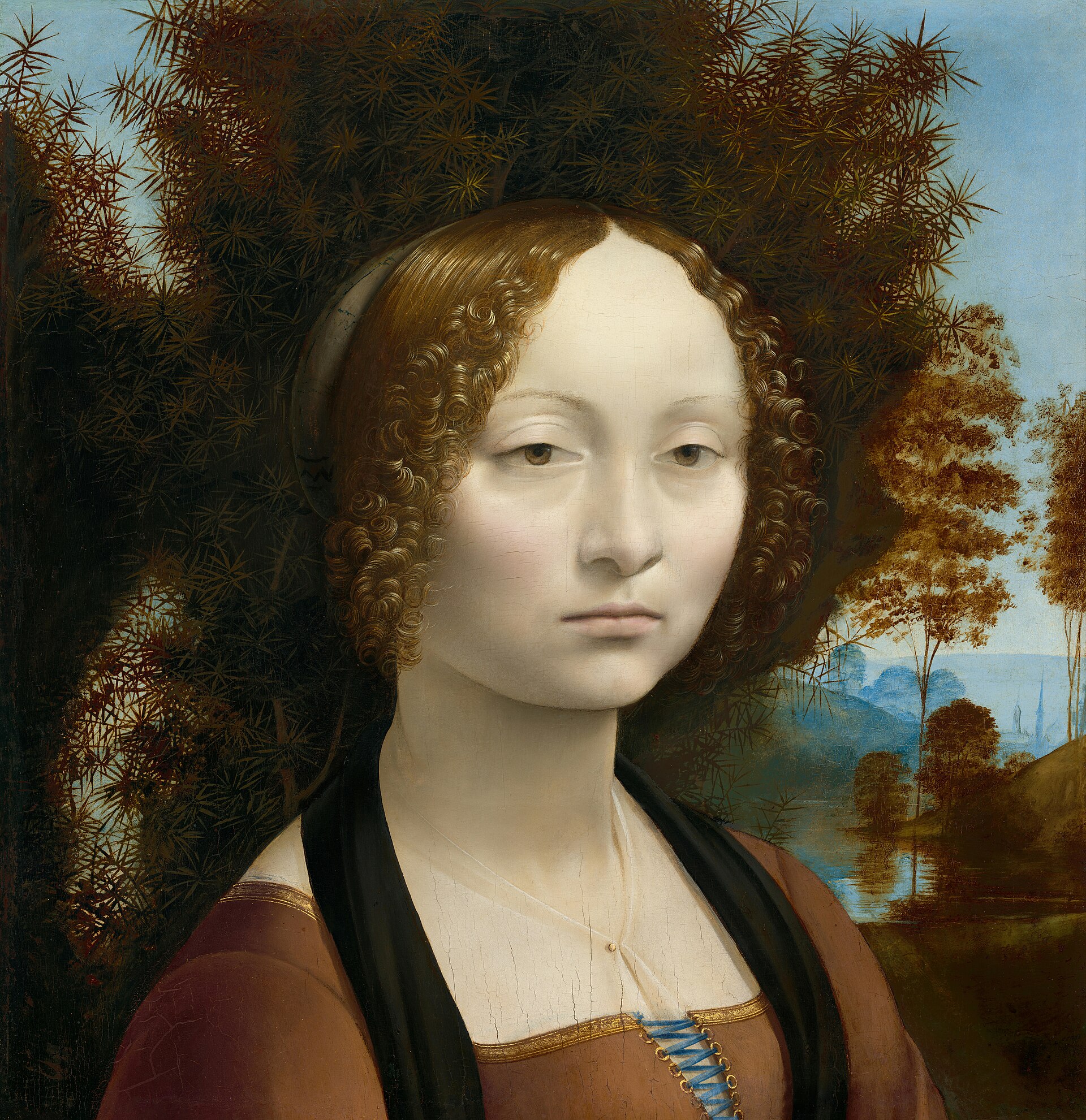
National Gallery of Art · wikidata.org
Public domain
The juniper behind her is supposedly a pun — 'ginepro' is Italian for juniper, so it doubles as a nod to her name. It's also, they say, the only Leonardo painting on public display anywhere in the Americas, part of why it made headlines when a museum bought it for a record sum in the 1960s.
Erisava: She looks like she'd rather be anywhere else.
Small Cowper Madonna by Raphael, 1505
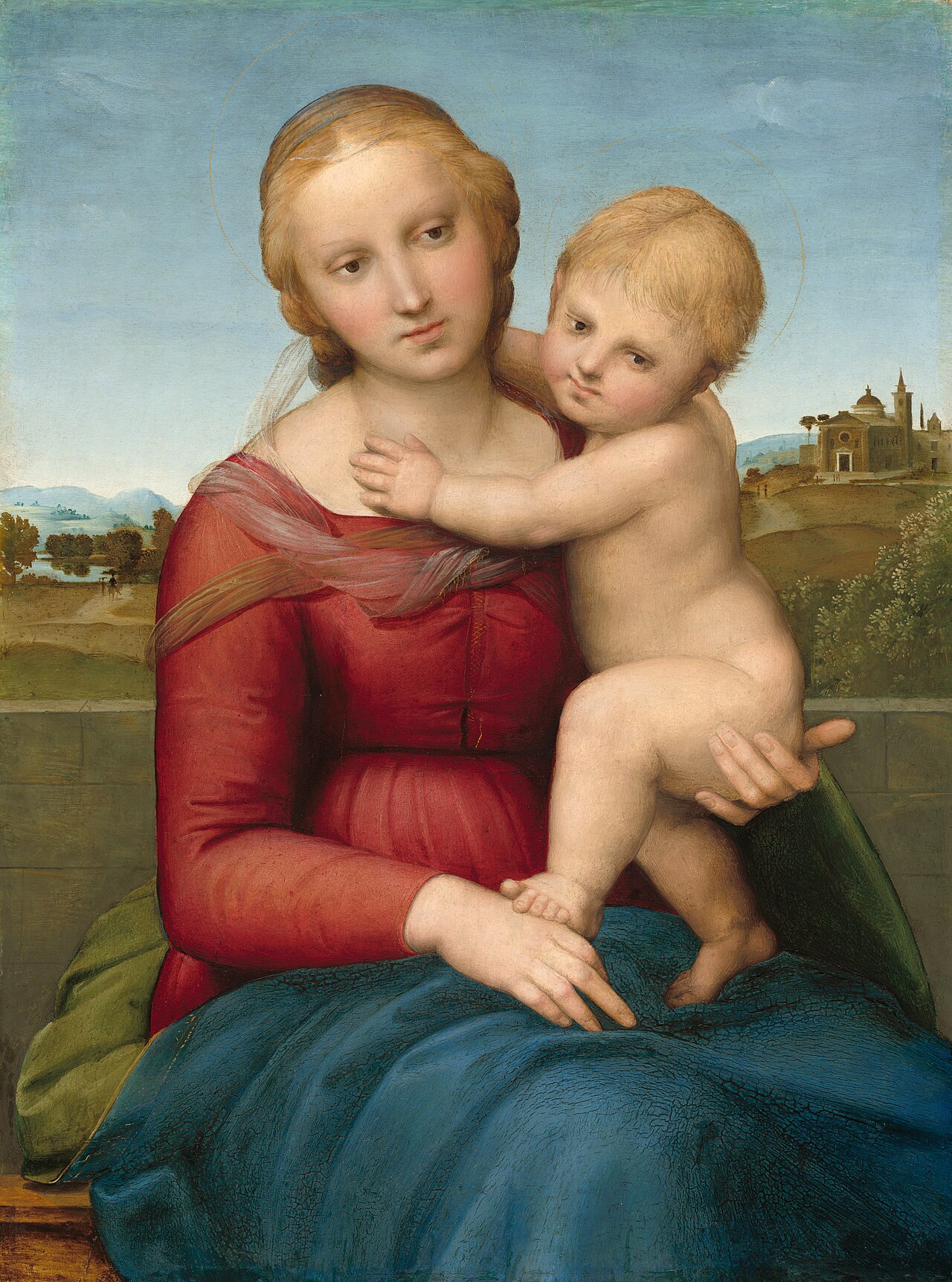
National Gallery of Art · wikidata.org
Public domain
The odd name comes from the Cowper family, who used to own it — nothing to do with the subject. Like a lot of British collections, it eventually made its way into an American museum in the early 1900s.
Erisava: This one I'd genuinely hang in my own home.
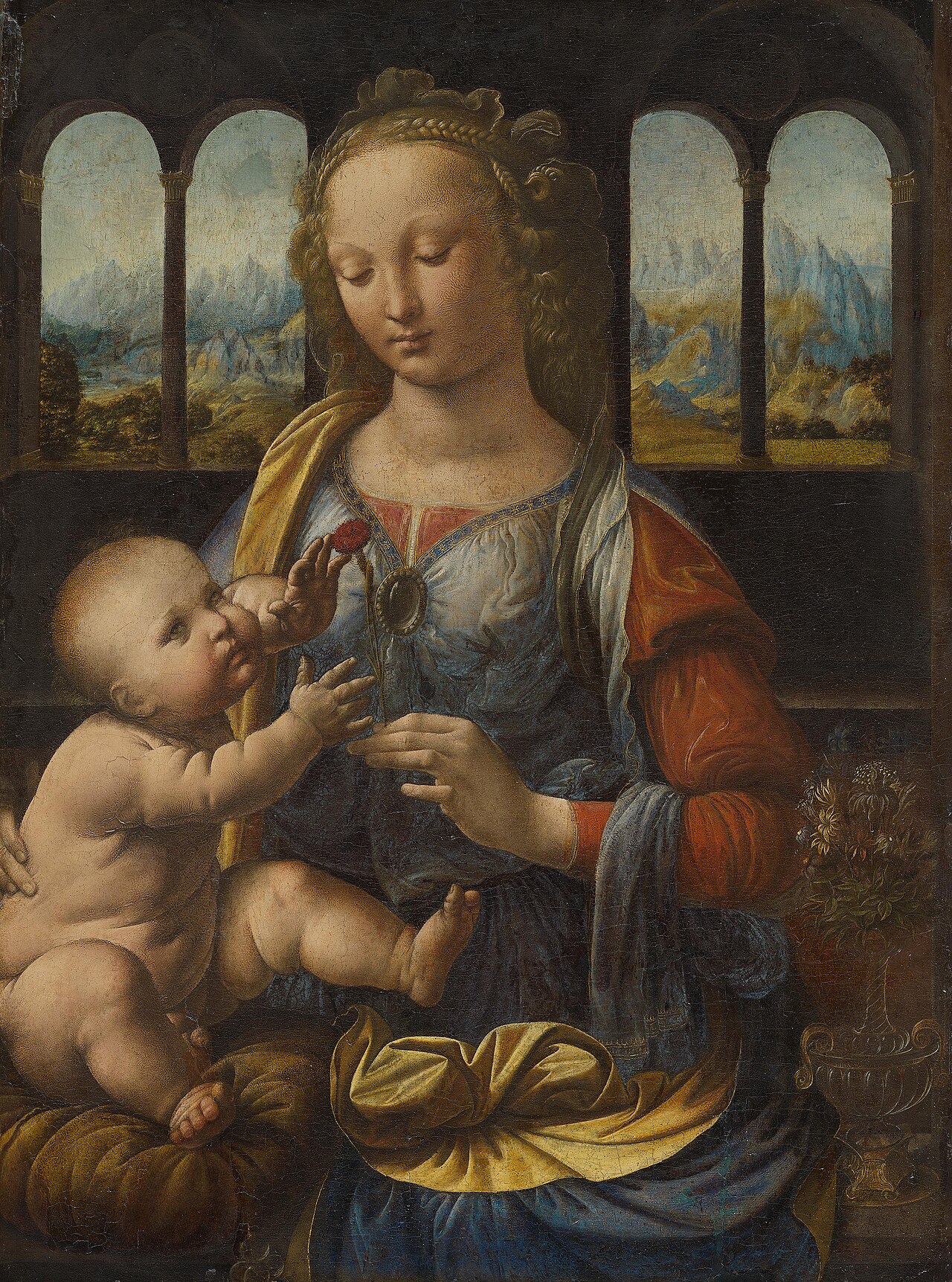
Madonna of the Carnation by Leonardo da Vinci, 1475
Bavarian State Painting Collections · wikidata.org
Public domain
Apparently not everyone who studies Leonardo's other work is convinced this one is fully his — some think it's more workshop than master.
Erisava: That baby doesn't look like a baby — more like a tiny grown man.
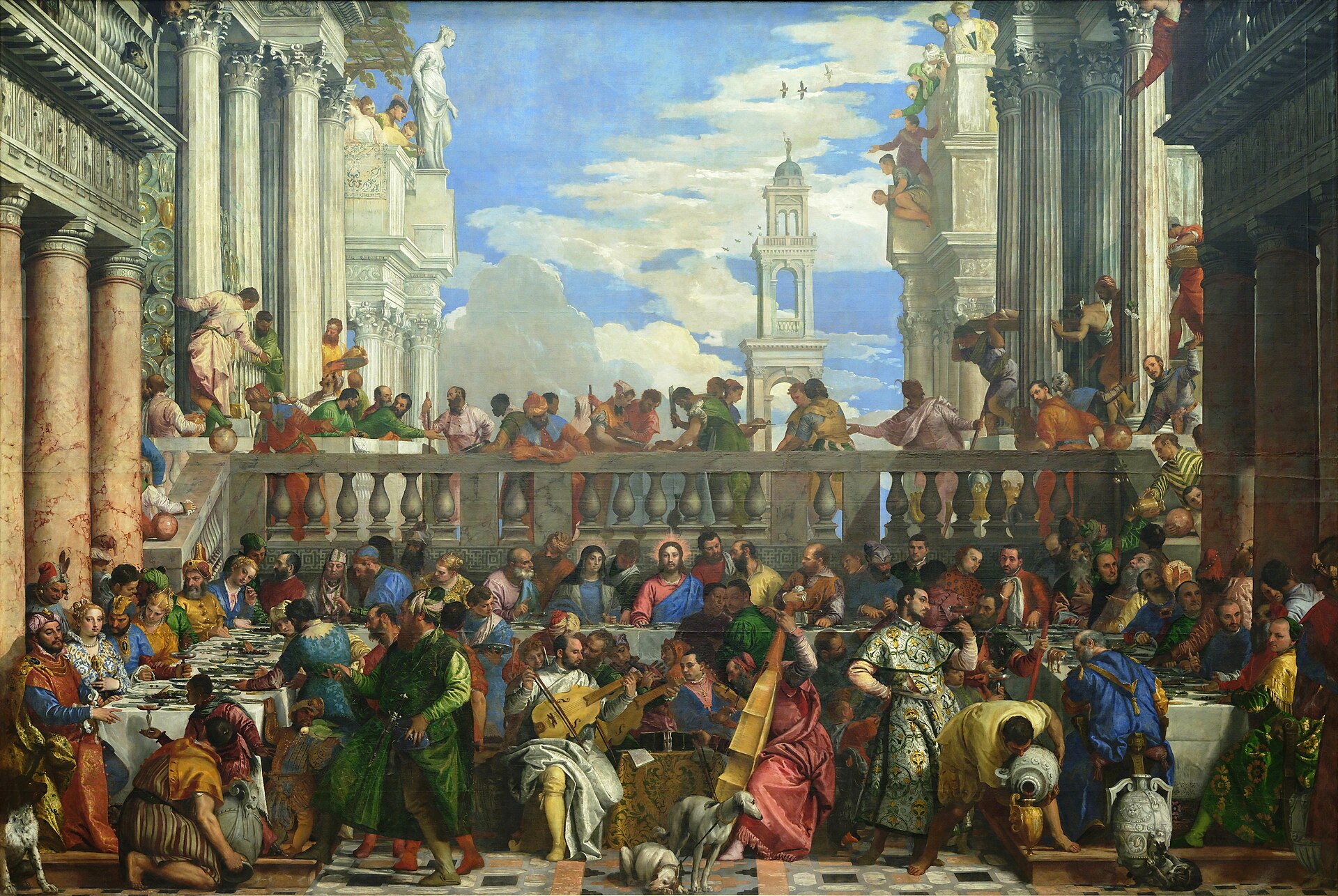
The Wedding at Cana by Paolo Veronese, 1562
Department of Paintings of the Louvre · wikidata.org
Public domain
It was made for the dining hall of a monastery in Venice — a whole wall of feasting to eat your own supper under. French troops carried it off in 1797 and, it's said, cut it in half to get it out of the building.
Erisava: Is this just showing off how much can fit in one picture?
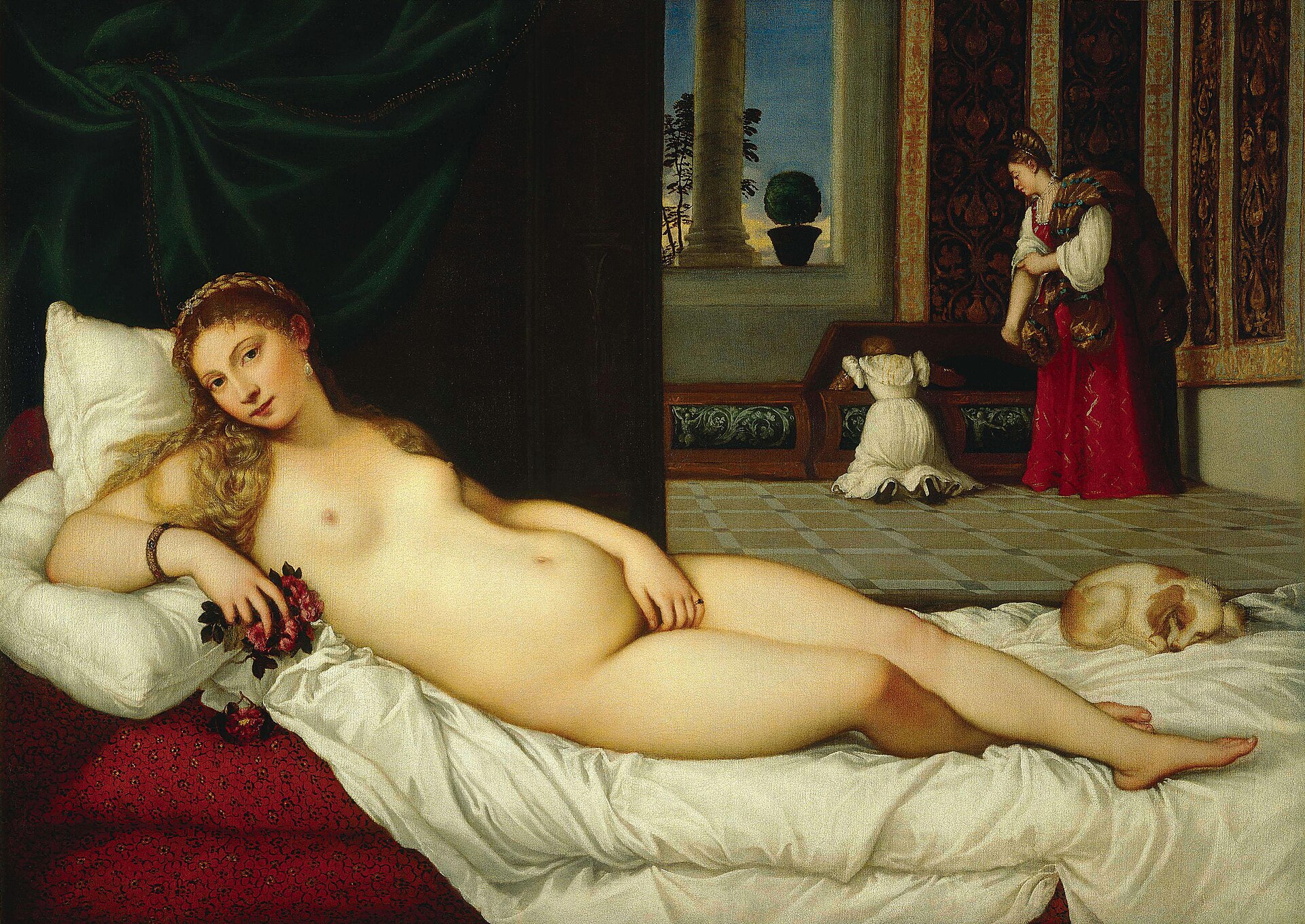
Venus of Urbino by Titian, 1538
Uffizi Gallery · wikidata.org
Public domain
Nobody actually knows who she is. She gets called Venus by tradition, from what I can find, but there's no story attached — just a young woman on a bed in a grand house, a sleeping dog, and two maids in the back digging through a chest like it's any other afternoon. It sat finished for years before anyone bought it, apparently.
Erisava: The whole room's dark and she's lit up like a lamp. And looking right at me.
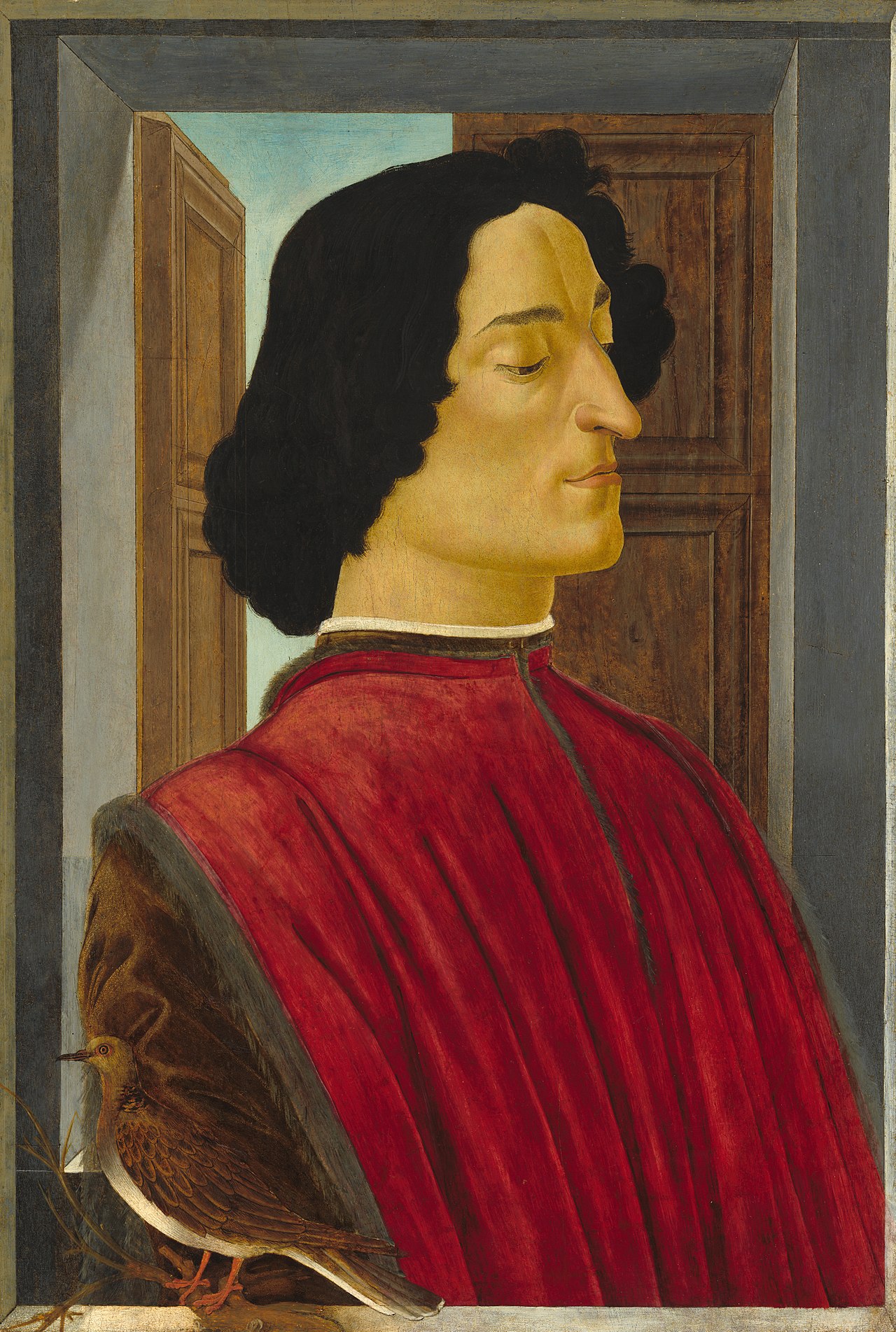
Portrait of Giuliano de' Medici by Sandro Botticelli, 1479
National Gallery of Art · wikidata.org
Public domain
Apparently this was painted after he was already dead — he was stabbed at Mass in 1478 as part of a plot against his family, and pictures like this got made afterward so people had something to remember him by.
Erisava: Why does he have his eyes closed like that?