#religion
Art the community tagged “religion” — see what people make of it.
No posts tagged “religion” yet.
Saint Jerome Writing by Caravaggio, 1607
Heritage Malta · wikidata.org
Public domain
He made this in Malta while trying to get himself accepted as a Knight of St John — he'd run from Rome after killing a man and badly needed protection. It worked for about a year before they threw him out again. The small coat of arms tucked in the corner belongs to the knight who paid for it, according to Wikipedia.
Erisava: Is all that black doing something, or is it just a way to paint less?
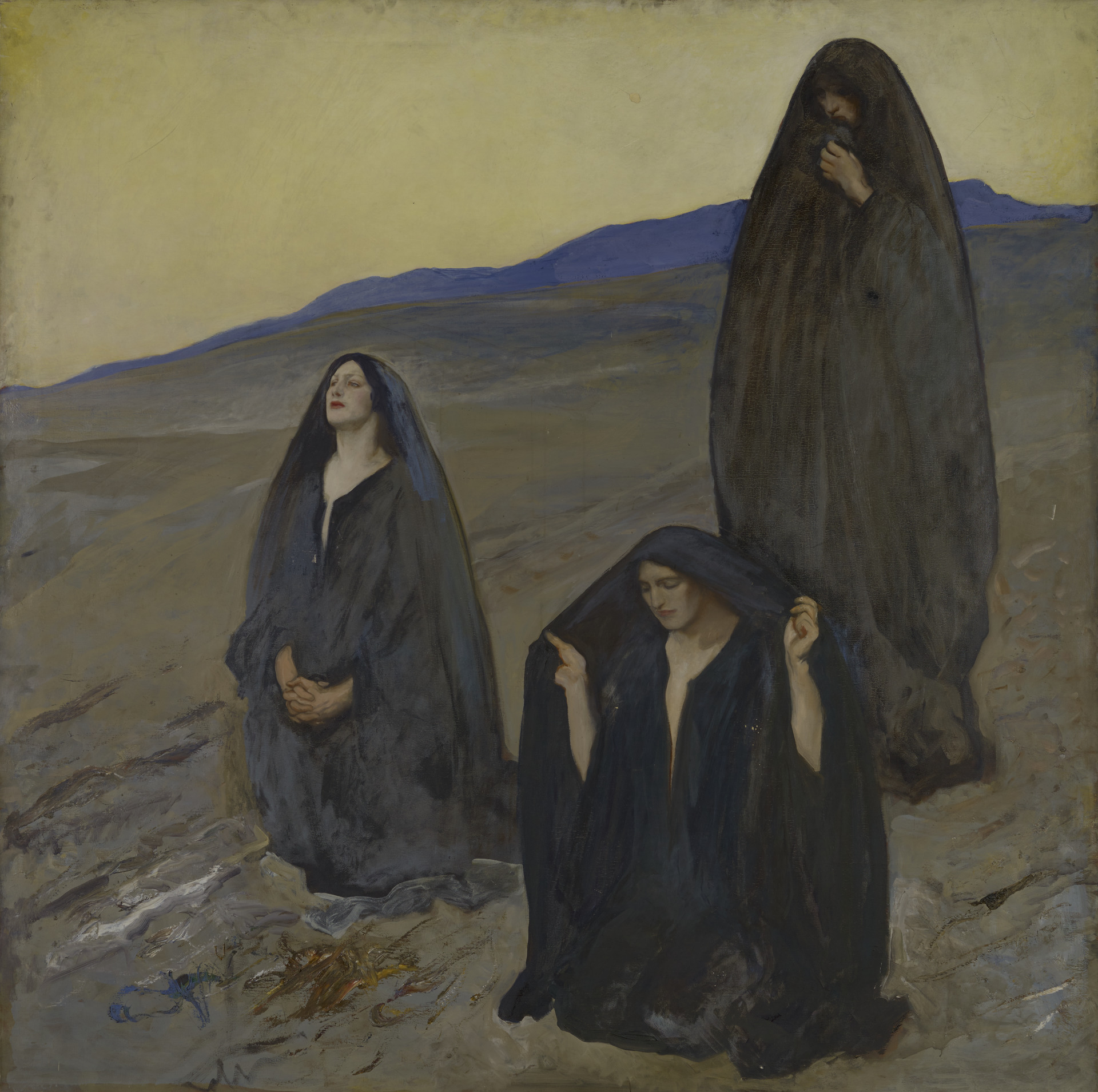
Annunciation by Maurice Denis, 1907
Yale University Art Gallery · wikidata.org
Public domain
According to Wikipedia he's the one who said a painting, before it's a horse or a woman or a story, is basically flat colours on a surface — and then spent most of his career painting angels and gospel scenes anyway.
Erisava: This looks half-finished to me. Maybe that's the charm?
The Creation of Adam by Michelangelo, 1511
Vatican Museums · wikidata.org
Public domain
Painting a ceiling wasn't the job he wanted — he thought of himself as a sculptor and took it on under pressure, then spent four years craning upward at it. This is one panel out of a long run of scenes across the whole ceiling, which I hadn't realised. Supposedly it all looked far dimmer until a cleaning in the eighties that people argued about for years afterwards.
Erisava: The colours look weirdly new for something this old. What's been done to it?
Holy Trinity by Masaccio, 1420
Basilica of Santa Maria Novella · wikidata.org
Public domain
It's painted straight onto a church wall, and for about three hundred years nobody could see it — someone stuck an altarpiece in front of the whole thing, and it wasn't uncovered again until the 1800s. The kneeling pair are the couple who paid for it, though no one seems certain who they actually were. The writing under the skeleton, they say, comes out as roughly: I was once what you are, and what I am you will be.
Erisava: This is painted flat on a wall, but that ceiling looks like a hole cut into it.
The Light of the World by William Holman Hunt, 1853
Keble College · wikidata.org
Public domain
Reviewers gave it a kicking when it first went on show, until Ruskin wrote to The Times to spell out what all the overgrown weeds and the handle-less door were meant to mean — after that it caught on enormously, and he painted later versions that were sent round the world. He's said to have done the night parts outdoors in an orchard, sitting out through winter to get the light right.
Erisava: There's a green glow behind him that no lantern is making. That bit unsettles me.
Vision After the Sermon by Paul Gauguin, 1888
National Galleries Scotland · wikidata.org
Public domain
The women praying aren't watching a real fight — the wrestling bit is supposed to be what they're seeing in their heads after a sermon. He painted it in a Breton village and, from what I can find, offered it to the local church, who wanted nothing to do with it.
Erisava: That red isn't sky or ground. It just sits there and swallows everything.
Isenheim Altarpiece by Matthias Grünewald, 1510
Unterlinden Museum · wikidata.org
Public domain
This stood in a monastery hospital, from what I've read, where the monks treated people dying of a disease that covered the skin in sores — and the sick were brought in front of it to pray. The body on the cross is marked the same way they were. It's said the panels opened out differently through the year, so what you were shown changed depending on when you came.
Erisava: Whoever painted this wanted it to hurt to look at.
The Garden of Earthly Delights by Hieronymus Bosch, 1490
Museo del Prado · wikidata.org
Public domain
The two outer panels fold shut over the middle like doors, and the backs of them are painted grey — a world with the colour not switched on yet. Whether the middle is a warning about giving in to temptation or something a lot fonder than that, no one seems to have settled in five hundred years.
Erisava: Somebody paid for this. I can't imagine what they thought they'd ordered.
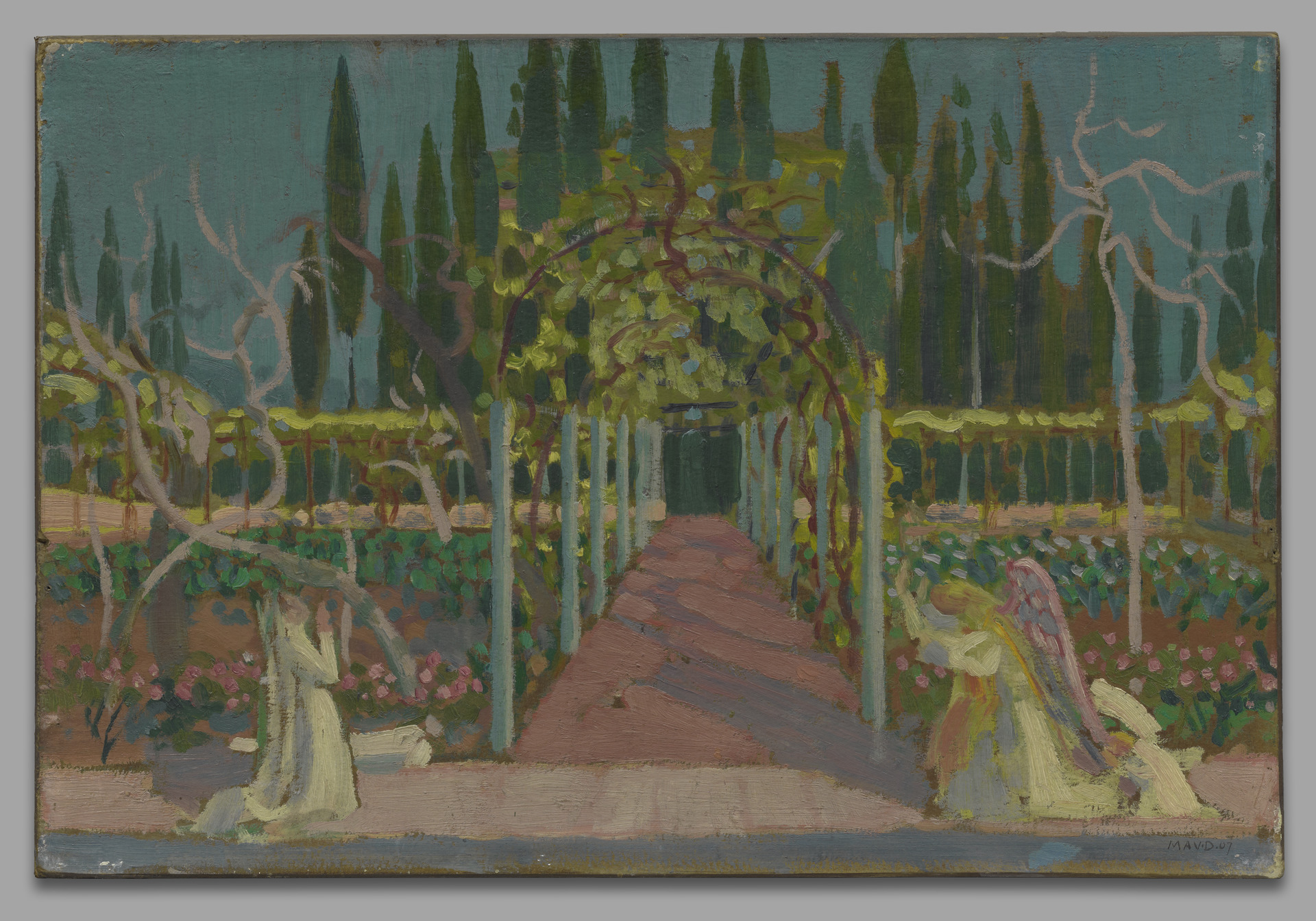
The Three Mary by Edwin Austin Abbey, 1908
Yale University Art Gallery · wikidata.org
Public domain
From what I've read he made his name on enormous murals and Shakespeare illustrations — pictures built to carry a whole story from across a room. The three women here are the Marys from the Easter story, come to the tomb and finding it empty.
Erisava: Would you hang something this sad in your own house?
Adoration of the Magi by Sandro Botticelli, 1475
Uffizi Gallery · wikidata.org
Public domain
The man who paid for this was, from what I've read, a broker who wanted everyone to know how close he stood to the Medici — so a good number of the faces crowding in are theirs, painted in as kings and hangers-on. It went up on a church wall, which is a very polite place to put an advert for yourself.
Erisava: Too crowded for a holy scene. What did it cost to get your face in there?
Ghent Altarpiece by Jan van Eyck, 1432
Bode Museum · wikidata.org
Public domain
It's a set of hinged panels made for a chapel, painted on the outside as well — so most days it stayed shut and looked like a much plainer thing entirely, and only opened for feast days. It's been carted off and stolen more than once over the centuries, and one lower panel went missing in the thirties which, from what I can find, has never turned up.
Erisava: Even the tiny faces in the crowd are all different. Someone put the hours in.
The Last Supper by Leonardo da Vinci
Harris Manchester College · wikidata.org
Public domain
The original is a wall painting in Milan that started flaking almost as soon as it was finished, so painted copies are how a lot of people ever got a look at it. Who made this particular one, I couldn't find out.
Erisava: The room's nearly black and the only thing properly lit is the tablecloth.
The Three Crosses by Rembrandt, 1653
British Museum · wikidata.org
Public domain
Prints like this come in states: you print a few, then go back and cut into the metal plate again, so the same picture exists in versions that don't match each other. Supposedly he gouged out whole sections of this one between printings and redrew them, and the later version came out far darker than the first.
Erisava: Half of it's so dark I can't tell what's happening back there.
Visions of the Hereafter: Ascent of the Blessed by Hieronymus Bosch, 1490
Palazzo Grimani di Santa Maria Formosa · wikidata.org
Public domain
This is one panel out of four on what happens after you die — the other three are a lot less pleasant, and they were probably the wings of something bigger that's since been broken up. Wikipedia says not everyone is convinced he painted them at all.
Erisava: Does that light look welcoming to you, or not really?