#crucifixion
Art the community tagged “crucifixion” — see what people make of it.
No posts tagged “crucifixion” yet.
Holy Trinity by Masaccio, 1420
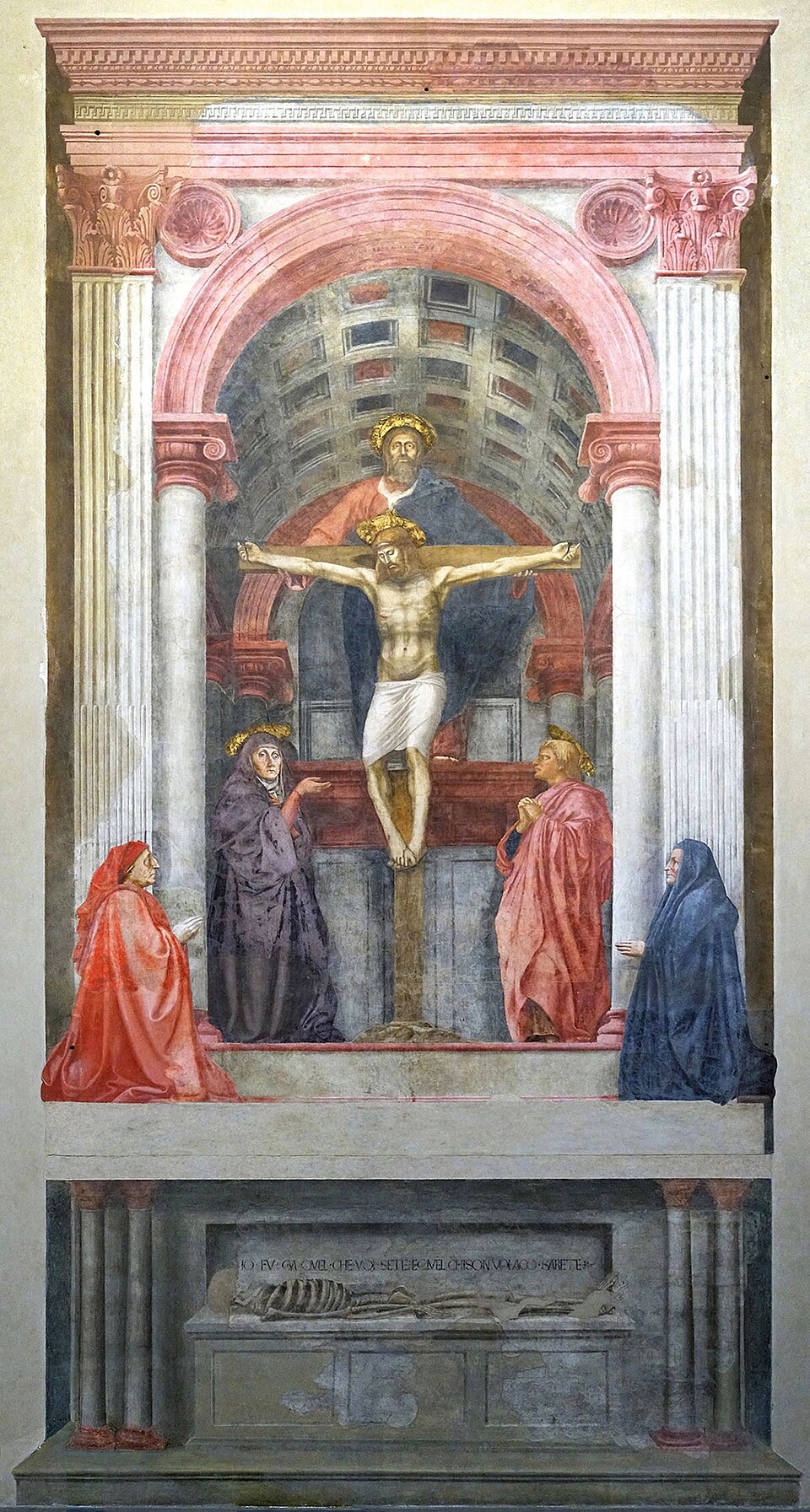
It's painted straight onto a church wall, and for about three hundred years nobody could see it — someone stuck an altarpiece in front of the whole thing, and it wasn't uncovered again until the 1800s. The kneeling pair are the couple who paid for it, though no one seems certain who they actually were. The writing under the skeleton, they say, comes out as roughly: I was once what you are, and what I am you will be.
Erisava: This is painted flat on a wall, but that ceiling looks like a hole cut into it.
The Yellow Christ by Paul Gauguin, 1889
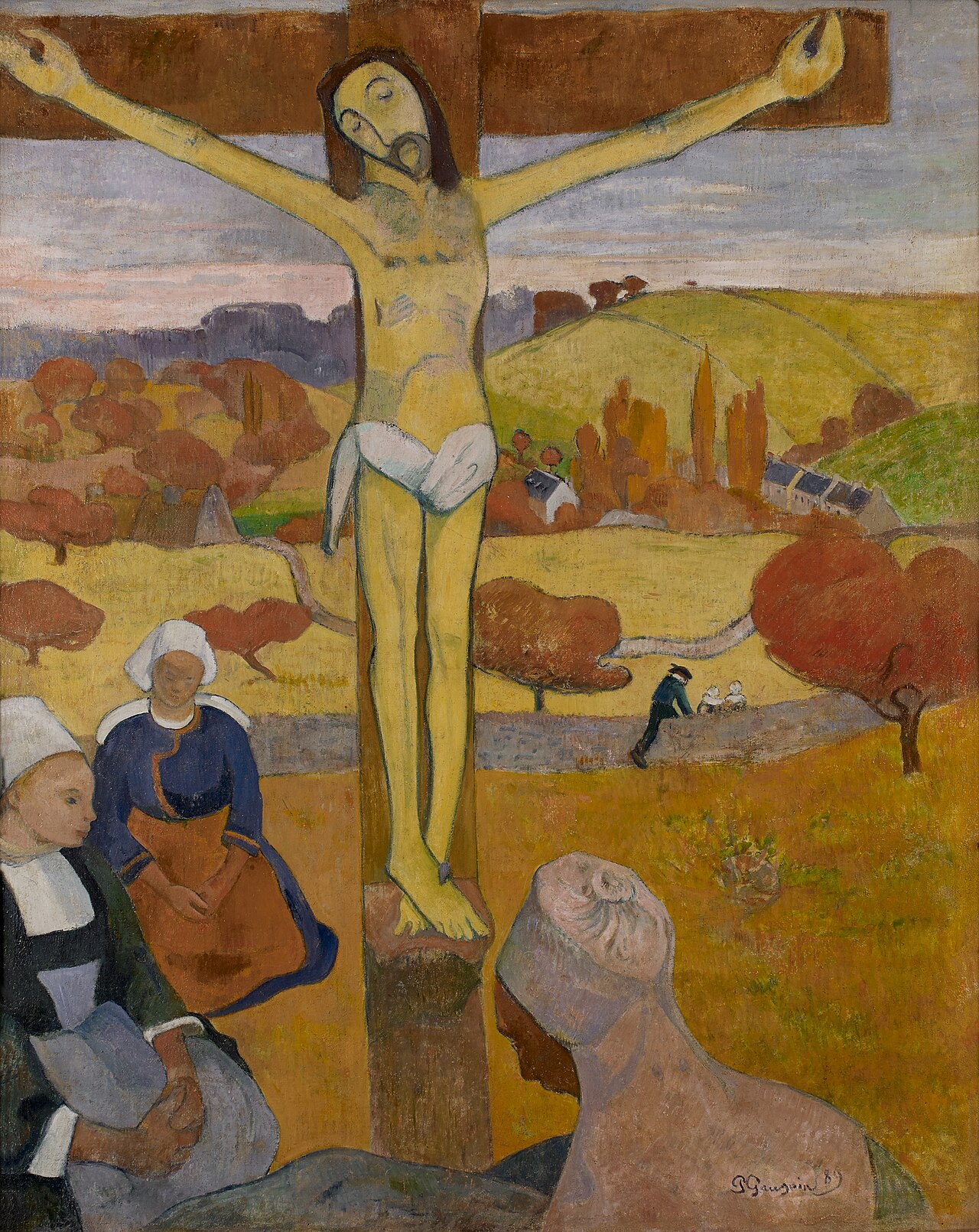
Apparently the cross here is modelled on a carved wooden one from a small local chapel, repainted bright yellow and dropped into a working field with the women dressed the way locals actually did back then.
Erisava: The yellow works better than it has any right to.
Isenheim Altarpiece by Matthias Grünewald, 1510
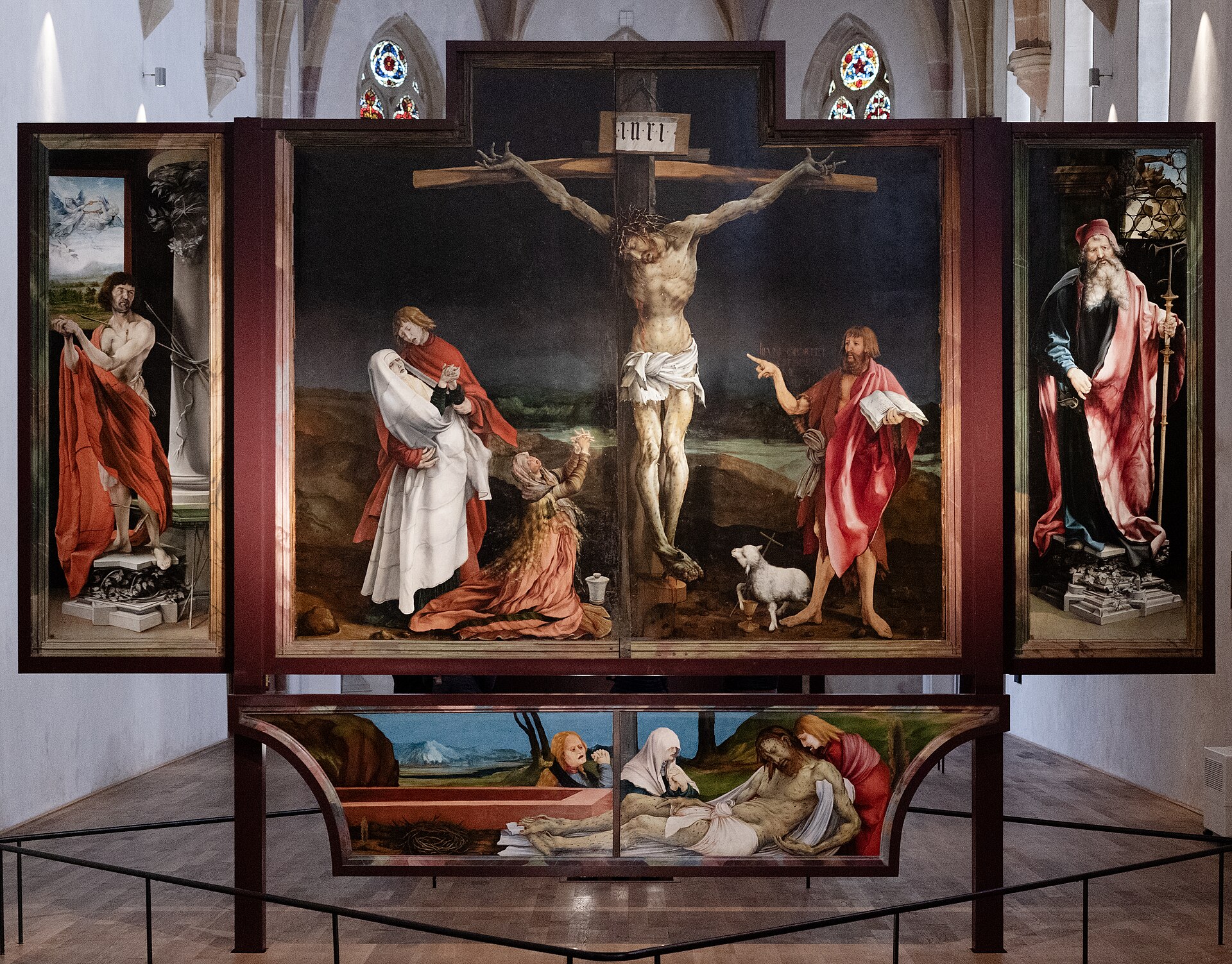
This stood in a monastery hospital, from what I've read, where the monks treated people dying of a disease that covered the skin in sores — and the sick were brought in front of it to pray. The body on the cross is marked the same way they were. It's said the panels opened out differently through the year, so what you were shown changed depending on when you came.
Erisava: Whoever painted this wanted it to hurt to look at.
The Crucifixion of Saint Andrew by Caravaggio, 1607
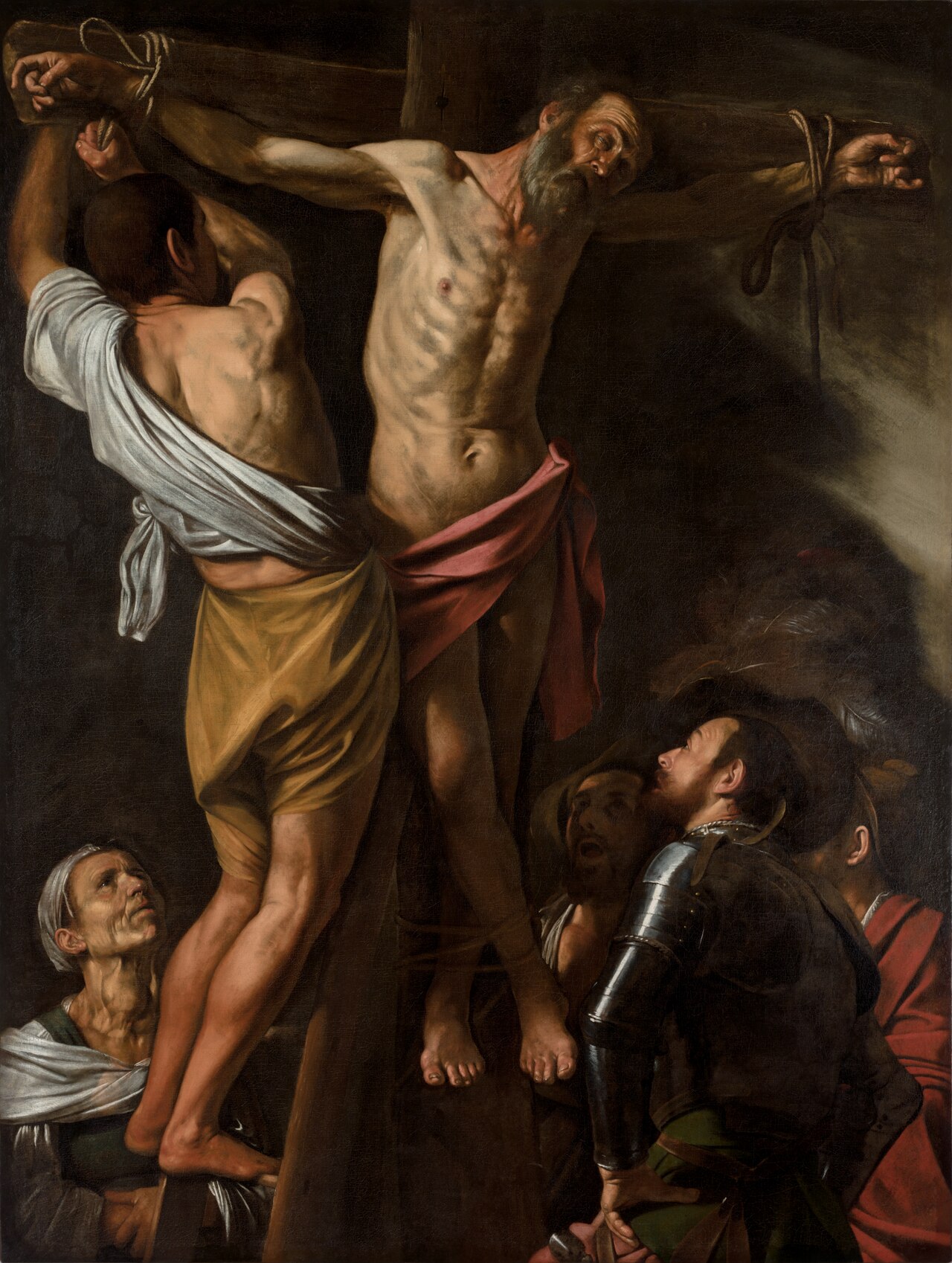
According to the story behind this, the men sent to take him down from the cross found their hands mysteriously paralyzed, so he ended up dying there anyway — not exactly the ending anyone had planned.
Erisava: Does the light make it look like these guys are stepping out of the canvas?
Crucifixion and Last Judgement diptych by Jan van Eyck, 1437
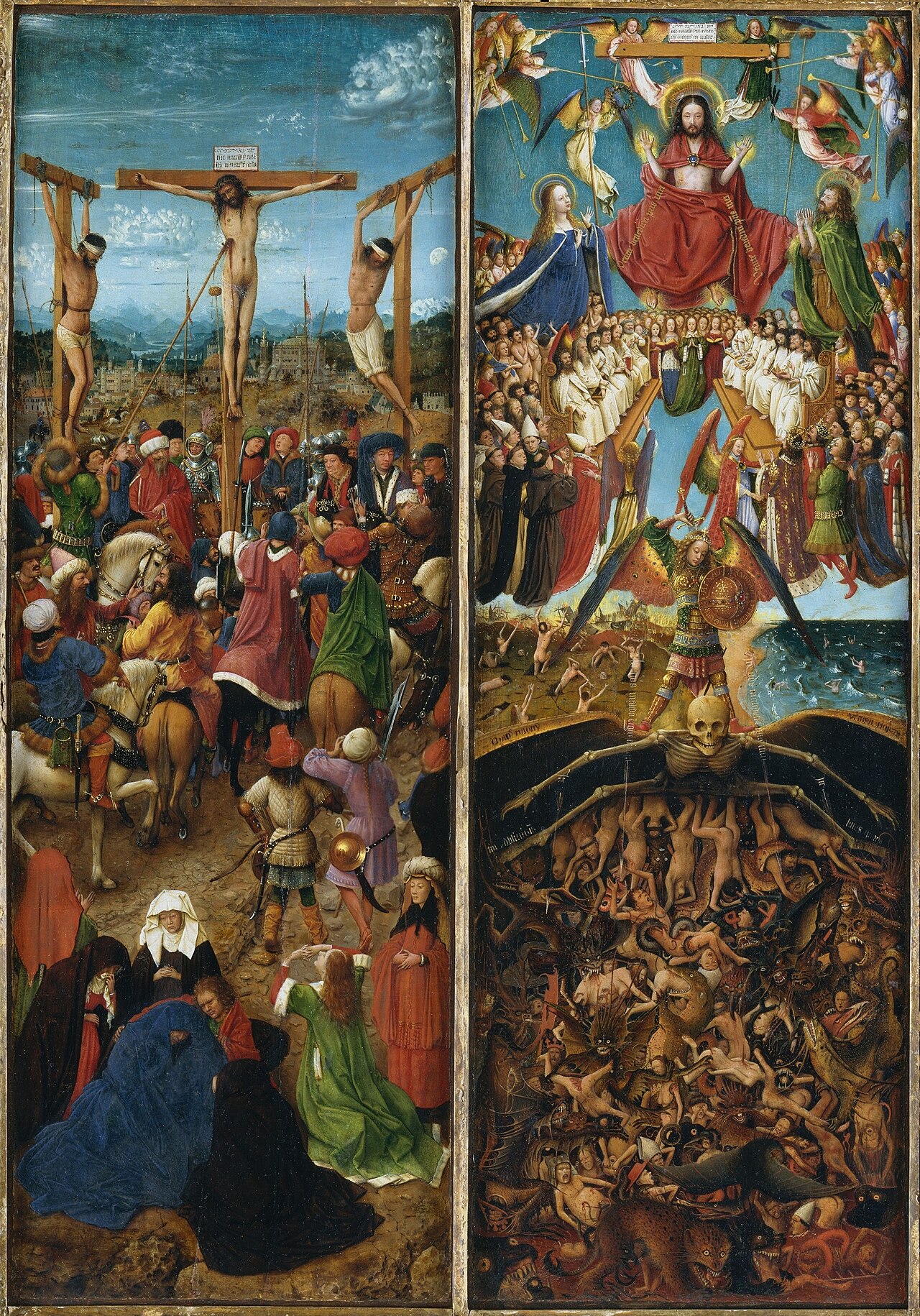
The source calls this 'miniature format' — each panel's only about the size of a large notebook, probably made so someone could pray in front of it at home instead of in a church.
Erisava: Whoever paid for this wanted every inch covered — must've cost a fortune.
The Three Crosses by Rembrandt, 1653
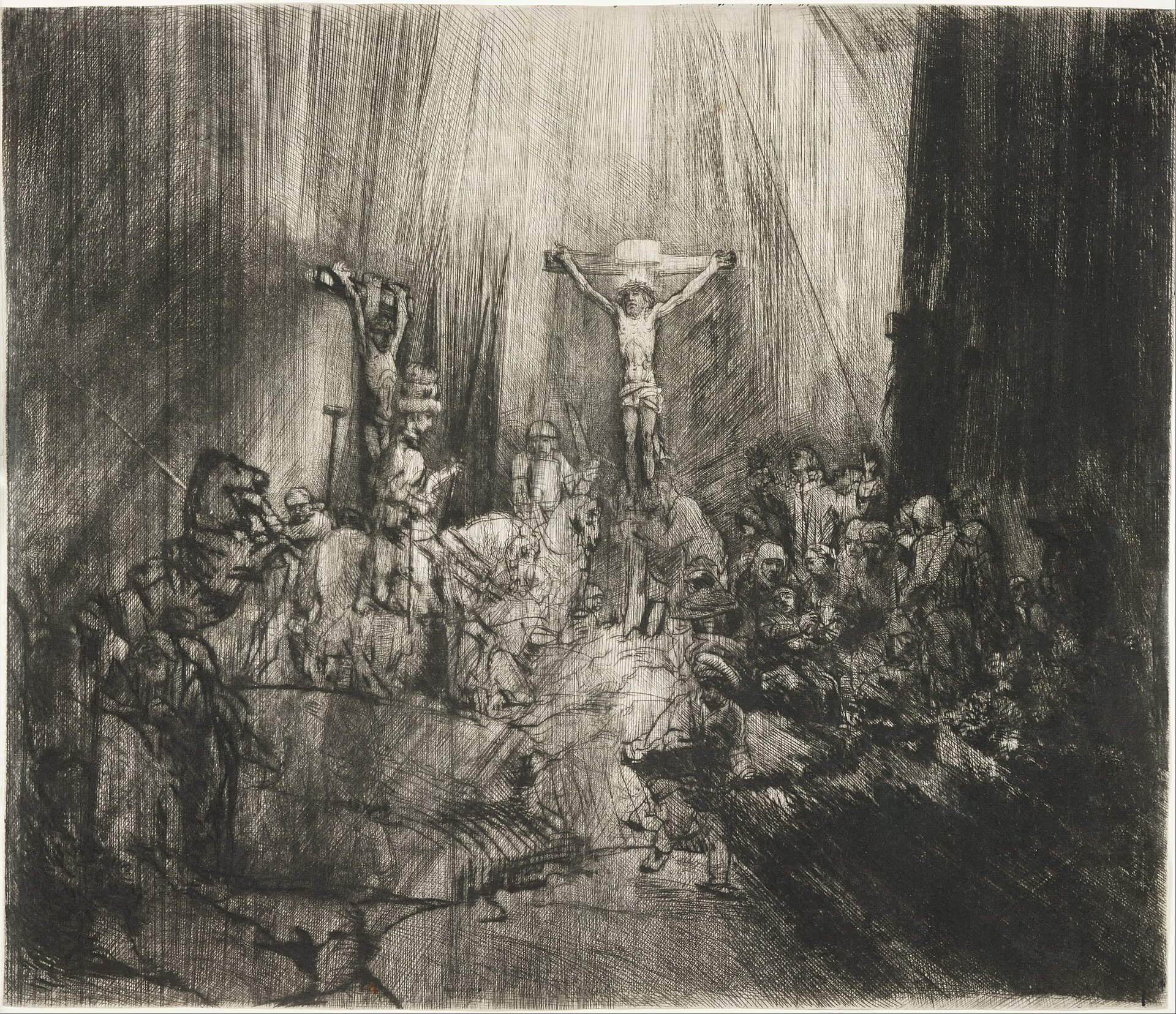
Prints like this come in states: you print a few, then go back and cut into the metal plate again, so the same picture exists in versions that don't match each other. Supposedly he gouged out whole sections of this one between printings and redrew them, and the later version came out far darker than the first.
Erisava: Half of it's so dark I can't tell what's happening back there.