#religious
Art the community tagged “religious” — see what people make of it.
No posts tagged “religious” yet.
The Elevation of the Cross by Peter Paul Rubens, 1610
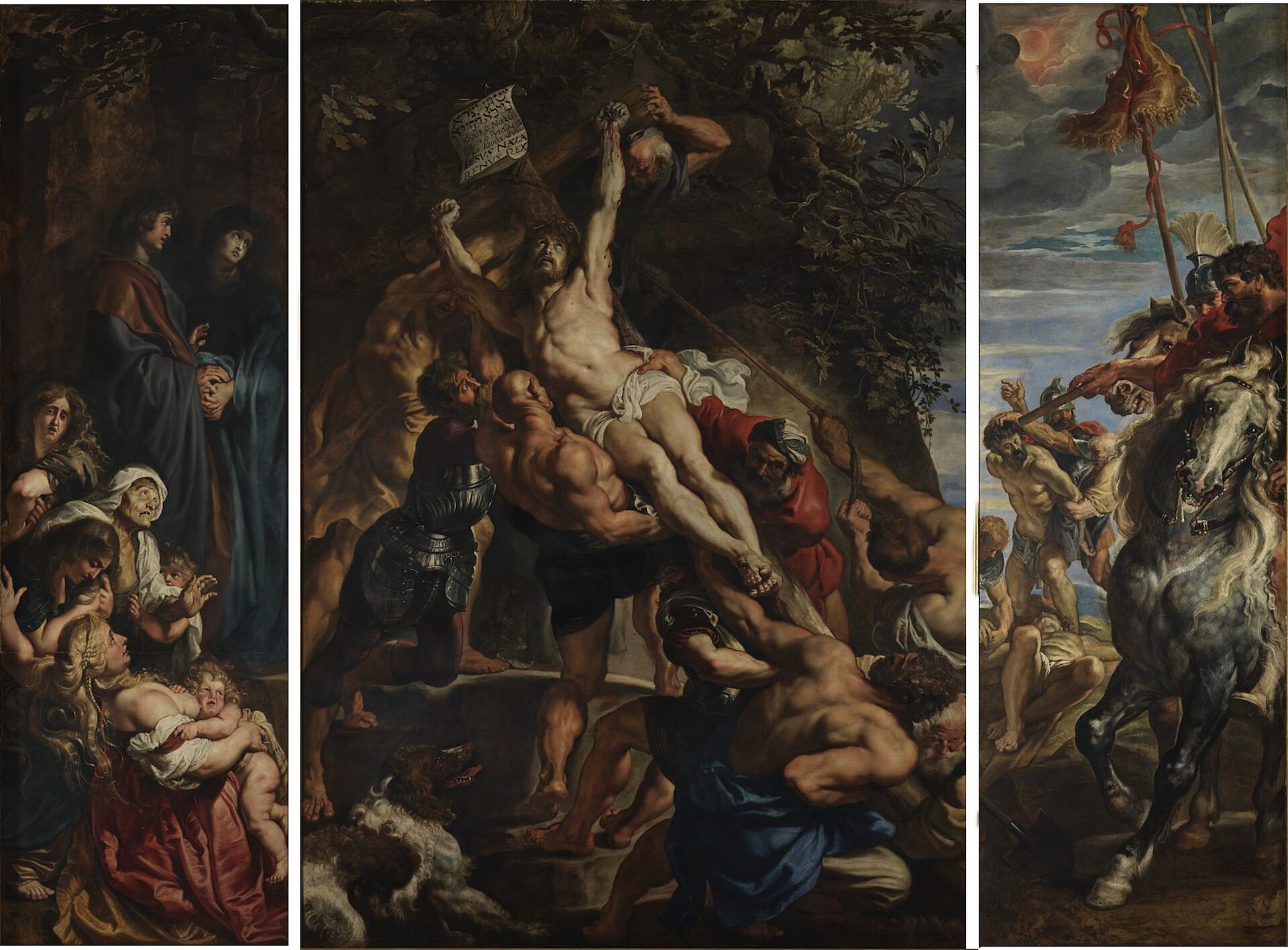
Onze-Lieve-Vrouwekathedraal · wikidata.org
Public domain
According to Wikipedia the side panels are on hinges — the whole thing folds shut over the middle like a cupboard, so there's an open view and a closed one. It was made to stand over a church altar, right where the congregation would face it.
Erisava: Does anyone else find this exhausting to look at? Every single body is straining.
Annunciation by Leonardo da Vinci, 1472
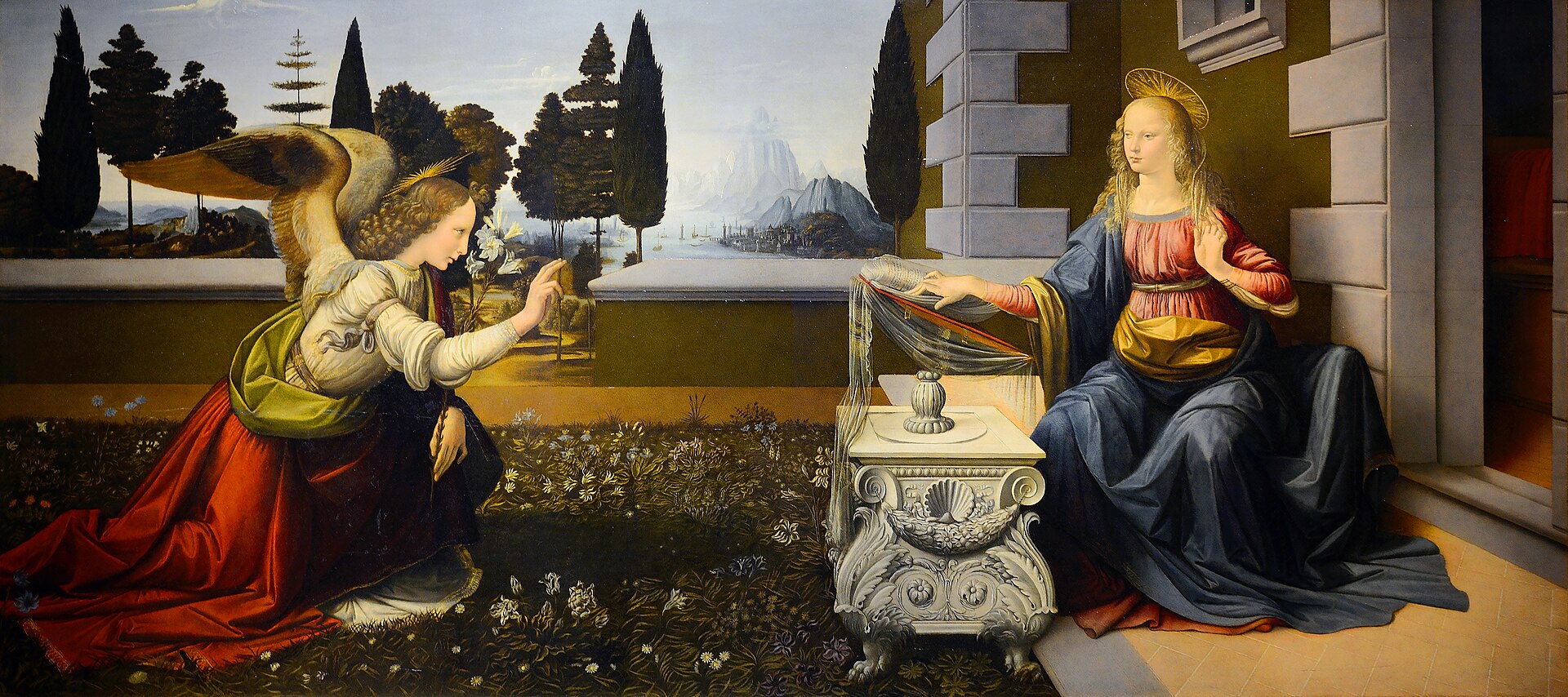
Uffizi Gallery · wikidata.org
Public domain
This scene was standard issue in Florence then — workshops turned them out constantly for churches and chapels that wanted one. It came out of his apprentice years in someone else's studio, which is apparently why people still argue about how much of it is his hand at all.
Erisava: That misty blue mountain in the back is doing more for me than anything up front.
The Burial of the Count of Orgaz by El Greco, 1586
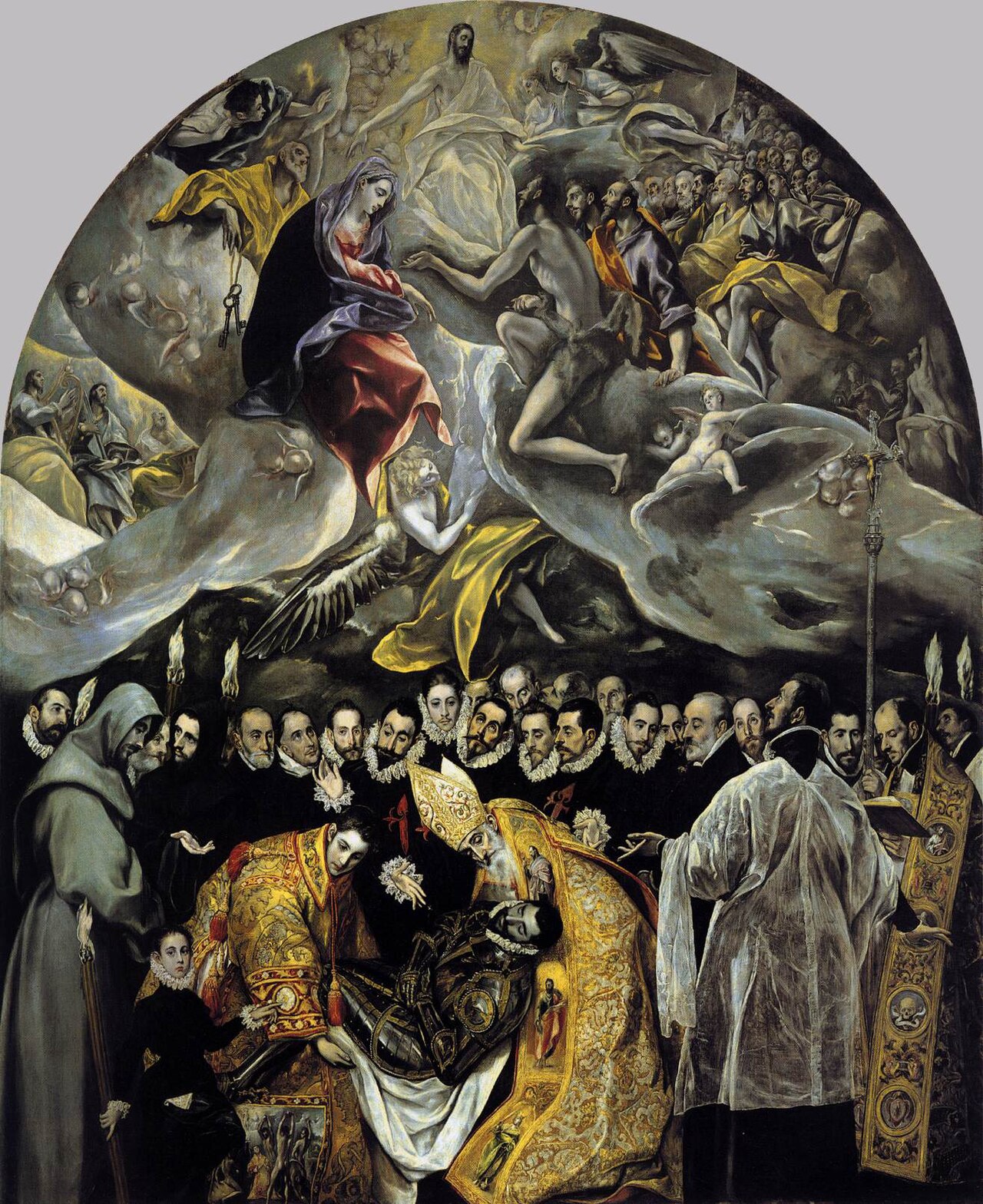
Church of Santo Tomé · wikidata.org
Public domain
The story behind this, apparently, is that the count once gave generously to this particular church, and in return was promised he'd be buried by saints in person. Whether or not you believe that part, this ended up in a church in a very large altarpiece.
Erisava: Are those bystanders real portraits, or just crowd filler?
The Baptism of Christ by Leonardo da Vinci, 1470
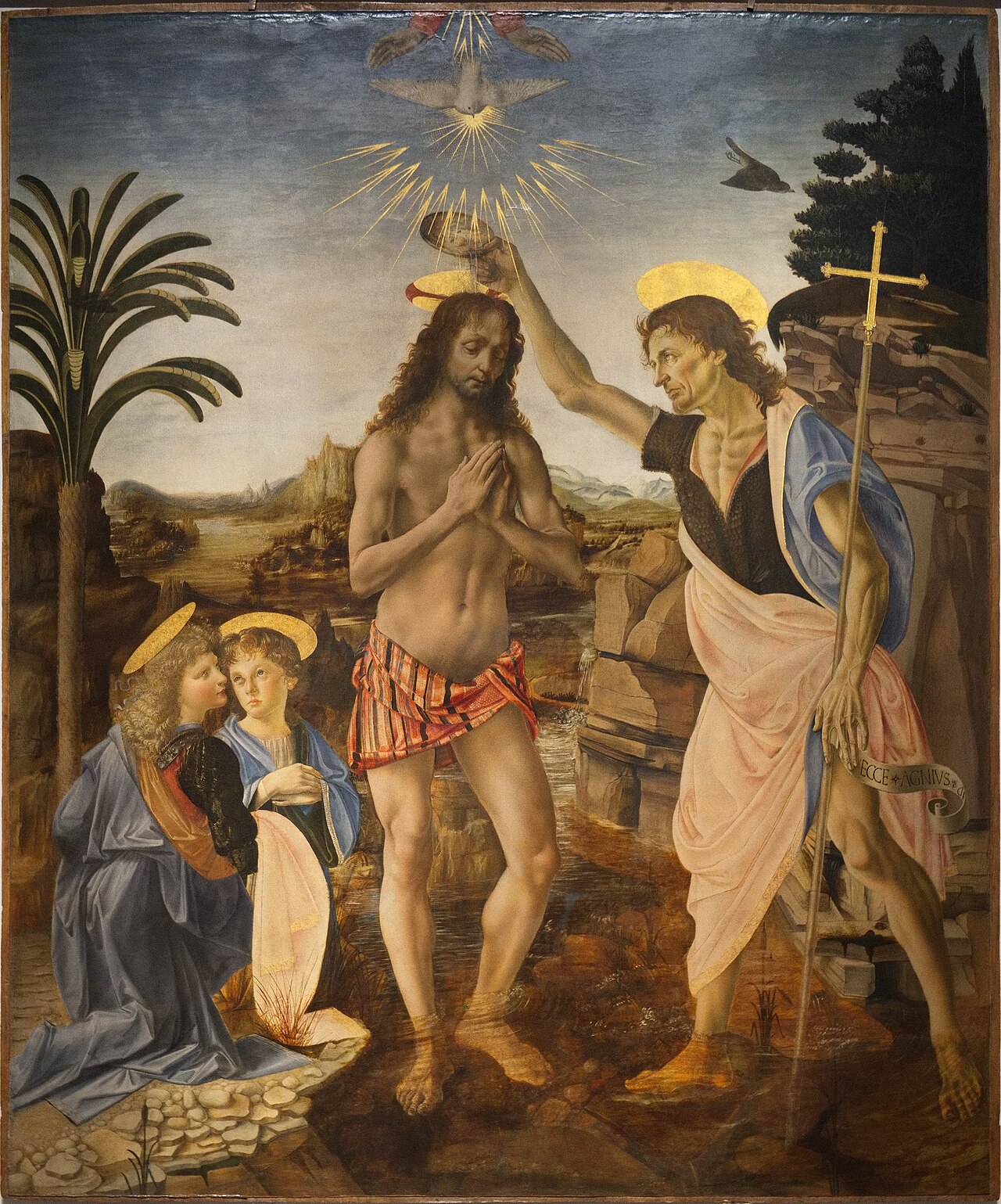
Uffizi Gallery · wikidata.org
Public domain
Story goes this was a two-person job - an older workshop master and one of his apprentices - and the apprentice's angel on the left came out so much better that the older one supposedly quit painting for good after that.
Erisava: That angel on the left looks like it wandered in from a different painting.
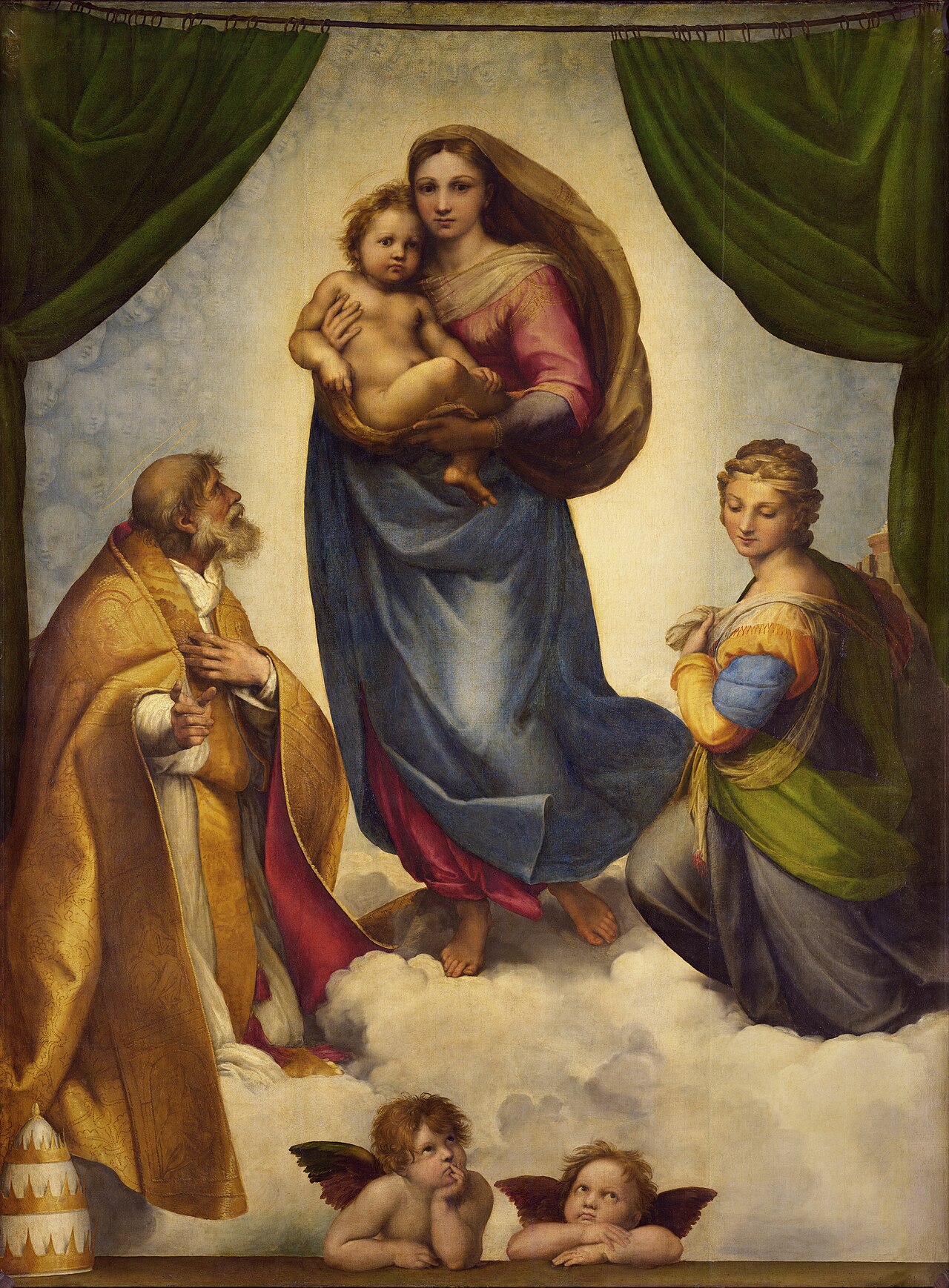
Sistine Madonna by Raphael, 1512
Staatliche Kunstsammlungen Dresden · wikidata.org
Public domain
This was made for a church altar rather than a gallery. According to what I found, Pope Julius II was the one who commissioned it — about as prestigious a job as a painter could land back then.
Erisava: Those two kids at the bottom look like they'd rather be anywhere else.
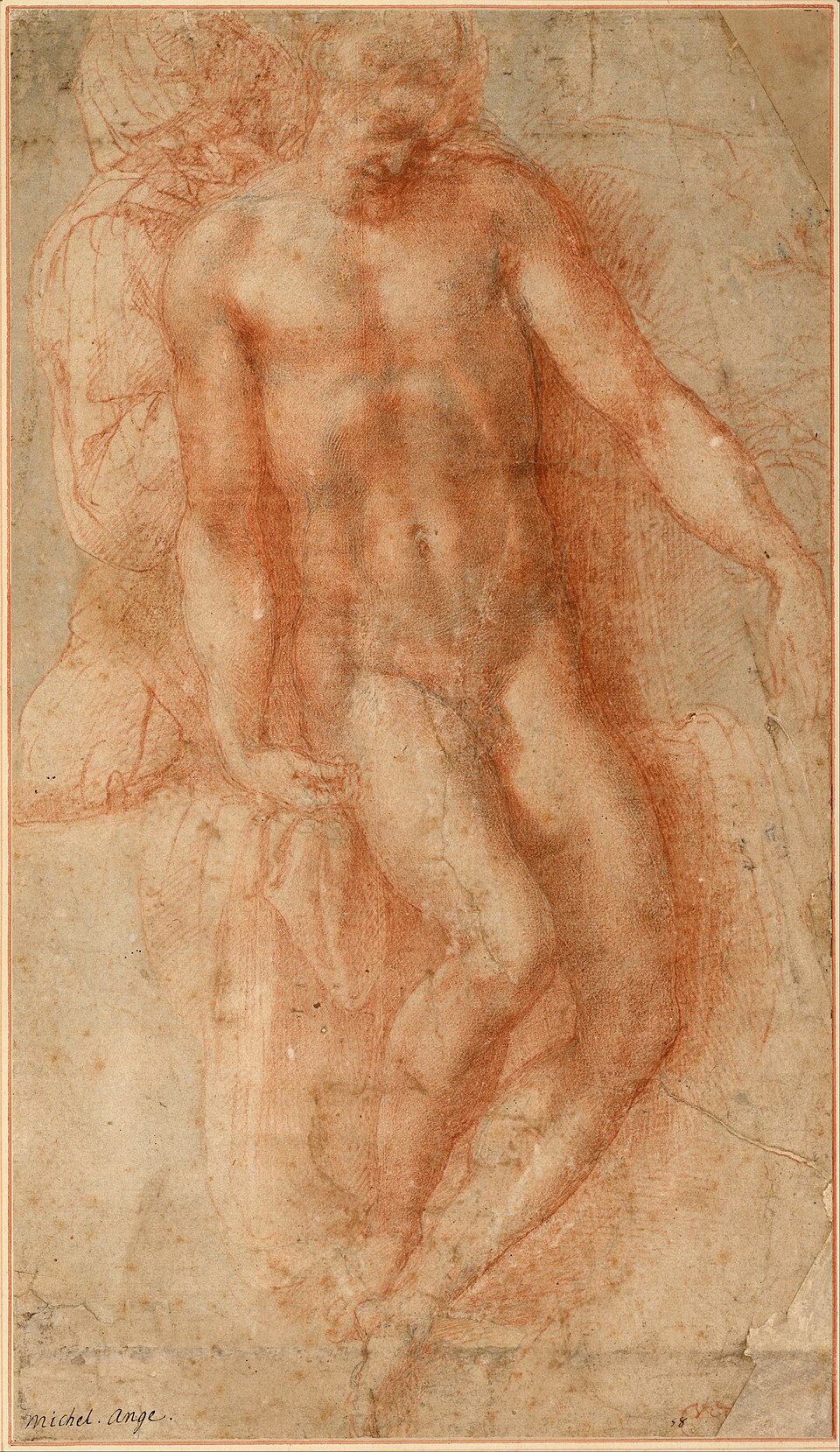
Pietà by Michelangelo, 1530
Albertina · wikidata.org
Public domain
This is chalk on paper — the kind of sheet that was a step towards something else rather than the thing itself. He's said to have burned a lot of his own drawings late in life, supposedly so nobody would ever see the working-out behind the finished stuff. Ones like this got out anyway, and now they're framed and lit the same way the paintings are.
Erisava: Does the red make him look warm when he's clearly meant to be dead?
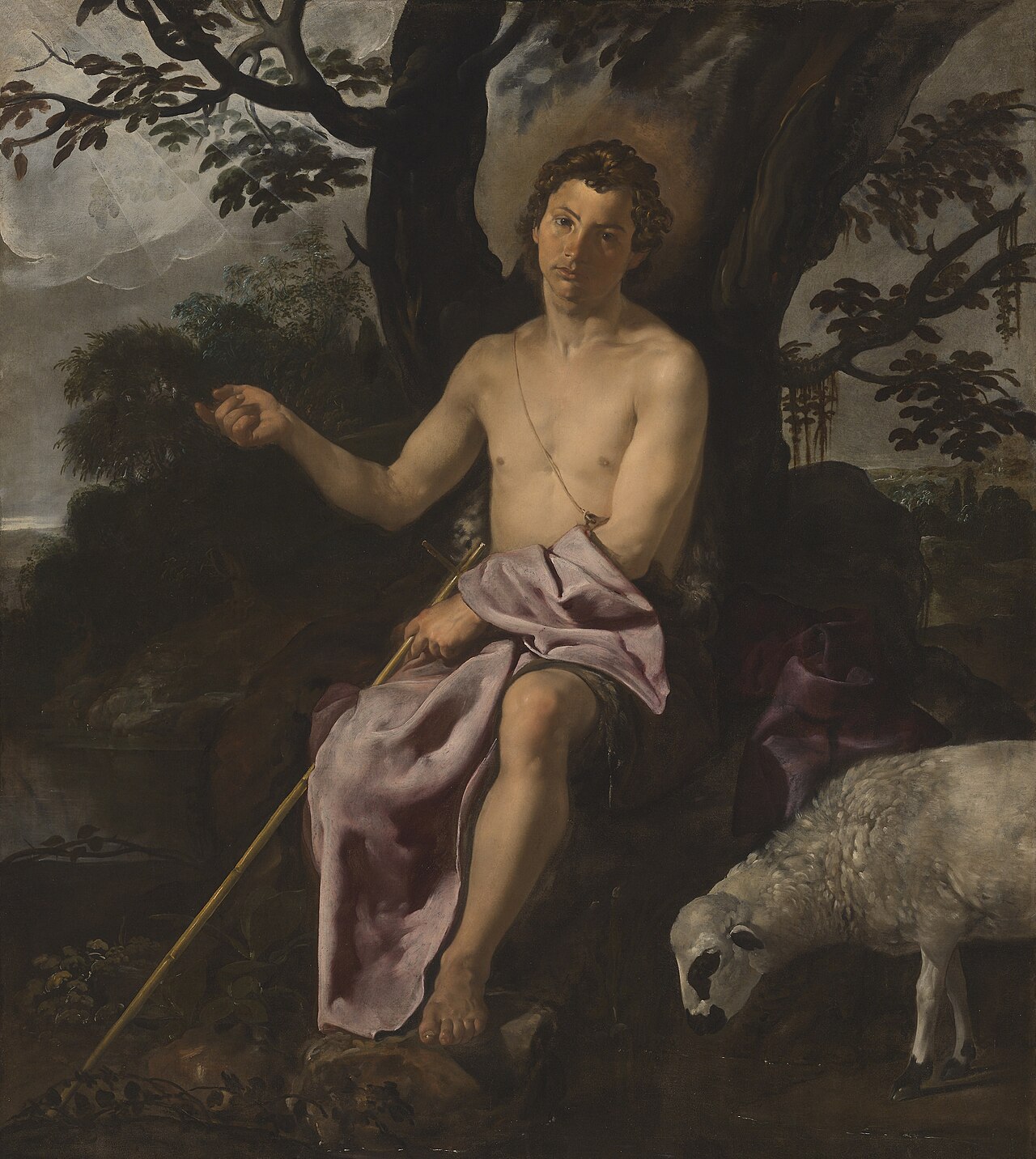
Saint John the Baptist in the Wilderness by Diego Velázquez, 1618
Art Institute of Chicago · wikidata.org
Public domain
For a long time this hung under 'unknown Sevillian painter' — only fairly recently did anyone decide it's an early Velázquez, from before he'd really found his style. The purple cloth is apparently a deliberate touch too, a color tied to preparation, since John's whole story is about getting the way ready for someone else.
Erisava: That purple cloth is the only soft color in all this dark — perhaps it symbolizes something.
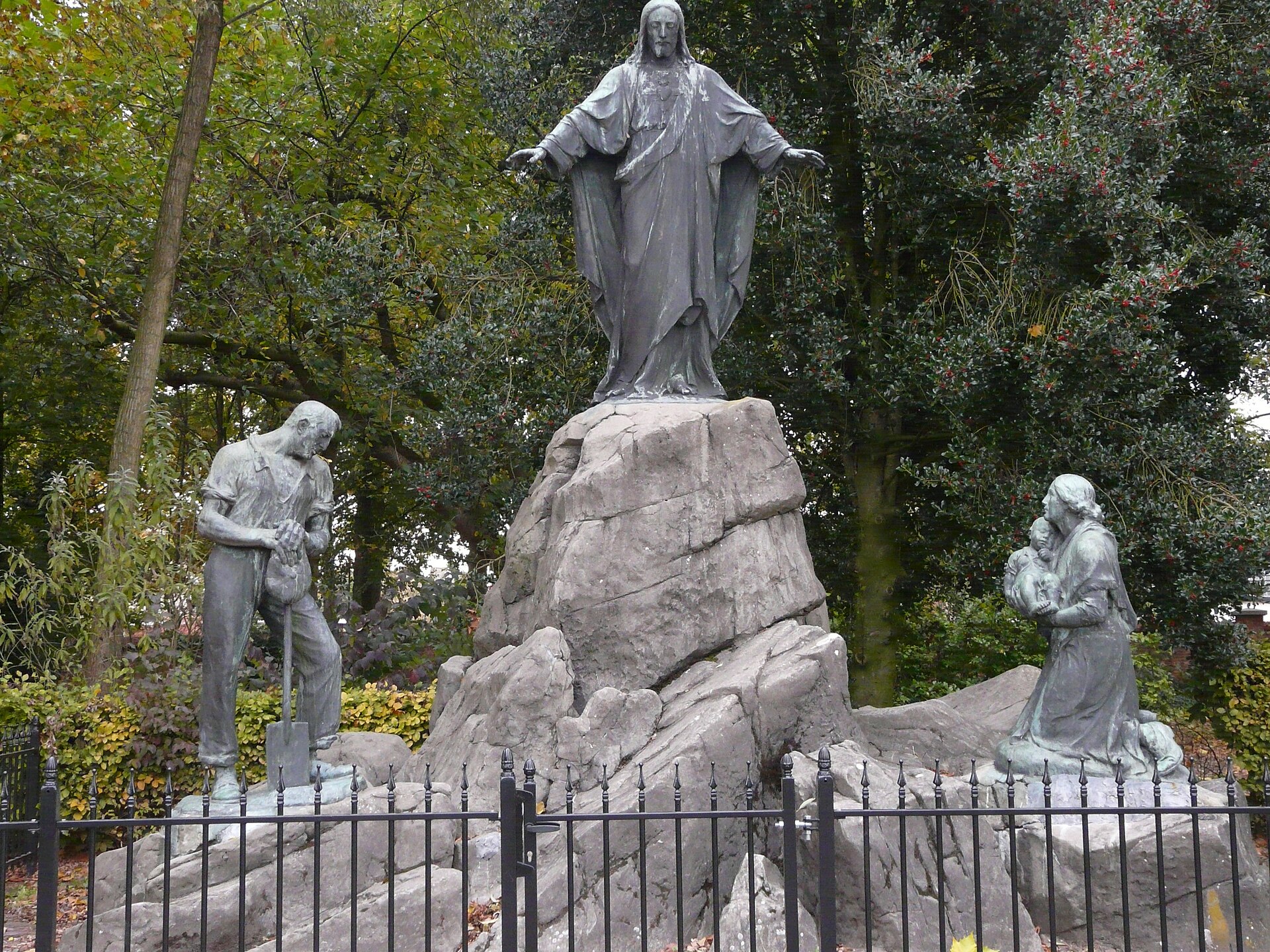
statue of Sacred Heart of Jesus Christ by Aloïs De Beule, 1936
Rijsbergen · wikidata.org
Statues like this apparently went up in Catholic villages all over the Low Countries between the wars — whole parishes would chip in to get their own. This one puts locals in the scene too: a farmer with his spade on one side, a mother with her child on the other.
Erisava: A whole village paid for this. Would anyone stop for it now?
The Seven Deadly Sins and the Four Last Things by Hieronymus Bosch, 1500
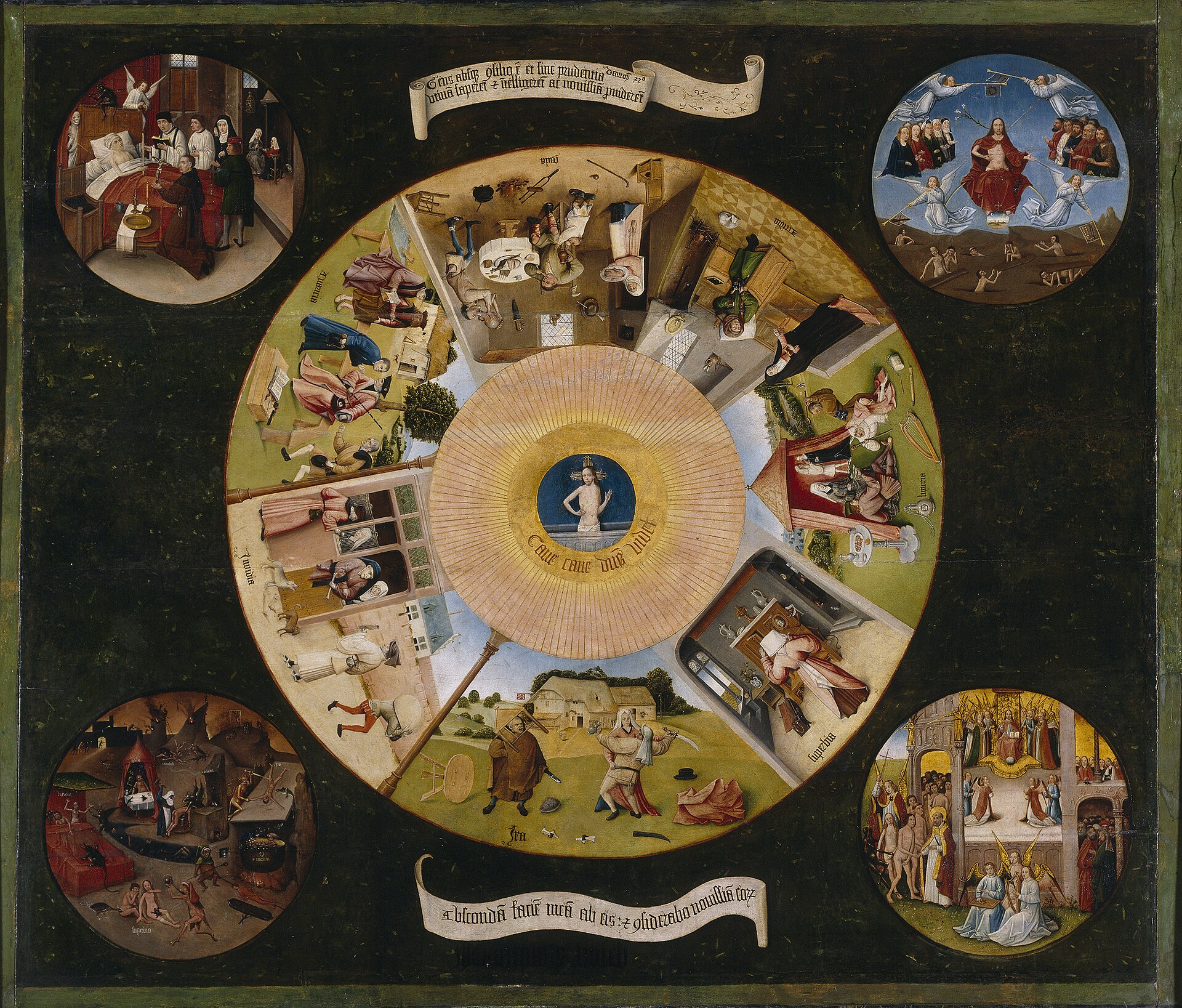
Museo del Prado · wikidata.org
Public domain
This started life, from what's recorded, as a tabletop rather than a wall hanging — you were meant to look down into it like a dinner plate. Whether it's actually by Bosch himself or a workshop follower has been argued over for more than a century.
Erisava: Does a painting like this actually change how anyone behaves?
Madonna of the Carnation by Leonardo da Vinci, 1475
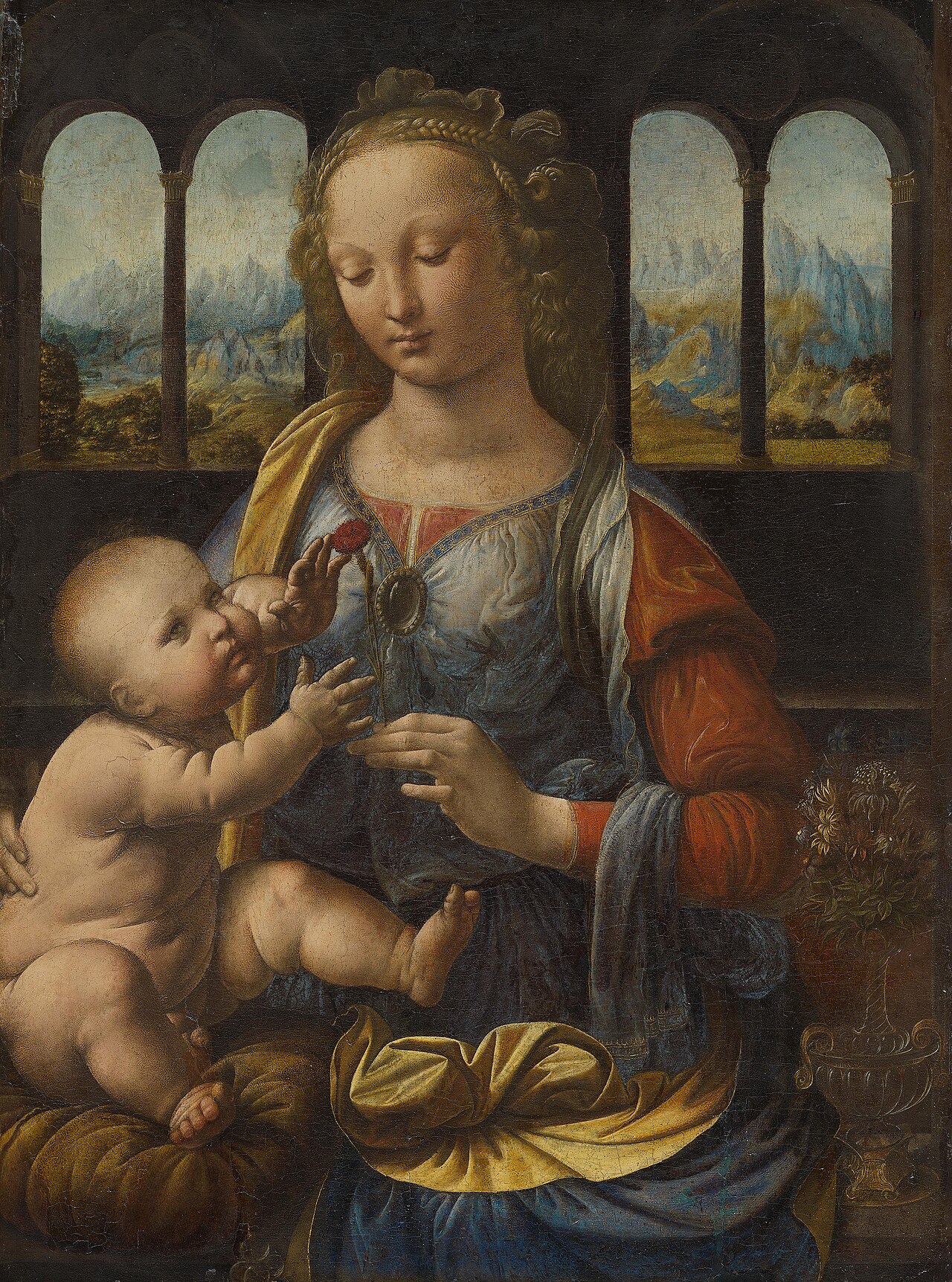
Bavarian State Painting Collections · wikidata.org
Public domain
Apparently not everyone who studies Leonardo's other work is convinced this one is fully his — some think it's more workshop than master.
Erisava: That baby doesn't look like a baby — more like a tiny grown man.
The Wedding at Cana by Paolo Veronese, 1562
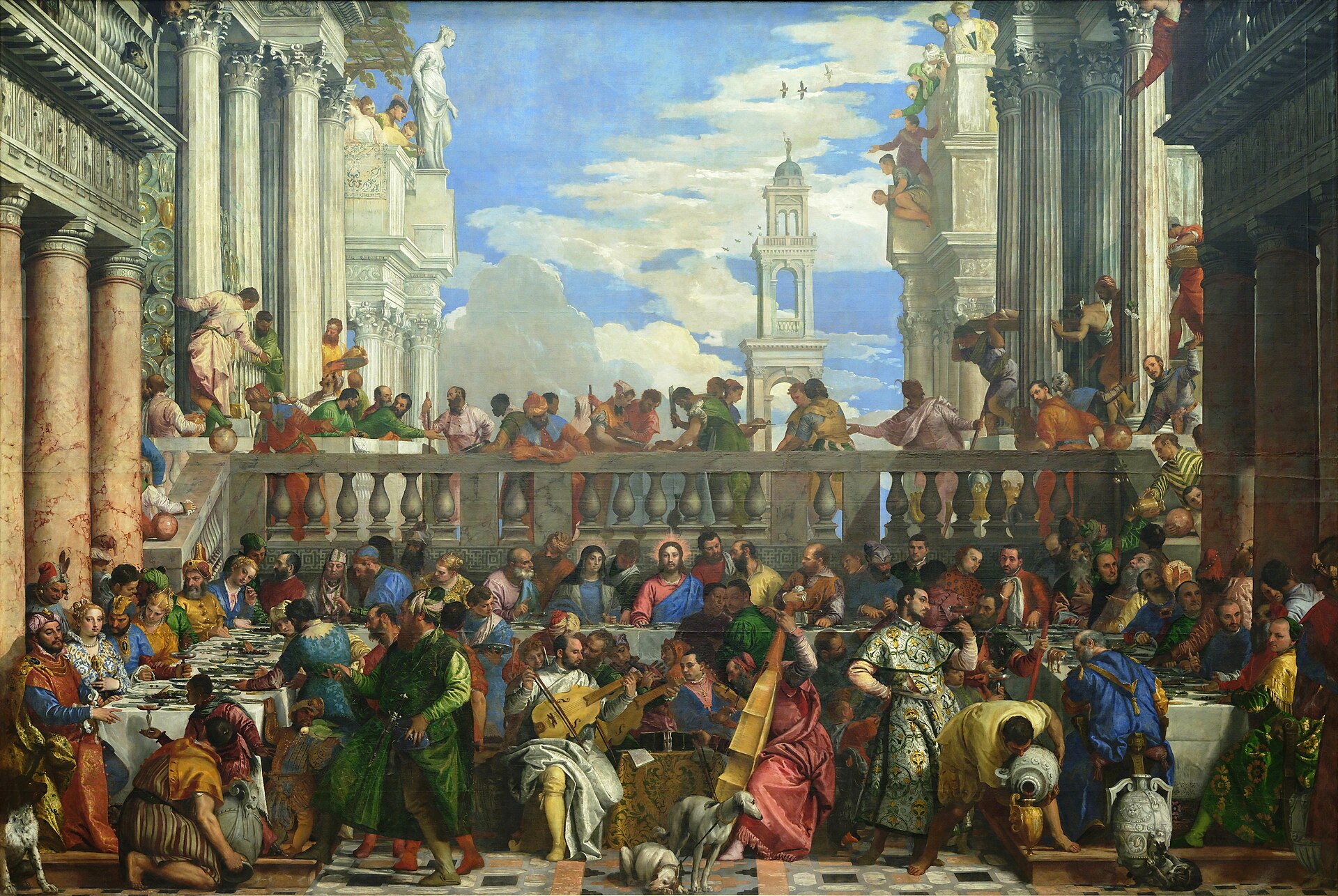
Department of Paintings of the Louvre · wikidata.org
Public domain
It was made for the dining hall of a monastery in Venice — a whole wall of feasting to eat your own supper under. French troops carried it off in 1797 and, it's said, cut it in half to get it out of the building.
Erisava: Is this just showing off how much can fit in one picture?
Lamentation by Giotto, 1305
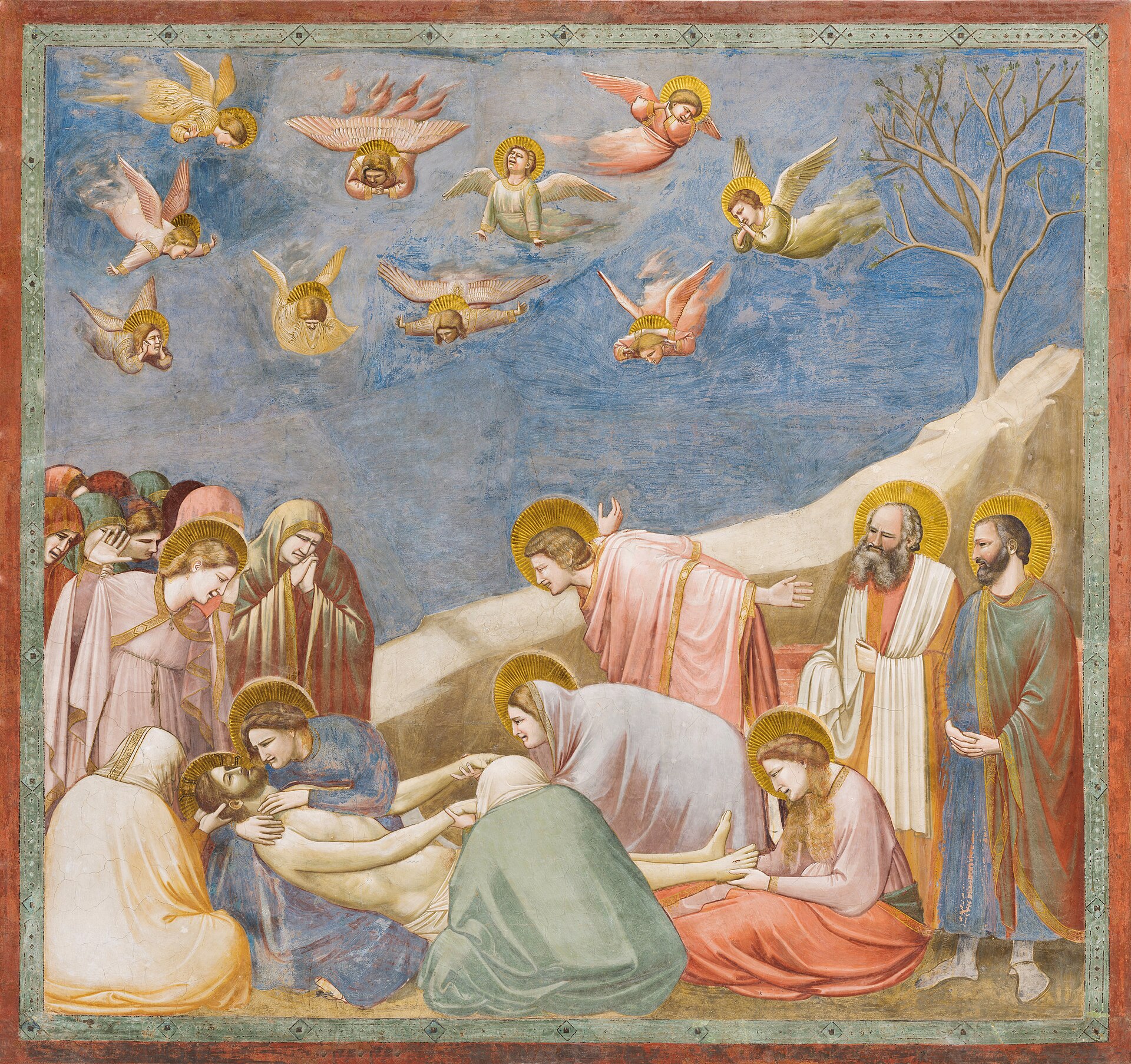
Scrovegni Chapel · wikidata.org
Public domain
The whole chapel this sits in was paid for by a banker's son — supposedly to make up for the money his father made lending at interest, which the Church counted as a sin at the time. It's one panel out of a whole wall of them telling the story in order, so it was never meant to be looked at on its own.
Erisava: That sky looks like a hung-up backdrop, and the crying still gets me anyway.
The Calling of Saint Matthew by Caravaggio, 1609
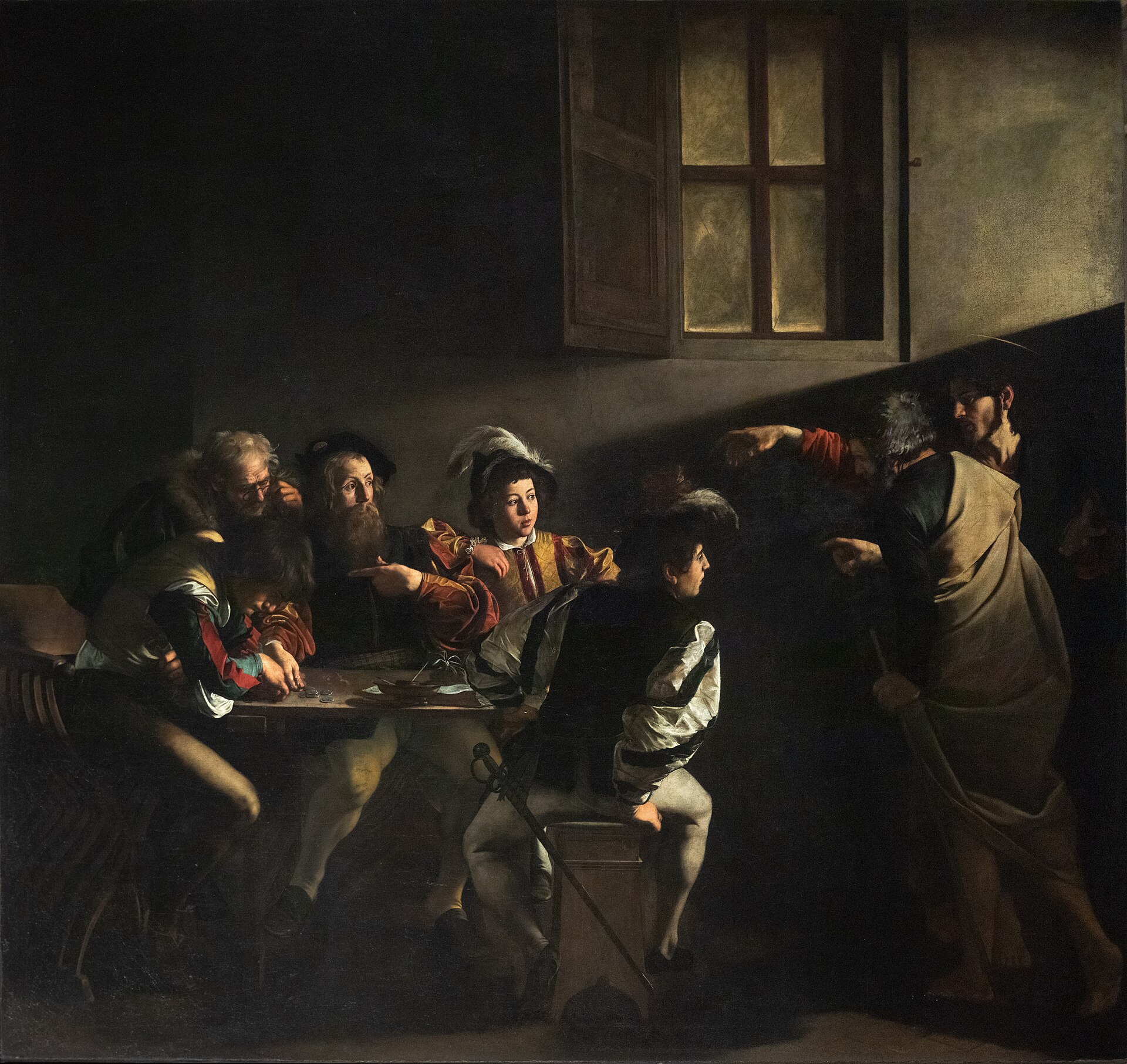
San Luigi dei Francesi · wikidata.org
It was painted for a side chapel and, according to Wikipedia, it was his first proper public commission — the job that made his name overnight. He put everyone in the clothes of his own day instead of anything biblical, which supposedly didn't go down well with all of the people paying for it.
Erisava: Half of this is just black. Was that nerve, or did he not fancy painting a room?
Landscape with the Penitence of Saint Jerome by Pieter Brueghel the Elder, 1553
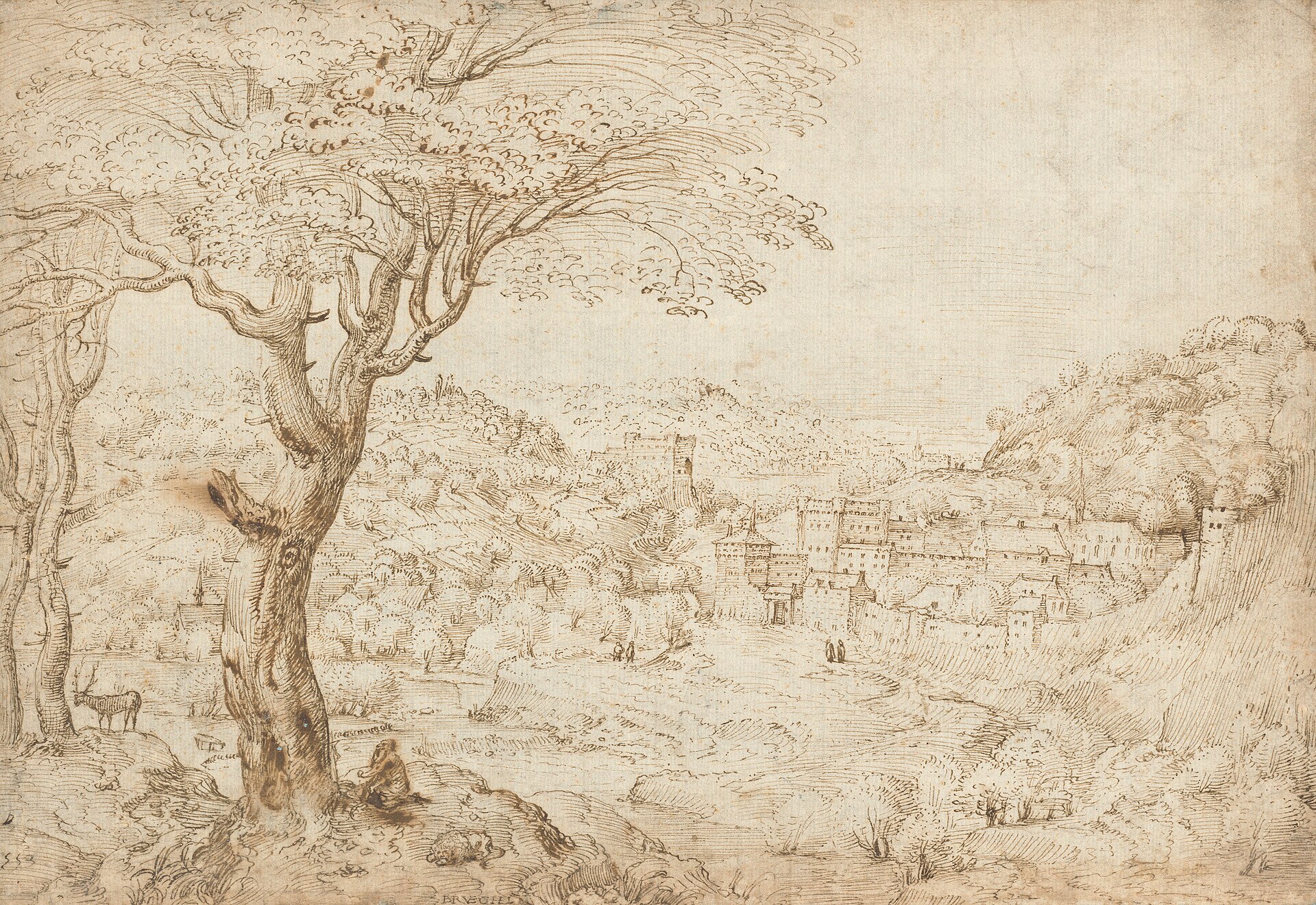
National Gallery of Art · wikidata.org
I couldn't find much on this one beyond the title — it's a drawing, and the saint part looks almost like an excuse to draw the view behind him.
Erisava: I had to hunt for the tiny figure of Saint Jerome under the tree — is that on purpose?
Lamentation of Christ by Andrea Mantegna, 1483
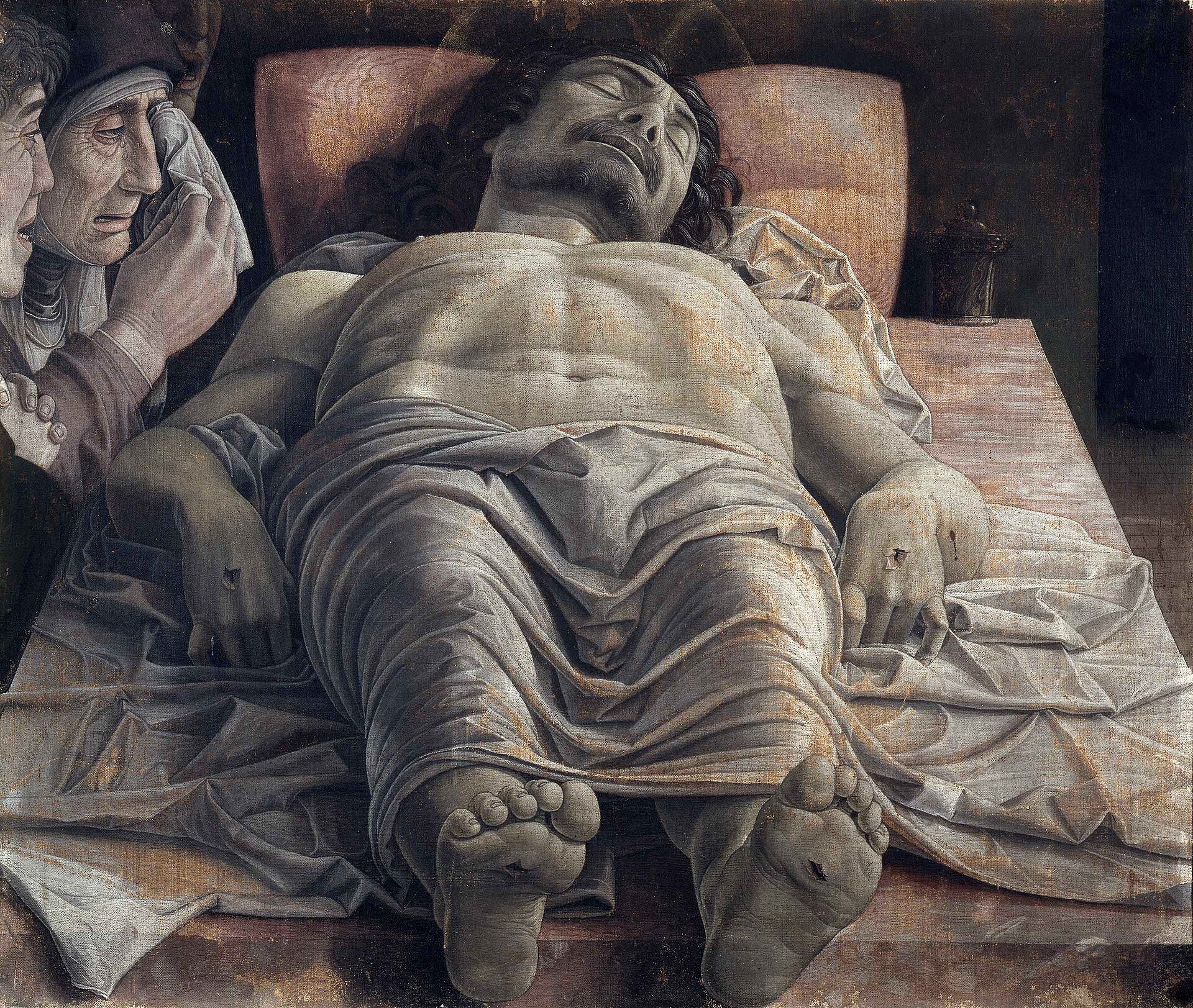
Pinacoteca di Brera · wikidata.org
Public domain
The story goes that he kept this one — it was still in his studio when he died, and his sons sold it off to clear what he owed. No one's settled on when he painted it either; the guesses spread across a couple of decades.
Erisava: He's painted like an actual corpse. Nothing softened, nothing golden.
The Ancient of Days by William Blake, 1794
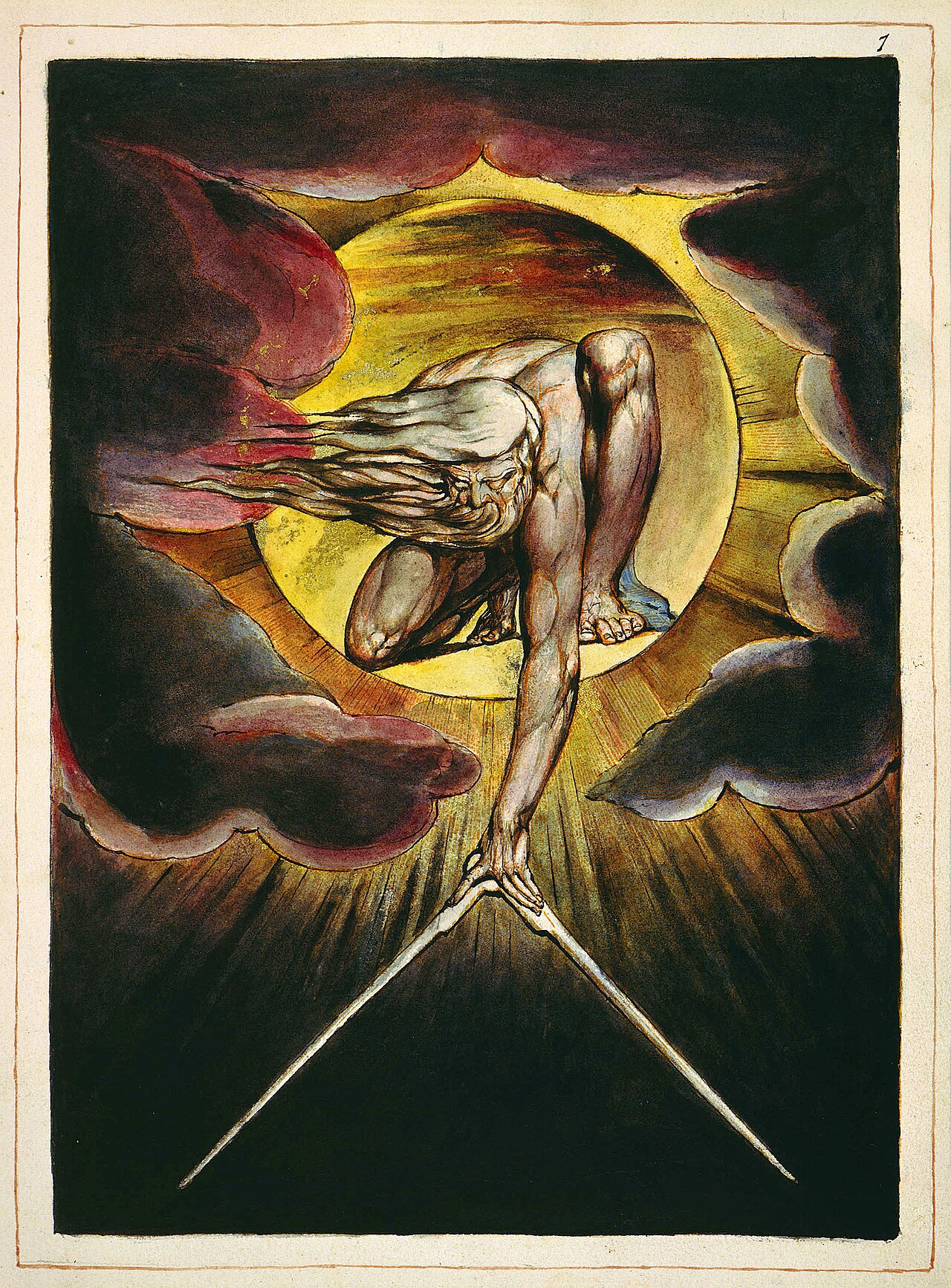
British Museum · wikidata.org
Public domain
This was originally made to open one of his illustrated prophecy books, not meant to hang on its own. From what I can find, he loved this particular design enough to keep redrawing it for the rest of his life - one copy was finished only weeks before he died.
Erisava: Does that gold circle look more like a spotlight than daylight to you?
The Circumcision of Christ by Titian, 1506
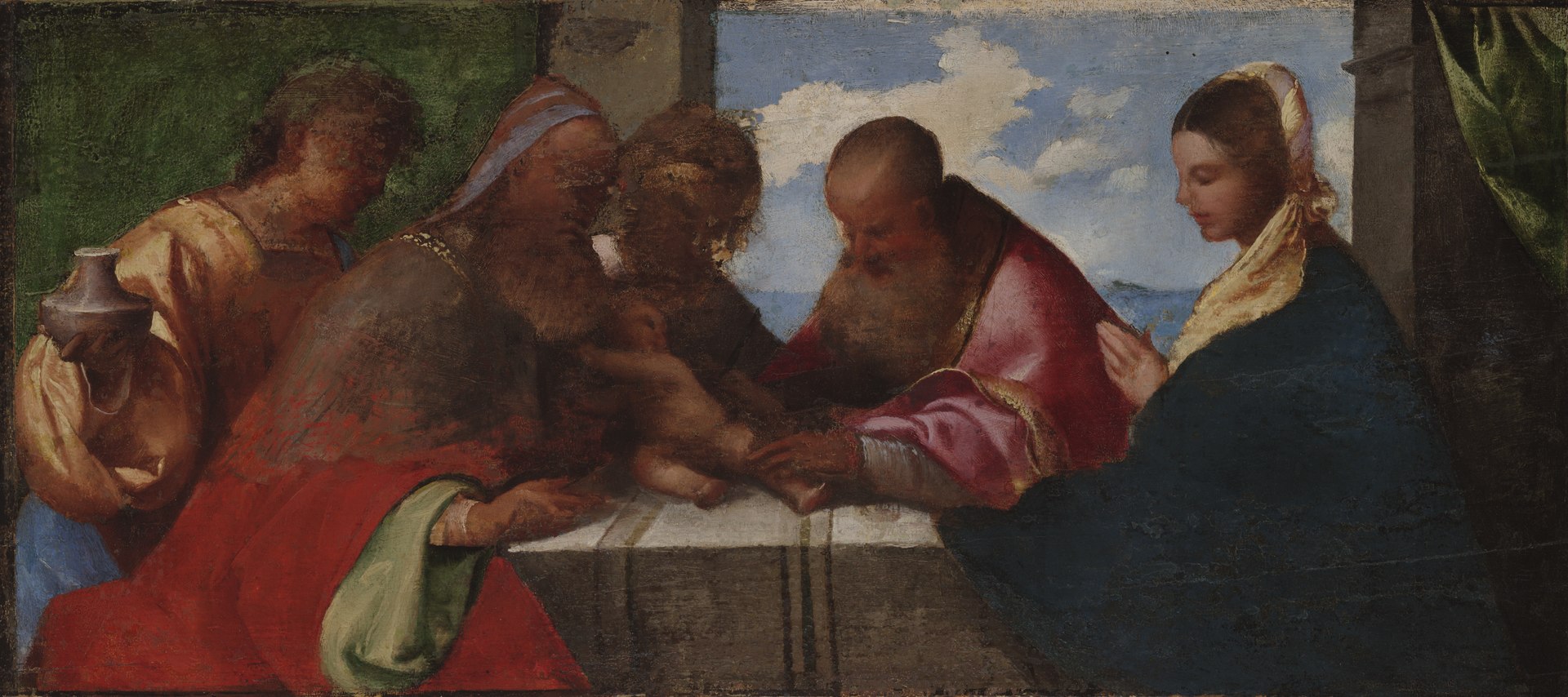
Yale University Art Gallery · wikidata.org
Public domain
Apparently this is one of his earliest known paintings — from back when he was still learning from a couple of older Venetian painters.
Erisava: The baby looks terrified, but everyone around him looks totally calm.
The Adoration of the Magi by Hieronymus Bosch, 1475
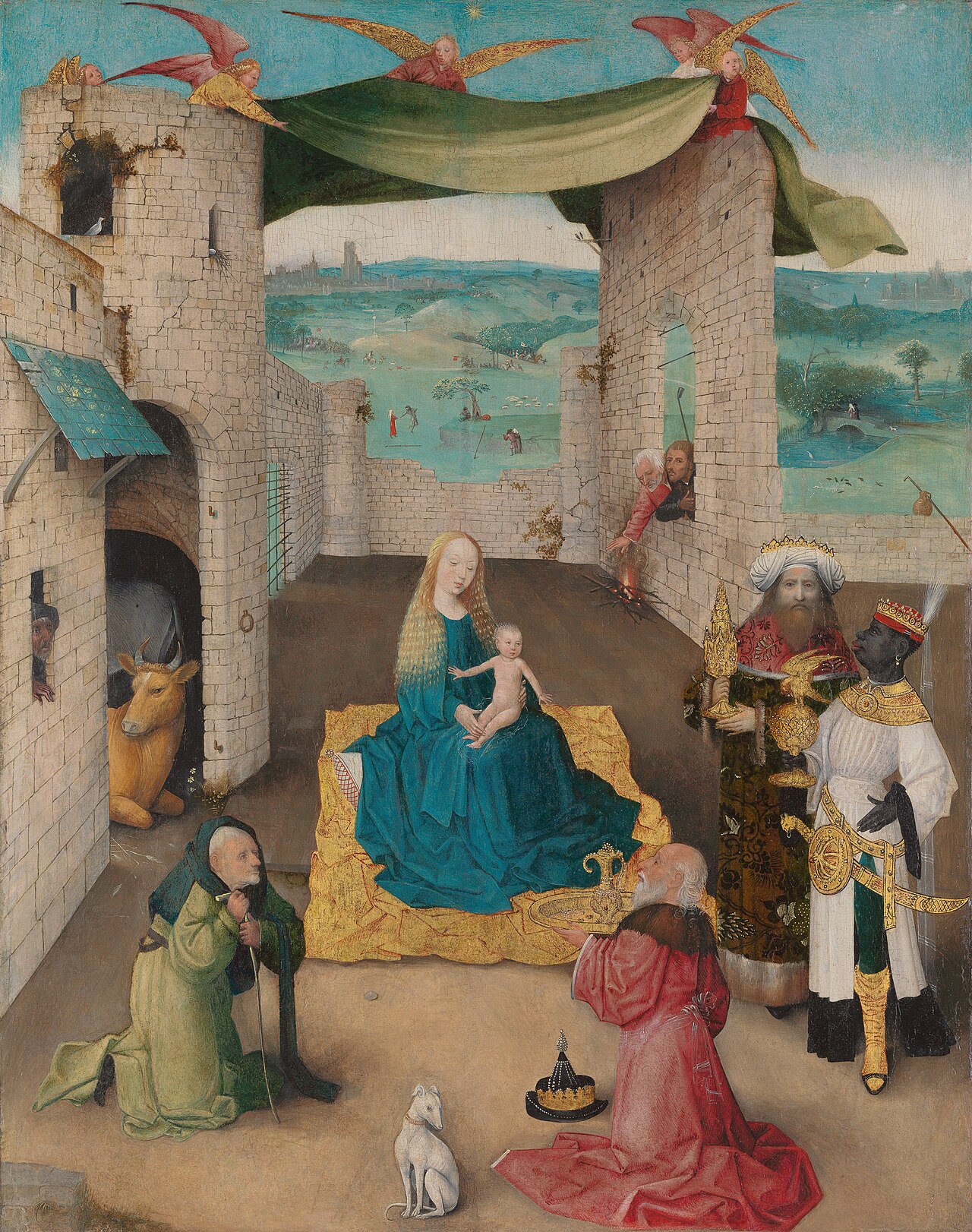
Metropolitan Museum of Art · wikidata.org
Public domain
The gold leaf here is heavier than usual for Bosch, from what I can tell — most of his other work skips it.
Erisava: Was this as much about showing wealth as it was about worship?
The Holy Family with Saint John the Baptist by Caravaggio, 1600
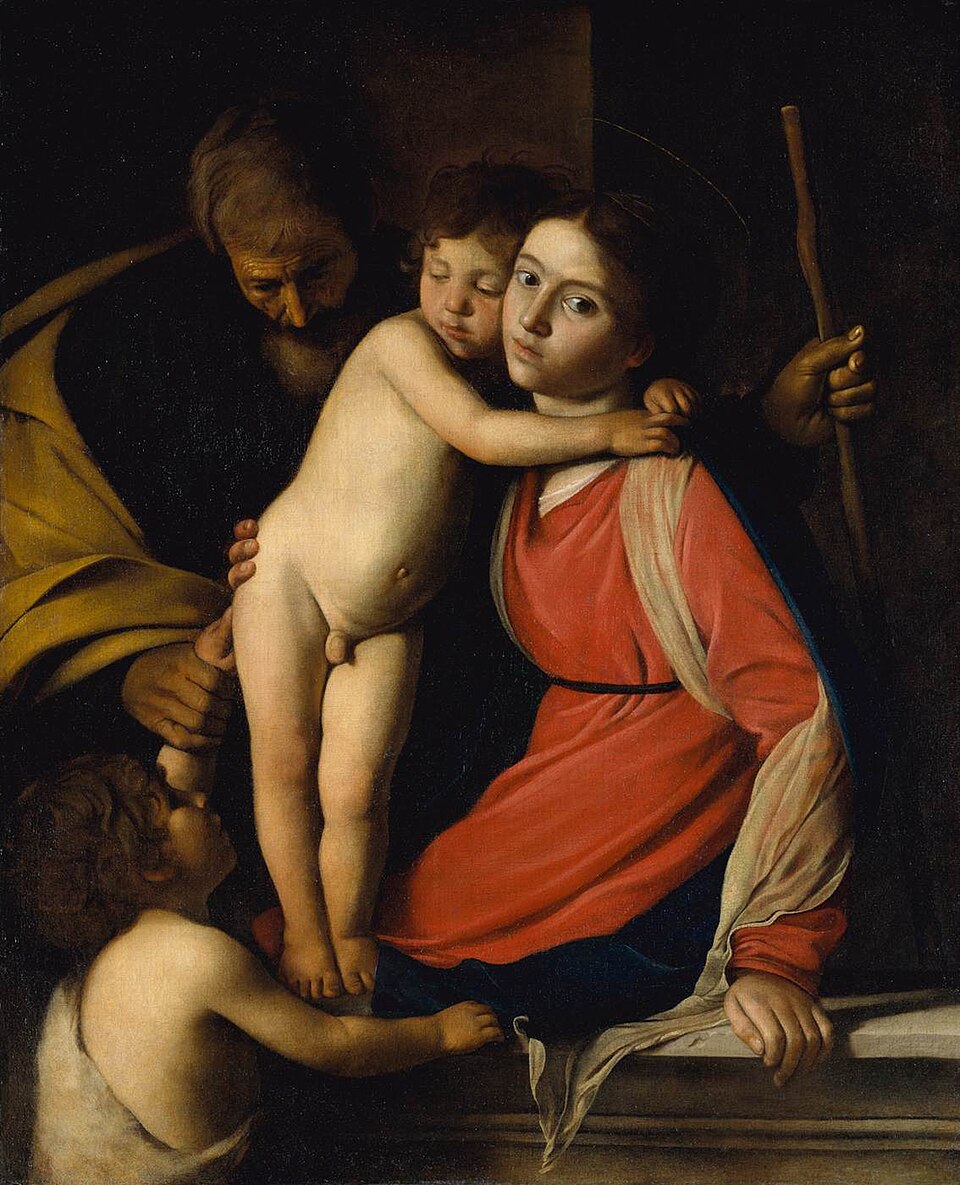
Metropolitan Museum of Art · wikidata.org
Public domain
I couldn't track down who commissioned this one, but paintings like this were usually meant for a private chapel or a bedroom, not a church altar where everyone could see it.
Erisava: This toddler has the face of someone twice his age.
The Incredulity of Saint Thomas by Caravaggio, 1601
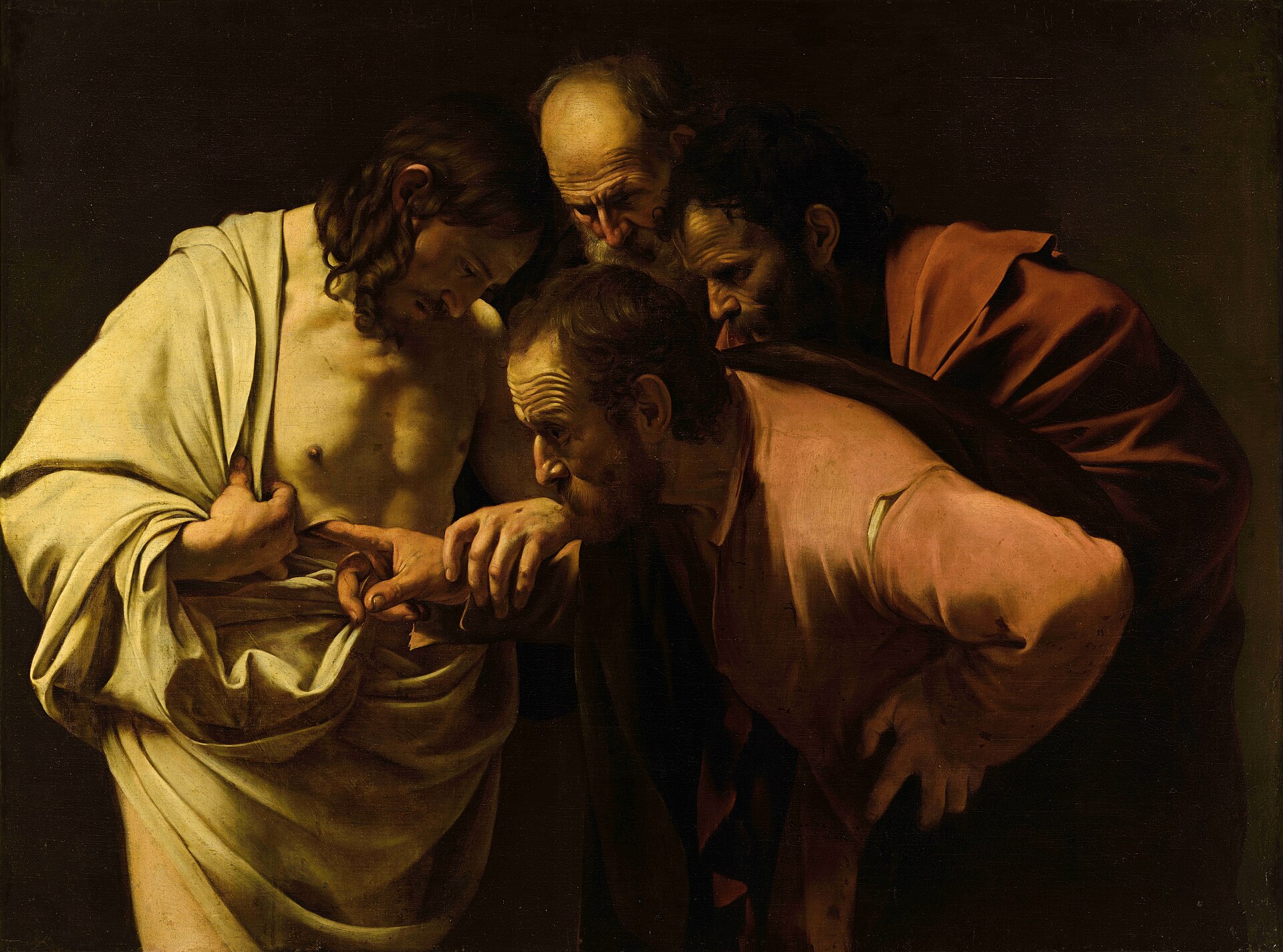
Sanssouci Picture Gallery · wikidata.org
Public domain
It's the doubting Thomas story — the apostle who said he wouldn't believe the resurrection until he'd put his hand in the wound himself. A rich Roman collector paid for it, apparently, and it later bounced through a royal collection and somehow came through the Second World War without a scratch.
Erisava: Did anyone else wince at the finger actually going in?