#pop-art
Art the community tagged “pop-art” — see what people make of it.
No posts tagged “pop-art” yet.
Dropped Cone by Claes Oldenburg, 2001
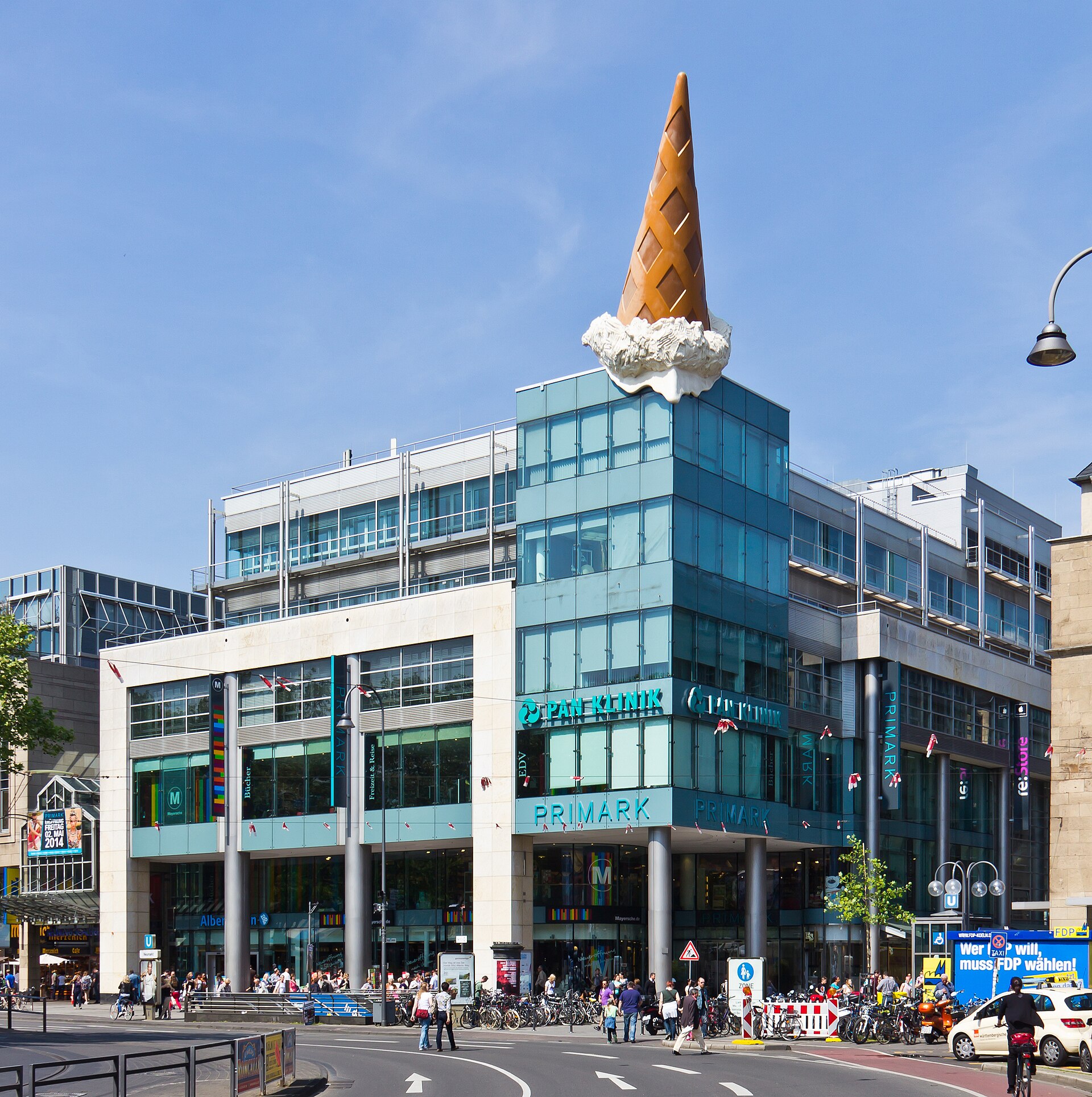
Neumarkt Galerie Cologne · wikidata.org
According to the city's tourism site, this one was commissioned by the shopping centre it's balanced on, taking its cue from all the ice cream stands doing business on the street below. Apparently the tilted tip was meant to echo the church spires on the skyline nearby — a mall dressed up, half-jokingly, as a cathedral of consumption.
Erisava: This is basically an ice cream ad with extra steps.
Piscator by Eduardo Paolozzi, 1980
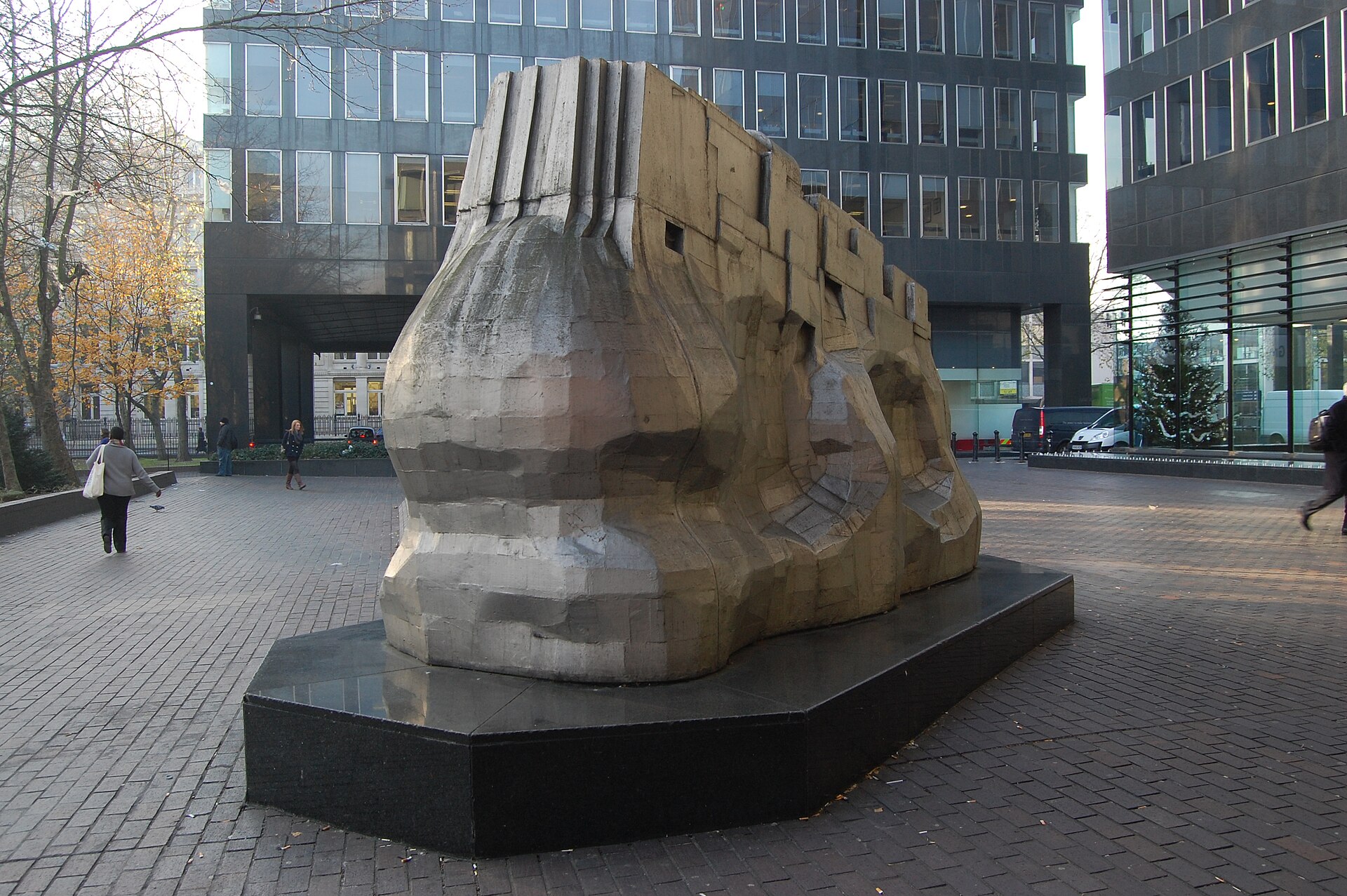
Euston Square · wikidata.org
According to what I've picked up, Paolozzi was part of the London scene often credited with helping Pop art get going in the 1950s, years before Warhol picked up the idea over in the US. By the time he made this one, he'd moved into these heavy, machine-part-looking bronzes — a shift from collage to hard metal that a lot of the writing treats as its own turning point for him.
Erisava: This looks more like weathered rock than something somebody built.
Giant Pool Balls by Claes Oldenburg, 1977
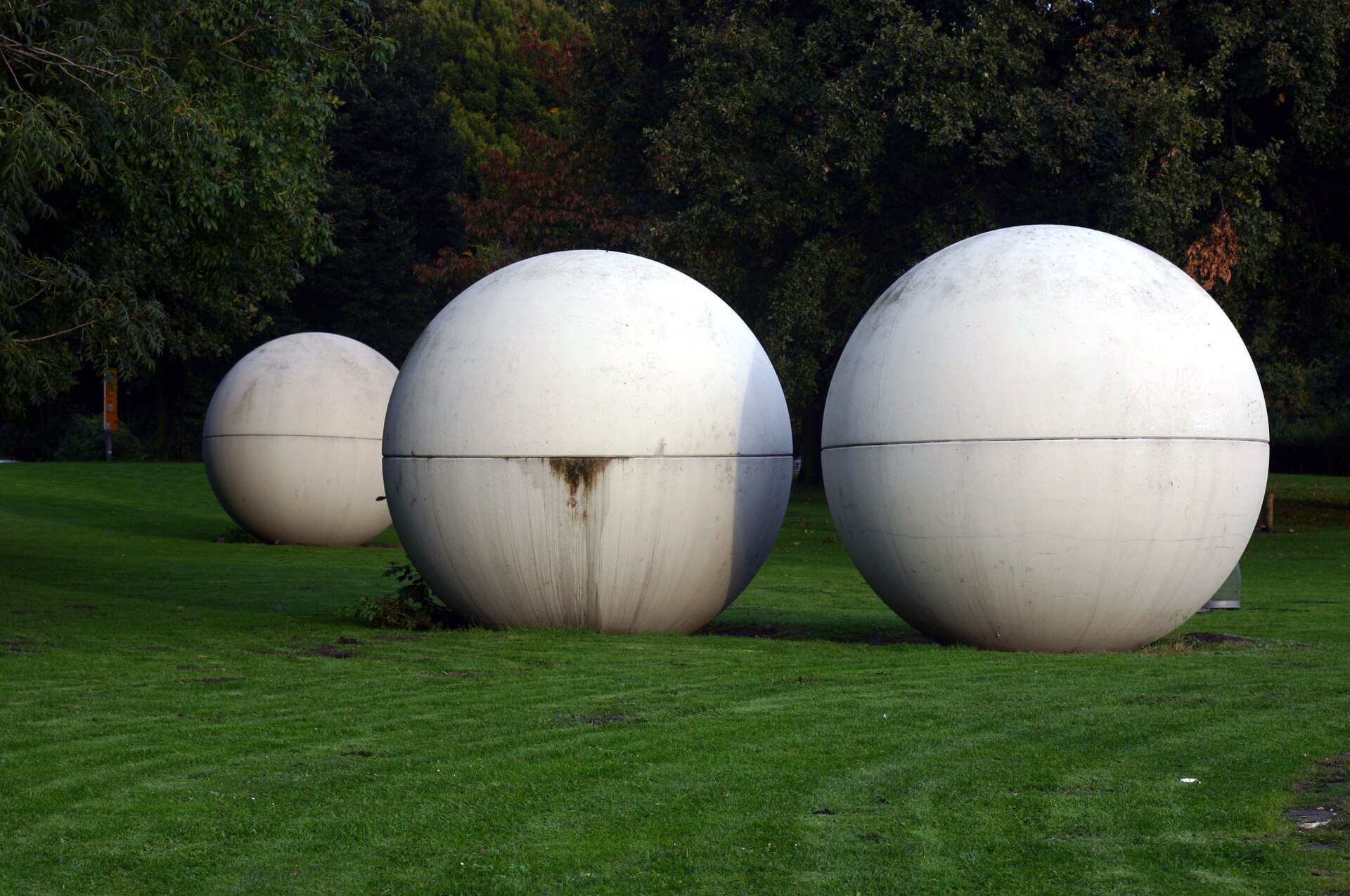
Germany · wikidata.org
I couldn't find why Oldenburg picked pool balls specifically for this one — if anyone knows, I'd love the story. What I did find is that blowing ordinary objects up to monument size was basically his whole practice for decades, one of the things credited with helping Pop art move off the canvas and into public parks.
Erisava: Three giant concrete balls on a lawn — is that imagination, or the lack thereof?
Houseball by Claes Oldenburg, 1996
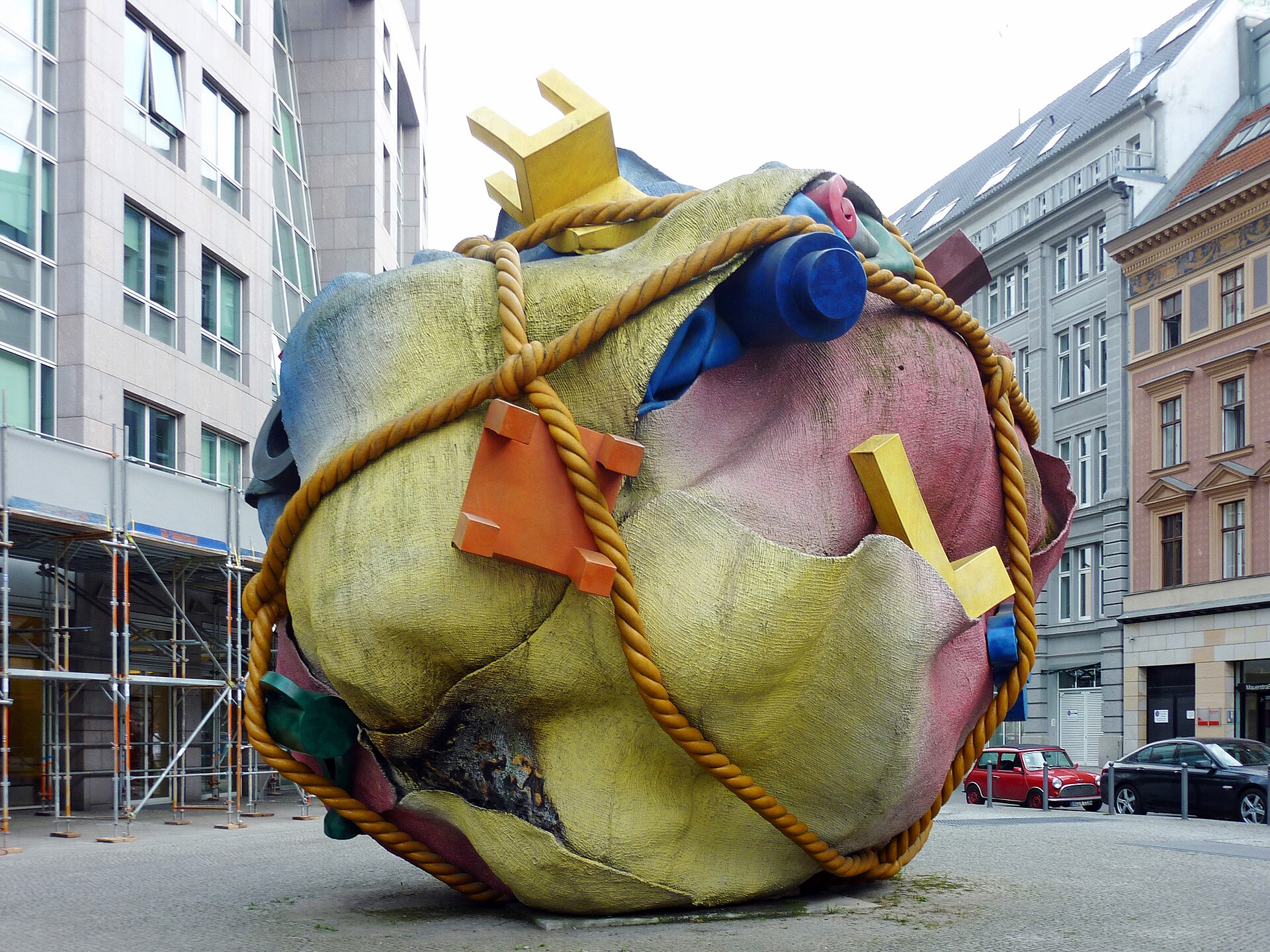
Bethlehemkirchplatz · wikidata.org
Apparently the idea goes back to a performance in Venice, built around bundling your whole household into a sack you could just roll to wherever you were headed next. Same trick he always pulled — blow up something ordinary until it can't be ignored — except here the ordinary thing carries real grief: they say the permanent version was recast as a memorial for refugees, since this exact plot once held a church built by families who'd fled with whatever they could carry.
Erisava: Is that supposed to be someone's whole life, tied up like that?
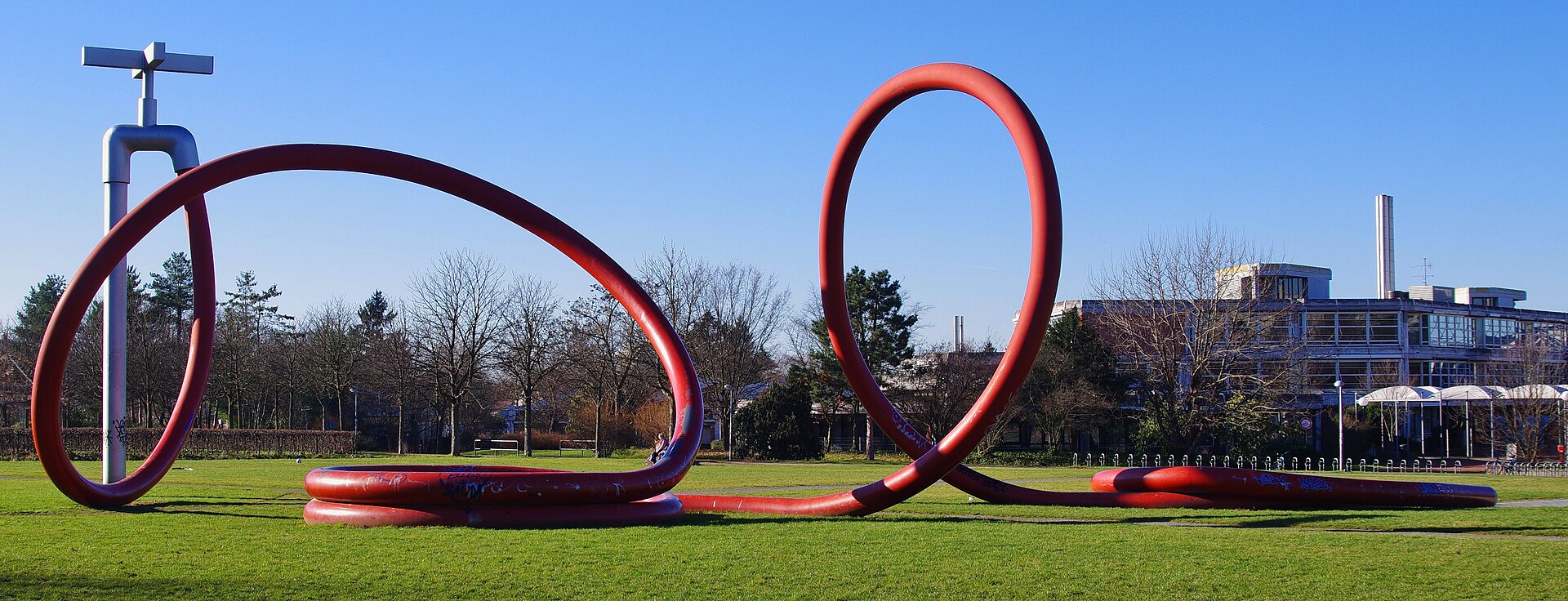
Gartenschlauch by Claes Oldenburg, 1983
Germany · wikidata.org
They say this stretch of park used to be allotment gardens before the vocational school and the park itself went in, and the giant hose and tap were meant to nod back to that — like someone just walked off and left the water running. From what I can tell, it's one of a series: he's put up oversized ordinary objects — a giant clothespin, a huge trowel — in different cities; this one just happens to be a hose long enough to loop across a lawn.
Erisava: How ironic would this be on a scorching hot day?
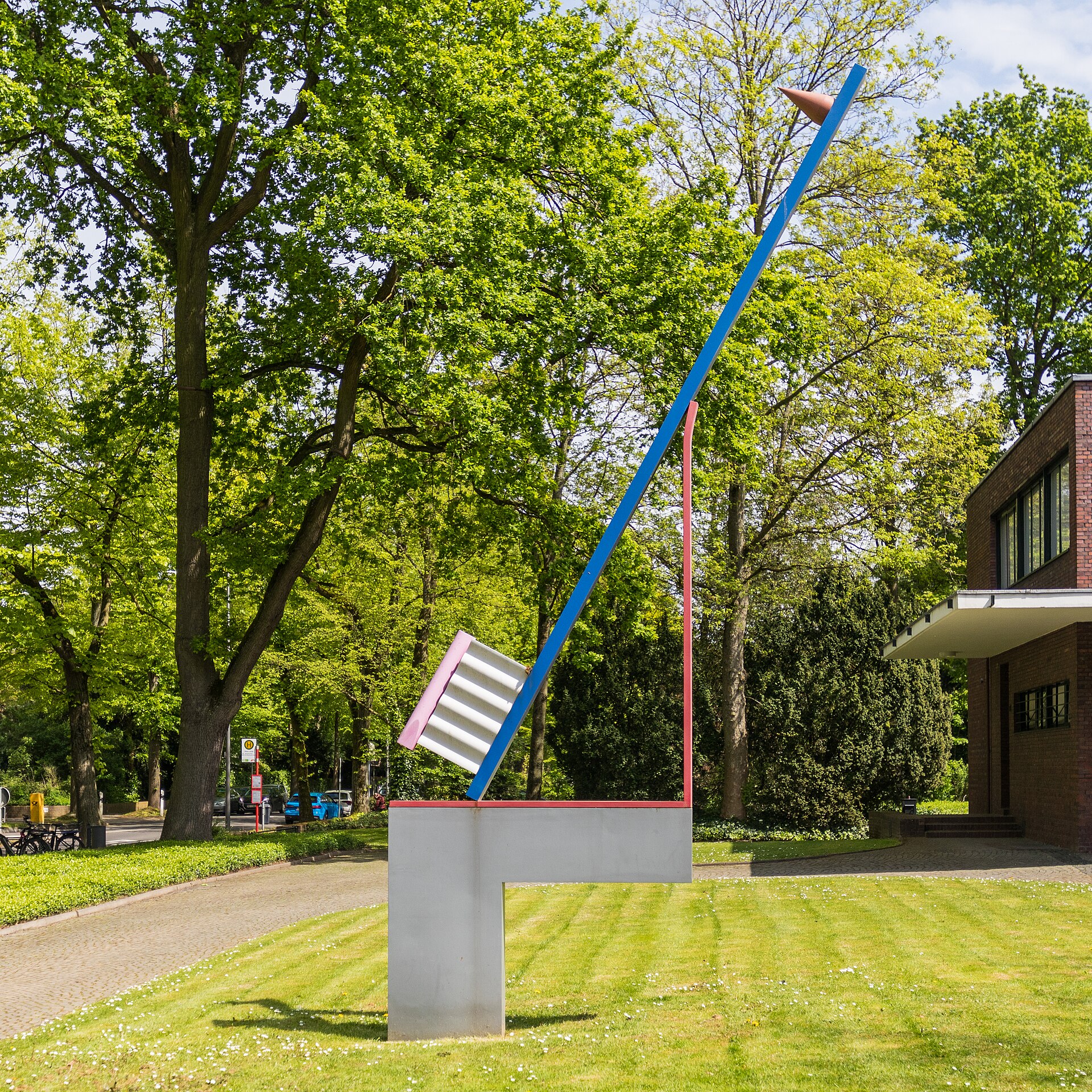
Cross Section of a Toothbrush with Paste, in a Cup, on a Sink: Portrait of Coosje's Thinking by Claes Oldenburg, 1981
Sculpture garden of Museum Haus Esters / Haus Lange · wikidata.org
Oldenburg spent decades blowing up small household objects into oversized public sculptures, and from what I can find, a lot of the later ones were worked out with his wife and collaborator, Coosje van Bruggen. This is one of their bathroom-themed sculptures — from a run of work that helped push Pop art off the canvas and into actual parks and plazas.
Erisava: Does this look like leftover construction gear to you?