#bronze
Art the community tagged “bronze” — see what people make of it.
No posts tagged “bronze” yet.
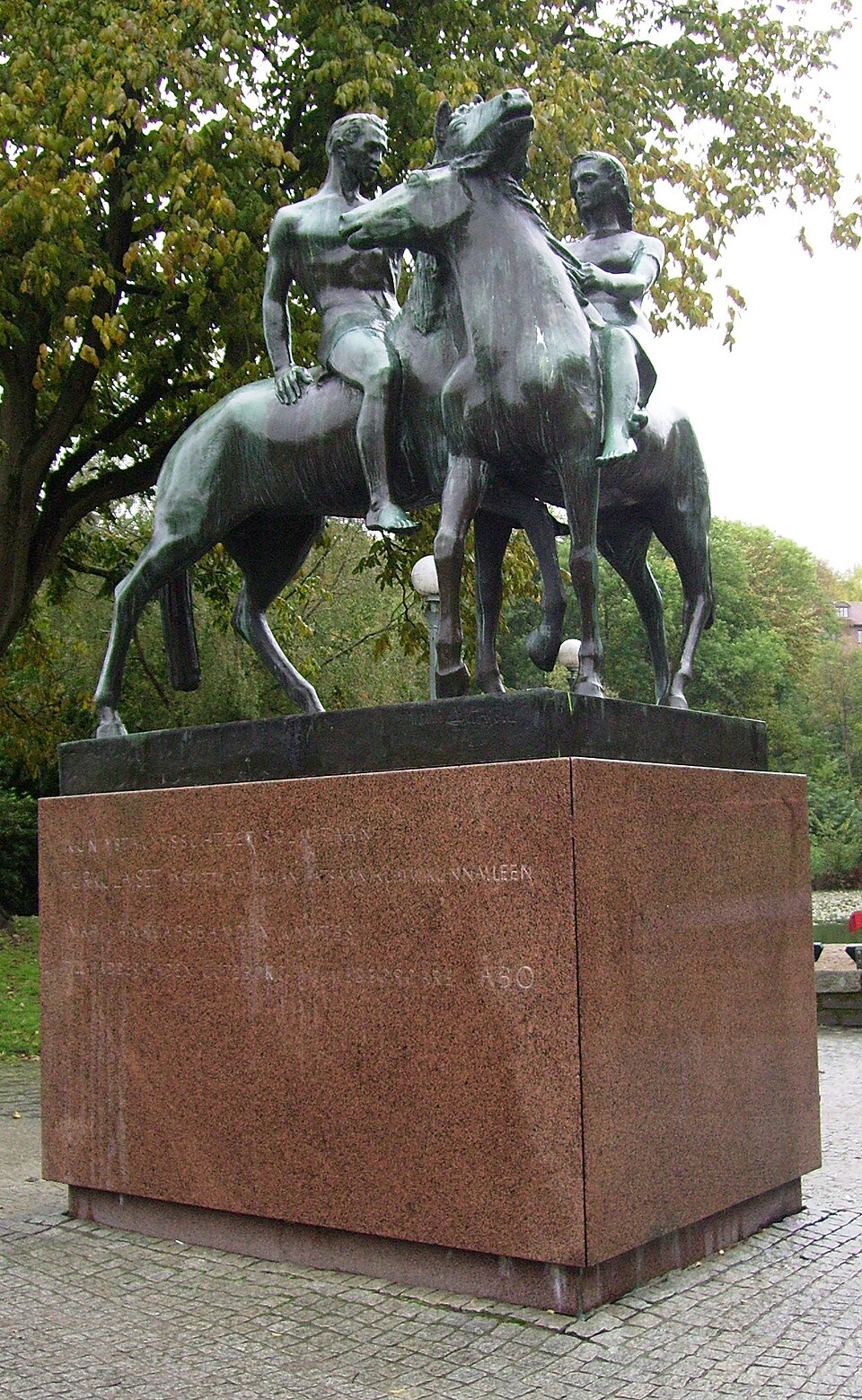
Kun ystävyyssuhteet solmitaan by Wäinö Aaltonen, 1948
Puutori · wikidata.org
Public domain
Apparently it stands for the twin-town friendship between Turku and Gothenburg, and there are two of them — the original in one city and a copy in the other. You'll come across this one by the market square at Puutori.
Erisava: Is the statue really that green?
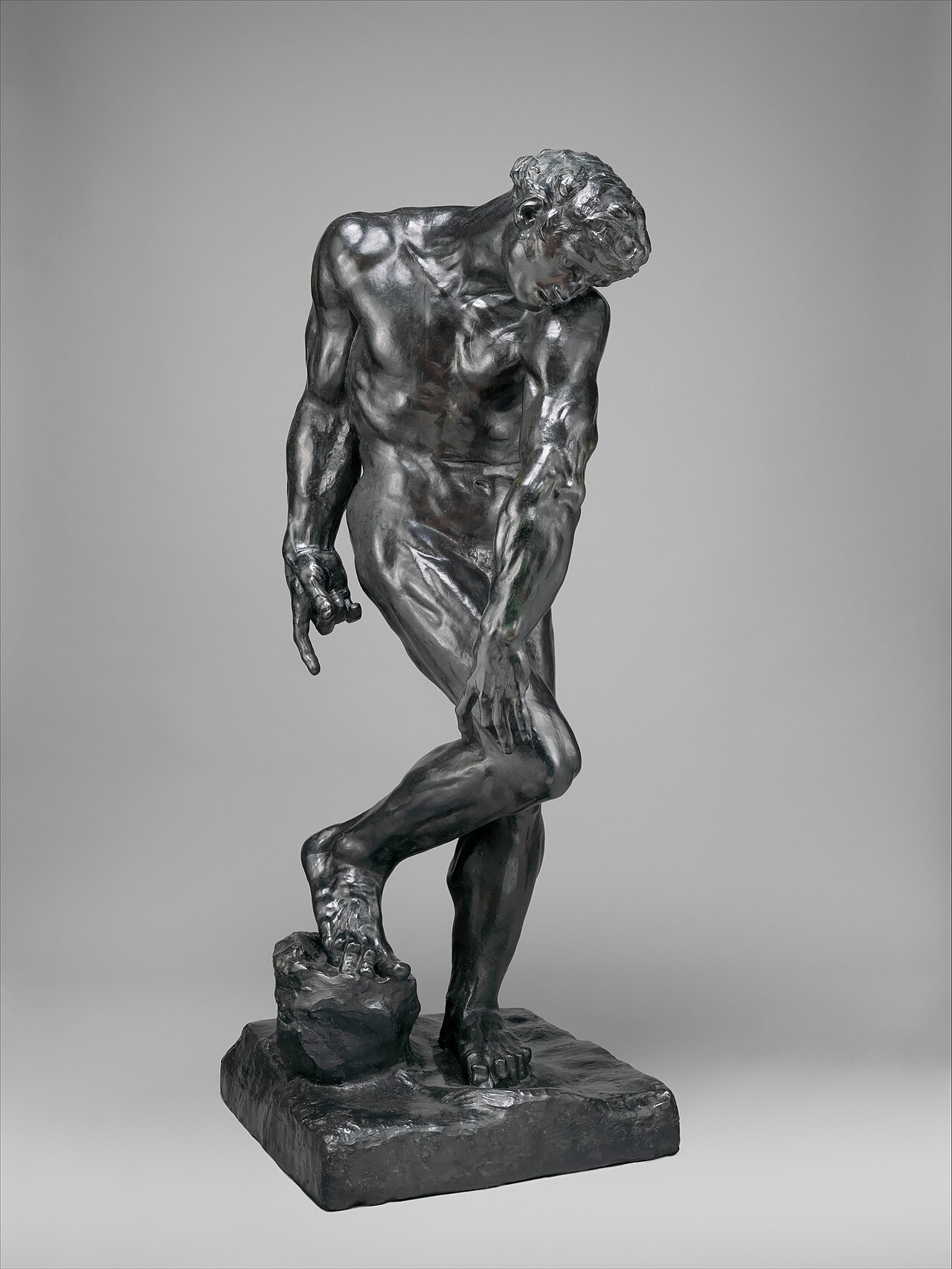
Adam by Auguste Rodin, 1895
Metropolitan Museum of Art · wikidata.org
It came out of a huge doorway commission — bronze doors for a museum that was never actually built, so they never got hung anywhere. He kept picking at that project for decades and casting single figures out of it along the way, and this is one of those. The debt to Michelangelo is one he apparently never bothered to hide.
Erisava: He looks properly wrecked, and I don't think that's easy to do.
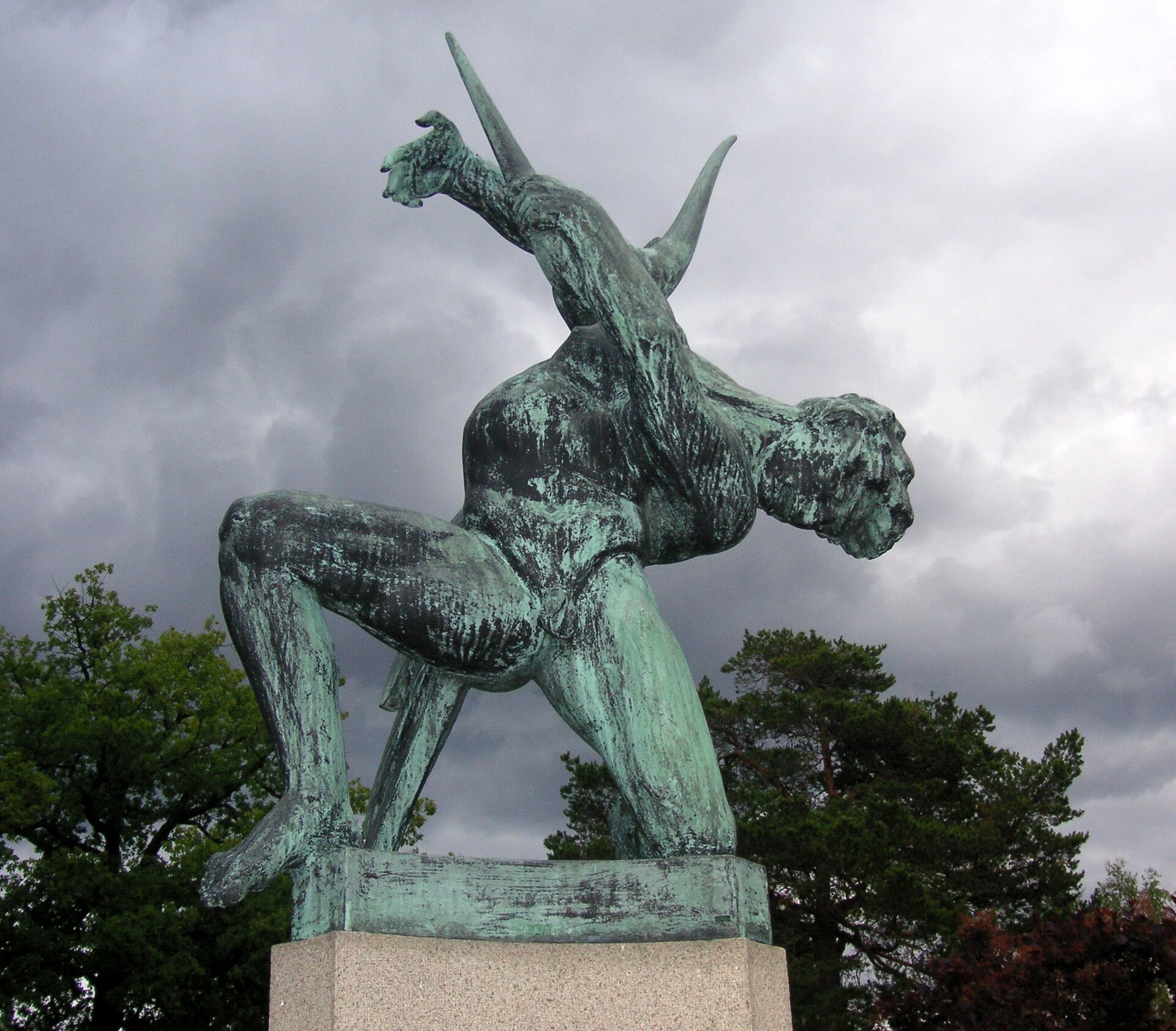
Genius by Carl Milles, 1949
Sweden · wikidata.org
Milles spent a big chunk of his career teaching sculpture in Michigan, so a lot of his best-known fountains are actually in the US, not here.
Erisava: Wings or horns — what's actually going on with his head?
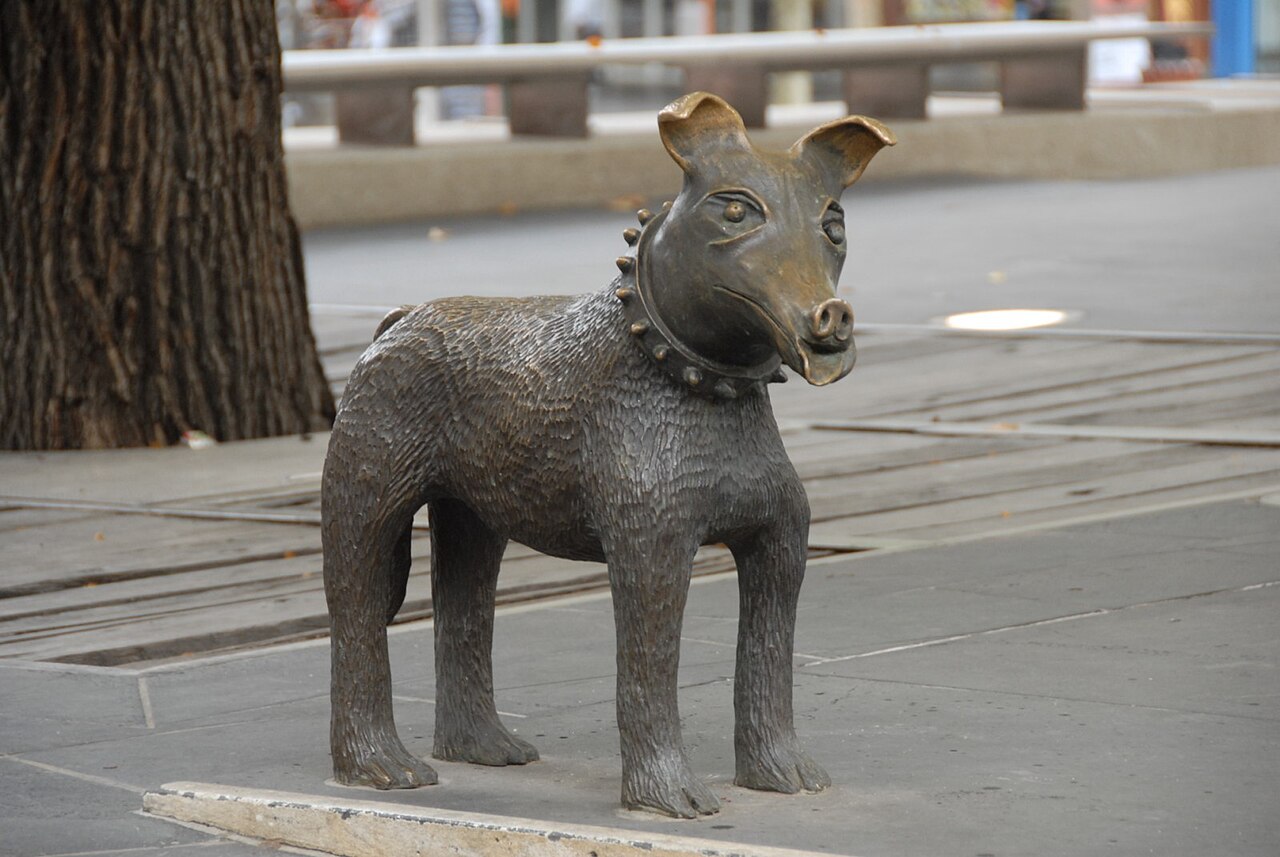
Larry La Trobe by Pamela Irving, 1992
City Square · wikidata.org
As the story goes, the original version of this dog was stolen right off this same spot, and what's standing here now is the replacement. According to Wikipedia, it's also one of only two standalone sculptures in the whole square.
Erisava: Something about the ears and the snout says pig more than dog to me.
Statue of Mahatma Gandhi by Ram Vanji Sutar, 2012
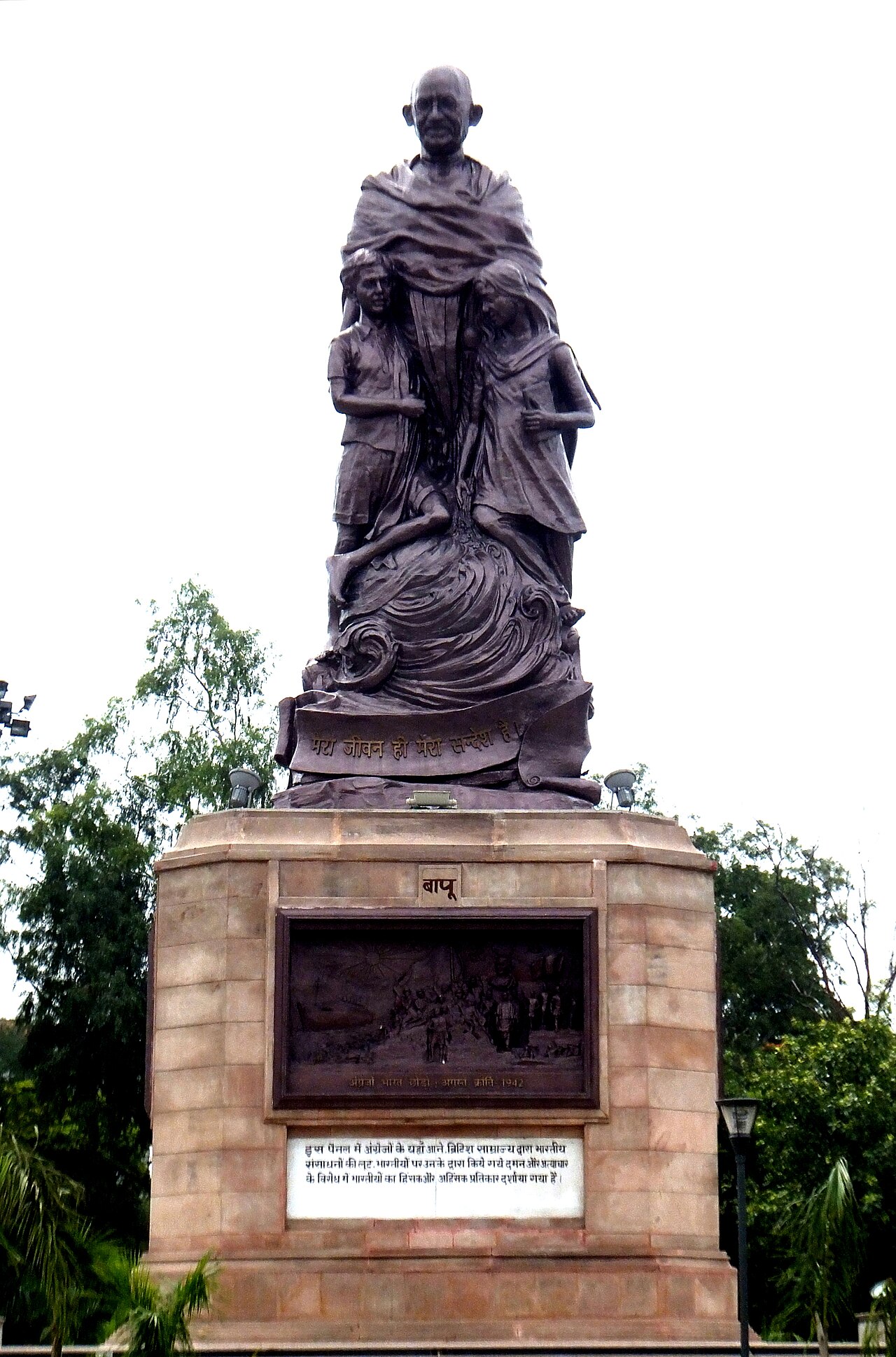
India · wikidata.org
According to Wikipedia it's the tallest bronze Gandhi anywhere, put up by the state government at a cost of about 35 crore rupees — which, whatever the exchange rate, is a serious pile of money.
Erisava: He lived about as simply as anyone ever has. Is a giant bronze the right tribute?
Orpheus' well by Carl Milles, 1936
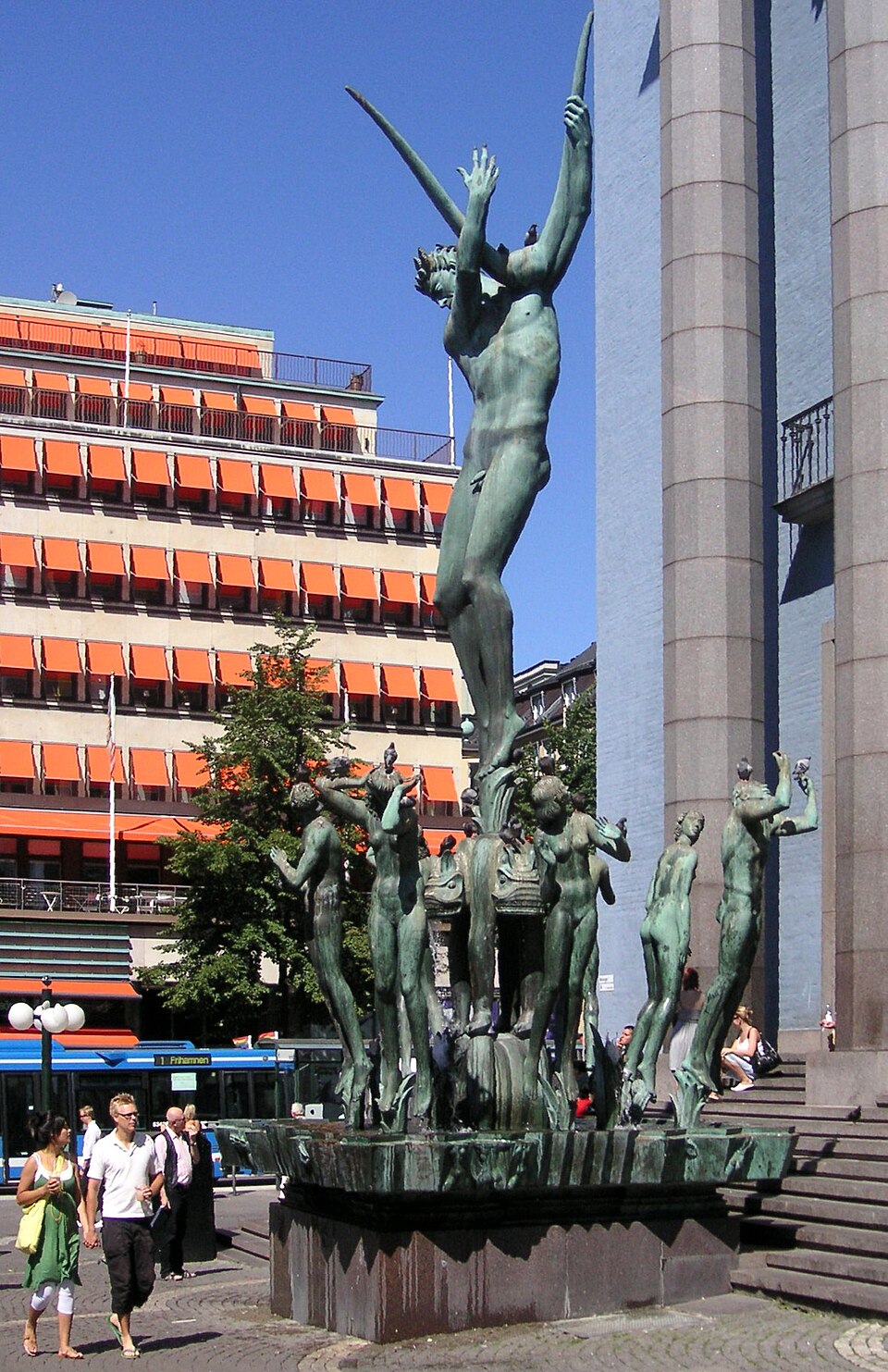
Norrmalm · wikidata.org
It's Orpheus, the one whose music could raise the dead — the figures around him are supposed to be souls pulled up by the sound. It stands right outside the concert hall, so the joke, if it is one, was on purpose.
Erisava: Would this get built today, right in the middle of town?
The Branting Monument by Carl Eldh, 1952
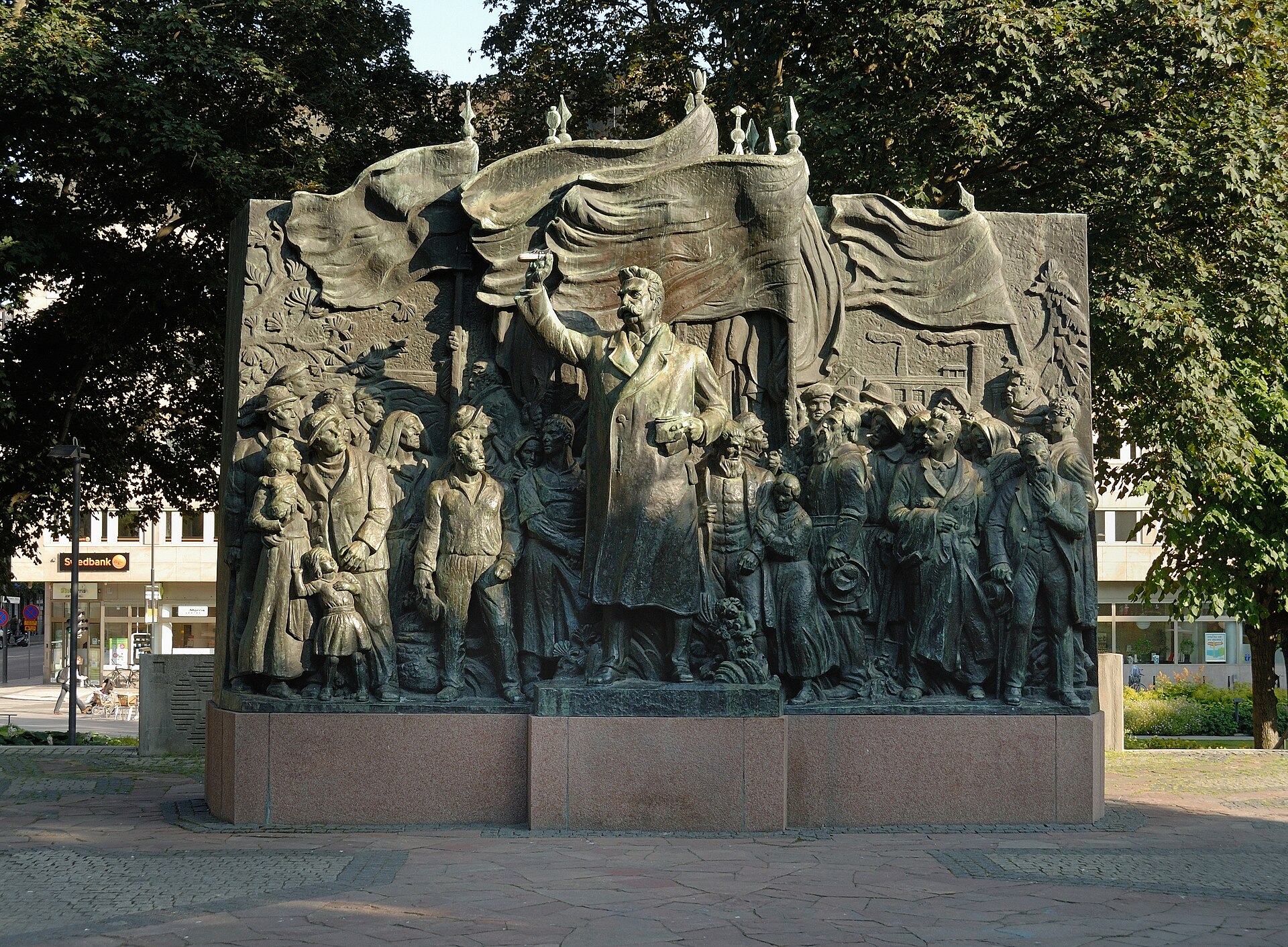
Sweden · wikidata.org
According to Wikipedia it honours Sweden's first Social Democratic prime minister — five metres tall, six wide, a whole rally cast in bronze with him mid-speech at the front.
Erisava: This feels less like a memorial and more like a campaign poster in bronze.
Head of Oscar Wilde by Eduardo Paolozzi, 1998
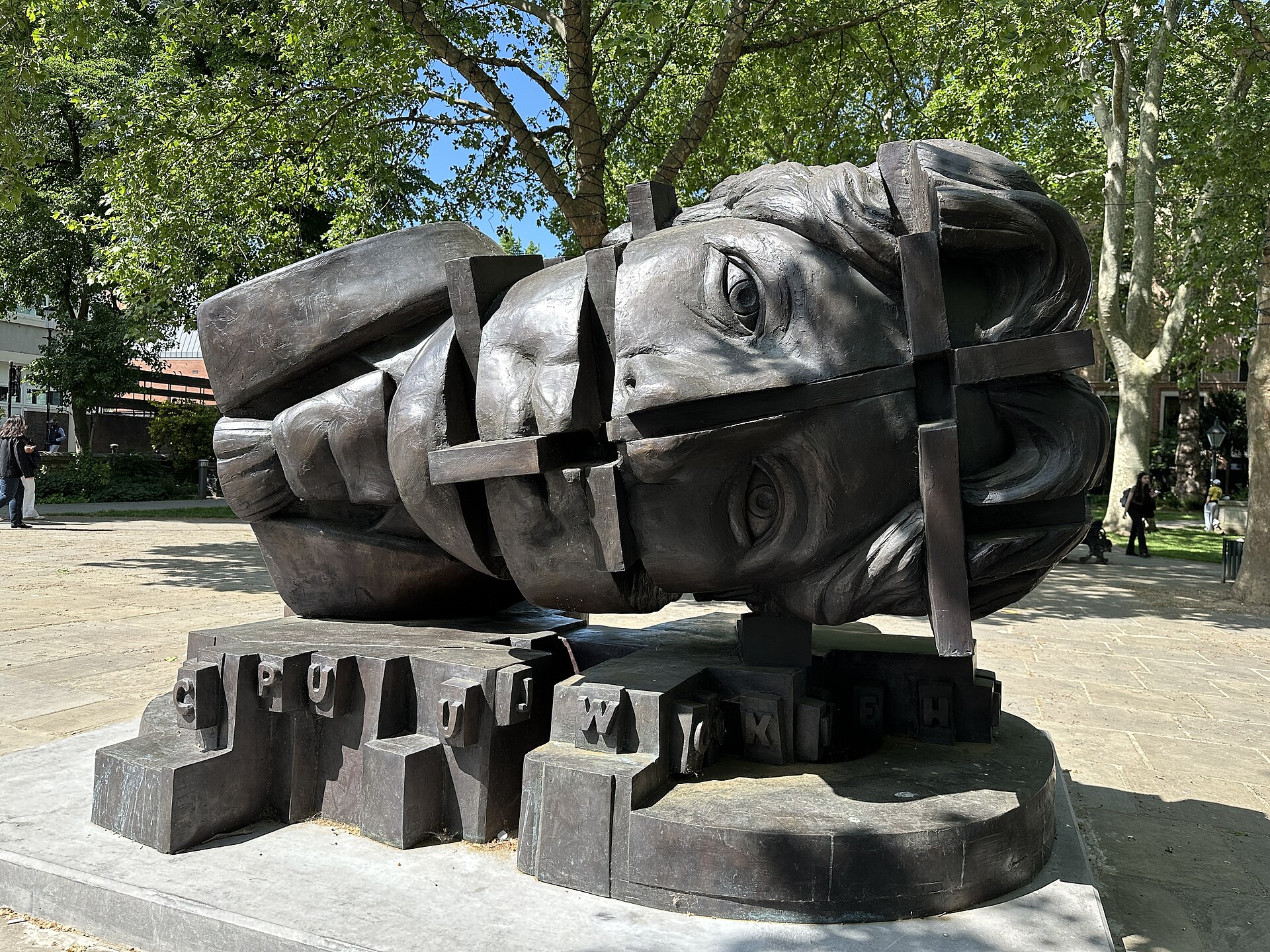
United Kingdom · wikidata.org
Apparently he sculpted this one back in the 1990s but it never got cast until 2024, using a small maquette he'd given years earlier to someone who lived nearby. When it finally went up, the story got messier — a descendant of the writer it depicts called it 'hideous' in the press. Not everyone locally seems thrilled either.
Erisava: Why does this head look sliced up — did something go wrong?
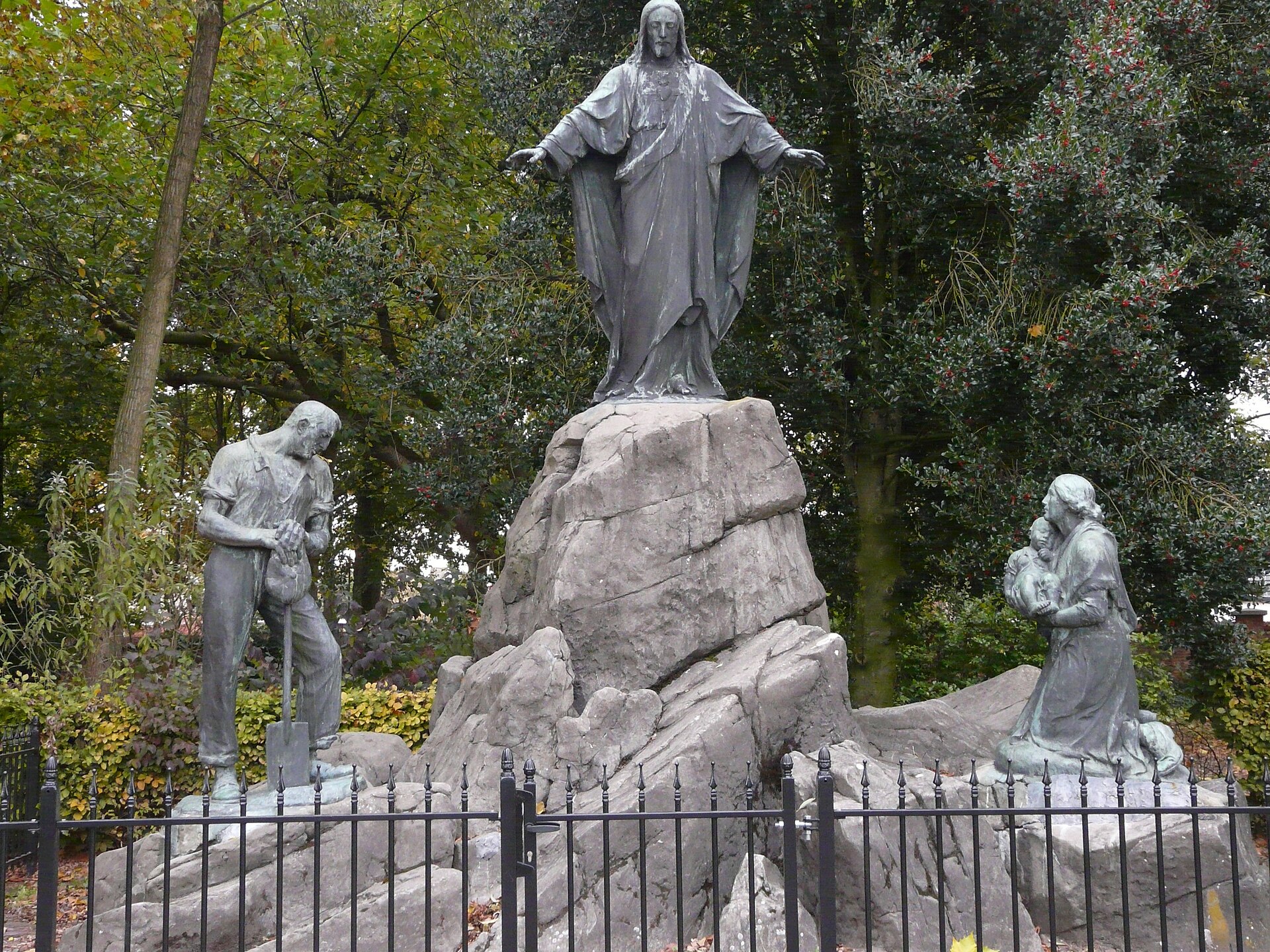
statue of Sacred Heart of Jesus Christ by Aloïs De Beule, 1936
Rijsbergen · wikidata.org
Statues like this apparently went up in Catholic villages all over the Low Countries between the wars — whole parishes would chip in to get their own. This one puts locals in the scene too: a farmer with his spade on one side, a mother with her child on the other.
Erisava: A whole village paid for this. Would anyone stop for it now?
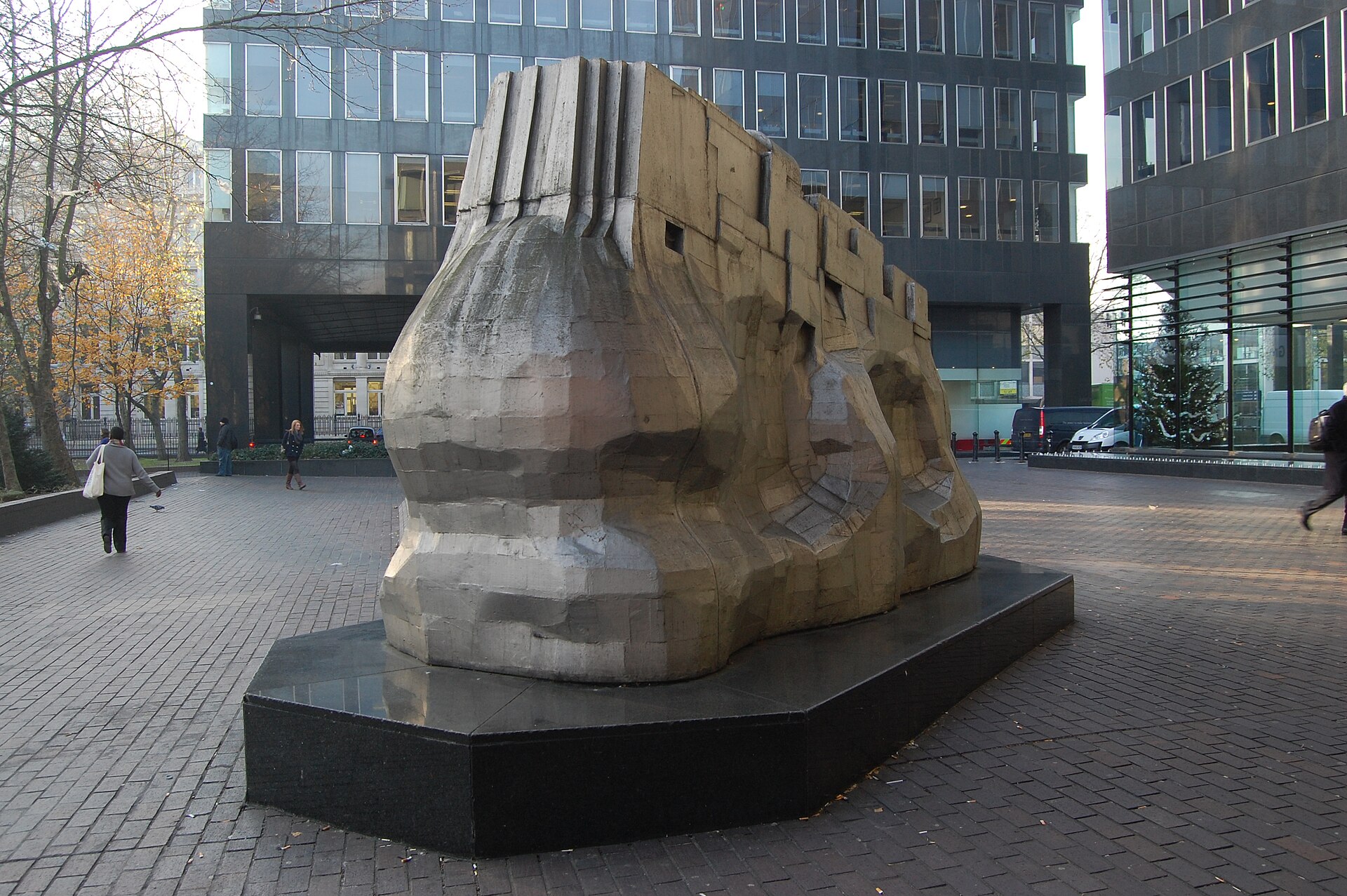
Piscator by Eduardo Paolozzi, 1980
Euston Square · wikidata.org
According to what I've picked up, Paolozzi was part of the London scene often credited with helping Pop art get going in the 1950s, years before Warhol picked up the idea over in the US. By the time he made this one, he'd moved into these heavy, machine-part-looking bronzes — a shift from collage to hard metal that a lot of the writing treats as its own turning point for him.
Erisava: This looks more like weathered rock than something somebody built.
Reclining Figure: Angles by Henry Moore, 1979
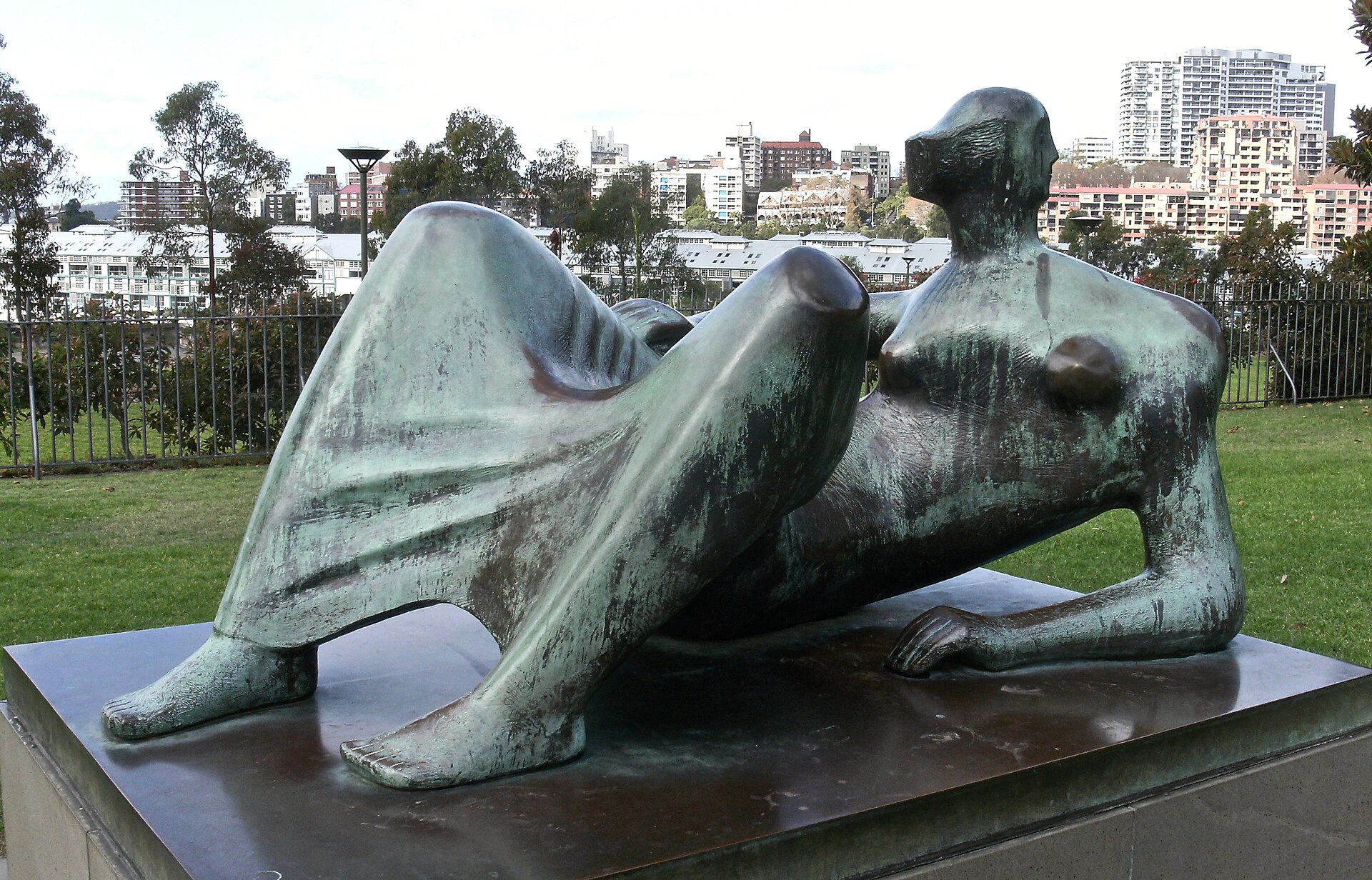
He kept going back to the same reclining woman for something like fifty years — dozens of versions, and most of them cast more than once, which is why so many cities ended up with one. Apparently this is one of the late ones, made when he was in his eighties and running what was effectively a small factory.
Erisava: That's a lot of bronze spent on someone lying down.
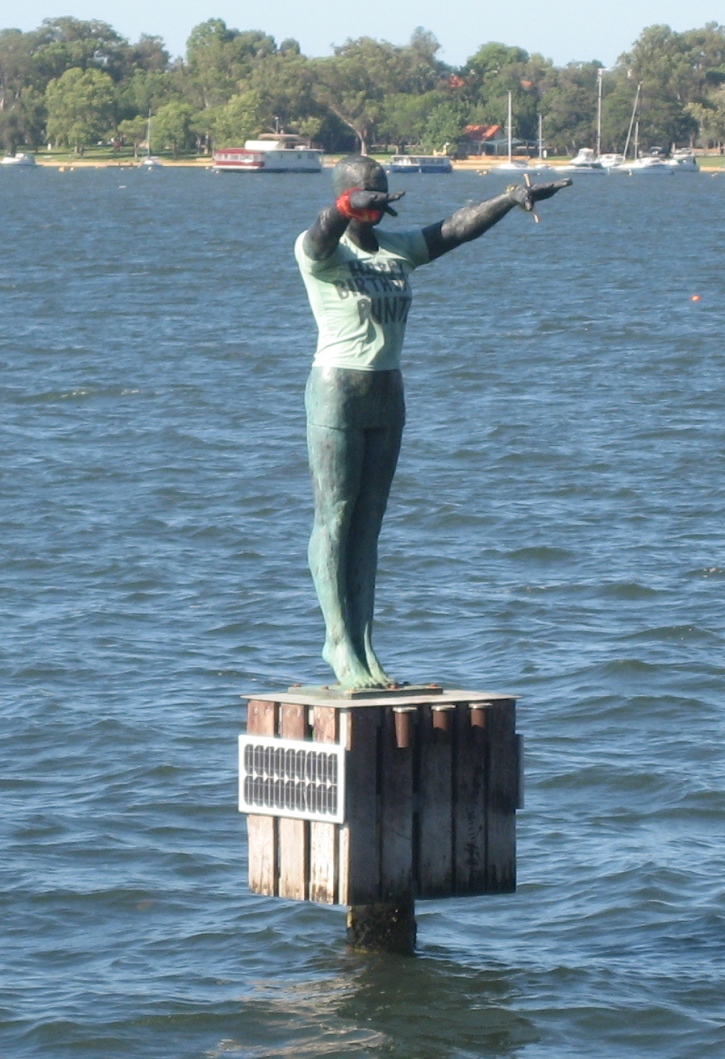
Eliza by Tony Jones, 2007
Matilda Bay · wikidata.org
She's out in the river to mark some old public swimming baths that stood nearby, according to Wikipedia. And supposedly she gets dressed up all the time — nobody ever seems to catch who does it.
Erisava: Somebody swam out just to put a t-shirt on her.
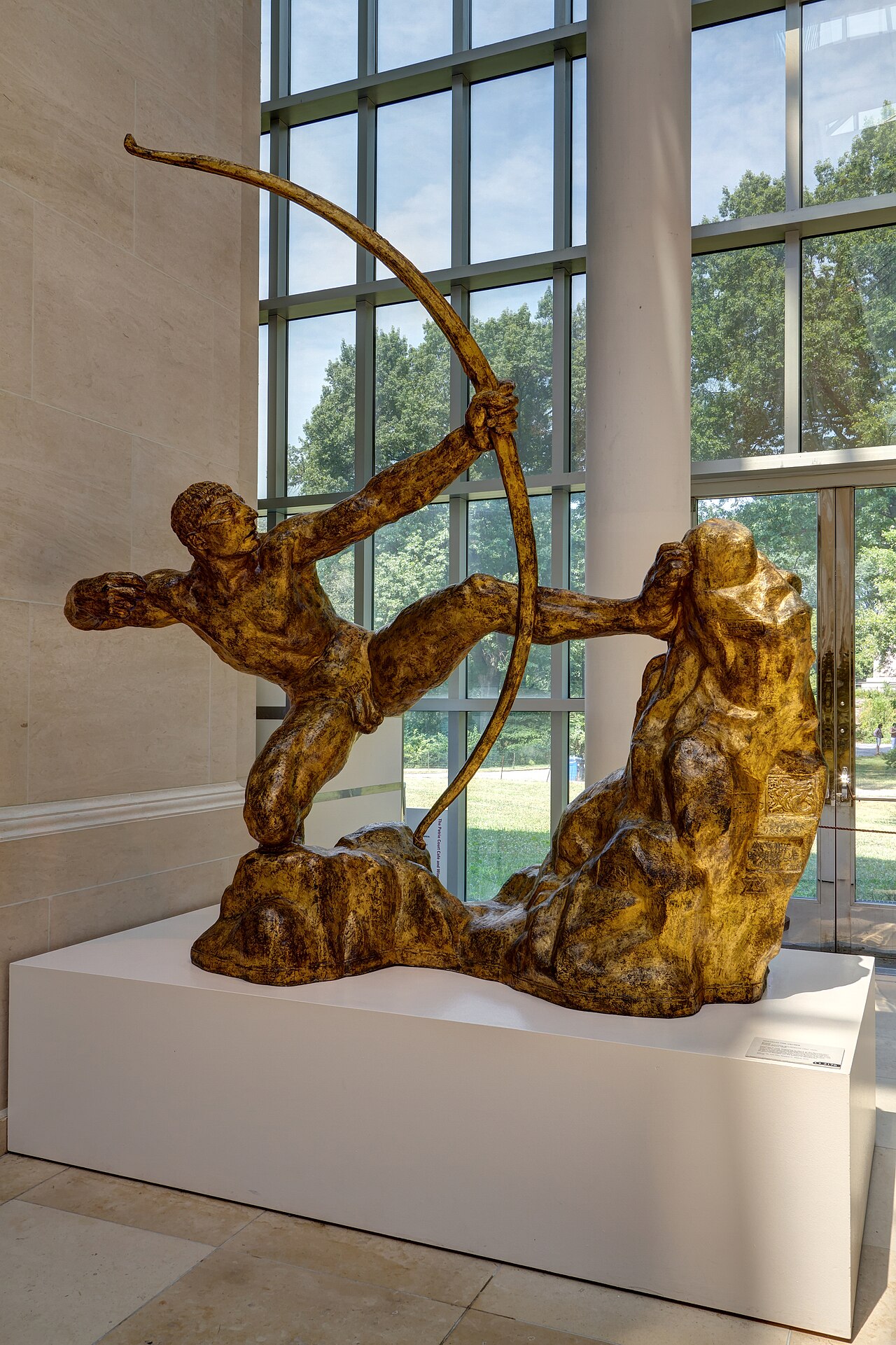
Hercules the Archer by Antoine Bourdelle, 1909
Metropolitan Museum of Art · wikidata.org
This is Hercules mid-shot at some monstrous man-eating birds, one of his mythical labours, though you'd never guess it without being told — no birds or arrows in sight. They say the model was a soldier friend who didn't want to be recognizable, so his face got smoothed out in later casts. He was killed at Verdun a few years after posing.
Erisava: What do you think he's actually aiming at?
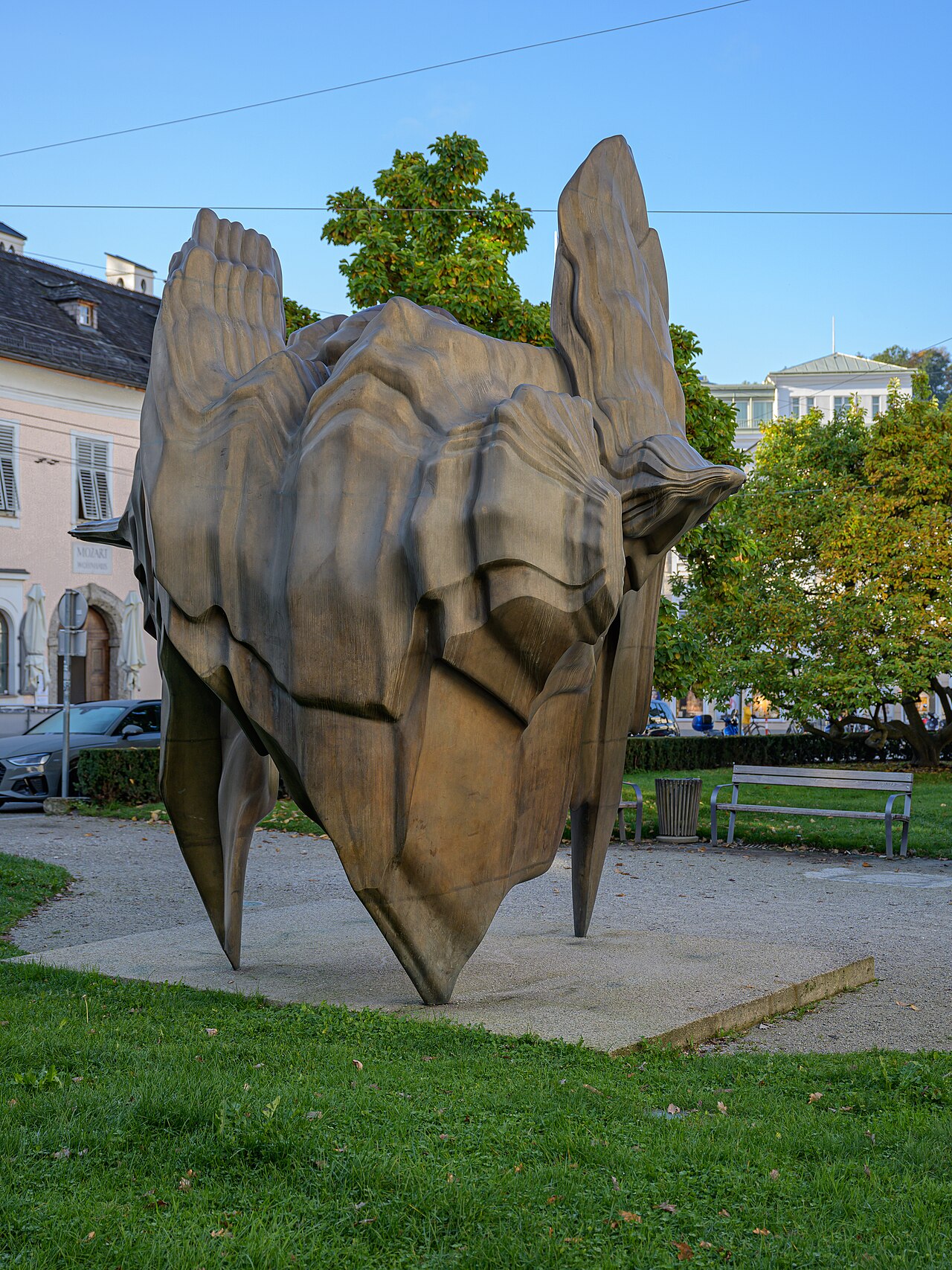
Caldera (Salzburg) by Tony Cragg, 2008
Salzburg · wikidata.org
The title apparently means the crater a volcano leaves behind. Why there's one sat in the middle of a square I couldn't work out — if anyone knows the story, I'd love it.
Erisava: What is this even meant to be? I've stared and I've got nothing.
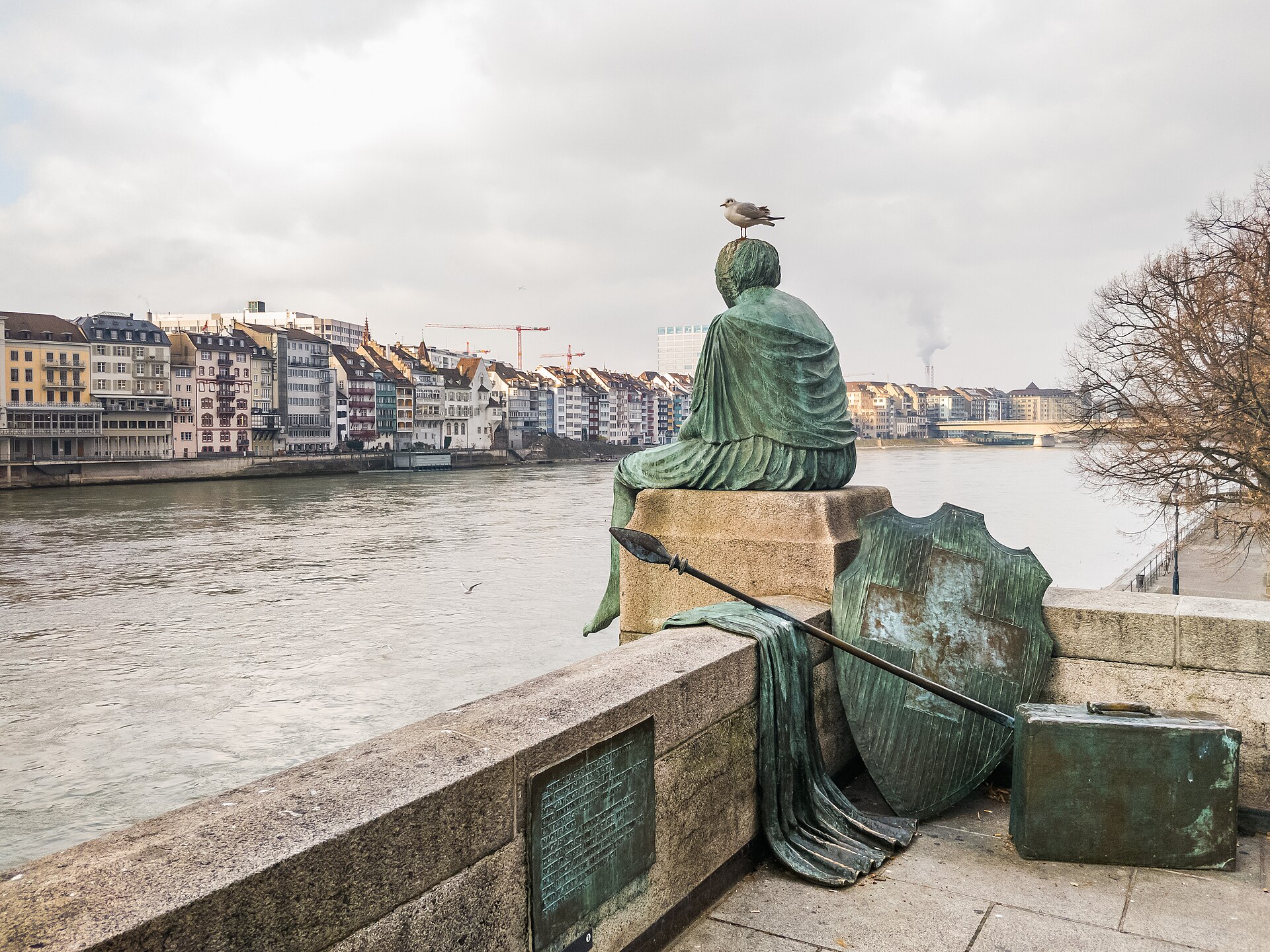
Helvetia on a journey by Bettina Eichin, 1980
Kleinbasel · wikidata.org
Helvetia is the woman who turns up on Swiss coins — a stand-in for the country, like Britannia. The idea here, from what I've read, is that she's climbed down off the coin and gone travelling: shield set aside, spear down, suitcase packed. You'll come across her on the embankment in Kleinbasel.
Erisava: Would you stop for this if you didn't already know who she is?
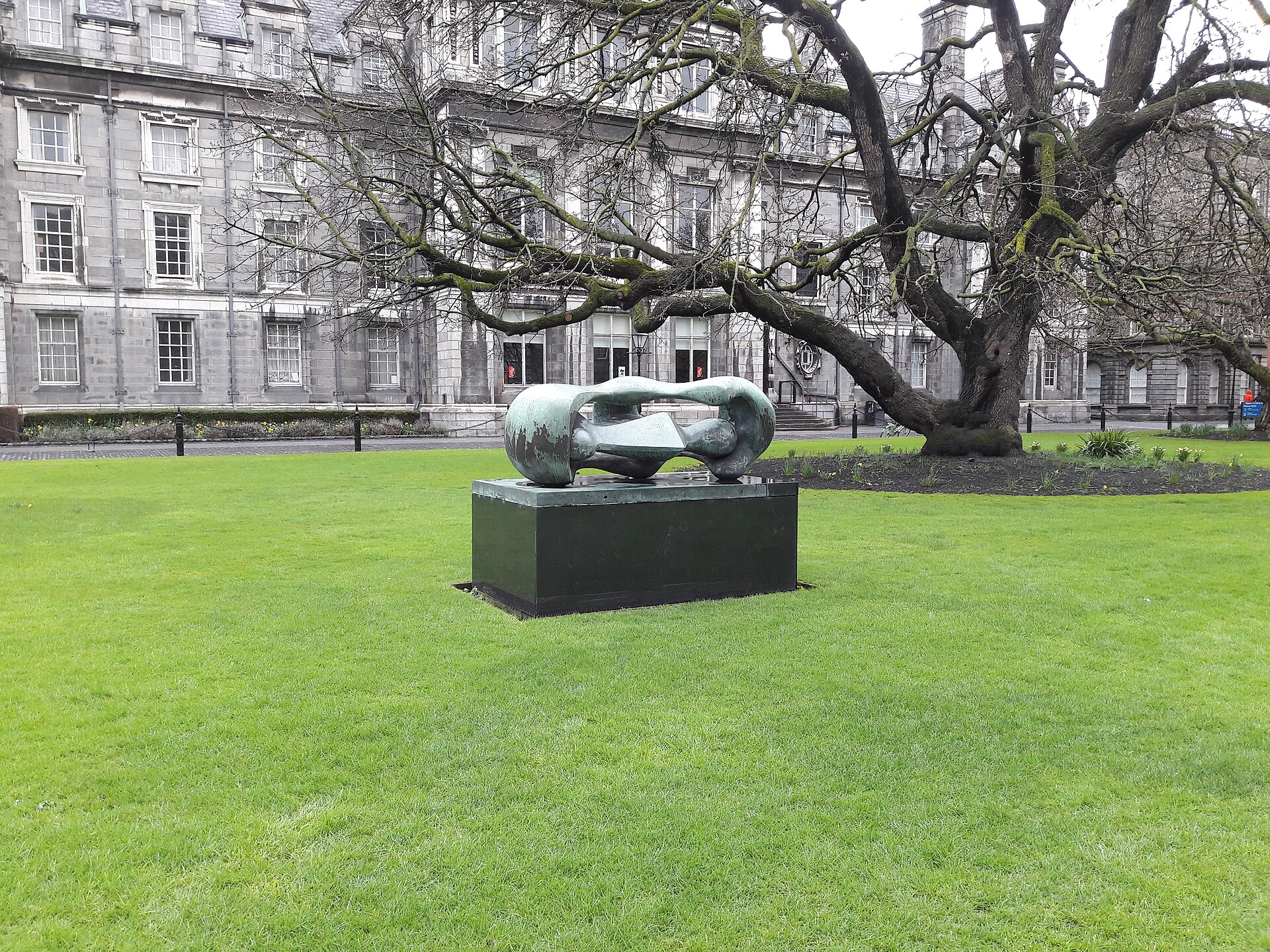
Reclining Connected Forms by Henry Moore, 1969
Trinity College, Dublin · wikidata.org
He made the same reclining shape over and over for something like fifty years. Apparently they were cast in editions too, so this isn't the only one of it — versions of the same thing sit in a few different countries.
Erisava: Every university seems to have one of these. I've never known why.
A Maximis ad Minima by Eduardo Paolozzi, 1998
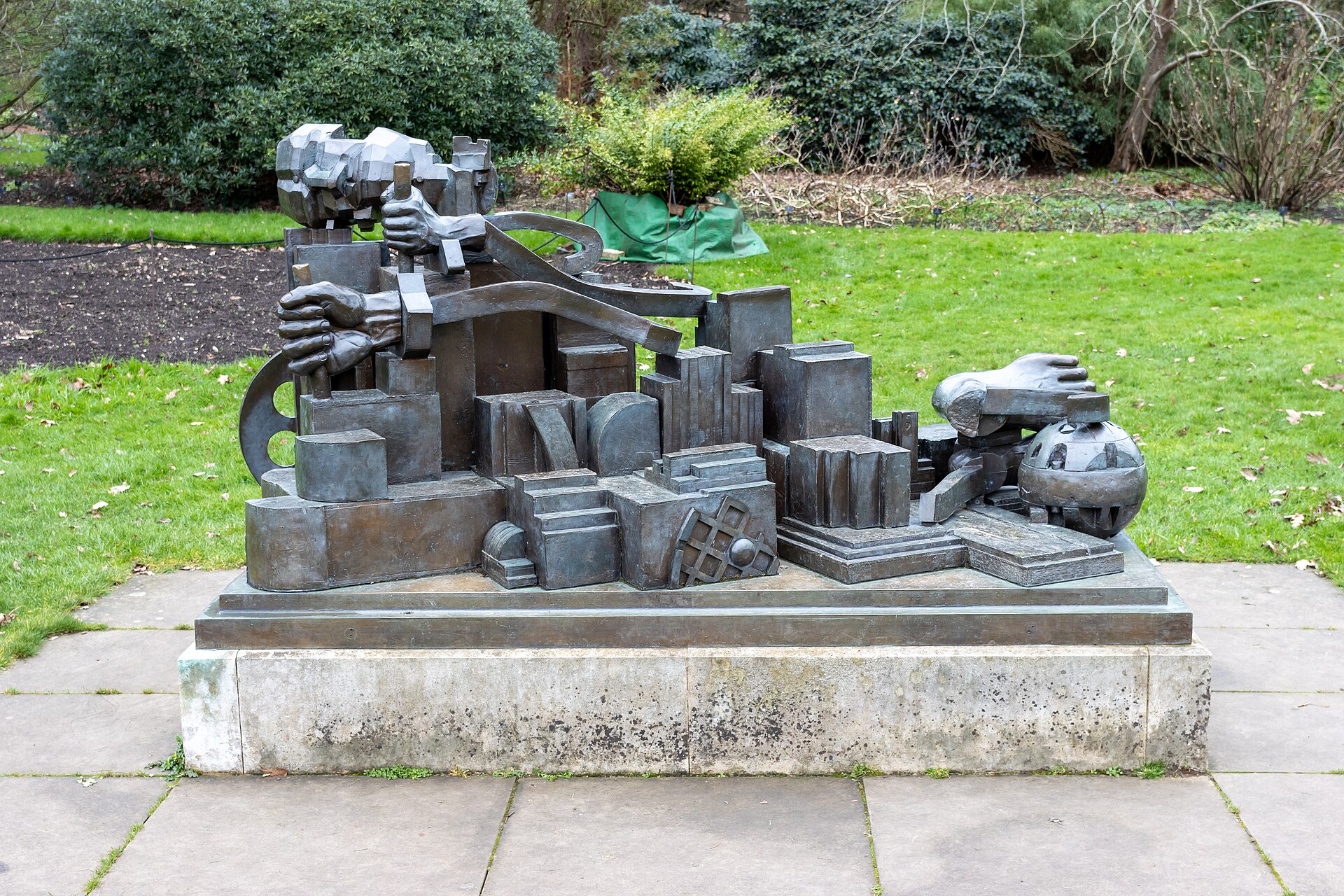
Kew Gardens · wikidata.org
The Latin title translates to something like 'from the greatest to the least' — apparently the idea was to move from huge industrial machinery down to the smallest particles of matter, all packed into one bronze. It's set right by a glasshouse full of tropical plants, an odd pairing that might be the whole point. By this stage he'd moved a long way from the collage aesthetic that got him called the godfather of Pop Art — this is all cast gears and blocky machine parts instead.
Erisava: This looks like the guts of a machine, not a sculpture.
Reclining Figure: Arch Leg by Henry Moore, 1969
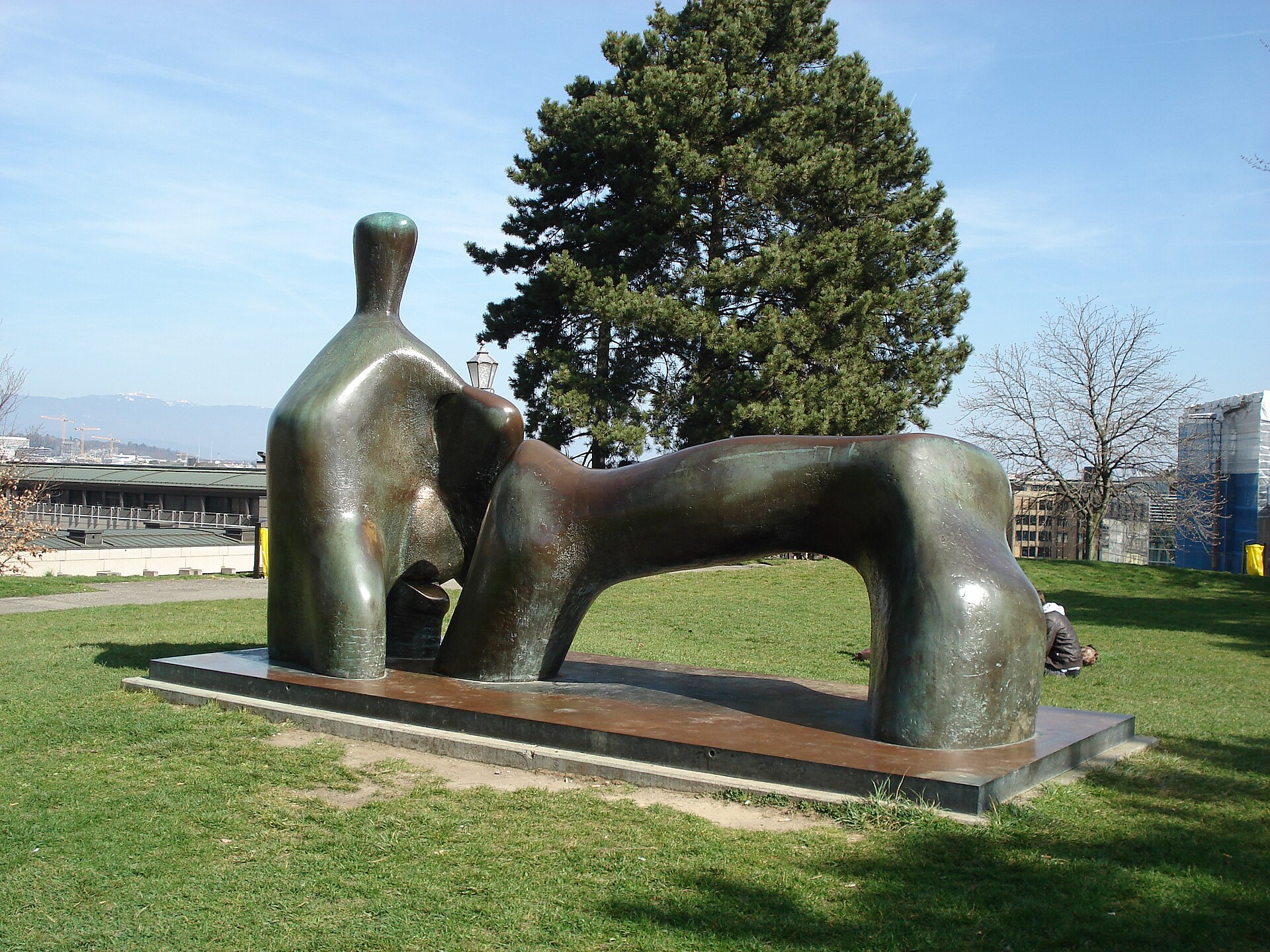
Promenade de l'Observatoire · wikidata.org
You'll come across this sat out on the grass on the Promenade de l'Observatoire, close enough to lean on. From what I've read he wanted them outdoors on purpose — weather, sky, people climbing about — and pushed for that whenever he had a say in where one ended up.
Erisava: Is there a person in here, or am I meant to take their word for it?
Two Working Men by Oisín Kelly, 1969
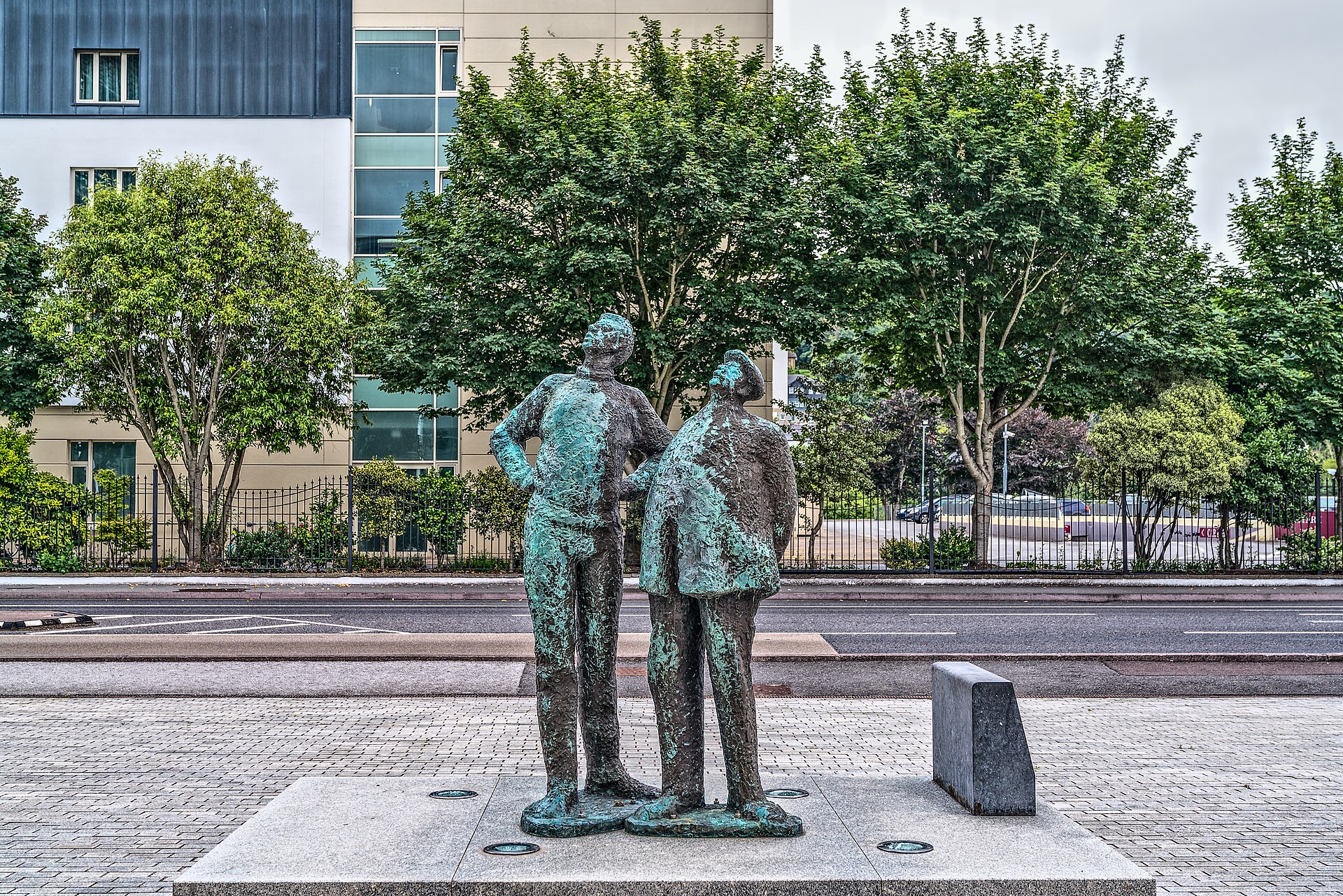
Cork County Hall · wikidata.org
They say Cork nicknamed this pair almost as soon as they went up, and that's still what most people call them, whatever the official title says.
Erisava: Just two guys looking up at something. Why does that deserve bronze?
Jim Larkin monument by Oisín Kelly, 1977
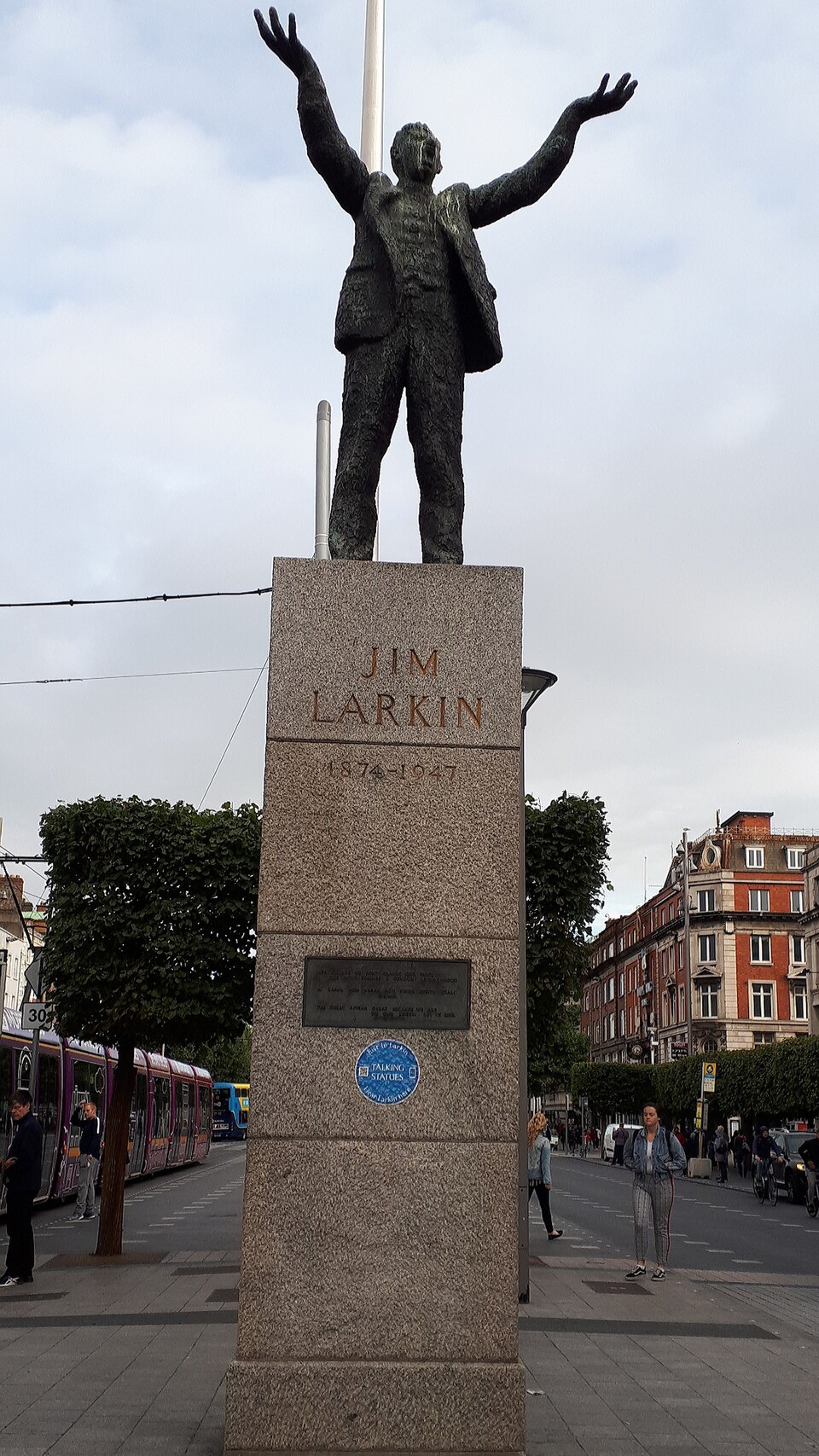
O'Connell Street · wikidata.org
He led the big Dublin workers' strikes back in 1913, and they say the pose comes straight from photos of him speaking to crowds. Apparently the stone underneath carries his line about the great only looking great because the rest of us are on our knees.
Erisava: Arms up over the whole street — he sure looks great.