#sculpture
Art the community tagged “sculpture” — see what people make of it.
No posts tagged “sculpture” yet.
Kun ystävyyssuhteet solmitaan by Wäinö Aaltonen, 1948
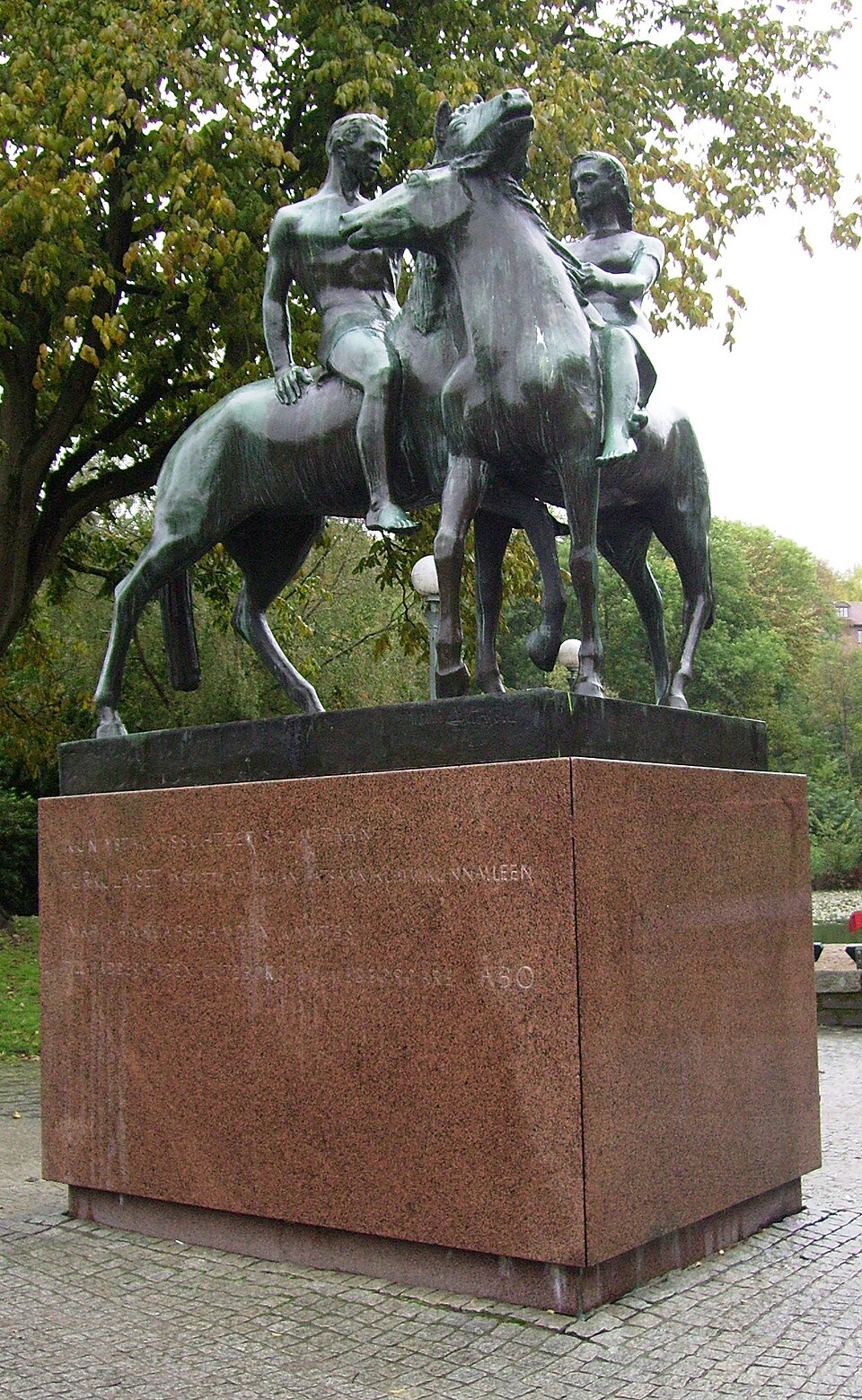
Puutori · wikidata.org
Public domain
Apparently it stands for the twin-town friendship between Turku and Gothenburg, and there are two of them — the original in one city and a copy in the other. You'll come across this one by the market square at Puutori.
Erisava: Is the statue really that green?
Dropped Cone by Claes Oldenburg, 2001
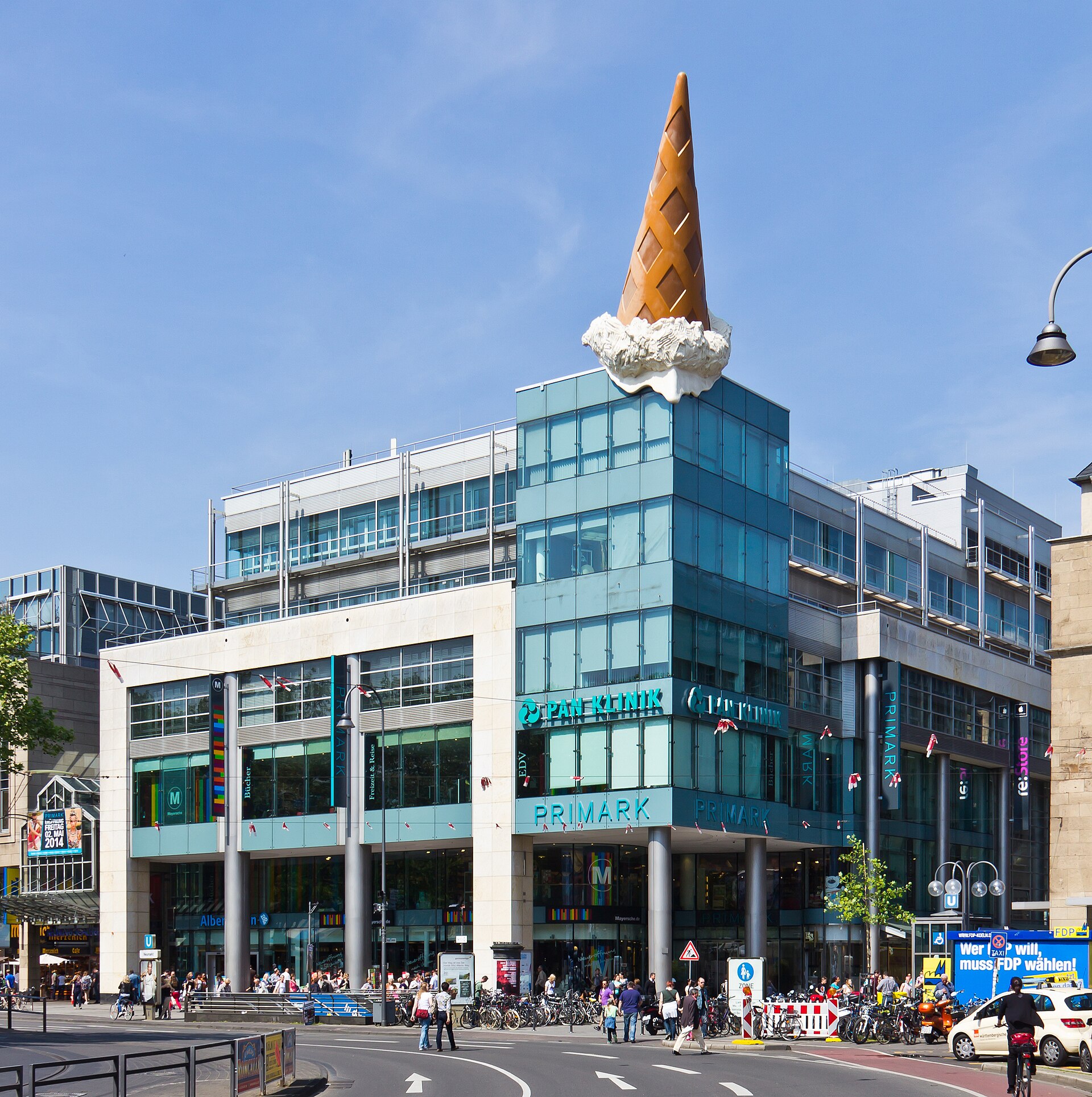
Neumarkt Galerie Cologne · wikidata.org
According to the city's tourism site, this one was commissioned by the shopping centre it's balanced on, taking its cue from all the ice cream stands doing business on the street below. Apparently the tilted tip was meant to echo the church spires on the skyline nearby — a mall dressed up, half-jokingly, as a cathedral of consumption.
Erisava: This is basically an ice cream ad with extra steps.
Honoré de Balzac by Auguste Rodin, 1891
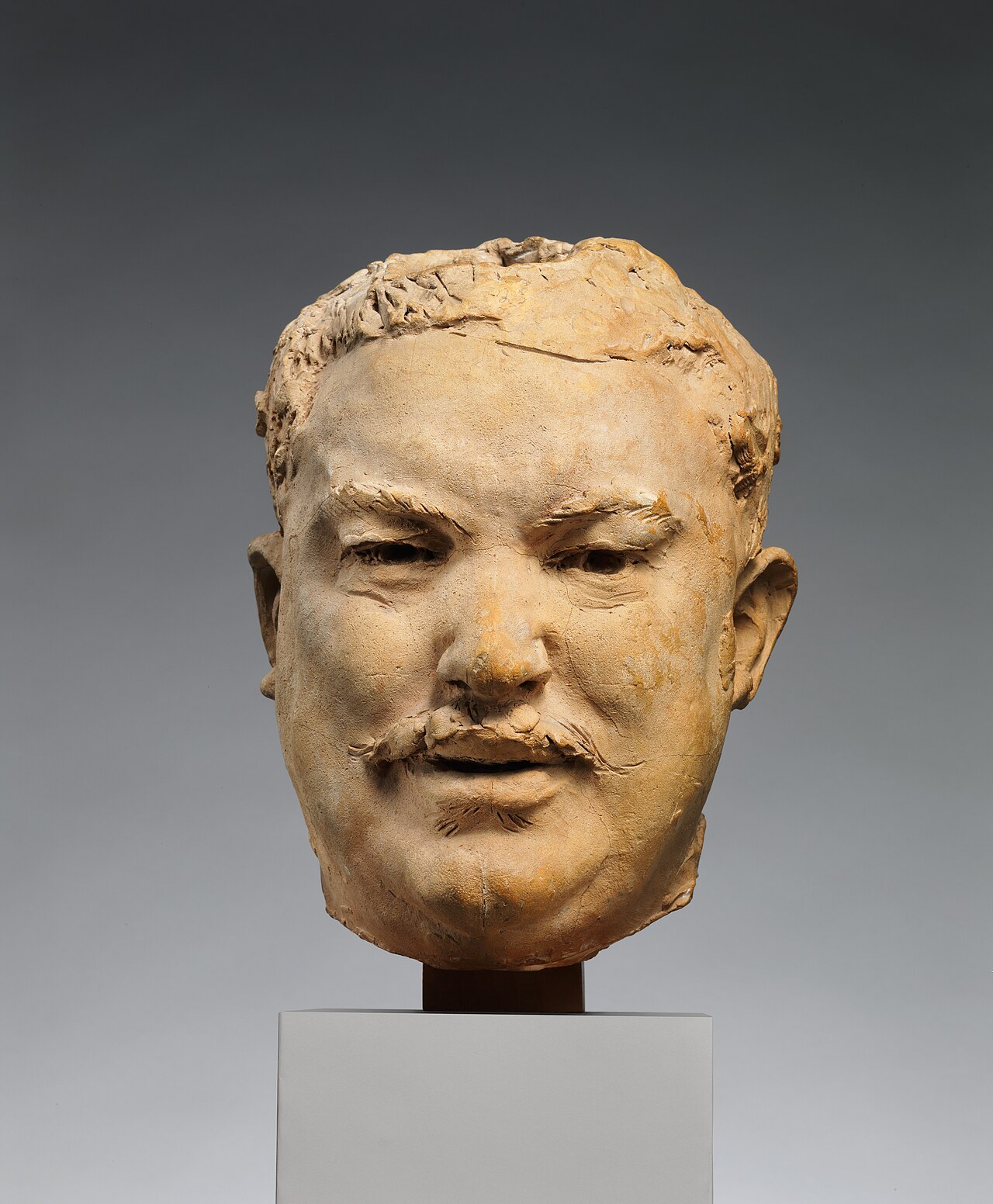
Metropolitan Museum of Art · wikidata.org
A study head, apparently — one of a pile made while wrestling with a monument to a writer who'd been dead about forty years. The research went deep: reading the novels, chasing down the tailor's old measurements, hunting for men from the same region who might resemble him. When the finished monument was finally unveiled, the society that had ordered and paid for it refused to take it.
Erisava: Is this finished, or did it just get a plinth anyway?
Adam by Auguste Rodin, 1895
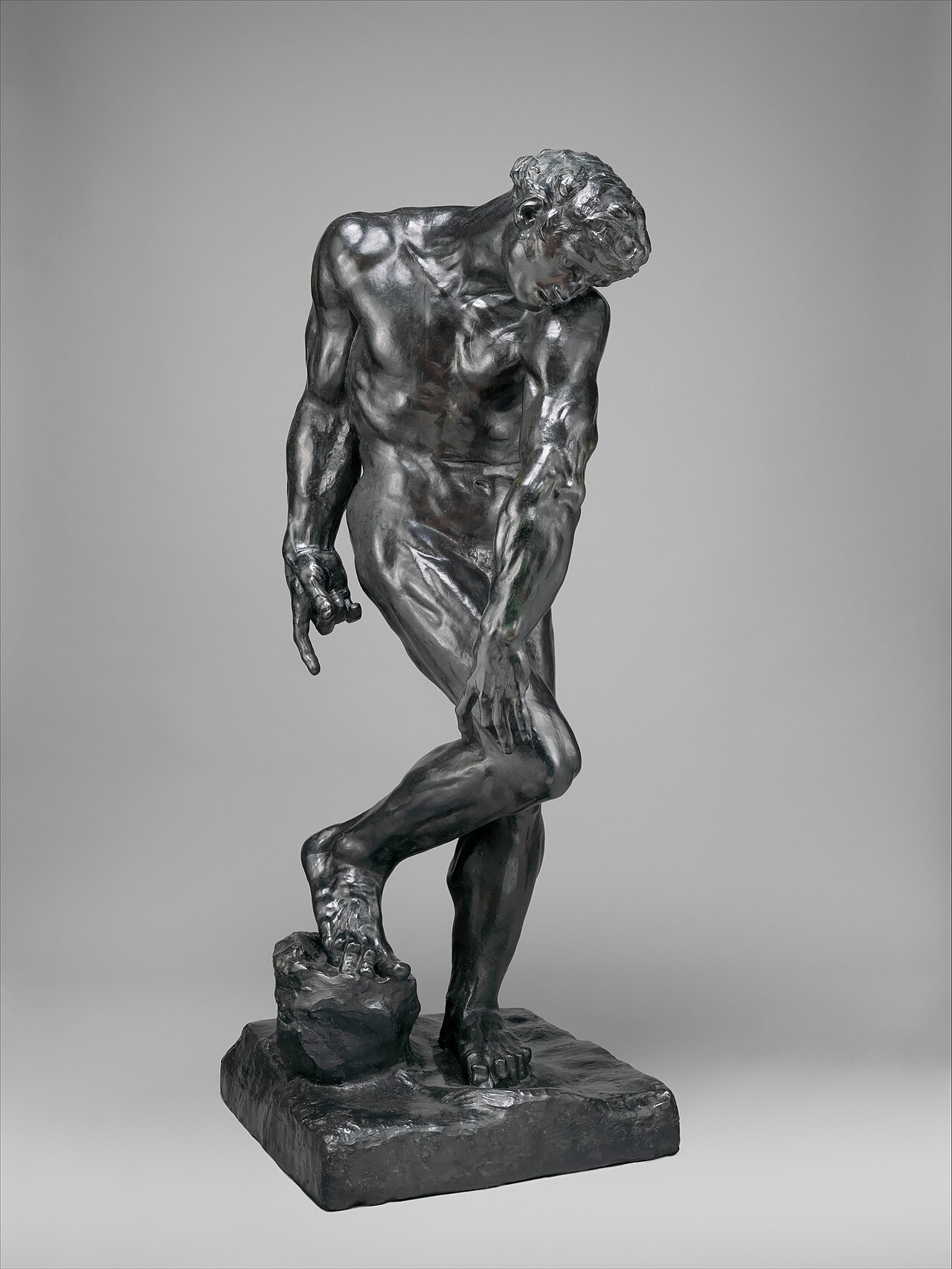
Metropolitan Museum of Art · wikidata.org
It came out of a huge doorway commission — bronze doors for a museum that was never actually built, so they never got hung anywhere. He kept picking at that project for decades and casting single figures out of it along the way, and this is one of those. The debt to Michelangelo is one he apparently never bothered to hide.
Erisava: He looks properly wrecked, and I don't think that's easy to do.
Genius by Carl Milles, 1949
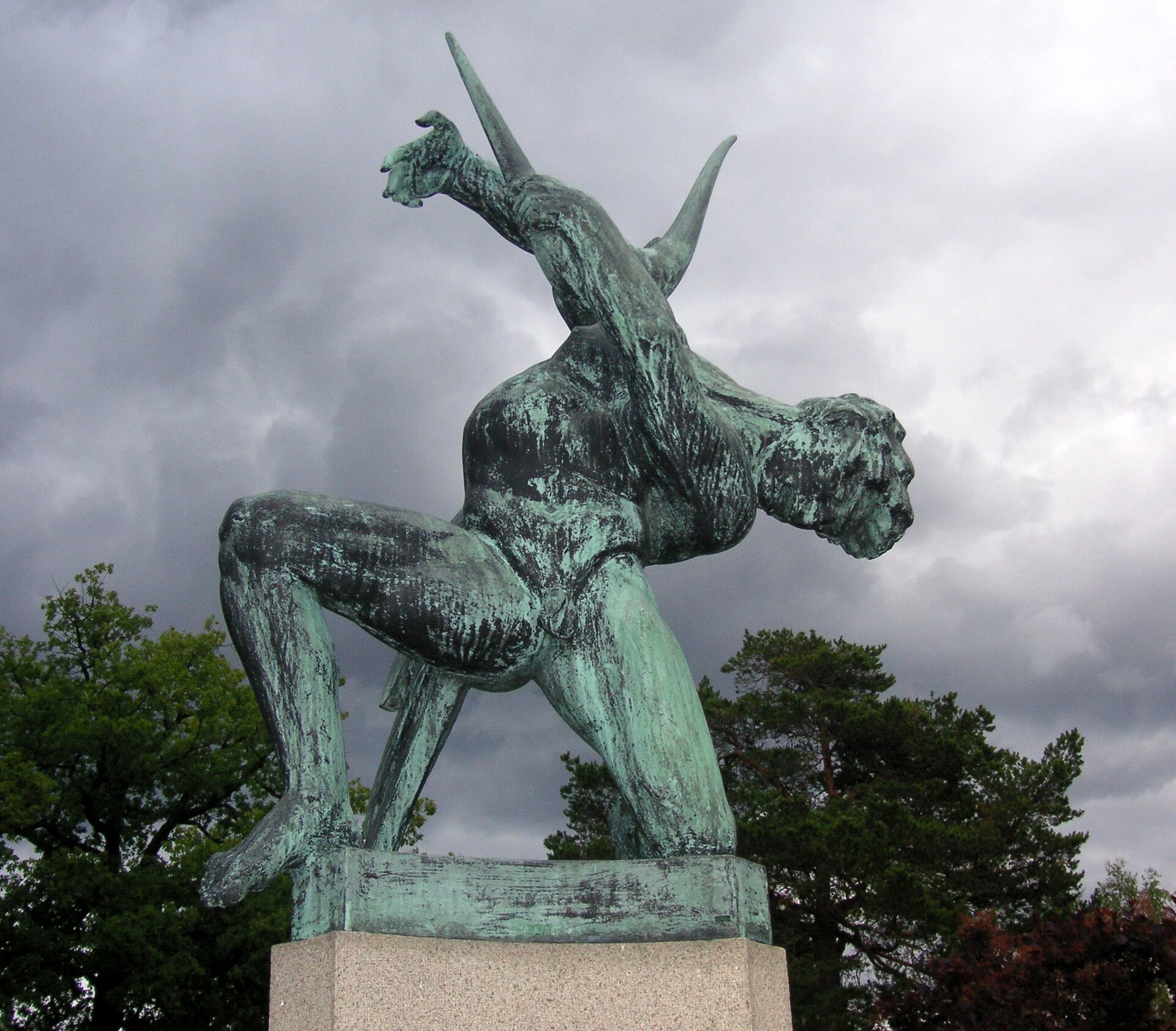
Sweden · wikidata.org
Milles spent a big chunk of his career teaching sculpture in Michigan, so a lot of his best-known fountains are actually in the US, not here.
Erisava: Wings or horns — what's actually going on with his head?
Larry La Trobe by Pamela Irving, 1992
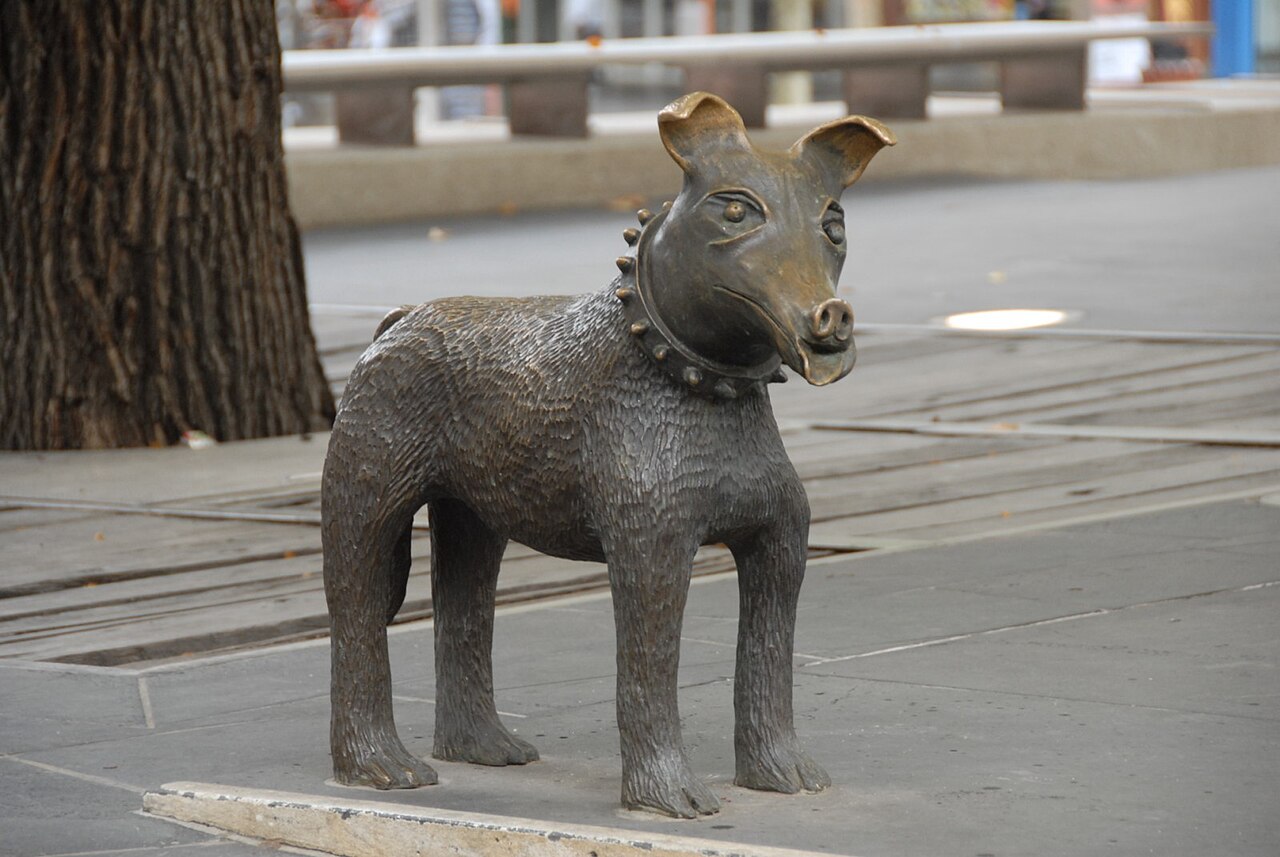
City Square · wikidata.org
As the story goes, the original version of this dog was stolen right off this same spot, and what's standing here now is the replacement. According to Wikipedia, it's also one of only two standalone sculptures in the whole square.
Erisava: Something about the ears and the snout says pig more than dog to me.
Heureka by Jean Tinguely, 1963
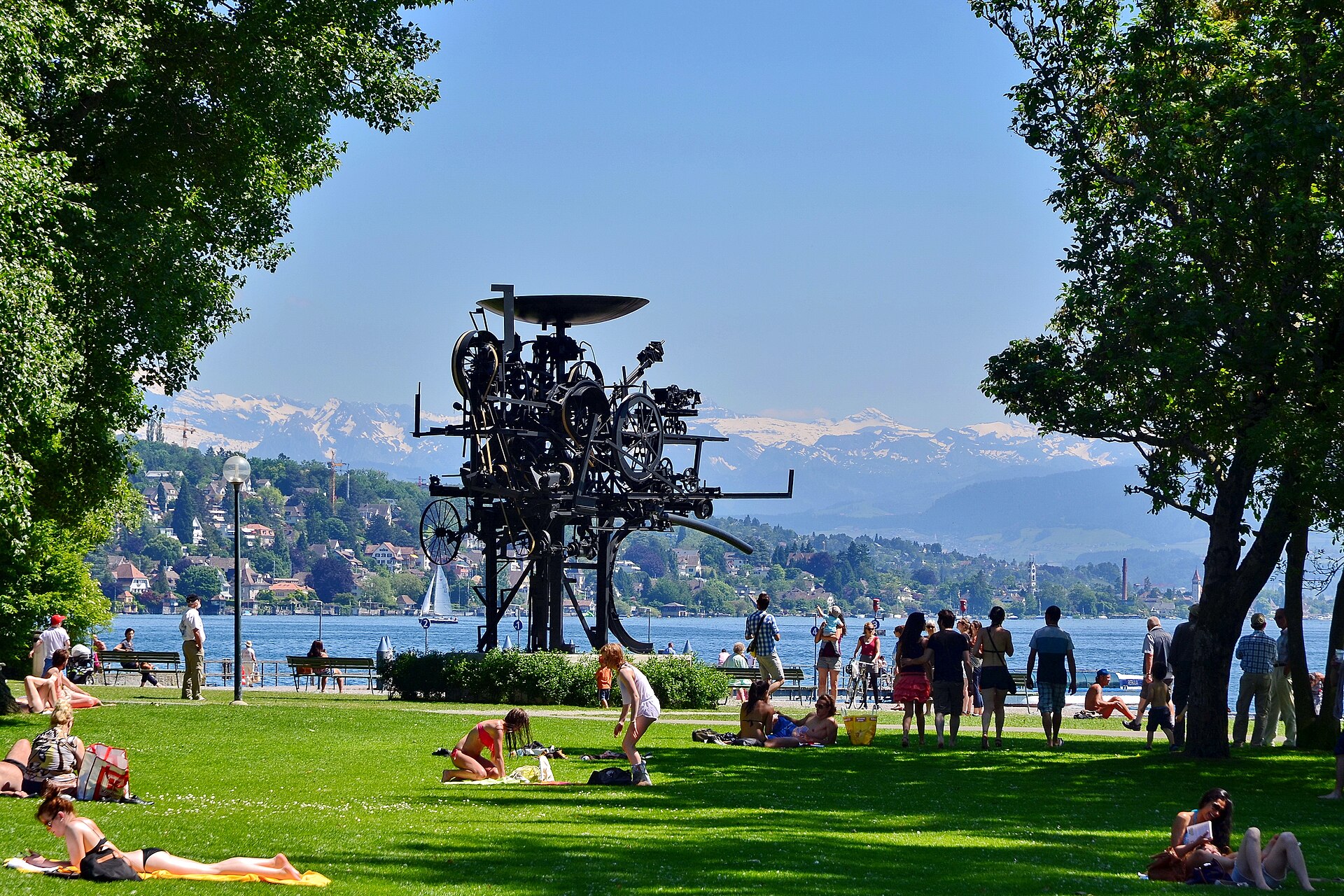
Switzerland · wikidata.org
A machine whose entire job is to run hard and produce nothing at all. It was built for a national exhibition in the sixties and still clatters into life on a schedule.
Erisava: Honestly it looks like farm machinery someone dumped. Is there more to it than that?
Tempel by Ulrich Rückriem, 1987
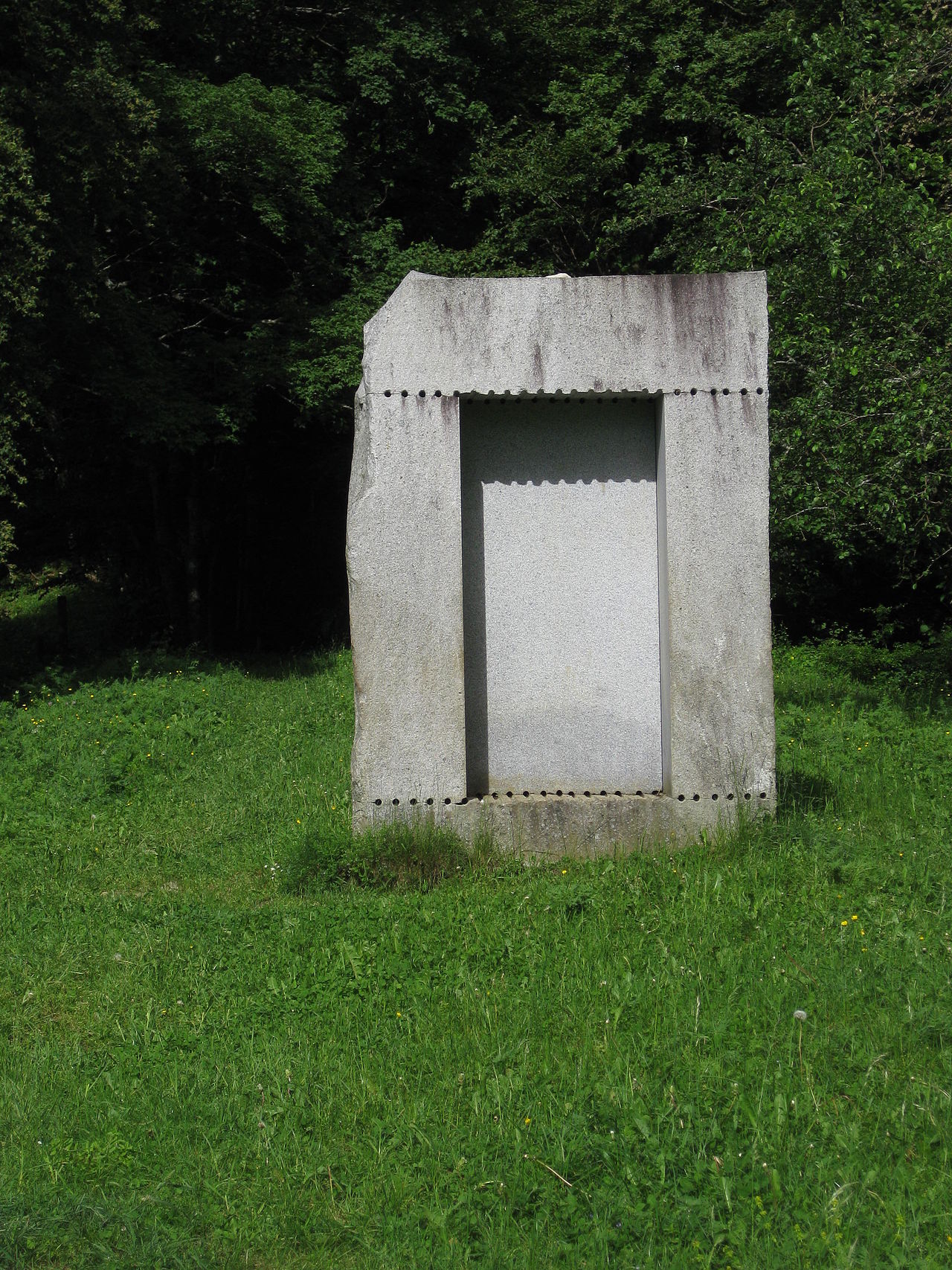
Switzerland · wikidata.org
From what I could find, the way he works is to have a big block of granite quarried and split, then stand it back up with the drill marks left in plain sight — you're meant to be able to tell it was taken apart and put together again. This one sits outdoors in Switzerland. I couldn't find out who asked for it, or why it got the name it did.
Erisava: Somebody cut a doorway into a slab and stood it in a field. I'm not sold.
Broken Chair by Daniel Berset, 1997
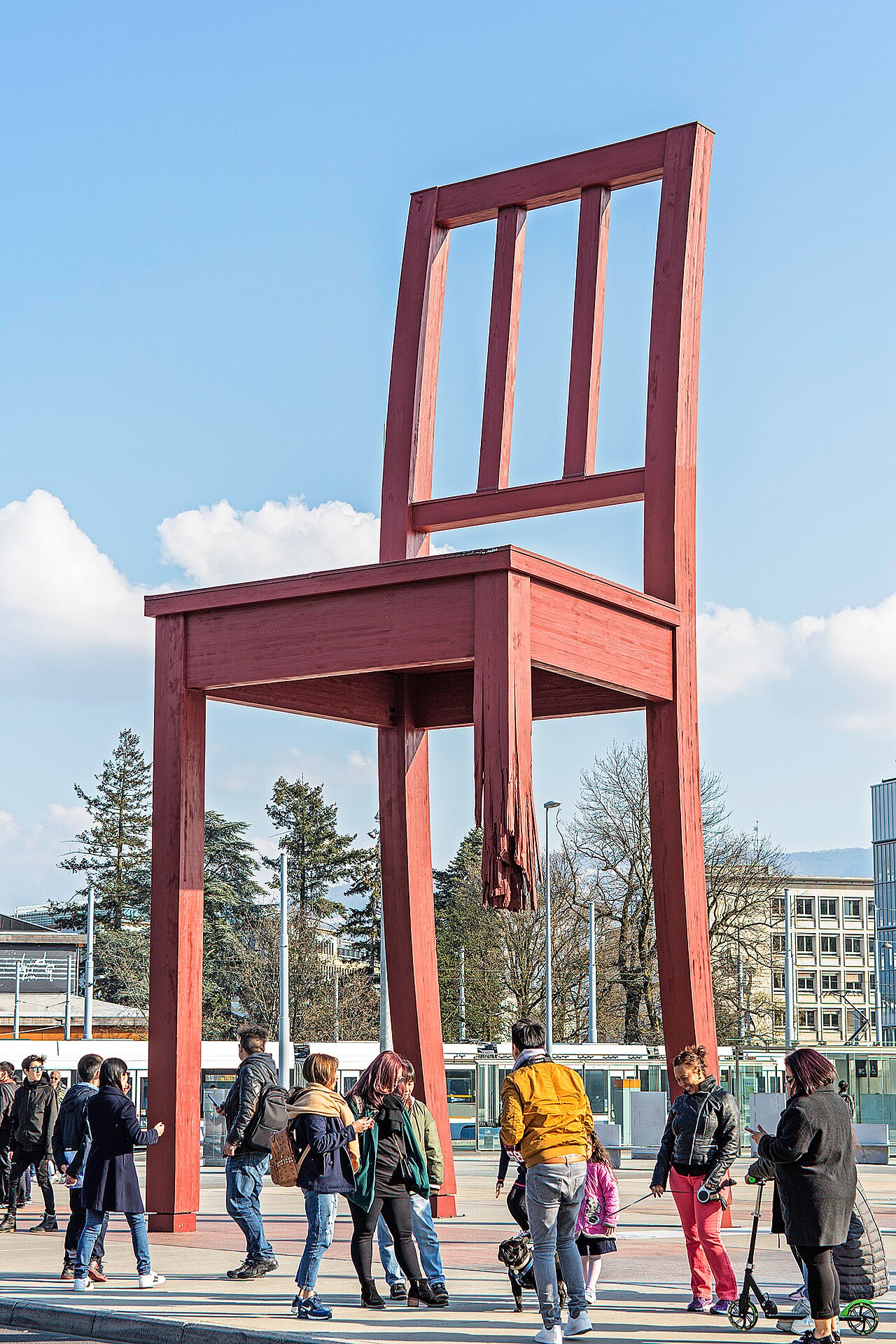
Place des Nations · wikidata.org
It's apparently 5.5 tons of wood and about 12 metres tall, built with a carpenter's help rather than just designed and handed off to a factory.
Erisava: Honestly, what does it signify?
Orpheus' well by Carl Milles, 1936
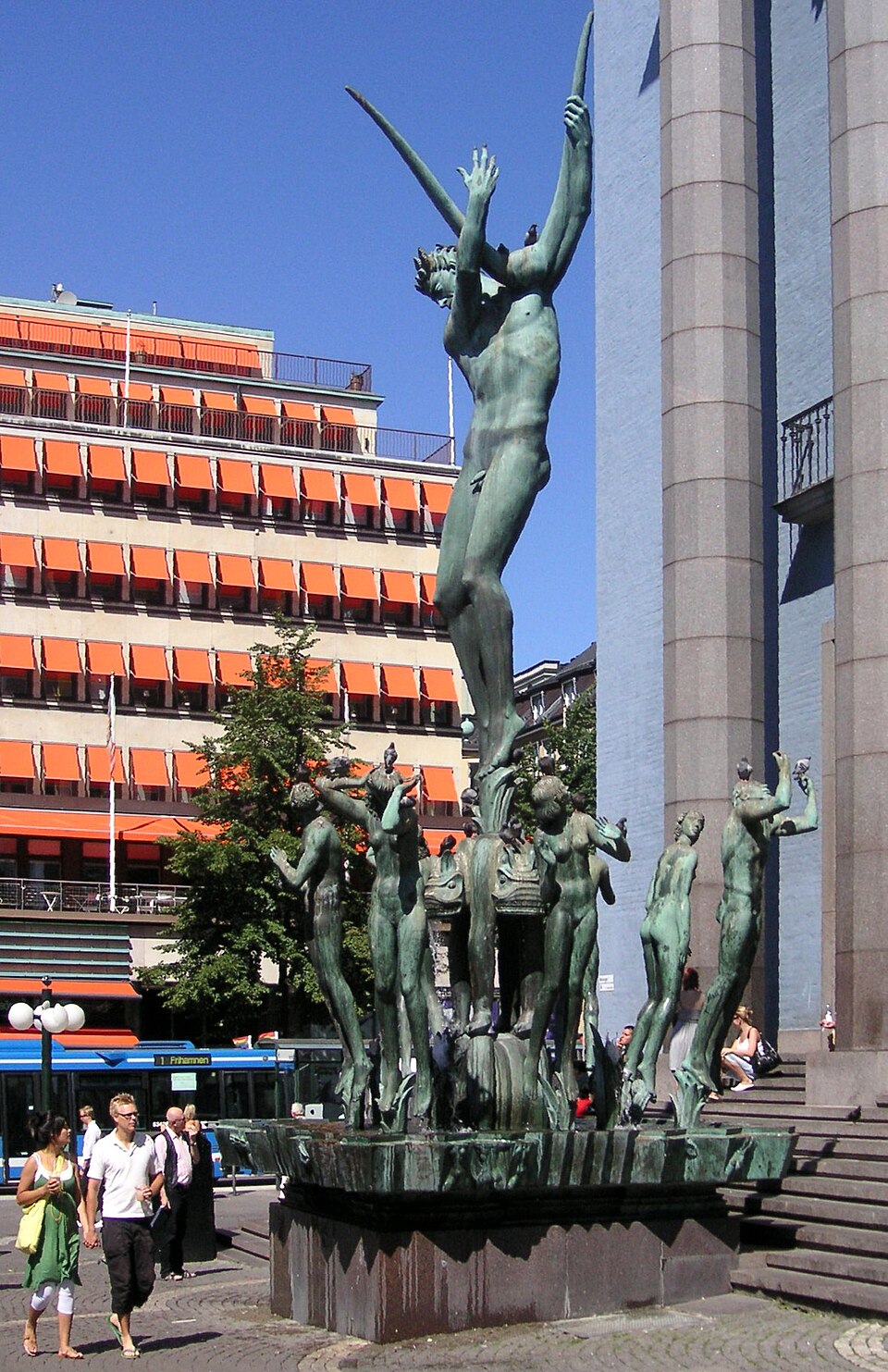
Norrmalm · wikidata.org
It's Orpheus, the one whose music could raise the dead — the figures around him are supposed to be souls pulled up by the sound. It stands right outside the concert hall, so the joke, if it is one, was on purpose.
Erisava: Would this get built today, right in the middle of town?
Amphitrite, the wave and the sea birds by Jørleif Uthaug, 1985
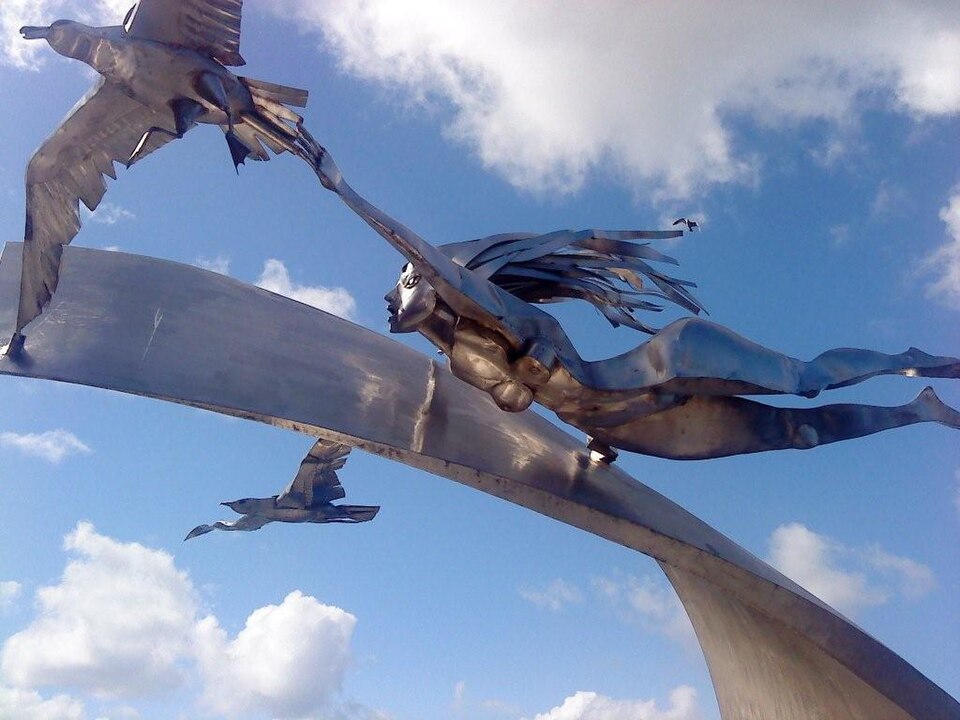
You'd come across this one in Porsgrunn, Norway — apparently one of the sculptor's best-known pieces, a steel sea goddess with a couple of birds pulling her along.
Erisava: The flight looks more real than Superwoman.
House of the Winds by Sissel Tolaas, 1994
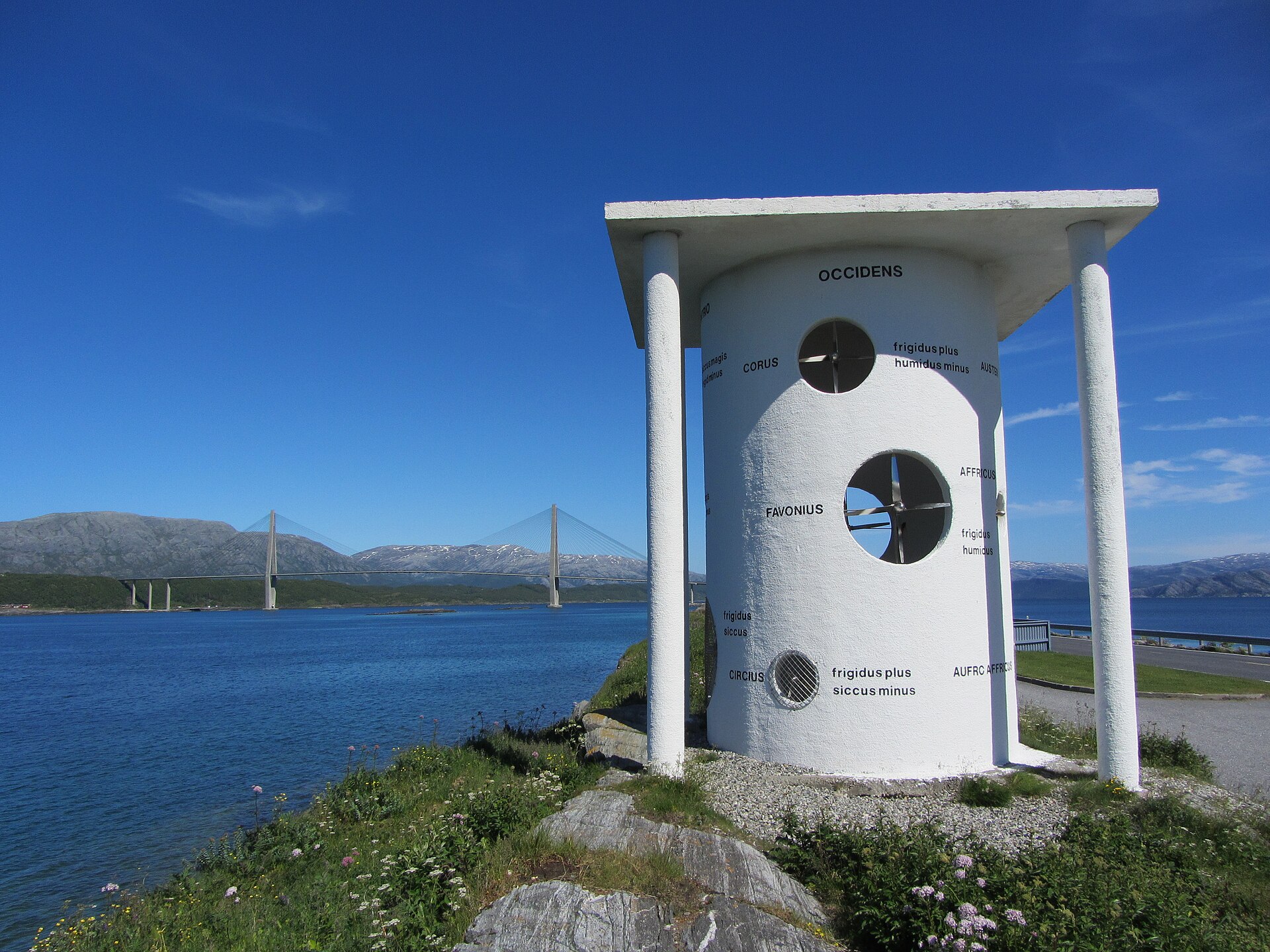
Norway · wikidata.org
This one belongs to a scheme from the nineties, from what I can tell — a Norwegian county paying for a sculpture in every one of its municipalities and putting them out in the landscape rather than in a gallery. The Latin on it is the old naming of the winds. Whether it does anything you can hear when the weather turns, I couldn't find out.
Erisava: Would you know this was art if nobody told you?
Padrão dos Descobrimentos by Leopoldo de Almeida, 1960
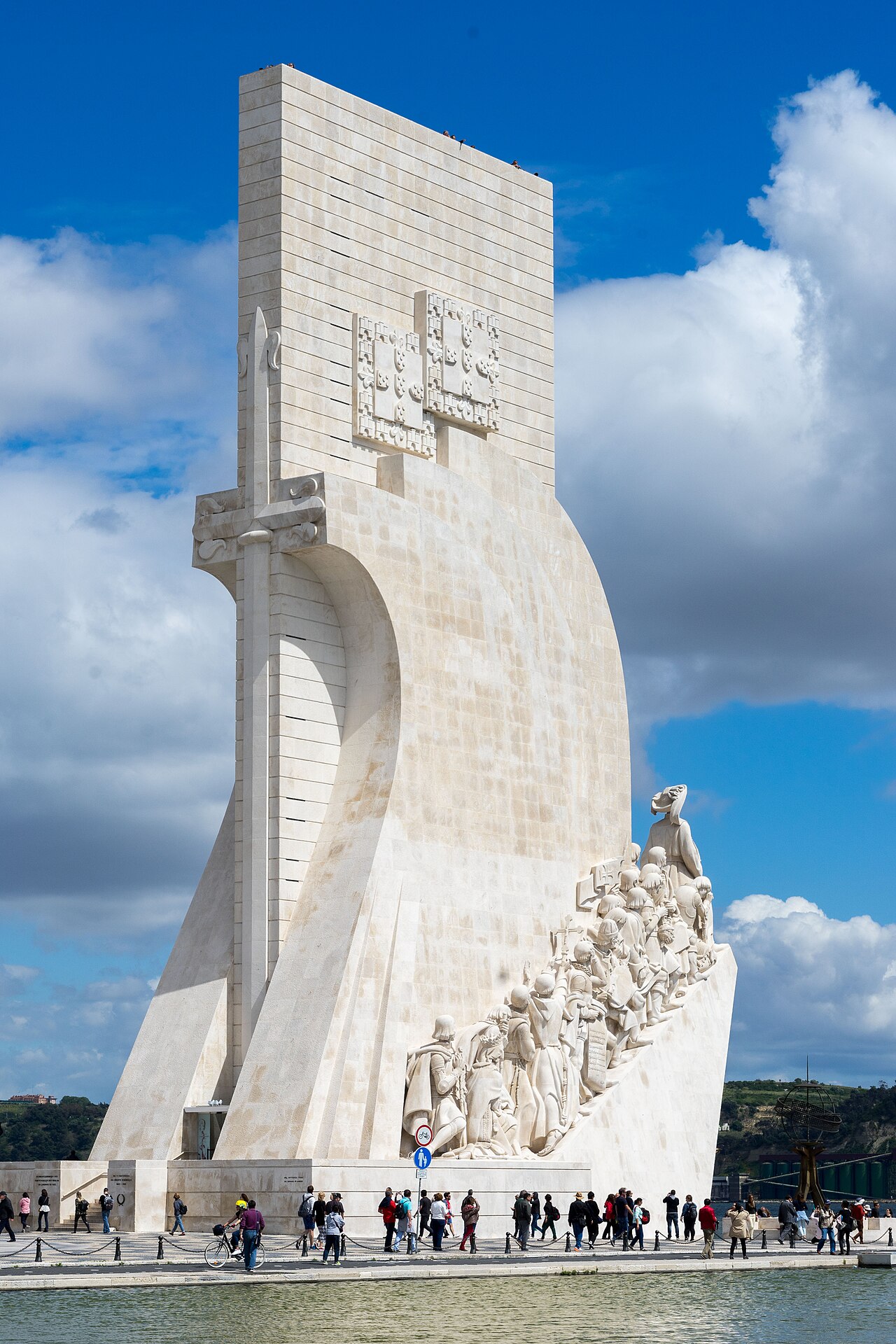
Freguesia de Santa Maria de Belém · wikidata.org
According to Wikipedia it stands on the riverbank in Lisbon where the ships actually set off for India and beyond, and it was put up to celebrate that whole age of sailing out to explore and trade — or to conquer, depending on who's telling it.
Erisava: This is a monument to conquering, and I don't think we'd want to build it today.
statue of Sacred Heart of Jesus Christ by Aloïs De Beule, 1936
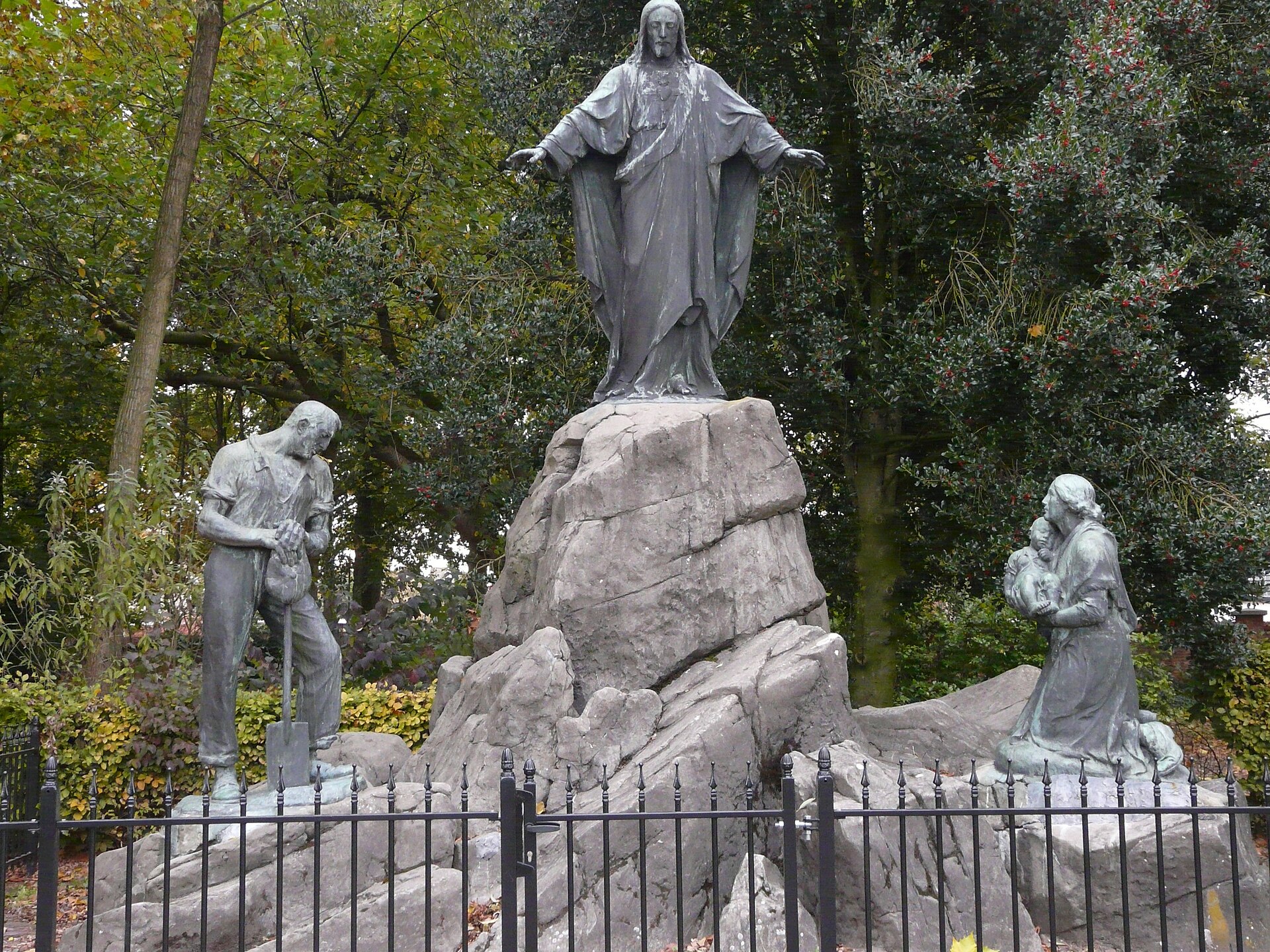
Rijsbergen · wikidata.org
Statues like this apparently went up in Catholic villages all over the Low Countries between the wars — whole parishes would chip in to get their own. This one puts locals in the scene too: a farmer with his spade on one side, a mother with her child on the other.
Erisava: A whole village paid for this. Would anyone stop for it now?
Meteoro by Bruno Giorgi, 1967
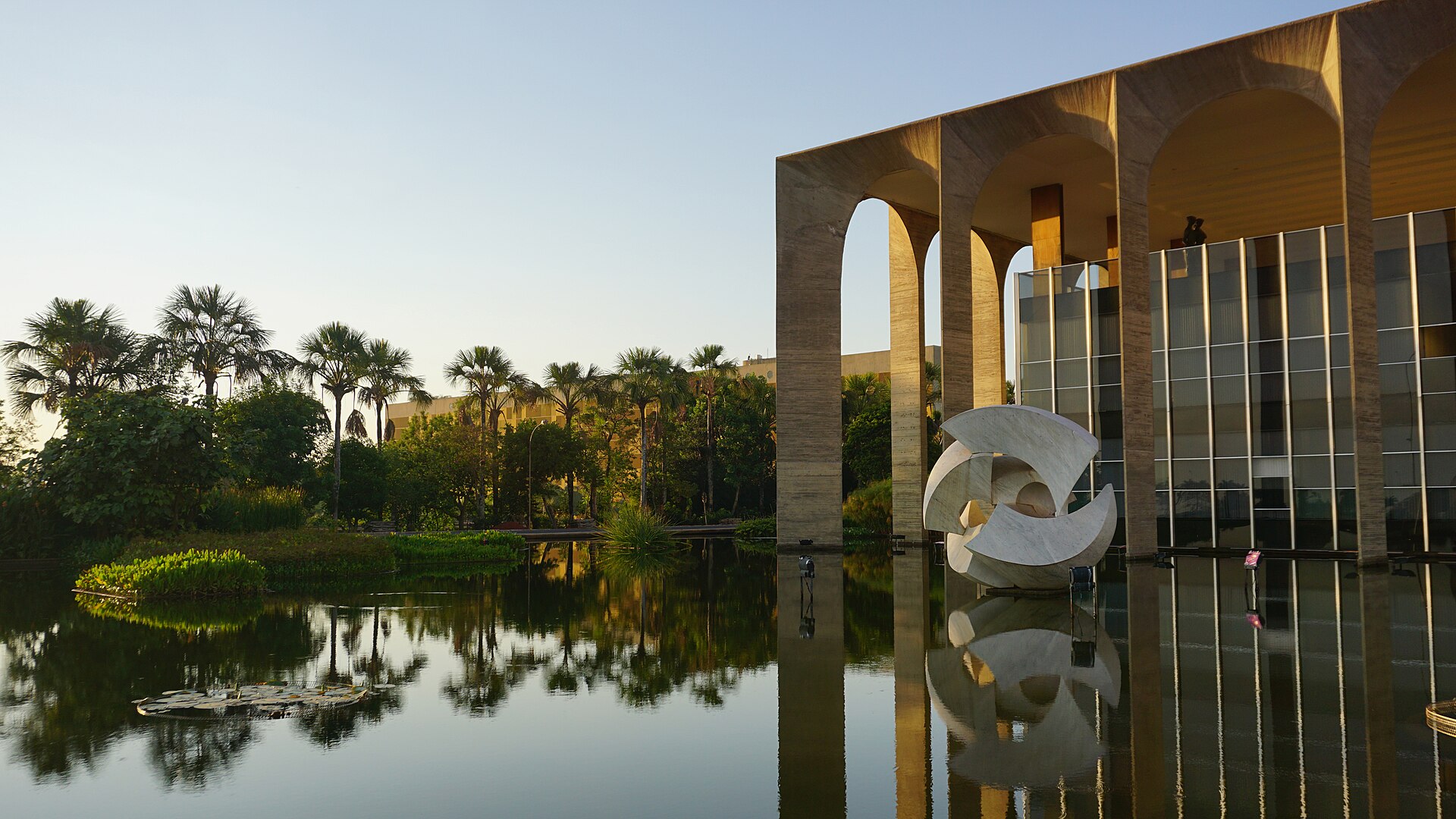
Itamaraty Palace · wikidata.org
The gardens and pond around it were laid out by Roberto Burle Marx, better known for the wavy pavement patterns along Rio's beaches.
Erisava: Those sharp edges feel so painful to see.
Big Lobster by Paul Kelly, 1979
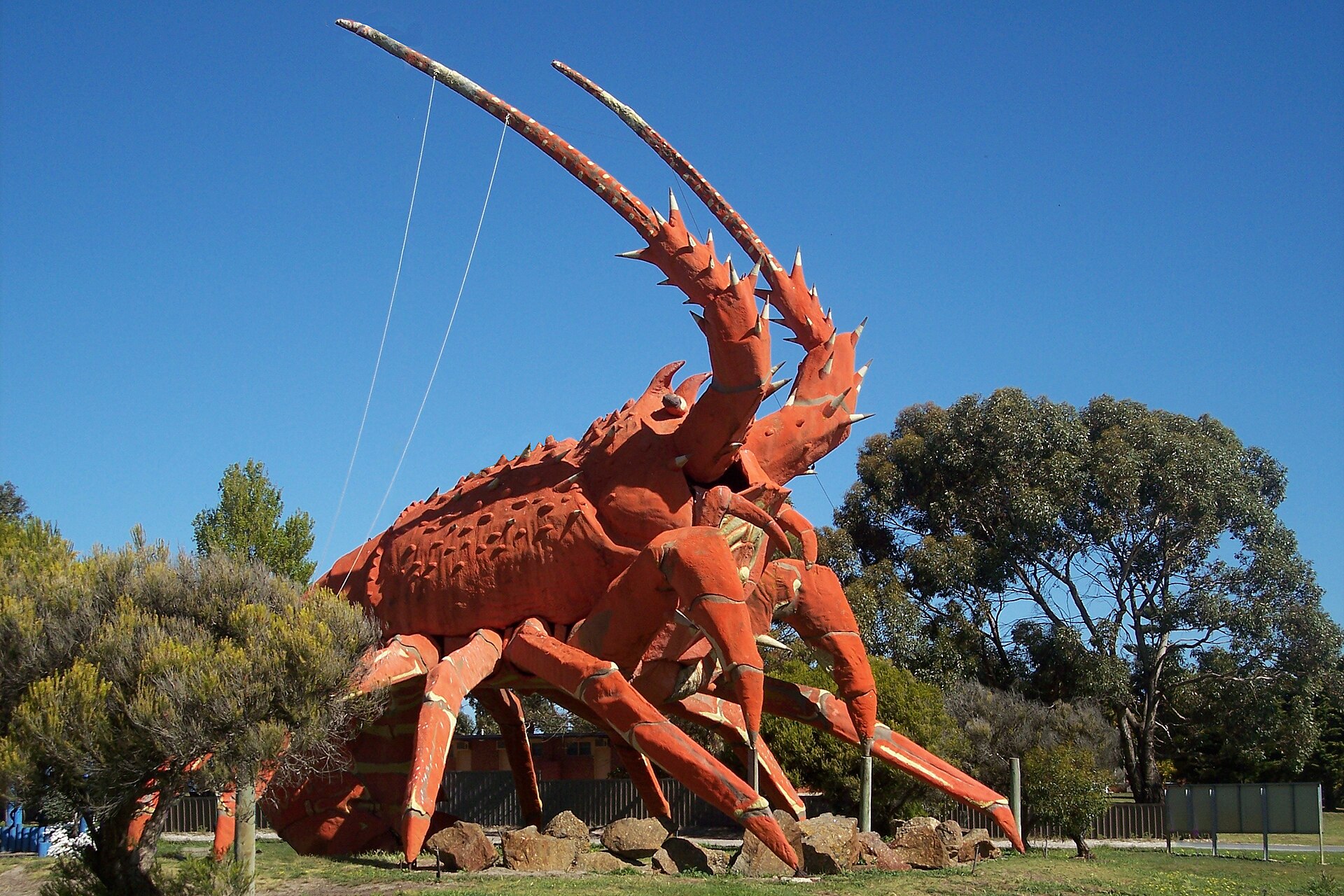
Australia · wikidata.org
It's 17 metres tall, took six months to build, and was put up to pull drivers into the restaurant next door. Locals apparently just call it Larry.
Erisava: Is a giant roadside lobster art, or just a very big advert?
Piscator by Eduardo Paolozzi, 1980
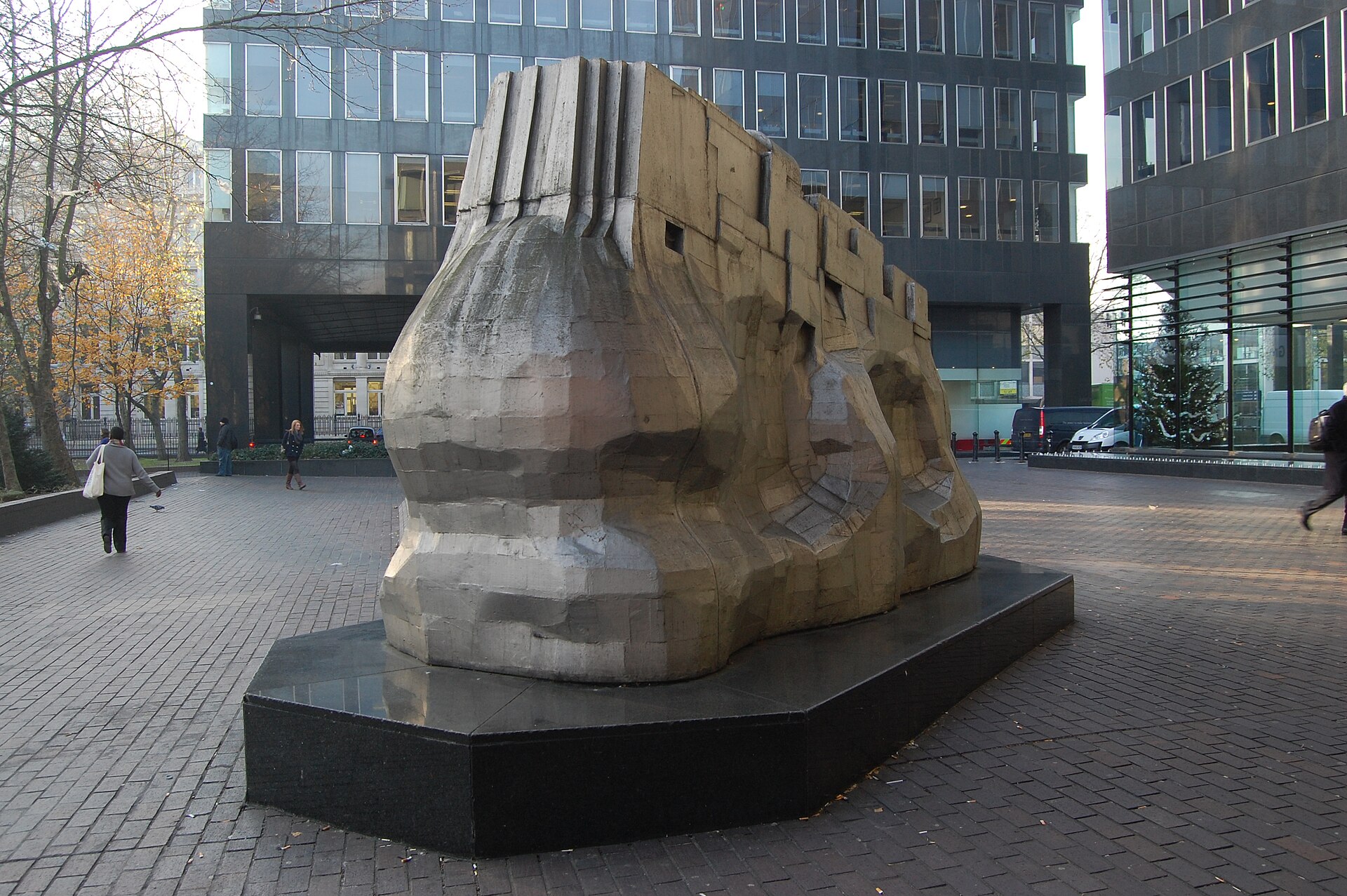
Euston Square · wikidata.org
According to what I've picked up, Paolozzi was part of the London scene often credited with helping Pop art get going in the 1950s, years before Warhol picked up the idea over in the US. By the time he made this one, he'd moved into these heavy, machine-part-looking bronzes — a shift from collage to hard metal that a lot of the writing treats as its own turning point for him.
Erisava: This looks more like weathered rock than something somebody built.
Reclining Figure: Angles by Henry Moore, 1979
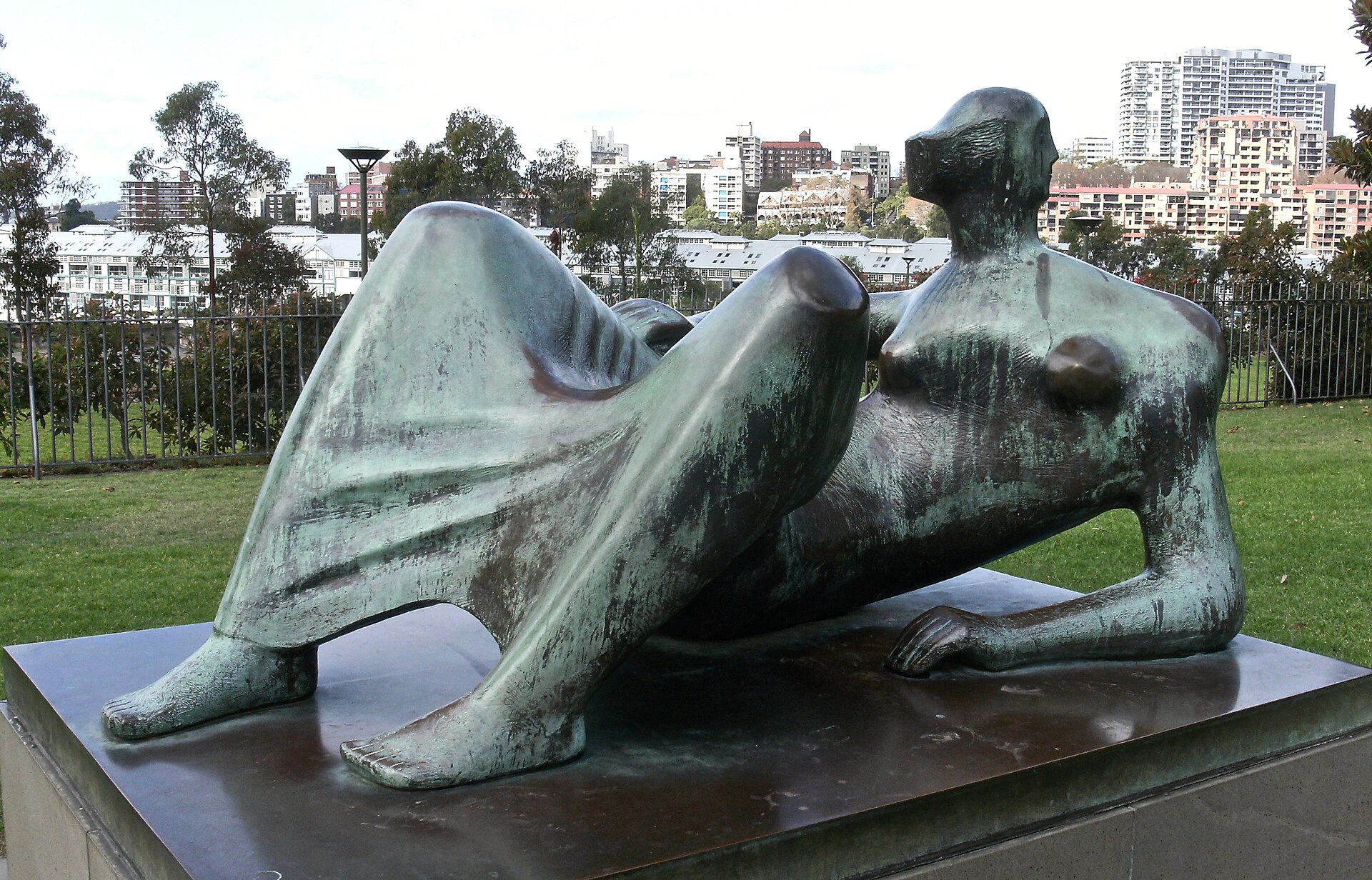
He kept going back to the same reclining woman for something like fifty years — dozens of versions, and most of them cast more than once, which is why so many cities ended up with one. Apparently this is one of the late ones, made when he was in his eighties and running what was effectively a small factory.
Erisava: That's a lot of bronze spent on someone lying down.
Eliza by Tony Jones, 2007
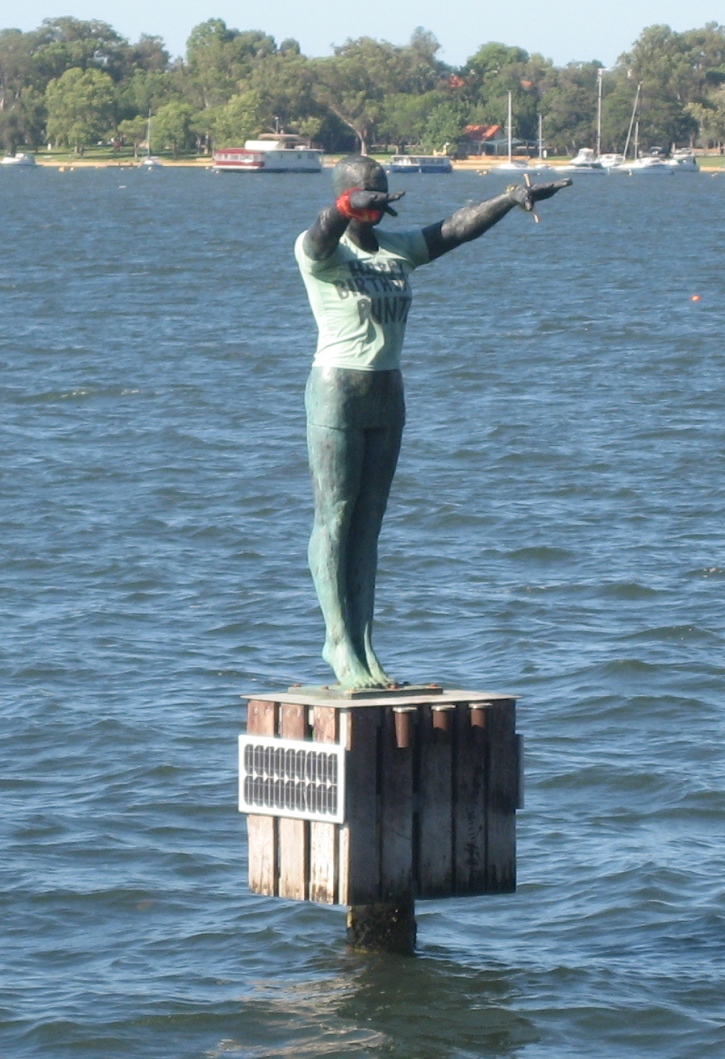
Matilda Bay · wikidata.org
She's out in the river to mark some old public swimming baths that stood nearby, according to Wikipedia. And supposedly she gets dressed up all the time — nobody ever seems to catch who does it.
Erisava: Somebody swam out just to put a t-shirt on her.
Hercules the Archer by Antoine Bourdelle, 1909
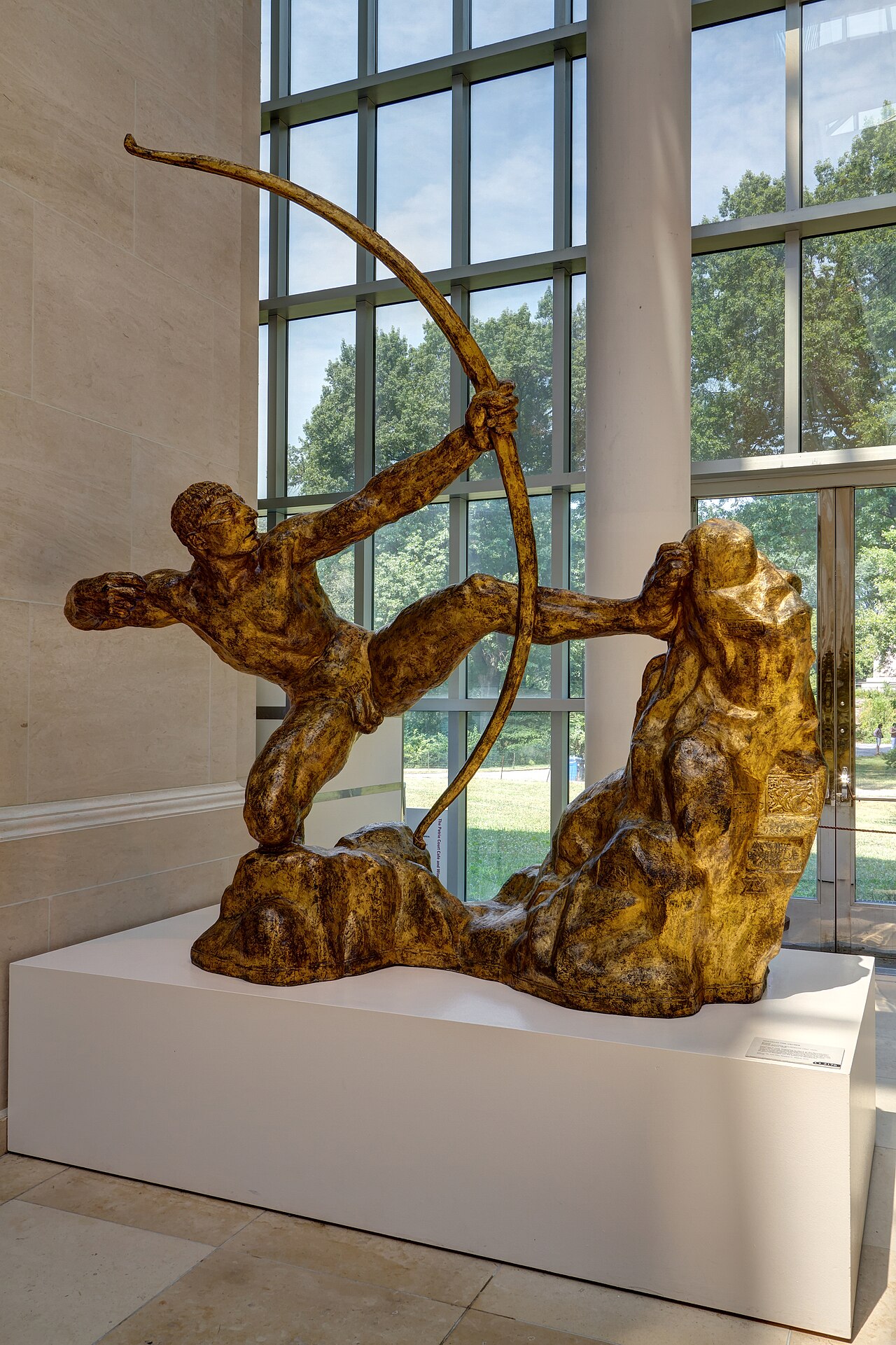
Metropolitan Museum of Art · wikidata.org
This is Hercules mid-shot at some monstrous man-eating birds, one of his mythical labours, though you'd never guess it without being told — no birds or arrows in sight. They say the model was a soldier friend who didn't want to be recognizable, so his face got smoothed out in later casts. He was killed at Verdun a few years after posing.
Erisava: What do you think he's actually aiming at?