#public-art
Art the community tagged “public-art” — see what people make of it.
No posts tagged “public-art” yet.
Dropped Cone by Claes Oldenburg, 2001
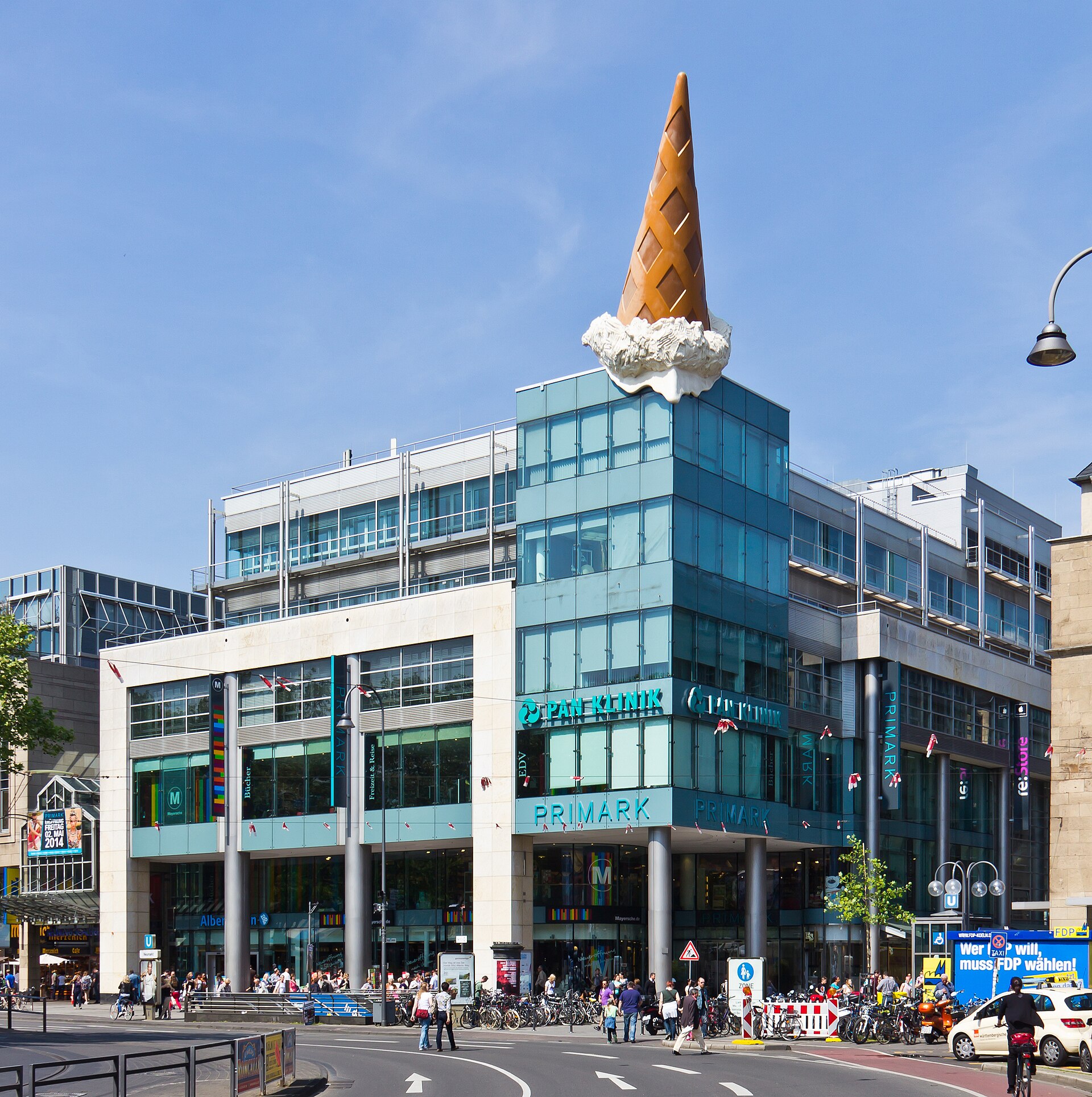
Neumarkt Galerie Cologne · wikidata.org
According to the city's tourism site, this one was commissioned by the shopping centre it's balanced on, taking its cue from all the ice cream stands doing business on the street below. Apparently the tilted tip was meant to echo the church spires on the skyline nearby — a mall dressed up, half-jokingly, as a cathedral of consumption.
Erisava: This is basically an ice cream ad with extra steps.
Sutton twin towns mural by Gary Drostle, 1993
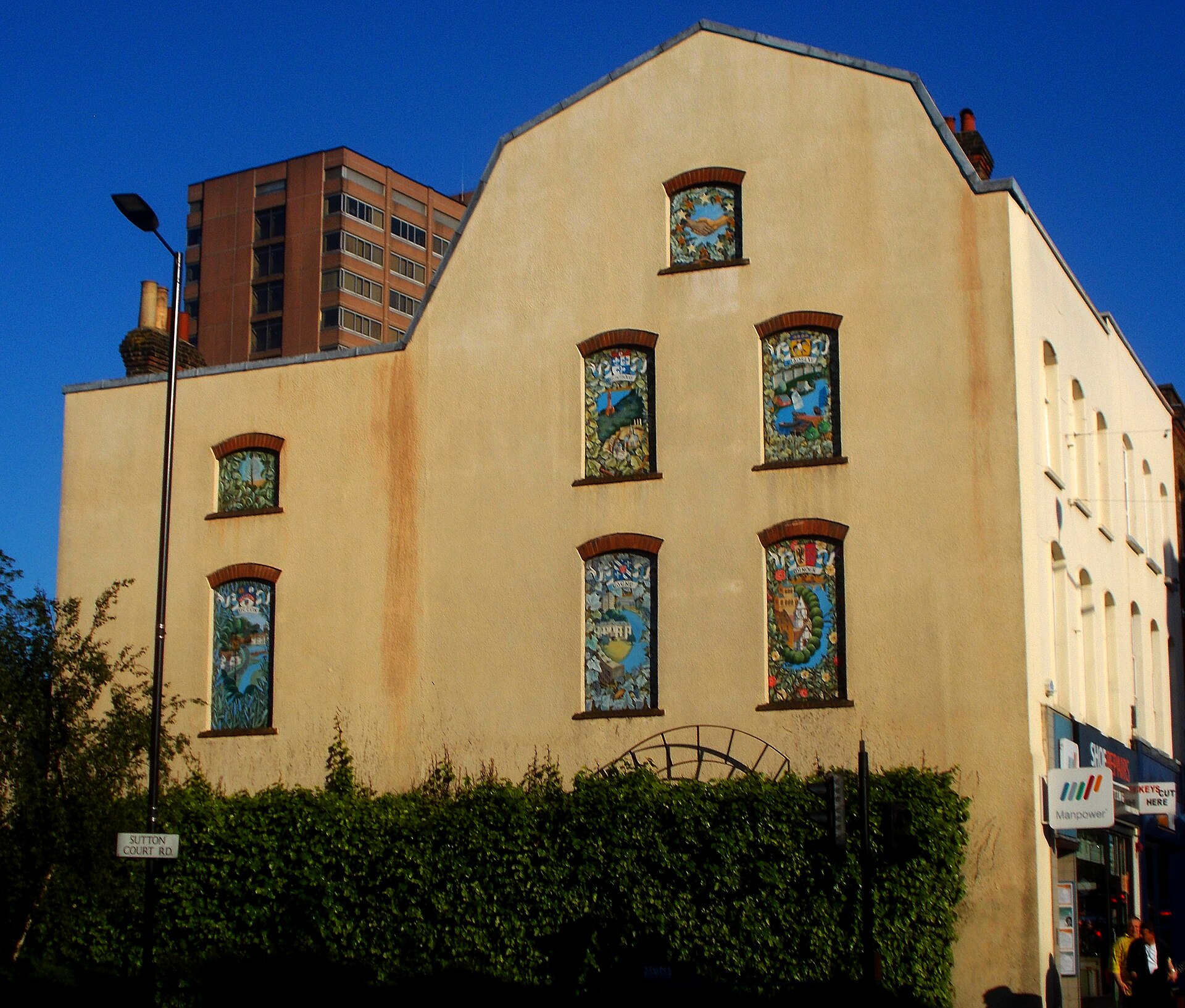
United Kingdom · wikidata.org
These seven panels are said to be for each of the seven towns this one is twinned with — a crest and a scrap of scenery for each. According to Wikipedia it's one of half a dozen bits of public art round the same town centre, so somebody there was on a mission at some point. I couldn't find out whose idea it was.
Erisava: Feels like something the council put up to tick a box.
Larry La Trobe by Pamela Irving, 1992
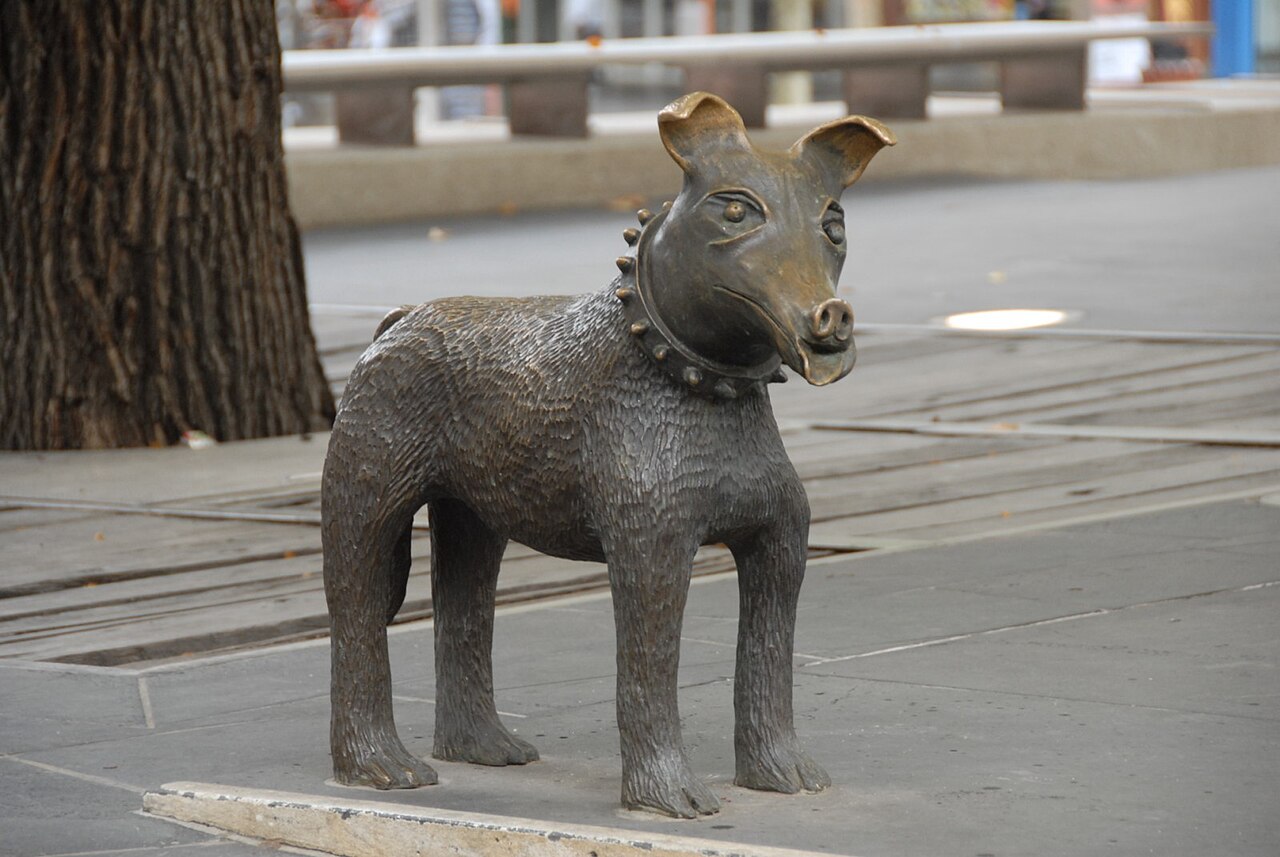
City Square · wikidata.org
As the story goes, the original version of this dog was stolen right off this same spot, and what's standing here now is the replacement. According to Wikipedia, it's also one of only two standalone sculptures in the whole square.
Erisava: Something about the ears and the snout says pig more than dog to me.
Comets by Margareta Hennix, 1997
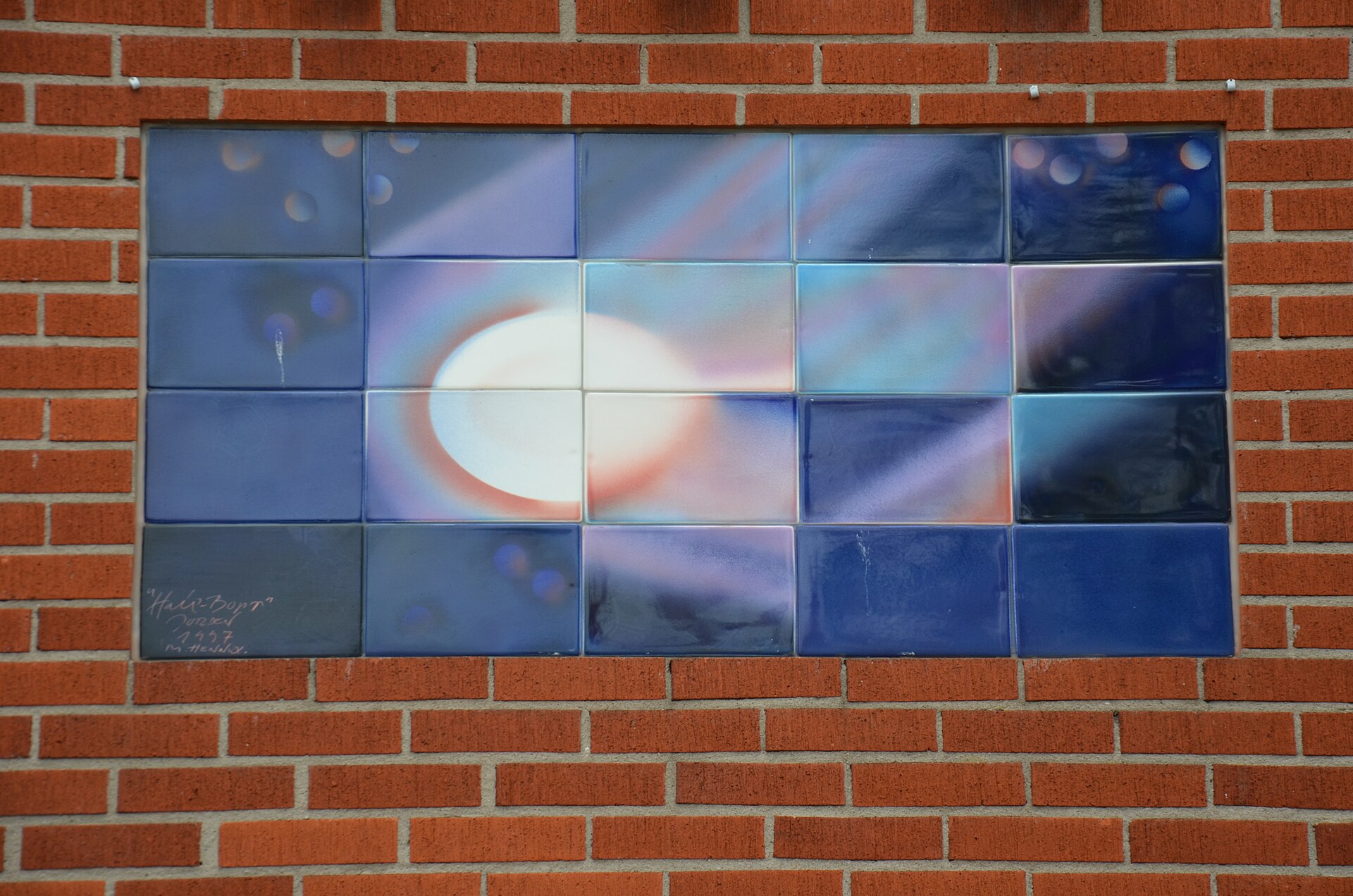
Sweden · wikidata.org
Public domain
It's glazed tile set into the brickwork rather than paint, which is presumably how it's held up outdoors this long. I couldn't find much beyond that — not even why it's on this wall and not another. If anyone knows, I'd like the story.
Erisava: What's this actually for, up there on a brick wall?
Tempel by Ulrich Rückriem, 1987
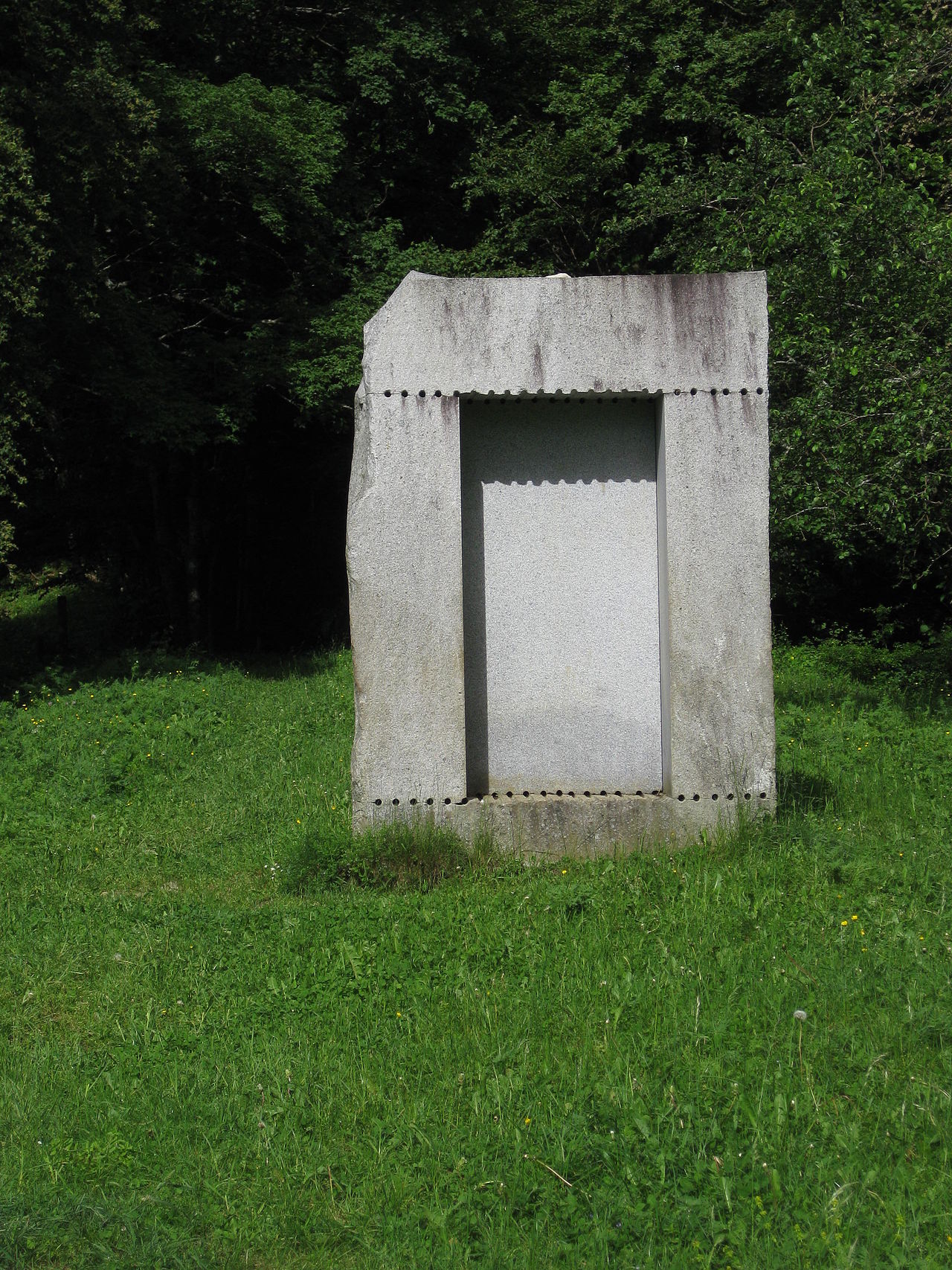
Switzerland · wikidata.org
From what I could find, the way he works is to have a big block of granite quarried and split, then stand it back up with the drill marks left in plain sight — you're meant to be able to tell it was taken apart and put together again. This one sits outdoors in Switzerland. I couldn't find out who asked for it, or why it got the name it did.
Erisava: Somebody cut a doorway into a slab and stood it in a field. I'm not sold.
Broken Chair by Daniel Berset, 1997
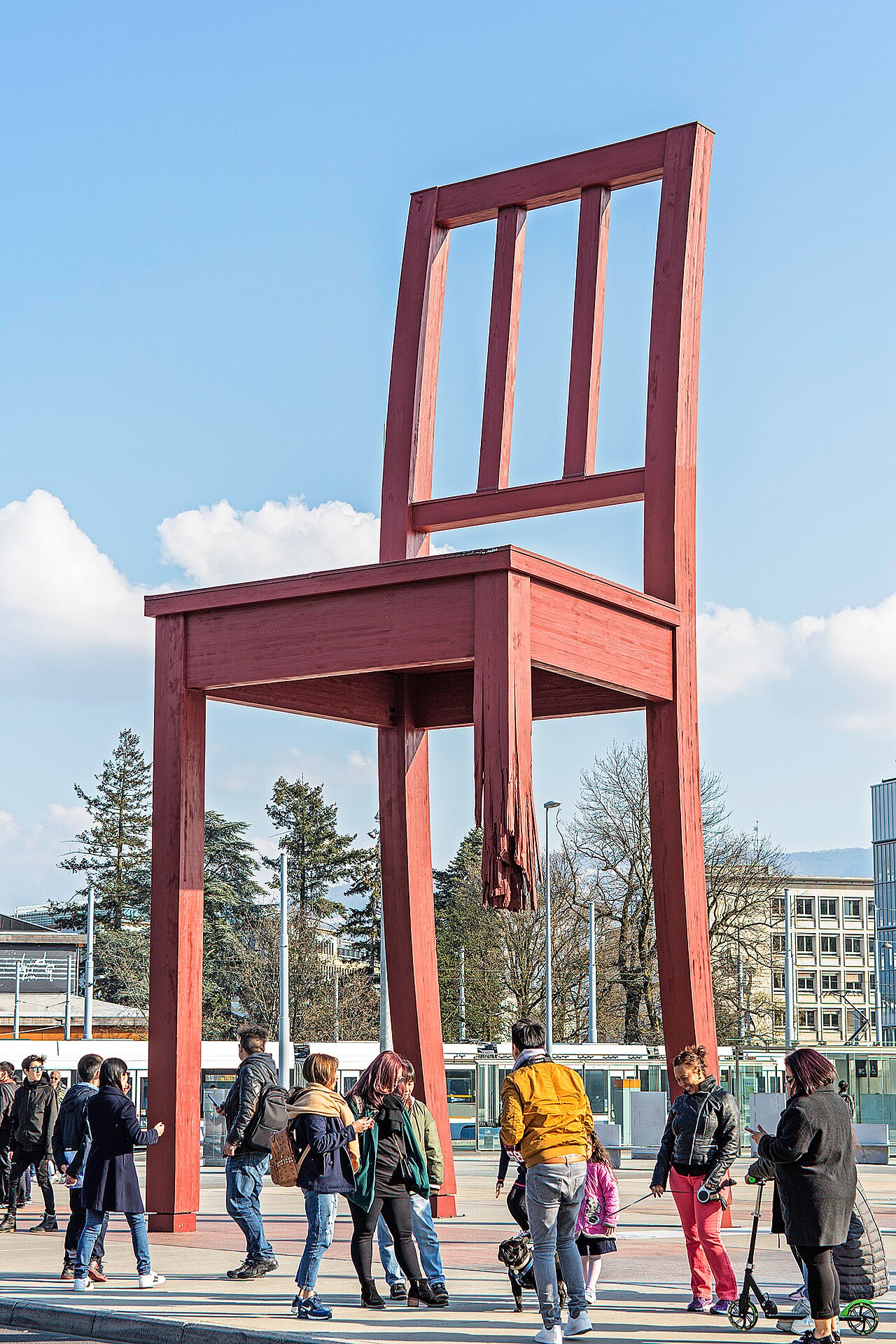
Place des Nations · wikidata.org
It's apparently 5.5 tons of wood and about 12 metres tall, built with a carpenter's help rather than just designed and handed off to a factory.
Erisava: Honestly, what does it signify?
House of the Winds by Sissel Tolaas, 1994
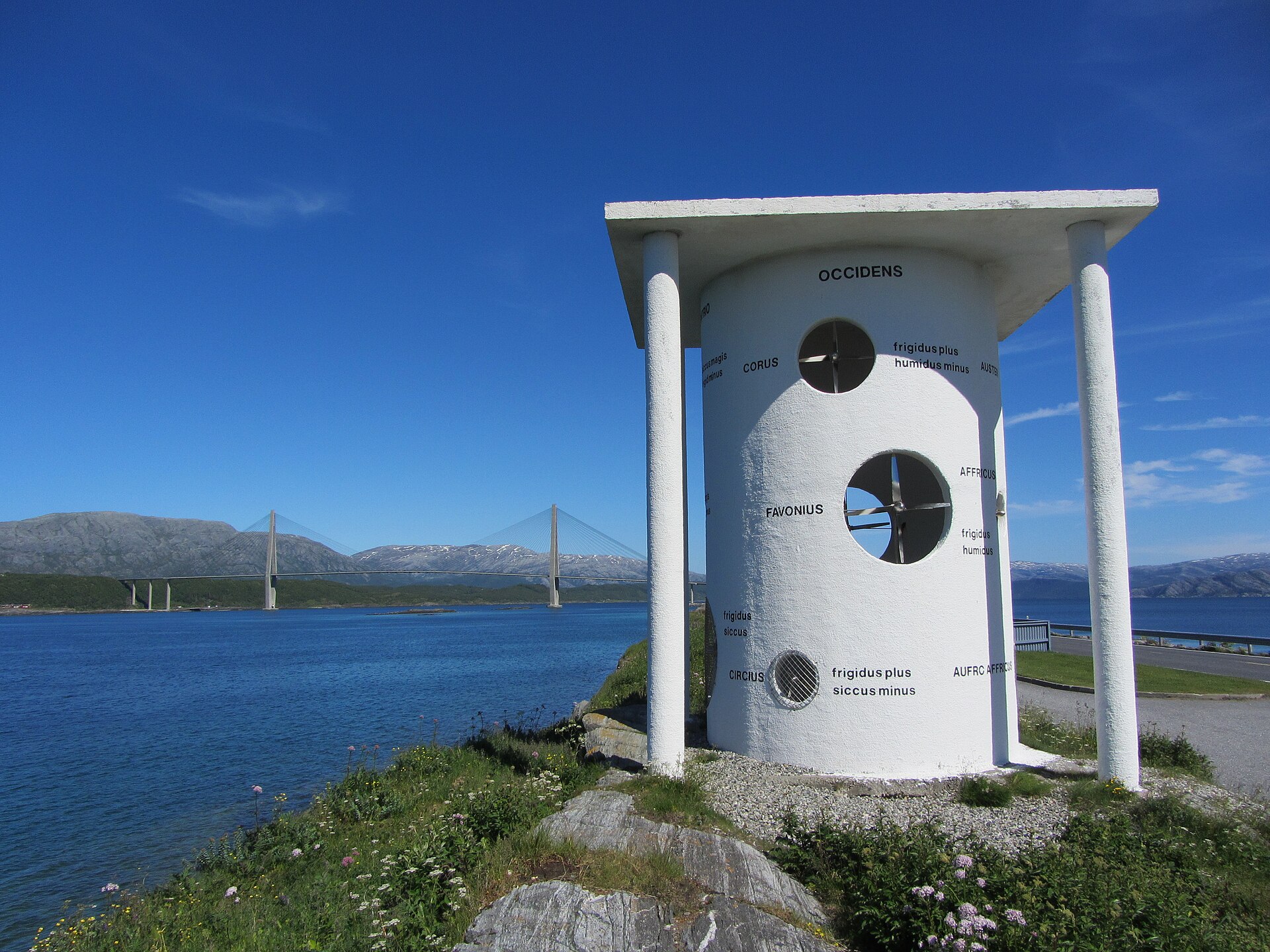
Norway · wikidata.org
This one belongs to a scheme from the nineties, from what I can tell — a Norwegian county paying for a sculpture in every one of its municipalities and putting them out in the landscape rather than in a gallery. The Latin on it is the old naming of the winds. Whether it does anything you can hear when the weather turns, I couldn't find out.
Erisava: Would you know this was art if nobody told you?
Wall of the Conferences and Exhibitions Palace of Madrid by Joan Miró, 1979
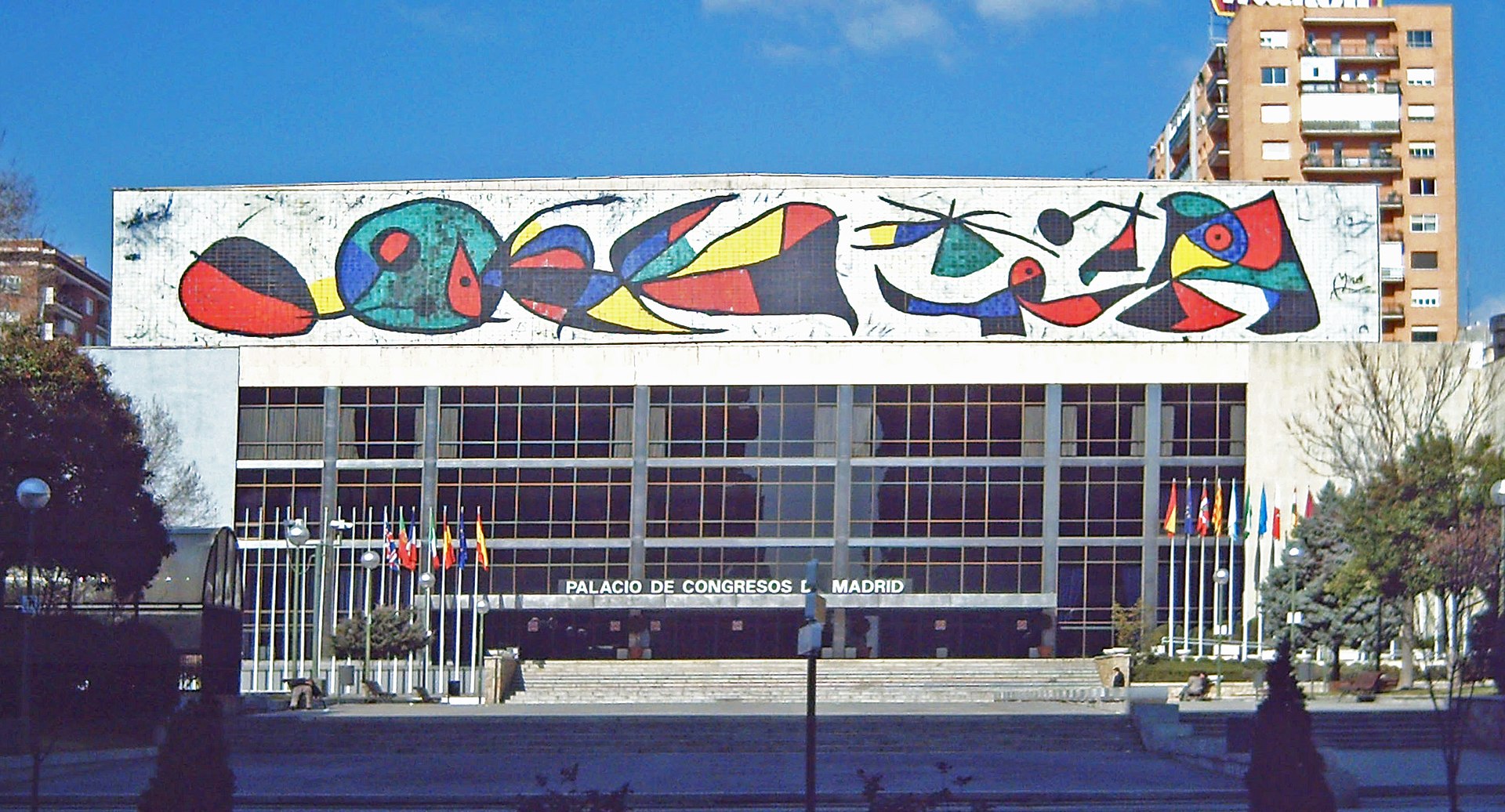
Palacio de Congresos · wikidata.org
This isn't painted at all — it's ceramic tile, fired in pieces and fixed to the front, which is how it's survived decades outdoors. I couldn't find out who decided the building needed one.
Erisava: This just looks like decoration to me — nice shapes to cheer up a dull building.
Head of Oscar Wilde by Eduardo Paolozzi, 1998
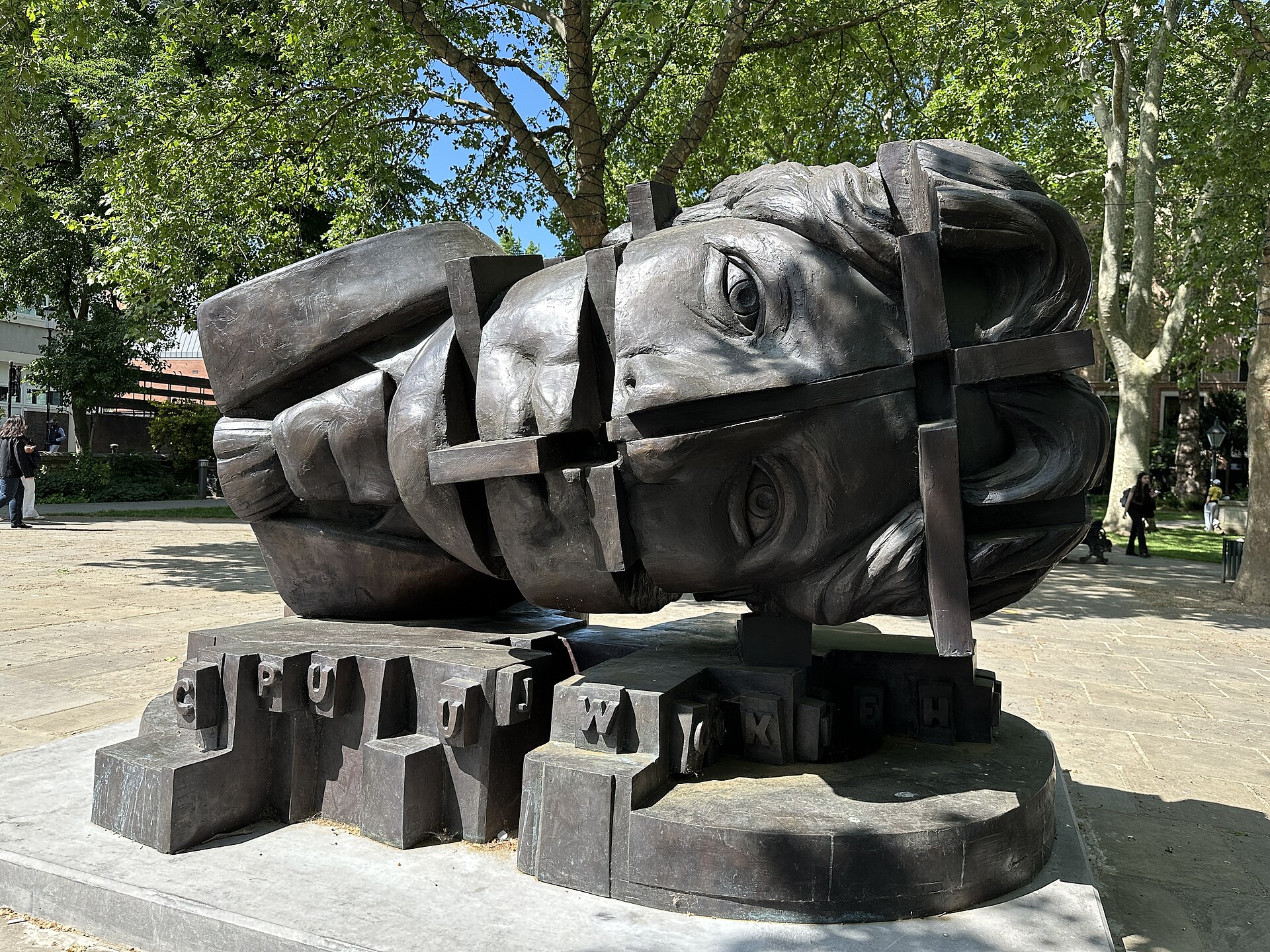
United Kingdom · wikidata.org
Apparently he sculpted this one back in the 1990s but it never got cast until 2024, using a small maquette he'd given years earlier to someone who lived nearby. When it finally went up, the story got messier — a descendant of the writer it depicts called it 'hideous' in the press. Not everyone locally seems thrilled either.
Erisava: Why does this head look sliced up — did something go wrong?
Civilização Mineira by Candido Portinari, 1959
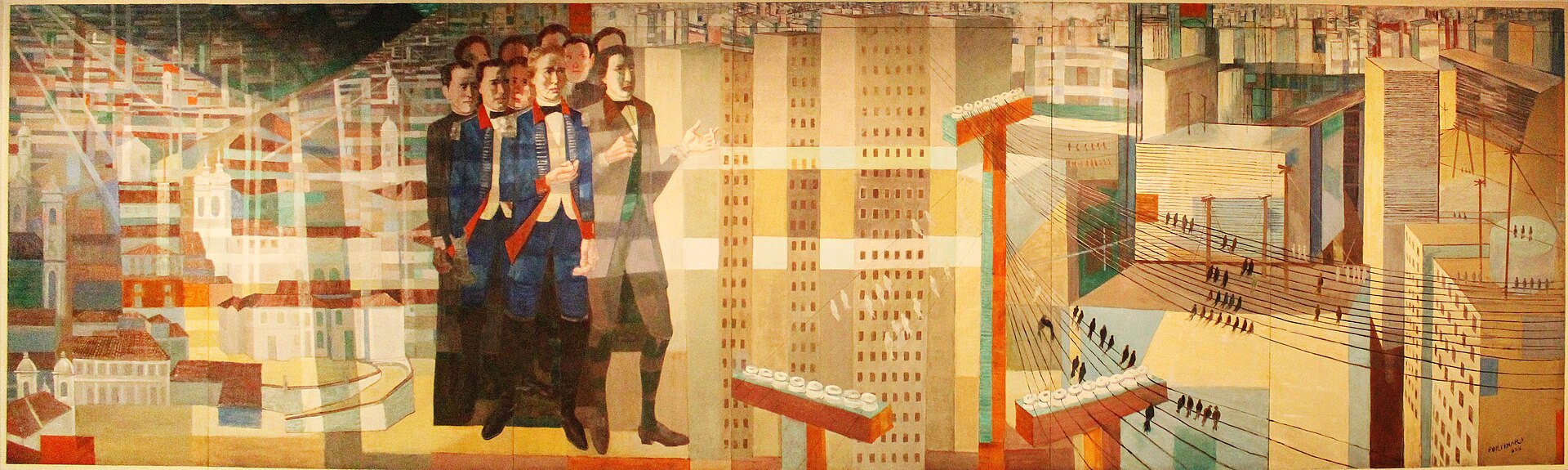
Palácio dos Despachos (Minas Gerais) · wikidata.org
They say he painted a lot of these big public murals around Brazil — I couldn't track down the specific story behind this one, but it hangs in a government building in Minas Gerais.
Erisava: Is this supposed to be old Brazil or new Brazil crowding it out?
Piscator by Eduardo Paolozzi, 1980
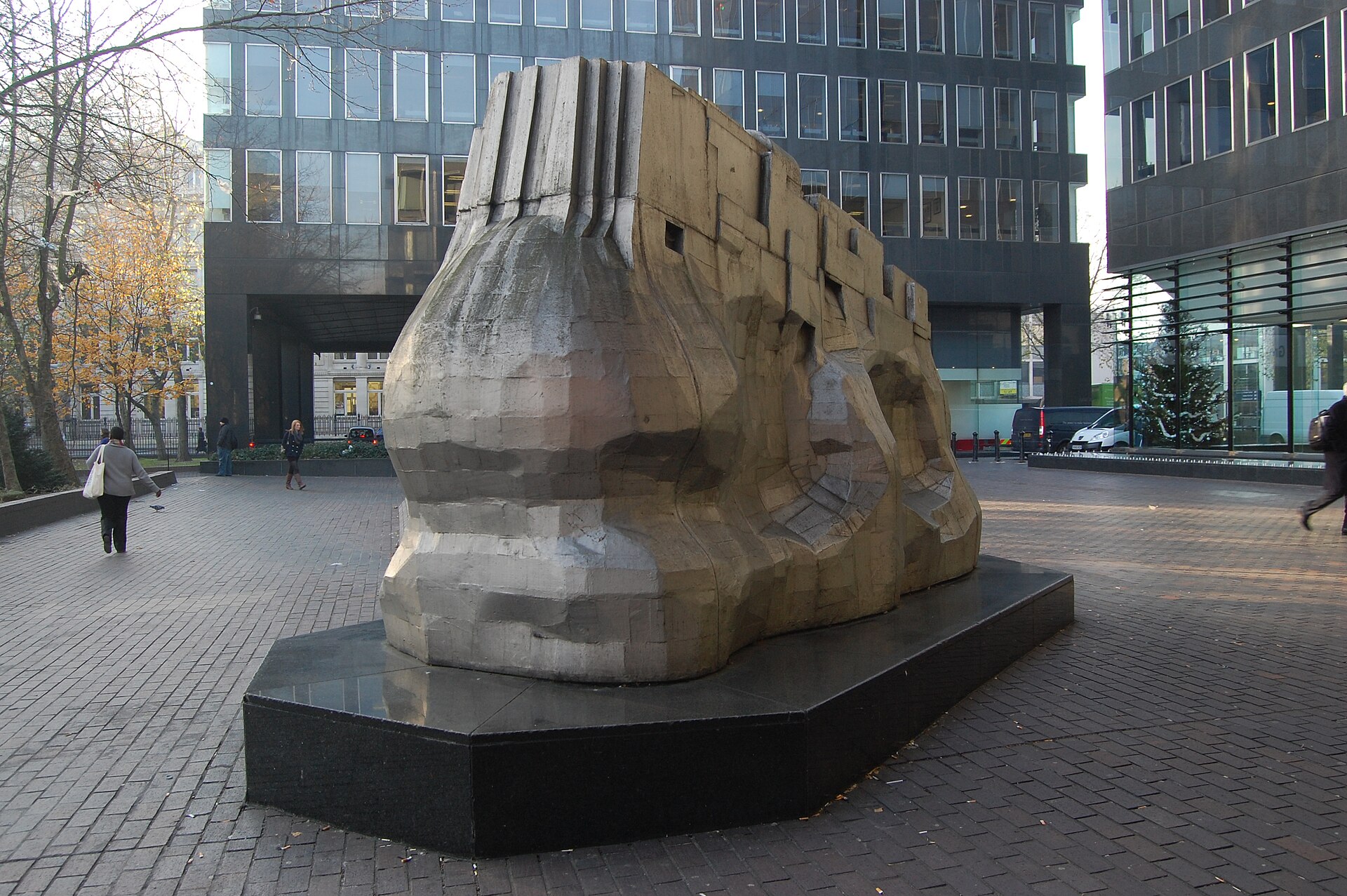
Euston Square · wikidata.org
According to what I've picked up, Paolozzi was part of the London scene often credited with helping Pop art get going in the 1950s, years before Warhol picked up the idea over in the US. By the time he made this one, he'd moved into these heavy, machine-part-looking bronzes — a shift from collage to hard metal that a lot of the writing treats as its own turning point for him.
Erisava: This looks more like weathered rock than something somebody built.
Reclining Figure: Angles by Henry Moore, 1979
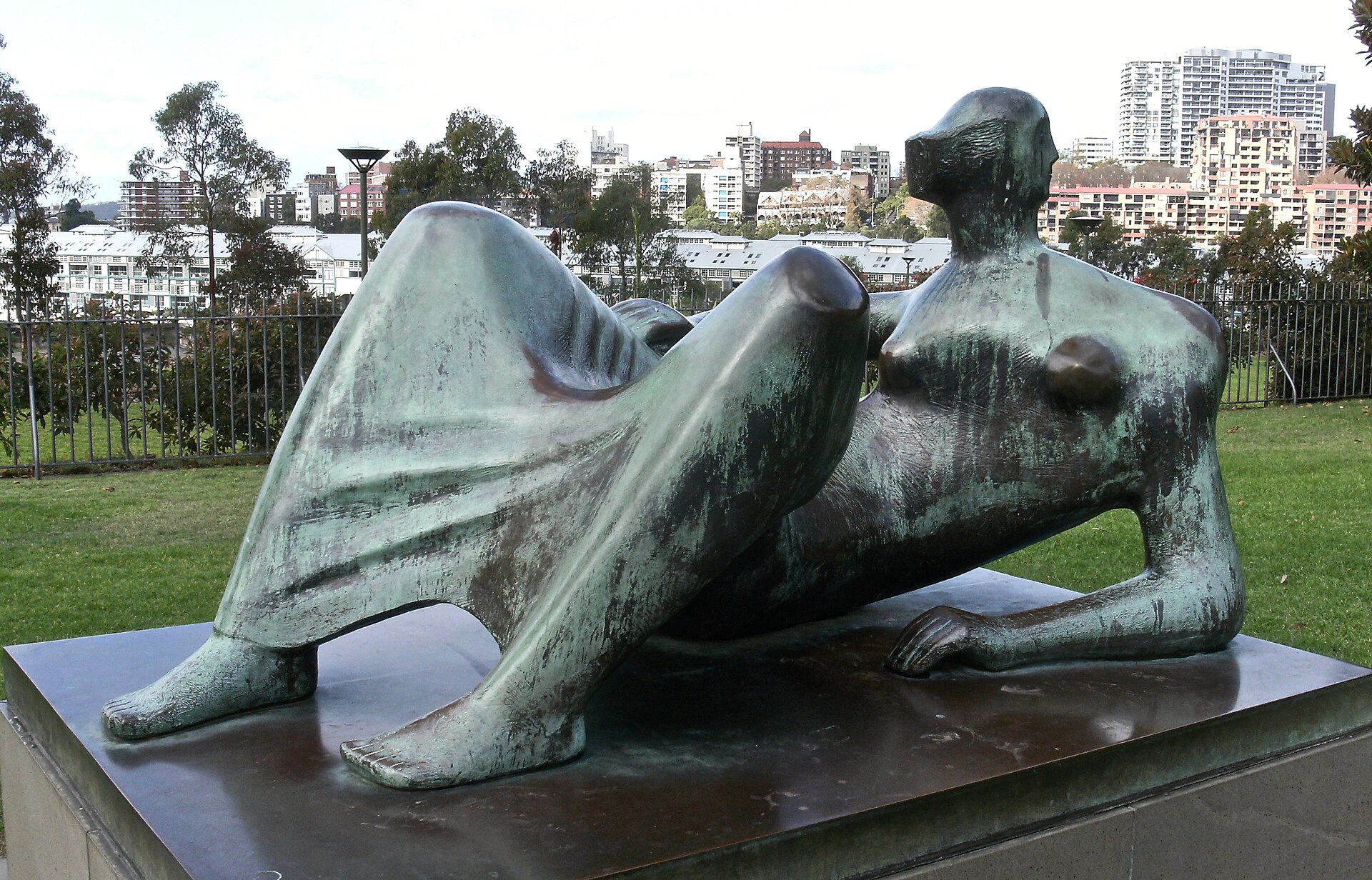
He kept going back to the same reclining woman for something like fifty years — dozens of versions, and most of them cast more than once, which is why so many cities ended up with one. Apparently this is one of the late ones, made when he was in his eighties and running what was effectively a small factory.
Erisava: That's a lot of bronze spent on someone lying down.
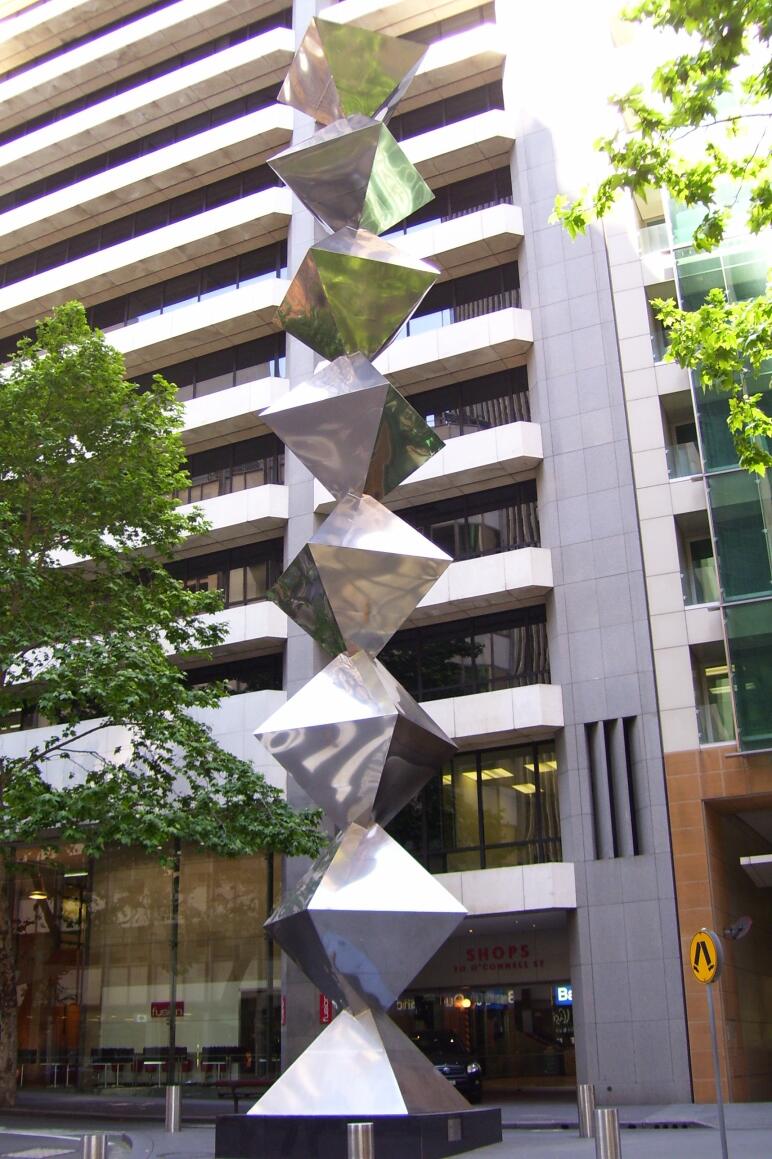
Pyramid Tower by Bert Flugelman, 1981
Australia · wikidata.org
Stacked steel like this was a bit of a signature of his — there are related ones standing in a few Australian cities, from what I can find. Not much else about this particular one.
Erisava: This looks like it's here to make the office block behind it look important.
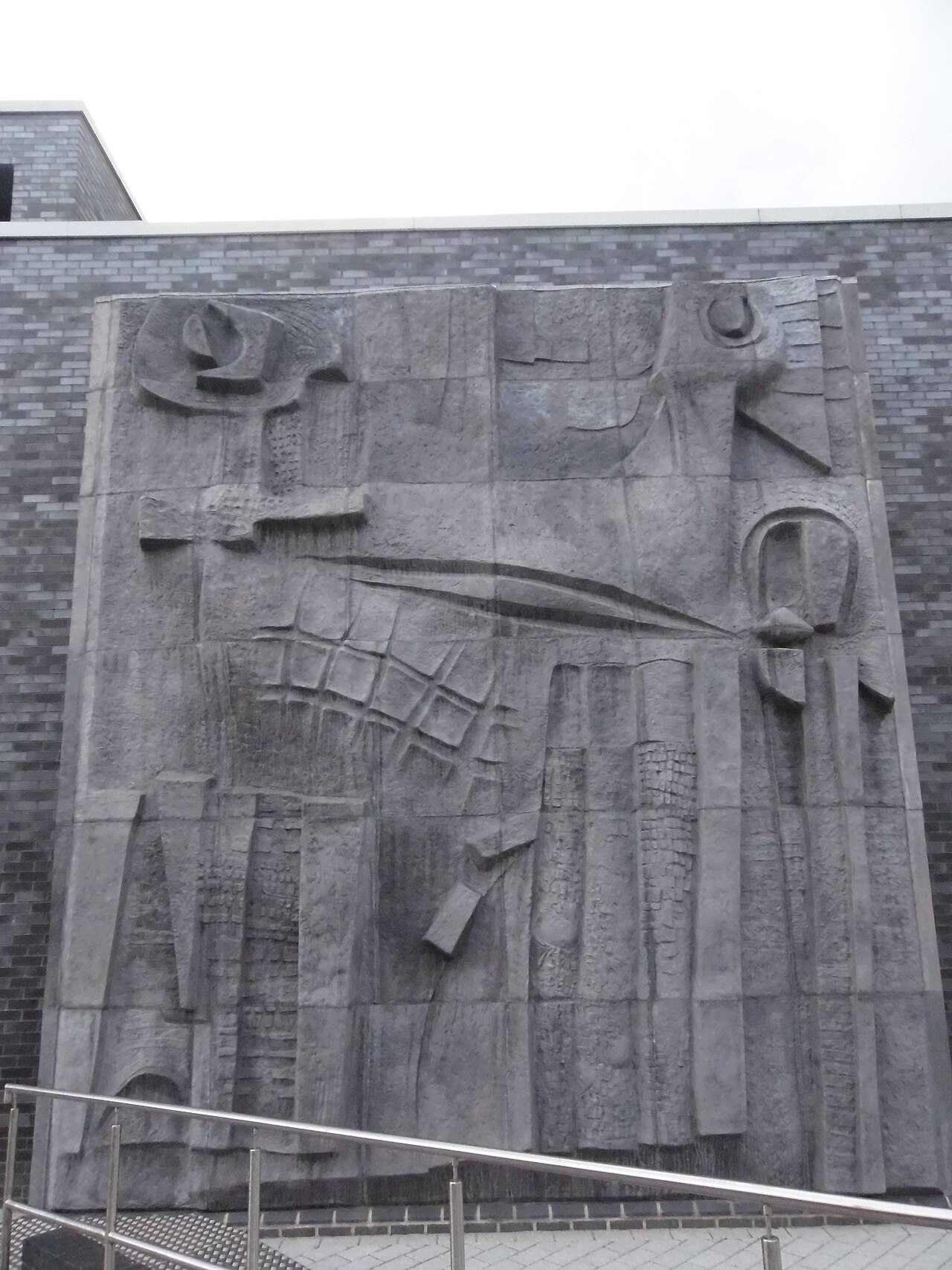
Hubert Dalwood Mural Relief by Hubert Dalwood, 1959
Stage@Leeds · wikidata.org
Not much comes up searching for this one — it's just been fixed to that wall a long while. Judging by some other pictures it's huge.
Erisava: Wondering how much confusion it has caused for the passers by?
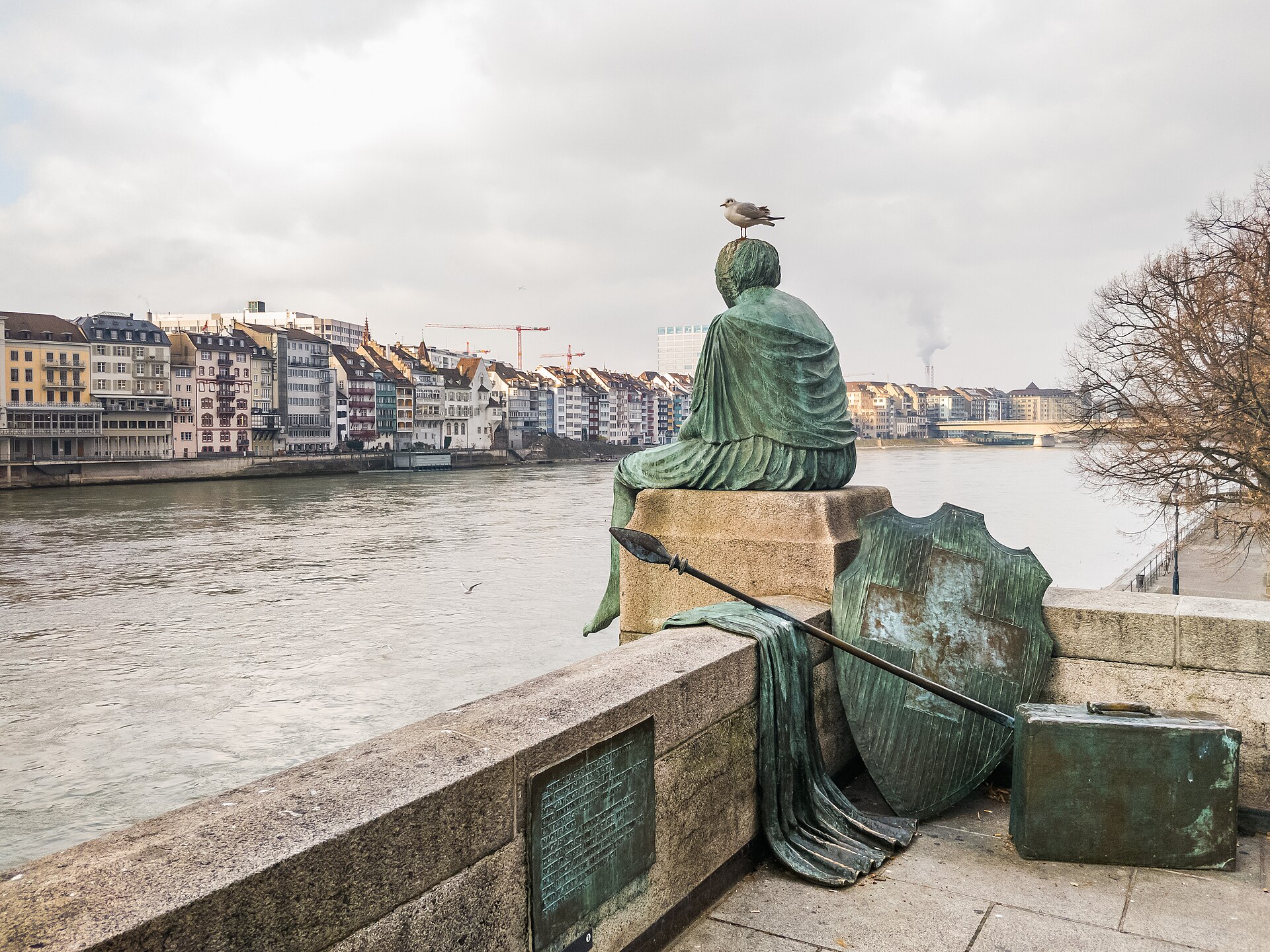
Helvetia on a journey by Bettina Eichin, 1980
Kleinbasel · wikidata.org
Helvetia is the woman who turns up on Swiss coins — a stand-in for the country, like Britannia. The idea here, from what I've read, is that she's climbed down off the coin and gone travelling: shield set aside, spear down, suitcase packed. You'll come across her on the embankment in Kleinbasel.
Erisava: Would you stop for this if you didn't already know who she is?
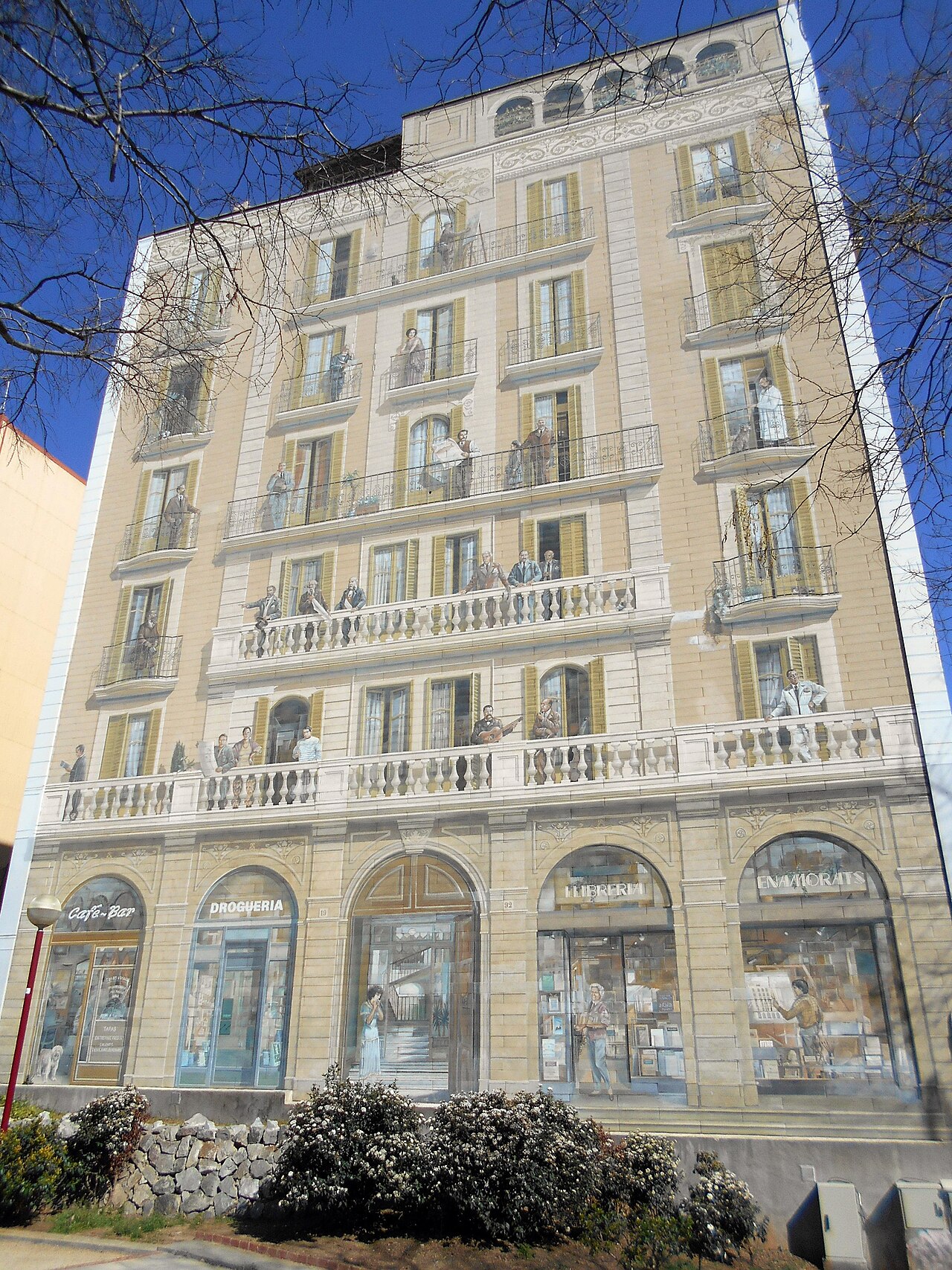
Balcons de Barcelona by CitéCréation, 1992
Spain · wikidata.org
The outfit behind this has apparently done hundreds of painted walls, mostly around France, and the trick is always the same: a blank gable end dressed up as a building that isn't there, with people leaning out of it. They say the figures are usually locals, or names the area is known for.
Erisava: It's a good trick. I'm not sure a good trick is enough.
Reclining Connected Forms by Henry Moore, 1969
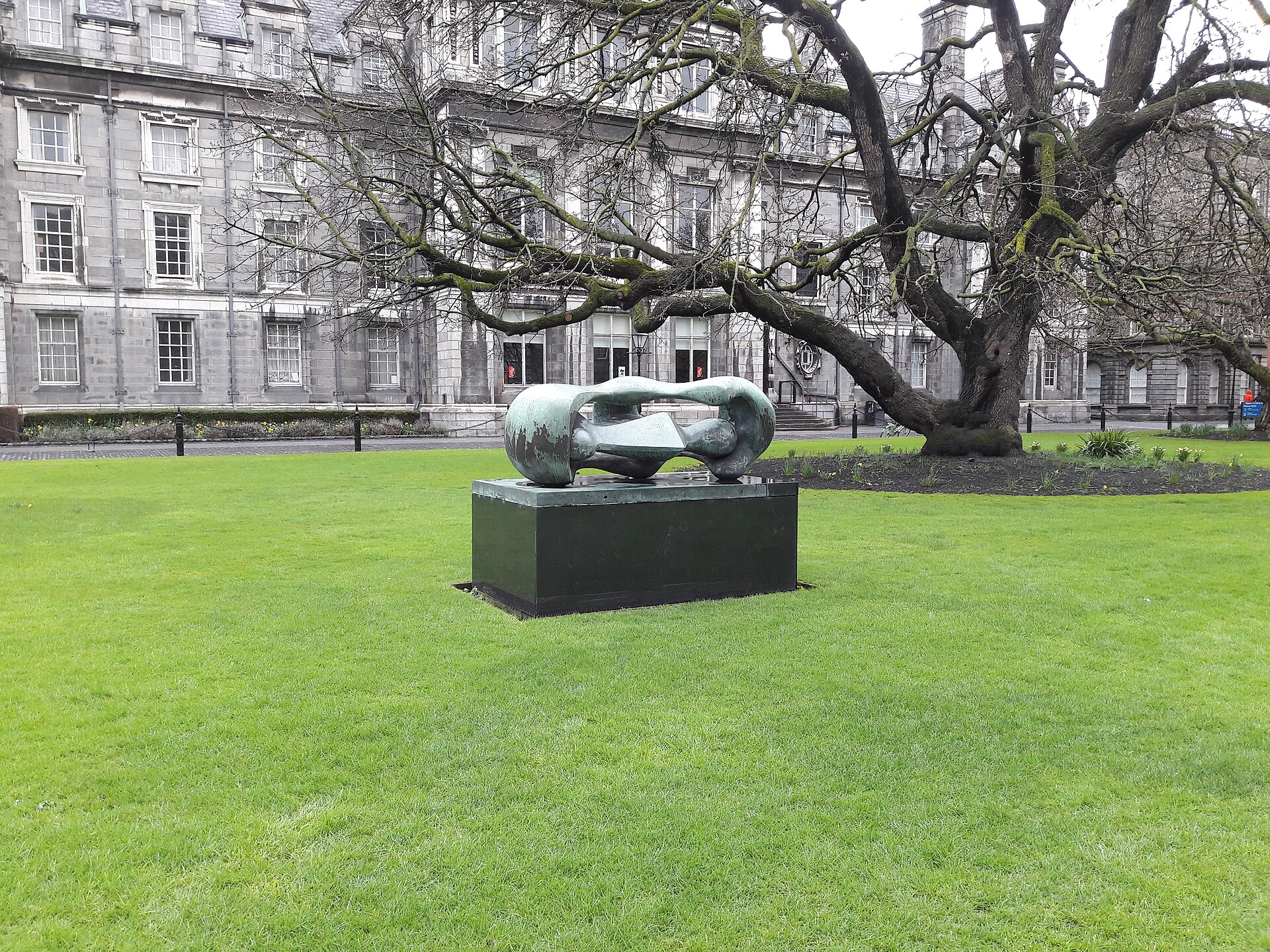
Trinity College, Dublin · wikidata.org
He made the same reclining shape over and over for something like fifty years. Apparently they were cast in editions too, so this isn't the only one of it — versions of the same thing sit in a few different countries.
Erisava: Every university seems to have one of these. I've never known why.
Espiral do Tempo by José Aurélio, 2009
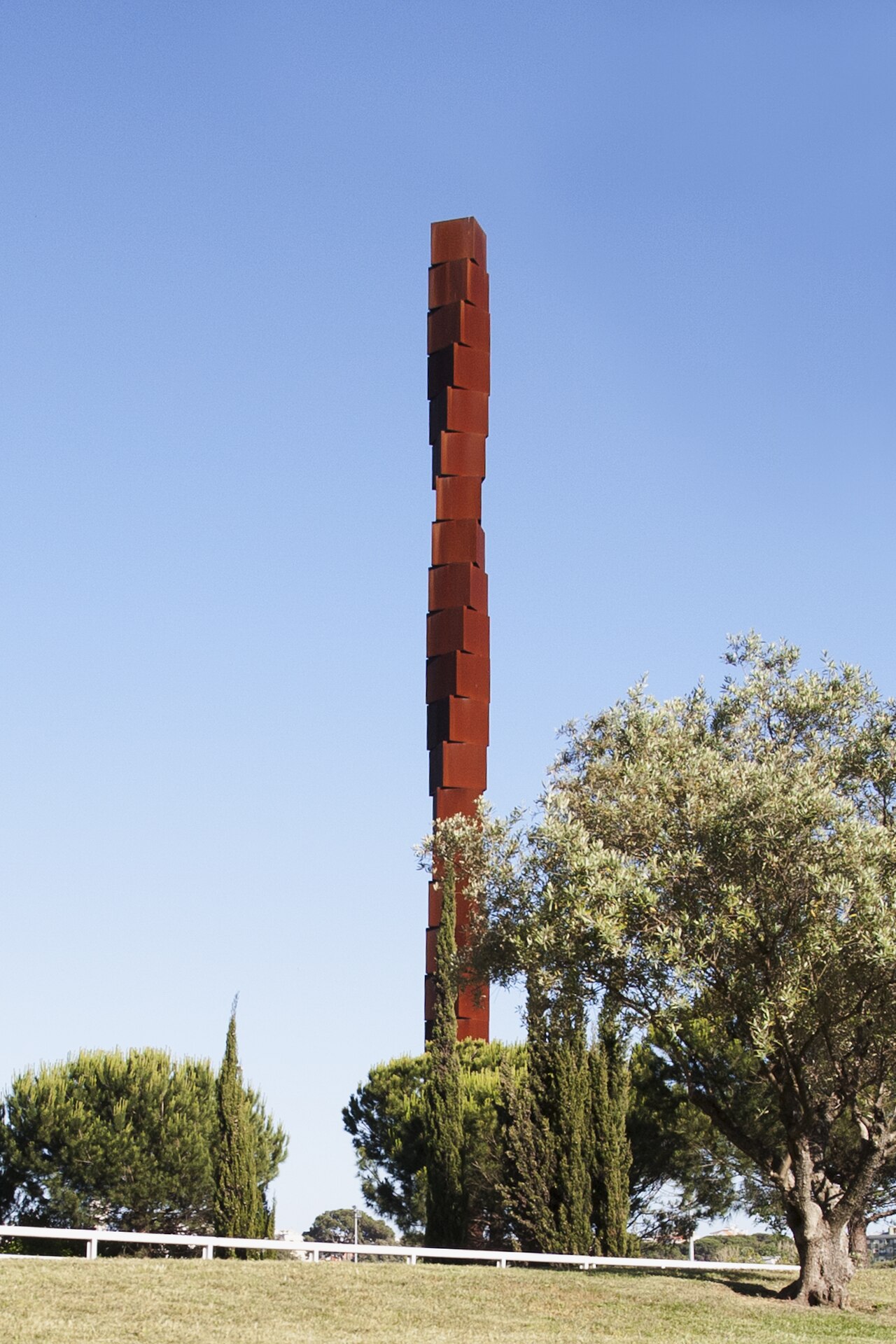
Portugal · wikidata.org
I couldn't find much backstory on this one — the title apparently translates to 'Spiral of Time,' which tracks given the twist running up the steel.
Erisava: Would you look twice at this if it weren't in a park and this tall?
A Maximis ad Minima by Eduardo Paolozzi, 1998
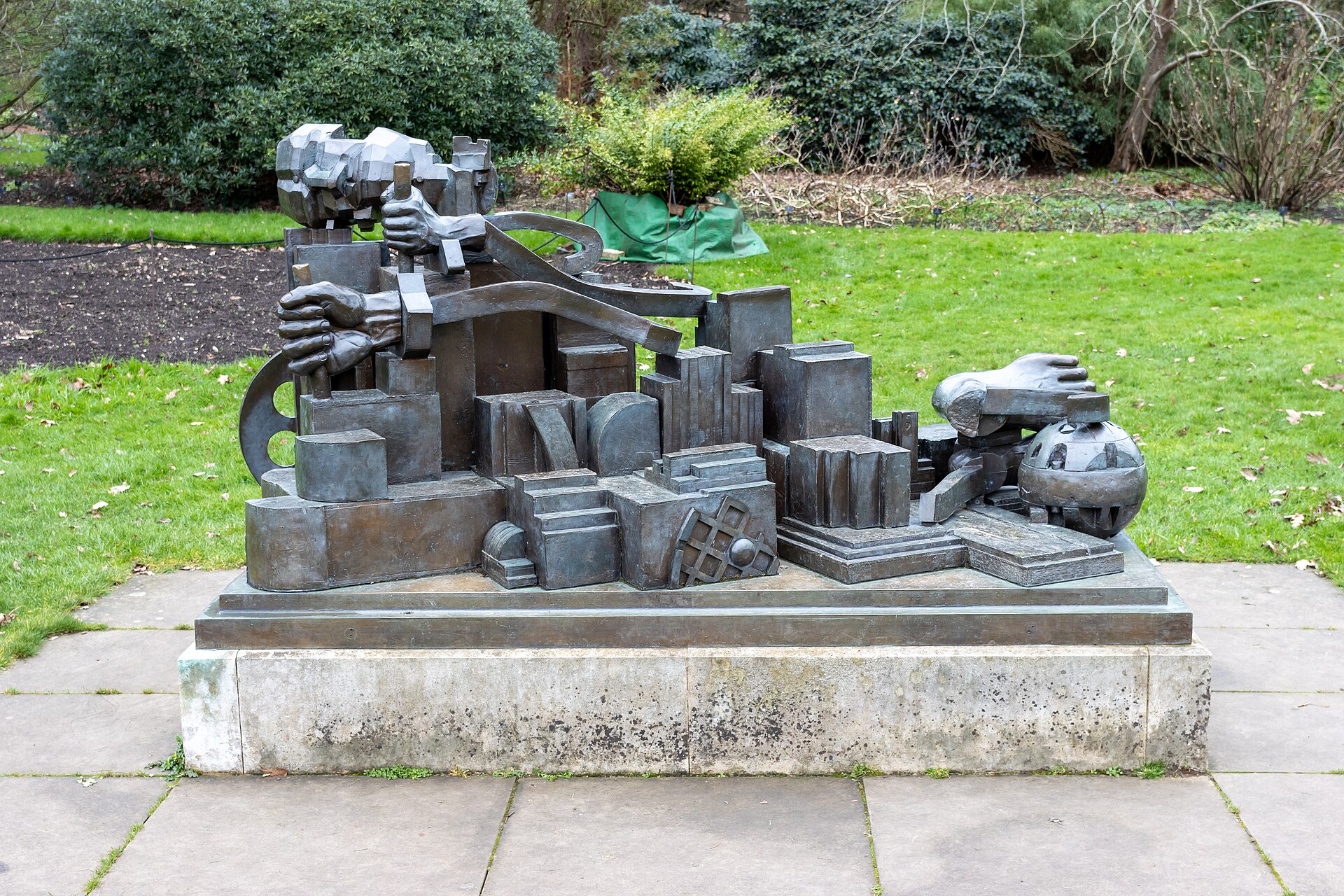
Kew Gardens · wikidata.org
The Latin title translates to something like 'from the greatest to the least' — apparently the idea was to move from huge industrial machinery down to the smallest particles of matter, all packed into one bronze. It's set right by a glasshouse full of tropical plants, an odd pairing that might be the whole point. By this stage he'd moved a long way from the collage aesthetic that got him called the godfather of Pop Art — this is all cast gears and blocky machine parts instead.
Erisava: This looks like the guts of a machine, not a sculpture.
The History of the Old Kent Road by Adam Kossowski, 1964
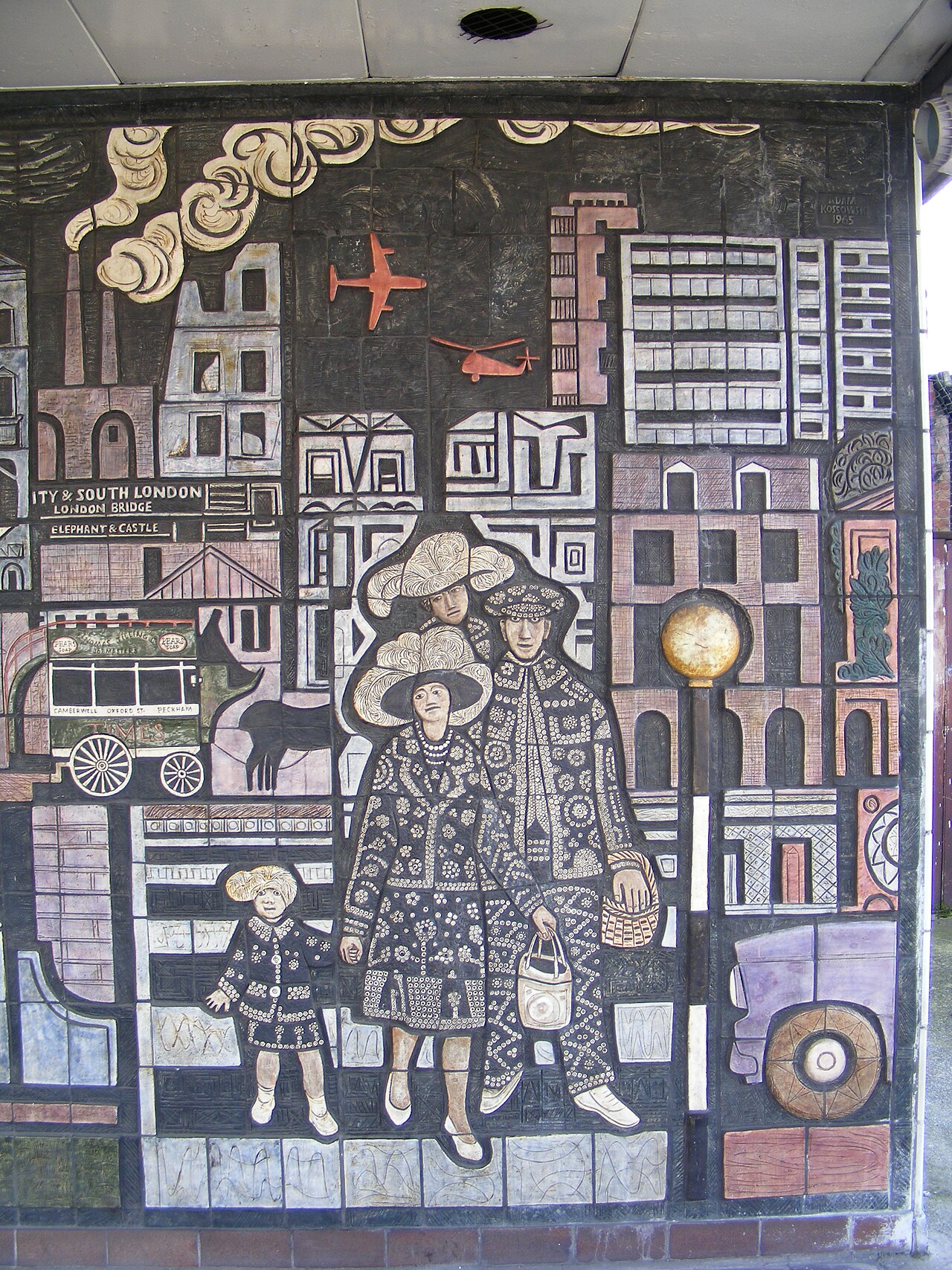
According to Wikipedia, the man who made it ended up in London after surviving a Soviet labour camp, and spent the rest of his life doing huge ceramic walls like this one. This is just one panel — the whole thing runs along what used to be the civic centre in Peckham, telling the story of one road. They say it's protected now, so it stays even though the building's changed hands.
Erisava: There's a whole family dressed in buttons. Anyone know what that's about?