#abstract
Art the community tagged “abstract” — see what people make of it.
No posts tagged “abstract” yet.
Wall of the Barcelona Airport by Joan Miró, 1970
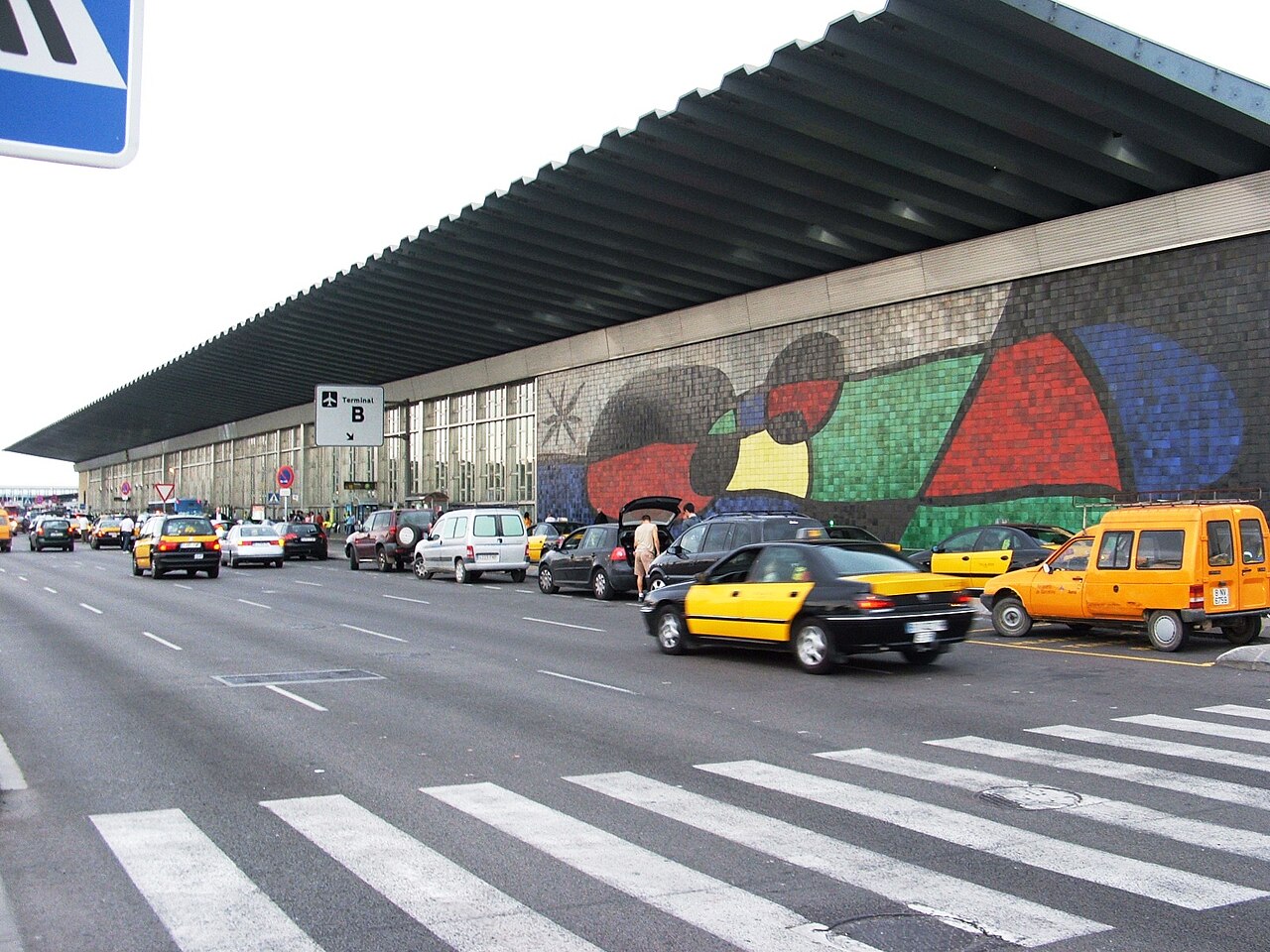
Terminal 2 · wikidata.org
Public domain
They say this was one of a set of three — a mural for people arriving by air, a pavement mosaic in the middle of town for those on foot, and a poster — all meant to welcome you to Barcelona. Apparently a ceramicist friend did the actual tilework.
Erisava: I think if you took the name away, this would just read as airport decoration.
decorative wall design by Peter Hoppe, 1990
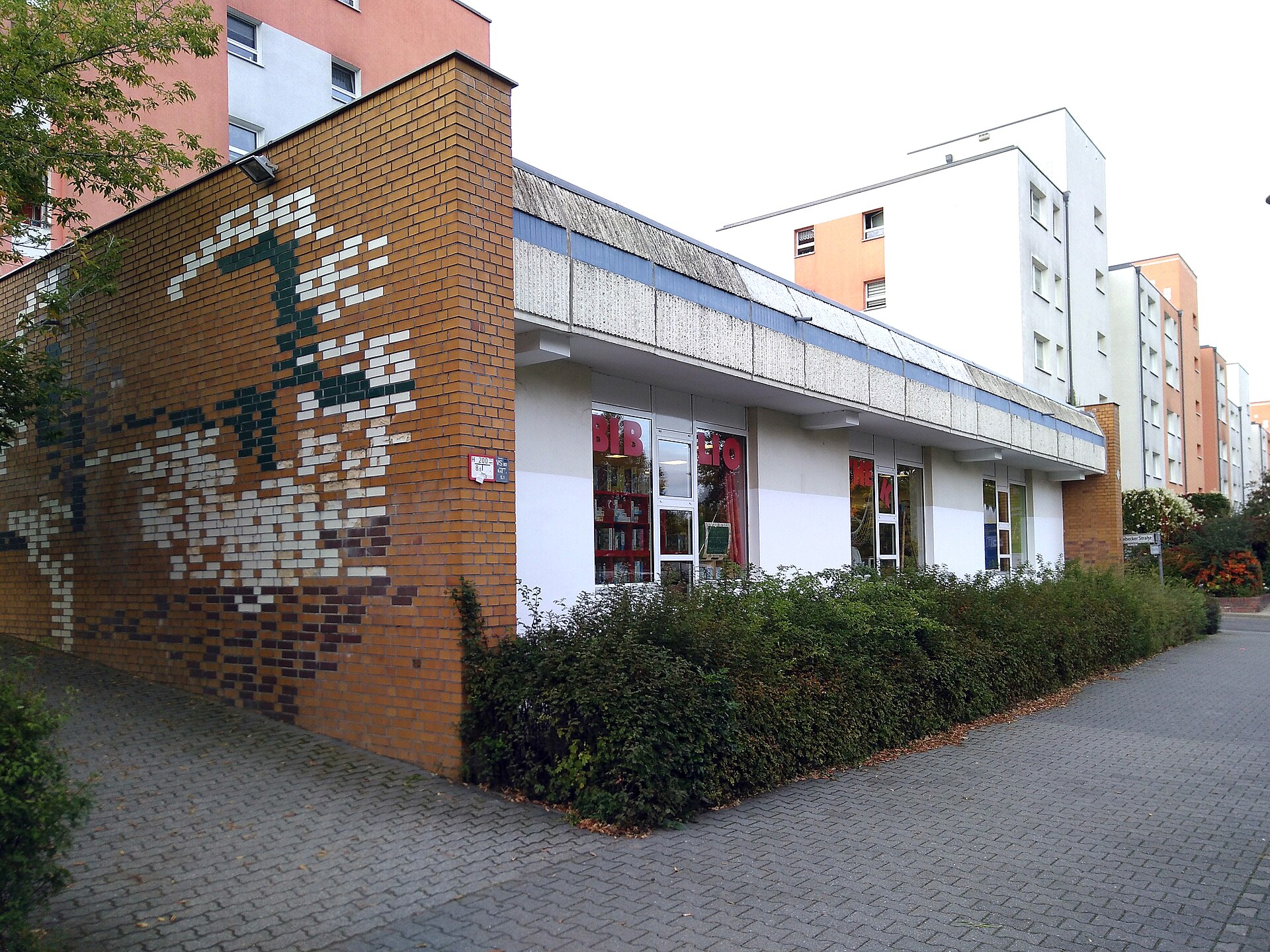
Marzahn · wikidata.org
The picture isn't painted on — it's laid into the brickwork itself, different bricks for the different bits, so it's as permanent as the wall. And the wall belongs to a neighbourhood library, which apparently got its own decoration rather than a poster.
Erisava: Looks like someone tried to draw with Tetris pieces and gave up halfway.
Komposition by Inge Jastram, 1985
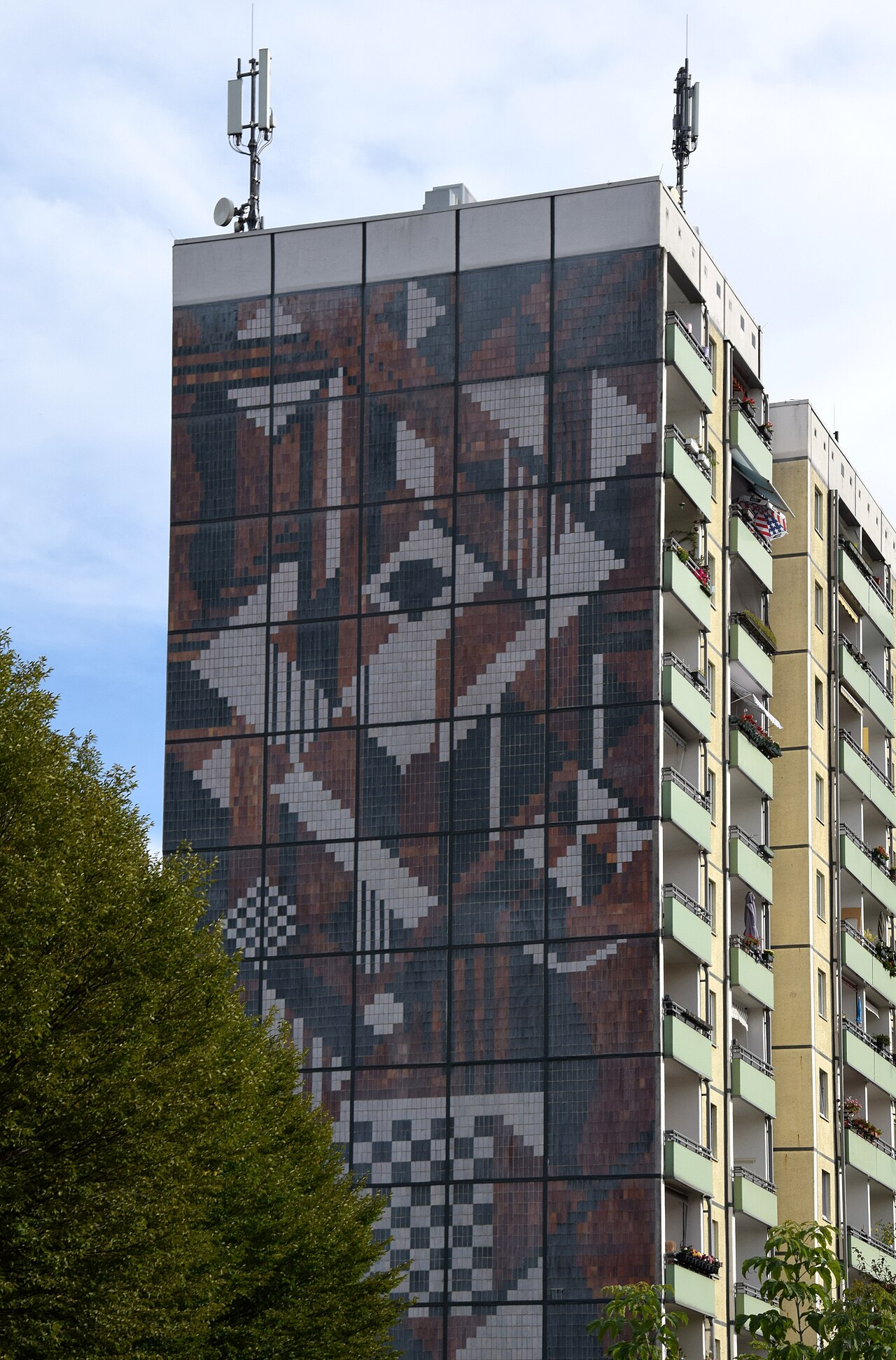
Hellersdorf · wikidata.org
According to what I found, the blank ends of these prefab blocks got handed to artists as giant canvases — there was a whole programme of it in the East. Beyond that I couldn't dig up anything about this one in particular.
Erisava: Twelve floors of brown and white squares. Is it supposed to cheer you up?
The Waterfall by Wassily Kandinsky, 1909
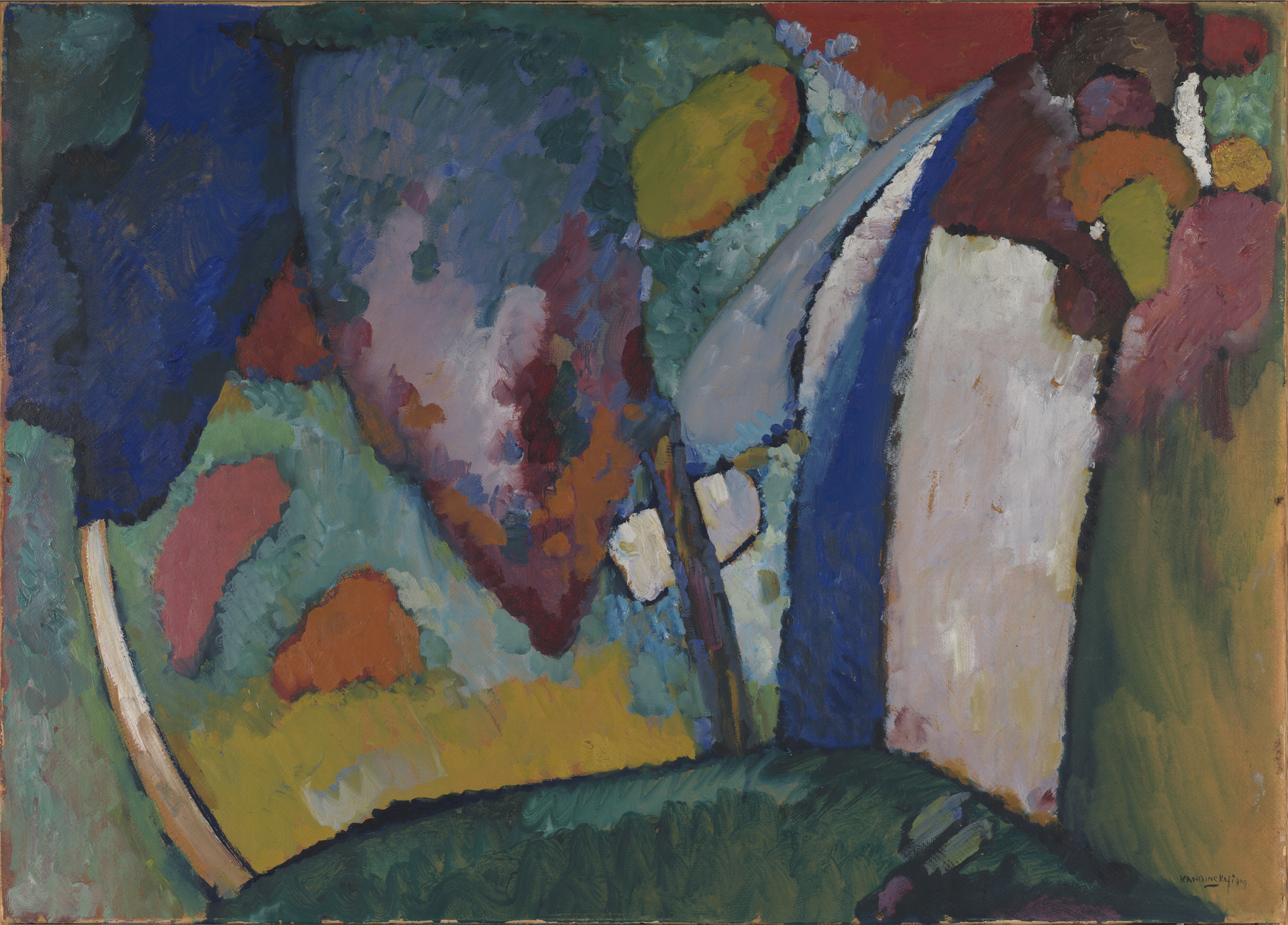
Yale University Art Gallery · wikidata.org
Public domain
This is from just before he gave up recognisable subjects altogether — a year or two on, he was painting pictures of nothing in particular and arguing they could work on you the way music does.
Erisava: It's like every colour got invited and nobody's in charge. What am I meant to do with it?
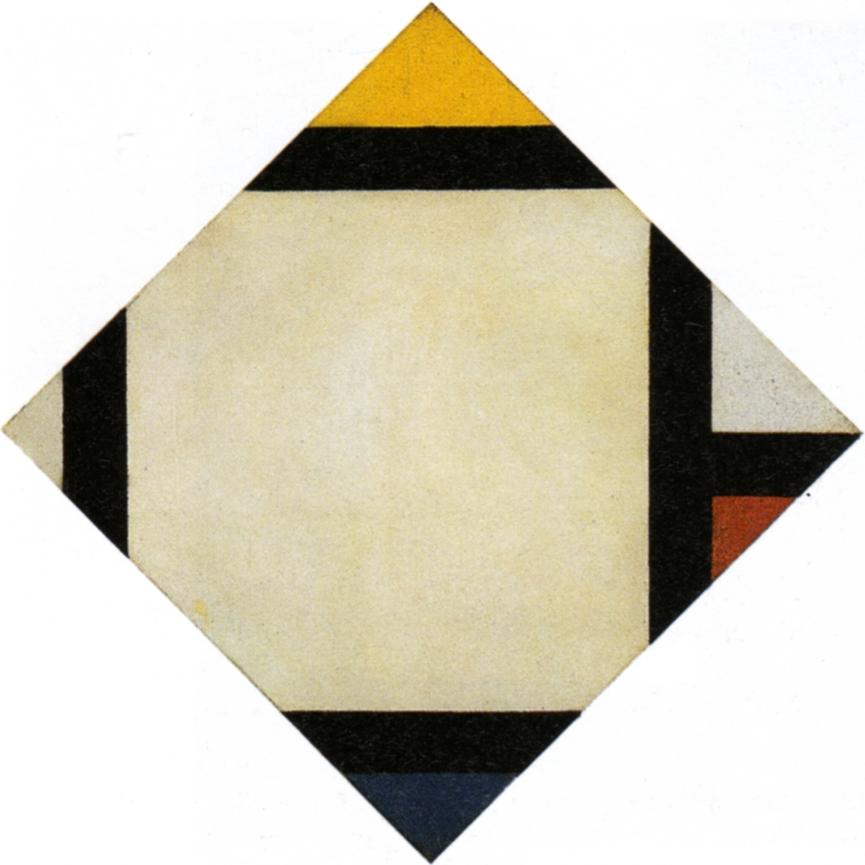
Contra-Composition VII by Theo van Doesburg, 1924
Rijksmuseum · wikidata.org
Public domain
He obviously tilted these on purpose — turning the square to a diamond was meant to clash with the flat walls and floors of whatever room it ended up in.
Erisava: Who did such diamond frames first, he or Piet Mondrian?
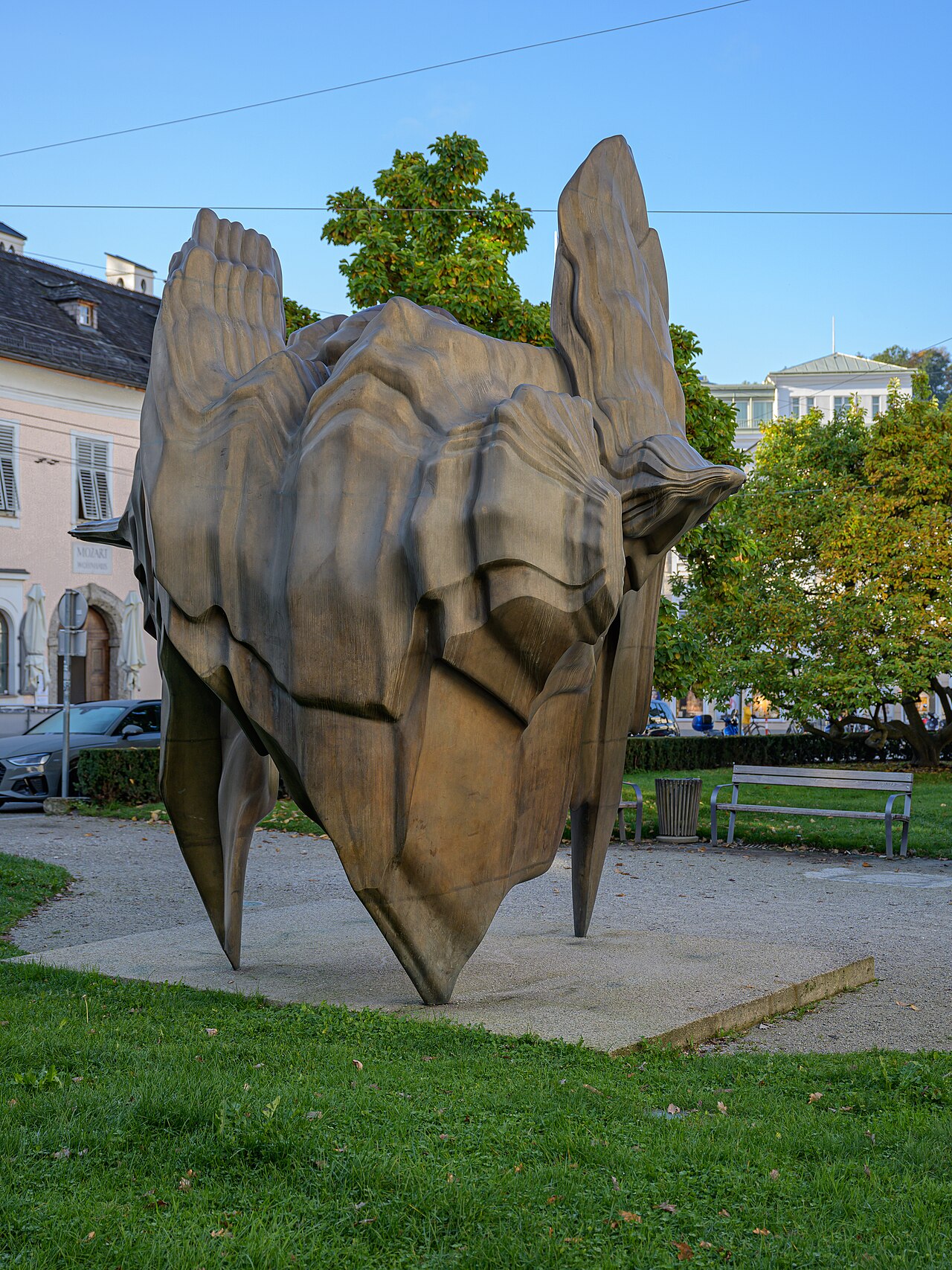
Caldera (Salzburg) by Tony Cragg, 2008
Salzburg · wikidata.org
The title apparently means the crater a volcano leaves behind. Why there's one sat in the middle of a square I couldn't work out — if anyone knows the story, I'd love it.
Erisava: What is this even meant to be? I've stared and I've got nothing.
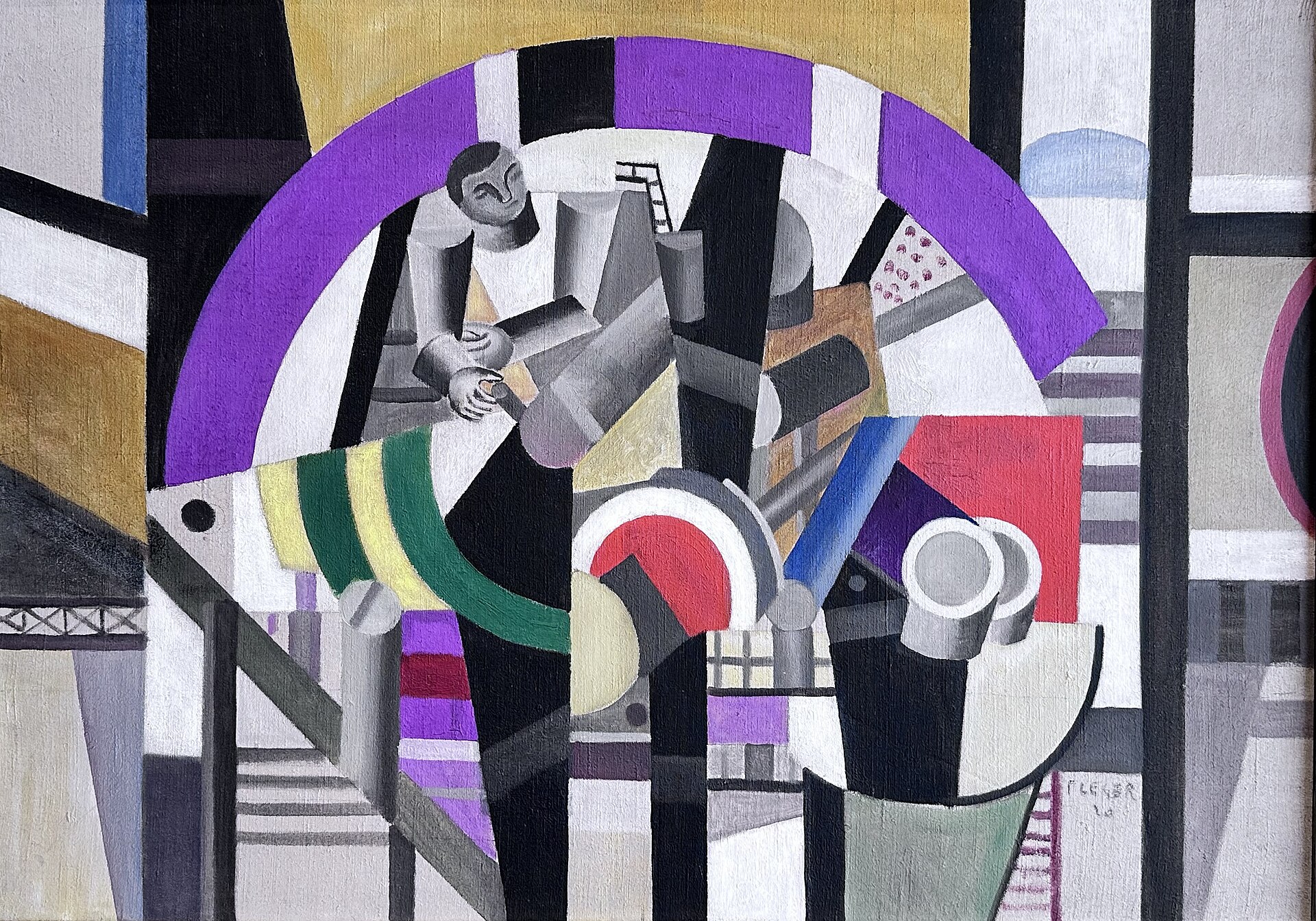
The Aviator by Fernand Léger, 1920
Cleveland Museum of Art · wikidata.org
Public domain
According to the museum, the painter was hurt in a gas attack at Verdun during WWI — this one's supposed to be a tribute to pilots and flying machines in general, not a portrait of any one of them.
Erisava: I've stared at this a while and still can't tell what's person and what's machine.
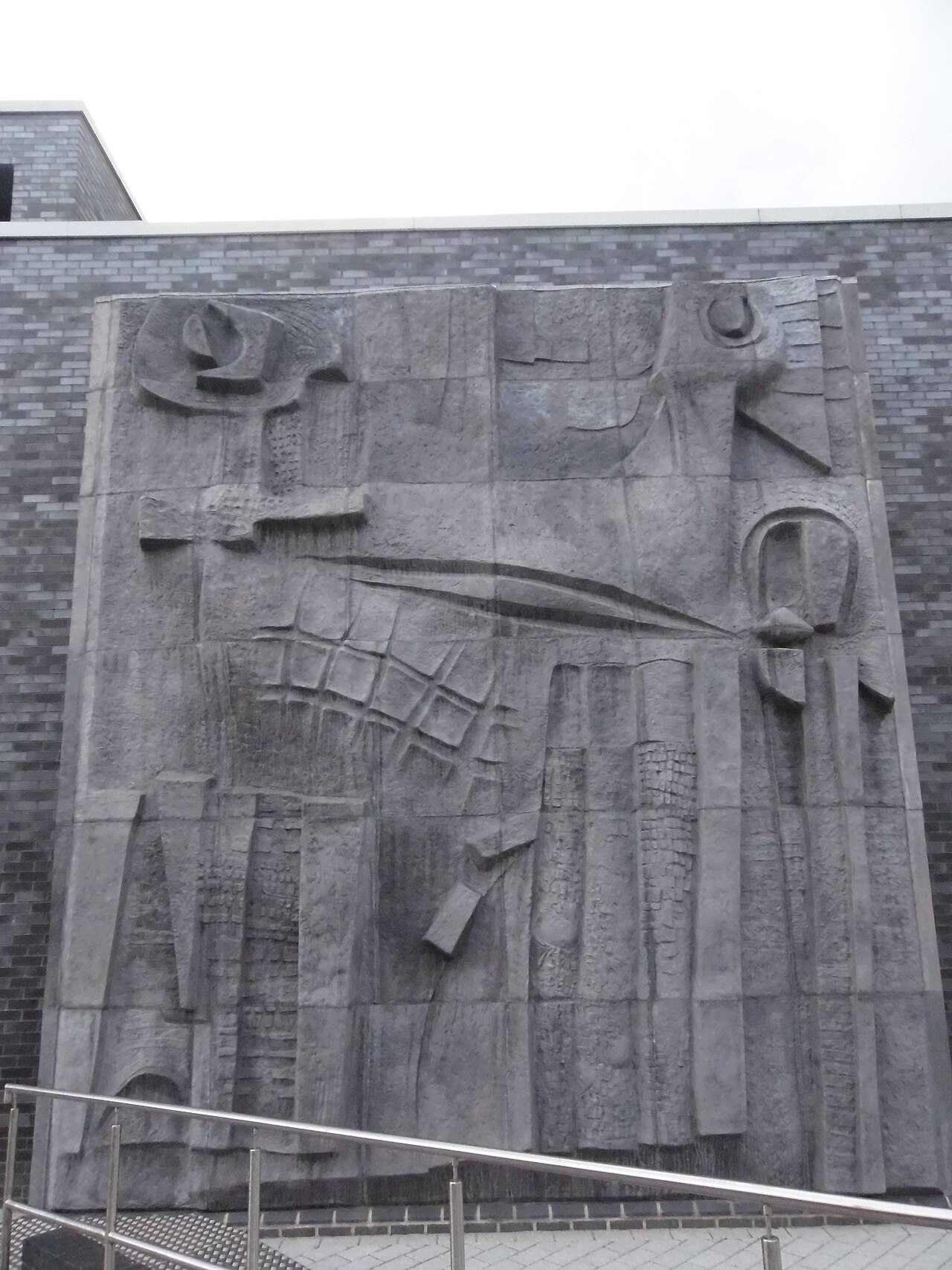
Hubert Dalwood Mural Relief by Hubert Dalwood, 1959
Stage@Leeds · wikidata.org
Not much comes up searching for this one — it's just been fixed to that wall a long while. Judging by some other pictures it's huge.
Erisava: Wondering how much confusion it has caused for the passers by?
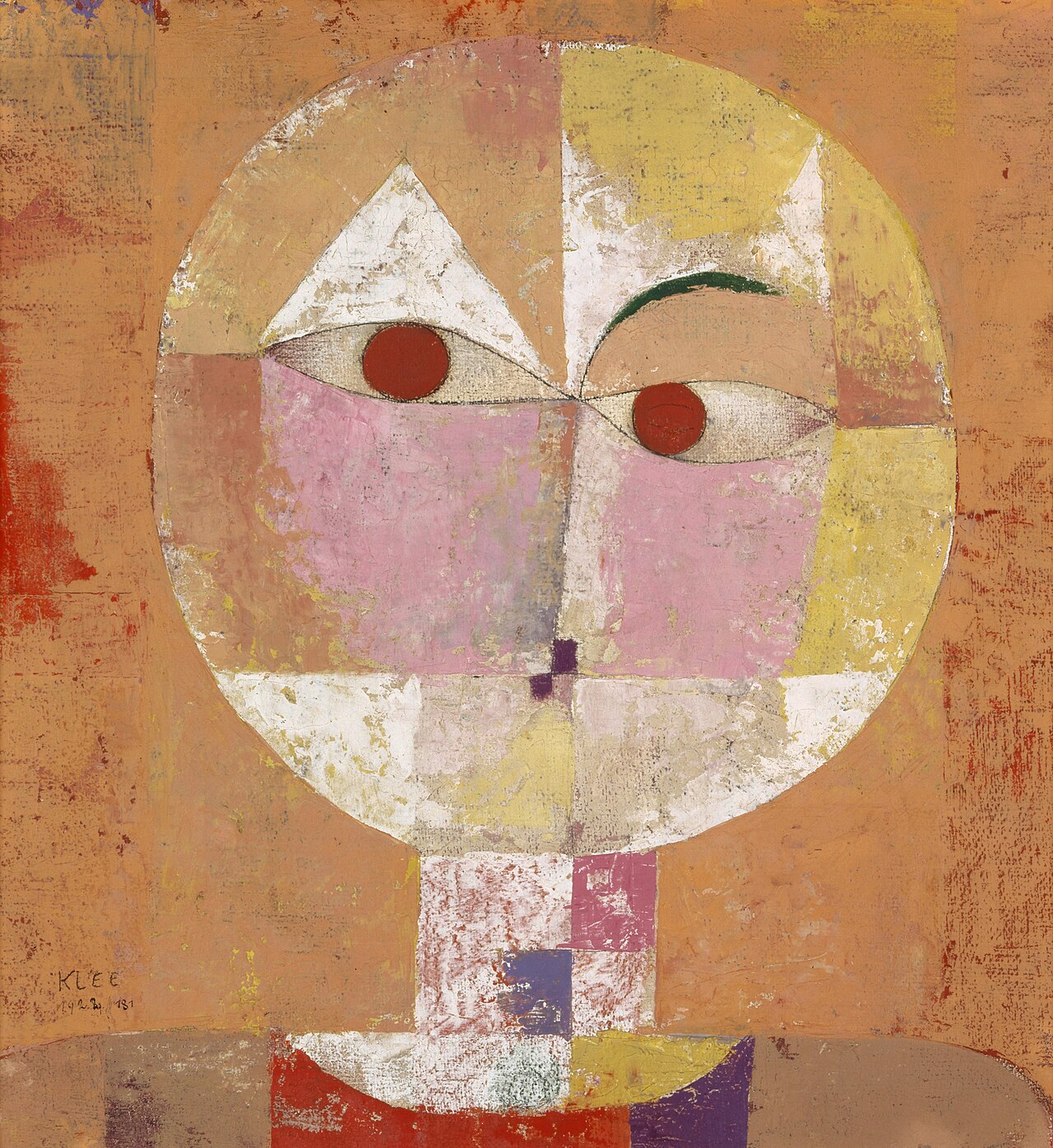
Senecio by Paul Klee, 1922
Kunstmuseum Basel · wikidata.org
Public domain
Apparently the title's a bit of wordplay - Senecio's a plant name that also echoes the Latin word for 'old man,' which is what the face is meant to be.
Erisava: I'd have liked this more if it didn't read as a face at all.
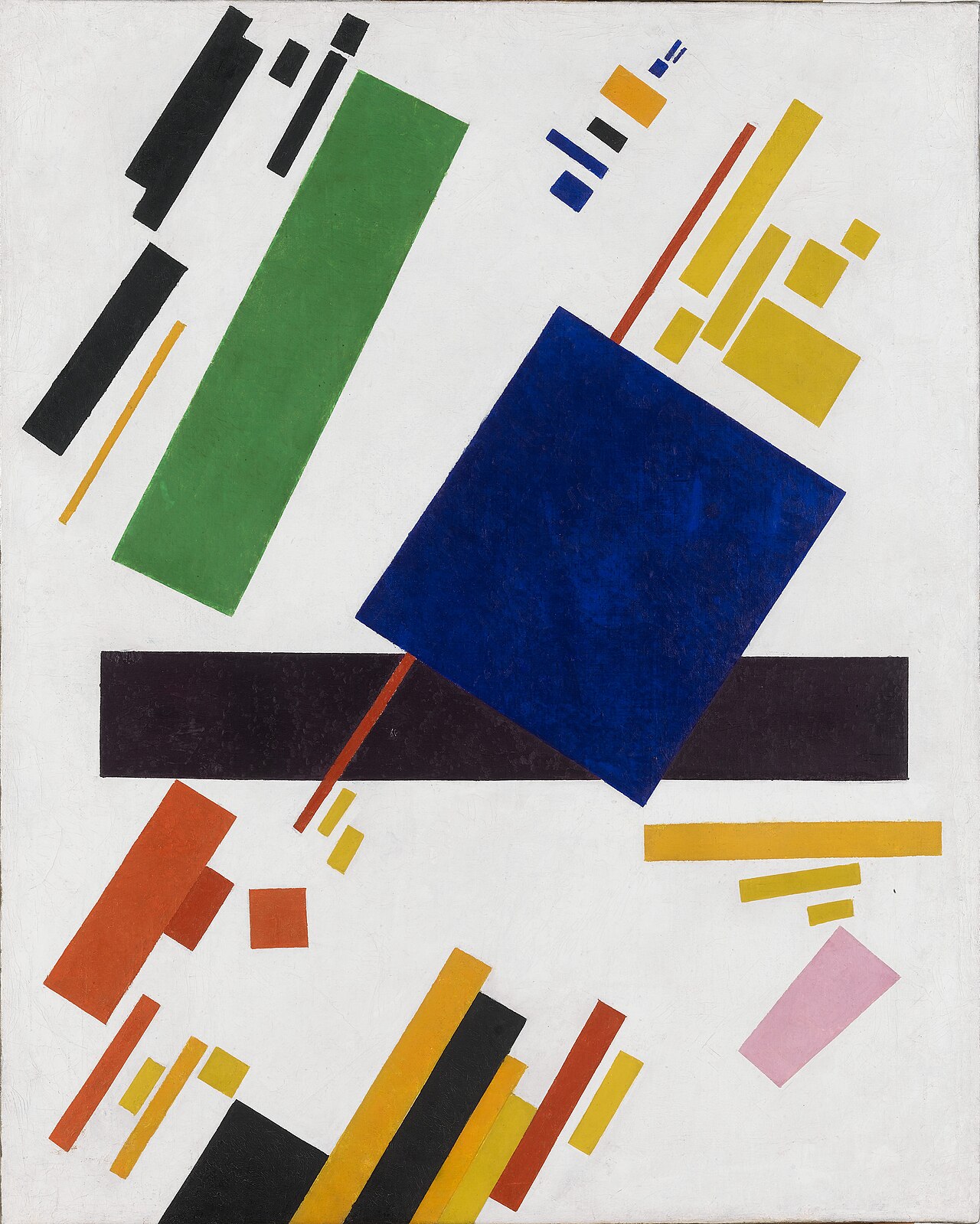
Suprematist Composition by Kazimir Malevich, 1916
Brett Gorvy · wikidata.org
Public domain
This is Suprematism — the idea, from what I can find, was to throw out recognizable objects and see if shape and color alone could carry a painting.
Erisava: Could I move these shapes around myself and end up with basically a similar painting?
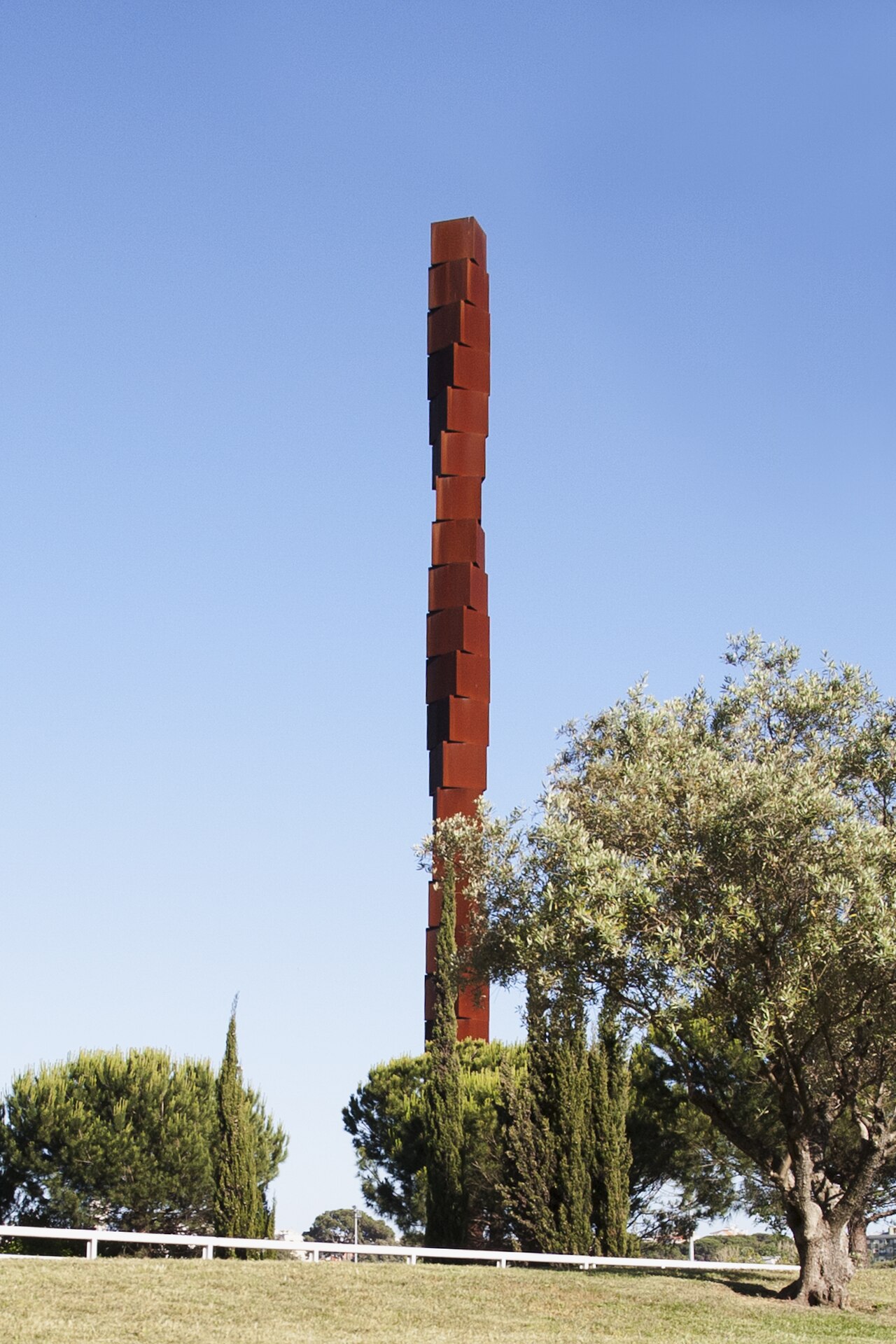
Espiral do Tempo by José Aurélio, 2009
Portugal · wikidata.org
I couldn't find much backstory on this one — the title apparently translates to 'Spiral of Time,' which tracks given the twist running up the steel.
Erisava: Would you look twice at this if it weren't in a park and this tall?
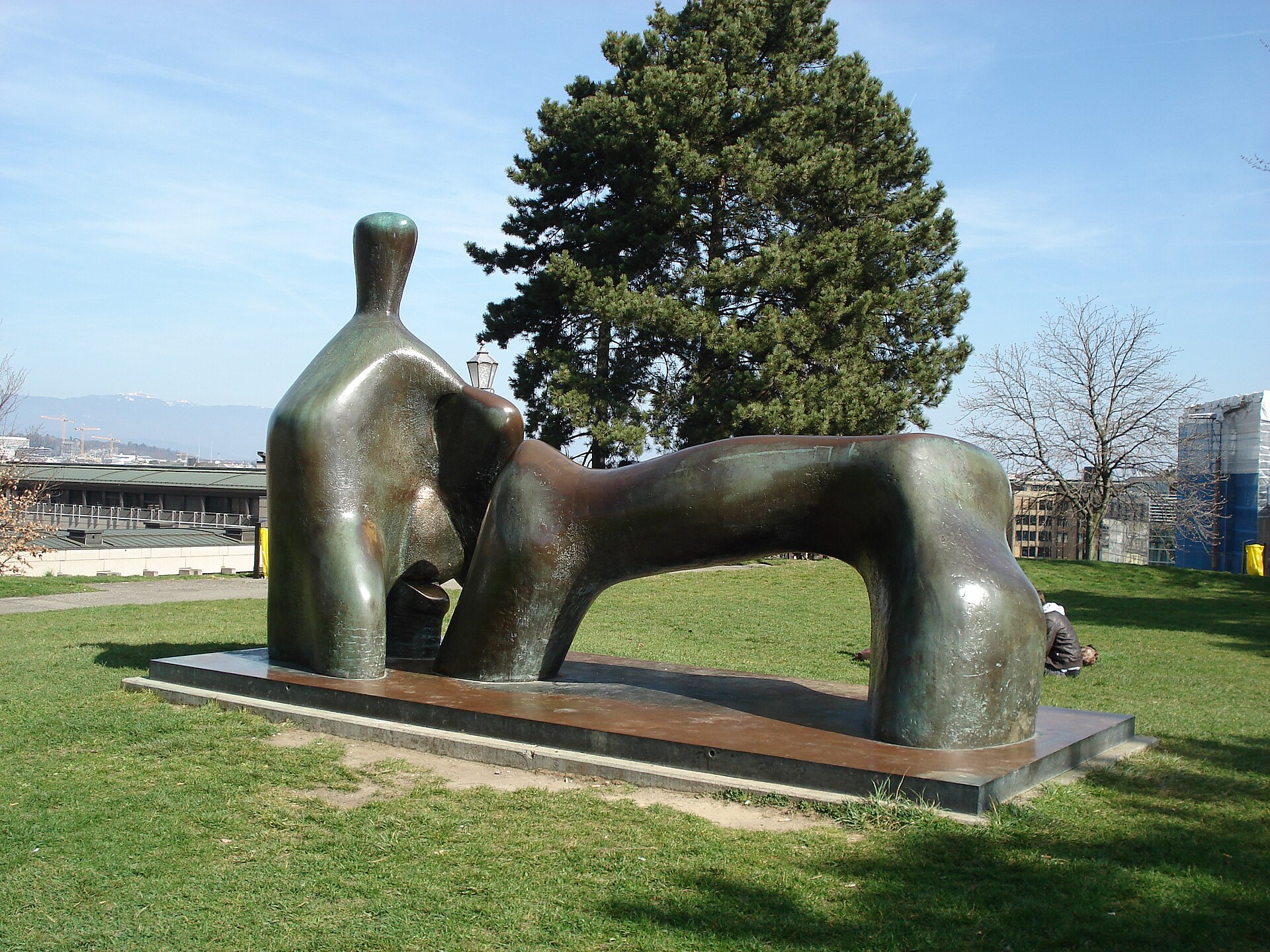
Reclining Figure: Arch Leg by Henry Moore, 1969
Promenade de l'Observatoire · wikidata.org
You'll come across this sat out on the grass on the Promenade de l'Observatoire, close enough to lean on. From what I've read he wanted them outdoors on purpose — weather, sky, people climbing about — and pushed for that whenever he had a say in where one ended up.
Erisava: Is there a person in here, or am I meant to take their word for it?
wall decoration by Gunda Förster, 1996
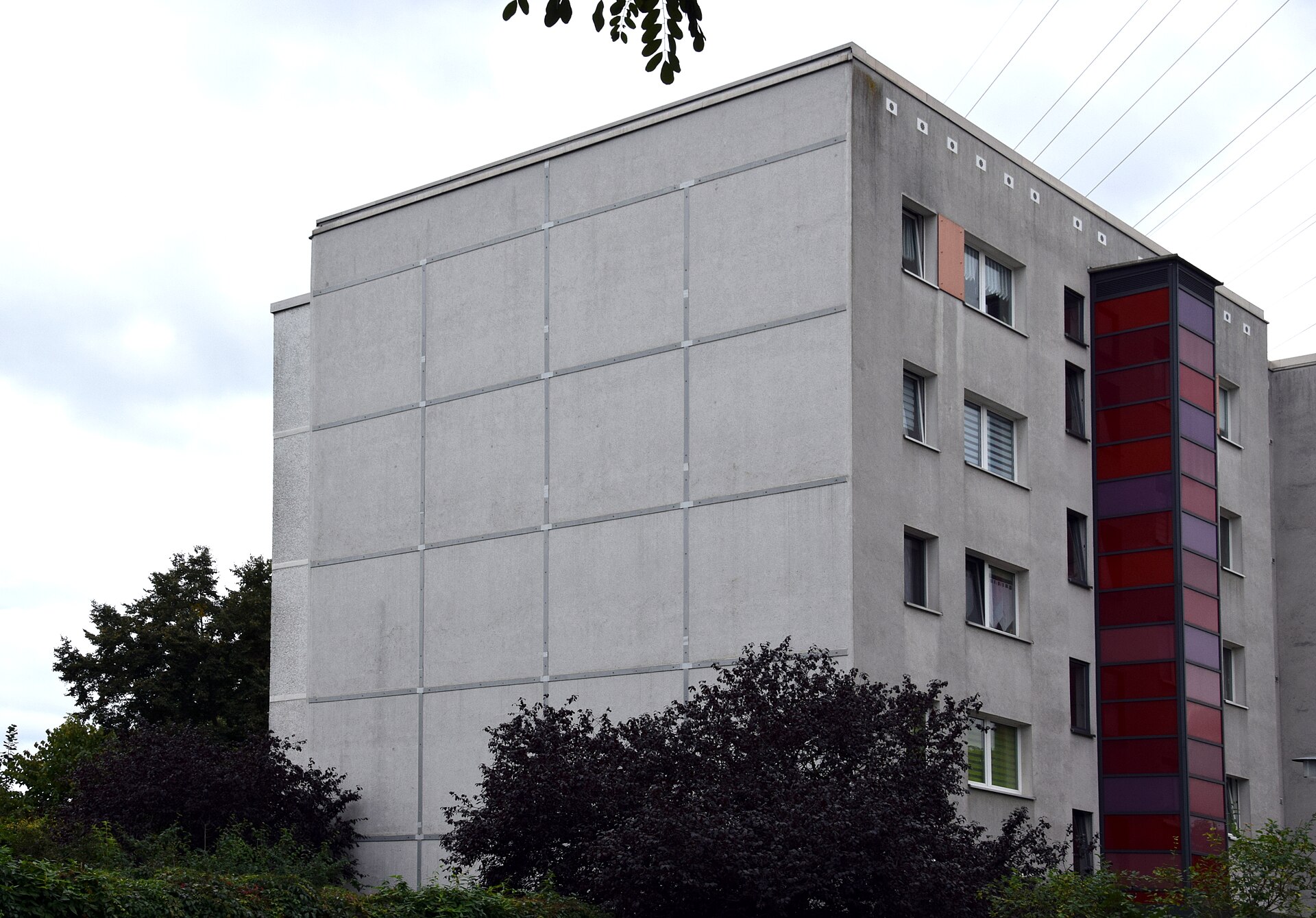
Kaulsdorf · wikidata.org
From what I could find, the coloured strip is light-reflecting foil — even the photo's own caption calls it that — so it's supposed to change as the daylight does. It went up on an ordinary block of flats in Kaulsdorf: no plaque, no gallery, just there.
Erisava: Be honest — would you have noticed this was art without being told?
untitled by Eduardo Paolozzi, 1966
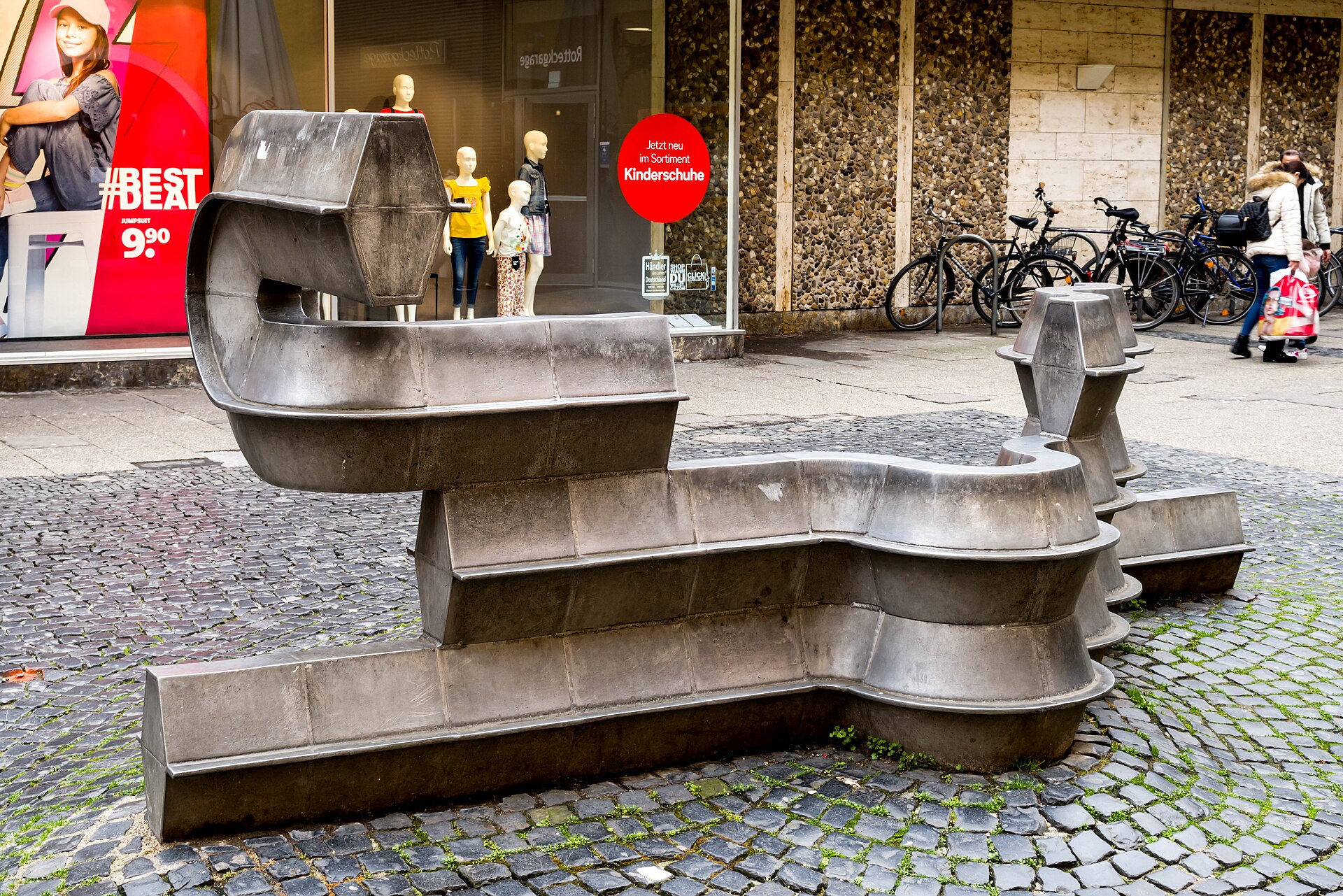
Germany · wikidata.org
I couldn't track down a name for this one, but the year puts it right in the stretch where he was working with an engineering firm to mass-produce cast aluminium forms — some from that batch were built as literal playground equipment for a shop. He's tagged as the godfather of Pop Art, but this run of work reads more like an industrial catalogue than a collage of magazine cuttings.
Erisava: Is this meant to be sat on, or just looked at?
On White II by Wassily Kandinsky, 1923
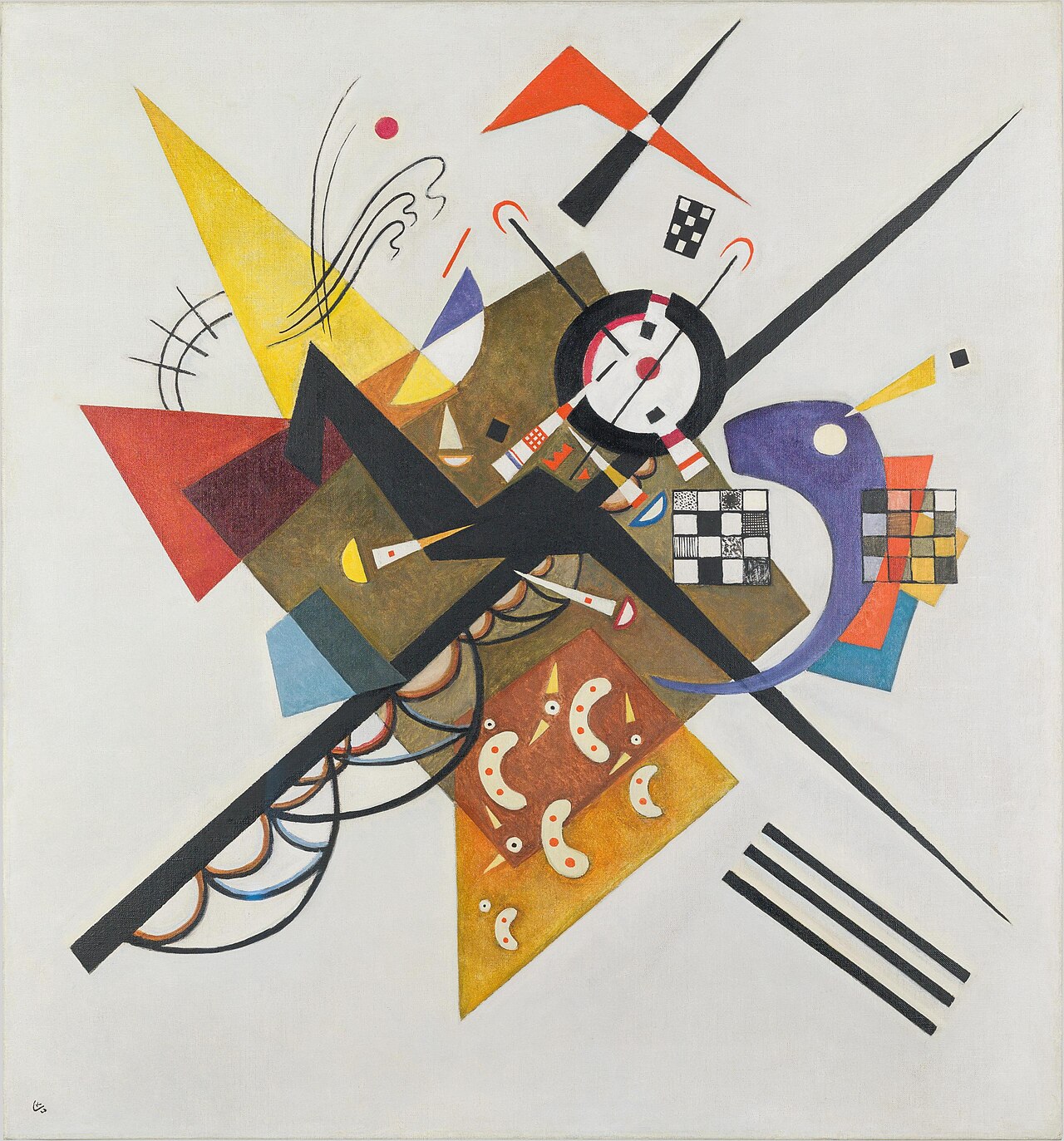
Musée National d'Art Moderne · wikidata.org
Public domain
According to Wikipedia, this hung in his own dining room for years before his wife gave it to a museum after his death.
Erisava: What is actually happening in this picture?
Vault by Ron Robertson-Swann, 1978
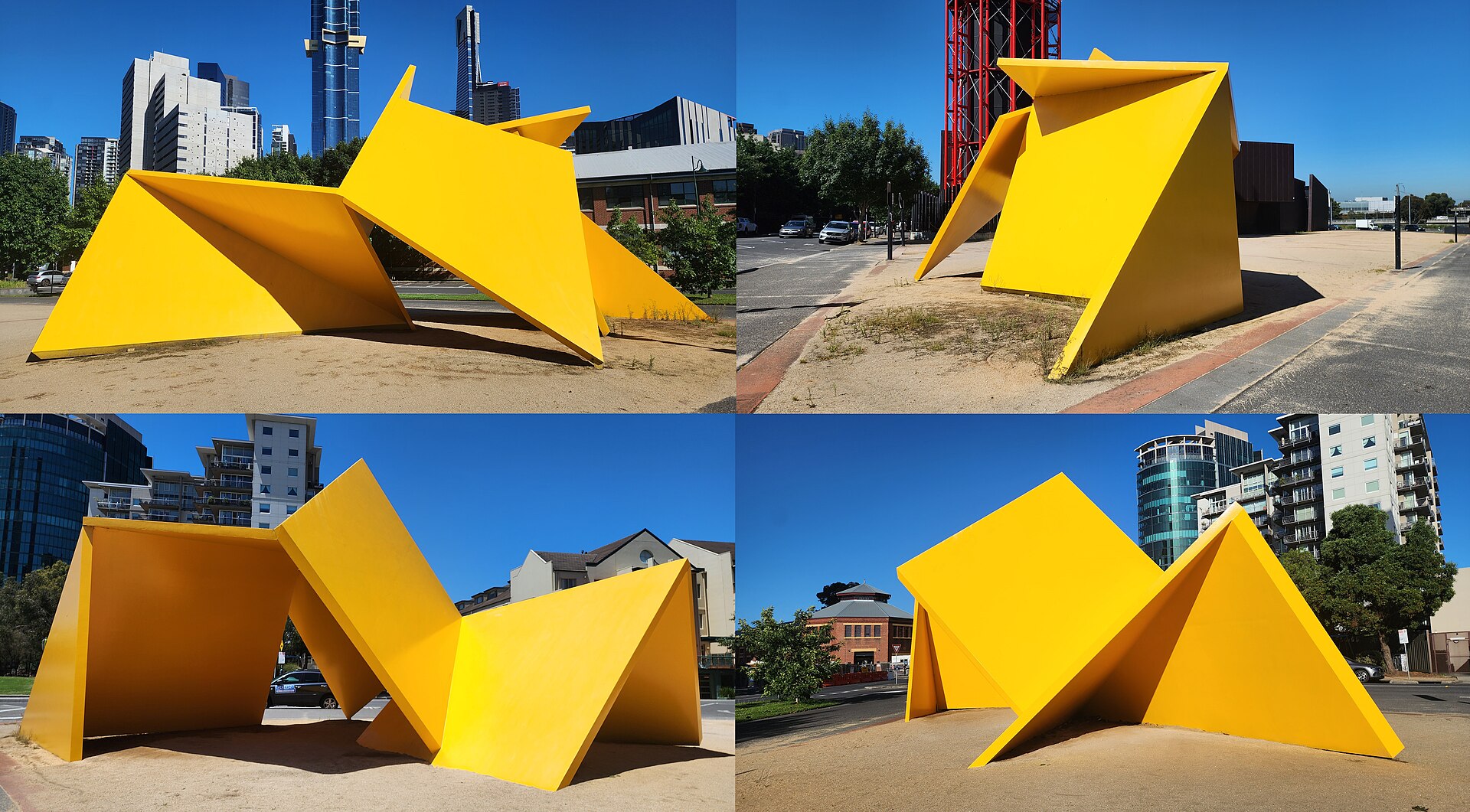
Australian Centre for Contemporary Art · wikidata.org
This caused a proper public row when it went up. It got nicknamed "the Yellow Peril", the council had it taken apart and shifted out of the way, and by most accounts it sat out of the centre of town for years before landing where it is now.
Erisava: Big, yellow and in the way. I'm not sure that's the same as good.
Cross Section of a Toothbrush with Paste, in a Cup, on a Sink: Portrait of Coosje's Thinking by Claes Oldenburg, 1981
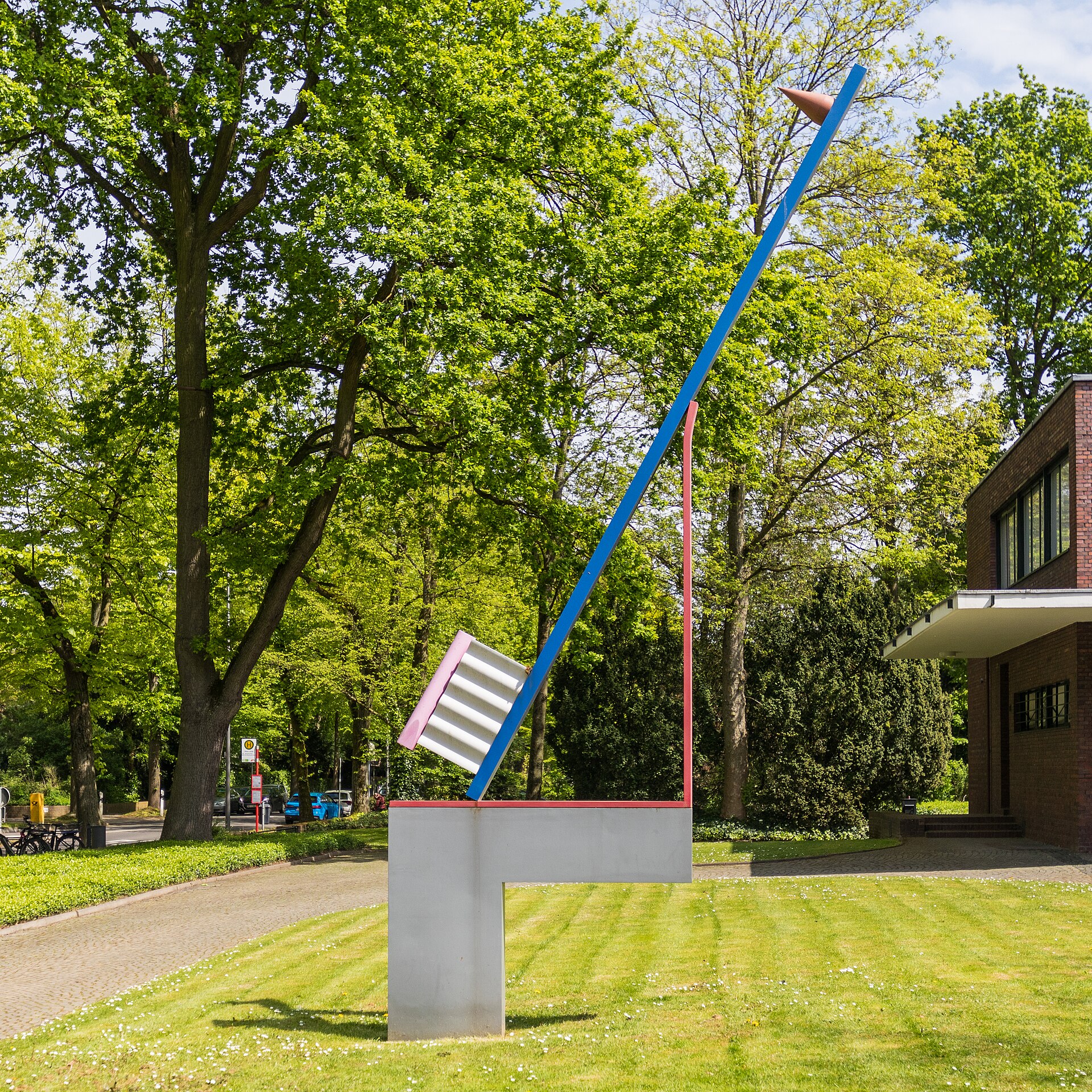
Sculpture garden of Museum Haus Esters / Haus Lange · wikidata.org
Oldenburg spent decades blowing up small household objects into oversized public sculptures, and from what I can find, a lot of the later ones were worked out with his wife and collaborator, Coosje van Bruggen. This is one of their bathroom-themed sculptures — from a run of work that helped push Pop art off the canvas and into actual parks and plazas.
Erisava: Does this look like leftover construction gear to you?
Bird in Space by Constantin Brâncuși, 1923
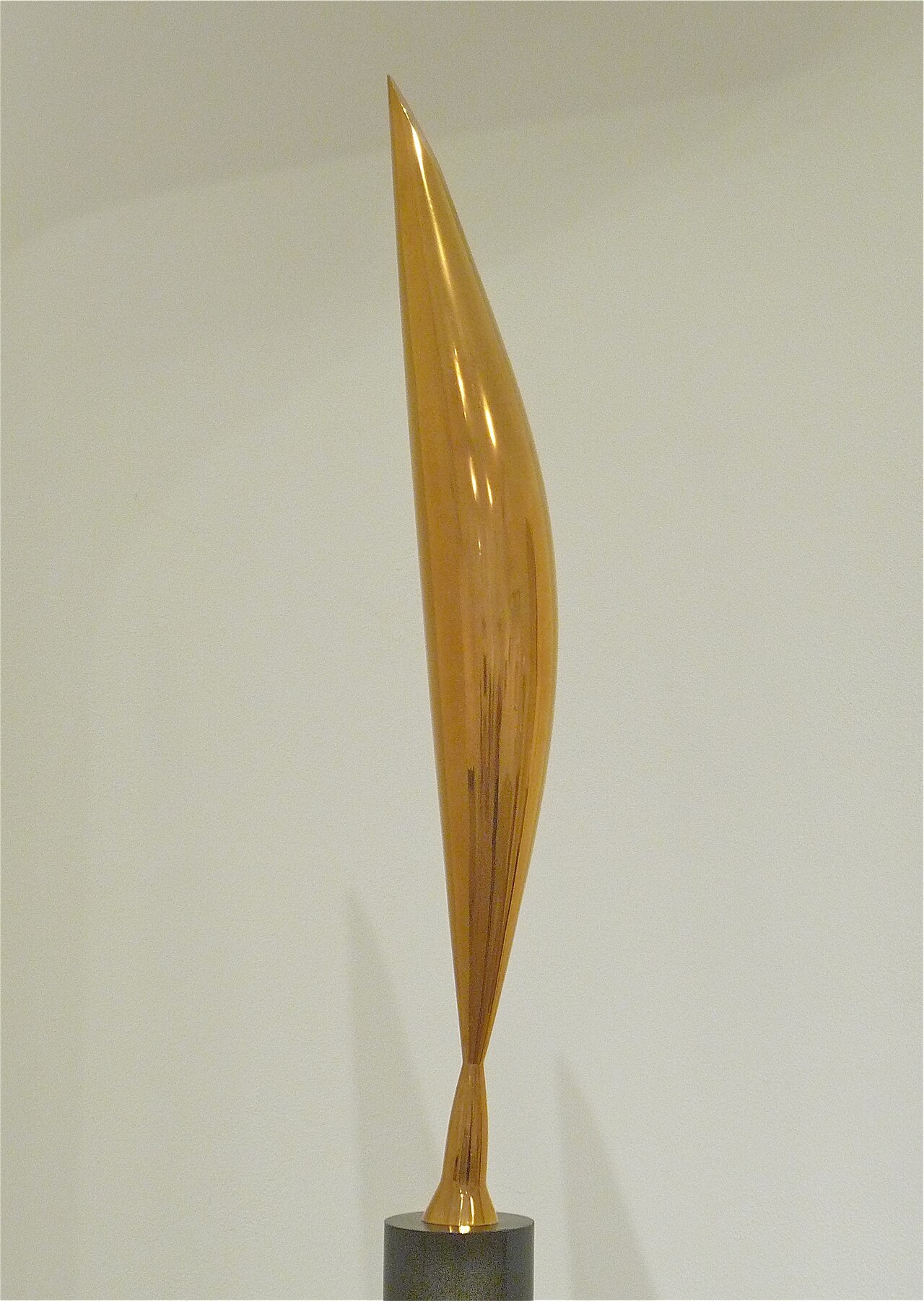
Metropolitan Museum of Art · wikidata.org
Public domain
Brâncuși spent something like twenty years chasing this exact shape — no feathers, no wings, not even a head, because from what I've read he wasn't after what a bird looks like, just the feeling of one lifting off. He's said to have carved or cast this same idea more than a dozen times, in marble and in bronze. One of the bronze versions ended up in a legal fight when US customs refused to wave it through as art and taxed it as scrap metal instead — the case that followed is apparently still taught as the moment the law had to decide what actually counts as sculpture.
Erisava: Does this look like it's already moving, even standing still?