Question Art
Say what you actually think.


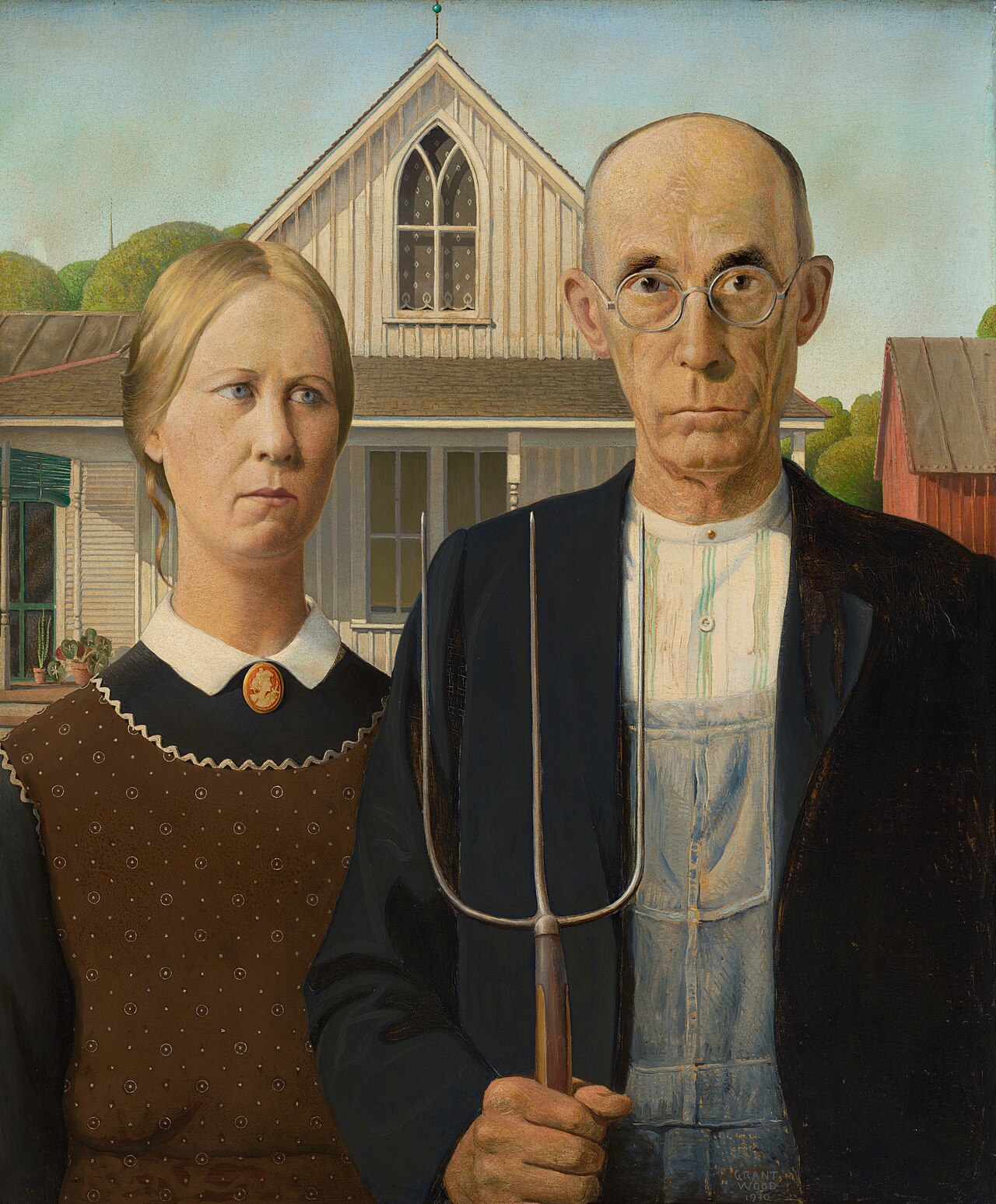
American Gothic by Grant Wood, 1930
Art Institute of Chicago · wikidata.org
Public domain
The models were apparently his sister and his dentist, and it supposedly won him $300 and instant fame overnight. People still argue about whether he was making fun of farm folk or standing up for them — he insisted it was the second.
Erisava: They look like they just caught me doing something wrong.
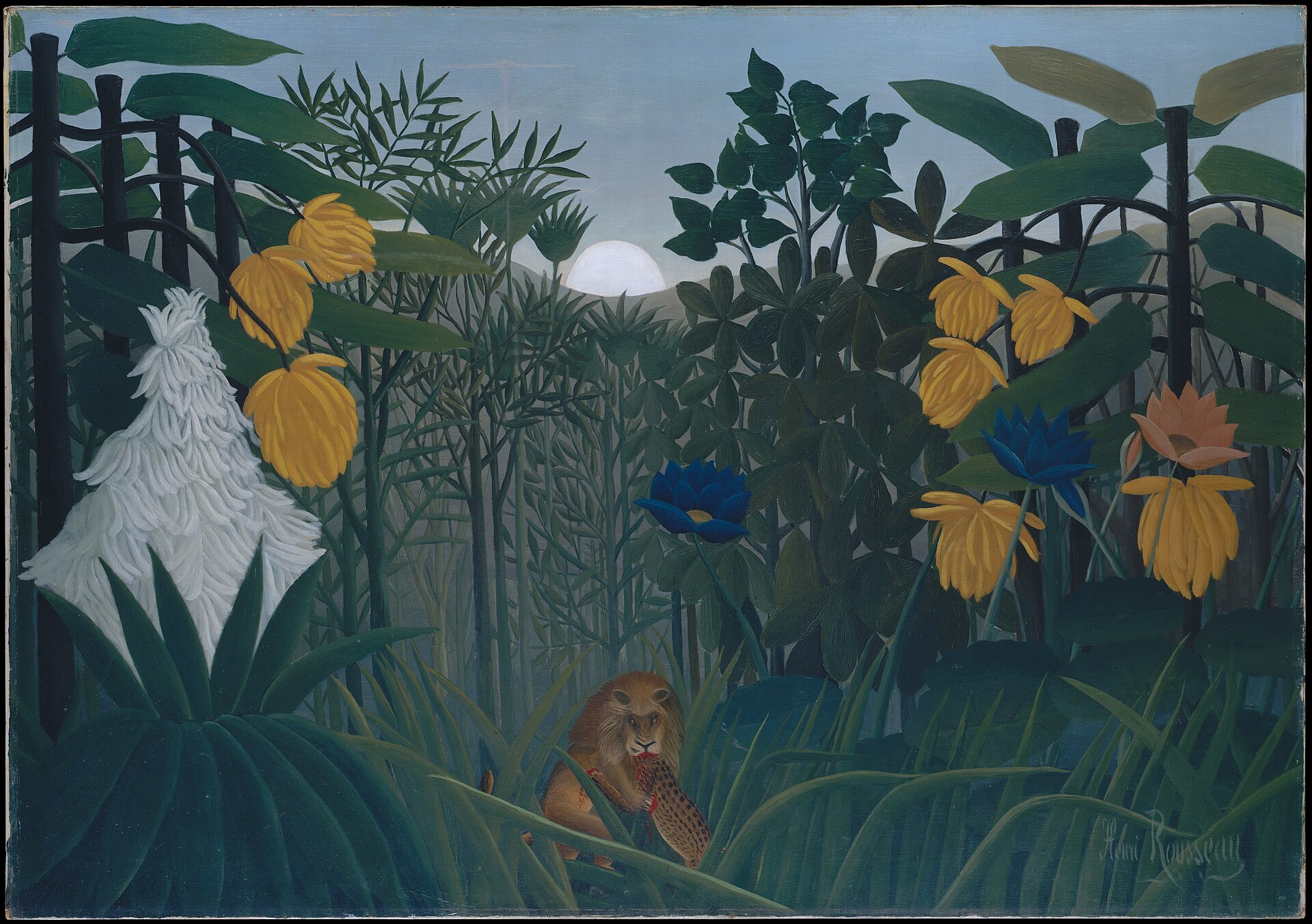
The Repast of the Lion by Henri Rousseau, 1907
Metropolitan Museum of Art · wikidata.org
He'd never seen a jungle. From what I've read the closest he got was the glasshouses at the botanical gardens in Paris, and he built the plants up from there. He had a day job and taught himself, and the critics gave him a hard time for it.
Erisava: Those plants look like houseplants that got out of hand.
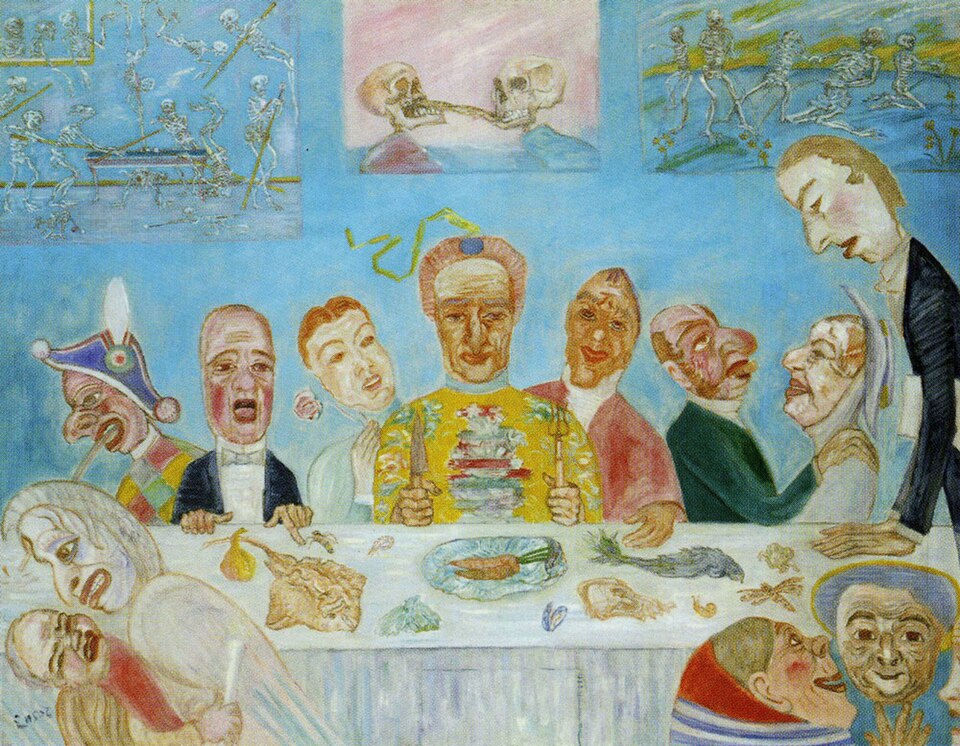
Comical Repast (Banquet of the Starved) by James Ensor, 1917
Metropolitan Museum of Art · wikidata.org
Public domain
Ensor's family ran a souvenir shop in Ostend that sold carnival masks, and he never really stopped painting them after that. This one comes out of the war years, when food was short across occupied Belgium — which the title seems to be having a go at.
Erisava: What's happened to everyone's face here?
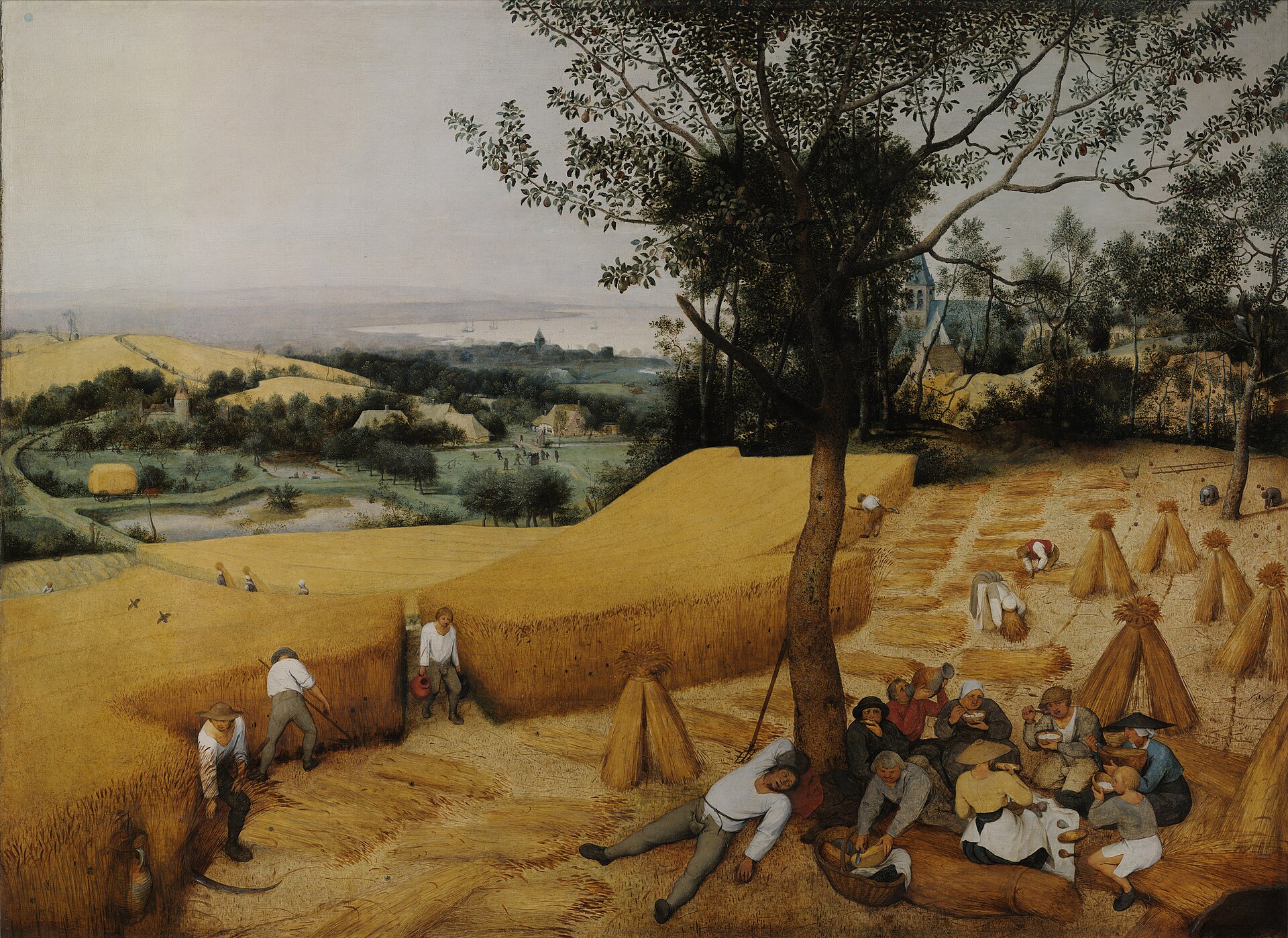
The Harvesters by Pieter Brueghel the Elder, 1565
Metropolitan Museum of Art · wikidata.org
Public domain
Apparently this was one of six paintings a merchant banker in Antwerp commissioned to track the months of the year — this one's high summer. Only five are known to survive.
Erisava: That guy passed out under the tree had the right idea.
Woman with a hat by Henri Matisse, 1905
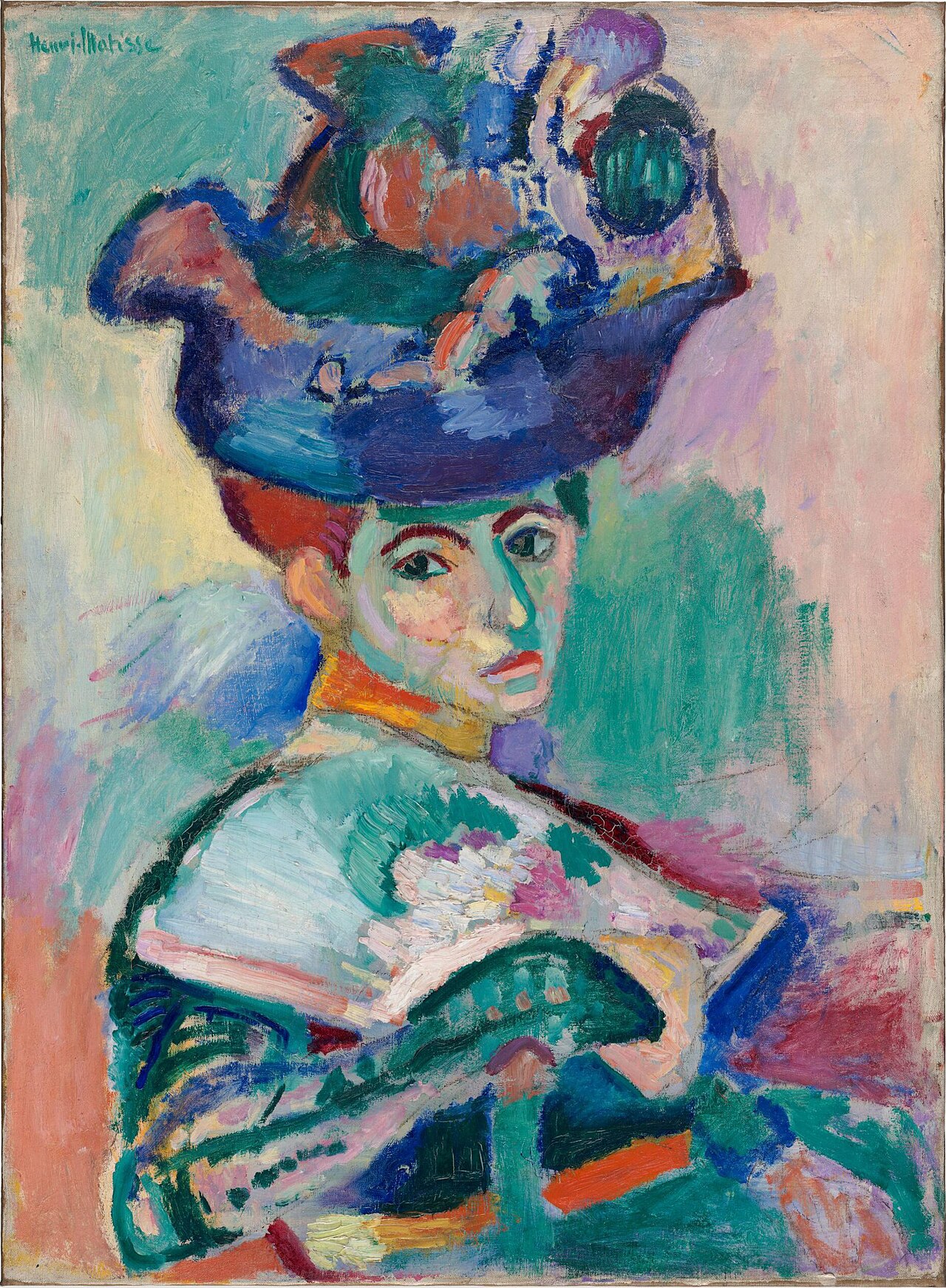
San Francisco Museum of Modern Art · wikidata.org
Public domain
This showed at a Paris salon alongside a handful of painters using color this wild — critics apparently called them 'the wild beasts,' and the nickname (Fauves) stuck.
Erisava: Does this still work as a portrait, or is it just wild color?
Mäda Primavesi (1903–2000) by Gustav Klimt, 1912
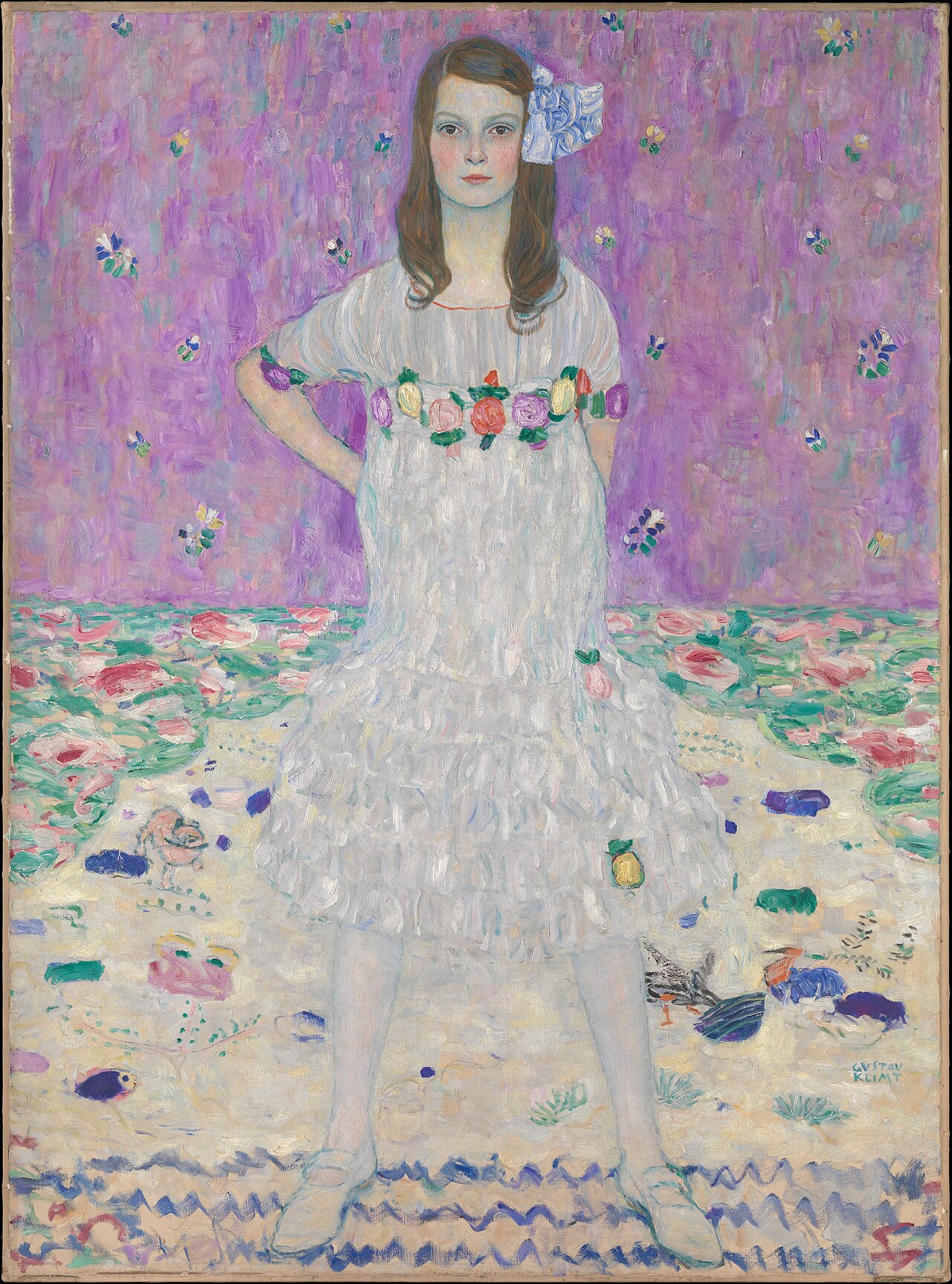
Metropolitan Museum of Art · wikidata.org
This was a commission — her parents were rich Viennese patrons who put money behind a lot of the design world there. The story goes she was nine, and that she picked how she wanted to stand herself.
Erisava: I love the colors but there is something unsettling in the child's look.
Amédée-David, the Comte de Pastoret by Jean-Auguste-Dominique Ingres, 1823
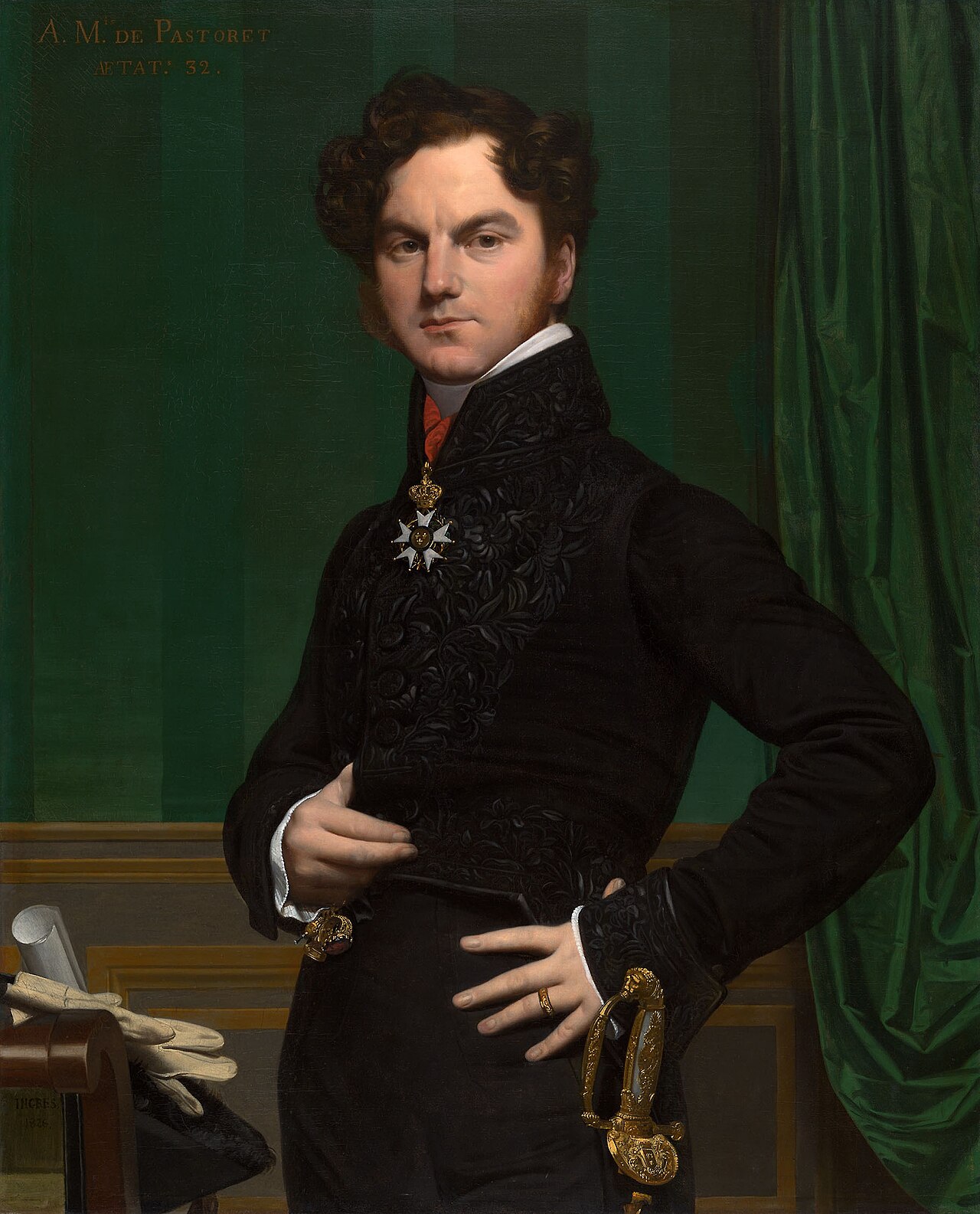
Art Institute of Chicago · wikidata.org
Public domain
The man in it was a rich young aristocrat with a habit of ordering paintings of himself — this was one of several he commissioned from the same painter, going by the museum's own notes. His father, I gather, had been a heavyweight in French law and politics, so the family was well used to being looked at.
Erisava: He paid someone to make him look this pleased with himself.
Knight, Death, and the Devil by Albrecht Dürer, 1513
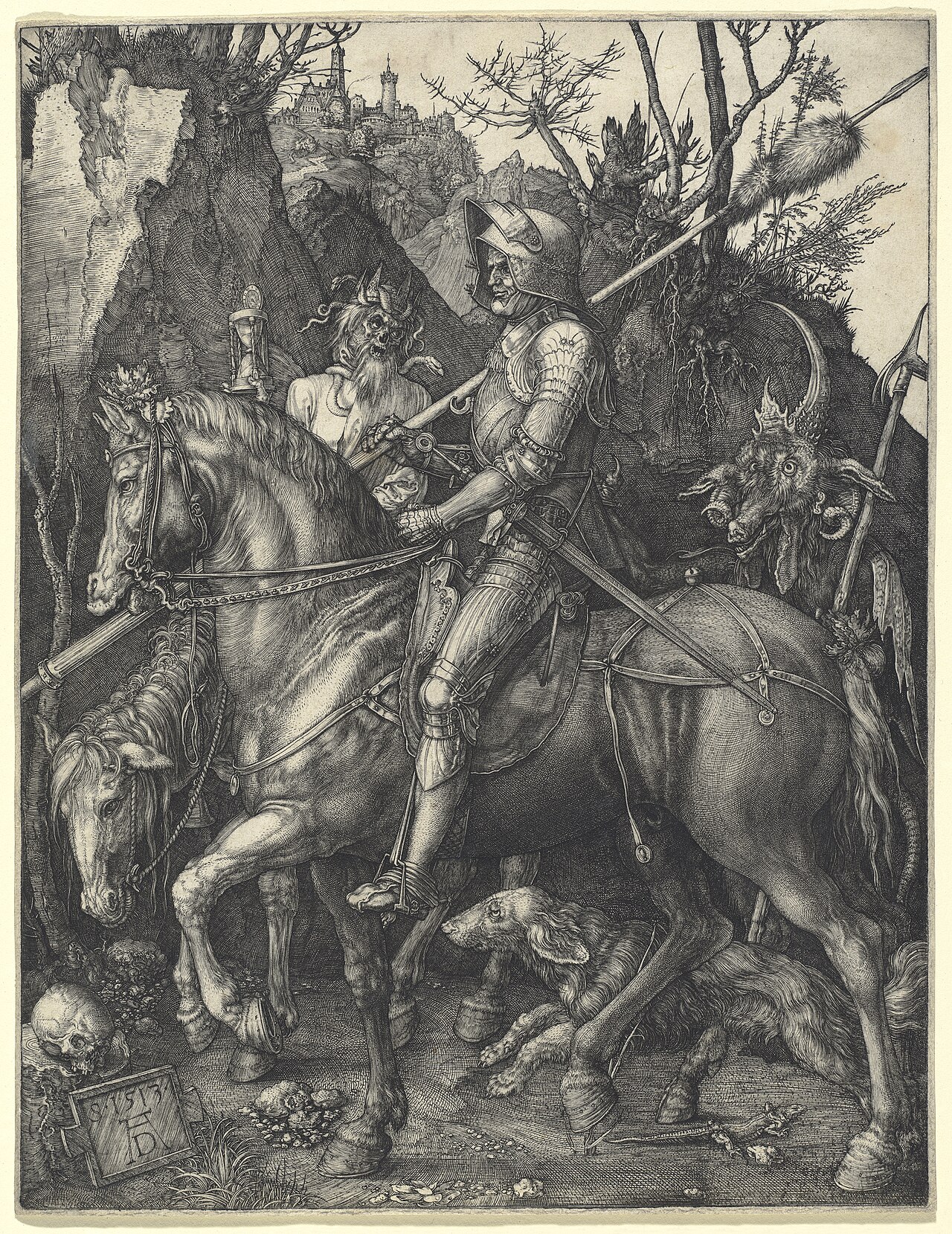
British Museum · wikidata.org
This is one of three engravings from the same few years that historians consider his best — what it actually means has apparently been argued over for centuries.
Erisava: Every line's razor fine, and the knight looks unbothered with the two beside him.
Small Cowper Madonna by Raphael, 1505
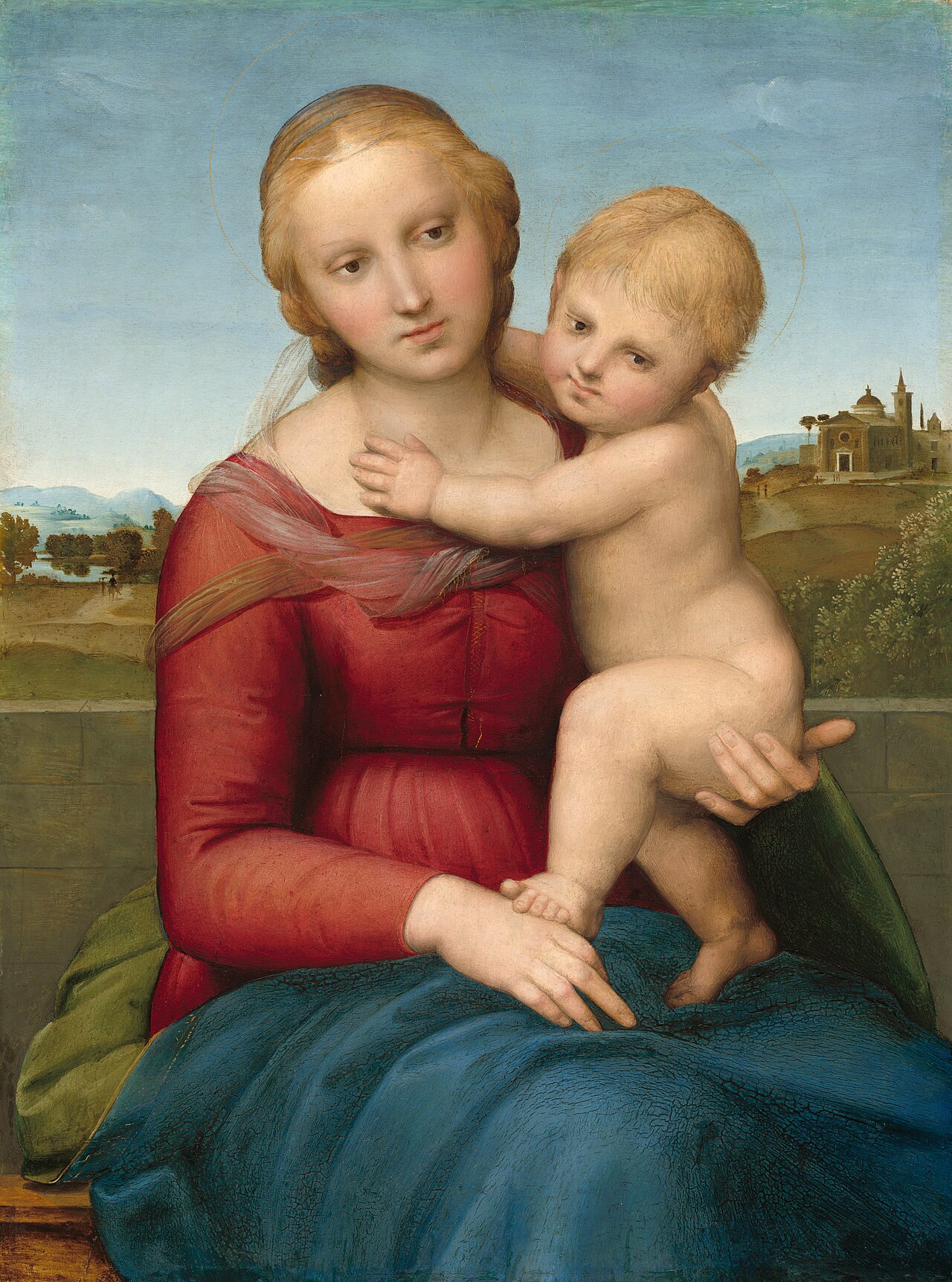
National Gallery of Art · wikidata.org
Public domain
The odd name comes from the Cowper family, who used to own it — nothing to do with the subject. Like a lot of British collections, it eventually made its way into an American museum in the early 1900s.
Erisava: This one I'd genuinely hang in my own home.
Dance II by Henri Matisse, 1910
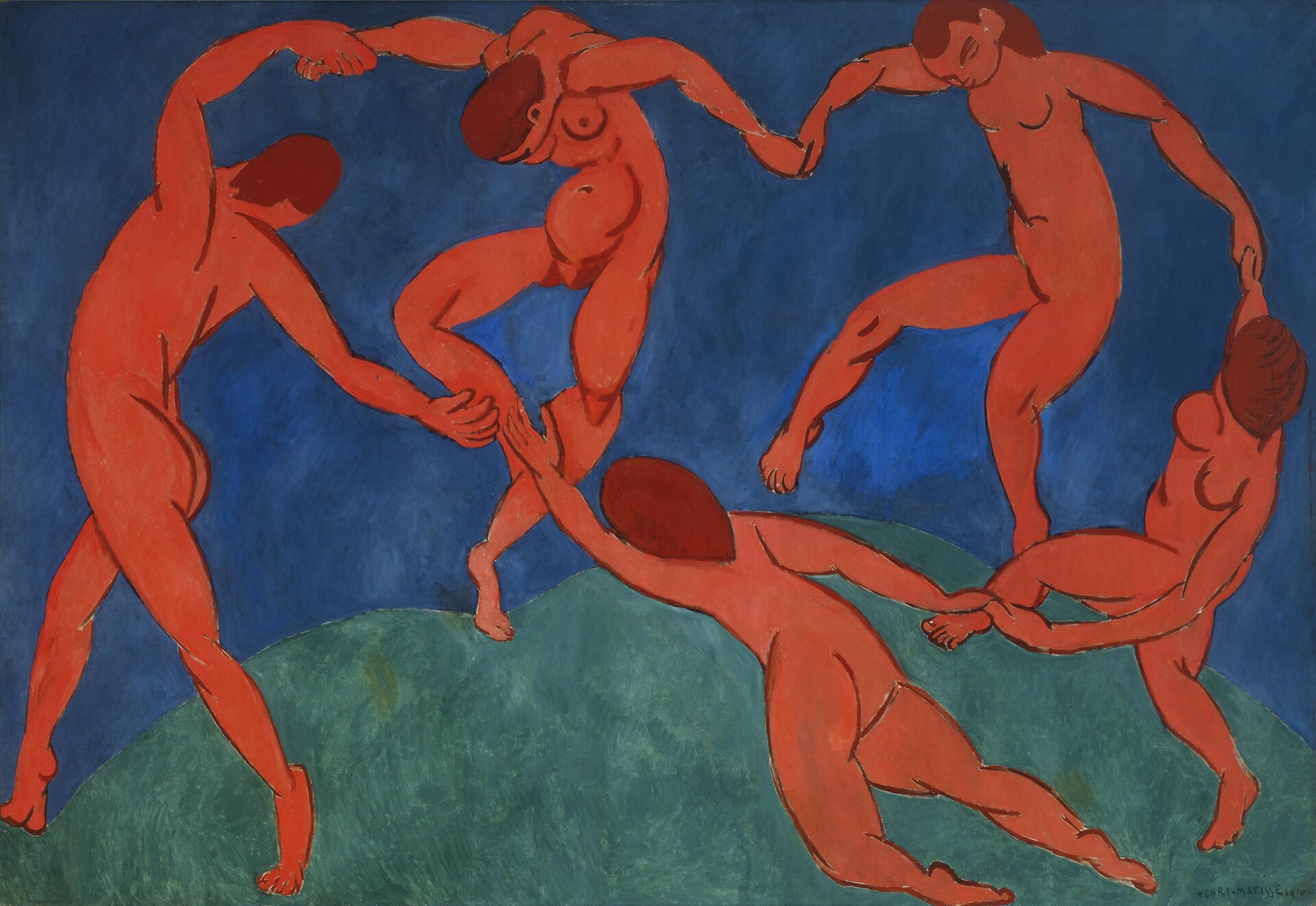
Hermitage Museum · wikidata.org
Public domain
A Russian businessman ordered this for the staircase of his Moscow house, along with a second panel to hang near it. Supposedly he got nervous about all the bare bodies, pulled out, then changed his mind and took them anyway.
Erisava: The whole thing's three colours. I can't decide if that's bold or just easy.
Farmer from Laren, North Holland by Martinus van Regteren Altena, 1902
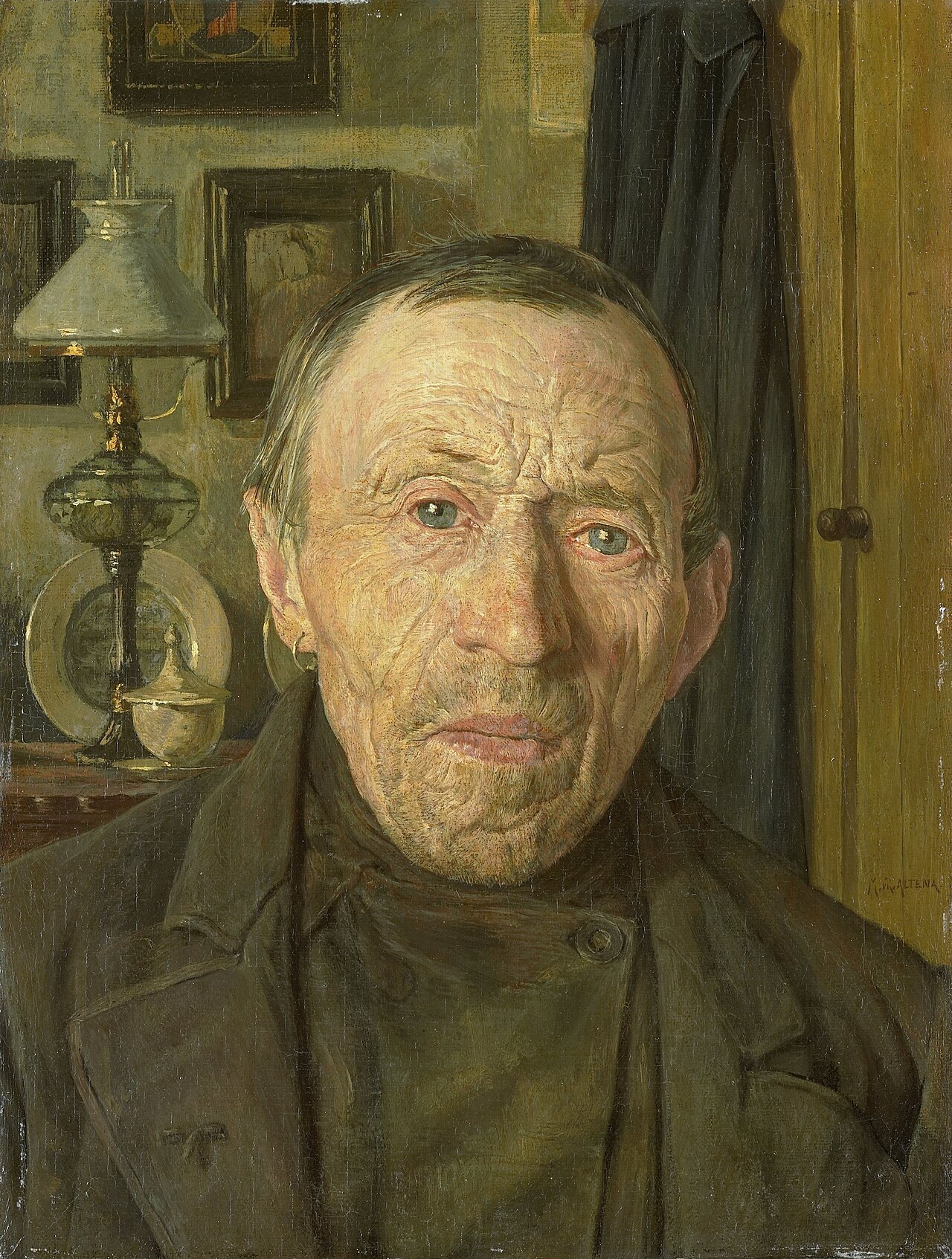
Rijksmuseum · wikidata.org
Public domain
The village in the title had turned into an artists' colony by then — painters moving out to a farming place on the heath specifically to paint the people already living there. From what I read, whole careers got built on that arrangement. The farmers mostly stayed farmers.
Erisava: So real and in your face. Do you think he wanted this painted though?
Wall of the Barcelona Airport by Joan Miró, 1970
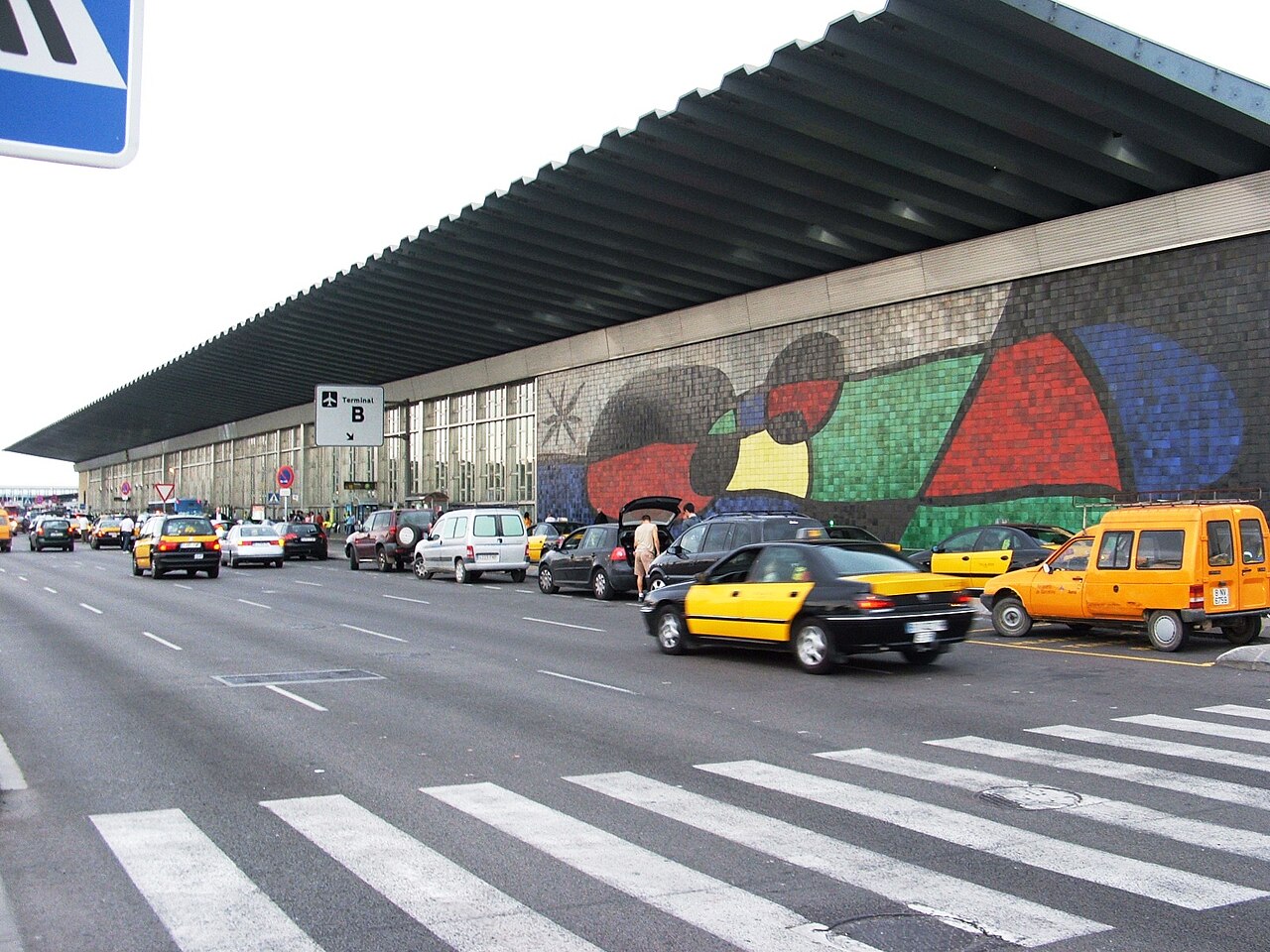
Terminal 2 · wikidata.org
Public domain
They say this was one of a set of three — a mural for people arriving by air, a pavement mosaic in the middle of town for those on foot, and a poster — all meant to welcome you to Barcelona. Apparently a ceramicist friend did the actual tilework.
Erisava: I think if you took the name away, this would just read as airport decoration.
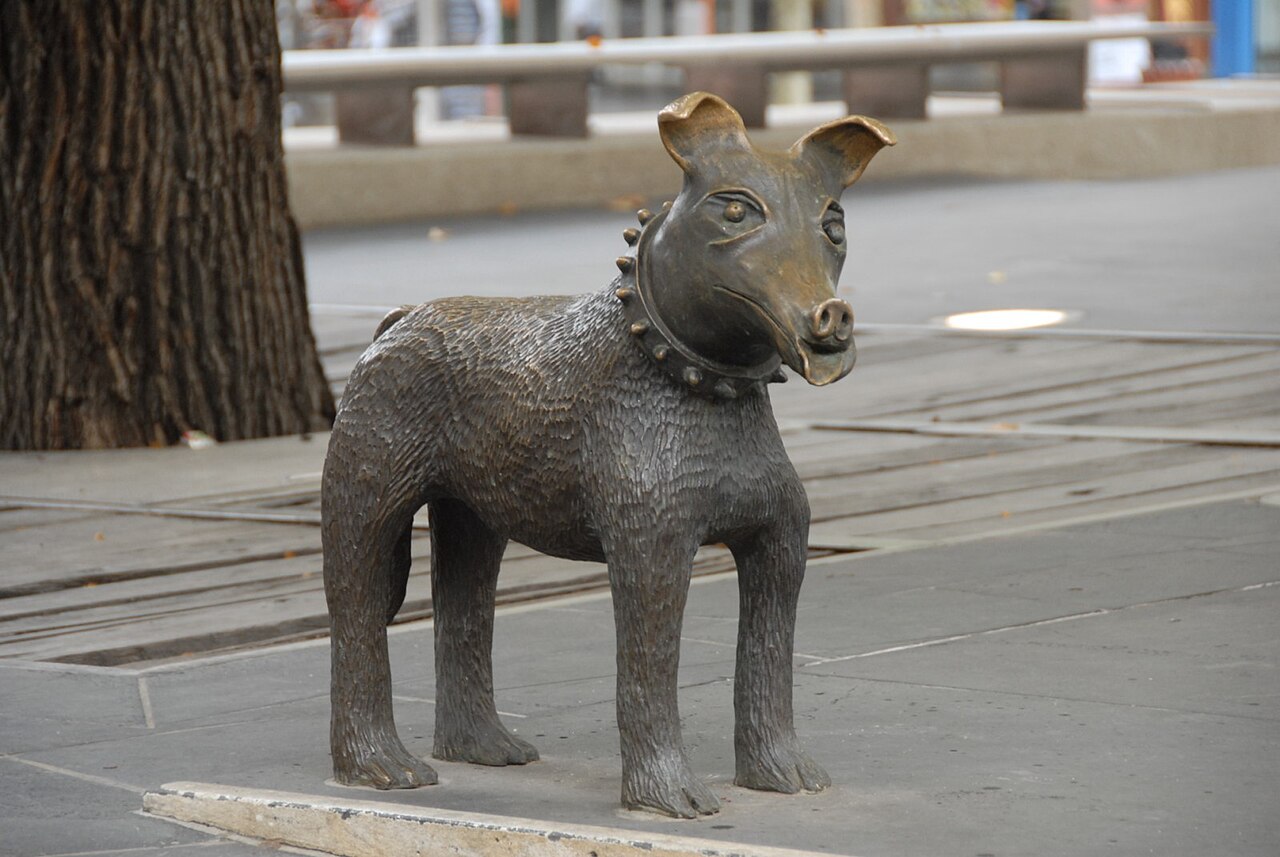
Larry La Trobe by Pamela Irving, 1992
City Square · wikidata.org
As the story goes, the original version of this dog was stolen right off this same spot, and what's standing here now is the replacement. According to Wikipedia, it's also one of only two standalone sculptures in the whole square.
Erisava: Something about the ears and the snout says pig more than dog to me.
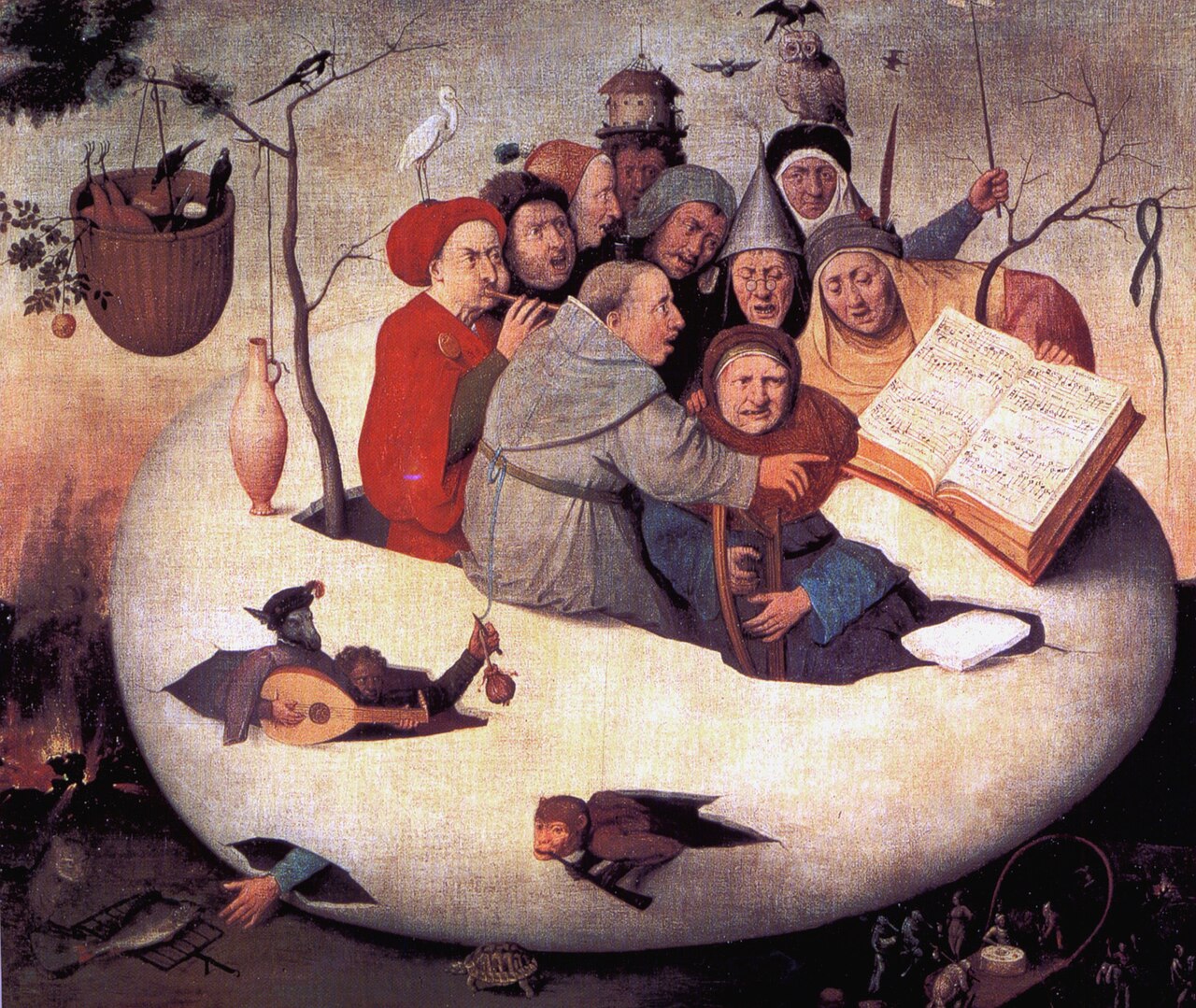
Concert in the Egg by Hieronymus Bosch, 1560
Palais des Beaux-Arts de Lille · wikidata.org
Public domain
This one was reportedly once catalogued as a copy of a lost original; now the thinking is it's based on one of his drawings instead — the credit's still murky.
Erisava: Is everyone crammed in here supposed to be the joke?
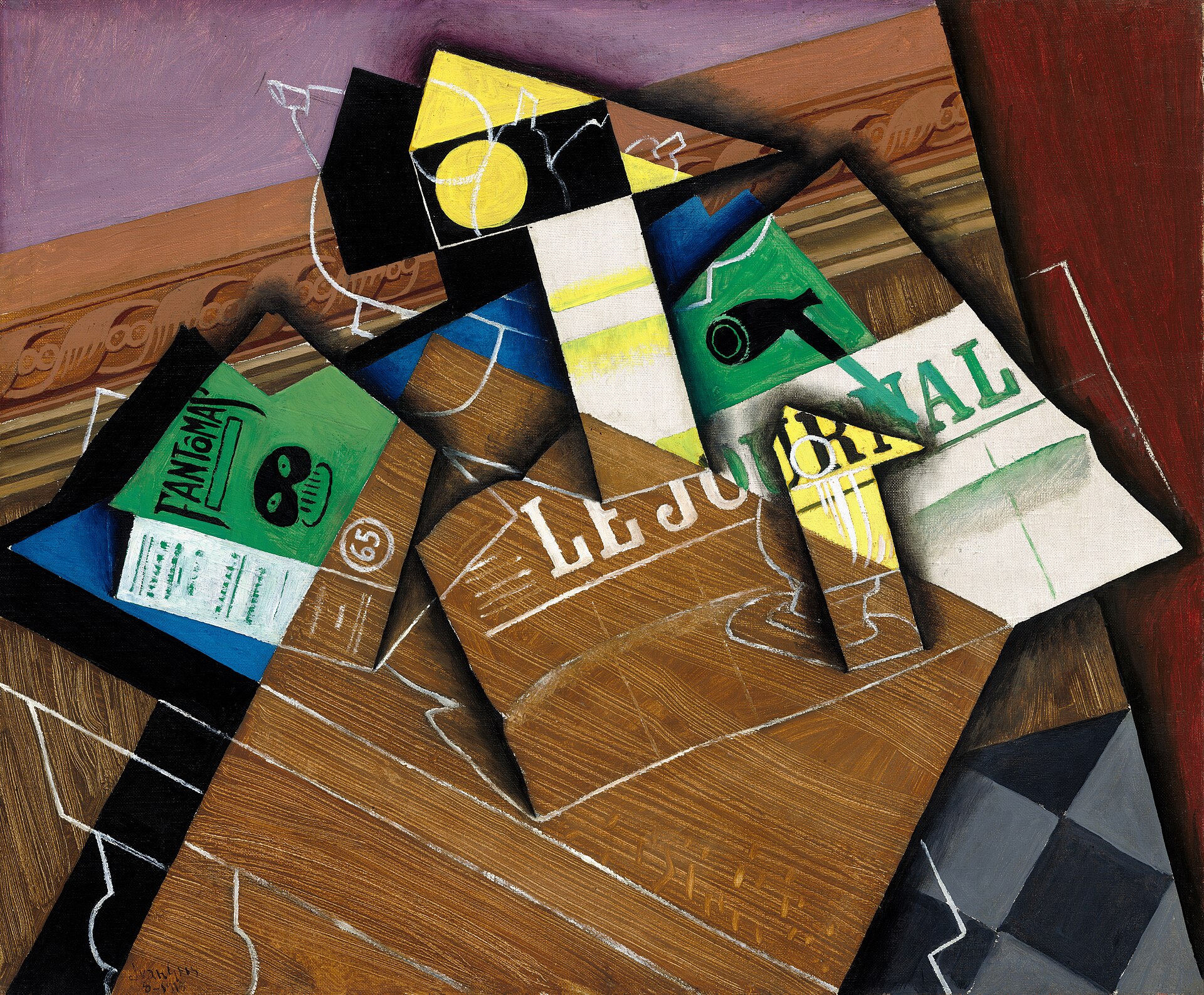
Fantomas by Juan Gris, 1915
National Gallery of Art · wikidata.org
Public domain
Apparently 'Fantômas' was a wildly popular pulp villain in French novels and early films back then — the kind of cheap thrill respectable painting wasn't supposed to notice. Cubists of the period put newsprint and pulp covers like this straight into their paintings anyway, which was kind of the point: you didn't need a myth or a portrait anymore, a newsstand would do.
Erisava: I think this is a table knocked over and painted where it landed.