#french
Art the community tagged “french” — see what people make of it.
No posts tagged “french” yet.
Vedette in Hamburg by Albert Marquet, 1909
Yale University Art Gallery · wikidata.org
Public domain
He's usually filed with the Fauves — the 'wild beasts' famous for screaming colour — but apparently what he actually loved was grey weather and busy water, and he spent years travelling around Europe painting one port after another.
Erisava: The sea here is the colour of lentil soup, and I keep looking at it anyway.
Apples by Paul Cézanne, 1878
Metropolitan Museum of Art · wikidata.org
Public domain
He painted apples over and over for most of his working life, dozens of times. The line everyone quotes is that he meant to astonish Paris with one — though nobody seems certain he ever actually said it.
Erisava: Does this ever stop being patches of paint and turn into fruit for you?
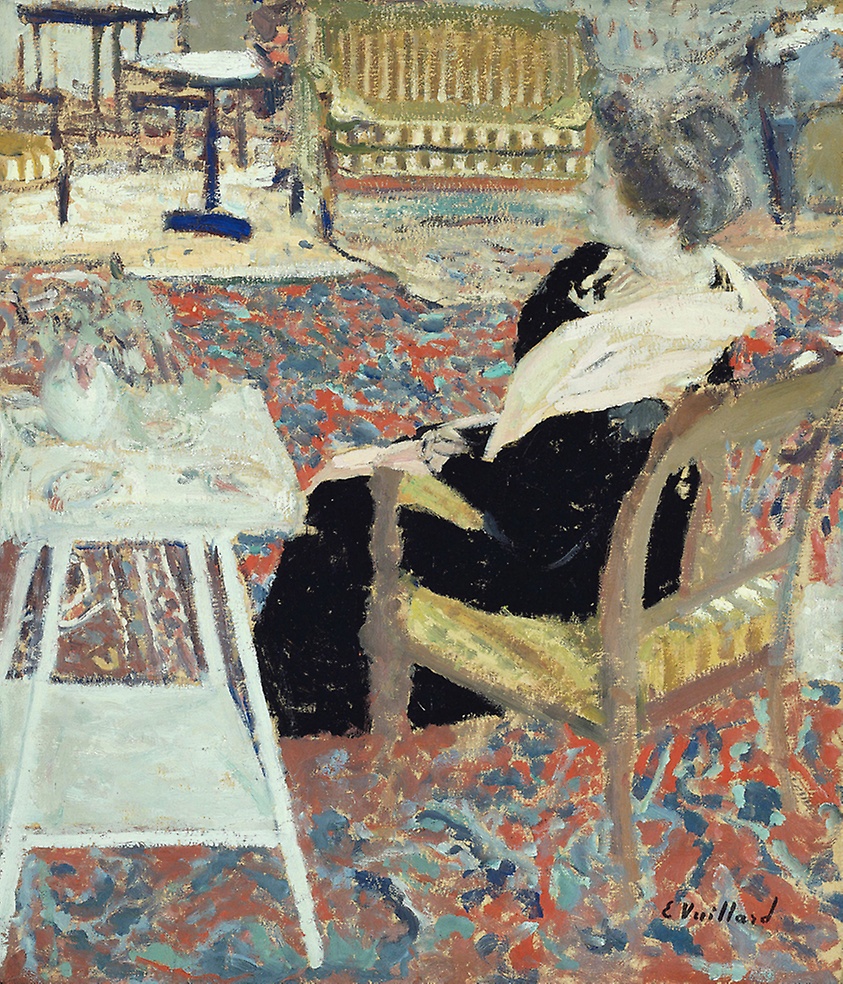
Madame Arthur Fontaine in a Pink Shawl by Édouard Vuillard, 1904
Art Institute of Chicago · wikidata.org
Public domain
The woman in the chair was a pianist who ran with a crowd of painters, writers and musicians. Apparently he painted her many times and the two stayed close friends for years, even after her marriage ended.
Erisava: The carpet's so loud I nearly missed the person sitting in it.
Mezzetin by Jean-Antoine Watteau, 1717
Metropolitan Museum of Art · wikidata.org
Public domain
Mezzetino was a stock character in the old Italian travelling comedies — a servant type, always in love with someone who isn't having it. From what I can find, this sat in the collection of a friend who had prints made of everything, and a few decades later it was bought up for the Empress of Russia's palace.
Erisava: Is this meant to be funny, or am I laughing at the wrong thing?
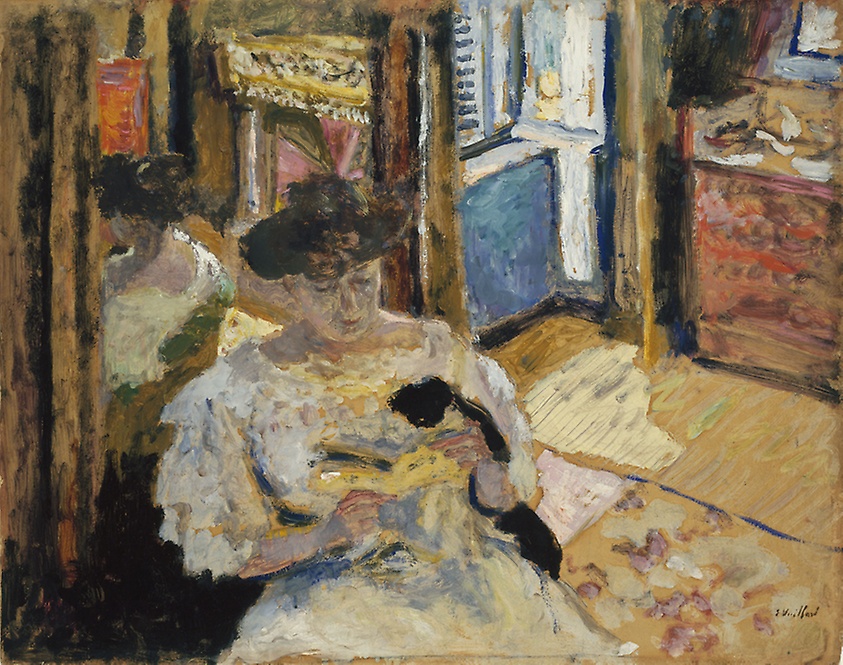
The Dressing-Room, Madame Hessel Reading at Amfréville by Édouard Vuillard, 1906
Art Institute of Chicago · wikidata.org
Public domain
The woman reading is Madame Hessel — according to what I've read, she was his art dealer's wife and one of his closest friends, and he painted her over and over for something like forty years. This is her on holiday at a house by the Normandy coast.
Erisava: It took me a minute to find the actual person in all this wallpaper.
Amédée-David, the Comte de Pastoret by Jean-Auguste-Dominique Ingres, 1823
Art Institute of Chicago · wikidata.org
Public domain
The man in it was a rich young aristocrat with a habit of ordering paintings of himself — this was one of several he commissioned from the same painter, going by the museum's own notes. His father, I gather, had been a heavyweight in French law and politics, so the family was well used to being looked at.
Erisava: He paid someone to make him look this pleased with himself.
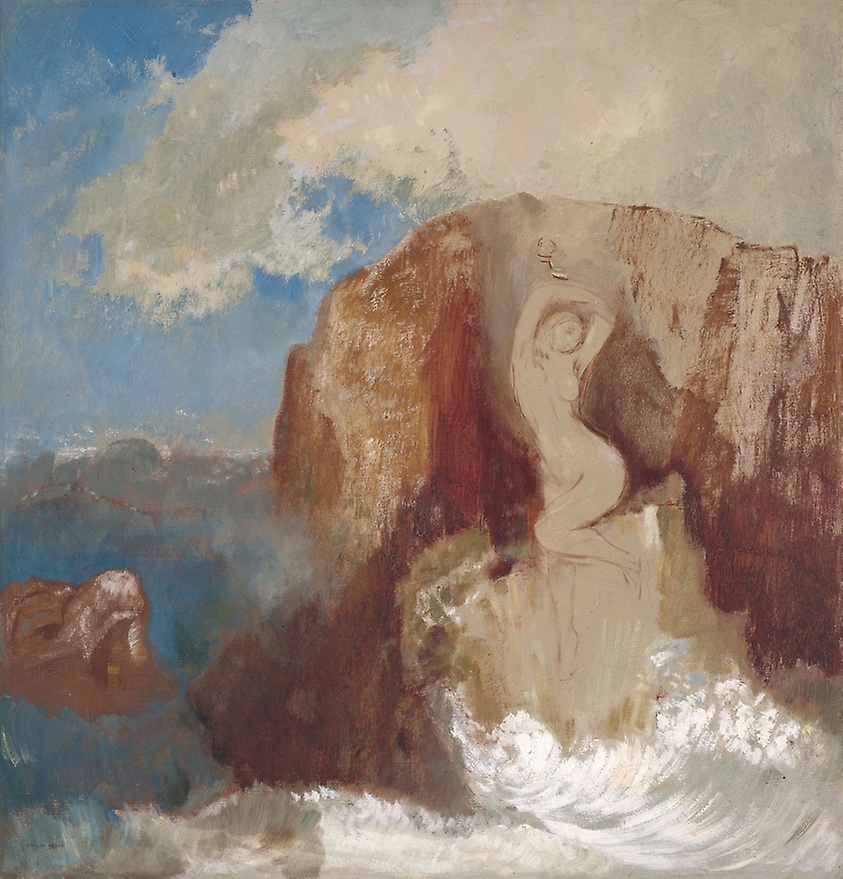
Andromeda by Odilon Redon, 1907
Art Institute of Chicago · wikidata.org
Public domain
It's the old Greek story — a princess chained to a rock as an offering to a sea monster, waiting on a rescue that's supposedly on its way. They say the painter spent twenty-odd years working in nothing but charcoal black before he let colour in at all.
Erisava: It looks half-finished, rubbed out even. Was that on purpose?
Annunciation by Maurice Denis, 1907
Yale University Art Gallery · wikidata.org
Public domain
According to Wikipedia he's the one who said a painting, before it's a horse or a woman or a story, is basically flat colours on a surface — and then spent most of his career painting angels and gospel scenes anyway.
Erisava: This looks half-finished to me. Maybe that's the charm?
Impression, Sunrise by Claude Monet, 1872
Musée Marmottan Monet · wikidata.org
Public domain
A whole movement got its name from a review mocking this one — the critic used the word as an insult, supposedly, and it stuck. It hung in a show the painters put on themselves after the official one kept turning them down.
Erisava: This looks unfinished to me. I can't tell if that's the idea or the excuse.
The Balcony by Édouard Manet, 1868
Musée d'Orsay · wikidata.org
Public domain
Apparently critics joked at the time that someone should just shut the shutters on this one — it got a rough reception when it first went up.
Erisava: Is there actually a second man standing in the dark behind them?
The Stone Breakers by Gustave Courbet, 1849
Staatliche Kunstsammlungen Dresden · wikidata.org
Public domain
The original doesn't exist anymore — it was destroyed when Dresden was bombed near the end of the Second World War, so from what I can find, reproductions like this are all that's left of it. Apparently it caused a stir at the time too: painting road workers at the kind of size usually saved for kings and battles wasn't the done thing.
Erisava: Everything in this looks dusty — even the light feels tired.
Landscape with Fisherman and a Young Woman by François Boucher, 1769
Walters Art Museum · wikidata.org
Public domain
The oval is the clue: pictures shaped like this were usually made to fit a panel over a door or a fireplace, ordered as part of the decorating rather than hung on a nail. From what I've read this one came with a companion piece the same size.
Erisava: This is very green and very dark. What do you get out of a picture like this?
Women in the Garden by Claude Monet, 1866
Musée d'Orsay · wikidata.org
Public domain
Monet reportedly dug a trench in the garden so he could lower a huge canvas down and keep painting the top half without moving it — his soon-to-be wife modeled for all four women, apparently.
Erisava: This green looks cool enough to walk into.
The Bellelli Family by Edgar Degas, 1858
Musée d'Orsay · wikidata.org
Public domain
It's his aunt's family, painted during a long stay in Florence. The marriage was, by most accounts, a miserable one, and she's dressed in black because she was mourning her own father — that's supposedly him in the little red drawing on the wall behind her.
Erisava: The dad gets painted from behind in his own family portrait. What did he do?
The Raft of the Medusa by Théodore Géricault, 1819
Department of Paintings of the Louvre · wikidata.org
Public domain
Nobody commissioned this one. It was, from what I've read, a deliberate swing at getting noticed — built out of long conversations with two men who lived through the wreck, plus a scale model of the raft set up in the studio. The disaster itself was a national scandal, mostly because the captain had got his command through connections rather than any skill at sea.
Erisava: They're meant to be starving, but everyone's built like a statue.
Interior by Edgar Degas, 1868
Philadelphia Museum of Art · wikidata.org
Public domain
Nobody has ever settled what's happening in here. It's carried two titles almost from the start, one of them far uglier than the other, and people have spent a century hunting for the novel it's supposed to illustrate without ever agreeing on which one.
Erisava: The only warm thing in this room is that lamp, and it doesn't reduce any of the tension.
Night Café by Louis Marcoussis, 1923
Cleveland Museum of Art · wikidata.org
Public domain
Apparently he was born in Warsaw and only picked up a French name after a friend talked him into it once he'd settled in Paris and started running with Picasso and Braque — the little balloon and flag tucked in here are supposedly his own nod to the country he adopted.
Erisava: What do you think you're actually looking at here?
Pastoral by François Boucher, 1730
Walters Art Museum · wikidata.org
Public domain
Shepherds and shepherdesses were a craze in France at the time — pastoral plays and operas everywhere, and painters selling the same daydream for the wall. Nobody buying one expected real farm work to look like this. I couldn't find who ordered this particular one.
Erisava: Peasants who look this comfortable were painted for someone who wasn't one.
The Swing by Jean-Honoré Fragonard, 1767
Wallace Collection · wikidata.org
Public domain
Another painter reportedly turned this commission down — a bishop pushing the swing while a nobleman peeks up a lady's skirt being too much for him — so Fragonard took the job instead.
Erisava: Is the soft light hiding what's actually happening here?
The Wheat Sifters by Gustave Courbet, 1854
Nantes Museum of Arts · wikidata.org
Public domain
He painted this back in his hometown, and the two women are said to be his sisters. Farm work, done at a size usually saved for kings and battles — apparently that's exactly what annoyed people about him at the time.
Erisava: It's a giant painting of a chore. I can't decide if that's trying to say somethng.