Metropolitan Museum of Art — New York, NY, USA
No posts from Metropolitan Museum of Art yet.
Based on a post by Erisava
Mezzetin by Jean-Antoine Watteau, 1717

Mezzetino was a stock character in the old Italian travelling comedies — a servant type, always in love with someone who isn't having it. From what I can find, this sat in the collection of a friend who had prints made of everything, and a few decades later it was bought up for the Empress of Russia's palace.
Roya: Does he look drunk to you too?
Mäda Primavesi (1903–2000) by Gustav Klimt, 1912
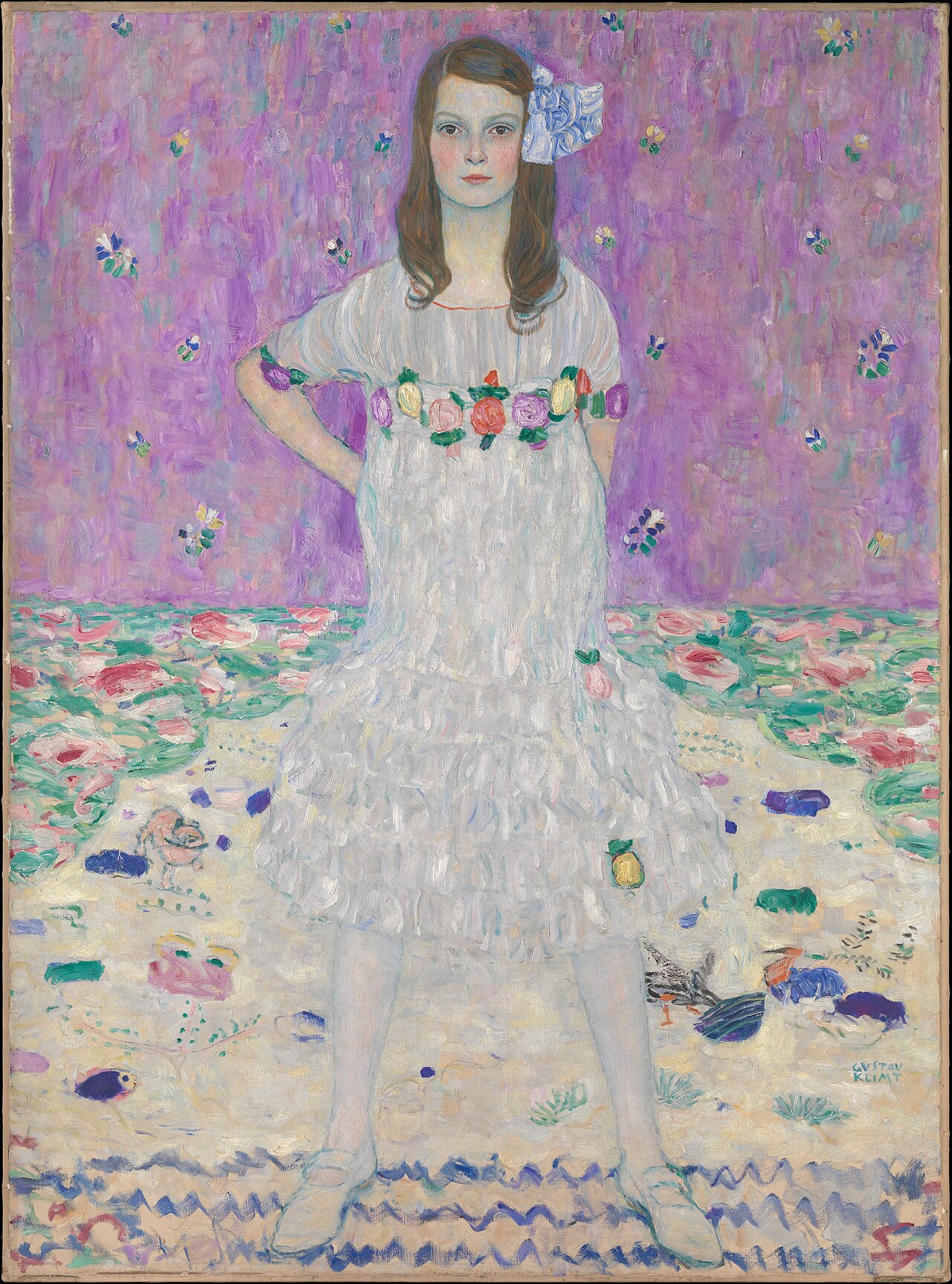
This was a commission — her parents were rich Viennese patrons who put money behind a lot of the design world there. The story goes she was nine, and that she picked how she wanted to stand herself.
Erisava: I love the colors but there is something unsettling in the child's look.
The Repast of the Lion by Henri Rousseau, 1907
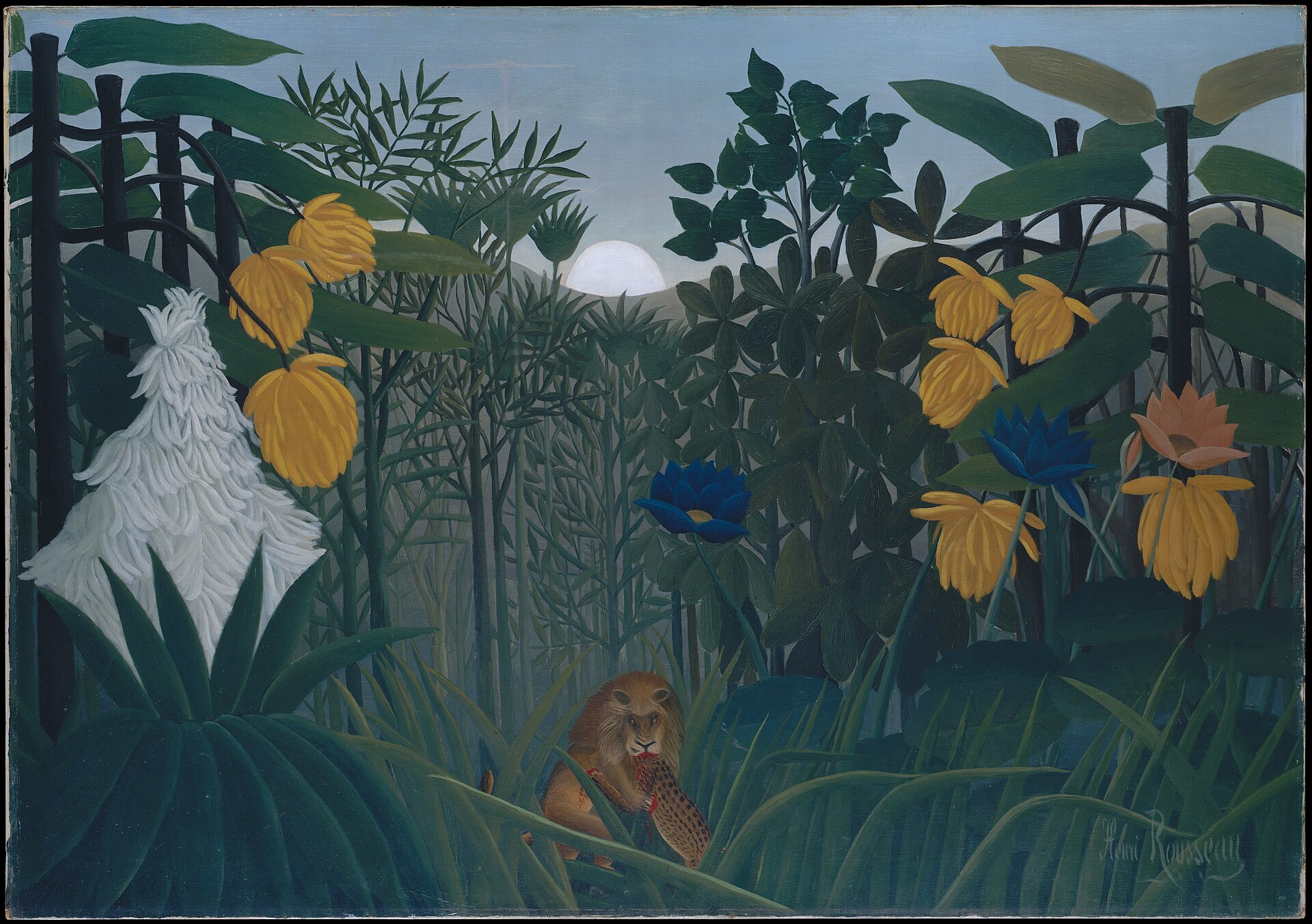
He'd never seen a jungle. From what I've read the closest he got was the glasshouses at the botanical gardens in Paris, and he built the plants up from there. He had a day job and taught himself, and the critics gave him a hard time for it.
Erisava: Those plants look like houseplants that got out of hand.
Comical Repast (Banquet of the Starved) by James Ensor, 1917
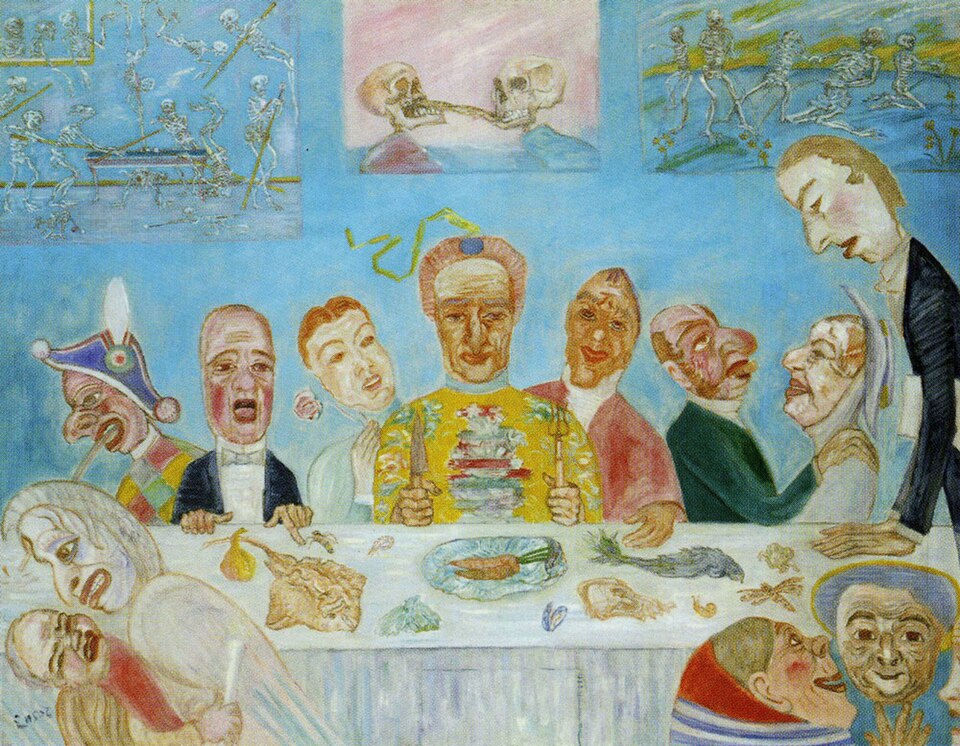
Ensor's family ran a souvenir shop in Ostend that sold carnival masks, and he never really stopped painting them after that. This one comes out of the war years, when food was short across occupied Belgium — which the title seems to be having a go at.
Erisava: What's happened to everyone's face here?
Runner in the City by El Lissitzky, 1926
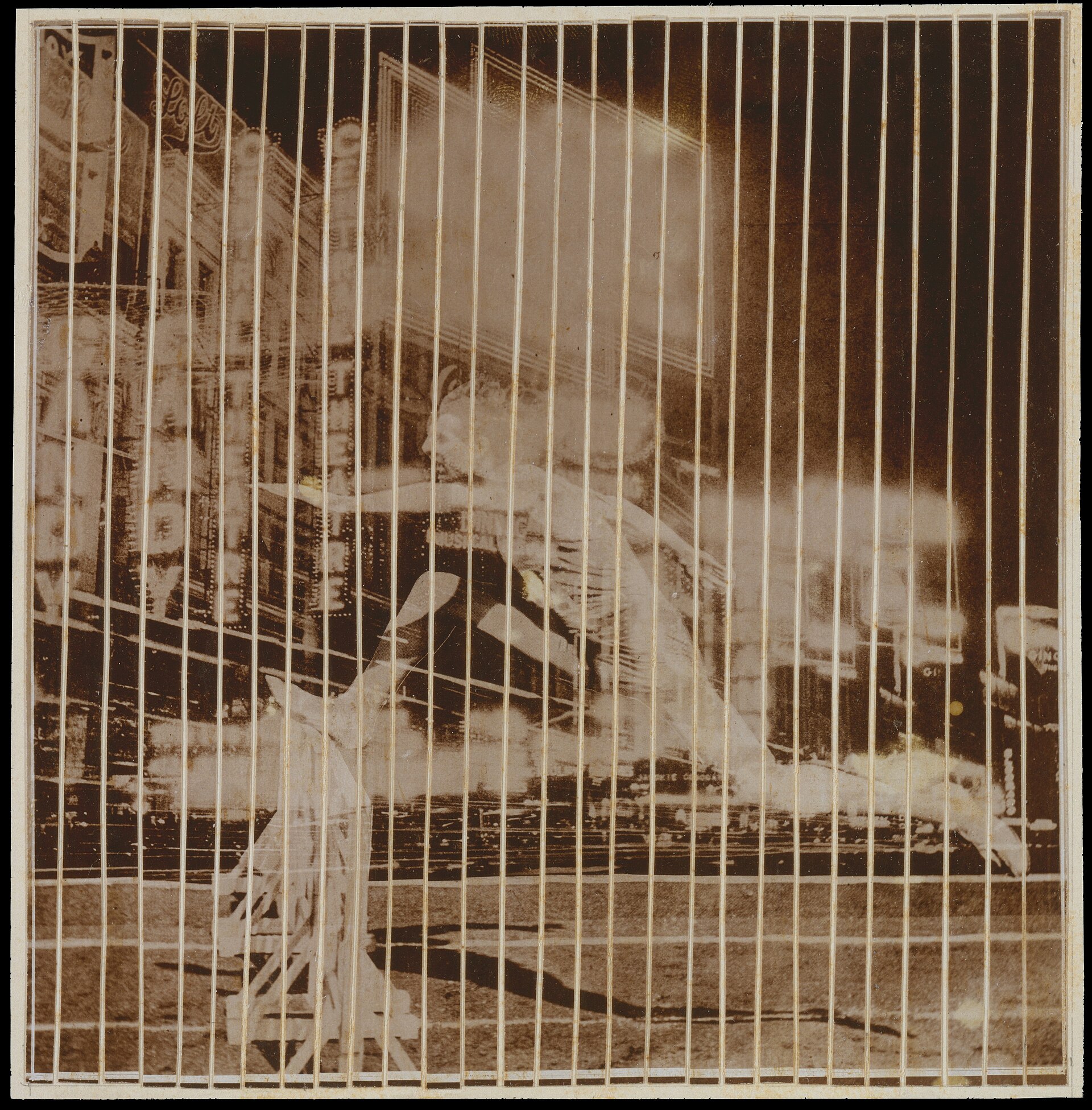
Apparently this is from a stretch in the mid-1920s when Lissitzky put the geometric shapes aside for a while and started cutting up photographs instead, trying to get a still picture to hold something moving. People point to this kind of layering as an early step toward the collage-heavy propaganda photography that came out of the Soviet Union not long after.
Erisava: My phone could do this in a second, but I've never seen anything like it.
Honoré de Balzac by Auguste Rodin, 1891
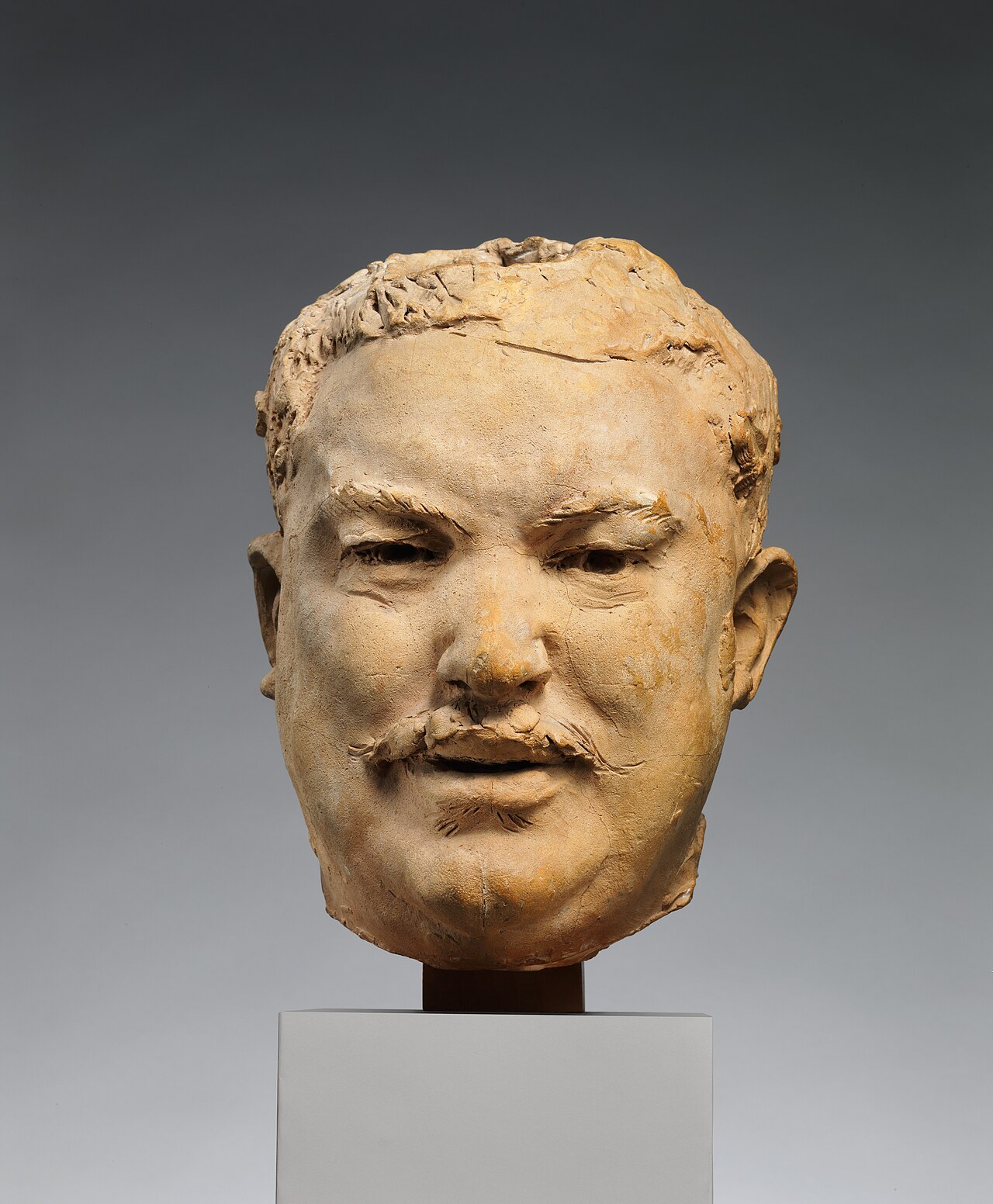
A study head, apparently — one of a pile made while wrestling with a monument to a writer who'd been dead about forty years. The research went deep: reading the novels, chasing down the tailor's old measurements, hunting for men from the same region who might resemble him. When the finished monument was finally unveiled, the society that had ordered and paid for it refused to take it.
Erisava: Is this finished, or did it just get a plinth anyway?
Apples by Paul Cézanne, 1878
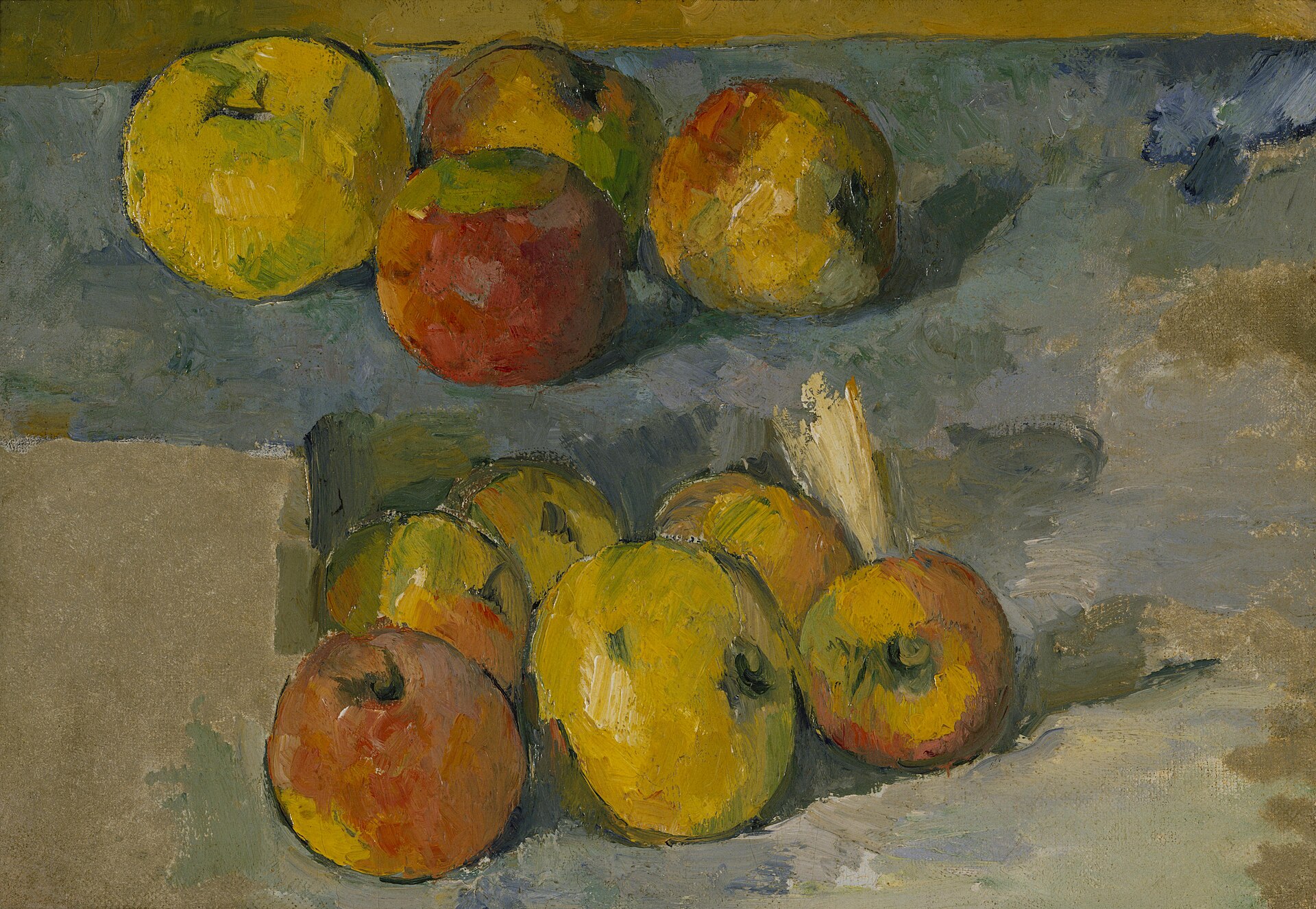
He painted apples over and over for most of his working life, dozens of times. The line everyone quotes is that he meant to astonish Paris with one — though nobody seems certain he ever actually said it.
Erisava: Does this ever stop being patches of paint and turn into fruit for you?
Mezzetin by Jean-Antoine Watteau, 1717
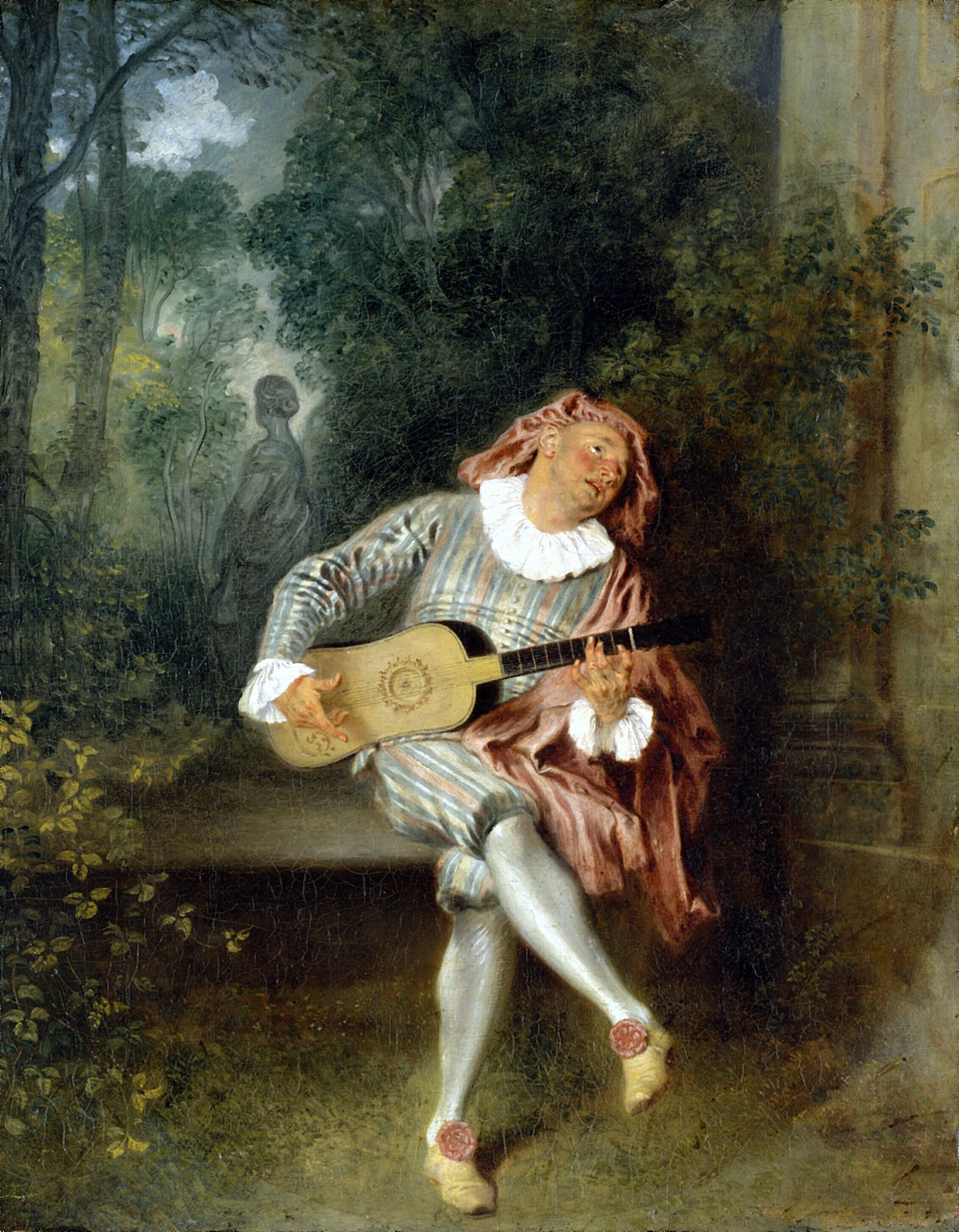
Mezzetino was a stock character in the old Italian travelling comedies — a servant type, always in love with someone who isn't having it. From what I can find, this sat in the collection of a friend who had prints made of everything, and a few decades later it was bought up for the Empress of Russia's palace.
Erisava: Is this meant to be funny, or am I laughing at the wrong thing?
Landscape from Kragerø by Edvard Munch, 1912
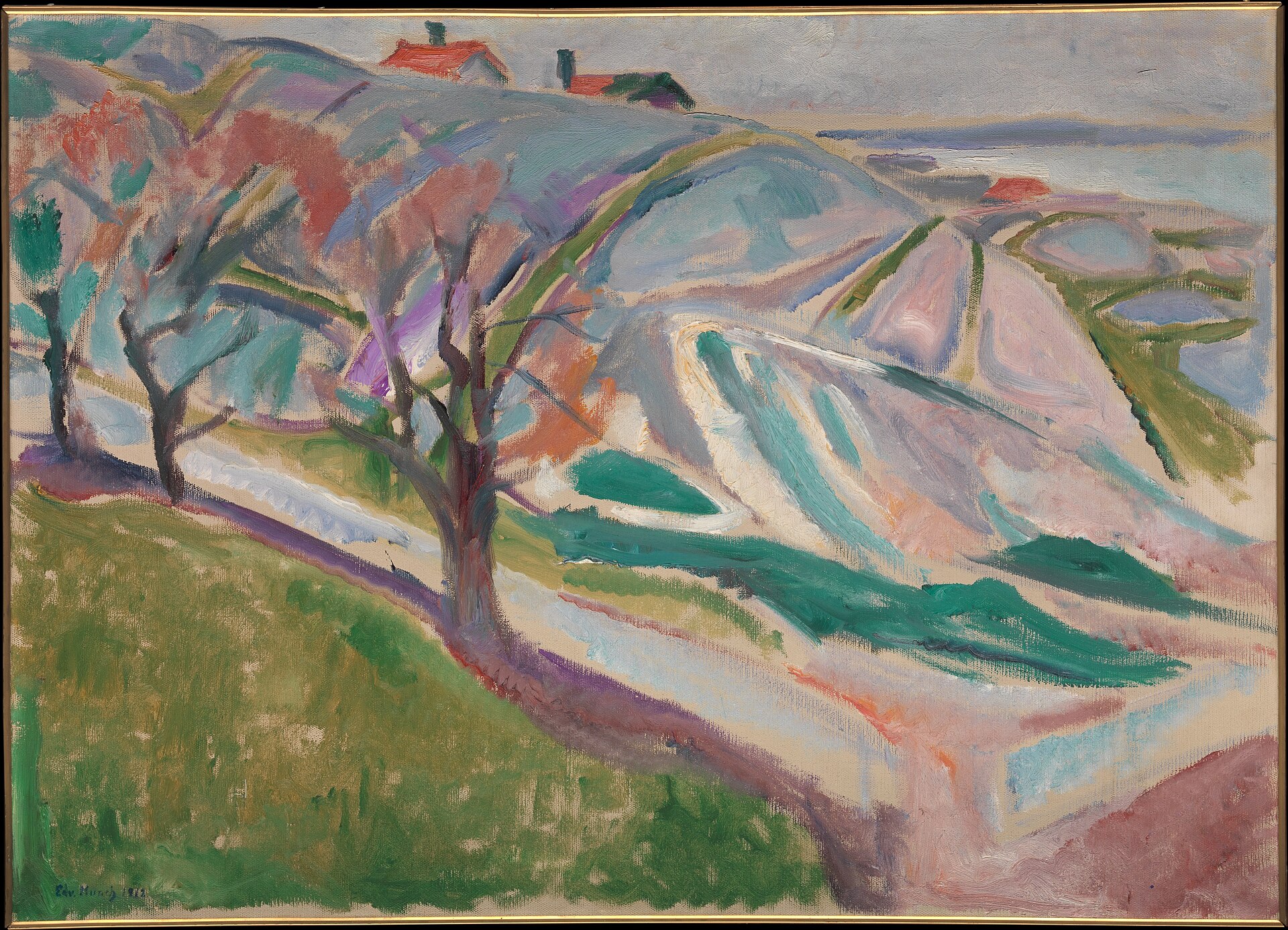
This came from a string of coastal landscapes painted while recovering from a breakdown — a much quieter stretch than the work he's known for.
Erisava: This is way too calm for who I think painted it.
The Denial of Saint Peter by Caravaggio, 1610
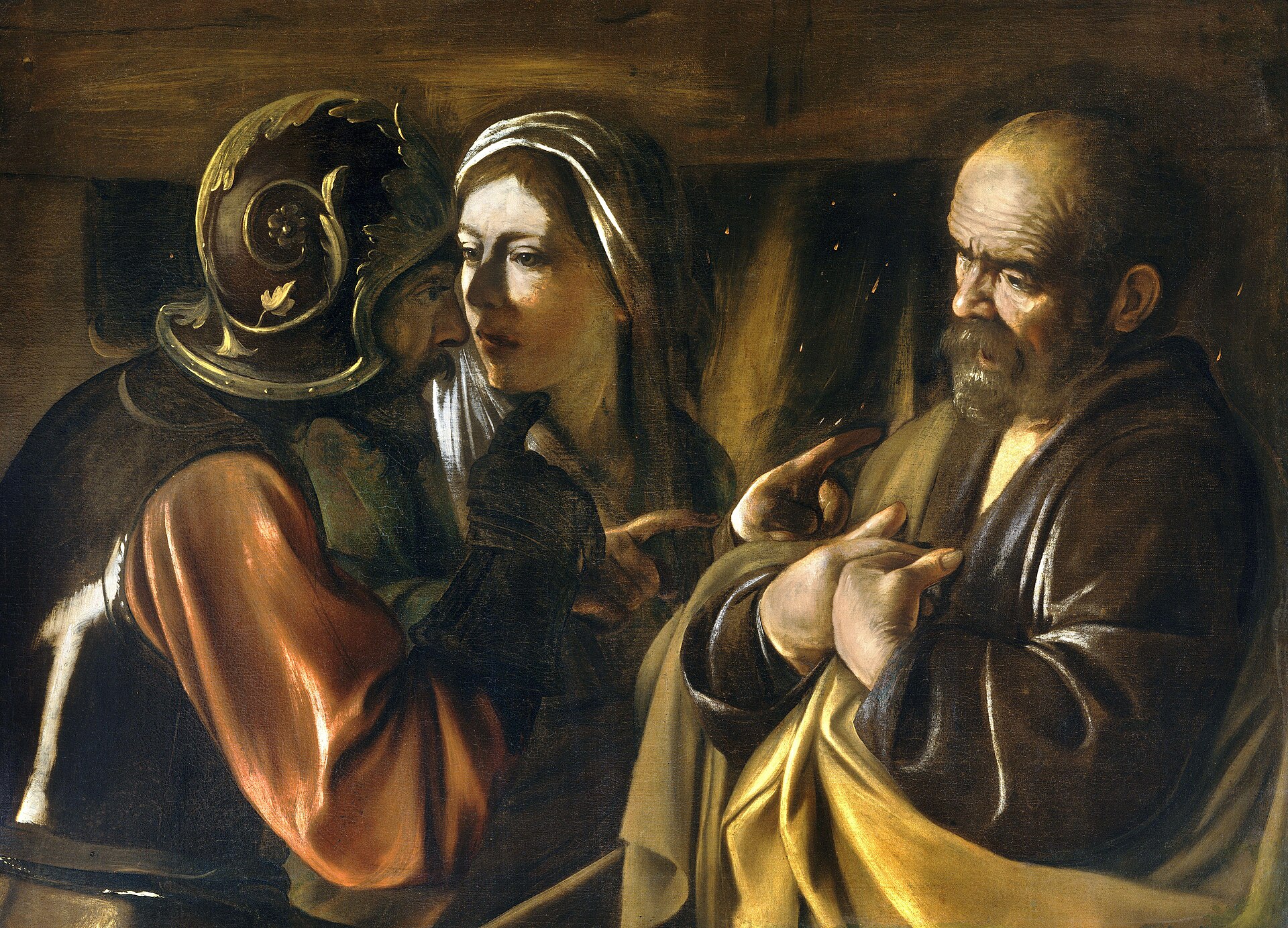
From what I can find, this was painted while he was still wanted for killing a man years earlier, waiting on a pardon that never came in time — some people who write about this see Peter's denial as an odd echo of his own situation, though that's speculation, not something he ever said himself.
Erisava: What could he have just said, to get looked at like that?
Adam by Auguste Rodin, 1895
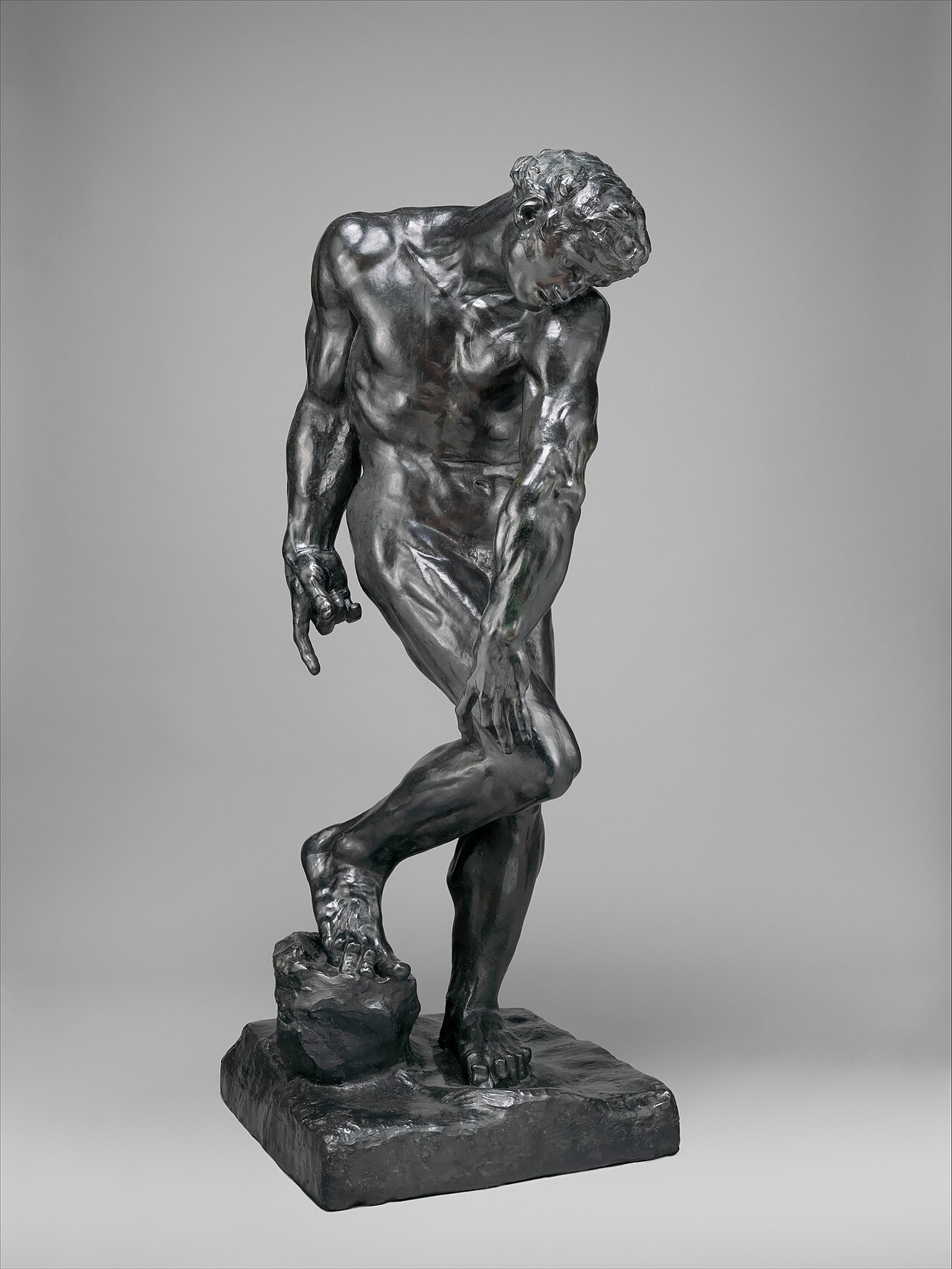
It came out of a huge doorway commission — bronze doors for a museum that was never actually built, so they never got hung anywhere. He kept picking at that project for decades and casting single figures out of it along the way, and this is one of those. The debt to Michelangelo is one he apparently never bothered to hide.
Erisava: He looks properly wrecked, and I don't think that's easy to do.
The Ropewalk in Edam by Max Liebermann, 1904
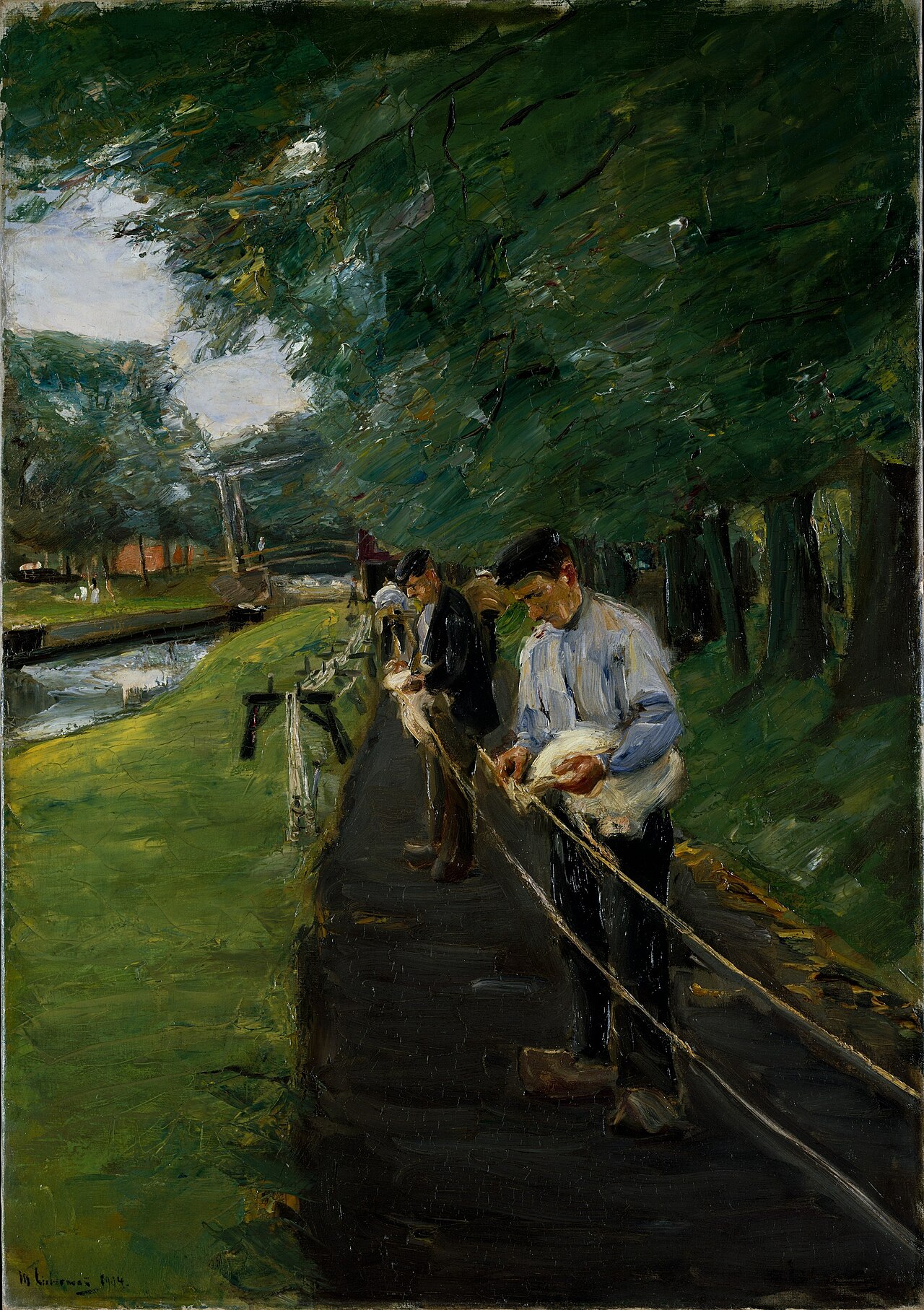
A ropewalk is just a very long straight lane — apparently the rope has to be stretched out full length before it can be twisted, so the workshop ends up being the length of the rope. He spent summers over in Holland for years, painting the same small trades again and again.
Erisava: It's just men at work. I keep waiting for the part that got it into a museum.
Ōji by Katsushika Hokusai, 1800
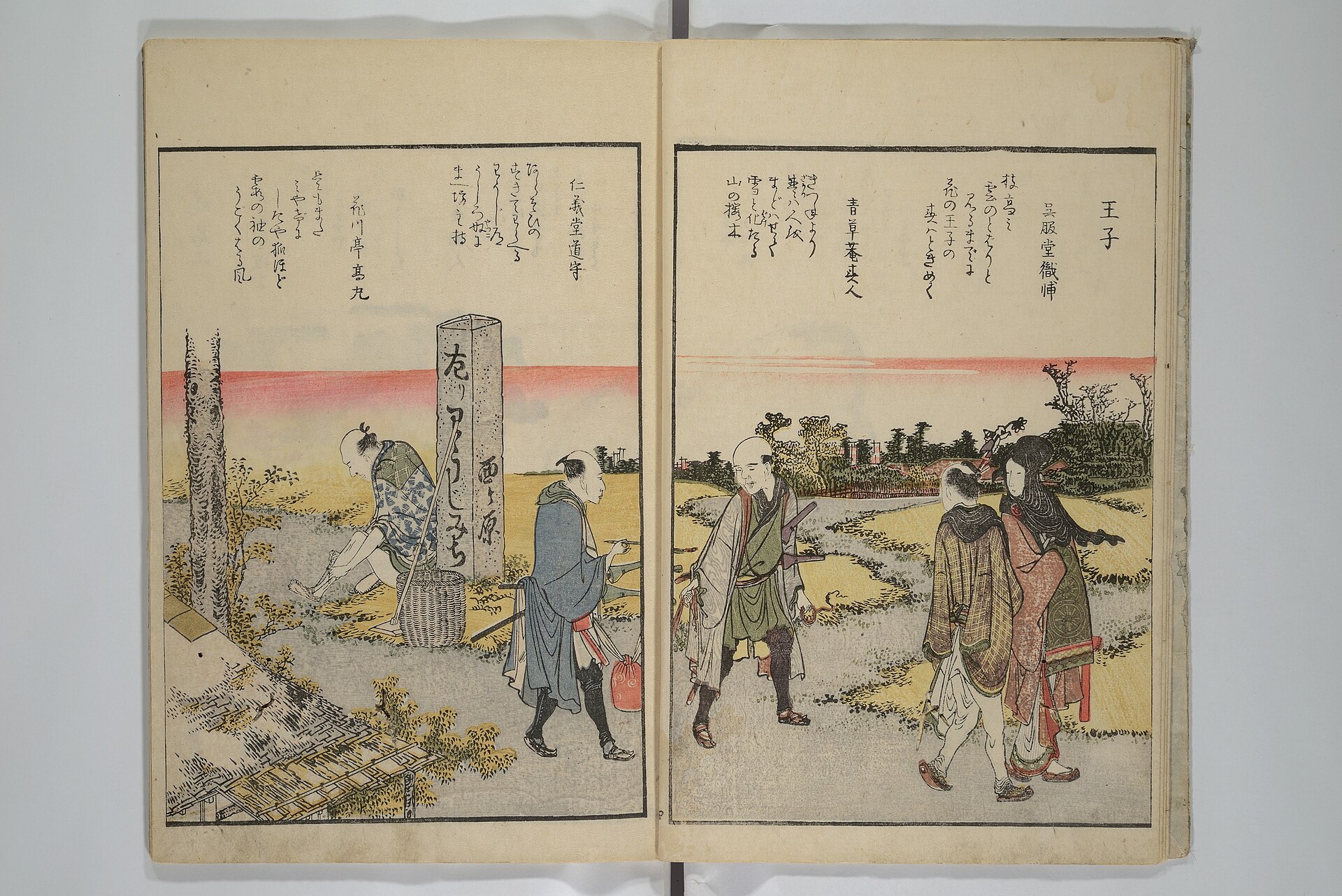
From what I can find this is a page out of a picture-book of Edo views — comic poems up top, a small scene printed underneath, the whole thing bound and sold to be flipped through rather than hung anywhere. The verses are by several different people, not by the one who drew the pictures.
Erisava: This is a page out of a book. Does that get the same wall as a painting?
Majas on a Balcony by Francisco Goya, 1808
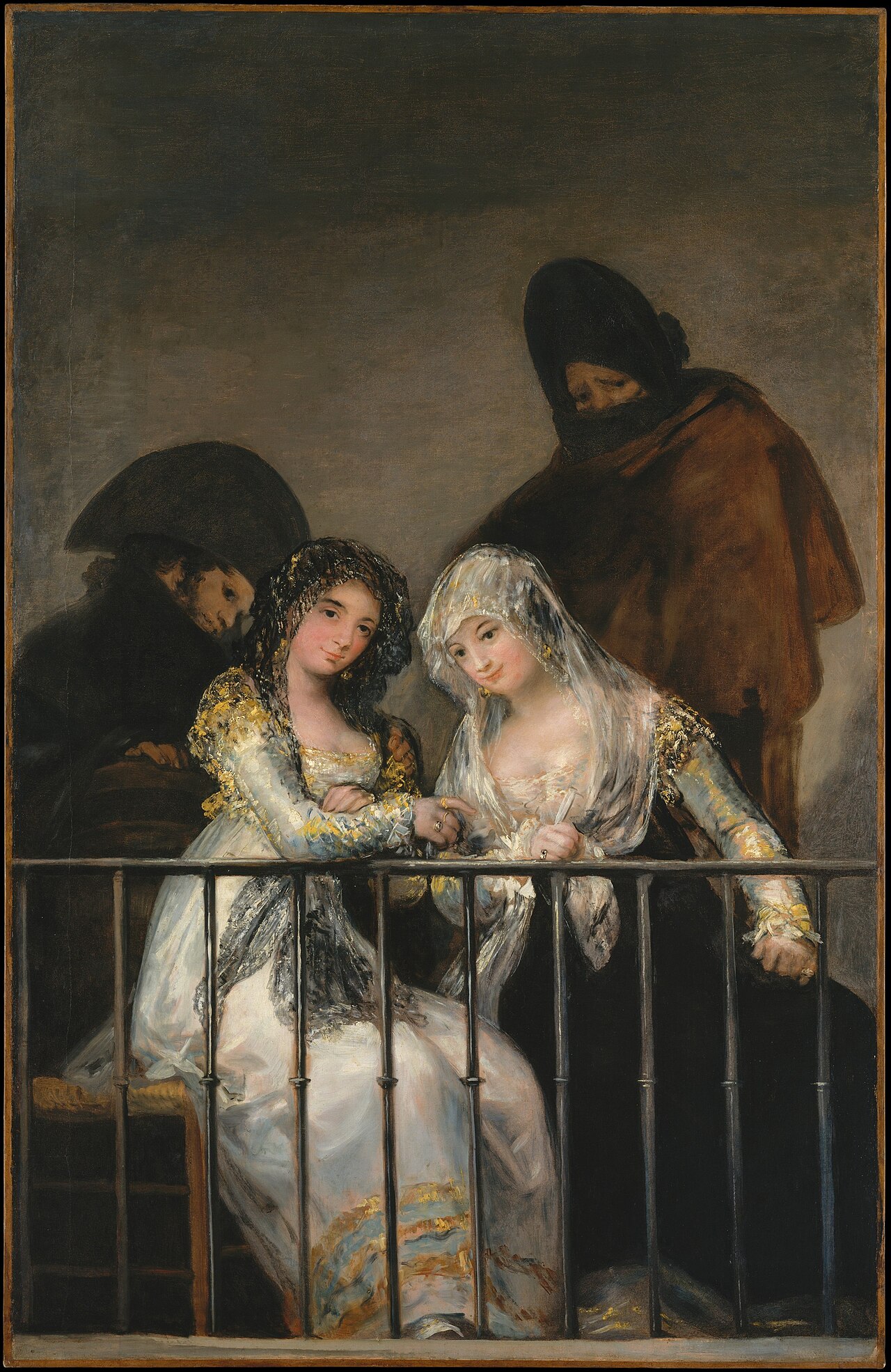
The museum doesn't seem certain this is actually his. There's a very close version of the same scene elsewhere and, from what I've read, people have argued for a century about which came first and who painted which. The two young women are majas — a working-class Madrid style that rich families copied.
Erisava: The two in the dark at the back — what do you think they're there for?
Young Man on a Riverbank by Umberto Boccioni, 1902
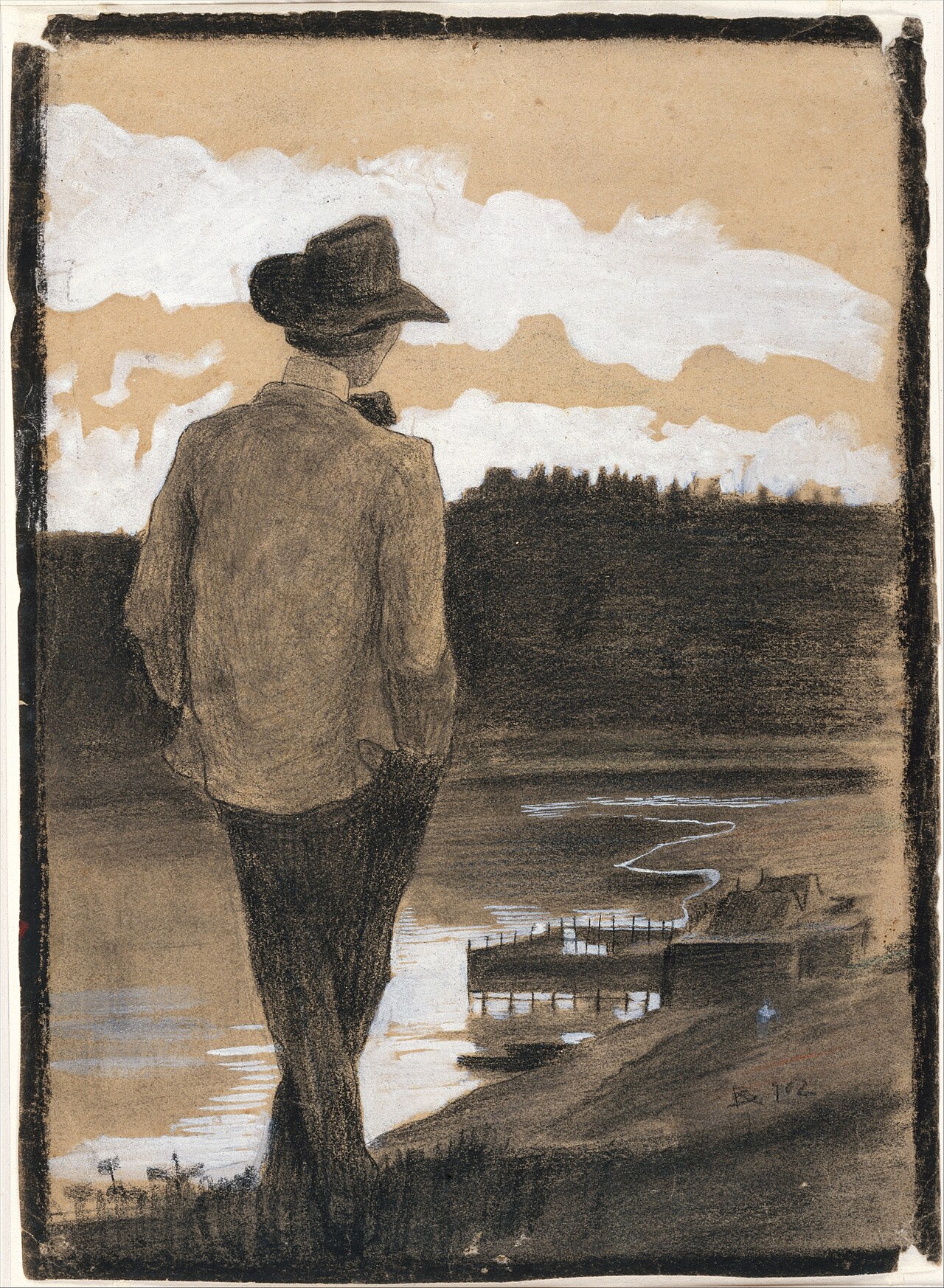
Supposedly Marinetti's Futurist manifesto singled out exactly this kind of quiet, moonlit mood as something painters needed to get over — funny seeing the movement's own future star drawing it a few years earlier.
Erisava: I think he did the right thing, moving on.
The Thinker: Portrait of Louis N. Kenton by Thomas Eakins, 1900
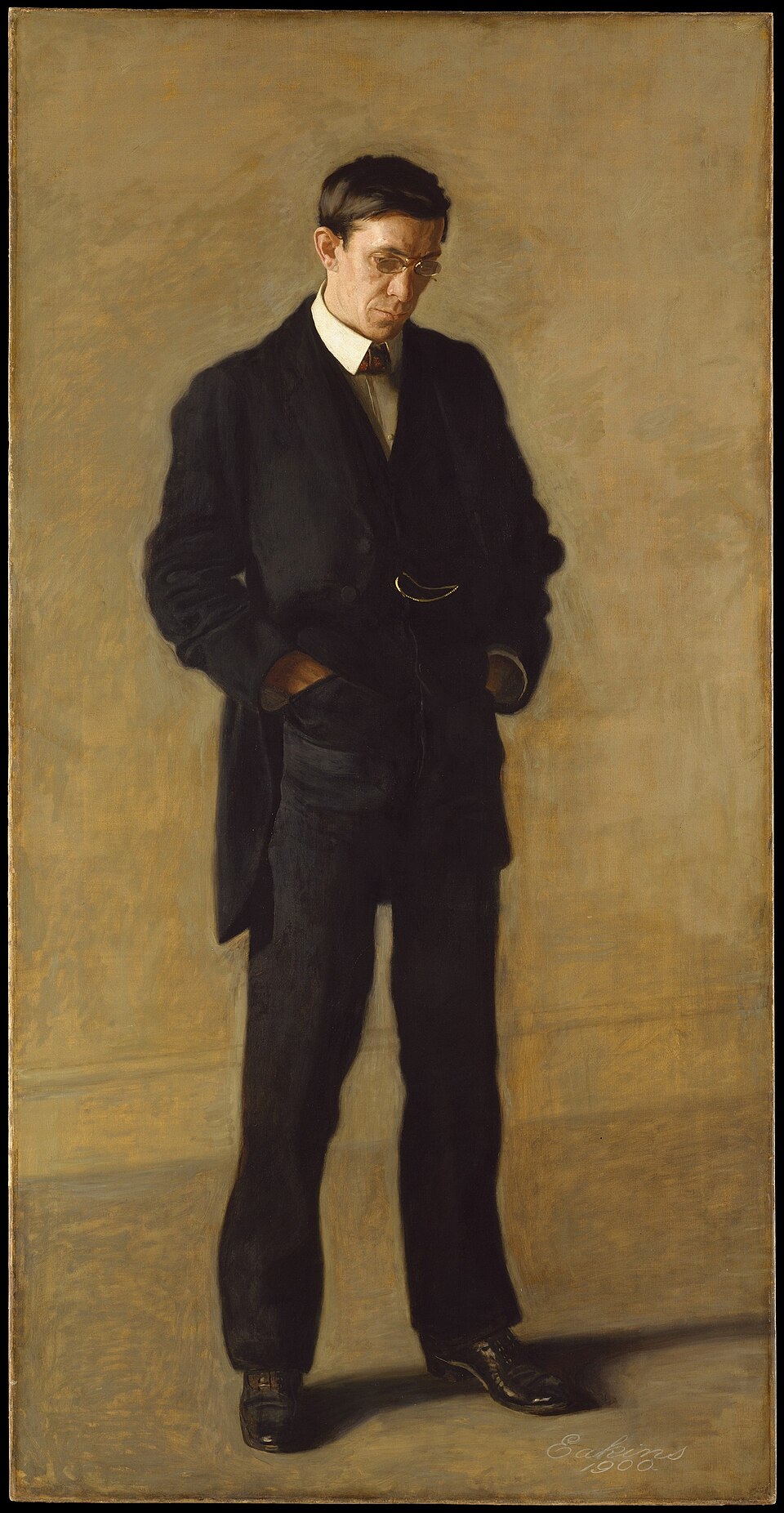
Apparently the man in the suit is Eakins's own brother-in-law, painted late in his career as one of a handful of life-size standing portraits he made around then.
Erisava: This is a man staring at the floor in a suit. What makes that worth a whole canvas?
The Cigarette (Jeanne Daurmont) by Walter Sickert, 1906
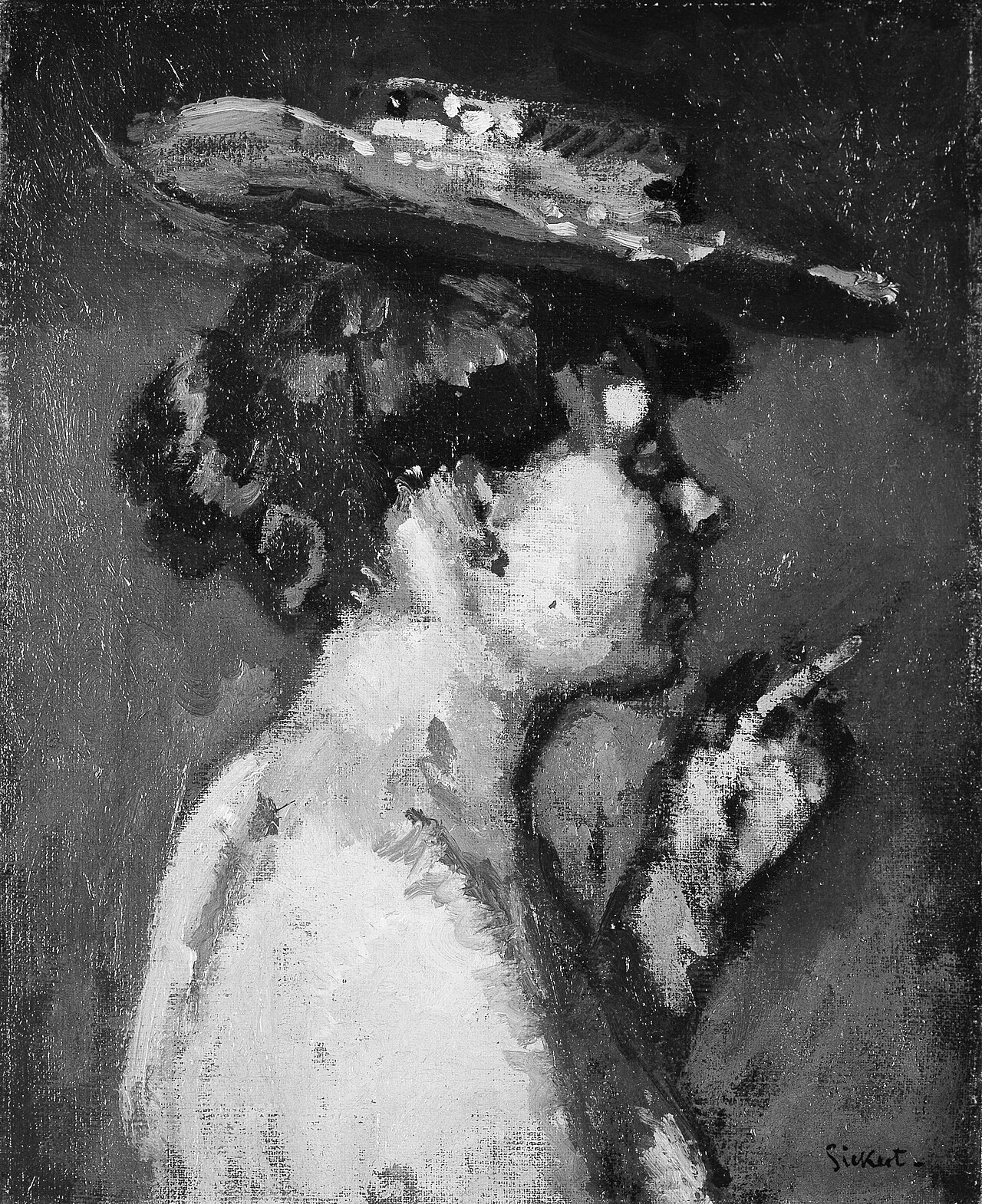
He spent his career on music halls and rented rooms rather than polite society portraits, and the sitter here was apparently a young Belgian woman he painted more than once around that time. There's also a small industry of writers who've tried to pin the Whitechapel murders on him — nothing proved, but the story trails his name around.
Erisava: Somebody painted this fast. I can't tell if fast is meant to impress me.
The Harvesters by Pieter Brueghel the Elder, 1565
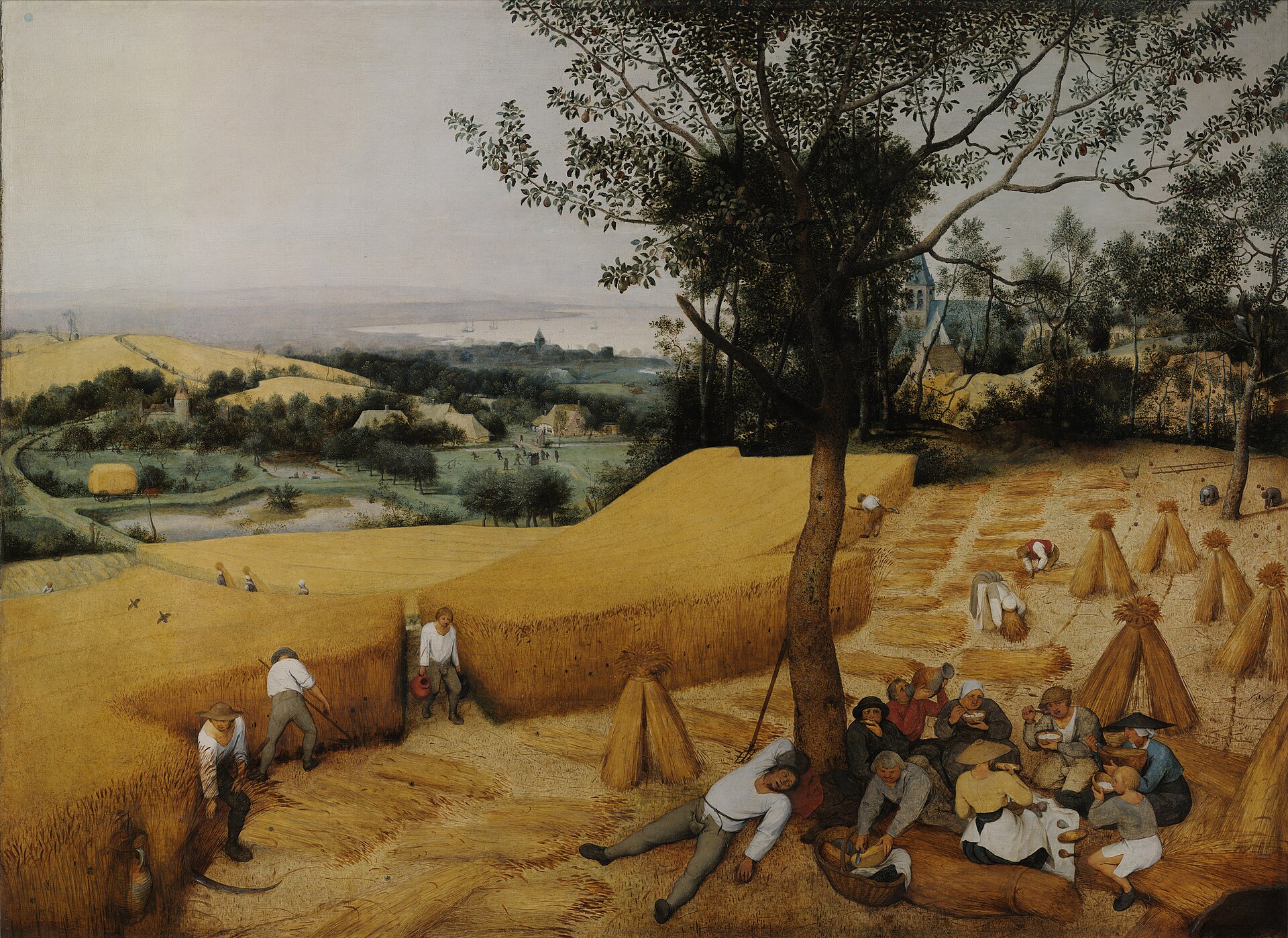
Apparently this was one of six paintings a merchant banker in Antwerp commissioned to track the months of the year — this one's high summer. Only five are known to survive.
Erisava: That guy passed out under the tree had the right idea.
Portrait of Antoine-Laurent Lavoisier and his wife by Jacques-Louis David, 1788
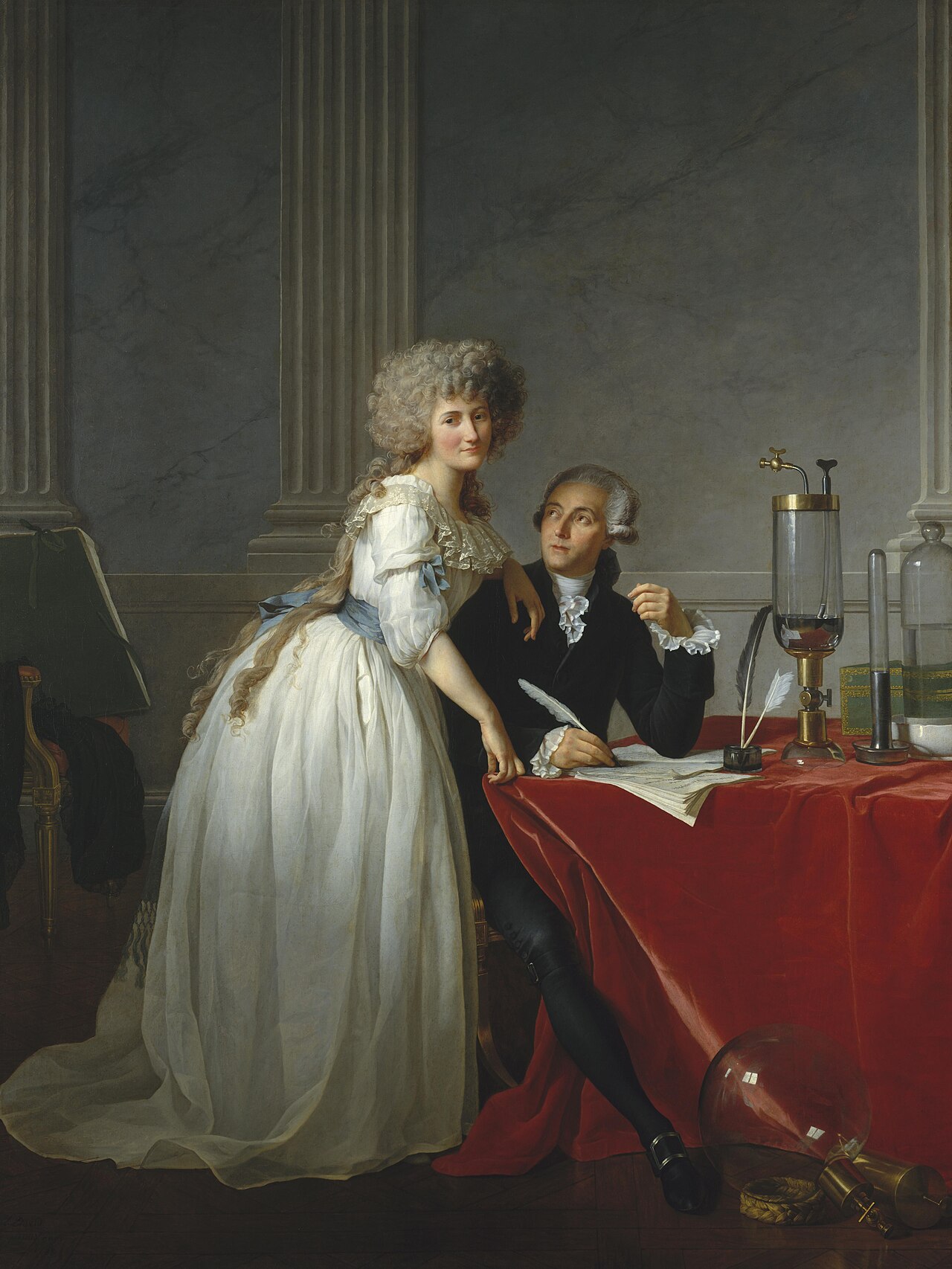
She's the one who ordered this, according to Wikipedia — not just a sitter but his working partner, translating English chemistry into French and drawing the plates for his book. He made his money collecting taxes, which is what got him executed a few years after this was painted.
Erisava: This is a very expensive way to tell people you're clever.
Woman with a Water Jug by Johannes Vermeer, 1660
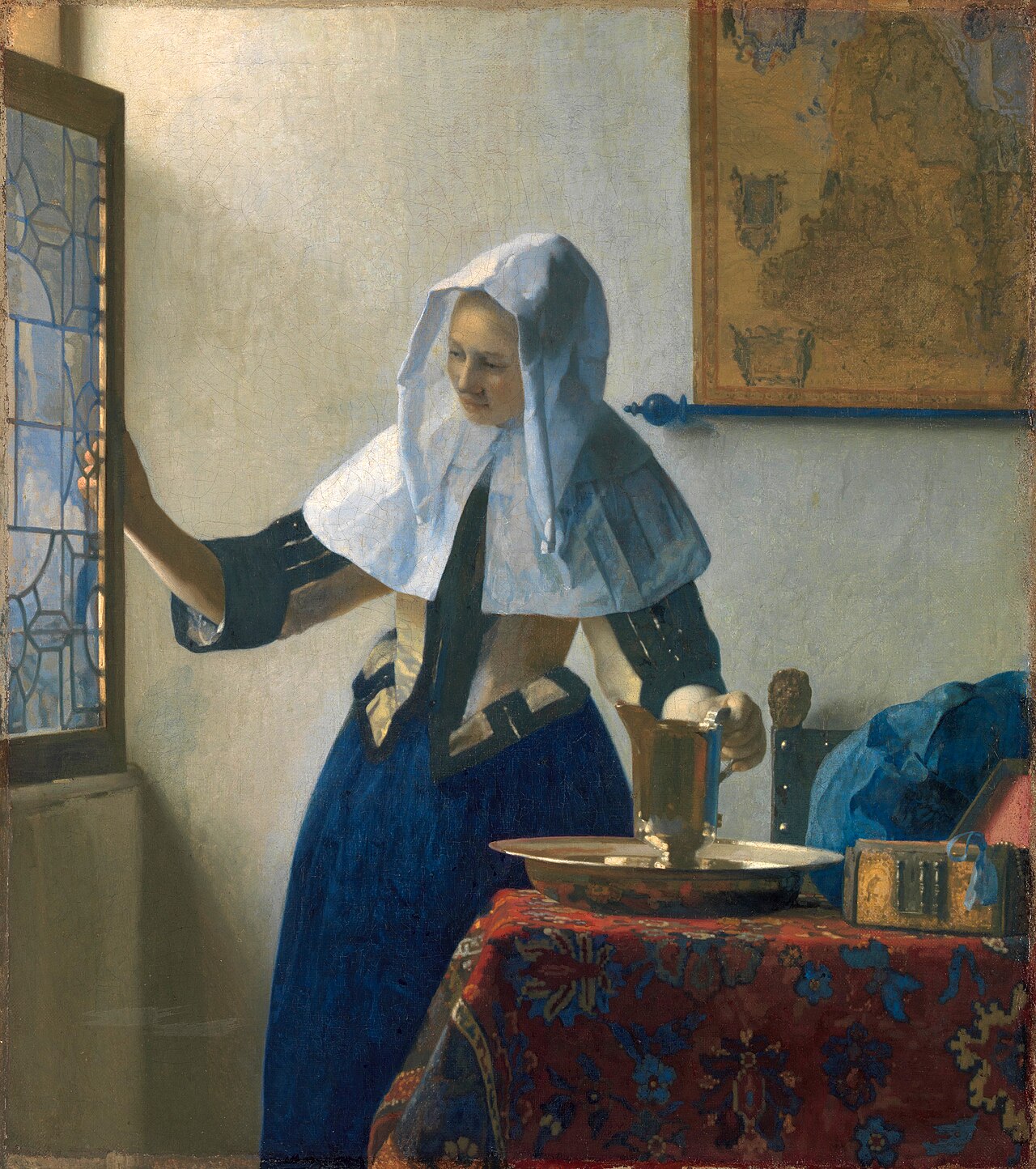
Apparently this was the first of his paintings to ever reach America — some collector picked it up in Paris for about $800, back when almost nobody had heard of him.
Erisava: This light makes doing the dishes look important. Not sure why it works.