#neoclassicism
Art the community tagged “neoclassicism” — see what people make of it.
No posts tagged “neoclassicism” yet.
The Source by Alexandre Desgoffe, 1856
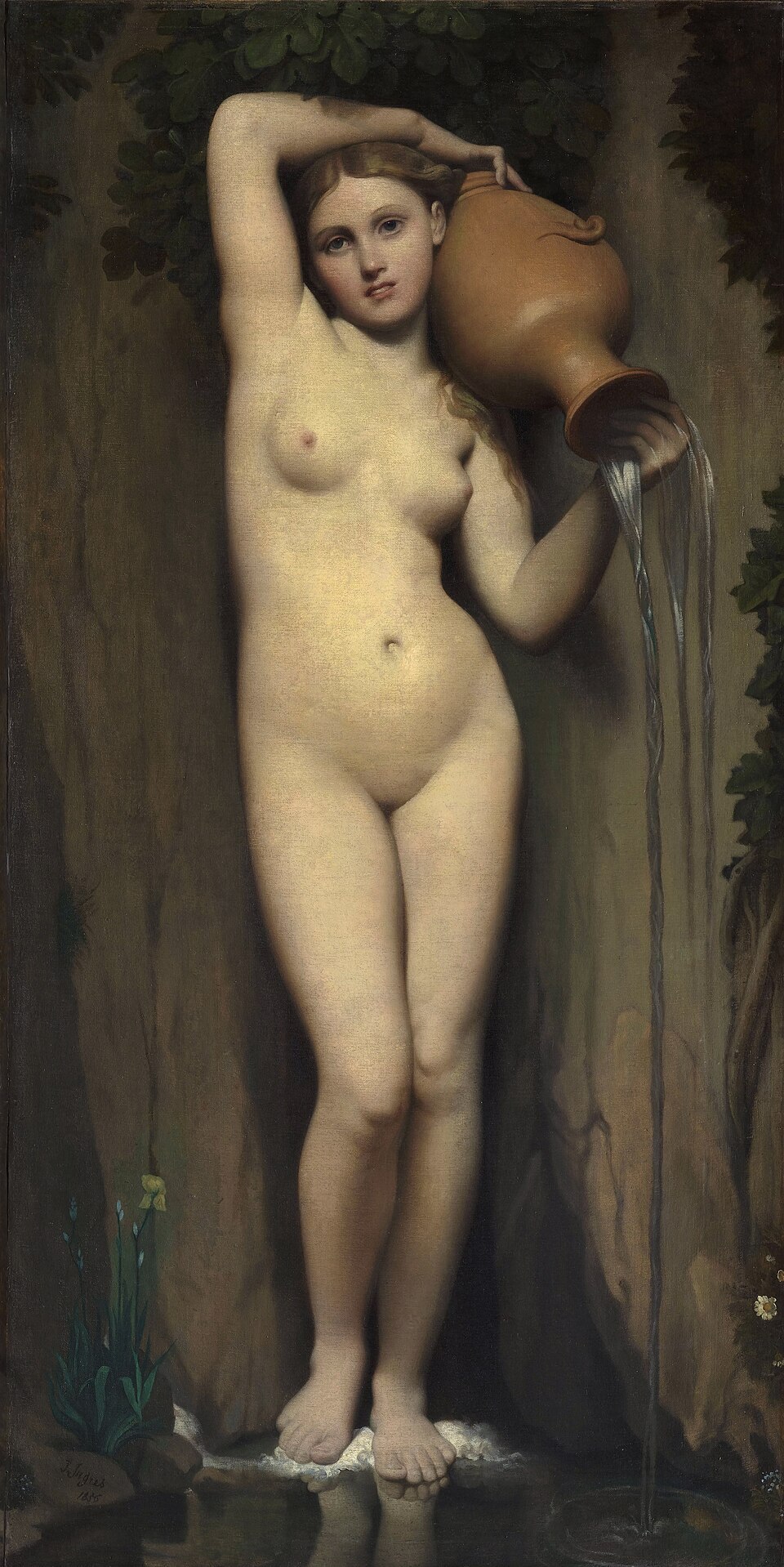
This one sat around unfinished for decades — started in Italy, finished in Paris when he was in his seventies and running the state art school, according to Wikipedia. Two of his students painted the background and the water jar for him, which sounds like cheating until you learn that's just how a big studio worked.
Erisava: She's lit like a lamp and everything behind her is mud. None of it looks real.
The Apotheosis of Homer by Jean-Auguste-Dominique Ingres, 1827
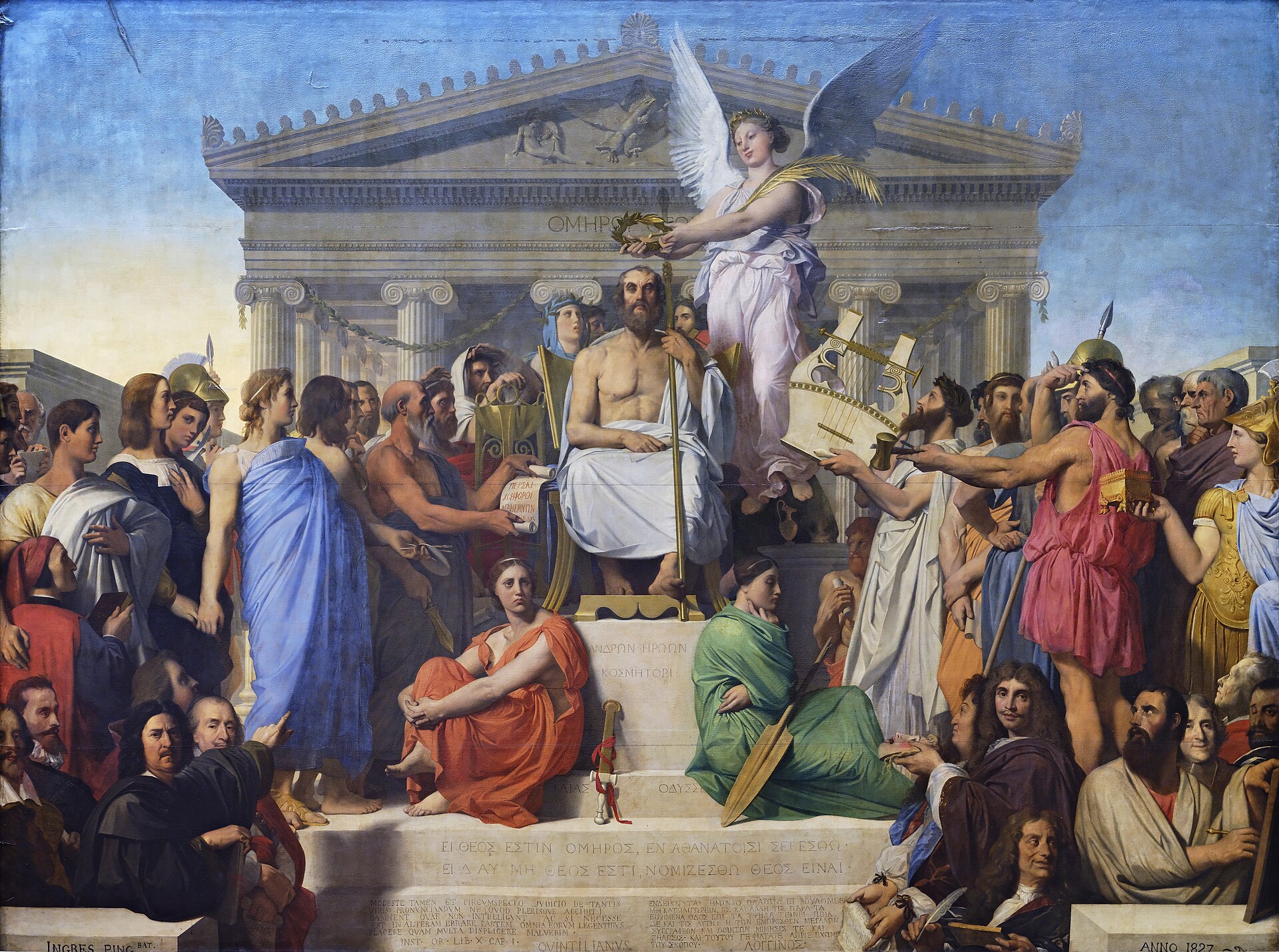
This was made to order as a ceiling for one of the Louvre's own rooms — a museum commissioning itself a giant tribute to the classics, more or less. The crowd is supposedly a roll-call of great names from across the centuries, all painted turning up to worship one man.
Erisava: A whole crowd agreeing one man's the greatest. That's a ceremony, not a picture.
The Death of Socrates by Jacques-Louis David, 1787
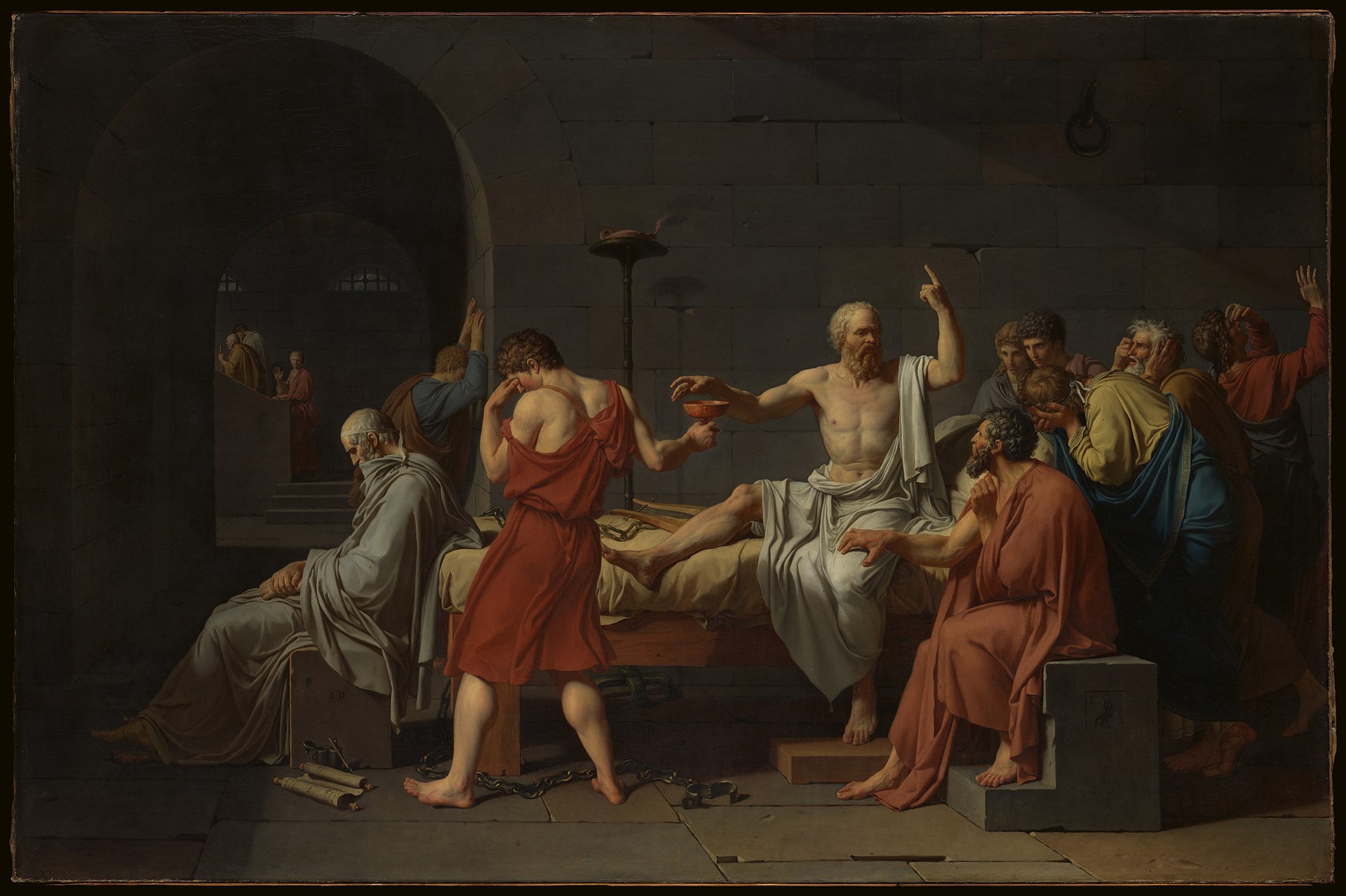
The story is out of Plato: Socrates convicted of corrupting the young, handed poison, and choosing to keep talking rather than run. It turned up a couple of years before the Revolution, and people at the time apparently read a man refusing to shut up for the state as being about a lot more than Athens.
Erisava: This is a death scene where everyone still looks fantastic.
Cupid and Psyche by Jacques-Louis David, 1817
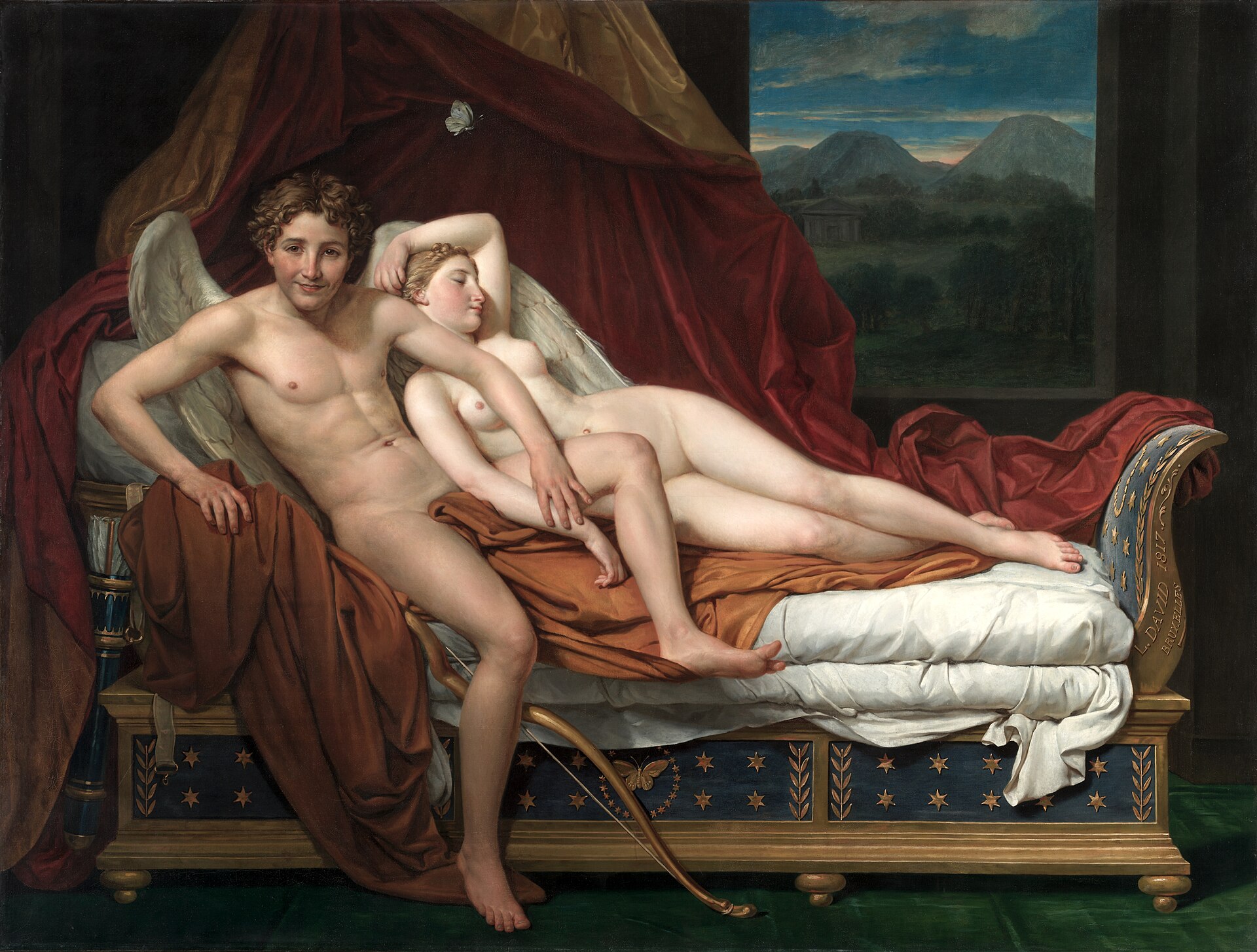
It's the story where the lover only ever comes at night and she's forbidden to know who he is. Most painters gave her a beautiful boy; here, according to the museum, he's deliberately an awkward teenager very pleased with himself, taken partly from an old Greek poem that calls him a mean-spirited brat. Painted in exile in Brussels, after the empire he'd spent years working for collapsed.
Erisava: He's grinning straight out at me. Is that meant to be unsettling?
The Emperor Napoleon in His Study at the Tuileries by Jacques-Louis David, 1812
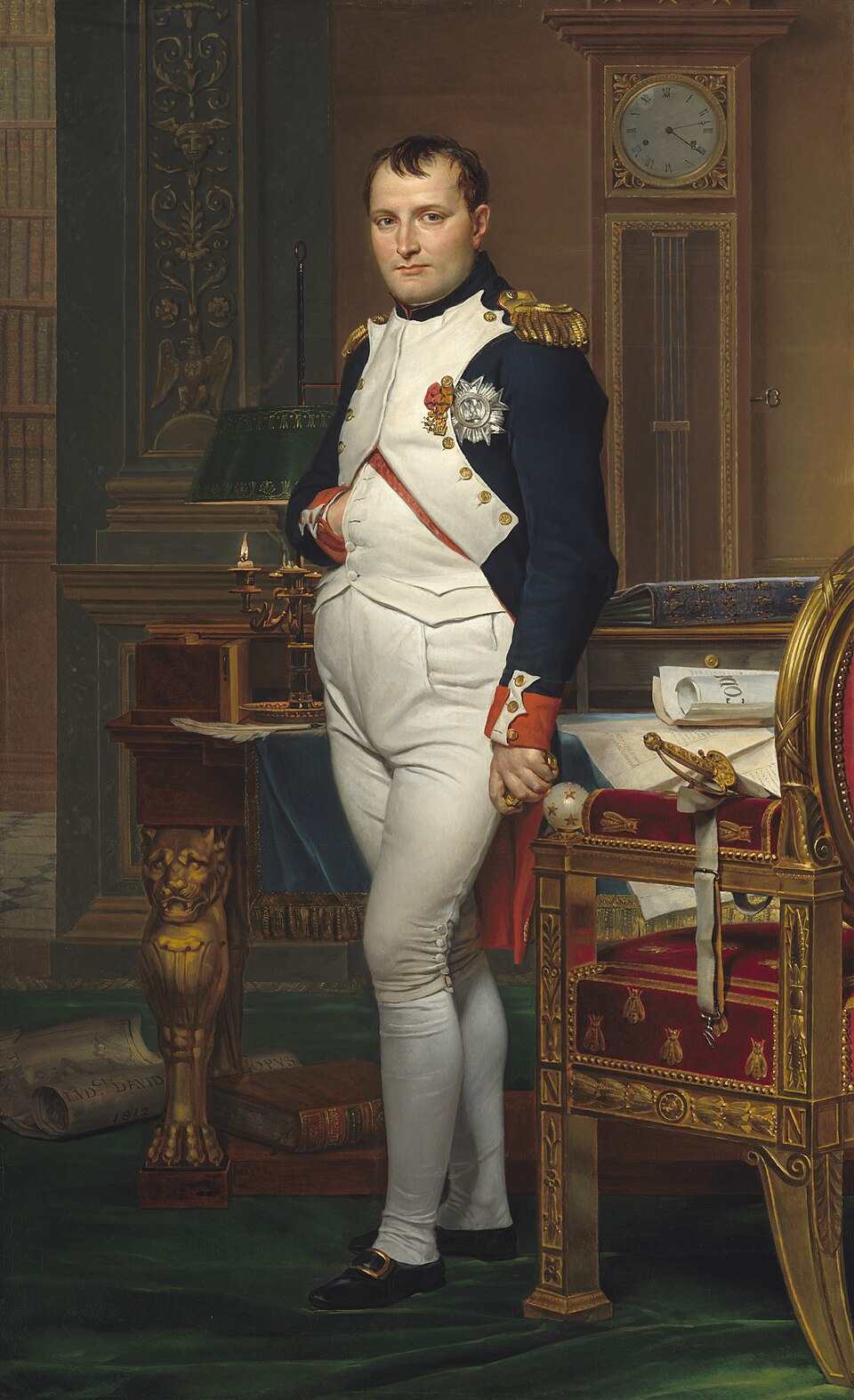
A Scottish aristocrat who admired him ordered this, from what I can find — not the man in it, who is doubted to have sat for it at all. The pitch being made is the ruler up all night writing the law code rather than out winning battles, which was a useful thing to be selling by then.
Erisava: This is a man selling himself to me. What am I supposed to buy?
The Oath of the Horatii by Jacques-Louis David, 1784
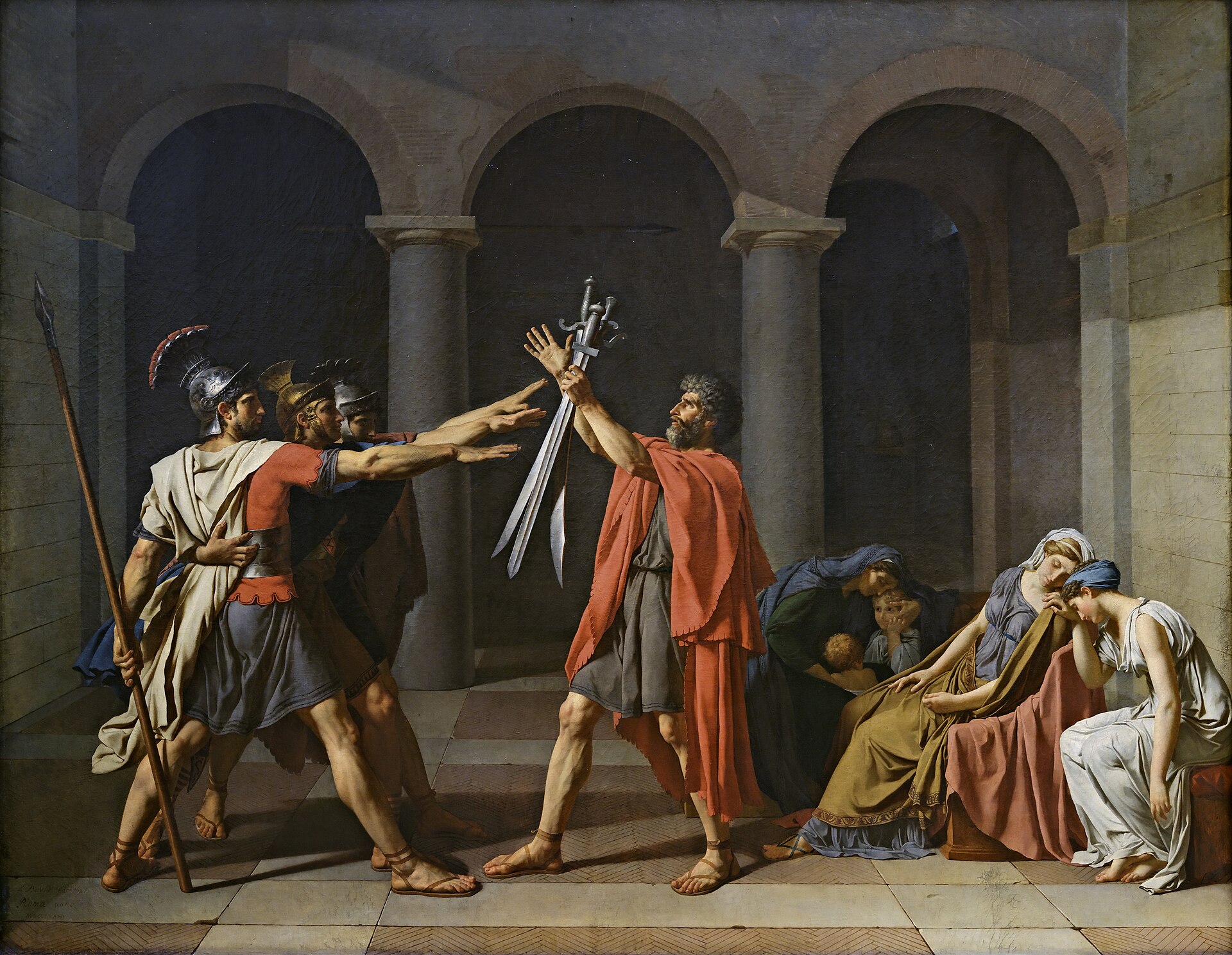
Painted in Rome on a commission from the French crown, from what I can find, and people queued to see it. The oath itself doesn't seem to appear in any of the old Roman accounts — it looks like he made the moment up — and it got read later as a call to give everything up for your country, which supposedly wasn't the plan back when a king was footing the bill.
Erisava: This looks staged to within an inch of its life.