Cleveland Museum of Art — Cleveland, OH, USA
No posts from Cleveland Museum of Art yet.
Seated Woman by Chaïm Soutine, 1923
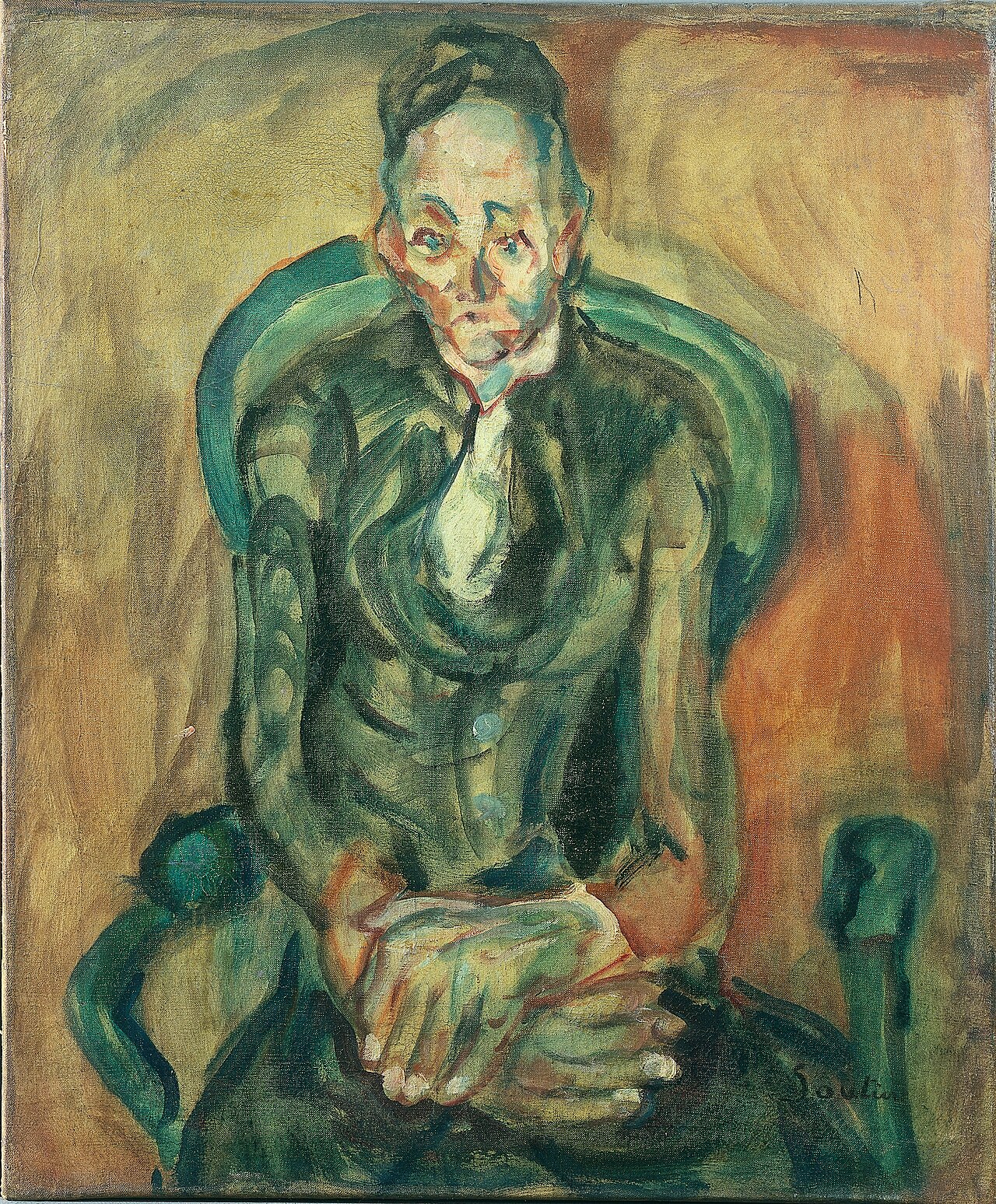
Apparently he painted this same setup - seated, facing forward, hands folded - close to 200 times, and barely ever named who he was painting. Supposedly one of the other versions is so similar it's been mistaken for the same sitter.
Erisava: Why does the color feel off, and why do the hands look so huge?
Mural Sketch, Pastoral Study, No. 1 by Henry Keller, 1920
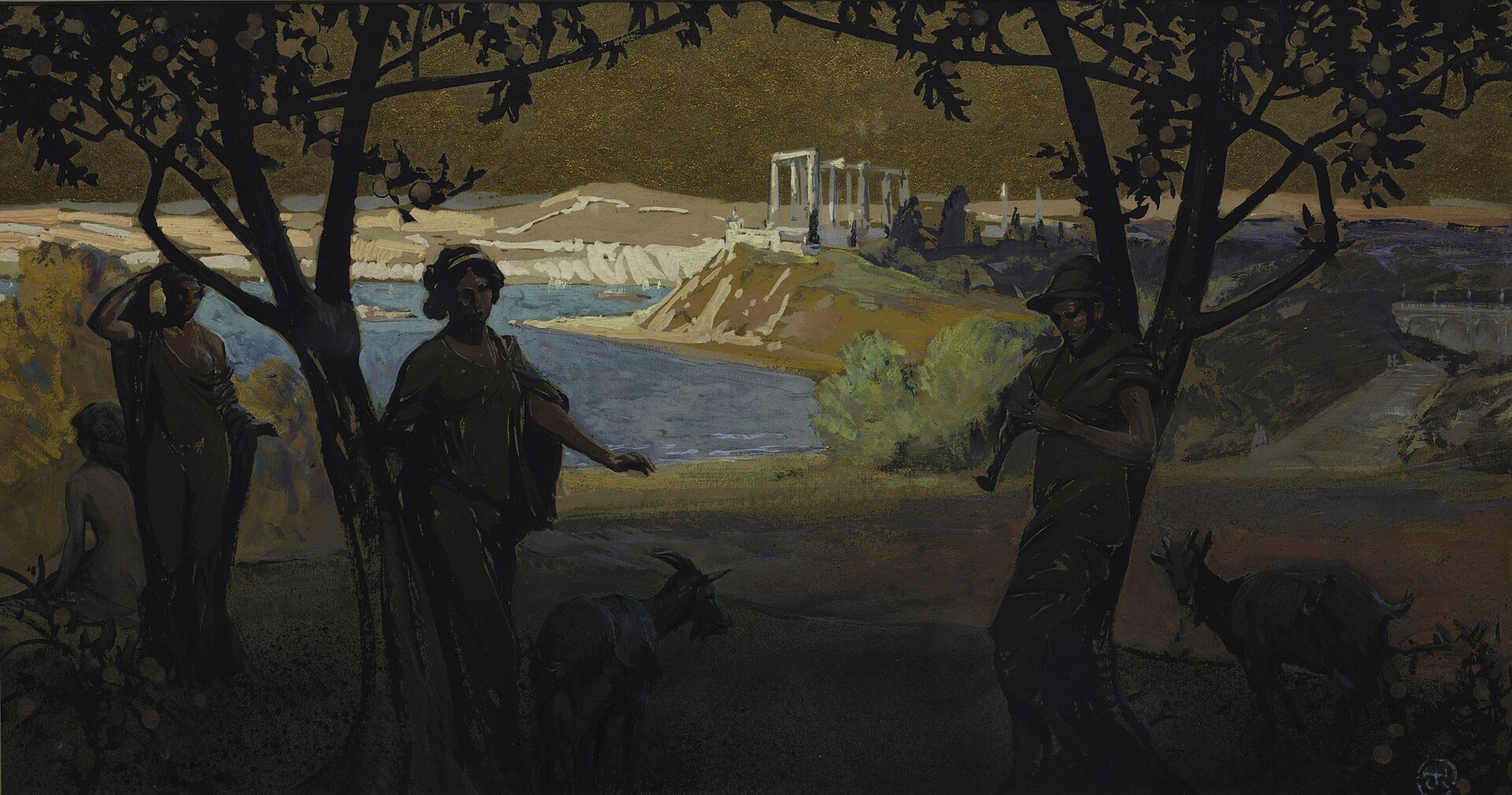
This apparently isn't a finished painting on its own — it's a sketch for a mural, so somewhere there might have been meant to be a full-size version on an actual wall. The gold sky, the ruins, the goats: all of it seems to be reaching for 'ancient Greece.'
Erisava: This feels like somebody's daydream of ancient Greece, not an actual place.
Tiger by Franz Marc, 1912
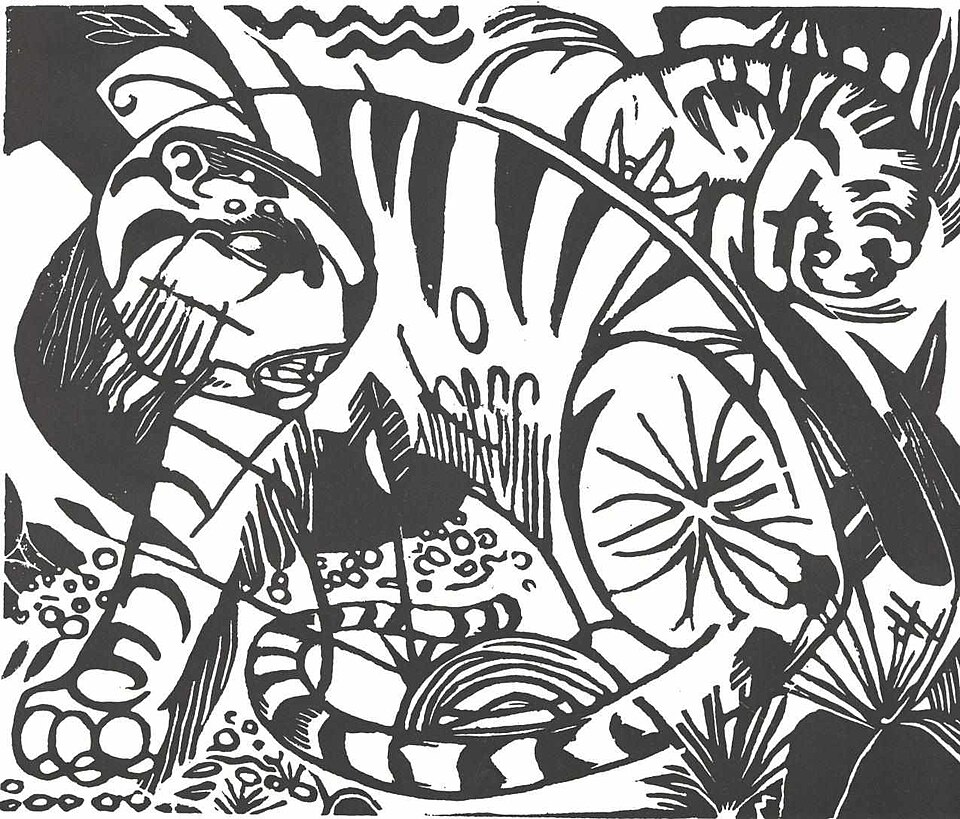
This print was meant for an illustrated Bible — Marc was working through the Genesis story with animals standing in for it. The other one in the set showed horses; museum notes call this one the more menacing of the two.
Erisava: It took me a second to even spot the tiger in all this.
Valley of the Sédelle at Pont Charraud: White Frost by Armand Guillaumin, 1907
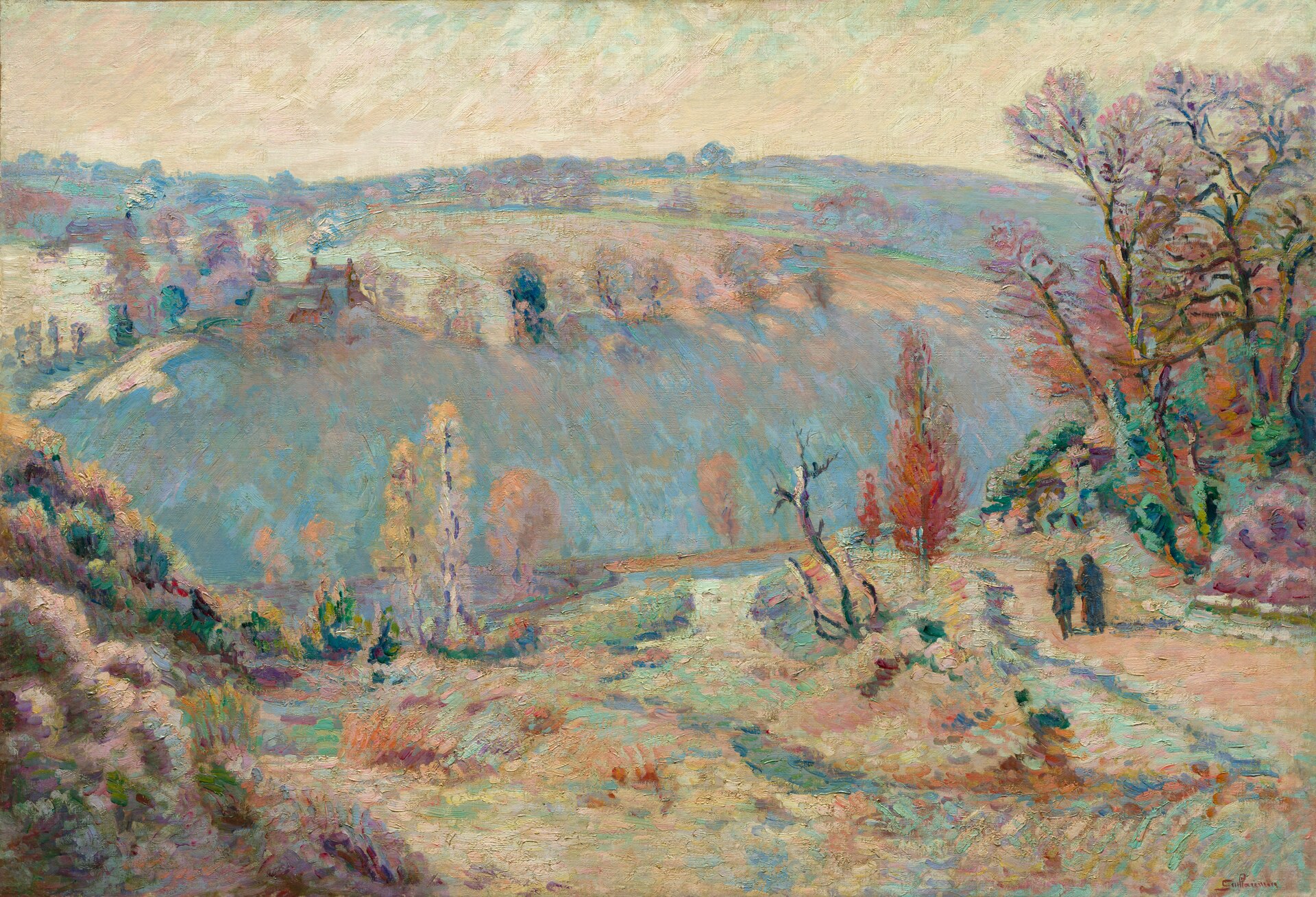
According to what I found, he only managed to paint full-time after winning something like 100,000 francs in a state lottery — before that it was a government day job on the side. He kept coming back to this same river valley for years, apparently, enough that people credit him with putting it on the map.
Erisava: Does frost actually make everything look this blue?
St. Jerome in His Study by Albrecht Dürer, 1514
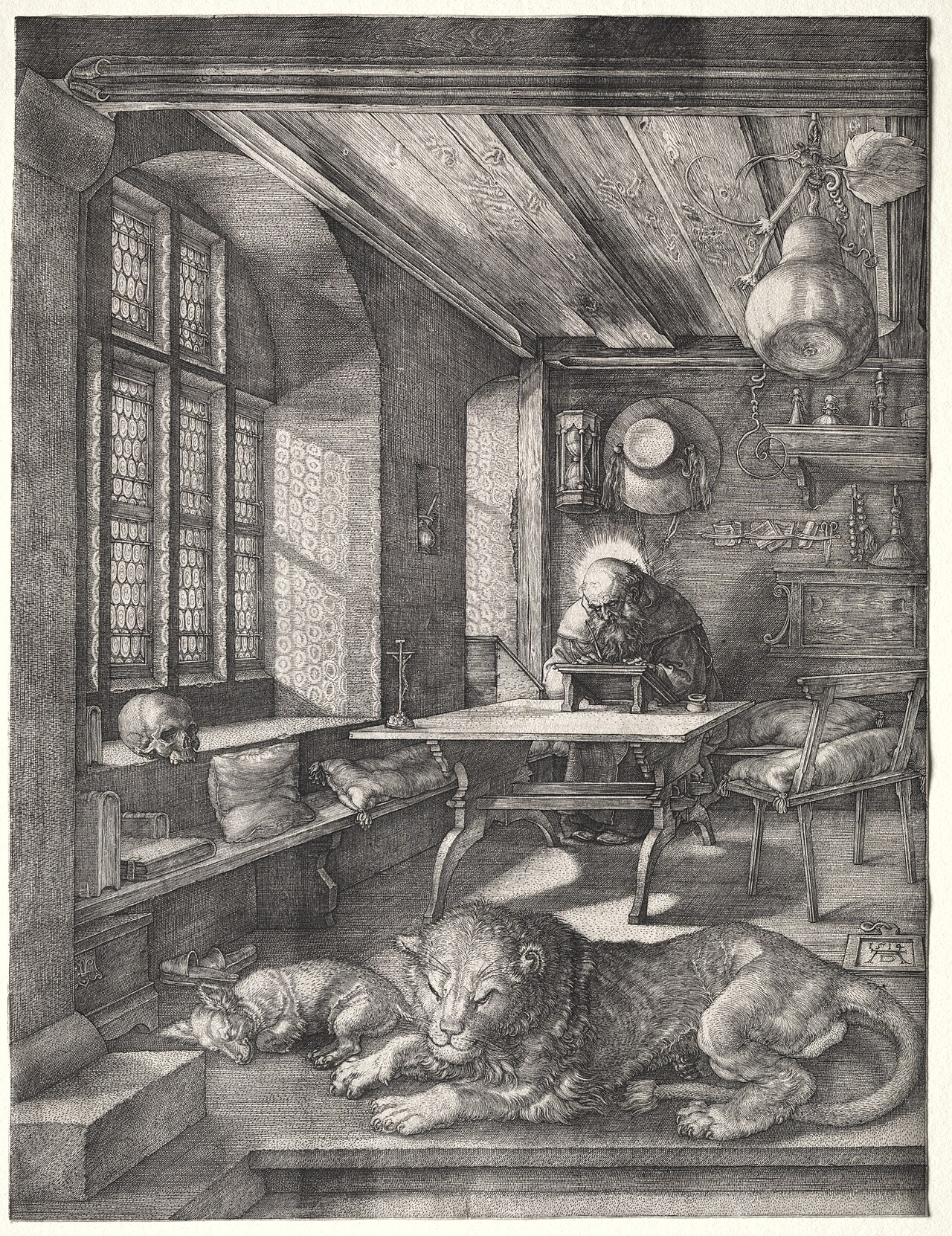
This one's grouped with two other Dürer engravings as his 'Master Prints,' from what I've read — three prints meant to show off everything the medium could do.
Erisava: I can't believe this much detail fits on something the size of a book page.
Construction Site in Amsterdam by George Hendrik Breitner, 1902
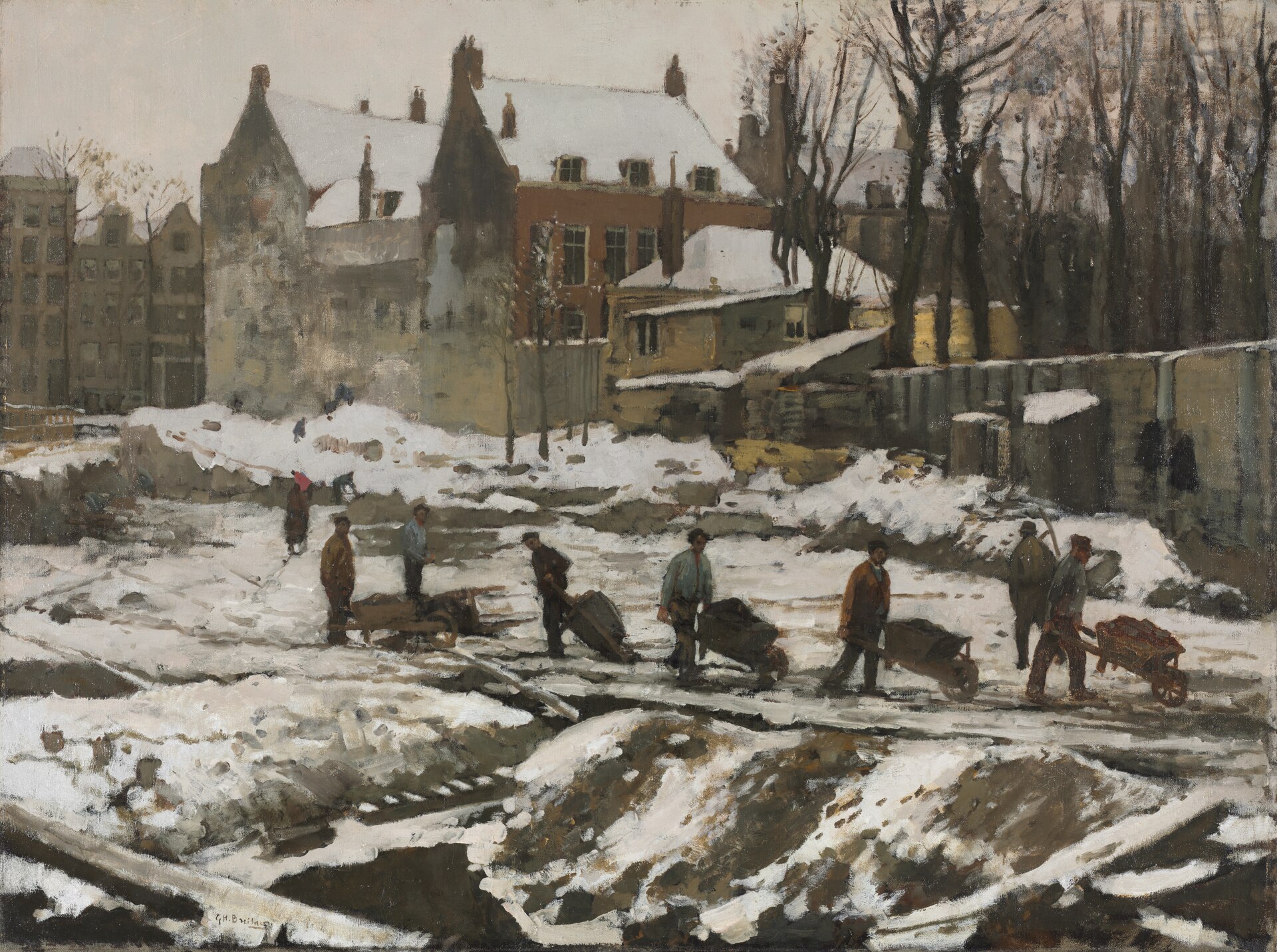
It's said that he photographed sites like this and then rebuilt the scene back in the studio, so what looks grabbed in a single moment was actually pieced together afterward. He ran in the same circles as Van Gogh and, from what I've read, wanted to paint ordinary working people rather than grand subjects.
Erisava: Is this actually art, or just a record of a building site?
Sketch for "The Oriental Dream" by Jean-Jules-Antoine Lecomte du Nouÿ, 1901
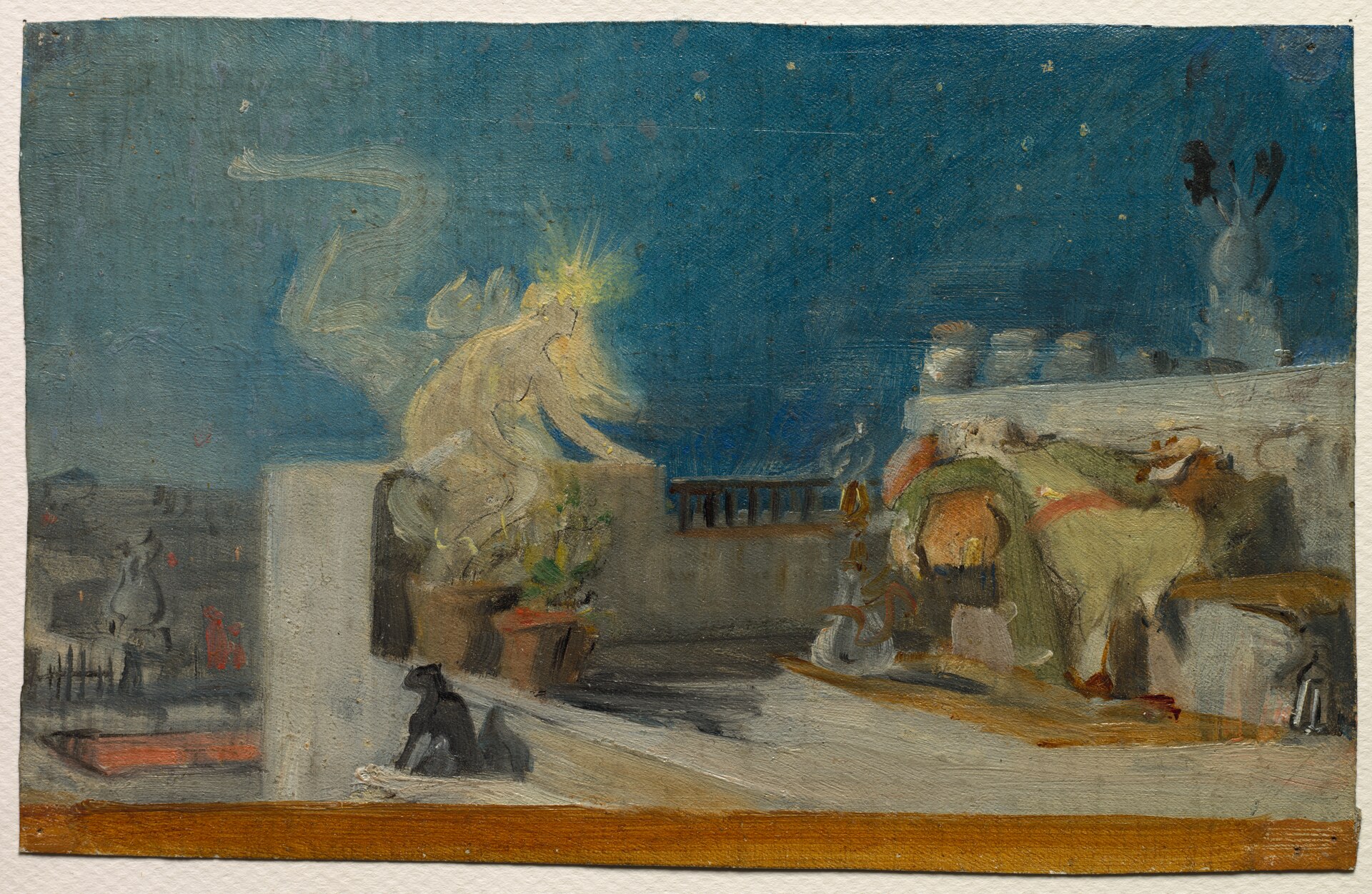
Apparently this is a small preparatory sketch for a bigger, finished painting - the kind of quick study made to work out a mood before committing to the real canvas. I couldn't track down much more about it.
Erisava: The bright figure on the left feels like it wandered in from a different painting.
Church Street El by Charles Sheeler, 1920
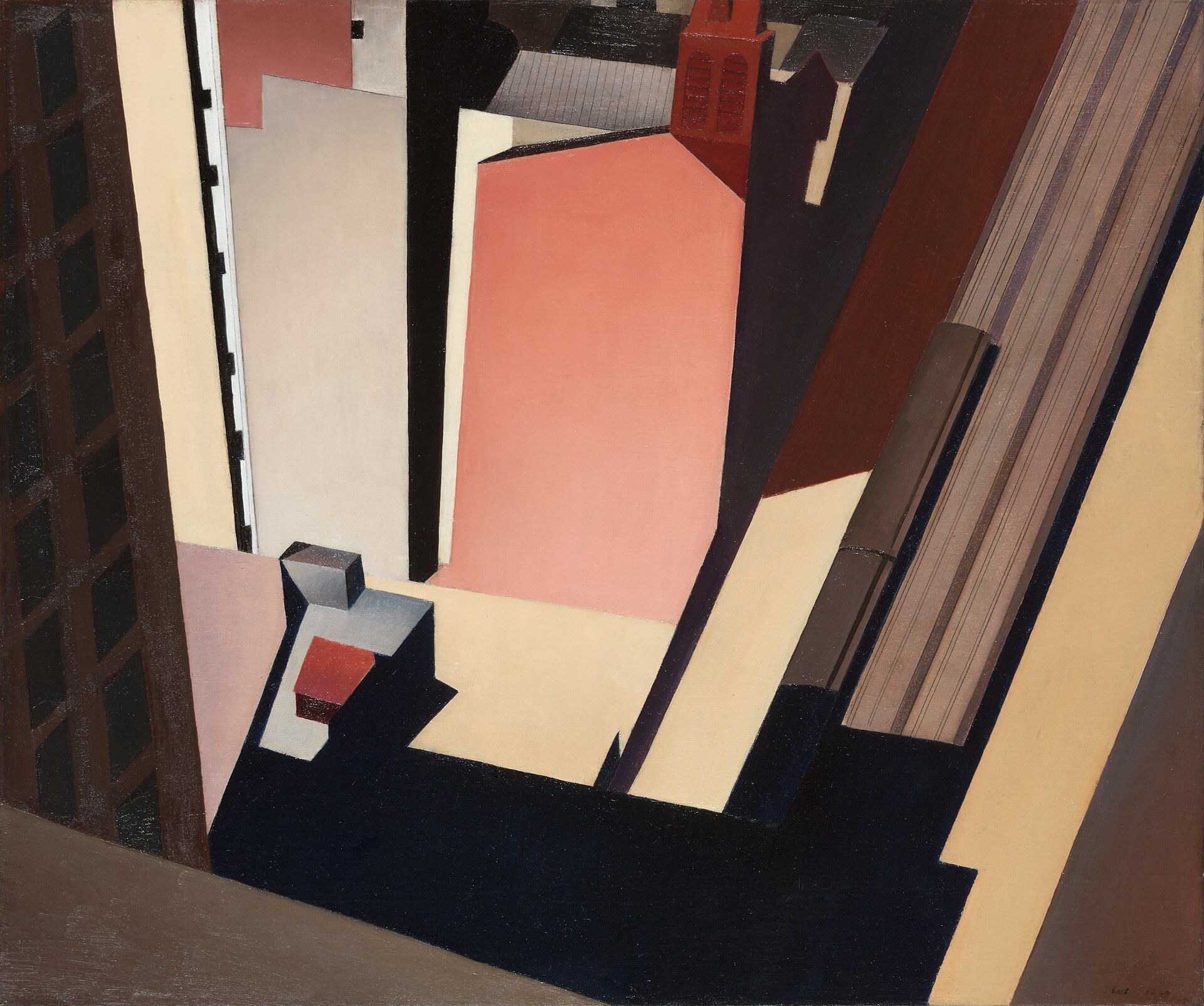
Apparently this view comes from a shot in an early experimental film Sheeler made with the photographer Paul Strand, about lower Manhattan — he was already thinking in stacked, simplified shapes before he ever touched a brush to it.
Erisava: This looks more like an architect's diagram than a painting.
The Aviator by Fernand Léger, 1920
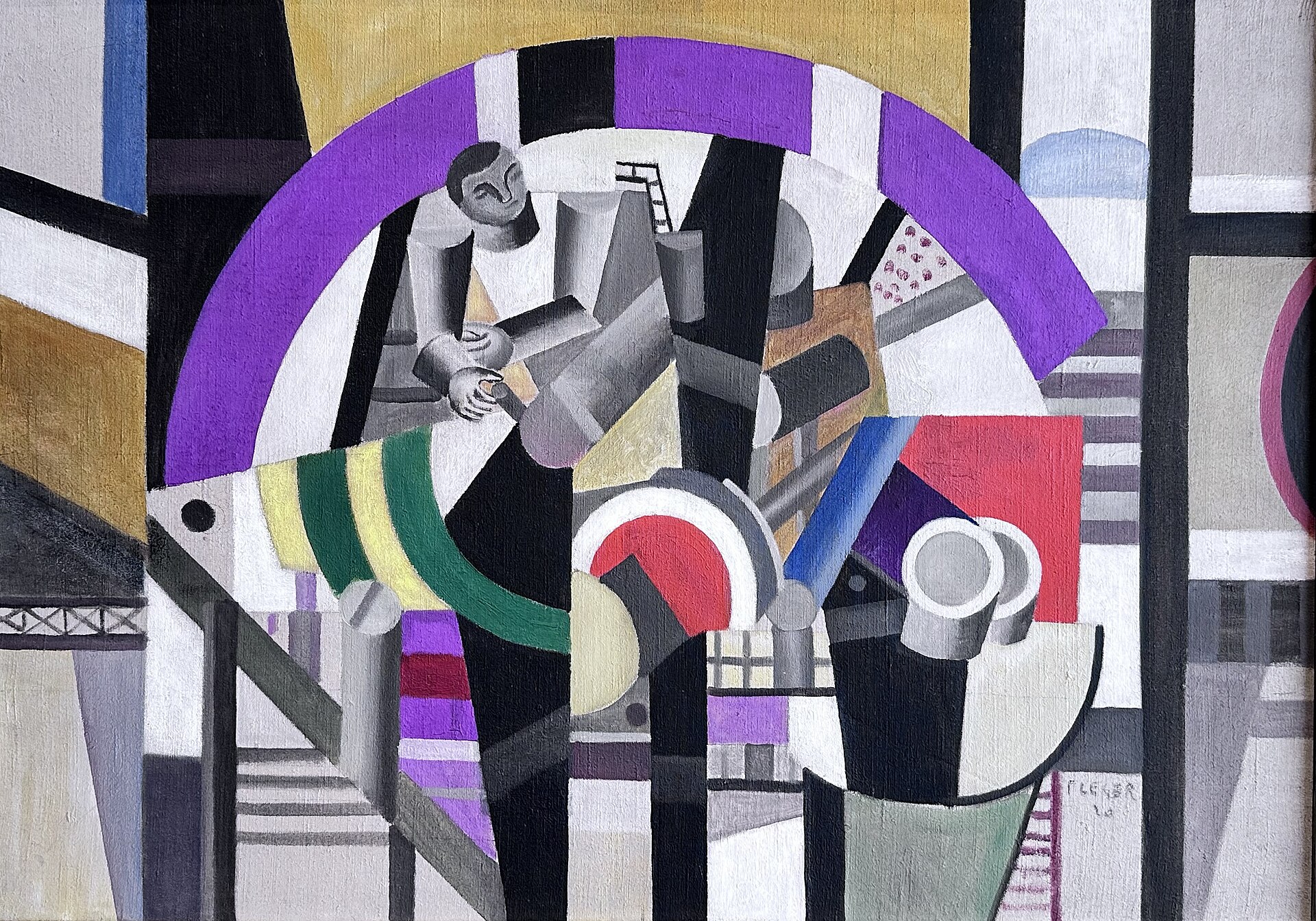
According to the museum, the painter was hurt in a gas attack at Verdun during WWI — this one's supposed to be a tribute to pilots and flying machines in general, not a portrait of any one of them.
Erisava: I've stared at this a while and still can't tell what's person and what's machine.
The Gate of St. Cloud, Paris by Albert Marquet, 1904
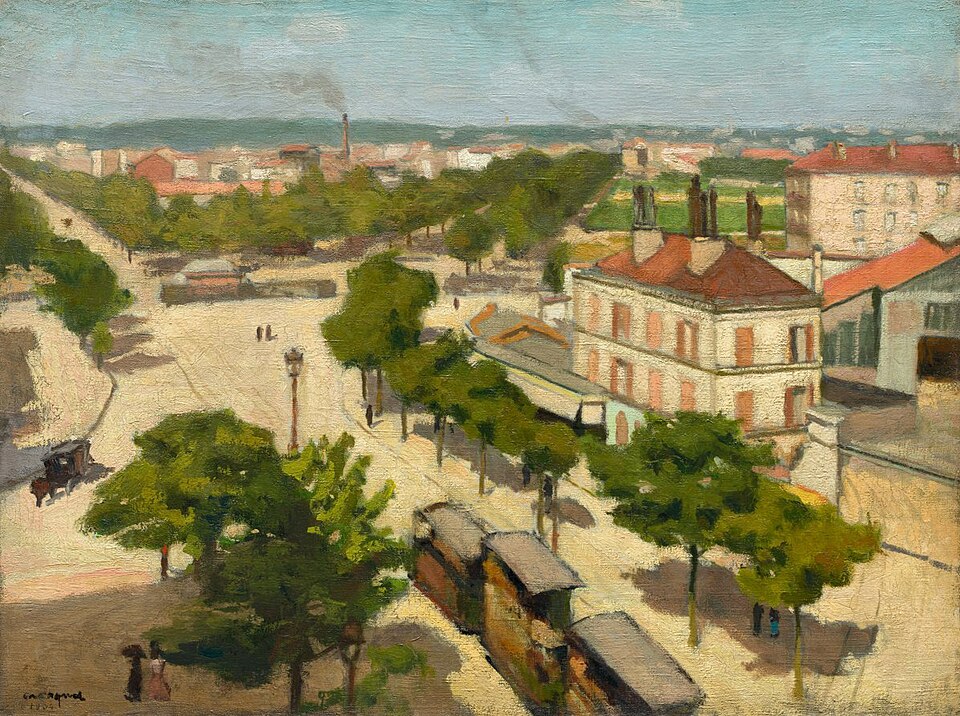
He liked painting Paris from a window looking down like this — a habit he supposedly kept up for years. He got lumped in with the 'Fauves' at the scandal-causing show of 1905, though you'd never call this one wild or loud.
Erisava: This is just a street with trees and a tram. Feels like it only matters because it's old.
Night Café by Louis Marcoussis, 1923
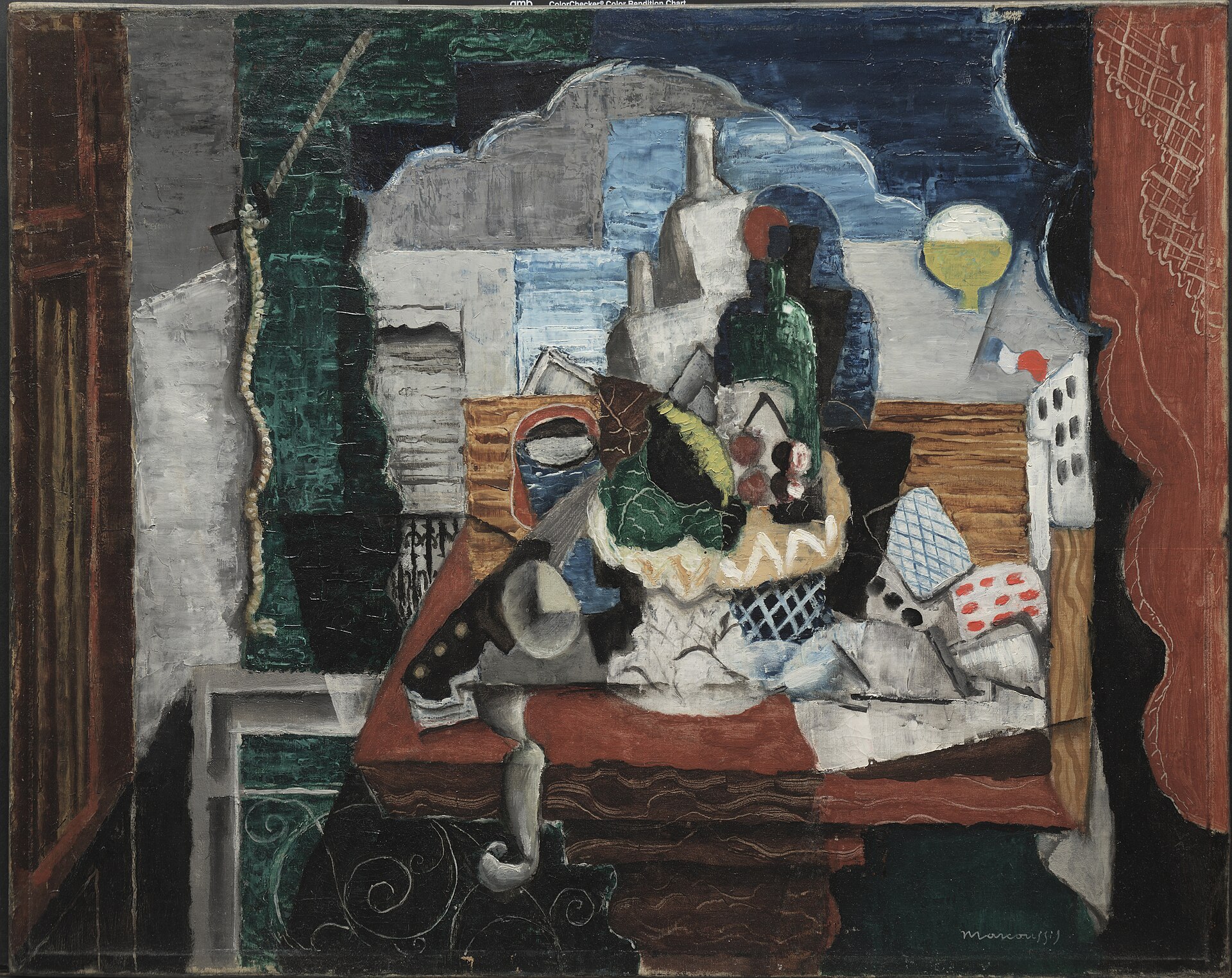
Apparently he was born in Warsaw and only picked up a French name after a friend talked him into it once he'd settled in Paris and started running with Picasso and Braque — the little balloon and flag tucked in here are supposedly his own nod to the country he adopted.
Erisava: What do you think you're actually looking at here?
Bugaku Dancer by Kamisaka Sekka, 1916
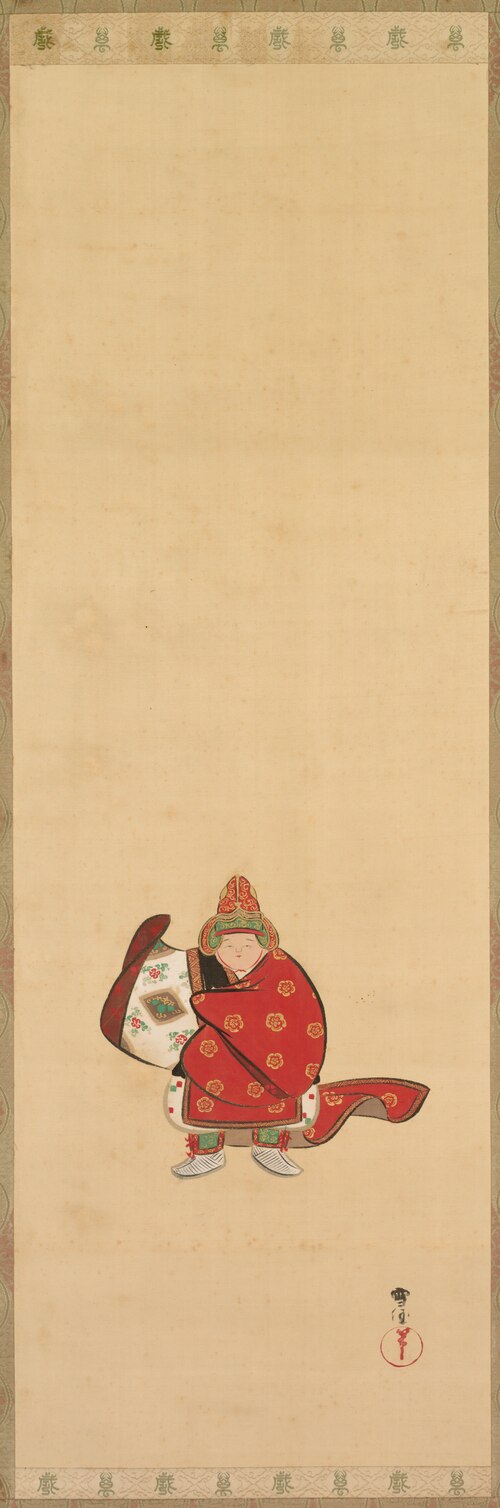
I couldn't find much on this particular scroll, but Bugaku is an old Japanese court dance tradition - apparently dancers have performed in costumes like this one for well over a thousand years.
Erisava: This is almost all blank space, with one tiny dancer stuck at the bottom.
Evening Mood-Lidingö by Eugène Jansson, 1900
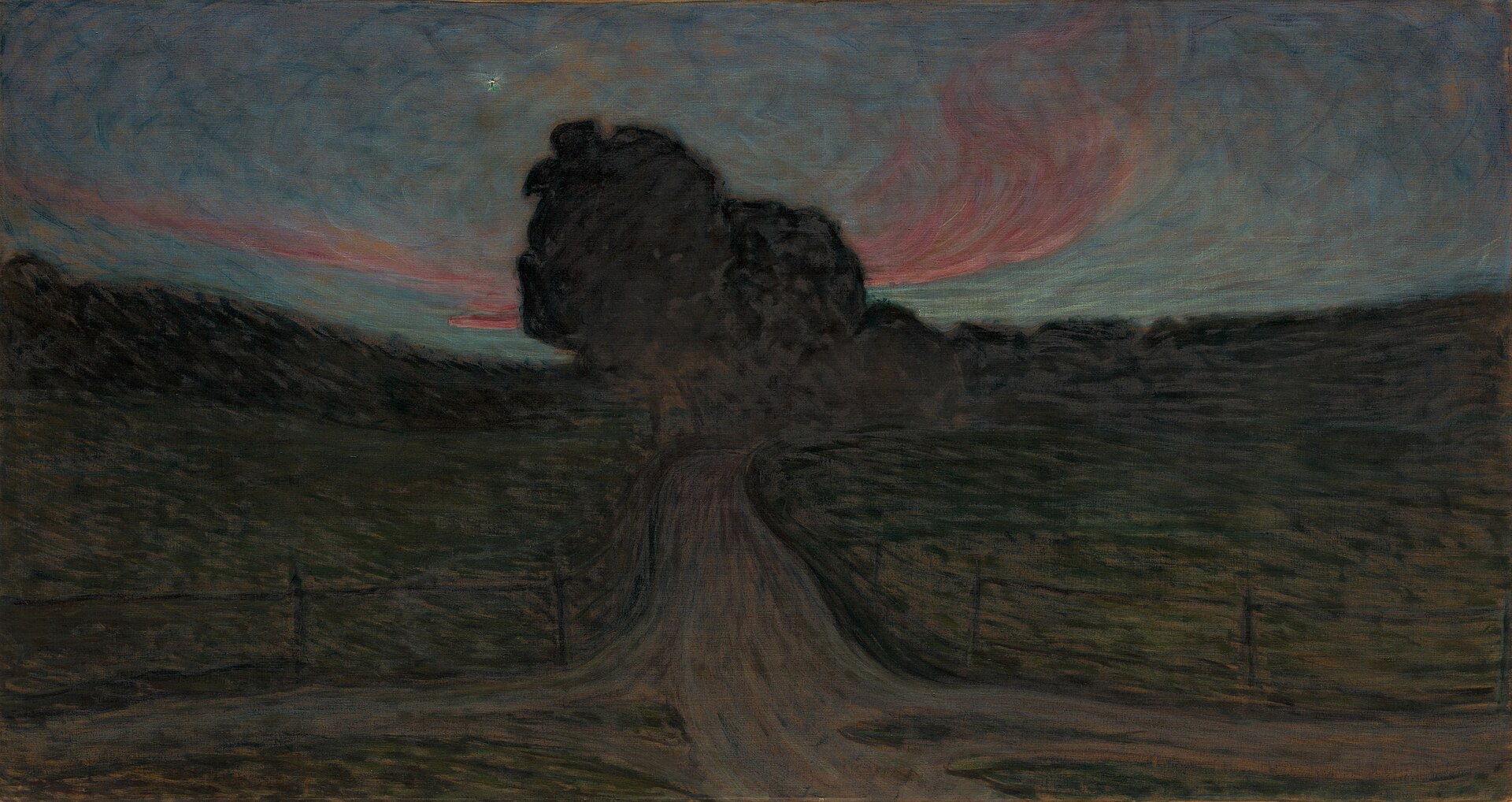
They say he knew Munch's work from early on, and was after a feeling more than an accurate view — this reads like a mood he wanted you to sit in, not a real place.
Erisava: This looks like the last place you'd want to get stuck after dark.
Sleeping Gypsy by Robert Falk, 1910
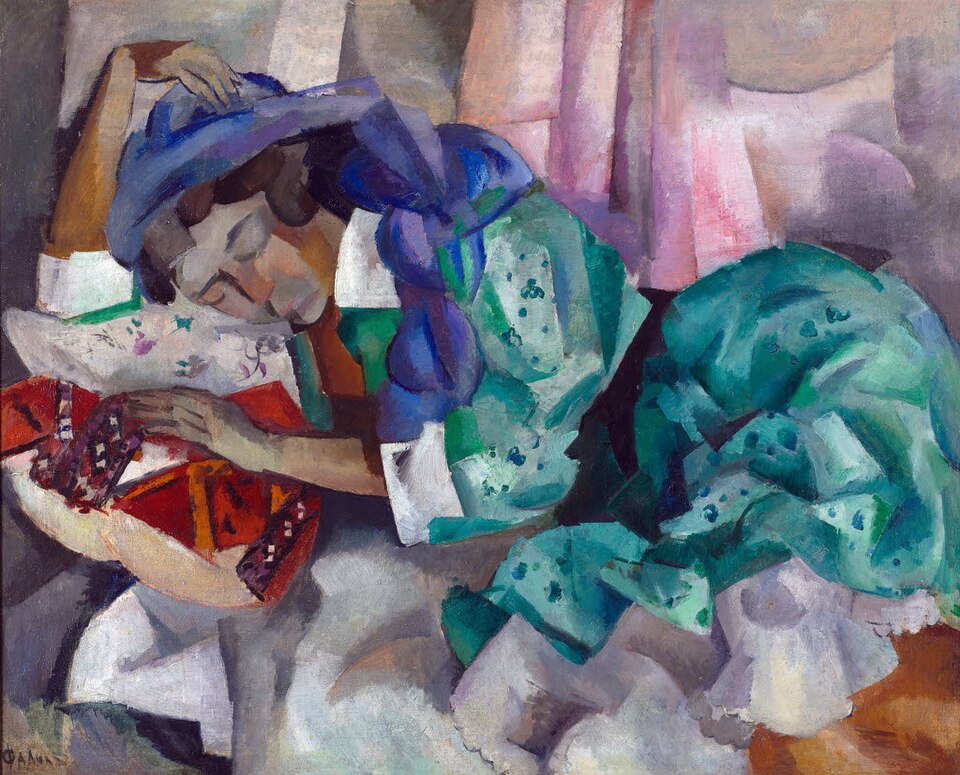
They say he mixed the loose, bright color of the Fauves with the more broken-up shapes of the Cubists, and ran with a Moscow group trying to fuse that French style with older Russian folk prints.
Erisava: I can't tell where her arm ends and the fabric starts.
The Windshield, On the Road to Villacoublay by Henri Matisse, 1917
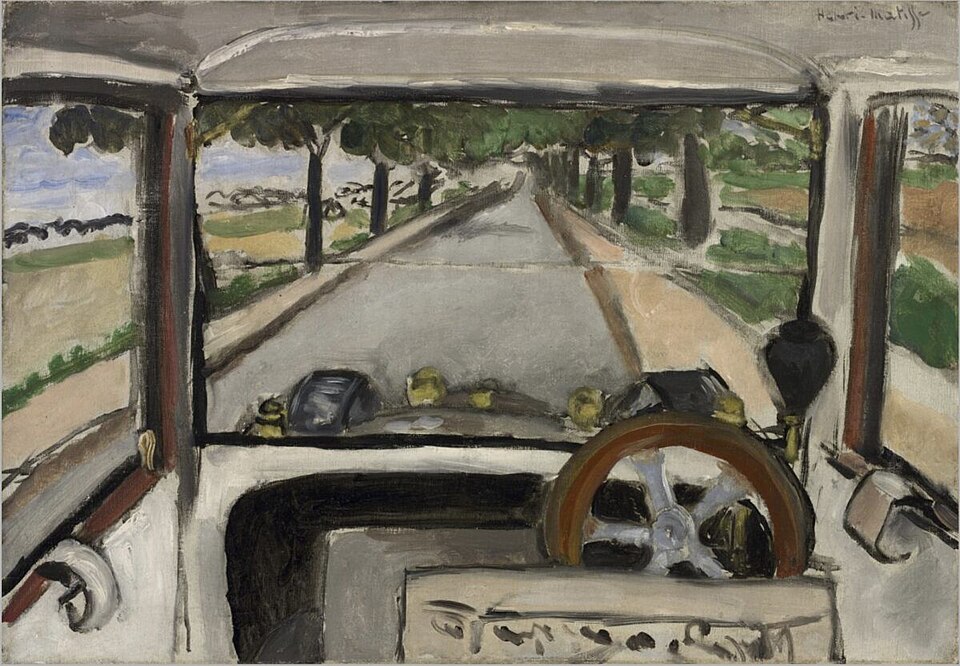
I read that Matisse painted this from inside a moving car — had his son pull over on a drive to an airport near Paris in 1917, then worked through the windshield with the windows shut while passing traffic rocked the car back and forth.
Erisava: Is a steering wheel and an empty road really something worth painting?
Wrestlers in a Circus by Ernst Ludwig Kirchner, 1909
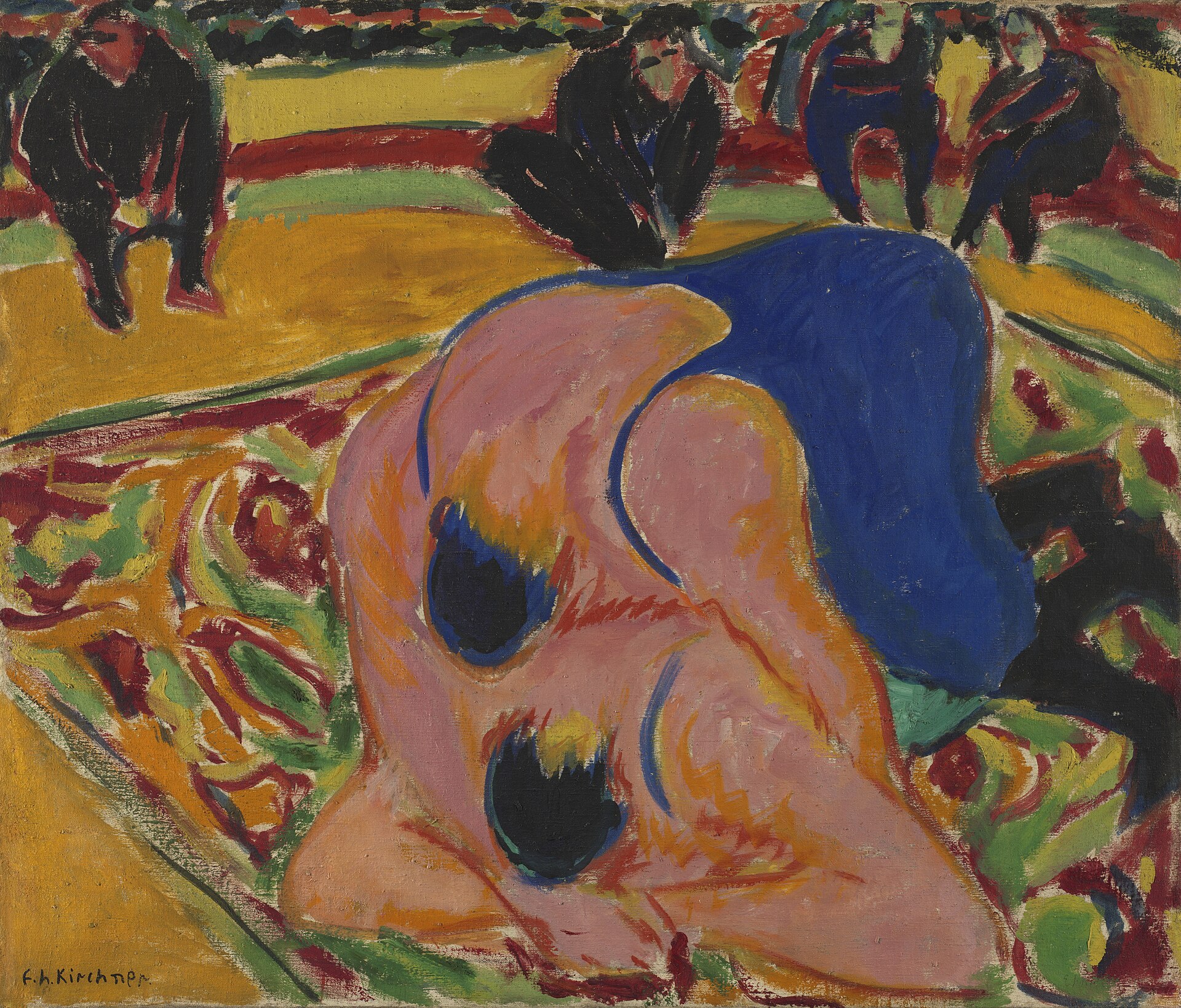
They say Kirchner and his Die Brücke friends thought cheap, loud entertainment — circuses, wrestling matches, variety halls — was more honest than anything on a proper stage.
Erisava: Is this actually a fight, or does it just look violent because of the colors?
Sylvia Gosse by Harold Gilman, 1913
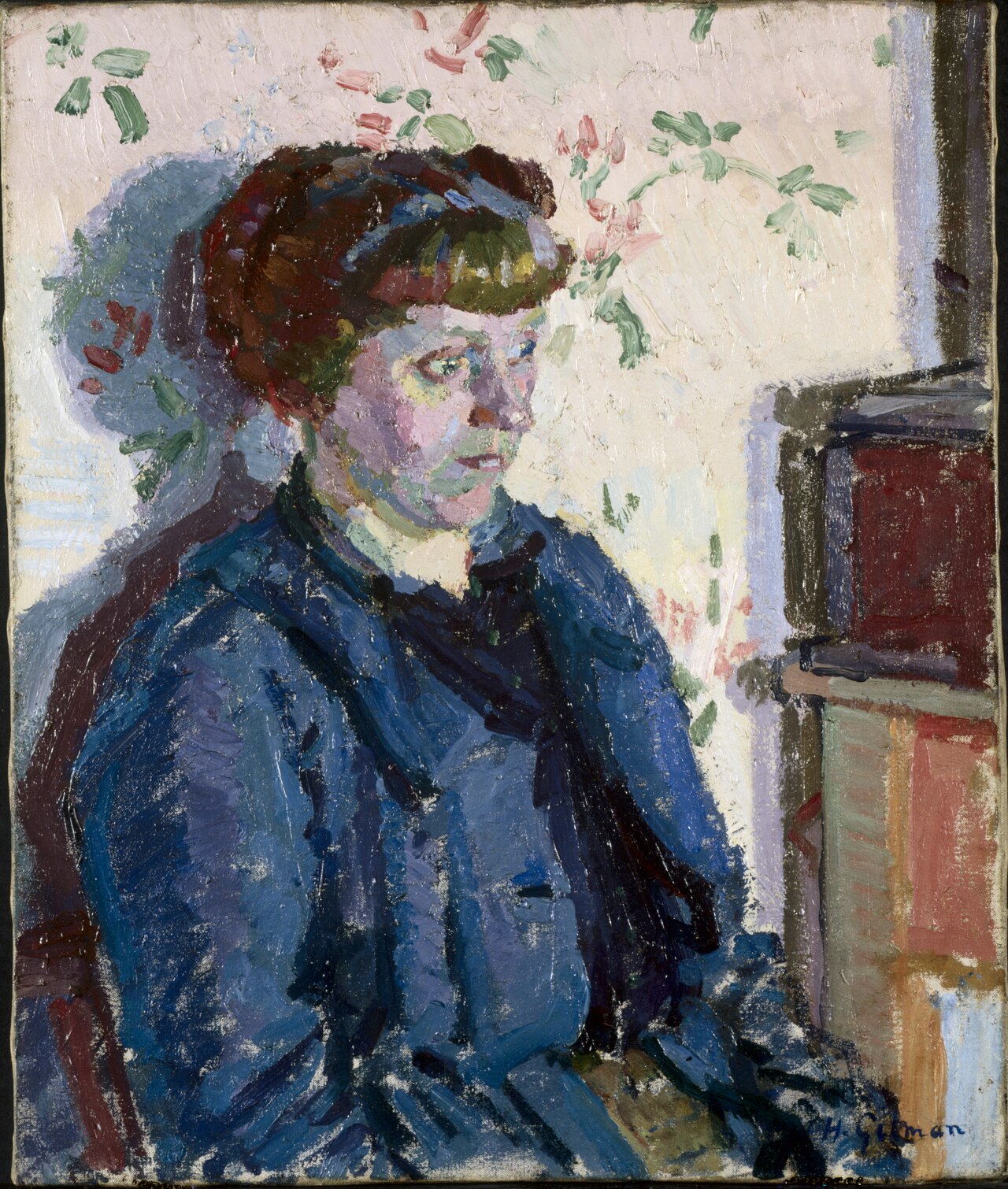
The woman here was apparently an artist herself — an etcher — and by most accounts pretty private, which makes it interesting she agreed to sit for this at all.
Erisava: I see patches of paint more than I see a woman
Self-Portrait with Hat and Coat by Lovis Corinth, 1915
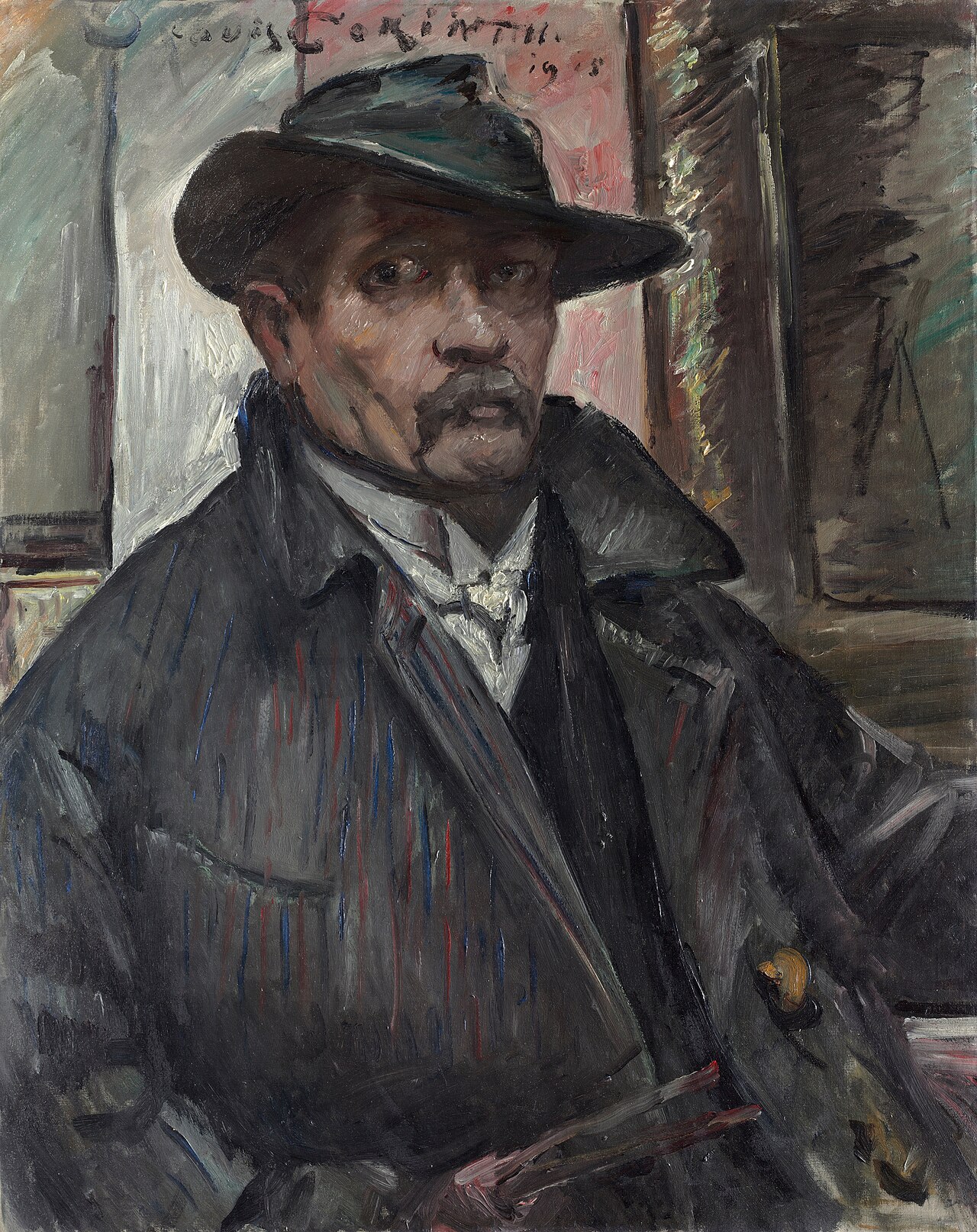
They say Corinth kept turning the brush on himself after a stroke nearly killed him in 1911, and this is one of the last self-portraits from near the end of his life.
Erisava: Does he look like a man still in control of the brush?
Interior by Gwen John, 1915
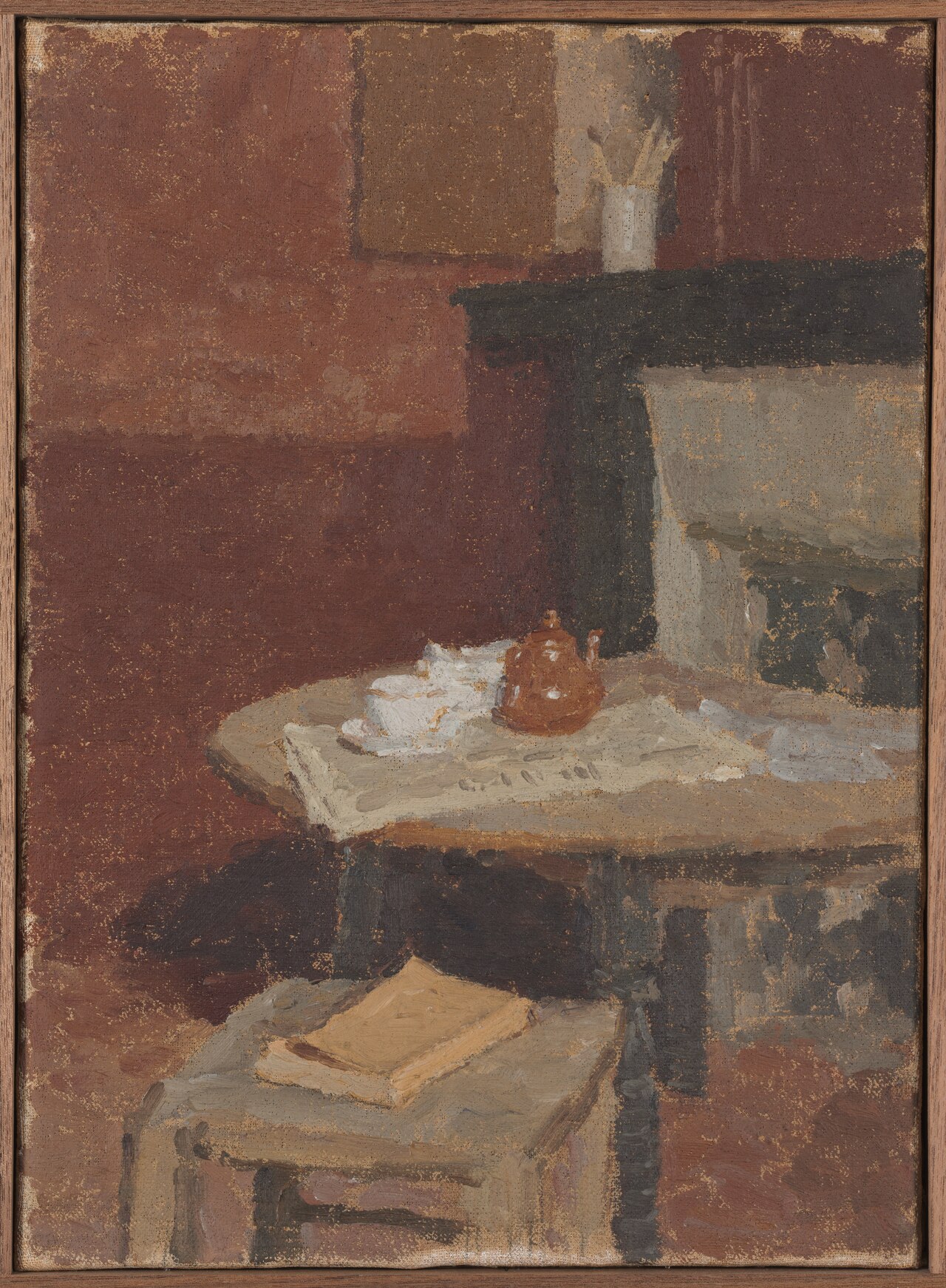
Apparently she only made something like 200 paintings in her whole life, all around this size, all this hushed and toned-down. This exact table with the teapot turns up in three other versions elsewhere, so she must have kept coming back to it.
Erisava: The teapot's the exact same rusty brown as the walls behind it.
Composition with Red, Yellow, and Blue by Piet Mondrian, 1927
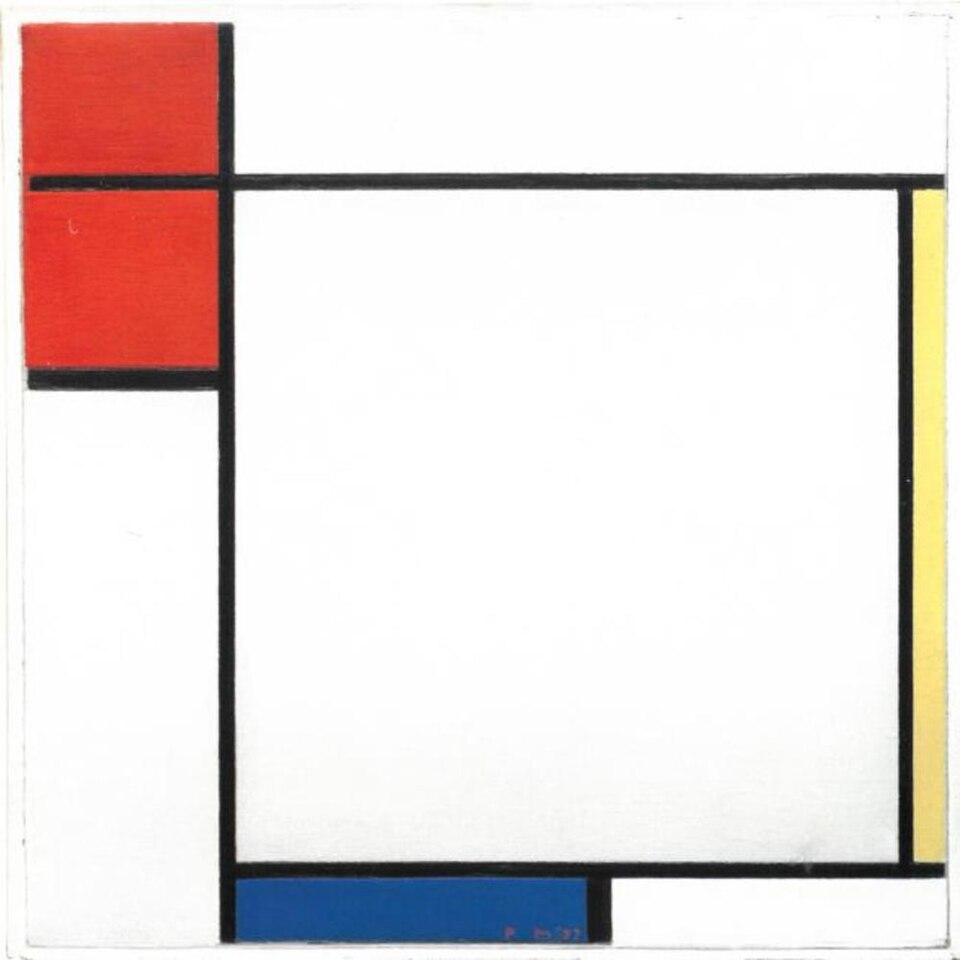
Mondrian, from what I've read, believed grids like this could help build a calmer, more honest world after the first World War — a strict visual language everyone could read the same way.
Erisava: Could a kid with a ruler have made this?