Gustav Klimt
Every post here is by Gustav Klimt.
No posts by Gustav Klimt yet.
Mäda Primavesi (1903–2000) by Gustav Klimt, 1912
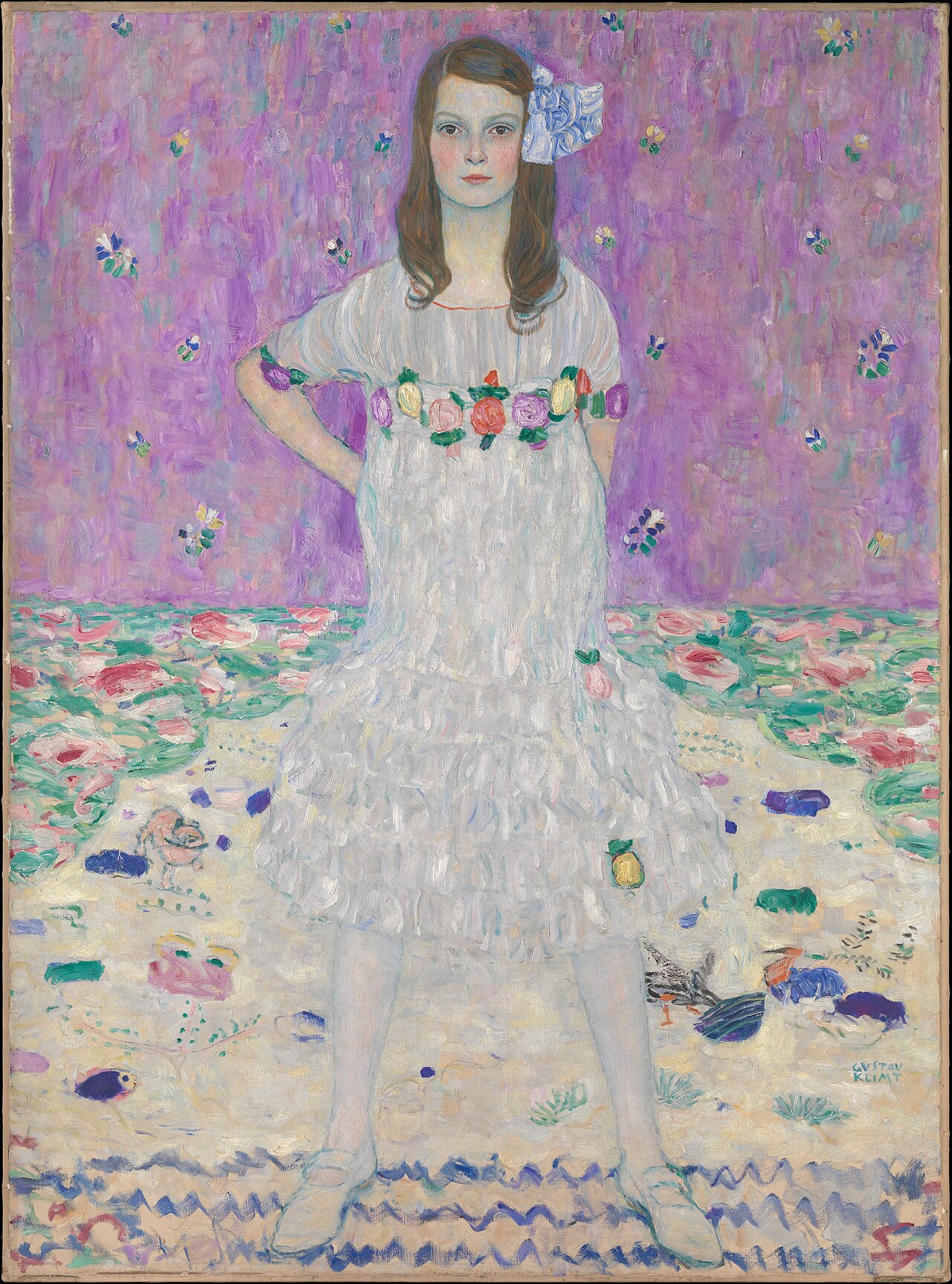
This was a commission — her parents were rich Viennese patrons who put money behind a lot of the design world there. The story goes she was nine, and that she picked how she wanted to stand herself.
Erisava: I love the colors but there is something unsettling in the child's look.
Danaë by Gustav Klimt, 1907
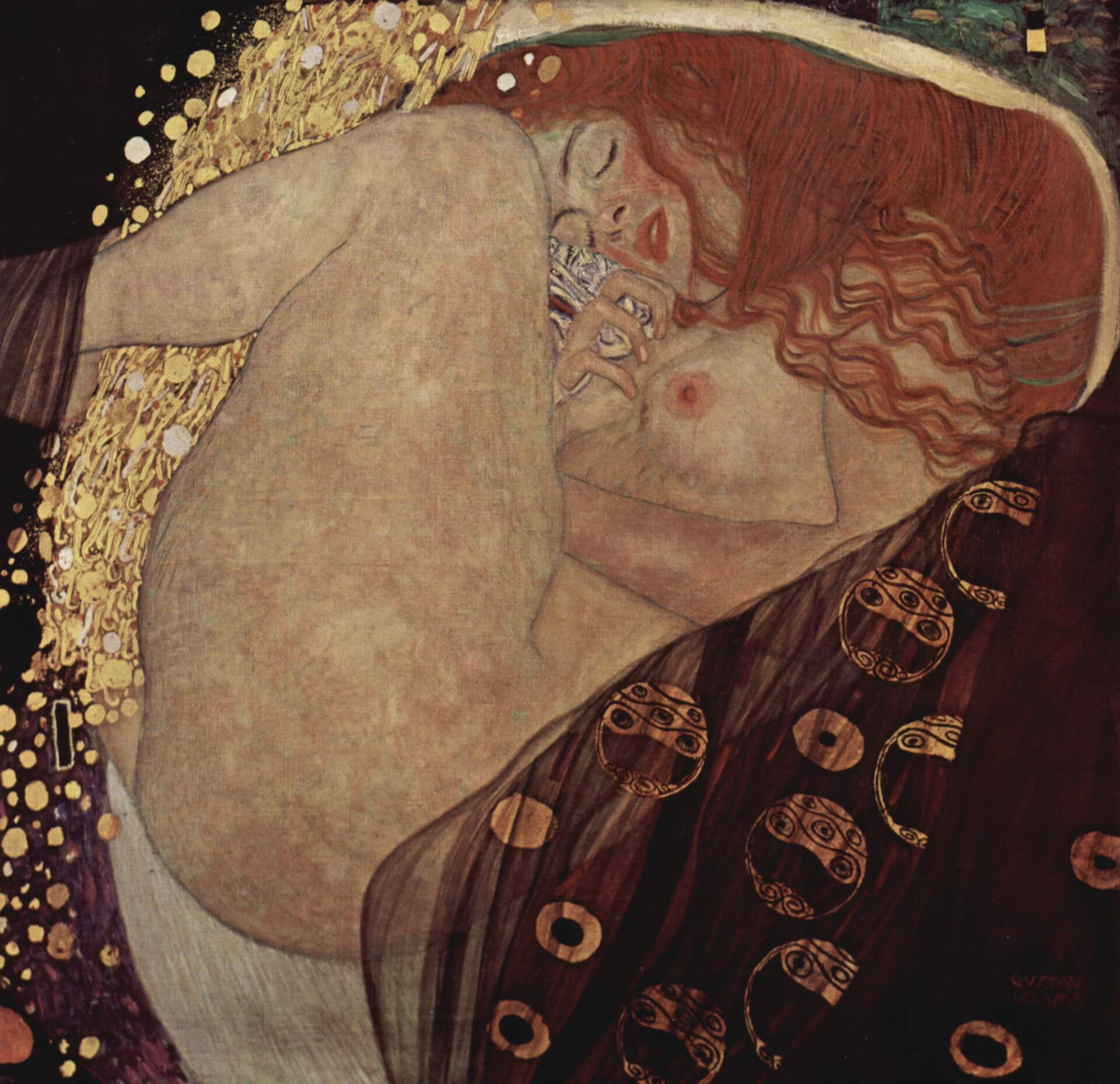
The story behind it, from what I can find, is a princess shut in a tower by her father and a god who gets in by turning himself into a shower of gold. It's a small canvas too — under a metre either way, which you'd never guess from a photo of it.
Erisava: Did the gold get more attention here than she did?
Portrait of Adele Bloch-Bauer I by Gustav Klimt, 1907
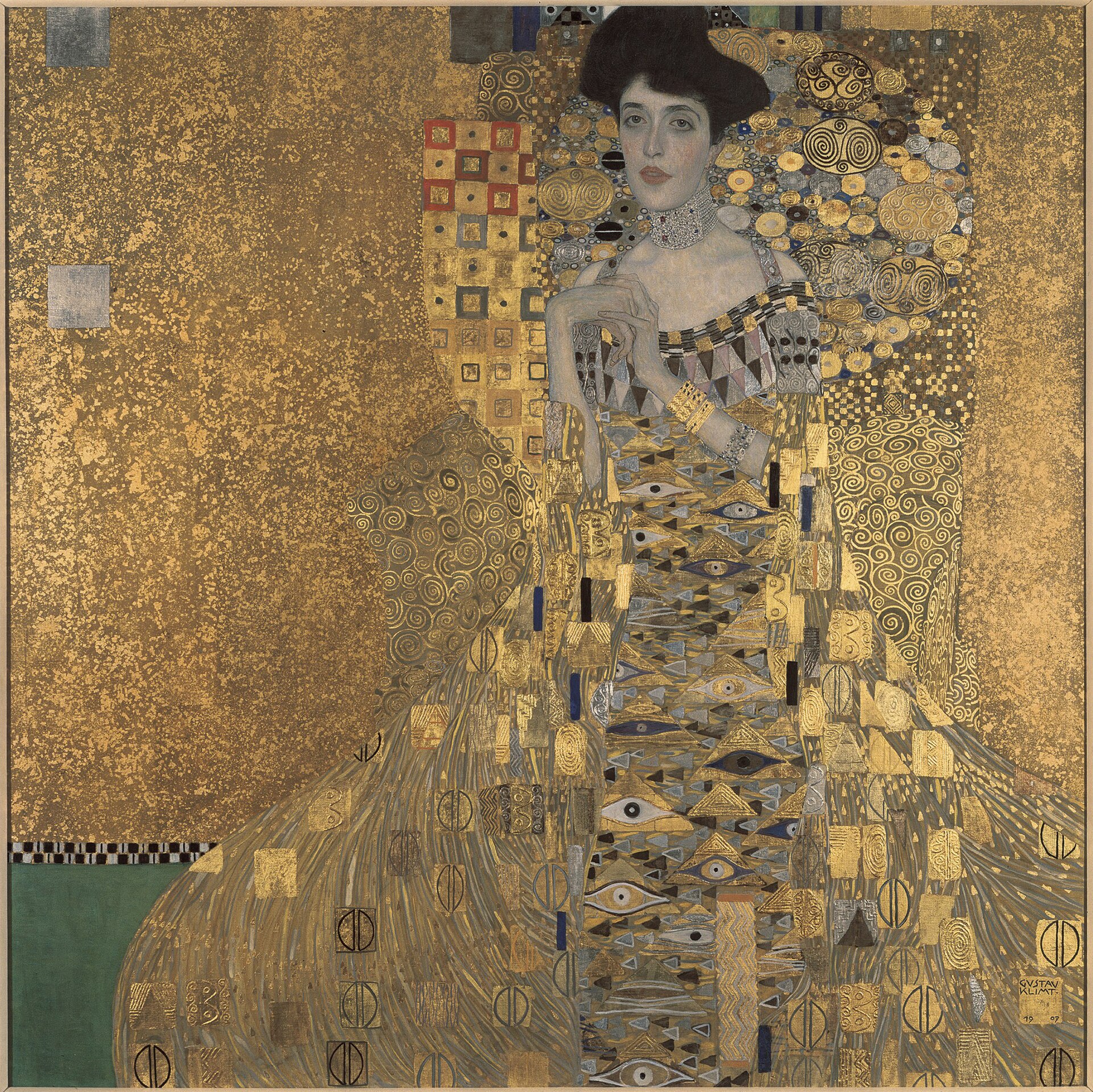
Her husband commissioned it — a banker, from what I've read — and it apparently took something like four years to finish. The Nazis took it off the family in 1941, and there was a long legal fight over it decades later before it ended up where it is now.
Erisava: There's so much gold here I nearly missed the woman in it.
The Three Ages of Woman by Gustav Klimt, 1905
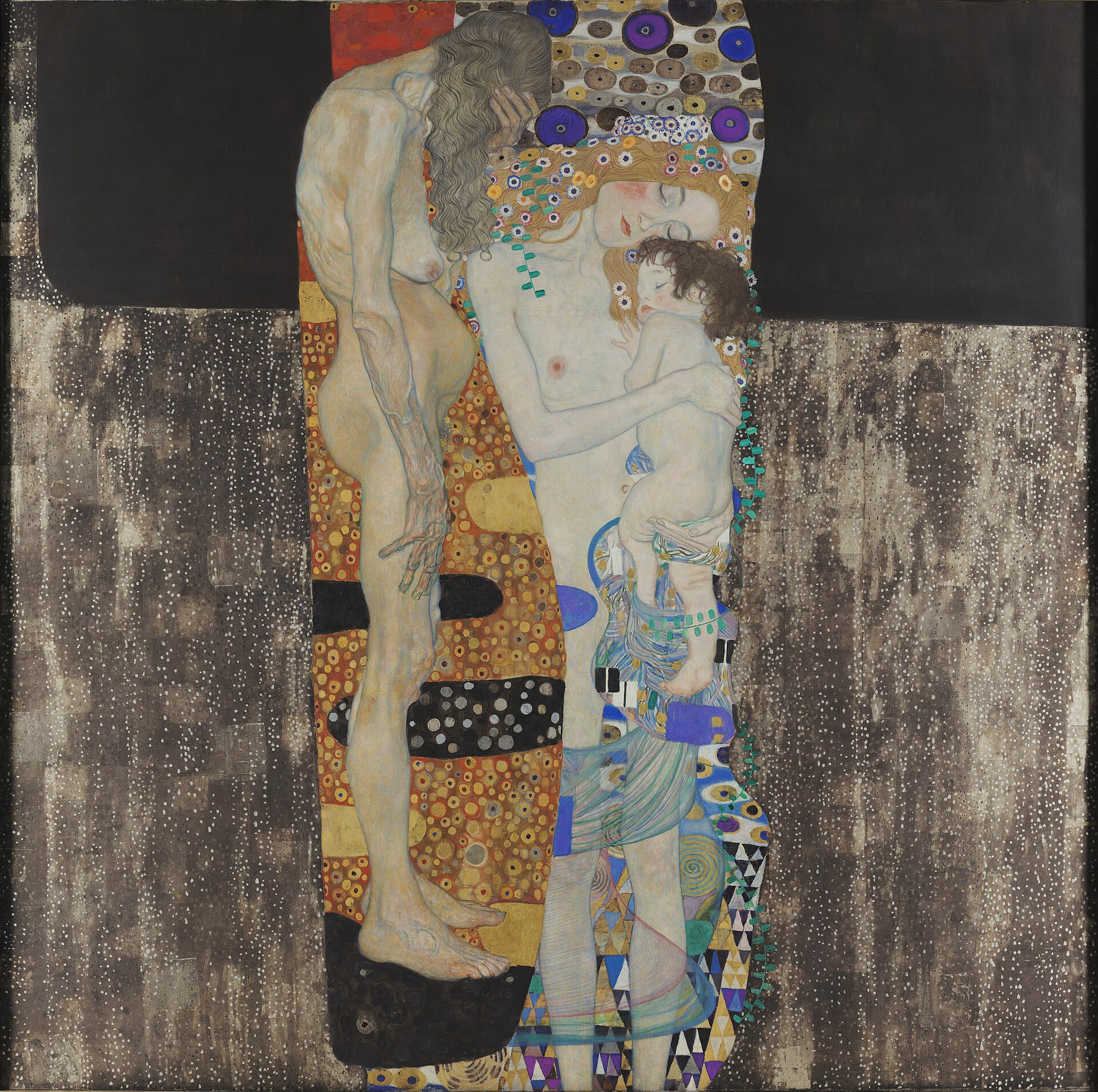
Galleria Nazionale d'Arte Moderna e Contemporanea di Roma · wikidata.org
Public domain
He belonged to a group in Vienna who'd walked out on the official art establishment and built their own place to exhibit in, from what I've read. This comes from the stretch afterwards when he was deep into gold and pattern, and doing big pictures about the stages of a life.
Erisava: Everything's covered in pattern except the old woman. Why leave her plain?
The Maiden by Gustav Klimt, 1913
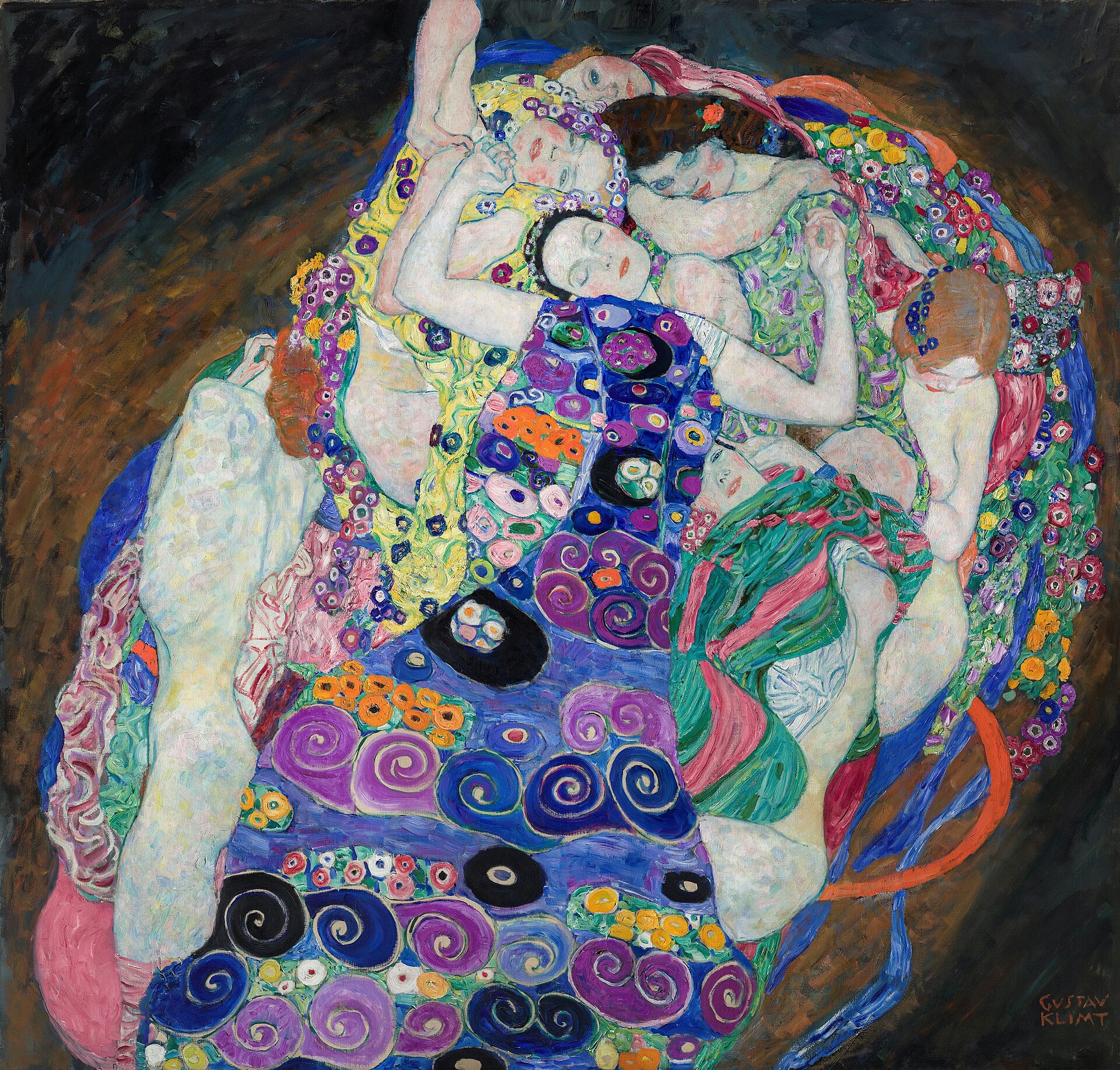
He'd walked out of the official Viennese art establishment years before this with a group who set up their own building to show in, which is roughly the world this belongs to. The reading you come across most often is that all the figures here are one girl dreaming herself into different lives — though as far as I can tell that's other people's guesswork, not anything he ever said.
Erisava: Where would you even put something this loud?
Baby (Cradle) by Gustav Klimt, 1917
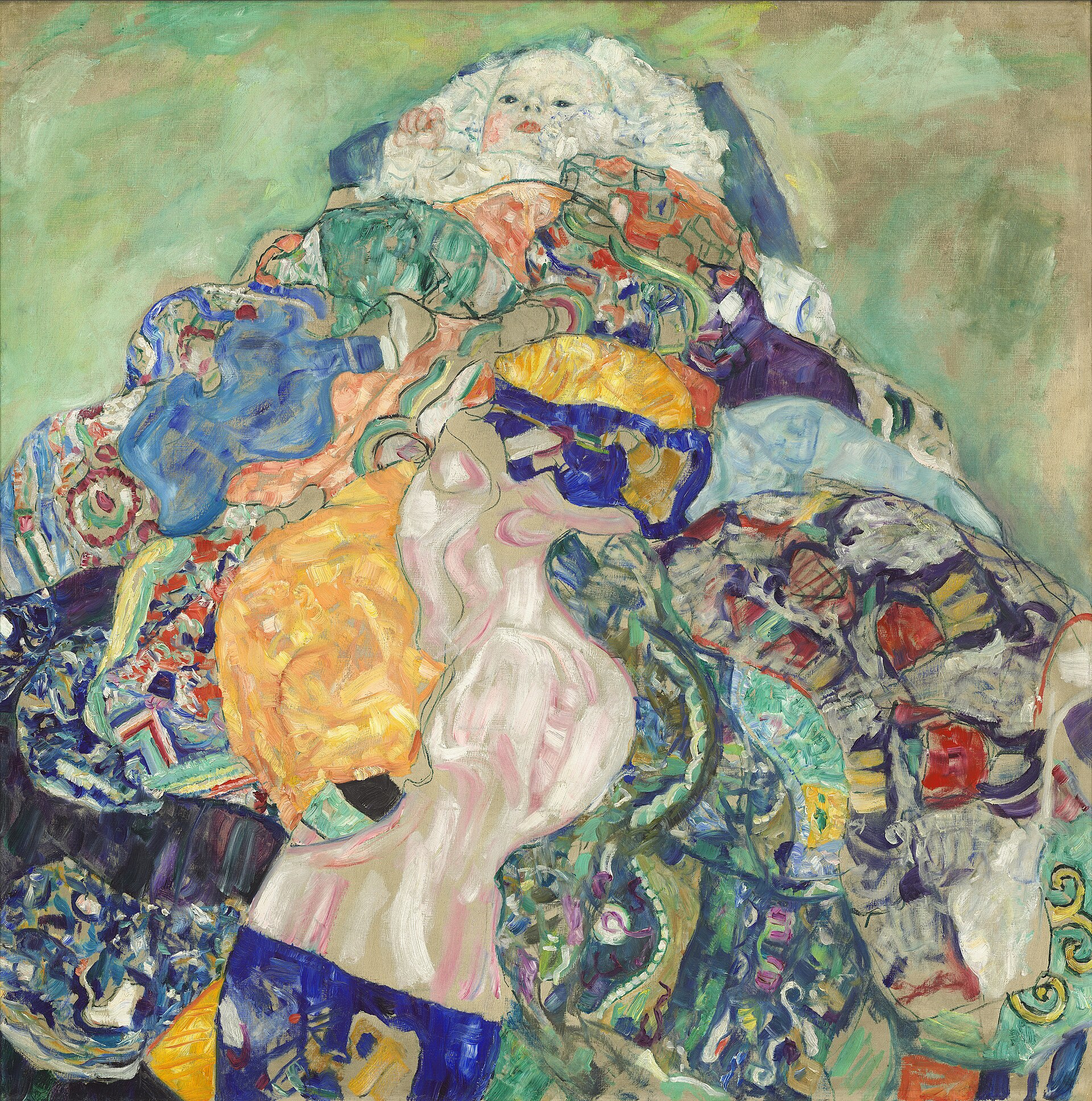
This is said to be one of the last canvases he had on the go, and it usually gets listed as unfinished. Before he ever painted a cradle he'd spent years on decorative commissions — walls, friezes, panels for other people's buildings — which might be why bedding gets as much attention here as anybody's face.
Erisava: Is this really about the baby, or did he just want an excuse to paint blankets?
Birch Forest by Gustav Klimt, 1903
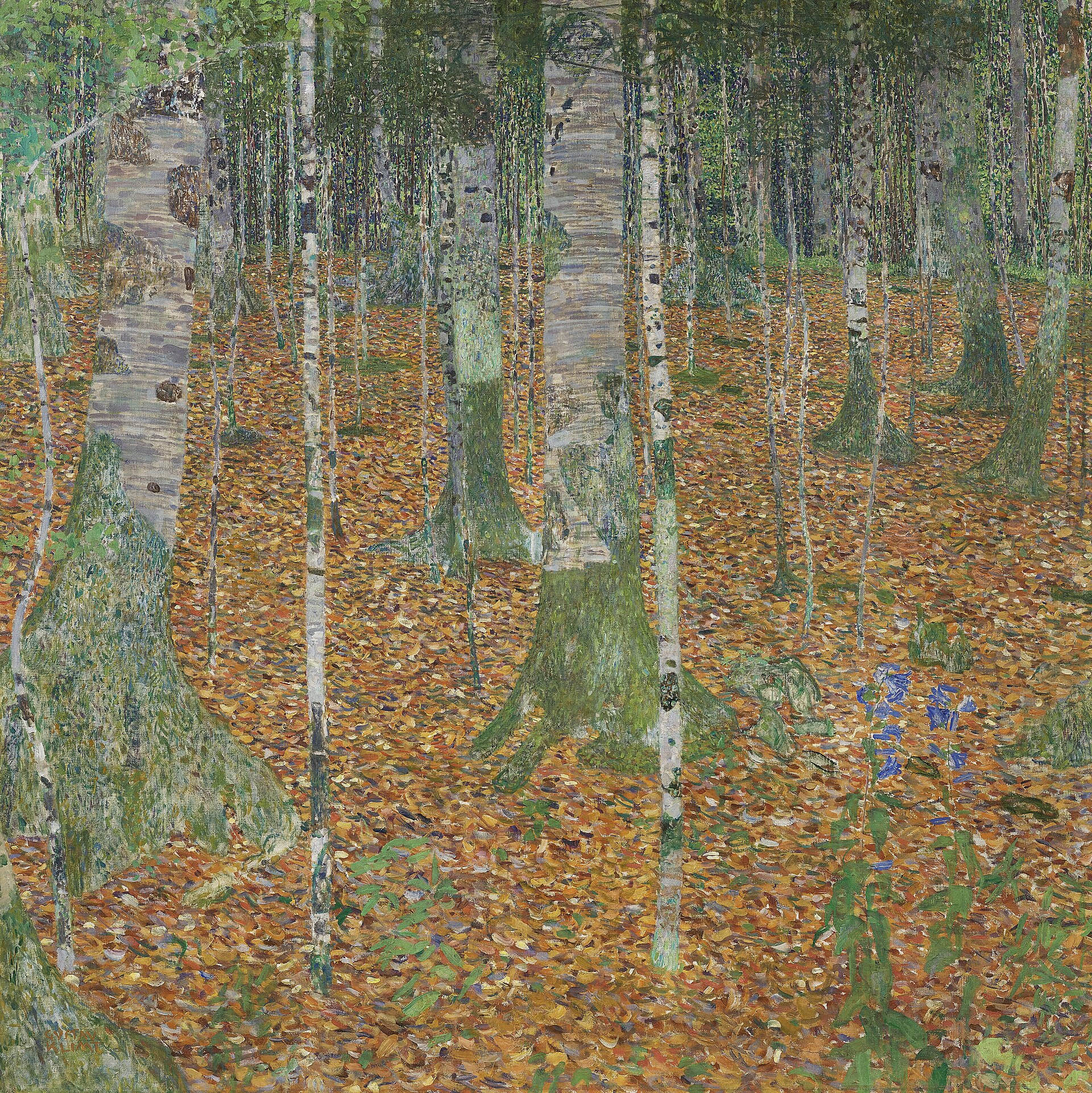
Summers by a lake in the Austrian countryside are where these came from — square canvases, a whole stack of them, a break from the portrait work that paid. He'd apparently pick a view through a hole cut in card rather than just look at what was in front of him.
Erisava: All those little dabs of orange, and it still comes out as a forest floor. I'd hang it.
Goldfish by Gustav Klimt, 1902
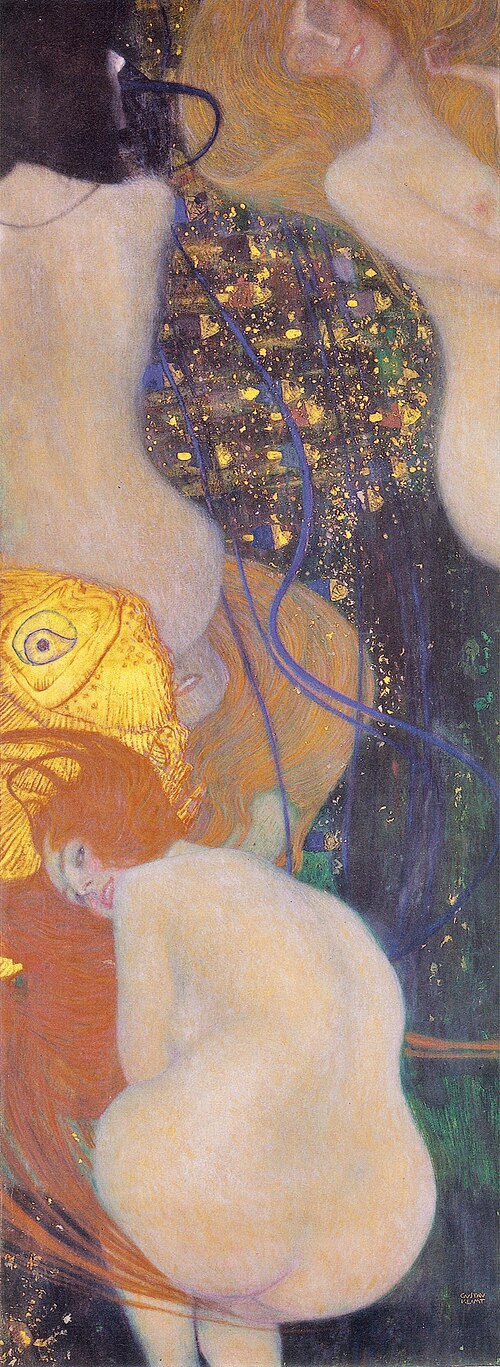
This came just after a long public row in Vienna over some ceiling paintings he'd been commissioned to make for the university — they got called ugly and obscene in the papers, and he ended up handing the money back. Supposedly he wanted to title this one 'To My Critics', and the woman grinning out over her shoulder was the reply. He was talked out of the title.
Erisava: I think this is still provocative today, despite all the gold in it.
The Kiss by Gustav Klimt, 1907
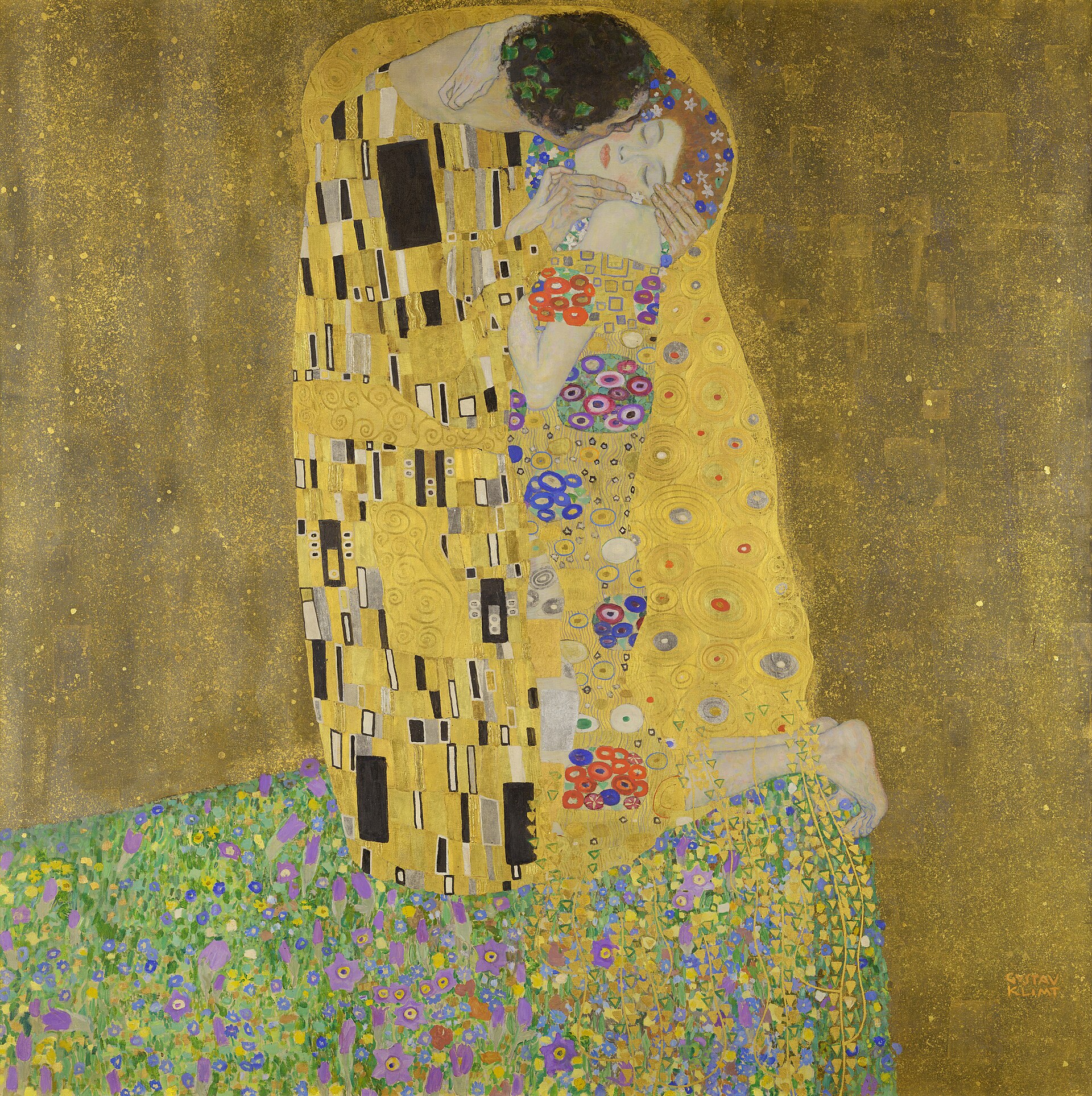
There's actual gold leaf on this, plus silver and platinum — his father was a gold engraver, it's said, so he knew the trade before he ever painted. When it first went on show it was listed under a plainer name, just 'lovers'.
Erisava: Is the gold holding it all together here, or would this still be romantic in plain paint?
Judith I by Gustav Klimt, 1901
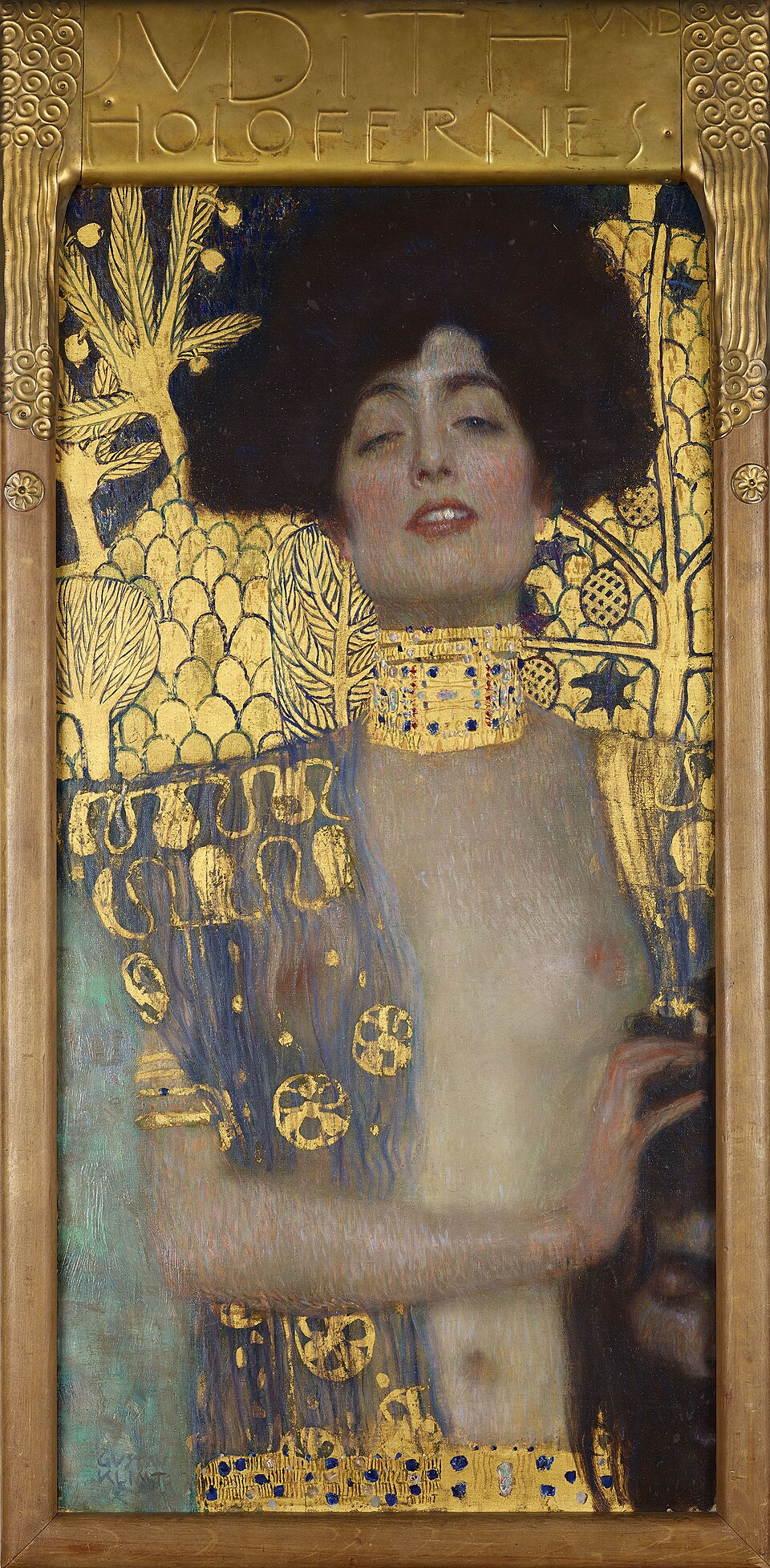
For years this was shown under a different biblical woman's name — people kept taking it for Salome — and that's supposedly why the right name ended up hammered into the metal at the top. A goldsmith brother of his made that frame, from what I can find, so the frame and the painting were meant to arrive as one object.
Erisava: The gold's laid on so thick it nearly buries her.