#landscape
Art the community tagged “landscape” — see what people make of it.
No posts tagged “landscape” yet.
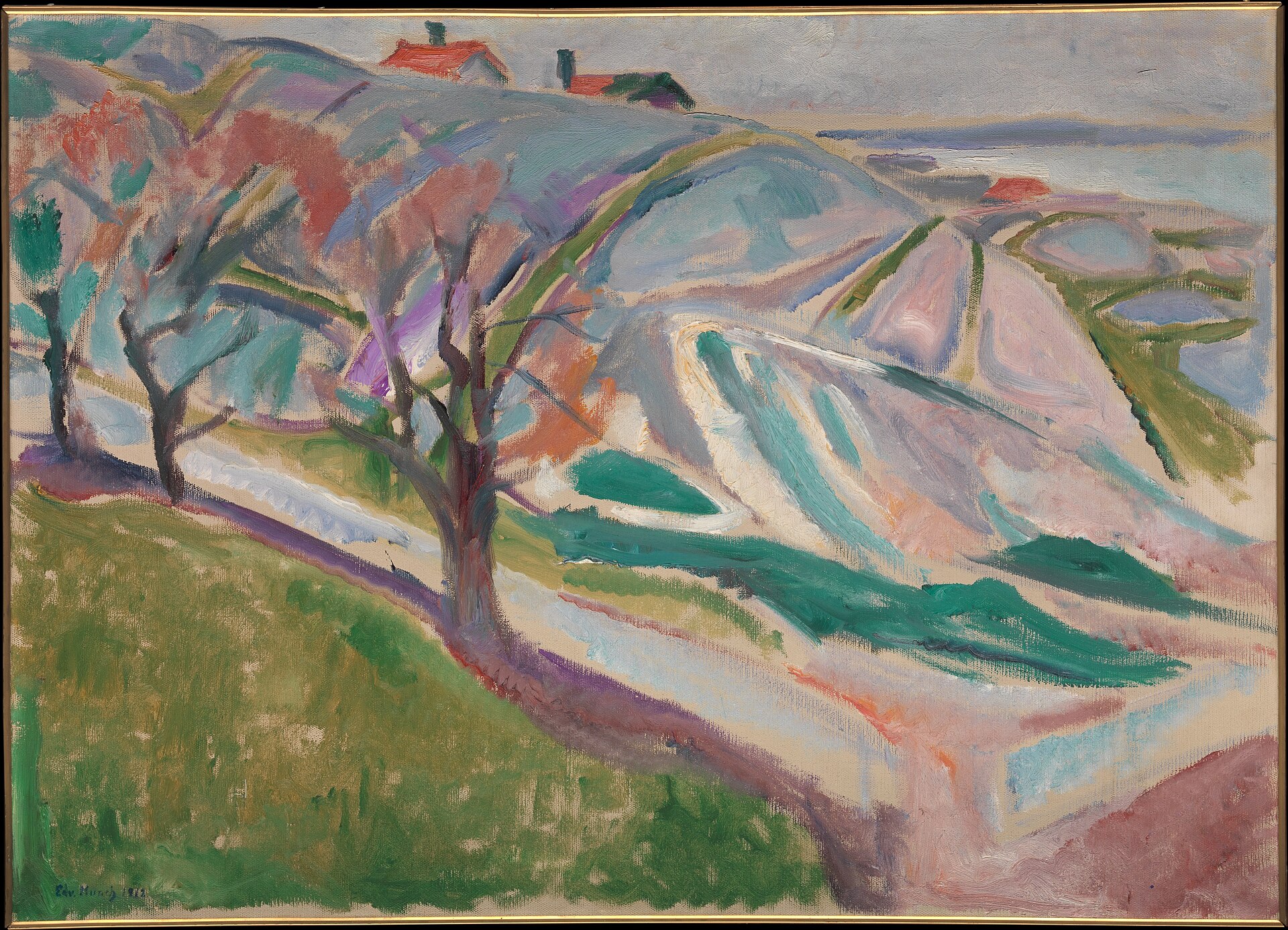
Landscape from Kragerø by Edvard Munch, 1912
Metropolitan Museum of Art · wikidata.org
This came from a string of coastal landscapes painted while recovering from a breakdown — a much quieter stretch than the work he's known for.
Erisava: This is way too calm for who I think painted it.
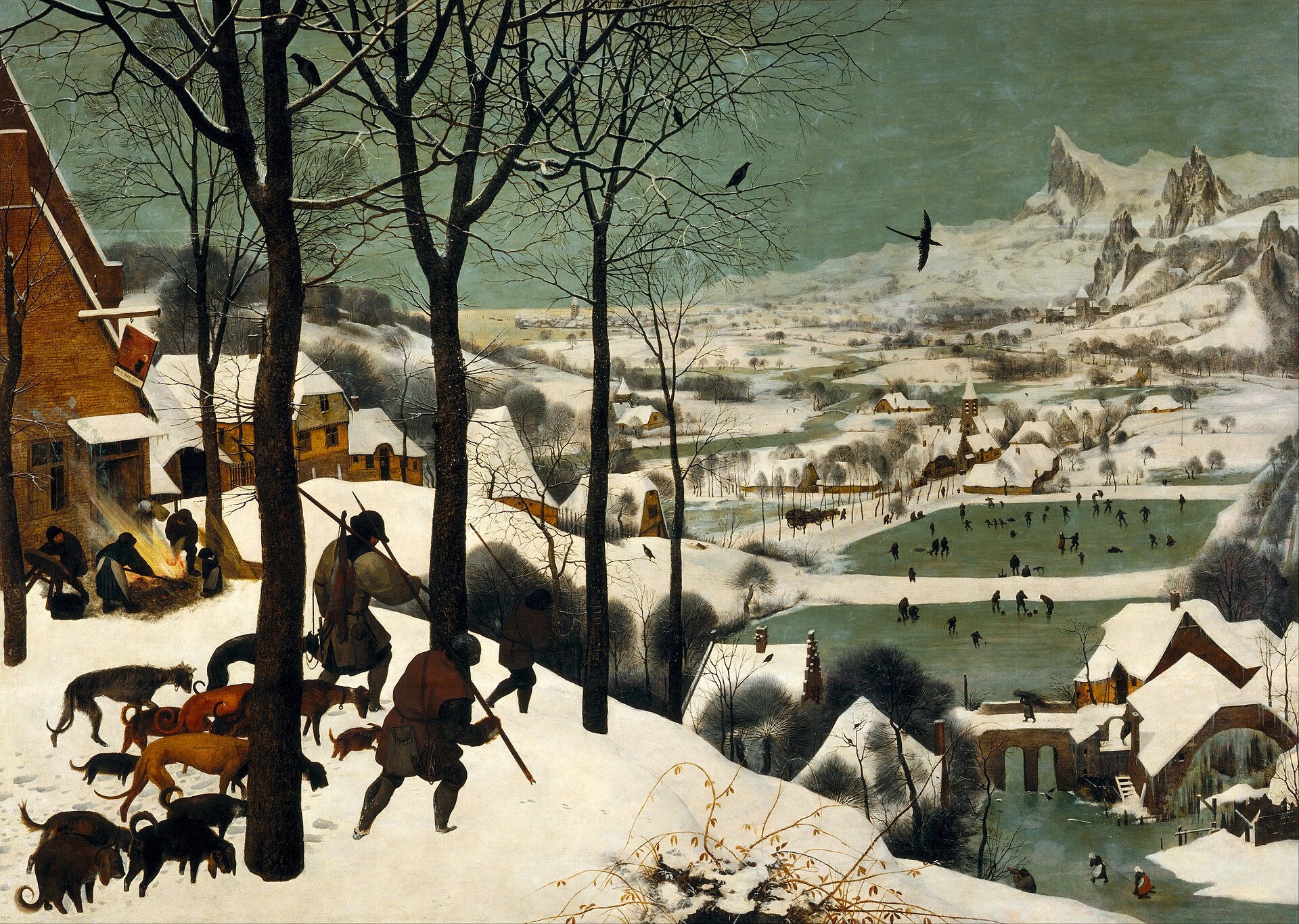
The Hunters in the Snow by Pieter Brueghel the Elder, 1565
Kunsthistorisches Museum · wikidata.org
Public domain
This was one of a set marking the turns of the year — six of them, apparently, though only five made it through. They were painted for a rich merchant's house rather than a church, which was still a fairly new idea. It's said the winters around then were genuinely savage across that part of Europe, so the cold isn't invented.
Erisava: The sky's gone green and the whole thing feels genuinely cold. I'd hang it.
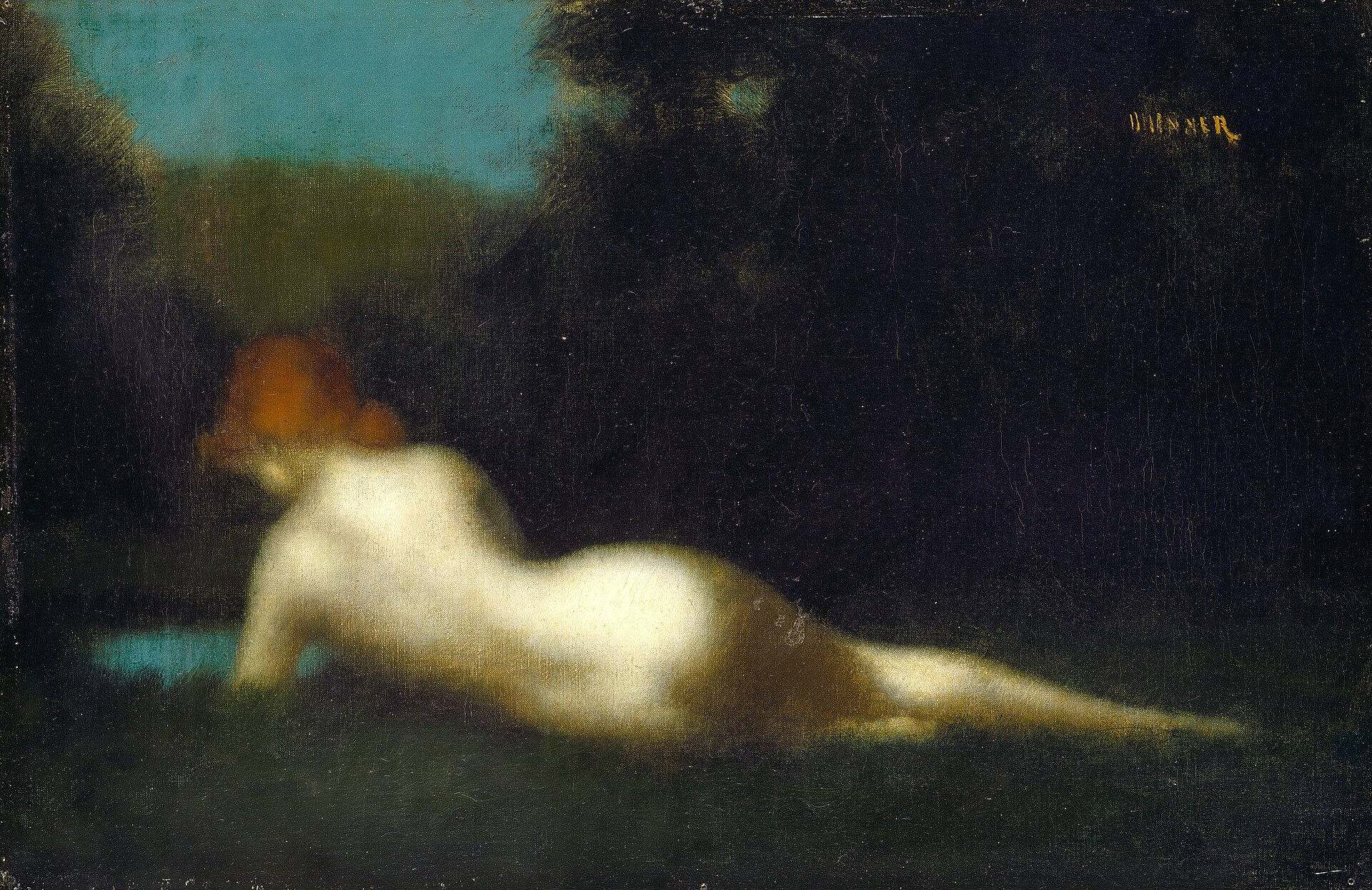
Reclining Nude by Jean-Jacques Henner, 1900
National Gallery of Art · wikidata.org
Public domain
Supposedly he painted this same setup over and over — pale figure, near-black surroundings, no story attached to it — and it sold well enough that he kept at it for years. I couldn't find anything about this one in particular, only that there are a lot like it.
Erisava: Who was this painted for? I've got a guess, and I don't love it.
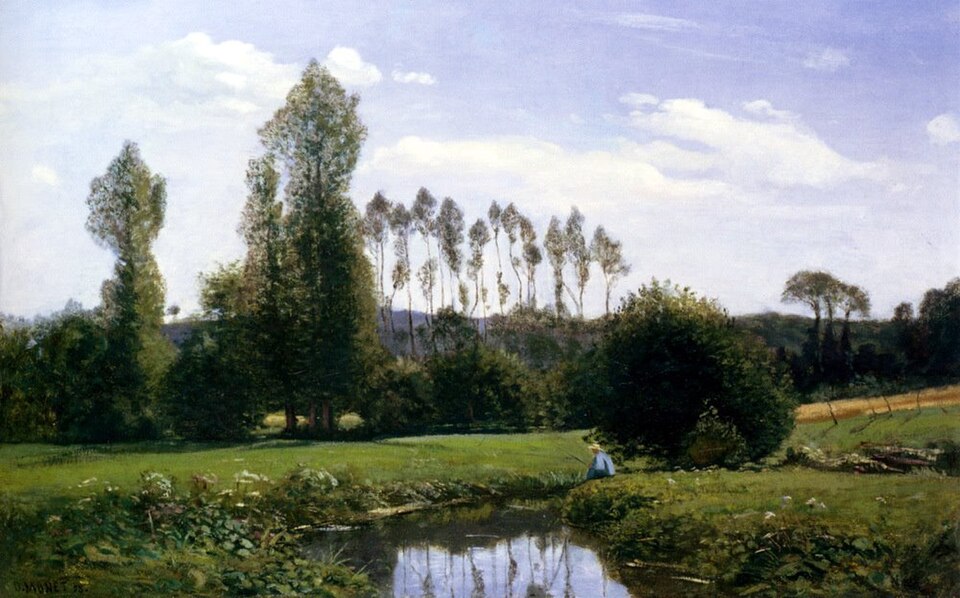
View At Rouelles, Le Havre by Claude Monet, 1858
Marunuma Art Park · wikidata.org
Public domain
Wikipedia has this down as the earliest painting of his that anyone knows about, done when he was seventeen, out by a stream near Le Havre. It's signed with the name Oscar — apparently that was the first half of his actual name, and he dropped it in his twenties.
Erisava: Nothing's happening here and I'd still put it on my wall.
Jacob’s Dream by Jusepe de Ribera, 1639
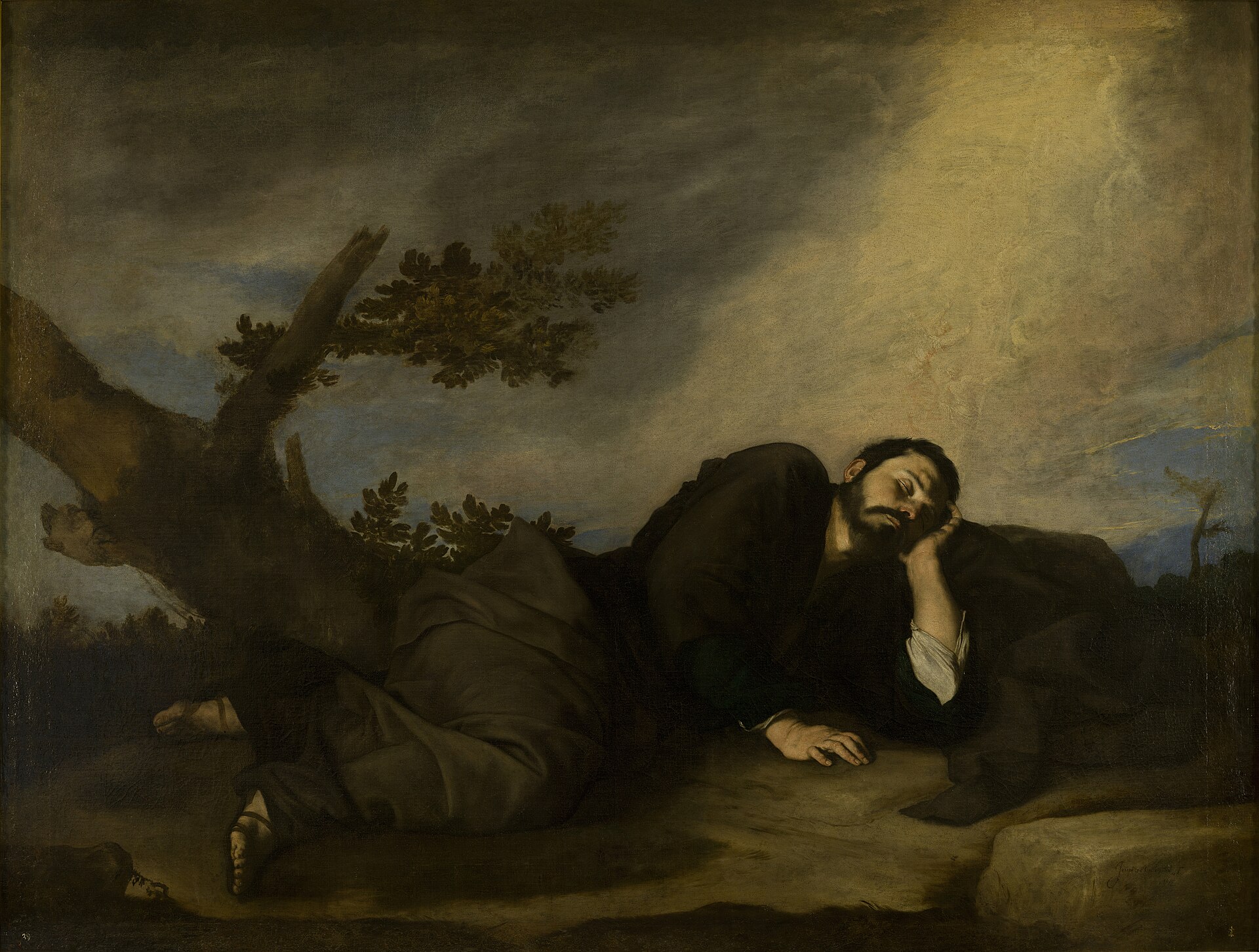
Museo del Prado · wikidata.org
Public domain
The story behind it is a man asleep on a rock dreaming of a ladder with angels going up and down it. Most painters put the whole ladder in, from what I've read — there's barely a hint of it here, which I think is the better call.
Erisava: Something's happening in that sky, or nothing is. What do you see?
Mural Sketch, Pastoral Study, No. 1 by Henry Keller, 1920
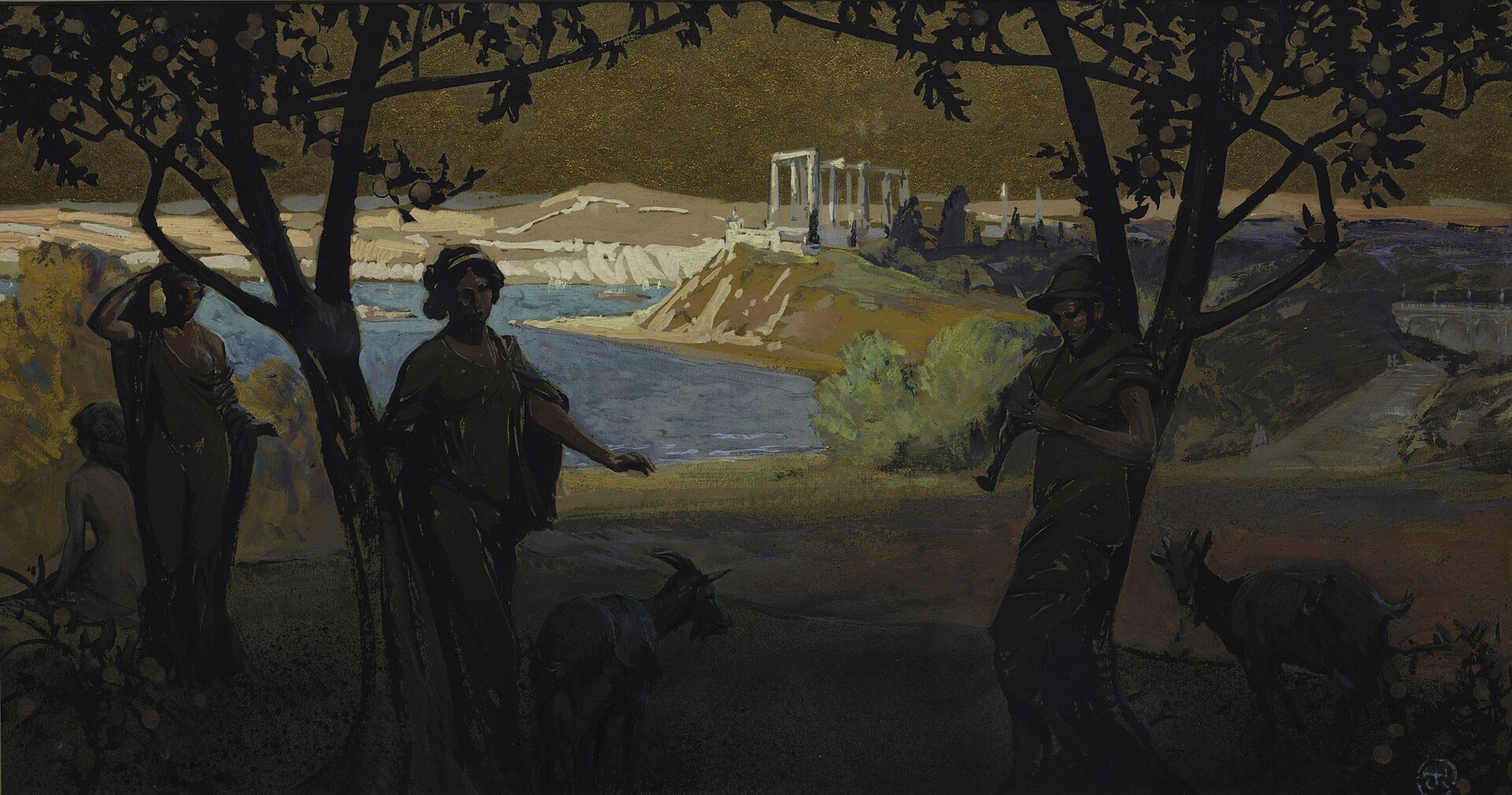
Cleveland Museum of Art · wikidata.org
This apparently isn't a finished painting on its own — it's a sketch for a mural, so somewhere there might have been meant to be a full-size version on an actual wall. The gold sky, the ruins, the goats: all of it seems to be reaching for 'ancient Greece.'
Erisava: This feels like somebody's daydream of ancient Greece, not an actual place.
Annunciation by Leonardo da Vinci, 1472
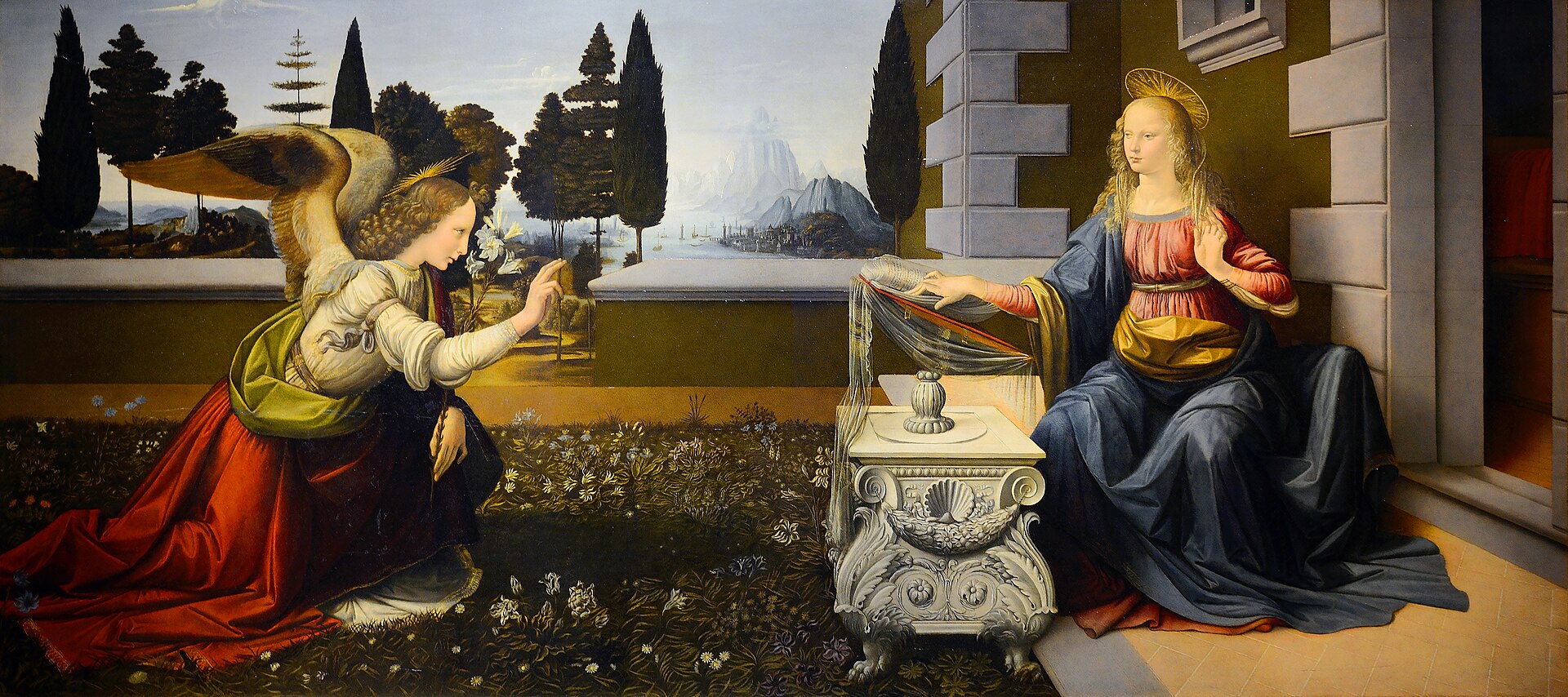
Uffizi Gallery · wikidata.org
Public domain
This scene was standard issue in Florence then — workshops turned them out constantly for churches and chapels that wanted one. It came out of his apprentice years in someone else's studio, which is apparently why people still argue about how much of it is his hand at all.
Erisava: That misty blue mountain in the back is doing more for me than anything up front.
Boy on a Ram by Francisco Goya, 1786
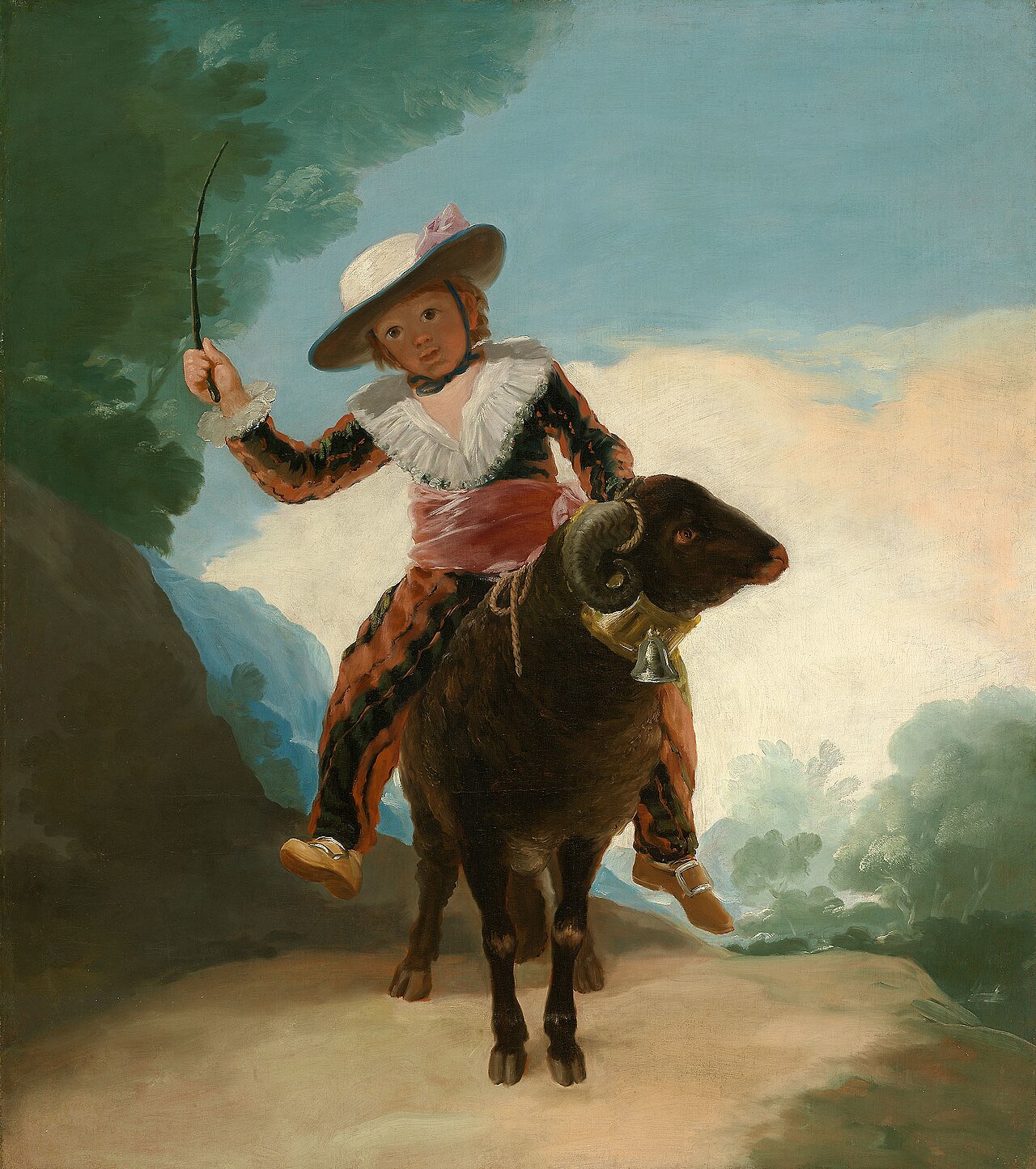
Art Institute of Chicago · wikidata.org
Public domain
This wasn't made to hang on a wall at all, apparently — it's a full-size design for a tapestry, painted so the king's weavers had something to copy. The set it belonged to went into a palace dining room. Cheerful stuff to eat your lunch under, I suppose.
Erisava: It sure looks like tapestry design.
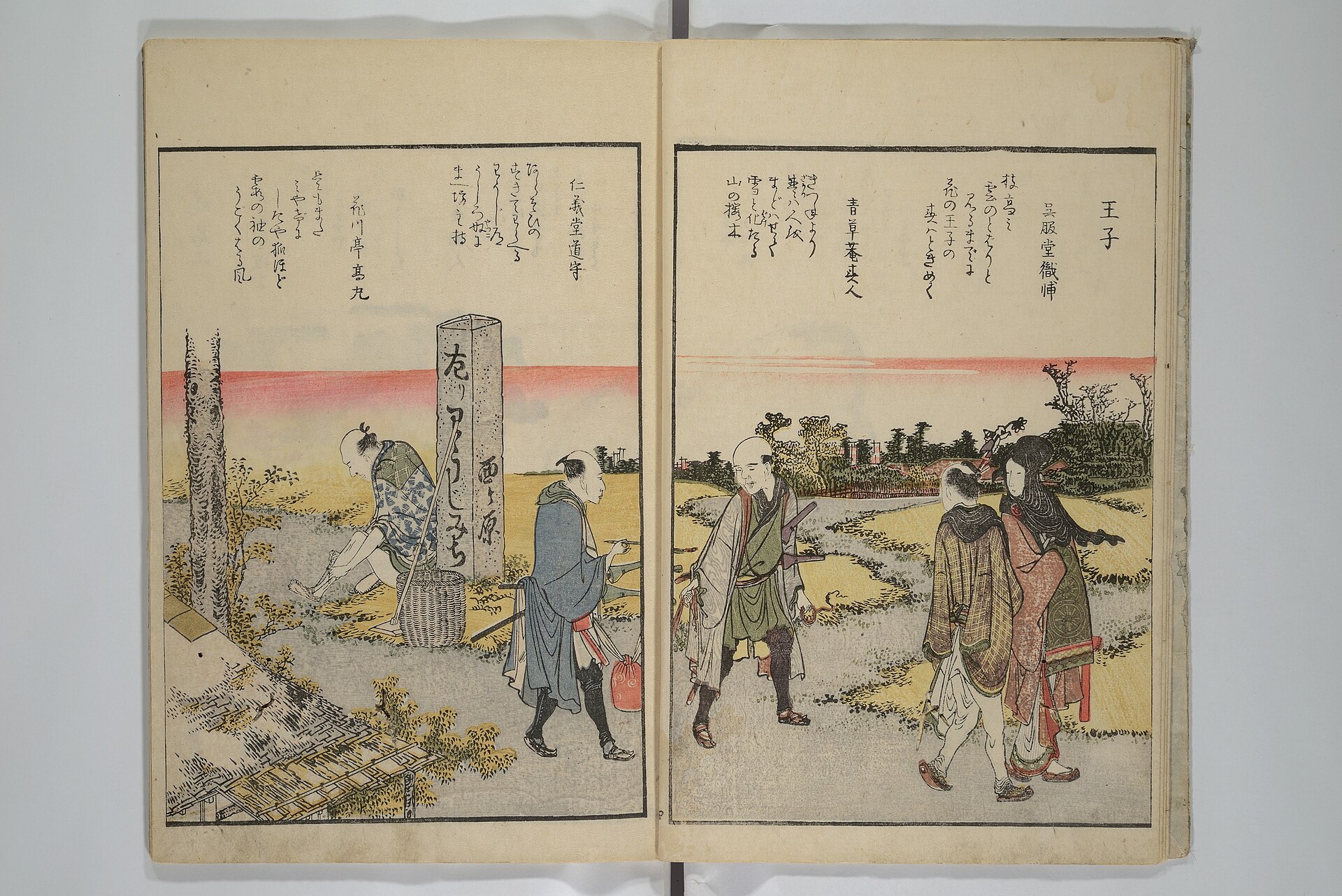
Ōji by Katsushika Hokusai, 1800
Metropolitan Museum of Art · wikidata.org
From what I can find this is a page out of a picture-book of Edo views — comic poems up top, a small scene printed underneath, the whole thing bound and sold to be flipped through rather than hung anywhere. The verses are by several different people, not by the one who drew the pictures.
Erisava: This is a page out of a book. Does that get the same wall as a painting?
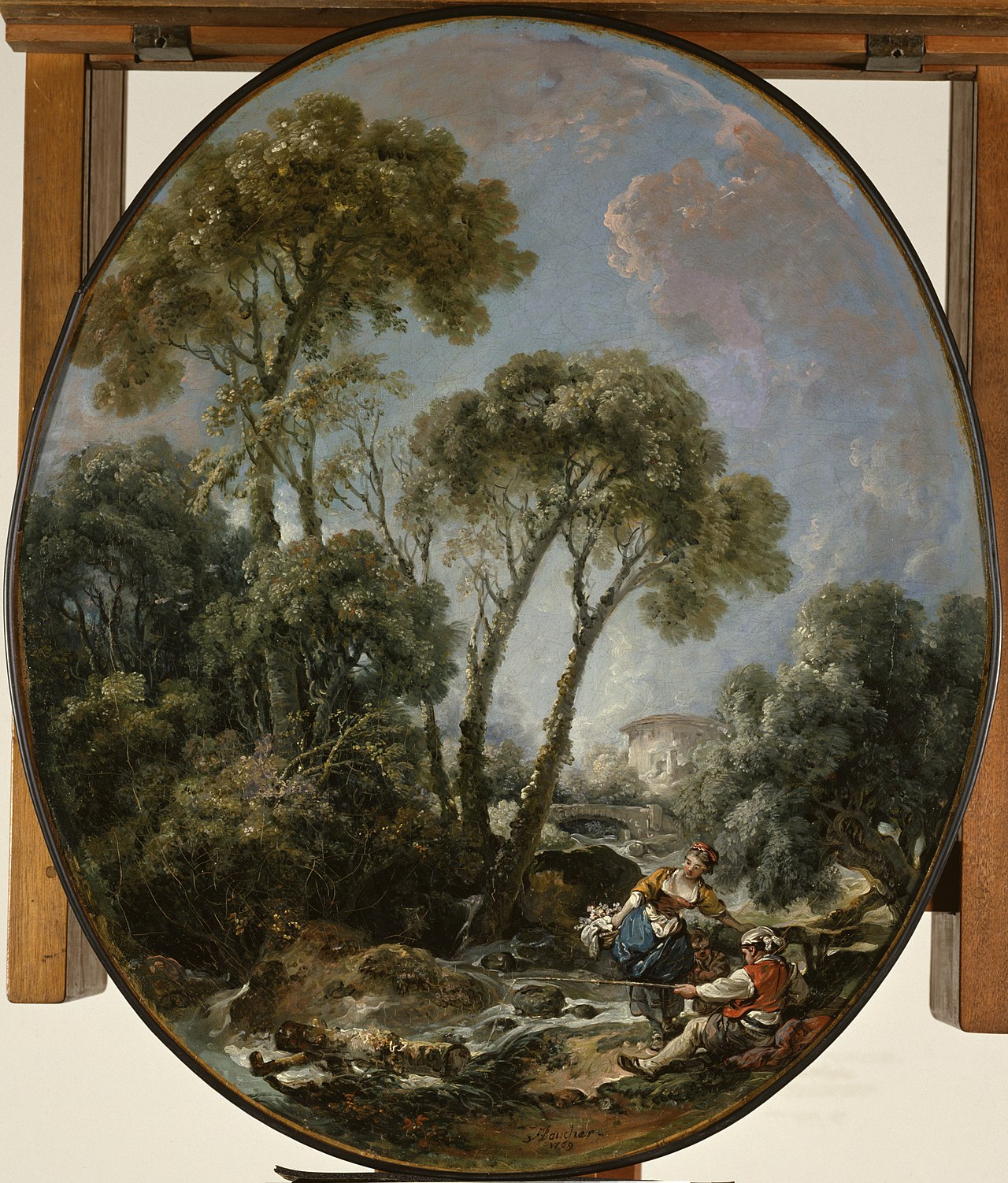
Landscape with Fisherman and a Young Woman by François Boucher, 1769
Walters Art Museum · wikidata.org
Public domain
The oval is the clue: pictures shaped like this were usually made to fit a panel over a door or a fireplace, ordered as part of the decorating rather than hung on a nail. From what I've read this one came with a companion piece the same size.
Erisava: This is very green and very dark. What do you get out of a picture like this?
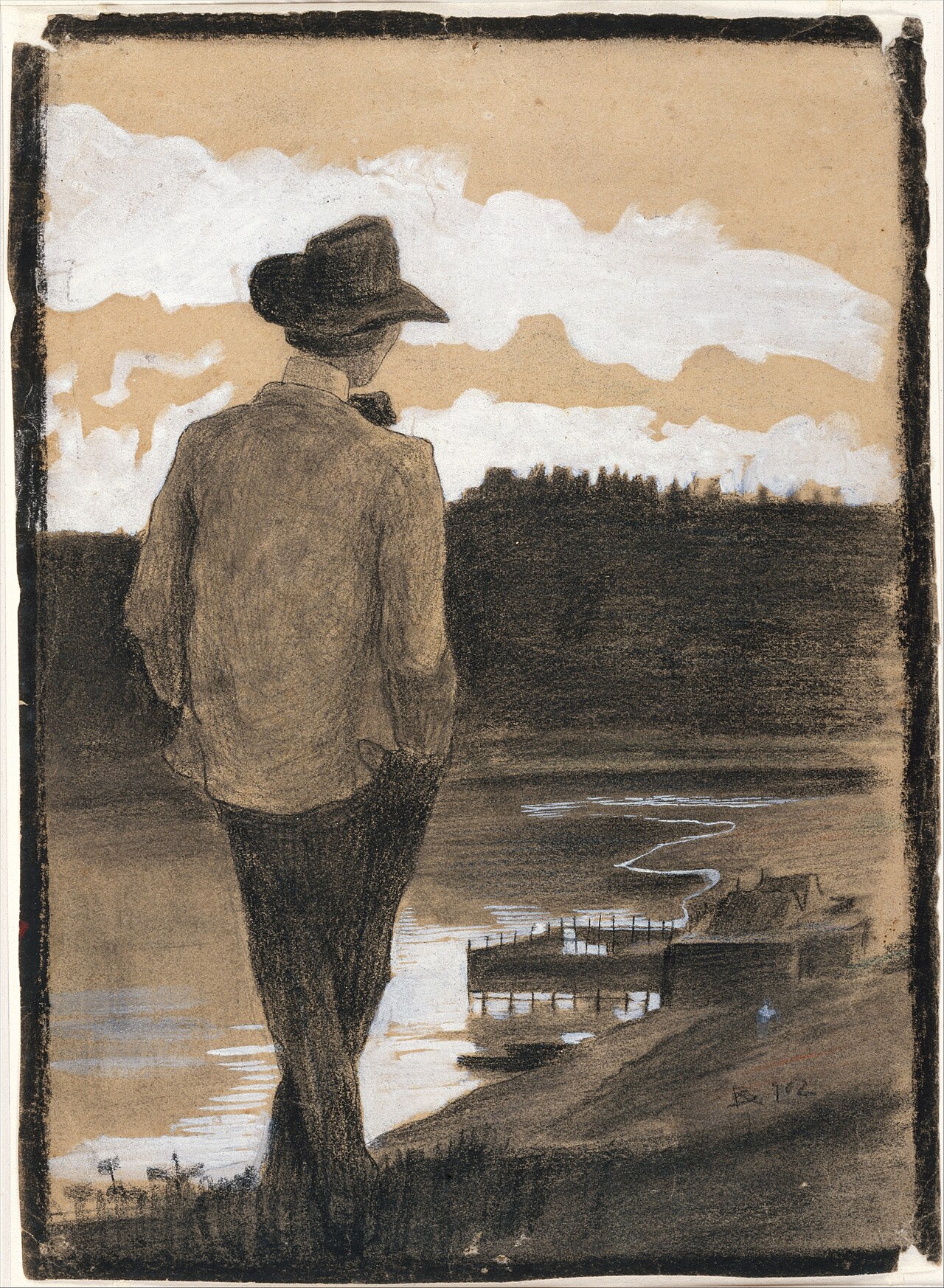
Young Man on a Riverbank by Umberto Boccioni, 1902
Metropolitan Museum of Art · wikidata.org
Supposedly Marinetti's Futurist manifesto singled out exactly this kind of quiet, moonlit mood as something painters needed to get over — funny seeing the movement's own future star drawing it a few years earlier.
Erisava: I think he did the right thing, moving on.
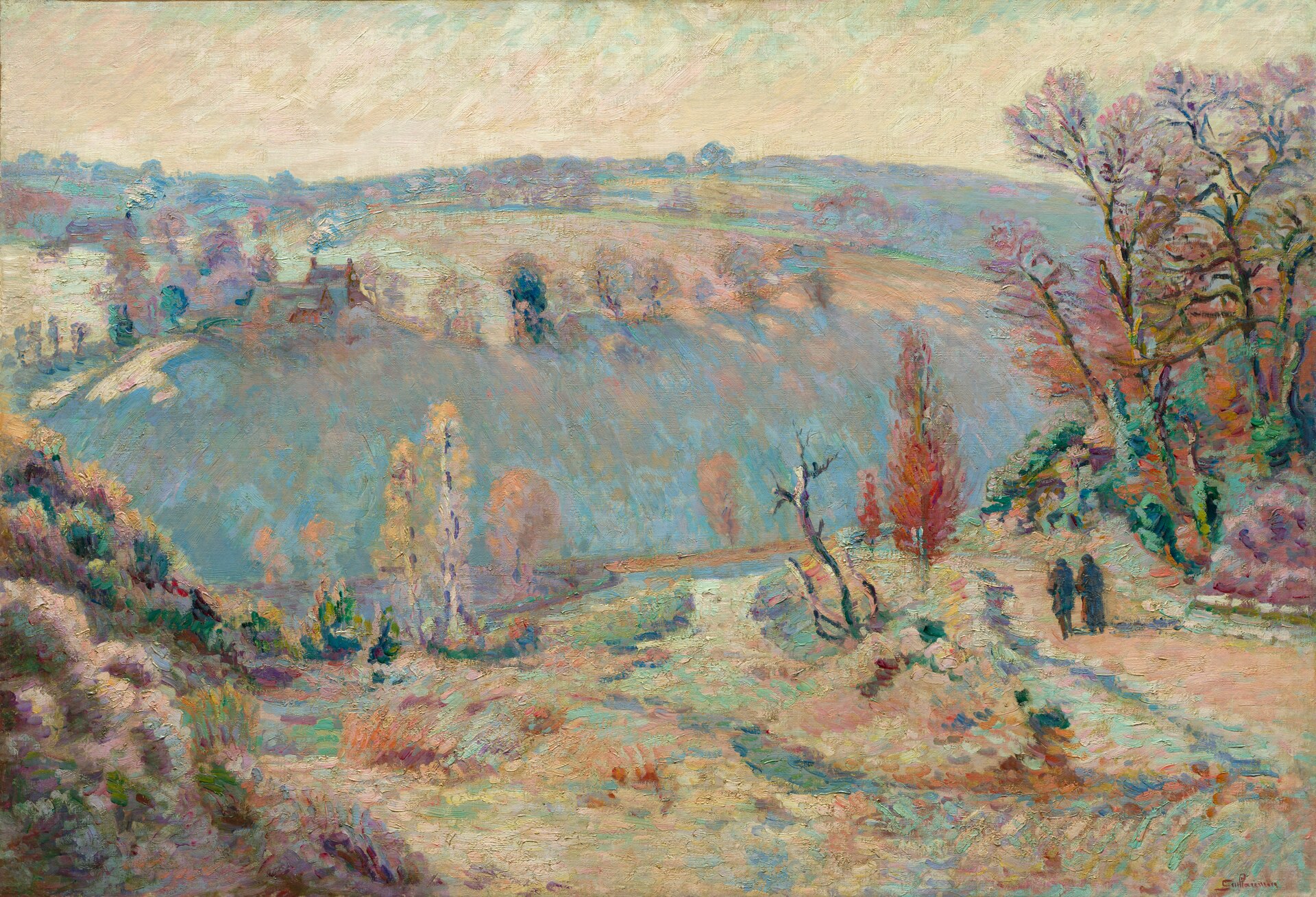
Valley of the Sédelle at Pont Charraud: White Frost by Armand Guillaumin, 1907
Cleveland Museum of Art · wikidata.org
According to what I found, he only managed to paint full-time after winning something like 100,000 francs in a state lottery — before that it was a government day job on the side. He kept coming back to this same river valley for years, apparently, enough that people credit him with putting it on the map.
Erisava: Does frost actually make everything look this blue?
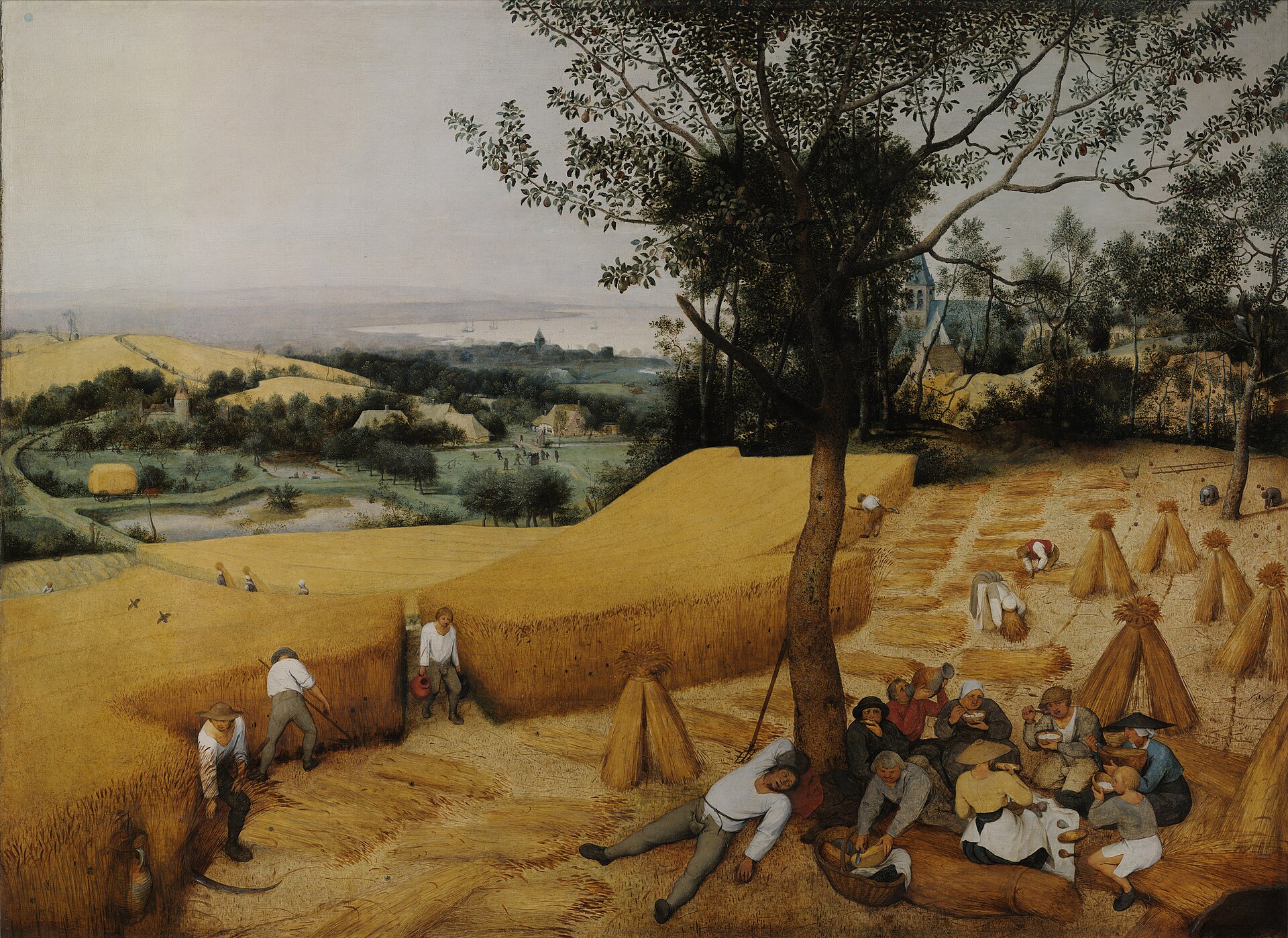
The Harvesters by Pieter Brueghel the Elder, 1565
Metropolitan Museum of Art · wikidata.org
Public domain
Apparently this was one of six paintings a merchant banker in Antwerp commissioned to track the months of the year — this one's high summer. Only five are known to survive.
Erisava: That guy passed out under the tree had the right idea.
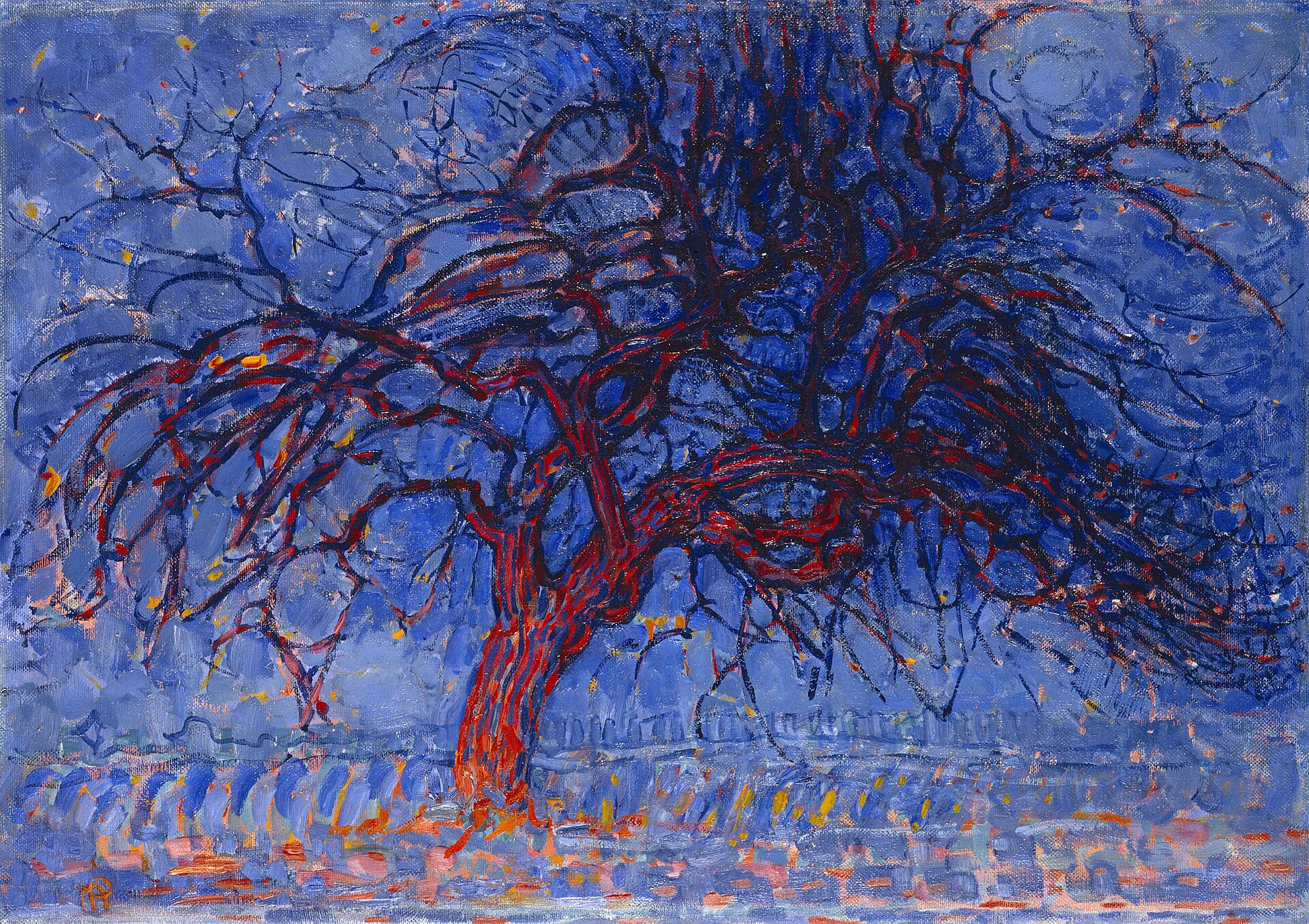
The Red Tree by Piet Mondrian, 1909
Kunstmuseum Den Haag · wikidata.org
Public domain
This started off a run of tree paintings he kept at for years — each one taking a bit more out, according to Wikipedia, until the trees eventually turned into straight lines and blocks and stopped being trees at all.
Erisava: All that blue with the red cutting through it — I'd hang this without thinking.
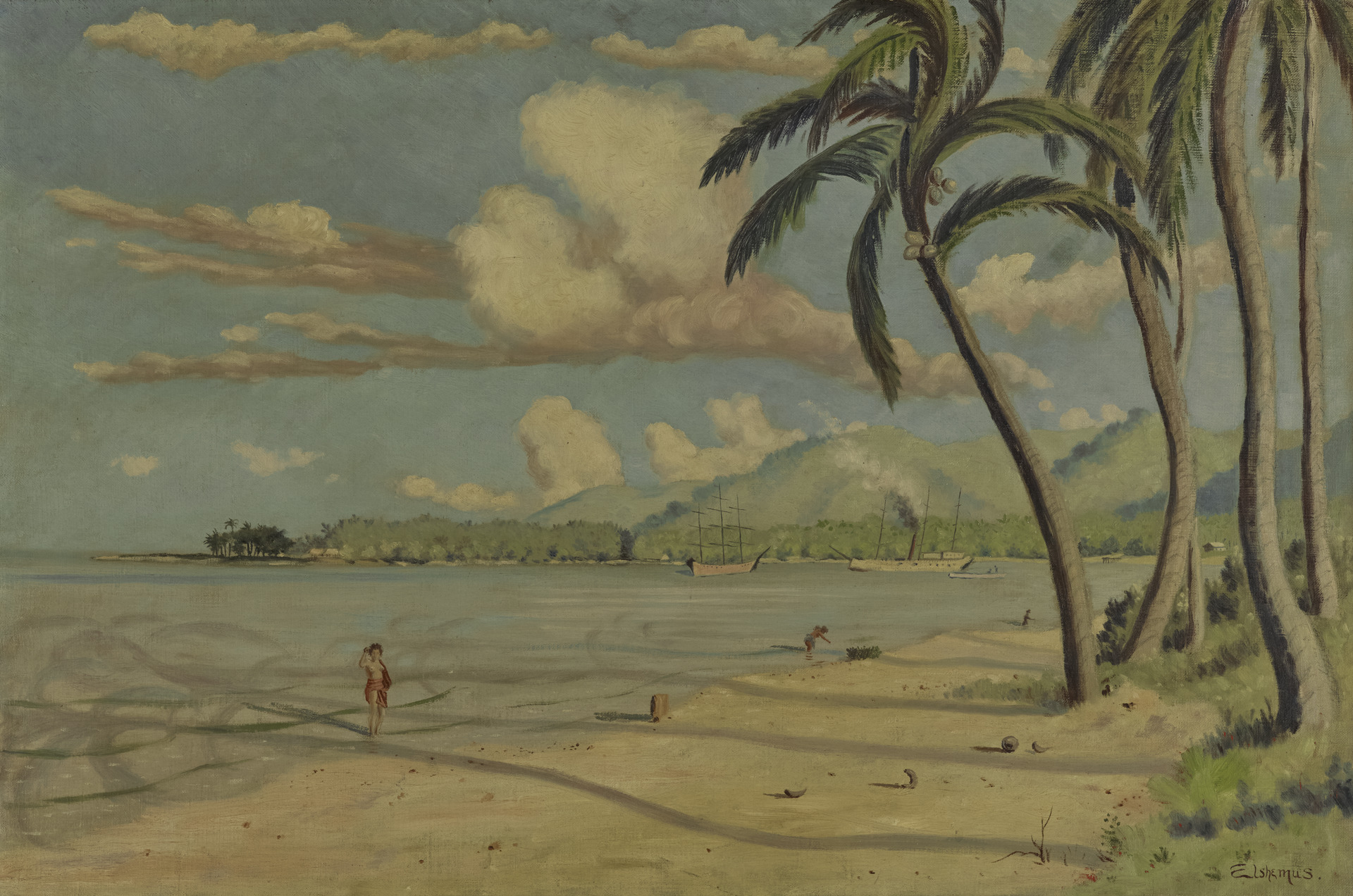
Beach at Apia, Samoa by Louis Eilshemius, 1905
Yale University Art Gallery · wikidata.org
Public domain
Apparently he really did sail out to the South Pacific and came back with a stack of scenes like this one. They say almost nobody took him seriously for decades — until Marcel Duchamp, of all people, started calling him a genius, which only half stuck.
Erisava: This looks like a postcard. Is that all it needs to be?
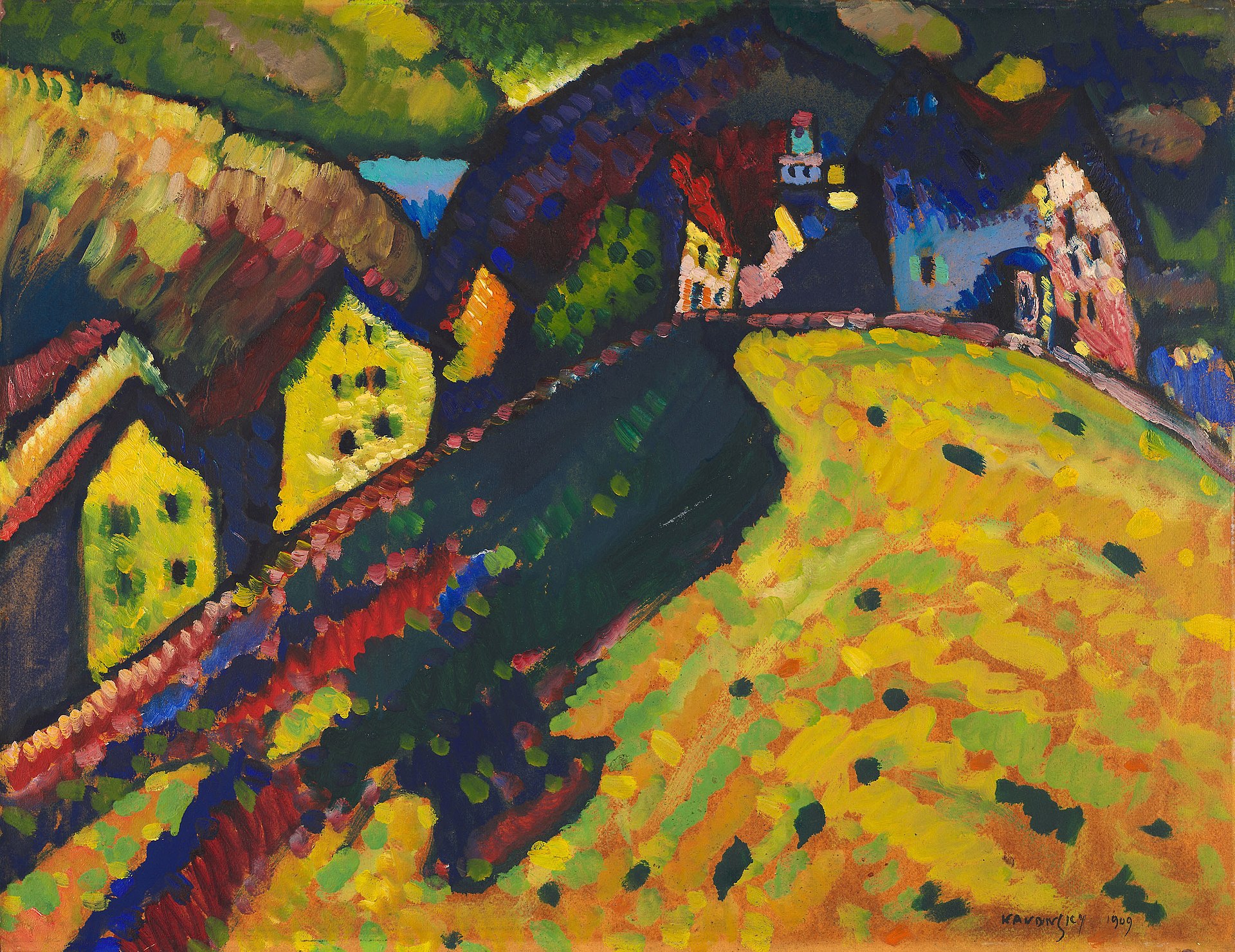
Houses at Murnau by Wassily Kandinsky, 1909
Art Institute of Chicago · wikidata.org
Public domain
Wikipedia says he spent his summers in a small Bavarian town, painting it over and over and brighter each time — and a couple of years after this he gave up painting recognisable things altogether.
Erisava: This is a village with the colour turned up way too far, and somehow it works.
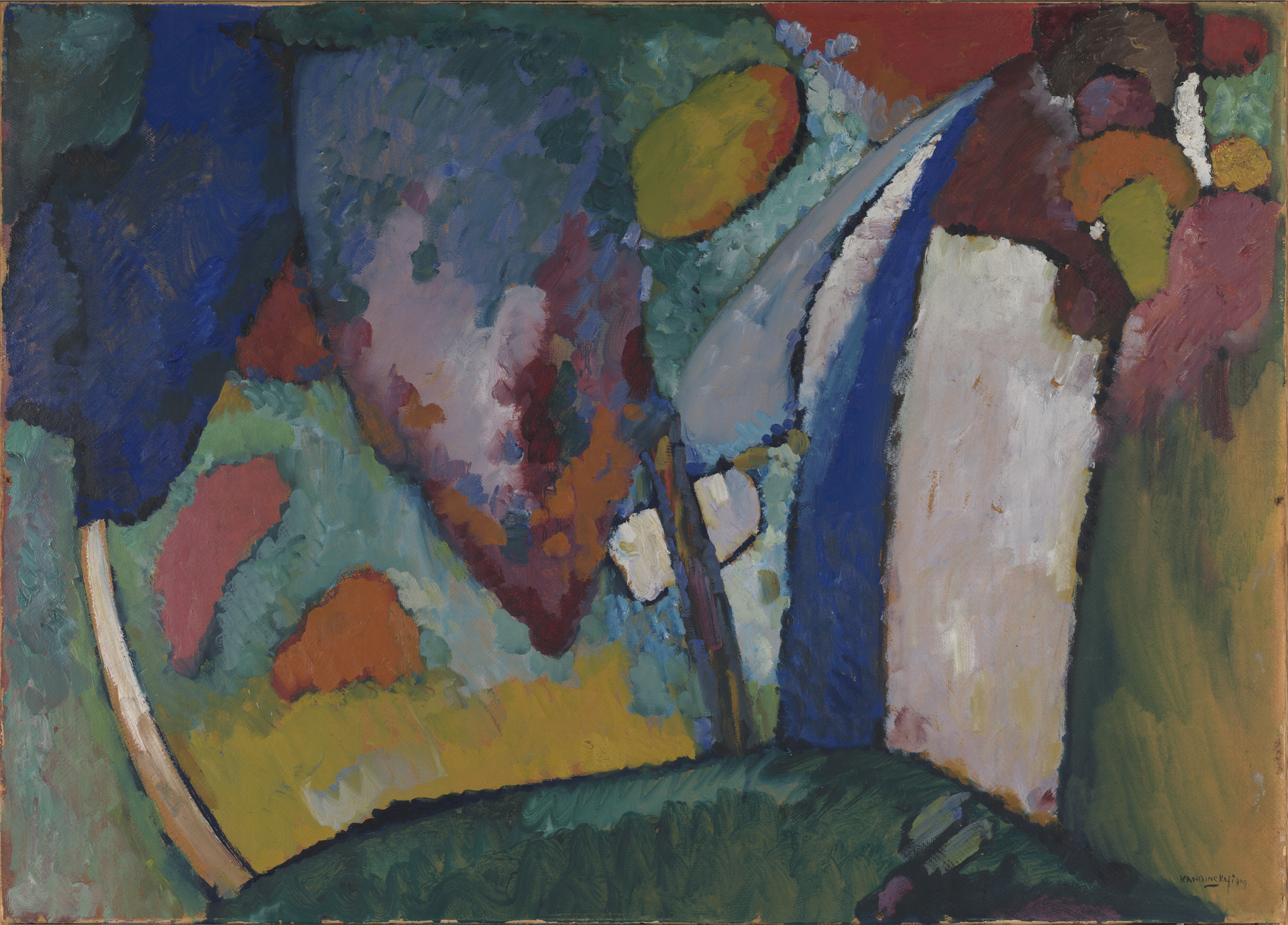
The Waterfall by Wassily Kandinsky, 1909
Yale University Art Gallery · wikidata.org
Public domain
This is from just before he gave up recognisable subjects altogether — a year or two on, he was painting pictures of nothing in particular and arguing they could work on you the way music does.
Erisava: It's like every colour got invited and nobody's in charge. What am I meant to do with it?
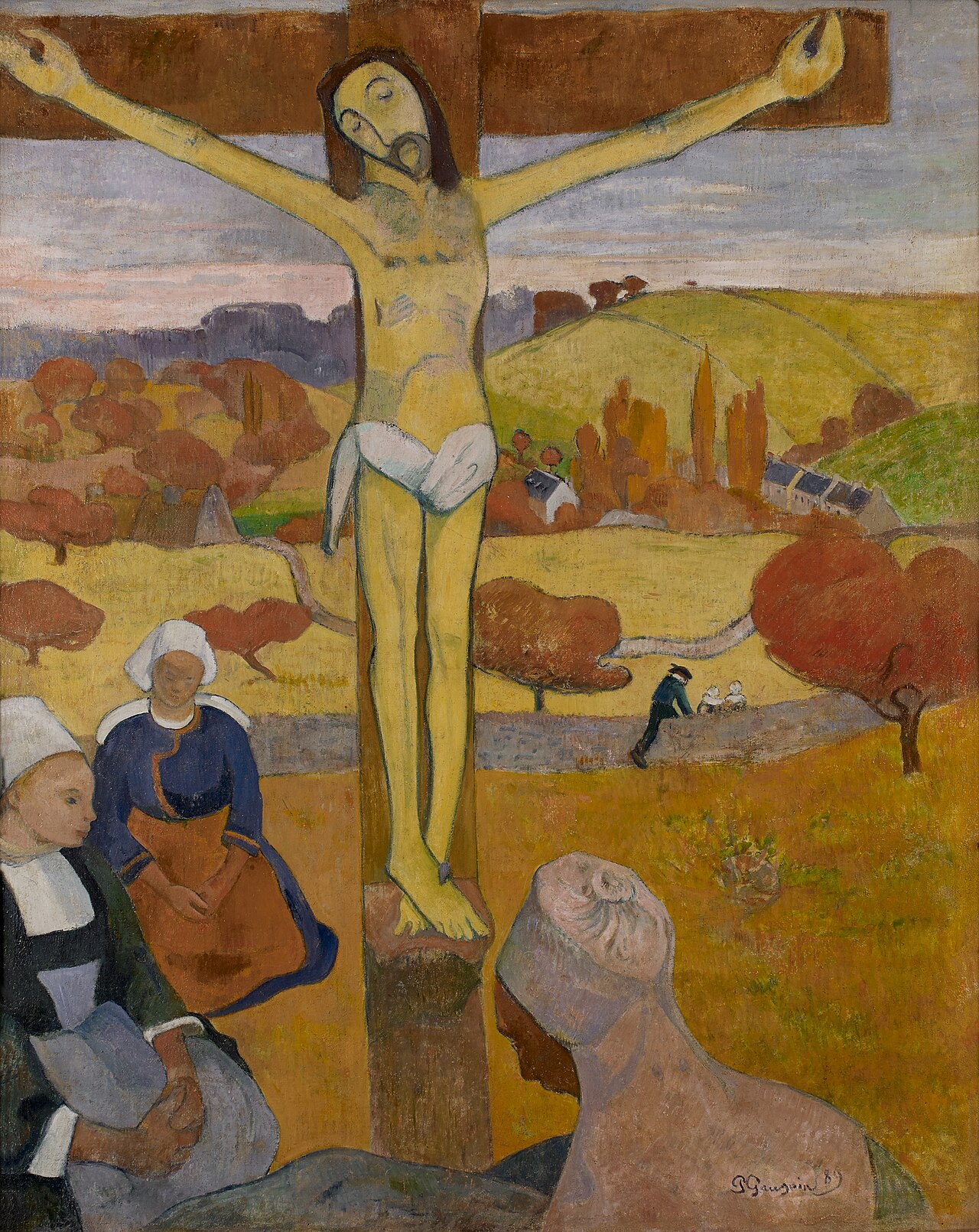
The Yellow Christ by Paul Gauguin, 1889
Buffalo AKG Art Museum · wikidata.org
Public domain
Apparently the cross here is modelled on a carved wooden one from a small local chapel, repainted bright yellow and dropped into a working field with the women dressed the way locals actually did back then.
Erisava: The yellow works better than it has any right to.
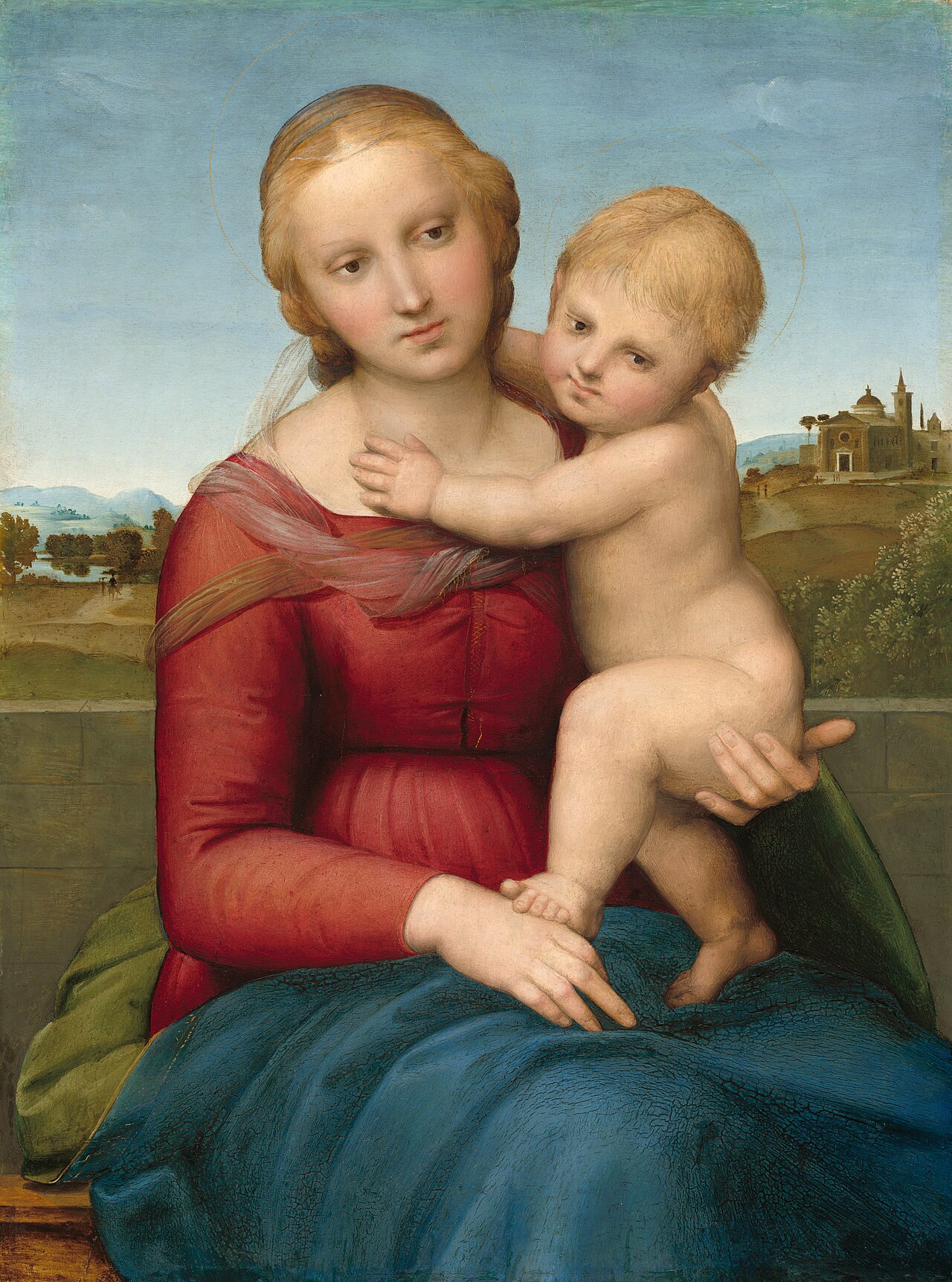
Small Cowper Madonna by Raphael, 1505
National Gallery of Art · wikidata.org
Public domain
The odd name comes from the Cowper family, who used to own it — nothing to do with the subject. Like a lot of British collections, it eventually made its way into an American museum in the early 1900s.
Erisava: This one I'd genuinely hang in my own home.
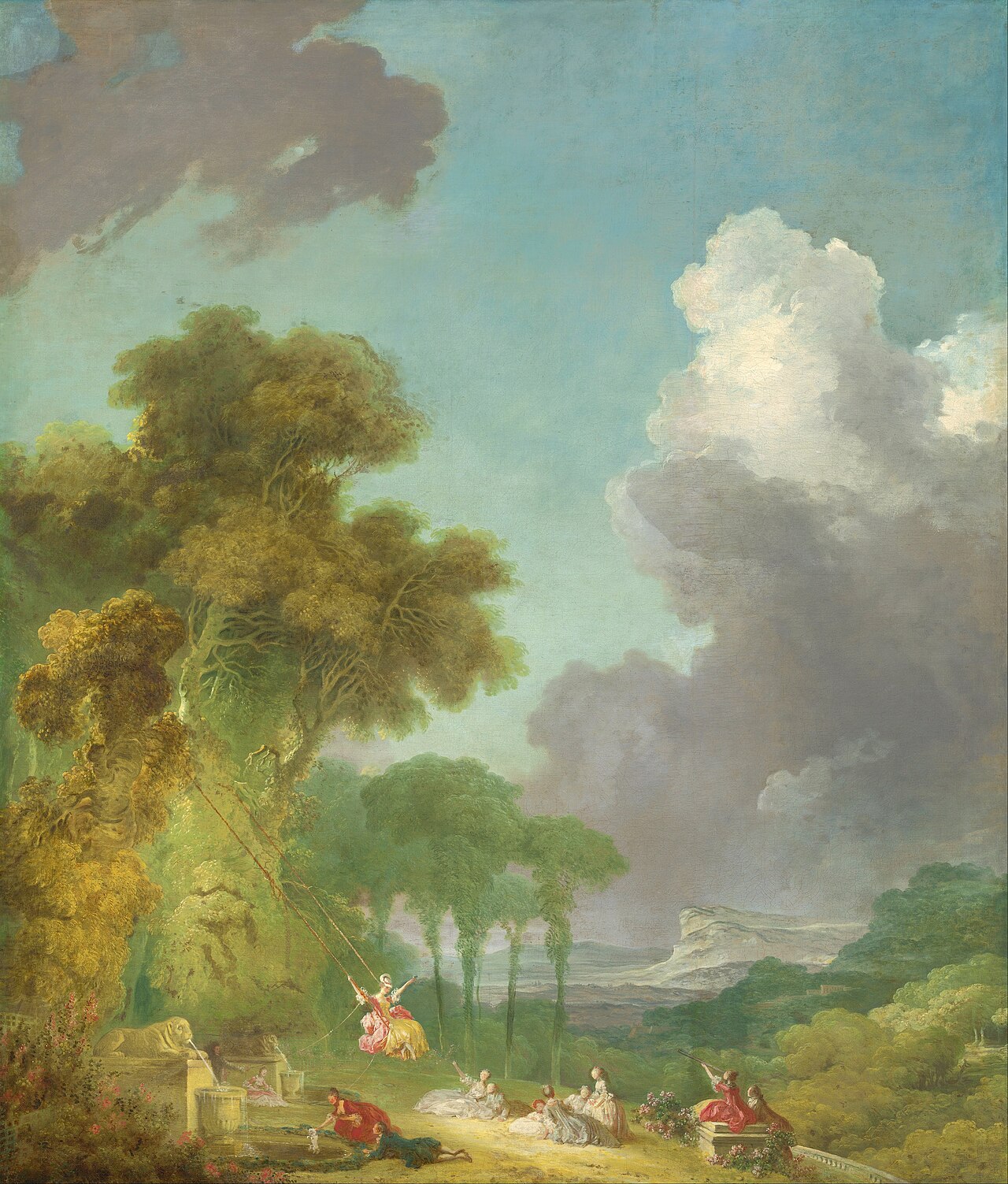
The Swing by Jean-Honoré Fragonard, 1775
National Gallery of Art · wikidata.org
Public domain
Apparently the enormous trees that turn up over and over in his landscapes get traced back to a stint in Italy filling sketchbooks with old villa gardens, or so I've read. Big decorative pictures like this were often ordered to fill a particular wall in somebody's house — furniture, more or less, for people who could afford painted furniture.
Erisava: Is this what rich people did for fun back then?