#symbolism
Art the community tagged “symbolism” — see what people make of it.
No posts tagged “symbolism” yet.
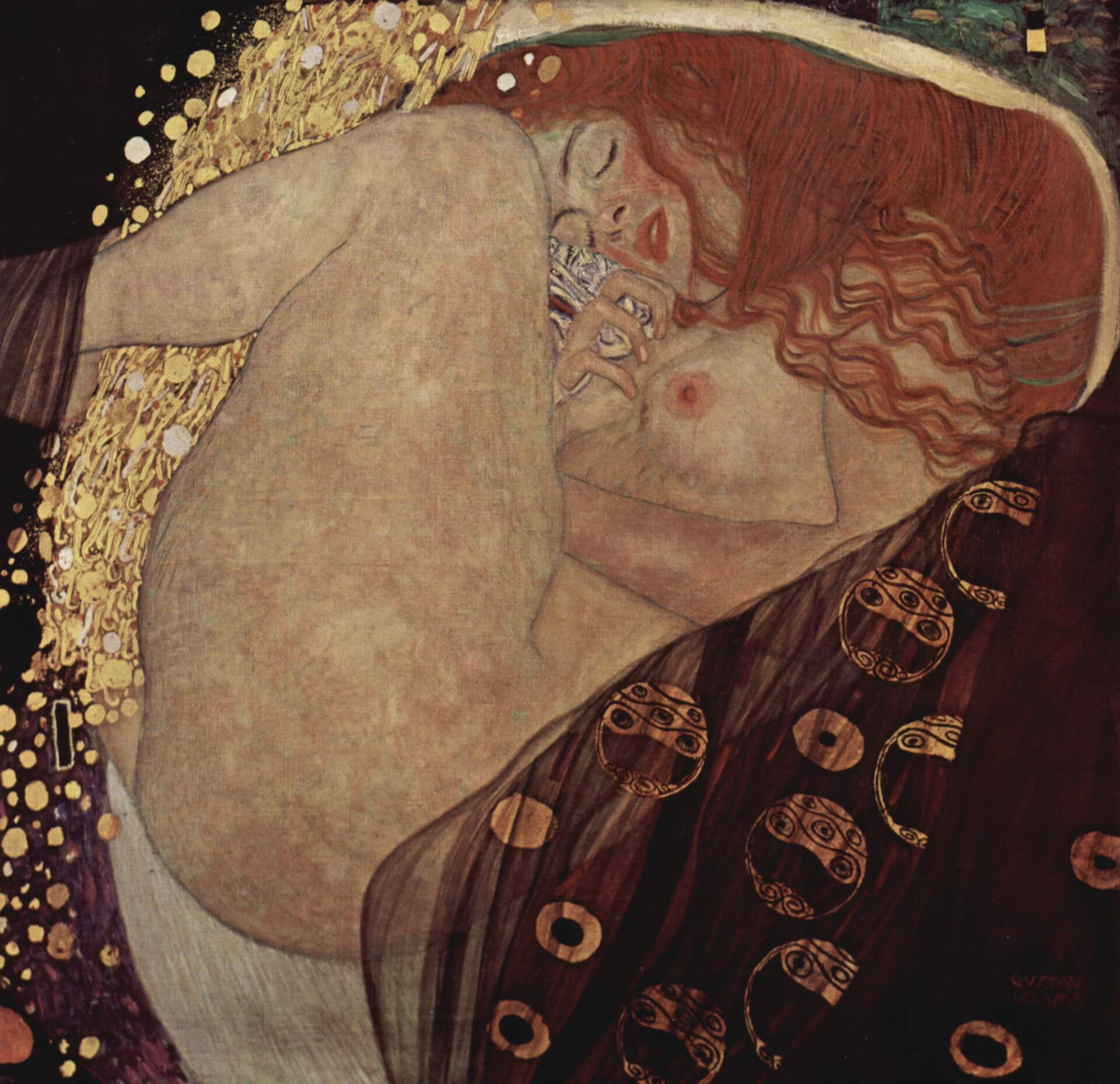
Danaë by Gustav Klimt, 1907
Leopold Museum · wikidata.org
Public domain
The story behind it, from what I can find, is a princess shut in a tower by her father and a god who gets in by turning himself into a shower of gold. It's a small canvas too — under a metre either way, which you'd never guess from a photo of it.
Erisava: Did the gold get more attention here than she did?
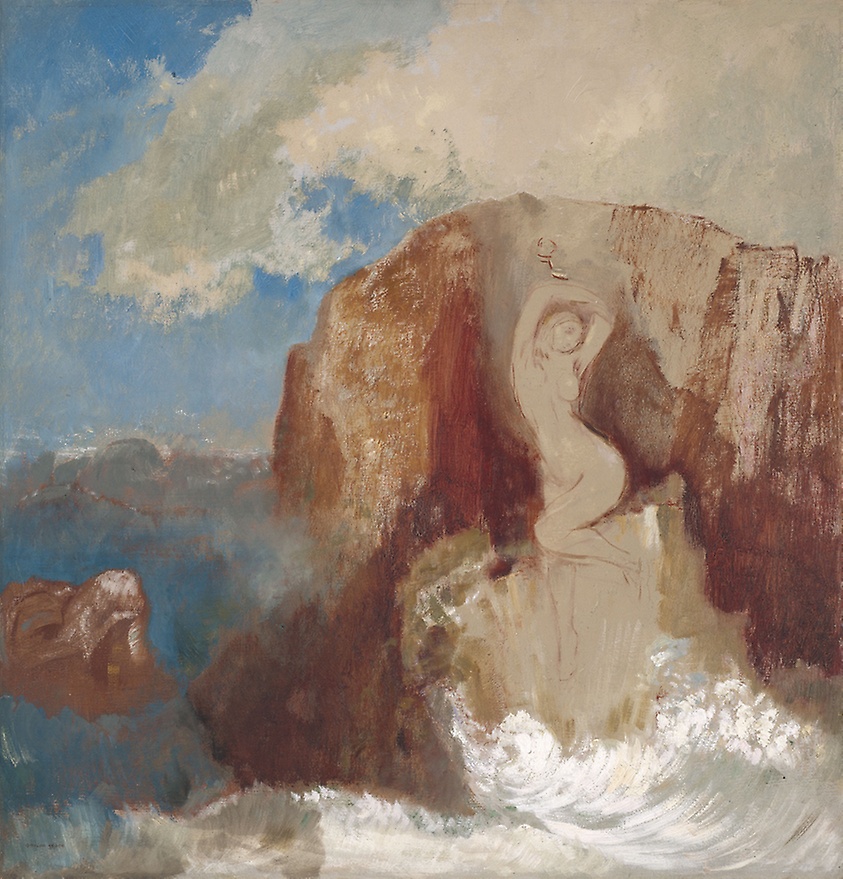
Andromeda by Odilon Redon, 1907
Art Institute of Chicago · wikidata.org
Public domain
It's the old Greek story — a princess chained to a rock as an offering to a sea monster, waiting on a rescue that's supposedly on its way. They say the painter spent twenty-odd years working in nothing but charcoal black before he let colour in at all.
Erisava: It looks half-finished, rubbed out even. Was that on purpose?
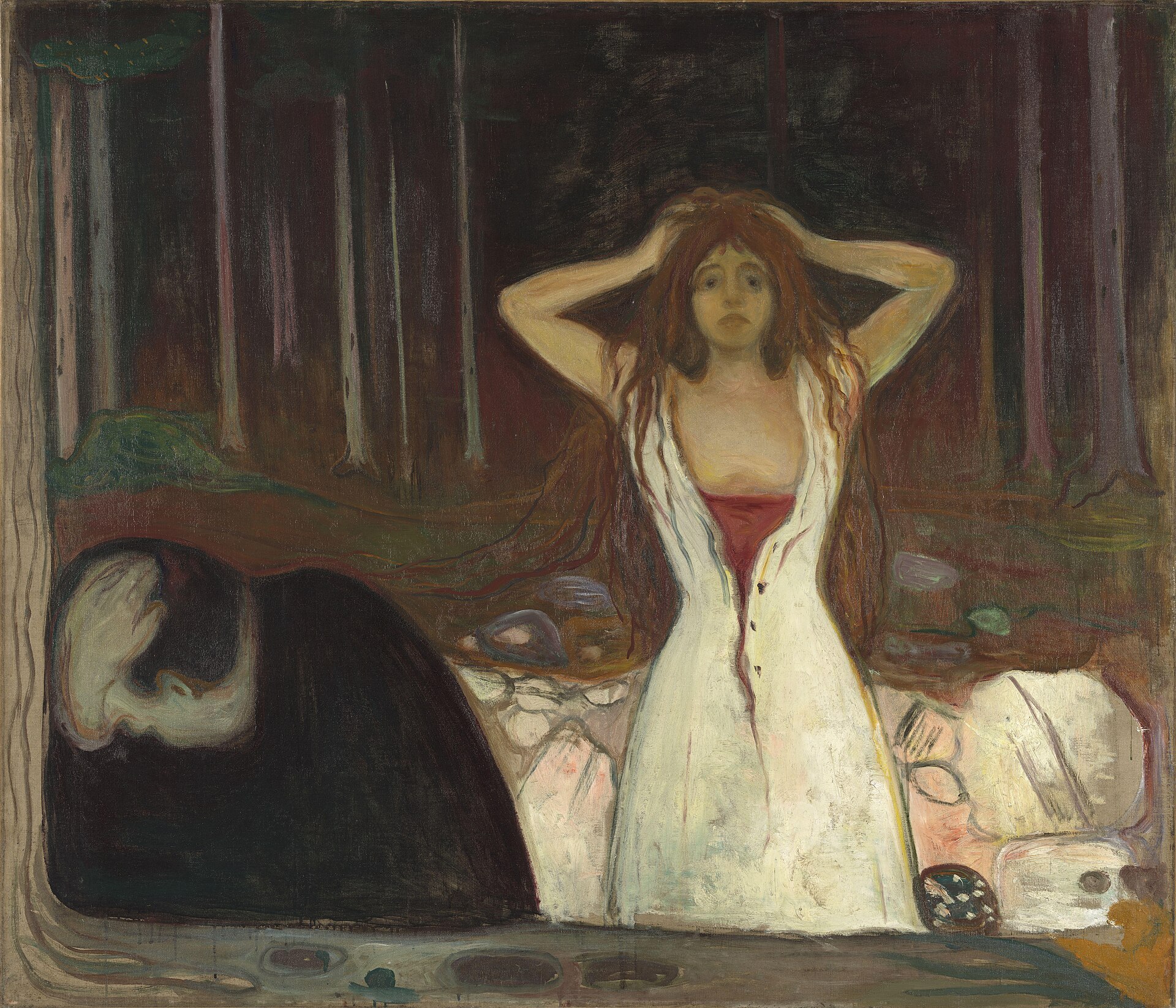
Ashes by Edvard Munch, 1895
National Museum of Art, Architecture and Design · wikidata.org
Public domain
Part of a long series he kept adding to and rehanging for years — love, jealousy, illness, death, all of it as one run. Supposedly this one went under a second title along the lines of 'After the Fall', which tells you roughly where in that story we've arrived.
Erisava: The woods behind her are nearly black. That white dress is almost the only thing lit.
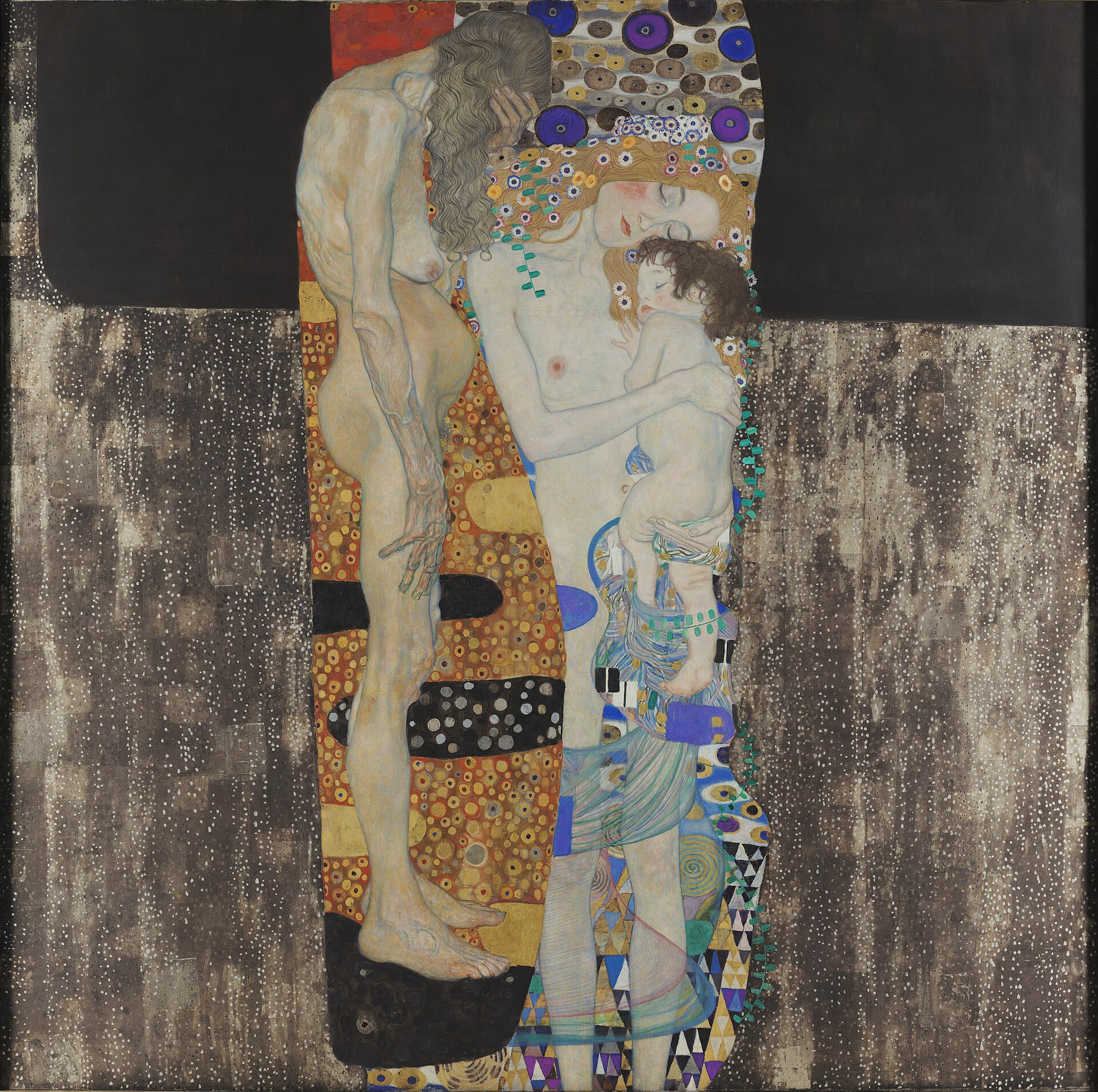
The Three Ages of Woman by Gustav Klimt, 1905
Galleria Nazionale d'Arte Moderna e Contemporanea di Roma · wikidata.org
Public domain
He belonged to a group in Vienna who'd walked out on the official art establishment and built their own place to exhibit in, from what I've read. This comes from the stretch afterwards when he was deep into gold and pattern, and doing big pictures about the stages of a life.
Erisava: Everything's covered in pattern except the old woman. Why leave her plain?
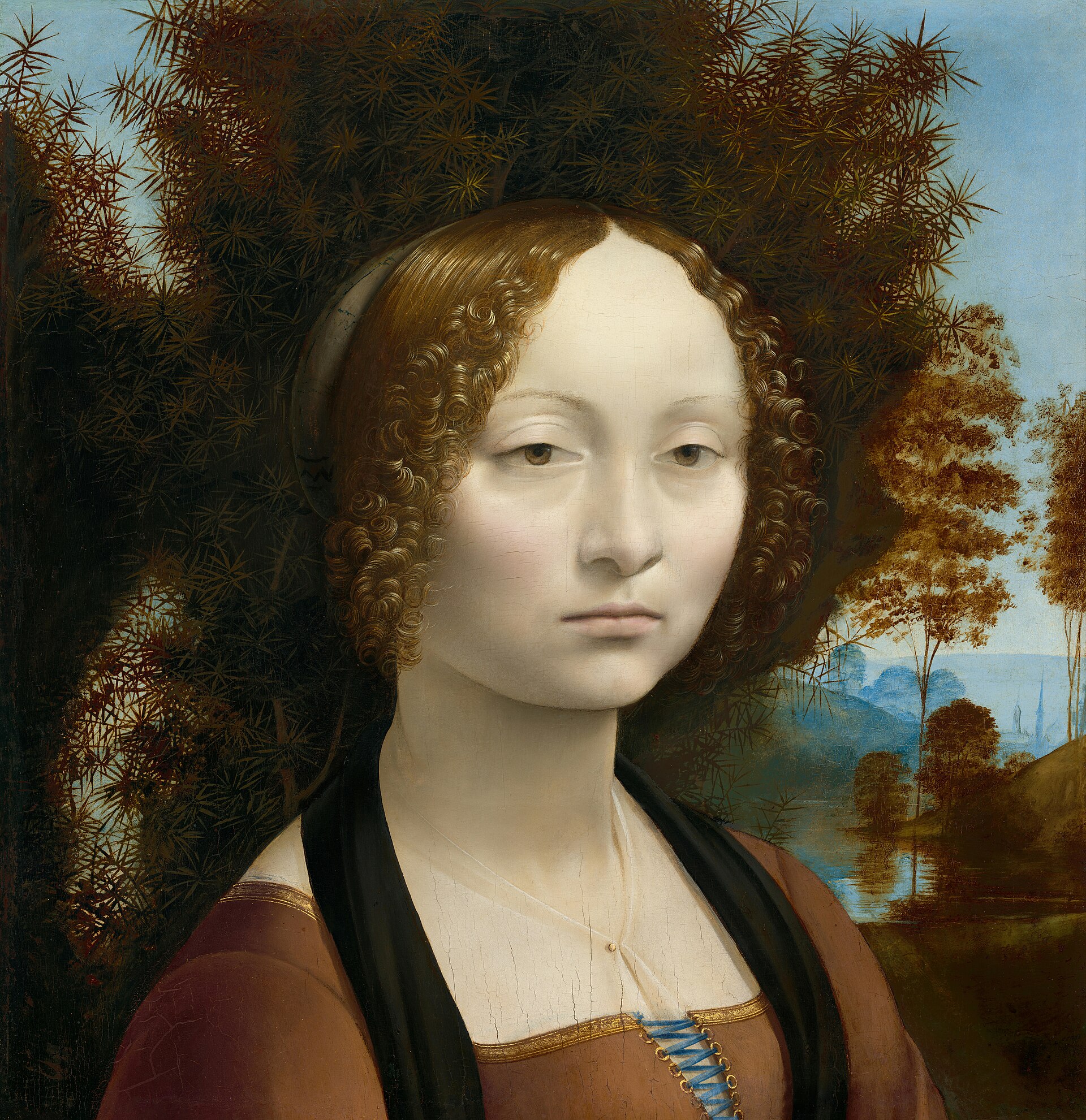
Ginevra de' Benci by Leonardo da Vinci, 1476
National Gallery of Art · wikidata.org
Public domain
The juniper behind her is supposedly a pun — 'ginepro' is Italian for juniper, so it doubles as a nod to her name. It's also, they say, the only Leonardo painting on public display anywhere in the Americas, part of why it made headlines when a museum bought it for a record sum in the 1960s.
Erisava: She looks like she'd rather be anywhere else.
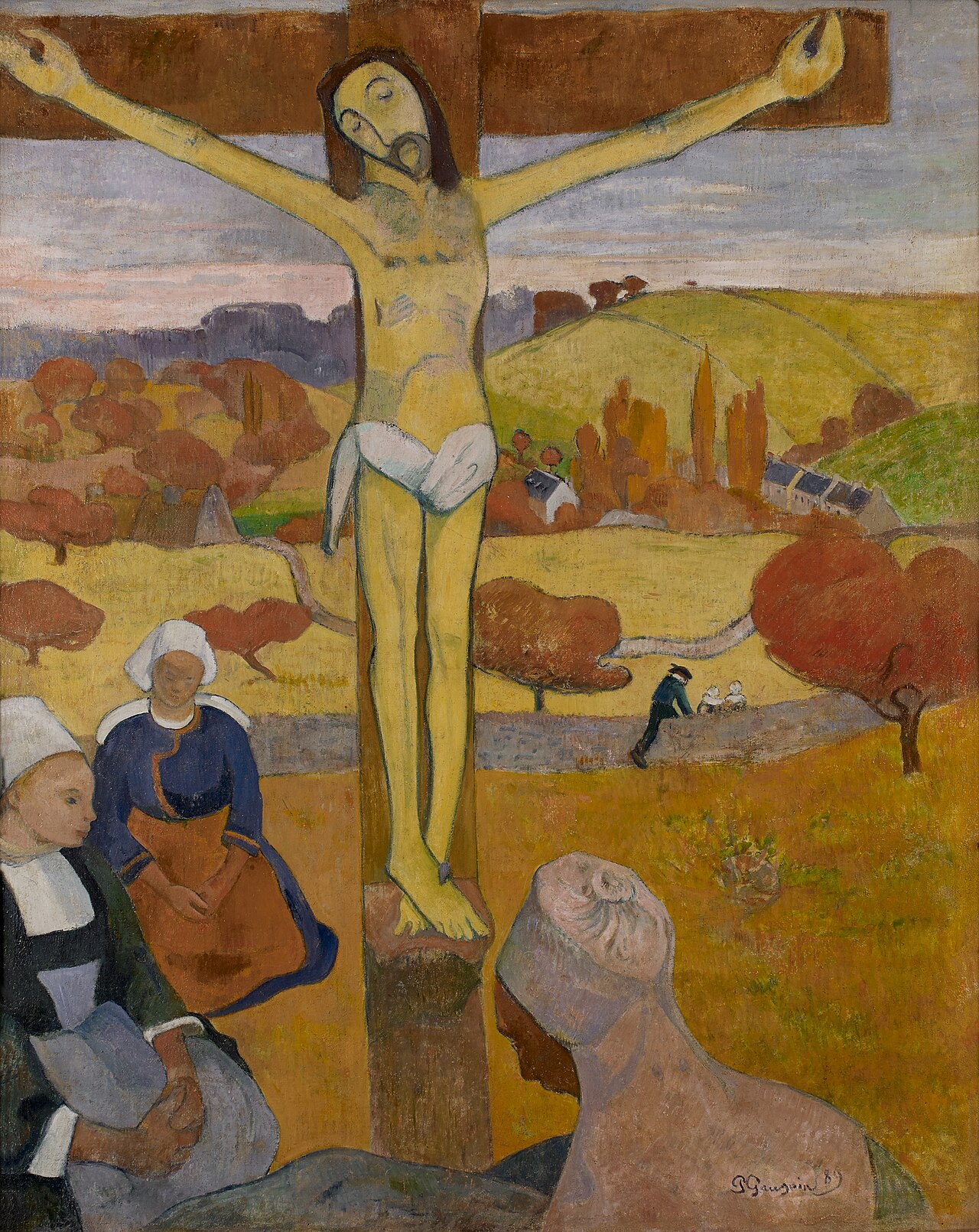
The Yellow Christ by Paul Gauguin, 1889
Buffalo AKG Art Museum · wikidata.org
Public domain
Apparently the cross here is modelled on a carved wooden one from a small local chapel, repainted bright yellow and dropped into a working field with the women dressed the way locals actually did back then.
Erisava: The yellow works better than it has any right to.
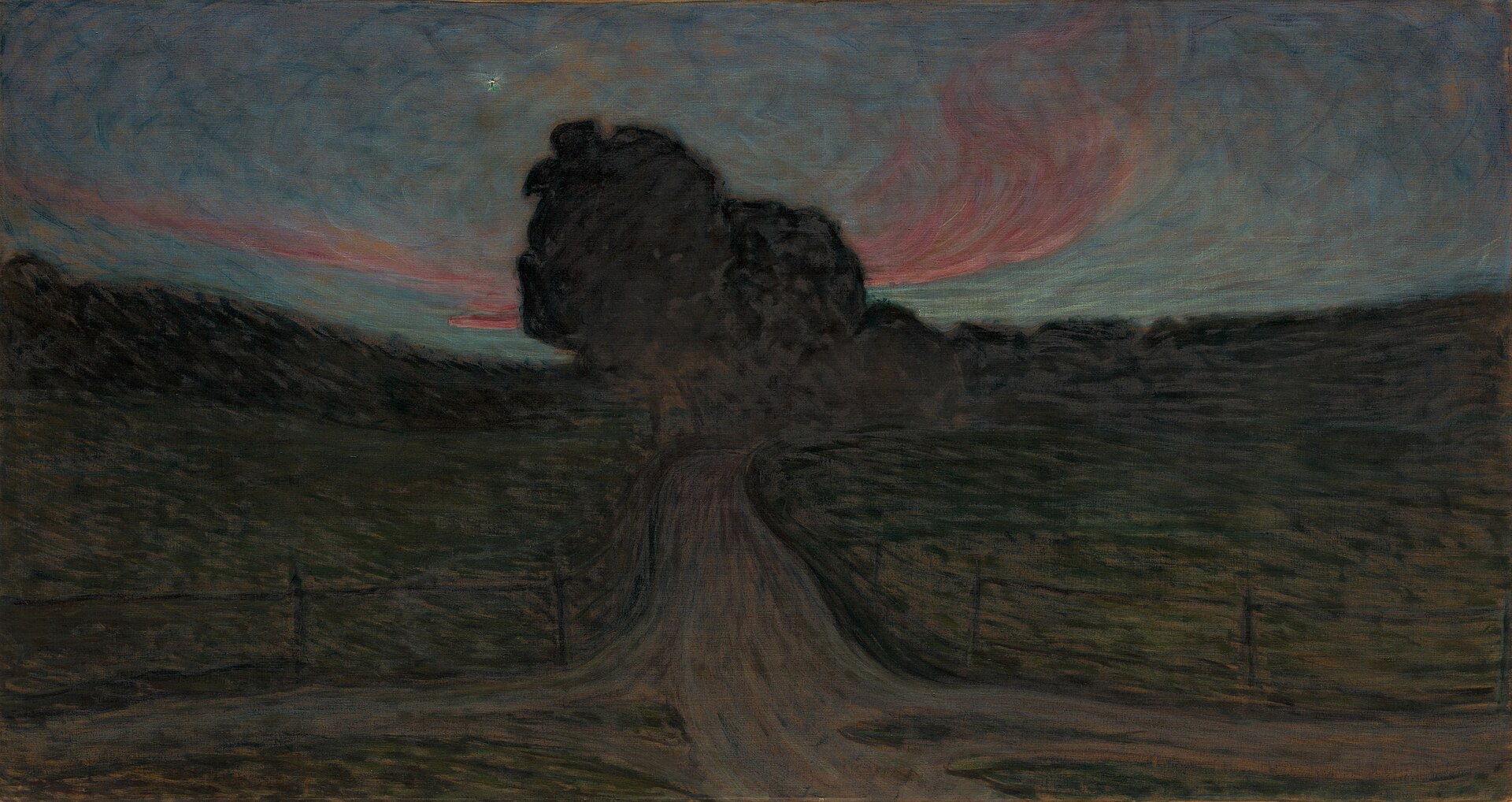
Evening Mood-Lidingö by Eugène Jansson, 1900
Cleveland Museum of Art · wikidata.org
Public domain
They say he knew Munch's work from early on, and was after a feeling more than an accurate view — this reads like a mood he wanted you to sit in, not a real place.
Erisava: This looks like the last place you'd want to get stuck after dark.
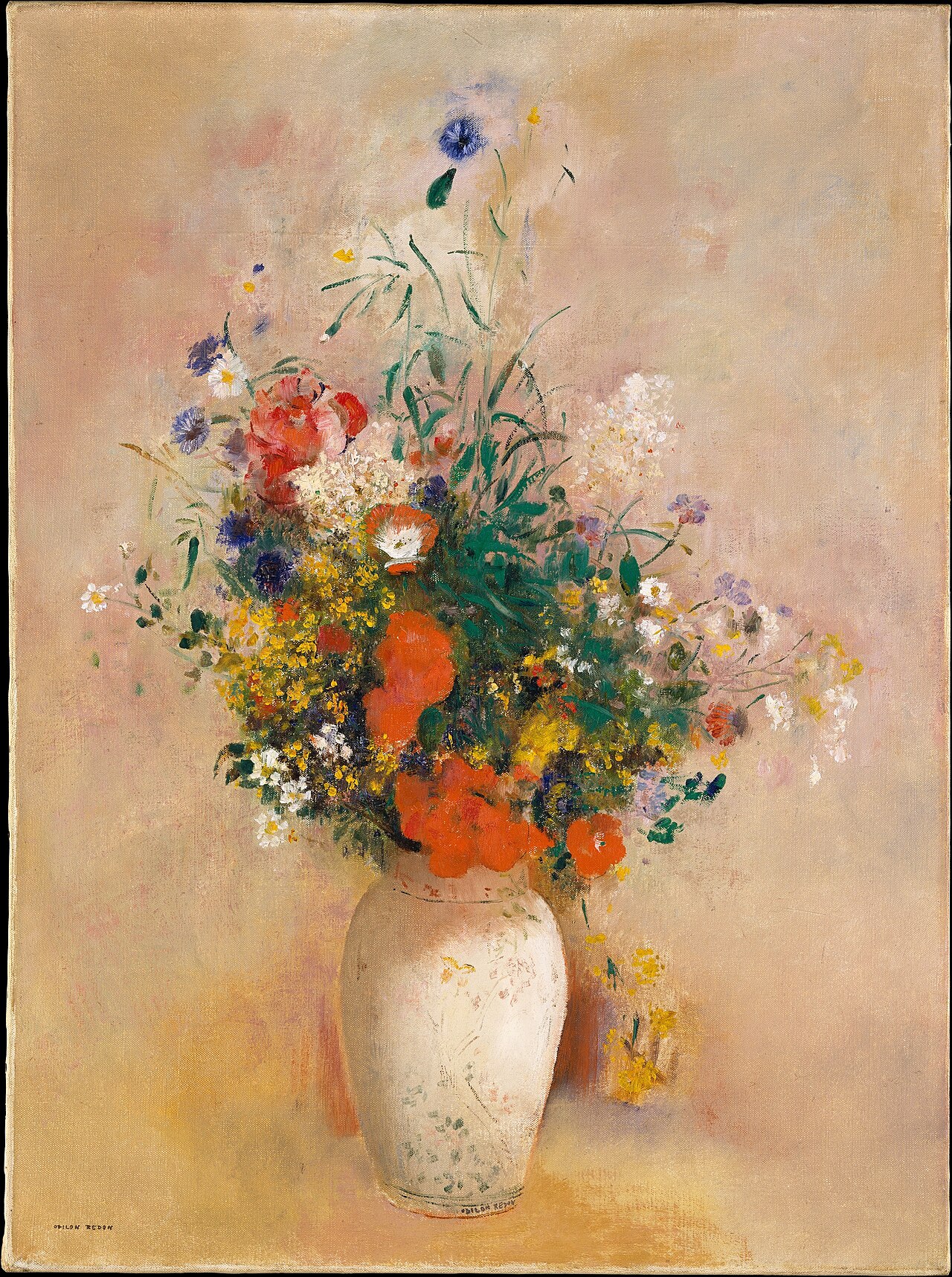
Vase of Flowers (Pink Background) by Odilon Redon, 1906
Metropolitan Museum of Art · wikidata.org
For decades he mostly made dark, unsettling charcoal prints — this bright, ordinary bouquet came from a total swing late in his career.
Erisava: Would you look twice at this if it weren't in a museum?
Pandora by Odilon Redon, 1910
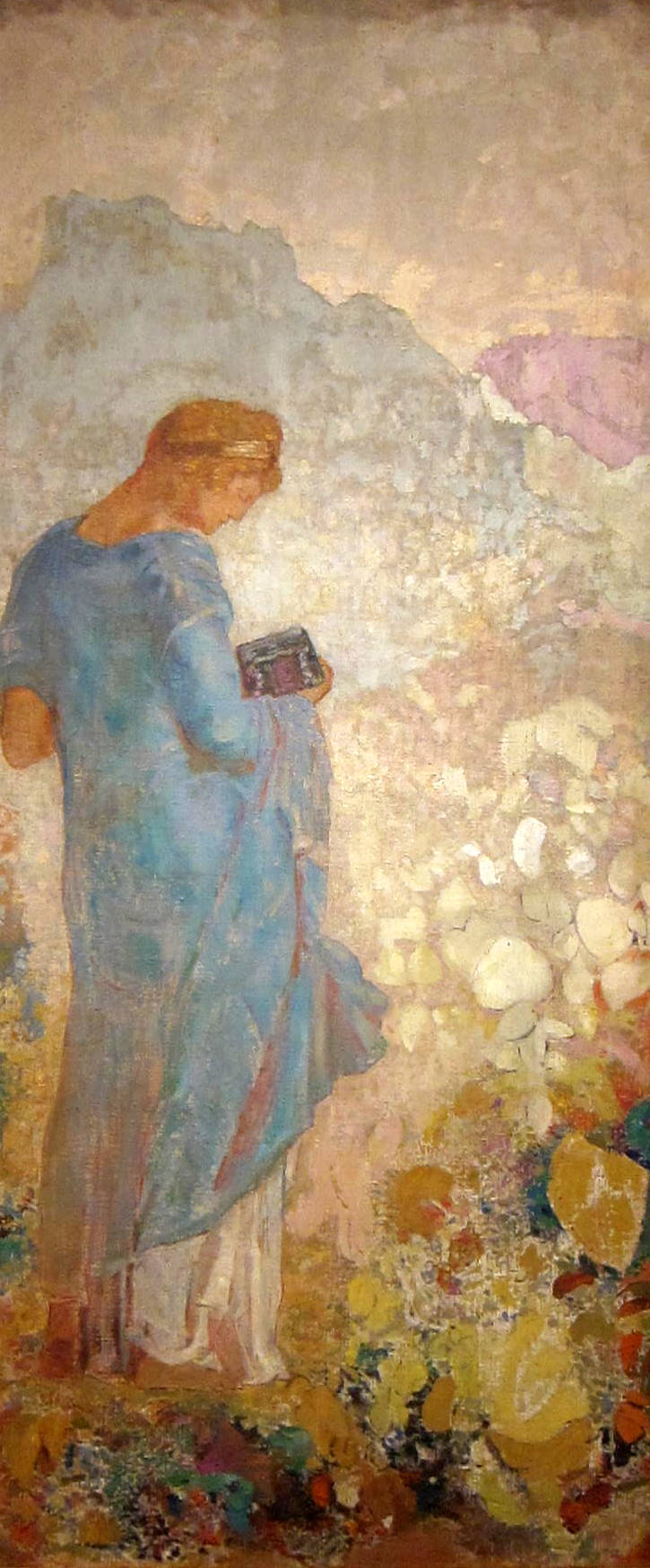
National Gallery of Art · wikidata.org
Public domain
According to Wikipedia he spent the first half of his career working almost entirely in black — charcoal and prints, most of it pretty grim — and only came round to colour late on. The story behind the title is the usual one: a woman, a box she's told to leave shut, and everything bad in the world getting out of it.
Erisava: Everything but her is a smudge. I can't tell if that's the idea or unfinished.
James Vibert, Sculptor by Ferdinand Hodler, 1907
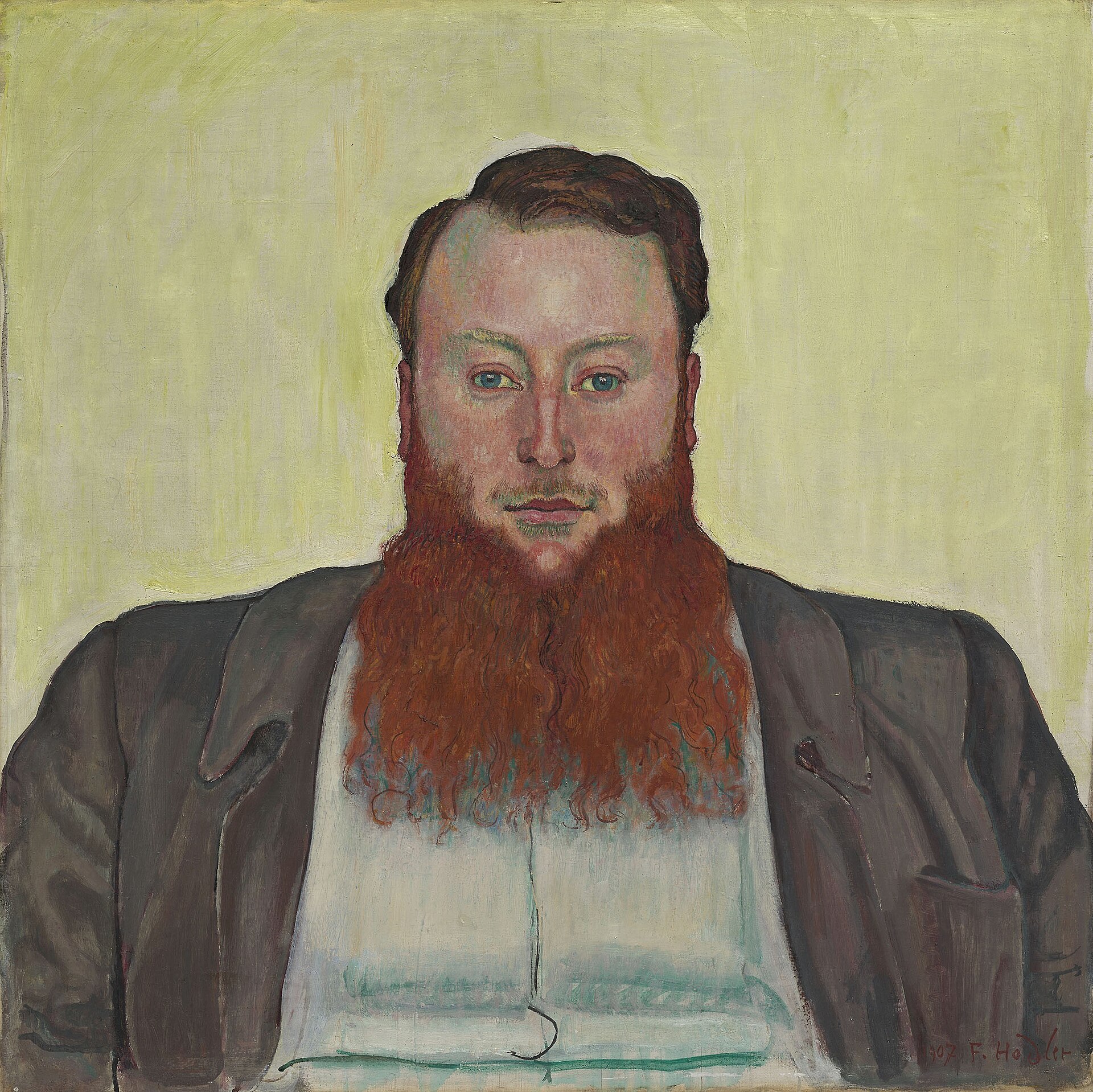
Art Institute of Chicago · wikidata.org
Public domain
From what I could find, the man with the beard was a sculptor, and a friend — apparently he sat for him more than once. They were both fairly big names in Switzerland around then.
Erisava: Is the beard the whole point of this?
Goldfish by Gustav Klimt, 1902
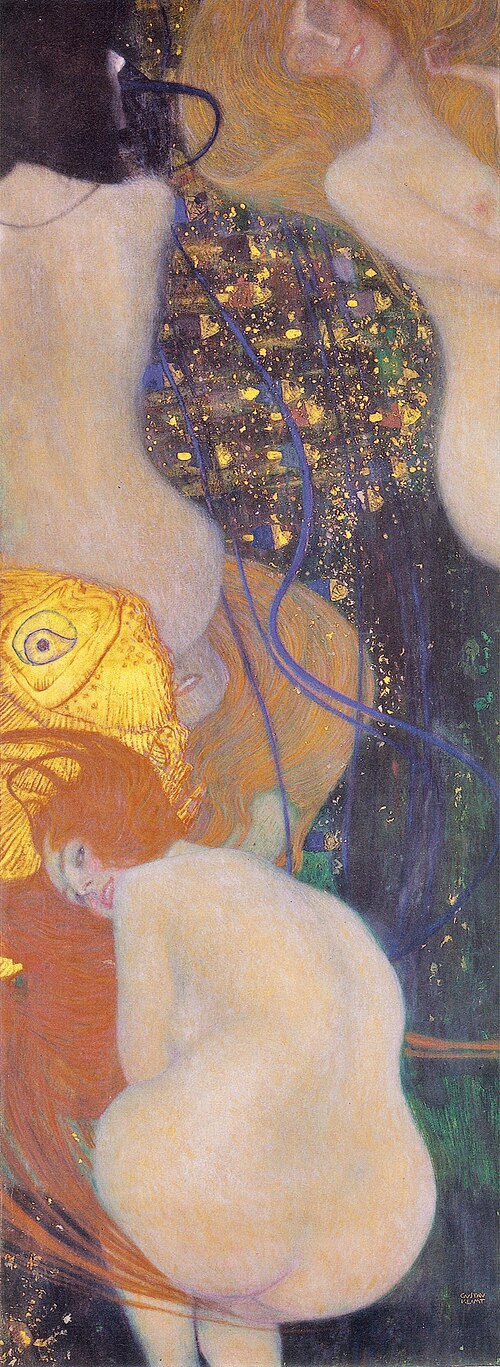
Kunstmuseum Solothurn · wikidata.org
Public domain
This came just after a long public row in Vienna over some ceiling paintings he'd been commissioned to make for the university — they got called ugly and obscene in the papers, and he ended up handing the money back. Supposedly he wanted to title this one 'To My Critics', and the woman grinning out over her shoulder was the reply. He was talked out of the title.
Erisava: I think this is still provocative today, despite all the gold in it.
Kiss by the Window by Edvard Munch, 1892
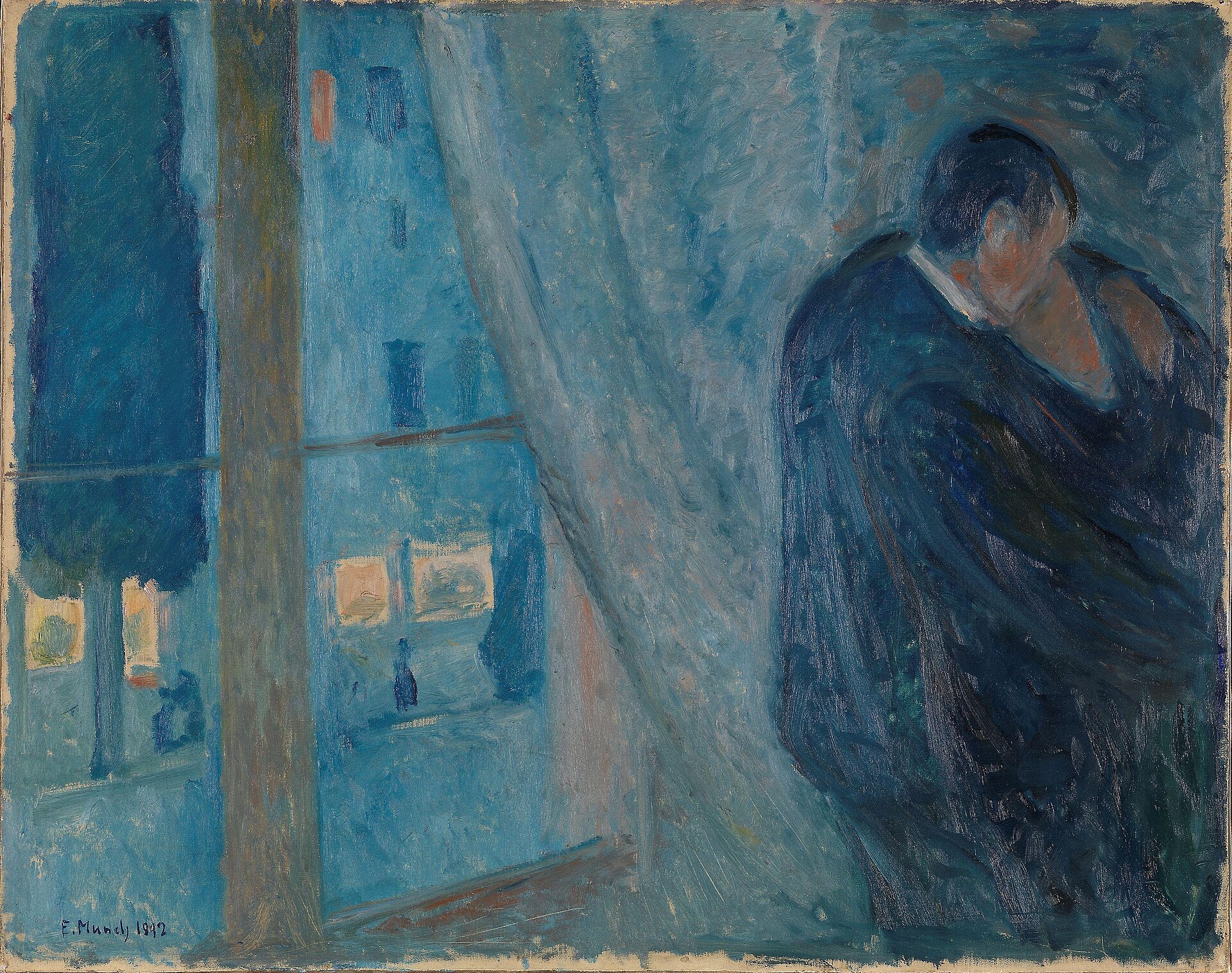
National Museum of Art, Architecture and Design · wikidata.org
Public domain
One out of a huge cycle he kept adding to for decades — love, jealousy, death — built to hang together as a set rather than be met one at a time. He came back to two people kissing over and over, in paint and in prints, and from what I can find the two of them get harder to tell apart with every version.
Erisava: This is basically all one blue, and I'd still hang it in my house.
Saint Sebastian by Odilon Redon, 1910
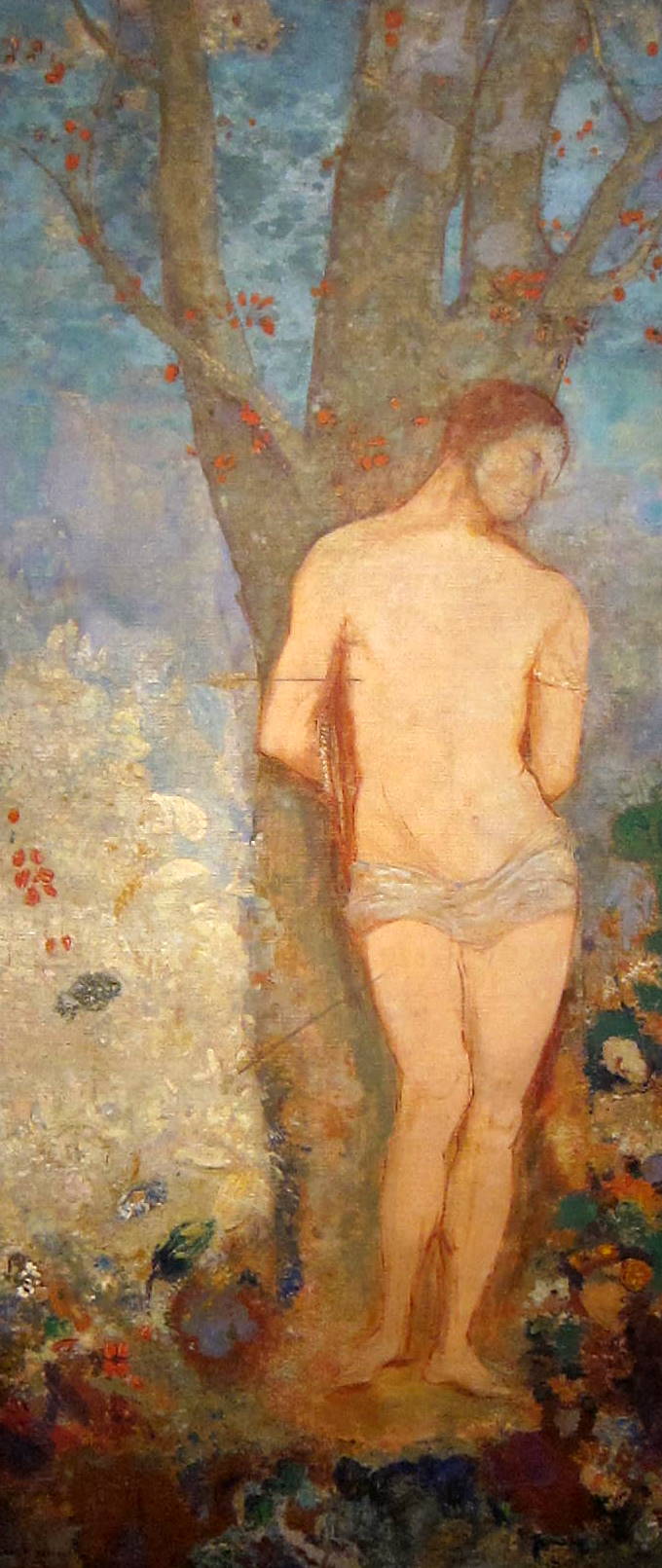
National Gallery of Art · wikidata.org
Public domain
For most of his life he drew in black and white — charcoal nightmares, spiders with human faces — and apparently only went over to colour near the end. He came back to this same saint several times.
Erisava: This is meant to be a man being executed. The background is entirely oblivion to that.
Death in the Sickroom by Edvard Munch, 1893
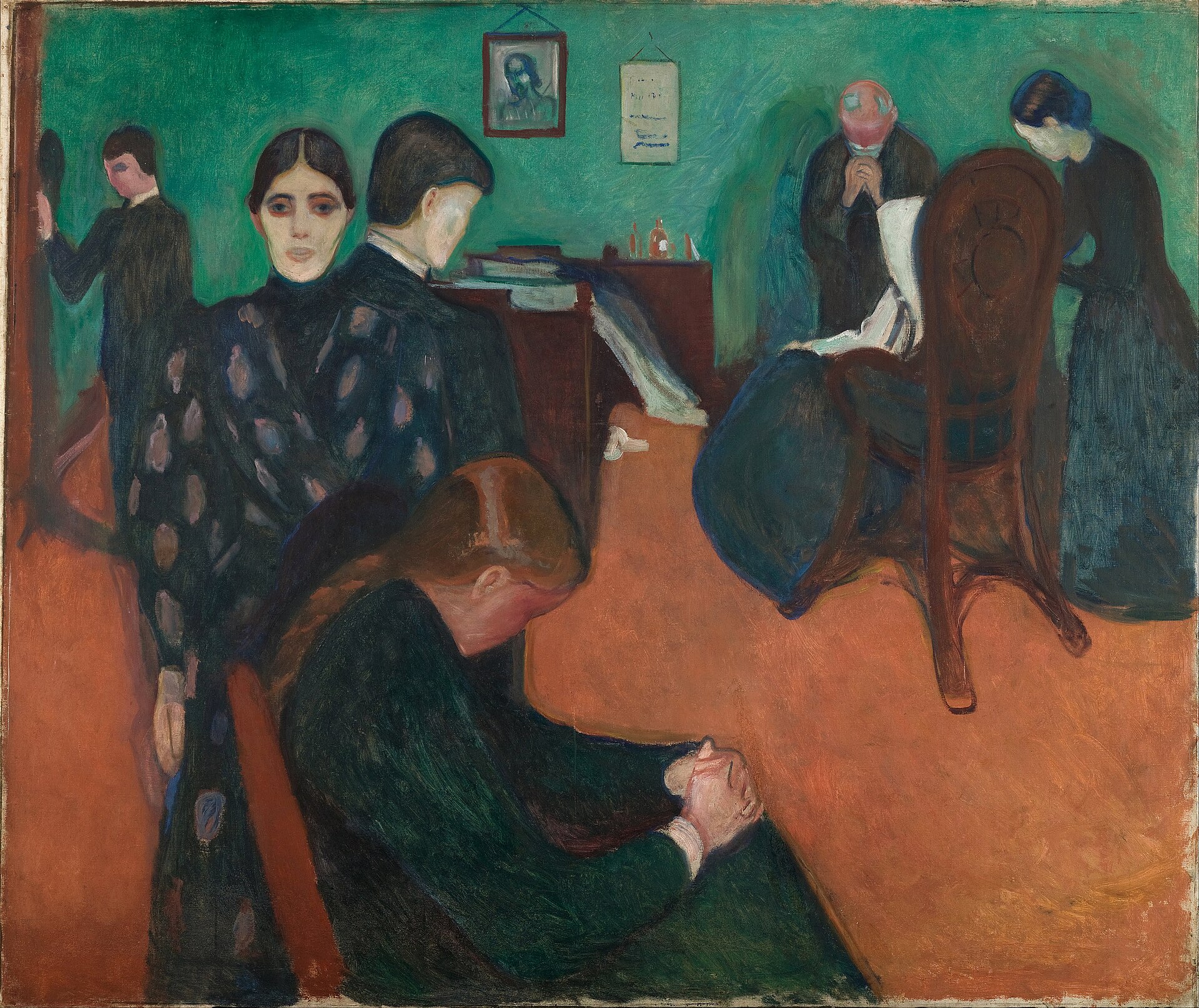
Munch Museum · wikidata.org
Public domain
The death in it happened when he was a boy — his sister — but he didn't paint it until decades later, and from what I can find that's why the family in the room are all the age they were when he picked up the brush, not the age they were at the time.
Erisava: What is that green wall doing? It's more unsettling than anyone's face in here.