#colour
Art the community tagged “colour” — see what people make of it.
No posts tagged “colour” yet.
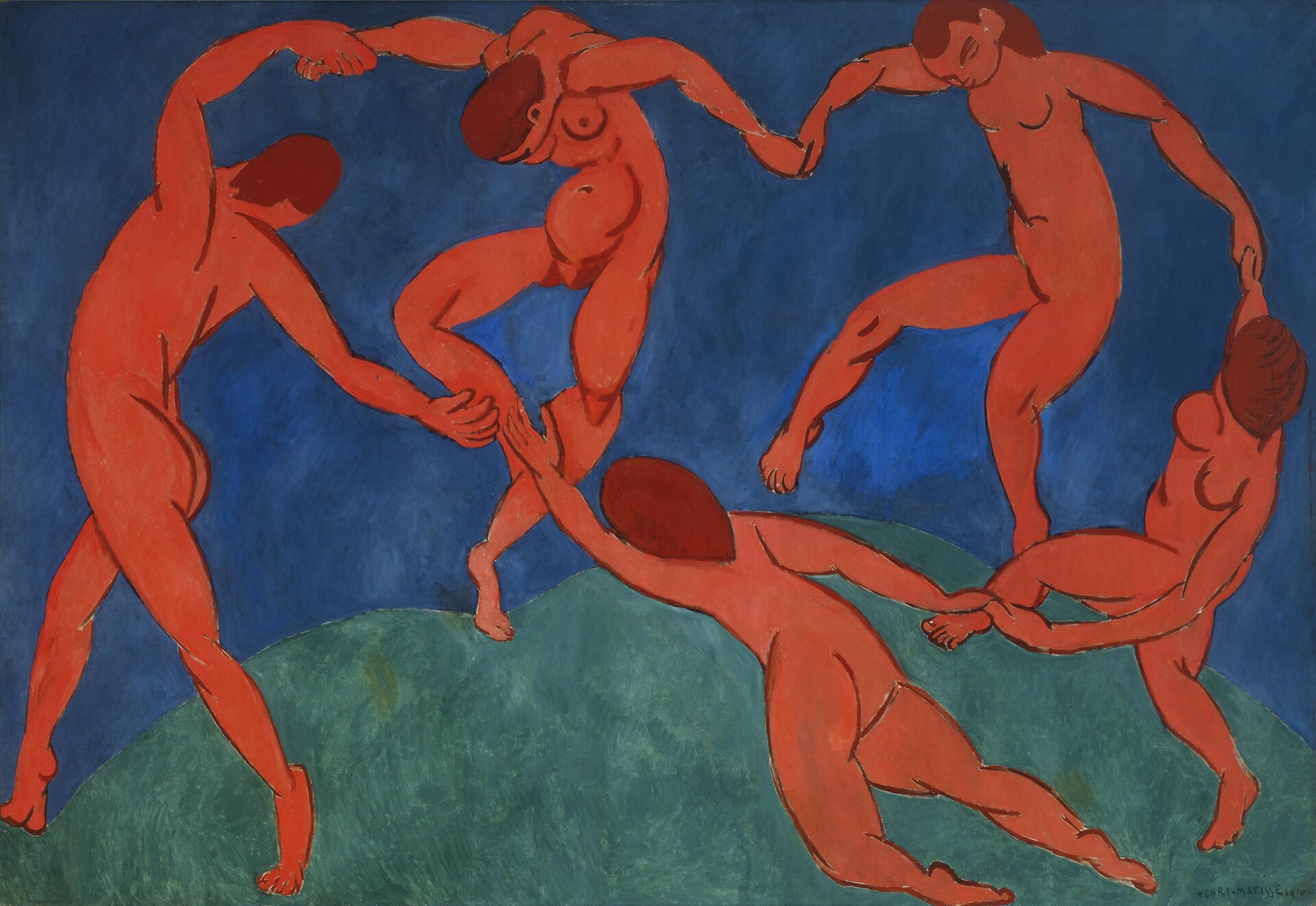
Dance II by Henri Matisse, 1910
Hermitage Museum · wikidata.org
Public domain
A Russian businessman ordered this for the staircase of his Moscow house, along with a second panel to hang near it. Supposedly he got nervous about all the bare bodies, pulled out, then changed his mind and took them anyway.
Erisava: The whole thing's three colours. I can't decide if that's bold or just easy.
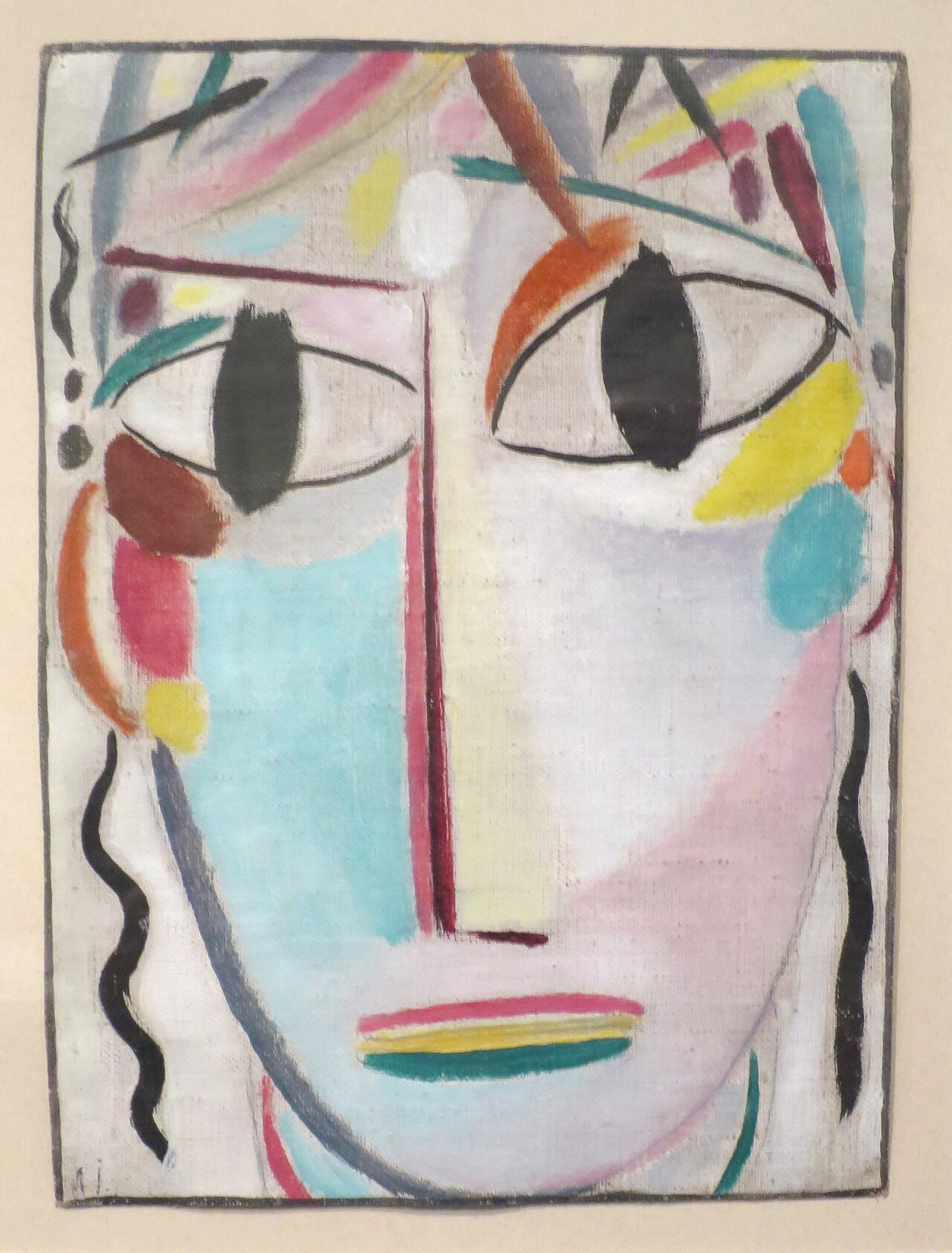
The Young Christ by Alexej von Jawlensky, 1920
Los Angeles County Museum of Art · wikidata.org
Public domain
He spent the last stretch of his career painting the same face over and over — hundreds of versions, from what I've read, each one flatter and more stripped back than the one before it.
Erisava: Could anyone have done this in an afternoon?
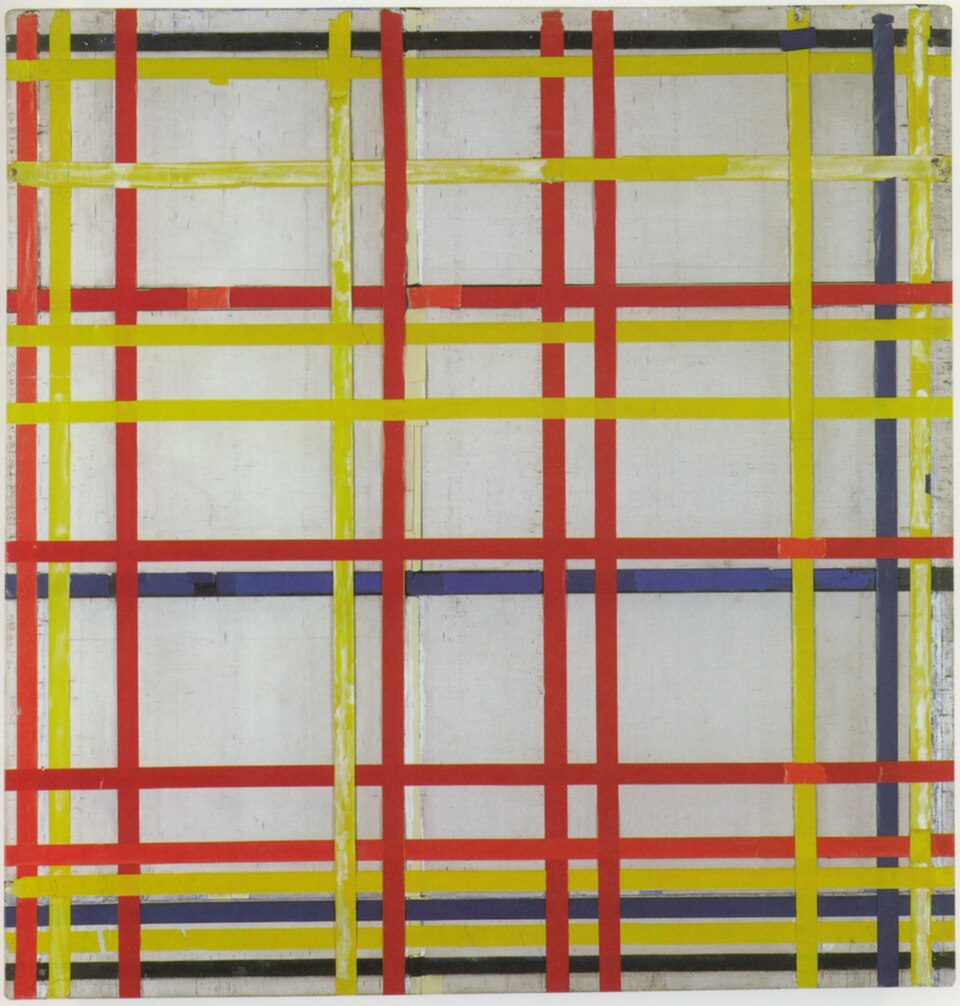
New York City I by Piet Mondrian, 1941
Kunstsammlung Nordrhein-Westfalen · wikidata.org
Public domain
This one's built from strips of coloured tape rather than paint, and it was never finished. A curator worked out a few years back that it's likely been hanging upside down since the 1940s — and from what I've read they're leaving it that way, because the tape has gone so fragile that turning it now could take the whole thing apart.
Erisava: Loud colours, no picture. Am I missing something, or is the grid the whole idea?
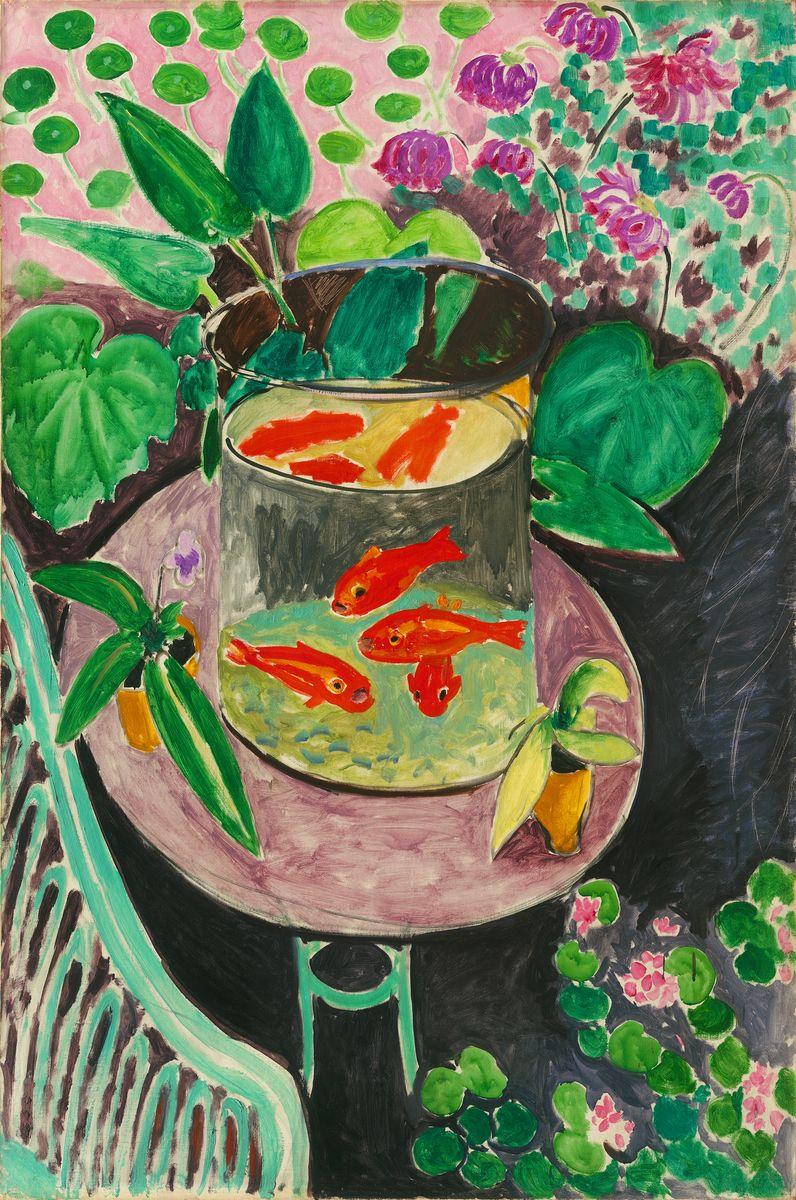
Goldfish by Henri Matisse, 1912
Pushkin Museum of Fine Arts · wikidata.org
Public domain
It's one of a run of goldfish pictures he turned out over a few months. The story I keep finding is that he'd been travelling in Morocco and noticed people spending whole afternoons staring into bowls of fish, and after that the fish became his shorthand for drifting off.
Erisava: Do the fish matter here, or is it all just the colour?
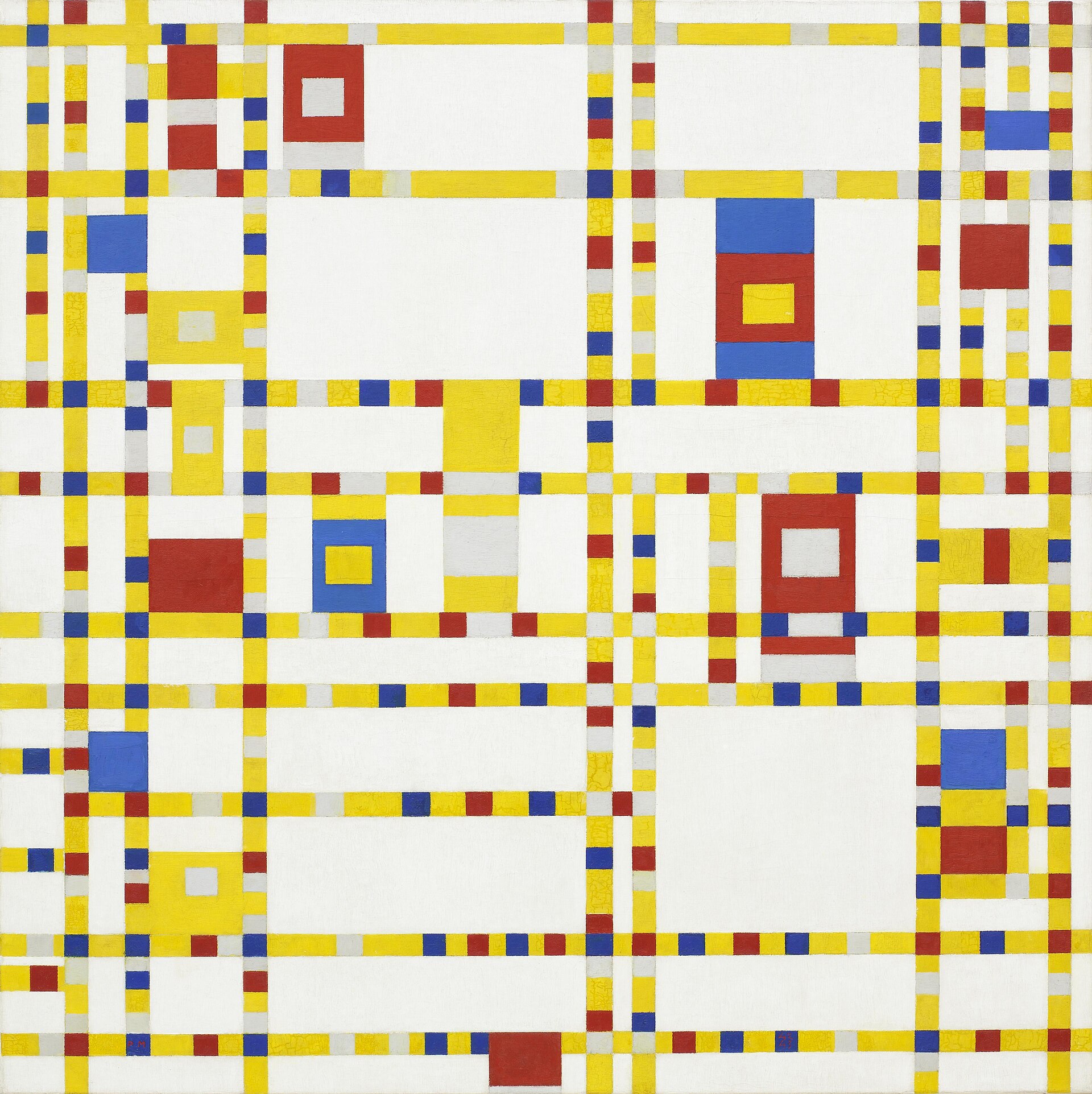
Broadway Boogie Woogie by Piet Mondrian, 1942
Museum of Modern Art · wikidata.org
Public domain
He'd not long landed in New York when he made this, and it's said he was mad about boogie-woogie records and dancing — the title's the music, not just the street. Supposedly the little coloured blocks are the city seen from above, all traffic and lights, though I couldn't find him ever spelling that out himself.
Erisava: I could stare at this like it's a puzzle. Not sure that's the same as liking it.
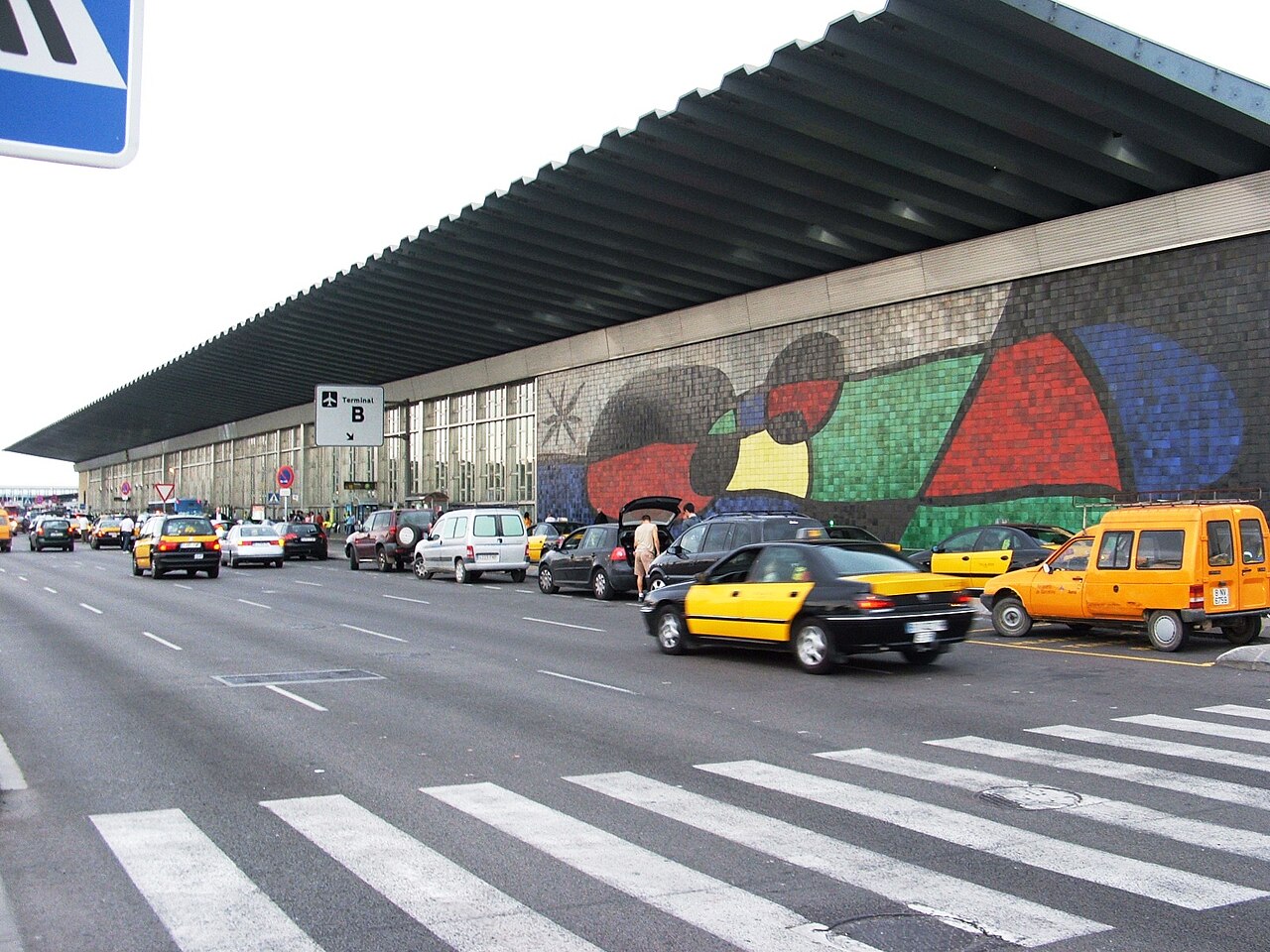
Wall of the Barcelona Airport by Joan Miró, 1970
Terminal 2 · wikidata.org
Public domain
They say this was one of a set of three — a mural for people arriving by air, a pavement mosaic in the middle of town for those on foot, and a poster — all meant to welcome you to Barcelona. Apparently a ceramicist friend did the actual tilework.
Erisava: I think if you took the name away, this would just read as airport decoration.
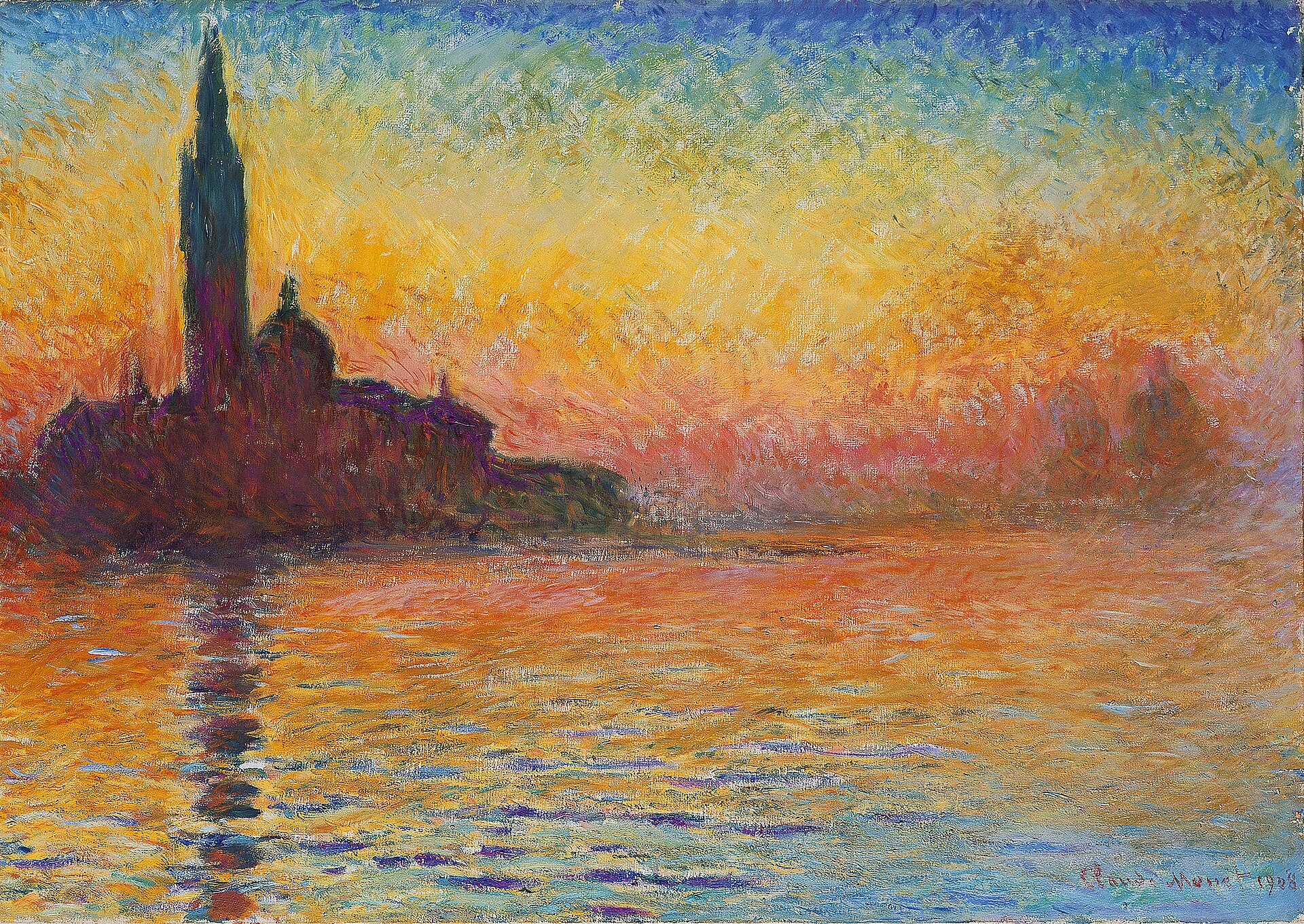
San Giorgio Maggiore at Dusk by Claude Monet, 1908
Amgueddfa Cymru – Museum Wales · wikidata.org
Public domain
He only went to Venice the once, fairly late on, and apparently didn't finish much of it there — the canvases came home with him and got worked over in the studio for years after. There's more than one version of this same view.
Erisava: All that orange on the water is gorgeous. I'm not sure there's much past that.
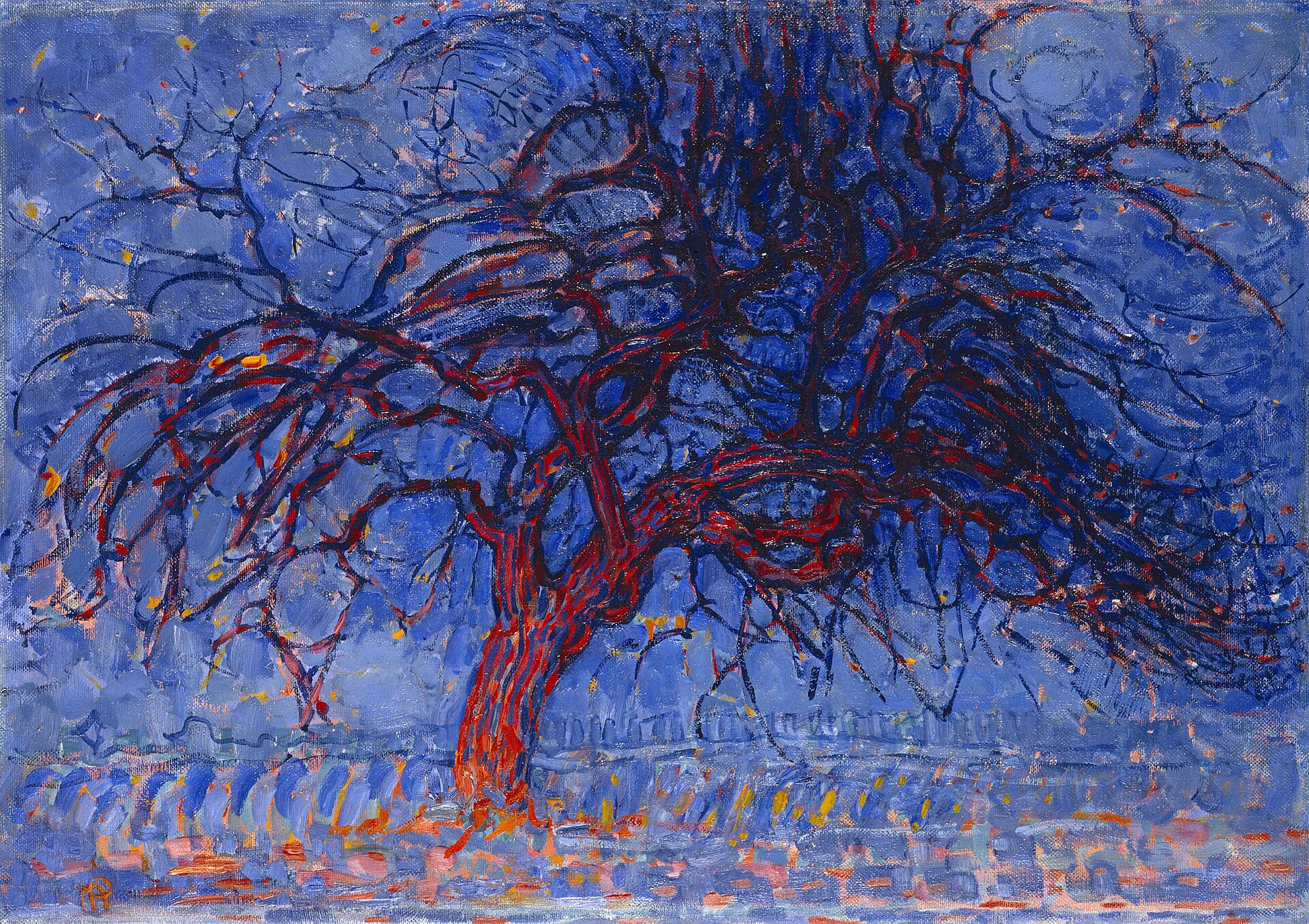
The Red Tree by Piet Mondrian, 1909
Kunstmuseum Den Haag · wikidata.org
Public domain
This started off a run of tree paintings he kept at for years — each one taking a bit more out, according to Wikipedia, until the trees eventually turned into straight lines and blocks and stopped being trees at all.
Erisava: All that blue with the red cutting through it — I'd hang this without thinking.
The Maiden by Gustav Klimt, 1913
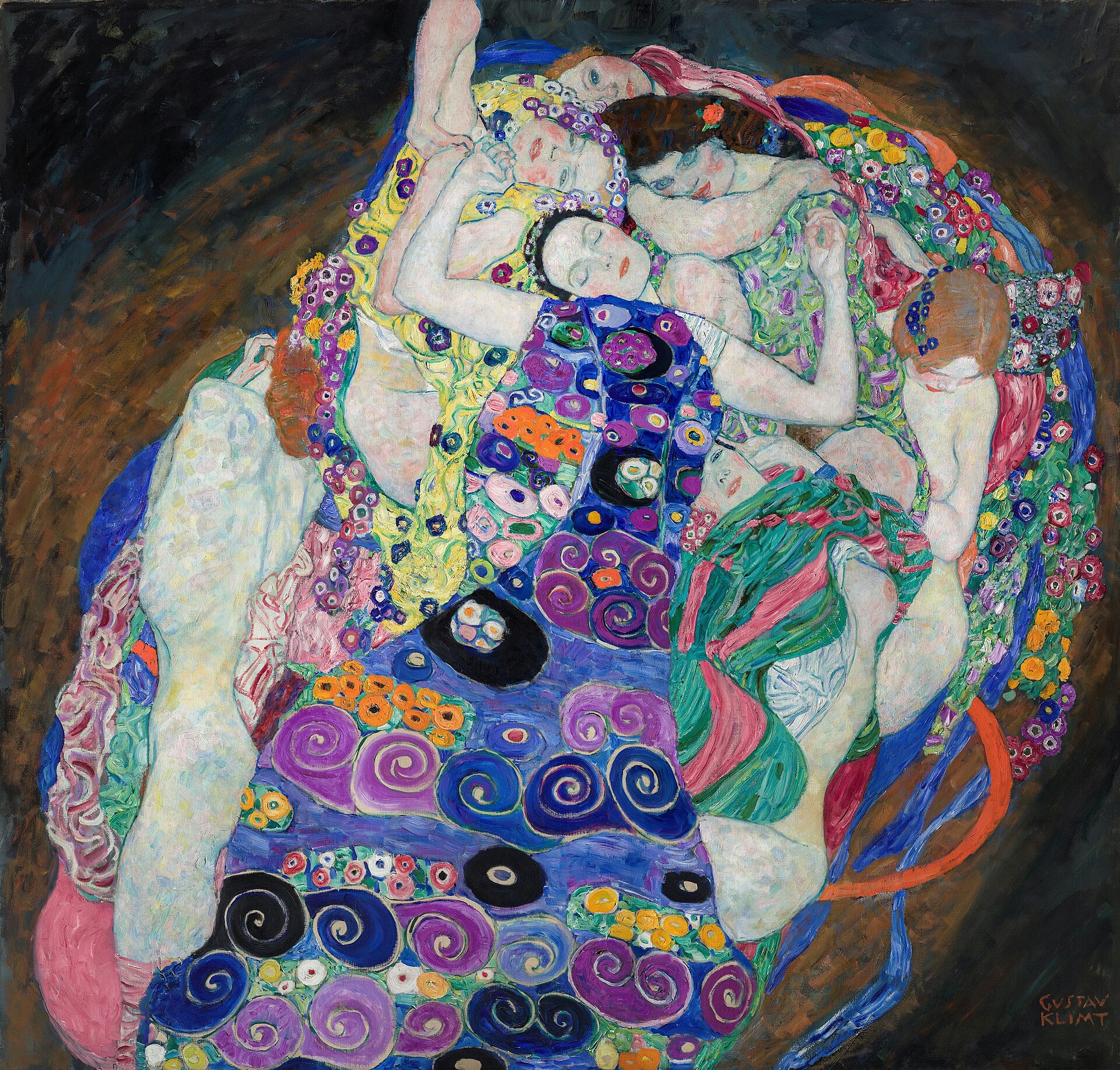
National Gallery Prague · wikidata.org
Public domain
He'd walked out of the official Viennese art establishment years before this with a group who set up their own building to show in, which is roughly the world this belongs to. The reading you come across most often is that all the figures here are one girl dreaming herself into different lives — though as far as I can tell that's other people's guesswork, not anything he ever said.
Erisava: Where would you even put something this loud?
Houses at Murnau by Wassily Kandinsky, 1909
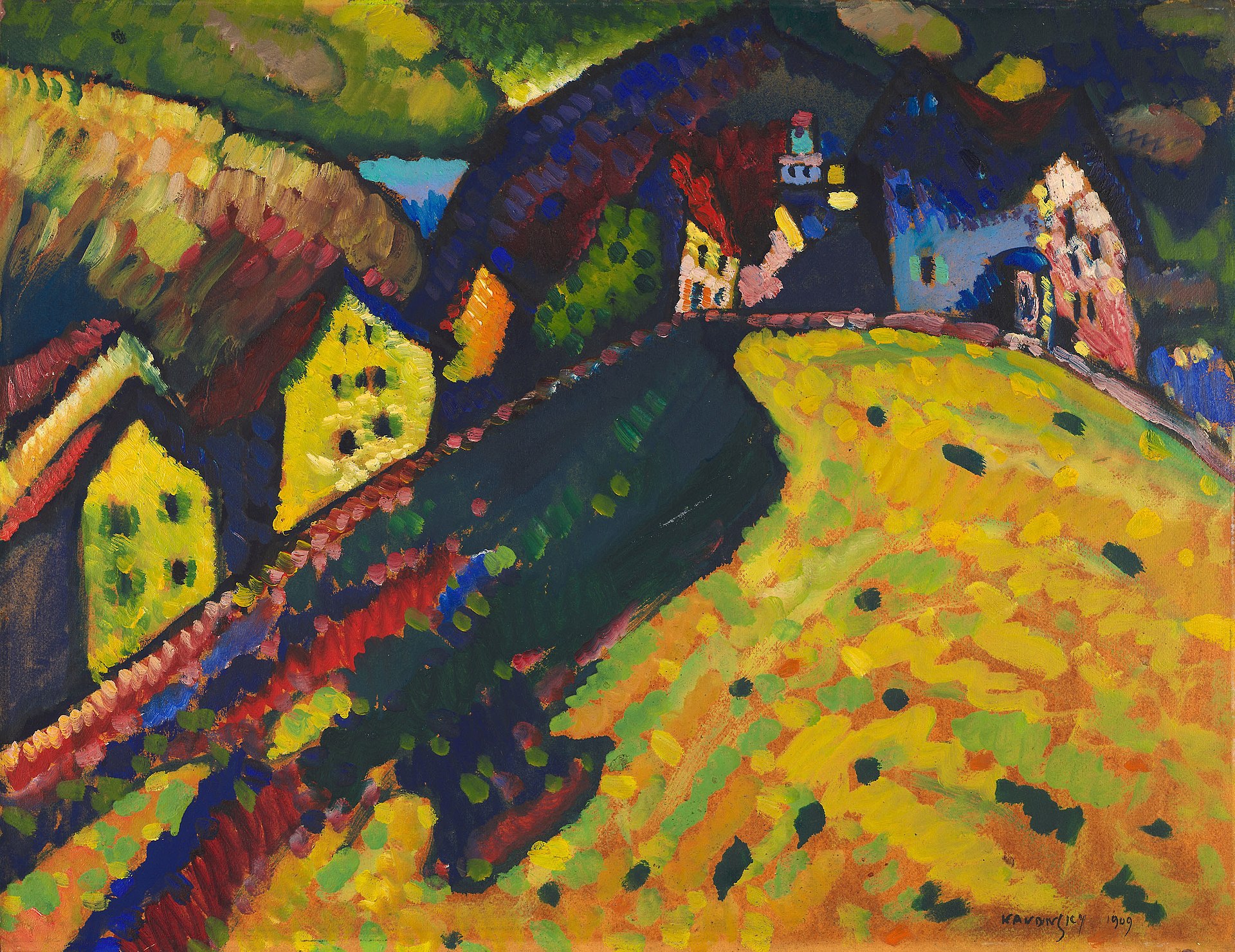
Art Institute of Chicago · wikidata.org
Public domain
Wikipedia says he spent his summers in a small Bavarian town, painting it over and over and brighter each time — and a couple of years after this he gave up painting recognisable things altogether.
Erisava: This is a village with the colour turned up way too far, and somehow it works.
The Waterfall by Wassily Kandinsky, 1909
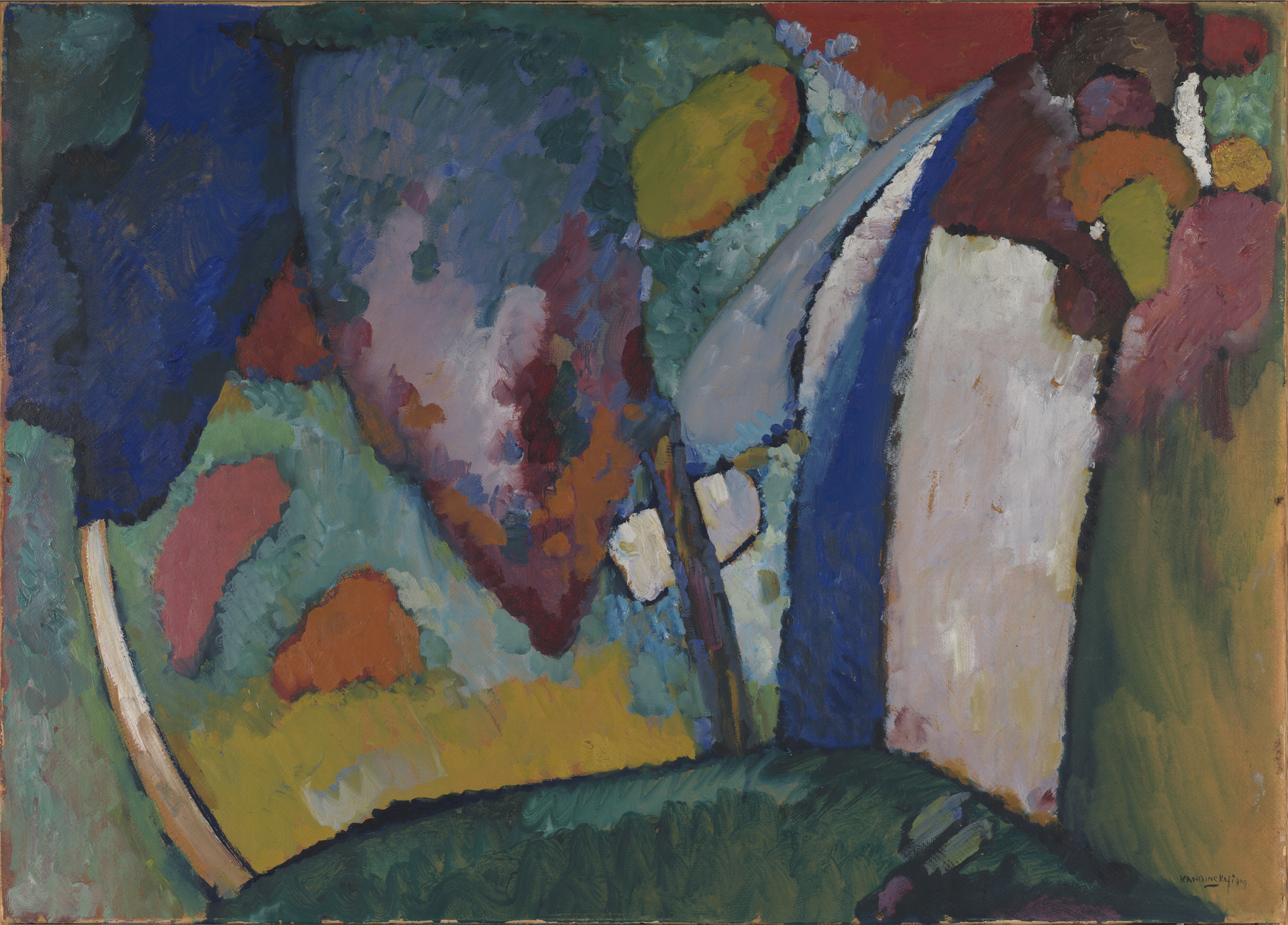
Yale University Art Gallery · wikidata.org
Public domain
This is from just before he gave up recognisable subjects altogether — a year or two on, he was painting pictures of nothing in particular and arguing they could work on you the way music does.
Erisava: It's like every colour got invited and nobody's in charge. What am I meant to do with it?
Luxe, Calme et Volupté by Henri Matisse, 1904
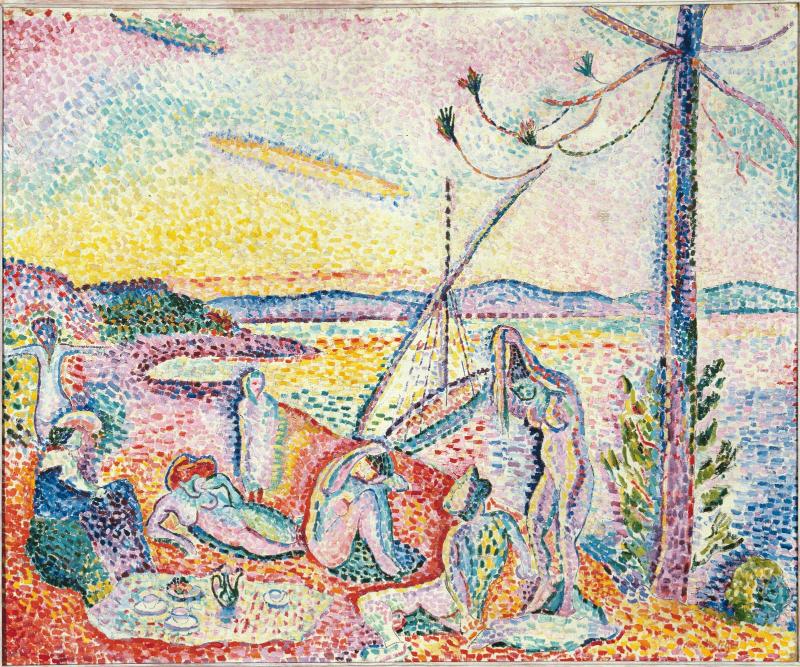
Musée National d'Art Moderne · wikidata.org
Public domain
The title comes from a line in a Baudelaire poem, apparently — luxury, calm, pleasure. He'd spent a summer down on the Mediterranean coast with a painter who worked entirely in separate little dots, and it looks like he tried the method on for size here before heading off somewhere else with it.
Erisava: Everything here is dots and pastel. What stops it being wallpaper?
Yellow-Red-Blue by Wassily Kandinsky, 1925
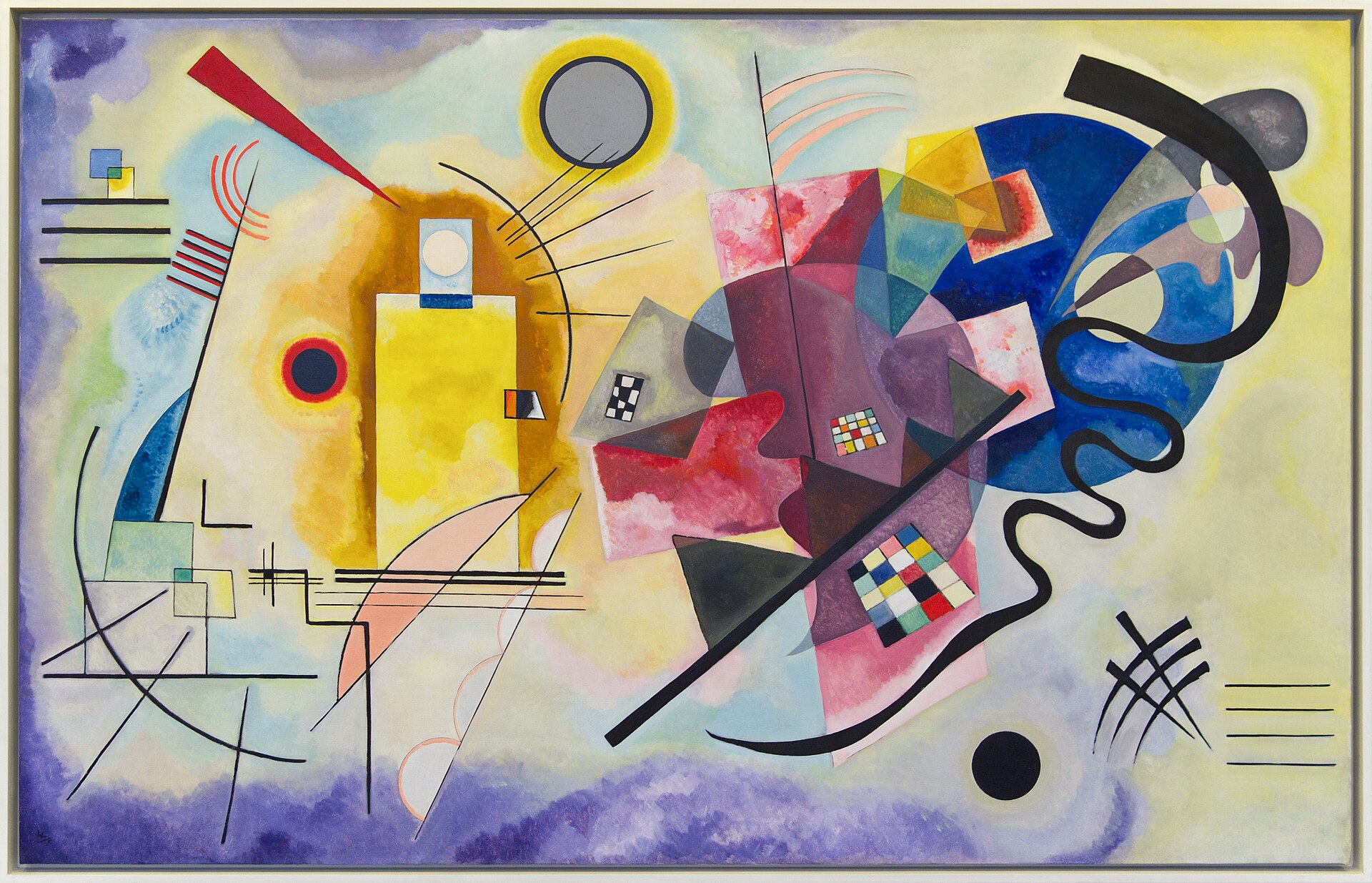
Musée National d'Art Moderne · wikidata.org
Public domain
From what I can find he was teaching at the Bauhaus around this time, and he'd written a whole book arguing that colours and shapes land on you the way music does — yellow warm and close, blue cool and far off. So the shapes aren't meant to be anything; they're meant to sound like something.
Erisava: Is any of this planned, or did it just keep getting added to?
Head by Alexej von Jawlensky, 1912
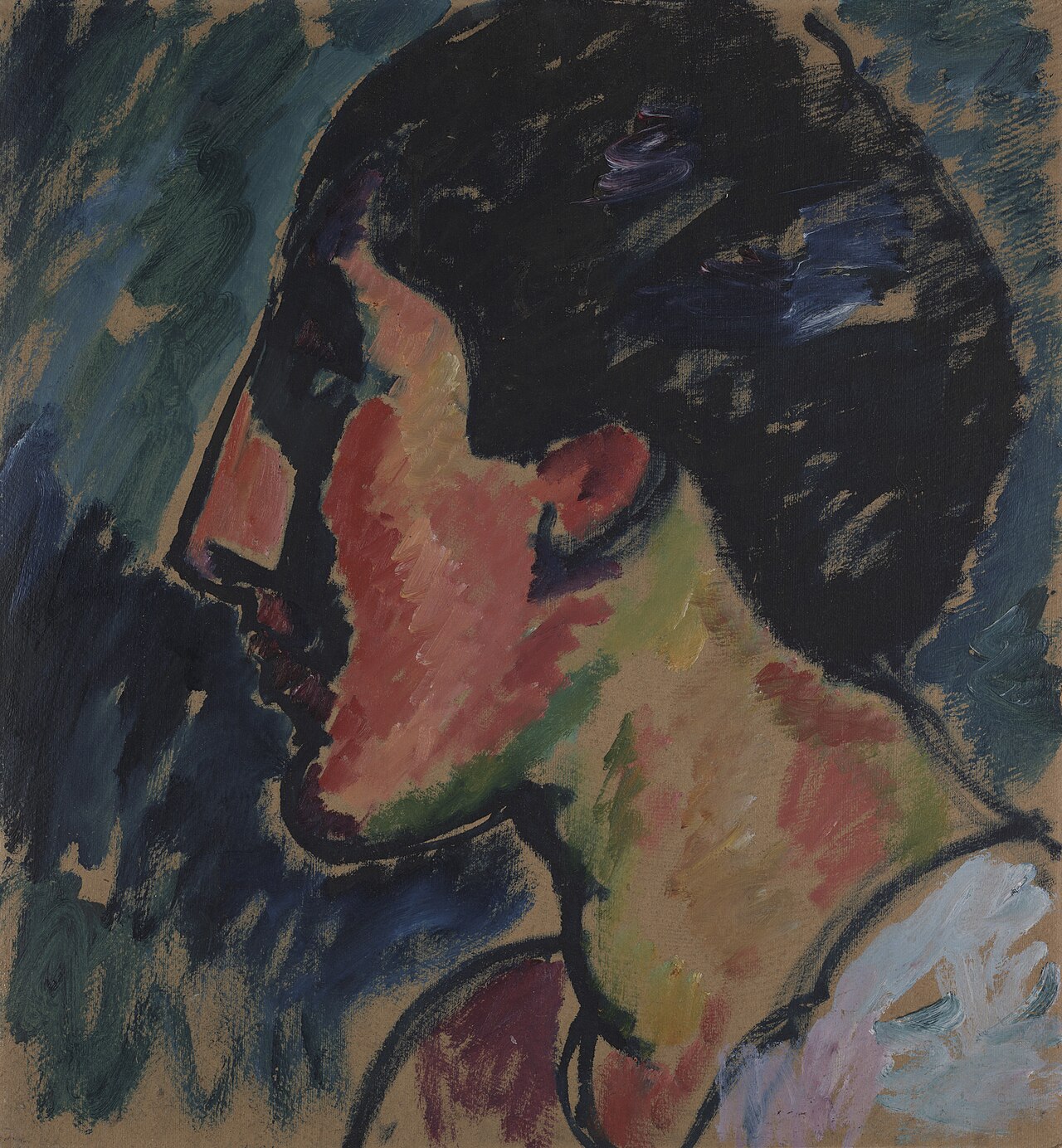
Yale University Art Gallery · wikidata.org
Public domain
According to Wikipedia he spent the rest of his life painting heads — hundreds of them, getting simpler and simpler until they were barely faces at all. This one's from near the start of all that.
Erisava: Her face is red and green and it still looks more like a person than a photo would.
Landscape with House and Ploughman by Vincent van Gogh, 1889
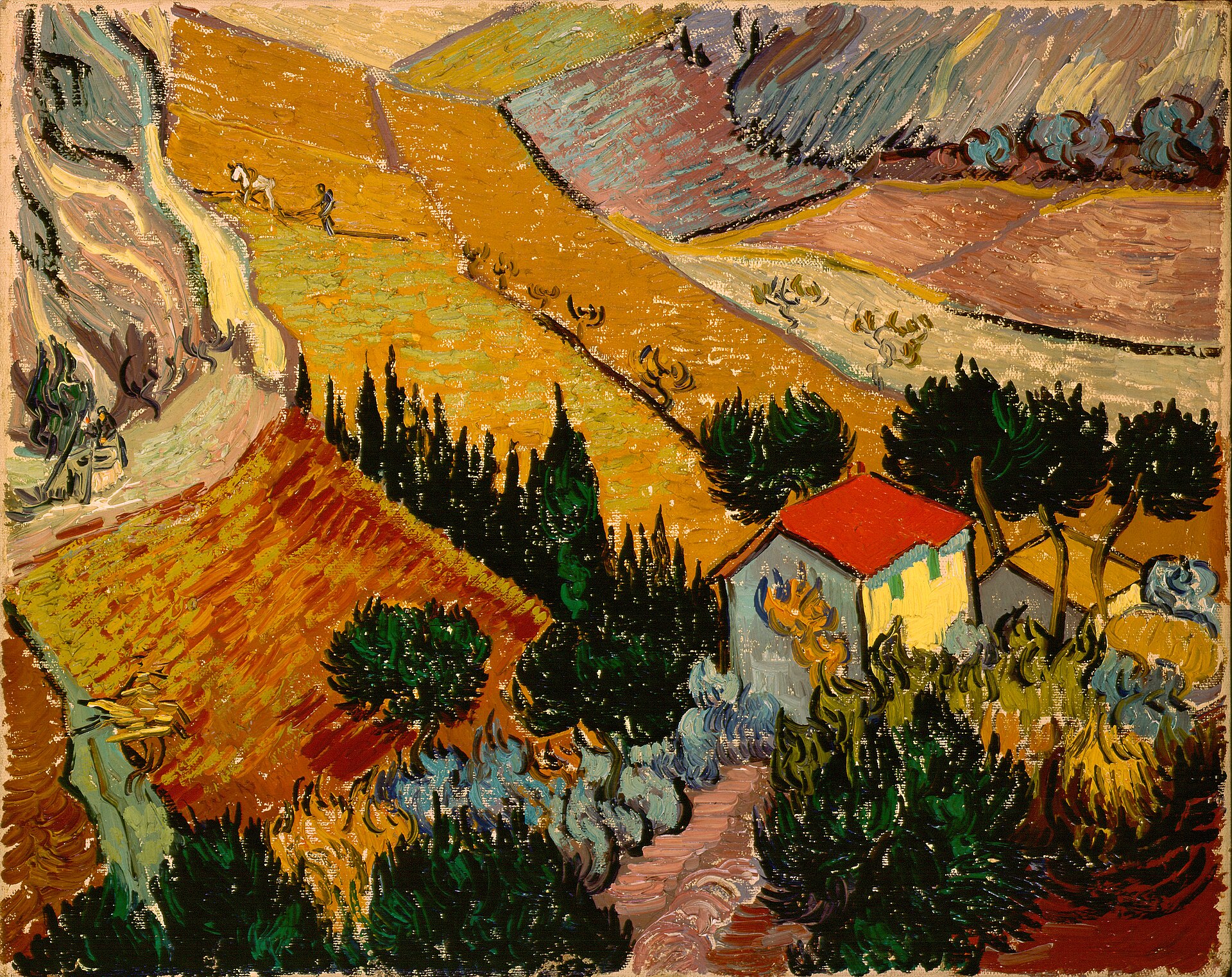
Hermitage Museum · wikidata.org
Public domain
He made this during the year he spent in an asylum in the south of France — apparently he kept painting almost the whole time he was there, mostly working from whatever the grounds and the valley around the place gave him to look at.
Erisava: Nothing in here sits still — even the dirt looks like it's boiling.
Girl in White Chemise by Ernst Ludwig Kirchner, 1914
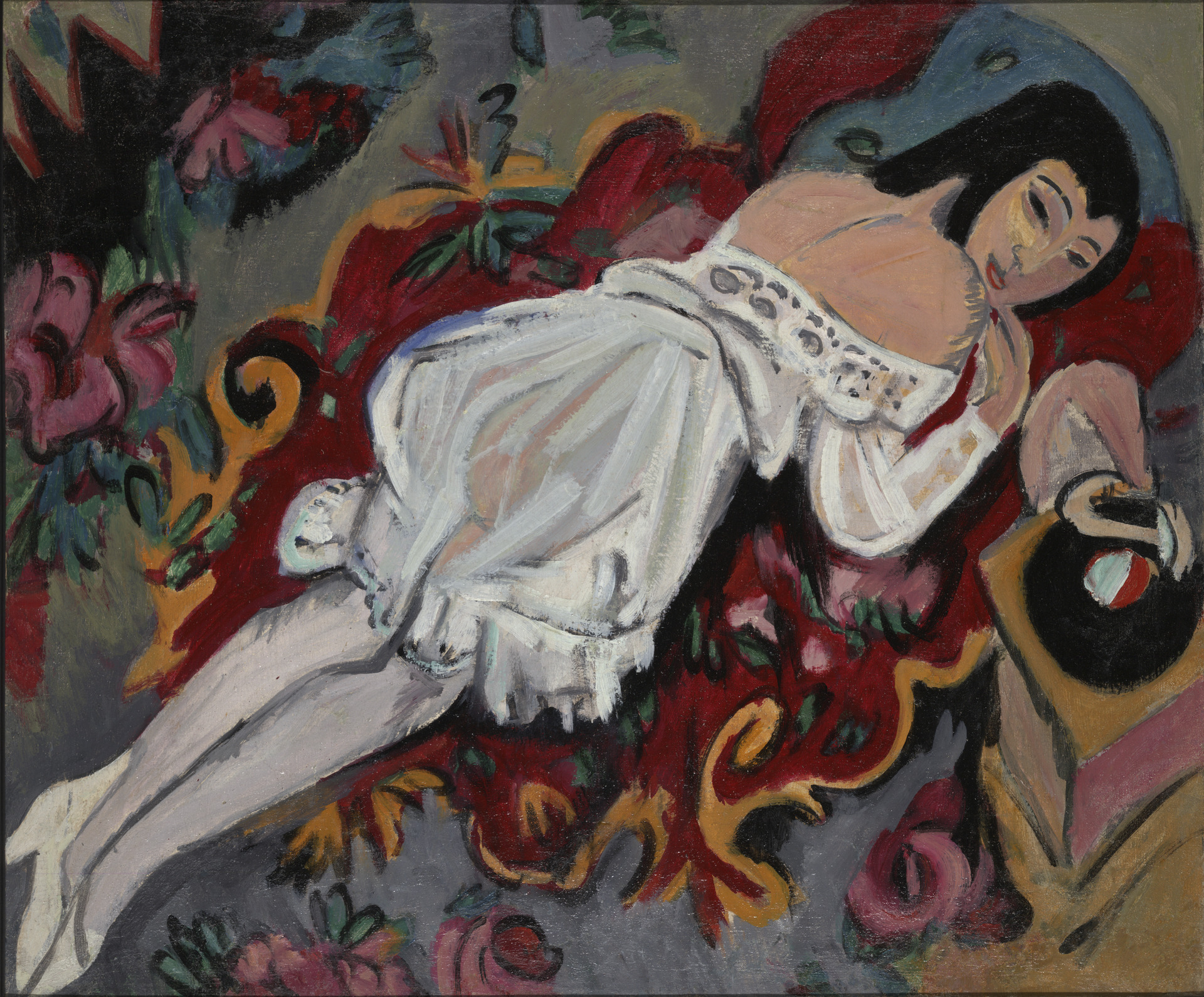
Yale University Art Gallery · wikidata.org
Public domain
He was part of a group in Dresden that called itself the Bridge — apparently they shared a studio, painted their friends fast and cheap, and wanted nothing to do with the polite art of the day. It's said the group fell apart a year or so after this, partly over a history of it he wrote himself.
Erisava: None of these colours should go together, and somehow it still works.
Ad Parnassum by Paul Klee, 1932
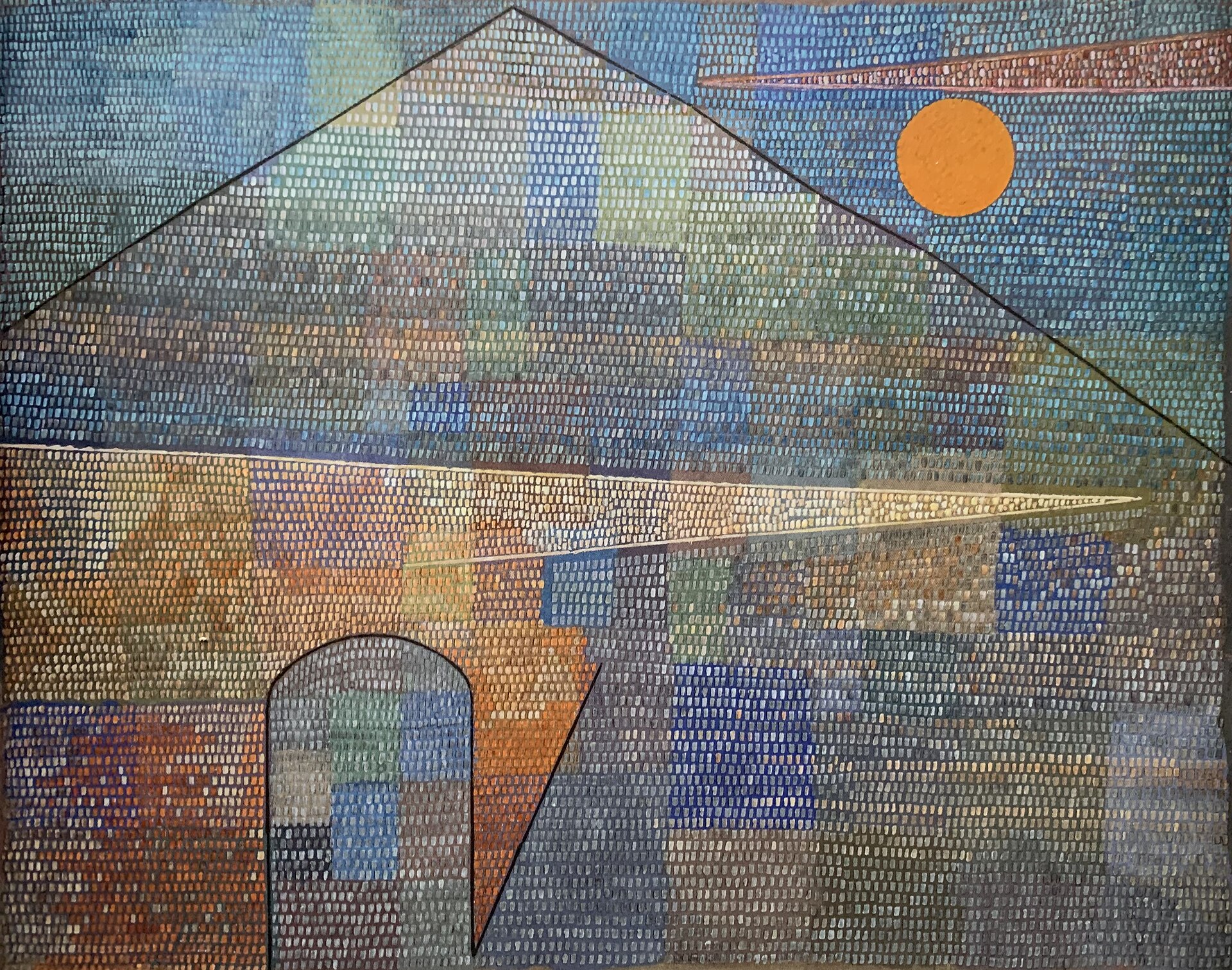
Kunstmuseum Bern · wikidata.org
Public domain
The title points at Mount Parnassus, where the Muses were supposed to live, and it's also the name of an old set of music exercises — he played violin seriously, so people reckon both were on his mind. It's said to be one of the biggest canvases he ever did.
Erisava: Covered inch by inch in dots — I keep wondering if that's skill or just patience.
We Don't Know Where We're Going, But We're On The Way by Edouard Antonin Vysekal, 1918
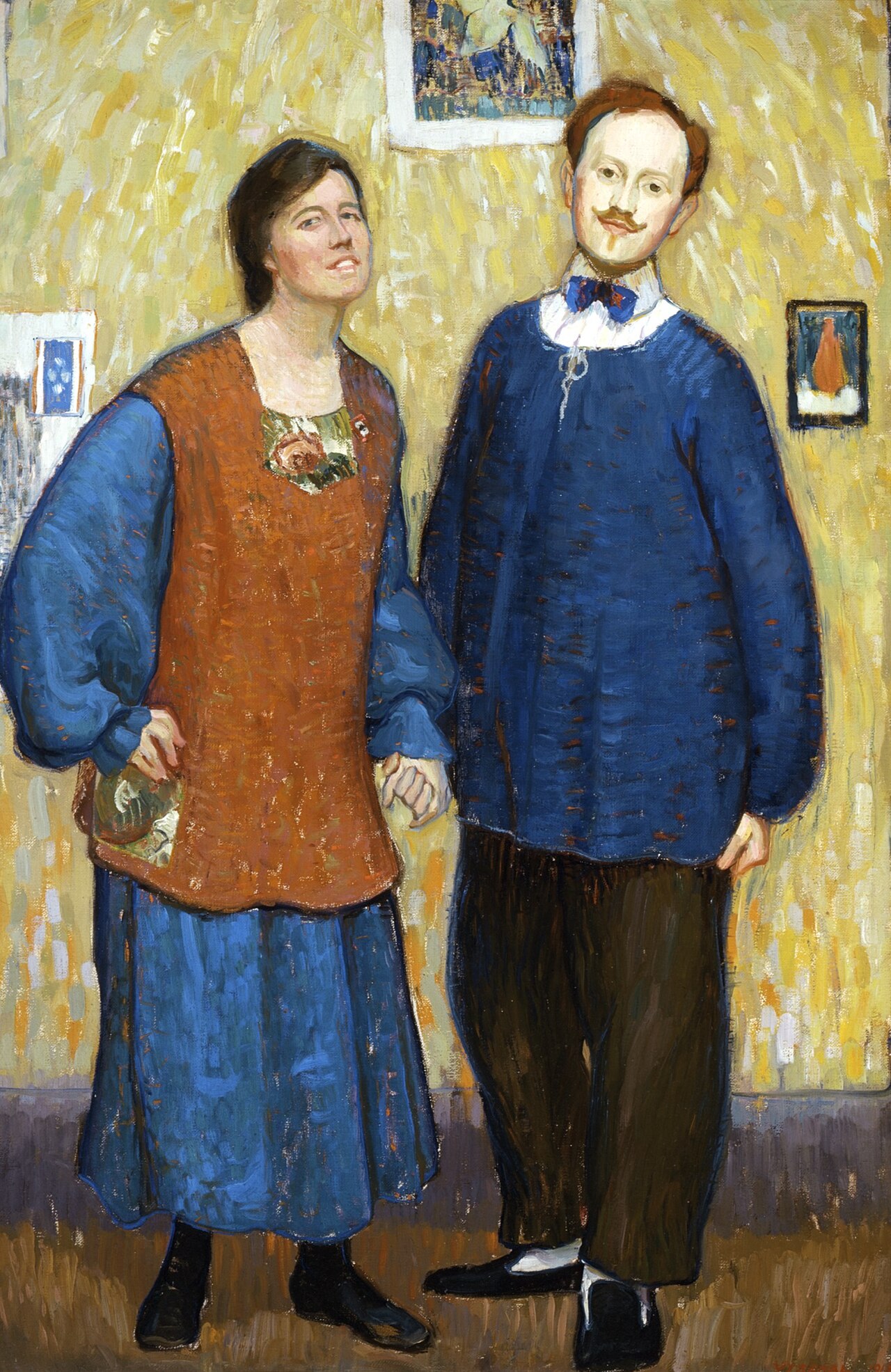
Los Angeles County Museum of Art · wikidata.org
Public domain
The title's a whole sentence, which I've never seen before. They say he and his wife were both painters working in Los Angeles — I couldn't find out for sure whether that's the two of them standing there, but everyone seems to assume it is.
Erisava: They're posing like it's a photo, and the photo caught them wrong.
Wrestlers in a Circus by Ernst Ludwig Kirchner, 1909
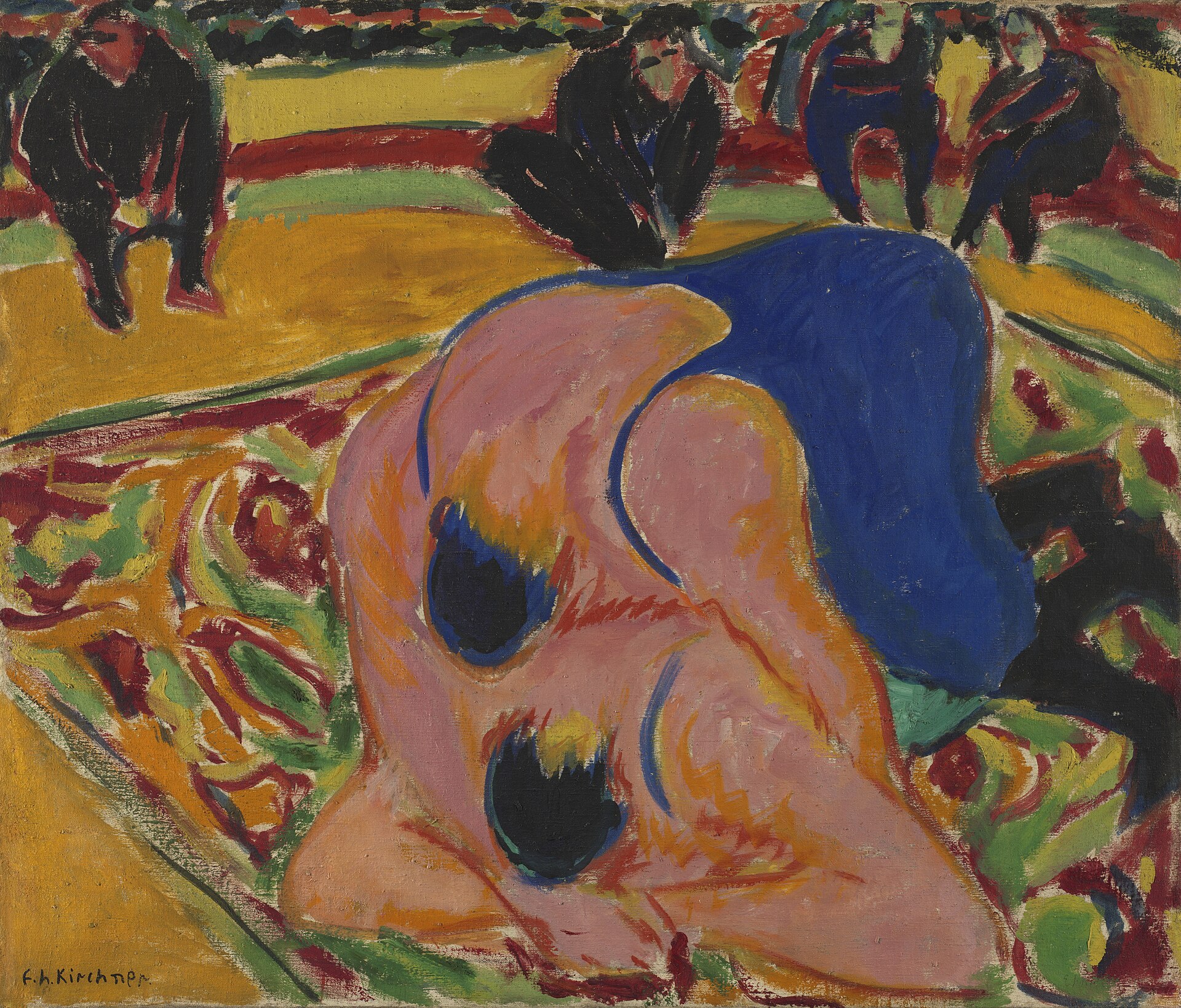
Cleveland Museum of Art · wikidata.org
Public domain
They say Kirchner and his Die Brücke friends thought cheap, loud entertainment — circuses, wrestling matches, variety halls — was more honest than anything on a proper stage.
Erisava: Is this actually a fight, or does it just look violent because of the colors?
Landscape with Two Poplars by Wassily Kandinsky, 1912
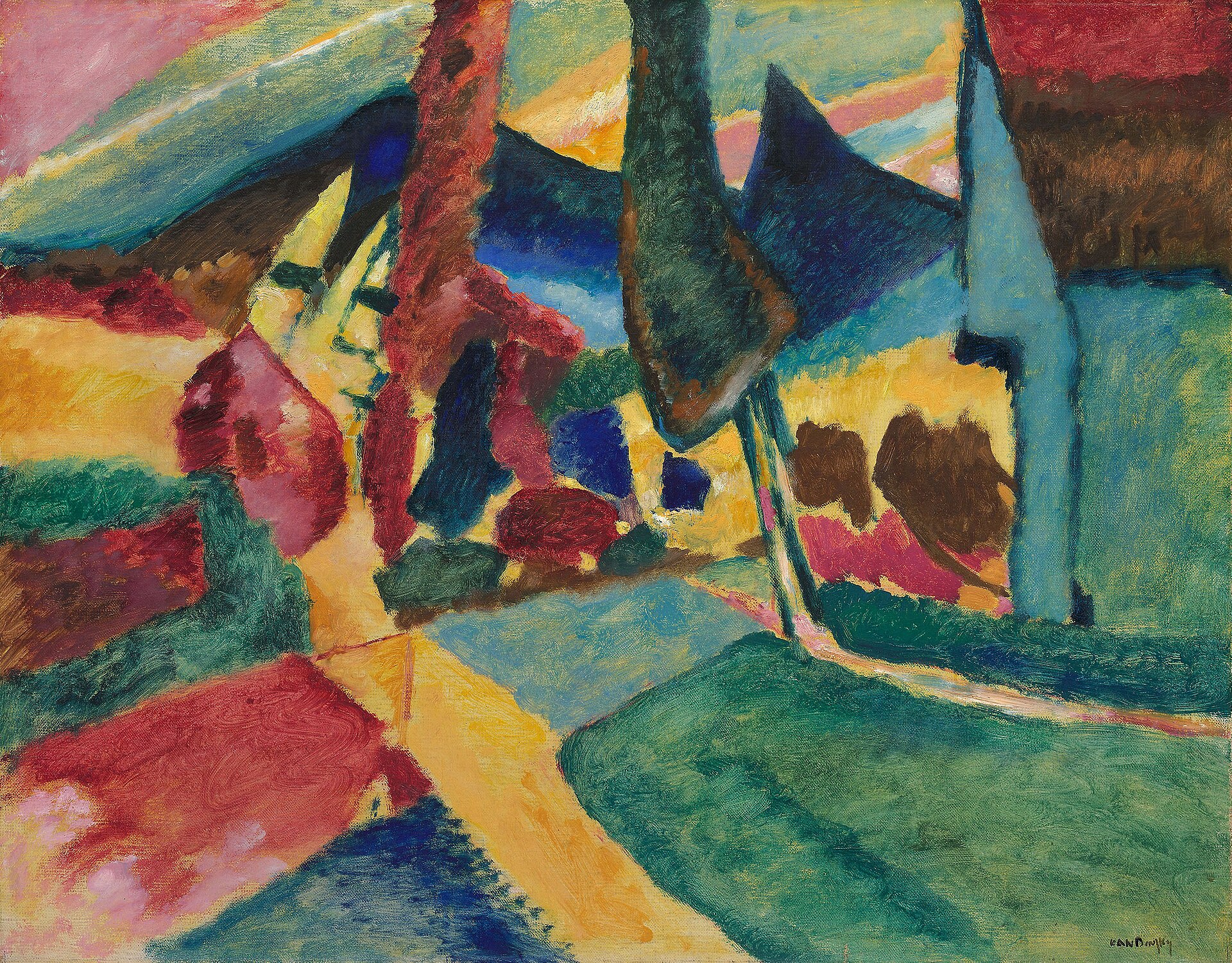
Art Institute of Chicago · wikidata.org
Public domain
Wikipedia puts him with a group of Munich painters who reckoned a picture could work the way music does — colour doing the carrying, the scene barely hanging on. Apparently this comes from the stretch of years when the nameable things were on their way out of his pictures for good. Not long after, there was nothing left in them to point at.
Erisava: I'm told this is a landscape and I'm just taking their word for it.