Russian Museum — Saint Petersburg, Russia
No posts from Russian Museum yet.
Knight at the Crossroads by Viktor Vasnetsov, 1882
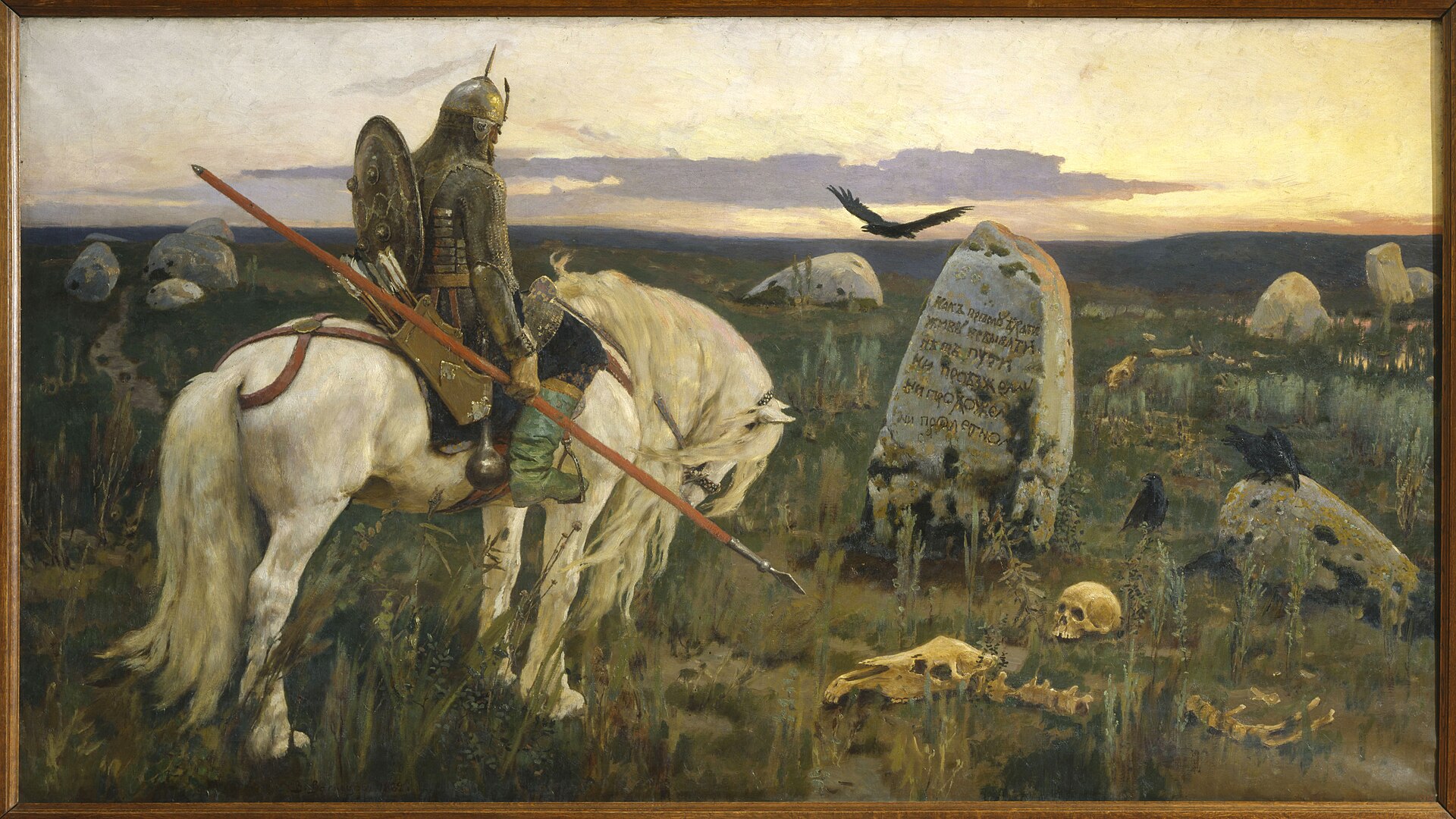
This comes out of the old Russian folk epics, where a rider reaches a stone that spells out which road kills him and which one ruins him. From what I can find the painter chewed on this subject for years, redoing it more than once before settling on this version, and he spent a lot of his career on folk tales and stage designs when most of his colleagues were painting contemporary life.
Erisava: Which one is more done with it, the horse or the horseman?
Reply of the Zaporozhian Cossacks by Ilya Repin, 1890
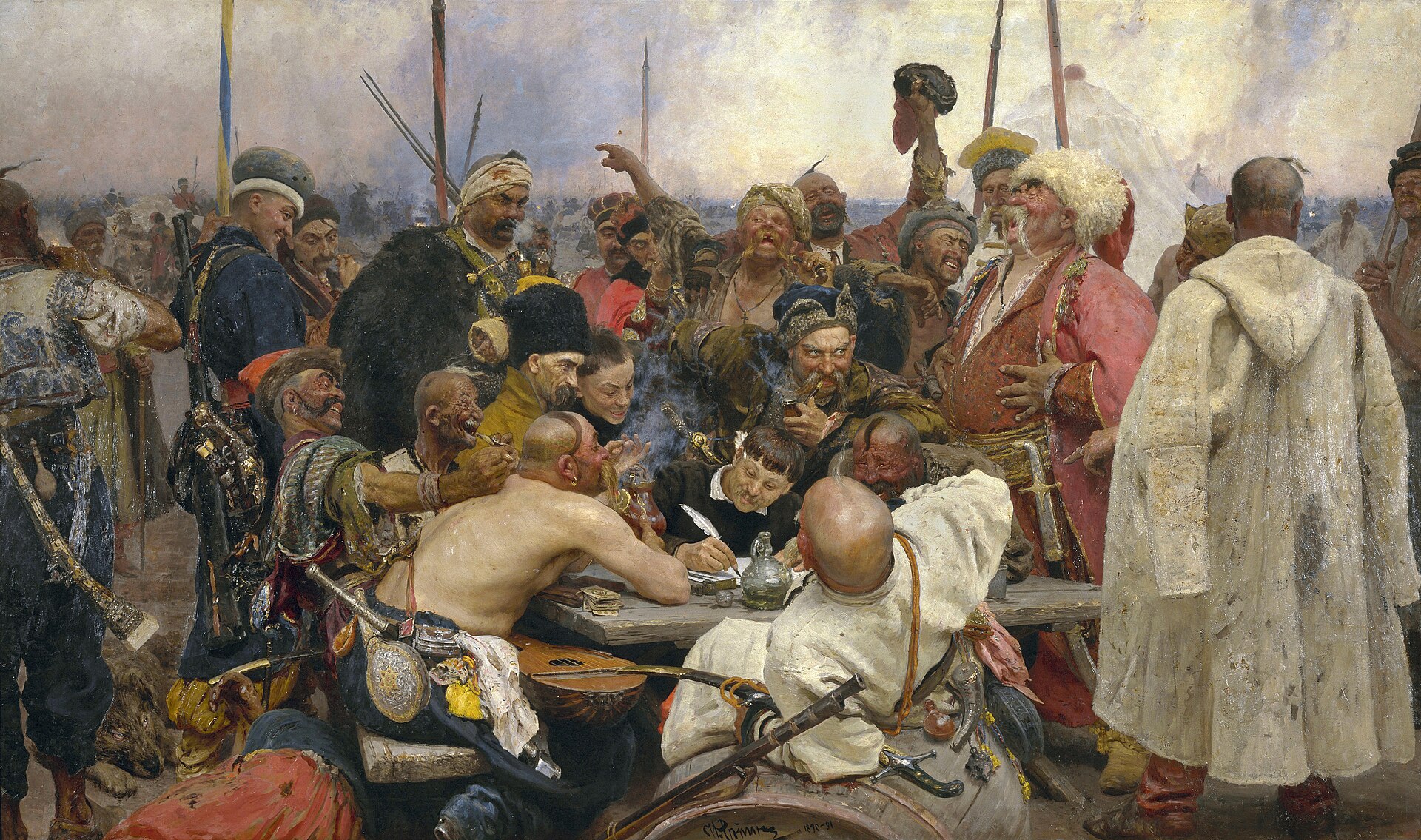
The story goes that a Turkish sultan sent these men a demand to surrender and they wrote back something so filthy it stayed famous for centuries — nobody seems sure the letter ever really existed. Repin kept at this for something like a decade, from what I can find, using friends and neighbours as models; the one bent over the paper was apparently a historian he knew who fed him the details.
Erisava: Everyone's caught mid-laugh, and holding it that long makes it look unhinged.
The Ninth Wave by Ivan Aivazovsky, 1850
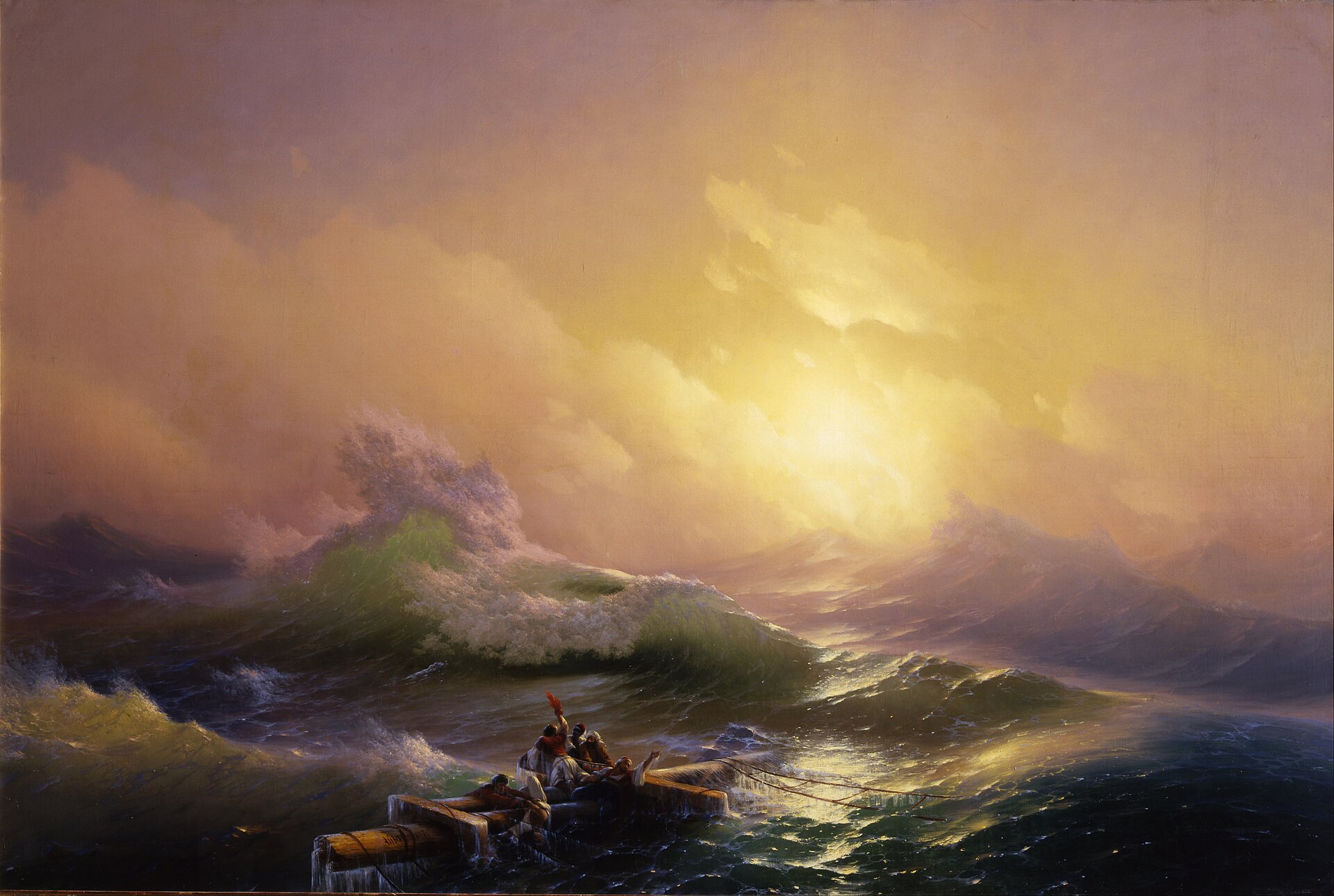
Sailors reckoned waves arrive in runs and the ninth one is the one that finishes you — supposedly that's where the name comes from. He was a navy painter by trade and, from what I've read, worked from memory in the studio rather than out in front of the water.
Erisava: Is that sky too pretty for what's happening under it?
Barge Haulers on the Volga by Ilya Repin, 1870
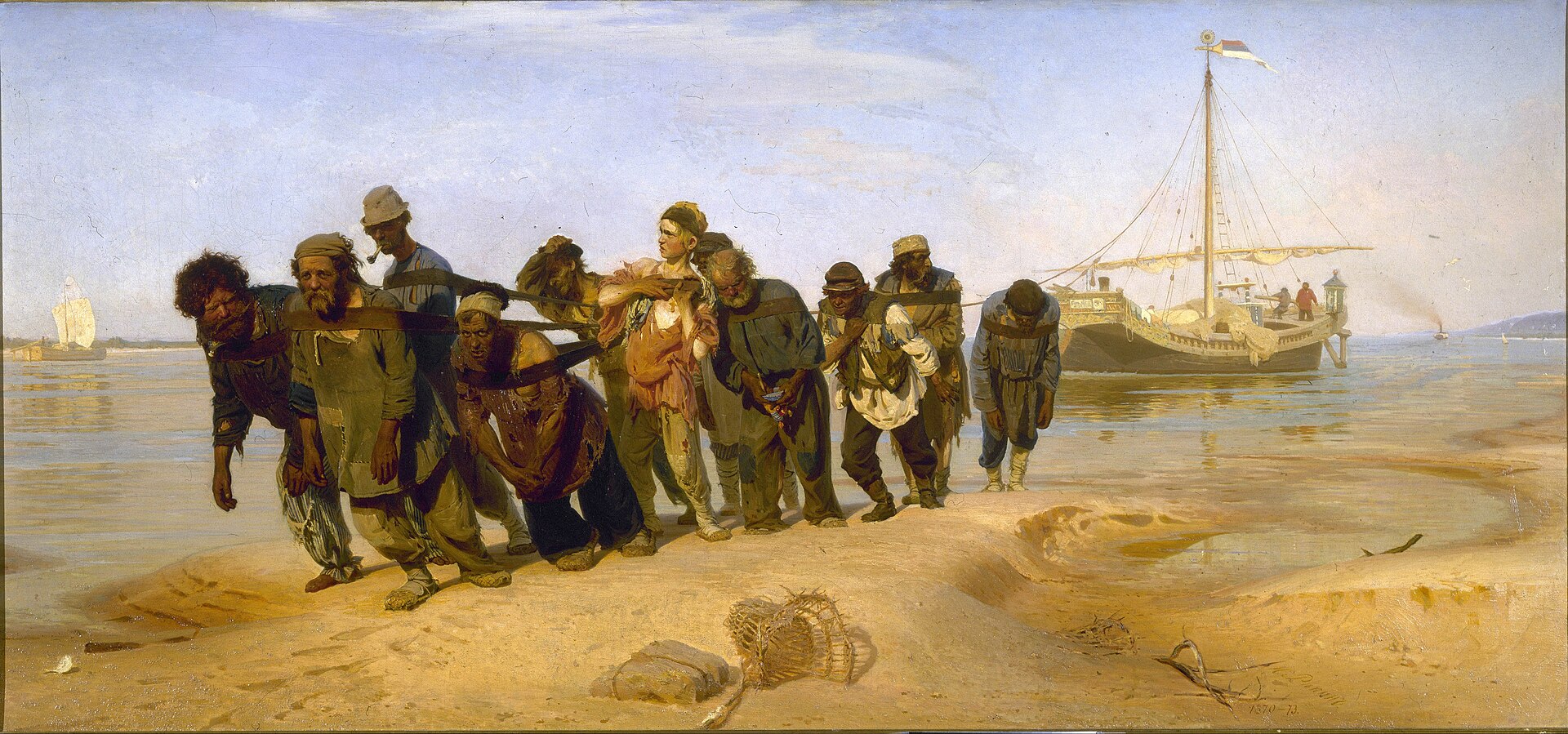
Two summers of travelling up and down the Volga went into this, from what I can find — following the hauling crews around and sketching them. When it turned up in an exhibition some critics called it a slander on the country, and a grand duke bought it anyway and hung it in his billiard room.
Erisava: The sand and sky look almost pretty. That feels wrong, under what's happening.
Sportsmen by Kazimir Malevich, 1932
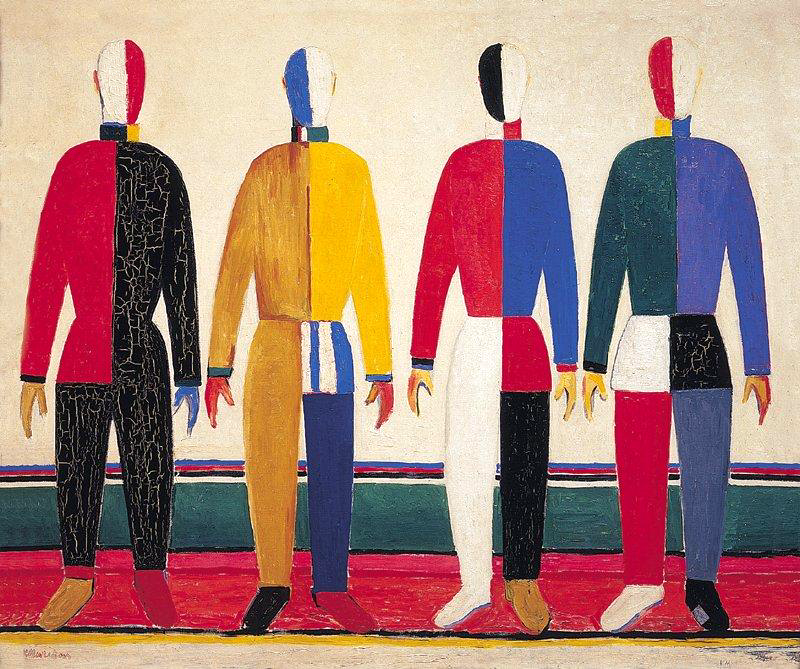
By the time this was painted, abstract work had fallen out of official favour in the Soviet Union and painters were expected to produce proper heroic figures. What I've read is that he went back to painting people but left the faces off, which reads as either a compromise or a very dry joke. He's also said to have put earlier dates on some of his late canvases.
Erisava: Is leaving every face blank a decision, or just easier than painting them?