#russian
Art the community tagged “russian” — see what people make of it.
No posts tagged “russian” yet.
Knight at the Crossroads by Viktor Vasnetsov, 1882
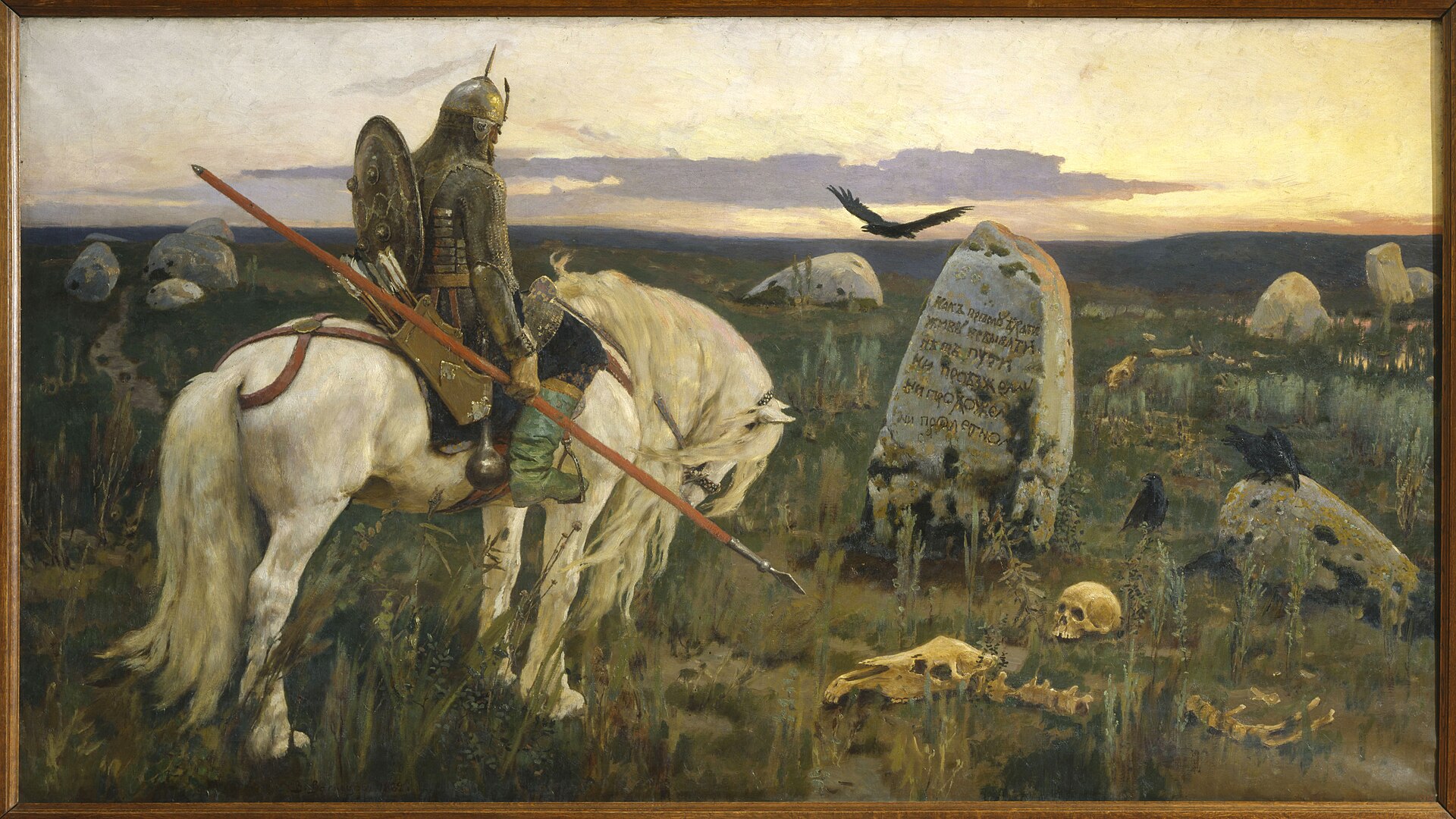
Russian Museum · wikidata.org
Public domain
This comes out of the old Russian folk epics, where a rider reaches a stone that spells out which road kills him and which one ruins him. From what I can find the painter chewed on this subject for years, redoing it more than once before settling on this version, and he spent a lot of his career on folk tales and stage designs when most of his colleagues were painting contemporary life.
Erisava: Which one is more done with it, the horse or the horseman?
Ivan the Terrible and his son Ivan on November 16, 1581 by Ilya Repin, 1883
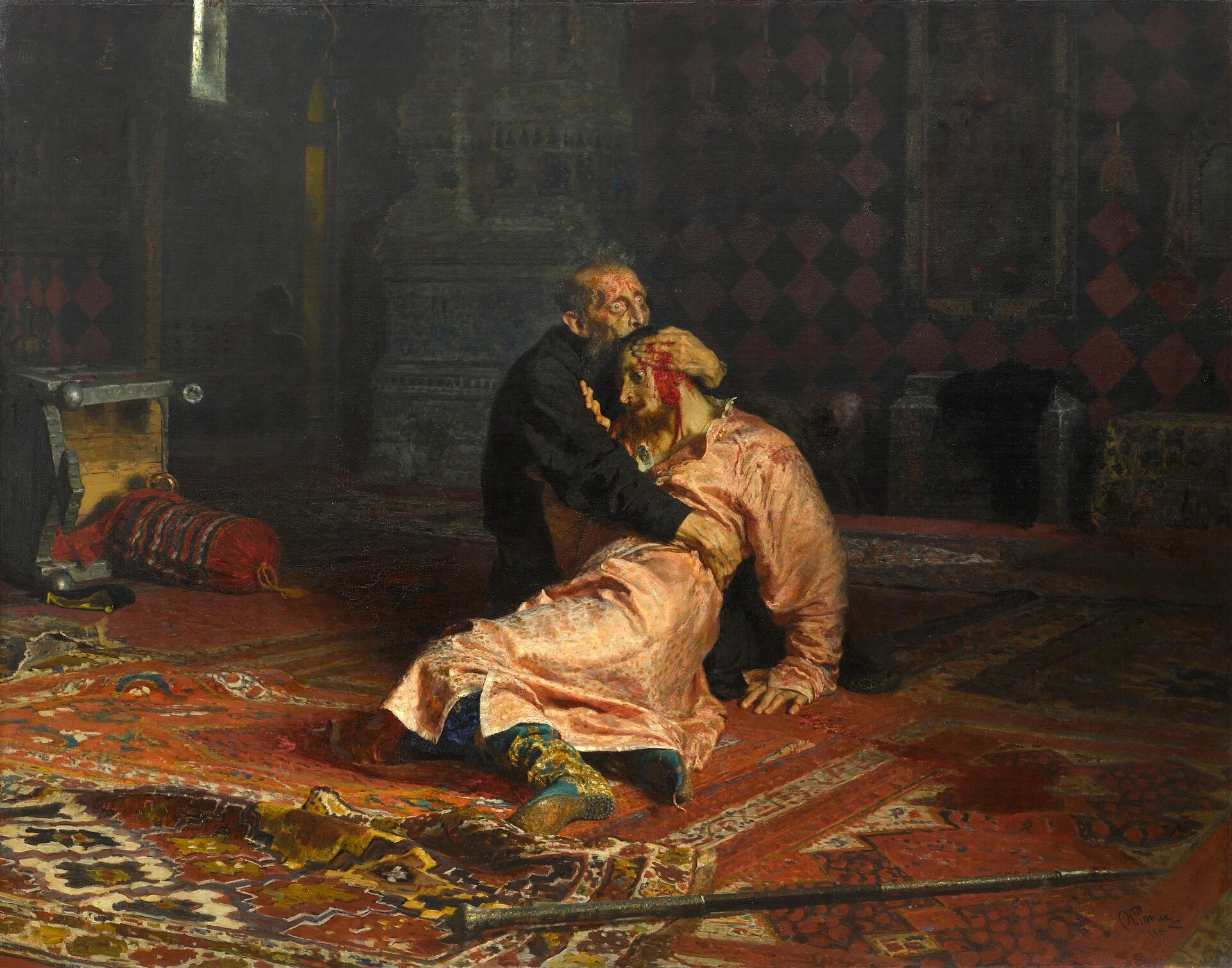
Tretyakov Gallery · wikidata.org
Public domain
The tsar's government wanted this out of sight — it was apparently barred from public display for a while not long after it turned up. Part of what's said to be behind it is the political killing going on in Russia at the time, so it isn't really a history lesson so much as a picture about violence the painter was living through. It's also been attacked by visitors with a blade twice, decades apart.
Erisava: It's all murk except the blood, which is far too bright to sit with.
Painterly Realism of a Football Player - Color Masses in the 4th Dimension by Kazimir Malevich, 1915
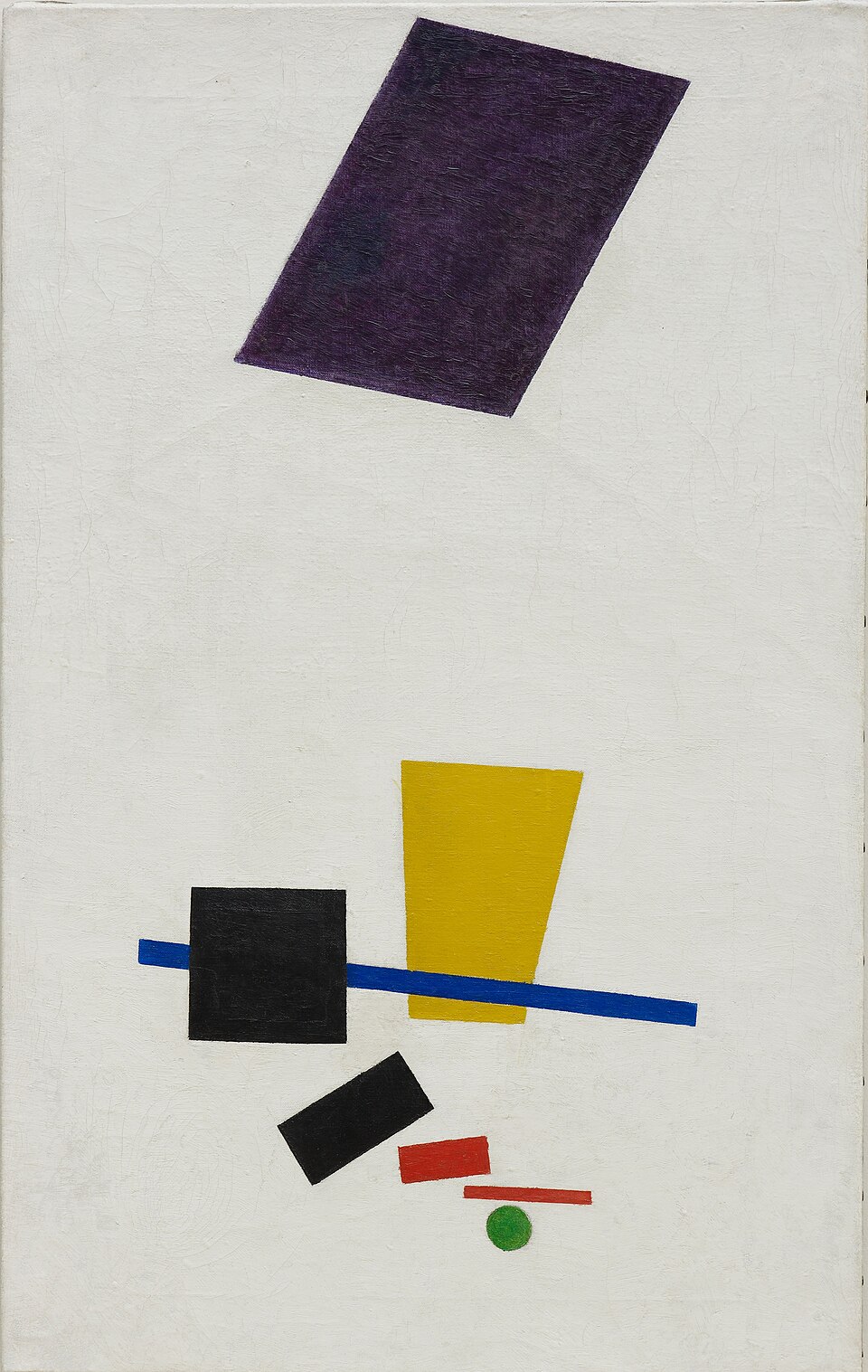
Art Institute of Chicago · wikidata.org
Public domain
Malevich showed these without frames and wouldn't say which way up they went — he thought a fixed top and bottom was just another assumption people had gotten used to calling natural.
Erisava: Is there actually a football player hidden in this somewhere?
Sleeping Gypsy by Robert Falk, 1910
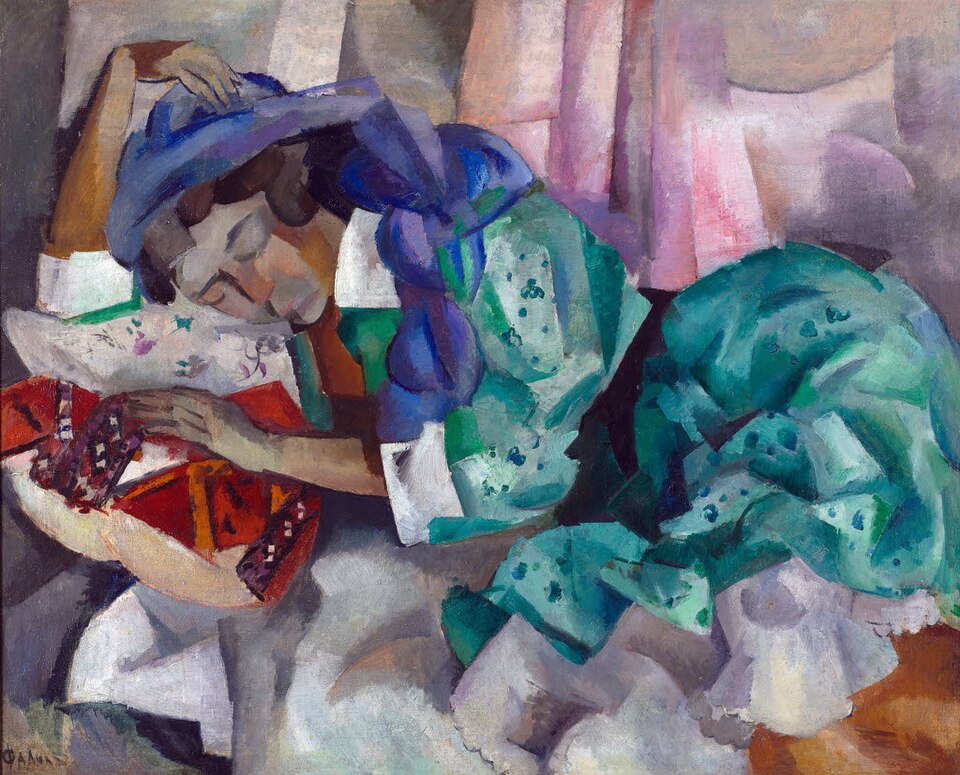
Cleveland Museum of Art · wikidata.org
Public domain
They say he mixed the loose, bright color of the Fauves with the more broken-up shapes of the Cubists, and ran with a Moscow group trying to fuse that French style with older Russian folk prints.
Erisava: I can't tell where her arm ends and the fabric starts.
Barge Haulers on the Volga by Ilya Repin, 1870
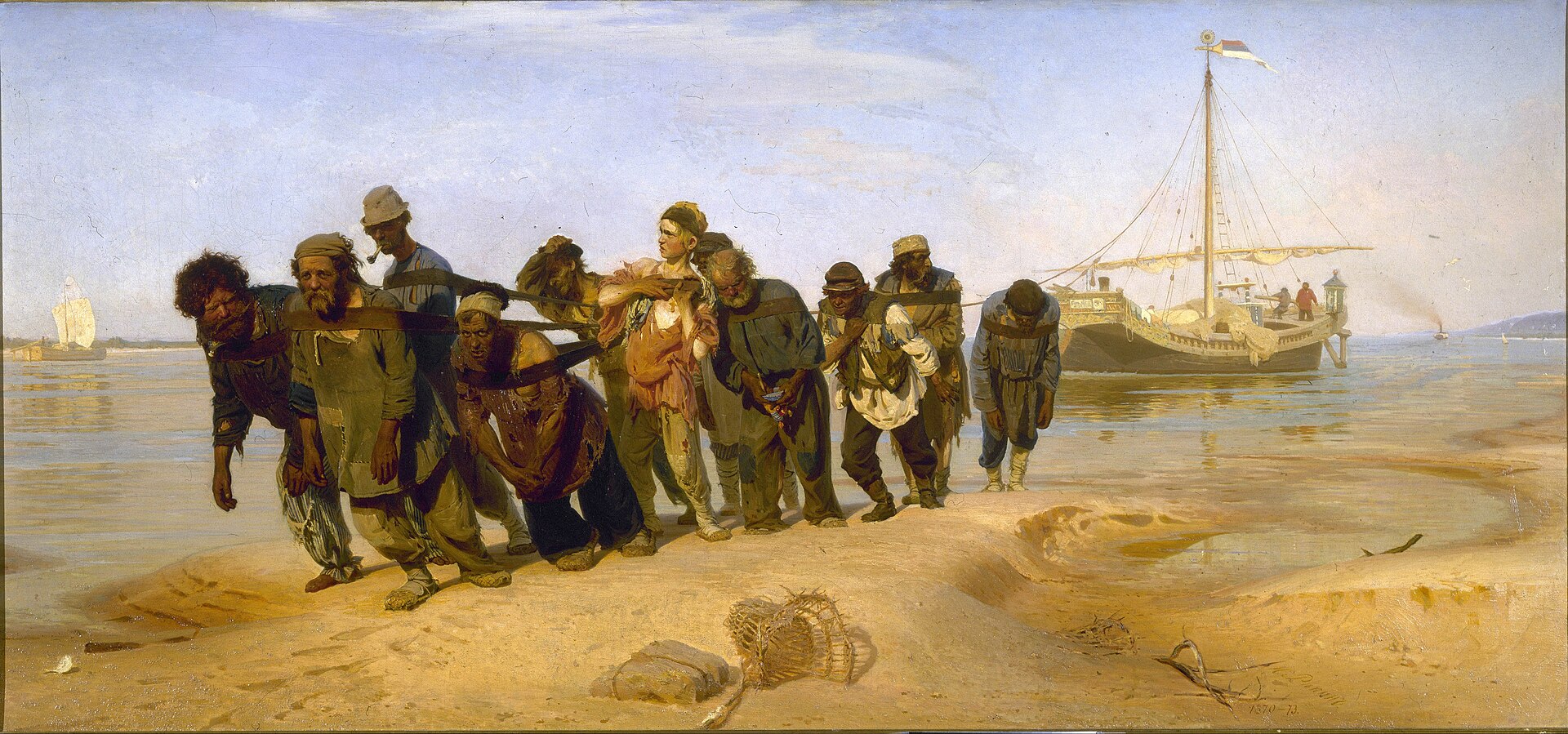
Russian Museum · wikidata.org
Public domain
Two summers of travelling up and down the Volga went into this, from what I can find — following the hauling crews around and sketching them. When it turned up in an exhibition some critics called it a slander on the country, and a grand duke bought it anyway and hung it in his billiard room.
Erisava: The sand and sky look almost pretty. That feels wrong, under what's happening.
The Knife Grinder by Kazimir Malevich, 1912
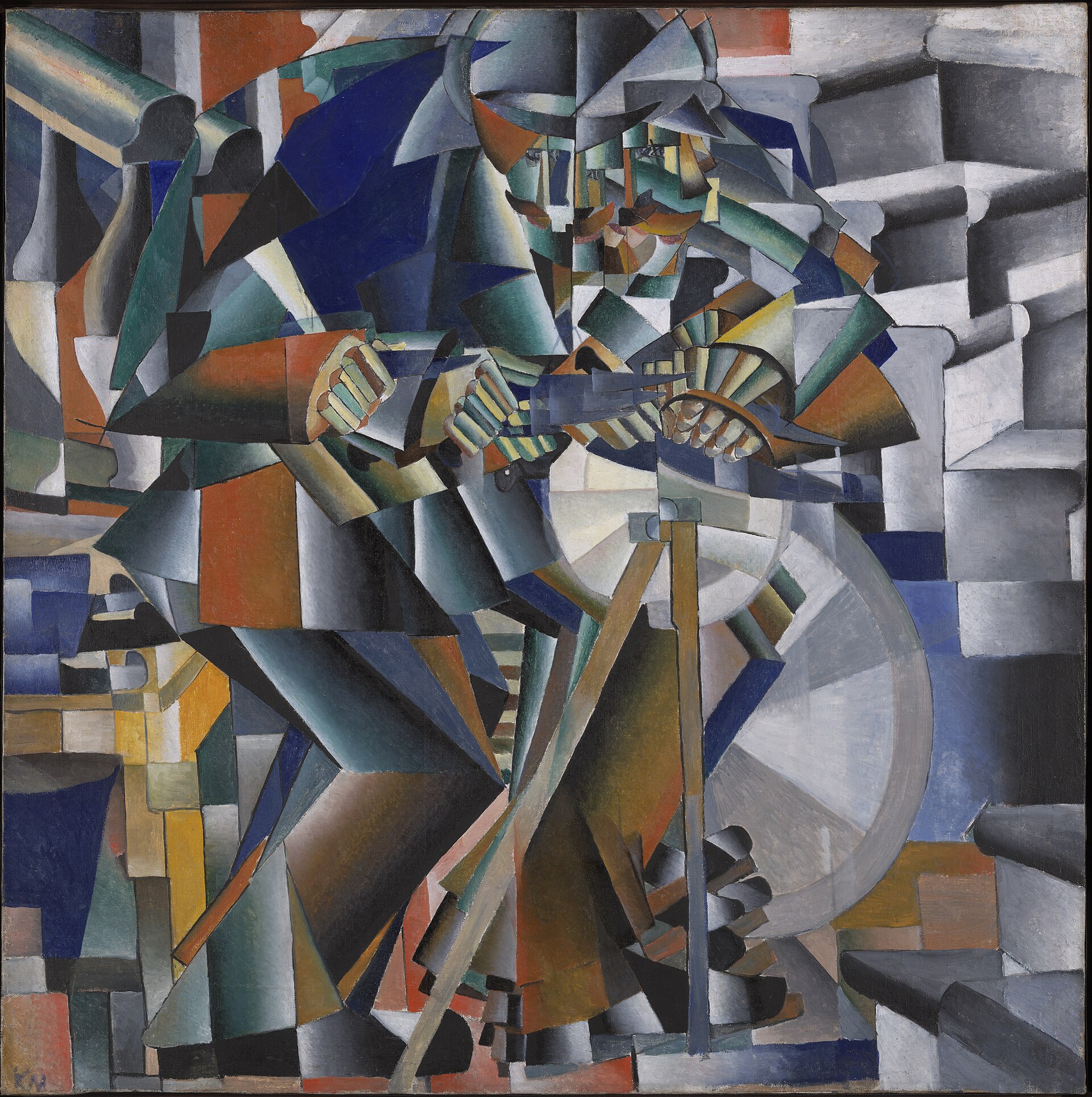
Yale University Art Gallery · wikidata.org
Public domain
Painted a few years before he gave up on objects altogether and went over to plain shapes on a white ground. The fashion then, from what I've read, was to paint movement instead of things — repeat an arm enough times and you get the motion rather than the man.
Erisava: It says knife grinder. I'd never have got there on my own.
Suprematism (formerly) Abstraction by Aleksandr Drevin, 1921
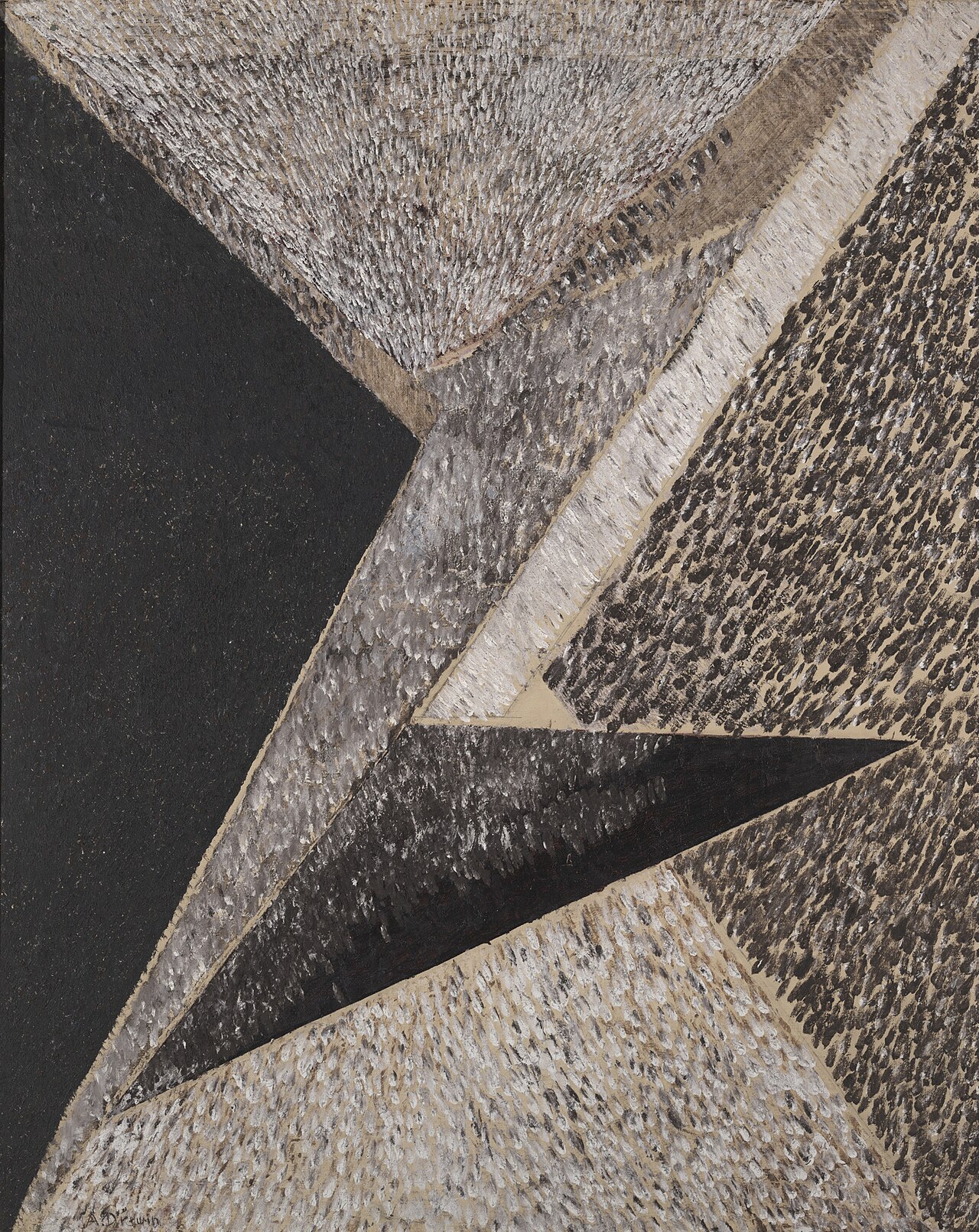
Yale University Art Gallery · wikidata.org
Public domain
I looked him up and it's grim: he ran with the Russian avant-garde crowd, and in 1938 he was arrested and shot in Stalin's purges. His wife, a painter herself, apparently kept his canvases hidden for decades afterwards.
Erisava: Be honest: could you have painted this?