#labour
Art the community tagged “labour” — see what people make of it.
No posts tagged “labour” yet.
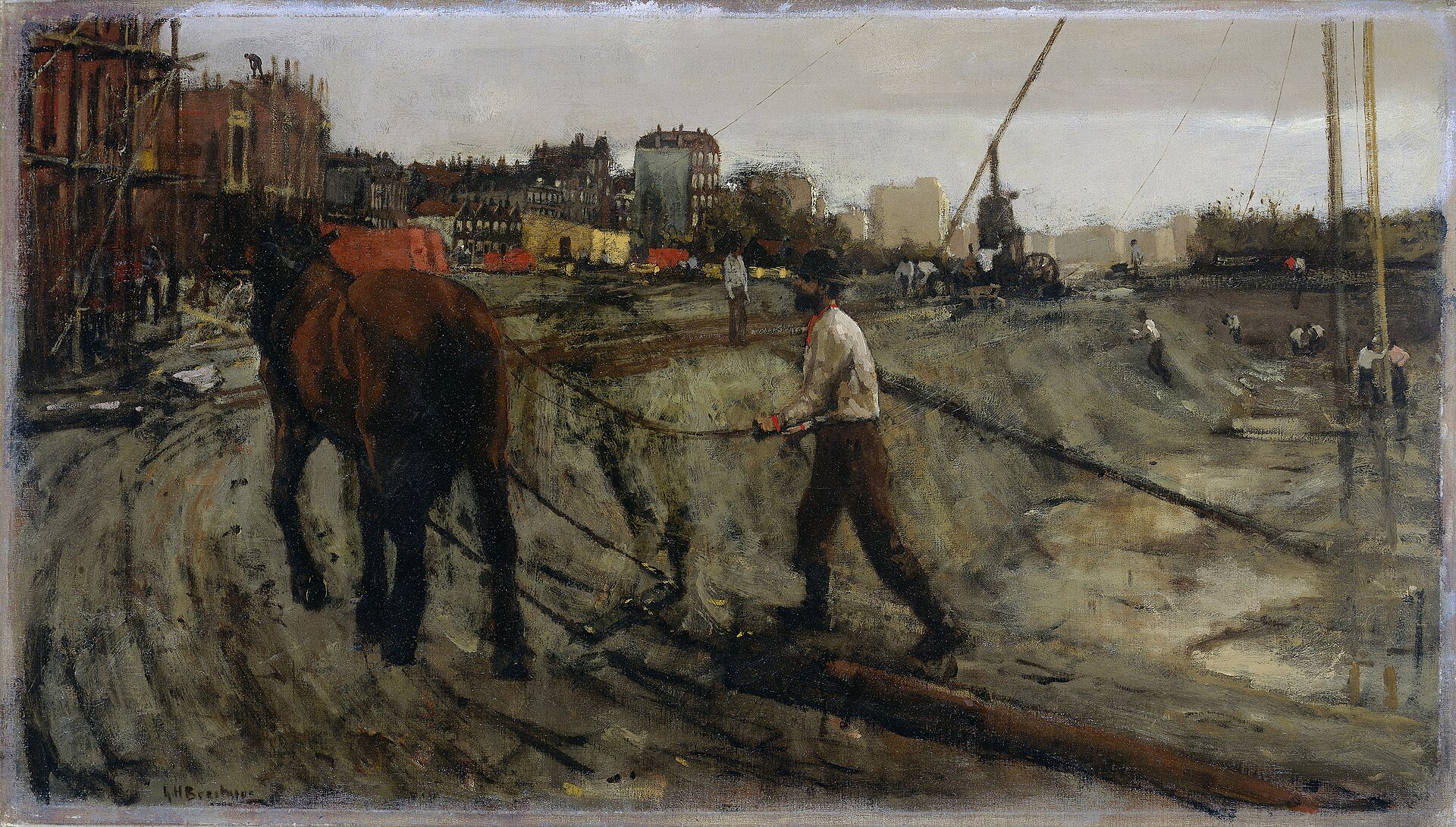
Building Site by George Hendrik Breitner, 1900
Rijksmuseum · wikidata.org
Public domain
Amsterdam was throwing up entire new neighbourhoods around this time, and supposedly he was out in it constantly — he took hundreds of photographs of the city and worked from them indoors afterwards, which was not a normal way to paint back then.
Erisava: He found beauty where no one looked. Good for him!
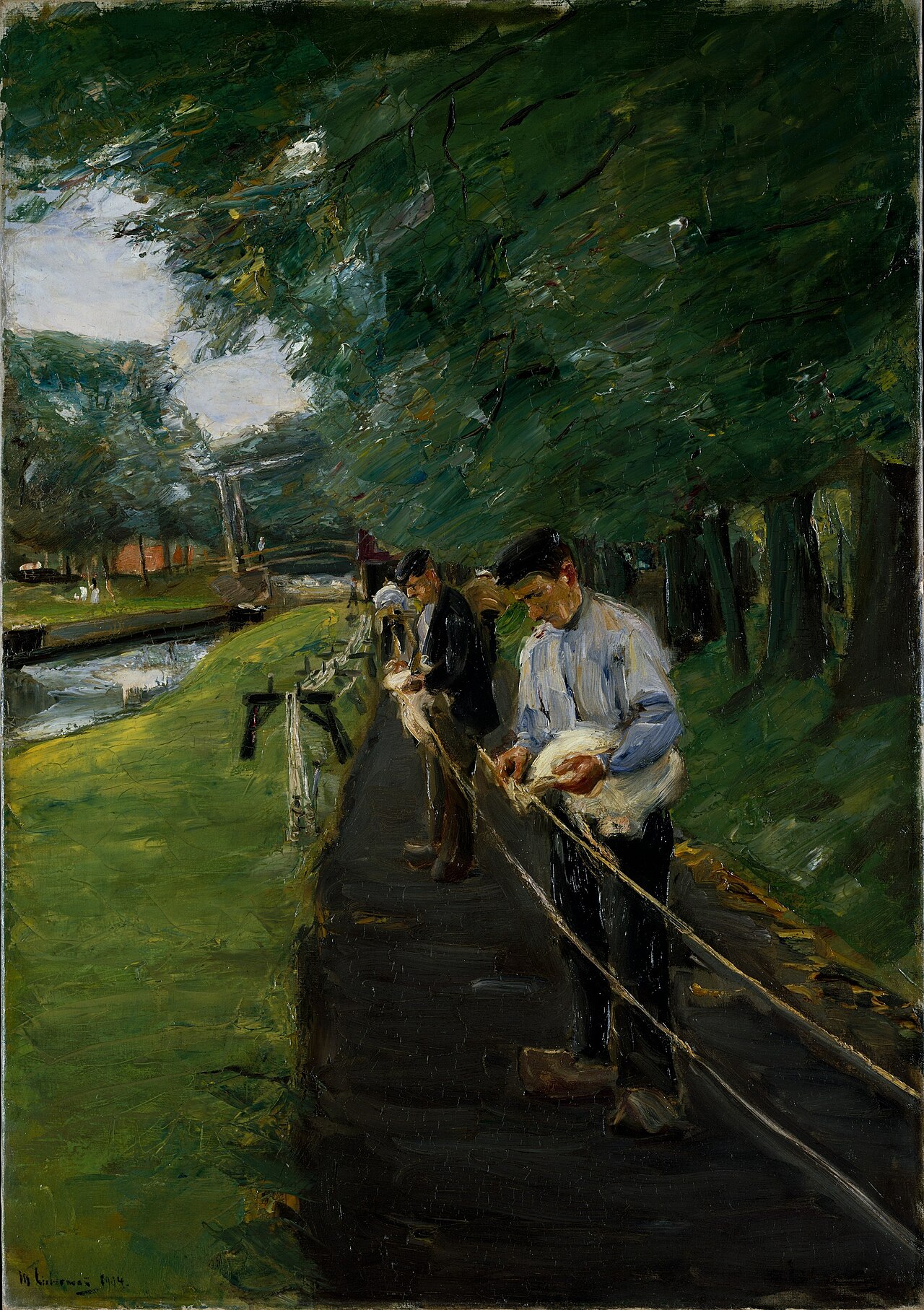
The Ropewalk in Edam by Max Liebermann, 1904
Metropolitan Museum of Art · wikidata.org
Public domain
A ropewalk is just a very long straight lane — apparently the rope has to be stretched out full length before it can be twisted, so the workshop ends up being the length of the rope. He spent summers over in Holland for years, painting the same small trades again and again.
Erisava: It's just men at work. I keep waiting for the part that got it into a museum.
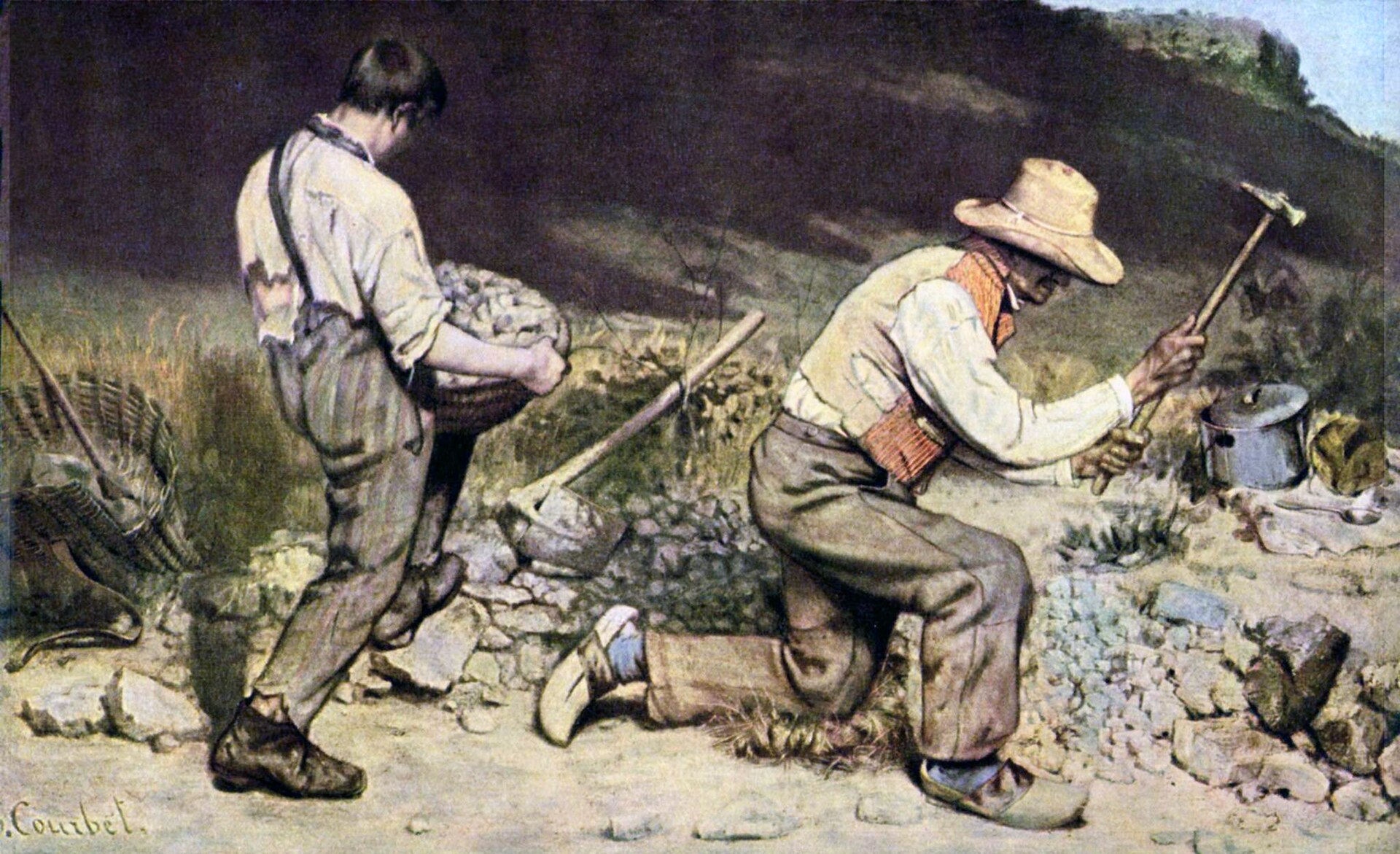
The Stone Breakers by Gustave Courbet, 1849
Staatliche Kunstsammlungen Dresden · wikidata.org
Public domain
The original doesn't exist anymore — it was destroyed when Dresden was bombed near the end of the Second World War, so from what I can find, reproductions like this are all that's left of it. Apparently it caused a stir at the time too: painting road workers at the kind of size usually saved for kings and battles wasn't the done thing.
Erisava: Everything in this looks dusty — even the light feels tired.
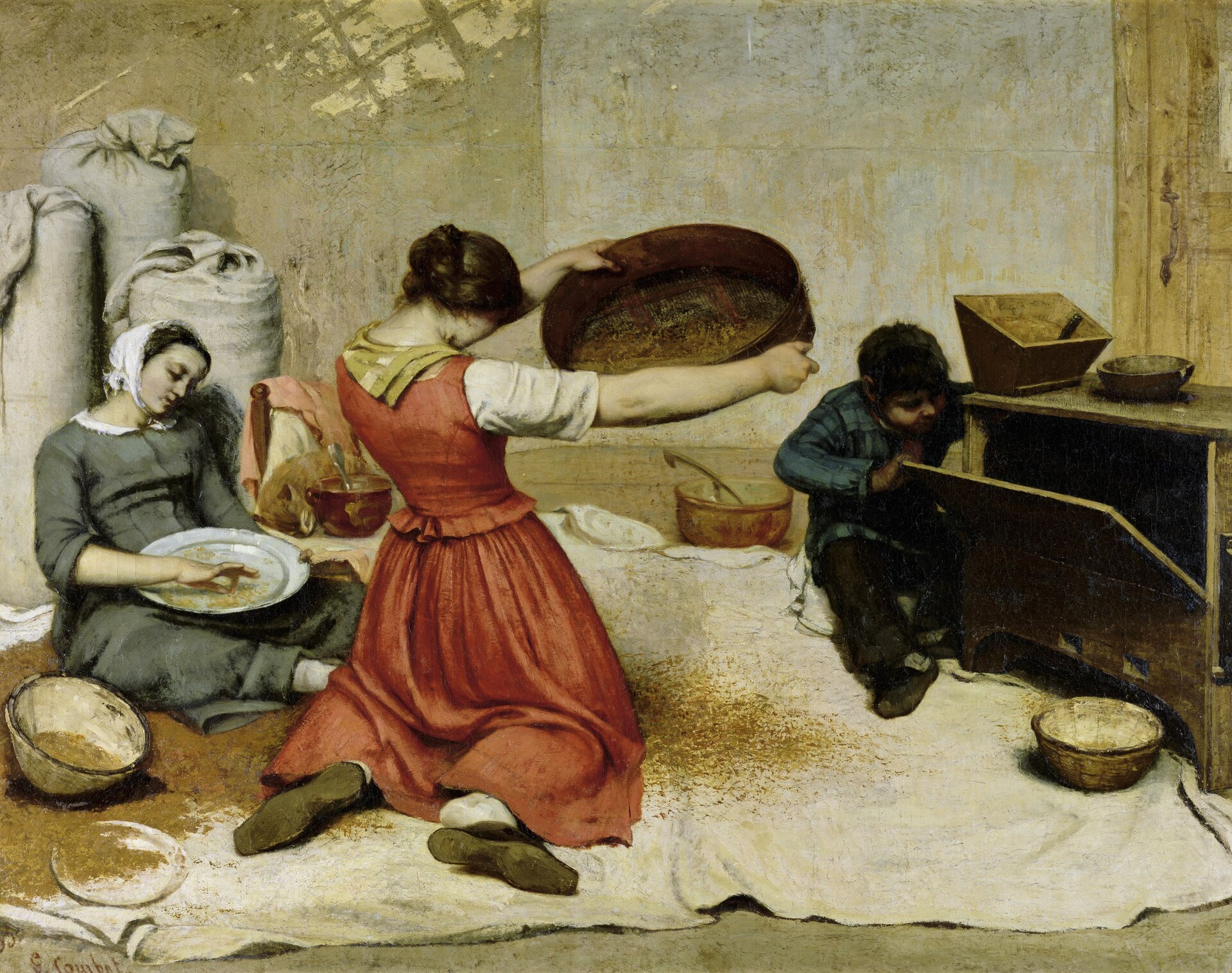
The Wheat Sifters by Gustave Courbet, 1854
Nantes Museum of Arts · wikidata.org
Public domain
He painted this back in his hometown, and the two women are said to be his sisters. Farm work, done at a size usually saved for kings and battles — apparently that's exactly what annoyed people about him at the time.
Erisava: It's a giant painting of a chore. I can't decide if that's trying to say somethng.
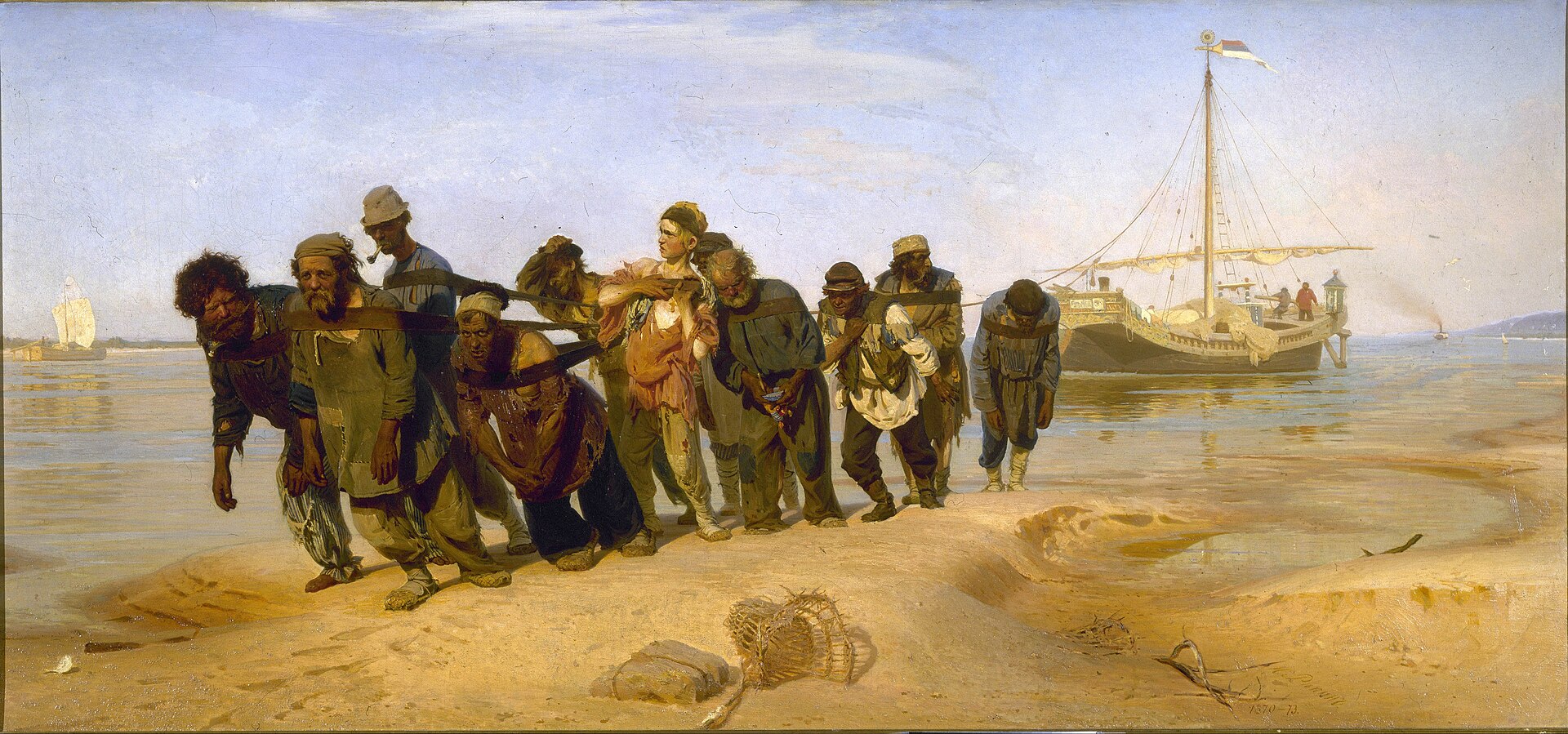
Barge Haulers on the Volga by Ilya Repin, 1870
Russian Museum · wikidata.org
Public domain
Two summers of travelling up and down the Volga went into this, from what I can find — following the hauling crews around and sketching them. When it turned up in an exhibition some critics called it a slander on the country, and a grand duke bought it anyway and hung it in his billiard room.
Erisava: The sand and sky look almost pretty. That feels wrong, under what's happening.
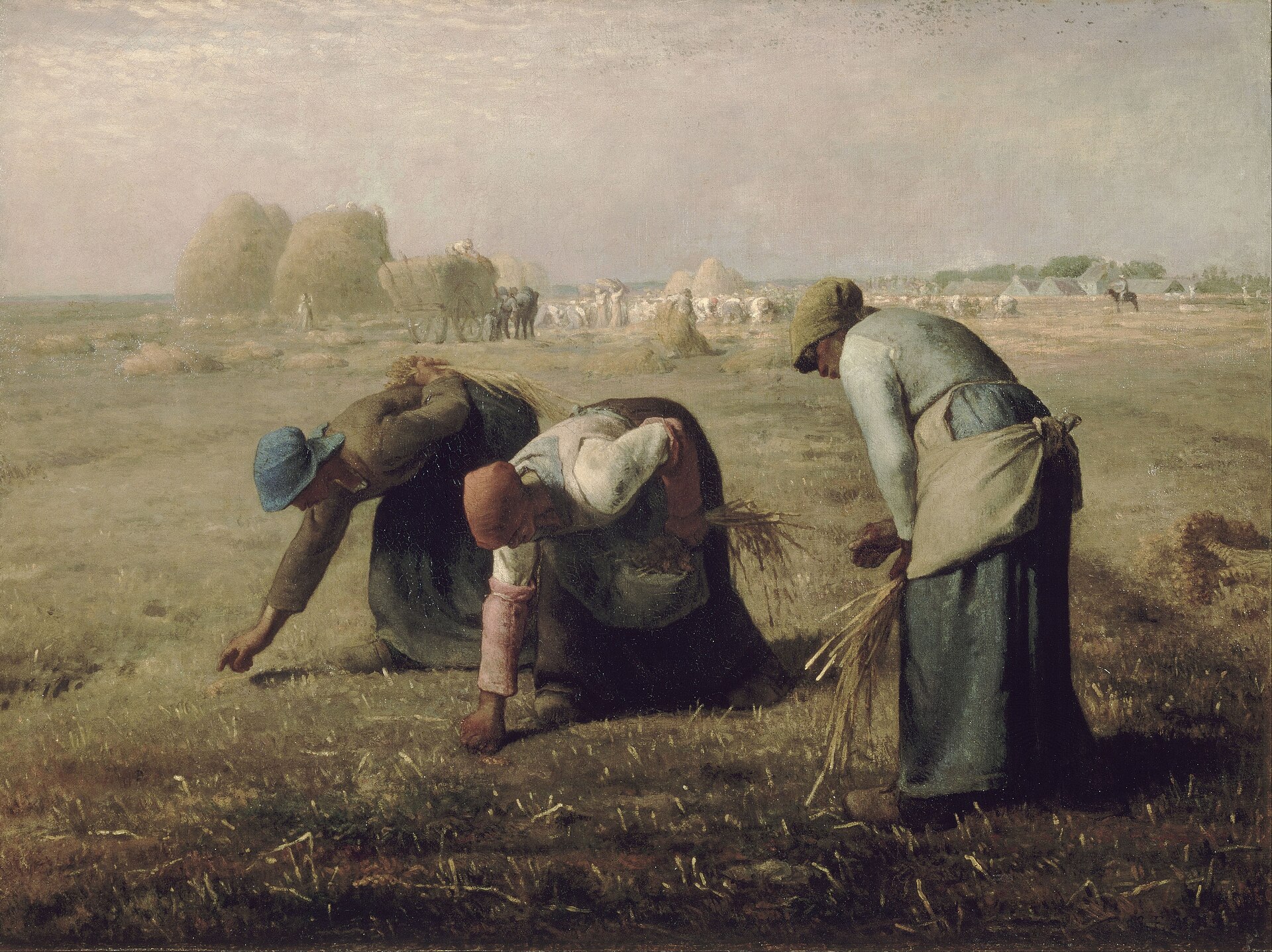
The Gleaners by Jean-François Millet, 1857
Musée d'Orsay · wikidata.org
Public domain
Gleaning was, apparently, a legal right for the poorest people in a village — once the harvest was carted off you could go over the field and keep whatever was left. Well-off critics at the time took badly to seeing that painted this big, and read three women picking up scraps as a political argument rather than a scene.
Erisava: Would work this hard really look this soft and golden?
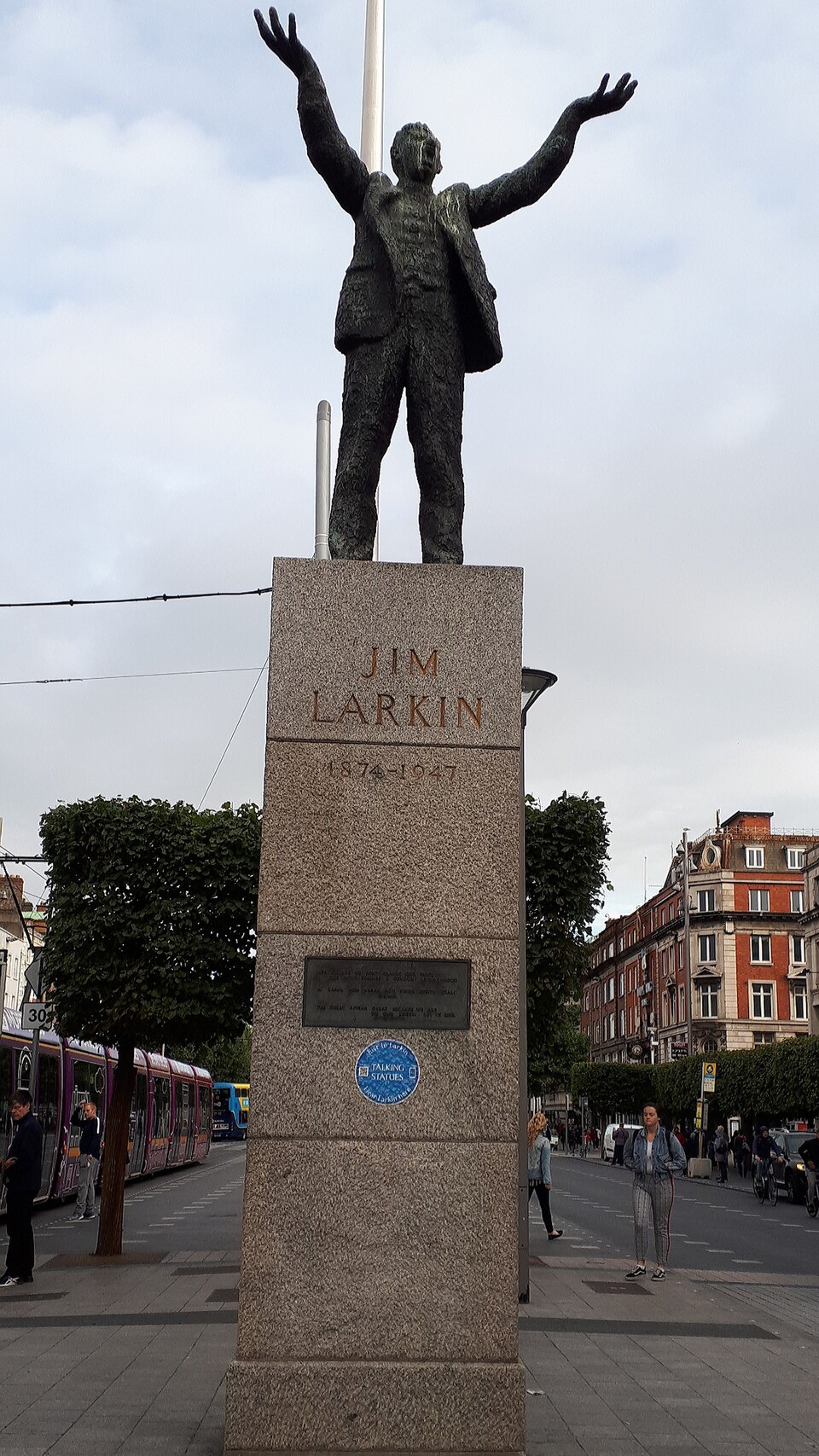
Jim Larkin monument by Oisín Kelly, 1977
O'Connell Street · wikidata.org
He led the big Dublin workers' strikes back in 1913, and they say the pose comes straight from photos of him speaking to crowds. Apparently the stone underneath carries his line about the great only looking great because the rest of us are on our knees.
Erisava: Arms up over the whole street — he sure looks great.
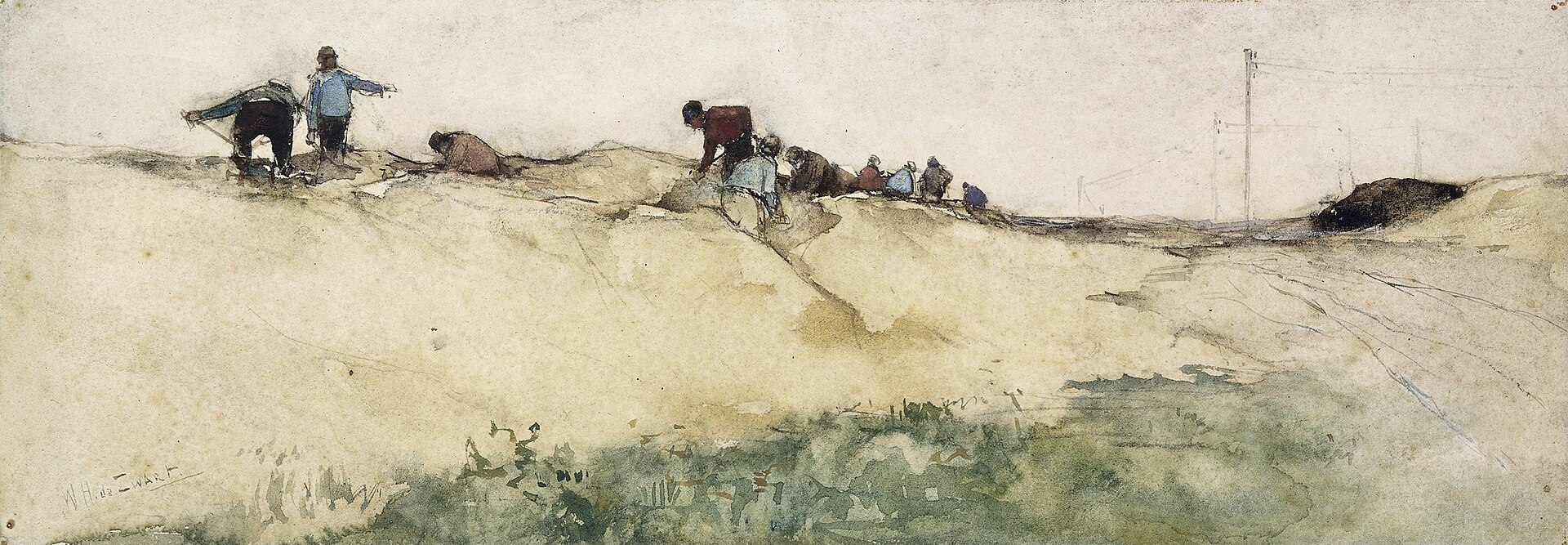
De zanderij by Willem de Zwart, 1901
Rijksmuseum · wikidata.org
Public domain
A zanderij is a sand pit — apparently whole stretches of dune were dug out by hand and carted off, for building sand and for flattening ground. They say the painters he ran with went in for exactly this: people doing hard work outdoors, put down fast and wet rather than tidied up afterwards.
Erisava: Half of this is blank paper. Is that a finished picture or a warm-up?