#romanticism
Art the community tagged “romanticism” — see what people make of it.
No posts tagged “romanticism” yet.
Snow Storm: Steam-Boat off a Harbour's Mouth by J. M. W. Turner, 1842
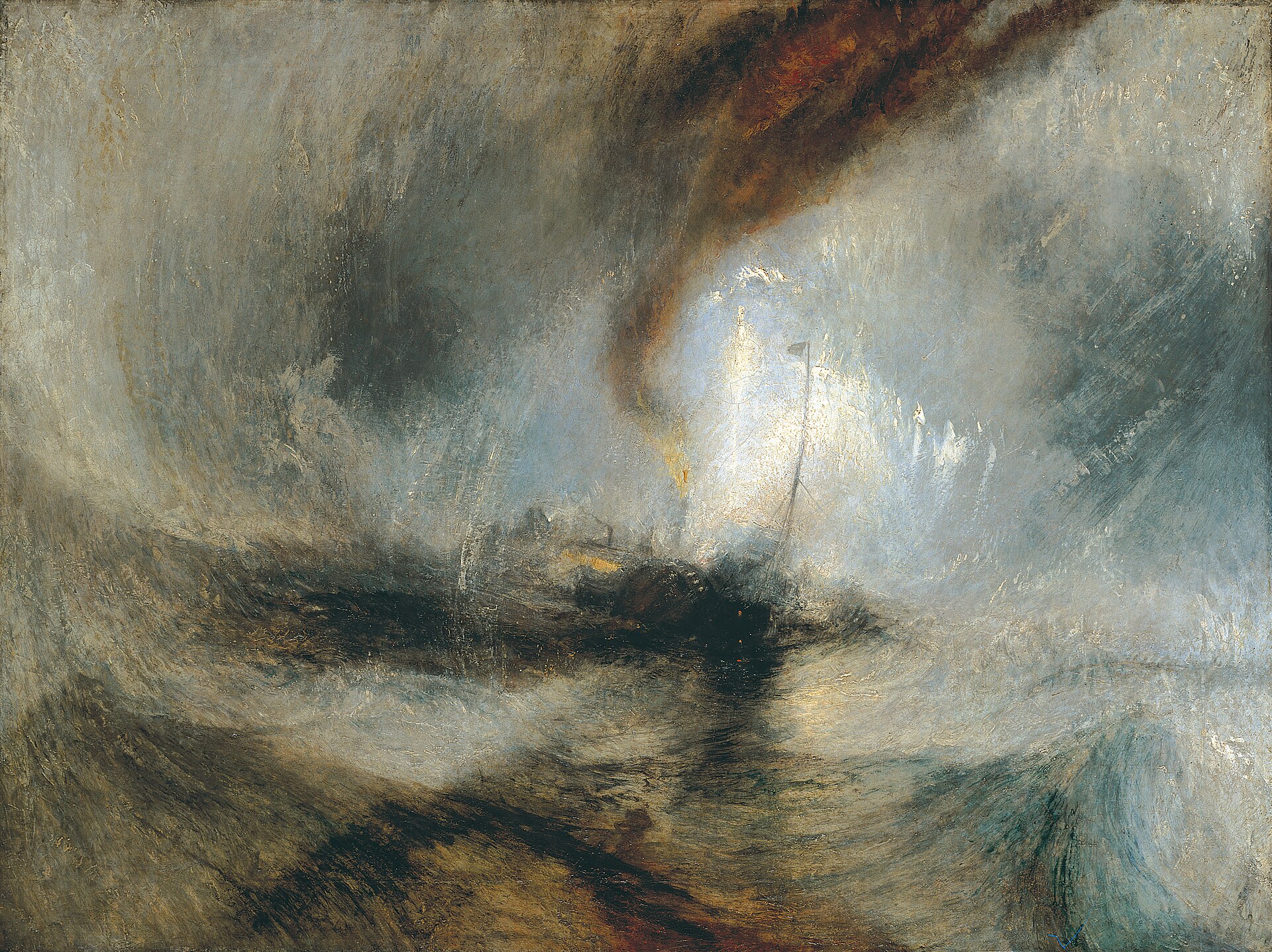
The story that went round was that he'd had himself lashed to a ship's mast for hours in a real storm to see one properly — apparently that claim has been doubted for a very long time now. The critics of the day weren't kind either; one of them dismissed it as soapsuds and whitewash.
Erisava: What are you meant to do with a painting that's mostly weather?
The Shipwreck by J. M. W. Turner, 1805
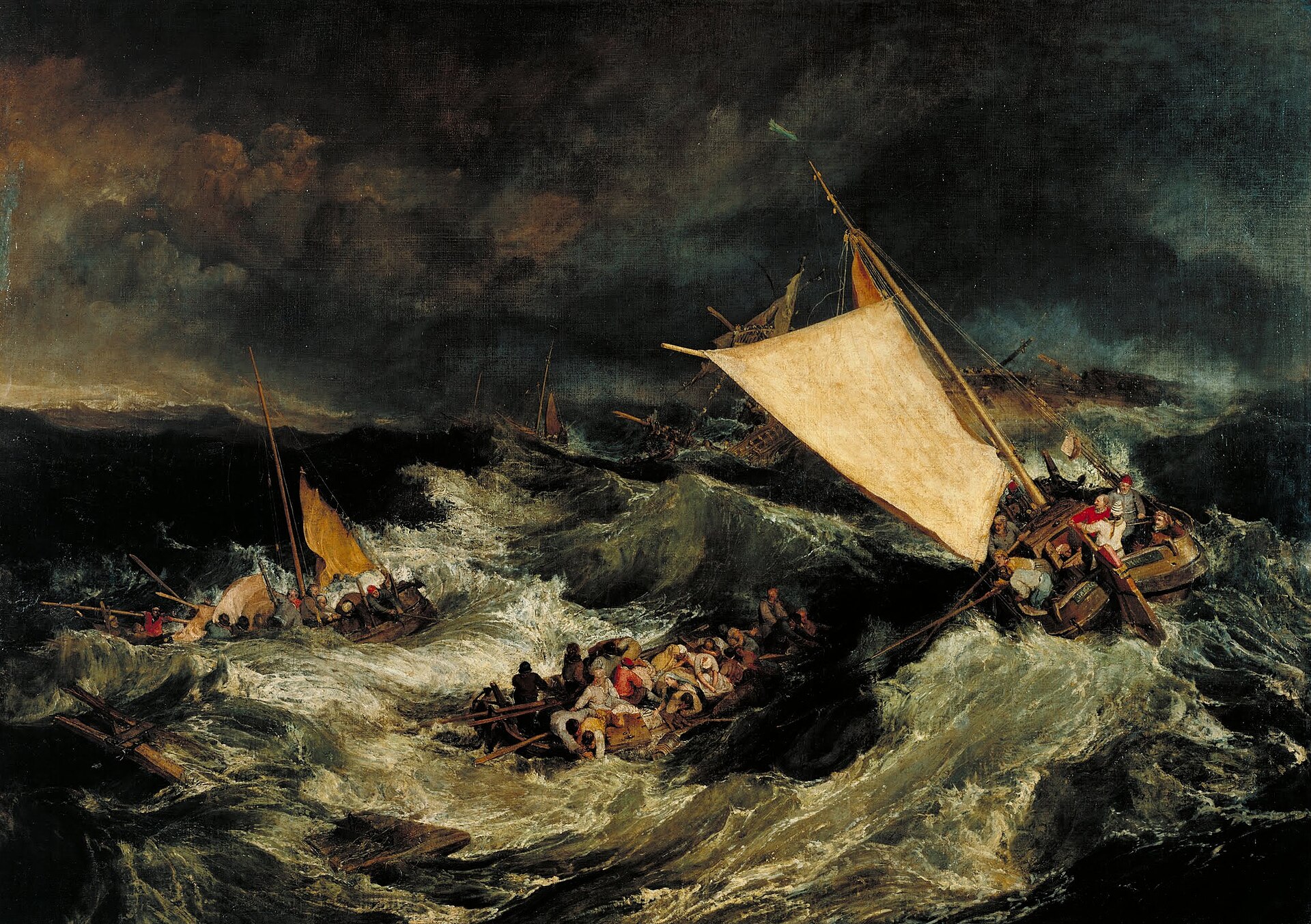
Wrecks at sea sold well, and this one got engraved as a print not long after, which is supposedly how most people at the time would have run into it rather than in any gallery.
Erisava: Nearly all of this is dark green and black, and it still comes across as loud.
The Nightmare by Henry Fuseli, 1781
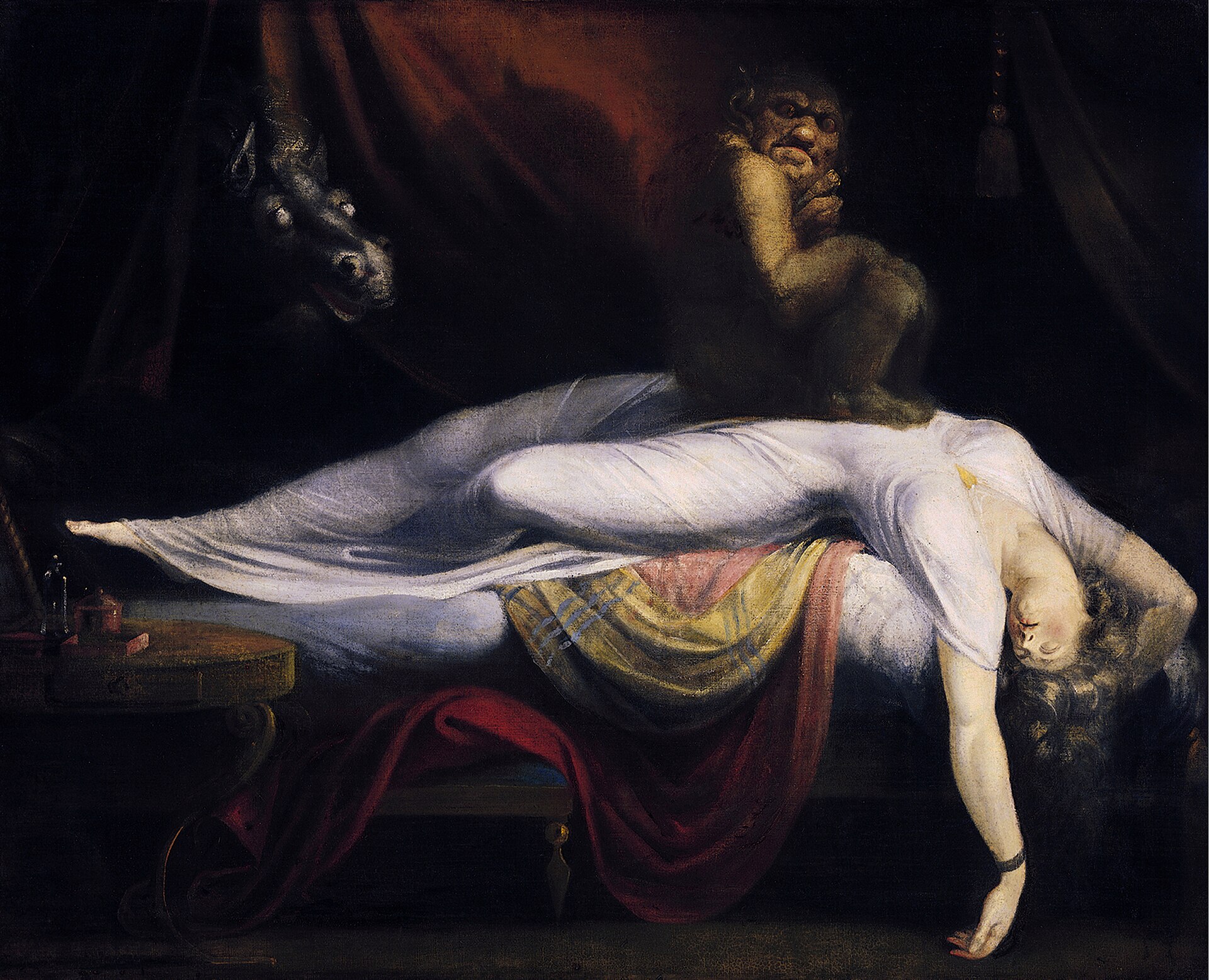
This was the one that made him, from what I've read — it caused a real stir when it first went on show, mostly because of how sexual people found it, and he painted the idea more than once afterwards. Much later people started treating it as an early go at the unconscious, decades before anyone had the vocabulary for that.
Erisava: Is this supposed to be scary, or has it tipped over into silly?
The Raft of the Medusa by Théodore Géricault, 1819
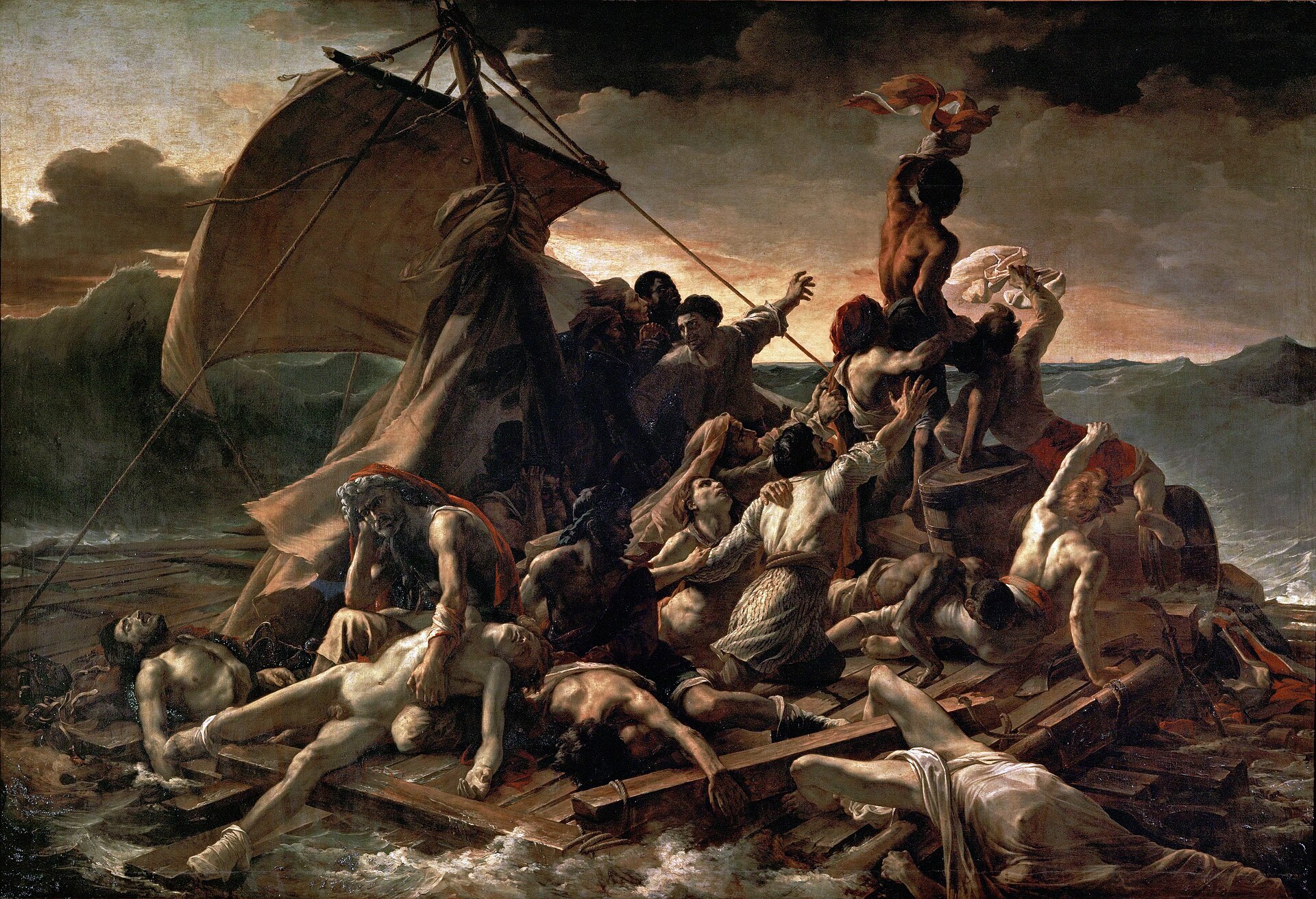
Nobody commissioned this one. It was, from what I've read, a deliberate swing at getting noticed — built out of long conversations with two men who lived through the wreck, plus a scale model of the raft set up in the studio. The disaster itself was a national scandal, mostly because the captain had got his command through connections rather than any skill at sea.
Erisava: They're meant to be starving, but everyone's built like a statue.
Liberty Leading the People by Eugène Delacroix, 1830
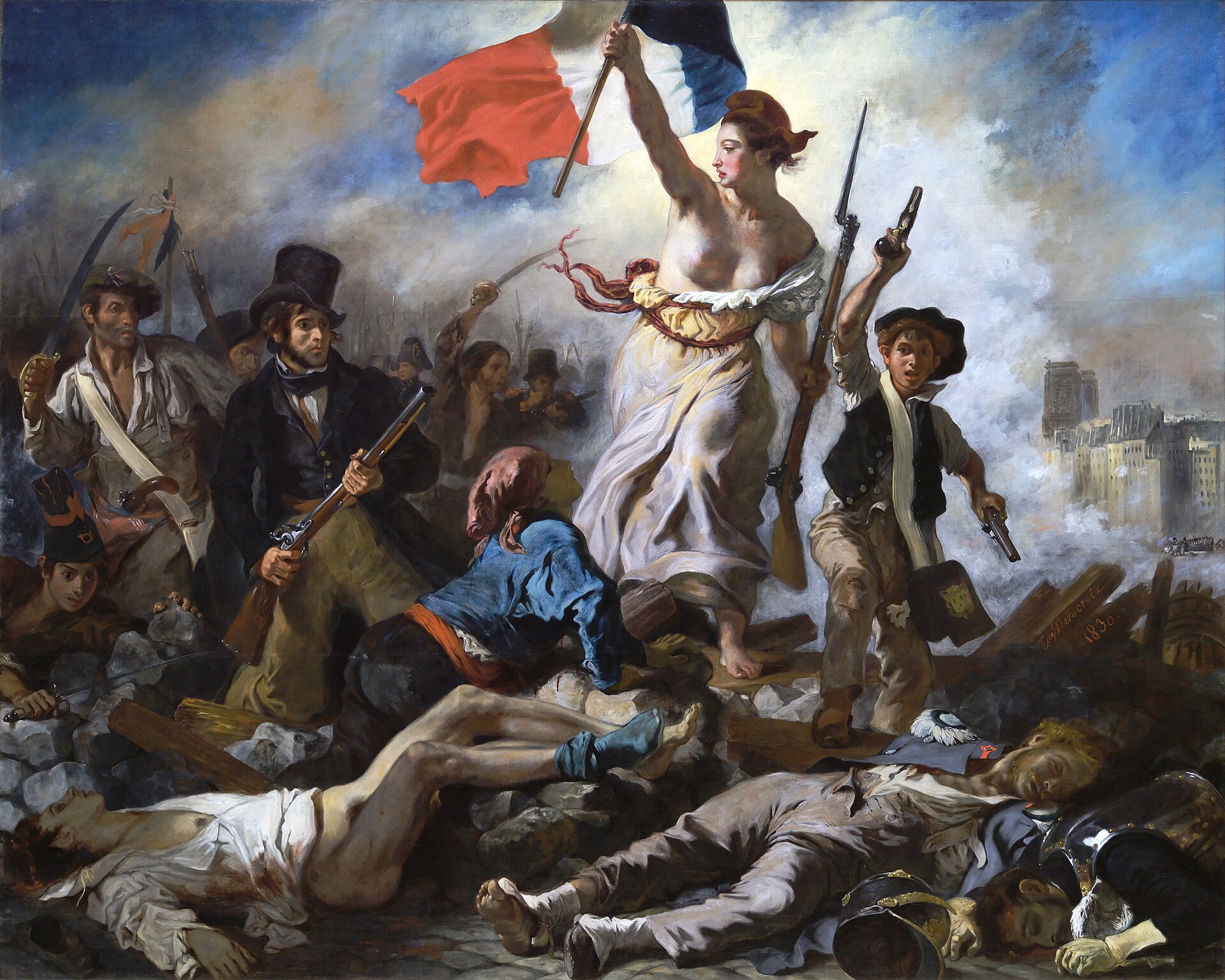
The government reportedly bought this almost right away, then kept it out of public view for years — a painting cheering on revolution apparently made the people now in charge nervous.
Erisava: Why does she look like she's from a different painting than the bodies at her feet?
The Ninth Wave by Ivan Aivazovsky, 1850
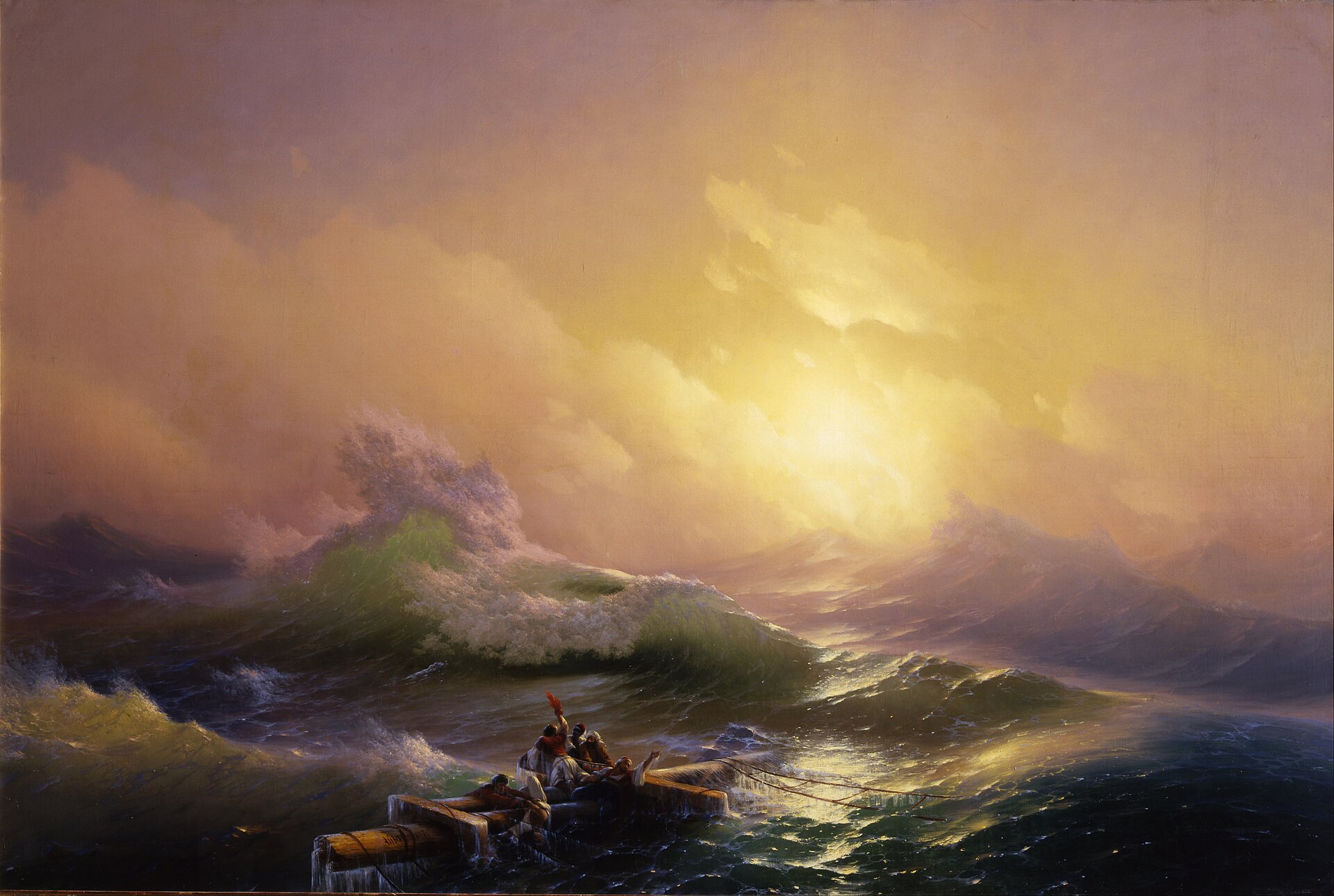
Sailors reckoned waves arrive in runs and the ninth one is the one that finishes you — supposedly that's where the name comes from. He was a navy painter by trade and, from what I've read, worked from memory in the studio rather than out in front of the water.
Erisava: Is that sky too pretty for what's happening under it?
Death of Sardanapalus by Eugène Delacroix, 1827
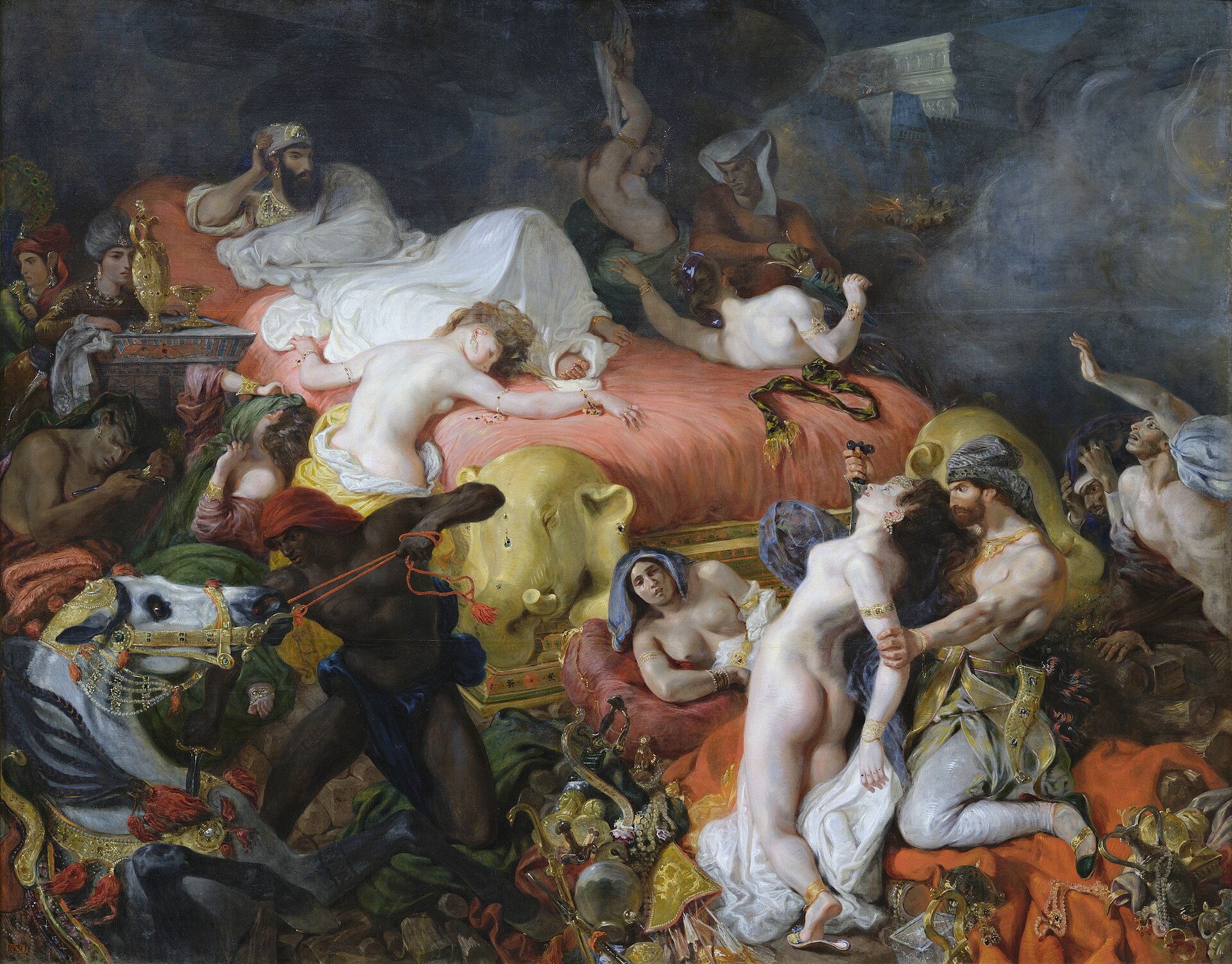
The story behind it came from a Byron play about an Assyrian king who, with defeat coming, has everything he owns destroyed in front of him rather than let anyone else have it. Apparently the critics went for it hard when it was first shown, and it did him no favours with the officials who handed out state commissions.
Erisava: This is a massacre arranged like a shop window.
The Barque of Dante by Eugène Delacroix, 1822
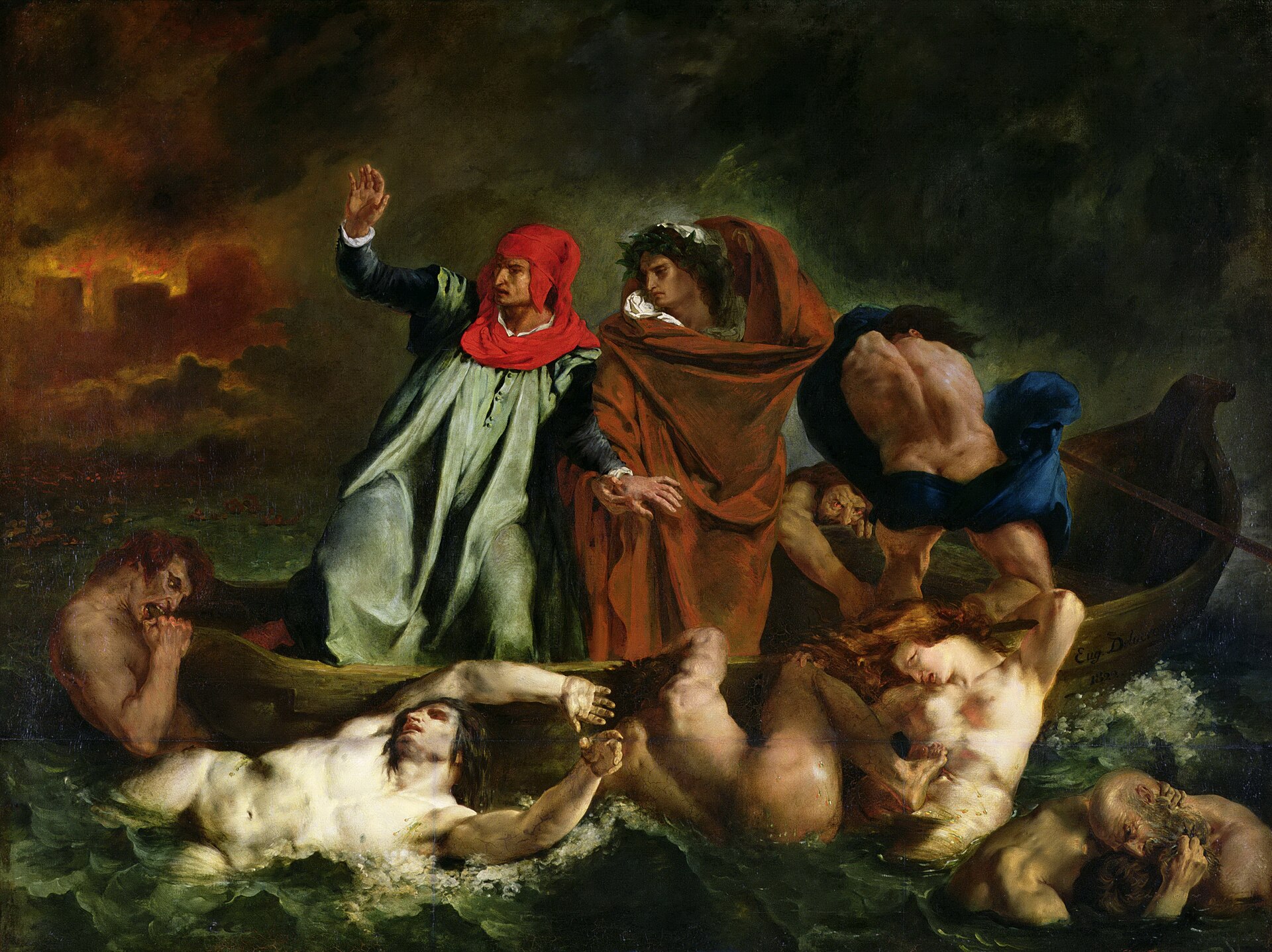
The scene comes straight out of Dante — the poet being rowed across a river in hell, steadied by his old Roman guide, while the drowned try to climb aboard. From what I've read it was the first big thing he ever showed in public, and it more or less made his name on the spot.
Erisava: The skin looks wetter than the water it's actually in.
The Third of May 1808 by Francisco Goya, 1814
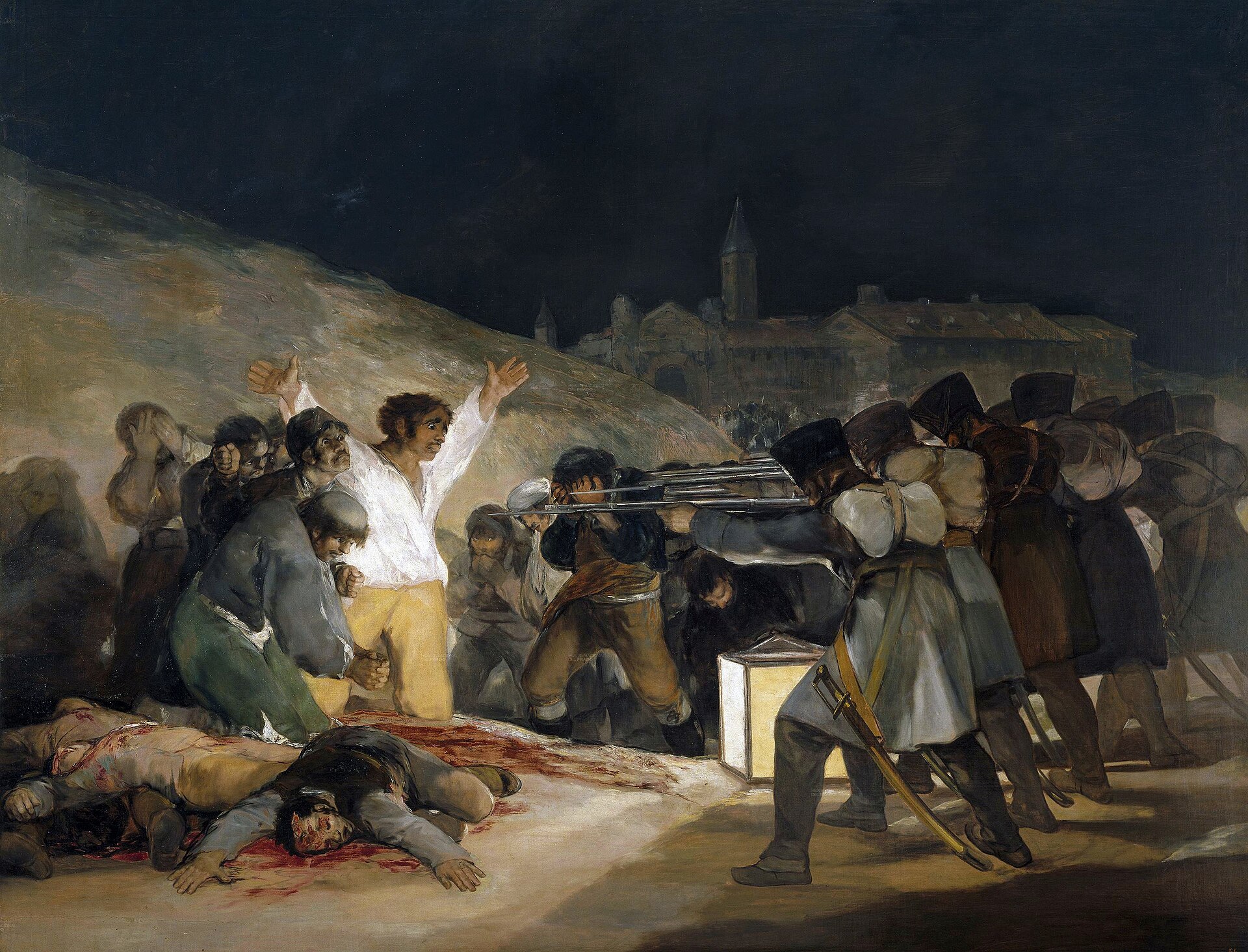
It was made to order, from what I've read — he put the idea to the new government himself once the French had been pushed back out of Madrid, and got it paid for. There's a companion picture the same size showing the day before, when the fighting started.
Erisava: That lantern is the only light in the whole thing, and it's aimed like a spotlight.
Wanderer above the Sea of Fog by Caspar David Friedrich, 1818
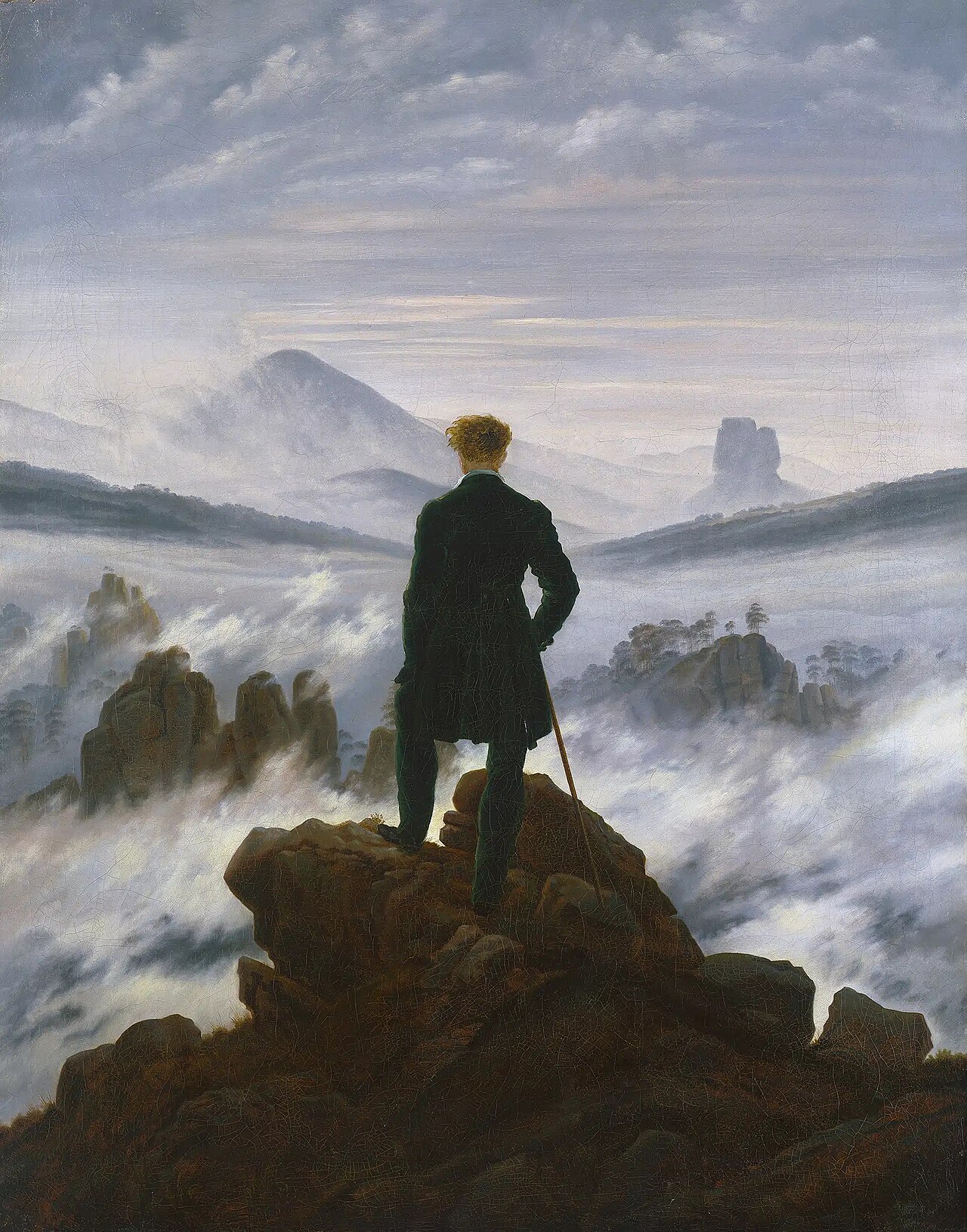
No one seems fully sure who the man is supposed to be — some accounts say a friend, others think he's simply invented to give the scene someone to stand in for. Paintings like this get filed under Romanticism, when nature itself started getting treated as something close to religious.
Erisava: What does a guy dressed up and everything doing up there?
Two men contemplating the Moon by Caspar David Friedrich, 1819
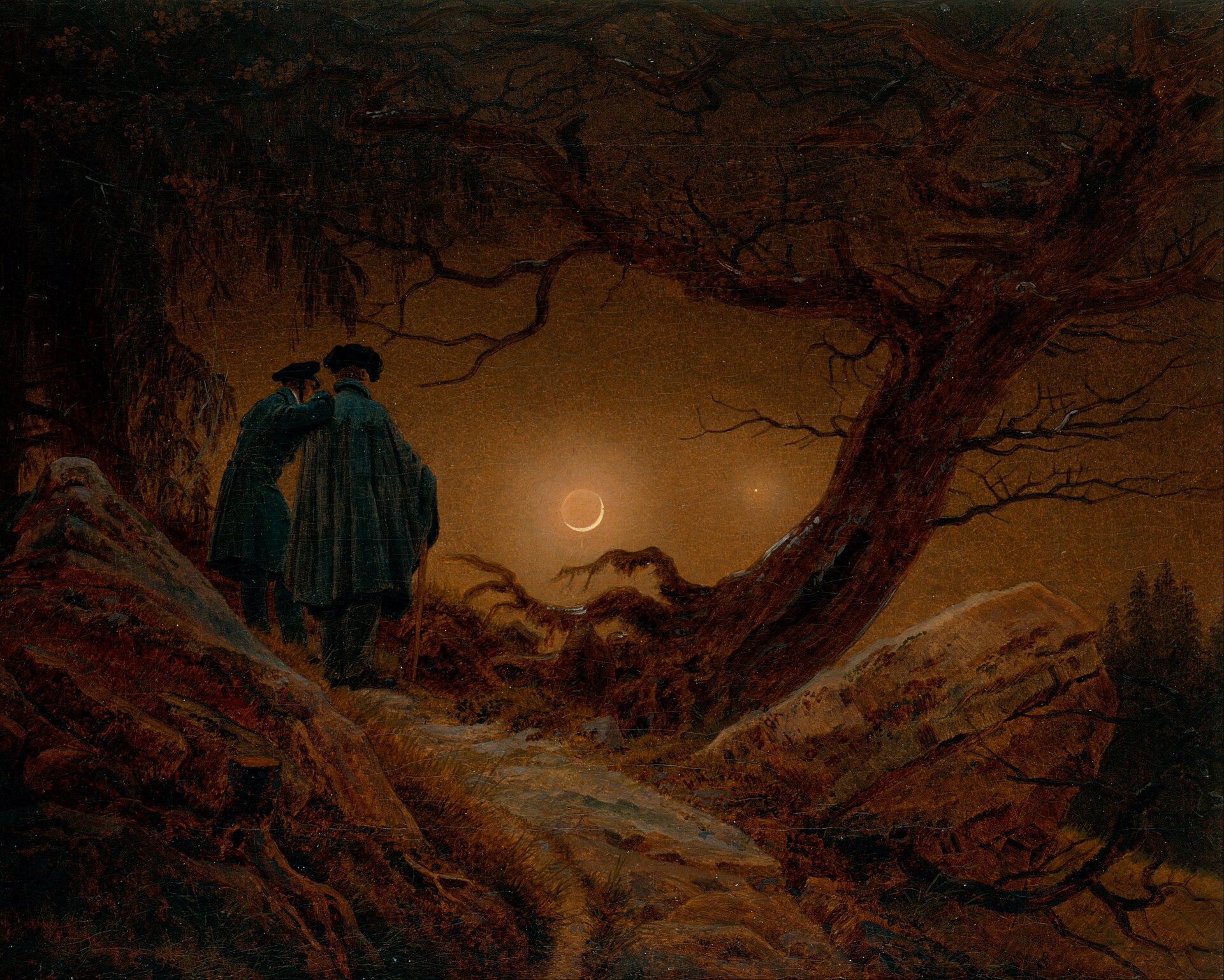
He painted this same set-up at least three times, from what I can find, swapping a woman in for one of the men in a later go. There's a story that he looked at the two of them in their old-fashioned German coats and said they were up to demagogic intrigues — supposedly a joke about how that kind of dress had become politically suspect to the authorities at the time.
Erisava: Is it meant to be this dark, or has the whole thing just gone brown?
Shipwreck by Ivan Aivazovsky, 1843
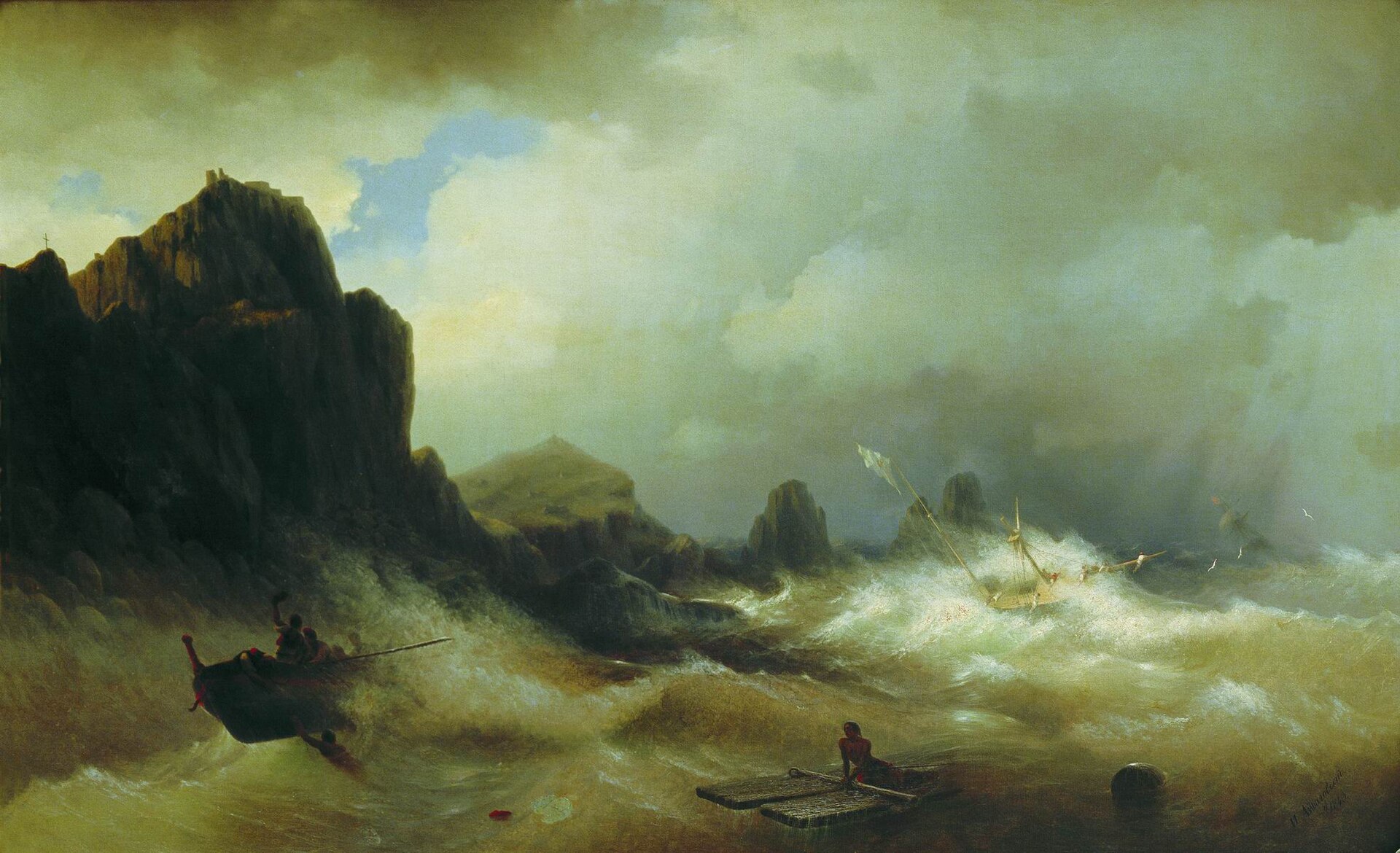
Feodosia National Gallery I. K. Aivazovsky · wikidata.org
Public domain
Supposedly he painted the sea from memory indoors rather than out in front of it, and turned out thousands over a lifetime — storms and wrecks by the dozen, selling about as fast as he could make them.
Erisava: Everything's gone the same murky yellow — the sea, the sky, the lot of it.
The Great Red Dragon and the Woman Clothed with the Sun by William Blake, 1805
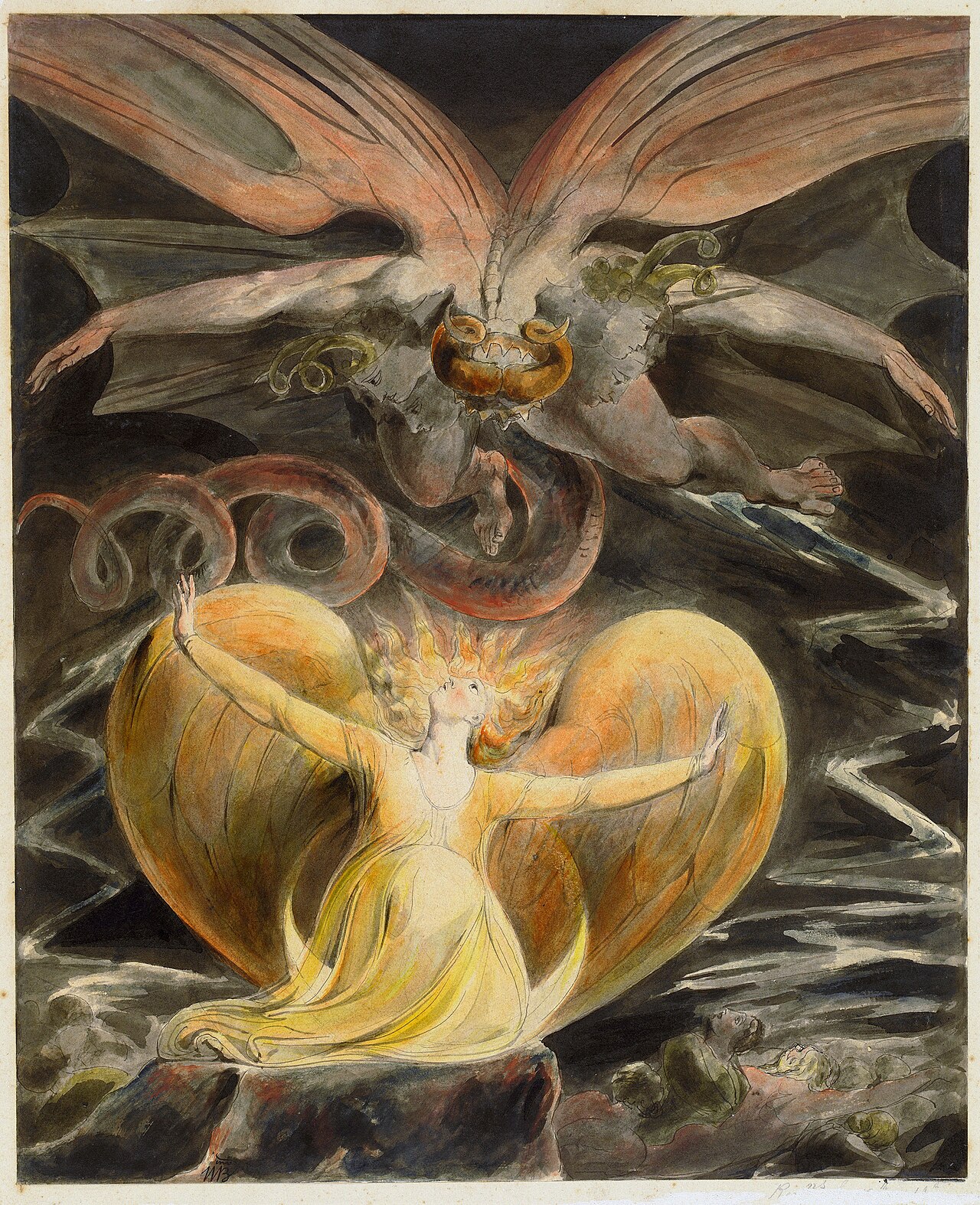
This was one of over a hundred Bible scenes his patron, Thomas Butts, paid him to paint — Revelation chapter twelve, if you want the reference.
Erisava: Is the dragon actually about to grab her, or just hovering there?