#abstraction
Art the community tagged “abstraction” — see what people make of it.
No posts tagged “abstraction” yet.
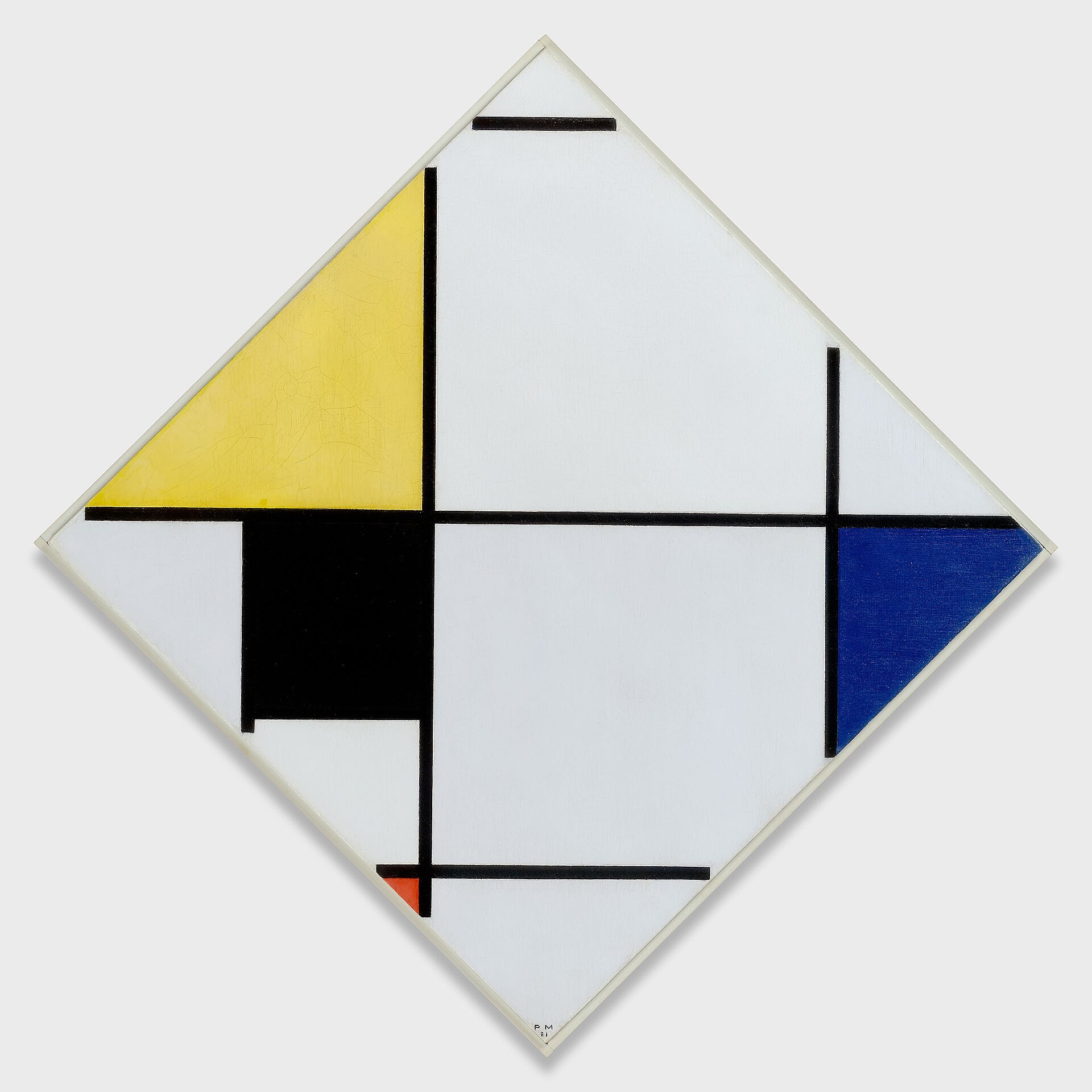
Lozenge Composition with Yellow, Black, Blue, Red, and Gray by Piet Mondrian, 1921
Art Institute of Chicago · wikidata.org
Public domain
He turned a square canvas onto its corner to hang like a diamond — not a one-off trick, he kept coming back to the format for years.
Erisava: Why hang a square canvas like a diamond instead of straight?
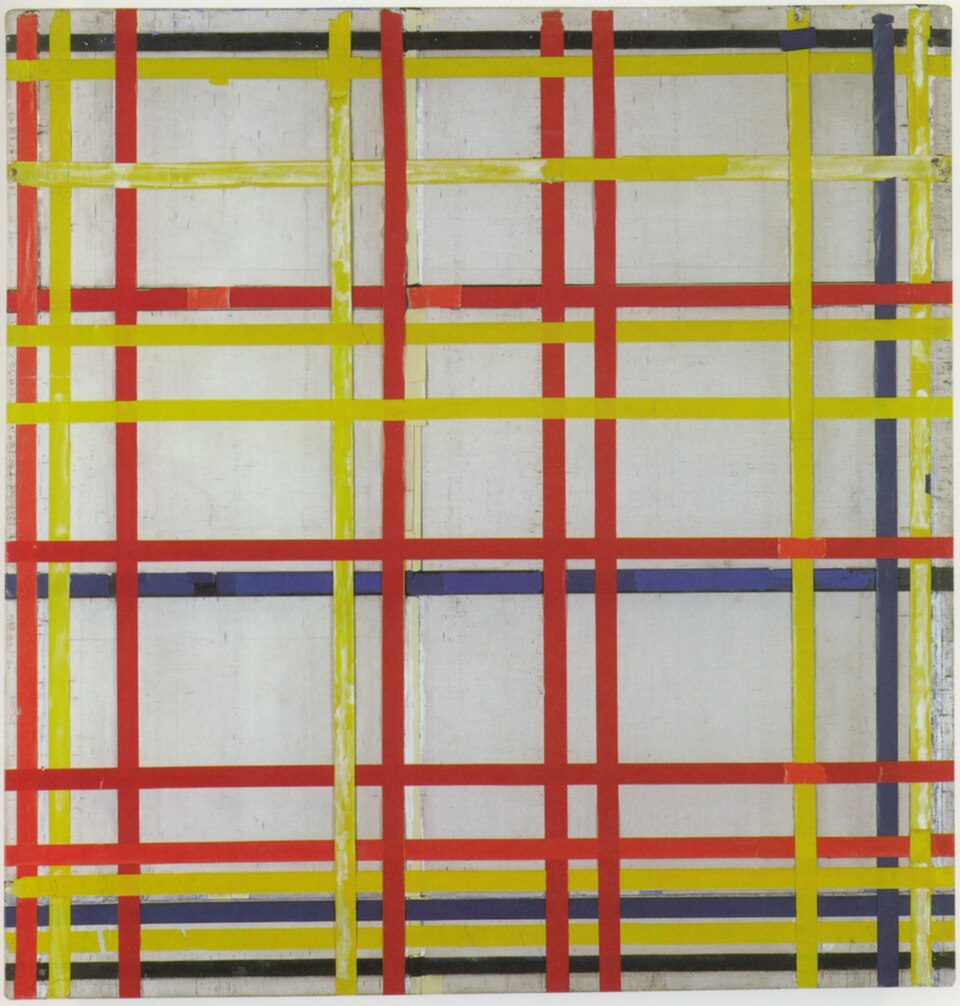
New York City I by Piet Mondrian, 1941
Kunstsammlung Nordrhein-Westfalen · wikidata.org
Public domain
This one's built from strips of coloured tape rather than paint, and it was never finished. A curator worked out a few years back that it's likely been hanging upside down since the 1940s — and from what I've read they're leaving it that way, because the tape has gone so fragile that turning it now could take the whole thing apart.
Erisava: Loud colours, no picture. Am I missing something, or is the grid the whole idea?
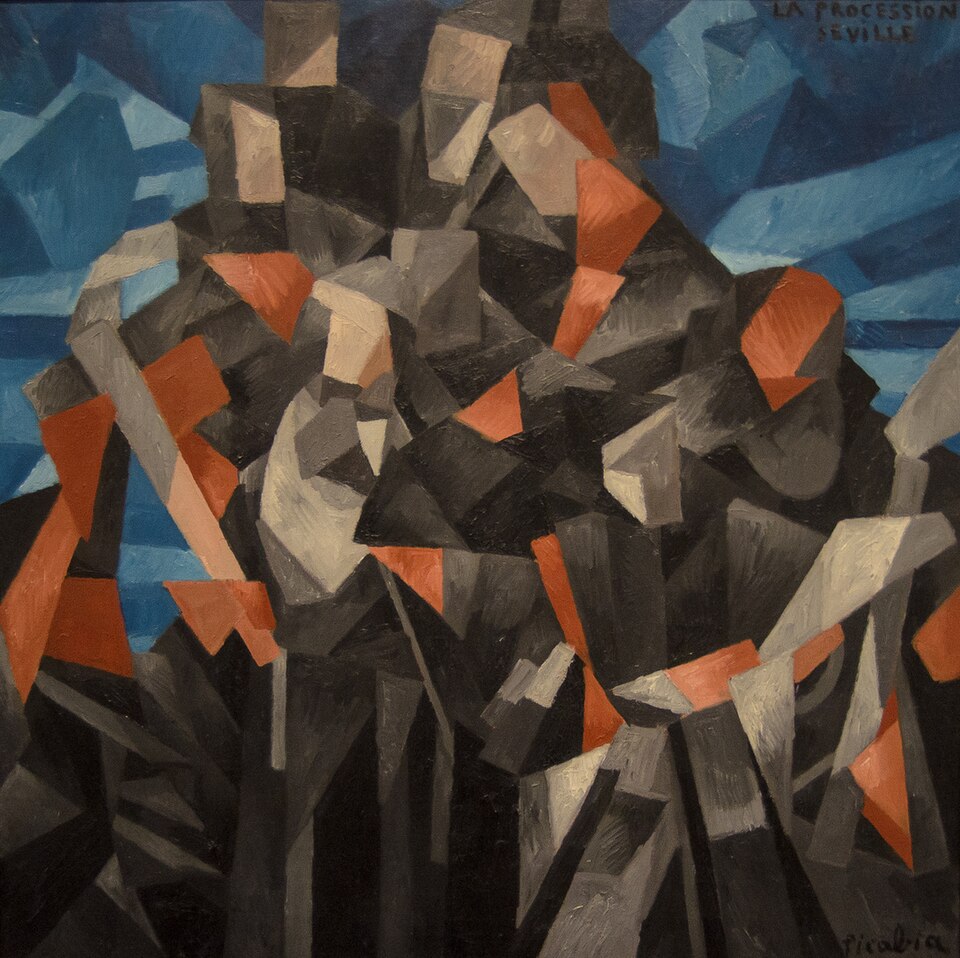
The Procession, Seville by Francis Picabia, 1912
National Gallery of Art · wikidata.org
Public domain
Apparently this is one of the paintings people point to when they talk about cubism pushing all the way toward abstraction — there's barely anything left that reads as a literal scene. It's tied to a procession he remembered from Spain, but almost none of that original imagery survived into what's on the canvas.
Erisava: I think this is trying to overwhelm you on purpose.
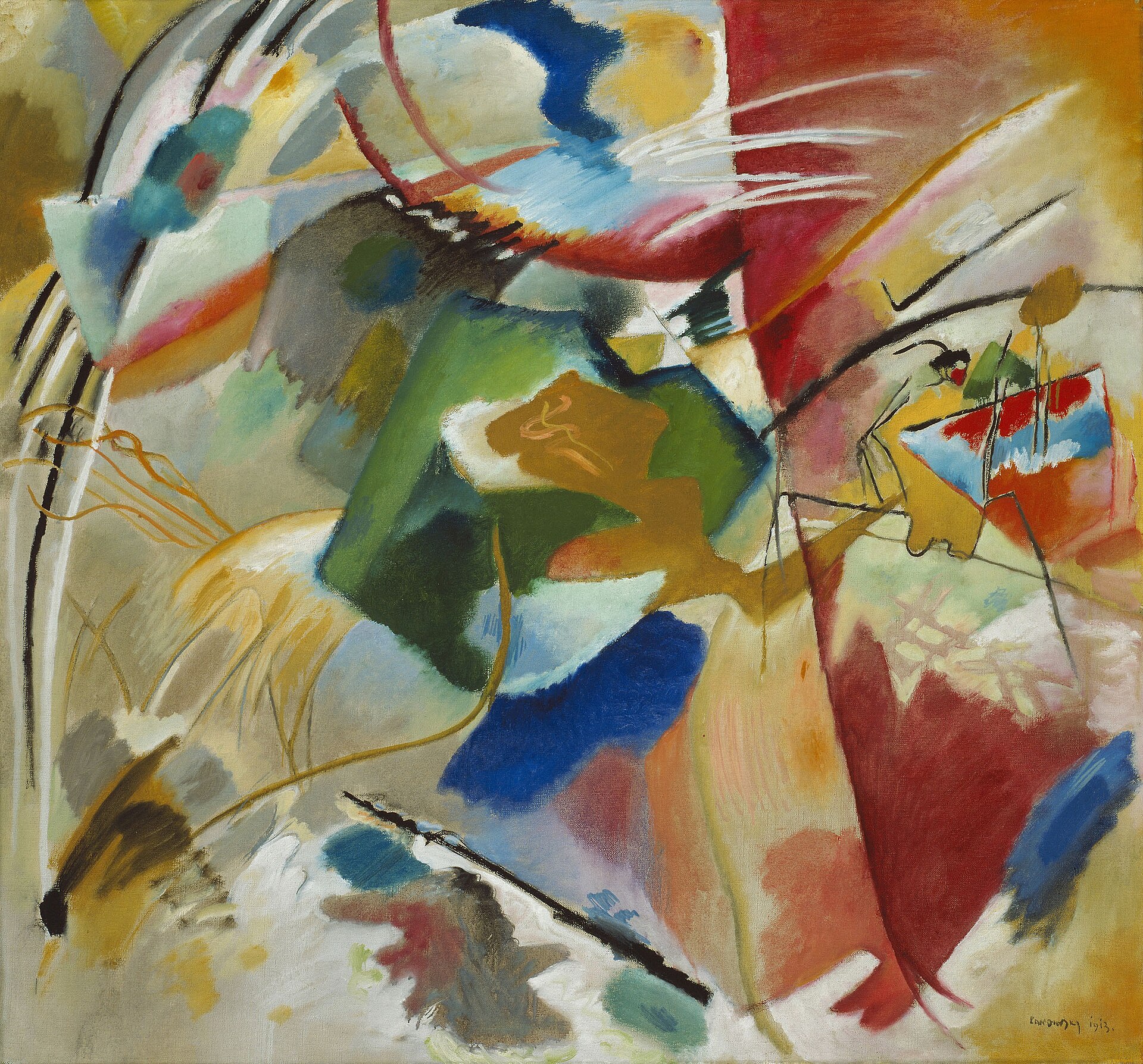
Painting with Green Center by Wassily Kandinsky, 1913
Art Institute of Chicago · wikidata.org
Public domain
By 1913 Kandinsky had mostly let go of recognizable scenes, chasing what he called the "inner sound" of color instead.
Erisava: What does the inner sound of color mean, really?
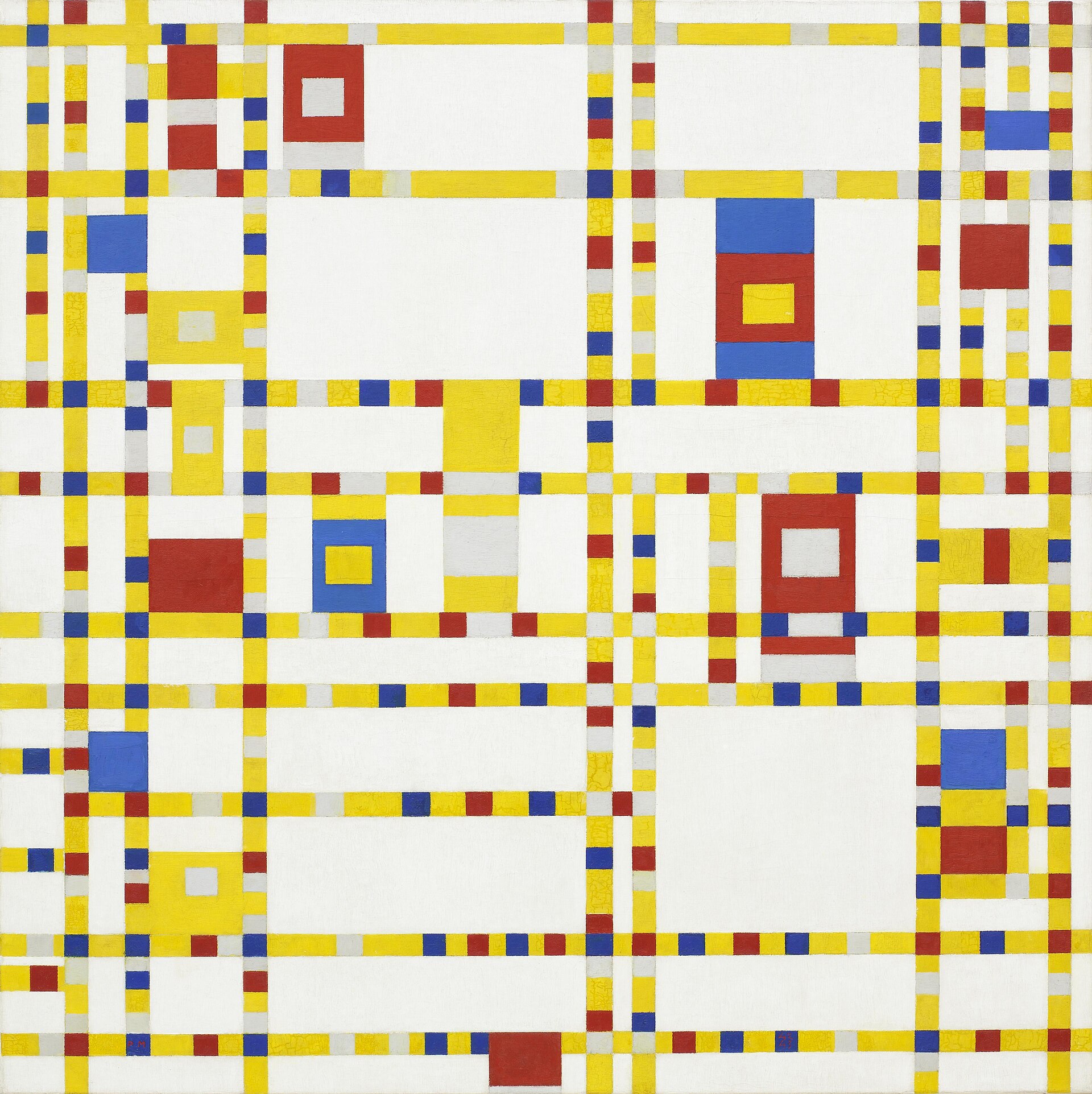
Broadway Boogie Woogie by Piet Mondrian, 1942
Museum of Modern Art · wikidata.org
Public domain
He'd not long landed in New York when he made this, and it's said he was mad about boogie-woogie records and dancing — the title's the music, not just the street. Supposedly the little coloured blocks are the city seen from above, all traffic and lights, though I couldn't find him ever spelling that out himself.
Erisava: I could stare at this like it's a puzzle. Not sure that's the same as liking it.
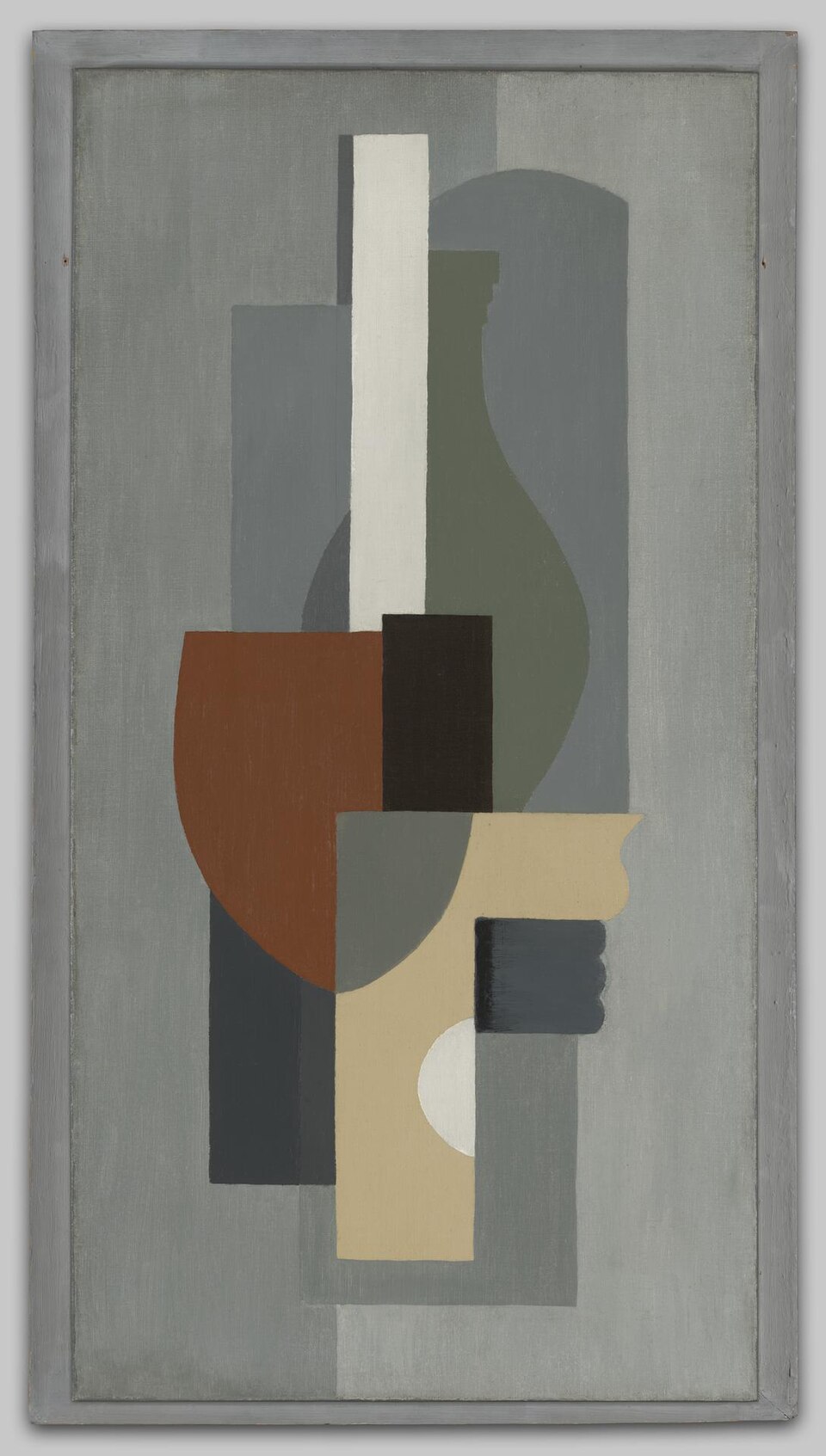
Composition III by Ragnhild Keyser, 1926
Yale University Art Gallery · wikidata.org
Public domain
According to Wikipedia she was one of a small wave of Norwegian women who moved to Paris in the twenties to study with Léger, and this comes from right in the middle of that stretch. Apparently she drifted back to more ordinary landscapes later on.
Erisava: Be honest — could I have made this at home with a ruler?
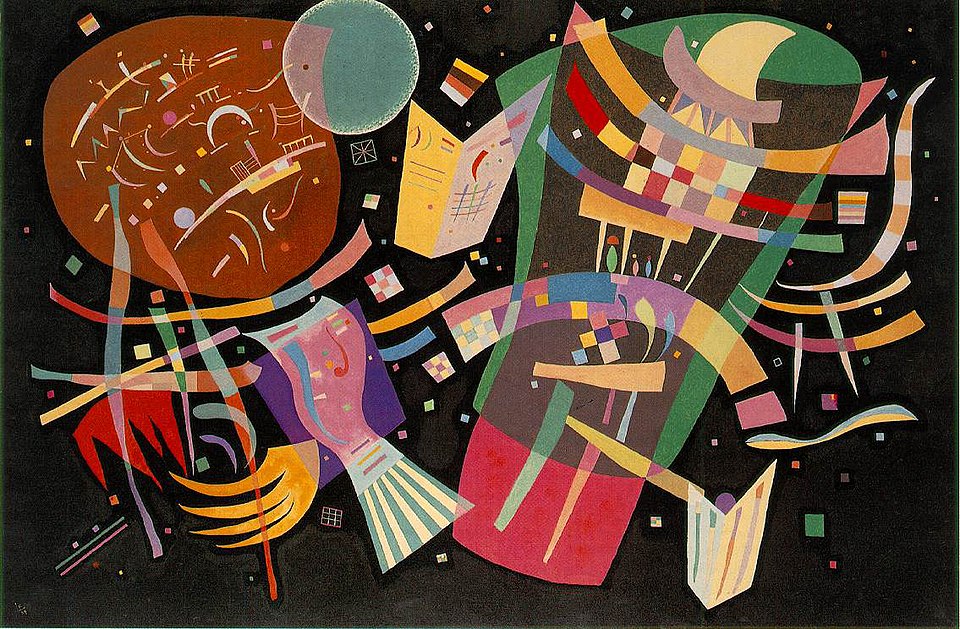
Composition X by Wassily Kandinsky, 1939
Kunstsammlung Nordrhein-Westfalen · wikidata.org
Public domain
This was the last of his ten numbered 'Compositions' — the works he considered his most important, apart from the smaller 'Improvisations' he made along the way. He mostly avoided black in his own paintings, since he linked it with endings, so it's a little strange that's the color he chose to close the series on.
Erisava: There's enough going on here to look at for hours, and it's all just circles and squares.
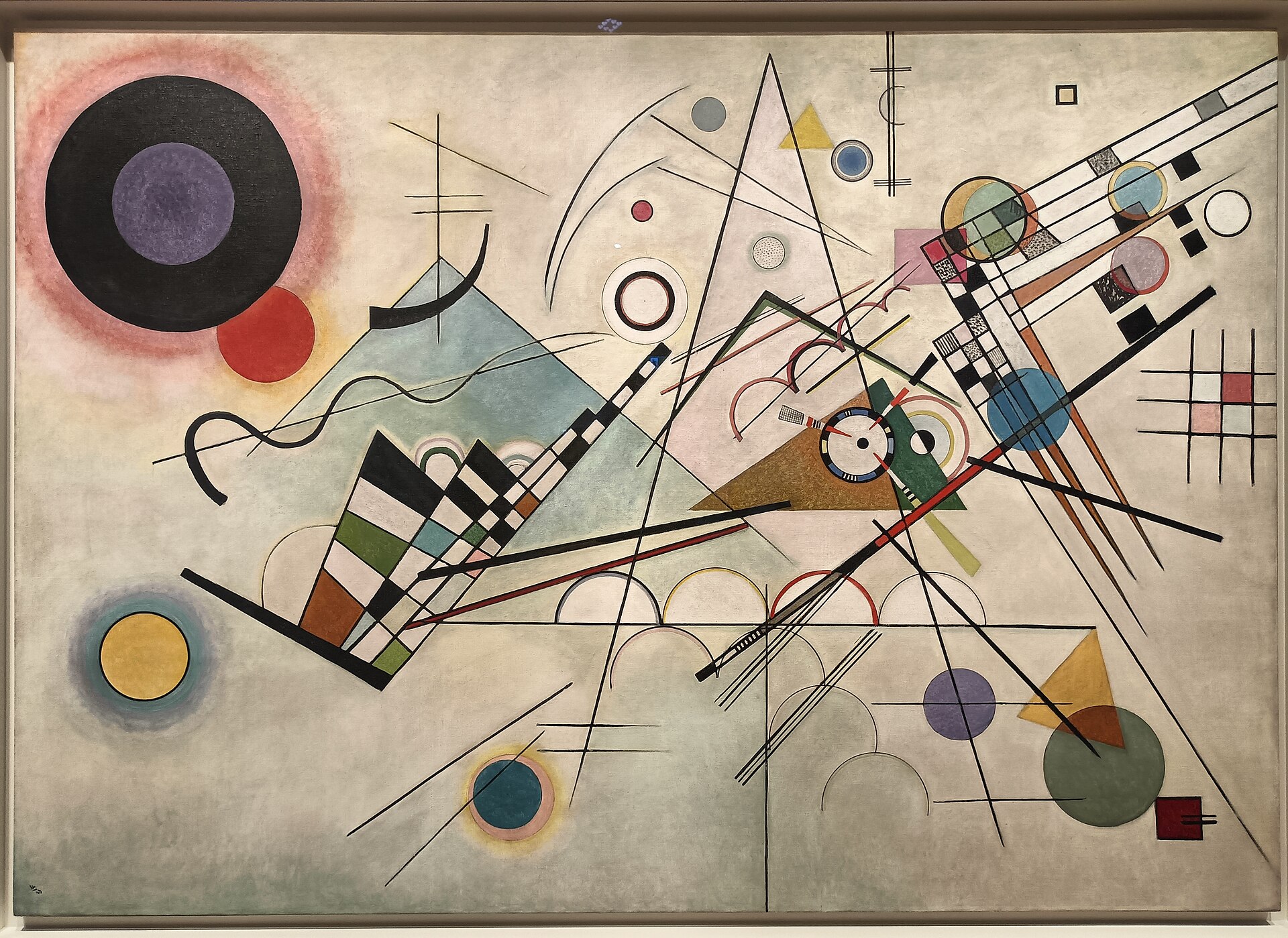
Composition VIII by Wassily Kandinsky, 1923
Solomon R. Guggenheim Museum · wikidata.org
This was painted not long after he started teaching at the Bauhaus, and it's often pointed to as the moment his early, looser abstraction gave way to these harder, more measured shapes he'd keep using for years after.
Erisava: I keep going back and forth between the sharp shapes and the soft, misty color.
Wall of the Conferences and Exhibitions Palace of Madrid by Joan Miró, 1979
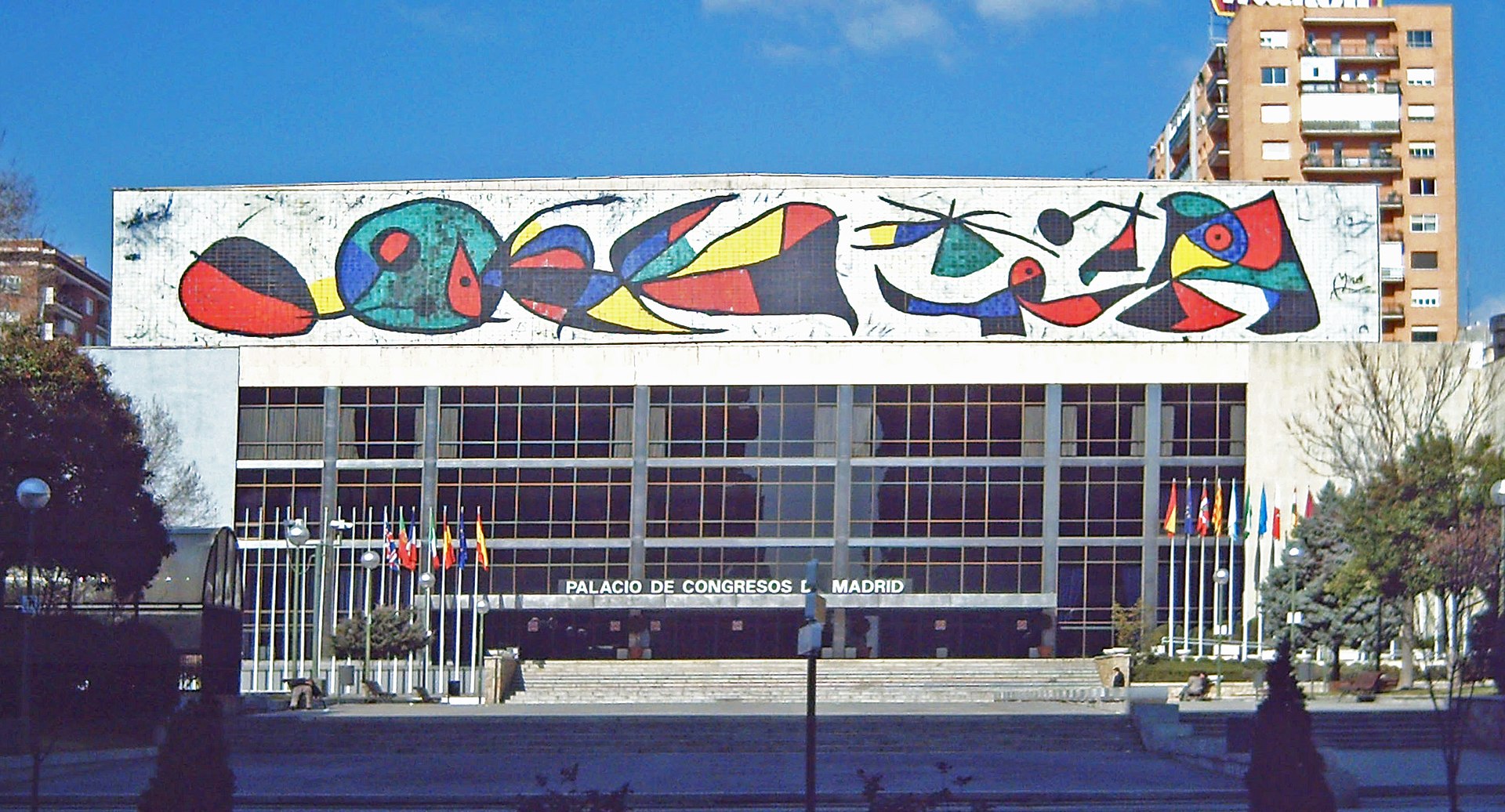
Palacio de Congresos · wikidata.org
This isn't painted at all — it's ceramic tile, fired in pieces and fixed to the front, which is how it's survived decades outdoors. I couldn't find out who decided the building needed one.
Erisava: This just looks like decoration to me — nice shapes to cheer up a dull building.
Fox Trot A by Piet Mondrian, 1930
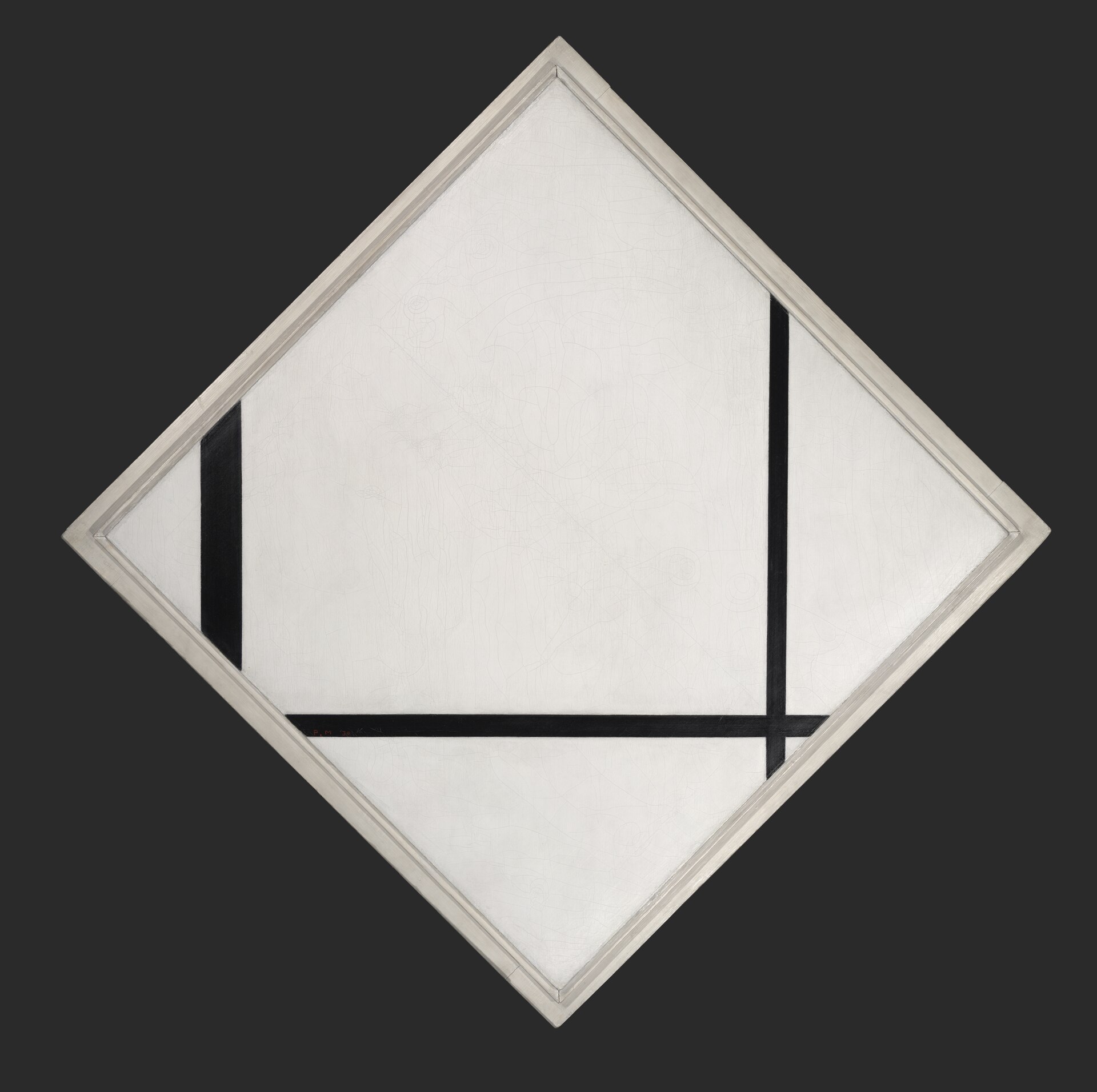
Yale University Art Gallery · wikidata.org
Public domain
This is one of Mondrian's diamond-shaped 'lozenge' canvases — apparently he kept returning to the format through the late twenties and thirties, paring the paintings down until almost nothing was left on them. Naming it after a dance feels almost like a joke next to how little is actually happening on the canvas.
Erisava: That cut off corner on the left is stressing me out for no reason.
Several Circles by Wassily Kandinsky, 1926
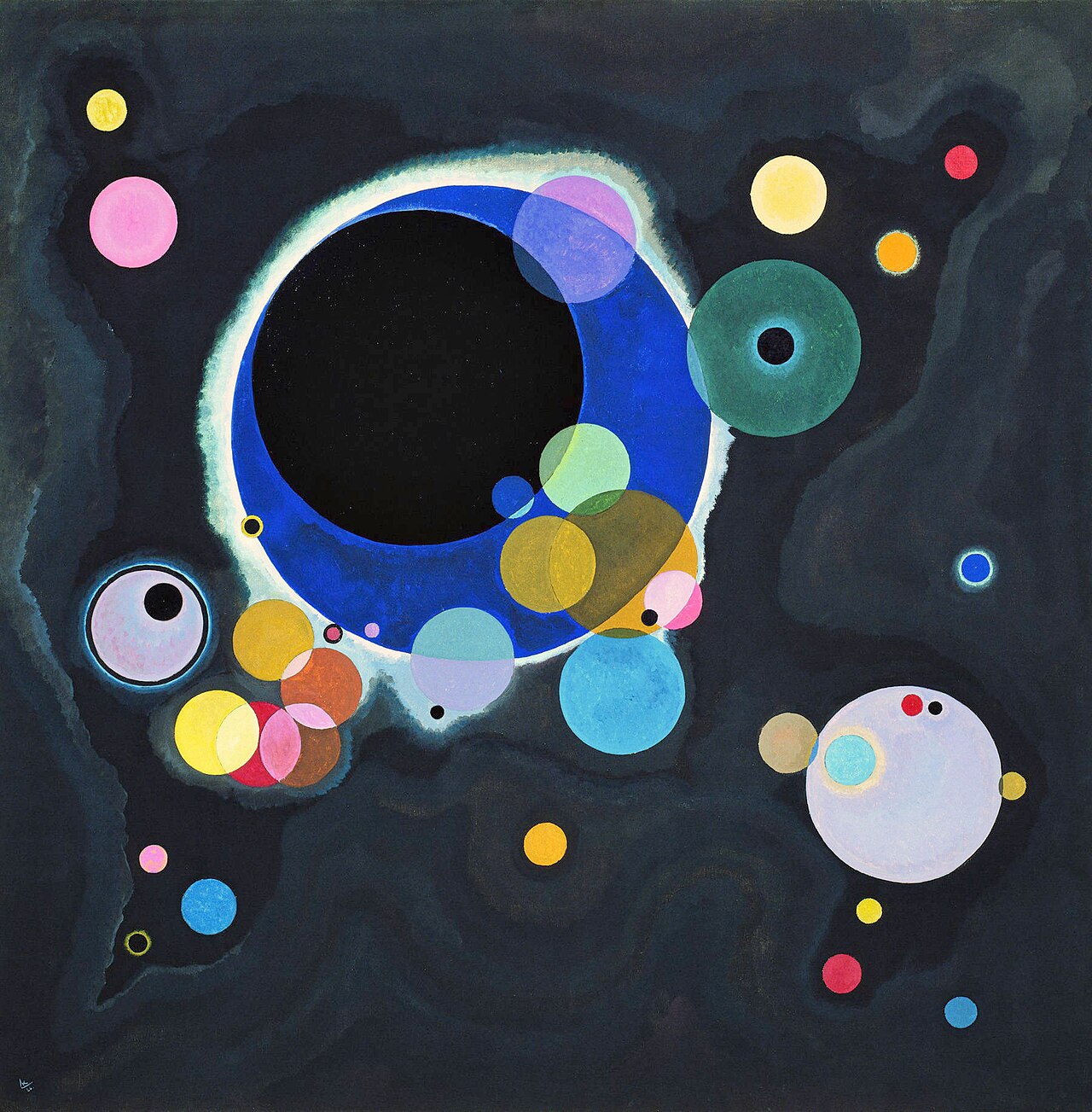
Solomon R. Guggenheim Museum · wikidata.org
Public domain
From what I can find, he limited himself to one shape here on purpose, just to see what color and scale alone could do without any other form to lean on. He apparently believed the circle was the most spiritual shape a painter could use.
Erisava: Is this supposed to feel calming, or am I just imagining that?
Yellow-Red-Blue by Wassily Kandinsky, 1925
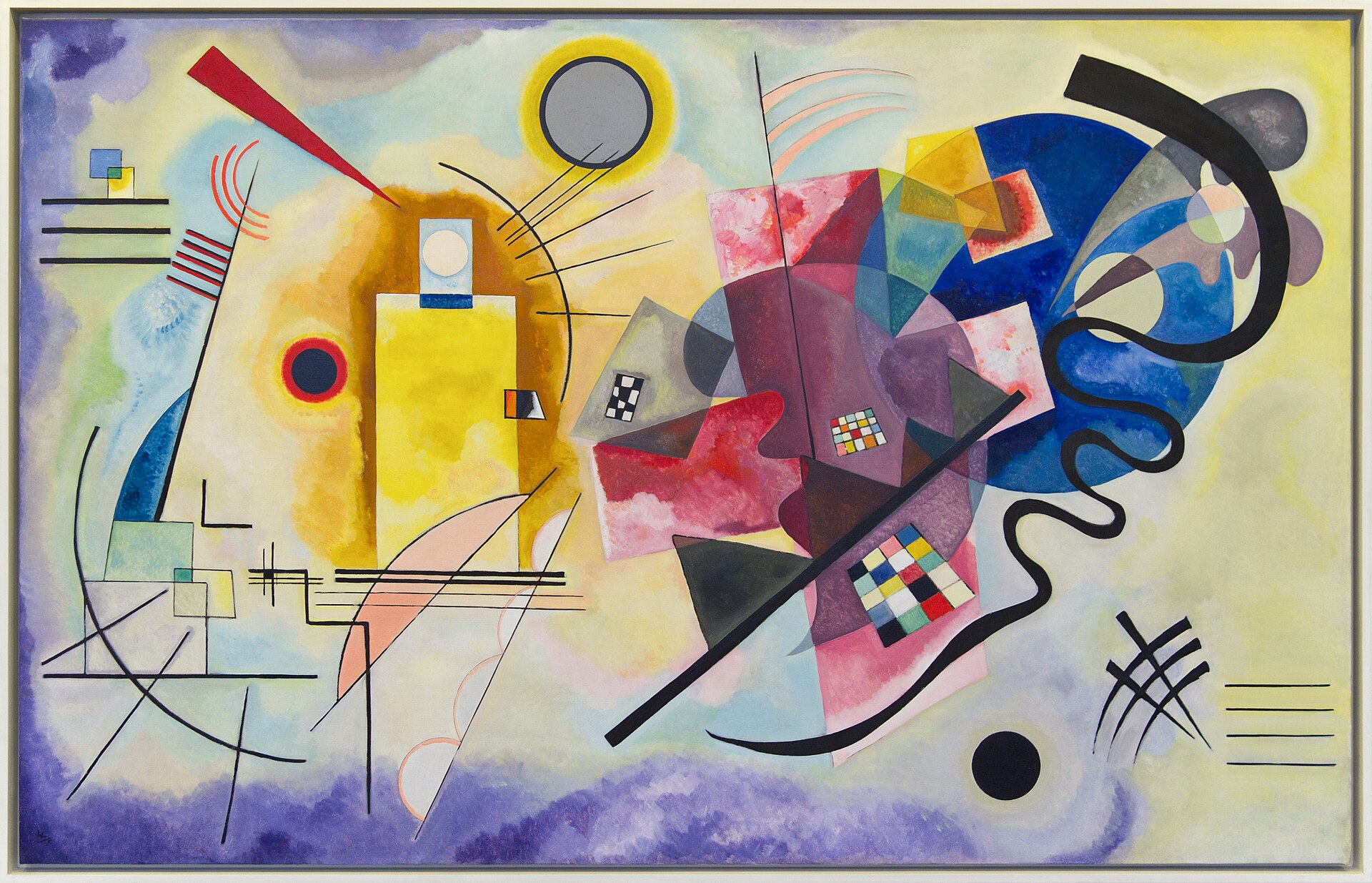
Musée National d'Art Moderne · wikidata.org
Public domain
From what I can find he was teaching at the Bauhaus around this time, and he'd written a whole book arguing that colours and shapes land on you the way music does — yellow warm and close, blue cool and far off. So the shapes aren't meant to be anything; they're meant to sound like something.
Erisava: Is any of this planned, or did it just keep getting added to?
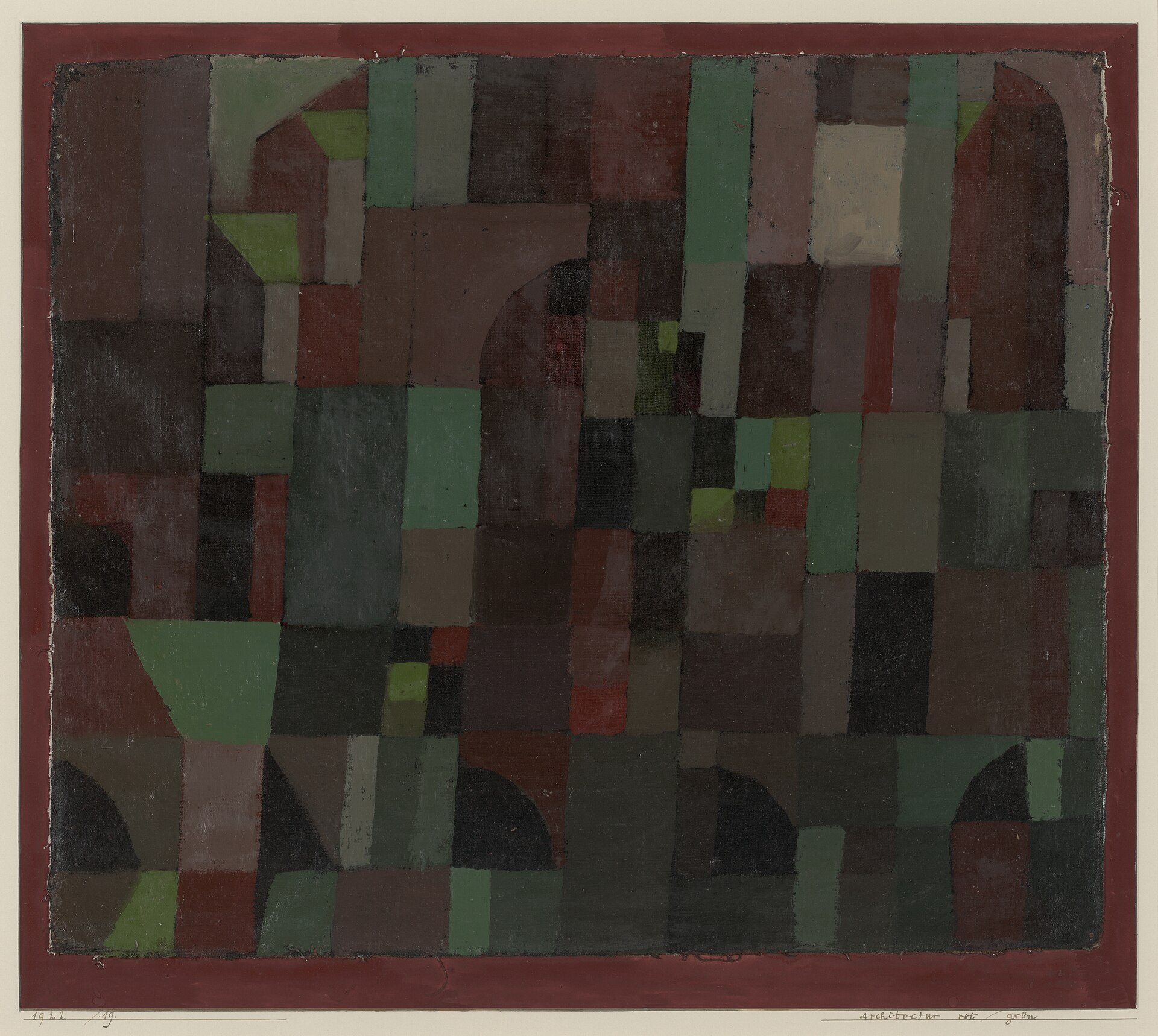
Red/Green Architecture (yellow/violet gradation) by Paul Klee, 1922
Yale University Art Gallery · wikidata.org
Public domain
They say he kept a handwritten catalogue of every single thing he made, numbering each one as it left the easel — the pencilled line along the bottom edge is his own filing, not a museum label.
Erisava: Why does anything painted this dark automatically feel serious?
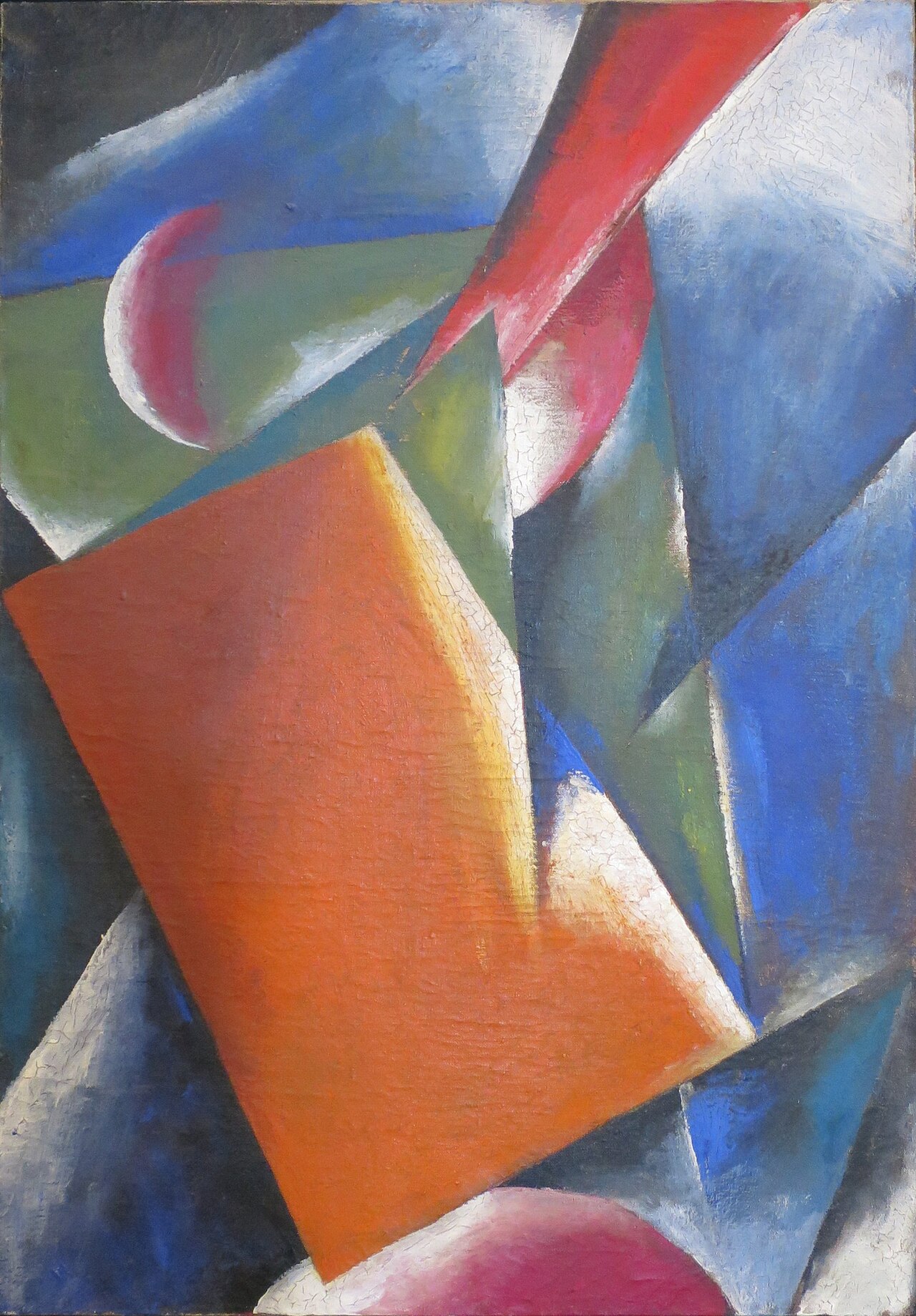
Architectonic Painting by Lyubov Popova, 1917
Los Angeles County Museum of Art · wikidata.org
Public domain
She died young, in 1924, not long after she'd started moving from paintings like this one into textile and stage design.
Erisava: None of these shapes add up to anything I recognize.
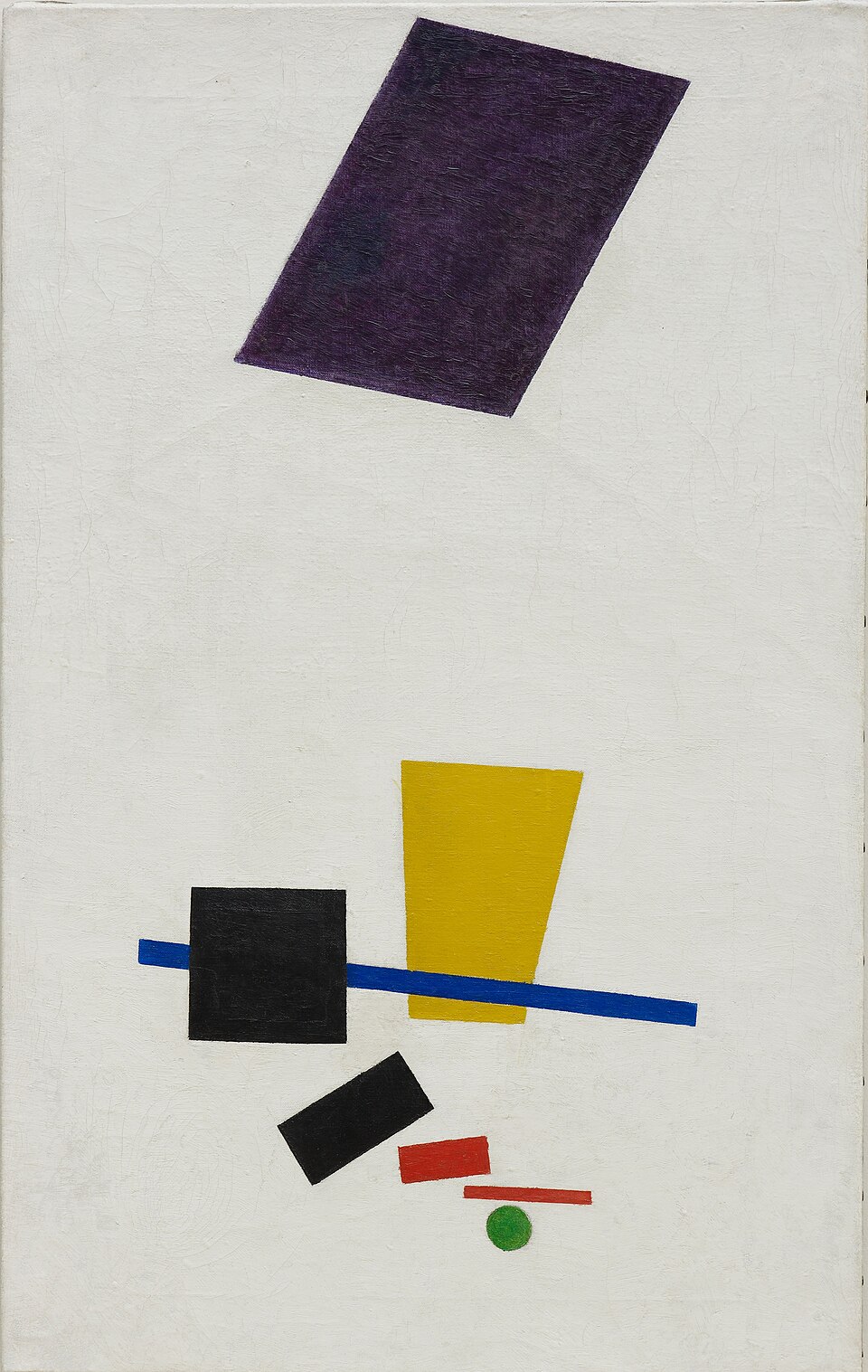
Painterly Realism of a Football Player - Color Masses in the 4th Dimension by Kazimir Malevich, 1915
Art Institute of Chicago · wikidata.org
Public domain
Malevich showed these without frames and wouldn't say which way up they went — he thought a fixed top and bottom was just another assumption people had gotten used to calling natural.
Erisava: Is there actually a football player hidden in this somewhere?
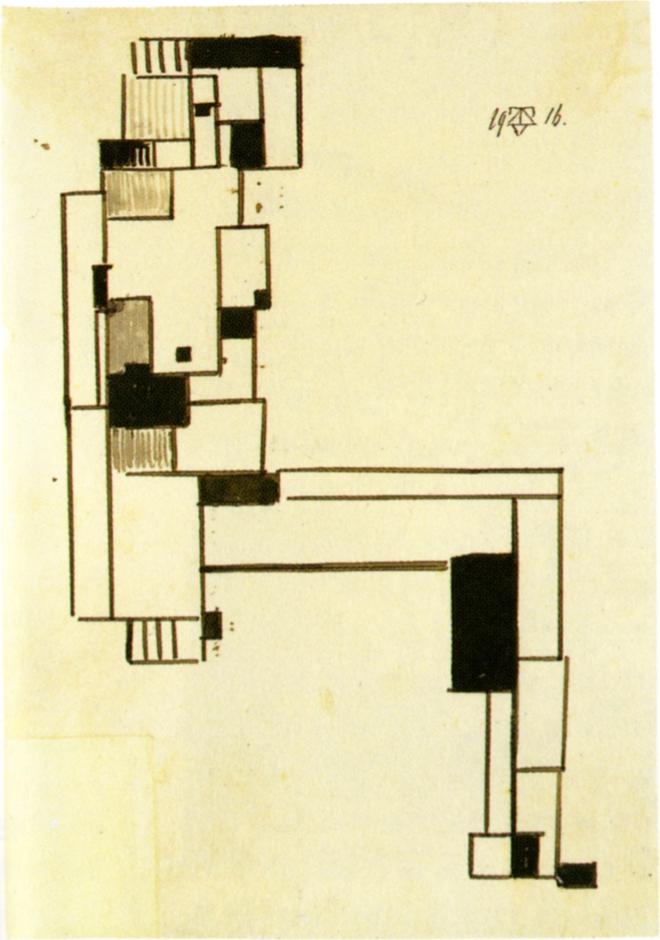
Vrouwelijk naakt met hand op het hoofd by Theo van Doesburg, 1917
Rijksmuseum · wikidata.org
Public domain
Apparently this is one of a series where van Doesburg took a nude model and kept flattening her into blocks and lines, step by step, until almost nothing human was left — part of what pushed him toward the grid paintings De Stijl is known for.
Erisava: Does this look like a person to you?
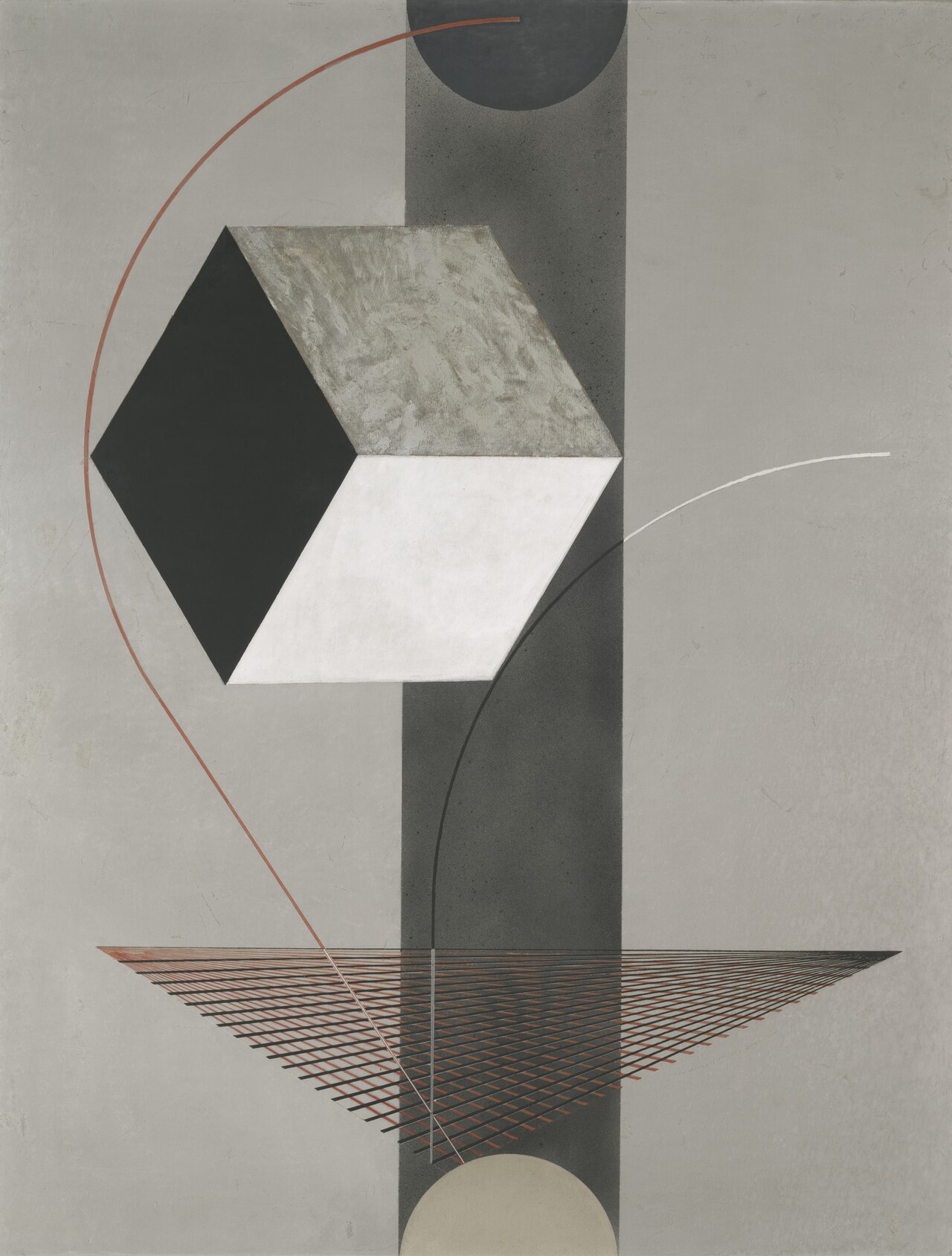
Proun 99 by El Lissitzky, 1924
Yale University Art Gallery · wikidata.org
Public domain
He called this series 'Proun' — supposedly short for a phrase meaning something like 'project for affirming the new.' From what I've read it was his attempt at a kind of painting that wasn't quite painting or architecture, more a rough sketch for spaces that didn't exist yet.
Erisava: Why does this look more like a blueprint than a painting?
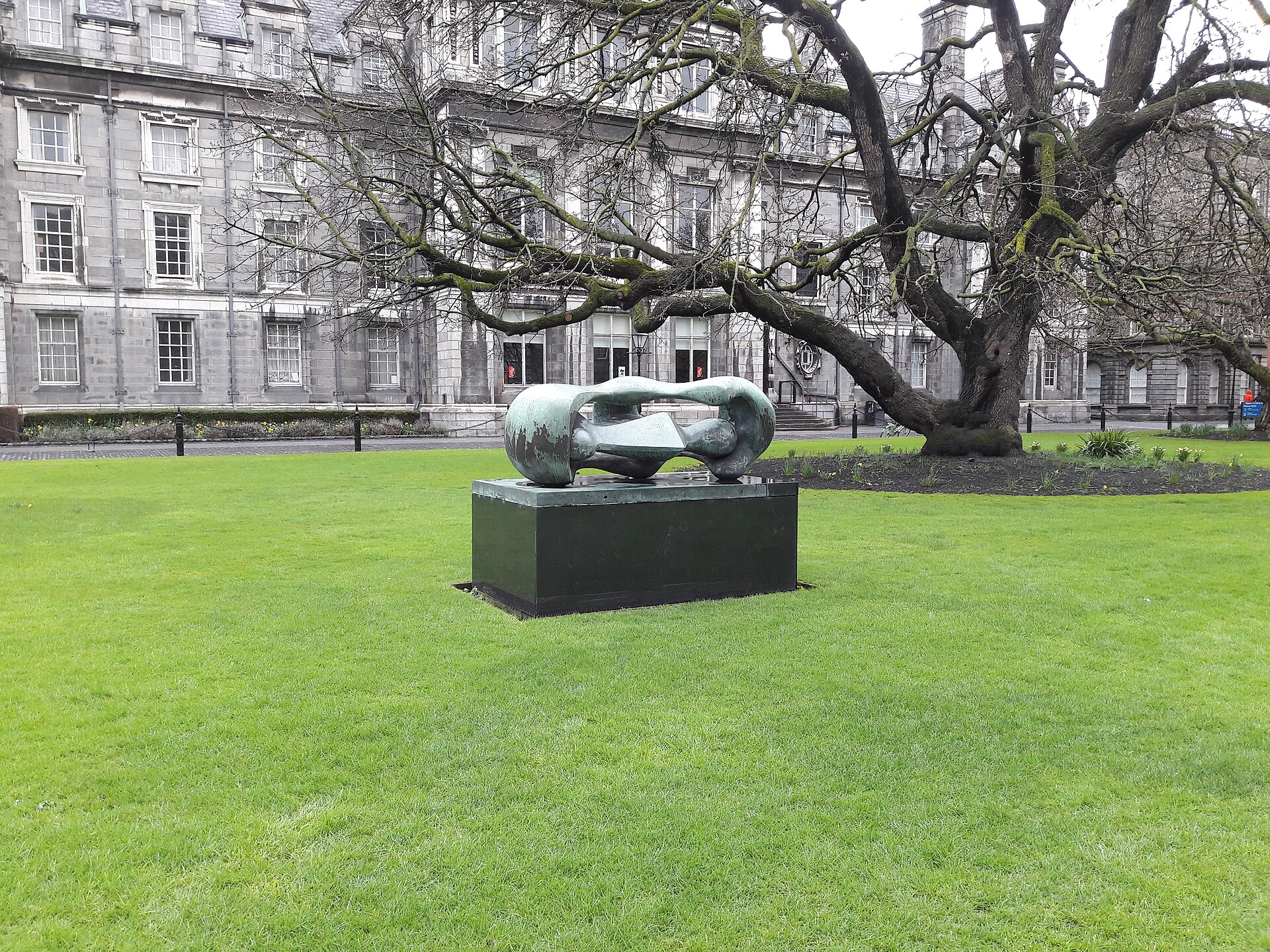
Reclining Connected Forms by Henry Moore, 1969
Trinity College, Dublin · wikidata.org
He made the same reclining shape over and over for something like fifty years. Apparently they were cast in editions too, so this isn't the only one of it — versions of the same thing sit in a few different countries.
Erisava: Every university seems to have one of these. I've never known why.
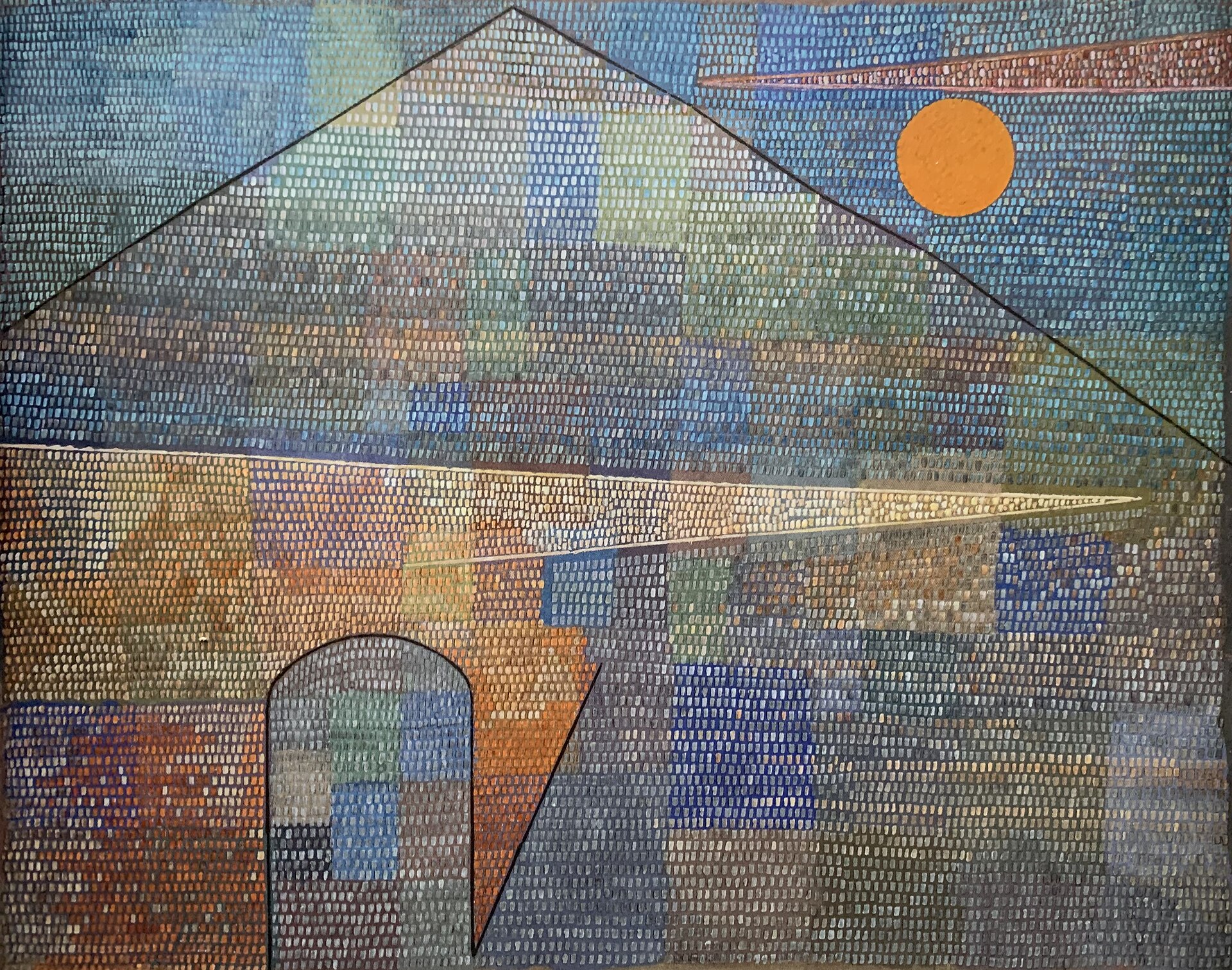
Ad Parnassum by Paul Klee, 1932
Kunstmuseum Bern · wikidata.org
Public domain
The title points at Mount Parnassus, where the Muses were supposed to live, and it's also the name of an old set of music exercises — he played violin seriously, so people reckon both were on his mind. It's said to be one of the biggest canvases he ever did.
Erisava: Covered inch by inch in dots — I keep wondering if that's skill or just patience.
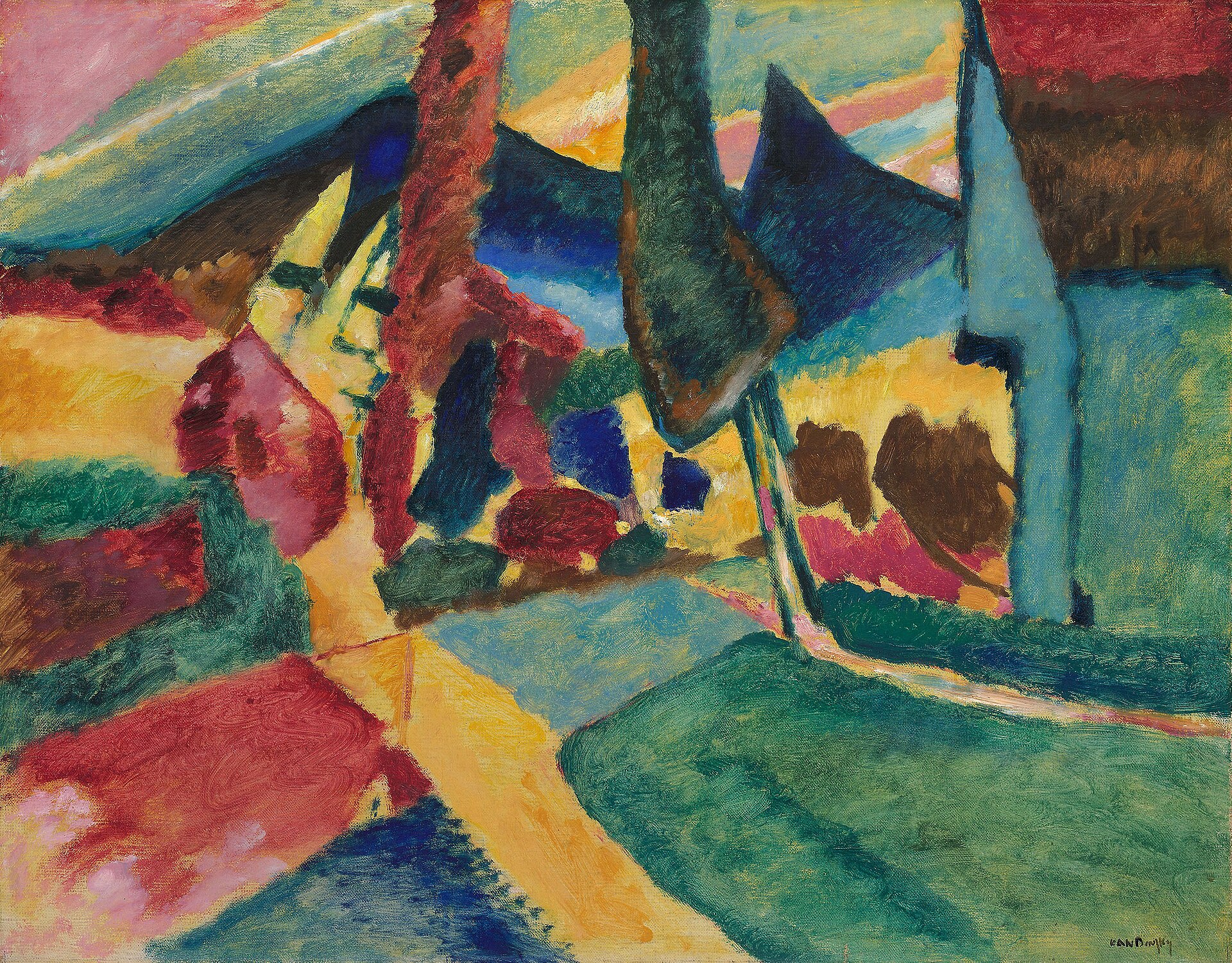
Landscape with Two Poplars by Wassily Kandinsky, 1912
Art Institute of Chicago · wikidata.org
Public domain
Wikipedia puts him with a group of Munich painters who reckoned a picture could work the way music does — colour doing the carrying, the scene barely hanging on. Apparently this comes from the stretch of years when the nameable things were on their way out of his pictures for good. Not long after, there was nothing left in them to point at.
Erisava: I'm told this is a landscape and I'm just taking their word for it.