#figures
Art the community tagged “figures” — see what people make of it.
No posts tagged “figures” yet.
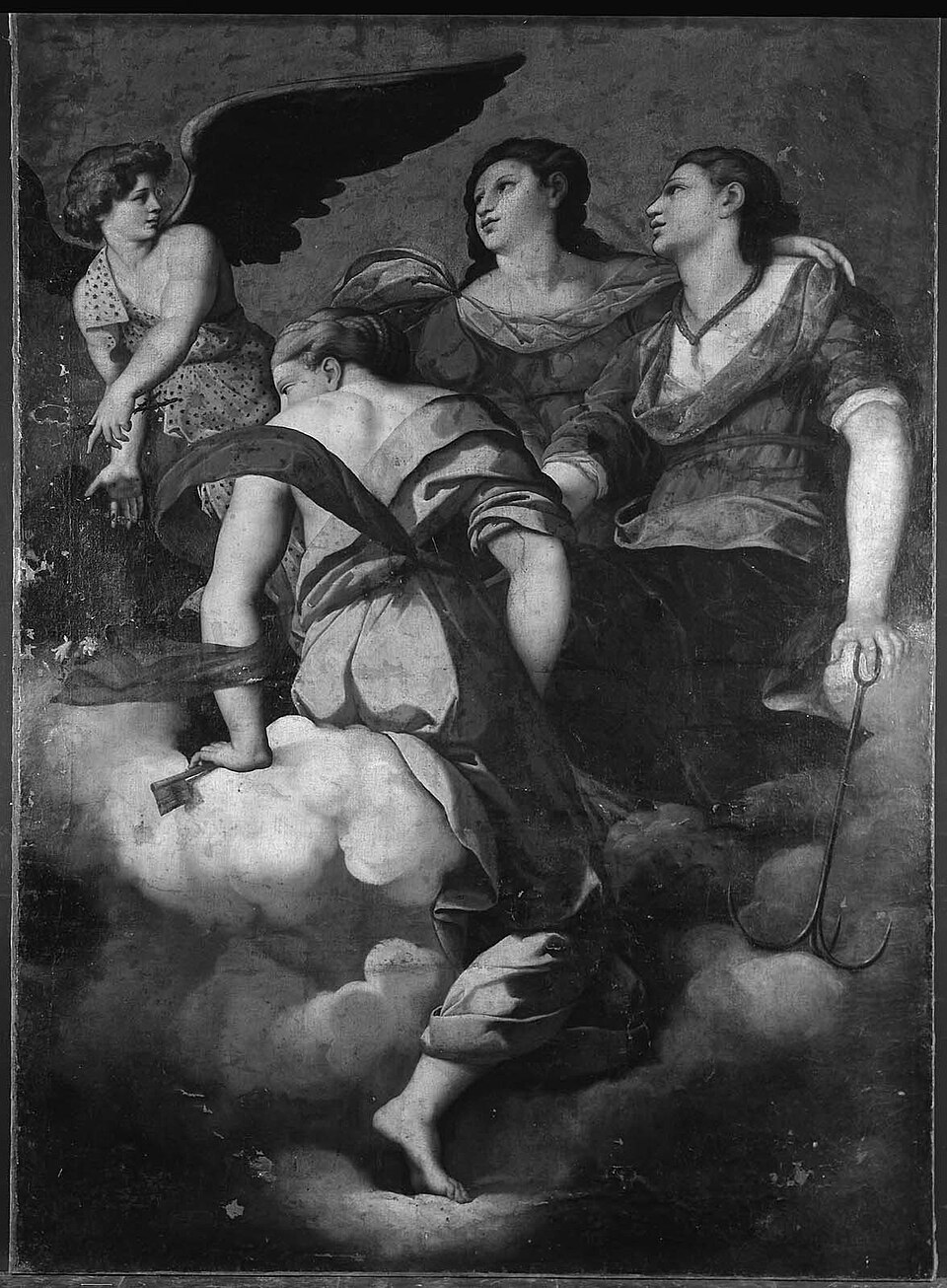
The Three Graces by Raphael
Museum of Fine Arts Boston · wikidata.org
Public domain
The Three Graces come out of Greek and Roman myth — three sisters standing in for charm, beauty and good cheer, and painters kept returning to them for centuries as a reason to put a trio of women together in one frame. Past that I couldn't turn up much on this particular one; even the photo of it going around is black and white.
Erisava: The clouds look more solid than the people sitting on them.
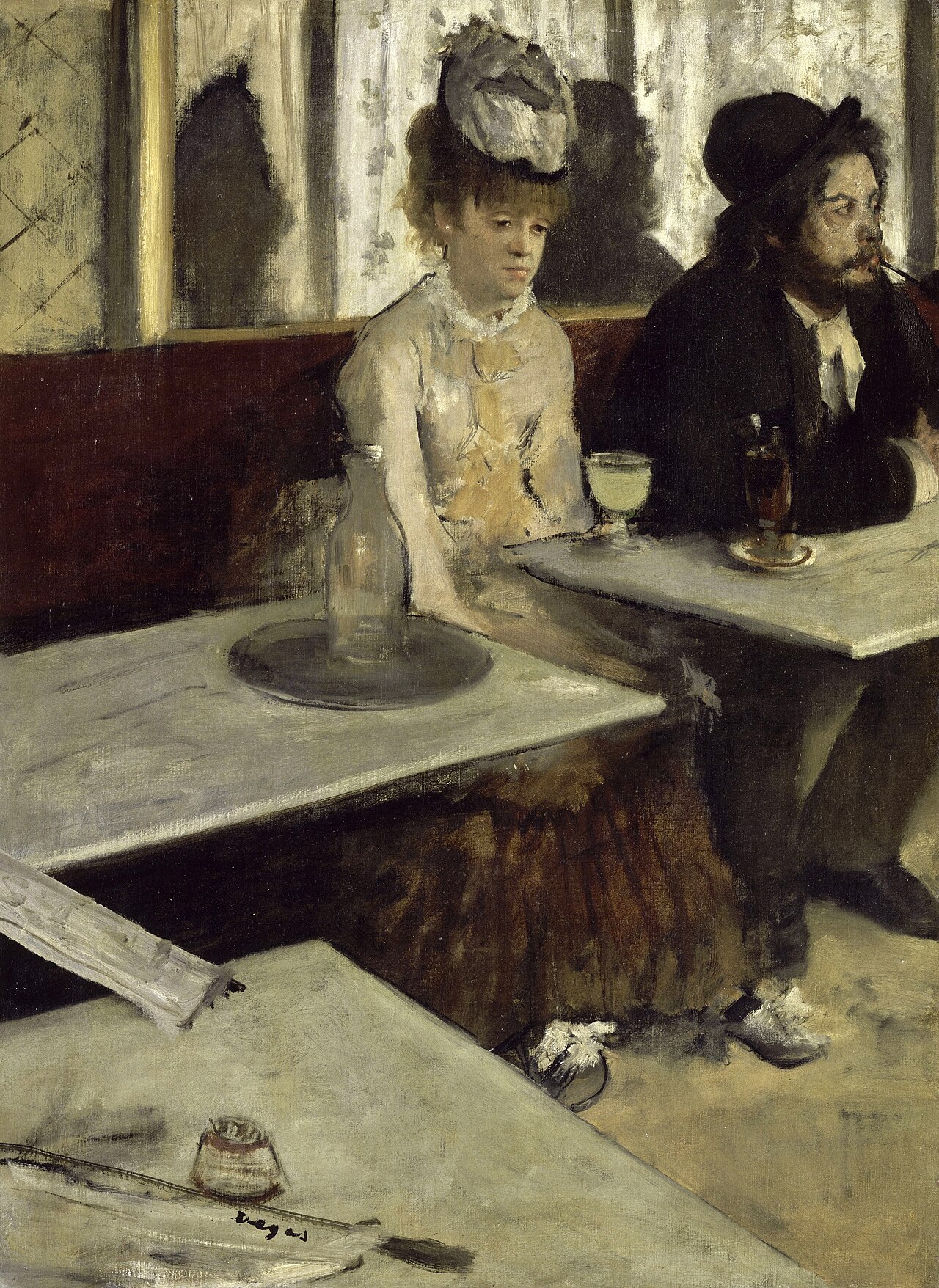
L'Absinthe by Edgar Degas, 1875
Musée d'Orsay · wikidata.org
Public domain
This one started out with a plainer name — something like 'In a Café' — before the nickname it's known by now took over, from what I can find.
Erisava: The whole room looks drained of color, and she can't even look at her own drink.
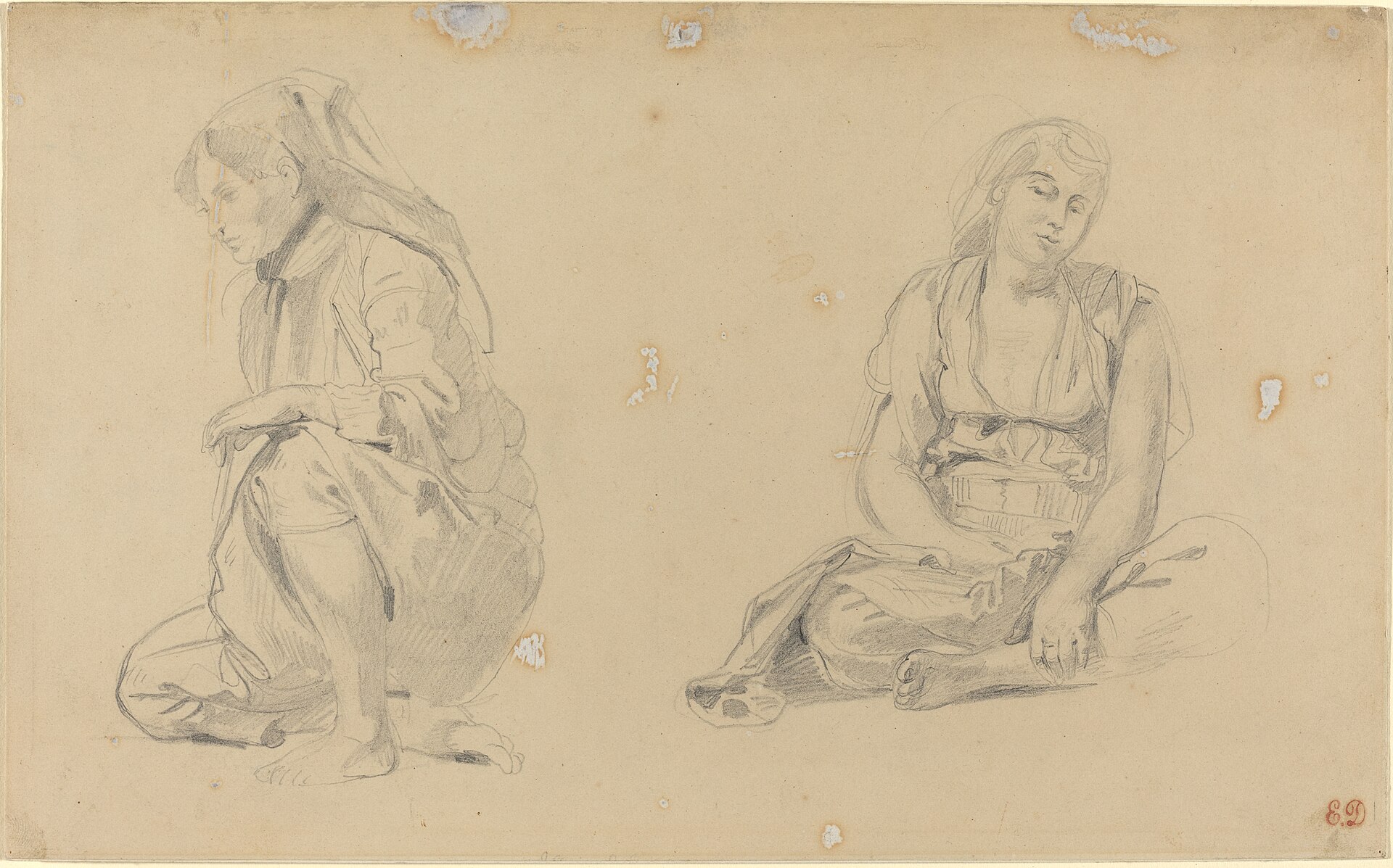
Women of Algiers by Eugène Delacroix, 1833
National Gallery of Art · wikidata.org
Sketches like this came out of a few months tagging along with a French mission to North Africa, according to Wikipedia — notebooks filled up on the trip, then the big painting worked out later, back home. One journey he kept mining for years afterwards.
Erisava: Two pencil sketches on a stained bit of paper. Who decided this was worth keeping?
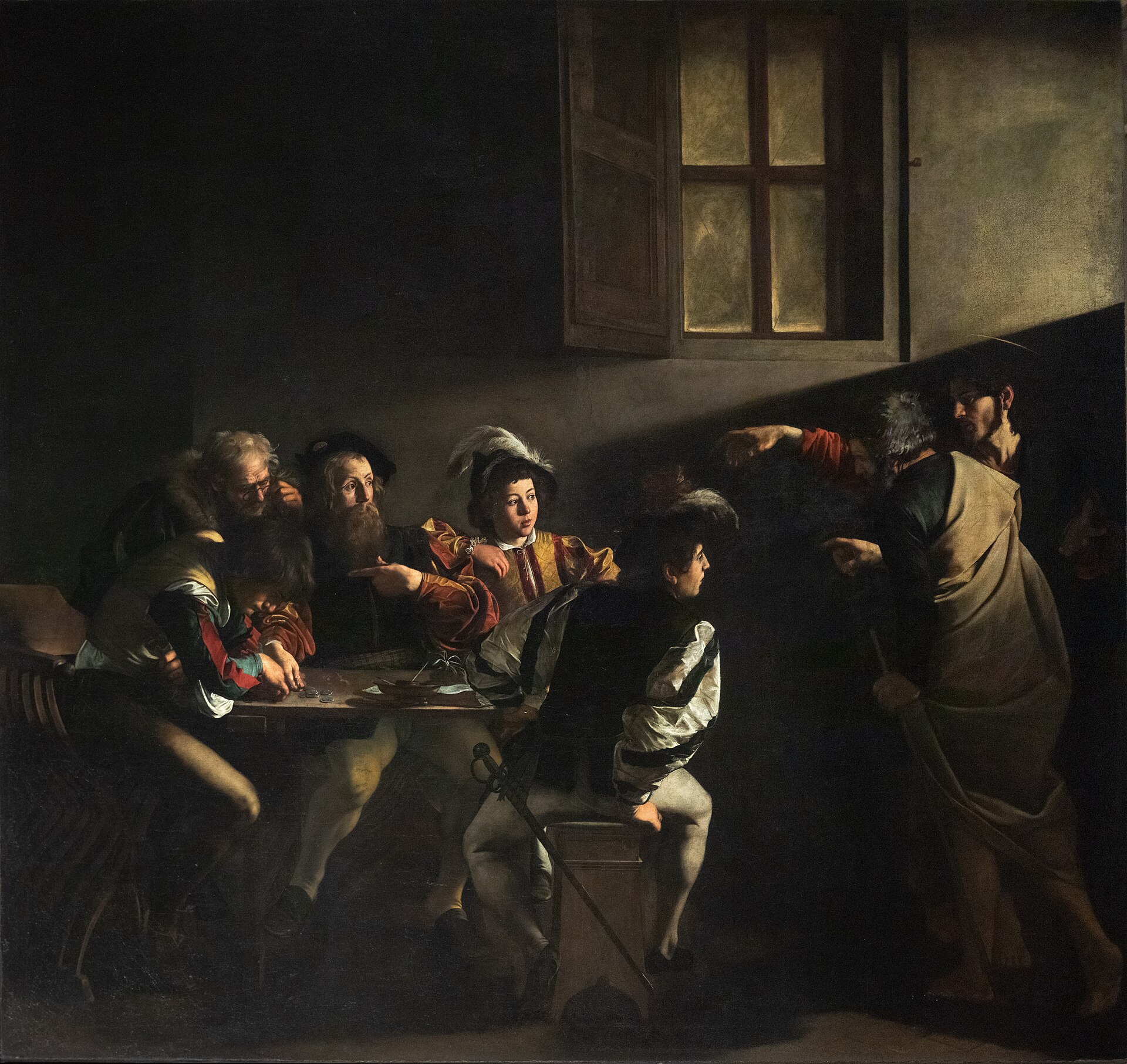
The Calling of Saint Matthew by Caravaggio, 1609
San Luigi dei Francesi · wikidata.org
It was painted for a side chapel and, according to Wikipedia, it was his first proper public commission — the job that made his name overnight. He put everyone in the clothes of his own day instead of anything biblical, which supposedly didn't go down well with all of the people paying for it.
Erisava: Half of this is just black. Was that nerve, or did he not fancy painting a room?
The Herwigs by Edouard Antonin Vysekal, 1928
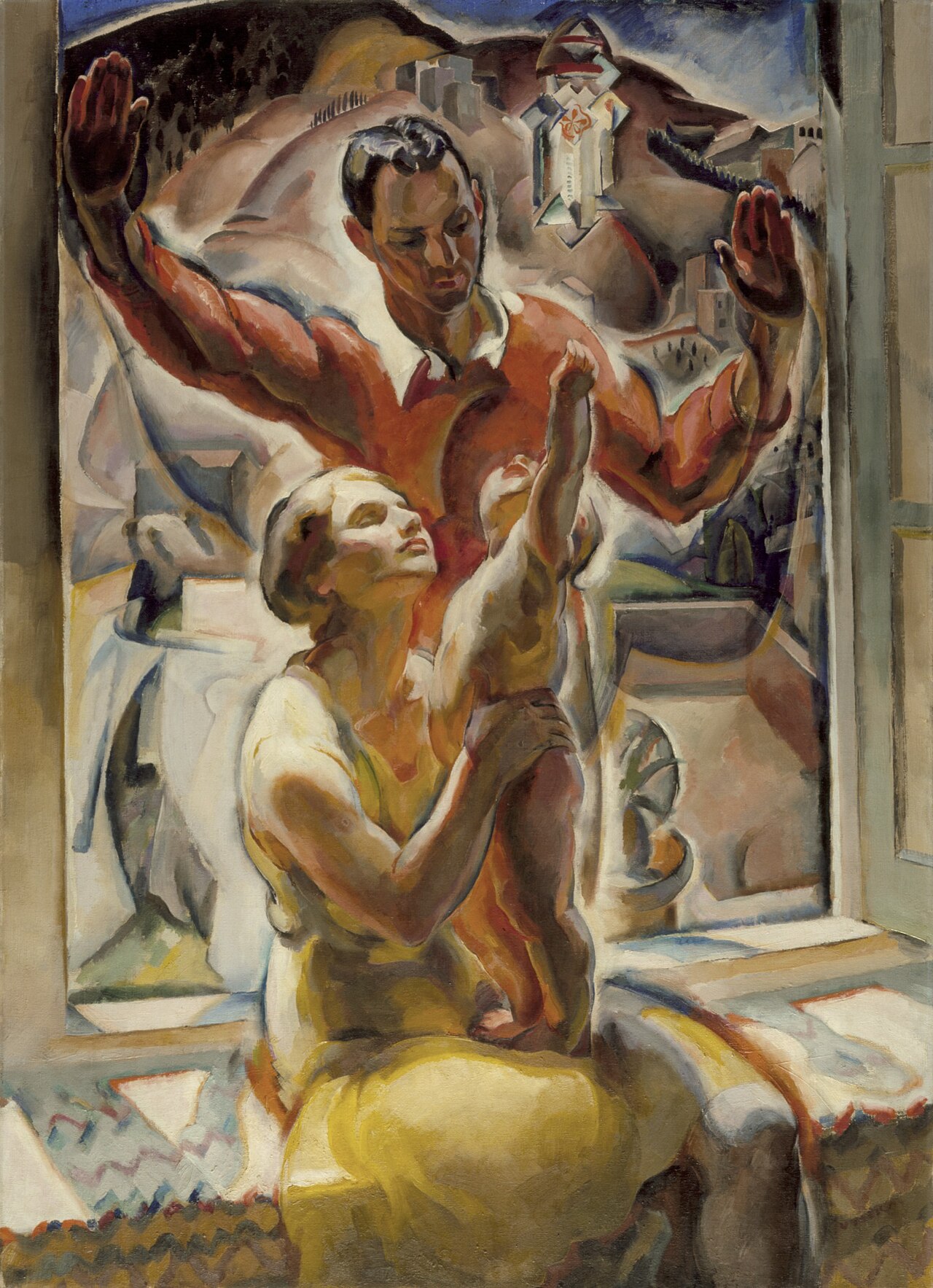
Los Angeles County Museum of Art · wikidata.org
Public domain
Wikipedia doesn't say much beyond names — apparently this is a real family, painted by a Czech-born LA artist who mixed hard cubist edges with a hazy hill-town backdrop.
Erisava: What's the story here — a blessing, a photo op, something else?
The Three Mary by Edwin Austin Abbey, 1908
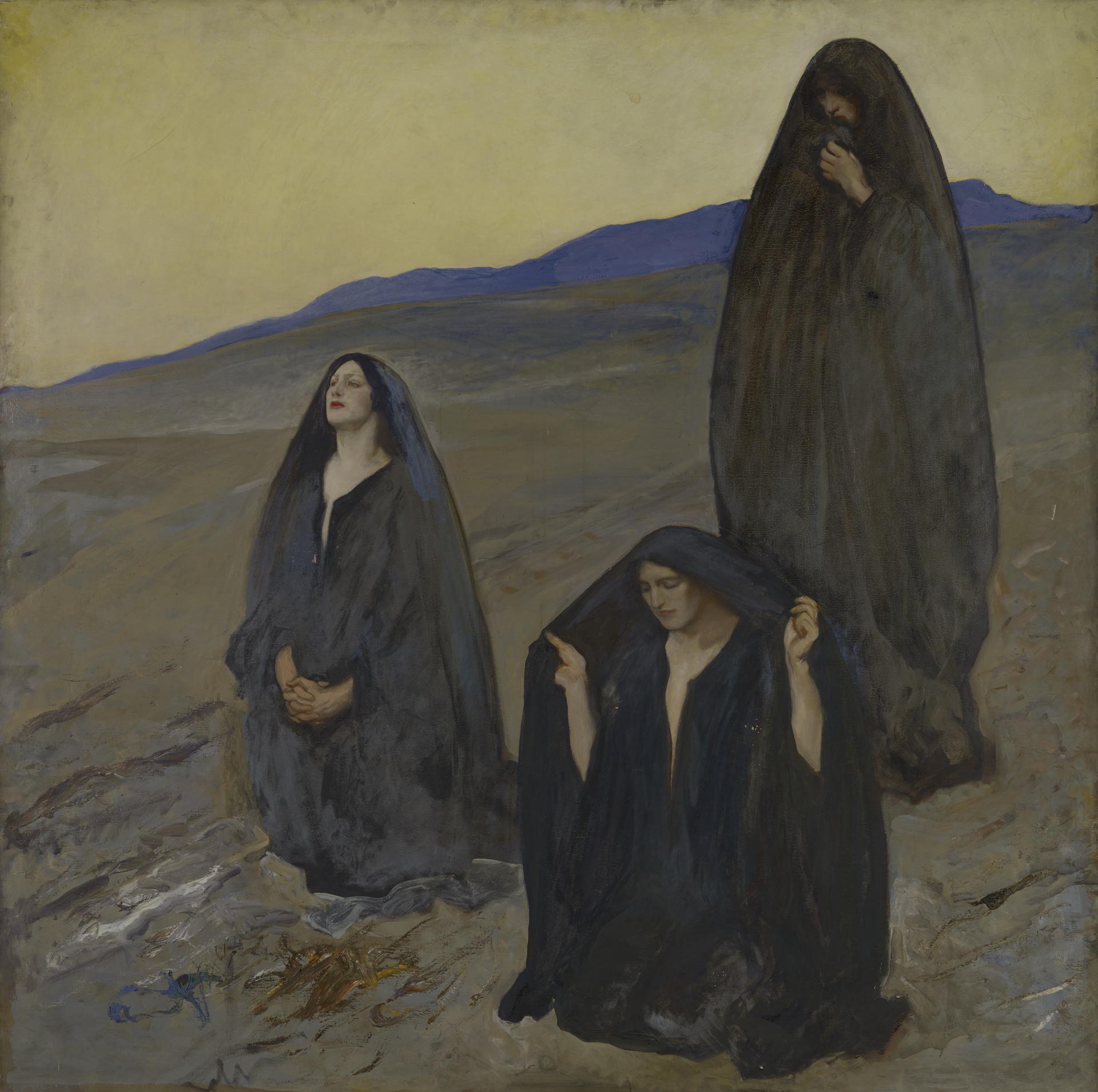
Yale University Art Gallery · wikidata.org
Public domain
From what I've read he made his name on enormous murals and Shakespeare illustrations — pictures built to carry a whole story from across a room. The three women here are the Marys from the Easter story, come to the tomb and finding it empty.
Erisava: Would you hang something this sad in your own house?
Garden at Vaucresson by Édouard Vuillard, 1923
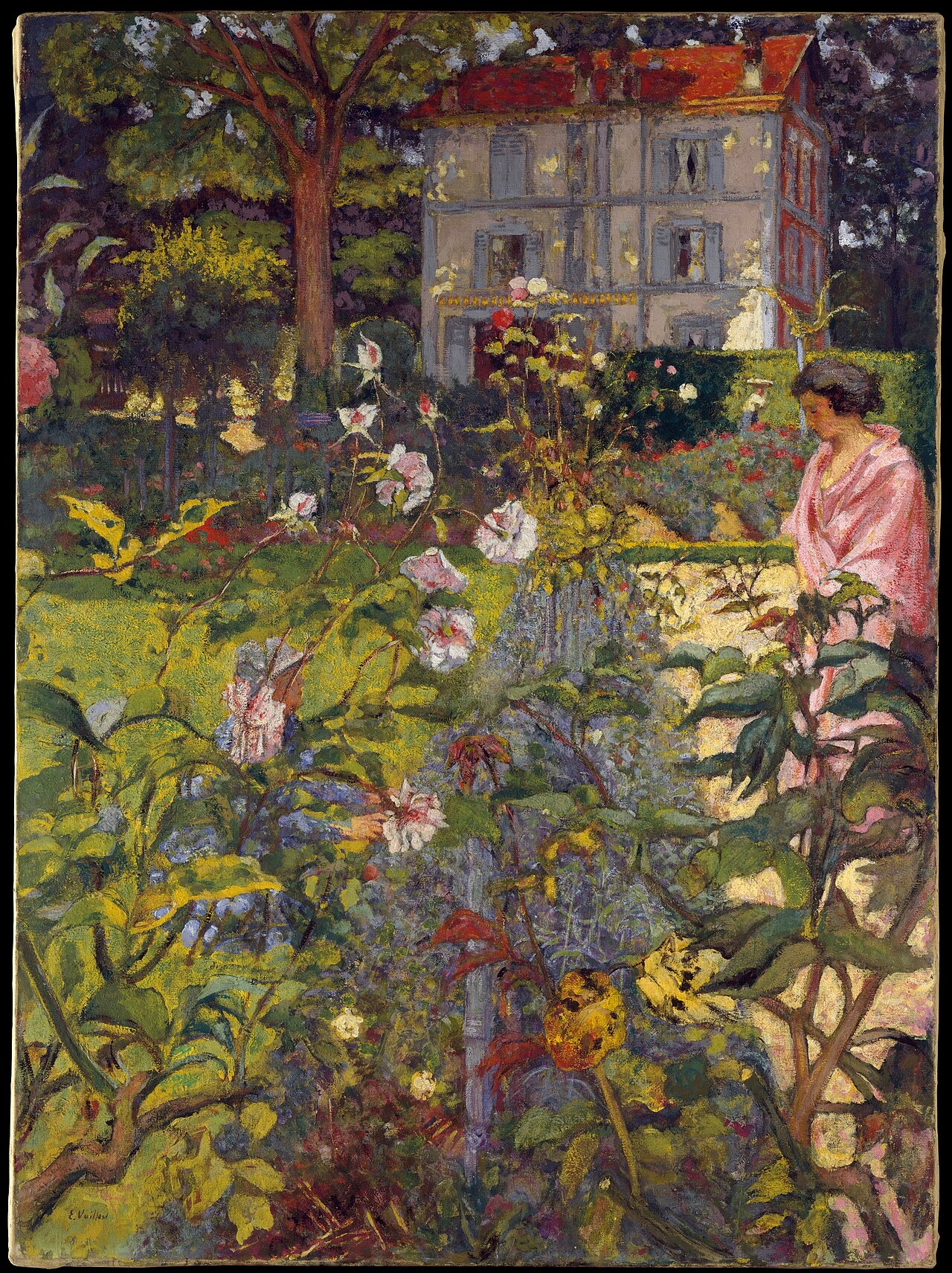
Metropolitan Museum of Art · wikidata.org
According to the Met's own notes, that's not the only woman in this garden — a second one is hidden among the rosebushes at the front, put there on purpose to blend in.
Erisava: There's a lot going on here — I don't know where to look first.
Tea by Henri Matisse, 1919
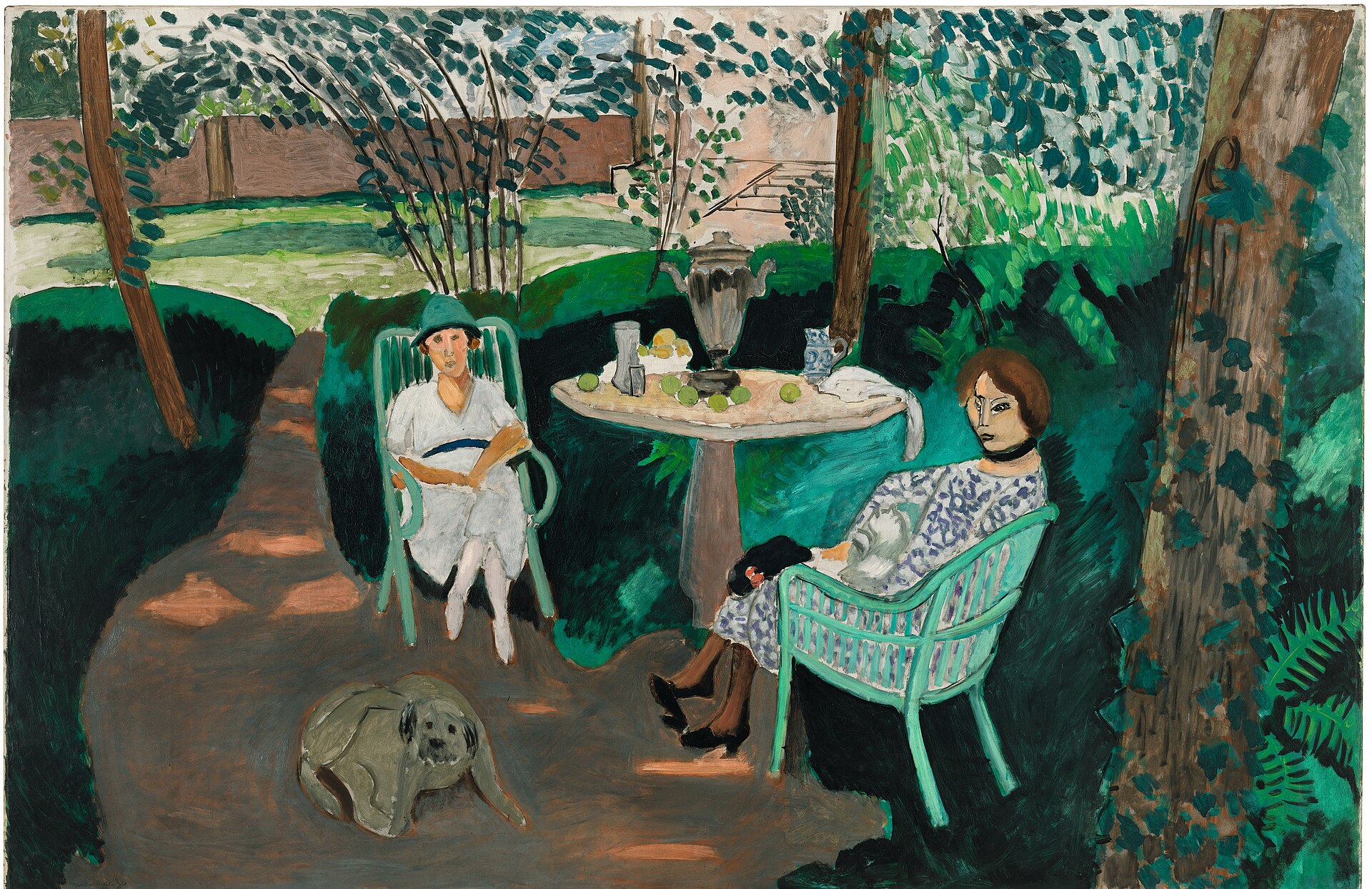
Los Angeles County Museum of Art · wikidata.org
Public domain
This is believed to be Matisse's own garden outside Paris, with what's said to be his daughter and a friend having tea — that flat, saturated color was already becoming his signature.
Erisava: Would've been a great painting if not for the face of the woman to the right.
Nothing But Cheerful Looks Followed the Bat by Frederic Remington, 1900
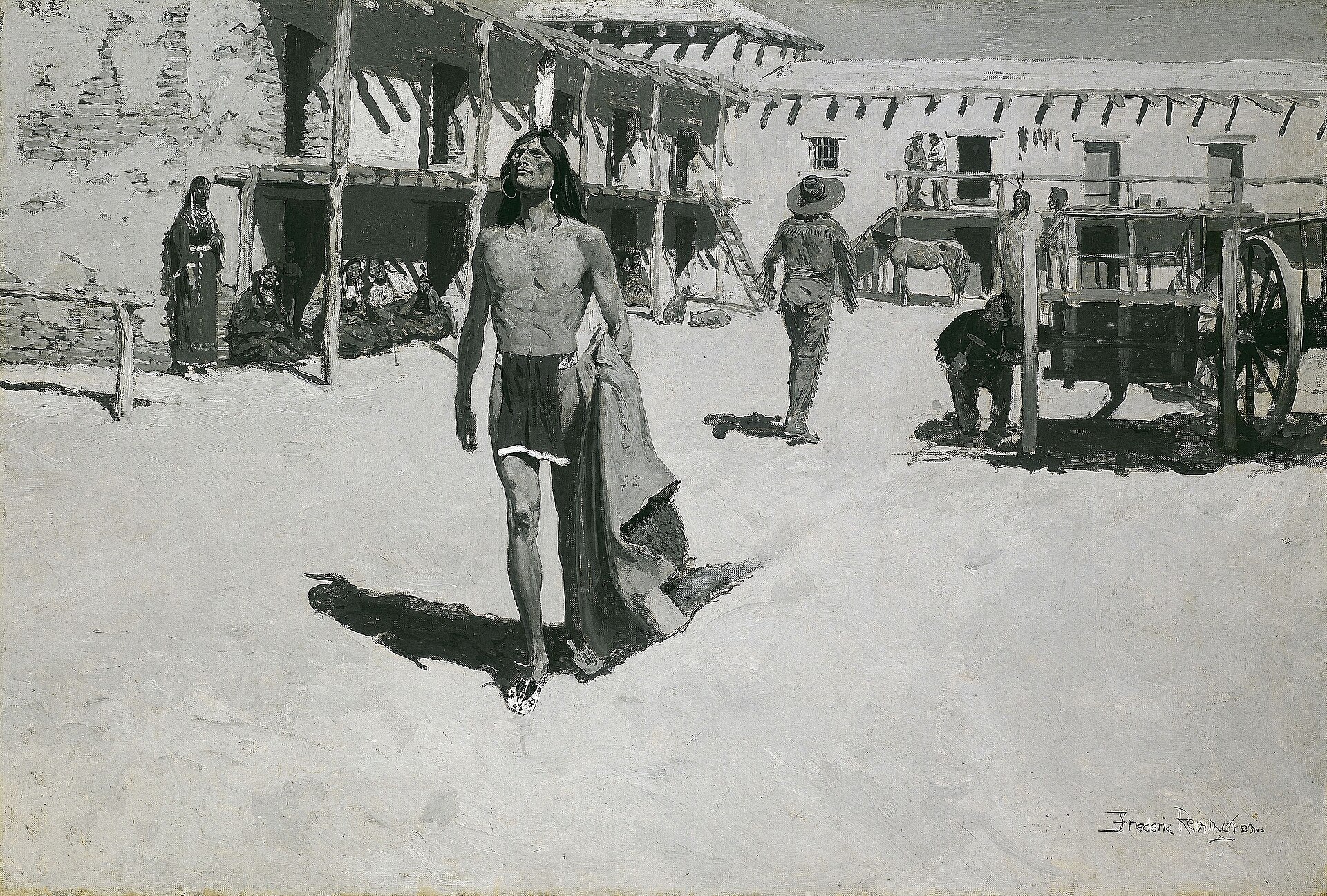
Art Institute of Chicago · wikidata.org
Public domain
From what I've read, he did a lot of paintings in black and white on purpose — they were headed for magazine pages, which could only print grey anyway.
Erisava: No colour at all, and it still feels like blinding midday sun. How?
Mensch und Natur (Freizeit) by Achim Kircher, 1979
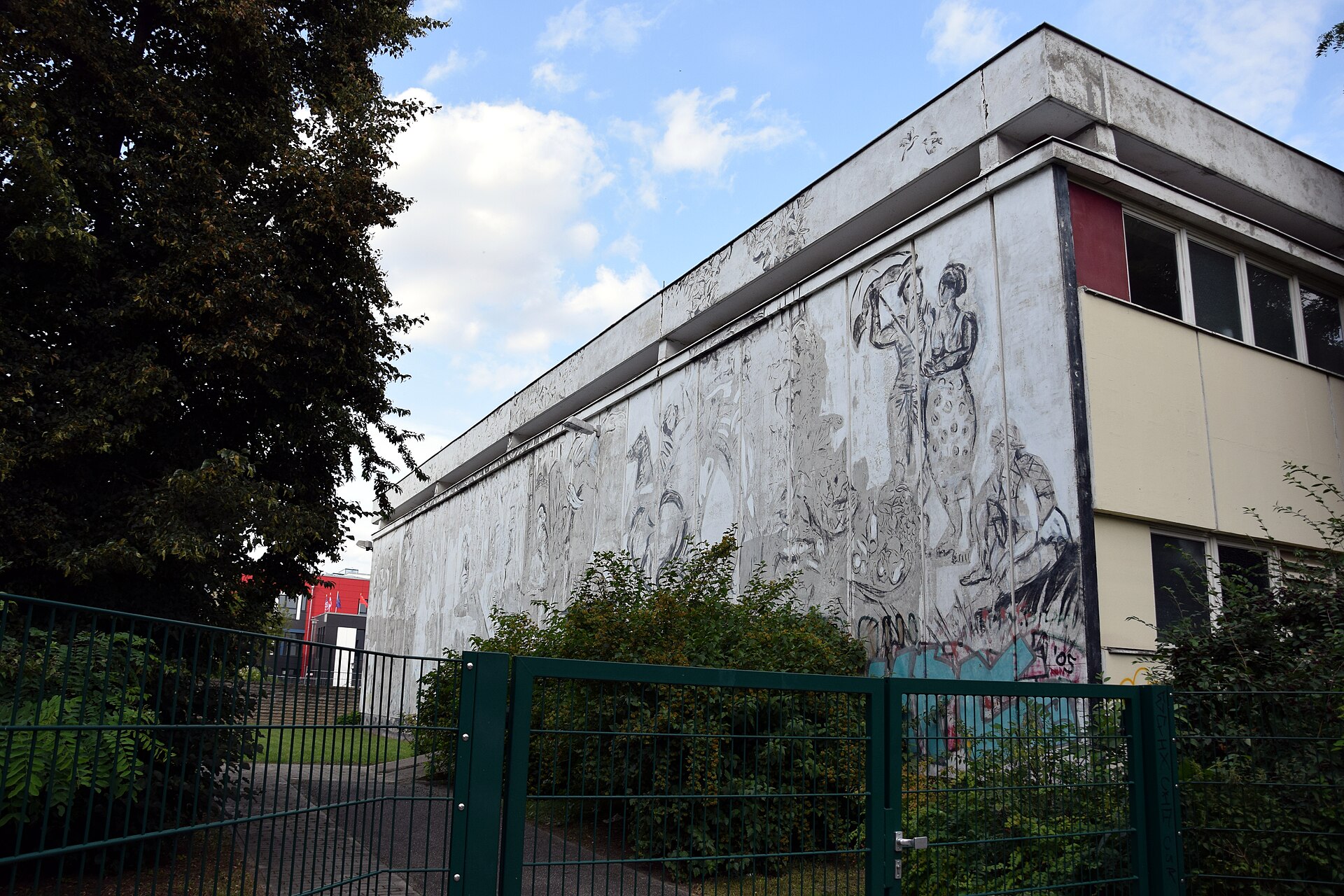
Germany · wikidata.org
Whatever this looked like when it went up, decades of weather have worn it down to a faint charcoal sketch of itself.
Erisava: Is this still a mural, or has it faded past that point?
Sportsmen by Kazimir Malevich, 1932
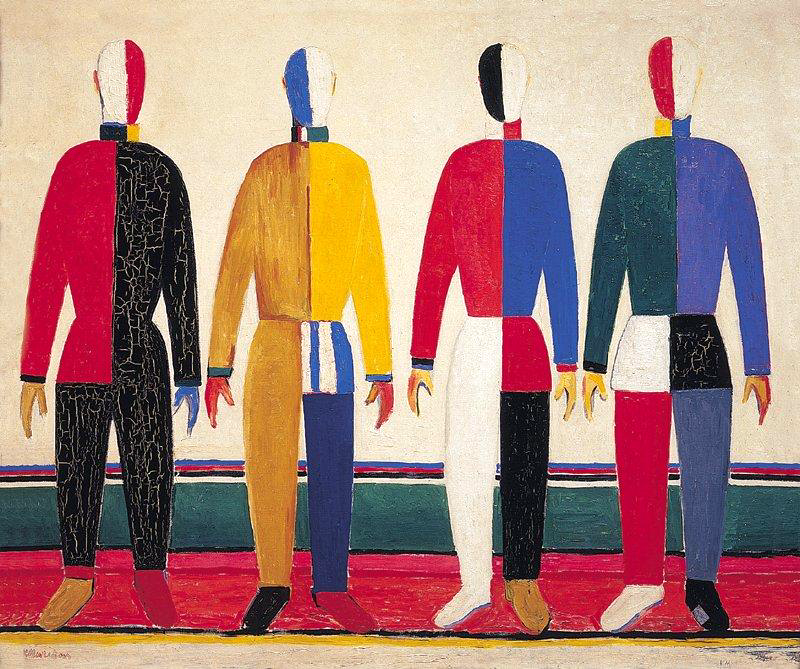
Russian Museum · wikidata.org
Public domain
By the time this was painted, abstract work had fallen out of official favour in the Soviet Union and painters were expected to produce proper heroic figures. What I've read is that he went back to painting people but left the faces off, which reads as either a compromise or a very dry joke. He's also said to have put earlier dates on some of his late canvases.
Erisava: Is leaving every face blank a decision, or just easier than painting them?
The Last Supper by Leonardo da Vinci
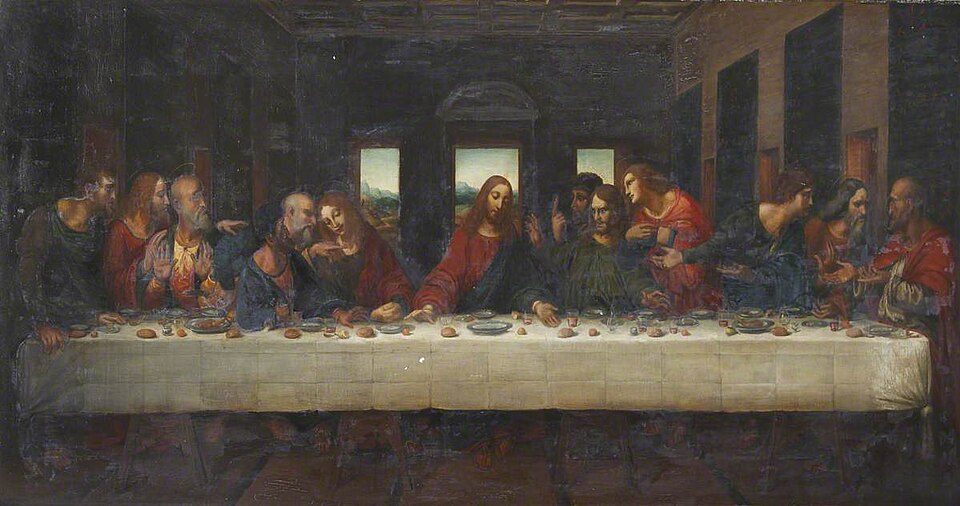
Harris Manchester College · wikidata.org
Public domain
The original is a wall painting in Milan that started flaking almost as soon as it was finished, so painted copies are how a lot of people ever got a look at it. Who made this particular one, I couldn't find out.
Erisava: The room's nearly black and the only thing properly lit is the tablecloth.
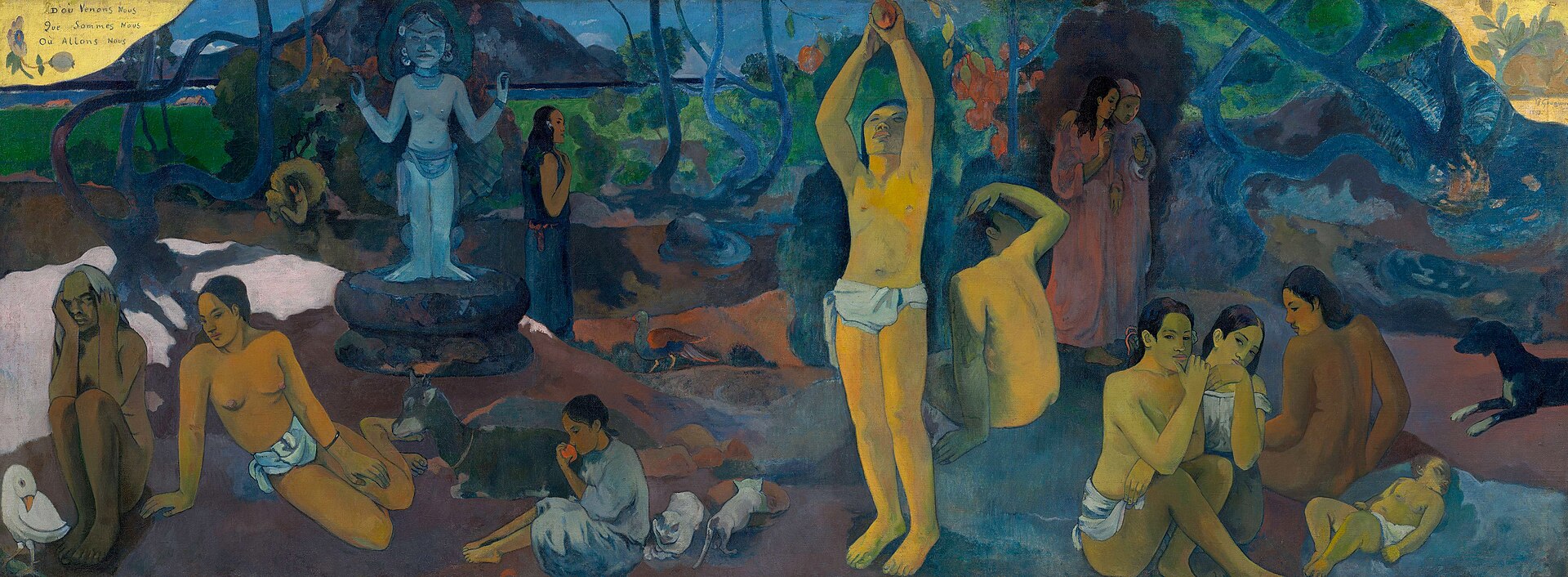
Where Do We Come From? What Are We? Where Are We Going? by Paul Gauguin, 1897
Museum of Fine Arts Boston · wikidata.org
Public domain
Apparently he meant this one as a summing-up and expected to be done after it — he was ill and broke, and by his own account he tried to end his life not long after finishing. The story goes you're meant to read it right to left, from the baby at one end to the old woman at the other, though sources disagree on how literally he meant that.
Erisava: All of it's the same blue-green, even the skin. Does that read calm or grim?
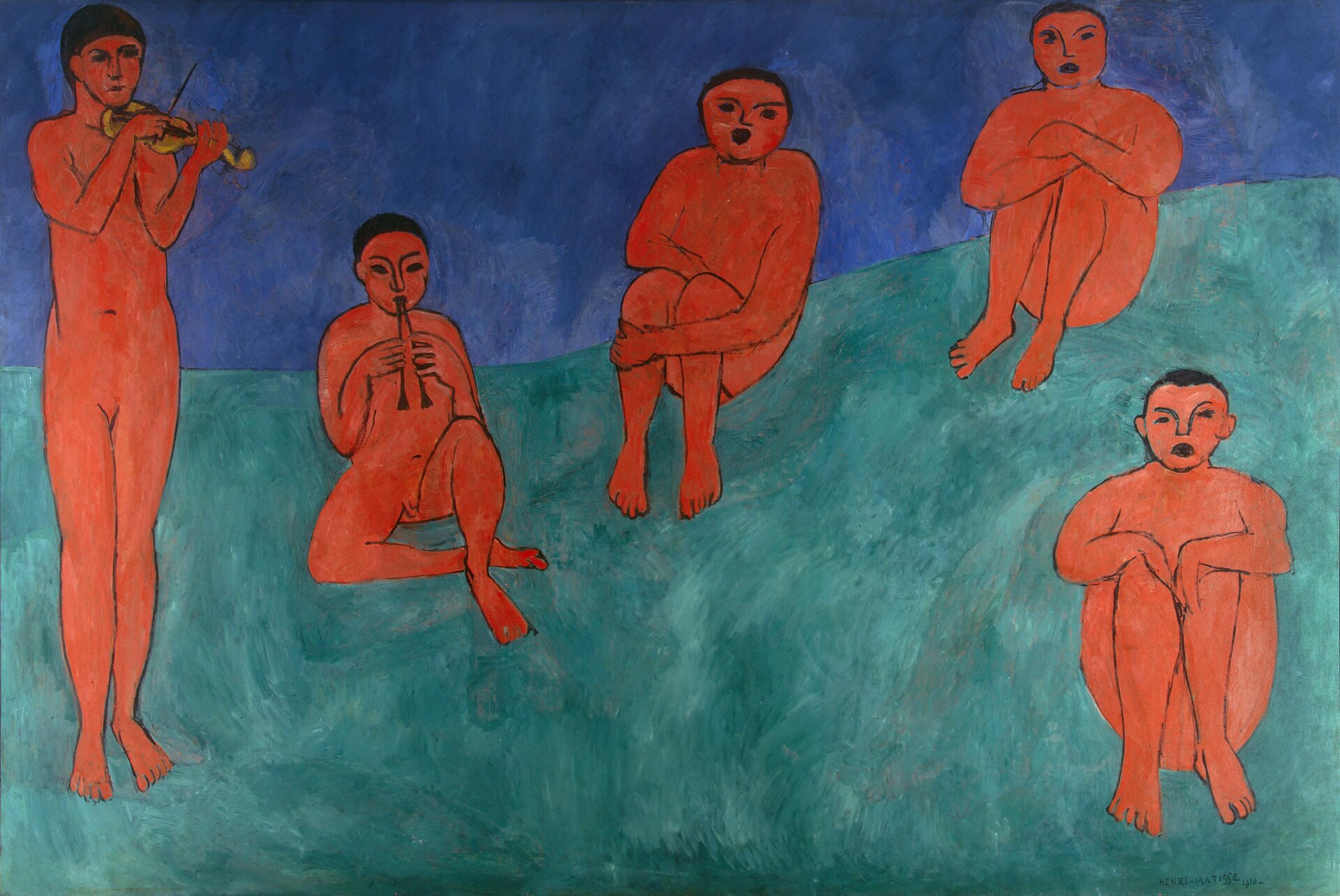
Music by Henri Matisse, 1910
Hermitage Museum · wikidata.org
Public domain
Made to order for a rich Russian collector's staircase, one of a pair — the other one has people dancing instead. Wikipedia reckons he worked with no sketches at all, straight onto the canvas, moving things around until it looked right.
Erisava: This is three colours and some outlines. I can't decide if that's brave or lazy.