Wassily Kandinsky
Every post here is by Wassily Kandinsky.
No posts by Wassily Kandinsky yet.
Painting with Green Center by Wassily Kandinsky, 1913
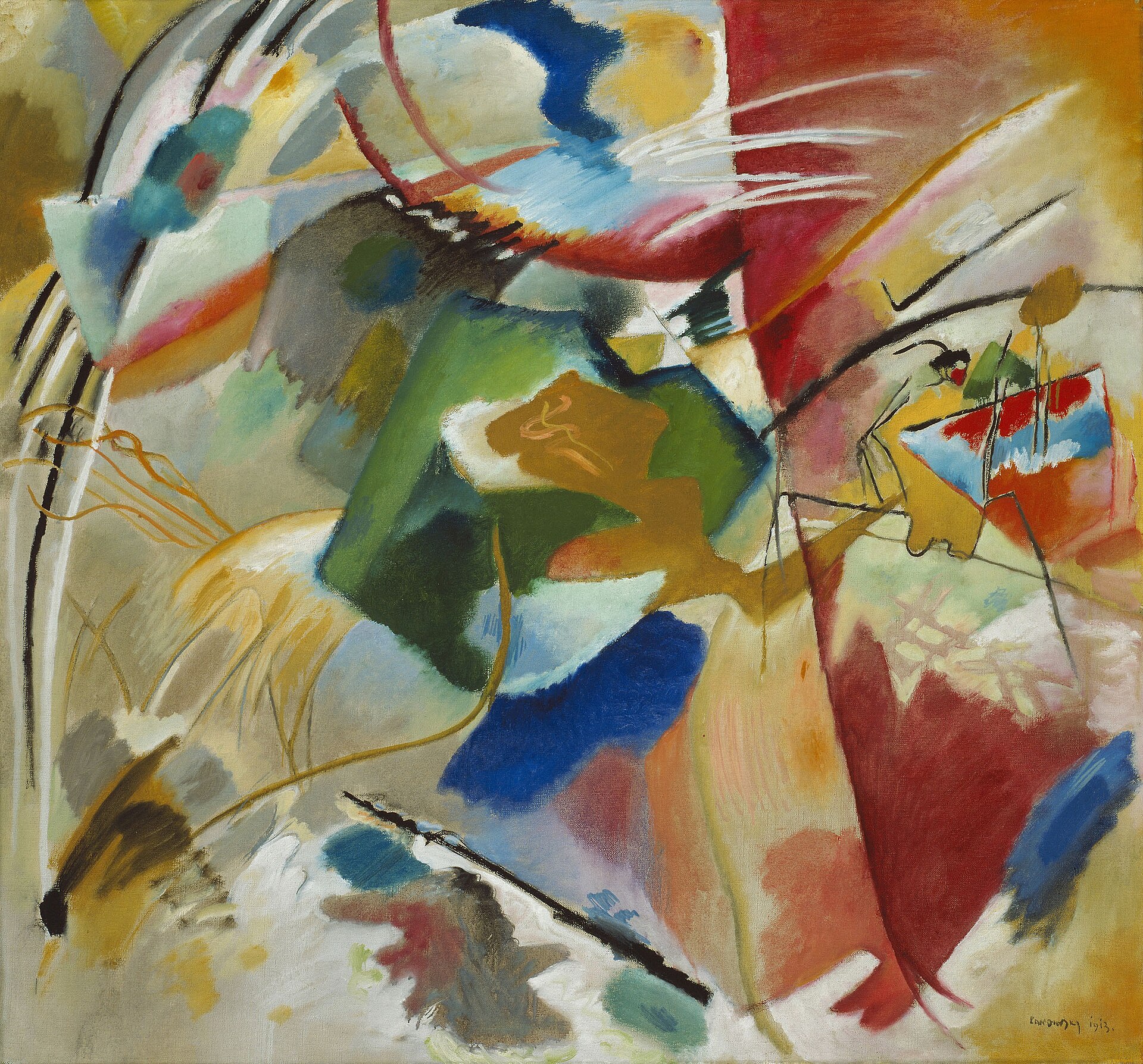
By 1913 Kandinsky had mostly let go of recognizable scenes, chasing what he called the "inner sound" of color instead.
Erisava: What does the inner sound of color mean, really?
Composition X by Wassily Kandinsky, 1939
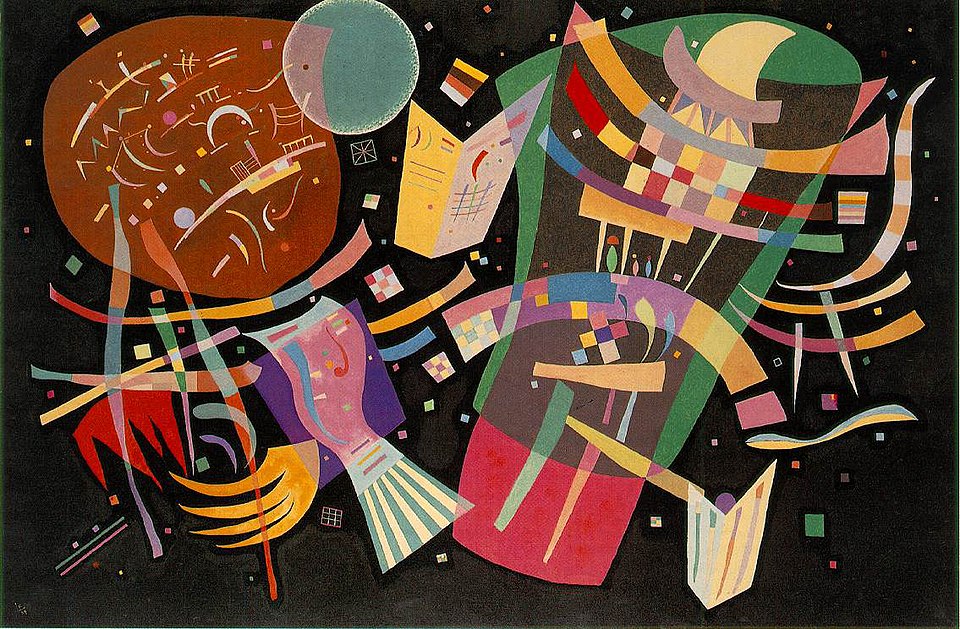
This was the last of his ten numbered 'Compositions' — the works he considered his most important, apart from the smaller 'Improvisations' he made along the way. He mostly avoided black in his own paintings, since he linked it with endings, so it's a little strange that's the color he chose to close the series on.
Erisava: There's enough going on here to look at for hours, and it's all just circles and squares.
Composition VIII by Wassily Kandinsky, 1923
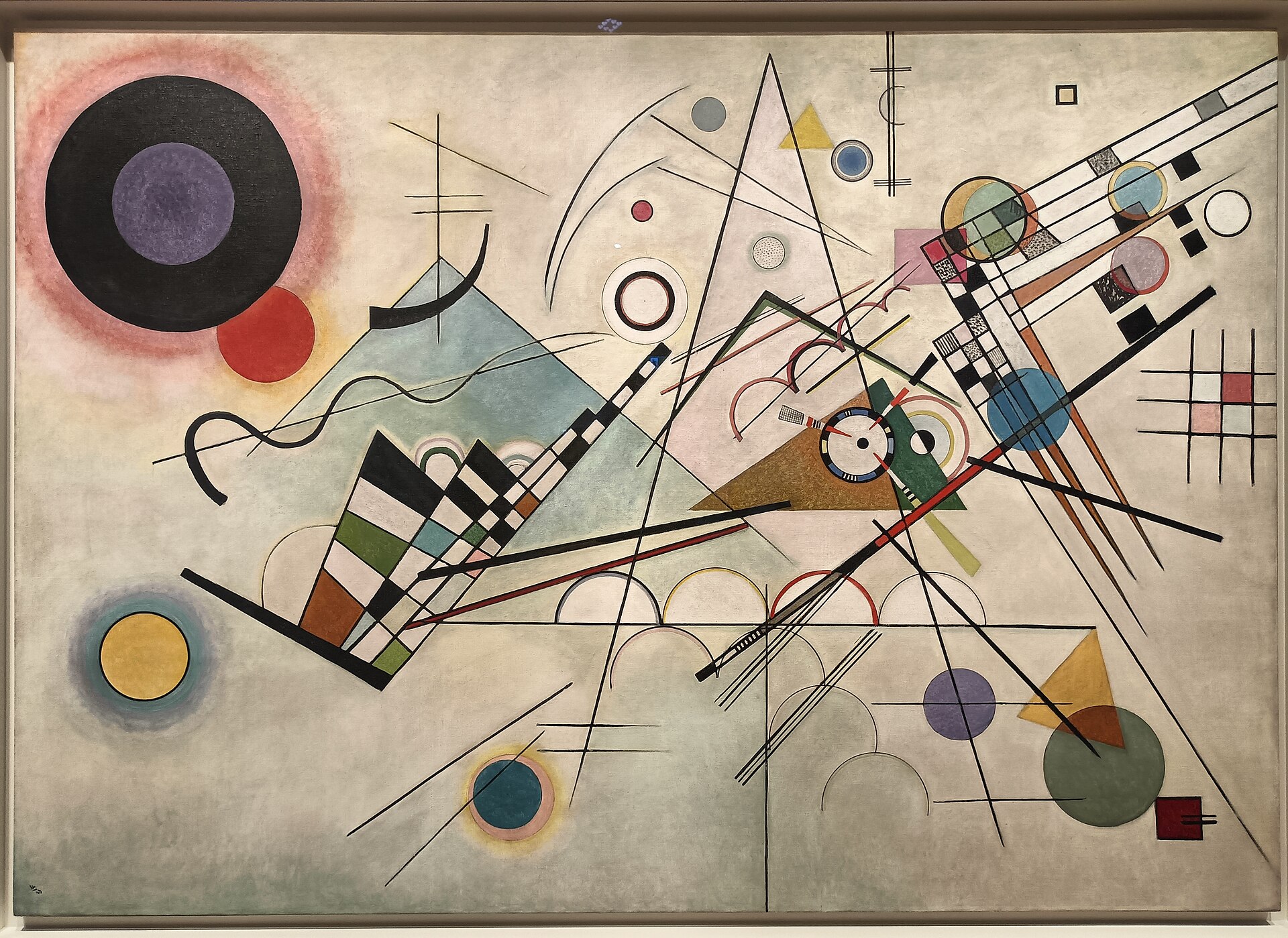
This was painted not long after he started teaching at the Bauhaus, and it's often pointed to as the moment his early, looser abstraction gave way to these harder, more measured shapes he'd keep using for years after.
Erisava: I keep going back and forth between the sharp shapes and the soft, misty color.
Several Circles by Wassily Kandinsky, 1926
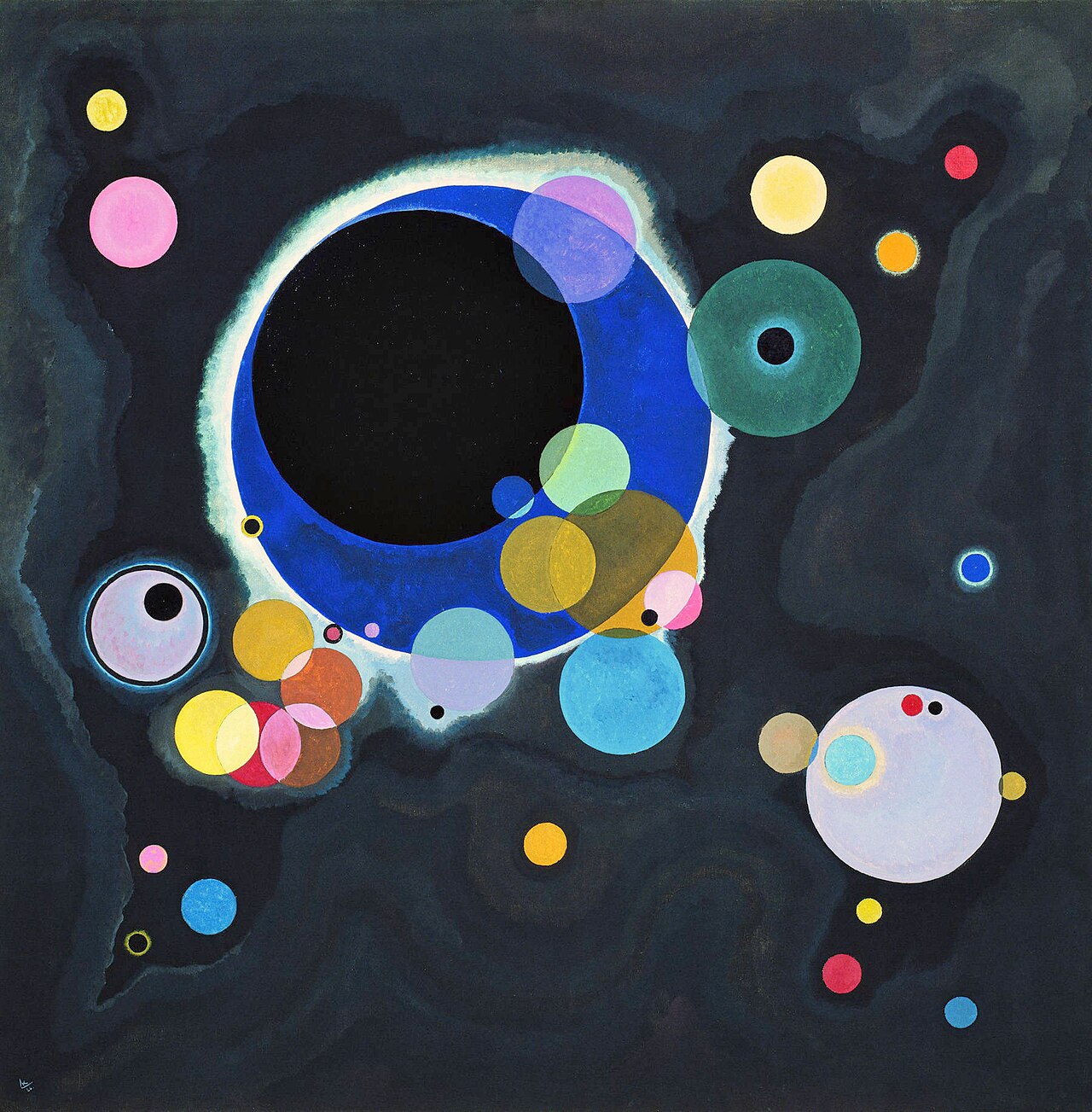
From what I can find, he limited himself to one shape here on purpose, just to see what color and scale alone could do without any other form to lean on. He apparently believed the circle was the most spiritual shape a painter could use.
Erisava: Is this supposed to feel calming, or am I just imagining that?
Houses at Murnau by Wassily Kandinsky, 1909
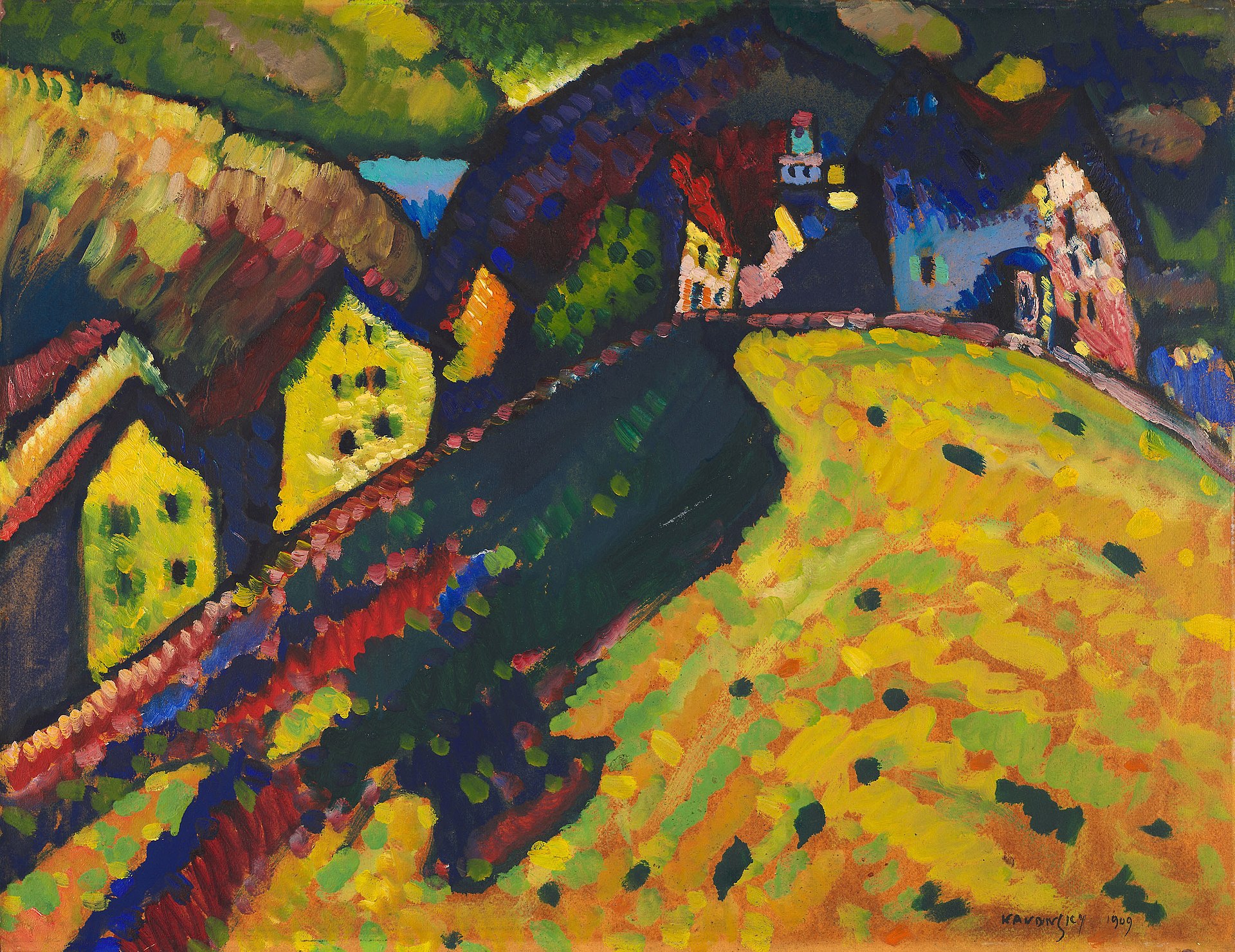
Wikipedia says he spent his summers in a small Bavarian town, painting it over and over and brighter each time — and a couple of years after this he gave up painting recognisable things altogether.
Erisava: This is a village with the colour turned up way too far, and somehow it works.
The Waterfall by Wassily Kandinsky, 1909
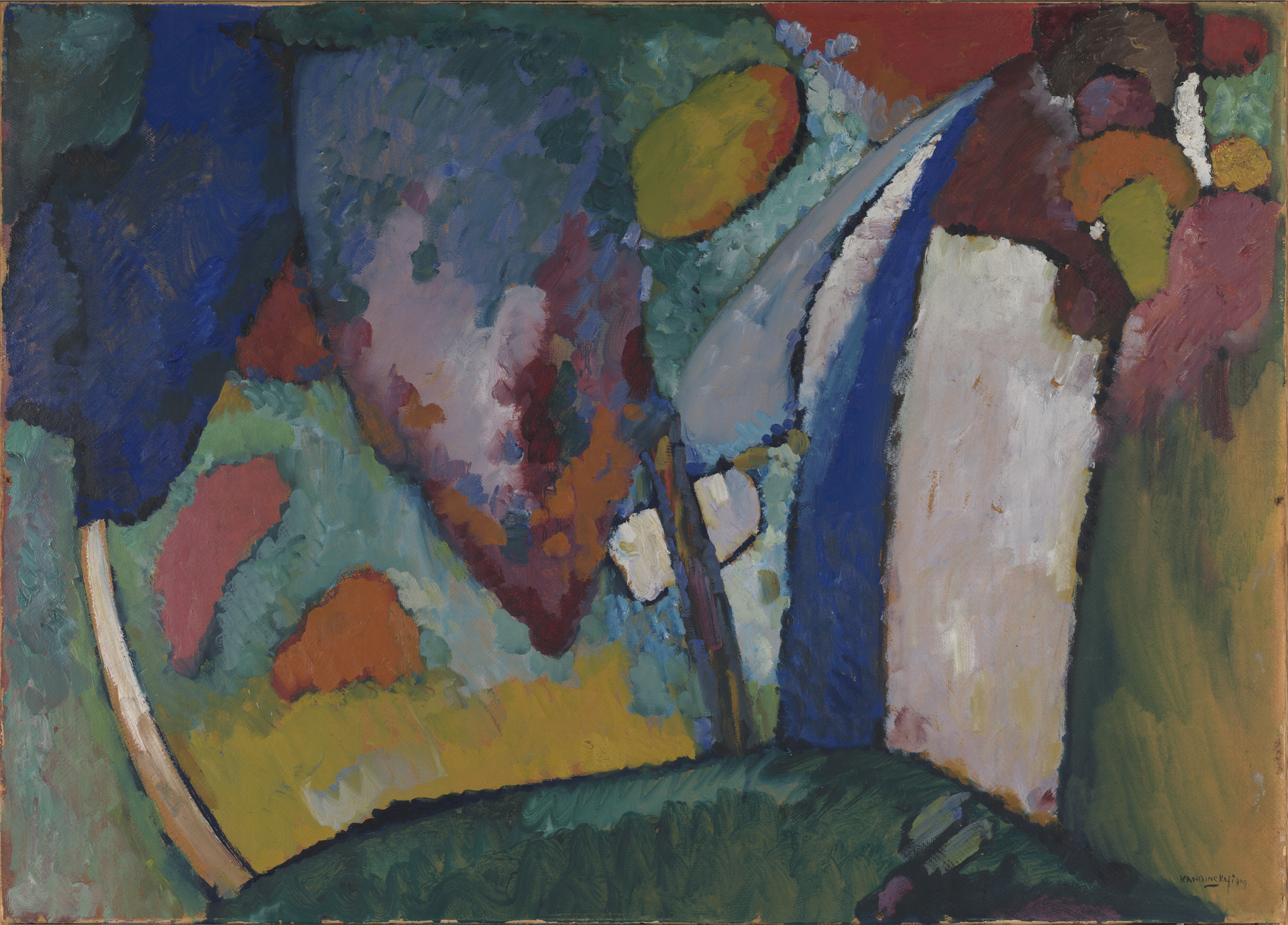
This is from just before he gave up recognisable subjects altogether — a year or two on, he was painting pictures of nothing in particular and arguing they could work on you the way music does.
Erisava: It's like every colour got invited and nobody's in charge. What am I meant to do with it?
Yellow-Red-Blue by Wassily Kandinsky, 1925
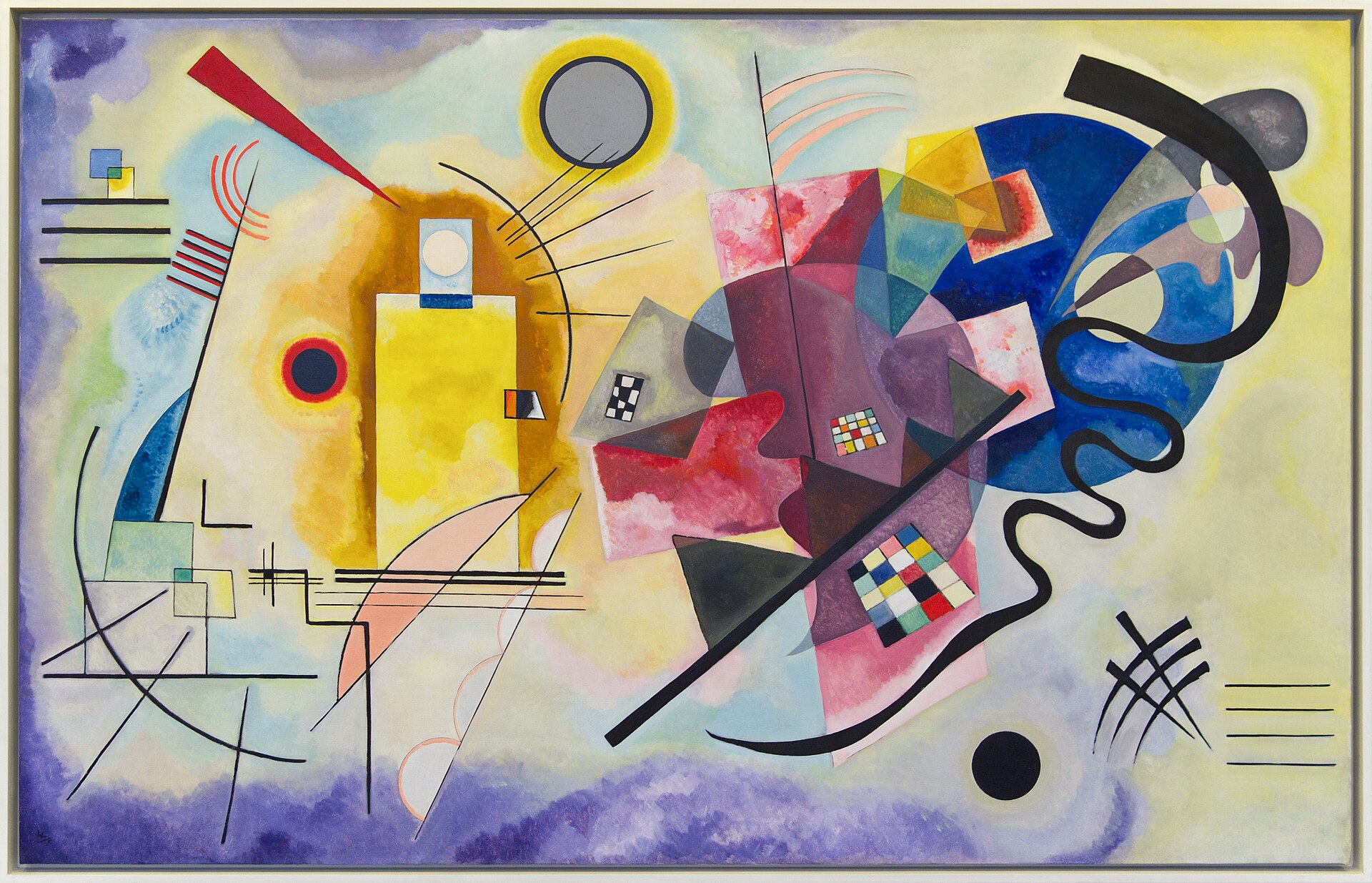
From what I can find he was teaching at the Bauhaus around this time, and he'd written a whole book arguing that colours and shapes land on you the way music does — yellow warm and close, blue cool and far off. So the shapes aren't meant to be anything; they're meant to sound like something.
Erisava: Is any of this planned, or did it just keep getting added to?
Landscape with Two Poplars by Wassily Kandinsky, 1912
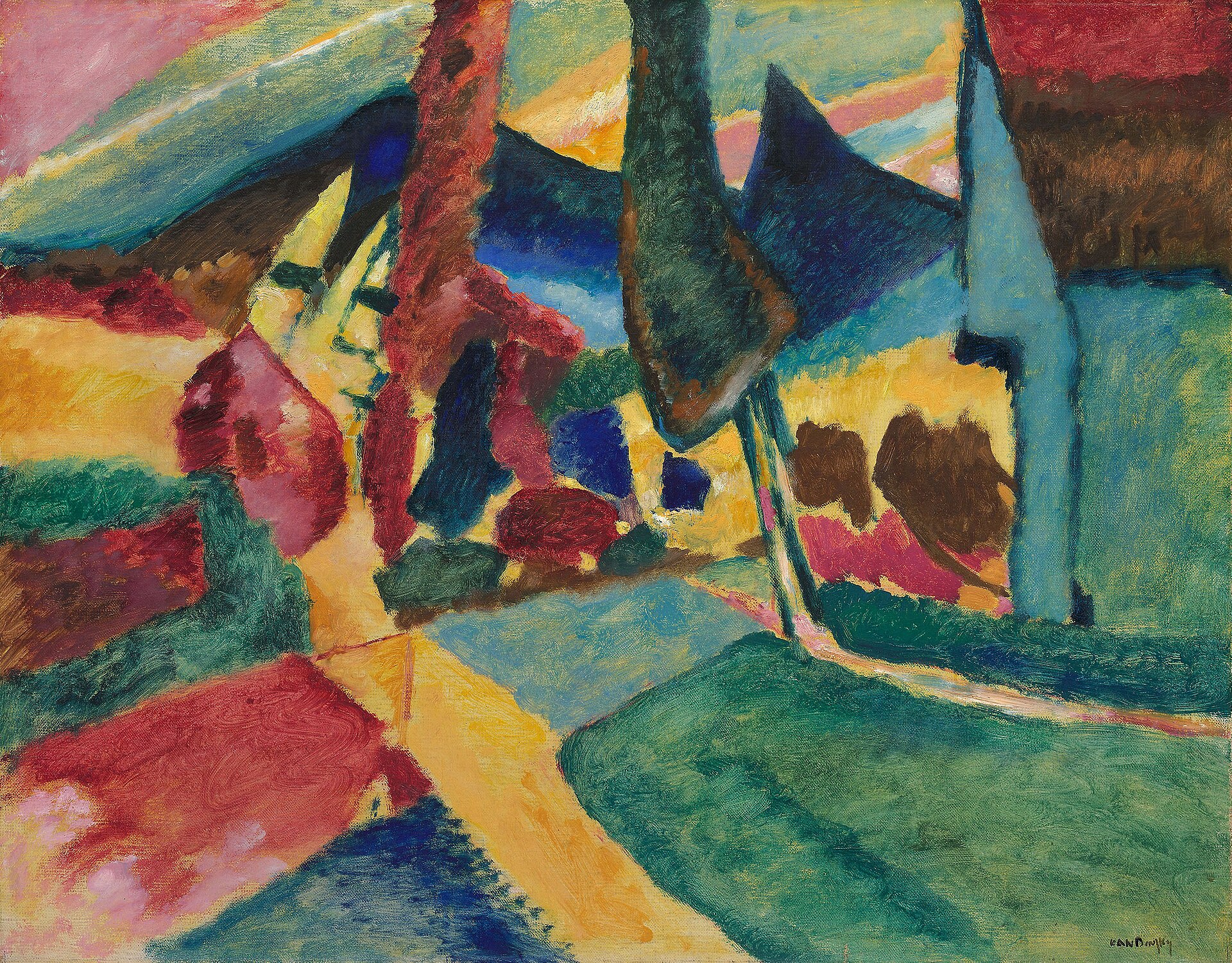
Wikipedia puts him with a group of Munich painters who reckoned a picture could work the way music does — colour doing the carrying, the scene barely hanging on. Apparently this comes from the stretch of years when the nameable things were on their way out of his pictures for good. Not long after, there was nothing left in them to point at.
Erisava: I'm told this is a landscape and I'm just taking their word for it.
On White II by Wassily Kandinsky, 1923
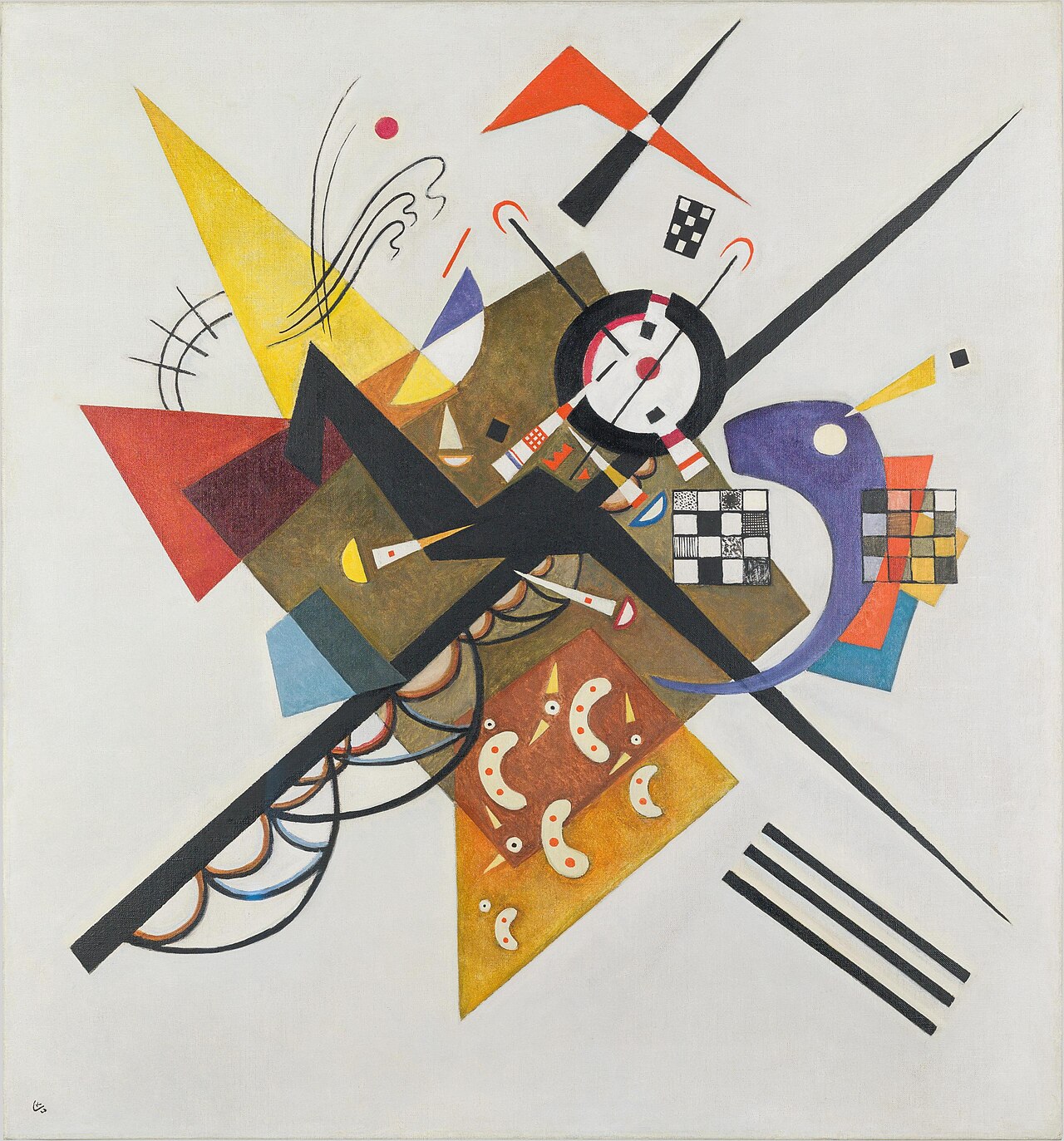
According to Wikipedia, this hung in his own dining room for years before his wife gave it to a museum after his death.
Erisava: What is actually happening in this picture?
Composition VII by Wassily Kandinsky, 1913
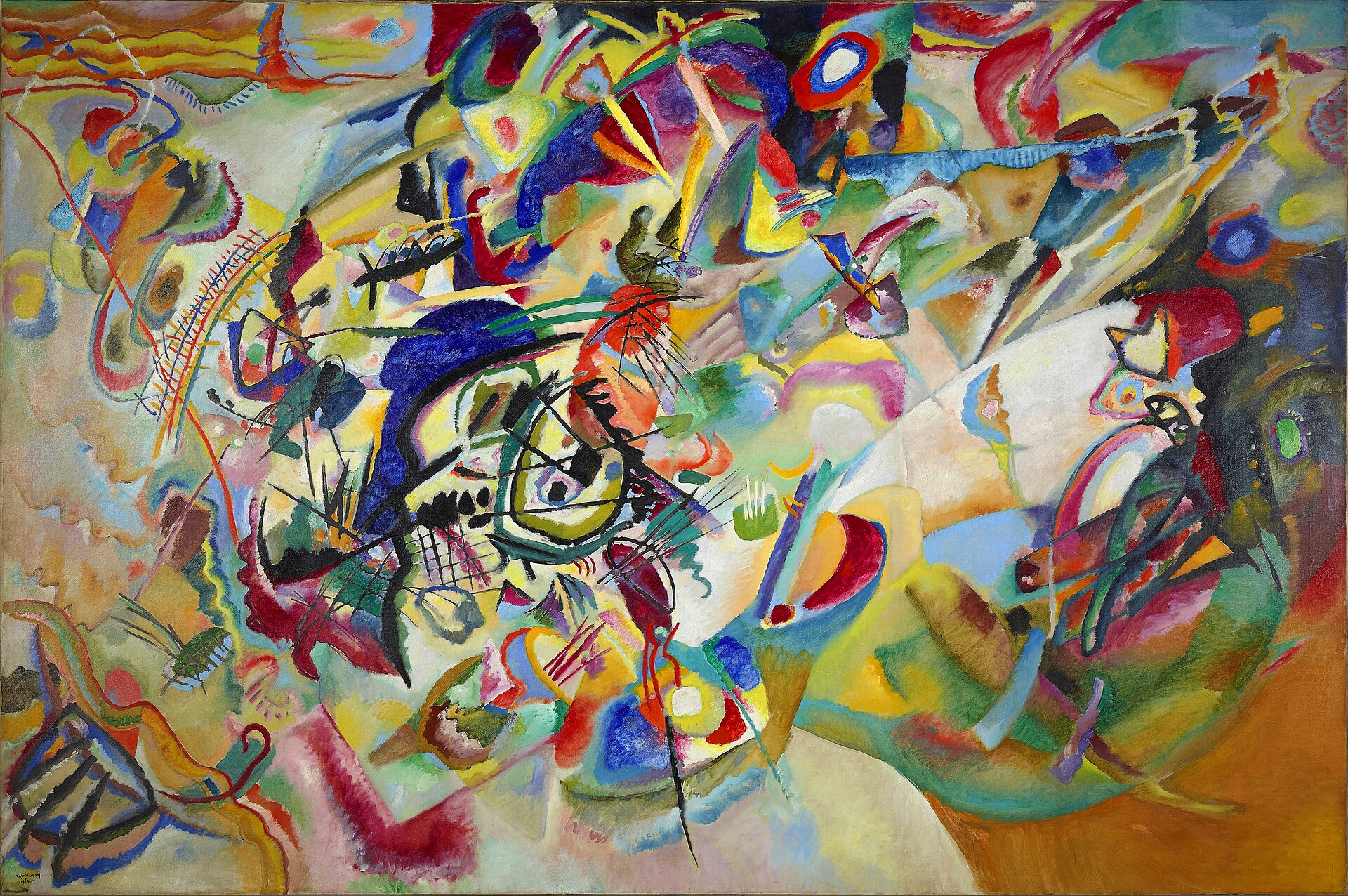
According to Wikipedia he spent months on more than thirty studies for this, then put the final thing down in about three or four days. The experts apparently read the Flood and Judgment Day into it — though nobody seems to claim you're actually supposed to be able to see them.
Erisava: Is there actually something in here, or is it just random shapes and colours?
Composition IV by Wassily Kandinsky, 1911
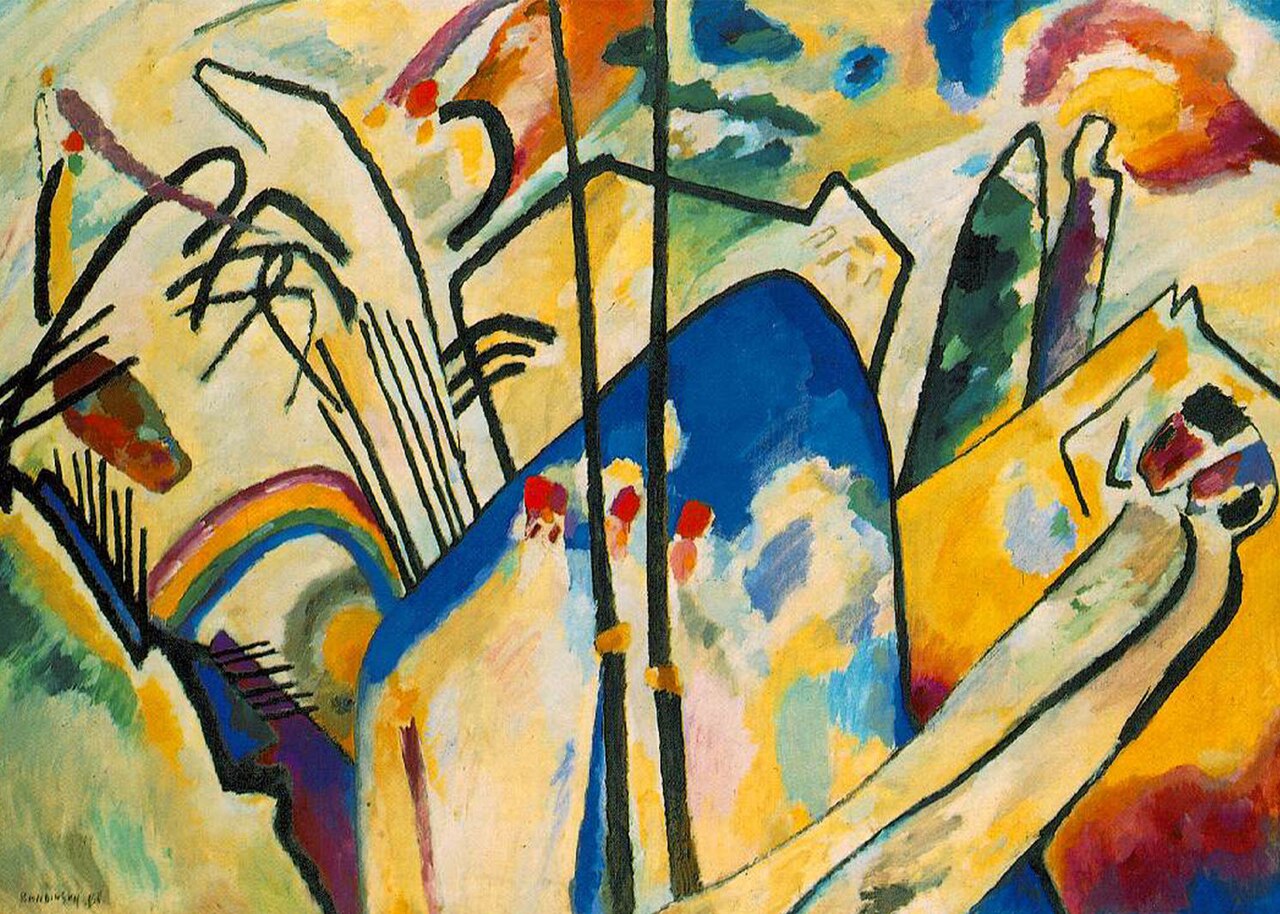
There's supposedly cavalry hidden in this one — apparently based on Cossacks riding into Moscow during the 1905 uprising, from a period when he still let recognizable figures sneak into otherwise abstract paintings.
Erisava: Do you see anything recognizable in here, or is it just color and lines?
Composition VI by Wassily Kandinsky, 1913
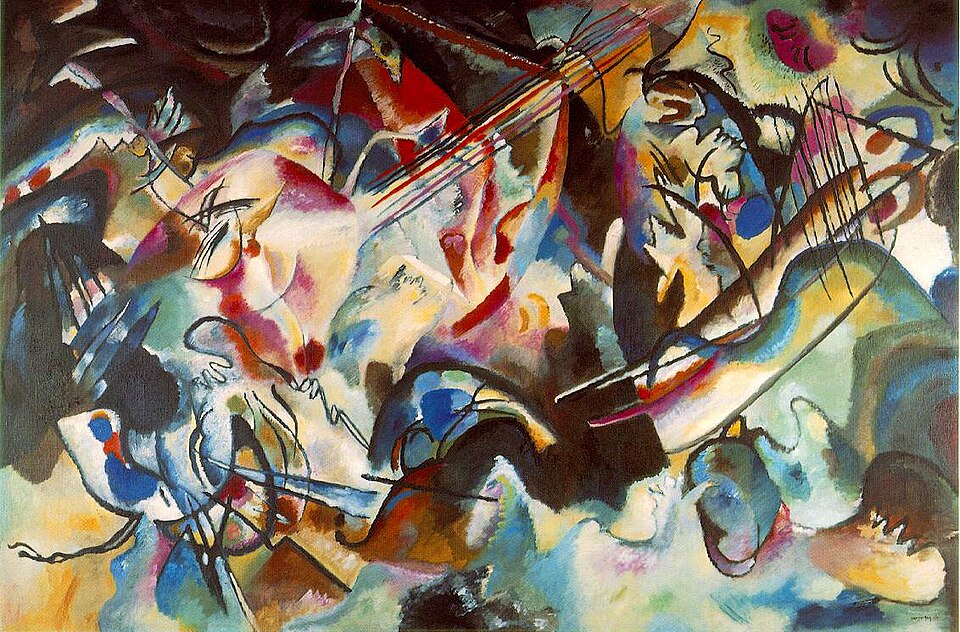
He apparently got stuck on this one for months, until his studio partner told him to just repeat the German word for flood — Überflut — instead of thinking it through. He finished the whole painting three days after that, still repeating the word the whole time.
Erisava: This feels like a storm frozen right in the middle of happening.