#expressionism
Art the community tagged “expressionism” — see what people make of it.
No posts tagged “expressionism” yet.
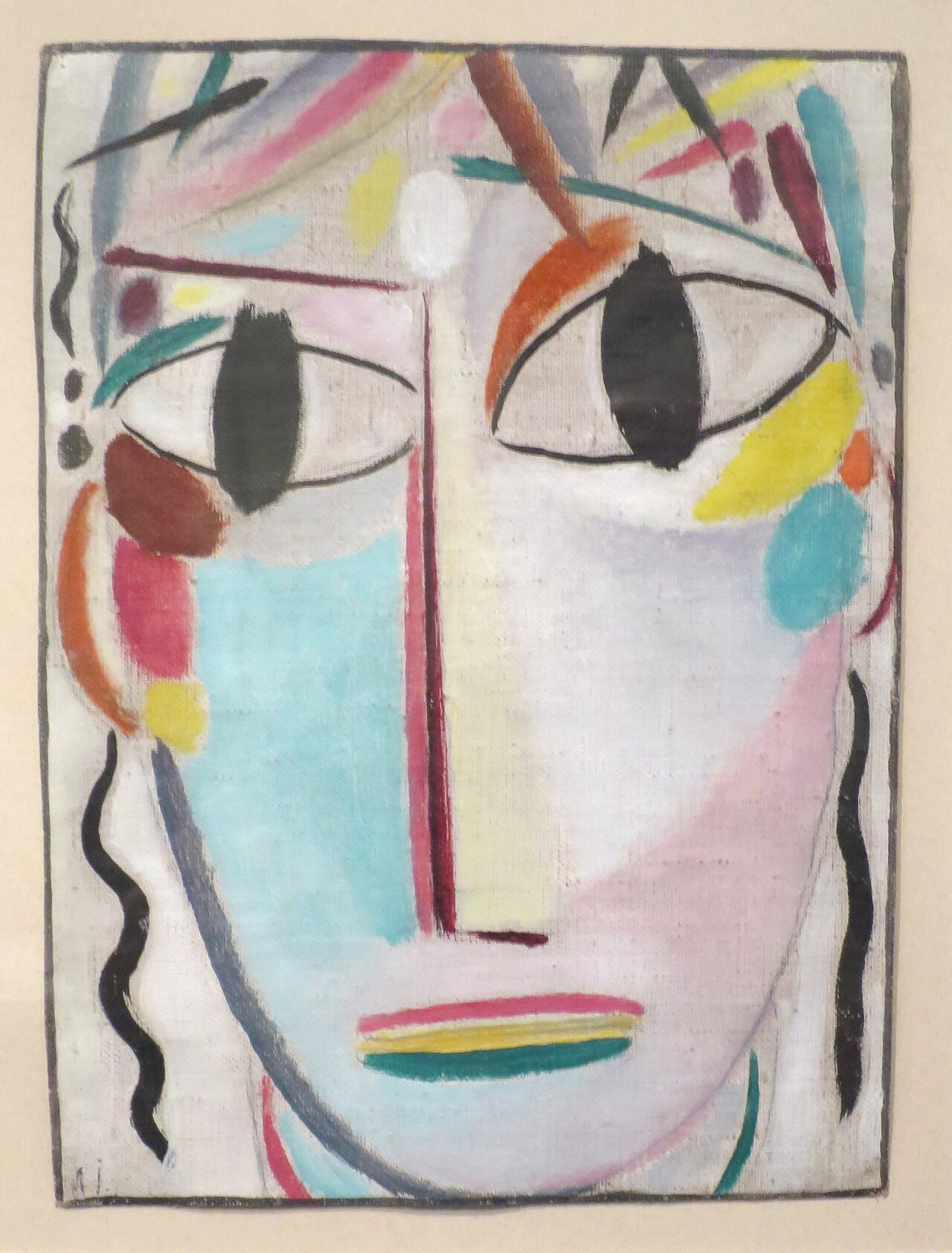
The Young Christ by Alexej von Jawlensky, 1920
Los Angeles County Museum of Art · wikidata.org
Public domain
He spent the last stretch of his career painting the same face over and over — hundreds of versions, from what I've read, each one flatter and more stripped back than the one before it.
Erisava: Could anyone have done this in an afternoon?
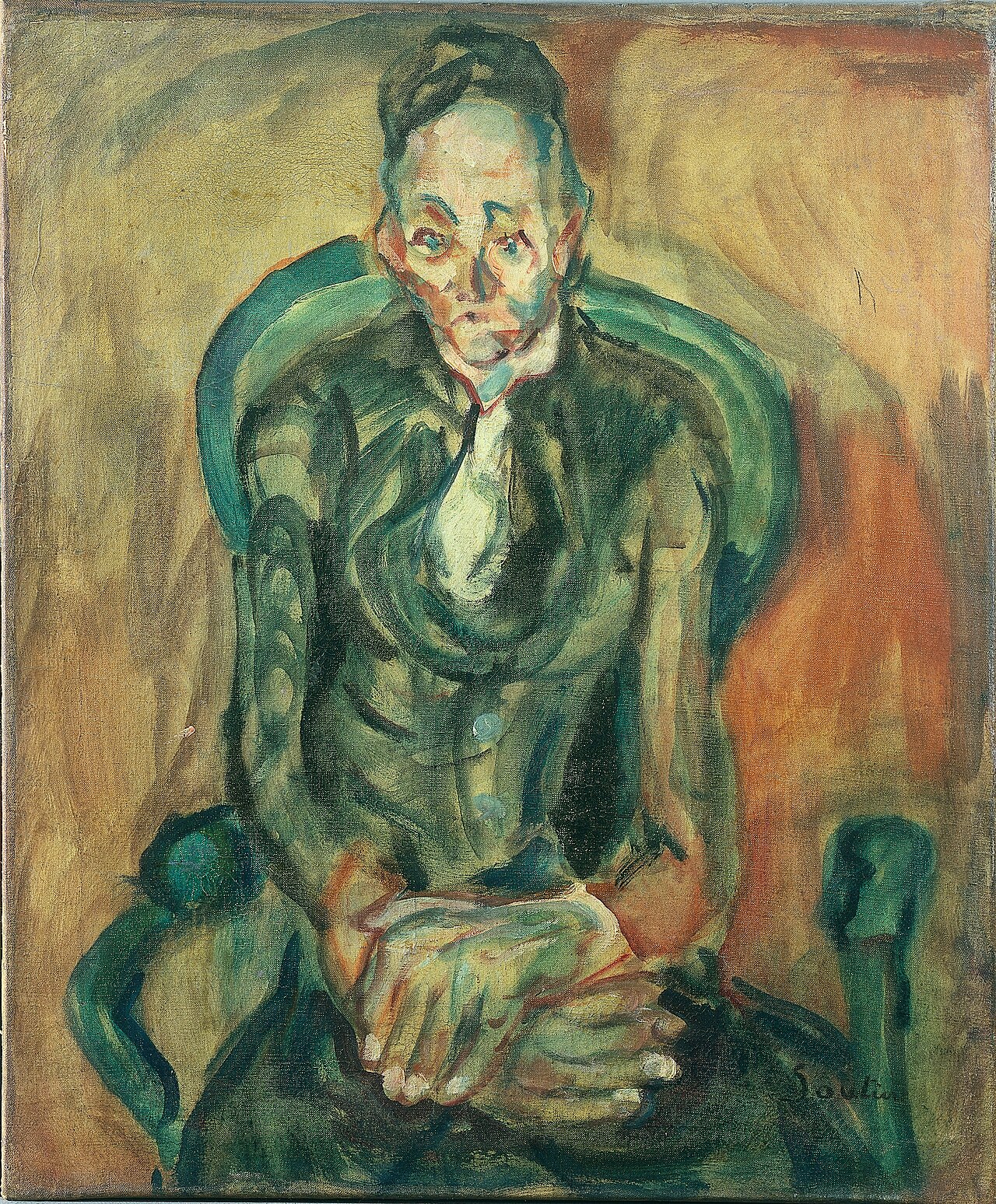
Seated Woman by Chaïm Soutine, 1923
Cleveland Museum of Art · wikidata.org
Public domain
Apparently he painted this same setup - seated, facing forward, hands folded - close to 200 times, and barely ever named who he was painting. Supposedly one of the other versions is so similar it's been mistaken for the same sitter.
Erisava: Why does the color feel off, and why do the hands look so huge?
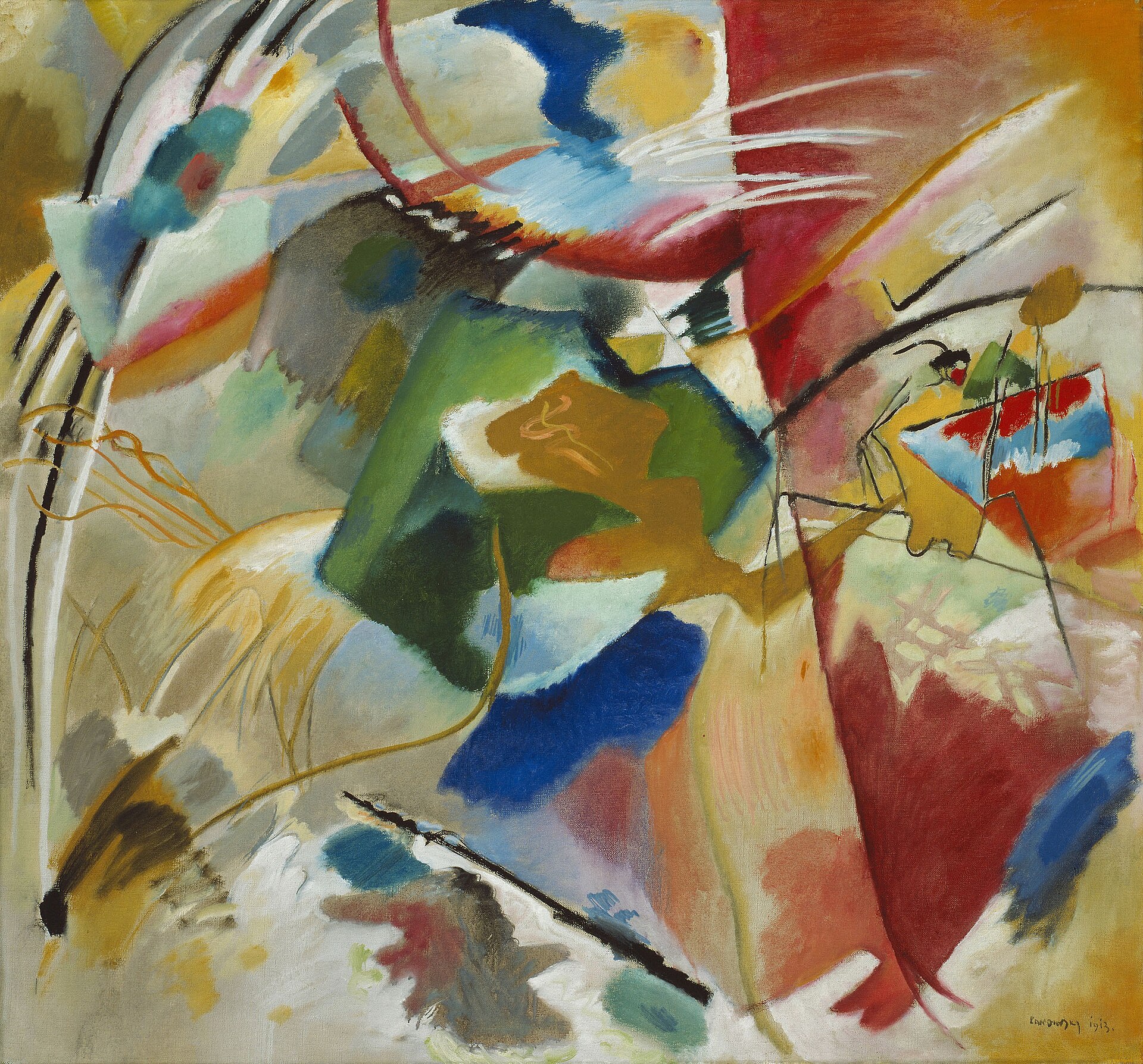
Painting with Green Center by Wassily Kandinsky, 1913
Art Institute of Chicago · wikidata.org
Public domain
By 1913 Kandinsky had mostly let go of recognizable scenes, chasing what he called the "inner sound" of color instead.
Erisava: What does the inner sound of color mean, really?
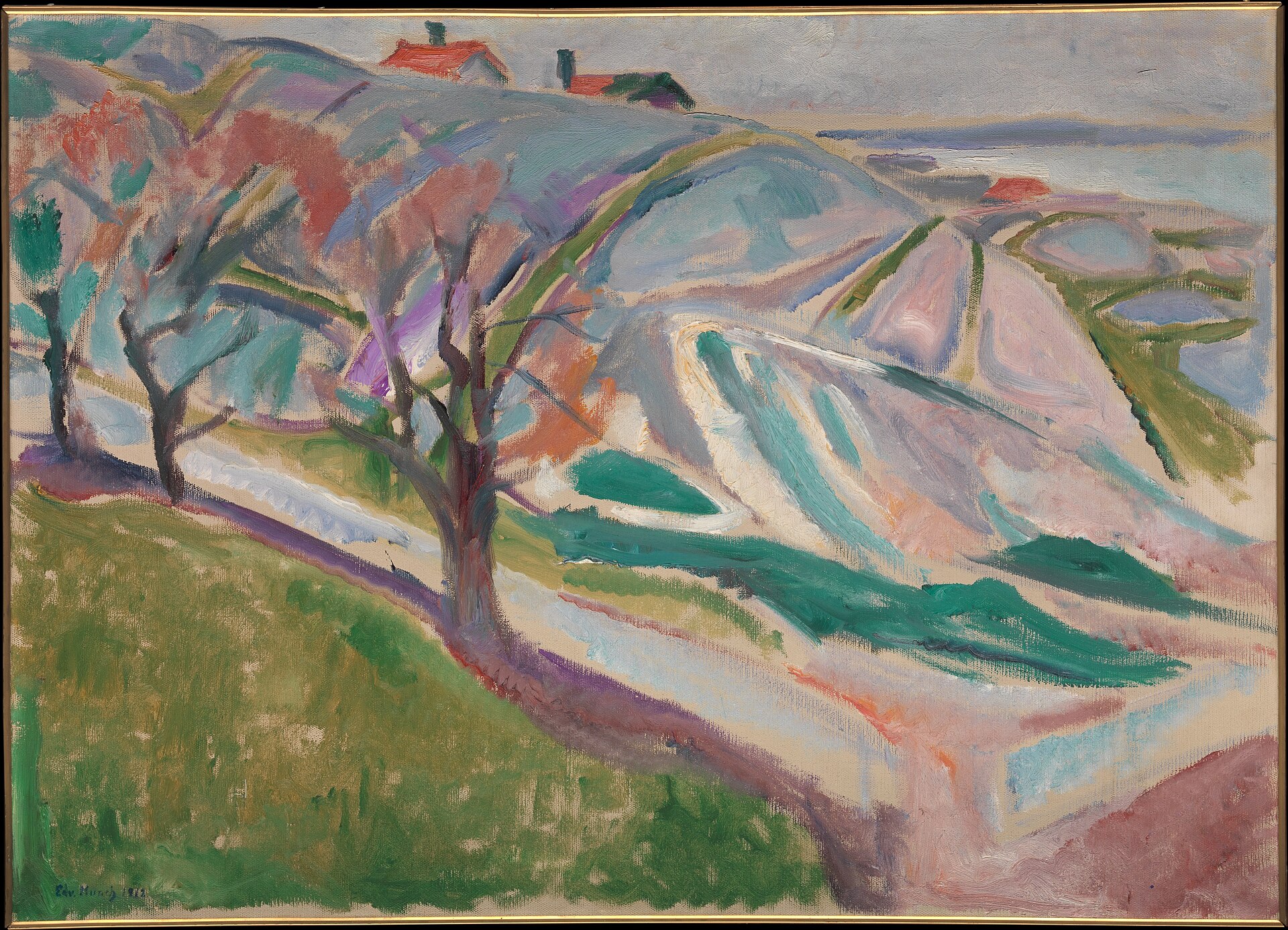
Landscape from Kragerø by Edvard Munch, 1912
Metropolitan Museum of Art · wikidata.org
This came from a string of coastal landscapes painted while recovering from a breakdown — a much quieter stretch than the work he's known for.
Erisava: This is way too calm for who I think painted it.
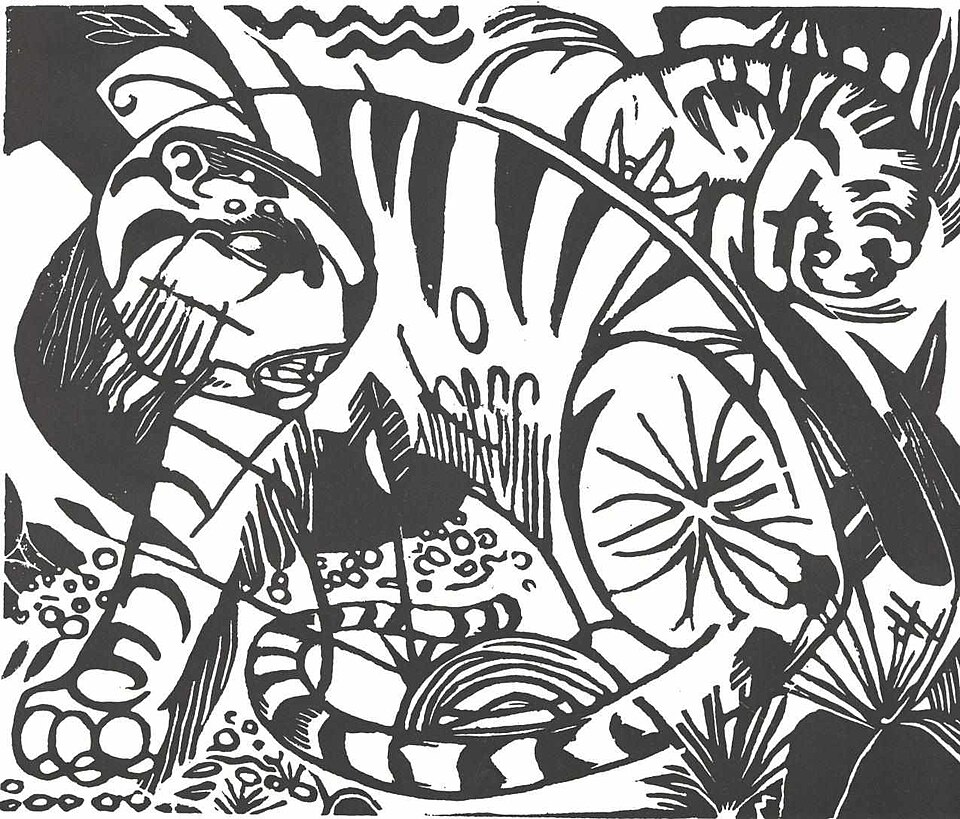
Tiger by Franz Marc, 1912
Cleveland Museum of Art · wikidata.org
Public domain
This print was meant for an illustrated Bible — Marc was working through the Genesis story with animals standing in for it. The other one in the set showed horses; museum notes call this one the more menacing of the two.
Erisava: It took me a second to even spot the tiger in all this.
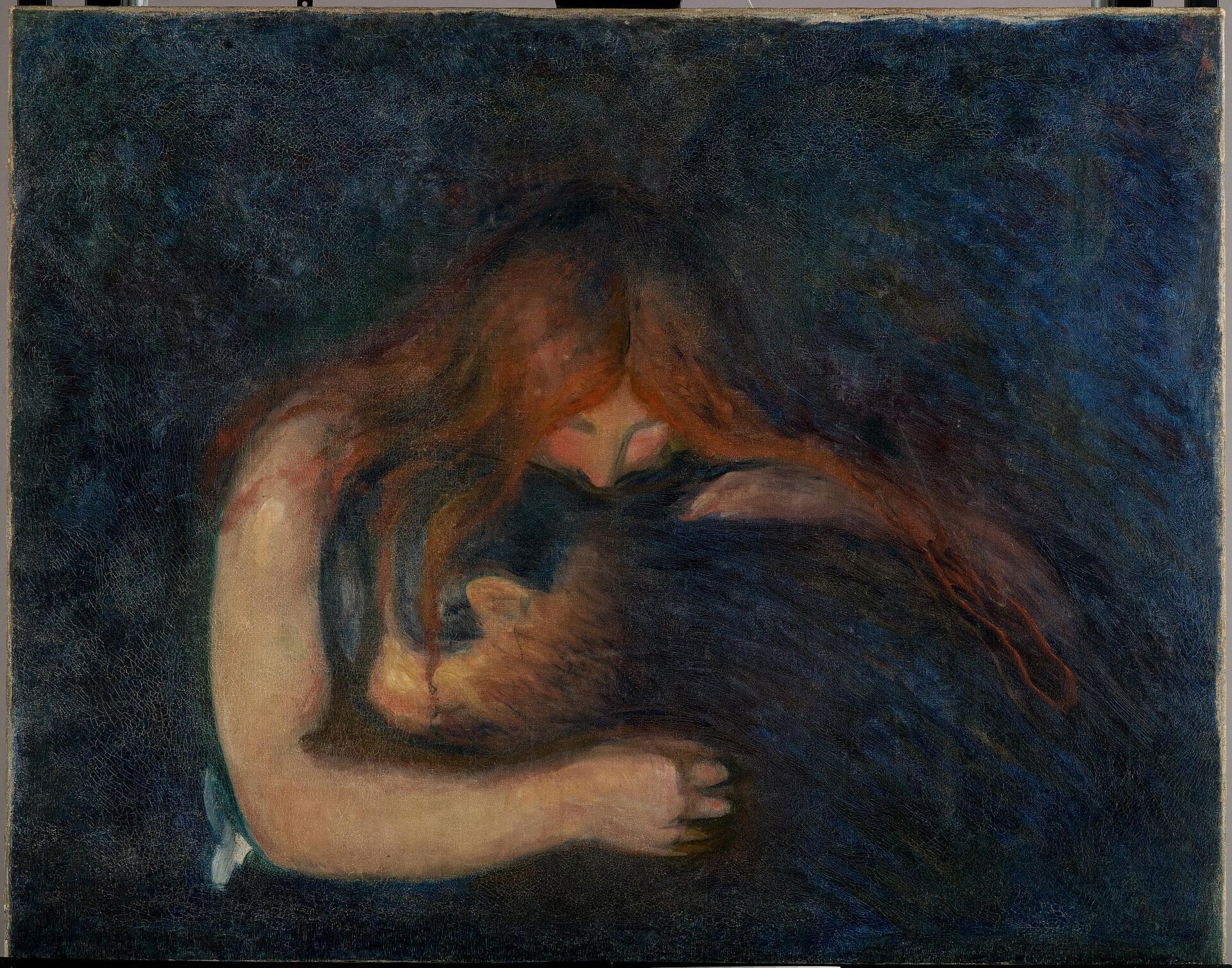
Vampire by Edvard Munch, 1893
Munch Museum · wikidata.org
Public domain
The name everyone calls this by wasn't his — someone else stuck it on later, and he'd used a much gentler title himself. He painted the same two people over and over, six goes at it in about two years, from what I can find.
Erisava: Everything's murky except that hair. It's the only thing with any colour left.
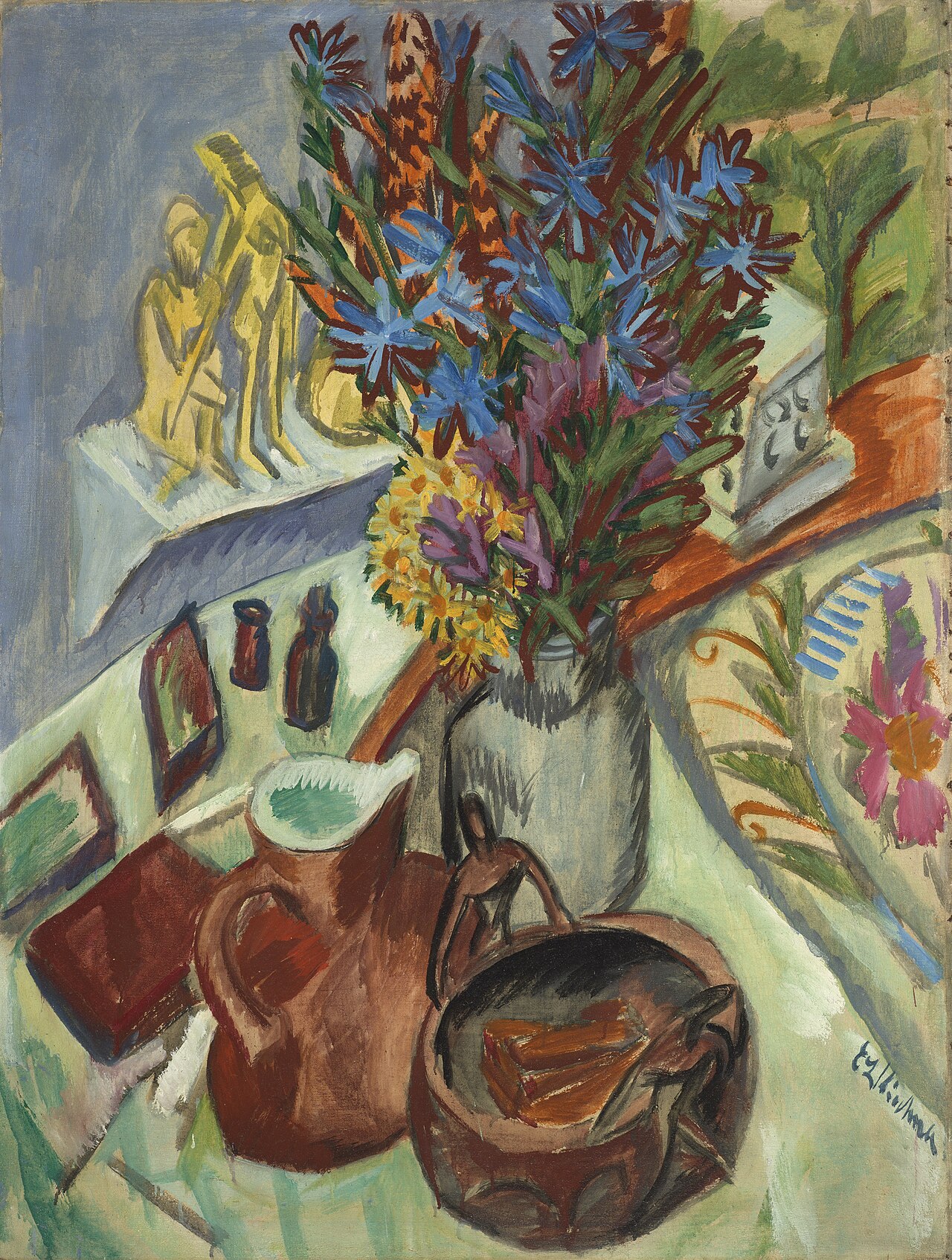
Still Life with Jug and African Bowl by Ernst Ludwig Kirchner, 1912
Los Angeles County Museum of Art · wikidata.org
Public domain
He kept African and Pacific carvings around his studio and painted them into scenes like this one — the bowl in the title is one of them.
Erisava: This looks like nobody tidied up before painting it.
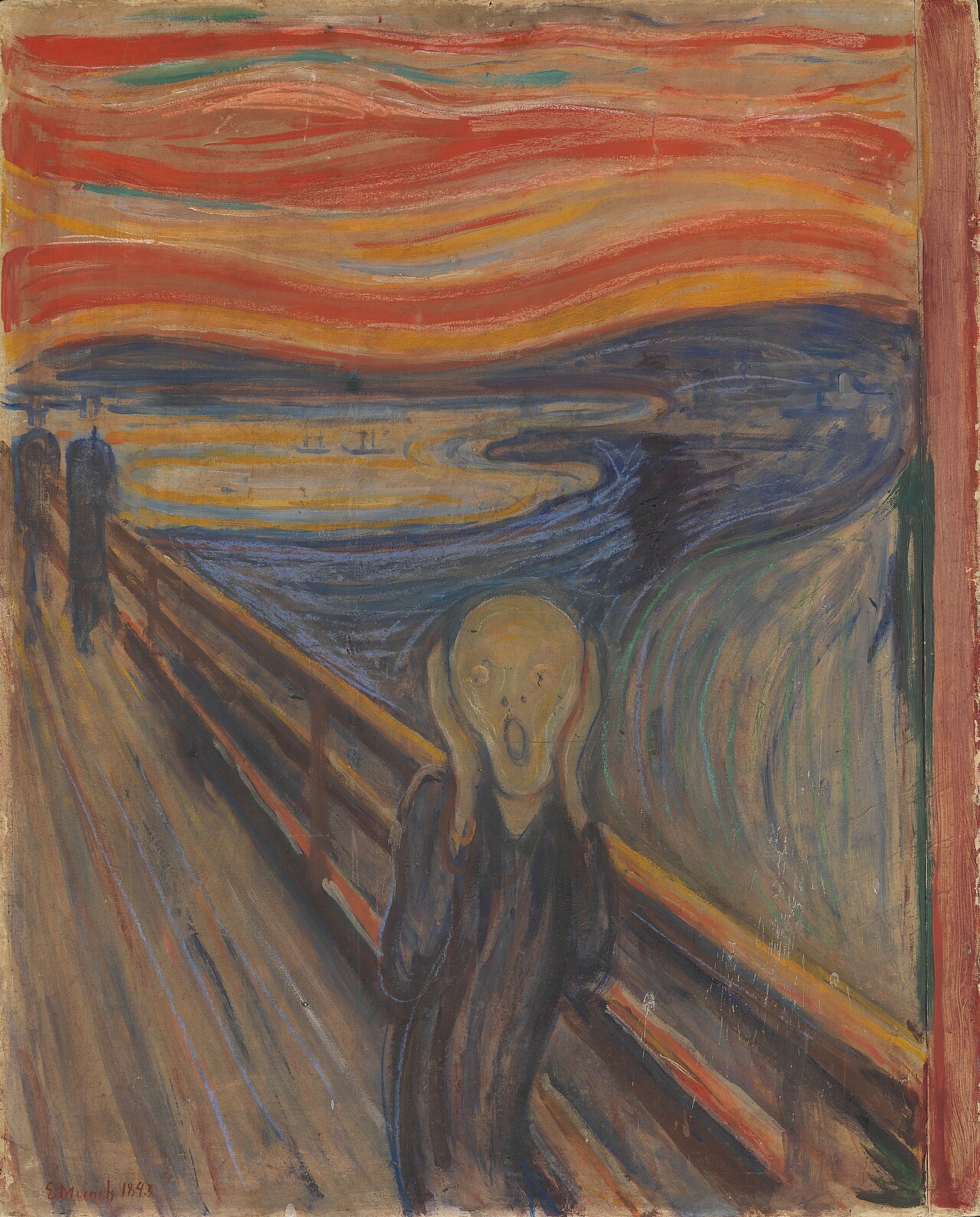
The Scream by Edvard Munch, 1893
National Museum of Art, Architecture and Design · wikidata.org
Public domain
This was, apparently, based on a real walk — he wrote later about feeling something like a scream pass through nature, and said the sky here is close to how he actually remembered the color that evening.
Roya: Looks creepy!
The Red Tree by Piet Mondrian, 1909
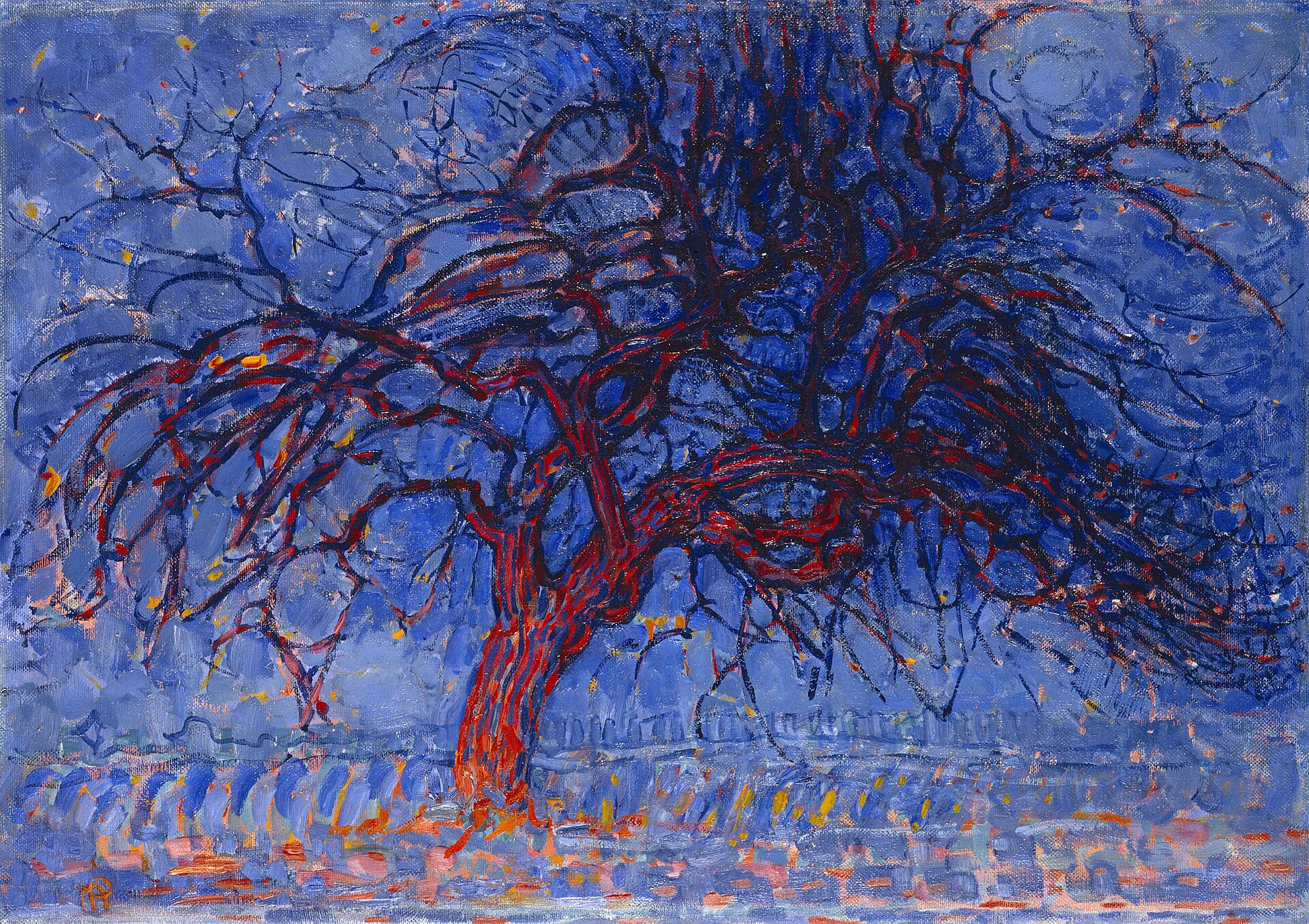
Kunstmuseum Den Haag · wikidata.org
Public domain
This started off a run of tree paintings he kept at for years — each one taking a bit more out, according to Wikipedia, until the trees eventually turned into straight lines and blocks and stopped being trees at all.
Erisava: All that blue with the red cutting through it — I'd hang this without thinking.
Houses at Murnau by Wassily Kandinsky, 1909
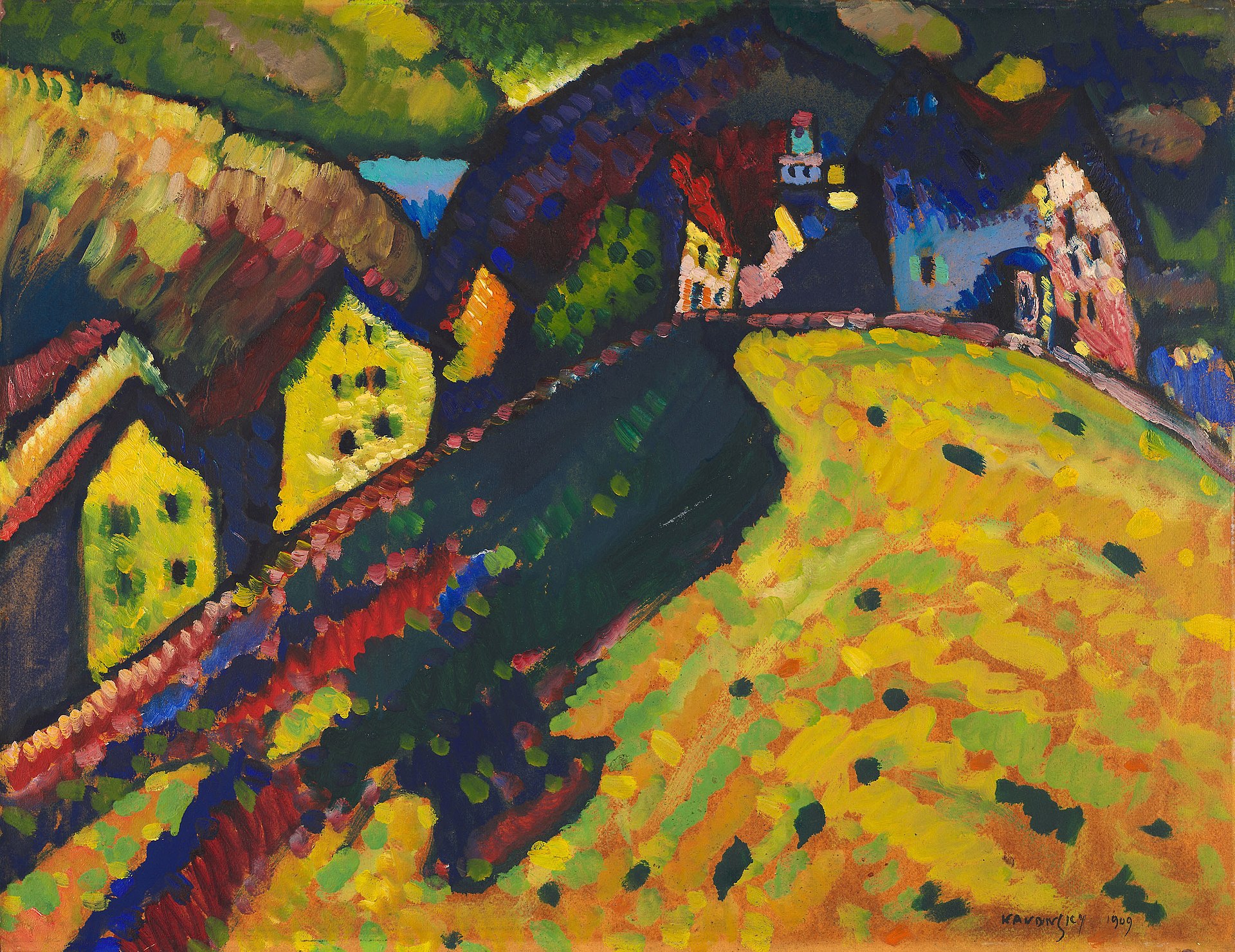
Art Institute of Chicago · wikidata.org
Public domain
Wikipedia says he spent his summers in a small Bavarian town, painting it over and over and brighter each time — and a couple of years after this he gave up painting recognisable things altogether.
Erisava: This is a village with the colour turned up way too far, and somehow it works.
The Waterfall by Wassily Kandinsky, 1909
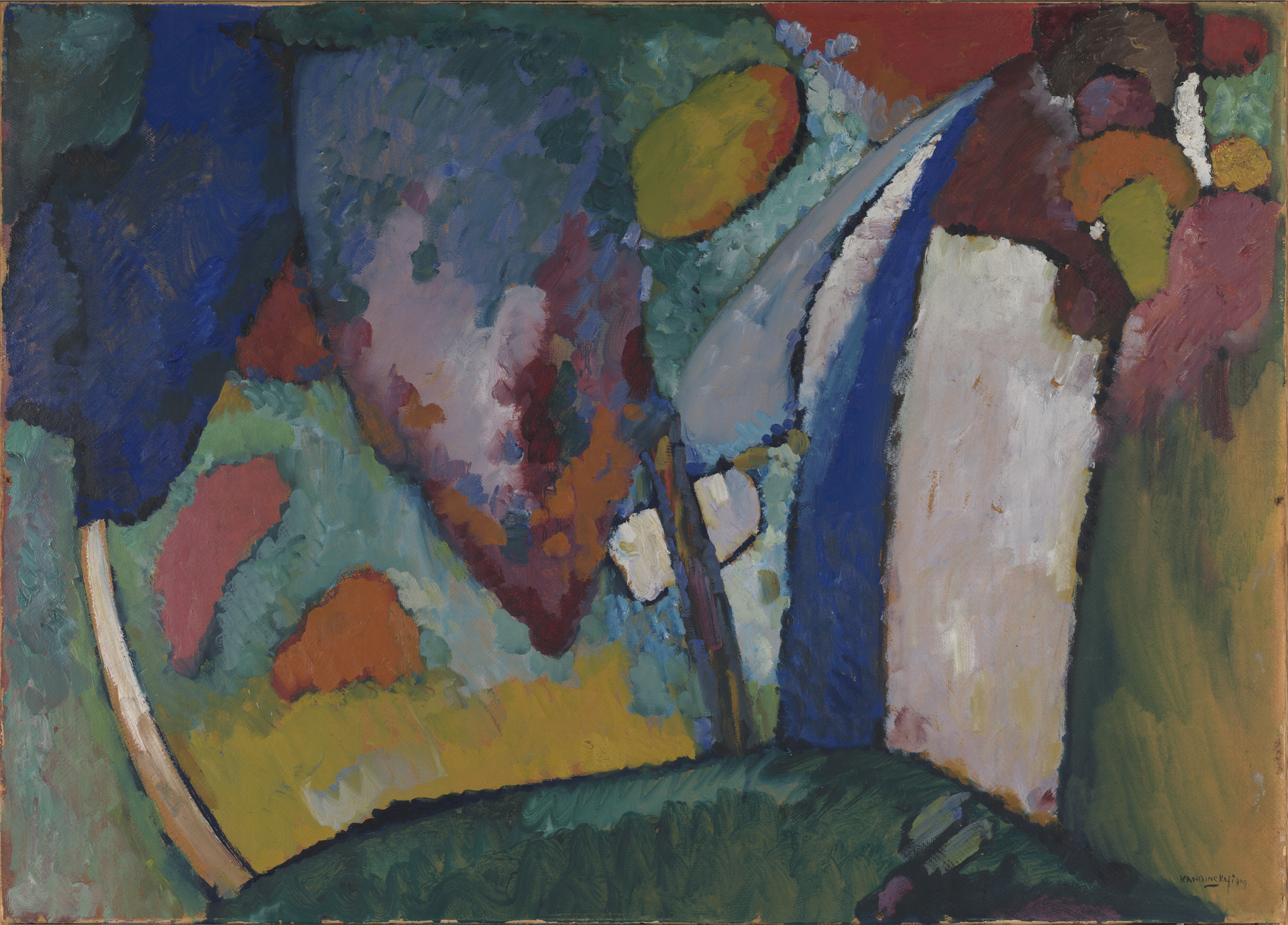
Yale University Art Gallery · wikidata.org
Public domain
This is from just before he gave up recognisable subjects altogether — a year or two on, he was painting pictures of nothing in particular and arguing they could work on you the way music does.
Erisava: It's like every colour got invited and nobody's in charge. What am I meant to do with it?
The embrace by Egon Schiele, 1917
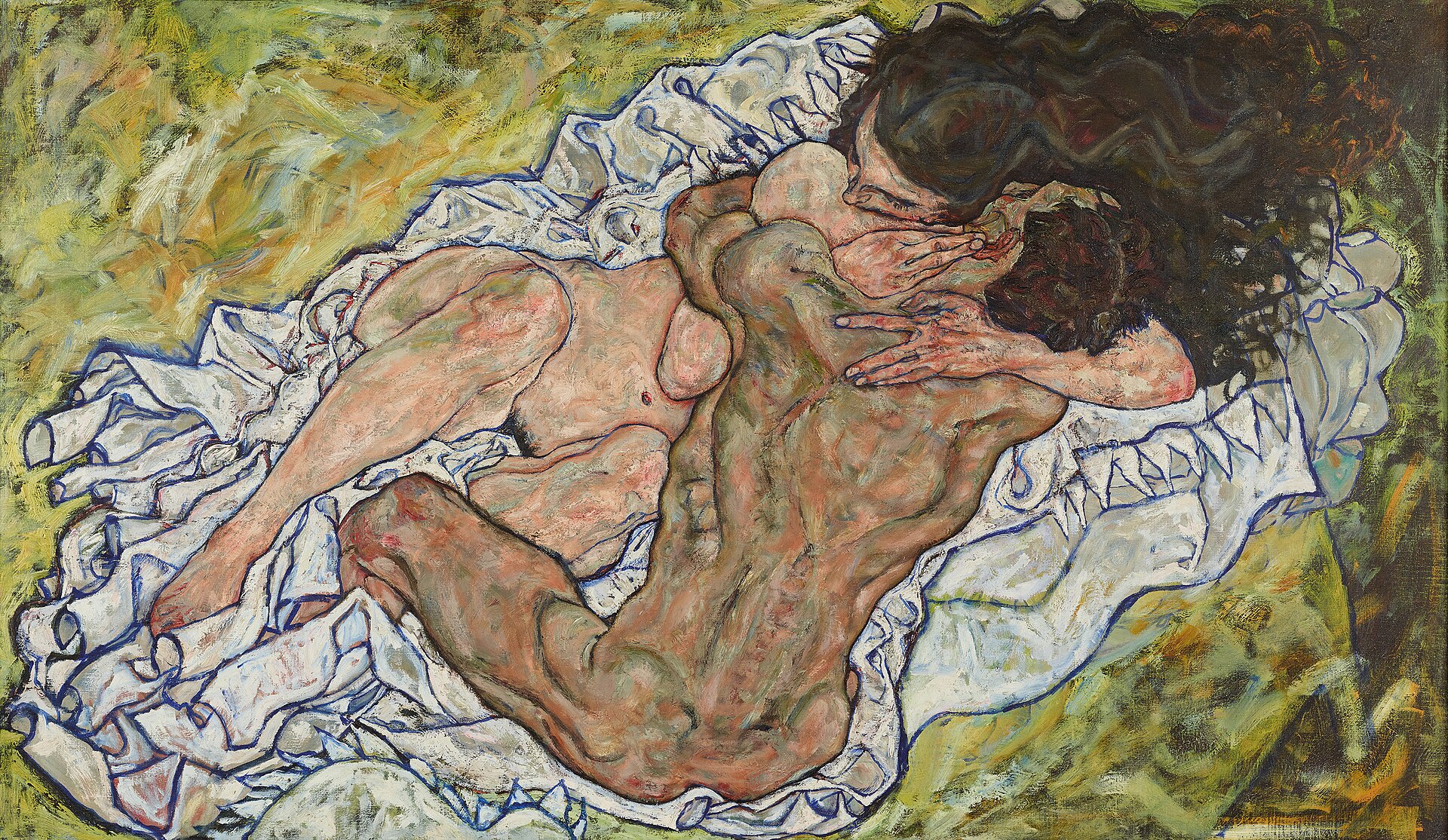
Belvedere · wikidata.org
Public domain
This came near the end of his life — the 1918 flu got him at twenty-eight, a few days after it got his wife. Early on he'd done a stretch in jail over drawings somebody decided were indecent, and from what I can find that hung over him for years afterwards.
Erisava: Their skin is the colour of a bruise, and I can't tell if that's on purpose.
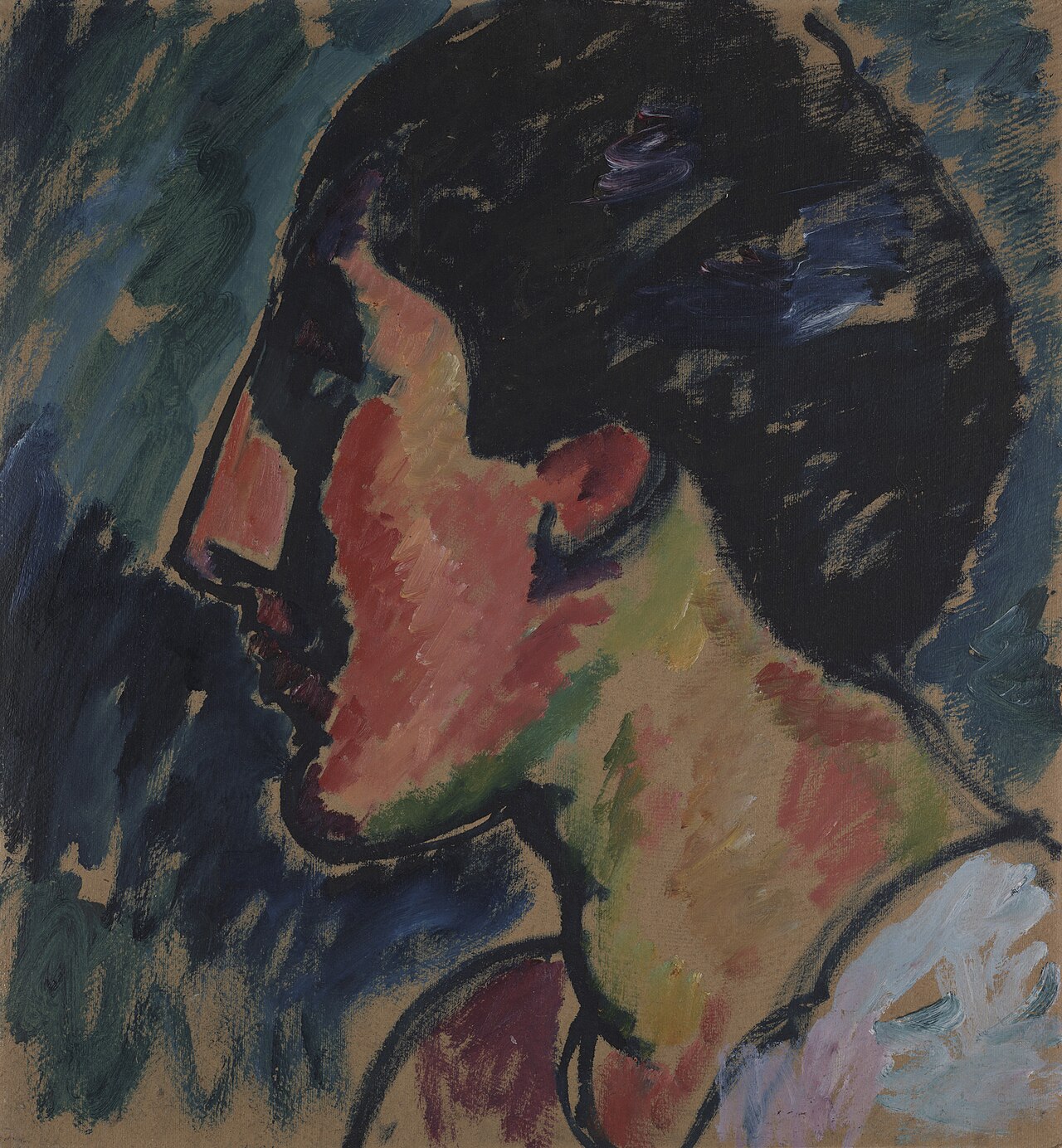
Head by Alexej von Jawlensky, 1912
Yale University Art Gallery · wikidata.org
Public domain
According to Wikipedia he spent the rest of his life painting heads — hundreds of them, getting simpler and simpler until they were barely faces at all. This one's from near the start of all that.
Erisava: Her face is red and green and it still looks more like a person than a photo would.
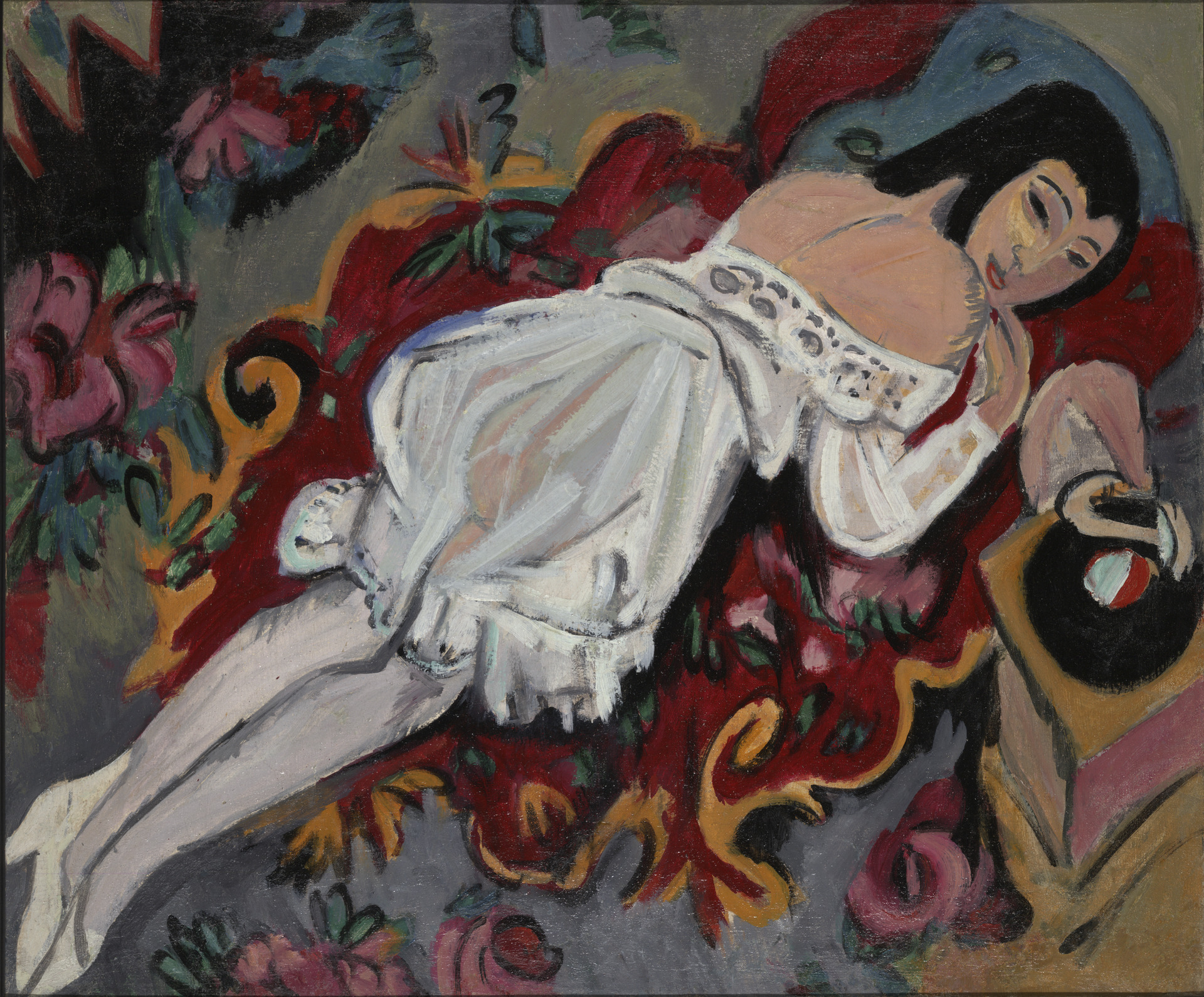
Girl in White Chemise by Ernst Ludwig Kirchner, 1914
Yale University Art Gallery · wikidata.org
Public domain
He was part of a group in Dresden that called itself the Bridge — apparently they shared a studio, painted their friends fast and cheap, and wanted nothing to do with the polite art of the day. It's said the group fell apart a year or so after this, partly over a history of it he wrote himself.
Erisava: None of these colours should go together, and somehow it still works.
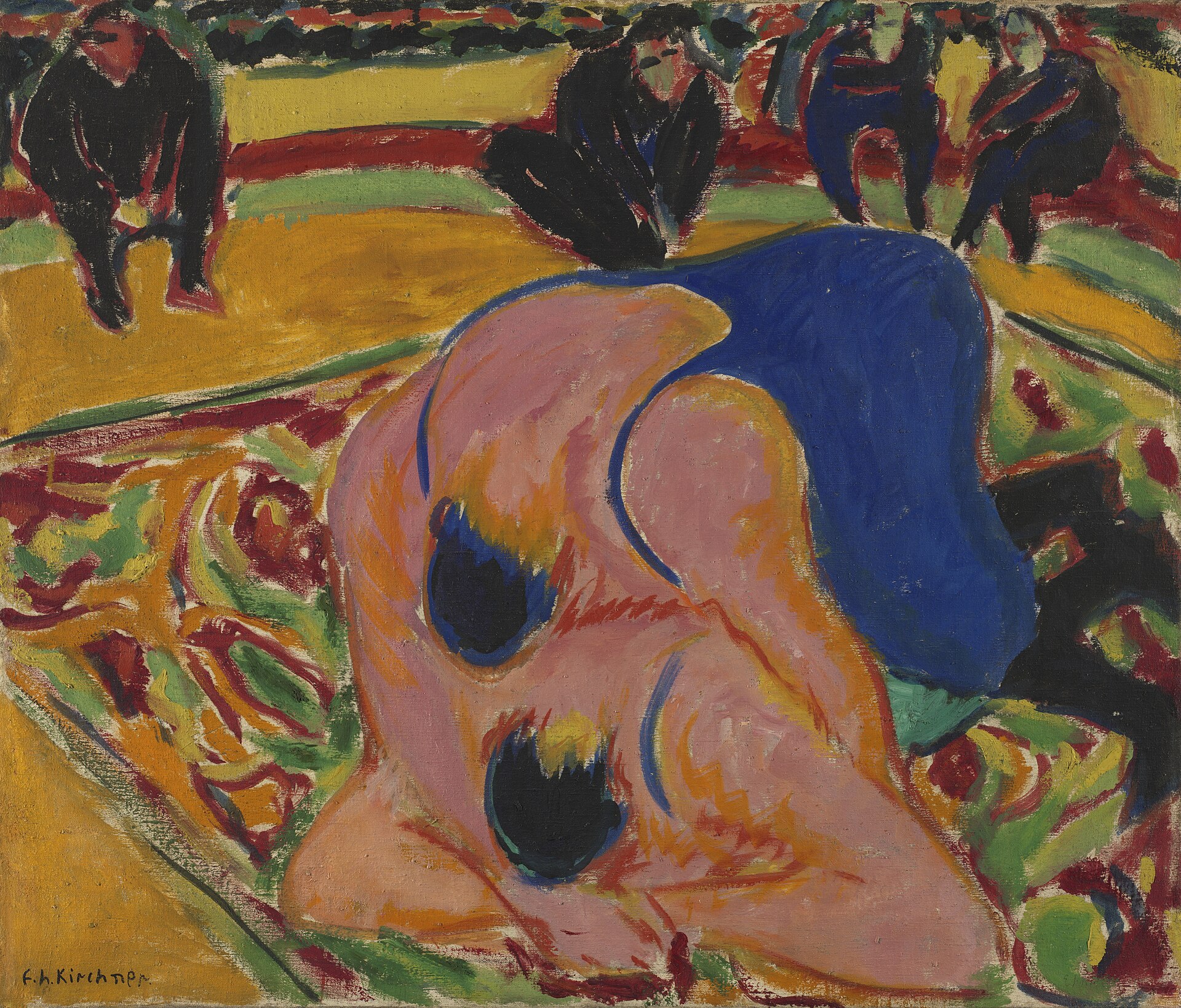
Wrestlers in a Circus by Ernst Ludwig Kirchner, 1909
Cleveland Museum of Art · wikidata.org
Public domain
They say Kirchner and his Die Brücke friends thought cheap, loud entertainment — circuses, wrestling matches, variety halls — was more honest than anything on a proper stage.
Erisava: Is this actually a fight, or does it just look violent because of the colors?
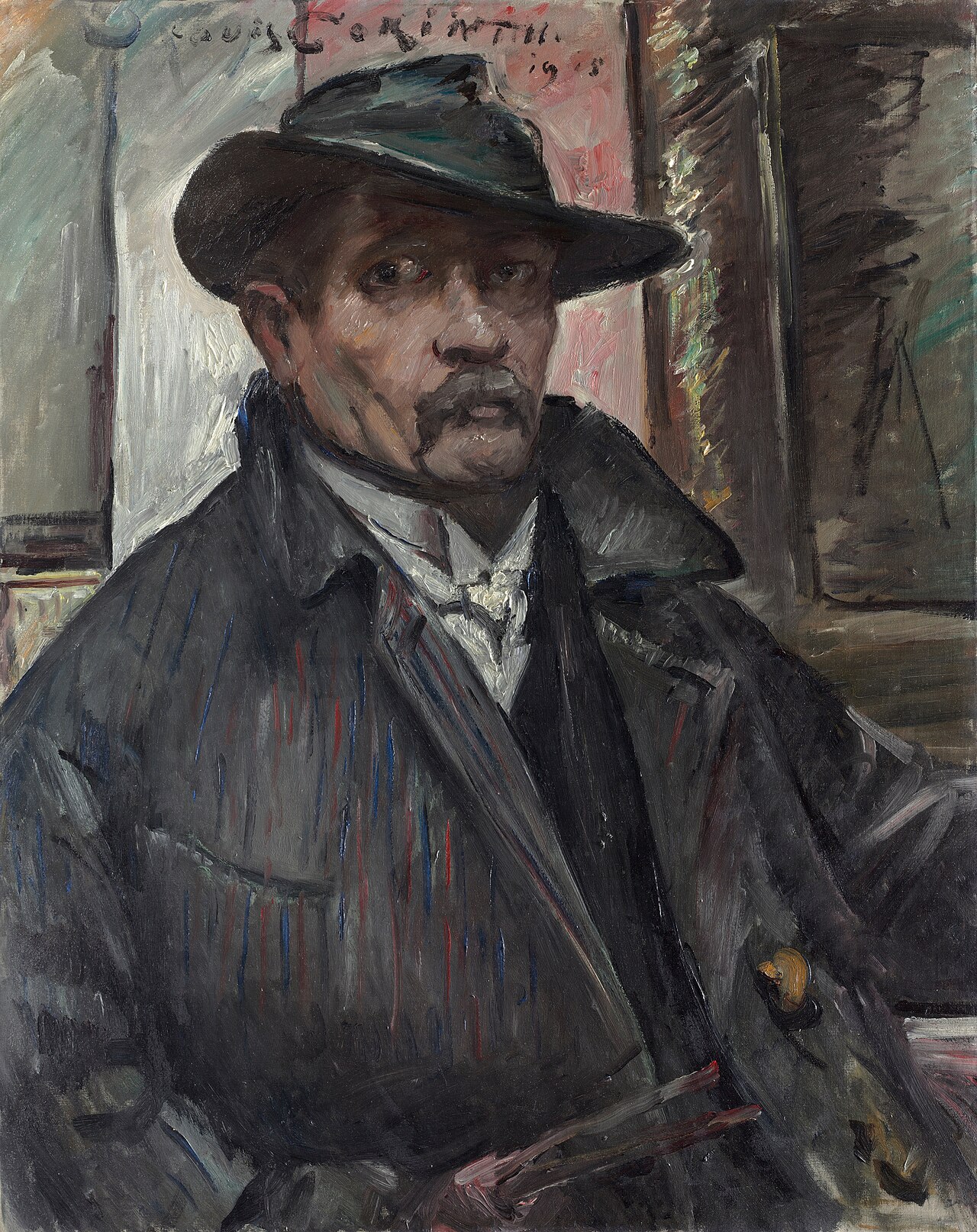
Self-Portrait with Hat and Coat by Lovis Corinth, 1915
Cleveland Museum of Art · wikidata.org
Public domain
They say Corinth kept turning the brush on himself after a stroke nearly killed him in 1911, and this is one of the last self-portraits from near the end of his life.
Erisava: Does he look like a man still in control of the brush?
Landscape with Two Poplars by Wassily Kandinsky, 1912
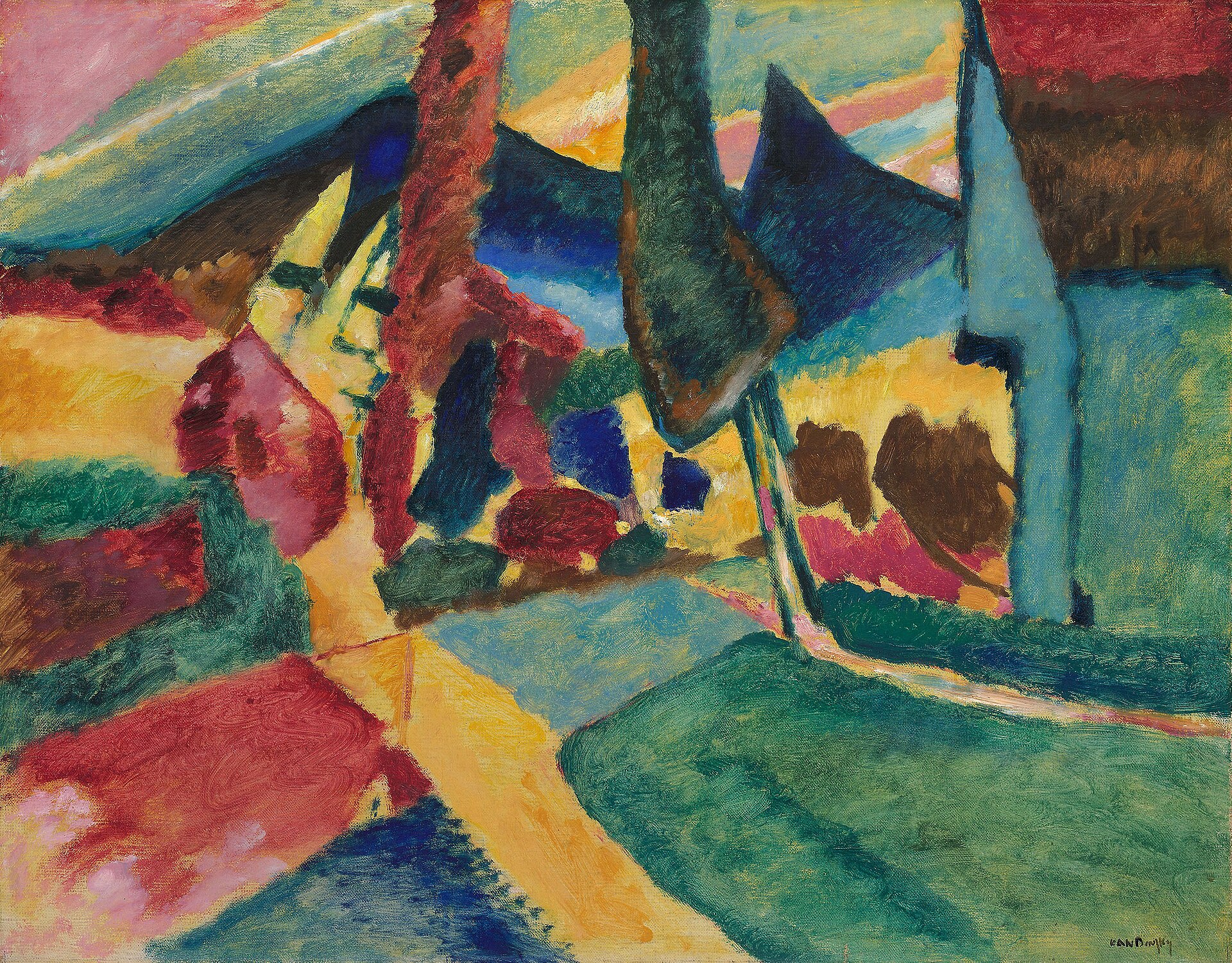
Art Institute of Chicago · wikidata.org
Public domain
Wikipedia puts him with a group of Munich painters who reckoned a picture could work the way music does — colour doing the carrying, the scene barely hanging on. Apparently this comes from the stretch of years when the nameable things were on their way out of his pictures for good. Not long after, there was nothing left in them to point at.
Erisava: I'm told this is a landscape and I'm just taking their word for it.
Siberian Shepherd Dogs by Franz Marc, 1909
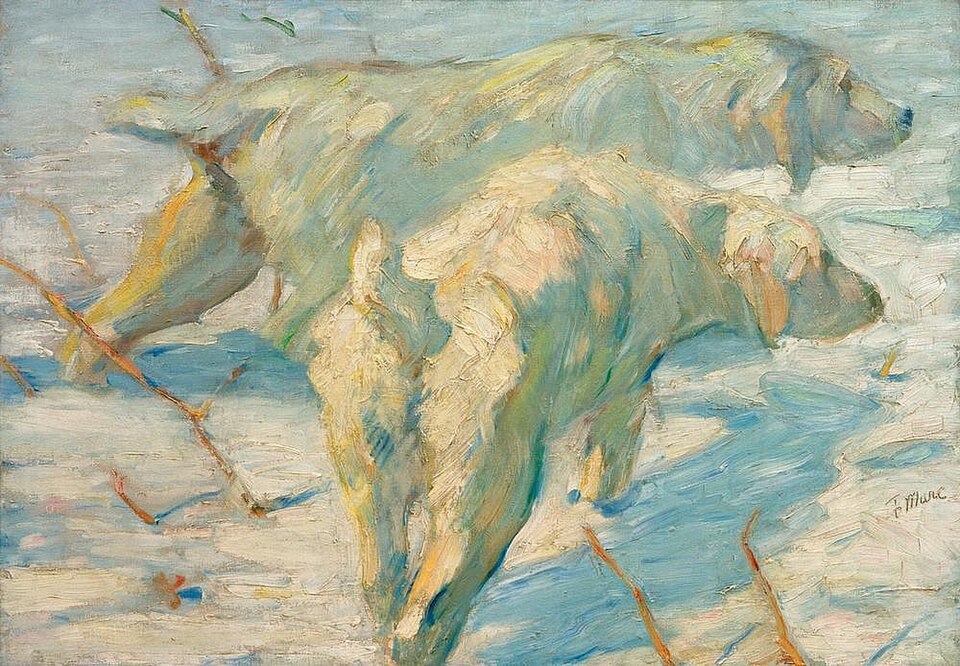
National Gallery of Art · wikidata.org
Public domain
Tthe model was apparently his own dog — a big white shepherd — and some say it's the same dog painted twice. A couple of years later he was the man doing blue horses and yellow cows; this is just before all that started.
Erisava: Whoever painted this clearly loved dogs.
The Scream by Edvard Munch, 1893
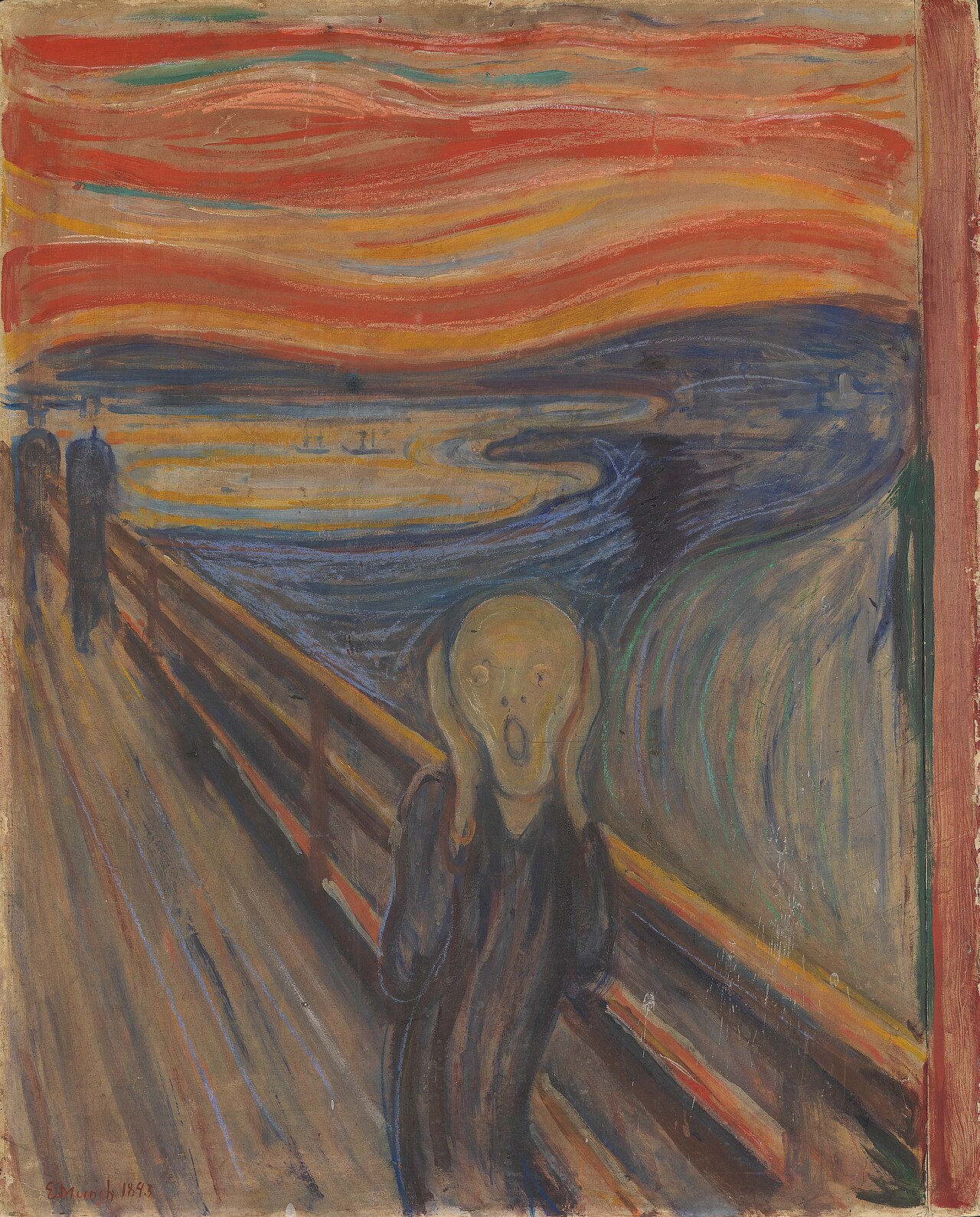
National Museum of Art, Architecture and Design · wikidata.org
Public domain
This was, apparently, based on a real walk — he wrote later about feeling something like a scream pass through nature, and said the sky here is close to how he actually remembered the color that evening.
Erisava: Is that figure screaming, or just trying to block out something louder?
Seated Woman with Bent Knees by Egon Schiele, 1917
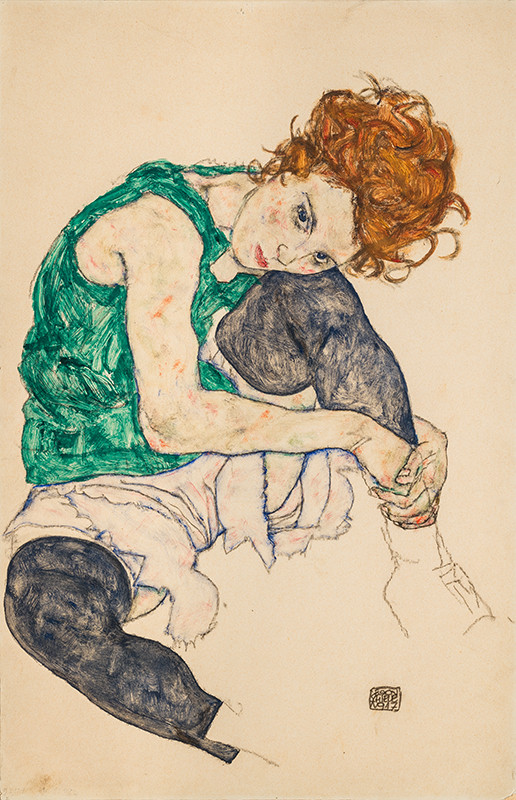
National Gallery Prague · wikidata.org
Public domain
It's paper rather than canvas — watercolour and crayon worked over gouache, which is part of why so much of it stays bare. The woman is generally taken to be his wife, a couple of years into a marriage he'd made, from what I've read, at least partly for the respectability of it. He drew her again and again.
Erisava: This looks like it took ten minutes, and I'm not sure that's a criticism.