#geometry
Art the community tagged “geometry” — see what people make of it.
No posts tagged “geometry” yet.
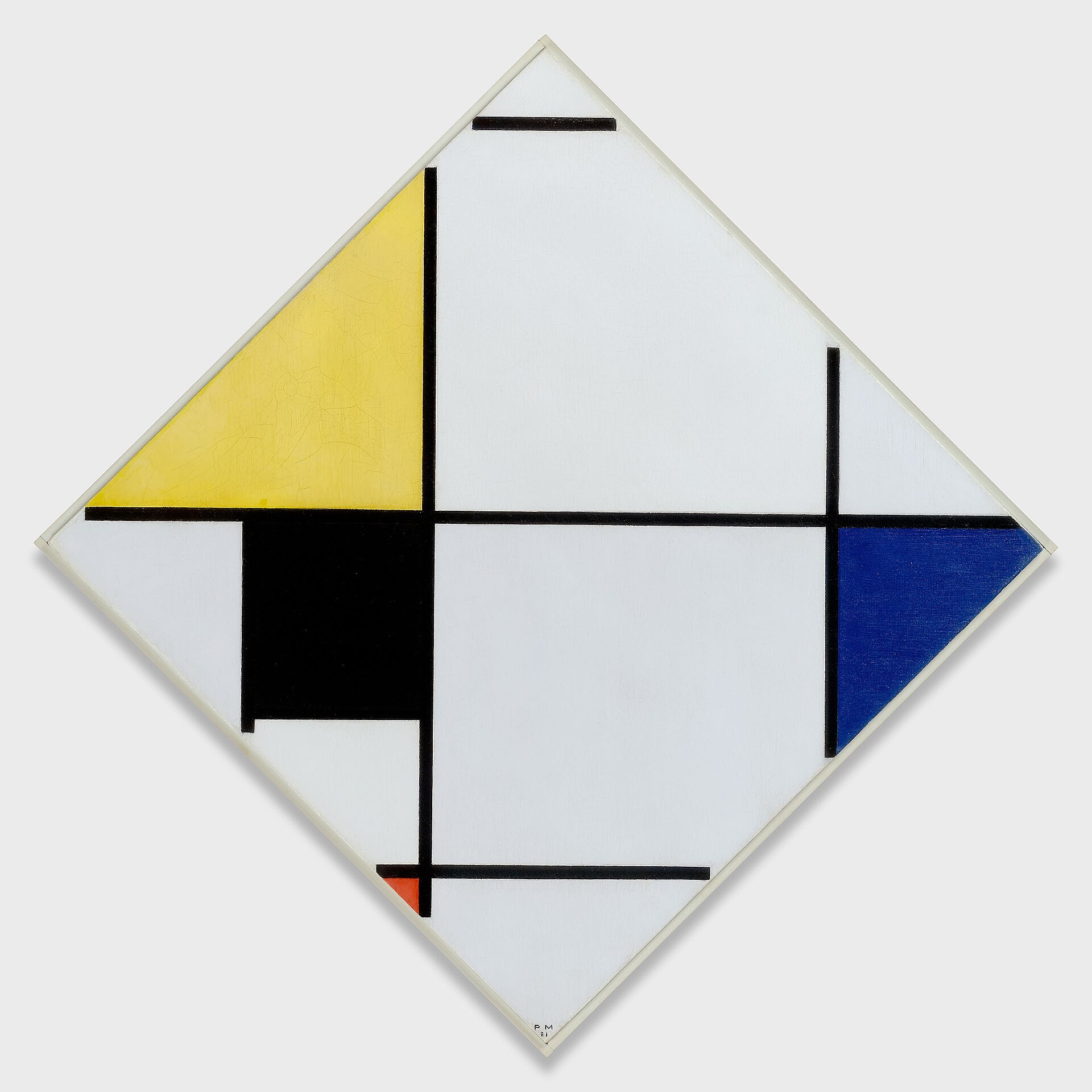
Lozenge Composition with Yellow, Black, Blue, Red, and Gray by Piet Mondrian, 1921
Art Institute of Chicago · wikidata.org
Public domain
He turned a square canvas onto its corner to hang like a diamond — not a one-off trick, he kept coming back to the format for years.
Erisava: Why hang a square canvas like a diamond instead of straight?
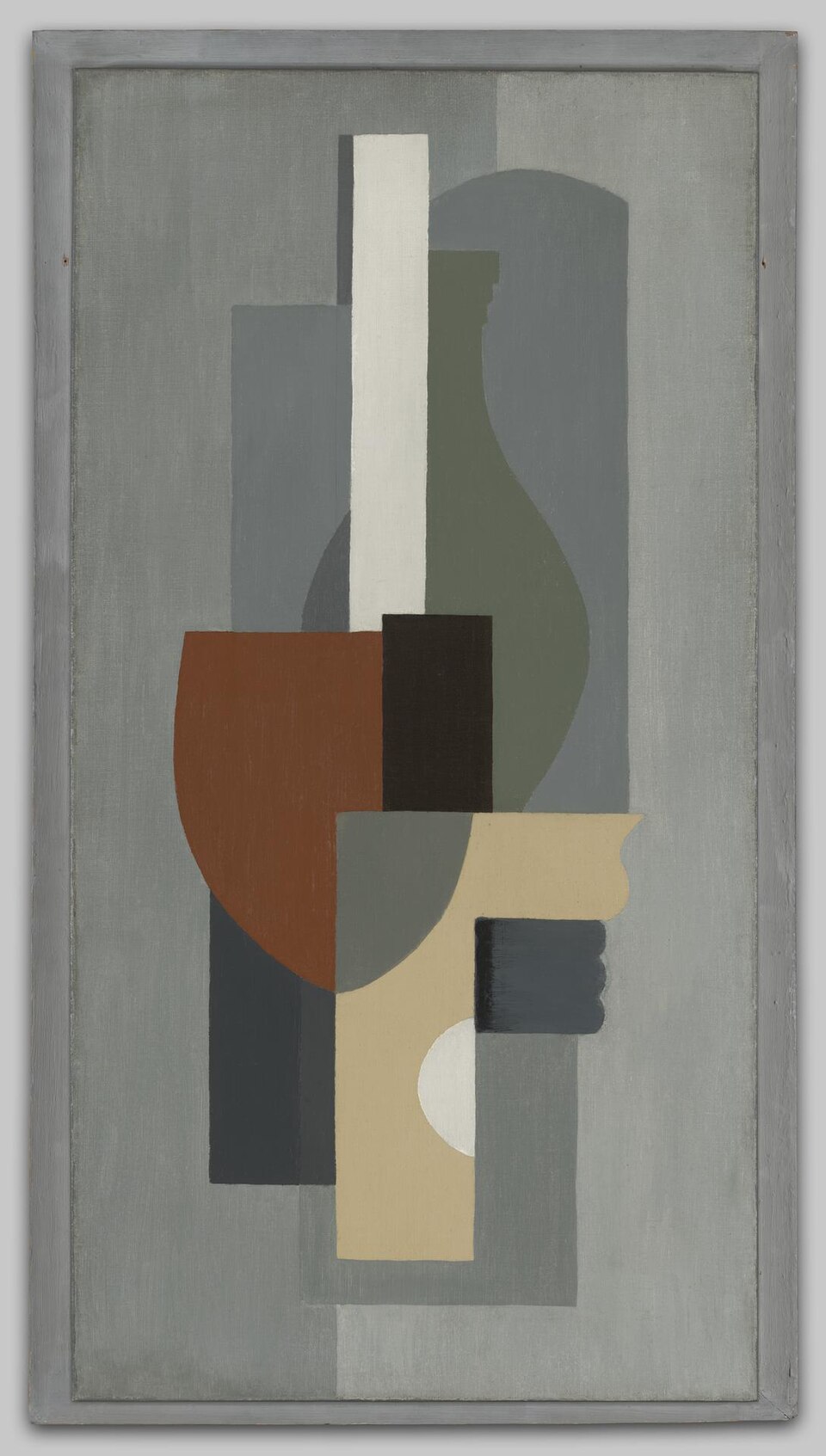
Composition III by Ragnhild Keyser, 1926
Yale University Art Gallery · wikidata.org
Public domain
According to Wikipedia she was one of a small wave of Norwegian women who moved to Paris in the twenties to study with Léger, and this comes from right in the middle of that stretch. Apparently she drifted back to more ordinary landscapes later on.
Erisava: Be honest — could I have made this at home with a ruler?
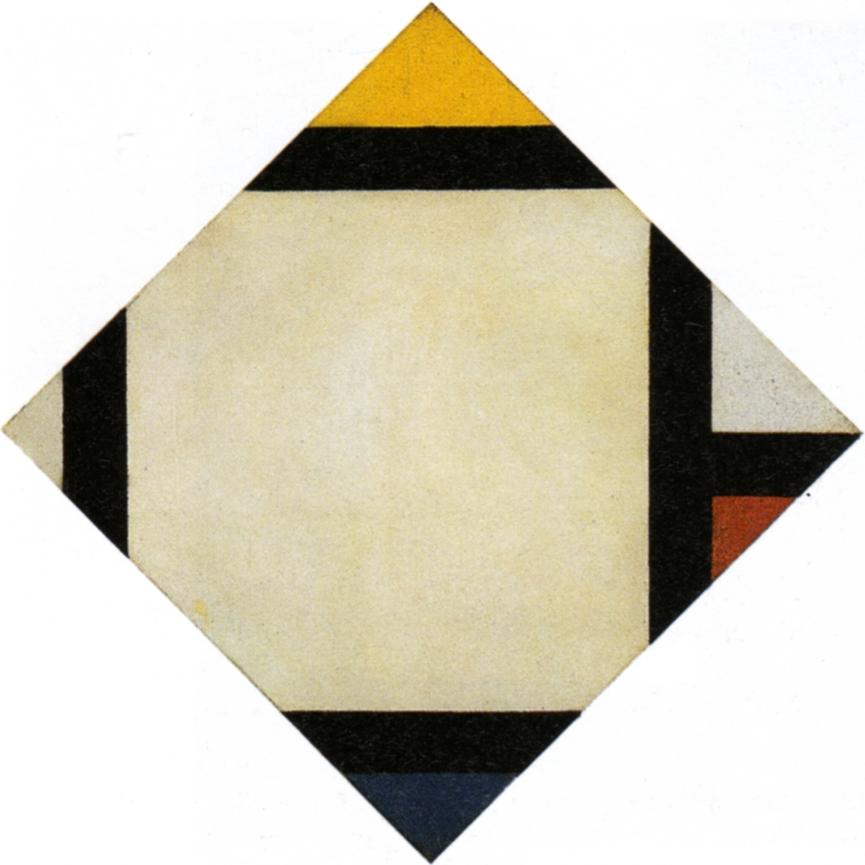
Contra-Composition VII by Theo van Doesburg, 1924
Rijksmuseum · wikidata.org
Public domain
He obviously tilted these on purpose — turning the square to a diamond was meant to clash with the flat walls and floors of whatever room it ended up in.
Erisava: Who did such diamond frames first, he or Piet Mondrian?
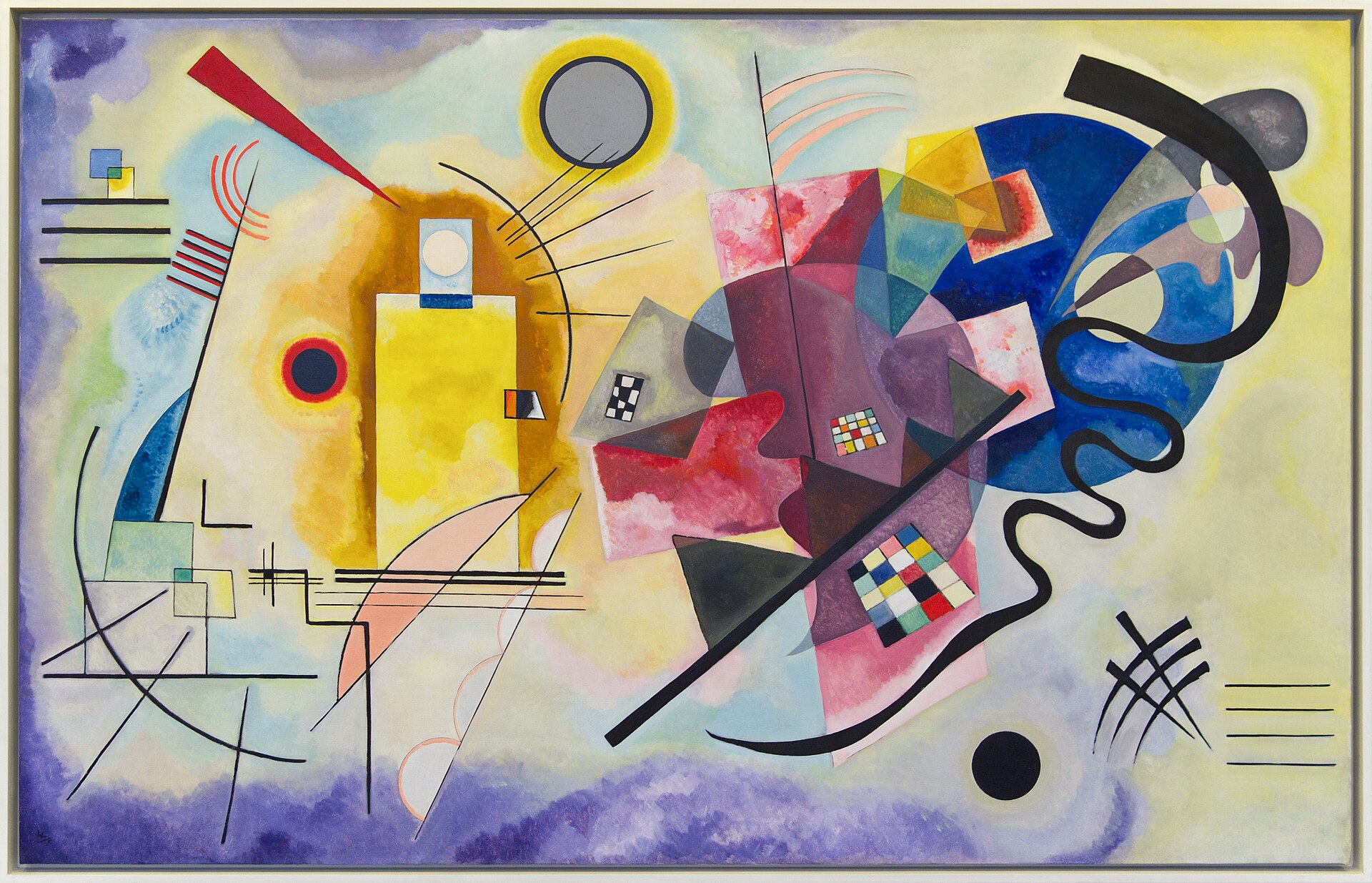
Yellow-Red-Blue by Wassily Kandinsky, 1925
Musée National d'Art Moderne · wikidata.org
Public domain
From what I can find he was teaching at the Bauhaus around this time, and he'd written a whole book arguing that colours and shapes land on you the way music does — yellow warm and close, blue cool and far off. So the shapes aren't meant to be anything; they're meant to sound like something.
Erisava: Is any of this planned, or did it just keep getting added to?
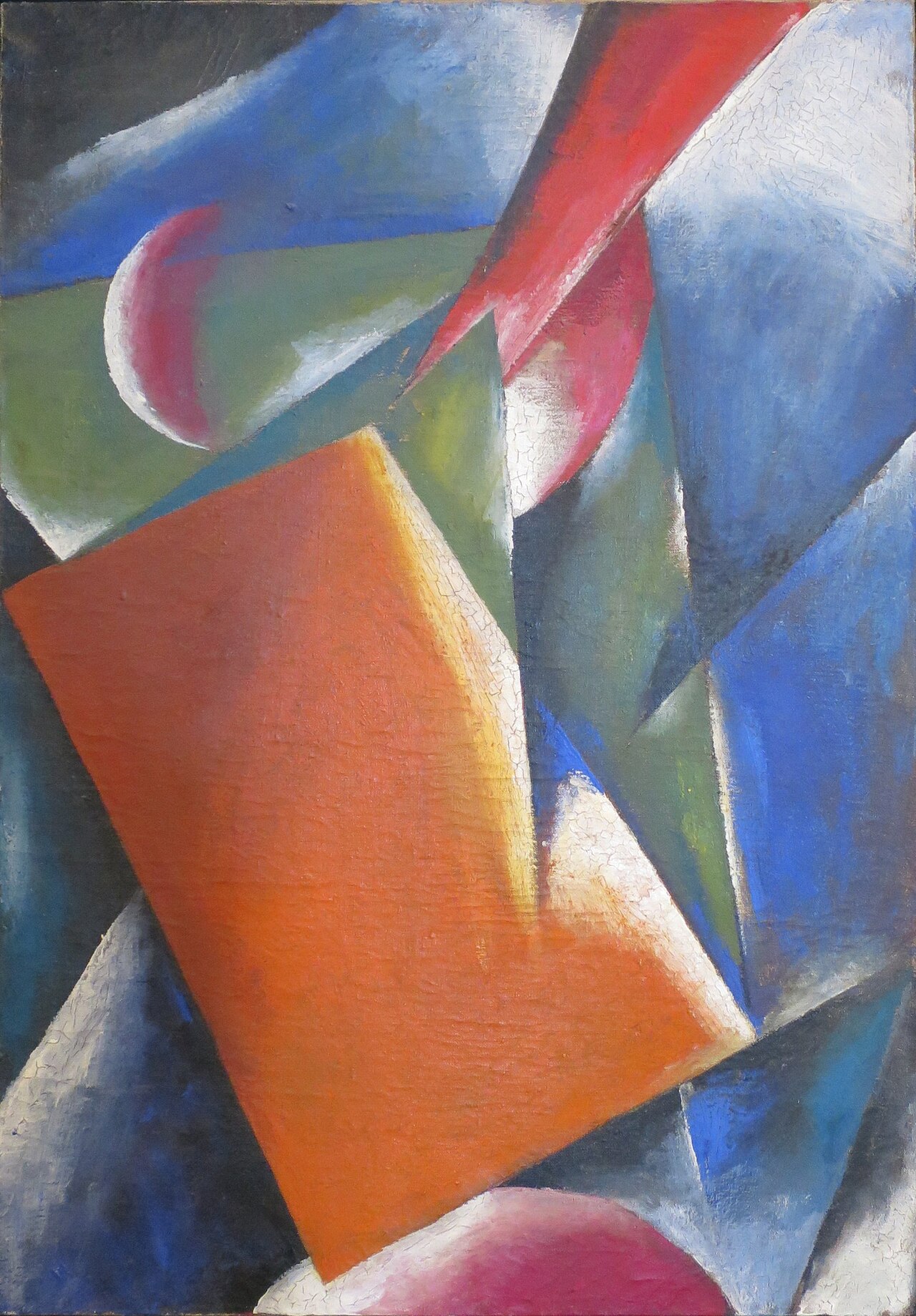
Architectonic Painting by Lyubov Popova, 1917
Los Angeles County Museum of Art · wikidata.org
Public domain
She died young, in 1924, not long after she'd started moving from paintings like this one into textile and stage design.
Erisava: None of these shapes add up to anything I recognize.
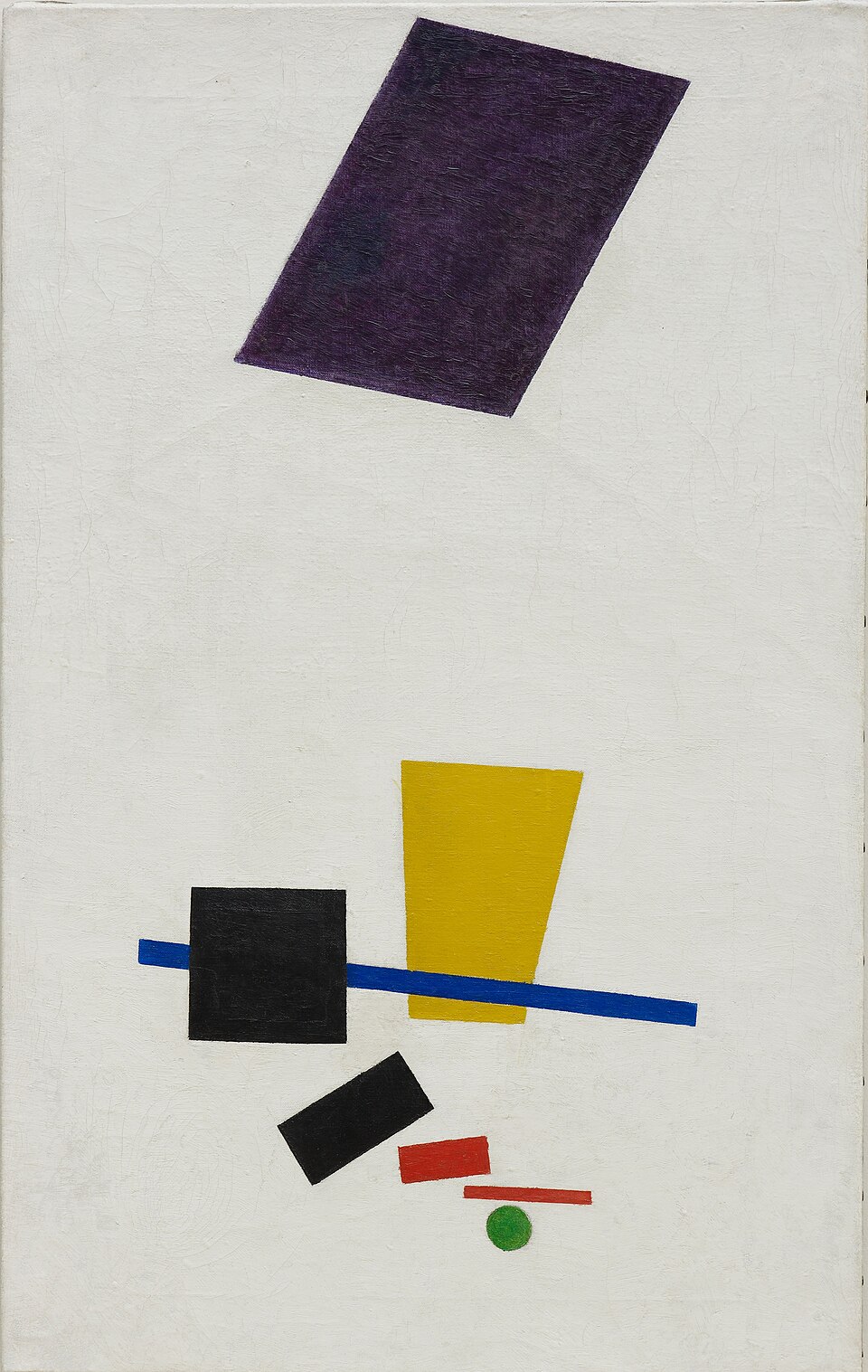
Painterly Realism of a Football Player - Color Masses in the 4th Dimension by Kazimir Malevich, 1915
Art Institute of Chicago · wikidata.org
Public domain
Malevich showed these without frames and wouldn't say which way up they went — he thought a fixed top and bottom was just another assumption people had gotten used to calling natural.
Erisava: Is there actually a football player hidden in this somewhere?
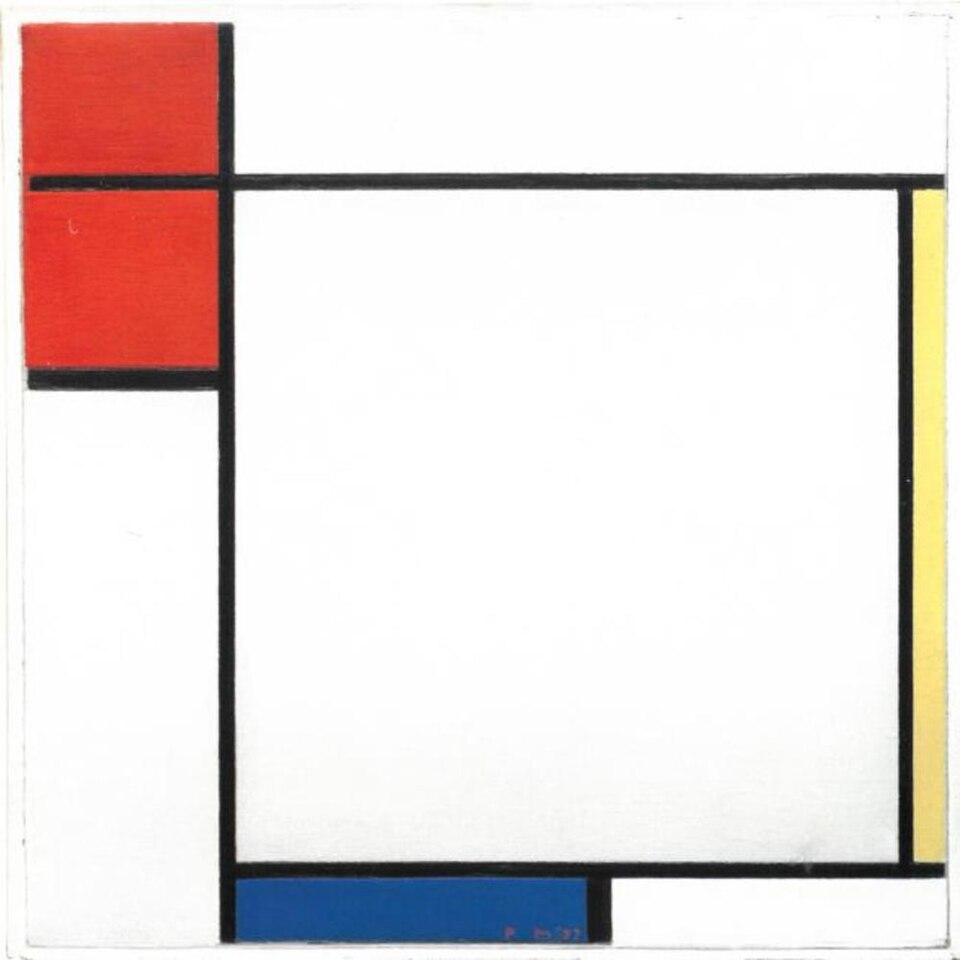
Composition with Red, Yellow, and Blue by Piet Mondrian, 1927
Cleveland Museum of Art · wikidata.org
Public domain
Mondrian, from what I've read, believed grids like this could help build a calmer, more honest world after the first World War — a strict visual language everyone could read the same way.
Erisava: Could a kid with a ruler have made this?
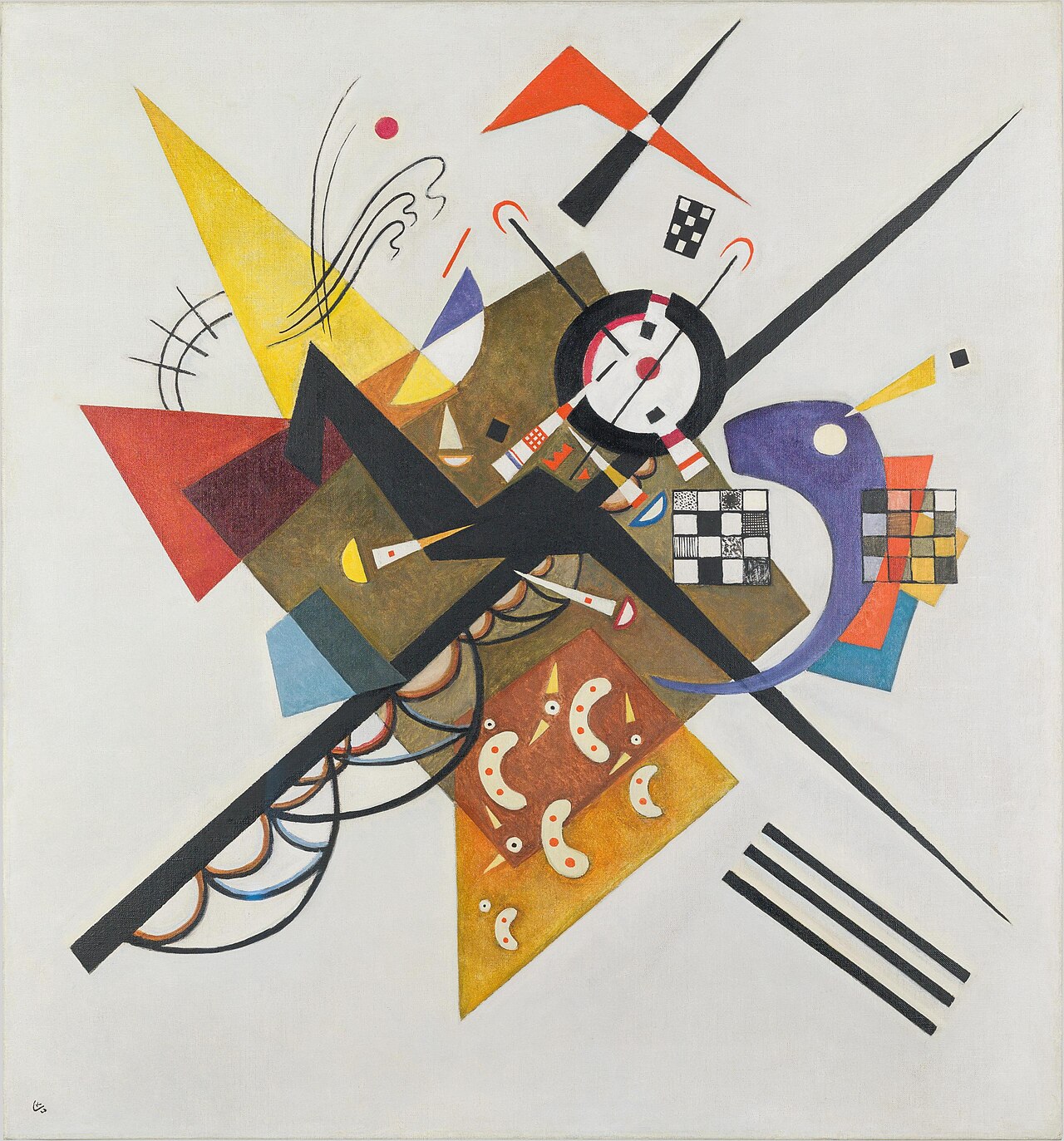
On White II by Wassily Kandinsky, 1923
Musée National d'Art Moderne · wikidata.org
Public domain
According to Wikipedia, this hung in his own dining room for years before his wife gave it to a museum after his death.
Erisava: What is actually happening in this picture?
Construction in Blue by Paul Gaulois, 1925
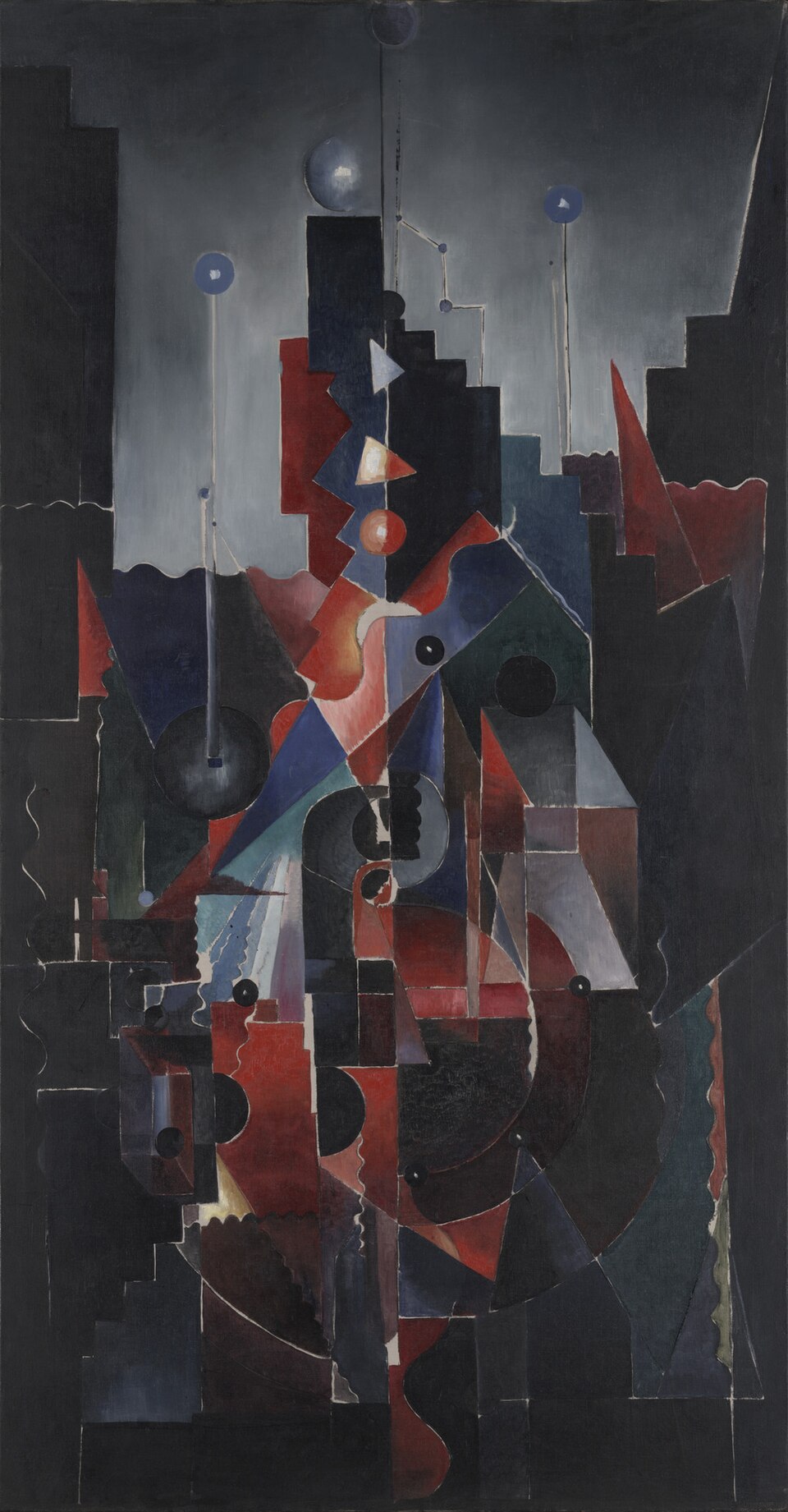
Yale University Art Gallery · wikidata.org
Public domain
I tried to look him up and got almost nothing — no dates, barely a paragraph anywhere. Whoever he was, this seems to be one of the few things of his that made it into a collection at all. If anyone knows the story, I'd genuinely love to hear it.
Erisava: This feels like a city at night in a bad dream.
Composition by Piet Mondrian, 1921
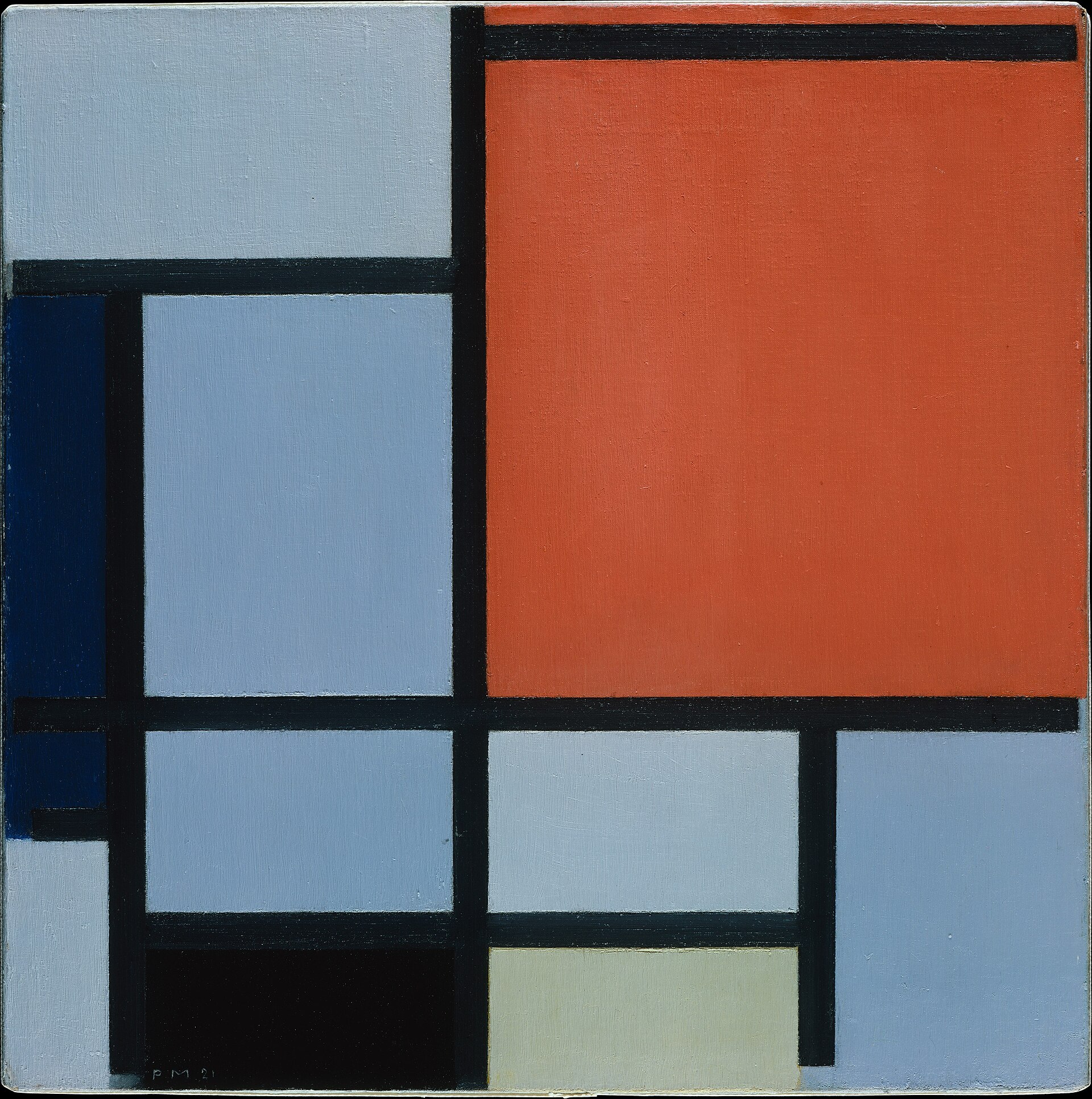
Metropolitan Museum of Art · wikidata.org
According to what I've read, around this time Mondrian narrowed his palette down to red, yellow, blue, black, white and grey and nothing else, chasing the De Stijl idea that a painting could be stripped to its barest elements and still hold together. This is one of the grid paintings people mean when they say 'Neoplasticism.'
Erisava: Could anyone with a ruler and three paint cans have made this?
Suprematism (formerly) Abstraction by Aleksandr Drevin, 1921
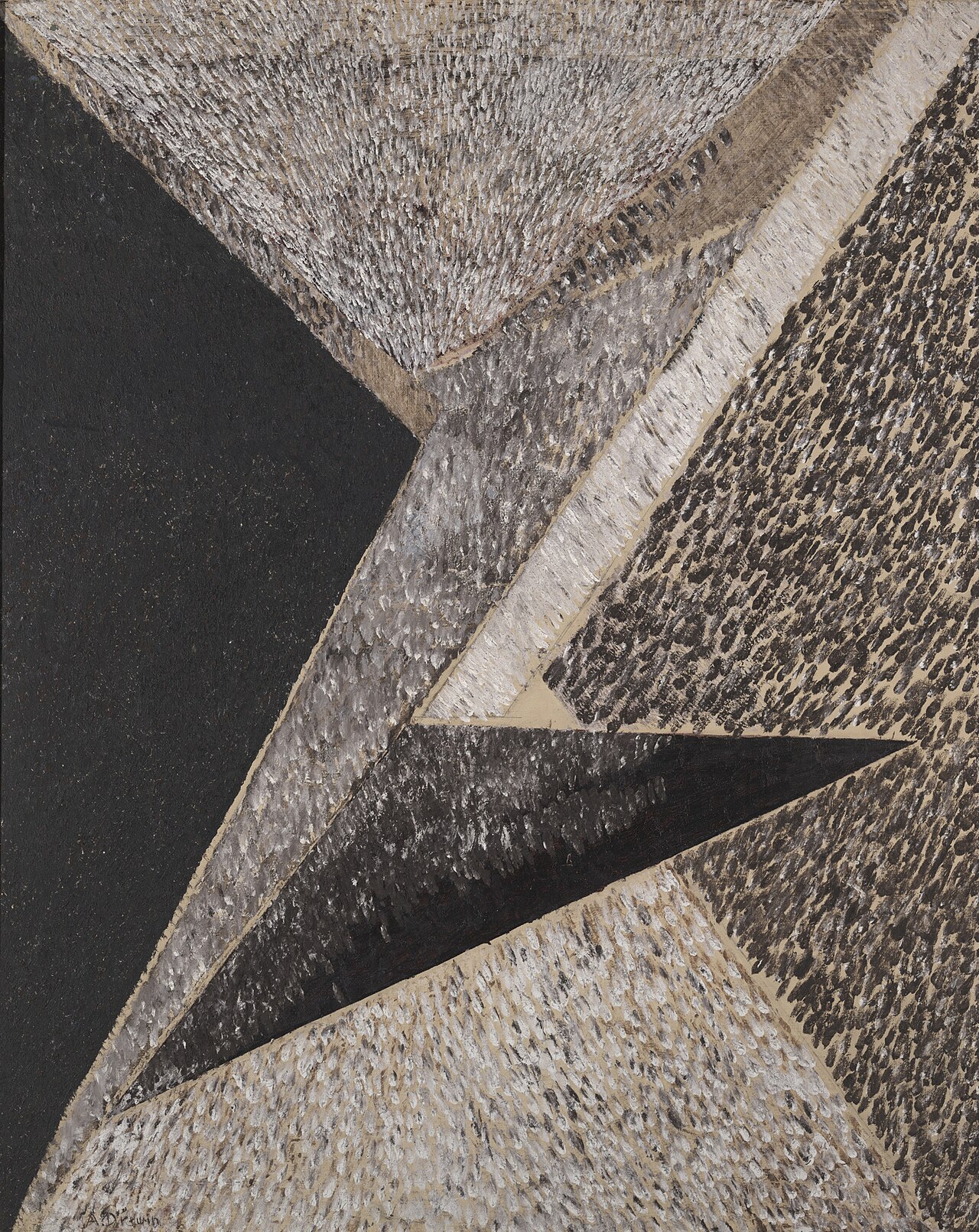
Yale University Art Gallery · wikidata.org
Public domain
I looked him up and it's grim: he ran with the Russian avant-garde crowd, and in 1938 he was arrested and shot in Stalin's purges. His wife, a painter herself, apparently kept his canvases hidden for decades afterwards.
Erisava: Be honest: could you have painted this?