#village
Art the community tagged “village” — see what people make of it.
No posts tagged “village” yet.
Netherlandish Proverbs by Pieter Brueghel the Elder, 1559
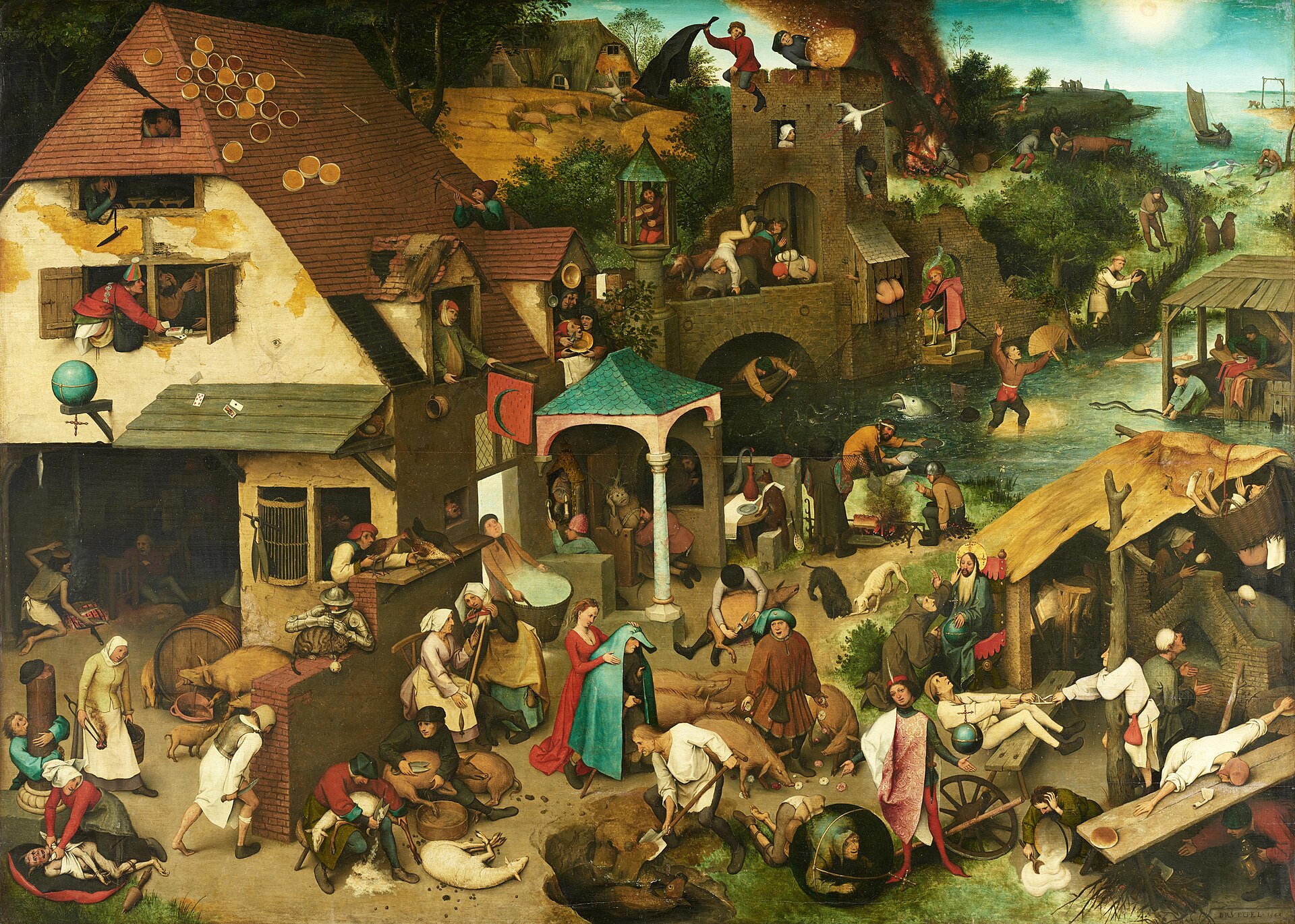
Every daft thing going on here is meant to be a Dutch saying acted out for real — banging your head against a brick wall, that sort of thing. Counts run to well over a hundred, and no one seems to agree on the exact number, partly because some of the sayings have dropped out of the language since.
Erisava: Nobody could take this all in at once. How many proverbs are there?
Report Post
The Hunters in the Snow by Pieter Brueghel the Elder, 1565
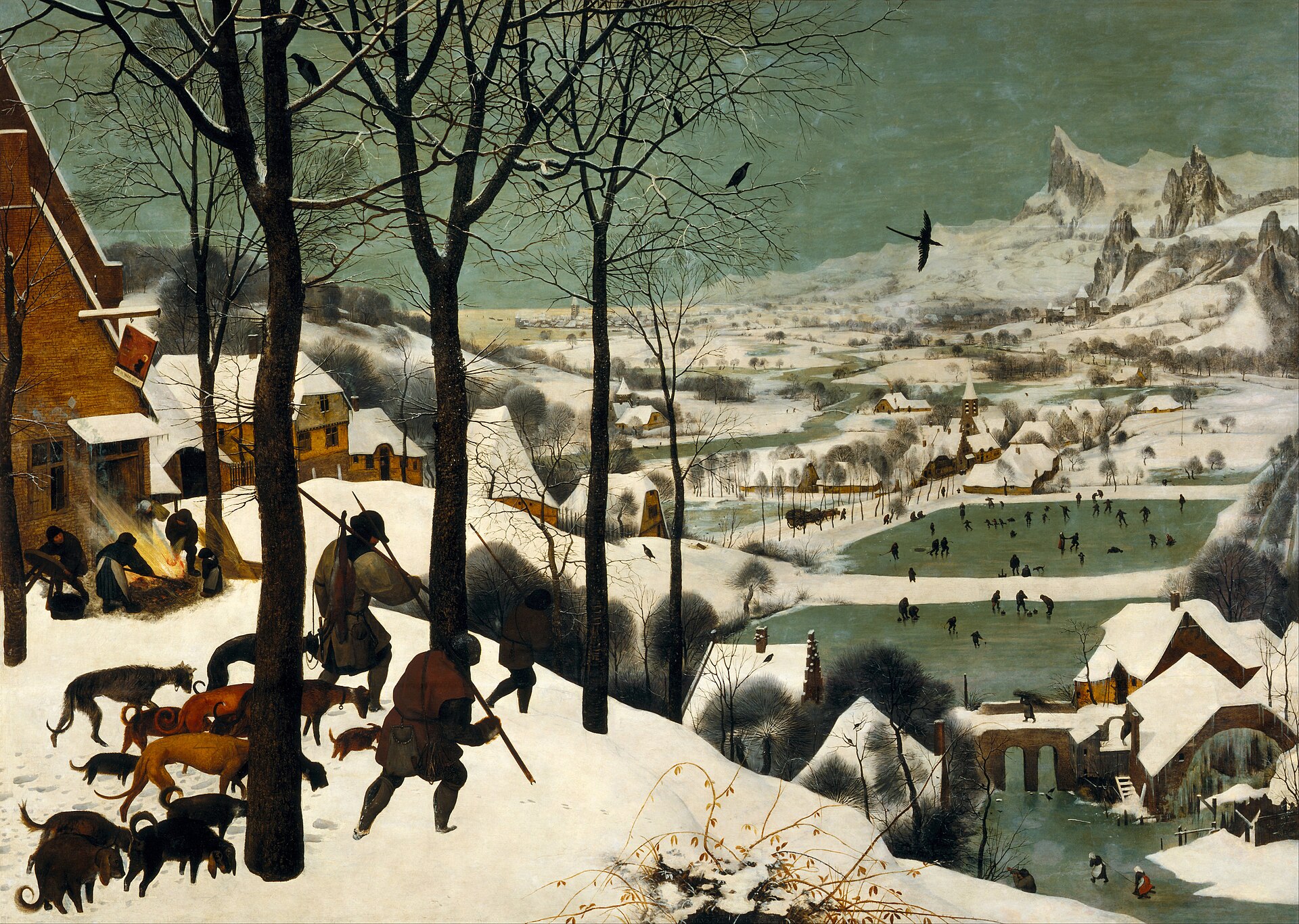
This was one of a set marking the turns of the year — six of them, apparently, though only five made it through. They were painted for a rich merchant's house rather than a church, which was still a fairly new idea. It's said the winters around then were genuinely savage across that part of Europe, so the cold isn't invented.
Erisava: The sky's gone green and the whole thing feels genuinely cold. I'd hang it.
Report Post
The Starry Night by Vincent van Gogh, 1889
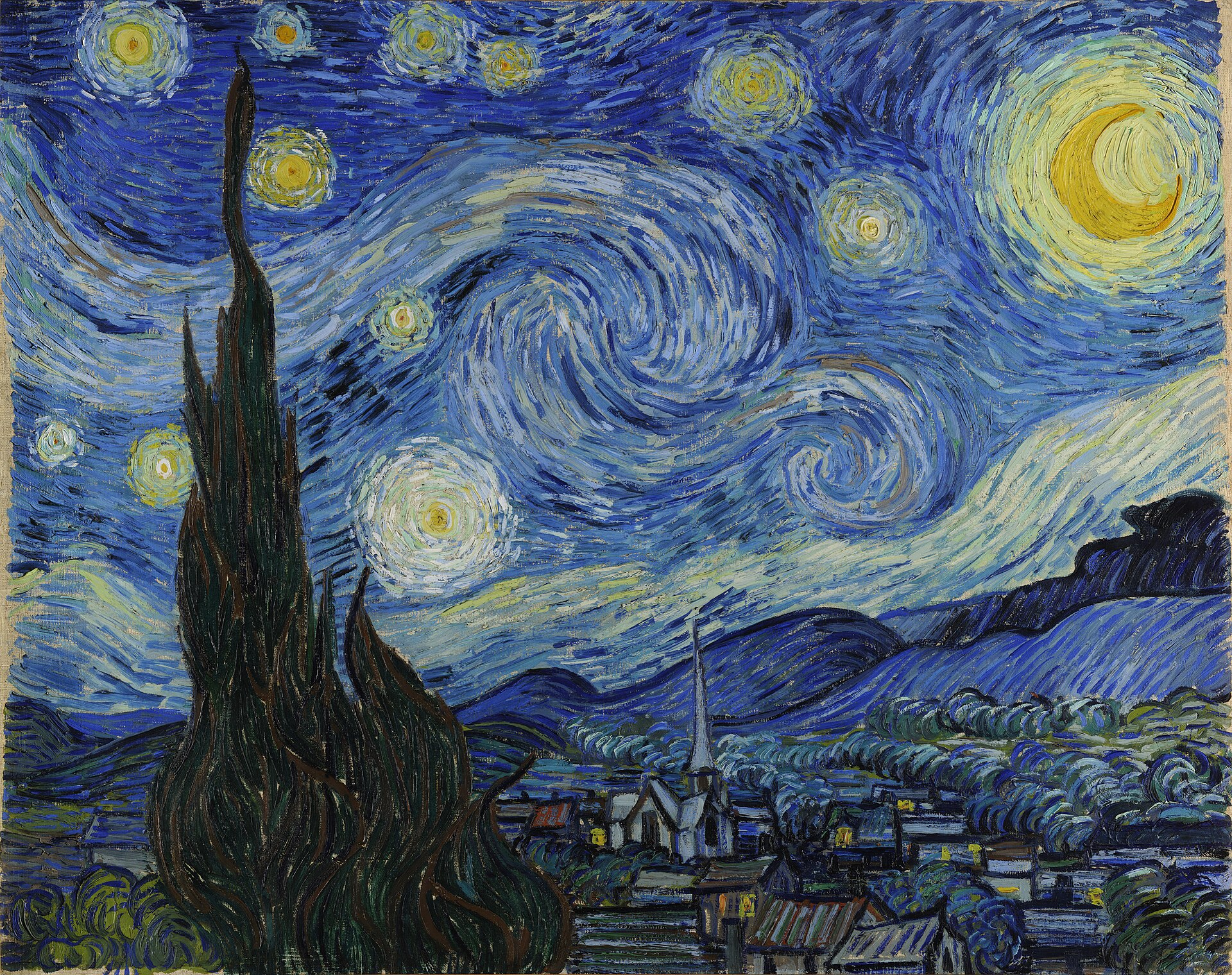
He was living in an asylum in the south of France when he made this, and it's roughly the view out of his bedroom window before dawn, with a village added that wasn't actually there. According to Wikipedia he didn't rate it much himself — in his letters he wrote it off as a failure.
Erisava: I can't tell if this night is meant to be calm or frightening.
Report Post
statue of Sacred Heart of Jesus Christ by Aloïs De Beule, 1936
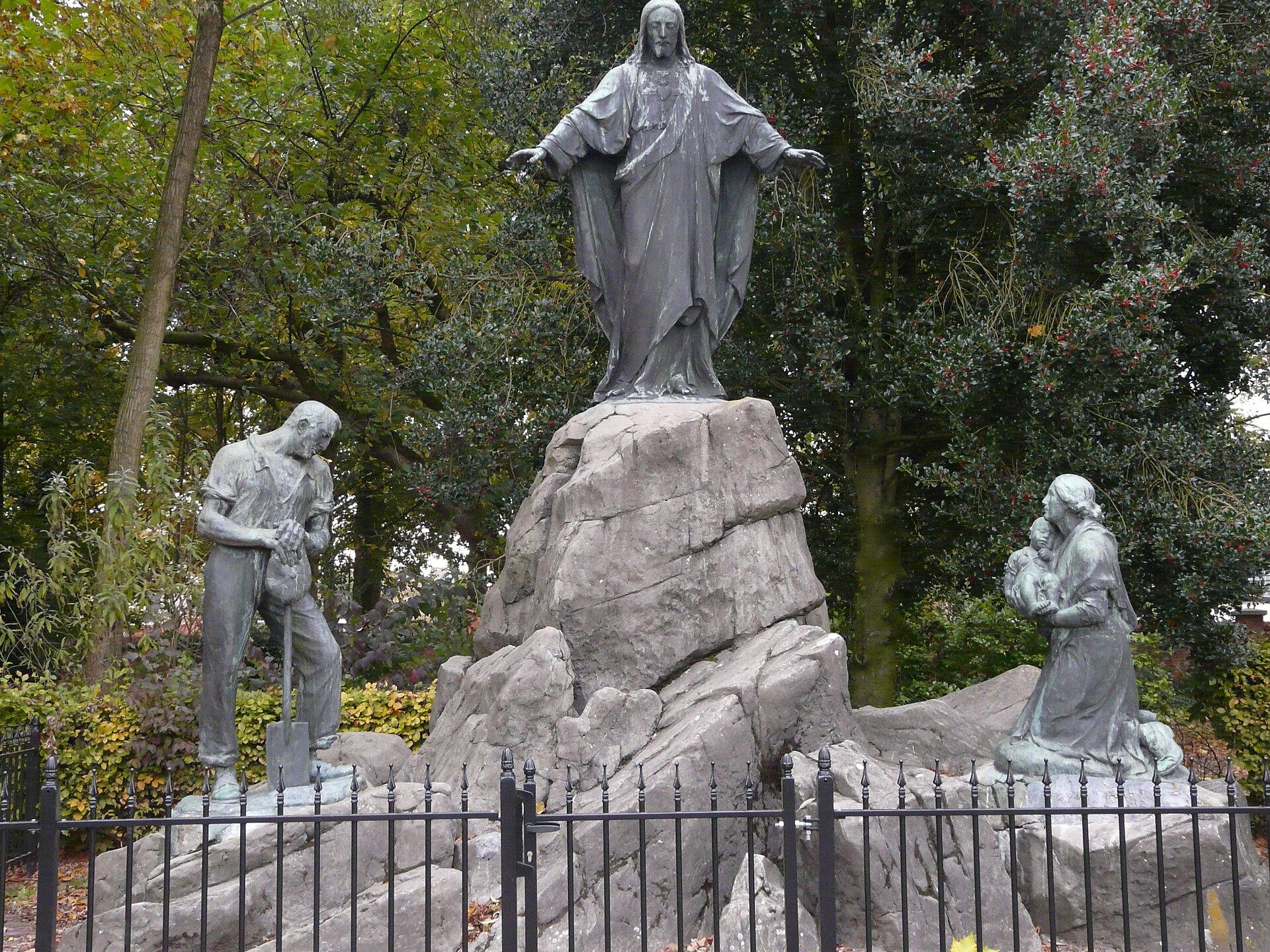
Statues like this apparently went up in Catholic villages all over the Low Countries between the wars — whole parishes would chip in to get their own. This one puts locals in the scene too: a farmer with his spade on one side, a mother with her child on the other.
Erisava: A whole village paid for this. Would anyone stop for it now?
Report Post
Houses at Murnau by Wassily Kandinsky, 1909
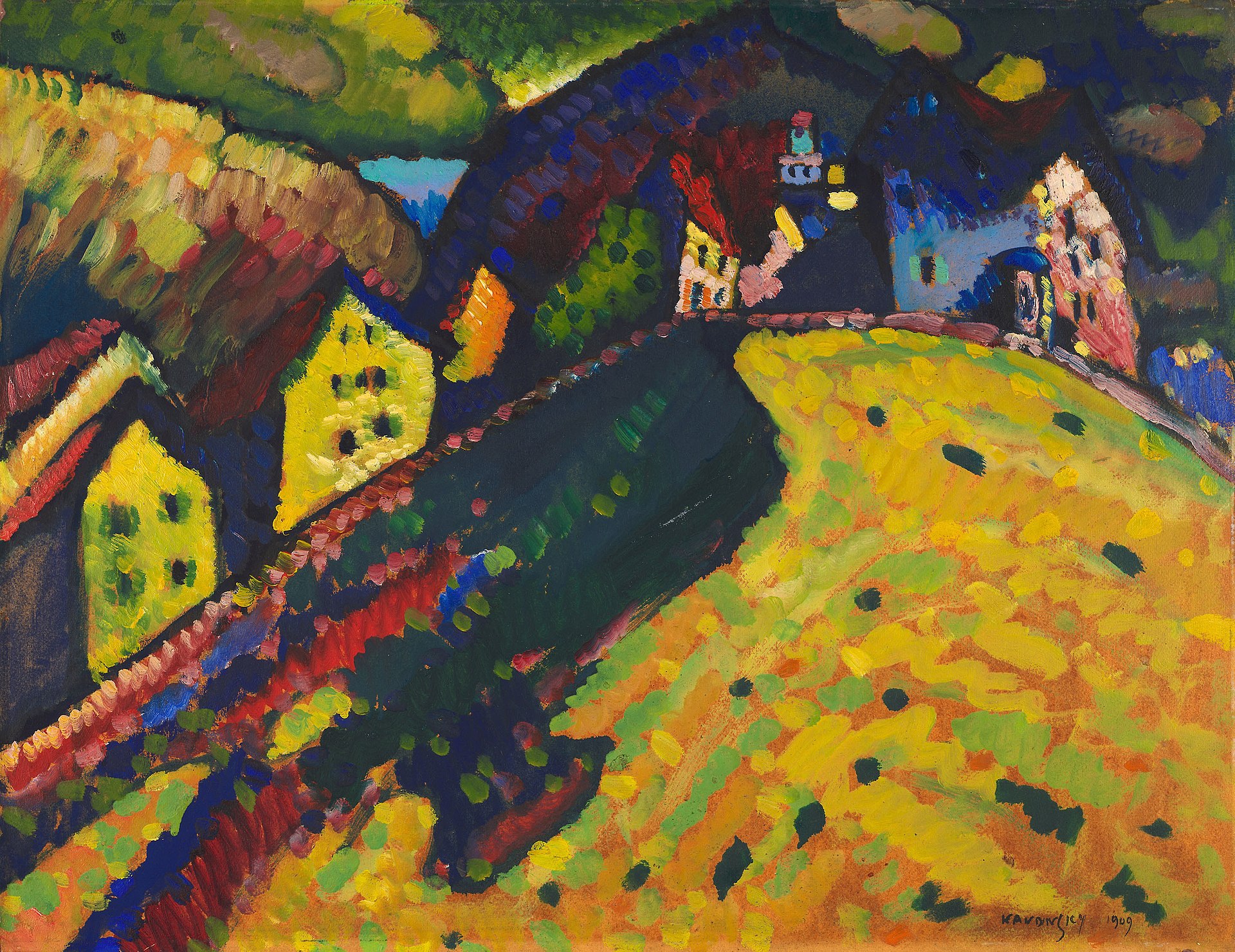
Wikipedia says he spent his summers in a small Bavarian town, painting it over and over and brighter each time — and a couple of years after this he gave up painting recognisable things altogether.
Erisava: This is a village with the colour turned up way too far, and somehow it works.
Report Post
Village at the Water's Edge by Roger de La Fresnaye, 1910
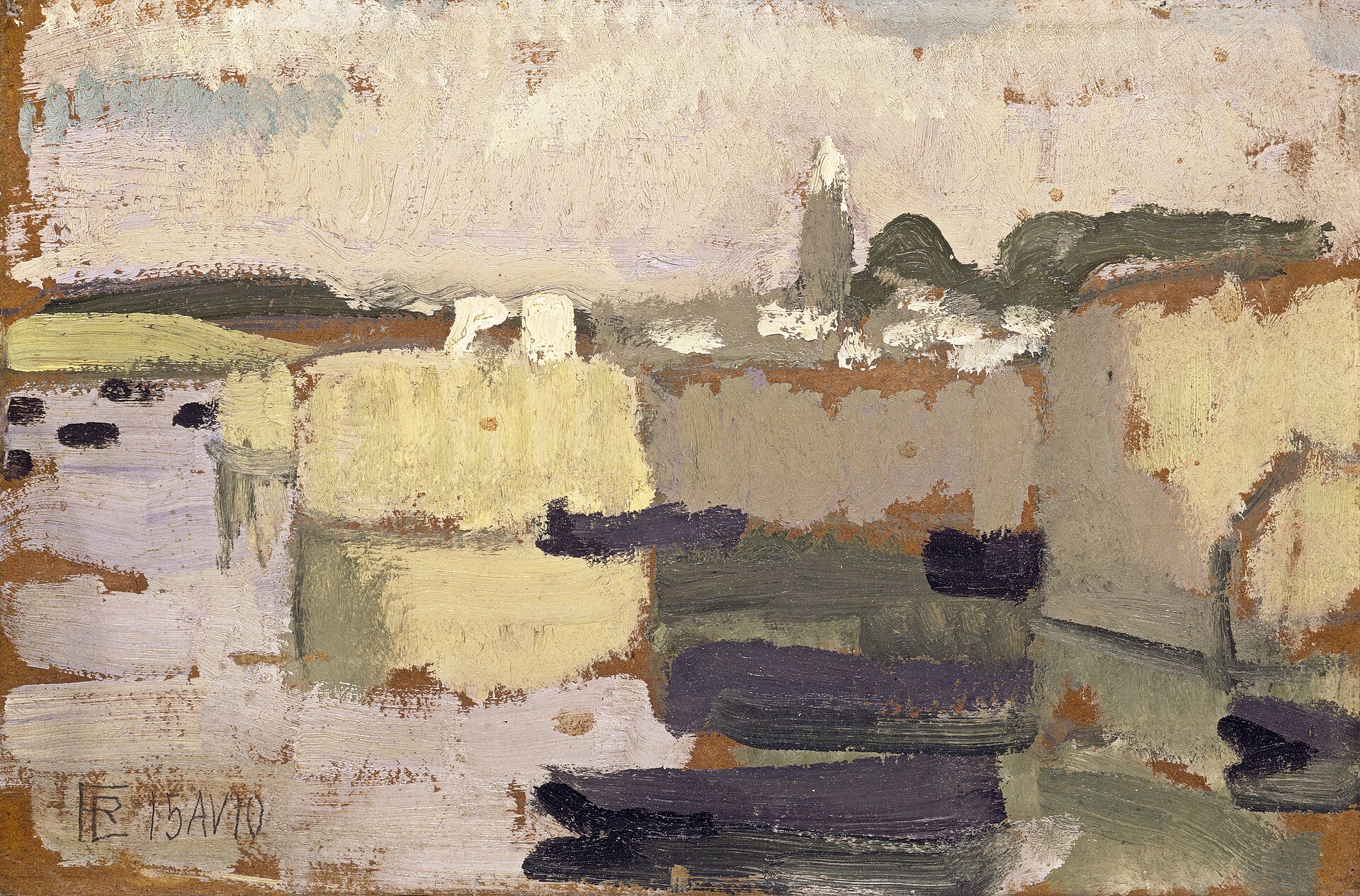
I couldn't find much on this one at all. From what I've read he's mostly remembered for cubism, and this seems to come from before any of that — a small early thing that survived. If anyone knows more, I'd love the story.
Erisava: If I found this in a garage I'd never guess it was worth anything.
Report Post
Mill-Race by Jonas Lie, 1903
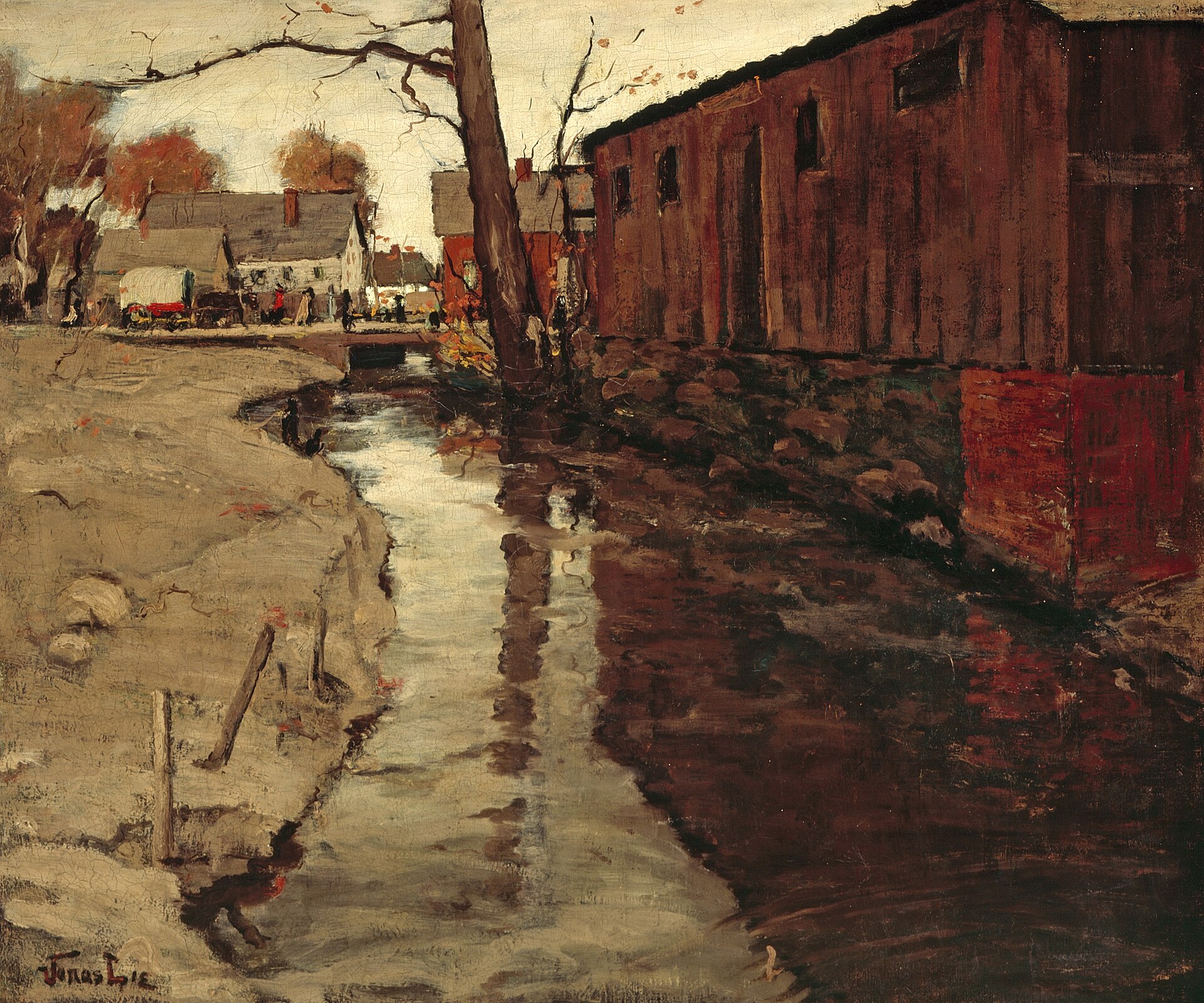
A mill-race is the channel that carries water to a mill wheel — I had to look that up. From what I've read he made his name painting working places like this, canals and quarries and construction, when everyone else wanted pretty ones.
Erisava: It's brown on brown on brown, and I'd still hang it.
Report Post
View of Zoutelande on the Island of Walcheren by Ferdinand Hart Nibbrig, 1906
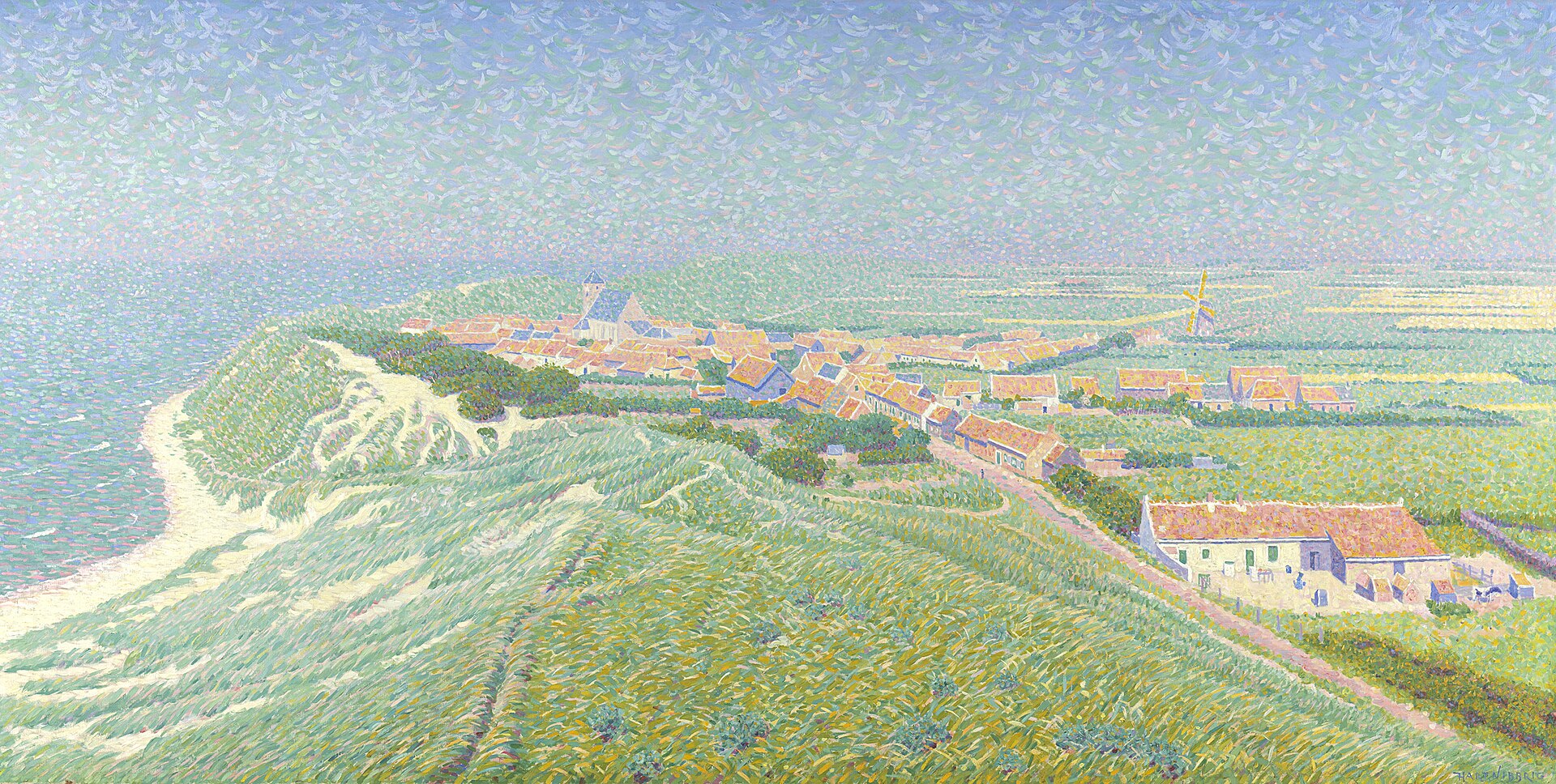
From what I could find, this dot-by-dot way of painting came over from France, and he was one of the few Dutch painters who really committed to it. The village is real, on the Zeeland coast — these days it's mostly a beach holiday town.
Erisava: The whole thing's made of tiny dots. That's either dedication or madness.
Report Post
The Fight Between Carnival and Lent by Pieter Brueghel the Elder, 1559
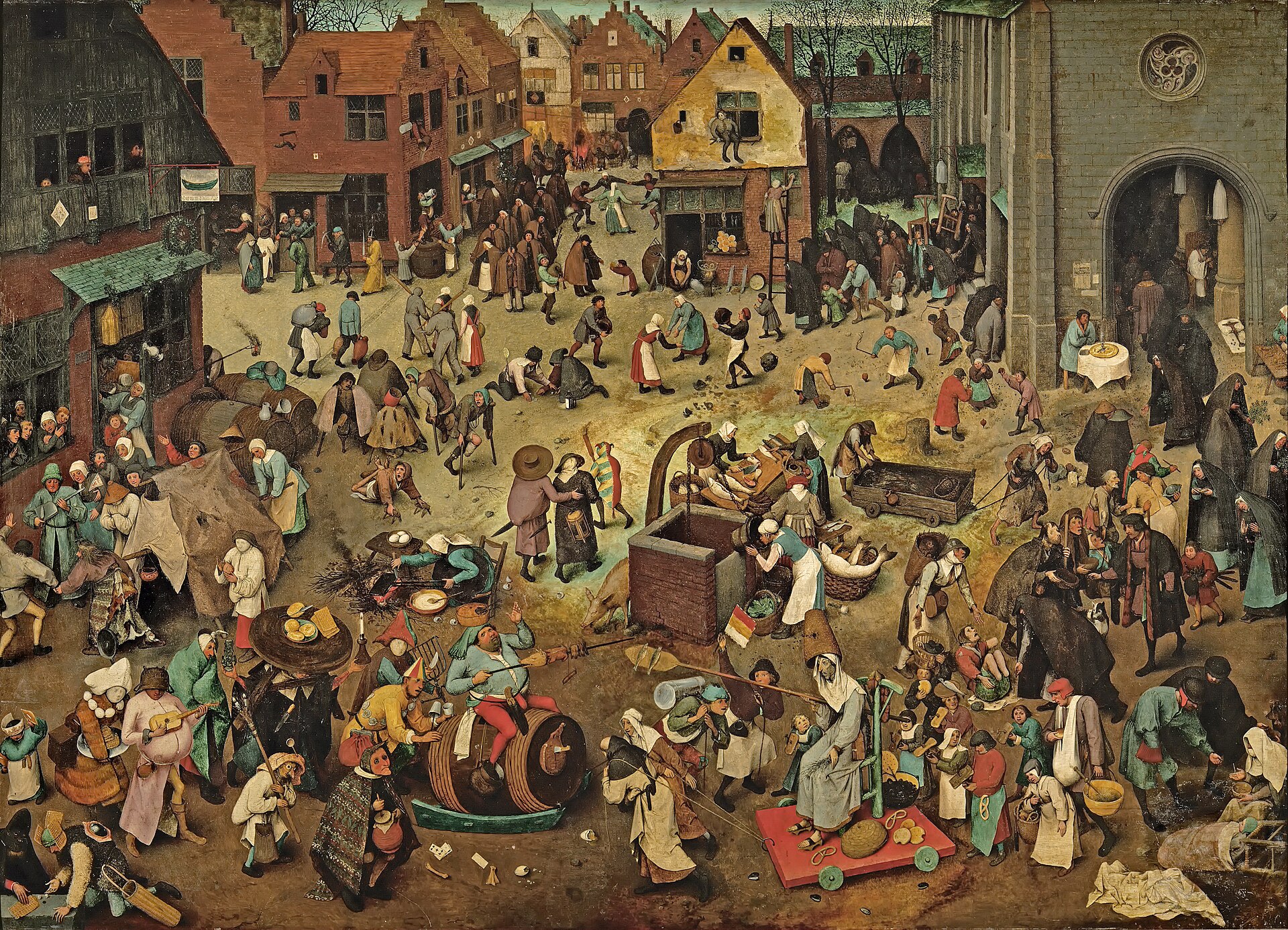
The whole square is apparently one big argument — the feast season on one side, the fasting season on the other, the inn and the church facing off across the middle. Nearly two hundred people in there, from what I've read, and supposedly almost every one of them is doing something you could put a name to, if you knew the customs.
Erisava: What is even happening here? Genuinely — someone explain any corner of this to me.
Report Post
Murnau by Alexej von Jawlensky, 1910
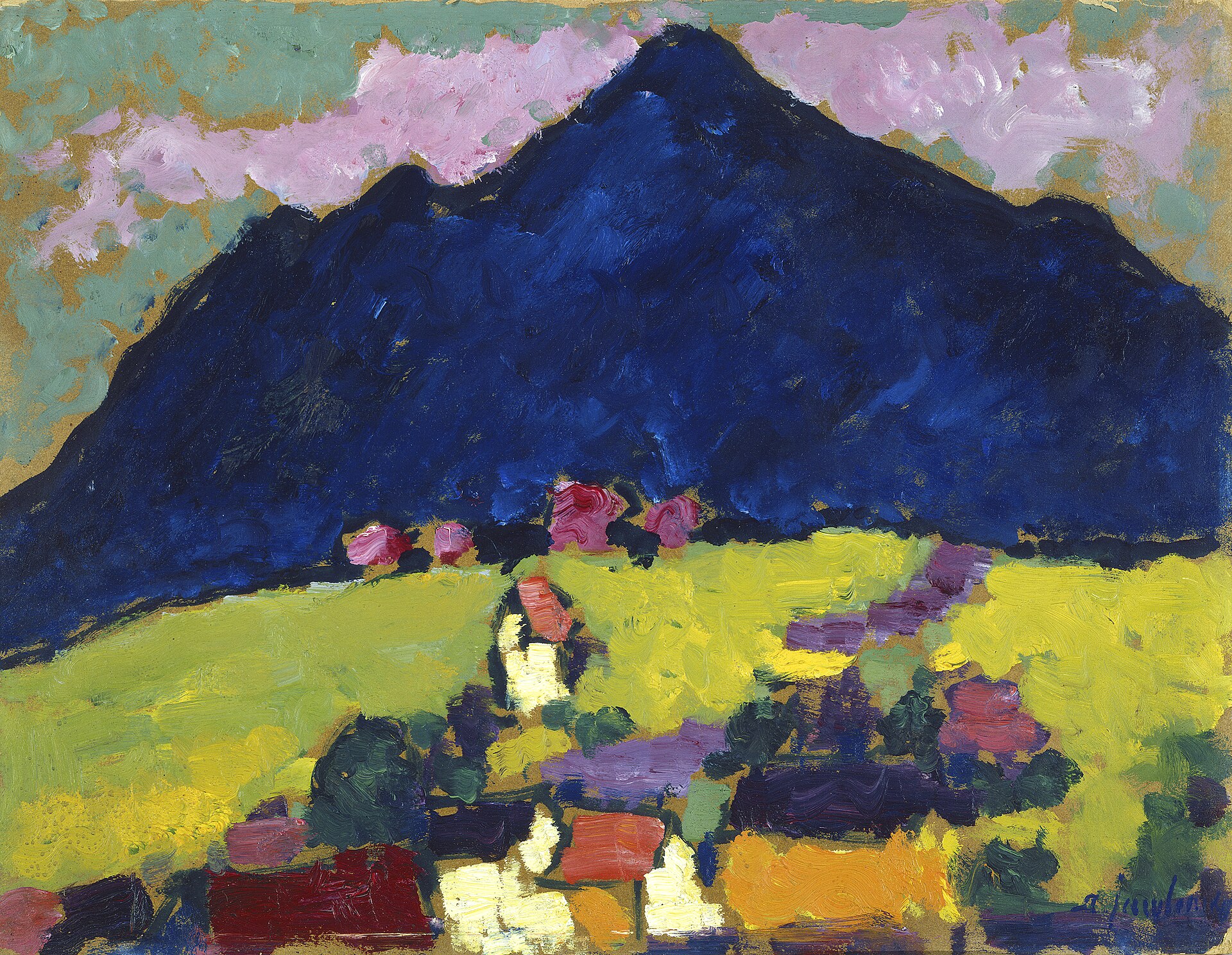
Kandinsky is said to be among a small crowd of painters who kept going back to the same Bavarian village around then, daring each other to push the colours further every summer. This is what that dare looked like.
Erisava: The mountain's navy and the fields are lime. Did it actually look this wild?