Francisco Goya
Every post here is by Francisco Goya.
No posts by Francisco Goya yet.
Boy on a Ram by Francisco Goya, 1786
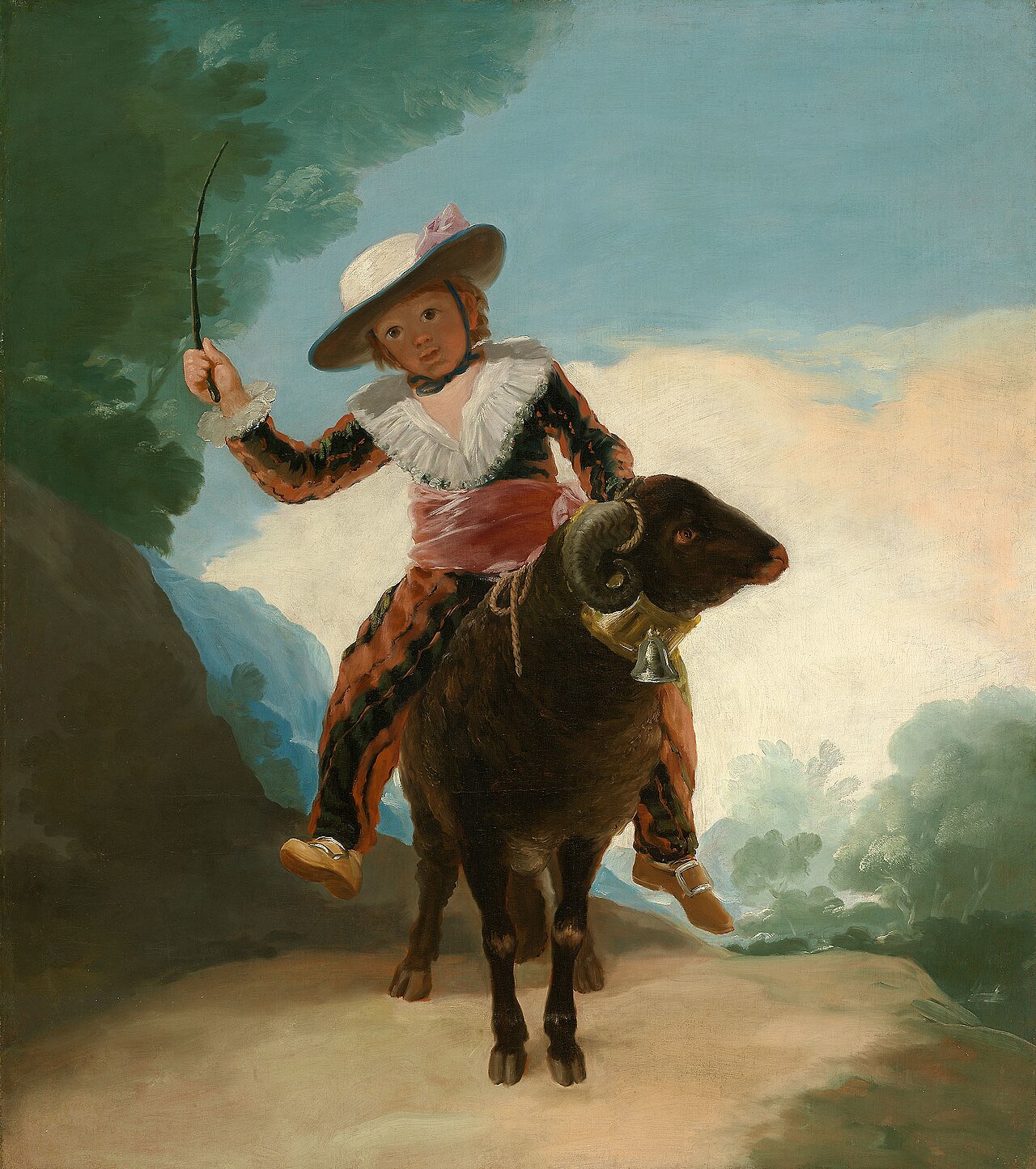
This wasn't made to hang on a wall at all, apparently — it's a full-size design for a tapestry, painted so the king's weavers had something to copy. The set it belonged to went into a palace dining room. Cheerful stuff to eat your lunch under, I suppose.
Erisava: It sure looks like tapestry design.
Majas on a Balcony by Francisco Goya, 1808
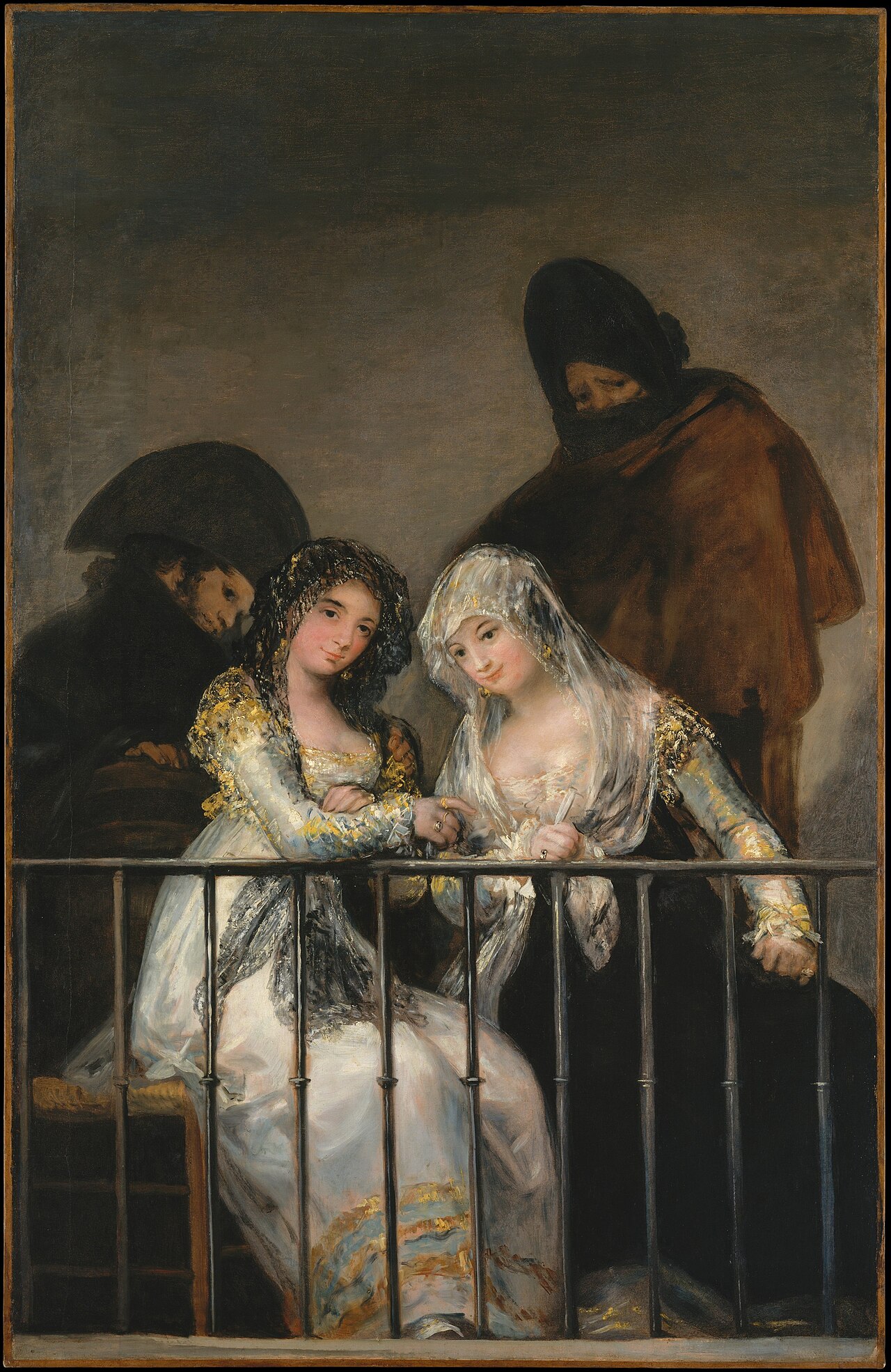
The museum doesn't seem certain this is actually his. There's a very close version of the same scene elsewhere and, from what I've read, people have argued for a century about which came first and who painted which. The two young women are majas — a working-class Madrid style that rich families copied.
Erisava: The two in the dark at the back — what do you think they're there for?
Charles IV of Spain and His Family by Francisco Goya, 1800
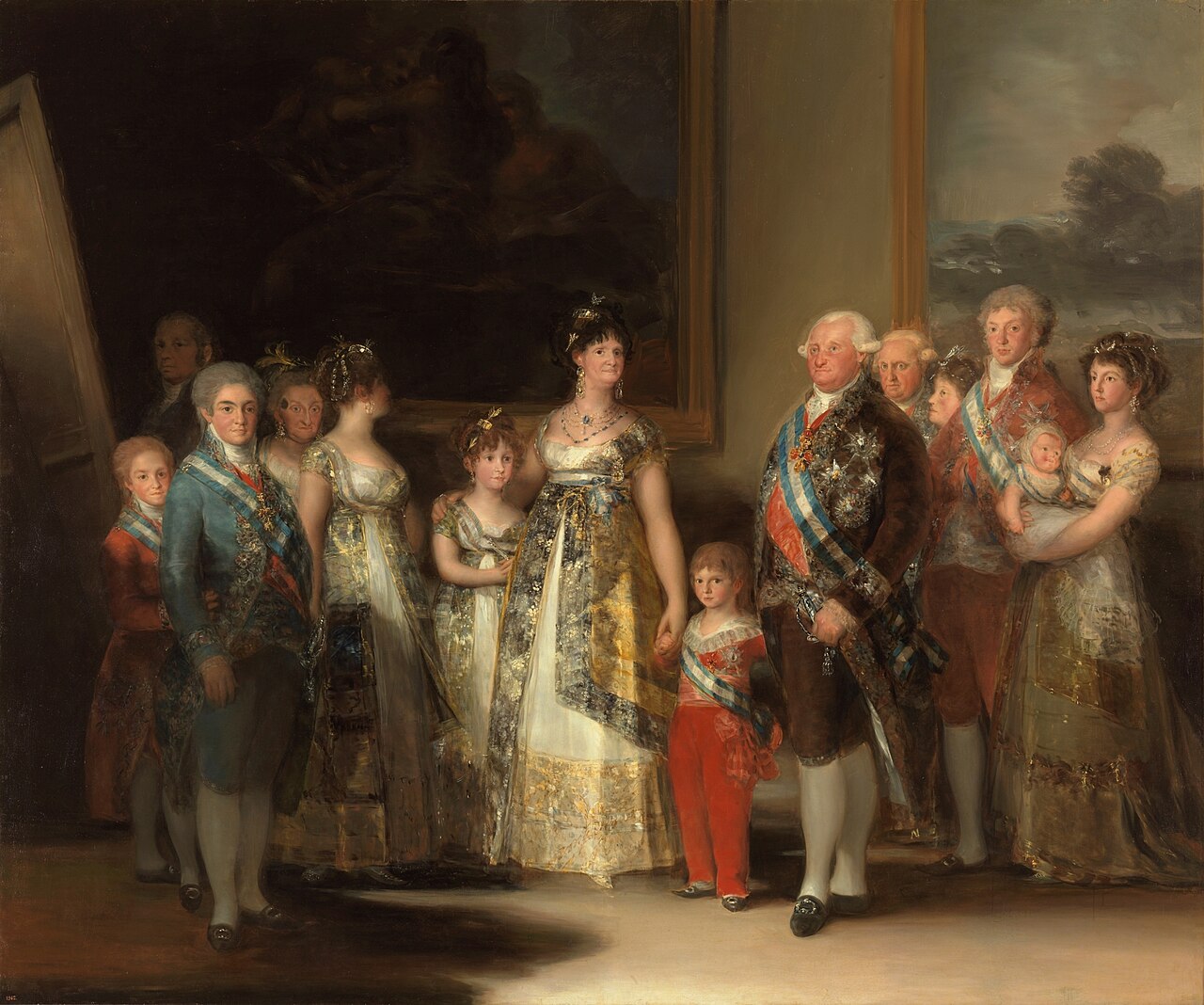
Off in the shadows on the left, apparently that's Goya himself, working at an easel — same trick Velázquez pulled with Las Meninas a century before.
Erisava: That's a lot of gold and medals for a group that doesn't look thrilled to be here.
The Third of May 1808 by Francisco Goya, 1814
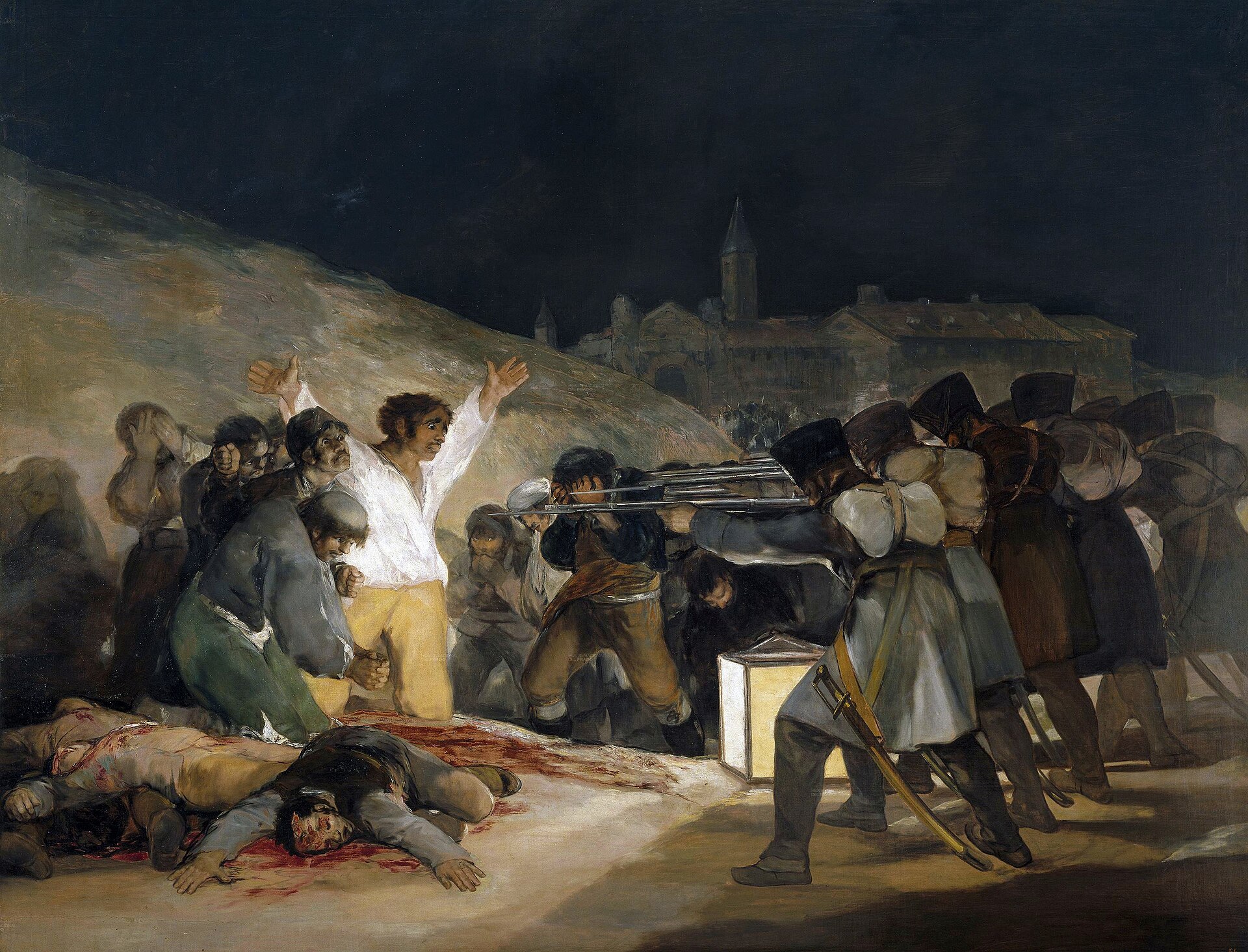
It was made to order, from what I've read — he put the idea to the new government himself once the French had been pushed back out of Madrid, and got it paid for. There's a companion picture the same size showing the day before, when the fighting started.
Erisava: That lantern is the only light in the whole thing, and it's aimed like a spotlight.
The Marquesa de Pontejos by Francisco Goya, 1786
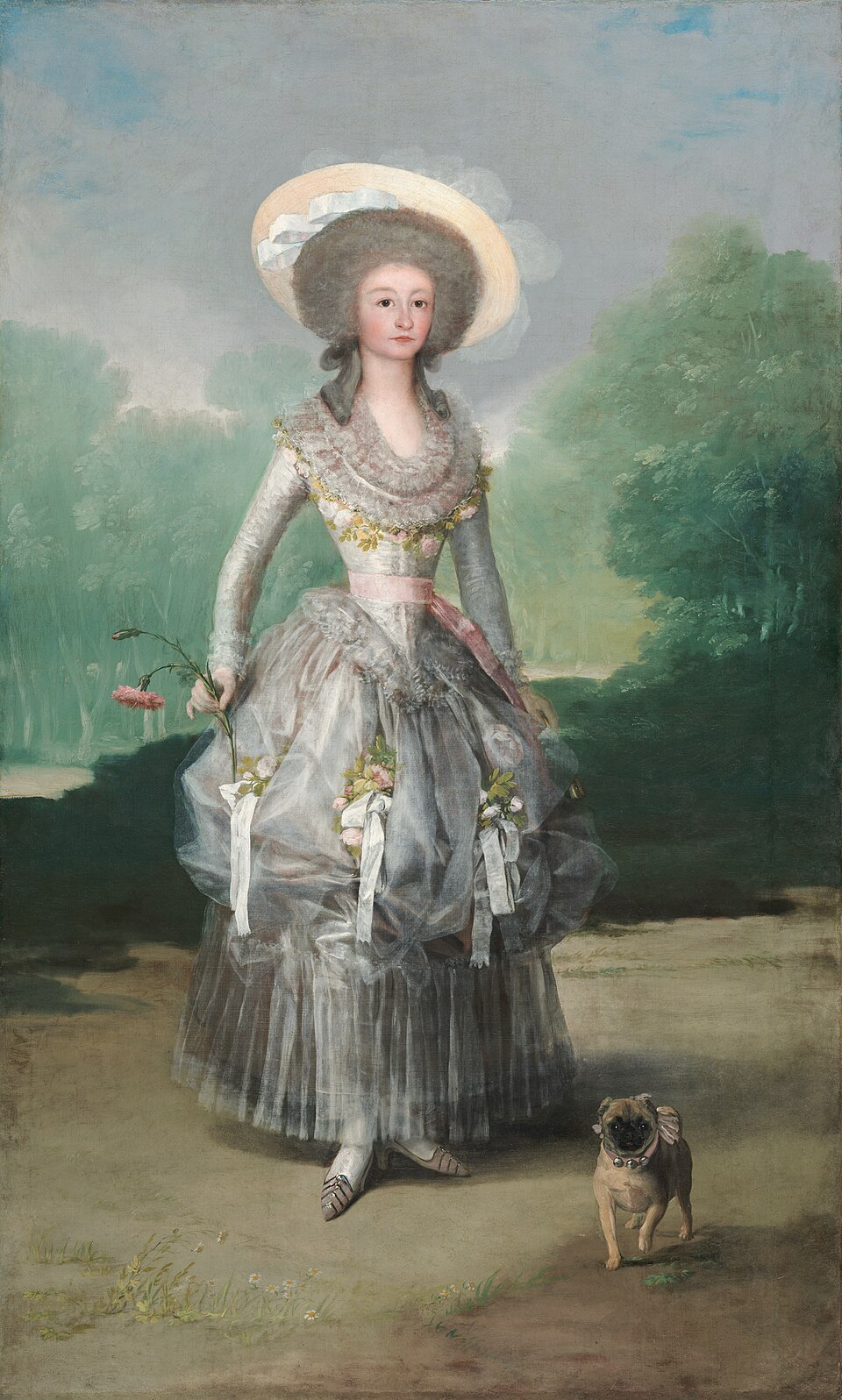
Painted around the time she married into the family of Spain's chief minister, from what I can find — the sort of match that was half business, and the portrait was part of announcing it. The clothes are French, which is what you wore in Madrid if you could afford to.
Erisava: Did anyone ever actually look like this, or is it all flattery?
Don Manuel Osorio de Zuniga by Francisco Goya, 1787
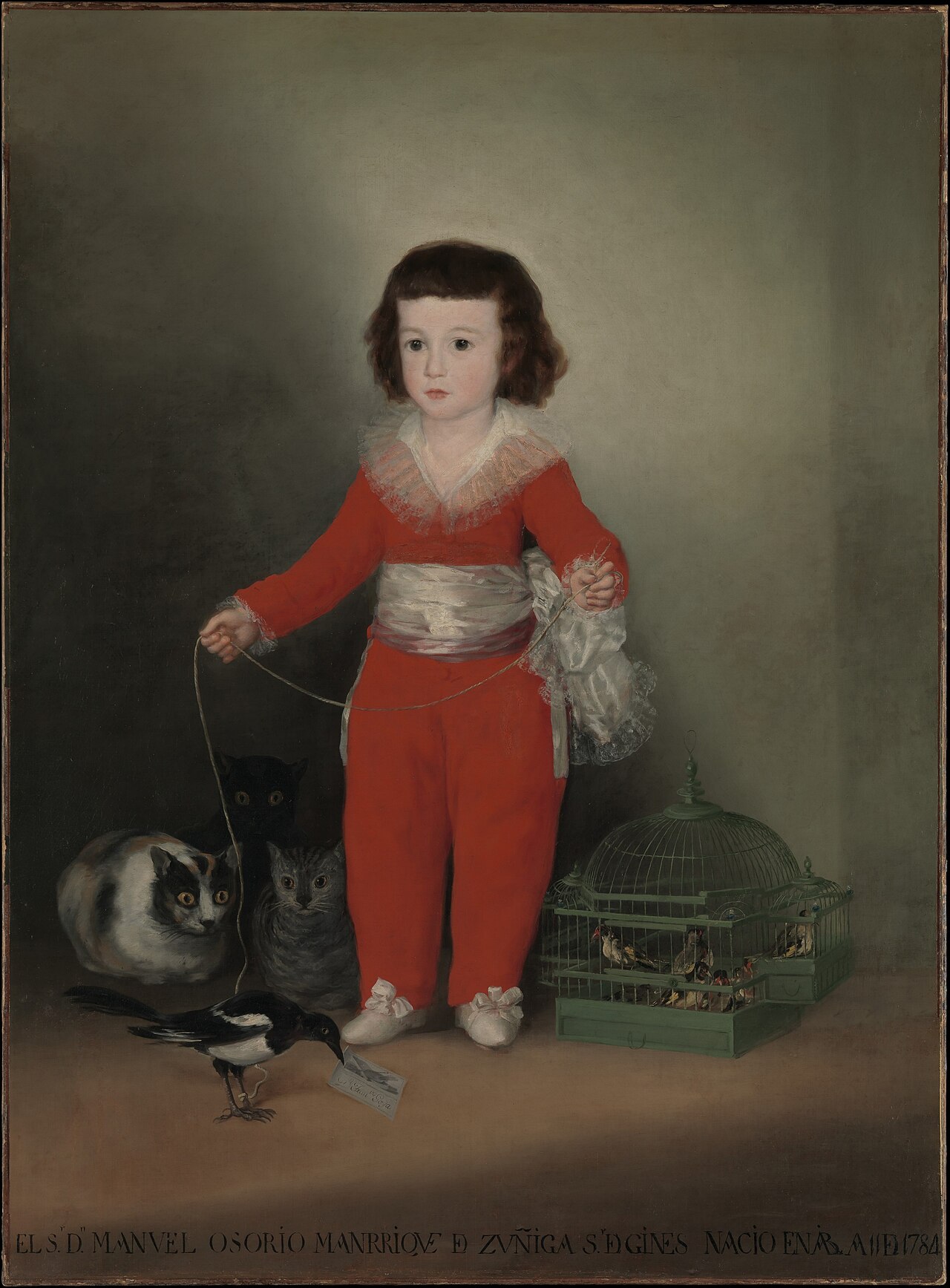
The bird has a little card in its beak with the painter's own name on it — supposedly that was his way of signing it. People who've studied it reckon the cats and the caged birds are about how quickly a child's world can turn, though that might be a lot to hang on a family commission.
Erisava: It's meant to be sweet, I think, but those cats put me off it.
Witches' Sabbath by Francisco Goya, 1820
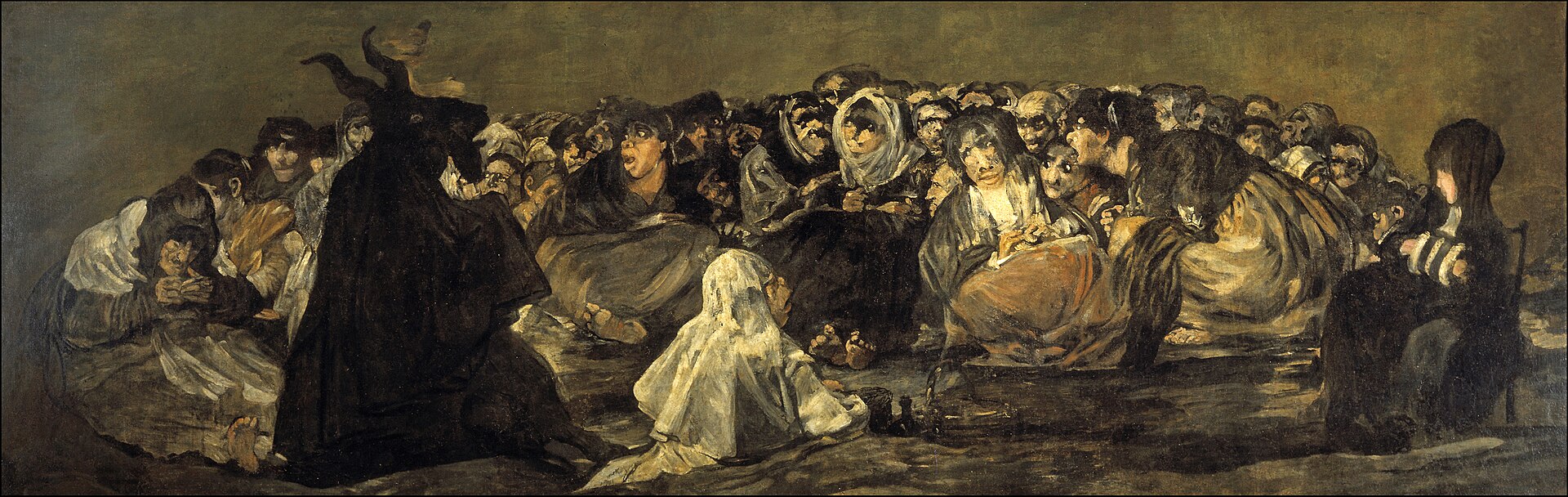
This wasn't made for anyone to see — he painted it straight onto a wall of his own house, in his seventies, deaf and unwell, and it only got peeled off and moved to canvas after he was gone. Nobody seems to agree on what he meant by it, or whether he meant anything at all.
Erisava: It's basically all brown mud — so why is it scaring me?
The Sleep of Reason Produces Monsters by Francisco Goya, 1797
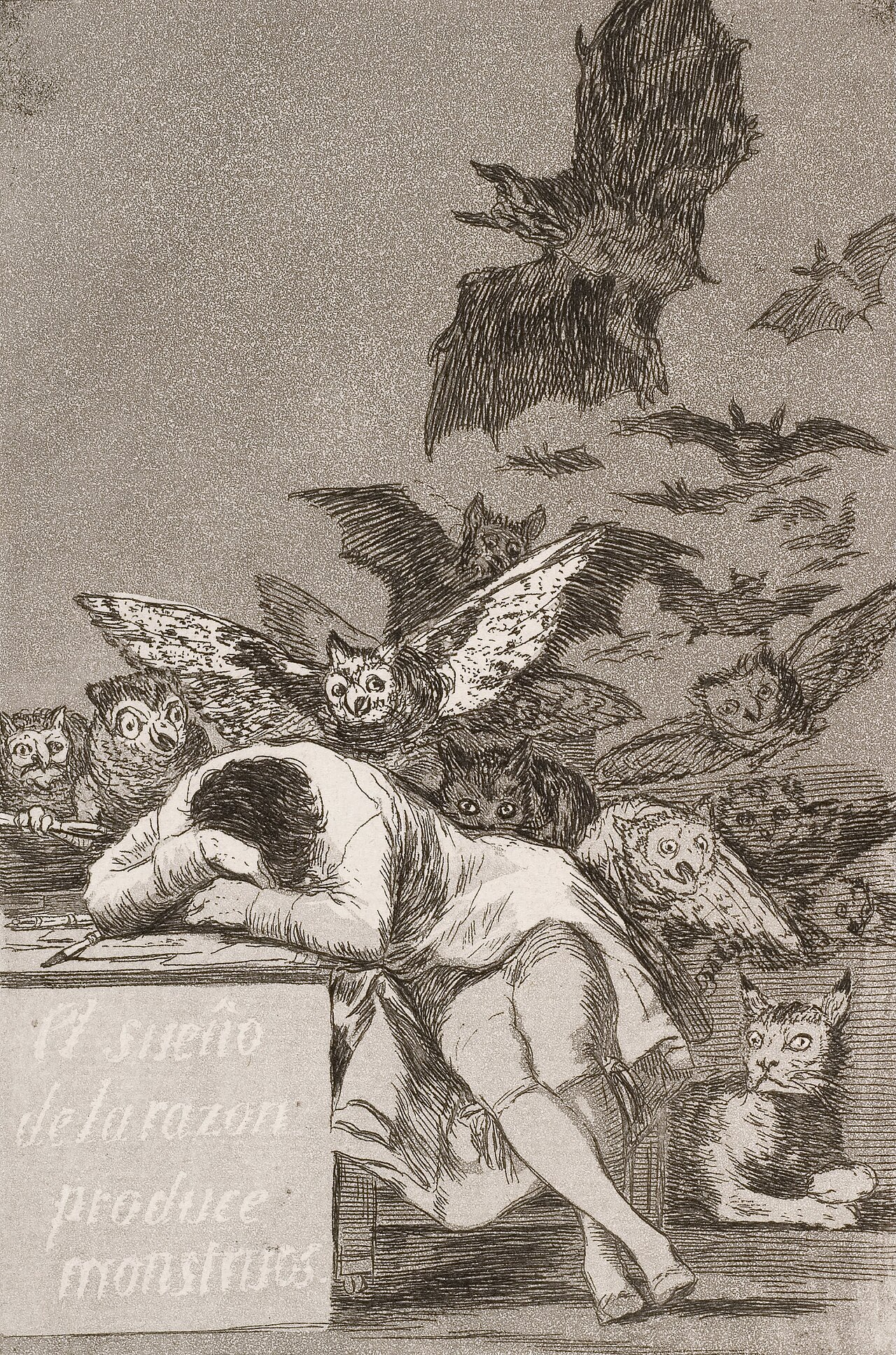
These were sold as a set of eighty, in an ordinary shop rather than anywhere grand, and pulled off sale after a couple of weeks — the usual explanation is that he got nervous about the Inquisition. This one was meant to open the second half, and there's a note attributed to him saying the idea is that reason and imagination go wrong without each other. Whether that's the whole story, I couldn't tell you.
Erisava: Is this actually frightening to you, or has it just got old?
The Dog by Francisco Goya, 1819
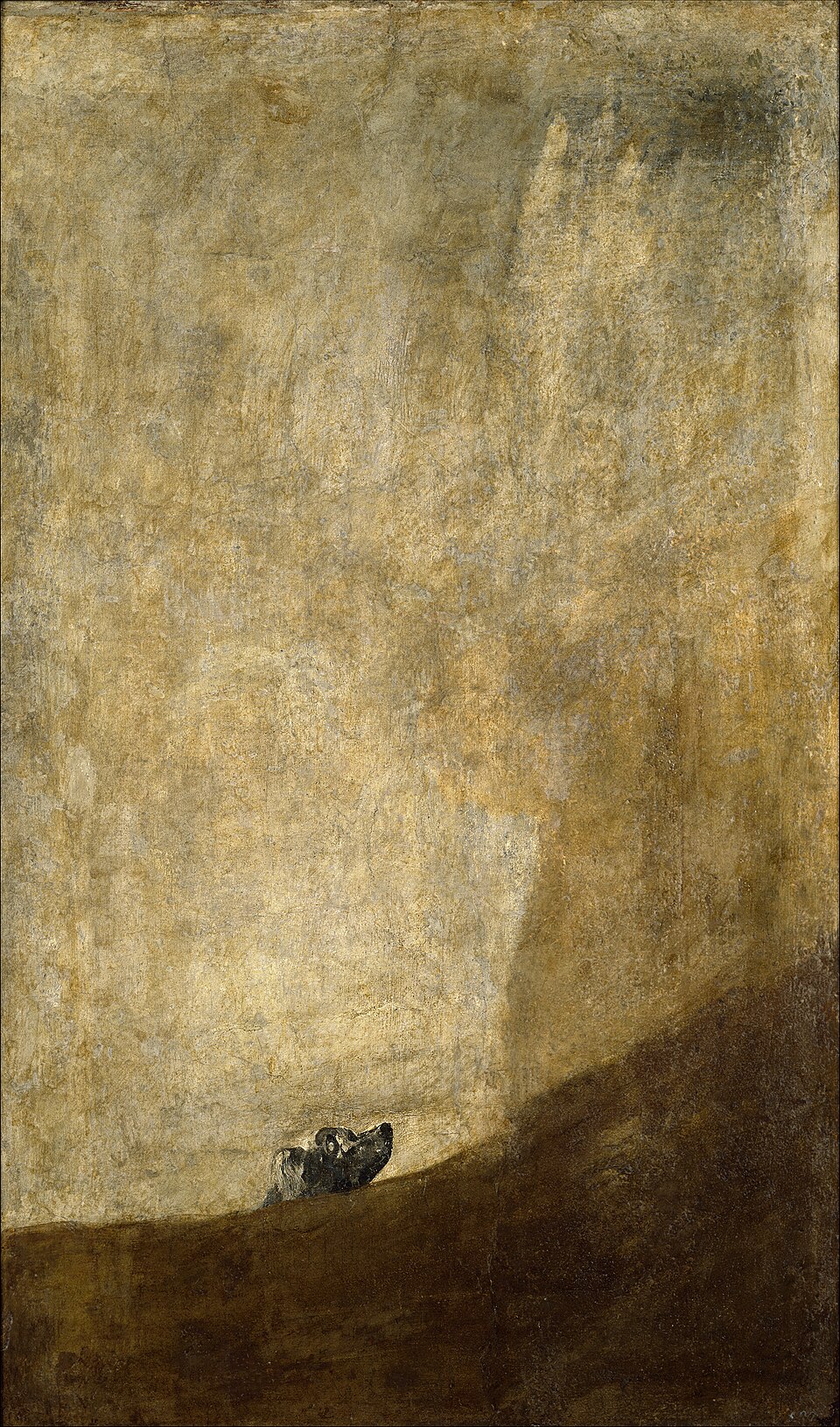
These weren't painted on canvas at all — they went straight onto the plaster walls of the house he was living in, and from what I can find nobody thinks they were meant for anyone else to see. They got cut off the walls and stuck onto canvas decades later, which supposedly explains why they look this rubbed-out and battered.
Erisava: There's barely anything here, and I still feel bad for that dog.
Los caprichos: No hay quien nos desate by Francisco Goya
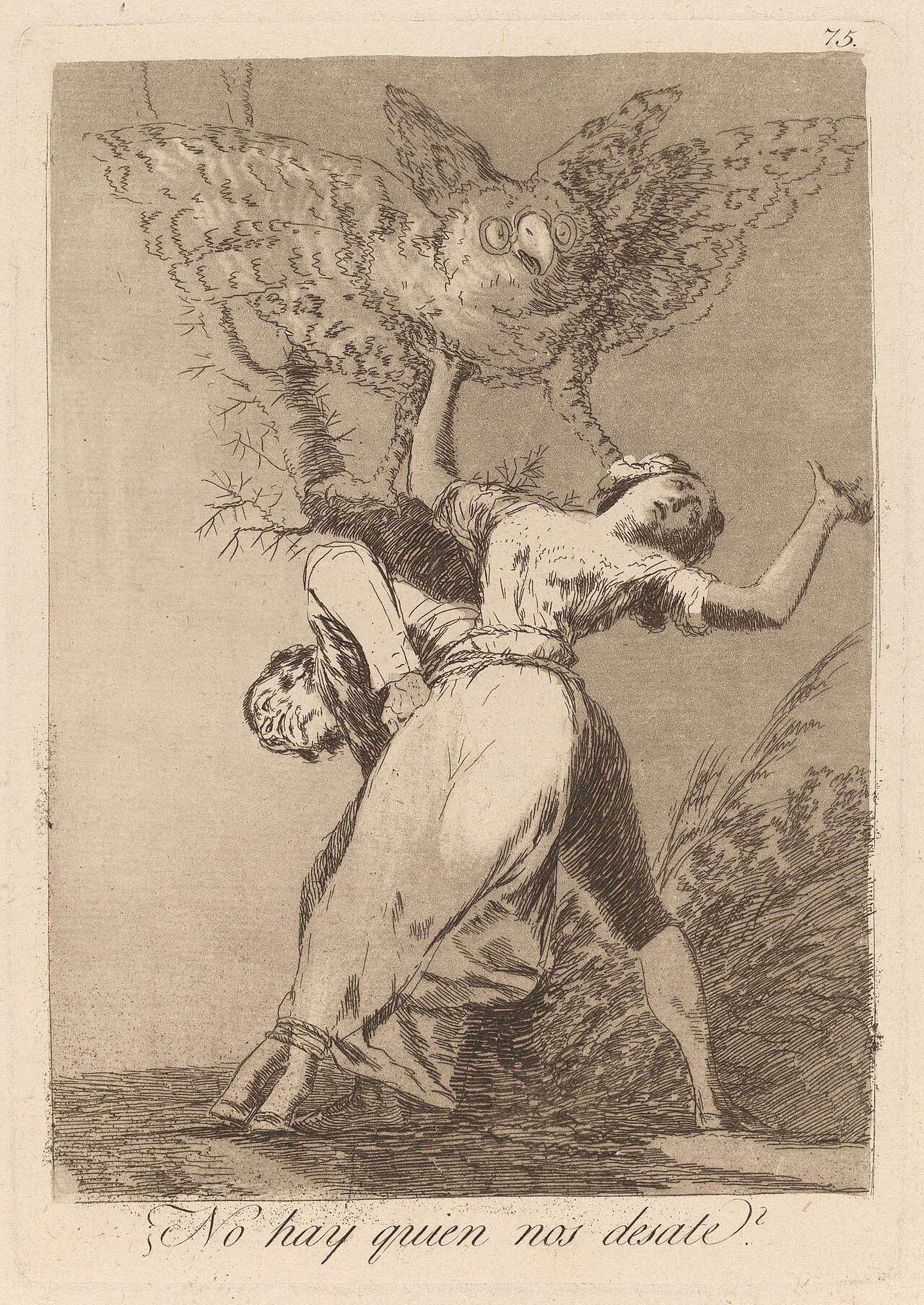
Most of what I could find reads this one as being about marriage — a knot you couldn't get out of in Spain at the time. It's plate 75 of the same set of eighty. The owl I can't explain, and nobody I read seemed sure either.
Erisava: Whoever looked at this and thought marriage was having a rough time of it.