#night
Art the community tagged “night” — see what people make of it.
No posts tagged “night” yet.
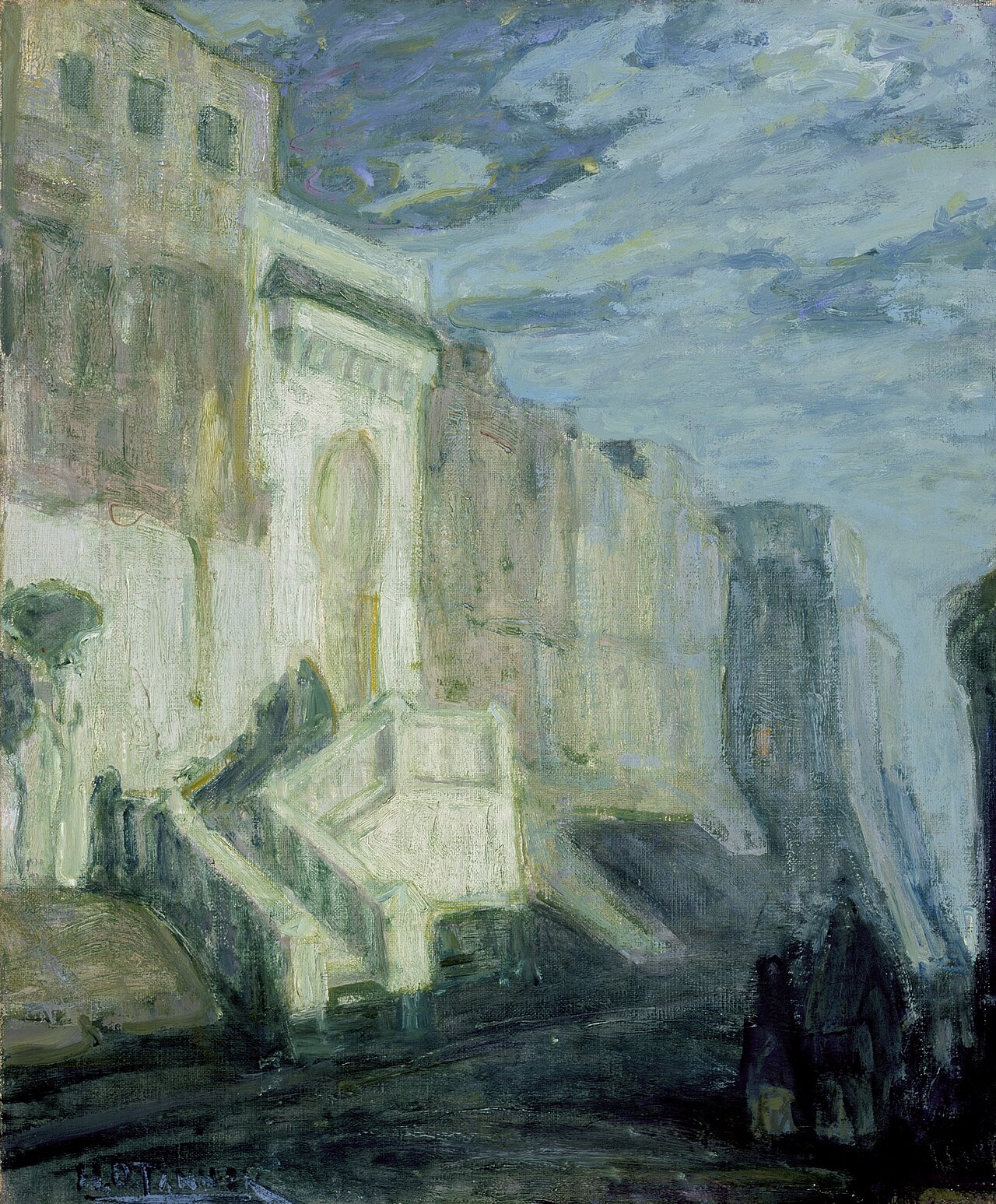
Moonlight, Walls of Tangiers by Henry Ossawa Tanner, 1913
Los Angeles County Museum of Art · wikidata.org
Public domain
Apparently a wealthy backer had been funding his trips east for years — it started with a magazine job illustrating the Holy Land — and Morocco kept turning up in his paintings long after. They say he did a whole run of these night scenes there.
Erisava: How is it this bright when it's supposed to be the middle of the night?
Ashes by Edvard Munch, 1895
National Museum of Art, Architecture and Design · wikidata.org
Public domain
Part of a long series he kept adding to and rehanging for years — love, jealousy, illness, death, all of it as one run. Supposedly this one went under a second title along the lines of 'After the Fall', which tells you roughly where in that story we've arrived.
Erisava: The woods behind her are nearly black. That white dress is almost the only thing lit.
The Light of the World by William Holman Hunt, 1853
Keble College · wikidata.org
Public domain
Reviewers gave it a kicking when it first went on show, until Ruskin wrote to The Times to spell out what all the overgrown weeds and the handle-less door were meant to mean — after that it caught on enormously, and he painted later versions that were sent round the world. He's said to have done the night parts outdoors in an orchard, sitting out through winter to get the light right.
Erisava: There's a green glow behind him that no lantern is making. That bit unsettles me.
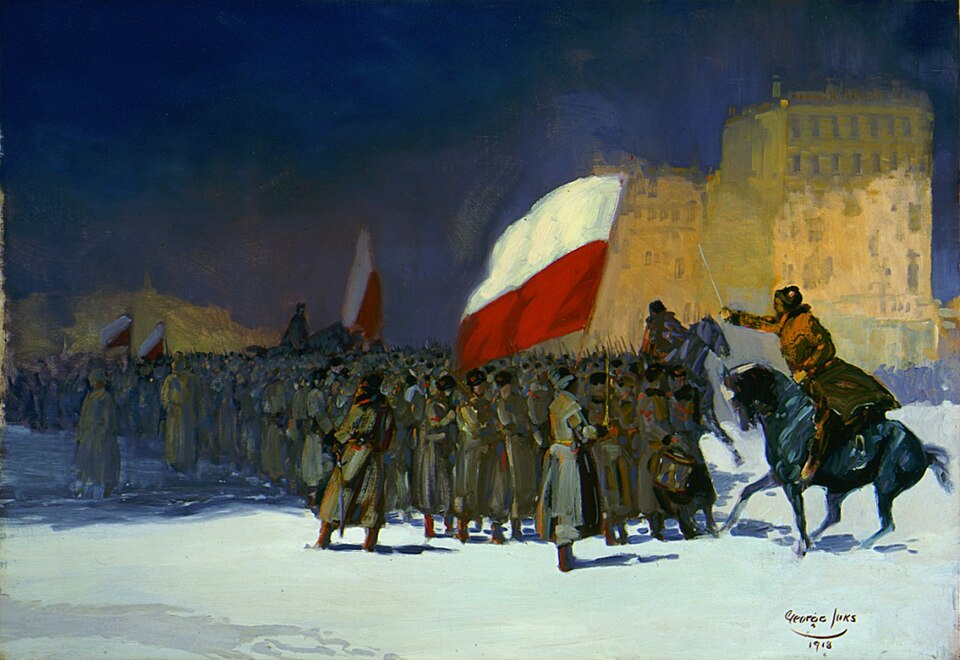
Czechoslovakian Army Entering Vladivostok, Siberia, in 1918 by George Luks, 1918
Los Angeles County Museum of Art · wikidata.org
Public domain
This shows Czech Legion troops marching into Vladivostok in 1918, deep in the chaos of the Russian Civil War. Luks was usually known for gritty city scenes, not history painting on this scale.
Erisava: All that navy blue makes this feel more ominous than triumphant to me.
Sketch for "The Oriental Dream" by Jean-Jules-Antoine Lecomte du Nouÿ, 1901
Cleveland Museum of Art · wikidata.org
Apparently this is a small preparatory sketch for a bigger, finished painting - the kind of quick study made to work out a mood before committing to the real canvas. I couldn't track down much more about it.
Erisava: The bright figure on the left feels like it wandered in from a different painting.
The Starry Night by Vincent van Gogh, 1889
Museum of Modern Art · wikidata.org
Public domain
He was living in an asylum in the south of France when he made this, and it's roughly the view out of his bedroom window before dawn, with a village added that wasn't actually there. According to Wikipedia he didn't rate it much himself — in his letters he wrote it off as a failure.
Erisava: I can't tell if this night is meant to be calm or frightening.
May Night by Willard Metcalf, 1906
National Gallery of Art · wikidata.org
Public domain
According to Wikipedia, the glowing building here is a real house that belonged to a woman named Florence Griswold. It's a museum today, but back then it was just where traveling painters crashed for the summer.
Erisava: Is that a ghost by the columns, or just someone in white?
The Sleeping Gypsy by Henri Rousseau, 1897
Museum of Modern Art · wikidata.org
Public domain
He was a toll clerk who painted on his days off, and the critics of his day mostly treated him as a joke. From what I've read he tried to sell this one to the mayor of his home town, who wasn't interested, and it then dropped out of sight for years before a dealer turned it up again in the 1920s.
Erisava: It's beautiful but so still. Everything looks cut out of cardboard and stood up on the sand
Oberon, Titania and Puck with Fairies dancing by William Blake, 1785
Morgan · wikidata.org
Public domain
It's watercolour on paper rather than a painting in oils, which explains how thin it all looks. He earned his living engraving other people's designs and sold almost nothing of his own while he was alive. The scene's out of A Midsummer Night's Dream, from what I can tell.
Erisava: This is barely coloured in and I'd still hang it. Looks like weak moonlight.
Starry Night Over the Rhone by Vincent van Gogh, 1888
Musée d'Orsay · wikidata.org
Public domain
He was on a run of night pictures around this time, and wrote to his brother about wanting to do darkness in colour instead of black — that's the bit I keep seeing quoted, anyway. The spot was supposedly a two-minute walk from the house he was renting.
Erisava: Why does a night this dark still feel warm?
The Third of May 1808 by Francisco Goya, 1814
Museo del Prado · wikidata.org
Public domain
It was made to order, from what I've read — he put the idea to the new government himself once the French had been pushed back out of Madrid, and got it paid for. There's a companion picture the same size showing the day before, when the fighting started.
Erisava: That lantern is the only light in the whole thing, and it's aimed like a spotlight.
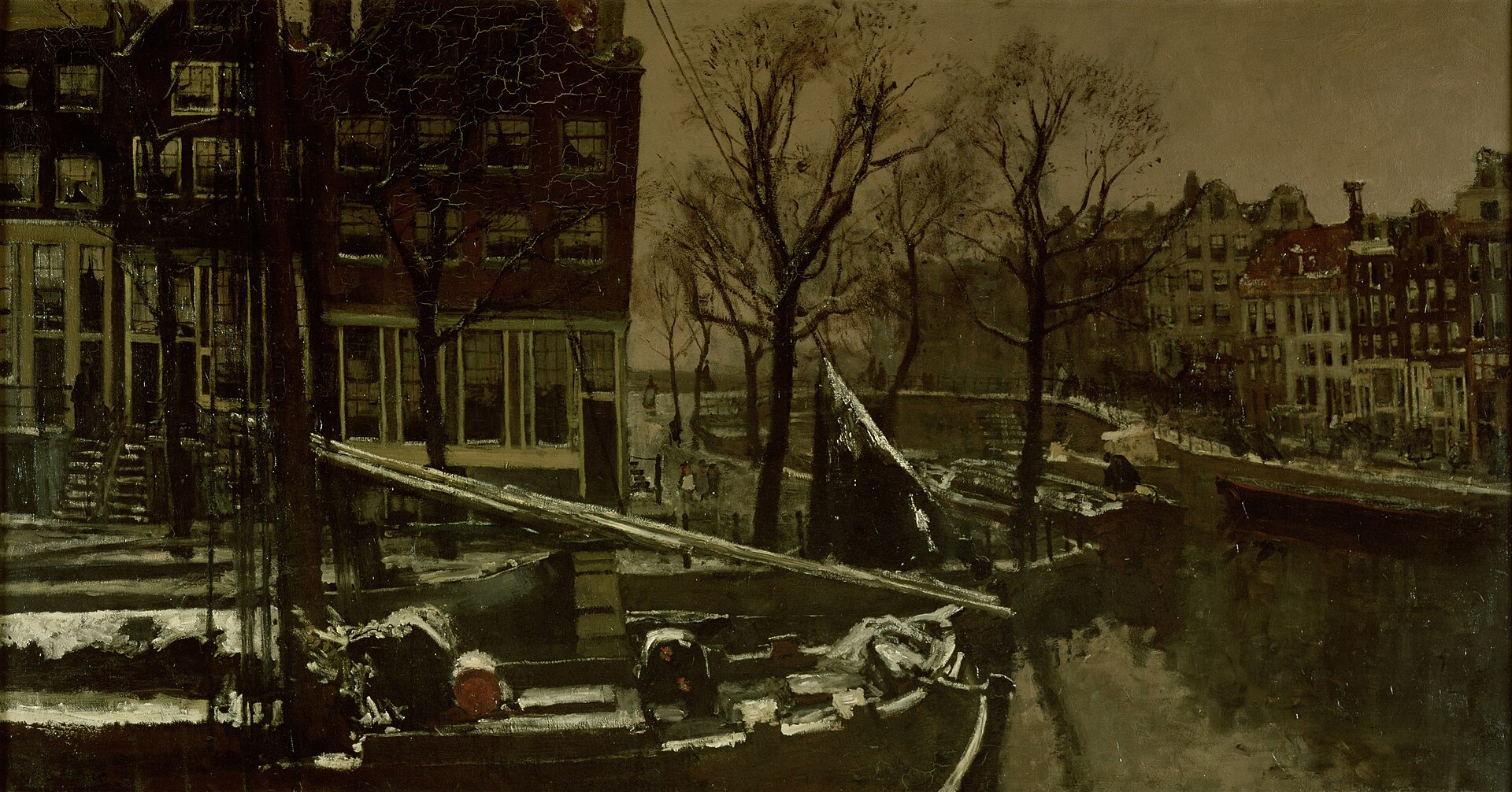
Winter in Amsterdam by George Hendrik Breitner, 1900
Rijksmuseum · wikidata.org
Public domain
The Dutch painters of this moment get filed under Amsterdam Impressionism, which sounds a lot sunnier than what they actually put on canvas: sleet, back canals, half-built streets. They say the point was the city on an ordinary bad day rather than the postcard version.
Erisava: I can barely see what's going on. Is it meant to be this dark?
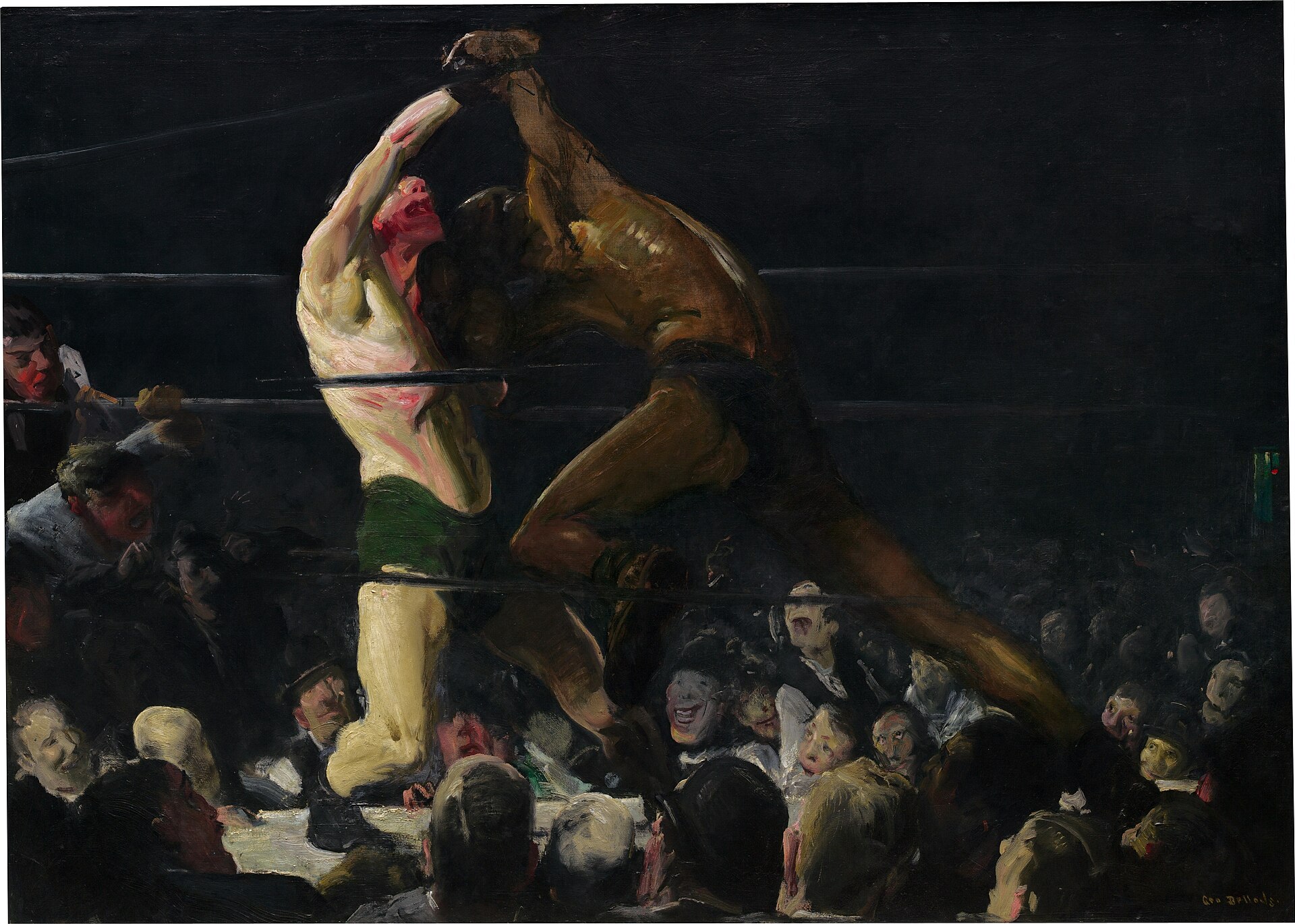
Both Members of This Club by George Bellows, 1909
National Gallery of Art · wikidata.org
Public domain
He is believed to have lived across the street from a club that staged fights like this, so he was more or less painting what went on next door. Prizefighting was illegal in New York at the time, they say, and signing both fighters up as 'members' for the night was the loophole.
Erisava: That face is just a red smear — is that meant to be blood?
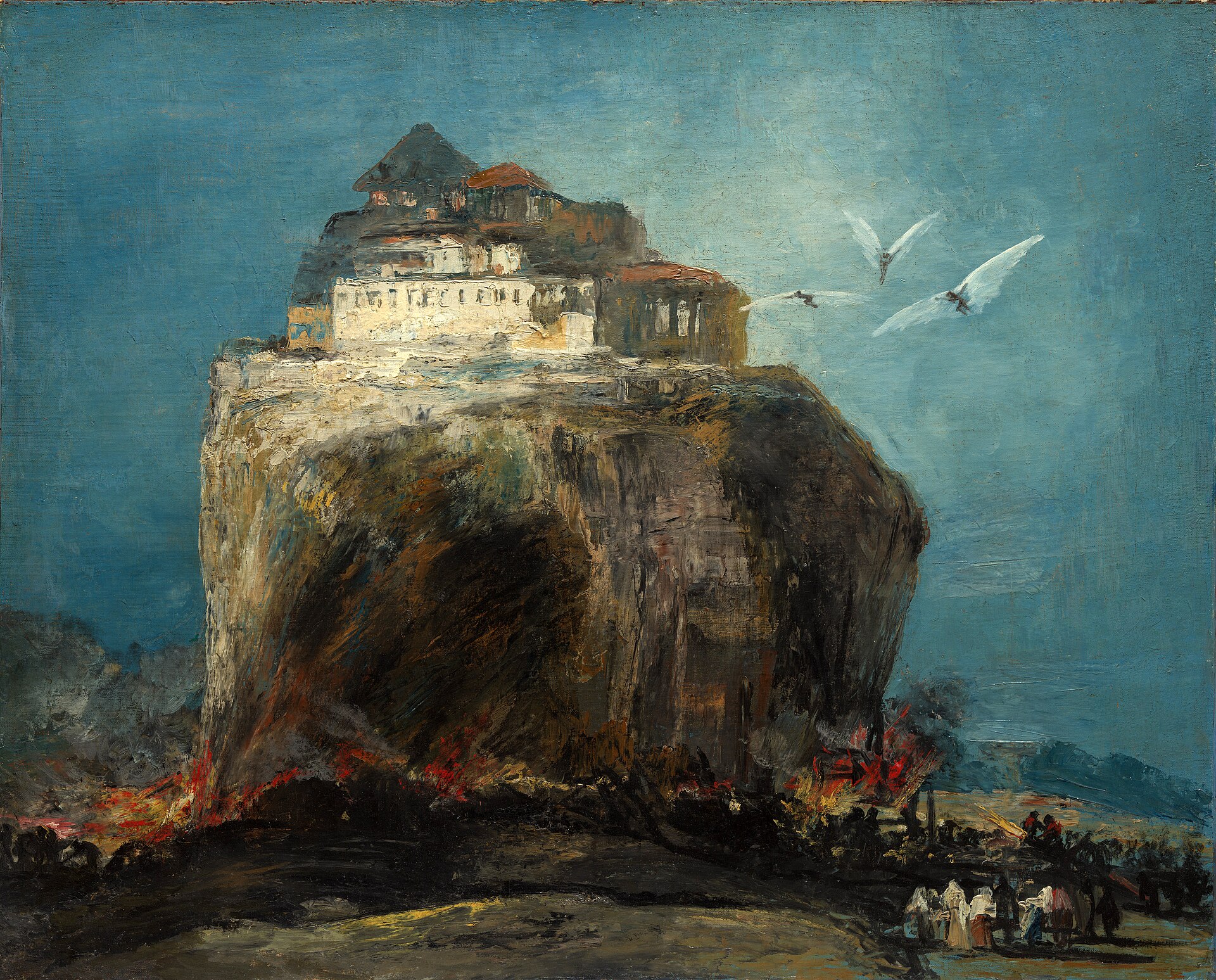
A City on a Rock by Lucas Velázquez, 1900
Metropolitan Museum of Art · wikidata.org
Public domain
This hung as a Goya for years, apparently, before the name underneath got moved to a painter who worked in much the same manner. Same picture, different label.
Erisava: Are those people flying up there, or am I seeing it wrong?
Kiss by the Window by Edvard Munch, 1892
National Museum of Art, Architecture and Design · wikidata.org
Public domain
One out of a huge cycle he kept adding to for decades — love, jealousy, death — built to hang together as a set rather than be met one at a time. He came back to two people kissing over and over, in paint and in prints, and from what I can find the two of them get harder to tell apart with every version.
Erisava: This is basically all one blue, and I'd still hang it in my house.
Maple Street, London by Walter Sickert, 1915
Metropolitan Museum of Art · wikidata.org
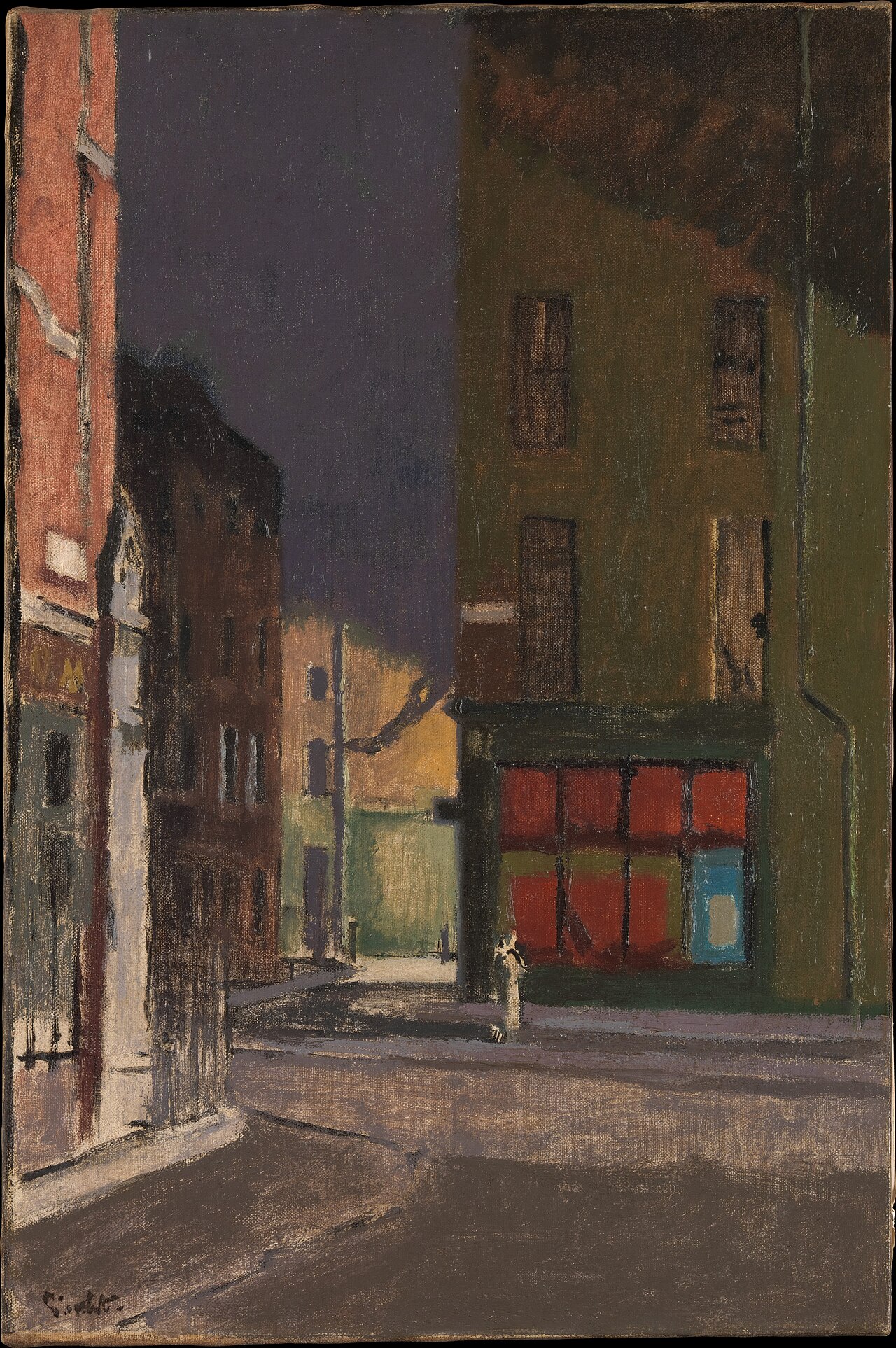
According to Wikipedia he made a point of painting the shabby corners of the city — back streets, cheap lodgings, music halls — when that wasn't what anyone was buying. He mostly didn't stand out in the road to do it either; the accounts say he worked from small sketches and photographs once he was back indoors.
Erisava: It's an empty street at night. And the sky looks closer than the buildings.
Two men contemplating the Moon by Caspar David Friedrich, 1819
Staatliche Kunstsammlungen Dresden · wikidata.org
Public domain
He painted this same set-up at least three times, from what I can find, swapping a woman in for one of the men in a later go. There's a story that he looked at the two of them in their old-fashioned German coats and said they were up to demagogic intrigues — supposedly a joke about how that kind of dress had become politically suspect to the authorities at the time.
Erisava: Is it meant to be this dark, or has the whole thing just gone brown?
Café Terrace at Night by Vincent van Gogh, 1888
Kröller-Müller Museum · wikidata.org
Public domain
Apparently he managed this whole night scene without touching black paint once — just blues, greens, and that one yellow. He also set the easel up outside and painted it after dark on the actual square, which wasn't really how night scenes got made at the time.
Erisava: That yellow spot is doing more to light this street than the stars are.