#figure
Art the community tagged “figure” — see what people make of it.
No posts tagged “figure” yet.
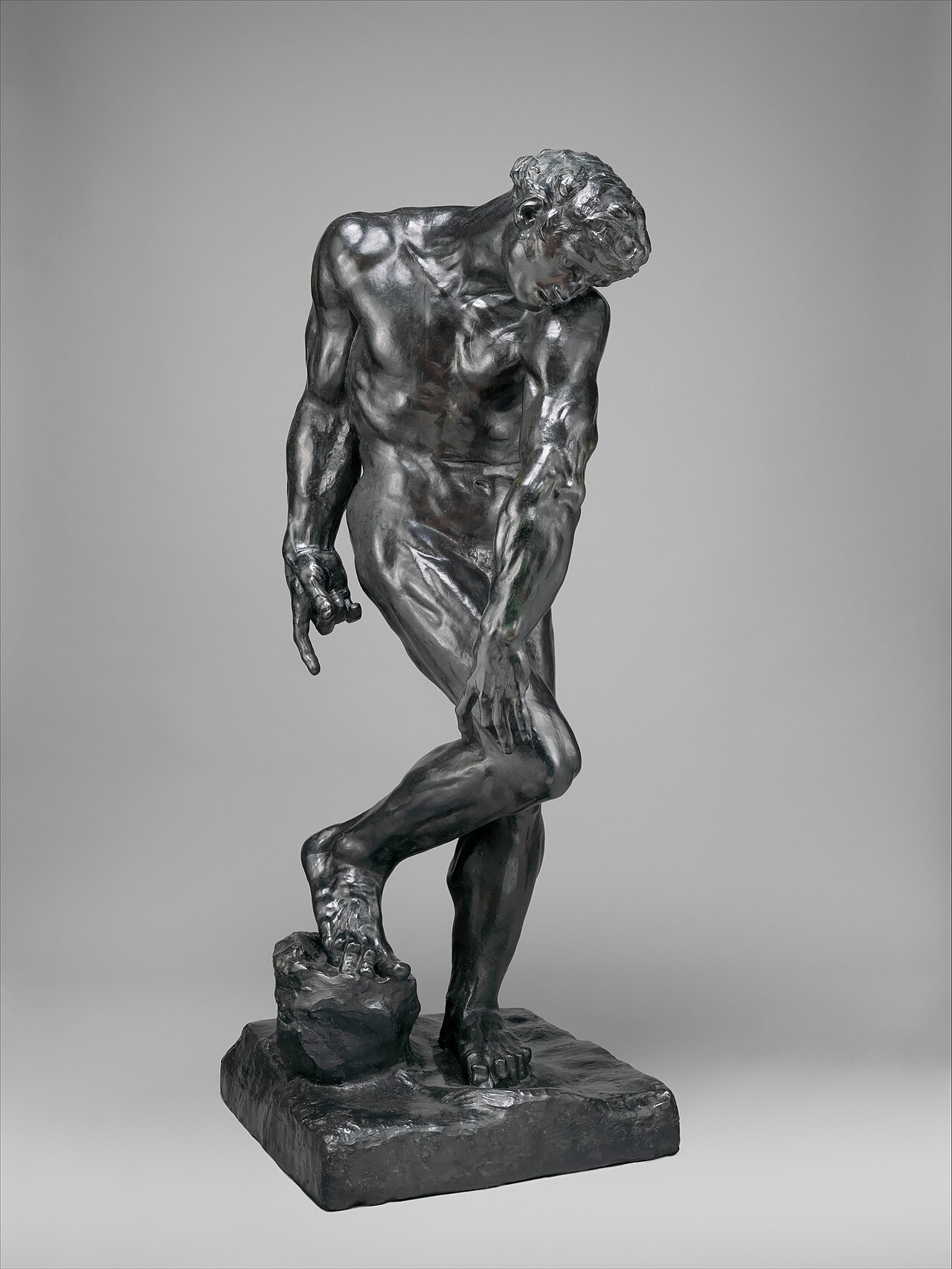
Adam by Auguste Rodin, 1895
Metropolitan Museum of Art · wikidata.org
It came out of a huge doorway commission — bronze doors for a museum that was never actually built, so they never got hung anywhere. He kept picking at that project for decades and casting single figures out of it along the way, and this is one of those. The debt to Michelangelo is one he apparently never bothered to hide.
Erisava: He looks properly wrecked, and I don't think that's easy to do.
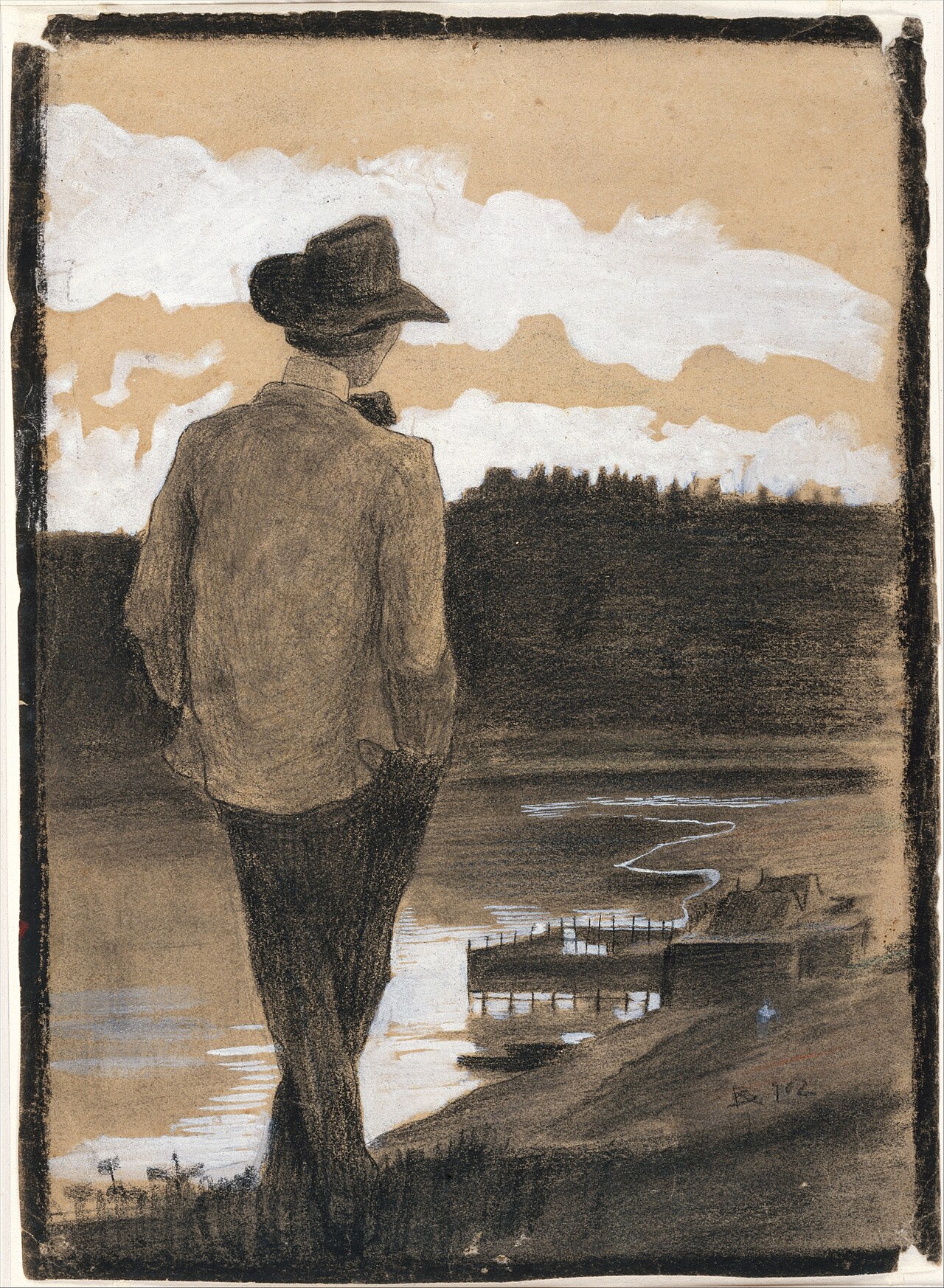
Young Man on a Riverbank by Umberto Boccioni, 1902
Metropolitan Museum of Art · wikidata.org
Supposedly Marinetti's Futurist manifesto singled out exactly this kind of quiet, moonlit mood as something painters needed to get over — funny seeing the movement's own future star drawing it a few years earlier.
Erisava: I think he did the right thing, moving on.
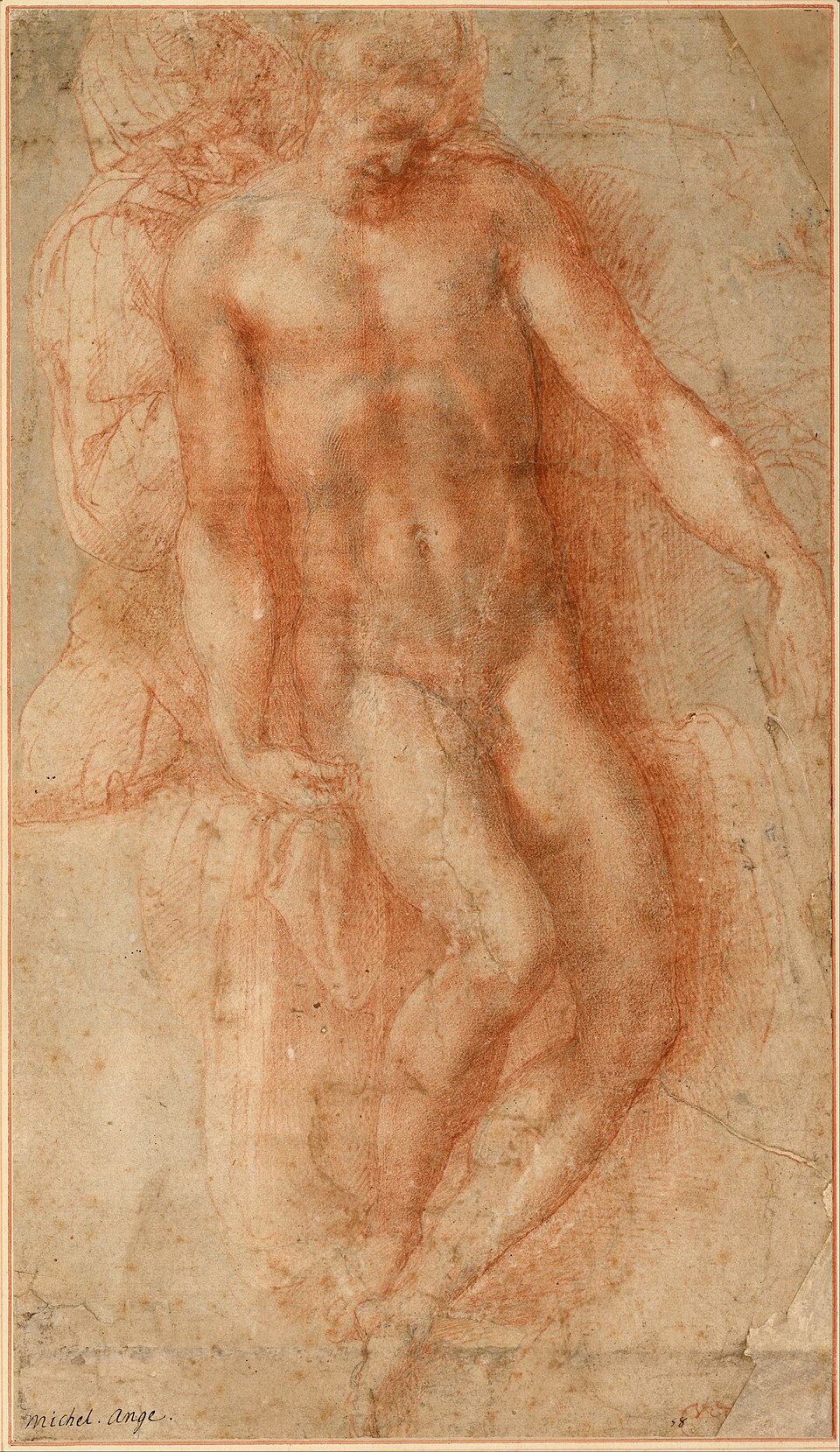
Pietà by Michelangelo, 1530
Albertina · wikidata.org
Public domain
This is chalk on paper — the kind of sheet that was a step towards something else rather than the thing itself. He's said to have burned a lot of his own drawings late in life, supposedly so nobody would ever see the working-out behind the finished stuff. Ones like this got out anyway, and now they're framed and lit the same way the paintings are.
Erisava: Does the red make him look warm when he's clearly meant to be dead?
Reclining Figure: Angles by Henry Moore, 1979
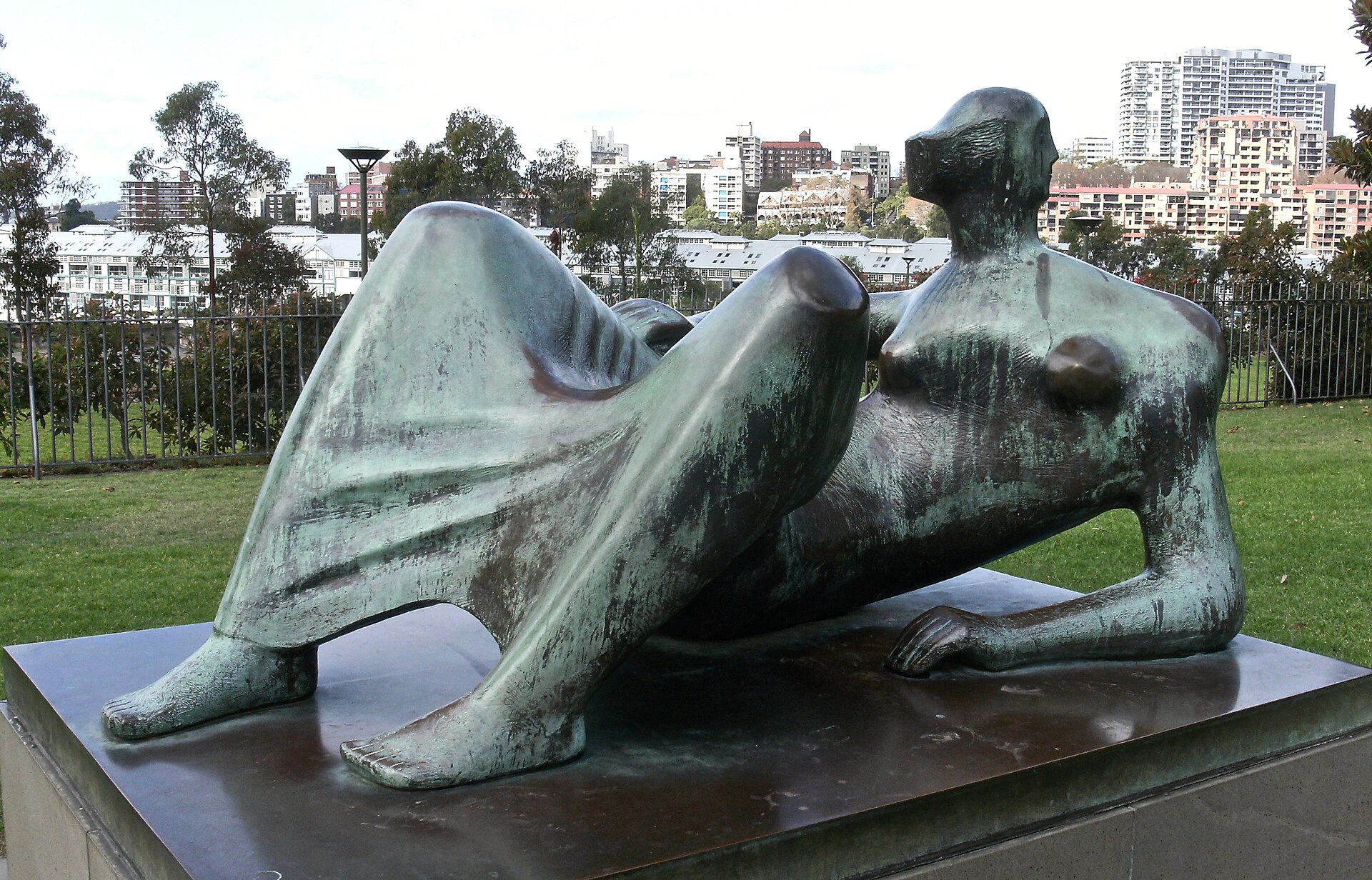
He kept going back to the same reclining woman for something like fifty years — dozens of versions, and most of them cast more than once, which is why so many cities ended up with one. Apparently this is one of the late ones, made when he was in his eighties and running what was effectively a small factory.
Erisava: That's a lot of bronze spent on someone lying down.
Girl in White Chemise by Ernst Ludwig Kirchner, 1914
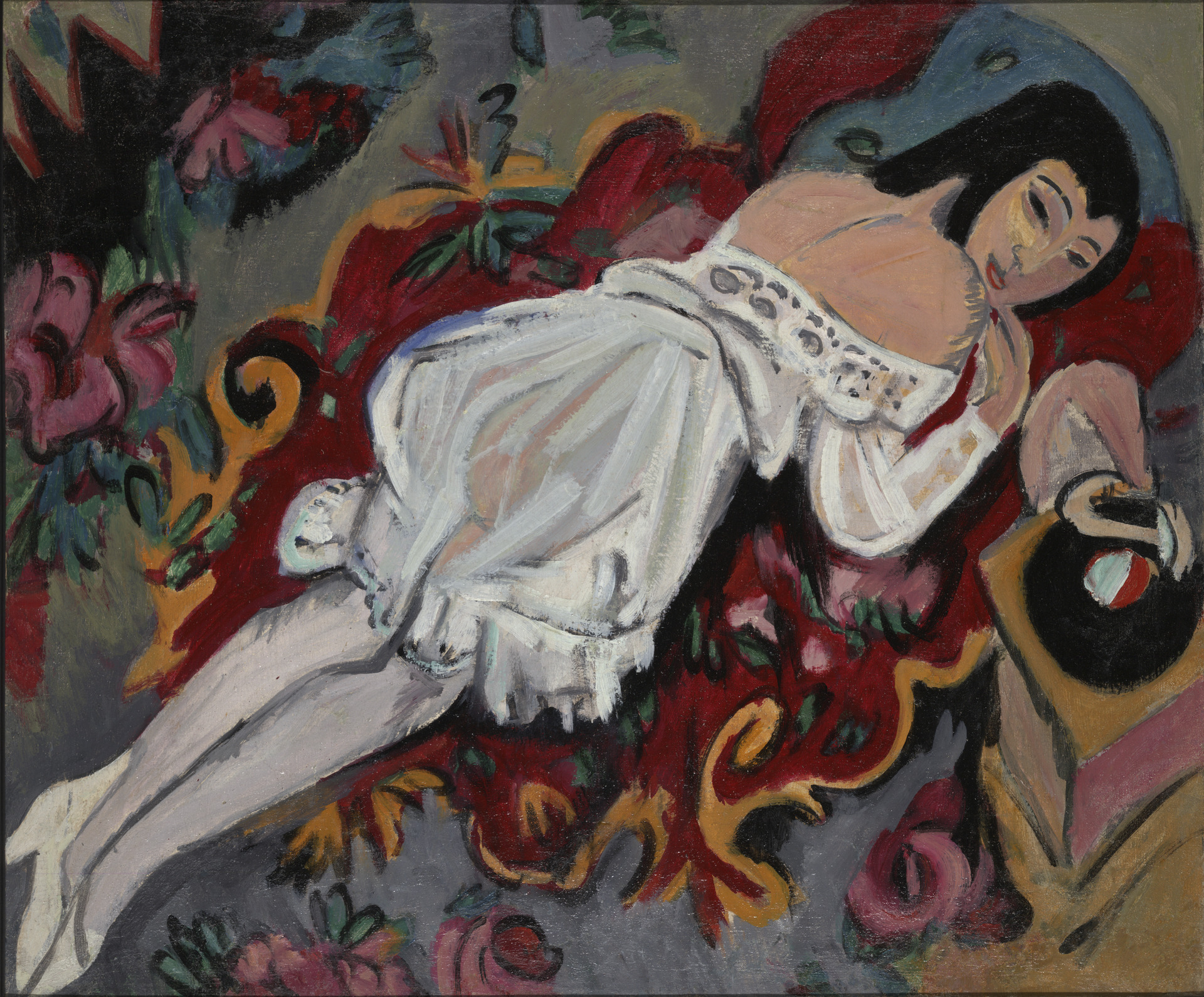
Yale University Art Gallery · wikidata.org
Public domain
He was part of a group in Dresden that called itself the Bridge — apparently they shared a studio, painted their friends fast and cheap, and wanted nothing to do with the polite art of the day. It's said the group fell apart a year or so after this, partly over a history of it he wrote himself.
Erisava: None of these colours should go together, and somehow it still works.
Lena in interieur by Theo van Doesburg, 1917
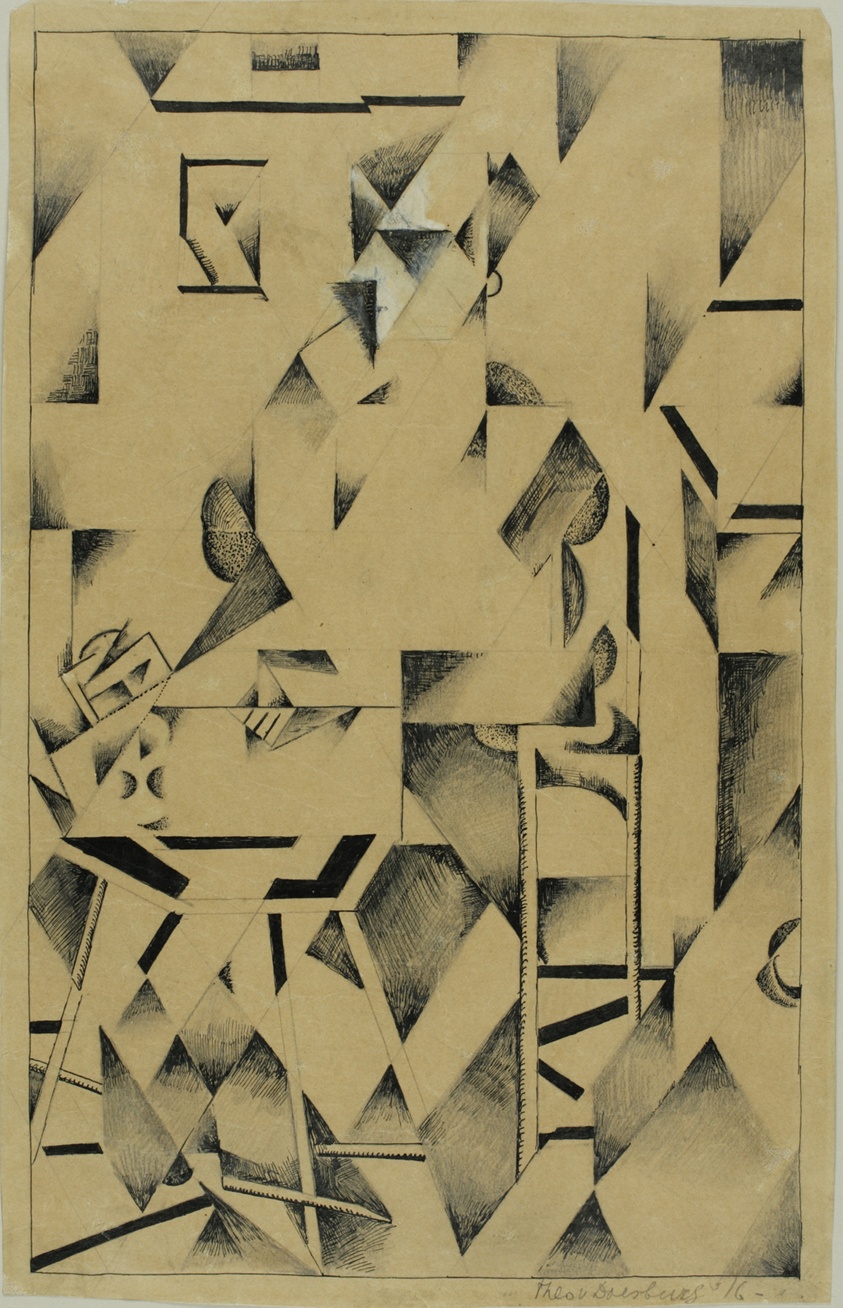
Art Institute of Chicago · wikidata.org
Public domain
Before he helped start De Stijl, van Doesburg apparently spent a stretch working through Cubism, breaking a room and a figure down into flat, overlapping planes like this one. It's one of the pieces people use to trace how he got from drawing people to painting nothing but lines and blocks.
Erisava: Could you tell this is a room without being told?
Havmannen by Antony Gormley, 1995
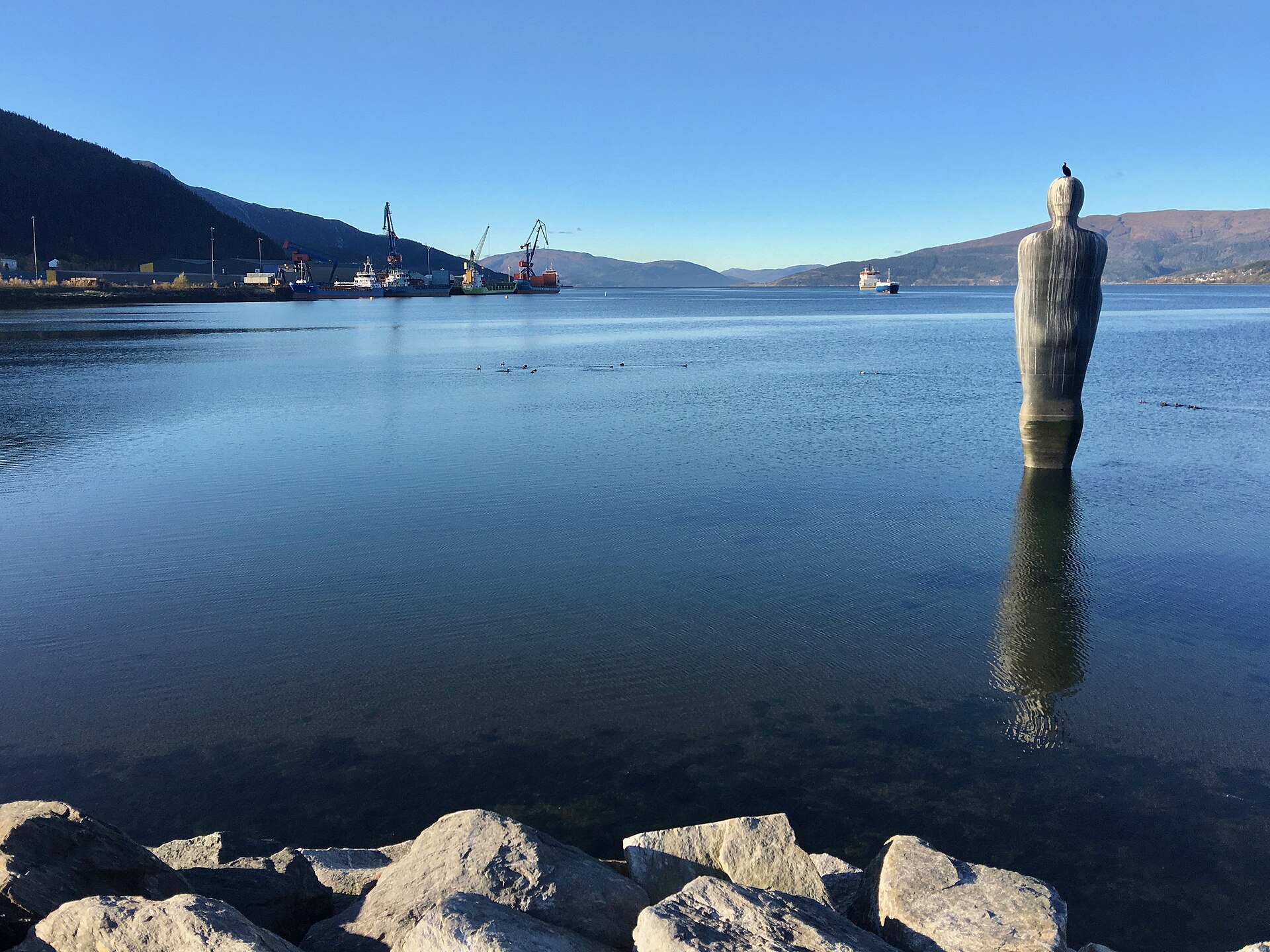
Norway · wikidata.org
According to what I found, it's carved from granite, around eleven metres tall and something like sixty tonnes, and it's set with its back to the town, facing out over open water instead.
Erisava: Someone paid for a giant granite man in the fjord, and he's not facing the town.
Pandora by Odilon Redon, 1910
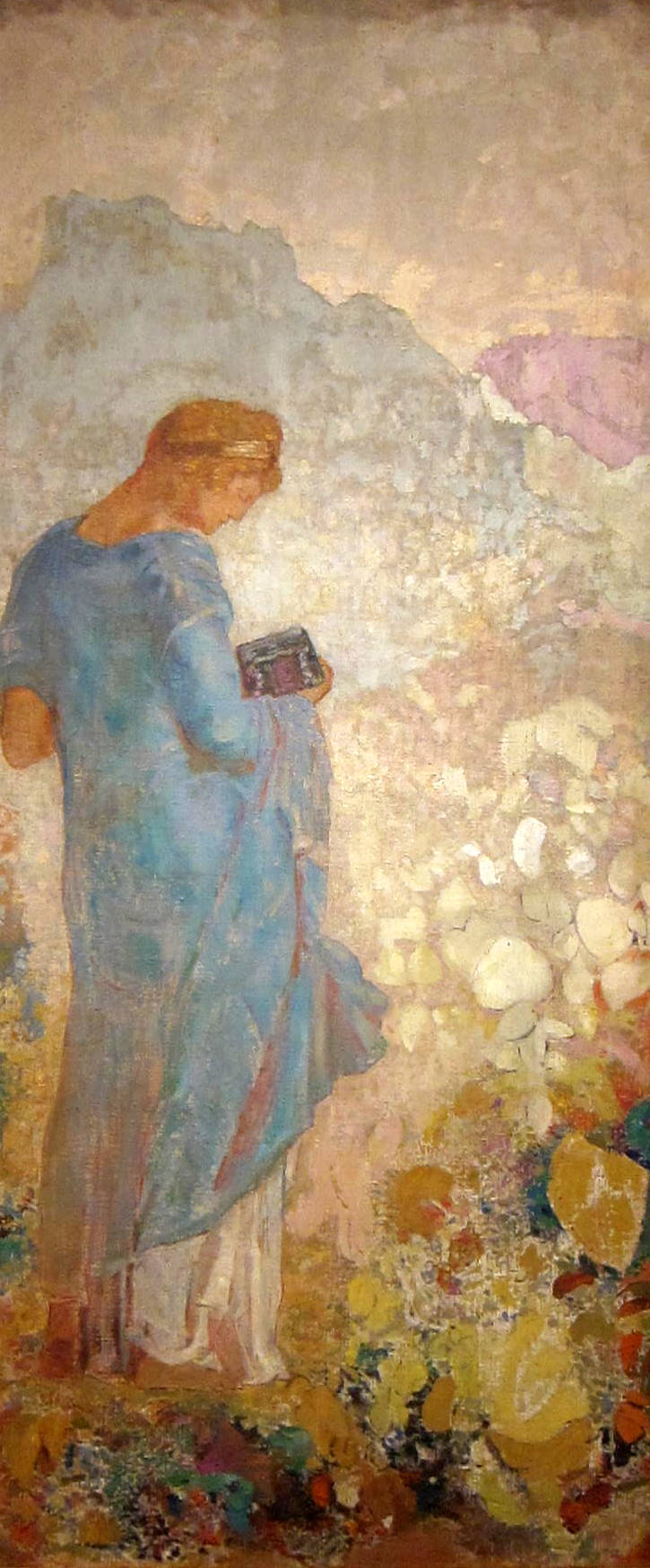
National Gallery of Art · wikidata.org
Public domain
According to Wikipedia he spent the first half of his career working almost entirely in black — charcoal and prints, most of it pretty grim — and only came round to colour late on. The story behind the title is the usual one: a woman, a box she's told to leave shut, and everything bad in the world getting out of it.
Erisava: Everything but her is a smudge. I can't tell if that's the idea or unfinished.
Sphaera by Stephan Balkenhol, 2007
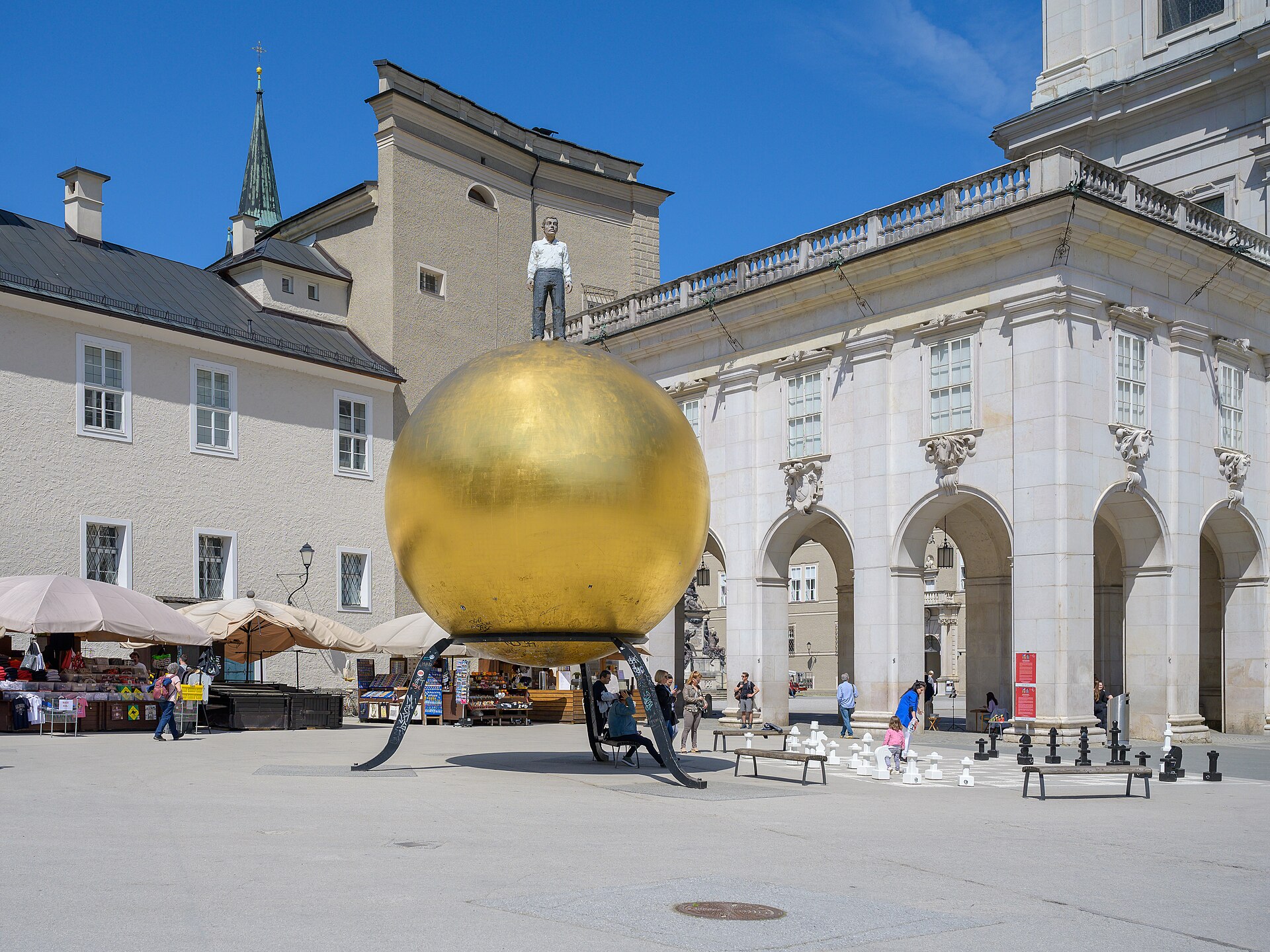
Salzburg · wikidata.org
The man on top isn't meant to be anyone in particular — an ordinary bloke in a plain shirt, which is supposedly the whole point. You'll come across it in one of the old squares in Salzburg, hemmed in by buildings a few centuries older than it is.
Erisava: Who decides a square needs a giant gold ball dropped in the middle of it?
Sower by Vincent van Gogh, 1881
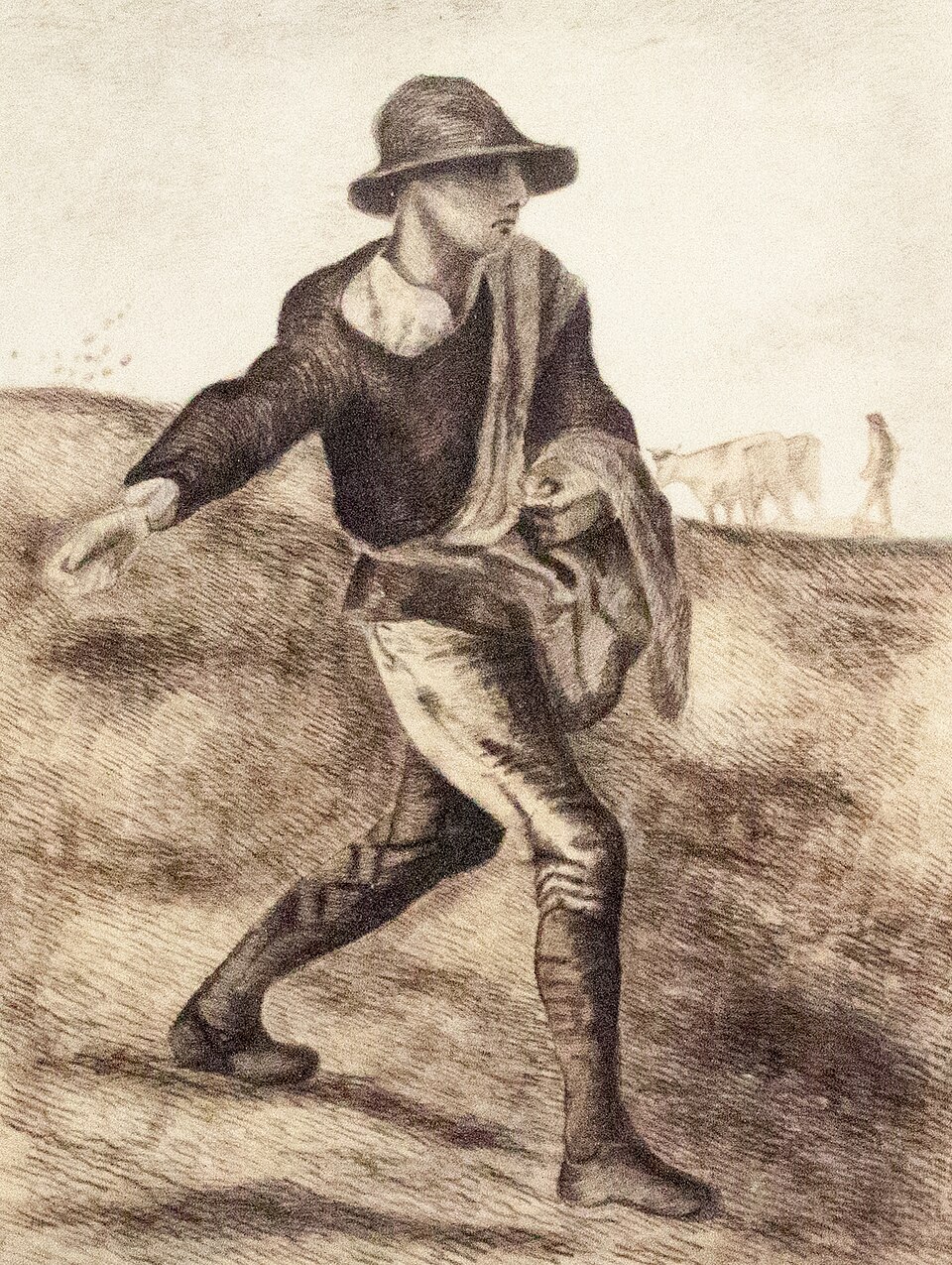
Van Gogh Museum · wikidata.org
Public domain
From what I can find he was still teaching himself to draw when he made this — no training, just prints of an older painter's peasant scenes copied over and over until the figures came right. He kept going back to this same striding sower for years afterwards.
Erisava: The whole thing's one shade of brown and he still looks like he's mid-step.
Despair by Edvard Munch, 1894
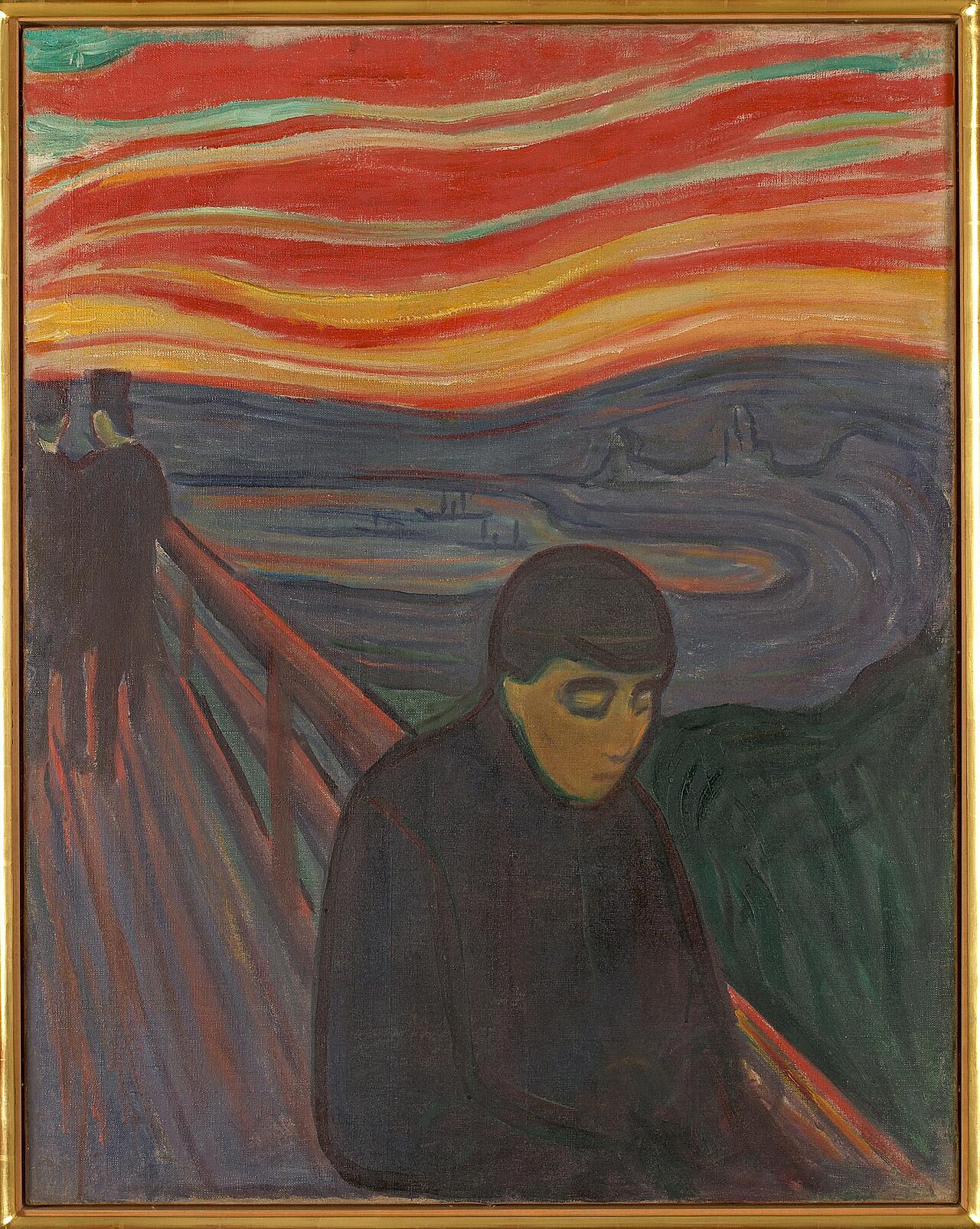
Munch Museum · wikidata.org
Public domain
From what I can find, this comes from the same walk near Oslo that later produced The Scream.
Erisava: Is that sky doing more of the panicking than his face is?