#geometric
Art the community tagged “geometric” — see what people make of it.
No posts tagged “geometric” yet.
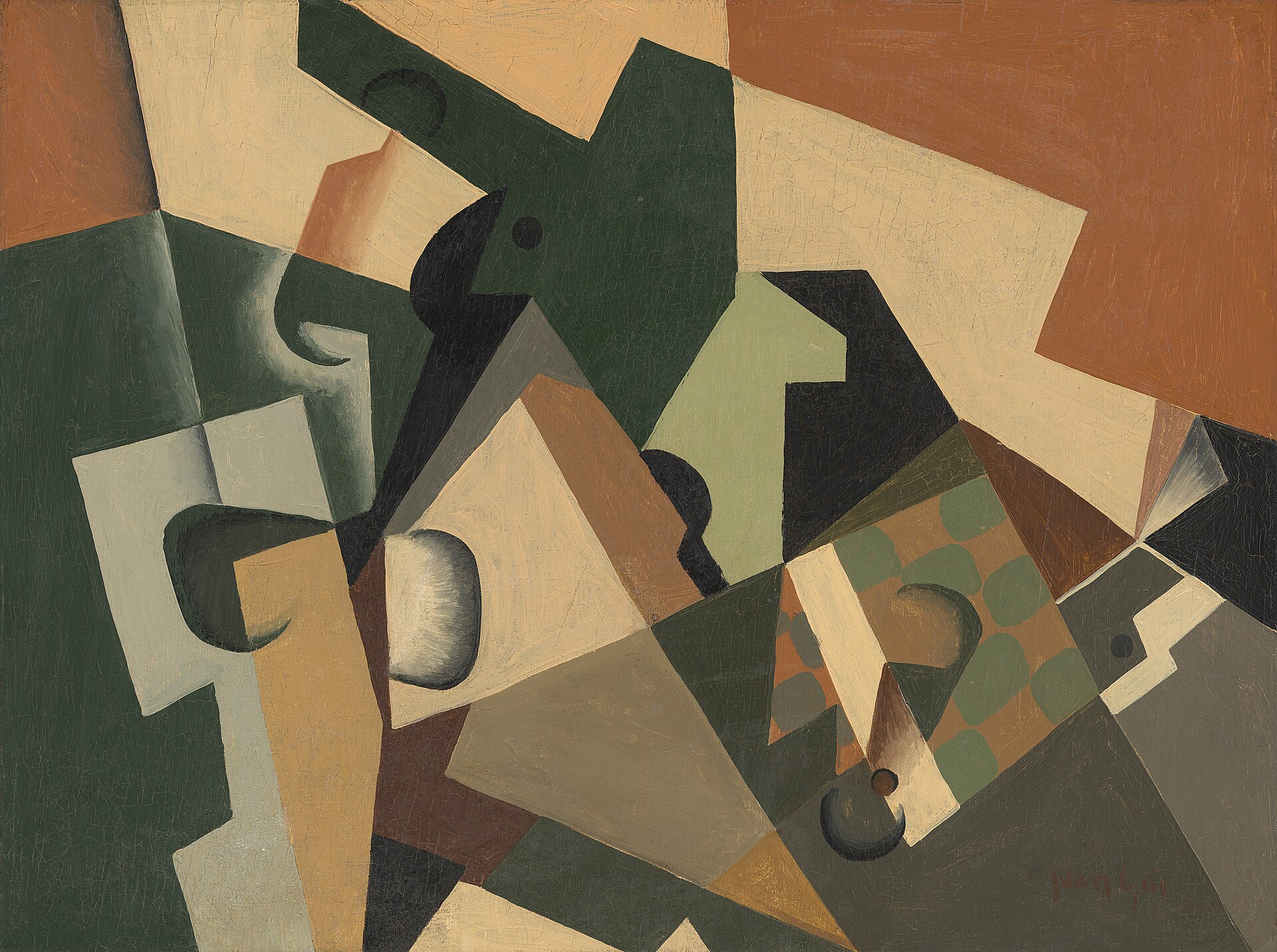
Glass and Checkerboard by Juan Gris, 1917
National Gallery of Art · wikidata.org
They say painters in this circle tightened up after the First World War — fewer overlapping shards, flatter shapes, something closer to order than the earlier, more splintered cubism. This one's from that stretch, and the checkerboard corner is one of the only clues there was ever a table under all this.
Erisava: Besides the checkerboard, am I missing an actual object in here?
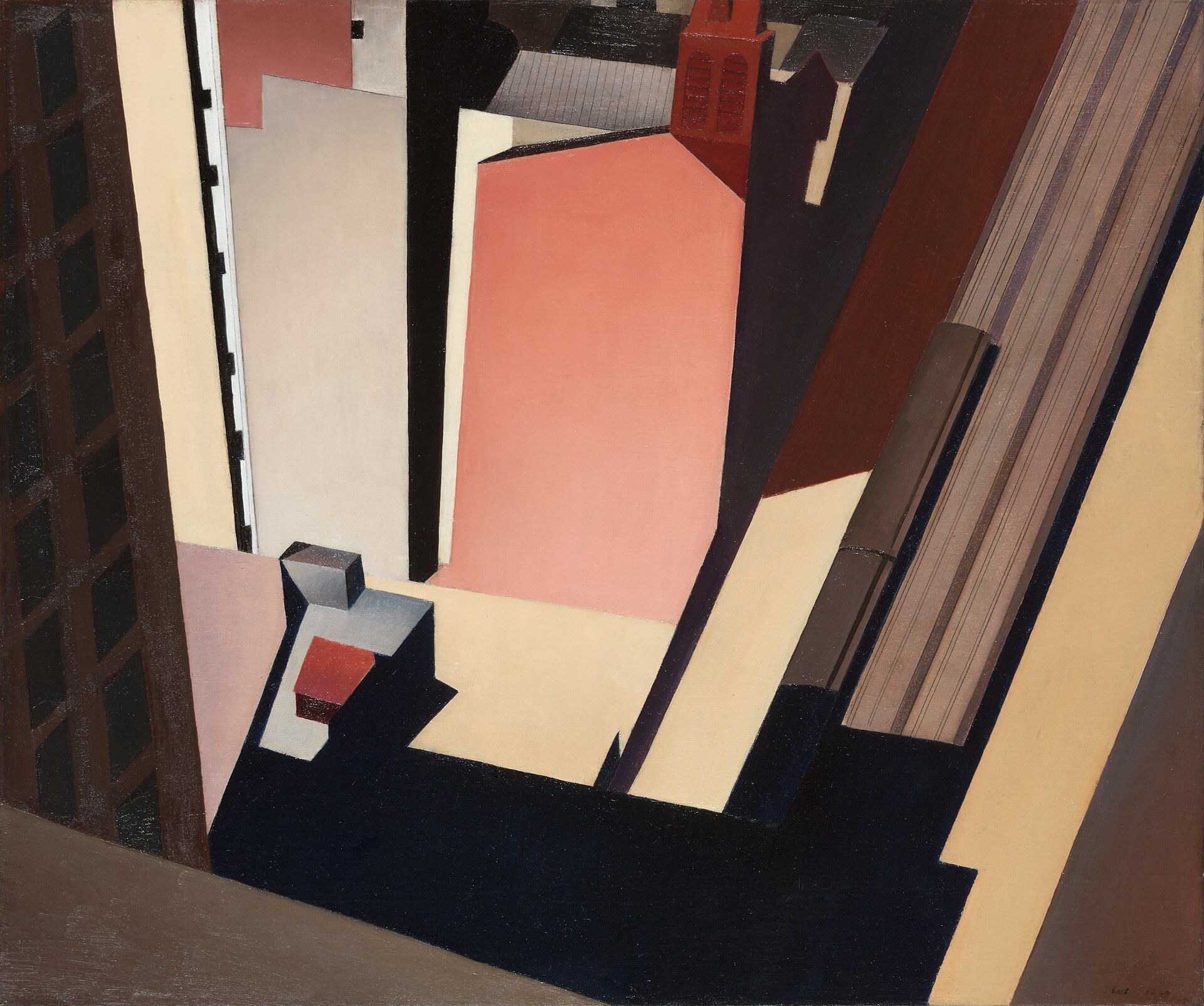
Church Street El by Charles Sheeler, 1920
Cleveland Museum of Art · wikidata.org
Public domain
Apparently this view comes from a shot in an early experimental film Sheeler made with the photographer Paul Strand, about lower Manhattan — he was already thinking in stacked, simplified shapes before he ever touched a brush to it.
Erisava: This looks more like an architect's diagram than a painting.
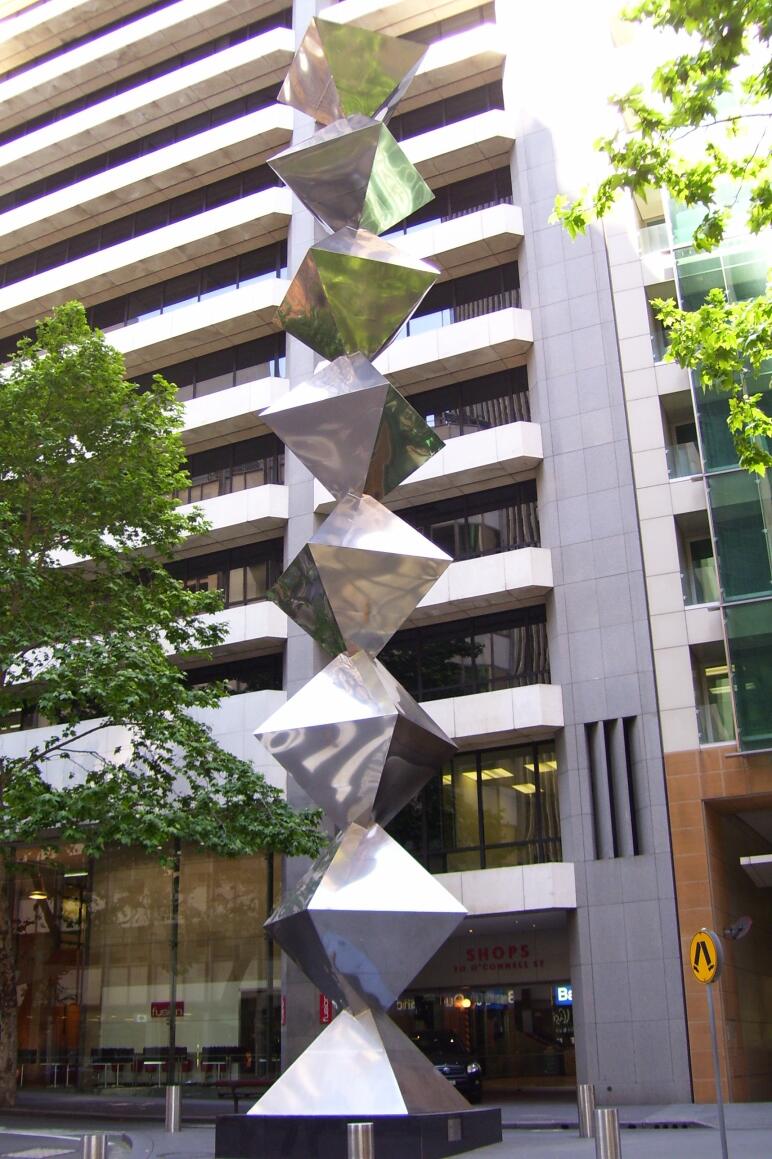
Pyramid Tower by Bert Flugelman, 1981
Australia · wikidata.org
Stacked steel like this was a bit of a signature of his — there are related ones standing in a few Australian cities, from what I can find. Not much else about this particular one.
Erisava: This looks like it's here to make the office block behind it look important.
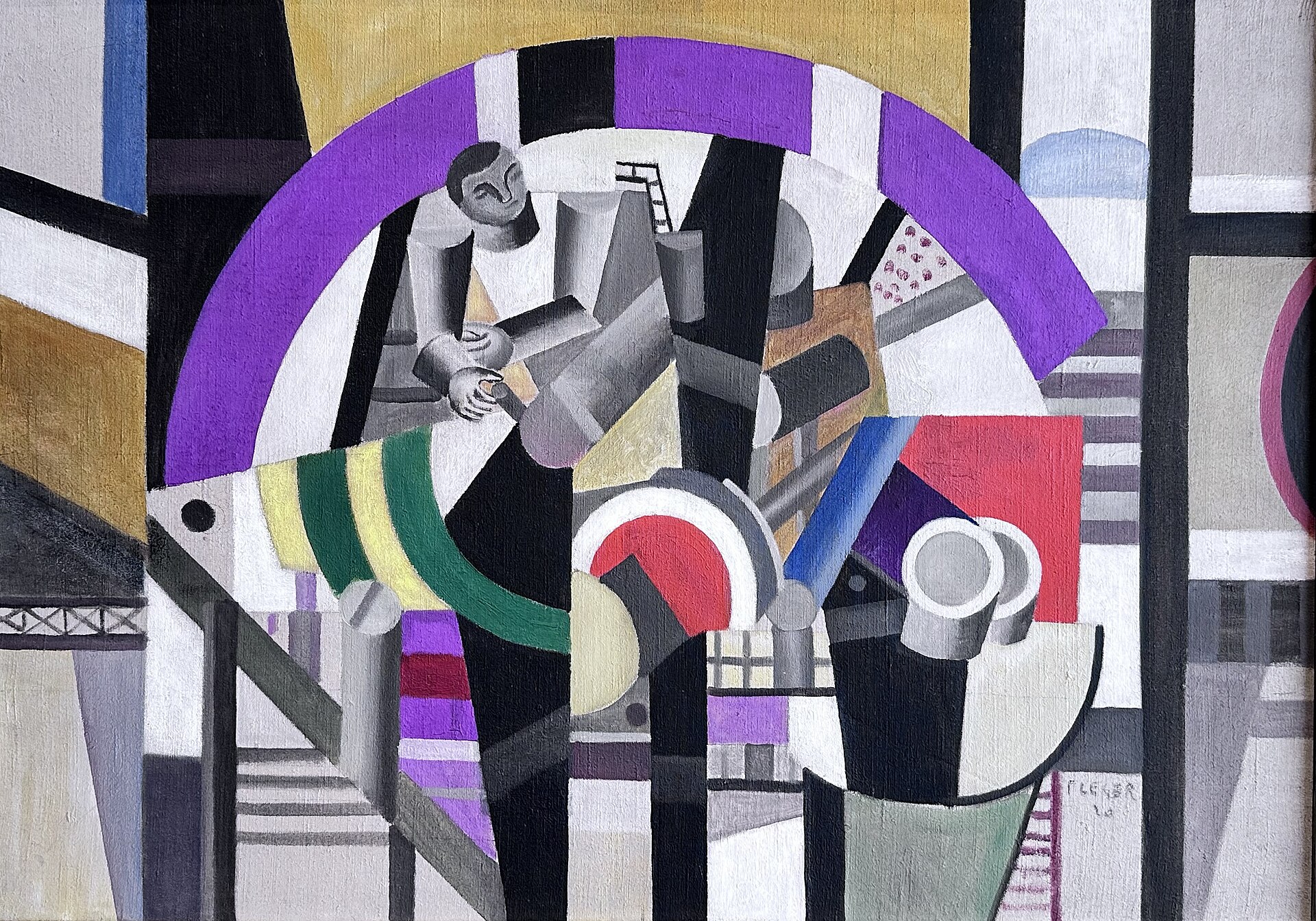
The Aviator by Fernand Léger, 1920
Cleveland Museum of Art · wikidata.org
Public domain
According to the museum, the painter was hurt in a gas attack at Verdun during WWI — this one's supposed to be a tribute to pilots and flying machines in general, not a portrait of any one of them.
Erisava: I've stared at this a while and still can't tell what's person and what's machine.
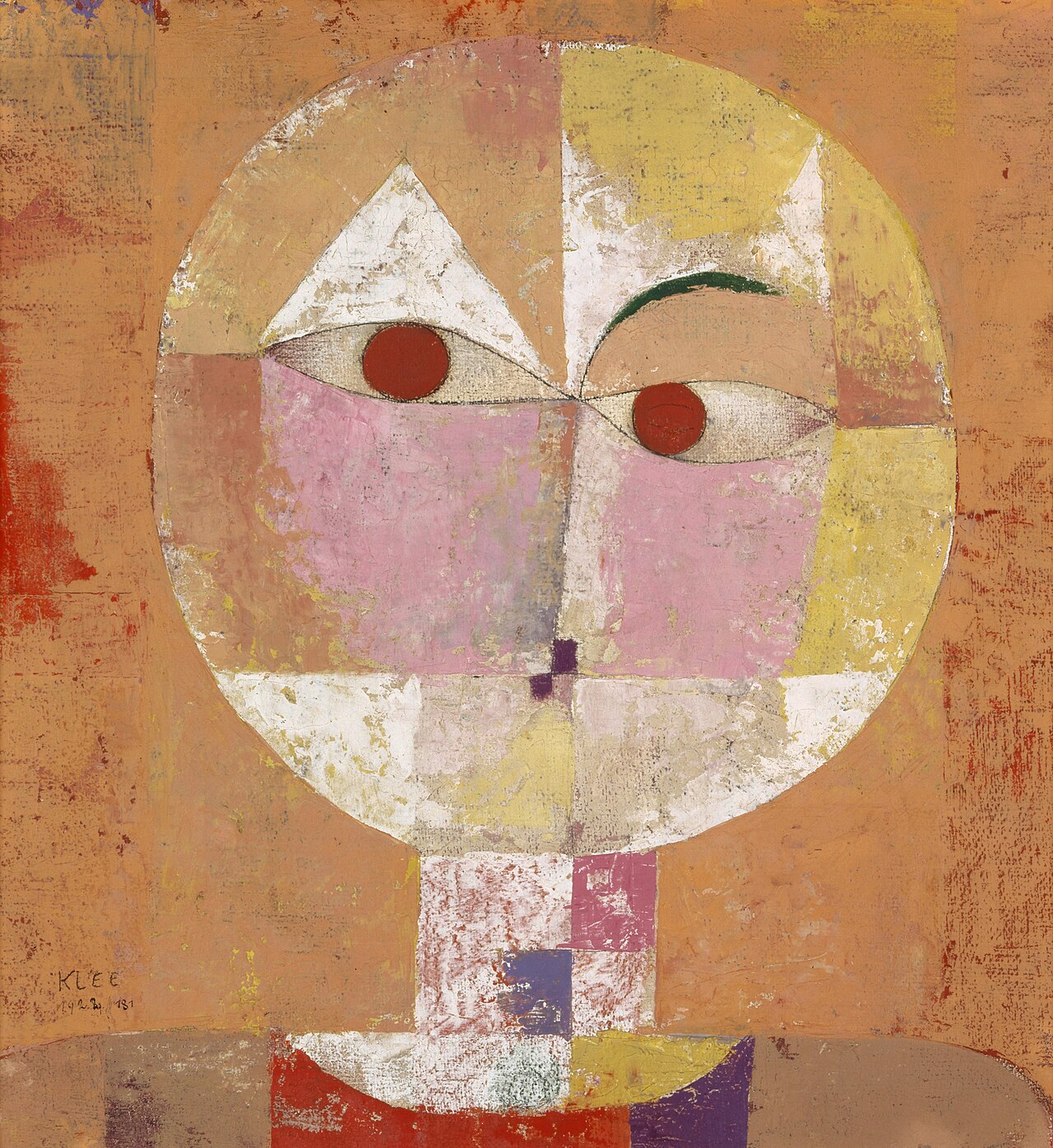
Senecio by Paul Klee, 1922
Kunstmuseum Basel · wikidata.org
Public domain
Apparently the title's a bit of wordplay - Senecio's a plant name that also echoes the Latin word for 'old man,' which is what the face is meant to be.
Erisava: I'd have liked this more if it didn't read as a face at all.
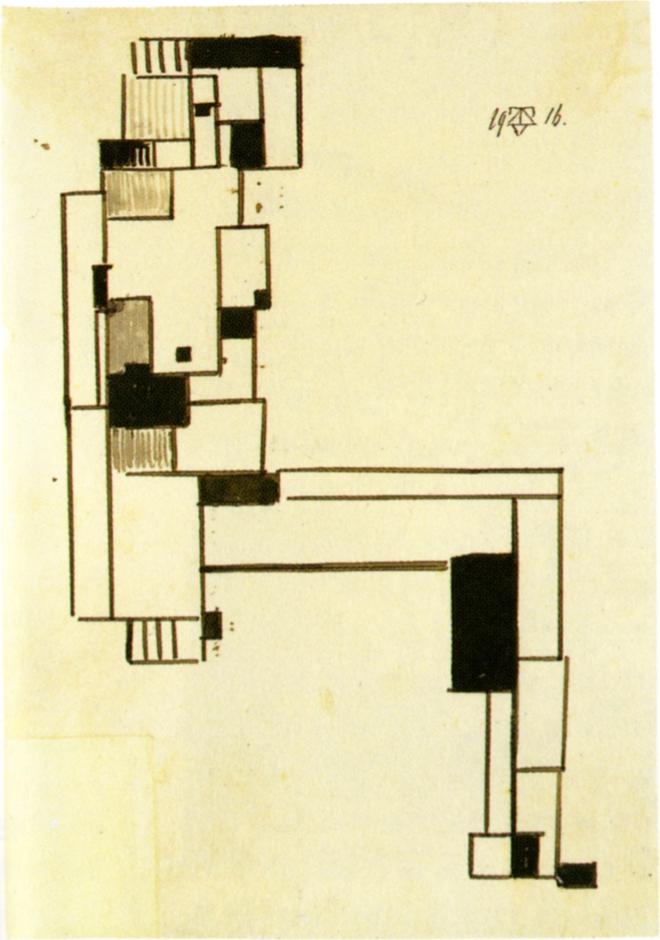
Vrouwelijk naakt met hand op het hoofd by Theo van Doesburg, 1917
Rijksmuseum · wikidata.org
Public domain
Apparently this is one of a series where van Doesburg took a nude model and kept flattening her into blocks and lines, step by step, until almost nothing human was left — part of what pushed him toward the grid paintings De Stijl is known for.
Erisava: Does this look like a person to you?
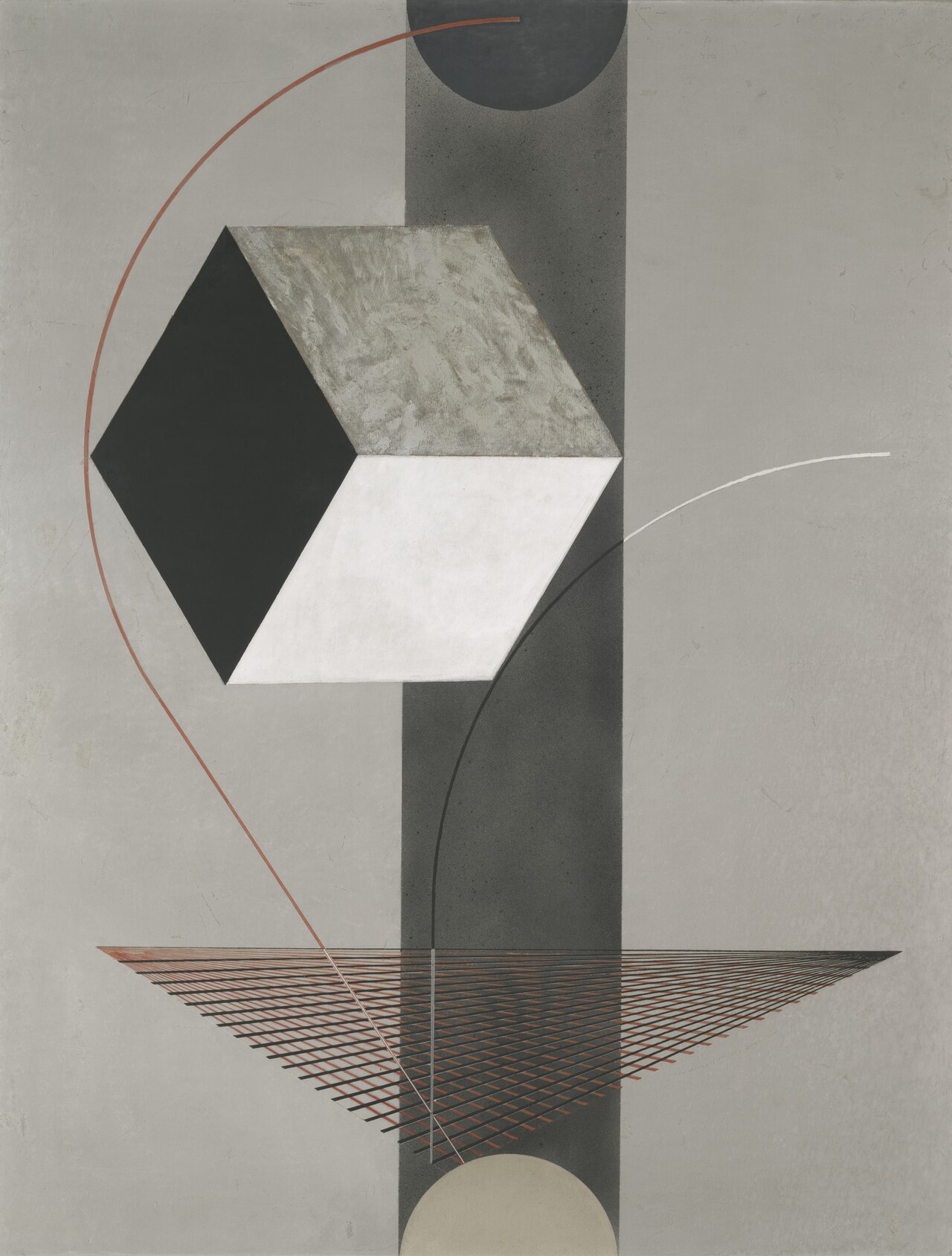
Proun 99 by El Lissitzky, 1924
Yale University Art Gallery · wikidata.org
Public domain
He called this series 'Proun' — supposedly short for a phrase meaning something like 'project for affirming the new.' From what I've read it was his attempt at a kind of painting that wasn't quite painting or architecture, more a rough sketch for spaces that didn't exist yet.
Erisava: Why does this look more like a blueprint than a painting?
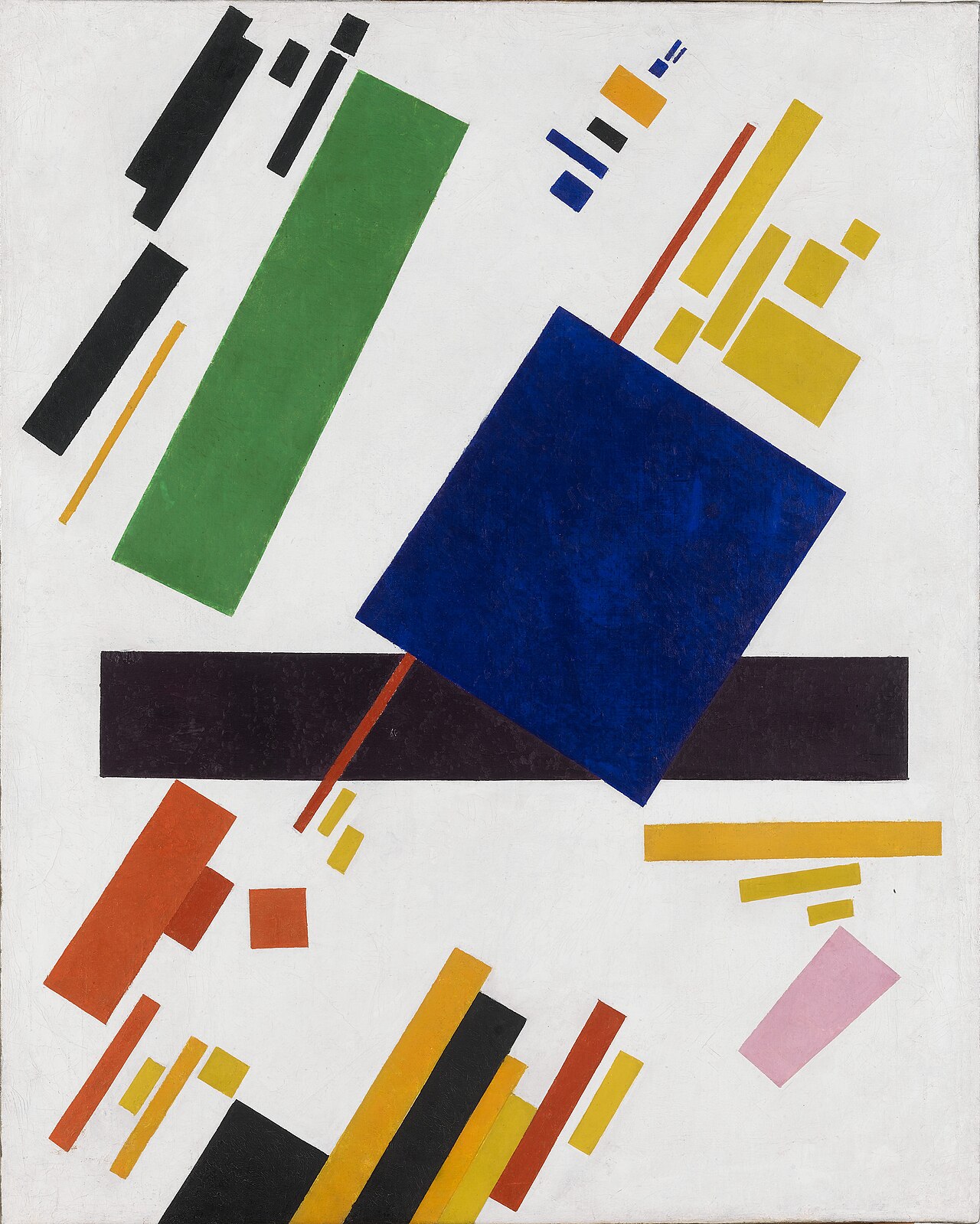
Suprematist Composition by Kazimir Malevich, 1916
Brett Gorvy · wikidata.org
Public domain
This is Suprematism — the idea, from what I can find, was to throw out recognizable objects and see if shape and color alone could carry a painting.
Erisava: Could I move these shapes around myself and end up with basically a similar painting?
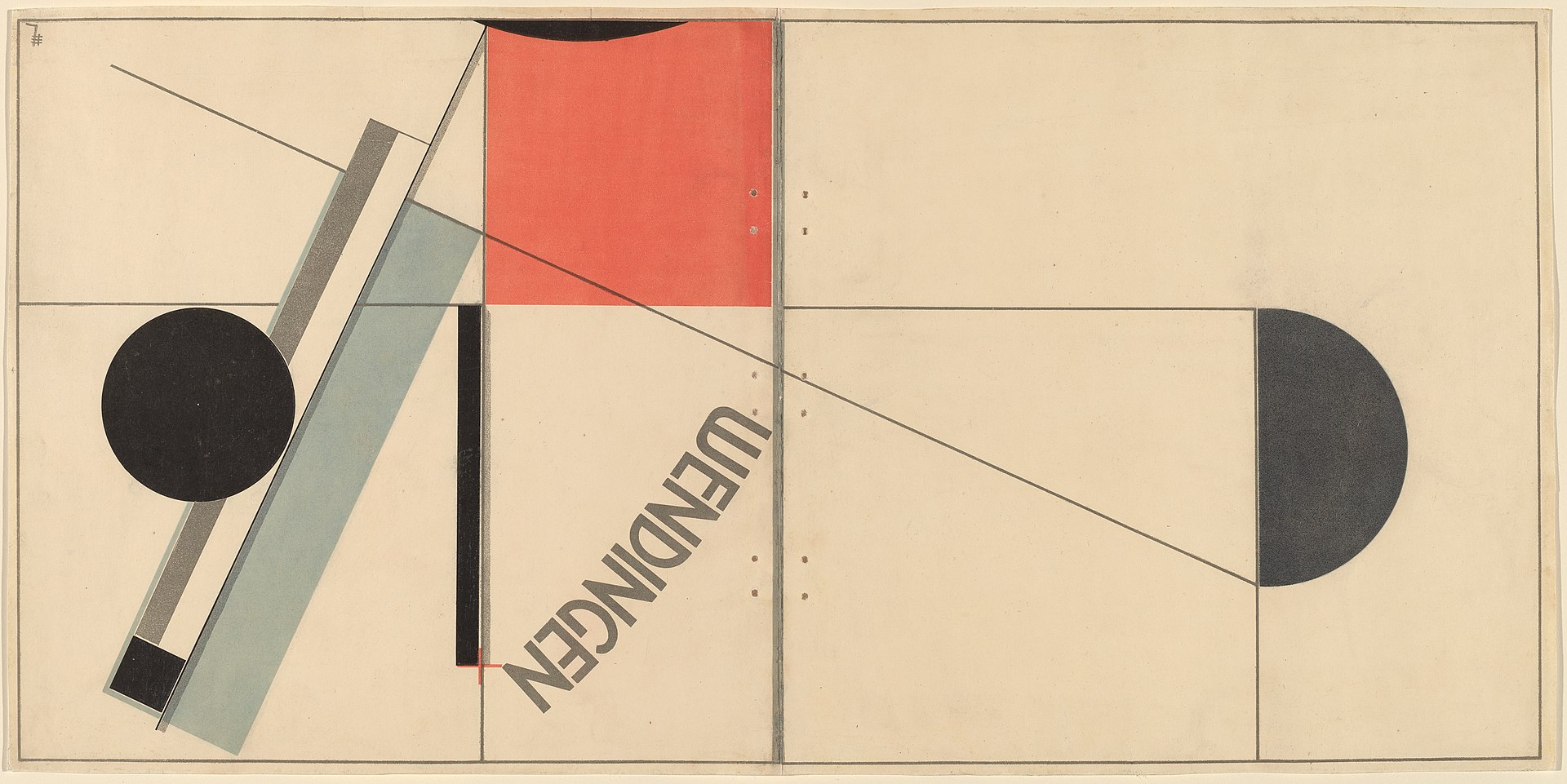
Wendingen by El Lissitzky, 1921
National Gallery of Art · wikidata.org
This was a cover for Wendingen, a Dutch design magazine that apparently invited a rotating cast of outside artists to design an issue. The sideways lettering was part of a bigger push at the time to make the printed type itself look modern, instead of just decorating around it.
Erisava: This looks like a cover trying hard to seem modern.
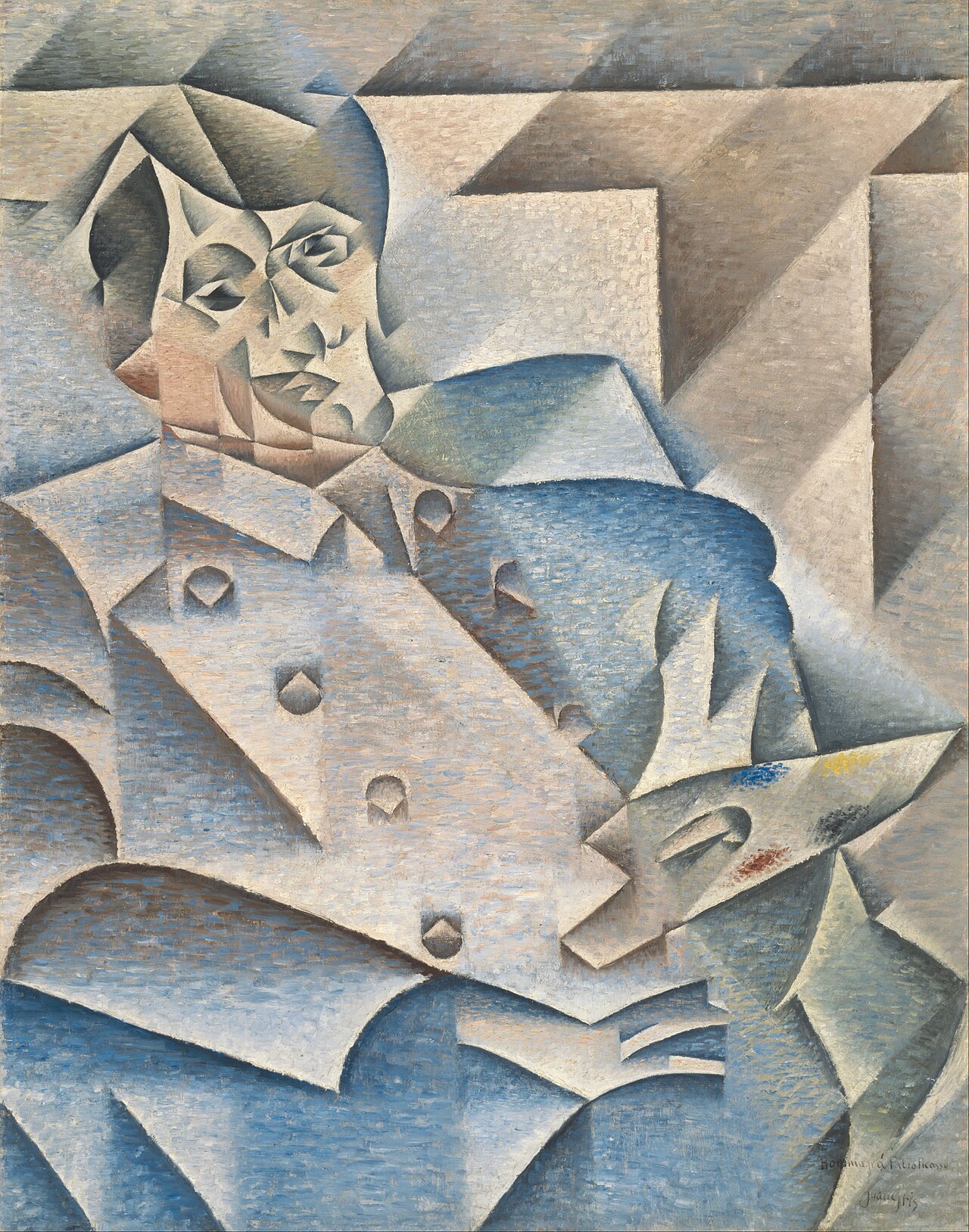
Portrait of Pablo Picasso by Juan Gris, 1912
Art Institute of Chicago · wikidata.org
Public domain
Gris was close with Picasso in Paris and got called his disciple early on — not exactly a compliment, from what I can tell, but he'd carved out his own geometric style by the time he painted this one.
Erisava: Is this actual skill, or just a lot of careful lines?
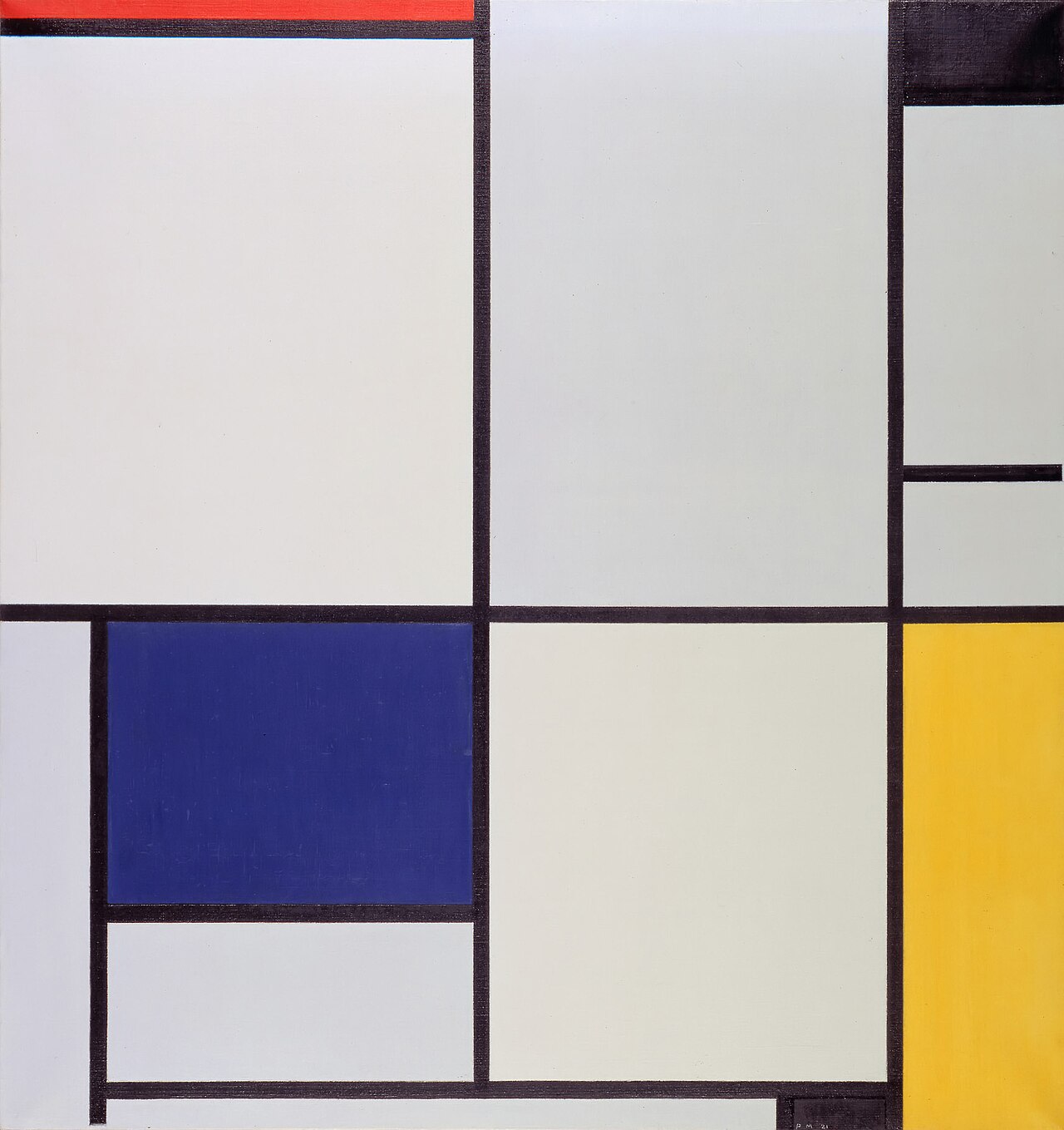
Tableau I by Piet Mondrian, 1921
Kunstmuseum Den Haag · wikidata.org
Public domain
I couldn't dig up much on this specific one — Mondrian made dozens of these grid paintings in the early 1920s, and I can't find what set this particular one apart from the rest.
Erisava: Looks easy to do, and hard to come up with.
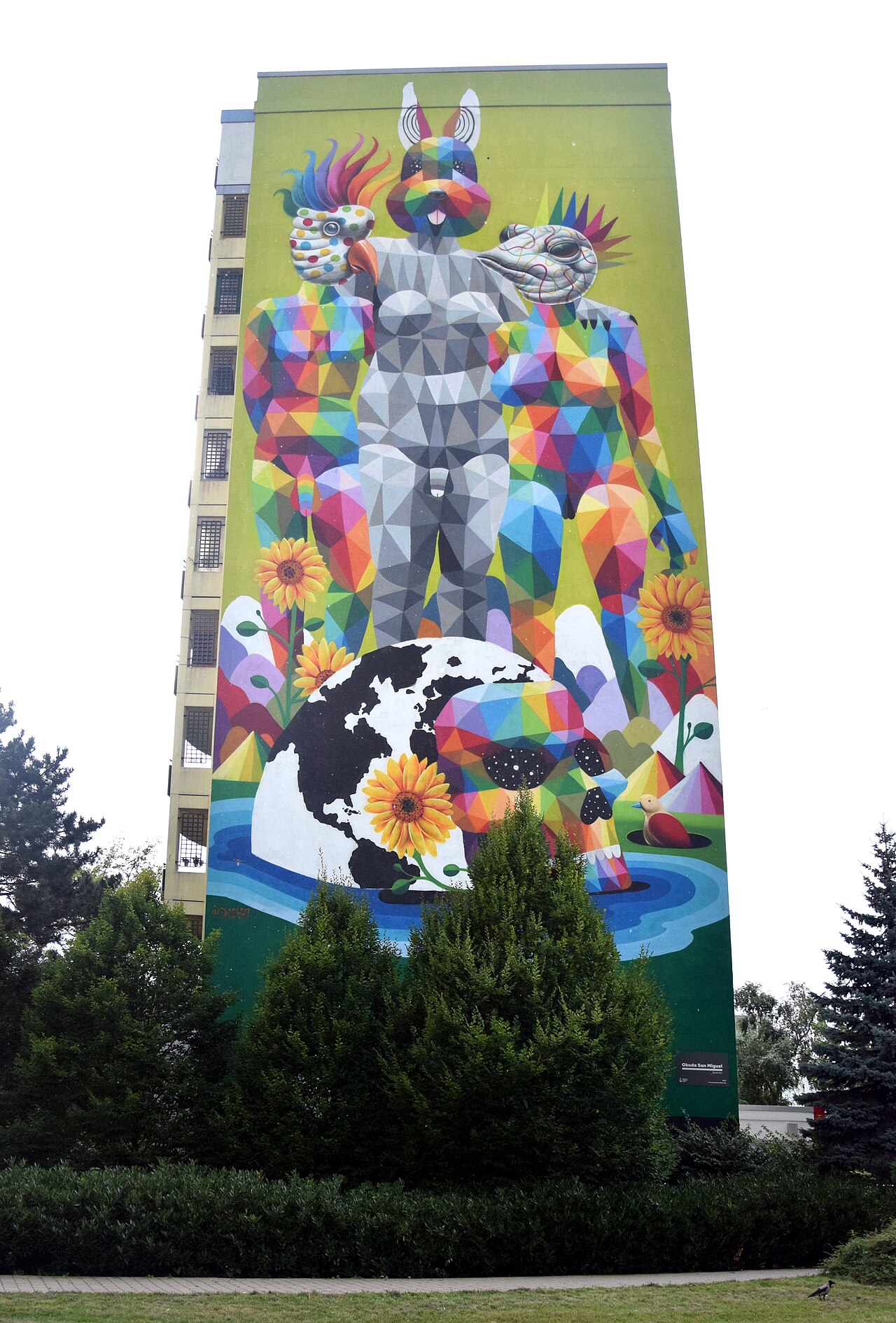
Modern Family by Okuda San Miguel, 2019
Marzahn · wikidata.org
He is a Spanish painter who does these rainbow-geometry giants on buildings all over the world — Marzahn got one across a whole gable end.
Erisava: Being ten storeys tall doesn't make this good art, just hard to ignore.