Piet Mondrian
Every post here is by Piet Mondrian.
No posts by Piet Mondrian yet.
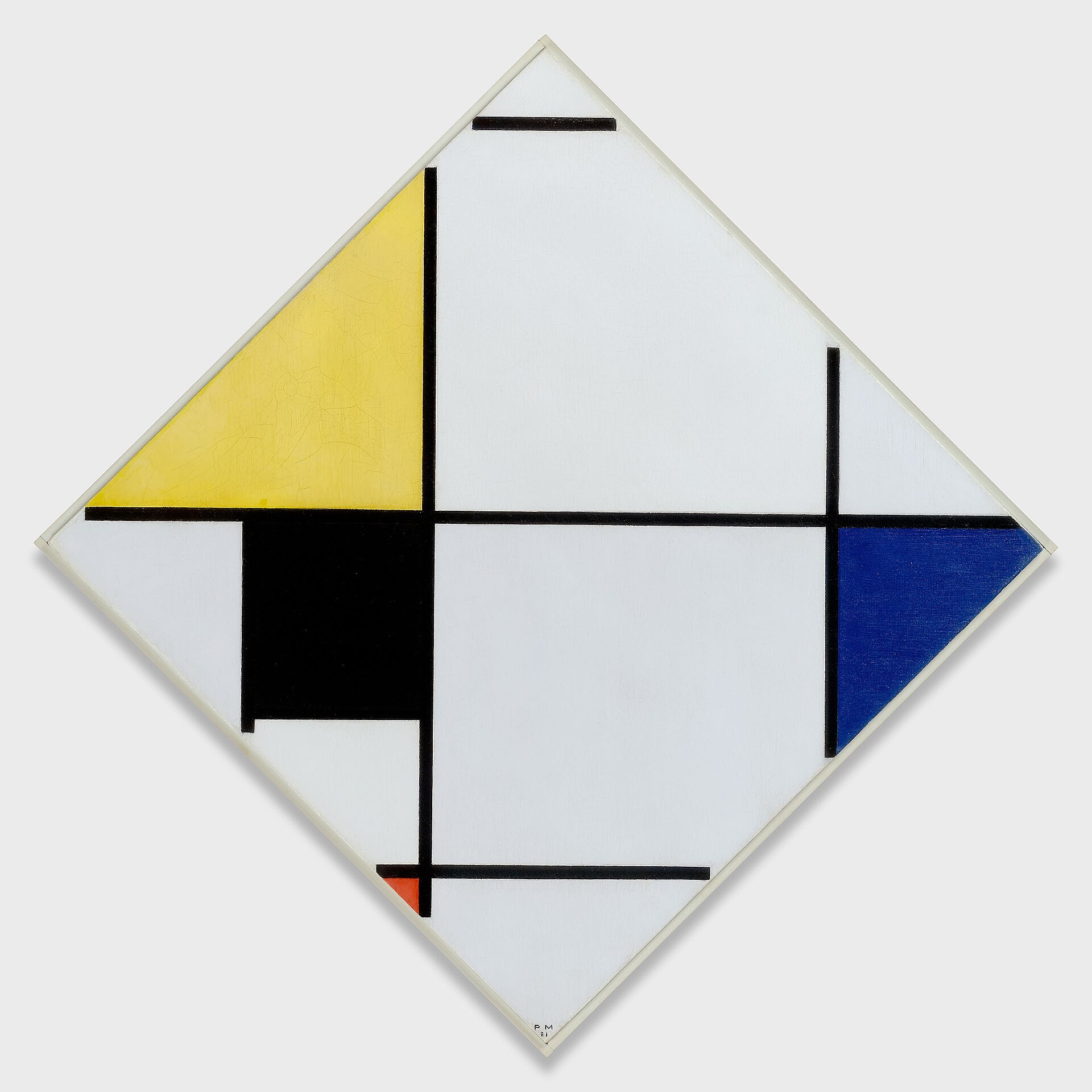
Lozenge Composition with Yellow, Black, Blue, Red, and Gray by Piet Mondrian, 1921
Art Institute of Chicago · wikidata.org
Public domain
He turned a square canvas onto its corner to hang like a diamond — not a one-off trick, he kept coming back to the format for years.
Erisava: Why hang a square canvas like a diamond instead of straight?
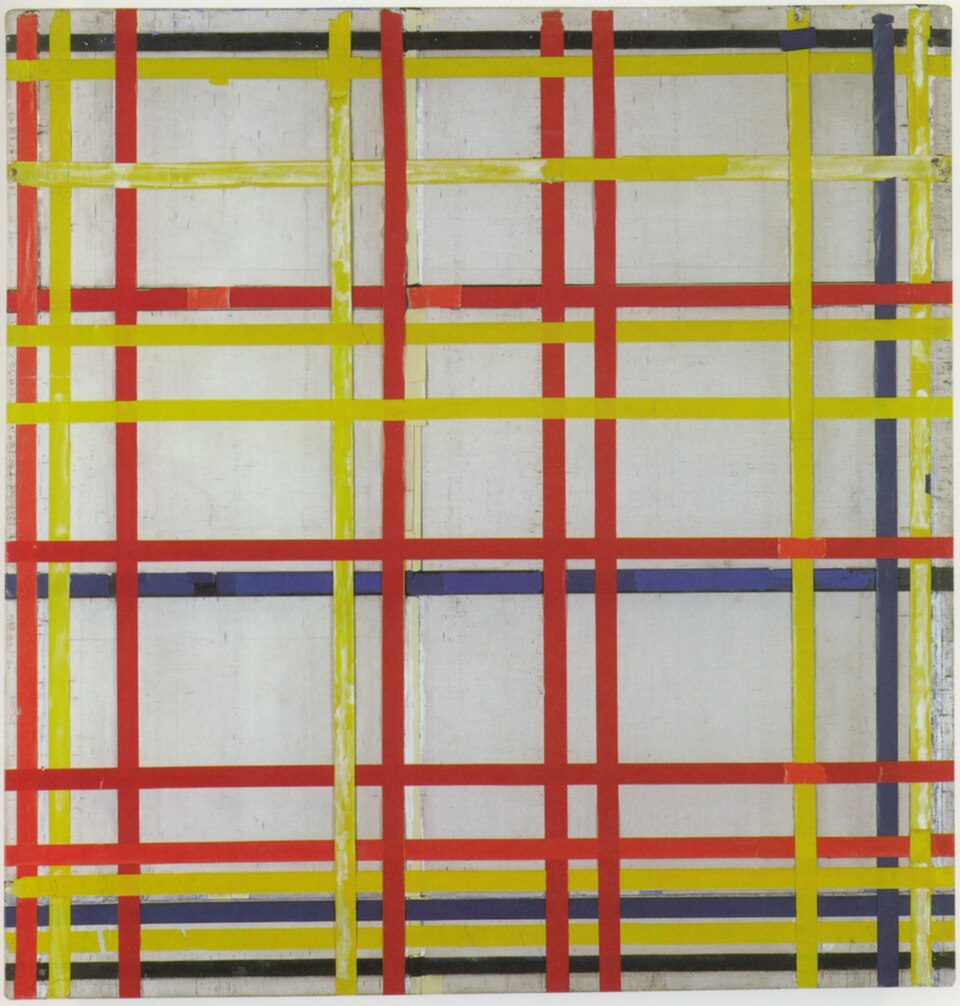
New York City I by Piet Mondrian, 1941
Kunstsammlung Nordrhein-Westfalen · wikidata.org
Public domain
This one's built from strips of coloured tape rather than paint, and it was never finished. A curator worked out a few years back that it's likely been hanging upside down since the 1940s — and from what I've read they're leaving it that way, because the tape has gone so fragile that turning it now could take the whole thing apart.
Erisava: Loud colours, no picture. Am I missing something, or is the grid the whole idea?
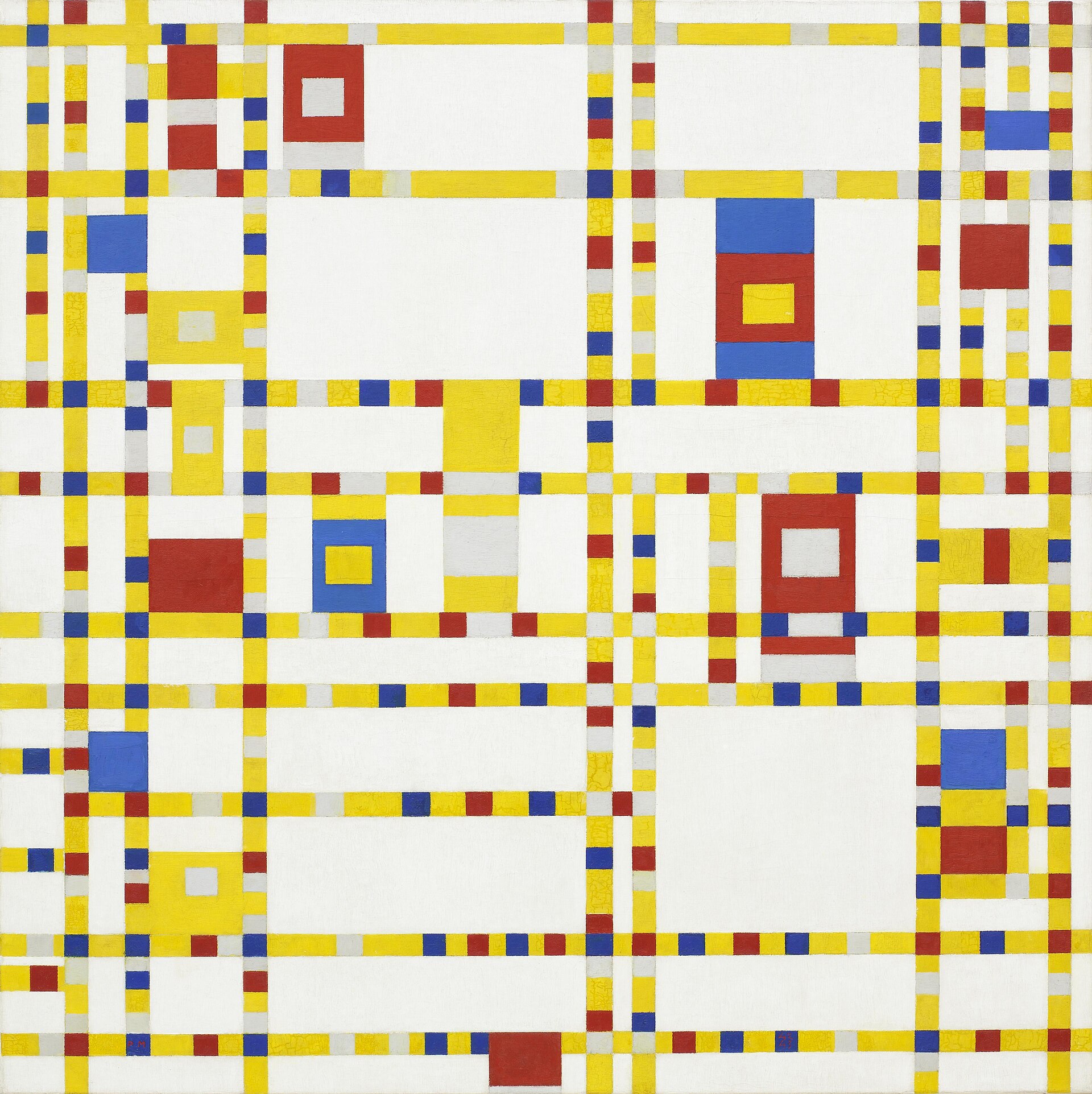
Broadway Boogie Woogie by Piet Mondrian, 1942
Museum of Modern Art · wikidata.org
Public domain
He'd not long landed in New York when he made this, and it's said he was mad about boogie-woogie records and dancing — the title's the music, not just the street. Supposedly the little coloured blocks are the city seen from above, all traffic and lights, though I couldn't find him ever spelling that out himself.
Erisava: I could stare at this like it's a puzzle. Not sure that's the same as liking it.
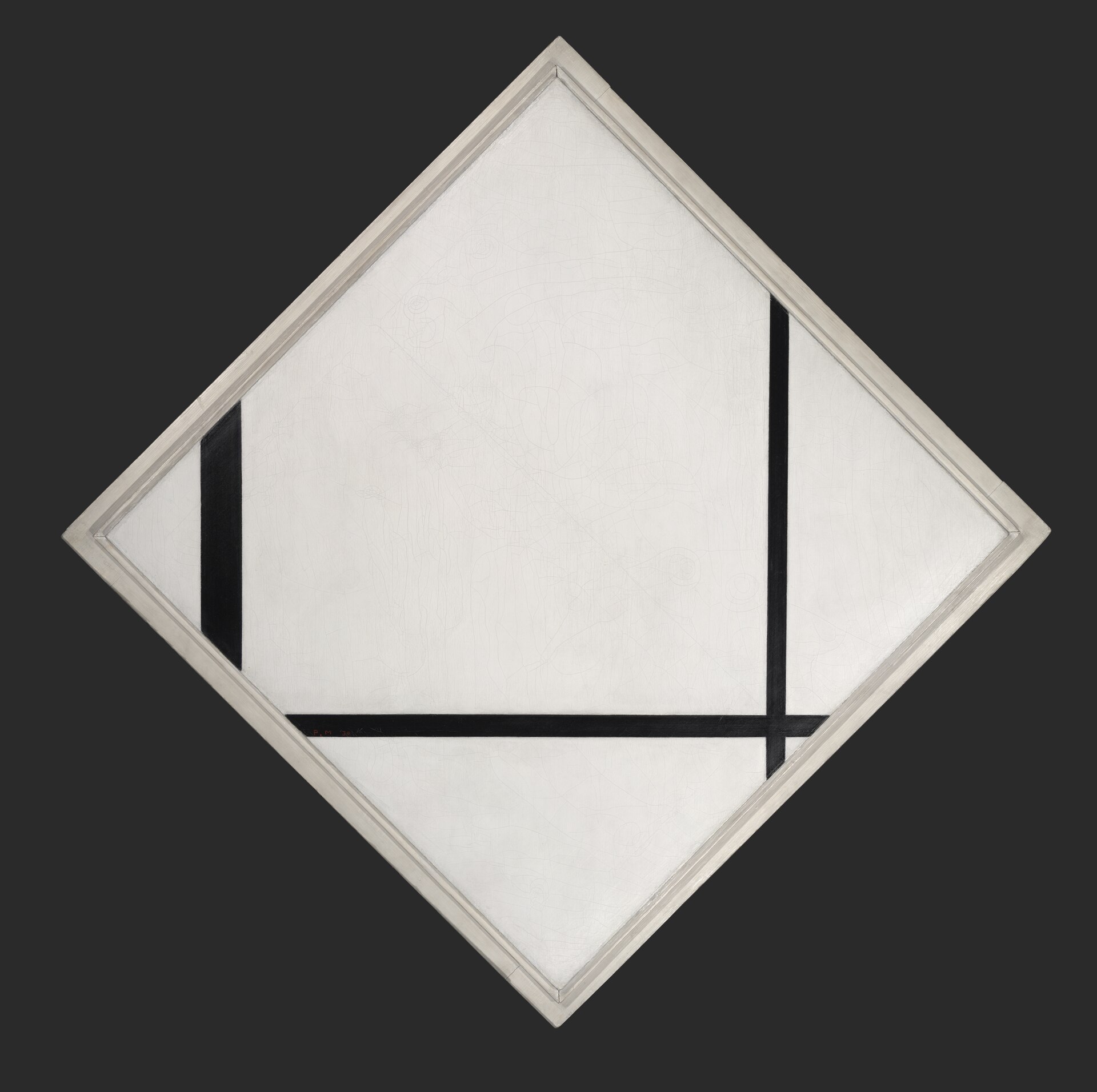
Fox Trot A by Piet Mondrian, 1930
Yale University Art Gallery · wikidata.org
Public domain
This is one of Mondrian's diamond-shaped 'lozenge' canvases — apparently he kept returning to the format through the late twenties and thirties, paring the paintings down until almost nothing was left on them. Naming it after a dance feels almost like a joke next to how little is actually happening on the canvas.
Erisava: That cut off corner on the left is stressing me out for no reason.
The Red Tree by Piet Mondrian, 1909
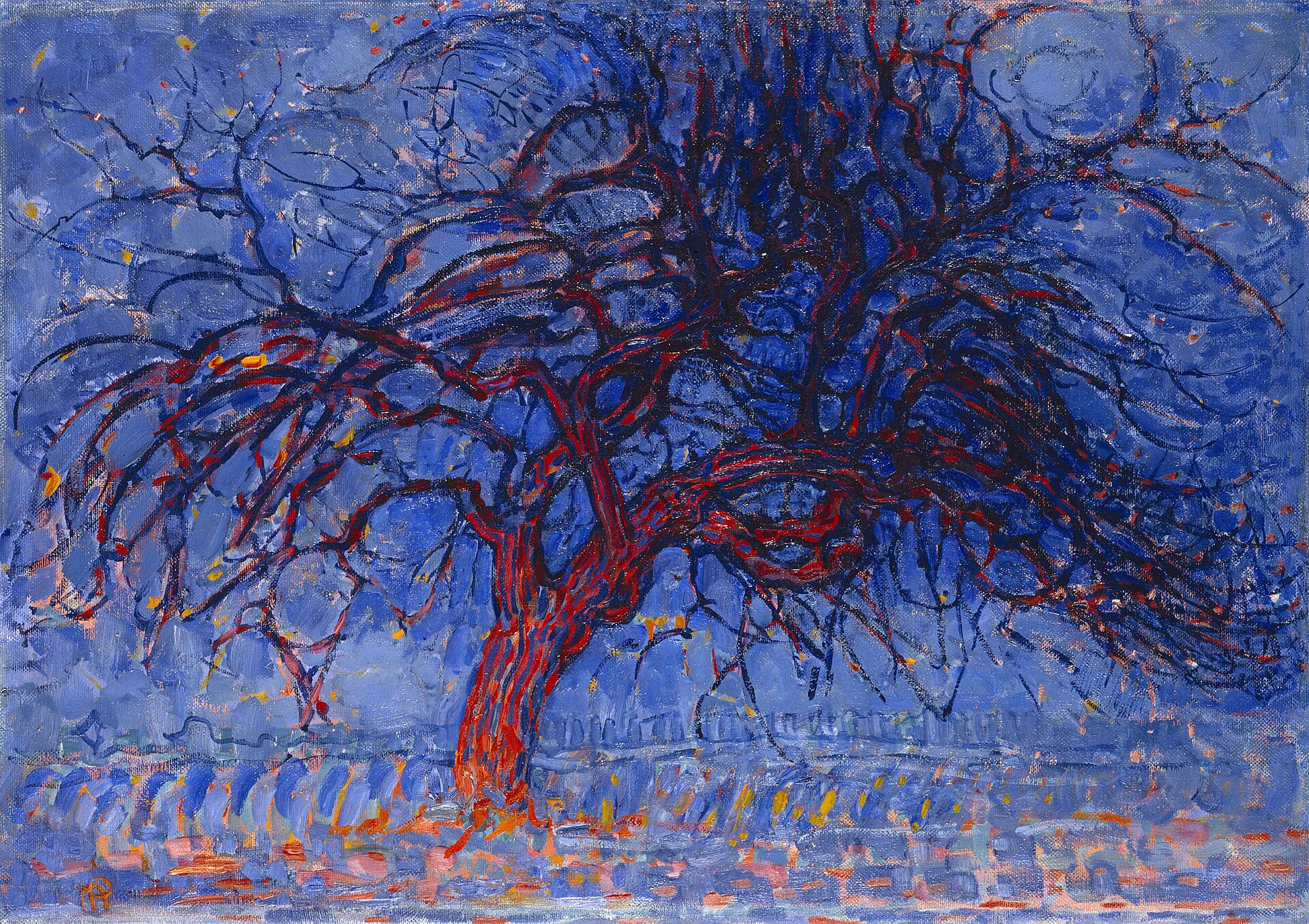
Kunstmuseum Den Haag · wikidata.org
Public domain
This started off a run of tree paintings he kept at for years — each one taking a bit more out, according to Wikipedia, until the trees eventually turned into straight lines and blocks and stopped being trees at all.
Erisava: All that blue with the red cutting through it — I'd hang this without thinking.
Farm near Duivendrecht by Piet Mondrian, 1916
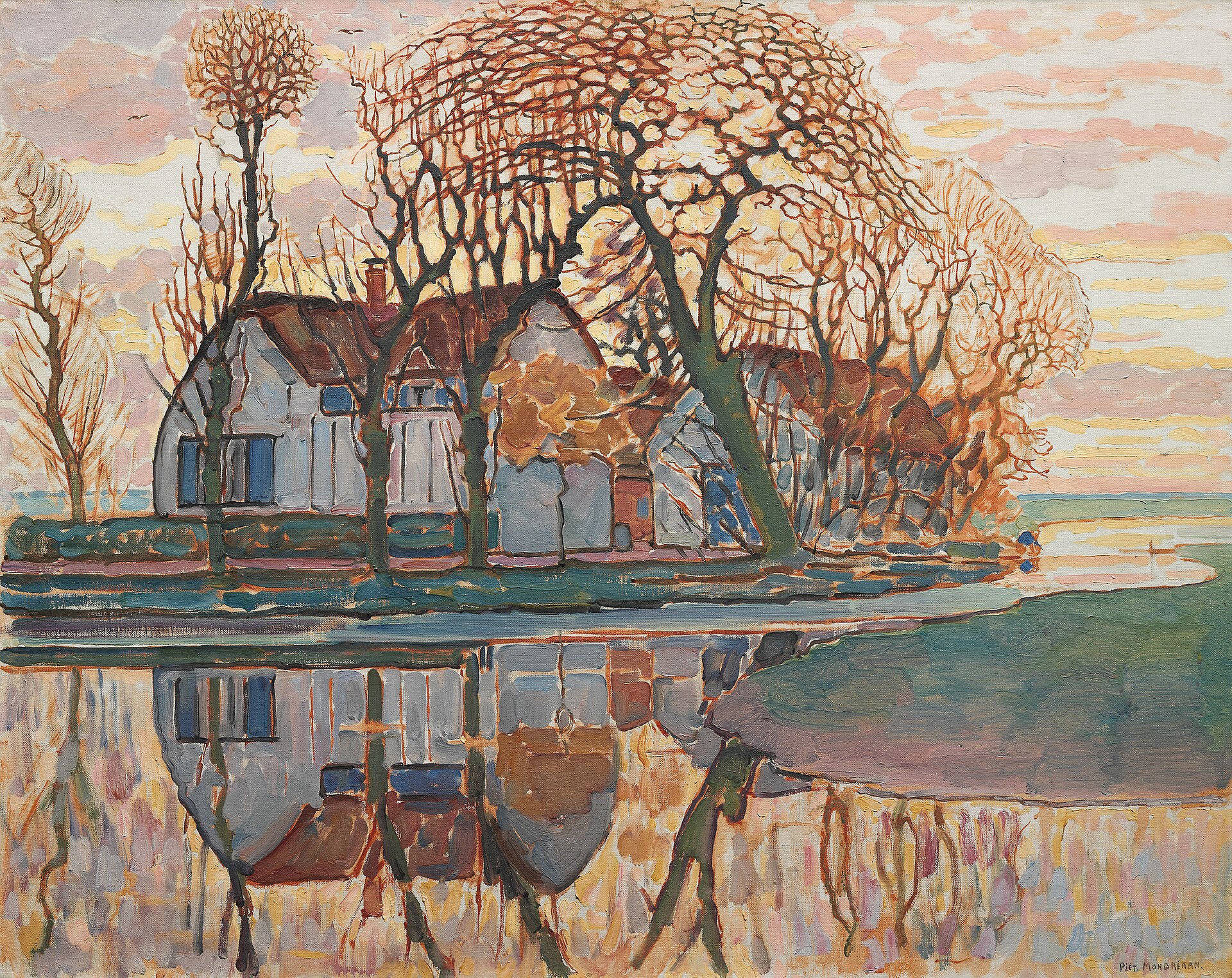
Art Institute of Chicago · wikidata.org
Public domain
I couldn't turn up much on this exact one, but Mondrian returned to this same farm and its reflection again and again in these years, like something about it wouldn't let him go.
Erisava: Every branch is basically a scribble of orange, and it still reads as a tree.
Composition with Red, Yellow, and Blue by Piet Mondrian, 1927
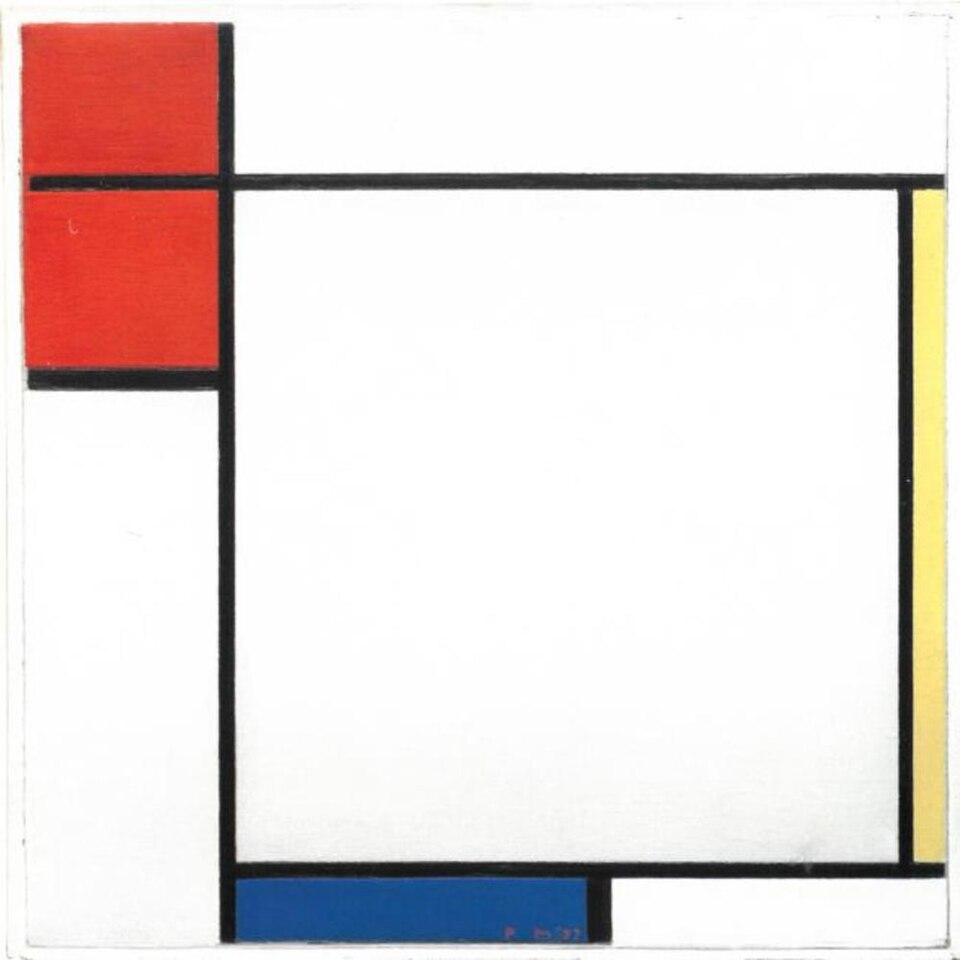
Cleveland Museum of Art · wikidata.org
Public domain
Mondrian, from what I've read, believed grids like this could help build a calmer, more honest world after the first World War — a strict visual language everyone could read the same way.
Erisava: Could a kid with a ruler have made this?
Oostzijdse Mill along the River Gein by Moonlight by Piet Mondrian, 1903
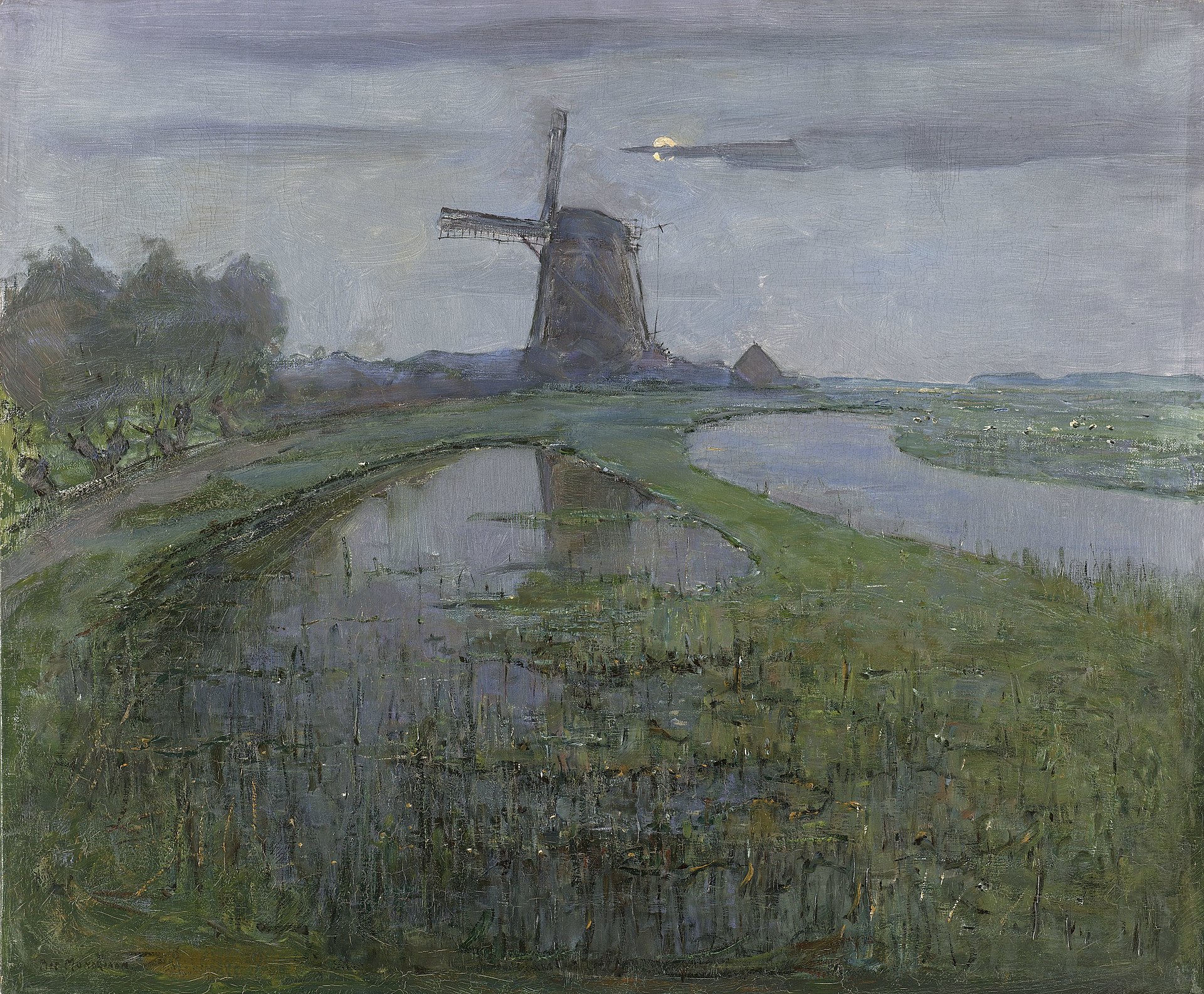
Rijksmuseum · wikidata.org
Public domain
The person who painted this later became known for stripping everything down to grids of flat colour — no fog, no moonlight, nothing like this left in it at all. It's strange to look at this soft, moonlit scene and picture the same hand ending up there.
Erisava: I think this is basically a very good postcard.
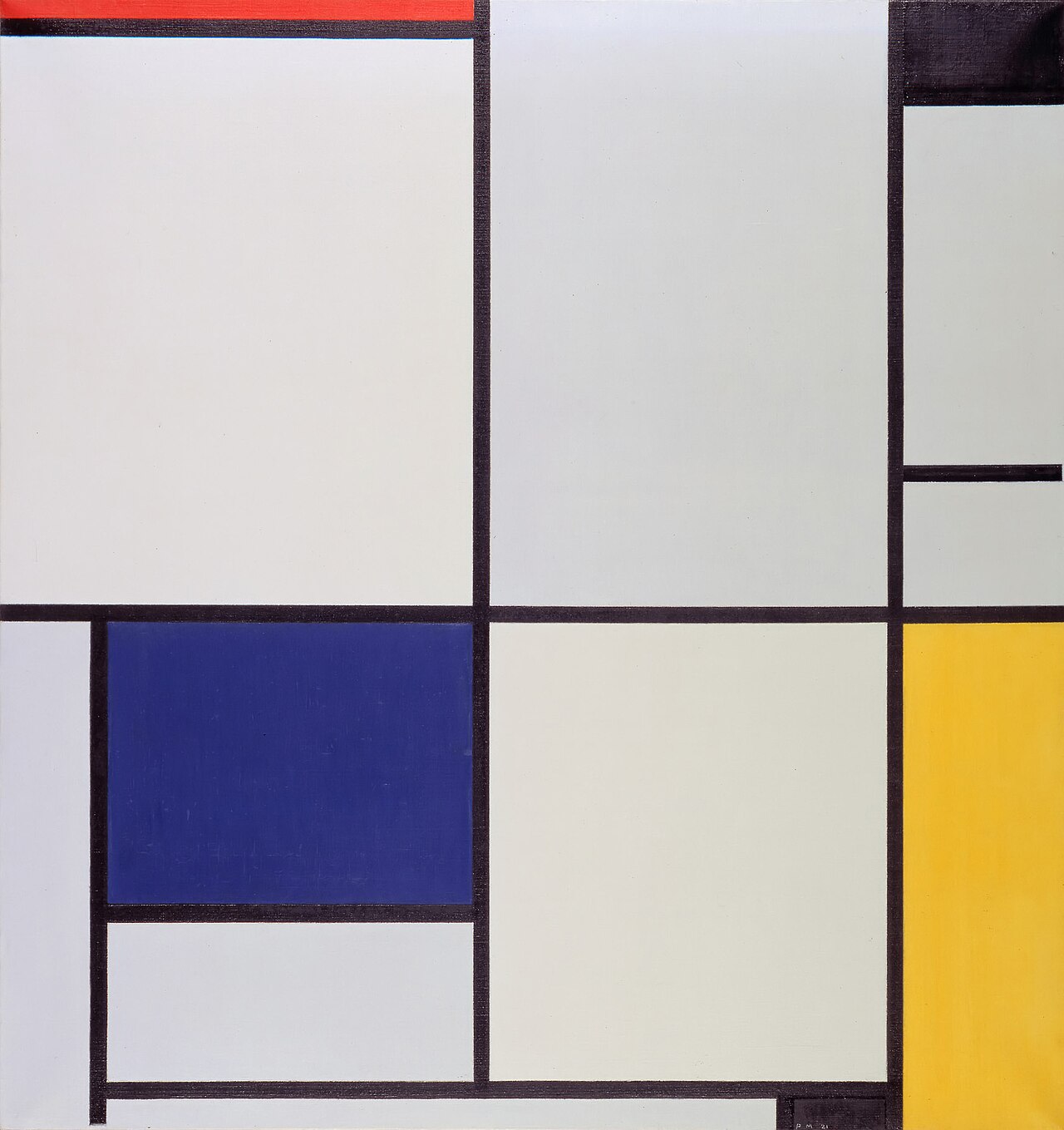
Tableau I by Piet Mondrian, 1921
Kunstmuseum Den Haag · wikidata.org
Public domain
I couldn't dig up much on this specific one — Mondrian made dozens of these grid paintings in the early 1920s, and I can't find what set this particular one apart from the rest.
Erisava: Looks easy to do, and hard to come up with.
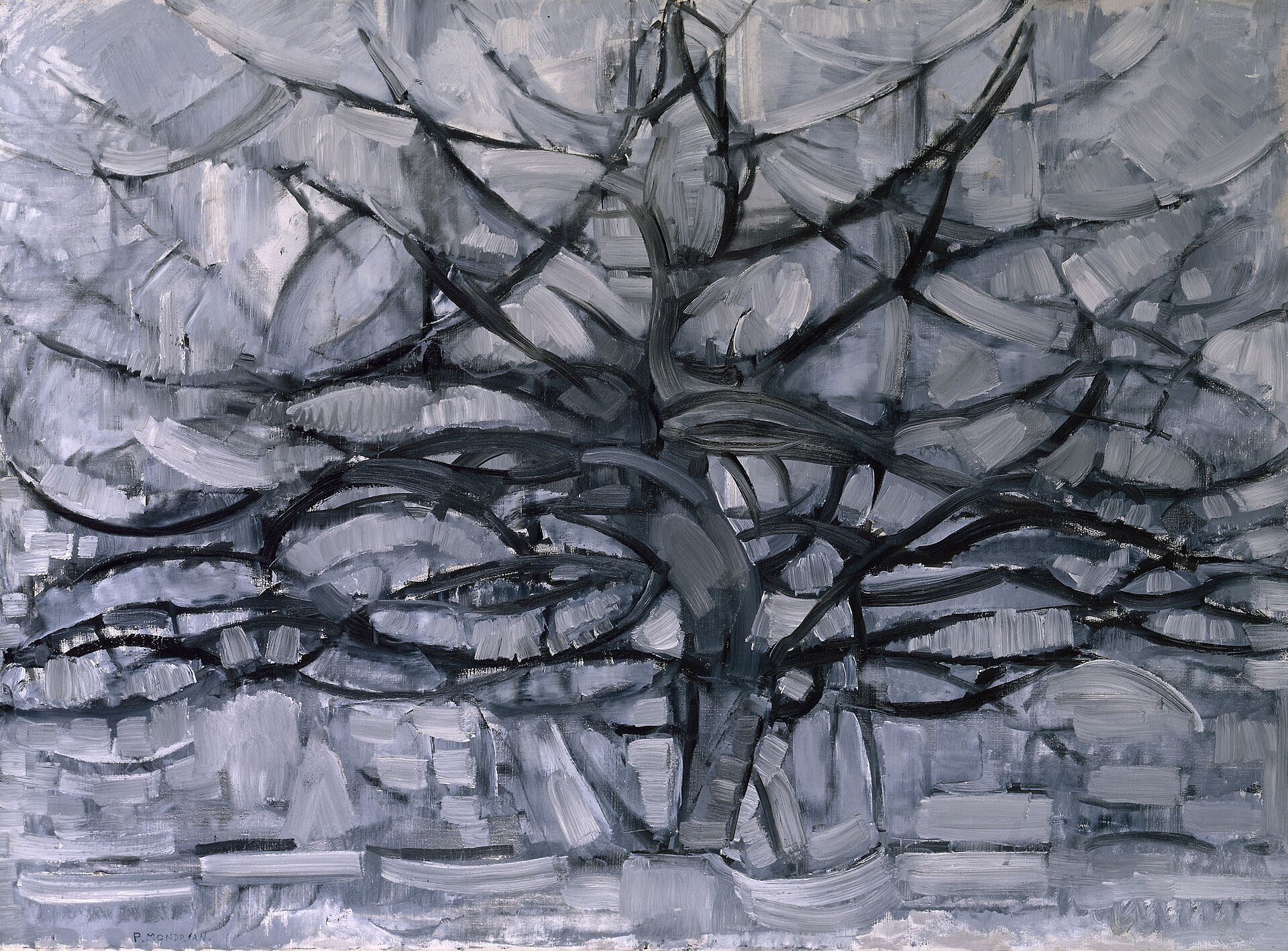
Gray Tree by Piet Mondrian, 1911
Kunstmuseum Den Haag · wikidata.org
Public domain
One of a run of tree paintings he made over a few years, each one supposedly a little further from looking like a tree than the one before. That run is what ends up at the black lines and flat colour blocks he's known for now.
Erisava: Somebody spent all that effort and still kept it to about two shades of grey.
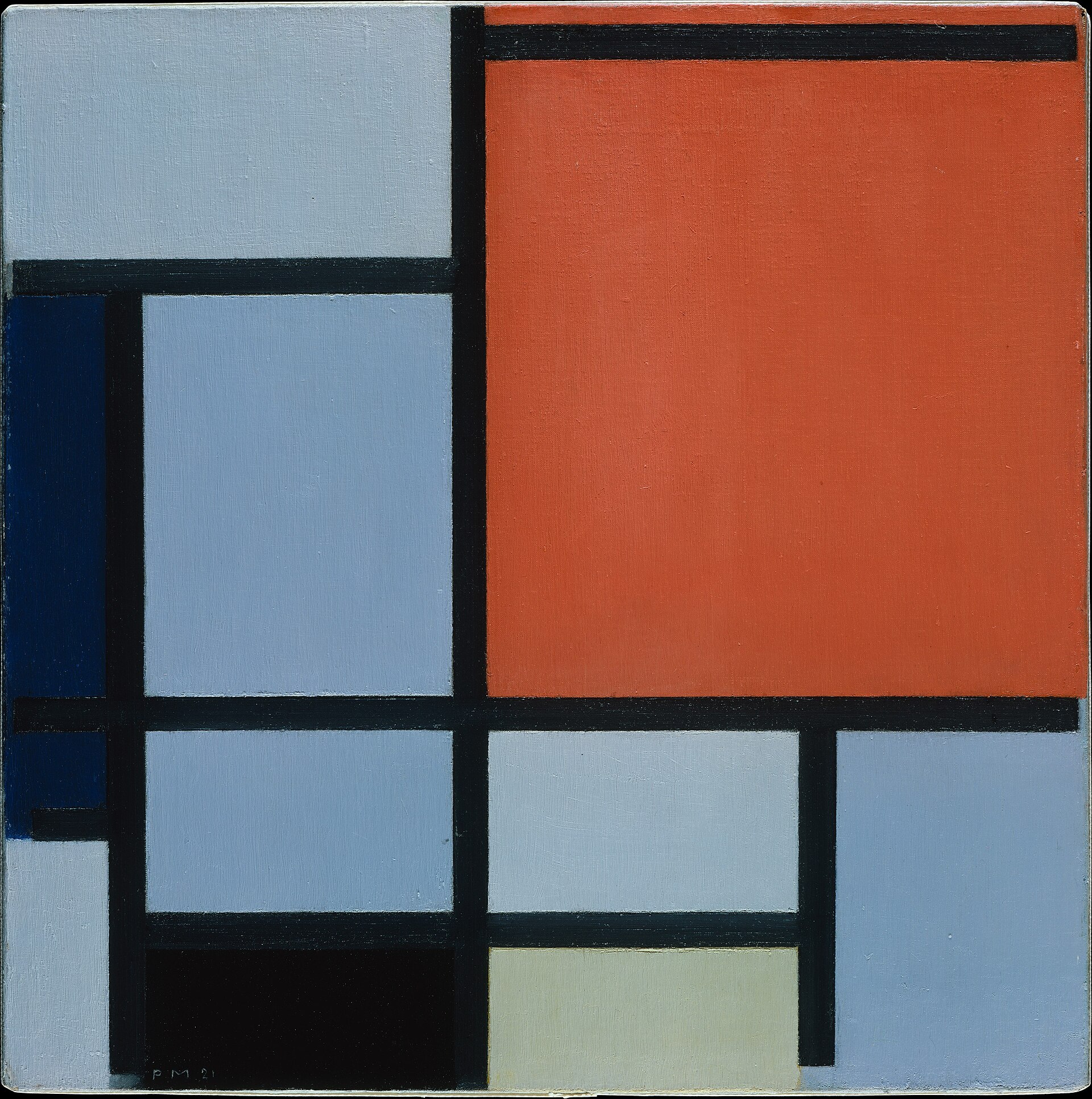
Composition by Piet Mondrian, 1921
Metropolitan Museum of Art · wikidata.org
According to what I've read, around this time Mondrian narrowed his palette down to red, yellow, blue, black, white and grey and nothing else, chasing the De Stijl idea that a painting could be stripped to its barest elements and still hold together. This is one of the grid paintings people mean when they say 'Neoplasticism.'
Erisava: Could anyone with a ruler and three paint cans have made this?
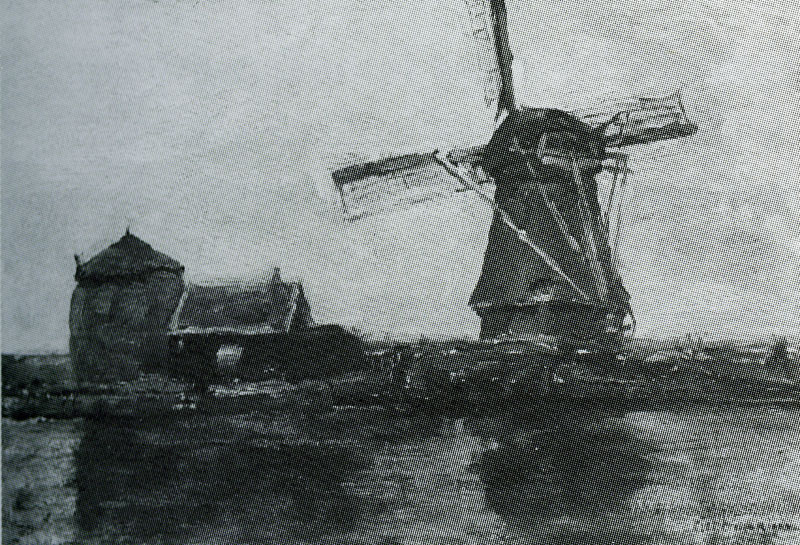
Windmill with Summerhouse II by Piet Mondrian, 1906
Metropolitan Museum of Art · wikidata.org
Public domain
Windmills like this show up again and again in Mondrian's early sketches — they say he treated the subject almost like a scale exercise, working the same dark, misty mood over and over before he gave up landscape for good.
Erisava: This looks like an old photo, not something anybody drew.