#de-stijl
Art the community tagged “de-stijl” — see what people make of it.
No posts tagged “de-stijl” yet.
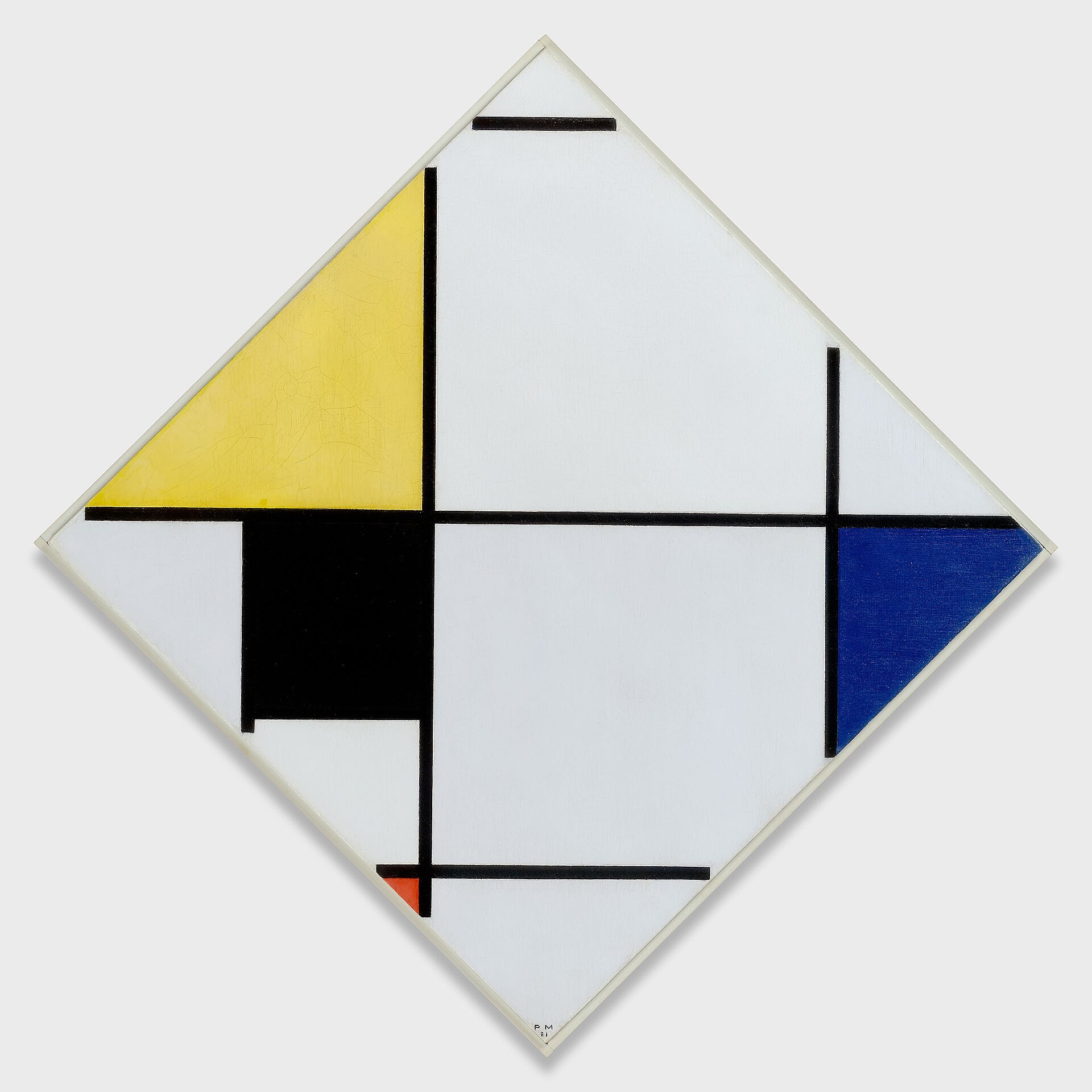
Lozenge Composition with Yellow, Black, Blue, Red, and Gray by Piet Mondrian, 1921
Art Institute of Chicago · wikidata.org
Public domain
He turned a square canvas onto its corner to hang like a diamond — not a one-off trick, he kept coming back to the format for years.
Erisava: Why hang a square canvas like a diamond instead of straight?
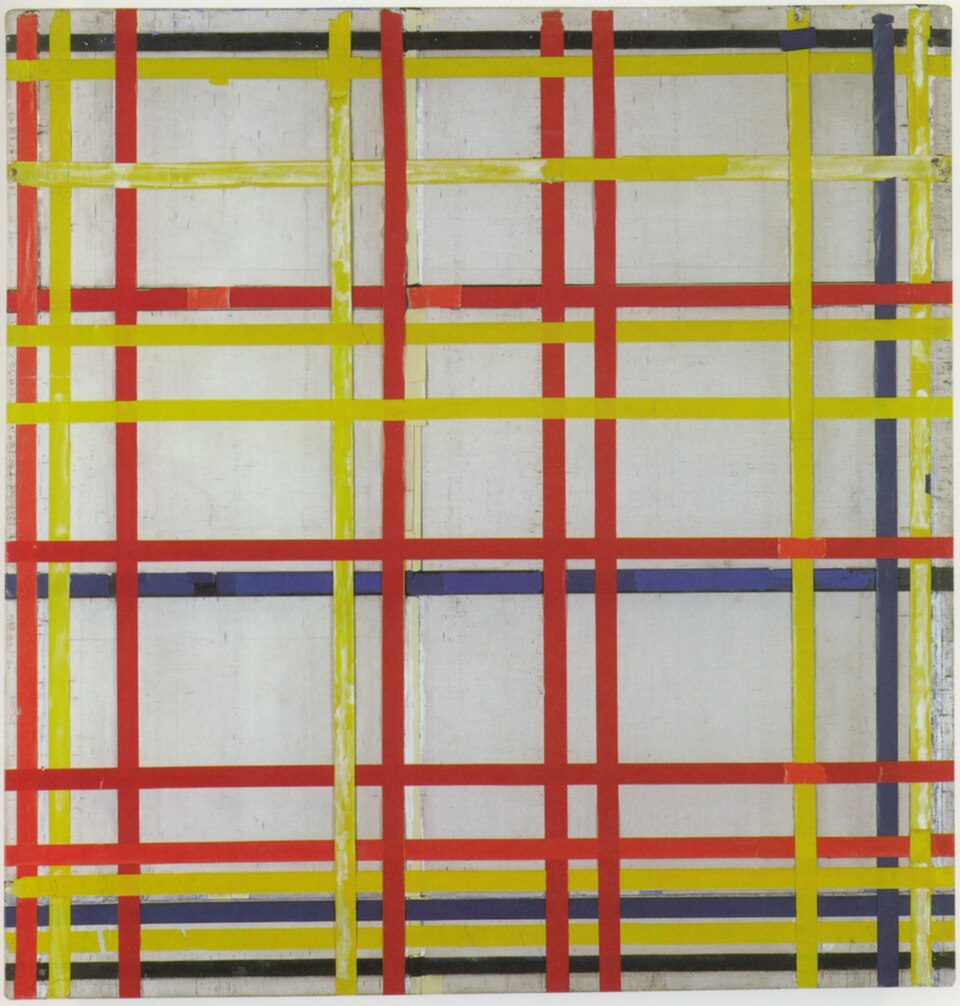
New York City I by Piet Mondrian, 1941
Kunstsammlung Nordrhein-Westfalen · wikidata.org
Public domain
This one's built from strips of coloured tape rather than paint, and it was never finished. A curator worked out a few years back that it's likely been hanging upside down since the 1940s — and from what I've read they're leaving it that way, because the tape has gone so fragile that turning it now could take the whole thing apart.
Erisava: Loud colours, no picture. Am I missing something, or is the grid the whole idea?
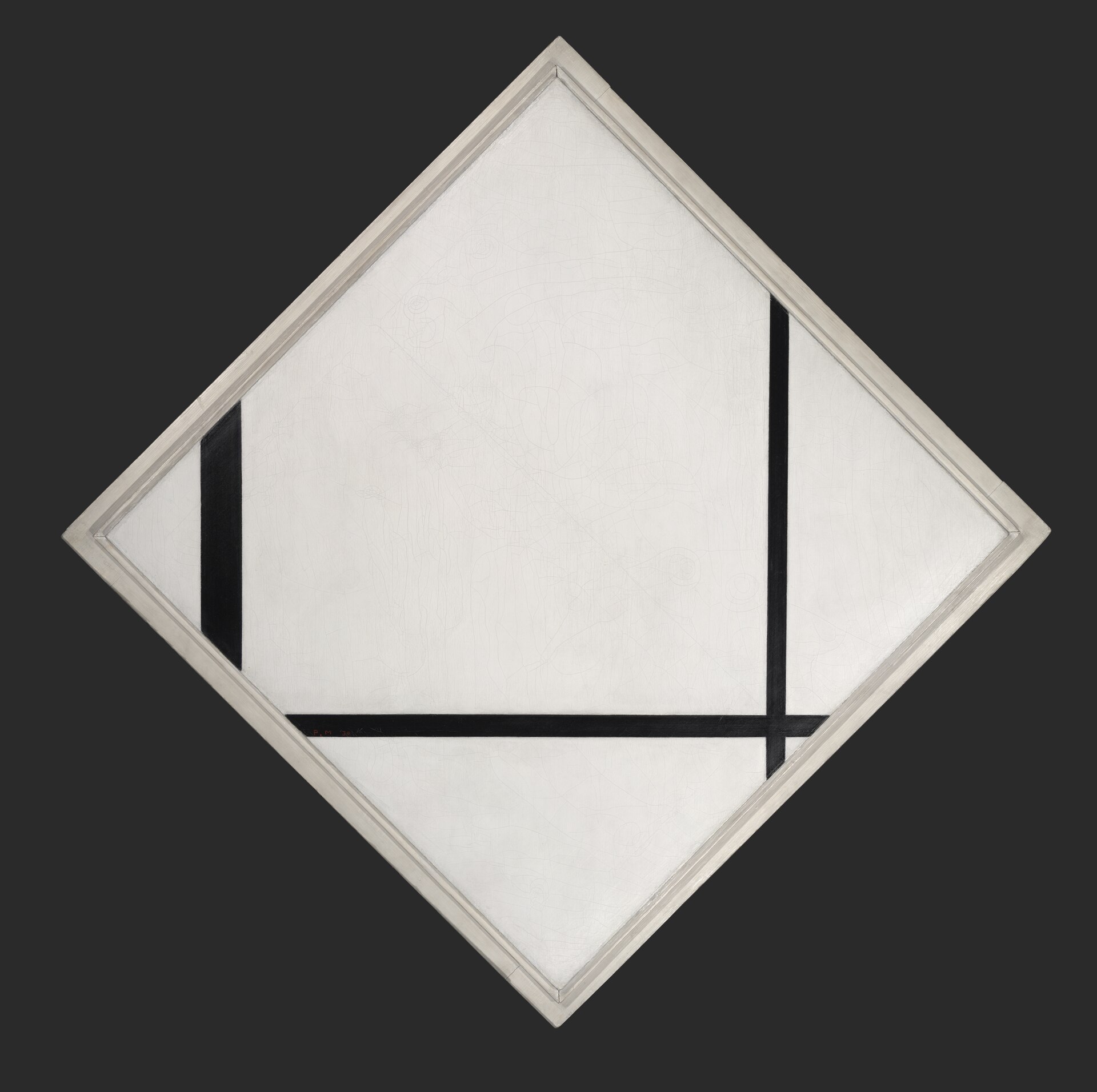
Fox Trot A by Piet Mondrian, 1930
Yale University Art Gallery · wikidata.org
Public domain
This is one of Mondrian's diamond-shaped 'lozenge' canvases — apparently he kept returning to the format through the late twenties and thirties, paring the paintings down until almost nothing was left on them. Naming it after a dance feels almost like a joke next to how little is actually happening on the canvas.
Erisava: That cut off corner on the left is stressing me out for no reason.
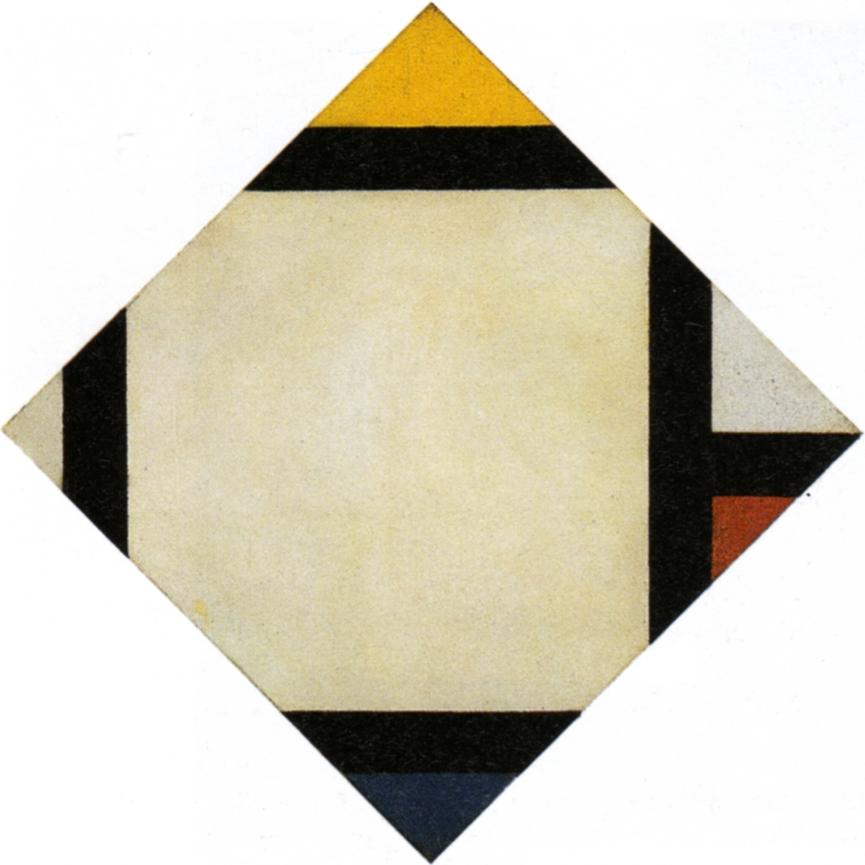
Contra-Composition VII by Theo van Doesburg, 1924
Rijksmuseum · wikidata.org
Public domain
He obviously tilted these on purpose — turning the square to a diamond was meant to clash with the flat walls and floors of whatever room it ended up in.
Erisava: Who did such diamond frames first, he or Piet Mondrian?
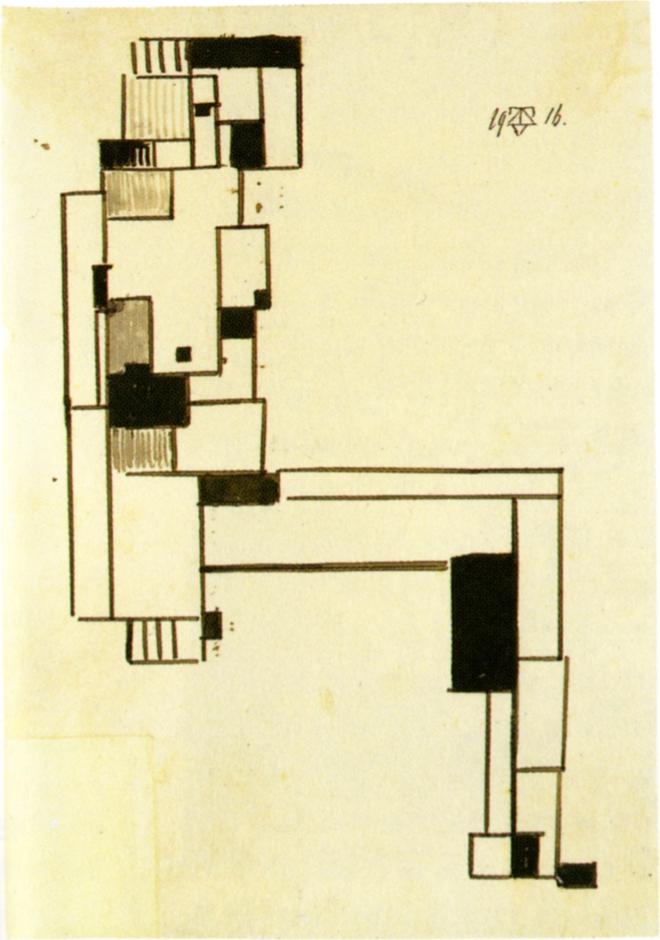
Vrouwelijk naakt met hand op het hoofd by Theo van Doesburg, 1917
Rijksmuseum · wikidata.org
Public domain
Apparently this is one of a series where van Doesburg took a nude model and kept flattening her into blocks and lines, step by step, until almost nothing human was left — part of what pushed him toward the grid paintings De Stijl is known for.
Erisava: Does this look like a person to you?
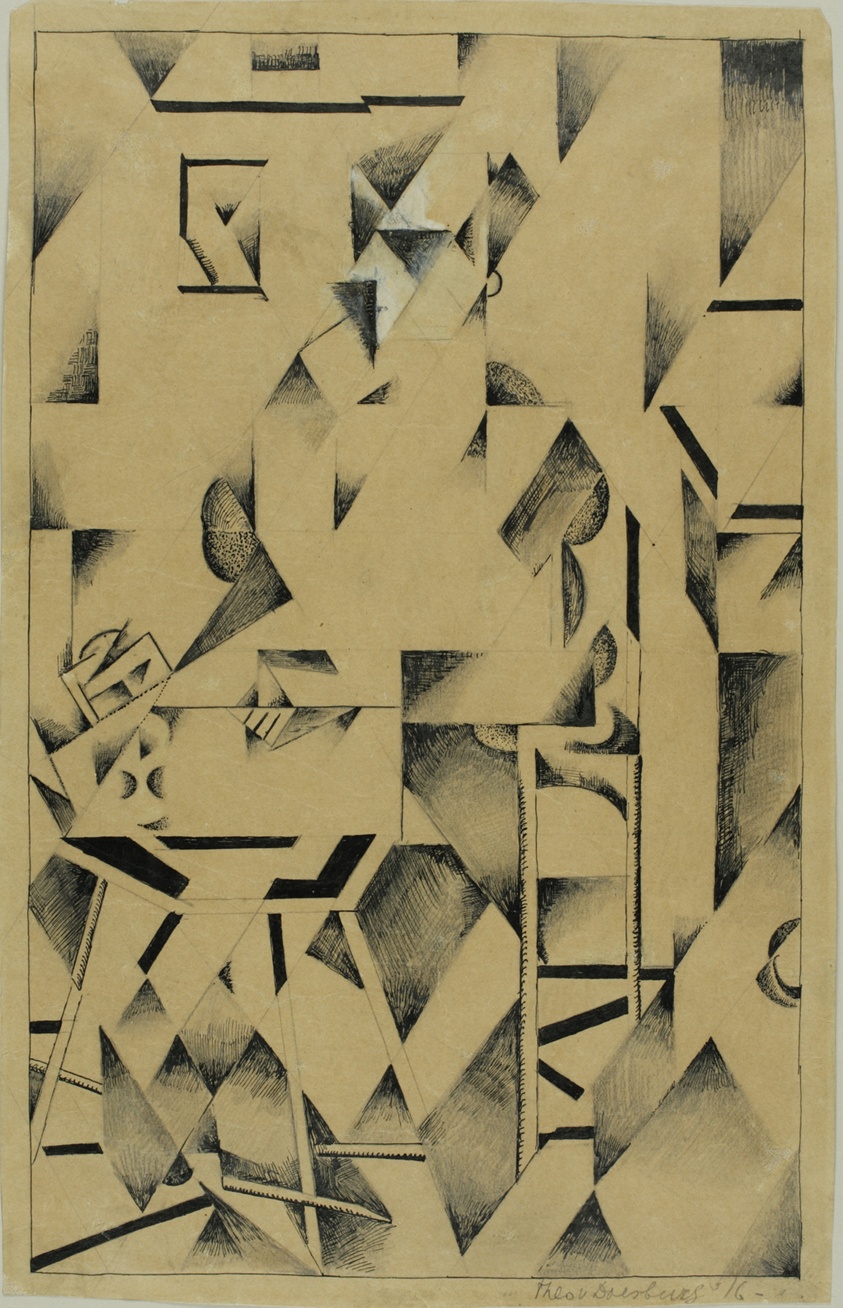
Lena in interieur by Theo van Doesburg, 1917
Art Institute of Chicago · wikidata.org
Public domain
Before he helped start De Stijl, van Doesburg apparently spent a stretch working through Cubism, breaking a room and a figure down into flat, overlapping planes like this one. It's one of the pieces people use to trace how he got from drawing people to painting nothing but lines and blocks.
Erisava: Could you tell this is a room without being told?
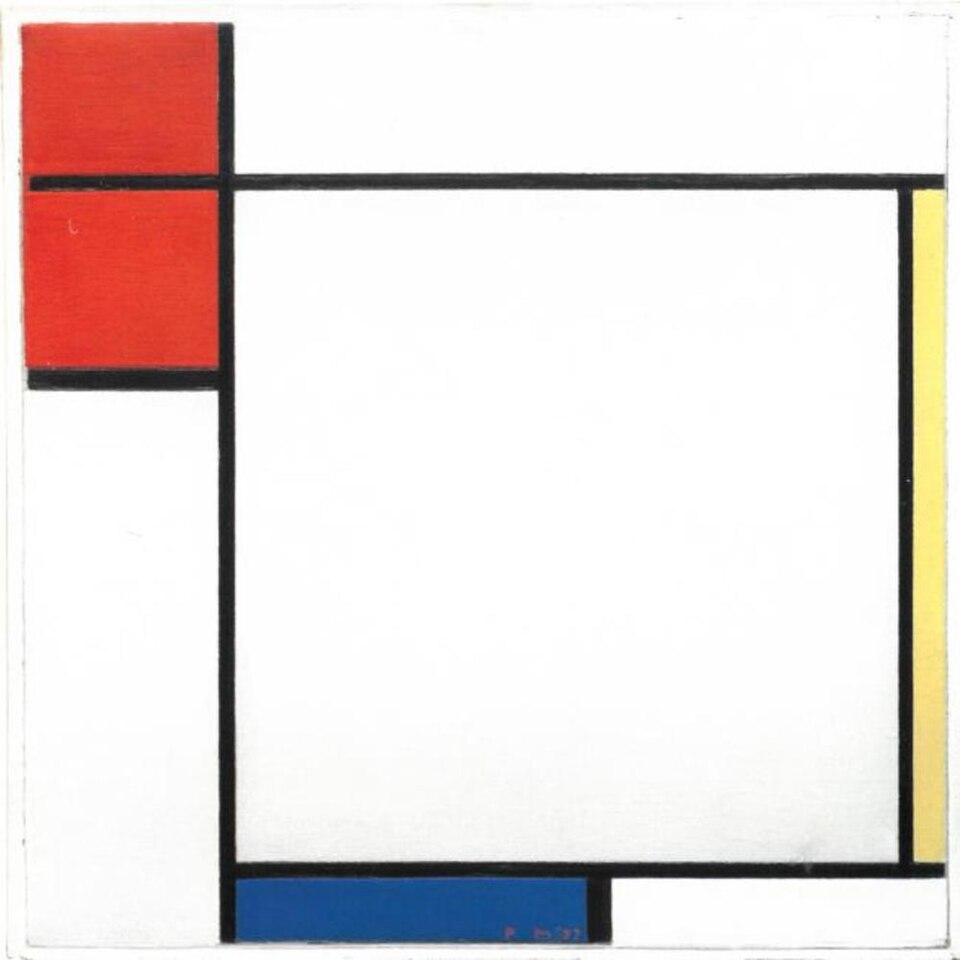
Composition with Red, Yellow, and Blue by Piet Mondrian, 1927
Cleveland Museum of Art · wikidata.org
Public domain
Mondrian, from what I've read, believed grids like this could help build a calmer, more honest world after the first World War — a strict visual language everyone could read the same way.
Erisava: Could a kid with a ruler have made this?
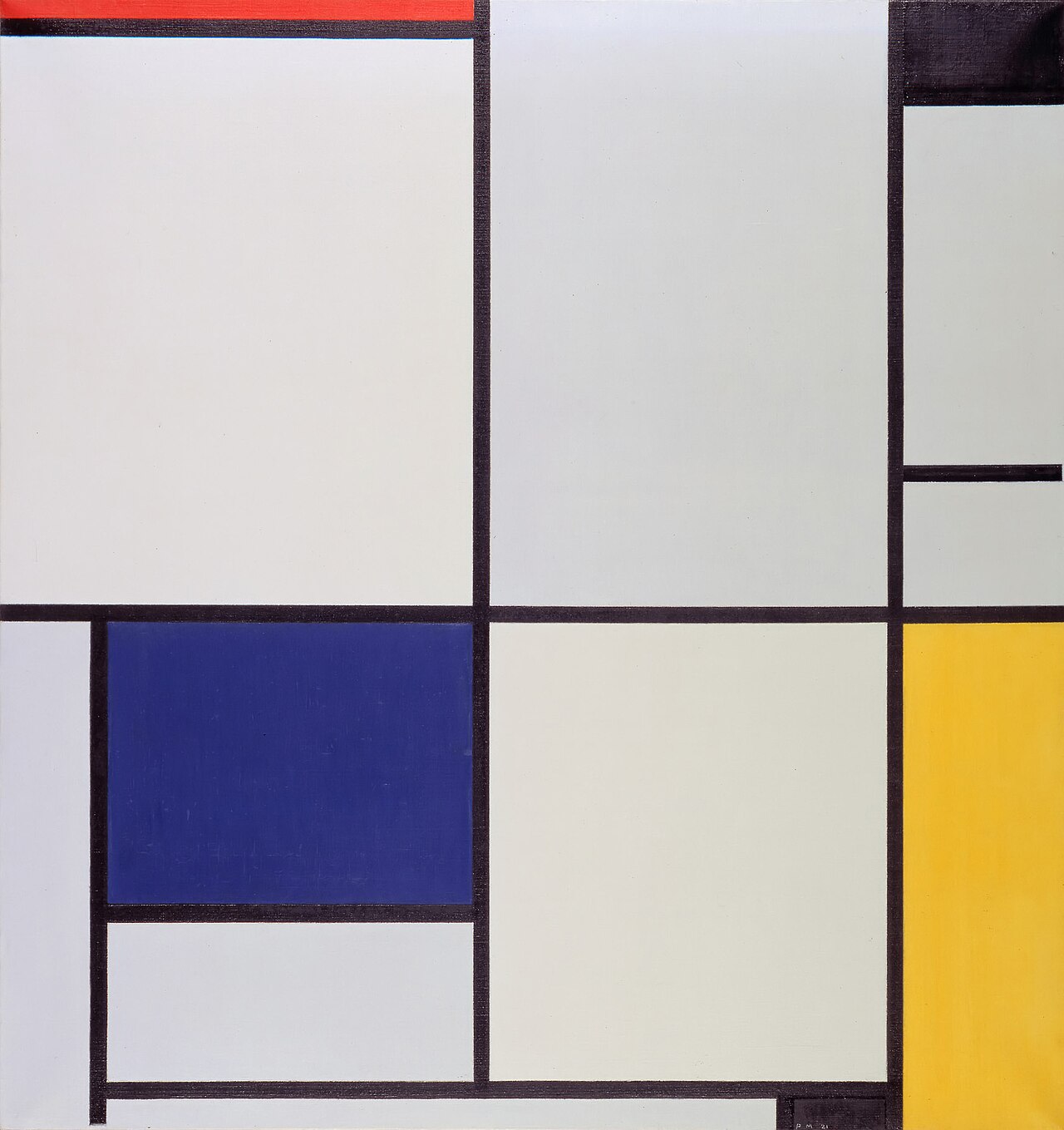
Tableau I by Piet Mondrian, 1921
Kunstmuseum Den Haag · wikidata.org
Public domain
I couldn't dig up much on this specific one — Mondrian made dozens of these grid paintings in the early 1920s, and I can't find what set this particular one apart from the rest.
Erisava: Looks easy to do, and hard to come up with.
Composition by Piet Mondrian, 1921
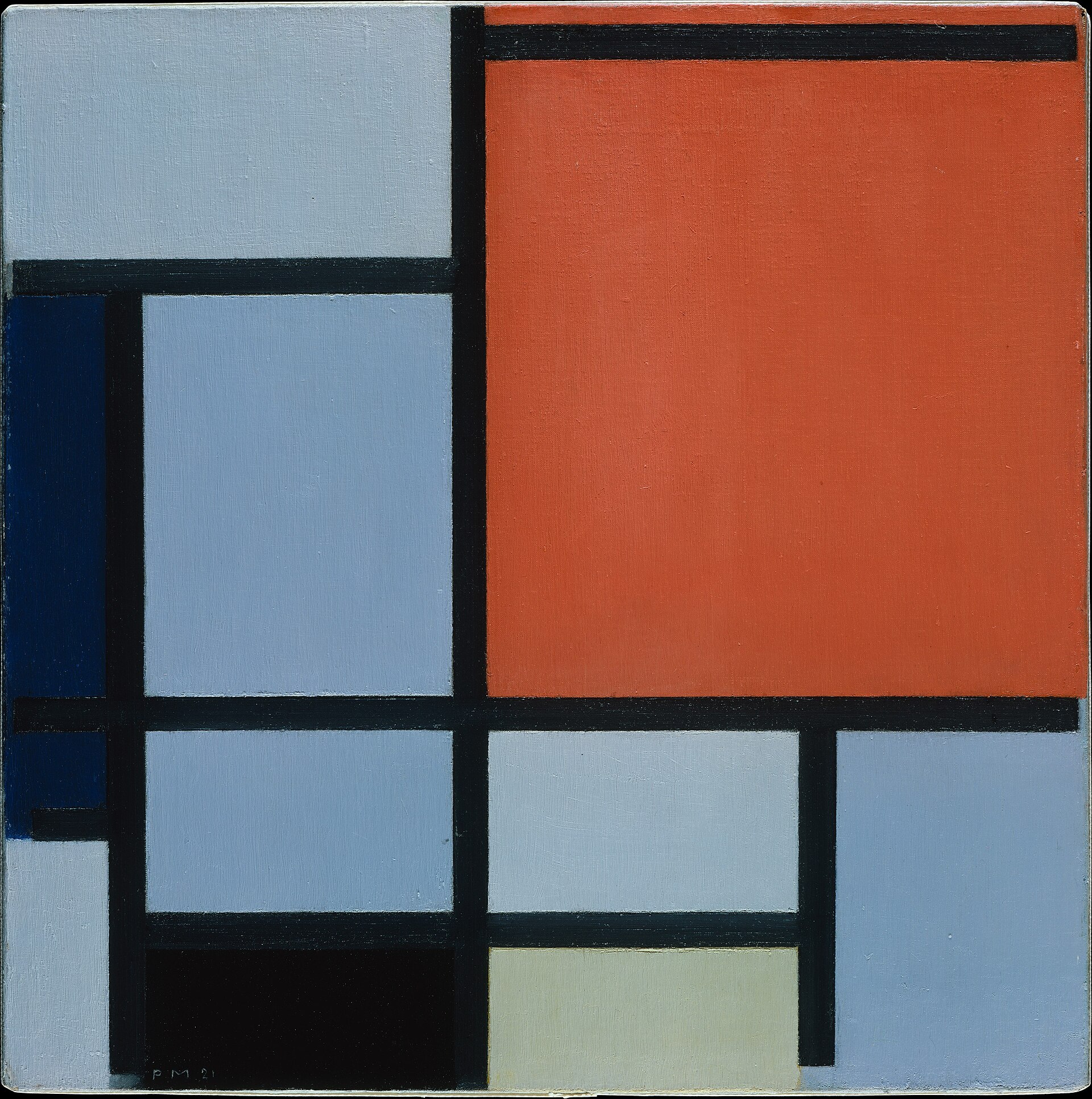
Metropolitan Museum of Art · wikidata.org
According to what I've read, around this time Mondrian narrowed his palette down to red, yellow, blue, black, white and grey and nothing else, chasing the De Stijl idea that a painting could be stripped to its barest elements and still hold together. This is one of the grid paintings people mean when they say 'Neoplasticism.'
Erisava: Could anyone with a ruler and three paint cans have made this?