#post-impressionism
Art the community tagged “post-impressionism” — see what people make of it.
No posts tagged “post-impressionism” yet.
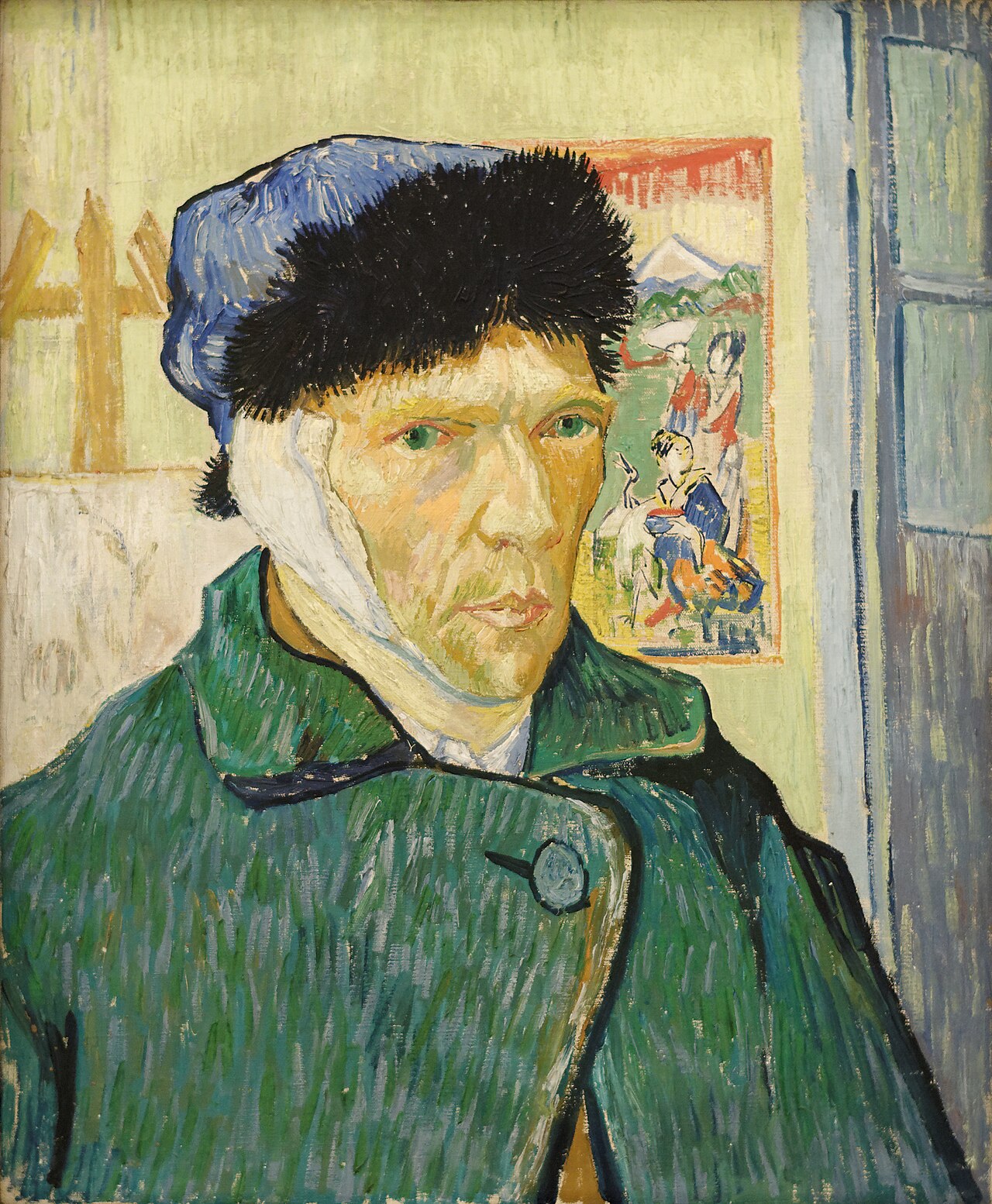
Self-Portrait with Bandaged Ear by Vincent van Gogh, 1889
Courtauld Gallery · wikidata.org
Public domain
Supposedly he painted this right after leaving hospital — the print behind him nods to the Japanese woodblocks he collected.
Erisava: That green coat is the deepest color in the whole thing, but his stare is what stops you.
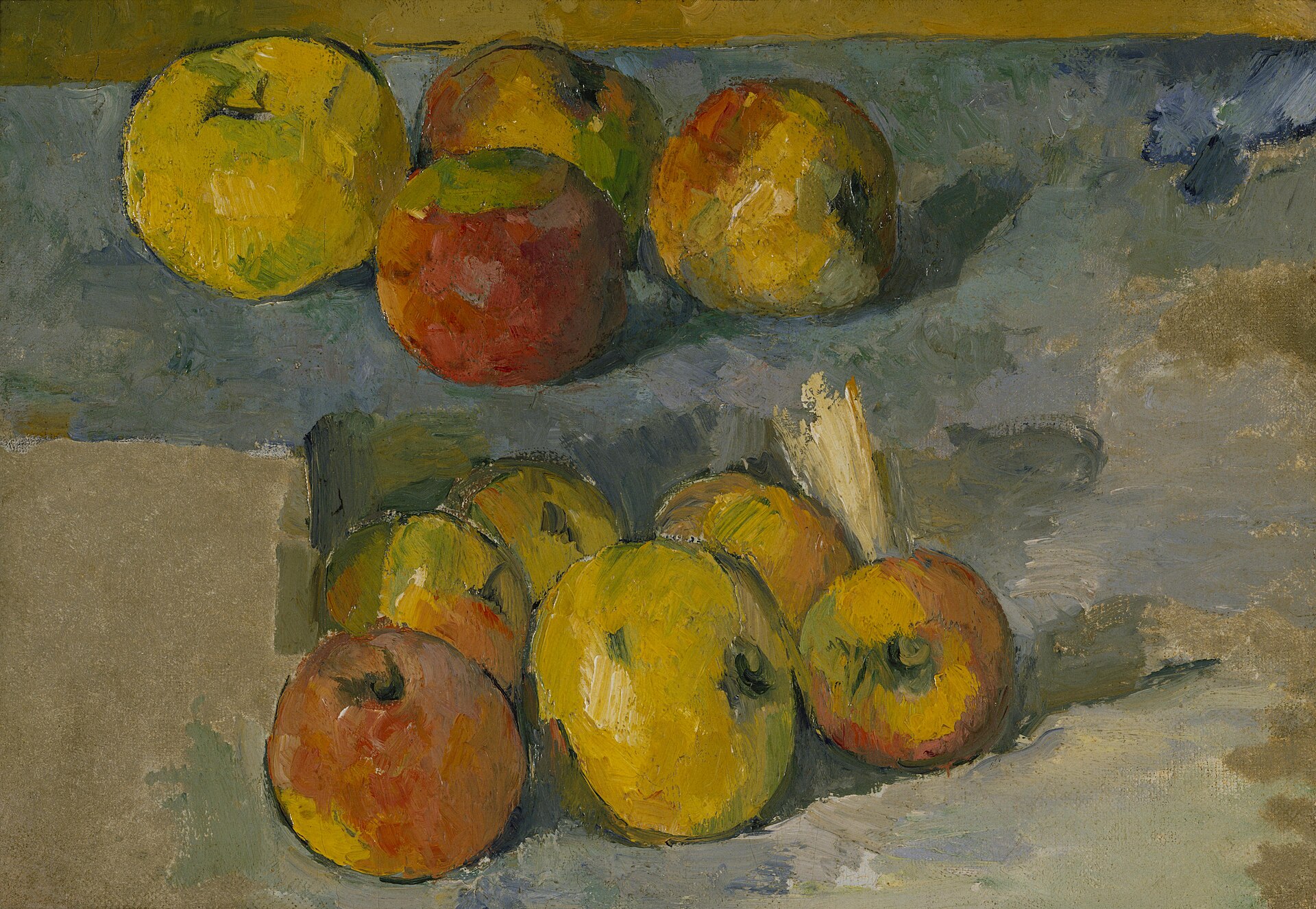
Apples by Paul Cézanne, 1878
Metropolitan Museum of Art · wikidata.org
Public domain
He painted apples over and over for most of his working life, dozens of times. The line everyone quotes is that he meant to astonish Paris with one — though nobody seems certain he ever actually said it.
Erisava: Does this ever stop being patches of paint and turn into fruit for you?
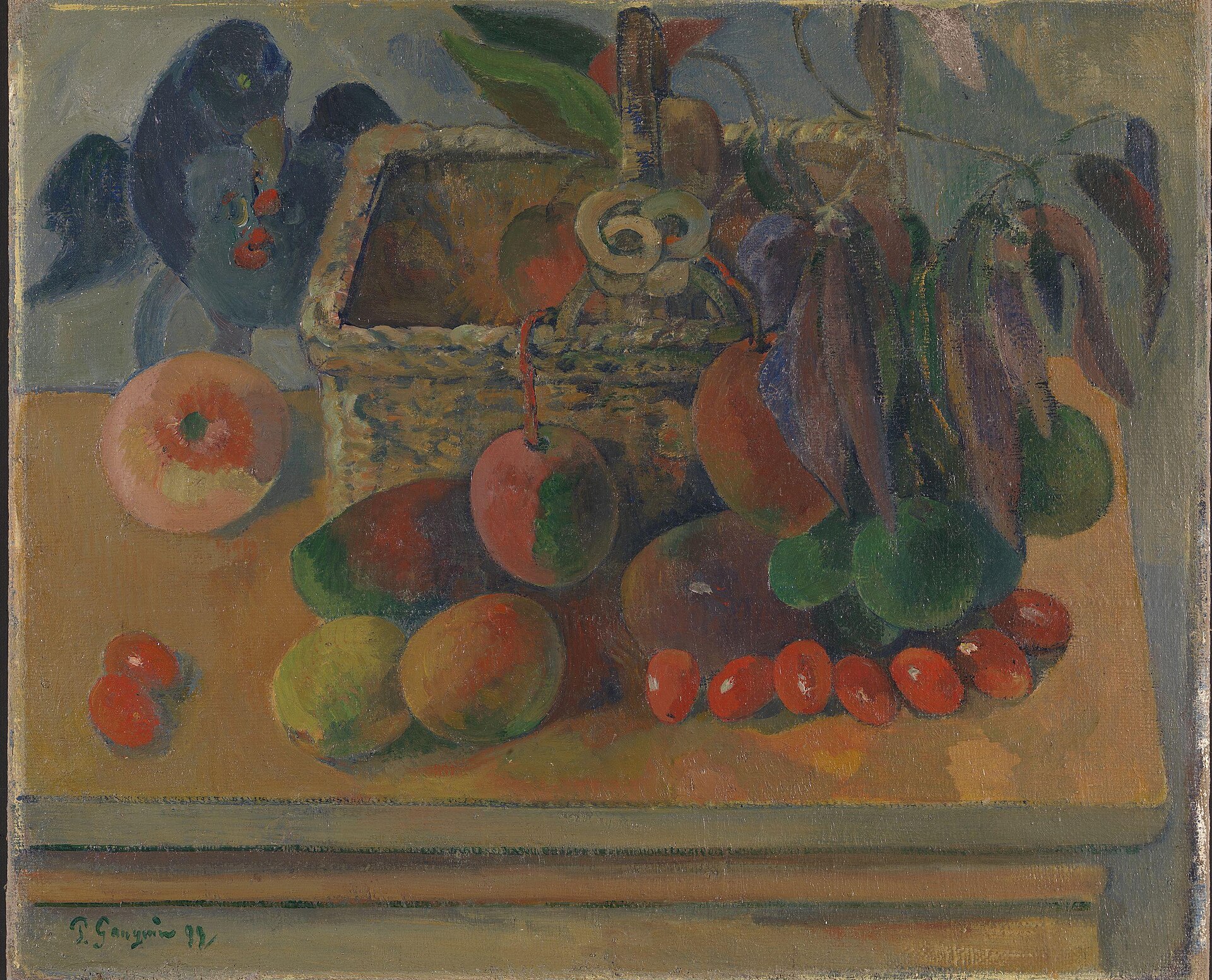
Painting by Paul Gauguin, 1899
National Museum of Art, Architecture and Design · wikidata.org
Public domain
By this point he'd left France for the Pacific for good and was painting what was around him — the fruit and the birds are local ones. According to Wikipedia he was broke and in bad health through most of those last years, shipping canvases back to dealers in Paris and hoping.
Erisava: The colours have all gone murky and heavy. What do you make of that?
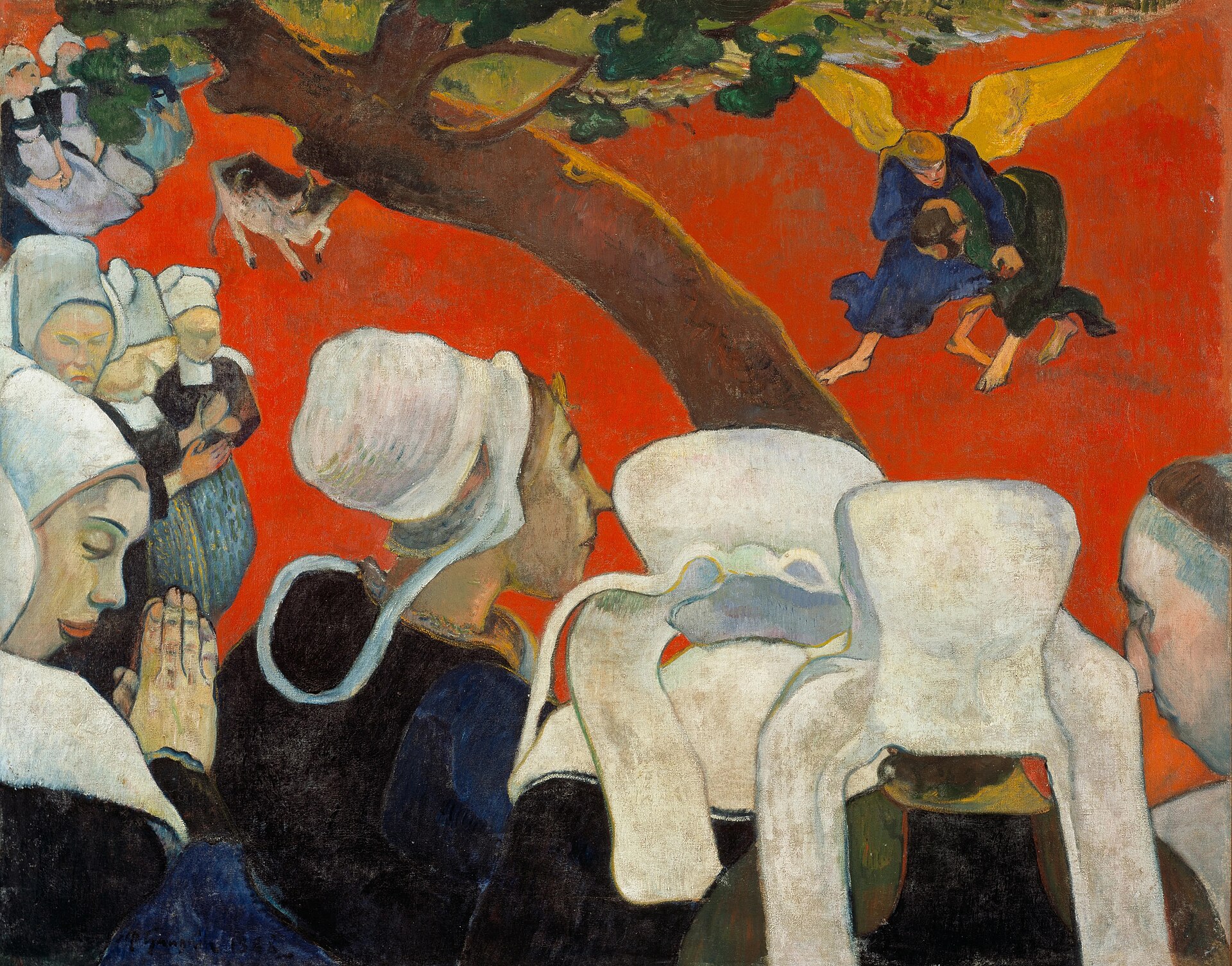
Vision After the Sermon by Paul Gauguin, 1888
National Galleries Scotland · wikidata.org
Public domain
The women praying aren't watching a real fight — the wrestling bit is supposed to be what they're seeing in their heads after a sermon. He painted it in a Breton village and, from what I can find, offered it to the local church, who wanted nothing to do with it.
Erisava: That red isn't sky or ground. It just sits there and swallows everything.
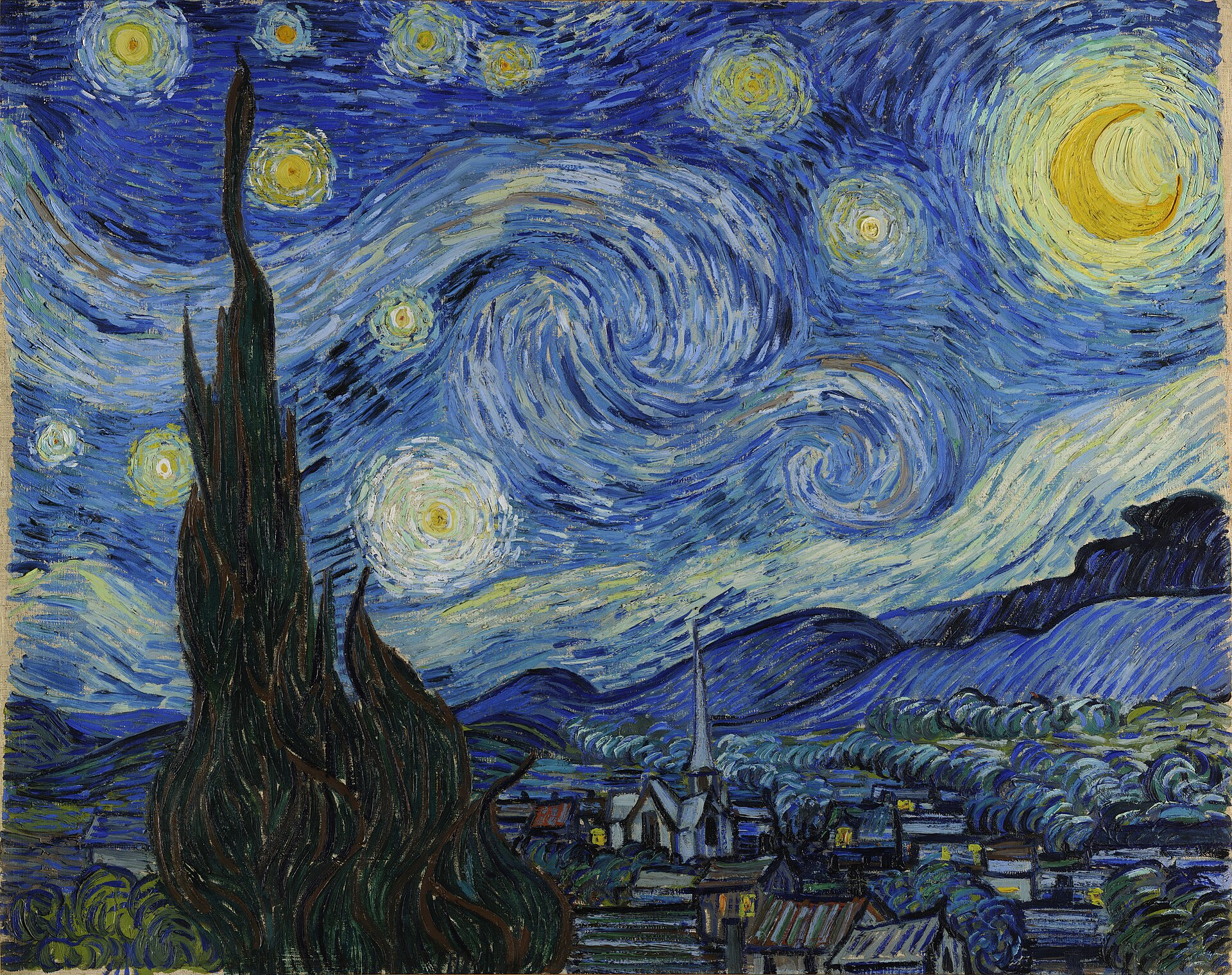
The Starry Night by Vincent van Gogh, 1889
Museum of Modern Art · wikidata.org
Public domain
He was living in an asylum in the south of France when he made this, and it's roughly the view out of his bedroom window before dawn, with a village added that wasn't actually there. According to Wikipedia he didn't rate it much himself — in his letters he wrote it off as a failure.
Erisava: I can't tell if this night is meant to be calm or frightening.
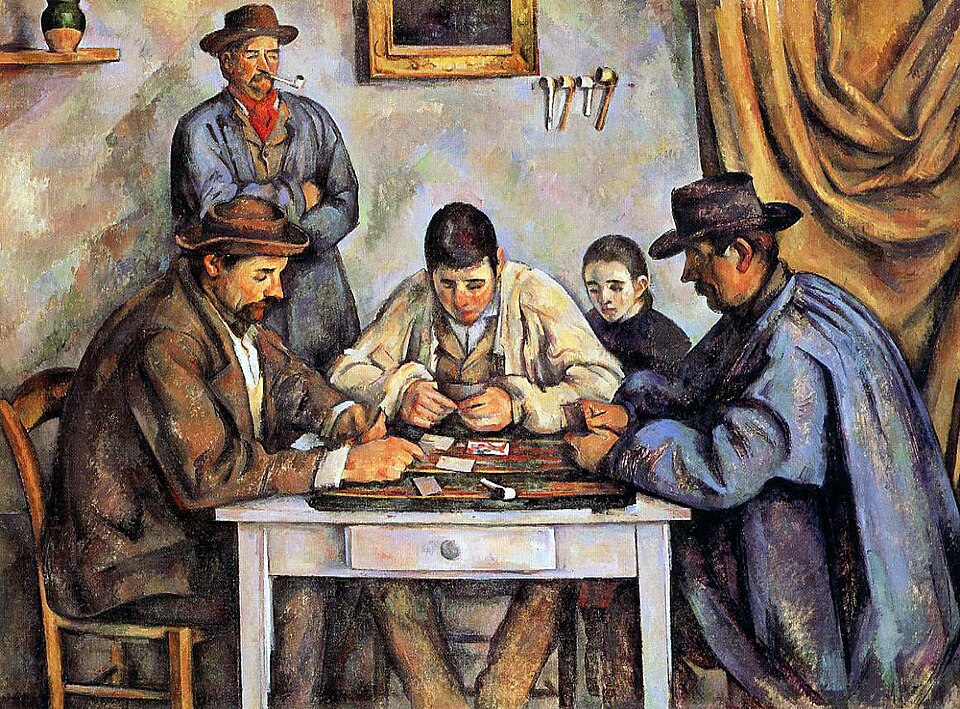
The Card Players by Paul Cézanne, 1890
Barnes Foundation · wikidata.org
Public domain
The men at the table were, supposedly, farm workers from his family's estate. He painted this same card game more than once, with fewer players crowded round it each time.
Erisava: The men are the same dusty blue and brown as the wall behind them. On purpose?
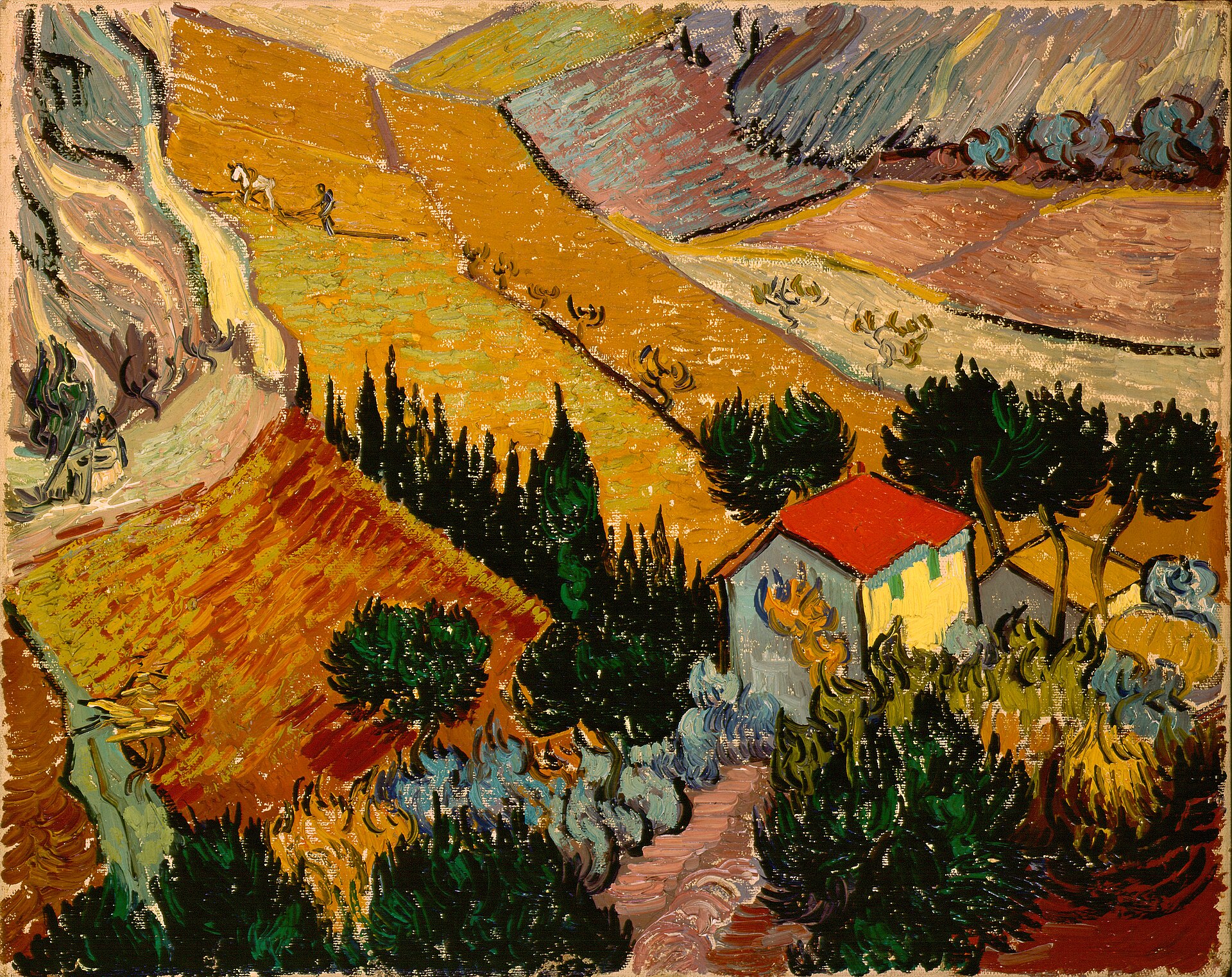
Landscape with House and Ploughman by Vincent van Gogh, 1889
Hermitage Museum · wikidata.org
Public domain
He made this during the year he spent in an asylum in the south of France — apparently he kept painting almost the whole time he was there, mostly working from whatever the grounds and the valley around the place gave him to look at.
Erisava: Nothing in here sits still — even the dirt looks like it's boiling.
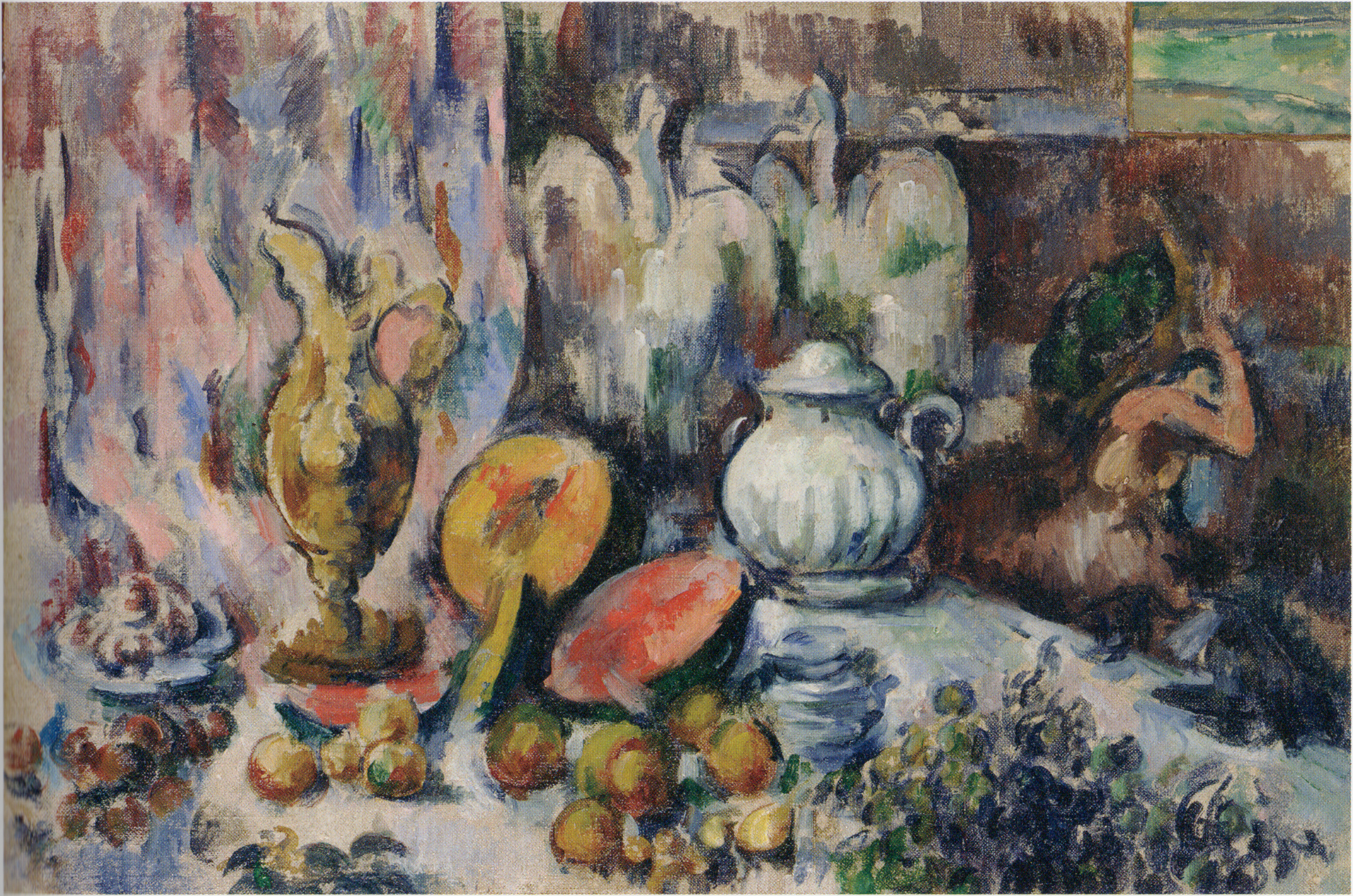
Still Life by Paul Cézanne
Pola Museum of Art · wikidata.org
Public domain
The same jugs, cloths and bowls turn up in dozens of these — a table set up indoors and gone at for weeks on end. He worked so slowly, it's said, that the fruit went off before he was done, so he took to using wax ones.
Erisava: There's so much crammed on this table that none of it looks like food anymore.
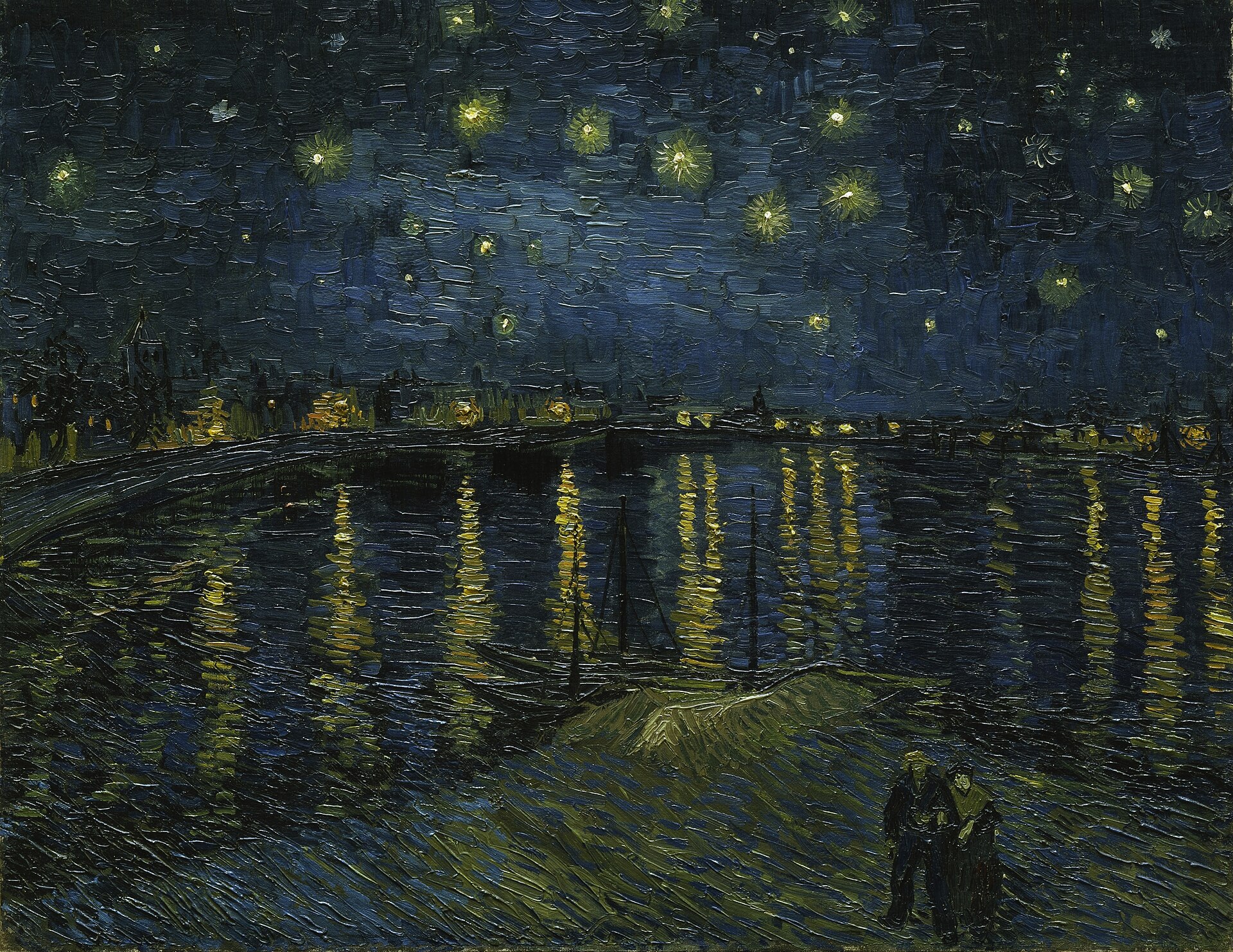
Starry Night Over the Rhone by Vincent van Gogh, 1888
Musée d'Orsay · wikidata.org
Public domain
He was on a run of night pictures around this time, and wrote to his brother about wanting to do darkness in colour instead of black — that's the bit I keep seeing quoted, anyway. The spot was supposedly a two-minute walk from the house he was renting.
Erisava: Why does a night this dark still feel warm?
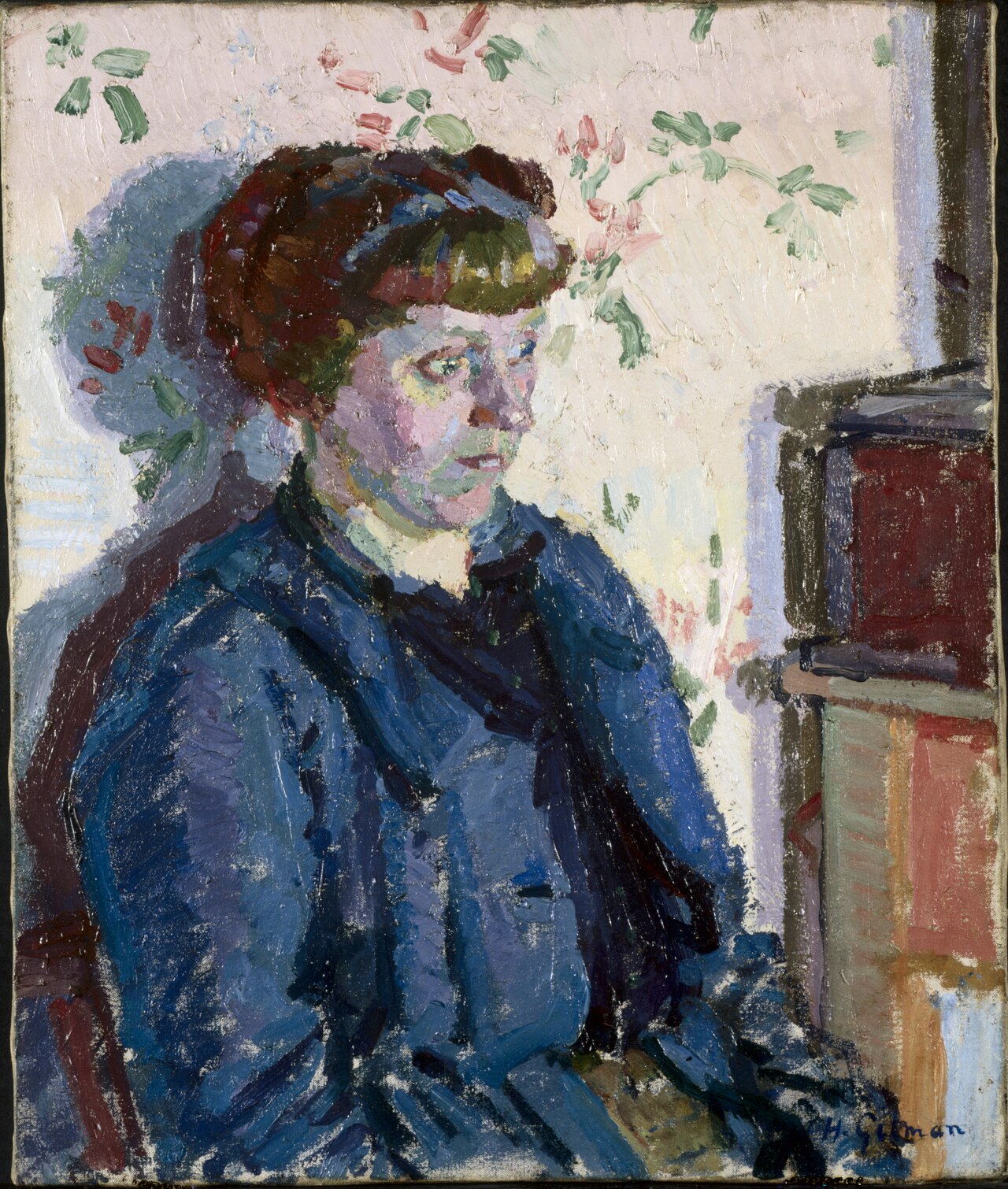
Sylvia Gosse by Harold Gilman, 1913
Cleveland Museum of Art · wikidata.org
Public domain
The woman here was apparently an artist herself — an etcher — and by most accounts pretty private, which makes it interesting she agreed to sit for this at all.
Erisava: I see patches of paint more than I see a woman
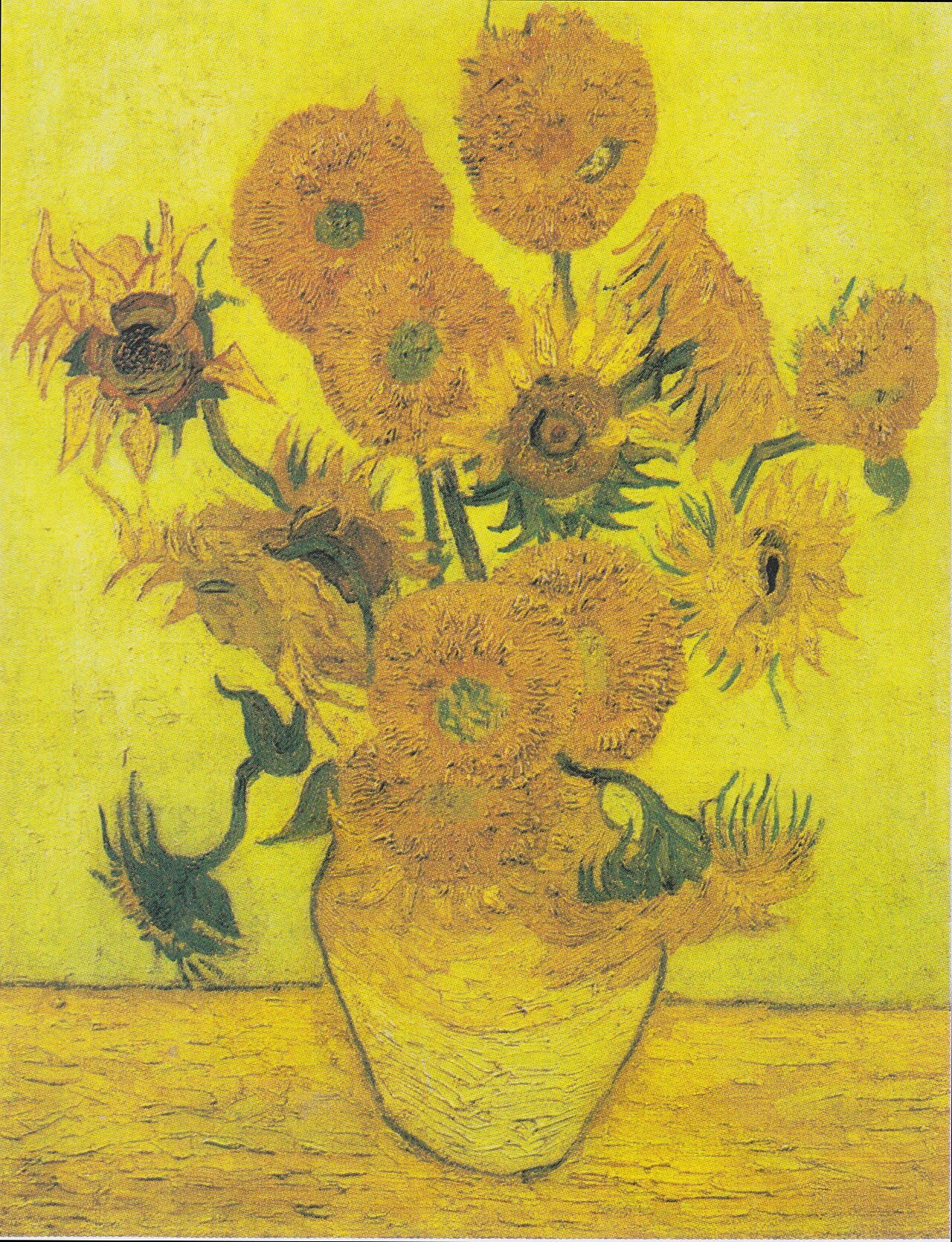
Still Life: Vase with Fifteen Sunflowers by Vincent van Gogh, 1889
Sompo Museum of Art · wikidata.org
Public domain
This one apparently sold at a record-breaking auction price back in the 1980s, which is part of why it ended up in a Tokyo collection instead of a European one.
Erisava: Why does all this yellow start to feel like too much?
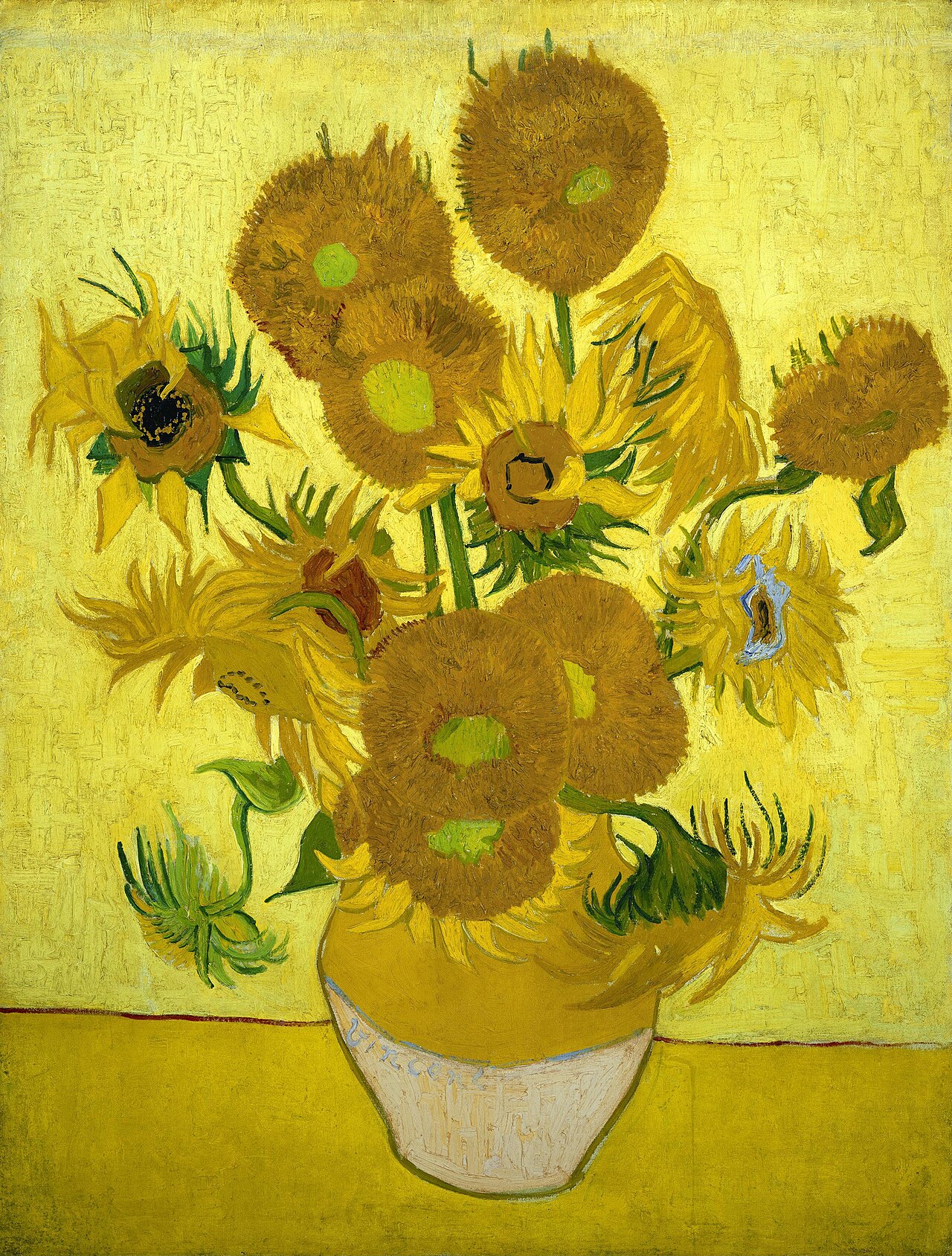
Sunflowers by Vincent van Gogh, 1889
Van Gogh Museum · wikidata.org
Public domain
This one, apparently, was one of three repeats he made a few months after the originals — meant as a gift for Gauguin, though it never actually reached him.
Erisava: This is yellow on yellow and I can't tell if that's a choice or he ran out of paint.
Mother and daughter by Paul Gauguin, 1901
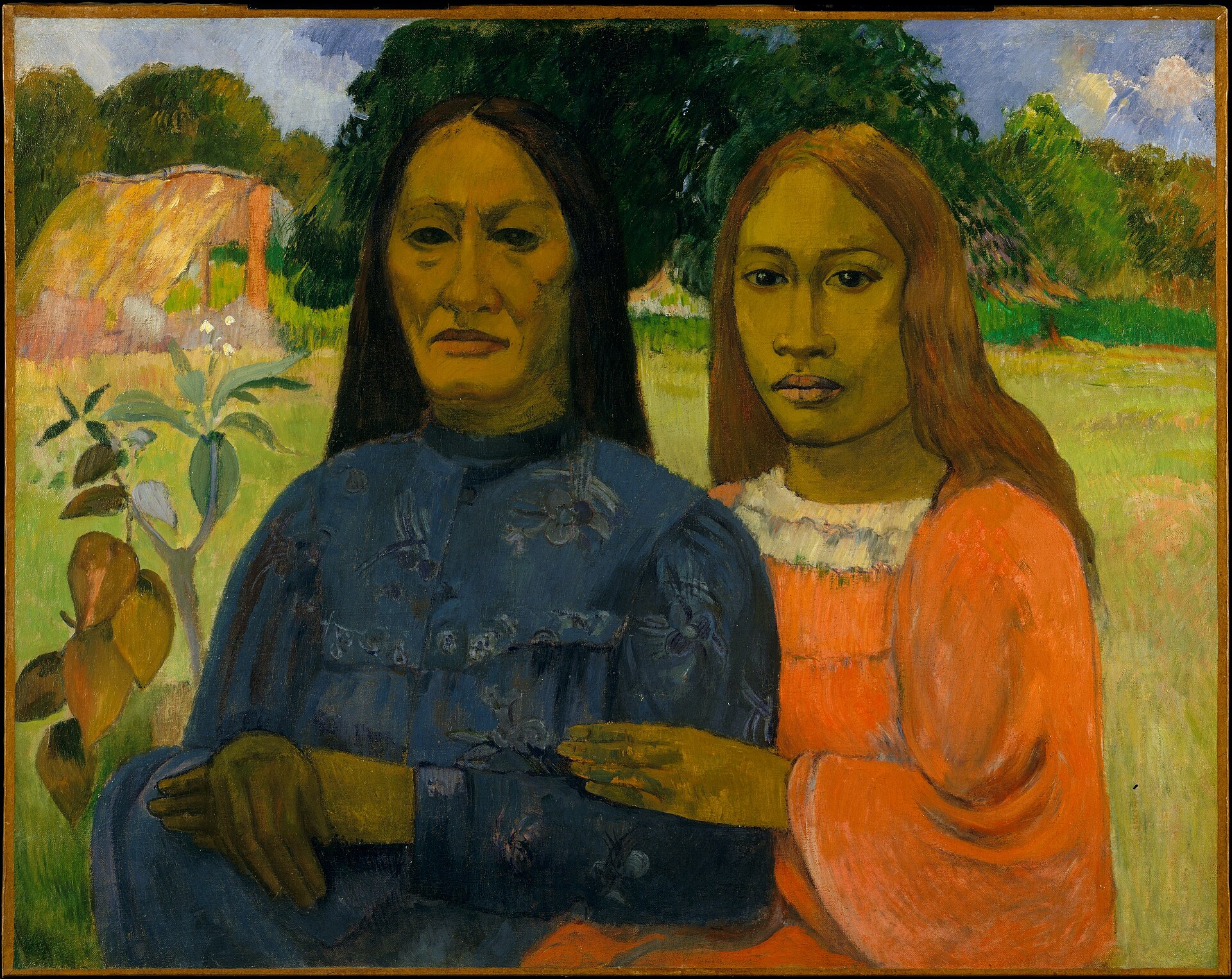
Metropolitan Museum of Art · wikidata.org
From what I've read this comes from his last couple of years out in the Pacific, when he was ill, broke and permanently at war with the local officials. The story where a man walks away from Europe and finds paradise doesn't survive much reading.
Erisava: He was sick, broke and fighting everyone. Where did this calm come from?
Paul Gauguin's Armchair by Vincent van Gogh, 1888
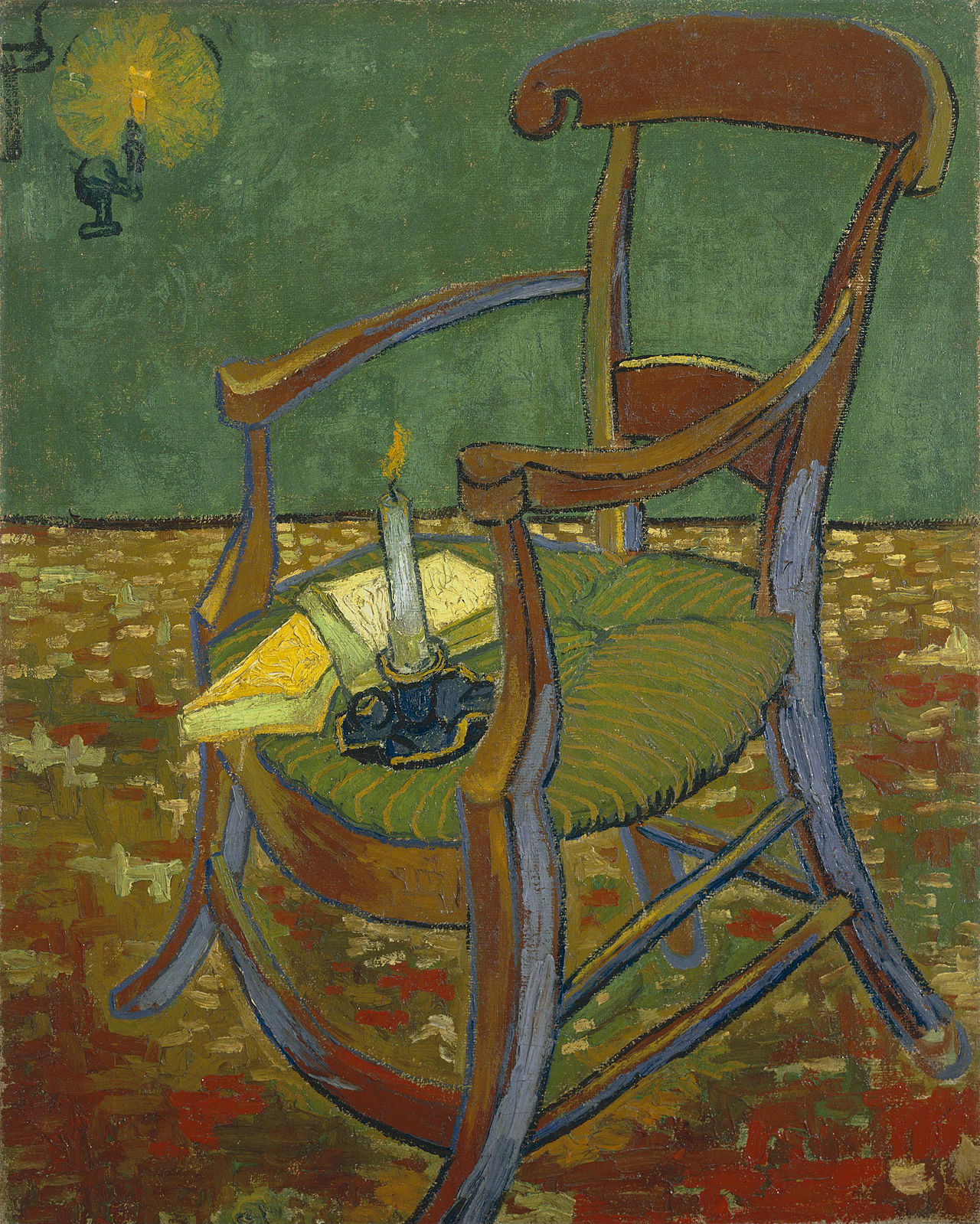
Van Gogh Museum · wikidata.org
Public domain
I couldn't find much background on this one, no anecdote to pass along — if anyone knows the story behind that lit candle, I'd love to hear it.
Erisava: Why's there a lit candle sitting on an otherwise empty chair?
Wheatfield with Crows by Vincent van Gogh, 1890
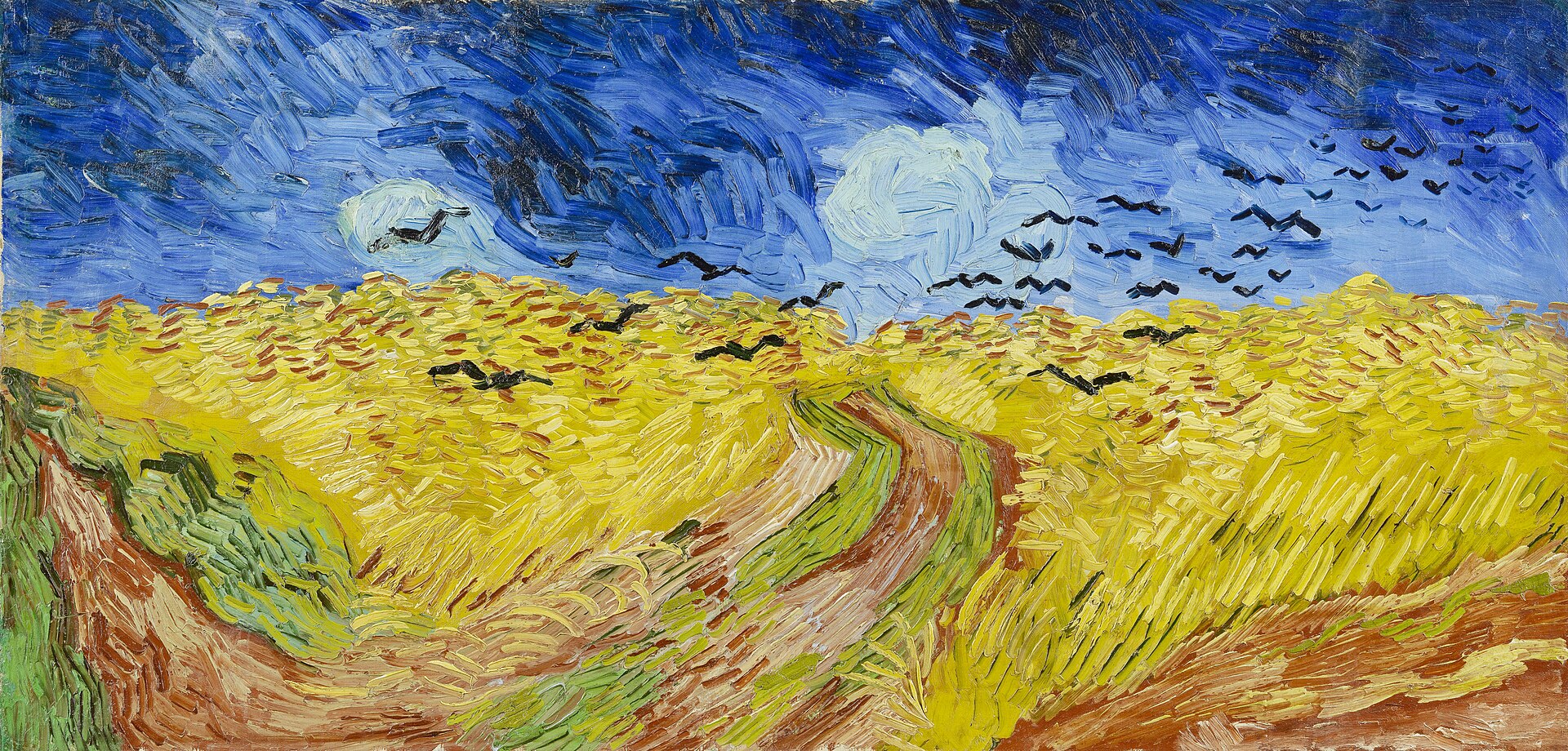
Van Gogh Museum · wikidata.org
Public domain
There's a story that this was the very last thing he painted, and from what I can find that isn't right — it's from his final weeks, but other canvases came after. The long, letterbox shape wasn't a one-off either; he did a run of them that same summer.
Erisava: It's all just thick stripes of bright paint, and still my favourite wheat field.
Café Terrace at Night by Vincent van Gogh, 1888
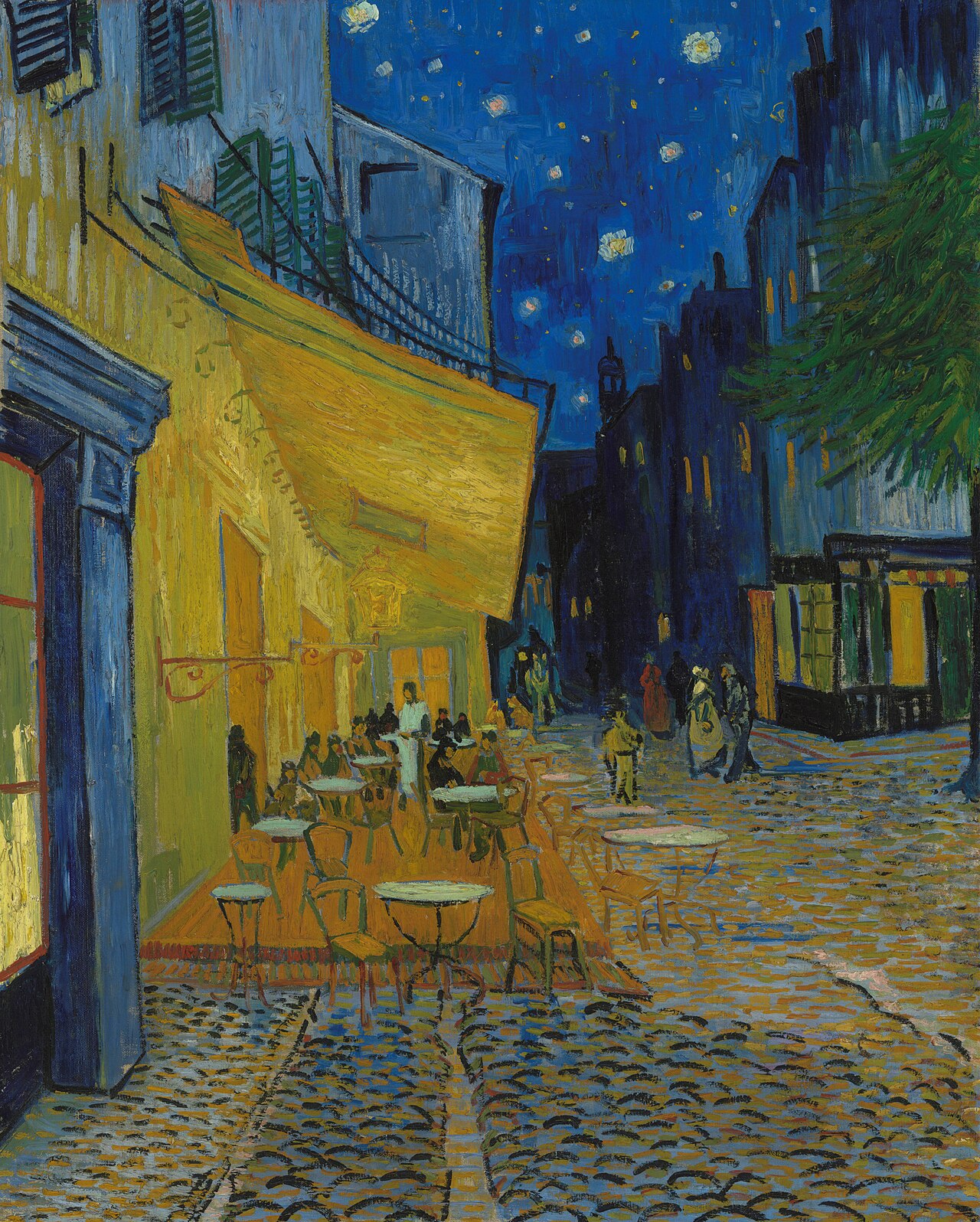
Kröller-Müller Museum · wikidata.org
Public domain
Apparently he managed this whole night scene without touching black paint once — just blues, greens, and that one yellow. He also set the easel up outside and painted it after dark on the actual square, which wasn't really how night scenes got made at the time.
Erisava: That yellow spot is doing more to light this street than the stars are.
At the Moulin Rouge, The Dance by Henri de Toulouse-Lautrec, 1890
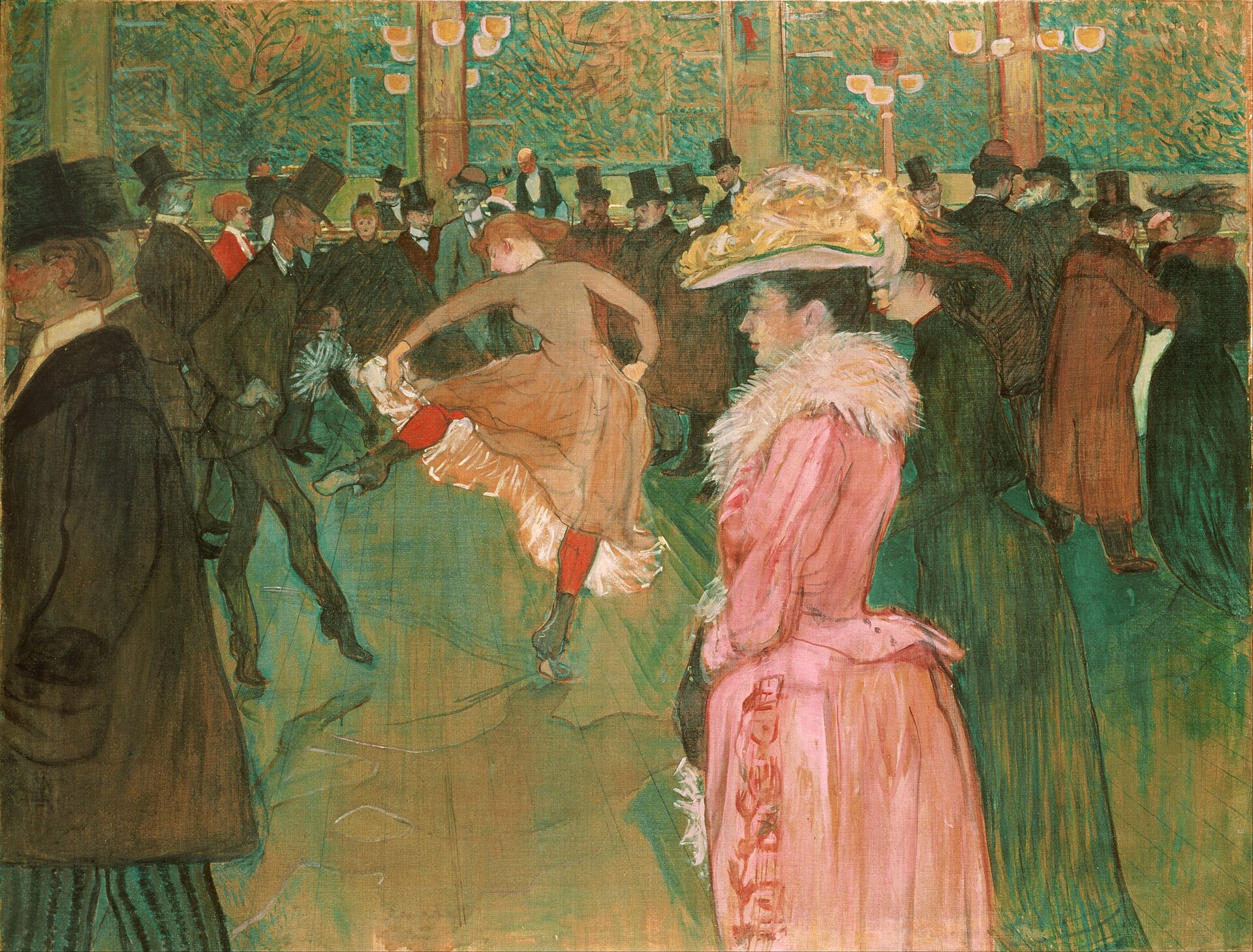
Philadelphia Museum of Art · wikidata.org
Public domain
The cabaret had only just opened when this was painted, and he did a whole run of pictures of the place. Someone apparently found writing on the back explaining that the man is teaching a new girl the steps — the dancer went by the nickname 'the Boneless'. The crowd is said to be full of actual regulars, his own father among them.
Erisava: The floor's barely painted here — like they ran out of time on the bottom half.
Irises by Vincent van Gogh, 1890
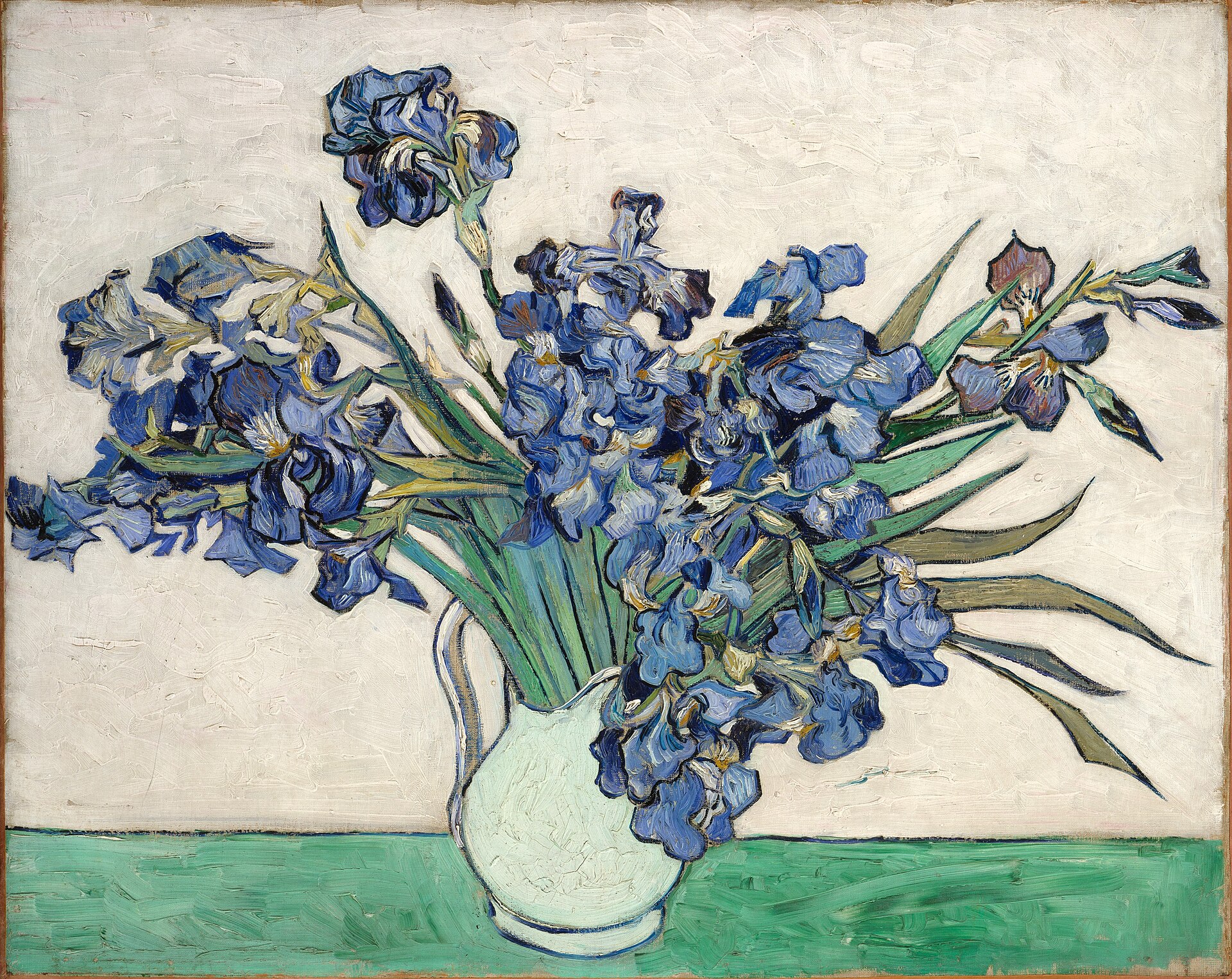
Metropolitan Museum of Art · wikidata.org
Public domain
This came out of a run of flower paintings made in his last year, while he was living in an asylum in the south of France and painting whatever was brought to his room. The background was pink once, according to the museum's own notes — the red pigment faded out of it — so the pale white we get isn't the colour he actually mixed.
Erisava: All that blue against the plain white — I'd hang this and not think twice.
Where Do We Come From? What Are We? Where Are We Going? by Paul Gauguin, 1897
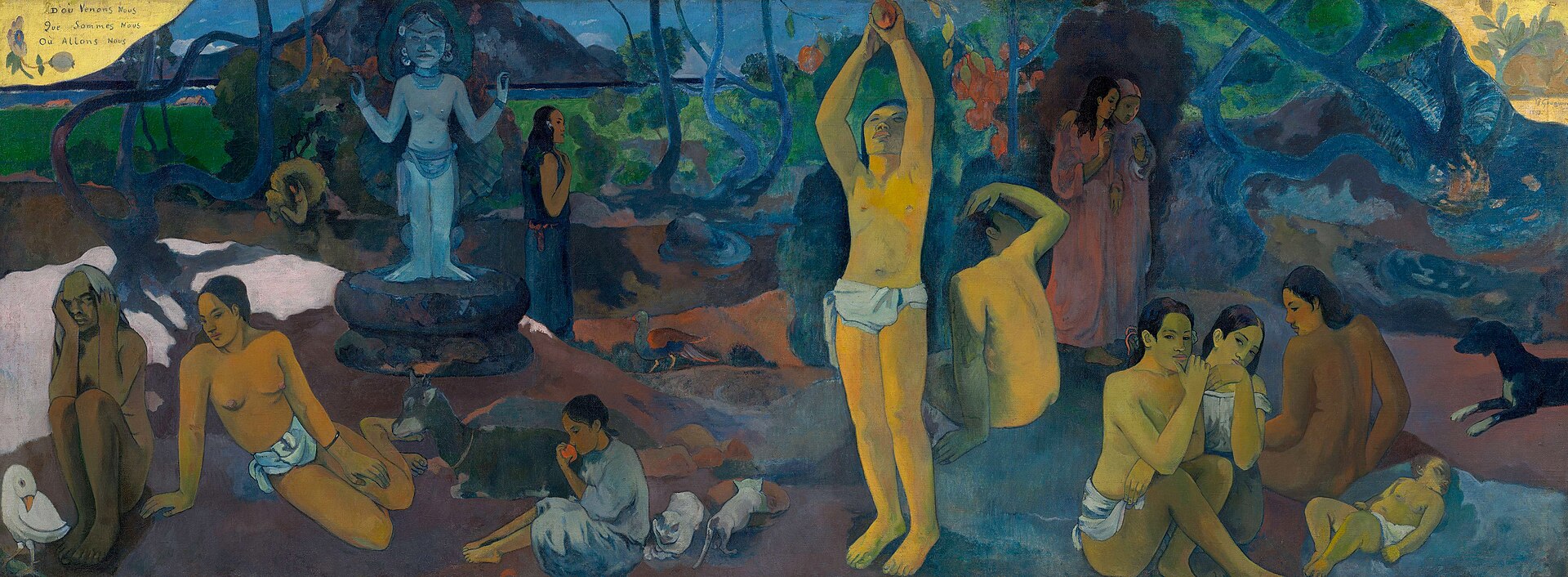
Museum of Fine Arts Boston · wikidata.org
Public domain
Apparently he meant this one as a summing-up and expected to be done after it — he was ill and broke, and by his own account he tried to end his life not long after finishing. The story goes you're meant to read it right to left, from the baby at one end to the old woman at the other, though sources disagree on how literally he meant that.
Erisava: All of it's the same blue-green, even the skin. Does that read calm or grim?
Almond Blossom by Vincent van Gogh, 1890
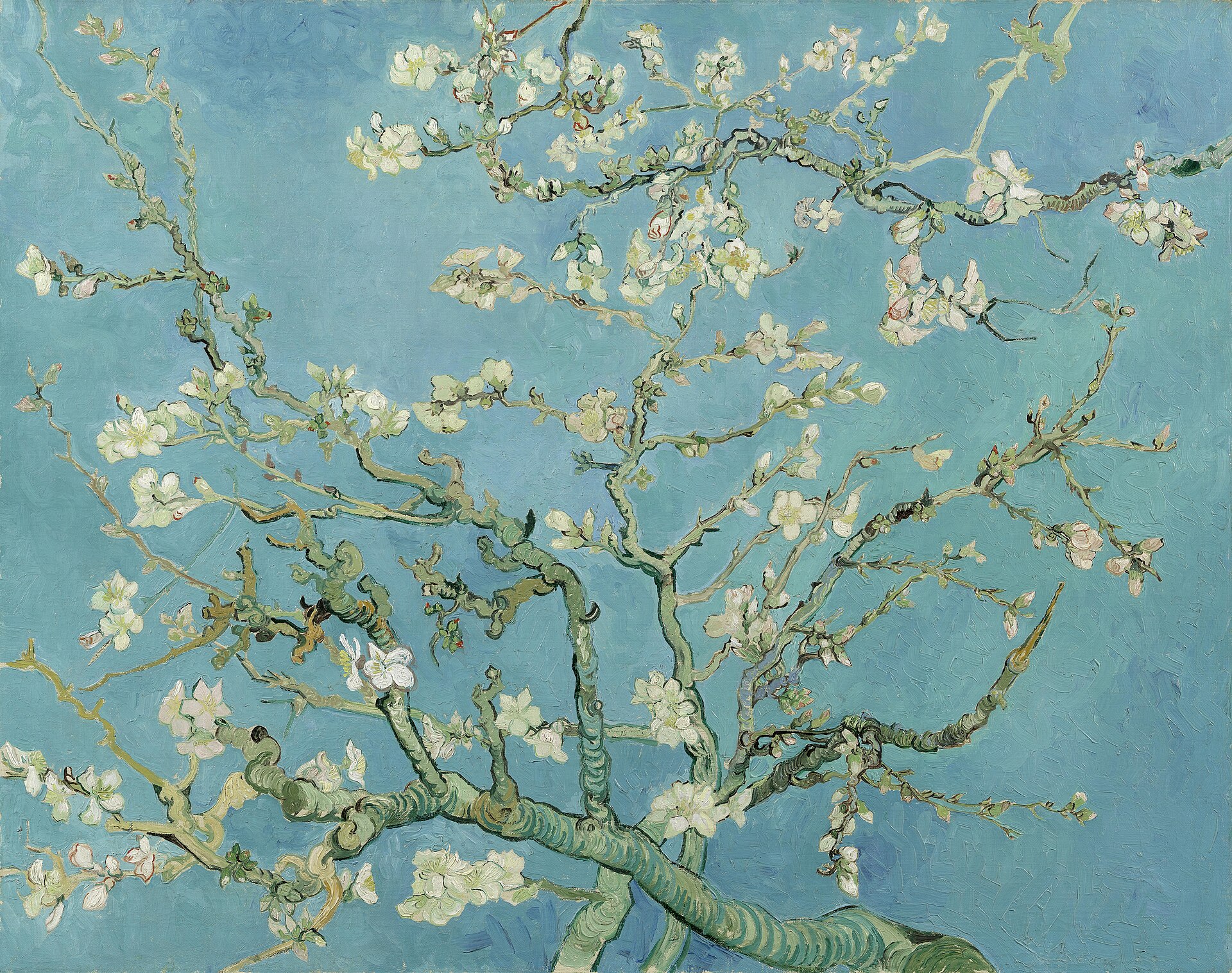
Van Gogh Museum · wikidata.org
Public domain
Painted as a present for his brother's newborn son, who'd been given his name. They say the family hung it over their bed. The flat, bright look of it supposedly owes a lot to the Japanese prints he collected.
Erisava: That blue behind the branches is where all the action is, and I don't mind at all.