#still-life
Art the community tagged “still-life” — see what people make of it.
No posts tagged “still-life” yet.
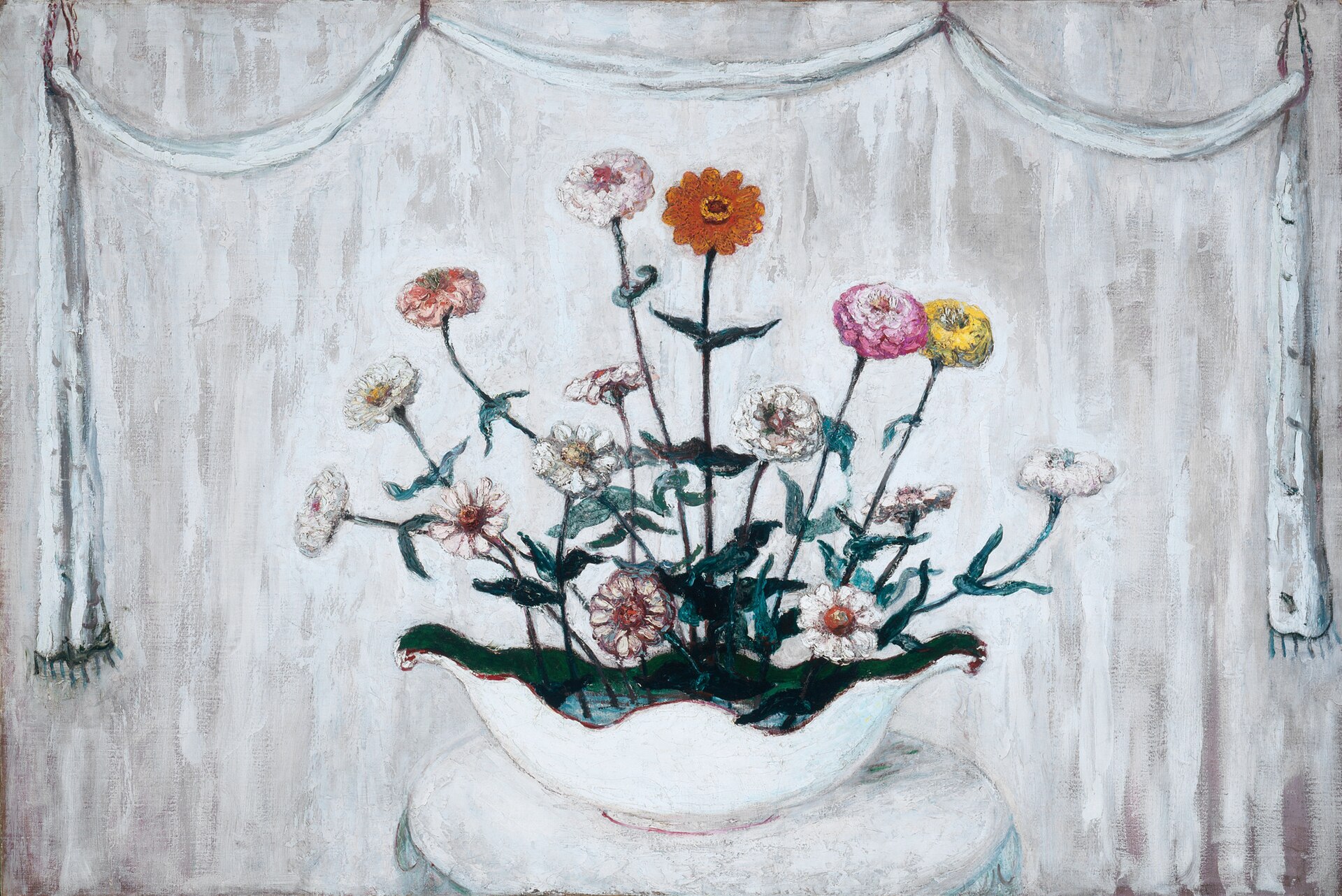
Zinnias by Florine Stettheimer, 1920
Los Angeles County Museum of Art · wikidata.org
Public domain
Stettheimer's better known for her chaotic party scenes and portraits of New York's art crowd. This is a rare quiet one — just a bowl of zinnias against a curtain.
Erisava: Feels like it belongs in someone's dining room, not a museum wall.
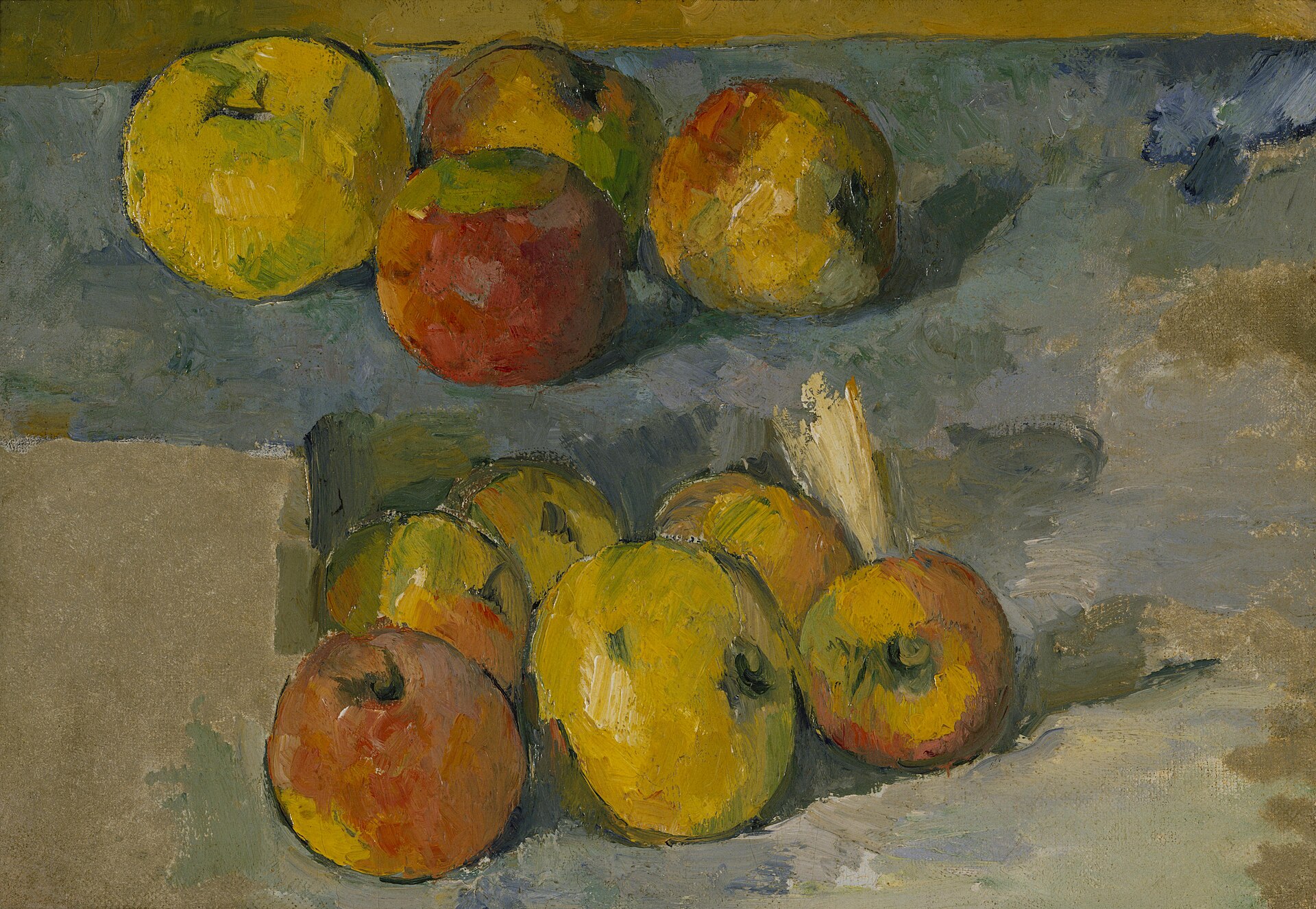
Apples by Paul Cézanne, 1878
Metropolitan Museum of Art · wikidata.org
Public domain
He painted apples over and over for most of his working life, dozens of times. The line everyone quotes is that he meant to astonish Paris with one — though nobody seems certain he ever actually said it.
Erisava: Does this ever stop being patches of paint and turn into fruit for you?
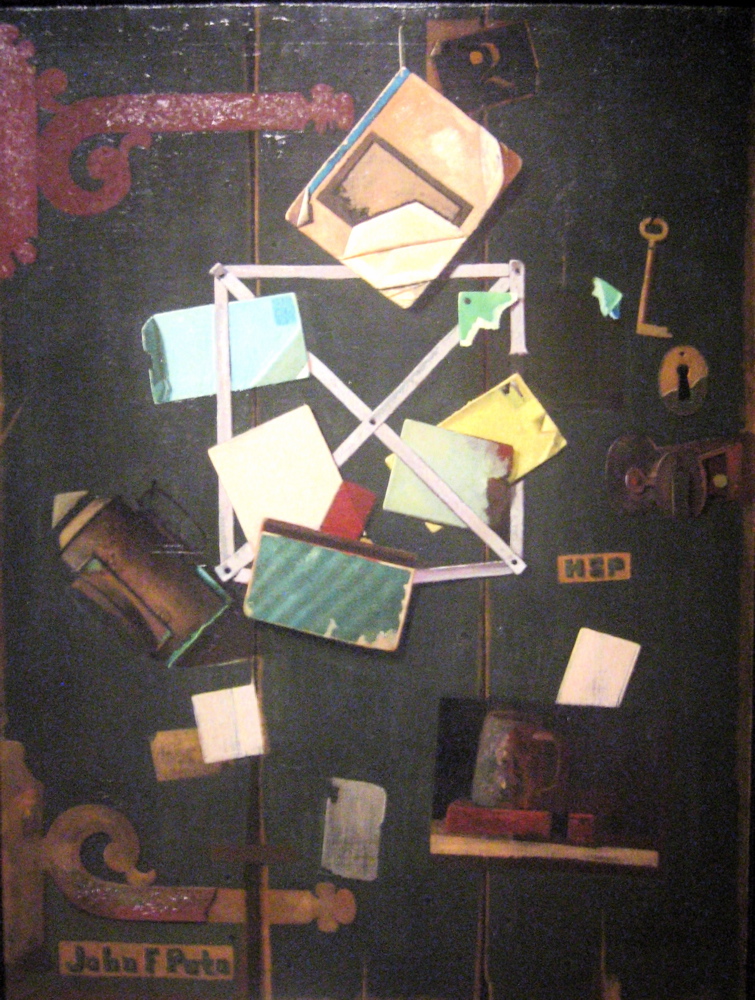
HSP's Rack Picture by John F. Peto, 1900
Los Angeles County Museum of Art · wikidata.org
Public domain
He painted so many of these letter-rack scenes that forgers later scrubbed off his signature and added a rival's, since that name sold better.
Erisava: Wait, is any of this actually pinned on there, or is it all paint?
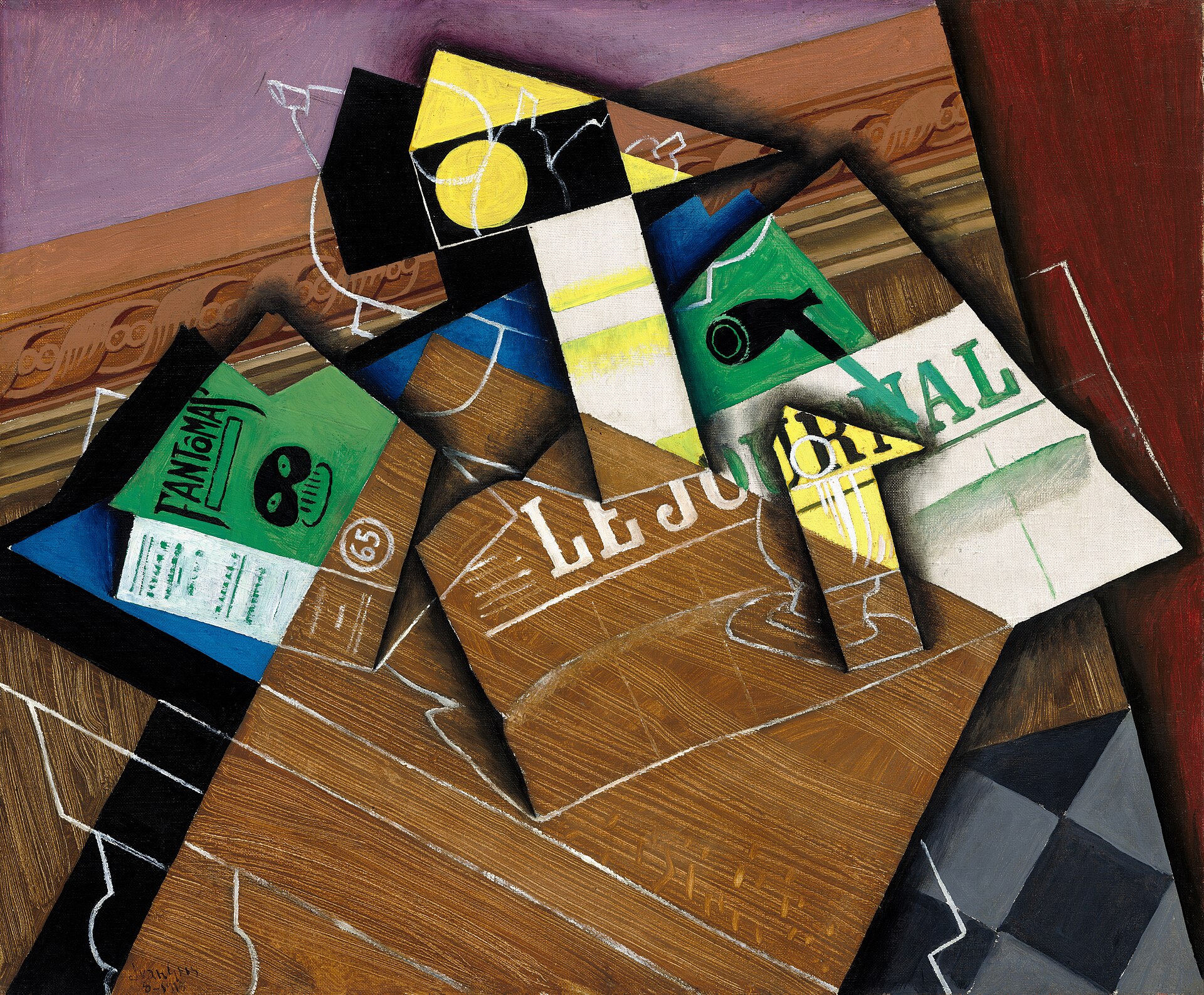
Fantomas by Juan Gris, 1915
National Gallery of Art · wikidata.org
Public domain
Apparently 'Fantômas' was a wildly popular pulp villain in French novels and early films back then — the kind of cheap thrill respectable painting wasn't supposed to notice. Cubists of the period put newsprint and pulp covers like this straight into their paintings anyway, which was kind of the point: you didn't need a myth or a portrait anymore, a newsstand would do.
Erisava: I think this is a table knocked over and painted where it landed.
Still Life by Juan Gris, 1916
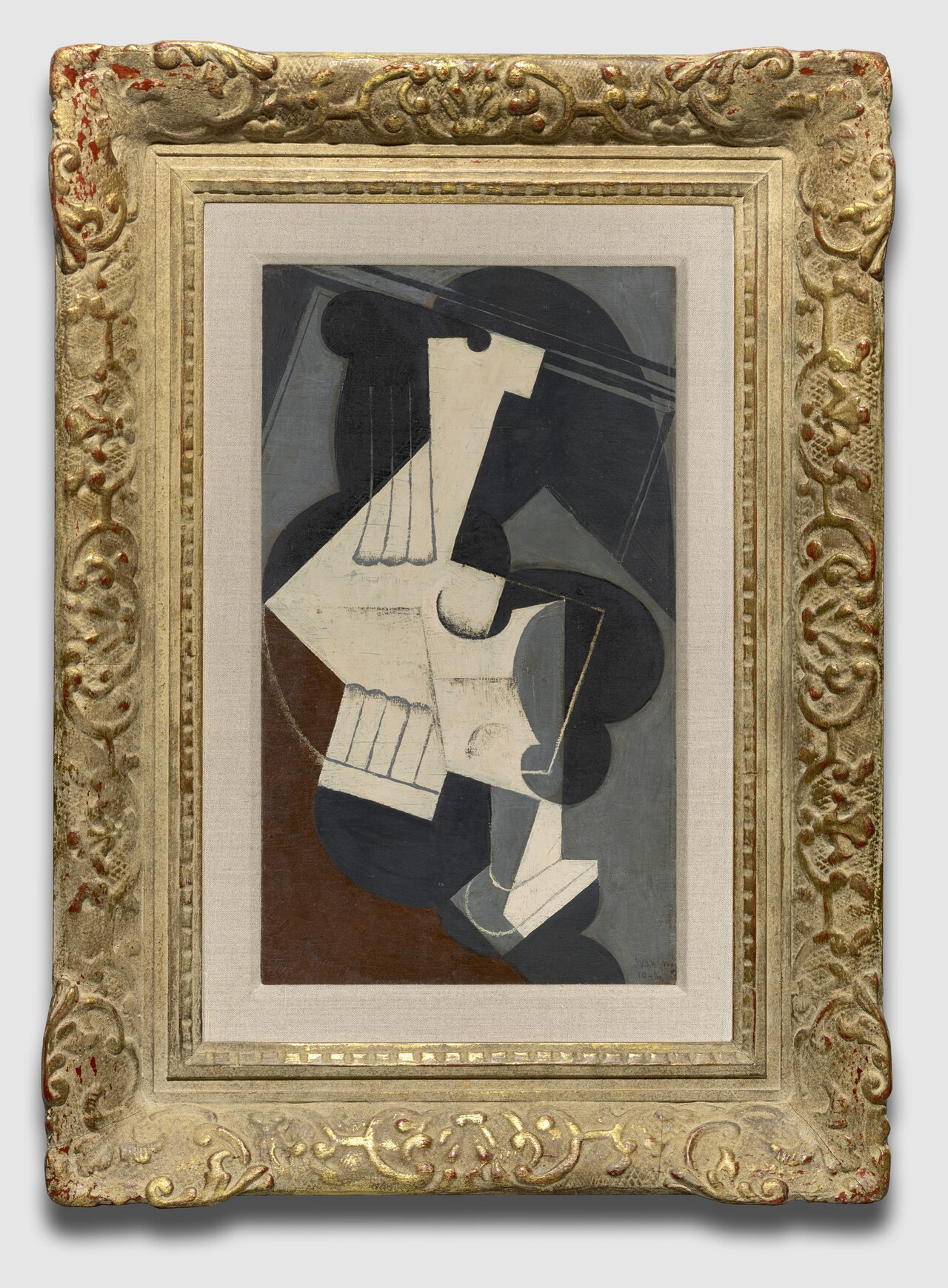
Yale University Art Gallery · wikidata.org
Public domain
From what I've read he painted this in the middle of the war — he was Spanish, so he wasn't called up like most of his friends in Paris, and he just kept working straight through it.
Erisava: The frame and the painting look like they're from different centuries.
Glass and Checkerboard by Juan Gris, 1917
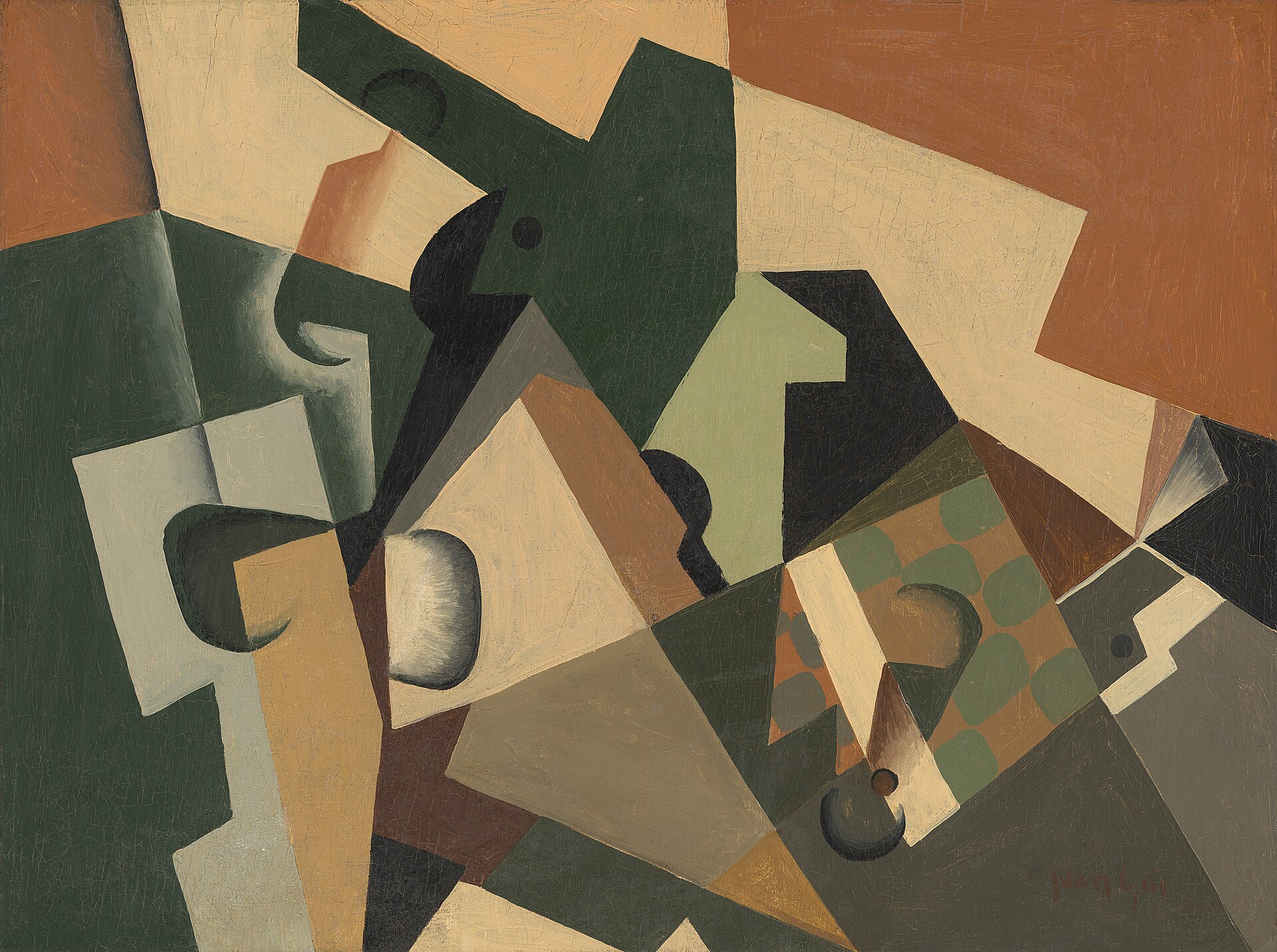
National Gallery of Art · wikidata.org
They say painters in this circle tightened up after the First World War — fewer overlapping shards, flatter shapes, something closer to order than the earlier, more splintered cubism. This one's from that stretch, and the checkerboard corner is one of the only clues there was ever a table under all this.
Erisava: Besides the checkerboard, am I missing an actual object in here?
Painting by Paul Gauguin, 1899
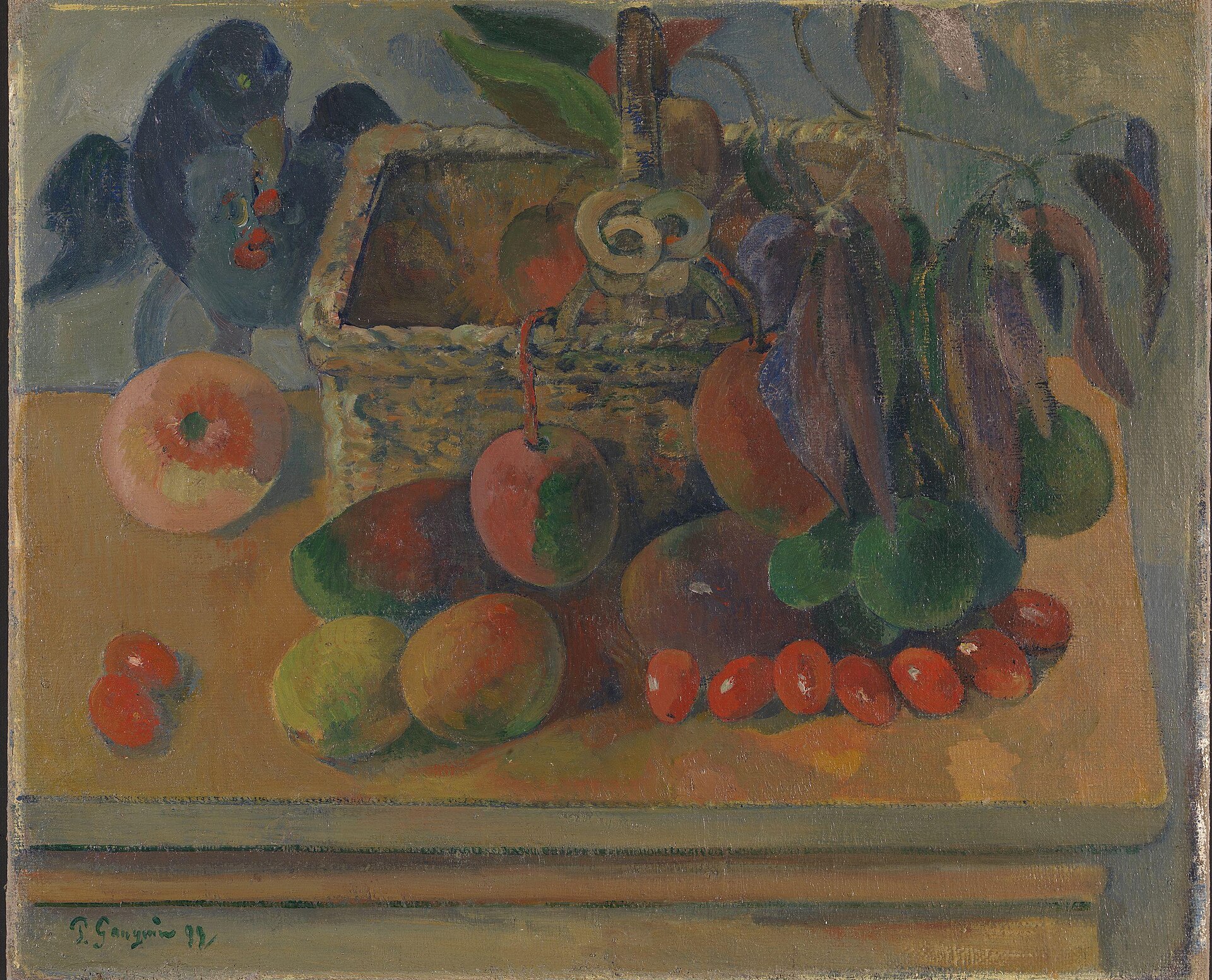
National Museum of Art, Architecture and Design · wikidata.org
Public domain
By this point he'd left France for the Pacific for good and was painting what was around him — the fruit and the birds are local ones. According to Wikipedia he was broke and in bad health through most of those last years, shipping canvases back to dealers in Paris and hoping.
Erisava: The colours have all gone murky and heavy. What do you make of that?
Still Life with Jug and African Bowl by Ernst Ludwig Kirchner, 1912
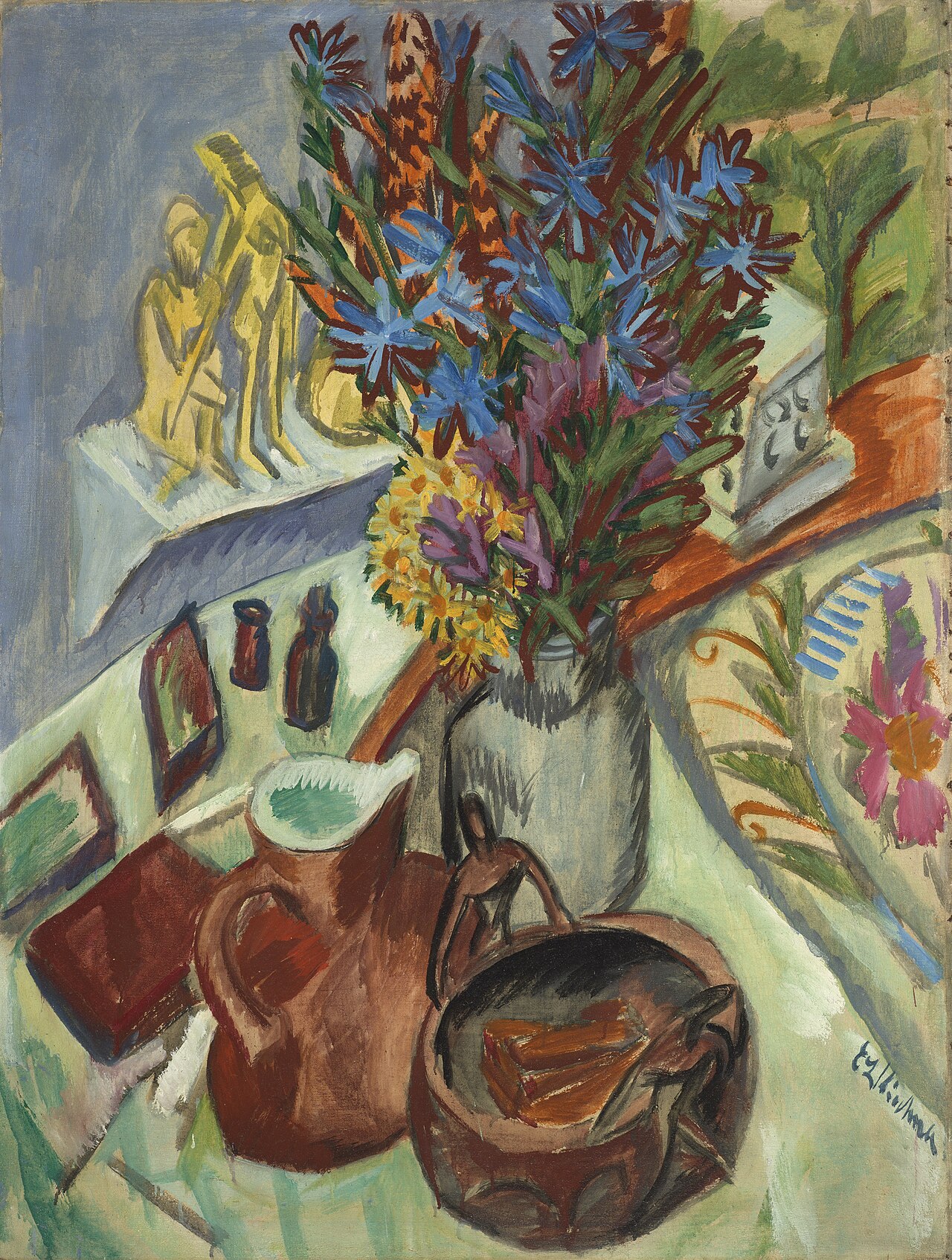
Los Angeles County Museum of Art · wikidata.org
Public domain
He kept African and Pacific carvings around his studio and painted them into scenes like this one — the bowl in the title is one of them.
Erisava: This looks like nobody tidied up before painting it.
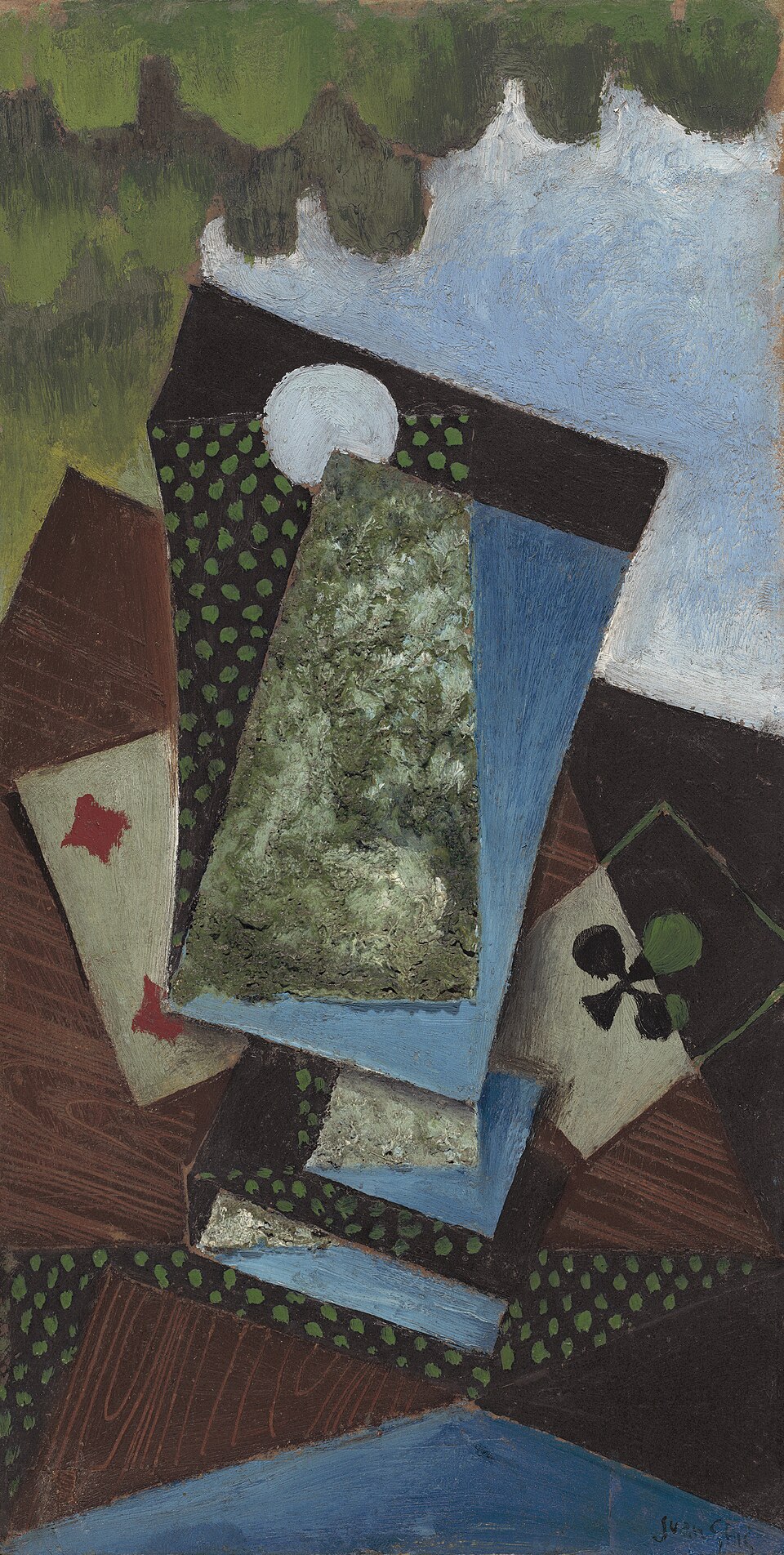
Ace of Clubs and Four of Diamonds by Juan Gris, 1912
National Gallery of Art · wikidata.org
Public domain
According to what I found, this one's from 1912 — right when cubism was at its most fractured, before things flattened out into simpler colour patches later on. Playing cards turn up constantly in paintings from this circle, apparently because a card's already a flat, printed thing pretending to sit on a table, which suited what these painters were after anyway.
Erisava: Could you tell there are playing cards in here without a hint?
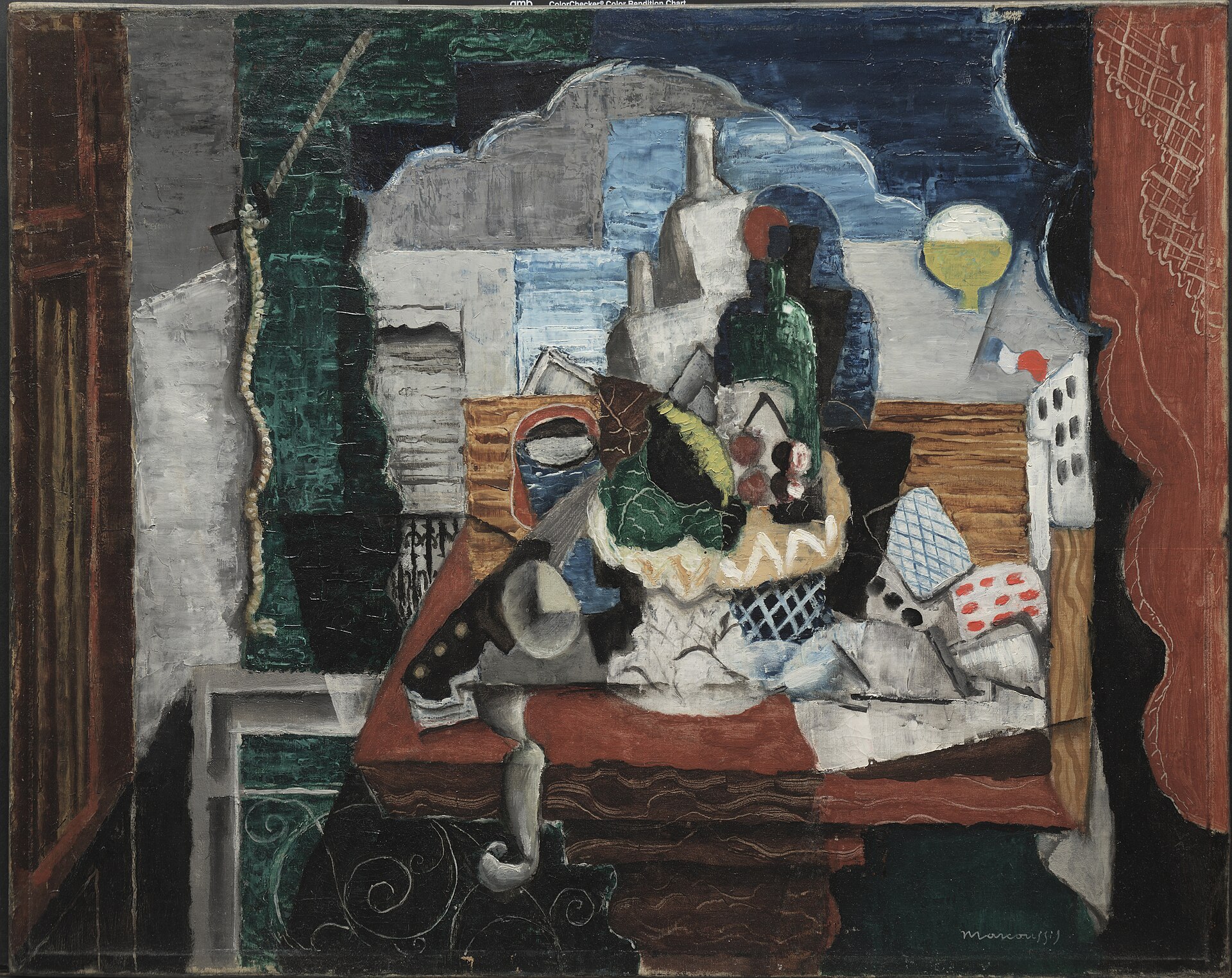
Night Café by Louis Marcoussis, 1923
Cleveland Museum of Art · wikidata.org
Public domain
Apparently he was born in Warsaw and only picked up a French name after a friend talked him into it once he'd settled in Paris and started running with Picasso and Braque — the little balloon and flag tucked in here are supposedly his own nod to the country he adopted.
Erisava: What do you think you're actually looking at here?
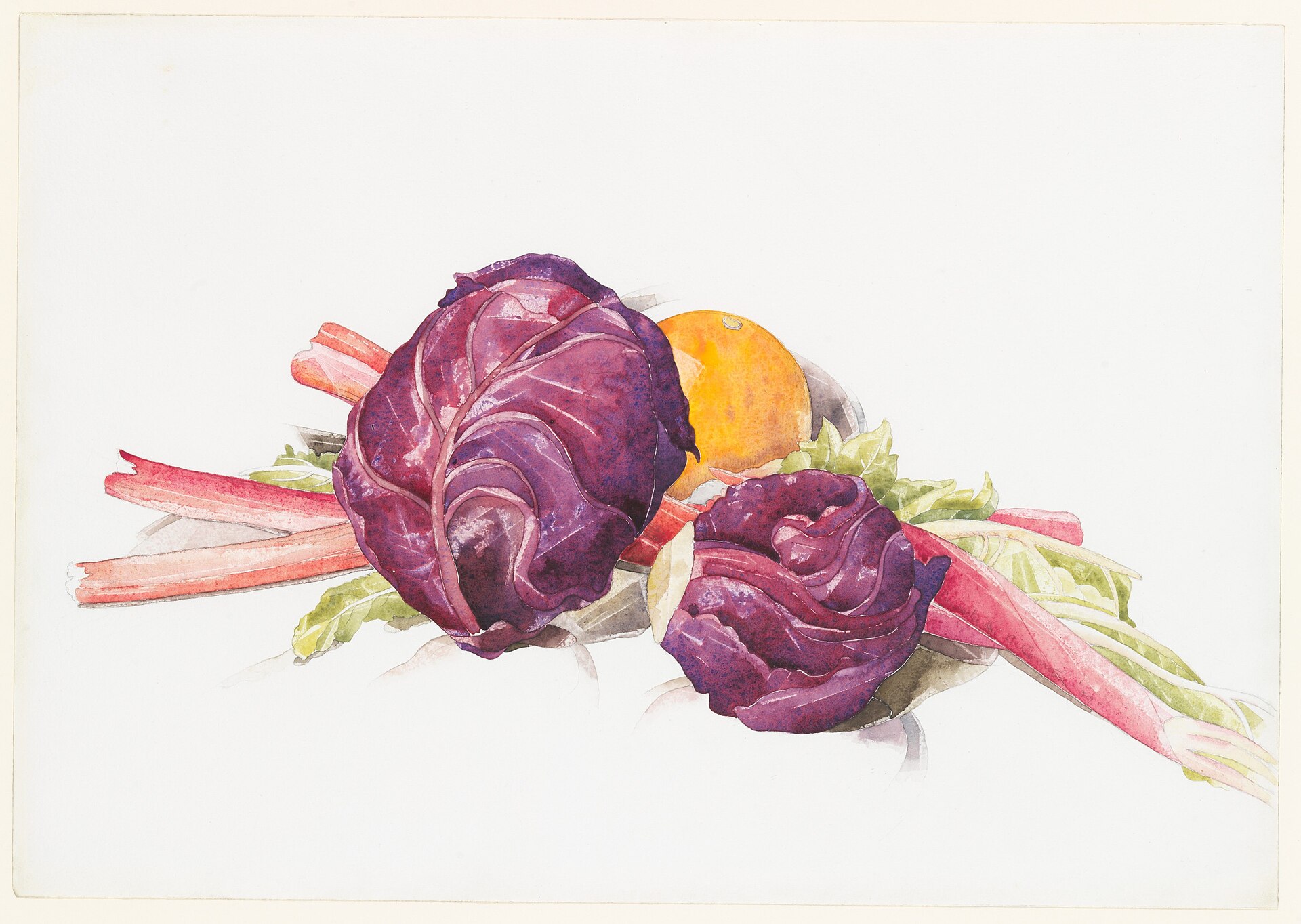
Red Cabbages, Rhubarb and Orange by Charles Demuth, 1929
Metropolitan Museum of Art · wikidata.org
Apparently Demuth spent a lot of his later years on watercolors like this one — fruit and vegetables, painted with the same precision people usually associate with his industrial scenes.
Erisava: This much care went into painting a cabbage. Why?
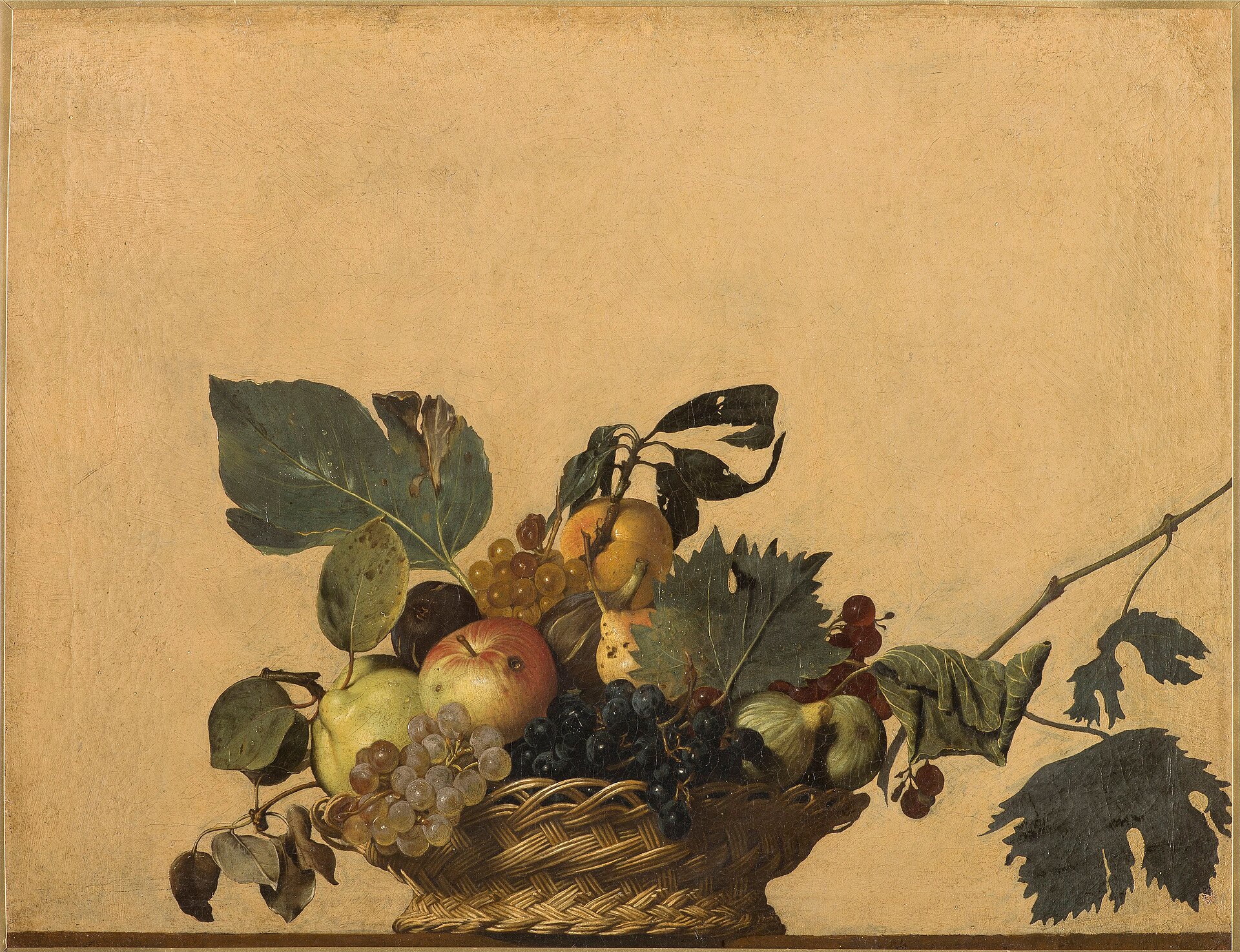
Basket of Fruit by Caravaggio, 1600
Pinacoteca Ambrosiana · wikidata.org
Public domain
Putting fruit on its own, with no story around it, was apparently a fairly new thing to do — fruit usually turned up in the corner of a picture about something else. People also point out that the leaves are blotchy and one apple has a wormhole; nobody seems sure whether that was deliberate or just what happened to be on the table that day.
Erisava: Would anyone care about a bowl of fruit if a different name were on it?
Still Life by Paul Cézanne
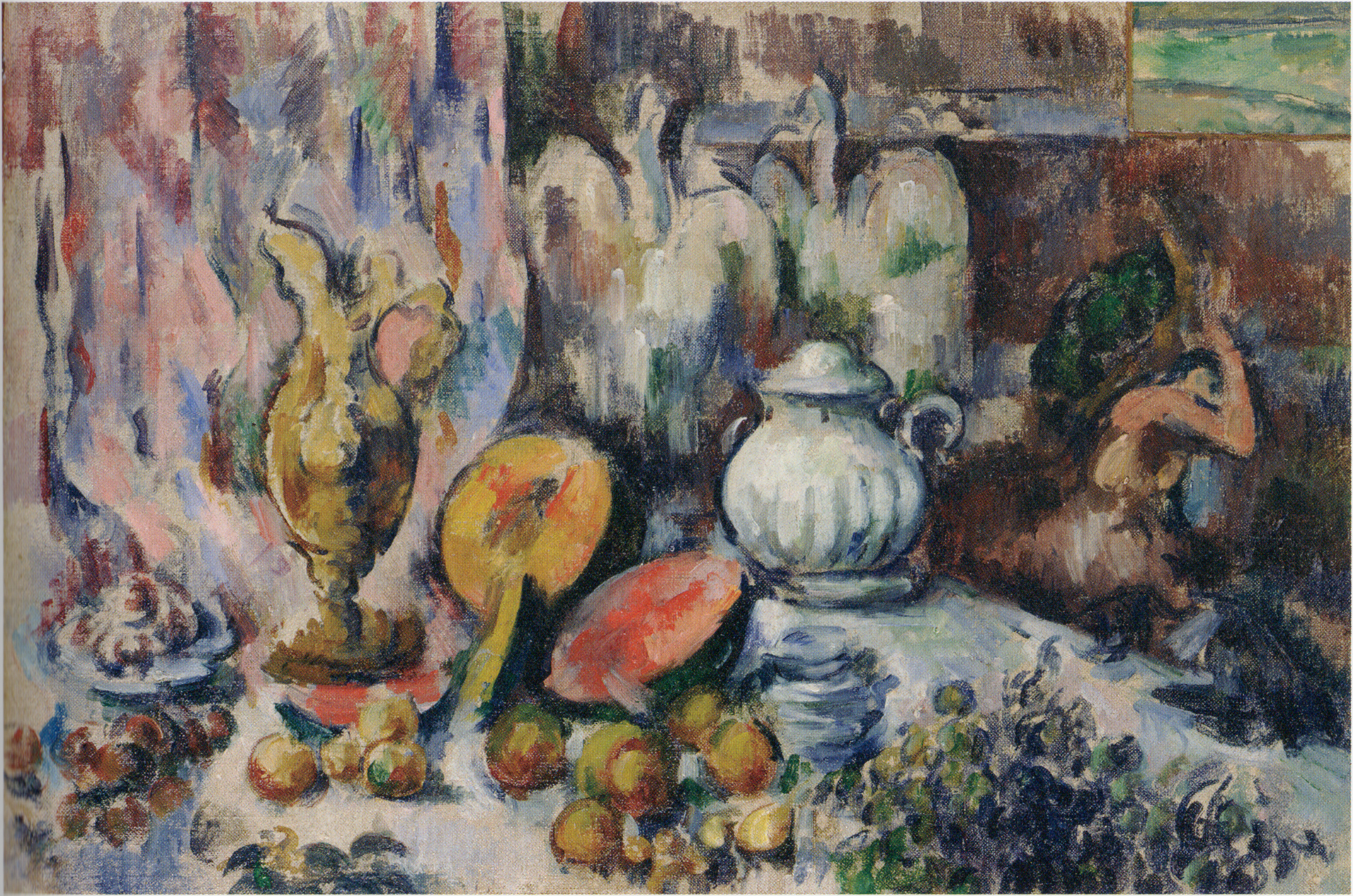
Pola Museum of Art · wikidata.org
Public domain
The same jugs, cloths and bowls turn up in dozens of these — a table set up indoors and gone at for weeks on end. He worked so slowly, it's said, that the fruit went off before he was done, so he took to using wax ones.
Erisava: There's so much crammed on this table that none of it looks like food anymore.
Lights of Other Days by John F. Peto, 1906
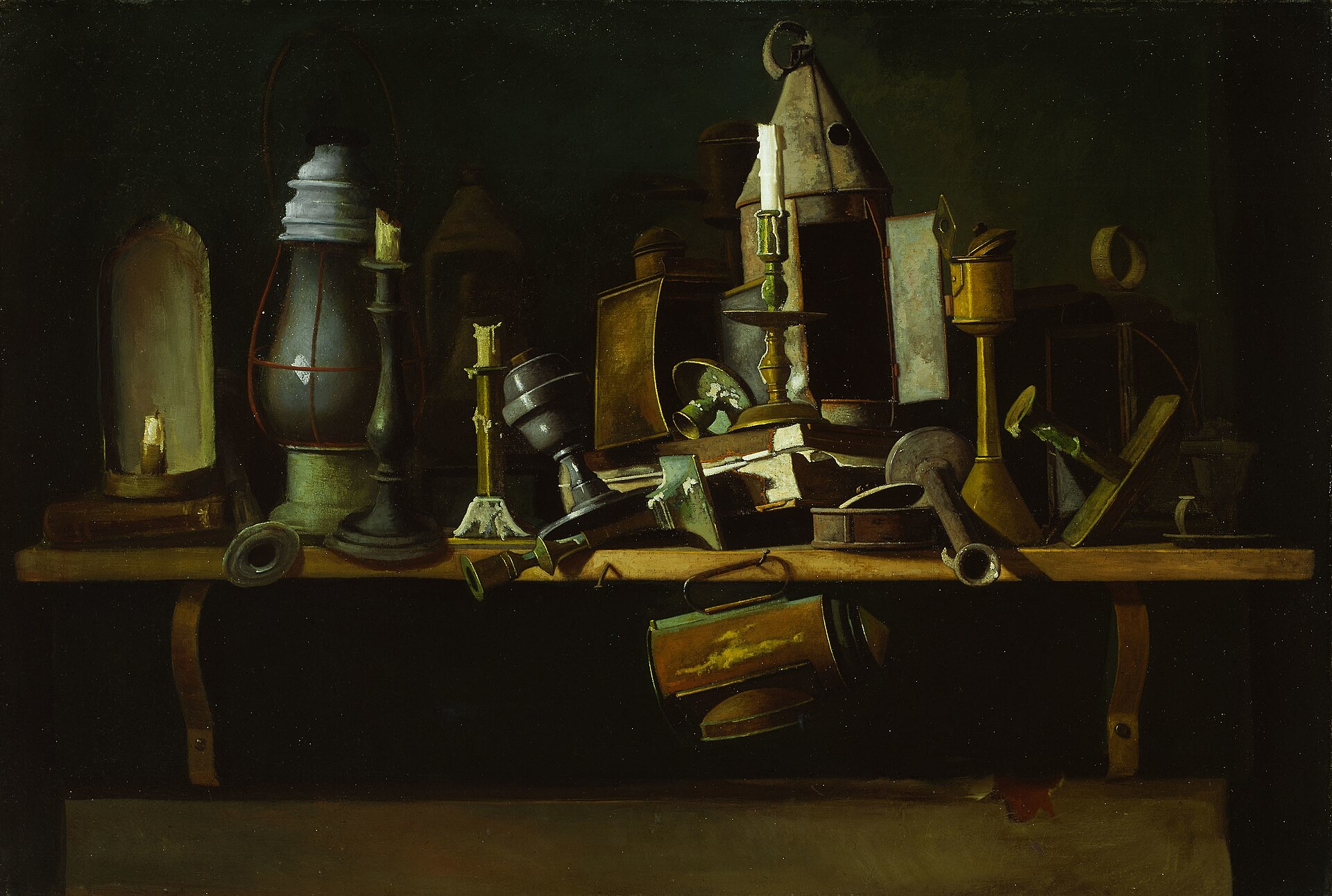
Art Institute of Chicago · wikidata.org
Public domain
According to the museum's blurb, he specialised in painting things so real they fool your eye — burnt-down candles, battered lamps, stuff on its way to the bin. They say he stopped showing in galleries by 1890 and just painted for neighbours near his New Jersey home.
Erisava: Somebody looked at a shelf of worn-out junk and decided it deserved a painting.
Vase of Flowers (Pink Background) by Odilon Redon, 1906
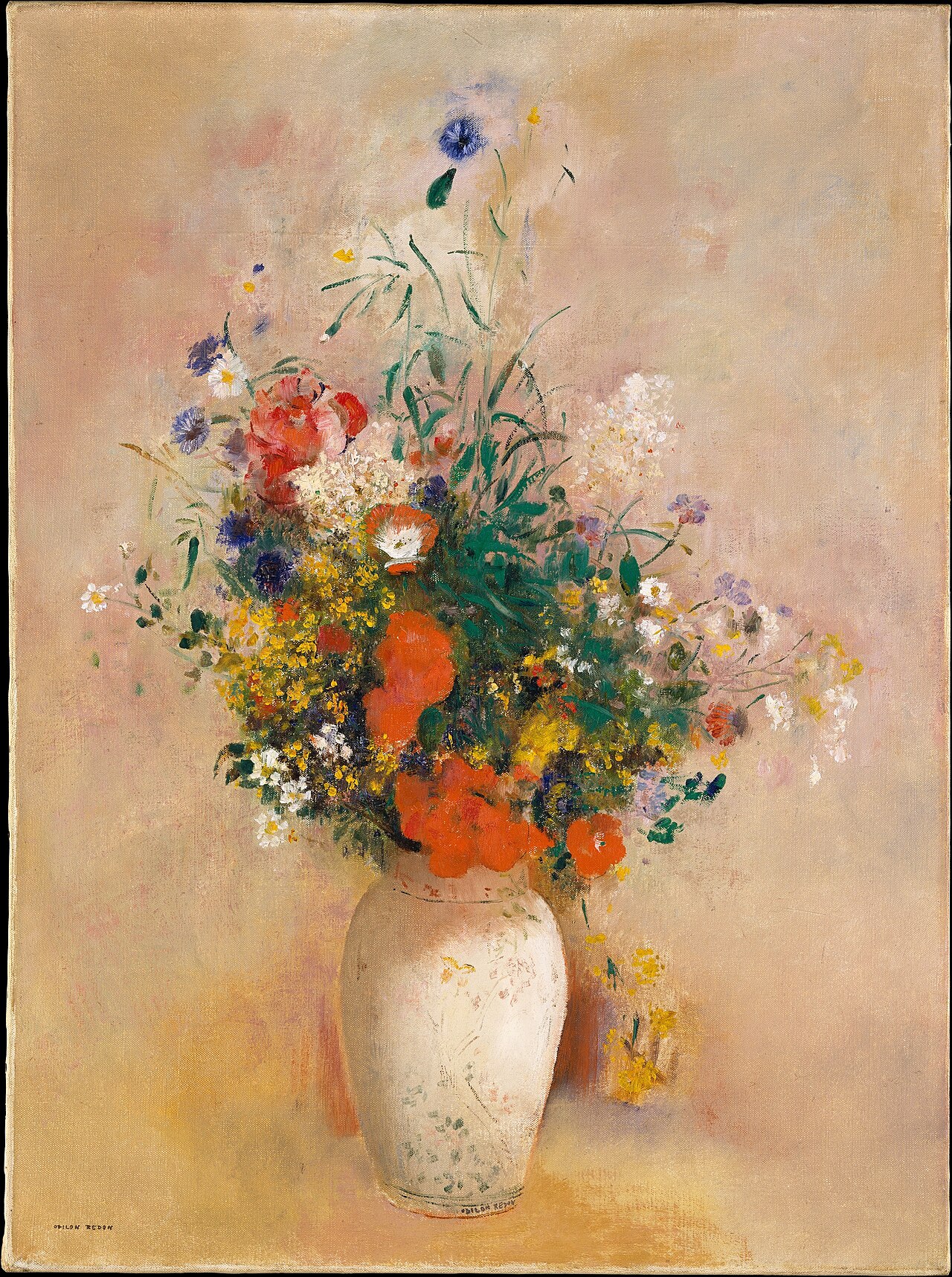
Metropolitan Museum of Art · wikidata.org
For decades he mostly made dark, unsettling charcoal prints — this bright, ordinary bouquet came from a total swing late in his career.
Erisava: Would you look twice at this if it weren't in a museum?
Still Life: Vase with Fifteen Sunflowers by Vincent van Gogh, 1889
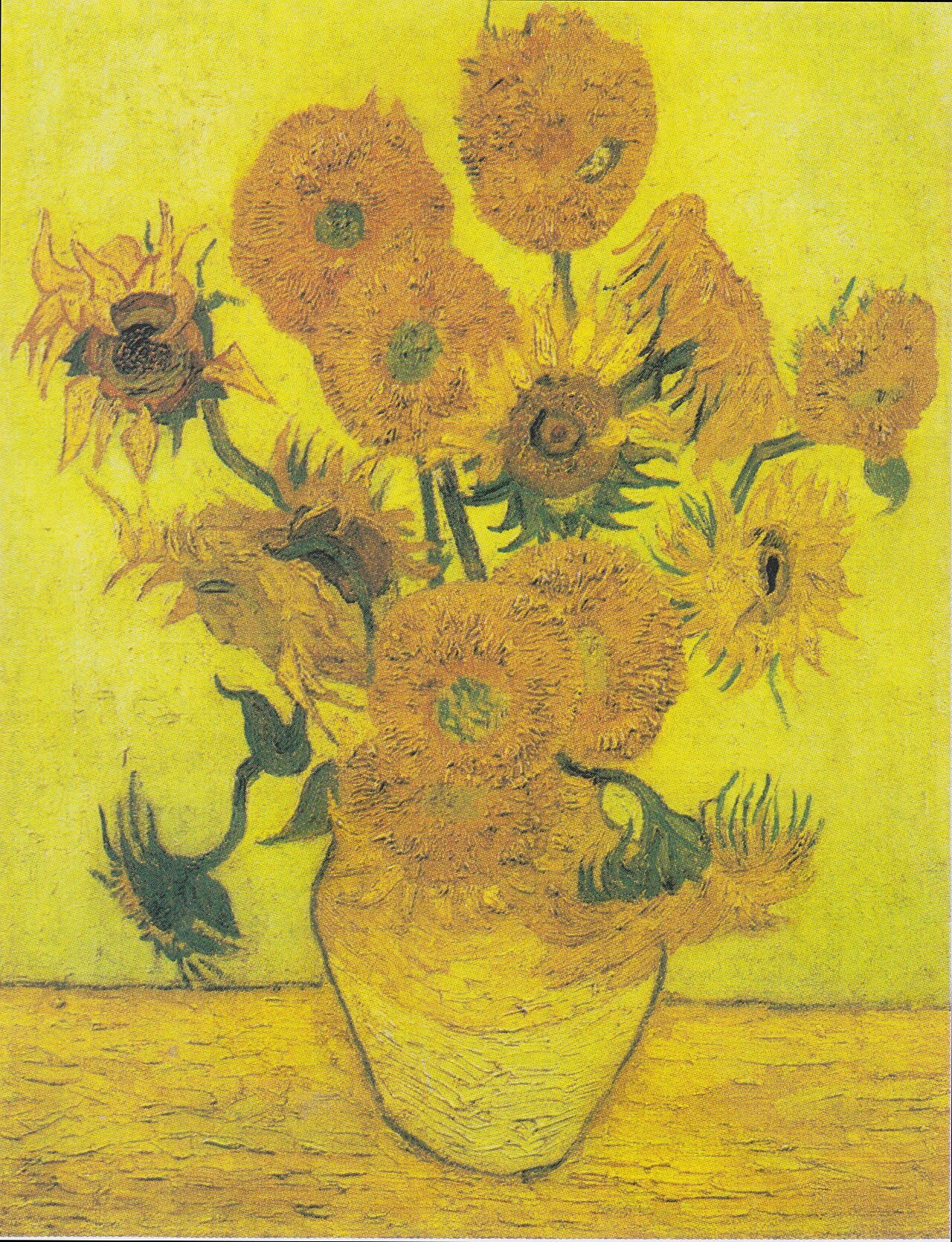
Sompo Museum of Art · wikidata.org
Public domain
This one apparently sold at a record-breaking auction price back in the 1980s, which is part of why it ended up in a Tokyo collection instead of a European one.
Erisava: Why does all this yellow start to feel like too much?
Flowers in a Handled Vase by Edward Middleton Manigault, 1920
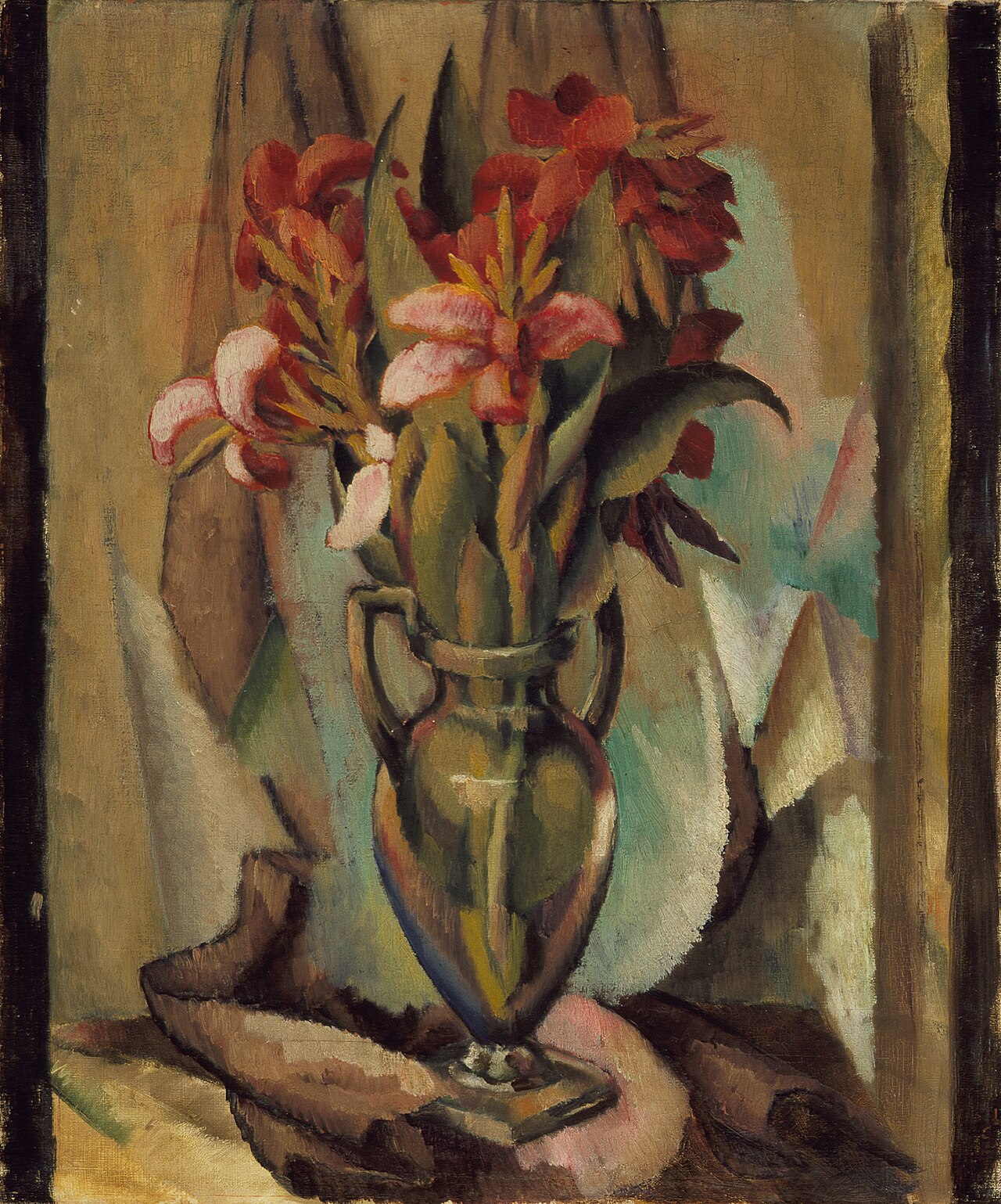
Los Angeles County Museum of Art · wikidata.org
Public domain
According to Wikipedia he starved himself on purpose, trying to see colours nobody else could see, and it killed him at thirty-five. That's presented as fact, not legend, which makes a vase of flowers feel like higher stakes than it should.
Erisava: These flowers look carved out of wood, and I kind of prefer it.
The Glass of Beer by Juan Gris, 1914
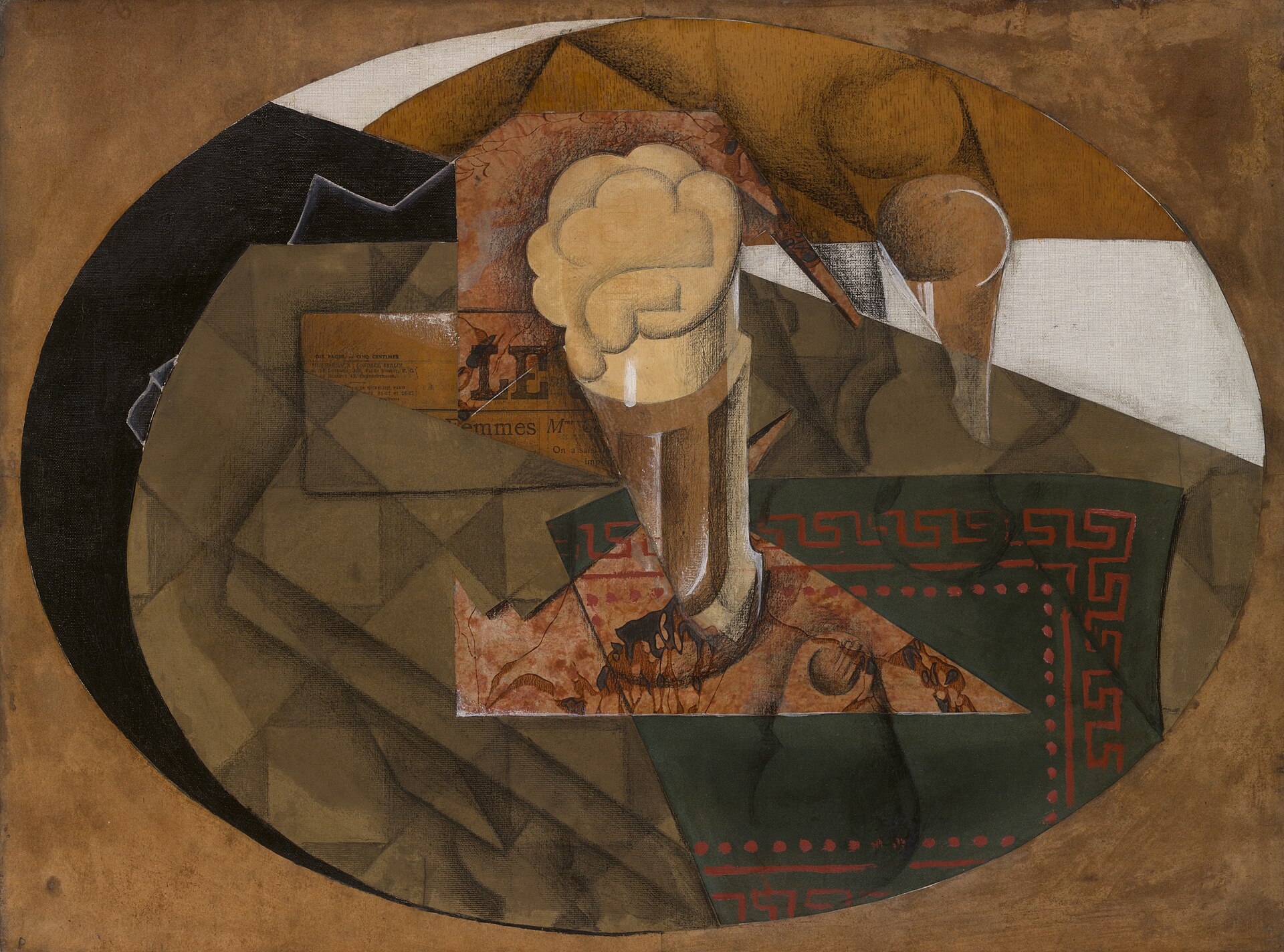
Art Institute of Chicago · wikidata.org
Public domain
They say Gris started gluing in real newspaper scraps around 1913, following what Picasso and Braque had already been doing — this one keeps a strip of actual print sitting right next to the painted glass. The oval shape wasn't the usual choice either; most still lifes from this crowd were square or rectangular.
Erisava: This looks more like a scrapbook page than a painting.
Sunflowers by Vincent van Gogh, 1889
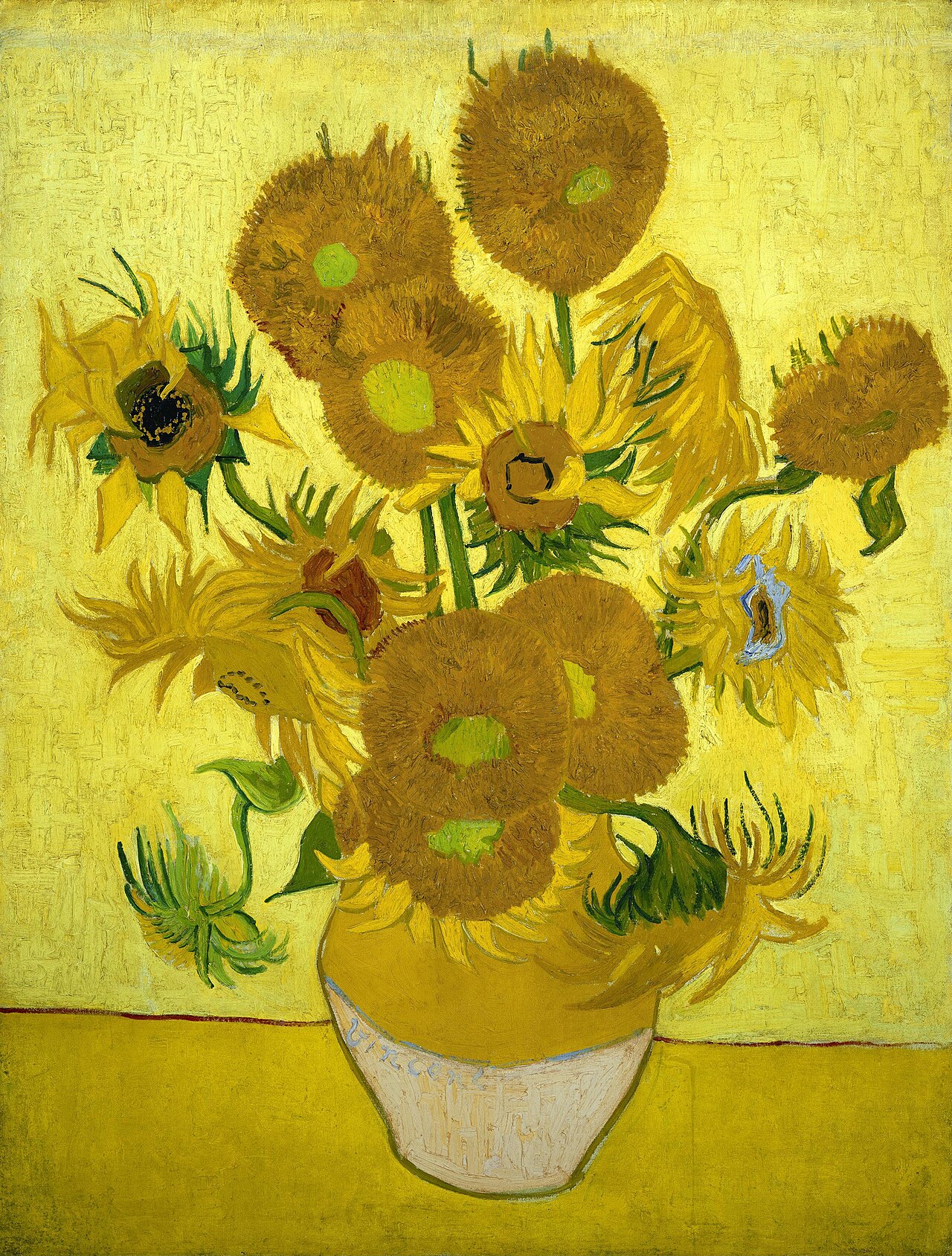
Van Gogh Museum · wikidata.org
Public domain
This one, apparently, was one of three repeats he made a few months after the originals — meant as a gift for Gauguin, though it never actually reached him.
Erisava: This is yellow on yellow and I can't tell if that's a choice or he ran out of paint.
Still Life with a Guitar by Juan Gris, 1913
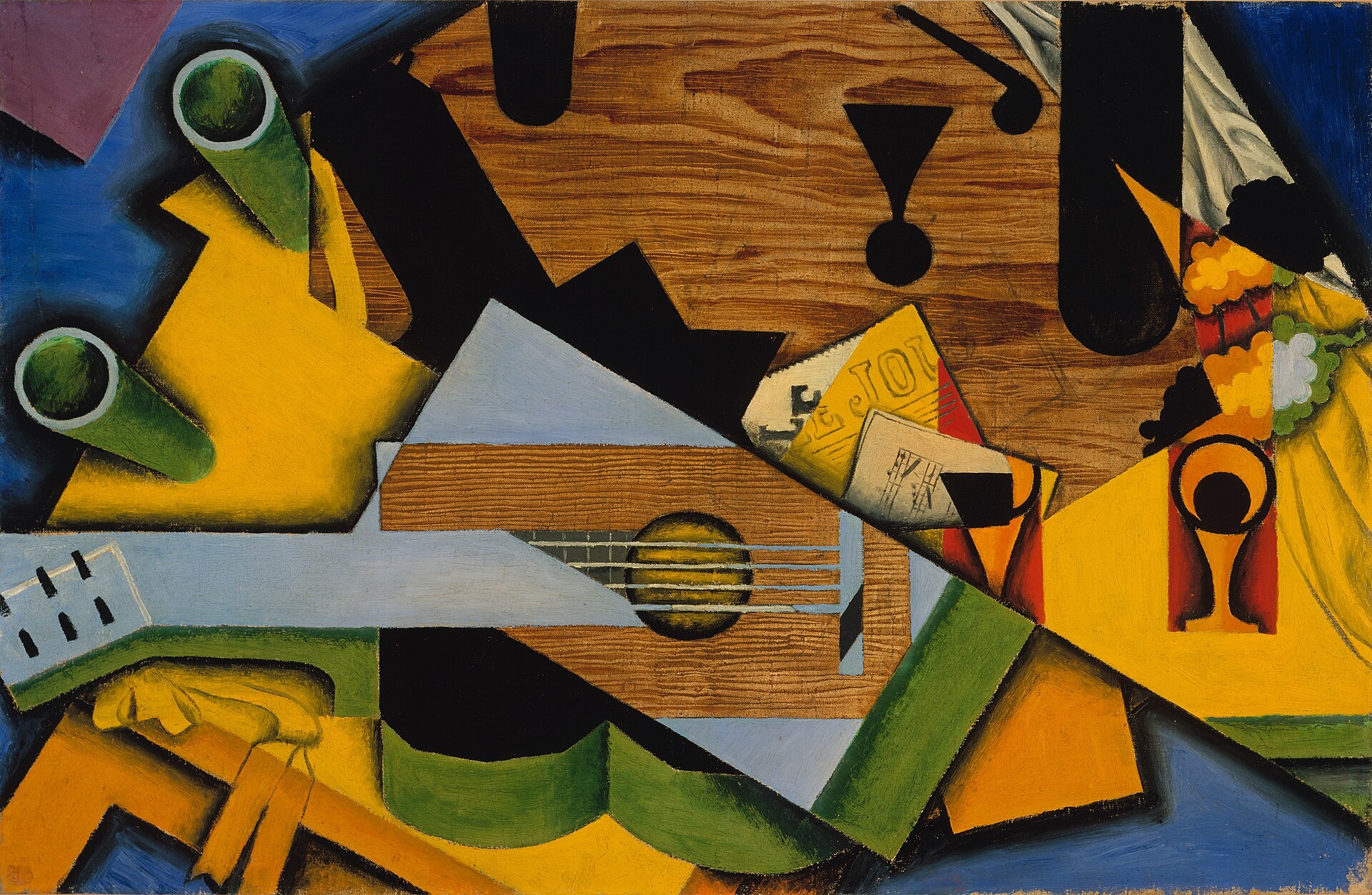
Metropolitan Museum of Art · wikidata.org
Public domain
Apparently the wood-grain pattern here is painted, not real wood or glued paper — Gris copying the collage tricks other Cubists were doing with actual materials, just with a brush. The guitar and the newspaper masthead show up together a lot in this circle's still lifes.
Erisava: Is there actually a guitar hiding in this mess, or not?