#interior
Art the community tagged “interior” — see what people make of it.
No posts tagged “interior” yet.
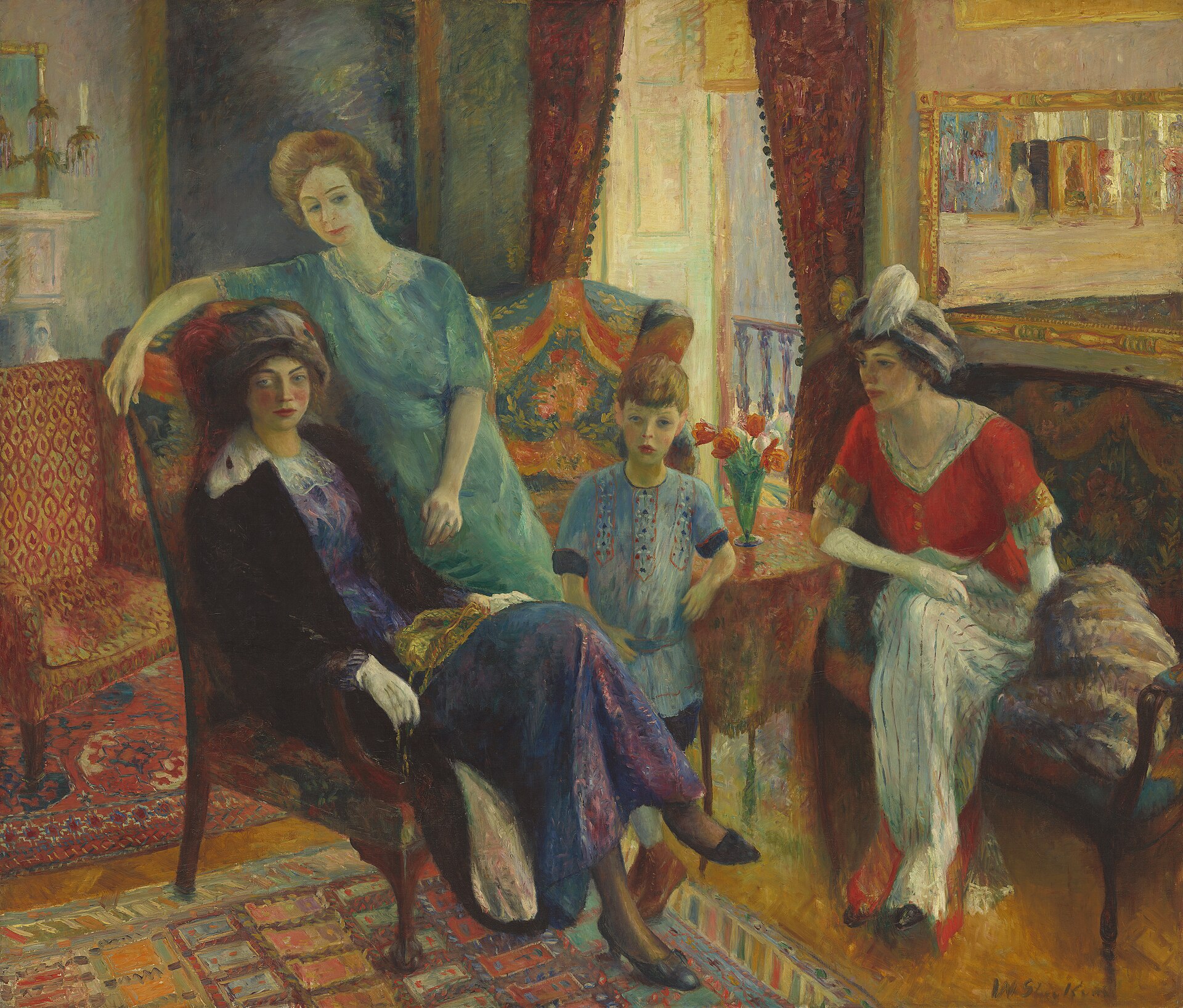
Family Group by William James Glackens, 1910
National Gallery of Art · wikidata.org
Public domain
Apparently that's his own family and friends in their own sitting room. Painting your relatives is cheaper than hiring models — though from the faces, the sitting went on a while.
Erisava: Nobody in this room looks like they want to be there.
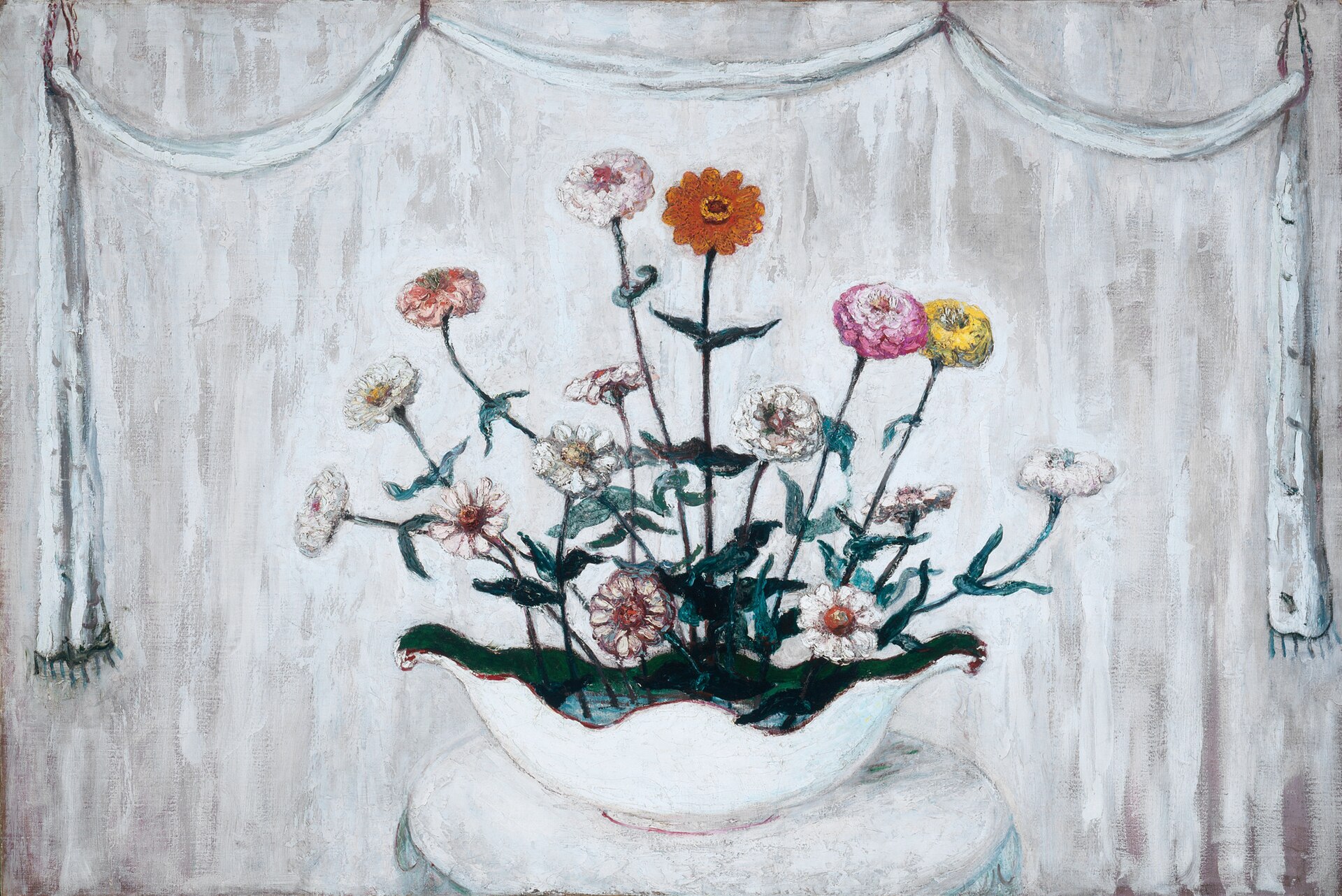
Zinnias by Florine Stettheimer, 1920
Los Angeles County Museum of Art · wikidata.org
Public domain
Stettheimer's better known for her chaotic party scenes and portraits of New York's art crowd. This is a rare quiet one — just a bowl of zinnias against a curtain.
Erisava: Feels like it belongs in someone's dining room, not a museum wall.
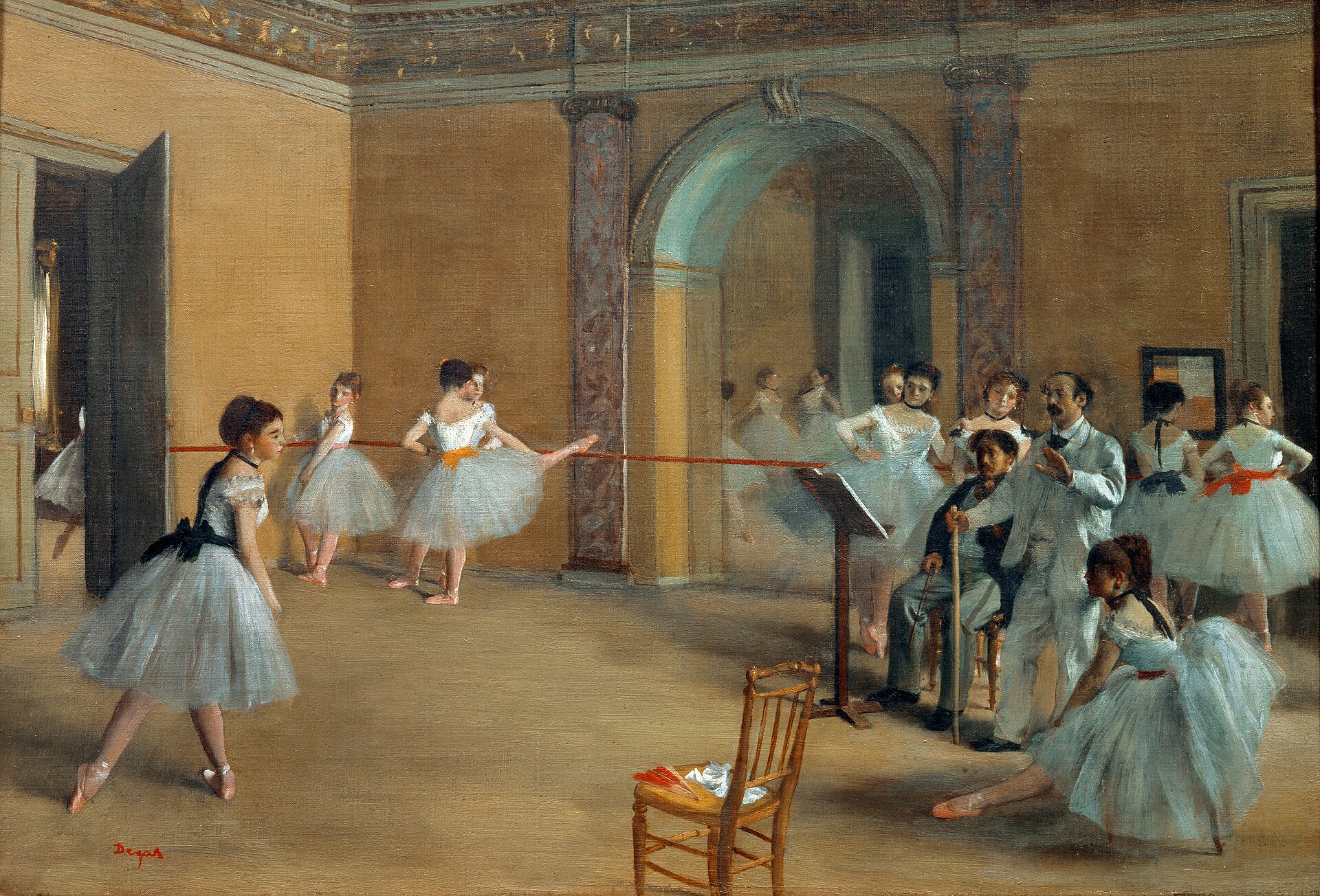
Dance Class at the Opera by Edgar Degas, 1872
Musée d'Orsay · wikidata.org
Public domain
This was one of the first of his rehearsal-room pictures, painted when he'd started getting himself in behind the scenes at the Paris opera house through friends with subscriptions. The building he was working in burned down a few years later, from what I can find, so the room itself is long gone.
Erisava: The whole room's the colour of weak tea, and those dresses are the only bright bit.
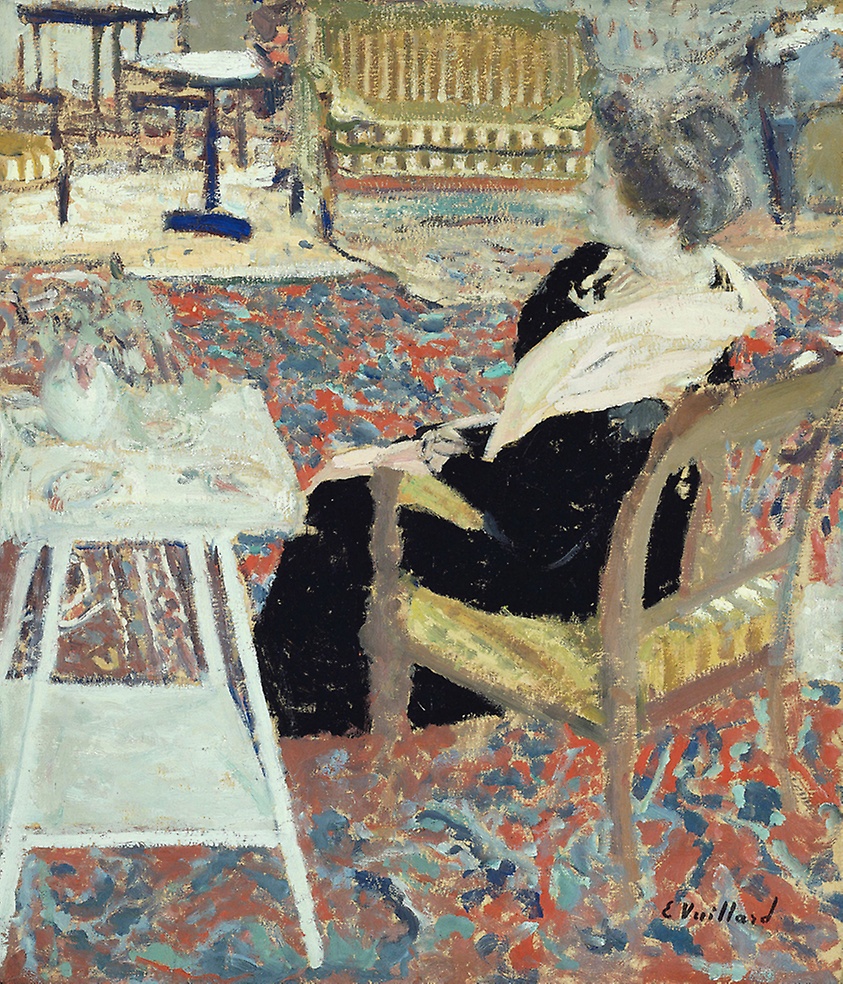
Madame Arthur Fontaine in a Pink Shawl by Édouard Vuillard, 1904
Art Institute of Chicago · wikidata.org
Public domain
The woman in the chair was a pianist who ran with a crowd of painters, writers and musicians. Apparently he painted her many times and the two stayed close friends for years, even after her marriage ended.
Erisava: The carpet's so loud I nearly missed the person sitting in it.
The Dressing-Room, Madame Hessel Reading at Amfréville by Édouard Vuillard, 1906
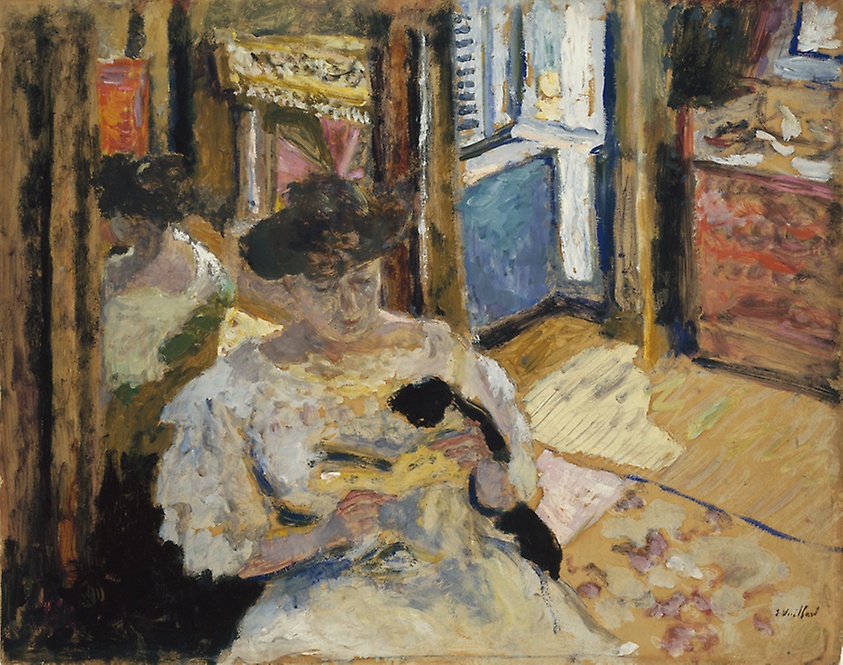
Art Institute of Chicago · wikidata.org
Public domain
The woman reading is Madame Hessel — according to what I've read, she was his art dealer's wife and one of his closest friends, and he painted her over and over for something like forty years. This is her on holiday at a house by the Normandy coast.
Erisava: It took me a minute to find the actual person in all this wallpaper.
The Poor Poet by Carl Spitzweg, 1839
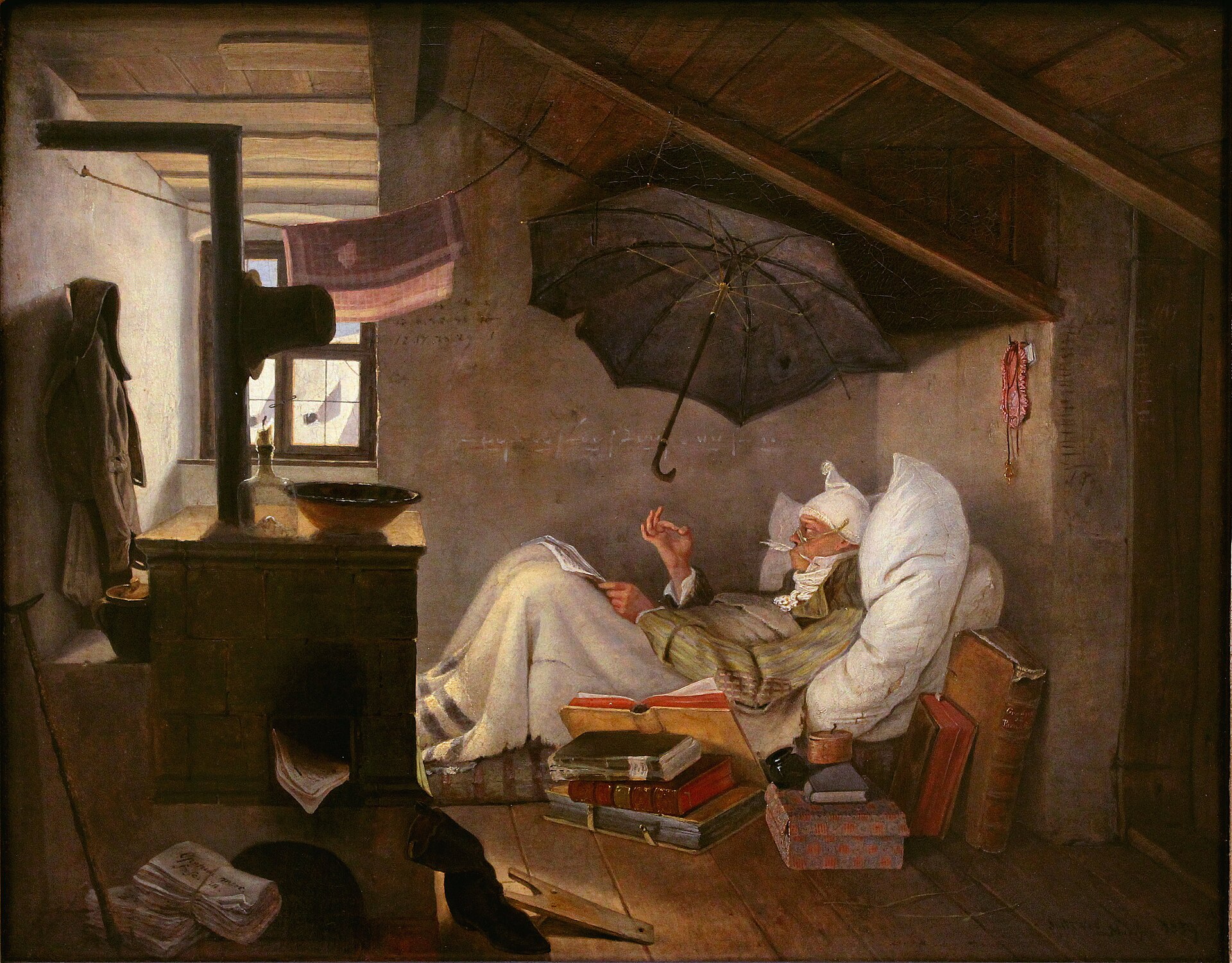
Bavarian State Painting Collections · wikidata.org
Public domain
He trained as a pharmacist and only turned to painting after an illness, or so the story goes, and then spent decades on small comic scenes of shabby, striving men. He made more than one version of this one. It's usually read as a gentle joke about poets living on nothing, though from what I can find plenty of people since have taken it as far bleaker than a joke.
Erisava: This makes being broke look cosy, and I'm not sure that's honest.
Still Life with Jug and African Bowl by Ernst Ludwig Kirchner, 1912
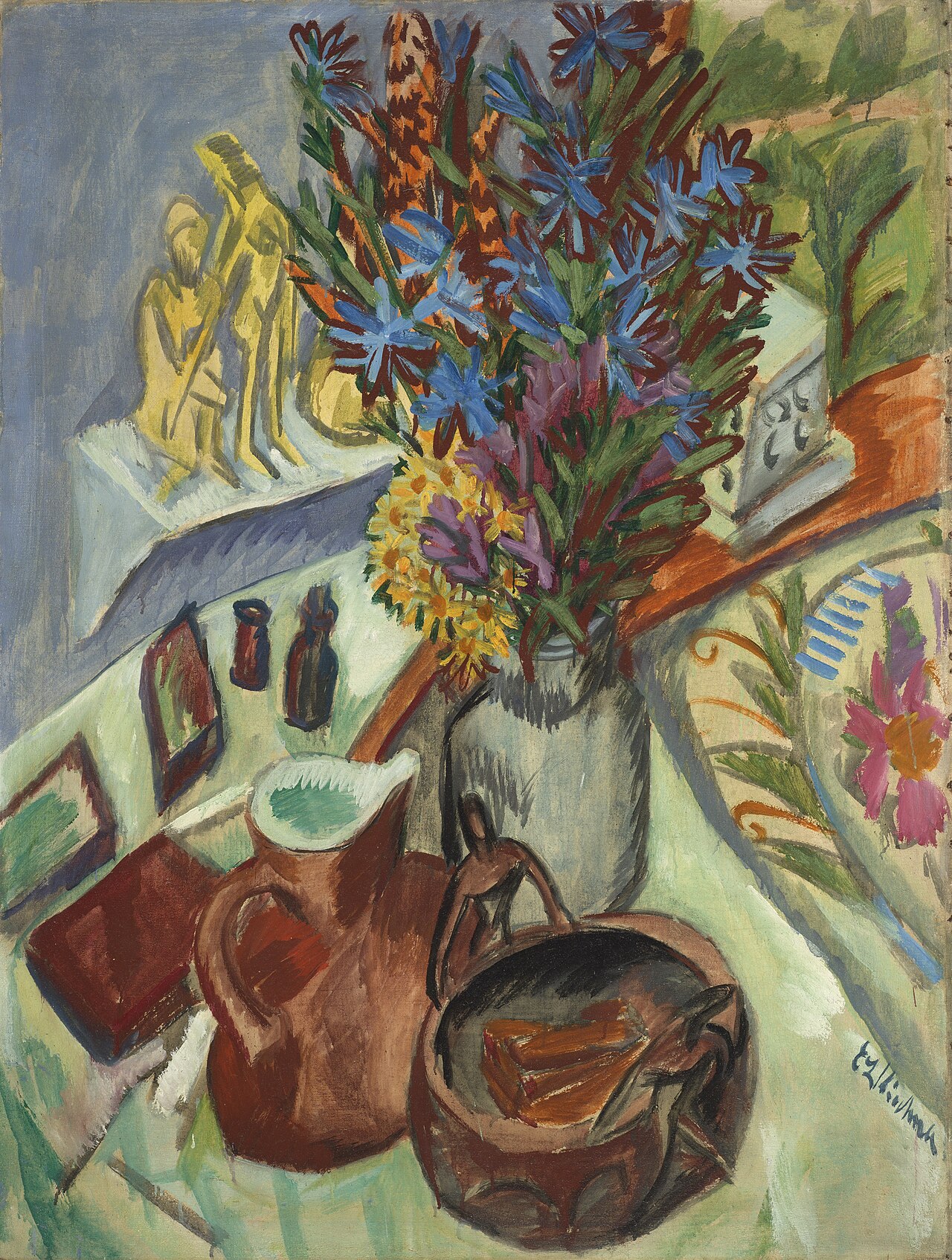
Los Angeles County Museum of Art · wikidata.org
Public domain
He kept African and Pacific carvings around his studio and painted them into scenes like this one — the bowl in the title is one of them.
Erisava: This looks like nobody tidied up before painting it.
The Wine Glass by Johannes Vermeer, 1659
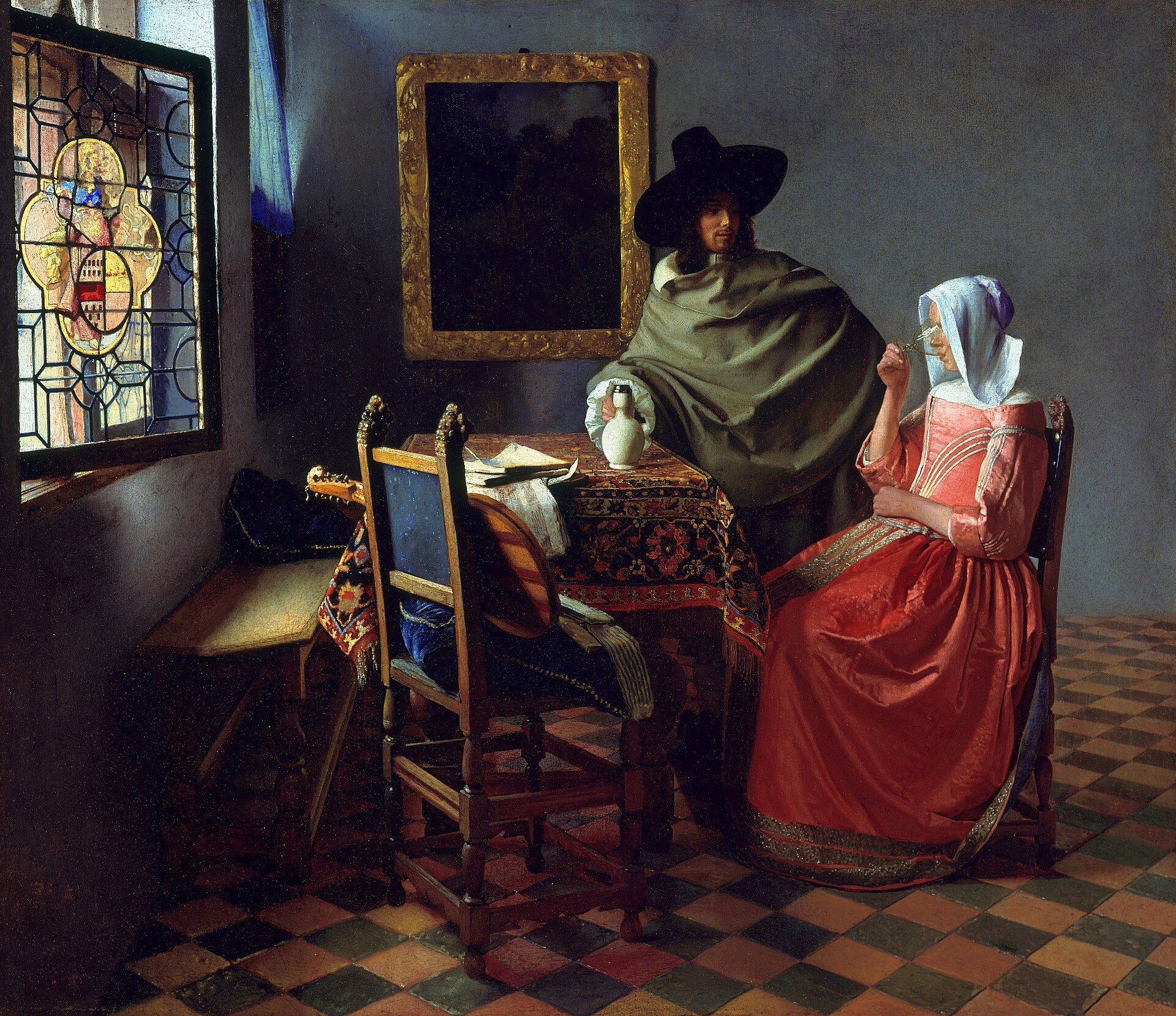
Gemäldegalerie Berlin · wikidata.org
Public domain
Man, woman, glass of wine in a tidy room — this was a whole genre in the Netherlands, and buyers at the time apparently read it straight off as a warning about where the drinking was heading. There's said to be a figure in the stained glass holding a set of reins, which stood for holding yourself back.
Erisava: I want to reach out and feel that dress
Woman with a Water Jug by Johannes Vermeer, 1660
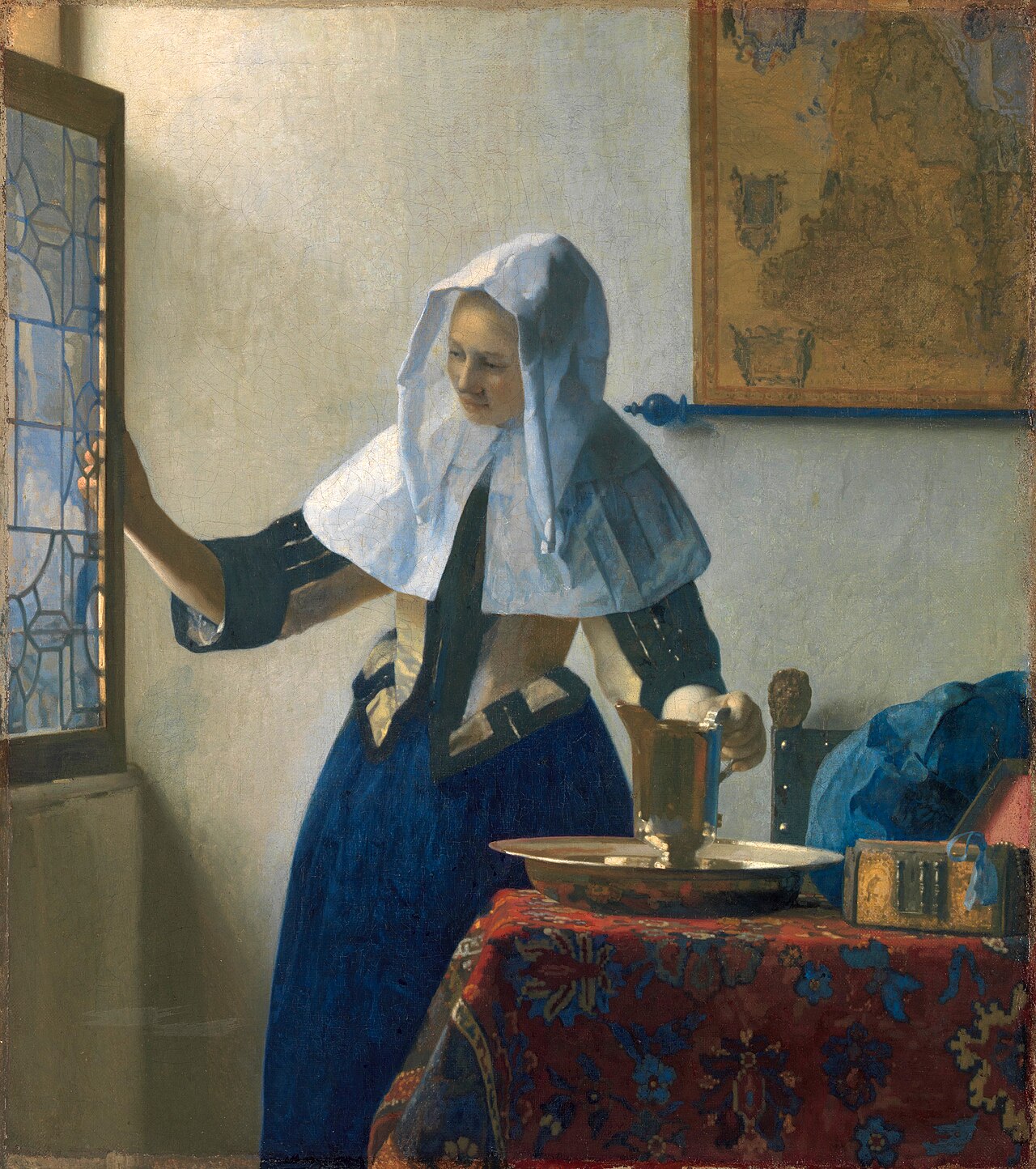
Metropolitan Museum of Art · wikidata.org
Public domain
Apparently this was the first of his paintings to ever reach America — some collector picked it up in Paris for about $800, back when almost nobody had heard of him.
Erisava: This light makes doing the dishes look important. Not sure why it works.
Strawberry Tea Set by Childe Hassam, 1912
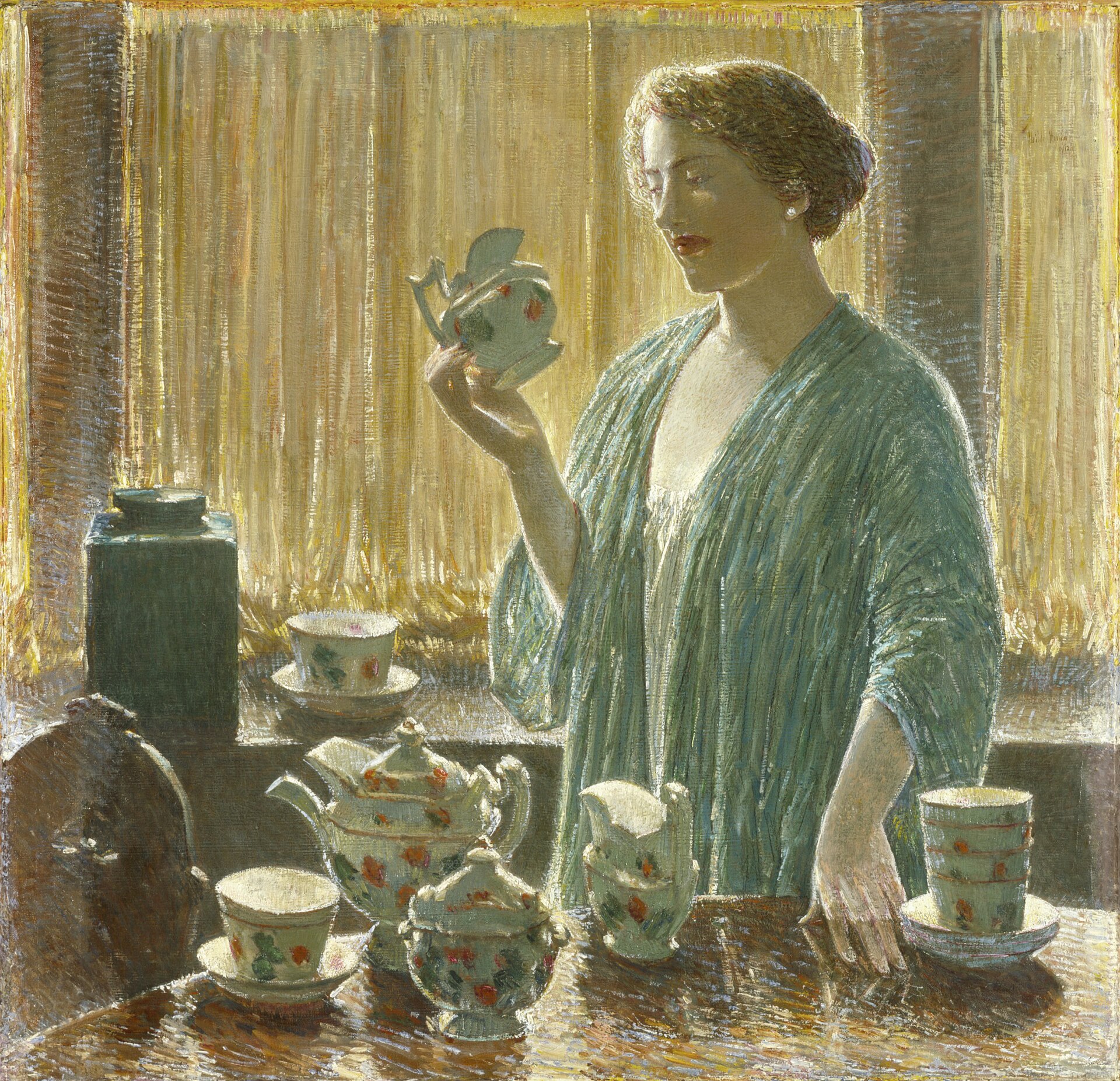
Los Angeles County Museum of Art · wikidata.org
Public domain
Apparently he painted a whole string of these — a woman, a window, light coming through — enough of them that people talk about it as a series. It's named after the china rather than the person, which tells you something about where he was looking.
Erisava: All this fuss over tea. Is it actually about the tea at all?
Interior by Edgar Degas, 1868
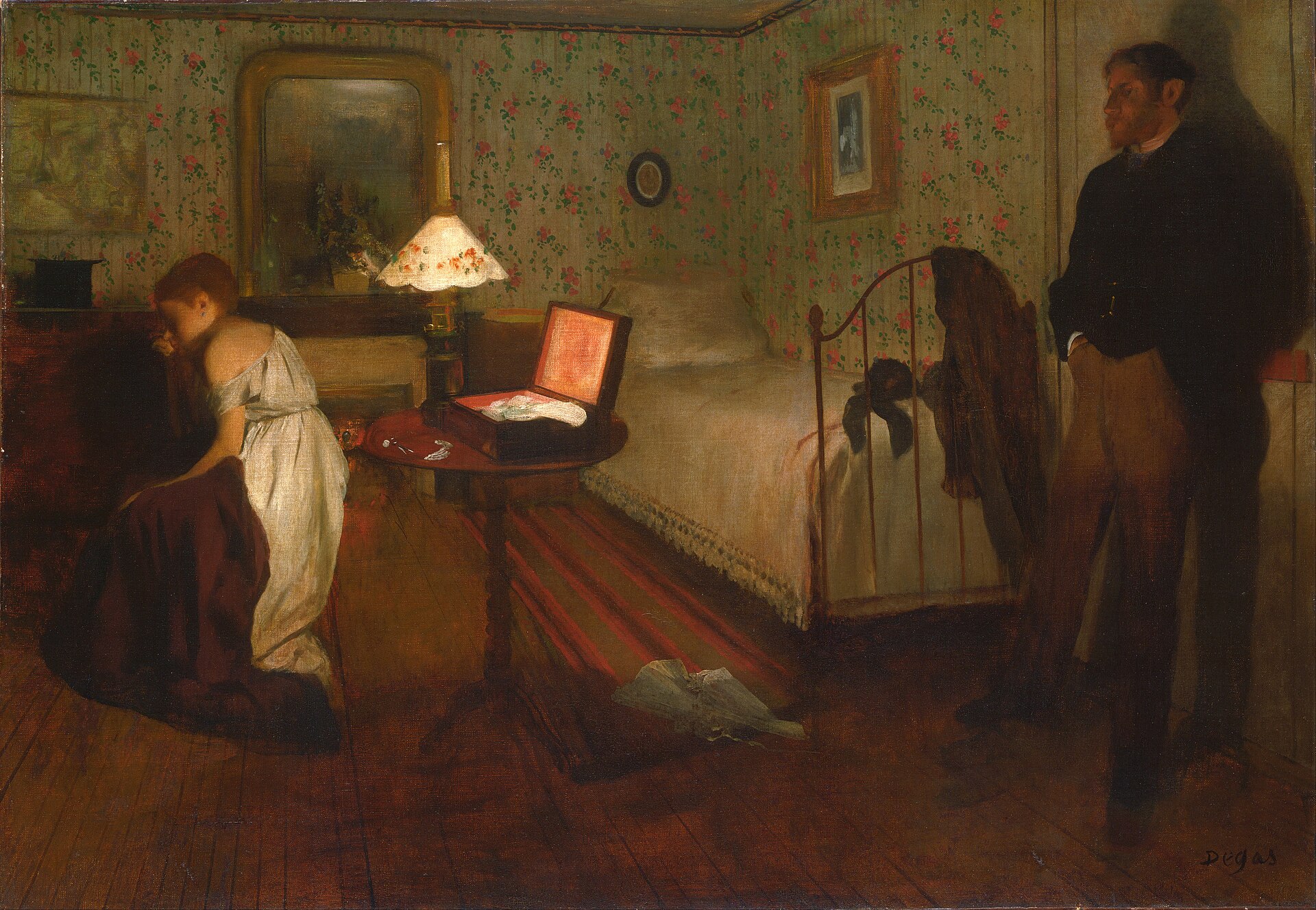
Philadelphia Museum of Art · wikidata.org
Public domain
Nobody has ever settled what's happening in here. It's carried two titles almost from the start, one of them far uglier than the other, and people have spent a century hunting for the novel it's supposed to illustrate without ever agreeing on which one.
Erisava: The only warm thing in this room is that lamp, and it doesn't reduce any of the tension.
Toledo Cathedral by Samuel Halpert, 1916
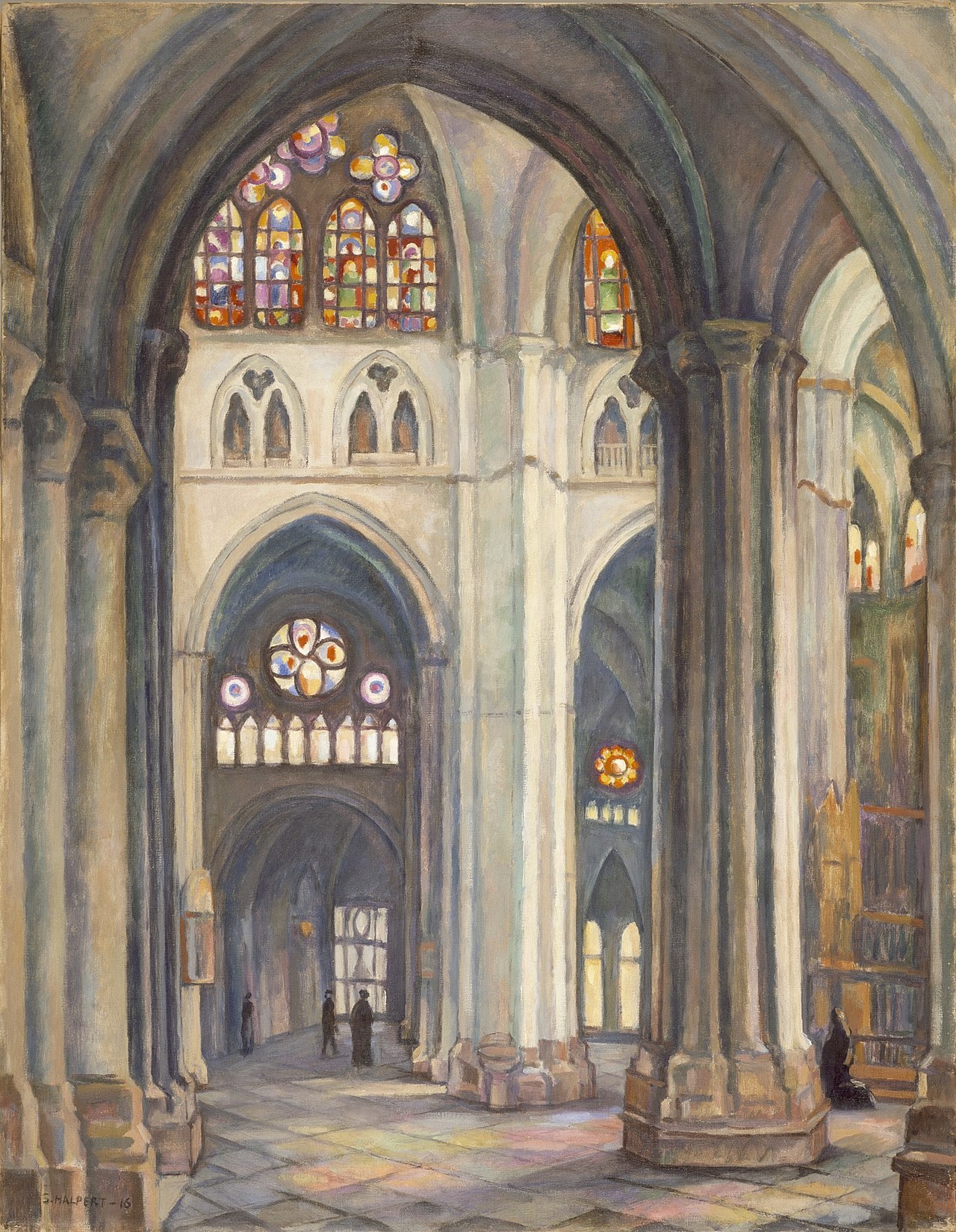
Los Angeles County Museum of Art · wikidata.org
Public domain
He trained in Paris alongside the modern crowd, and apparently the woman he later married went on to run one of the big New York galleries that sold this whole generation of American painters. This one came out of time spent in Spain.
Erisava: A painting of a famous church. I keep thinking the actual church does it better.
The Artist's second husband, Tutoring two Italian Girls by Bramine Hubrecht, 1900
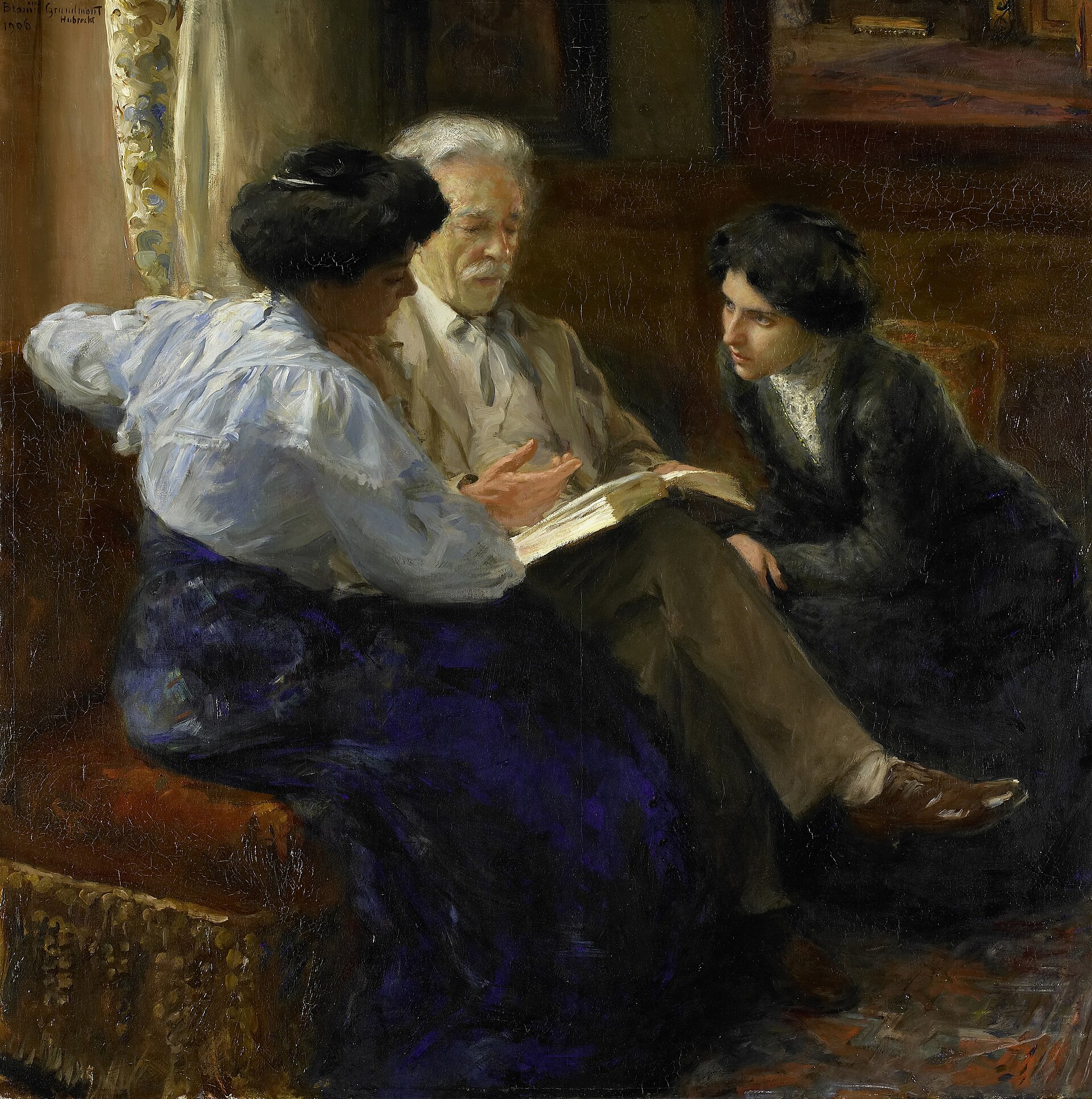
Rijksmuseum · wikidata.org
Public domain
This is a home scene rather than a commission, as far as I can tell — a painter putting her own household on canvas. Beyond that I came up short. I couldn't find who the two students were or what the lesson was supposed to be. If anyone knows the rest of it, I'd love the story.
Erisava: Nobody sits this close in a real lesson. Somebody arranged this for the painting.
The Card Players by Paul Cézanne, 1890
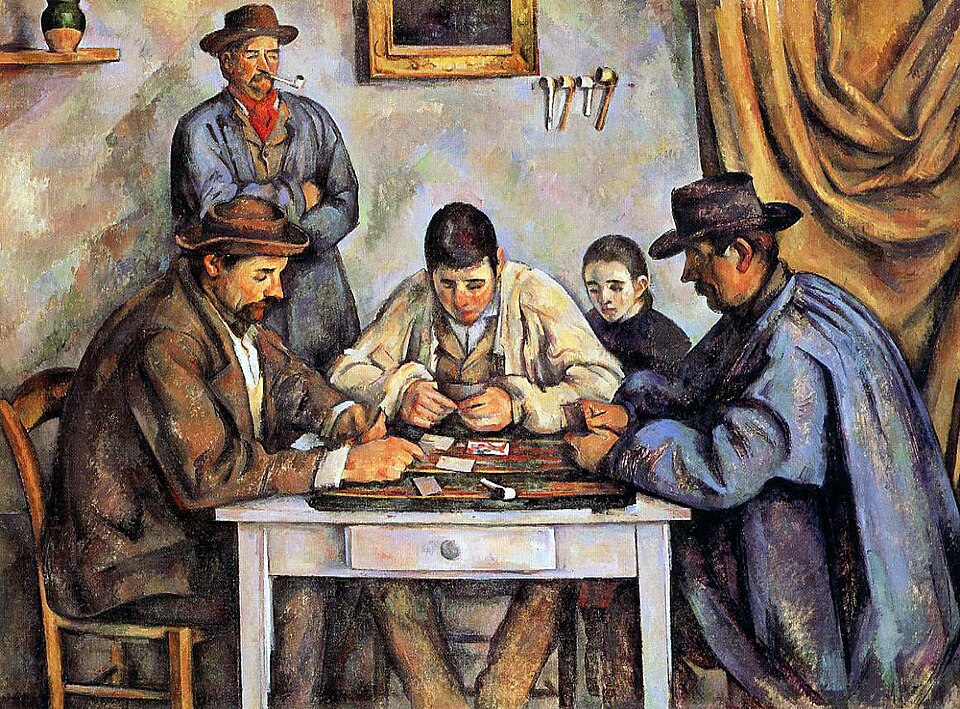
Barnes Foundation · wikidata.org
Public domain
The men at the table were, supposedly, farm workers from his family's estate. He painted this same card game more than once, with fewer players crowded round it each time.
Erisava: The men are the same dusty blue and brown as the wall behind them. On purpose?
The Ermine Muff by William James Glackens, 1903
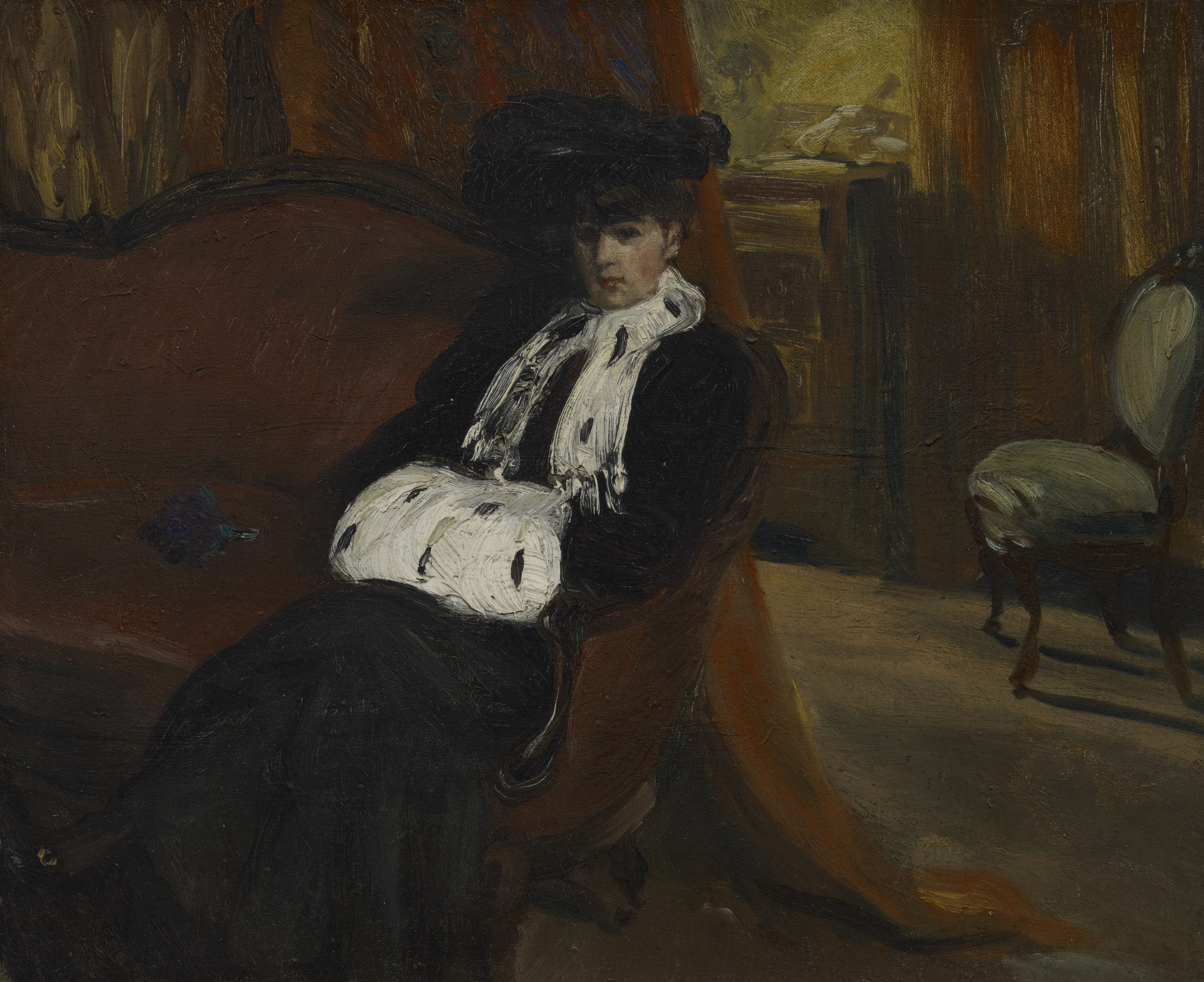
Yale University Art Gallery · wikidata.org
Public domain
Apparently he started out drawing news scenes for papers — sent to sketch things on the spot before photographs could do the job — and supposedly that fast, get-it-down habit never left him, even once he'd moved on to painting people like this.
Erisava: The room and the sofa look tilted but she's sitting firm and oblivious to it.
Interior by Gwen John, 1915
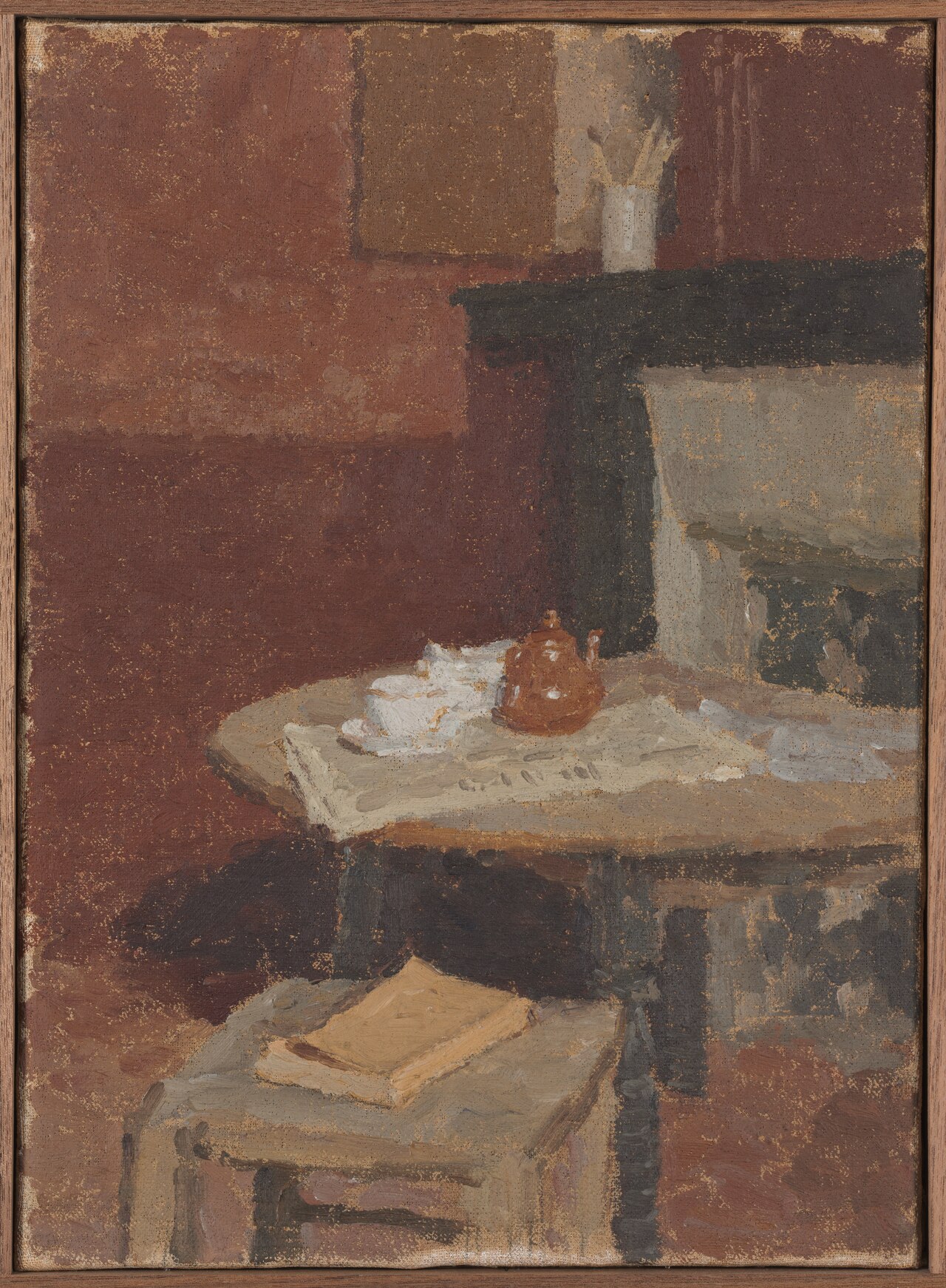
Cleveland Museum of Art · wikidata.org
Public domain
Apparently she only made something like 200 paintings in her whole life, all around this size, all this hushed and toned-down. This exact table with the teapot turns up in three other versions elsewhere, so she must have kept coming back to it.
Erisava: The teapot's the exact same rusty brown as the walls behind it.
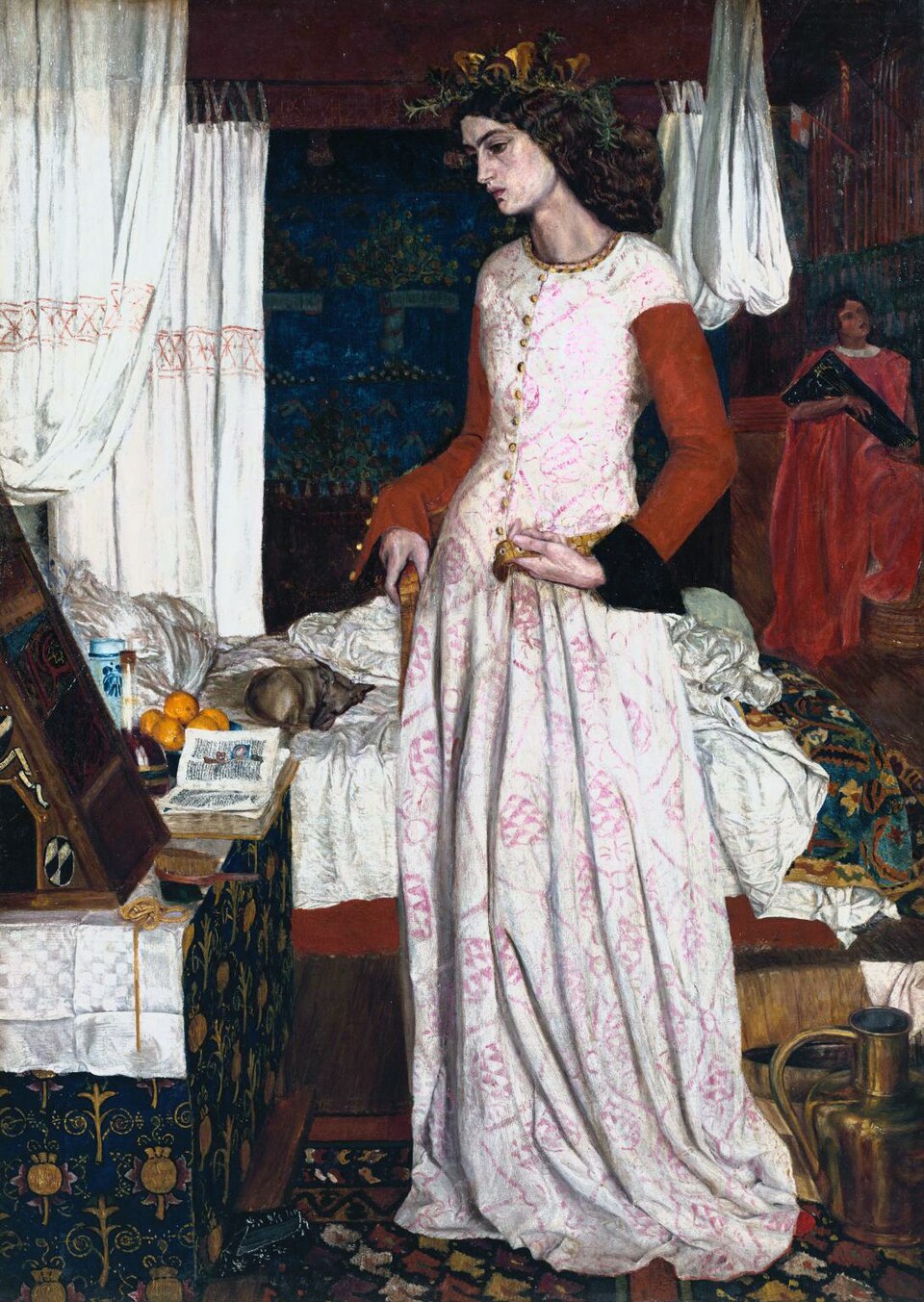
La Belle Iseult by William Morris, 1858
National Gallery · wikidata.org
Public domain
From what I can find this was the only easel painting he ever managed to finish — he gave up on painting not long after and put everything into wallpaper, fabric and furniture instead. The woman modelling for it was Jane Burden, who he married the year after. There's a story that he wrote on the back that he couldn't paint her but he loved her; no idea whether that's true or just a good line people repeat.
Erisava: Every single surface in here has a pattern on it. It's exhausting to look at.
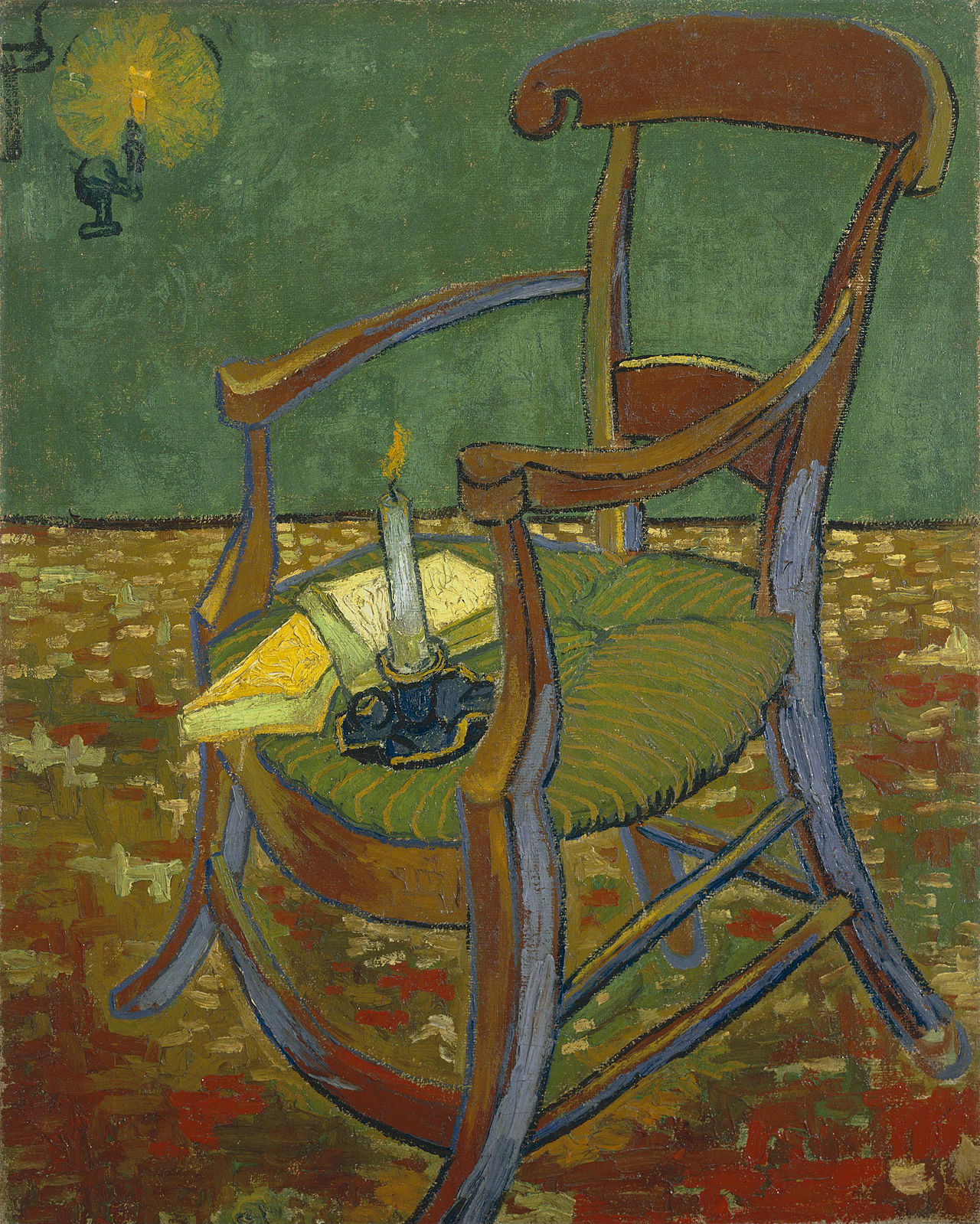
Paul Gauguin's Armchair by Vincent van Gogh, 1888
Van Gogh Museum · wikidata.org
Public domain
I couldn't find much background on this one, no anecdote to pass along — if anyone knows the story behind that lit candle, I'd love to hear it.
Erisava: Why's there a lit candle sitting on an otherwise empty chair?
Mia madre che lavora [My Mother Working] by Umberto Boccioni, 1907
![Mia madre che lavora [My Mother Working]](/images/uploads/347559f5-1417-4c5e-ac4a-086bb73edfc5-wikidata-Q77259179.jpg)
National Gallery of Art · wikidata.org
Apparently this is from before Boccioni signed onto Futurism in 1910 — a movement that made a point of rejecting quiet domestic scenes just like this one.
Erisava: Would this hang here if it weren't signed by someone famous?
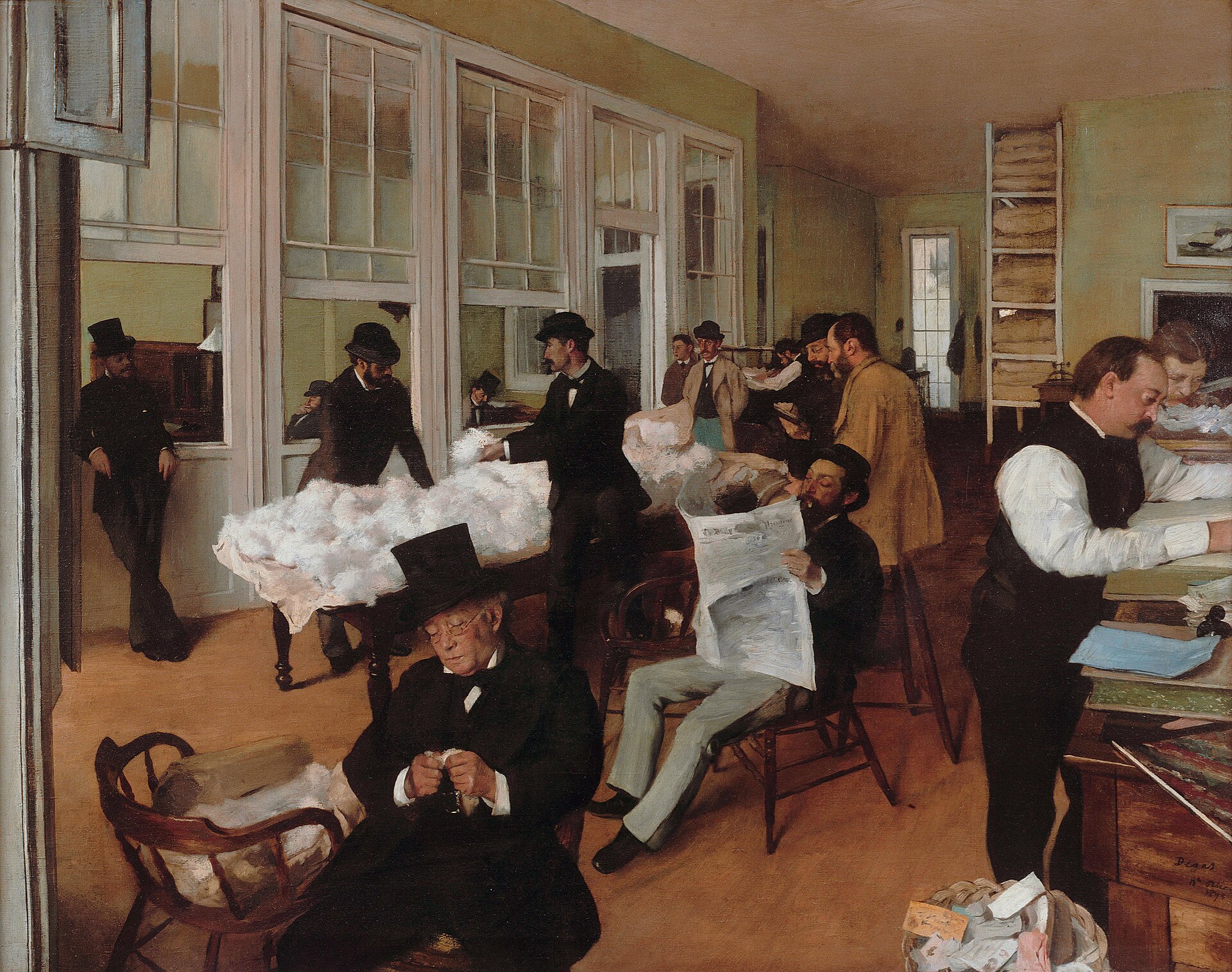
A Cotton Office in New Orleans by Edgar Degas, 1873
Musée des Beaux-Arts de Pau · wikidata.org
Public domain
He'd gone over to visit his mother's family in New Orleans, who were in the cotton trade, and painted them at work — the men in here are supposedly relatives and their business partners. The plan, they say, was to sell it to a mill owner in England. That fell through, and it ended up being the first of his paintings a museum ever bought.
Erisava: All those windows and the room still feels airless. Is that on purpose?